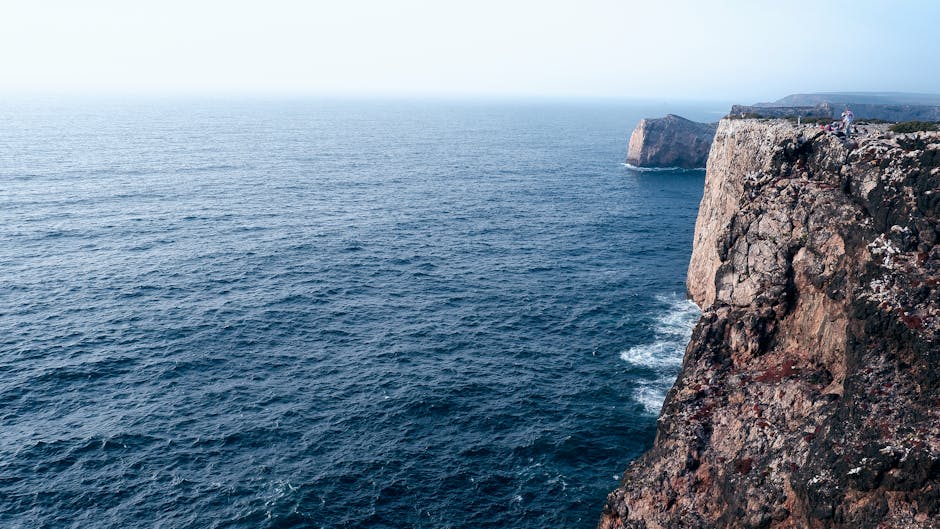
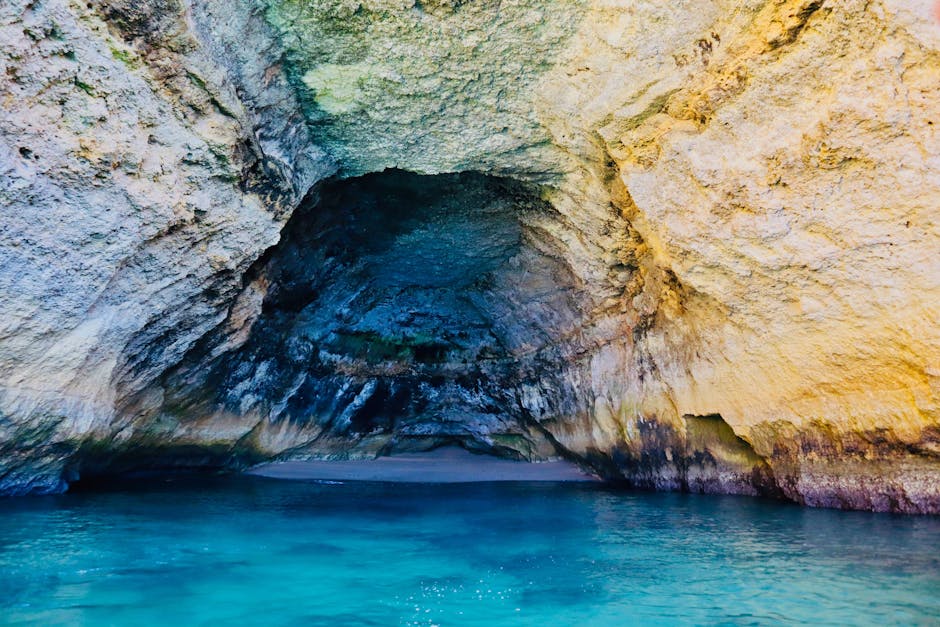
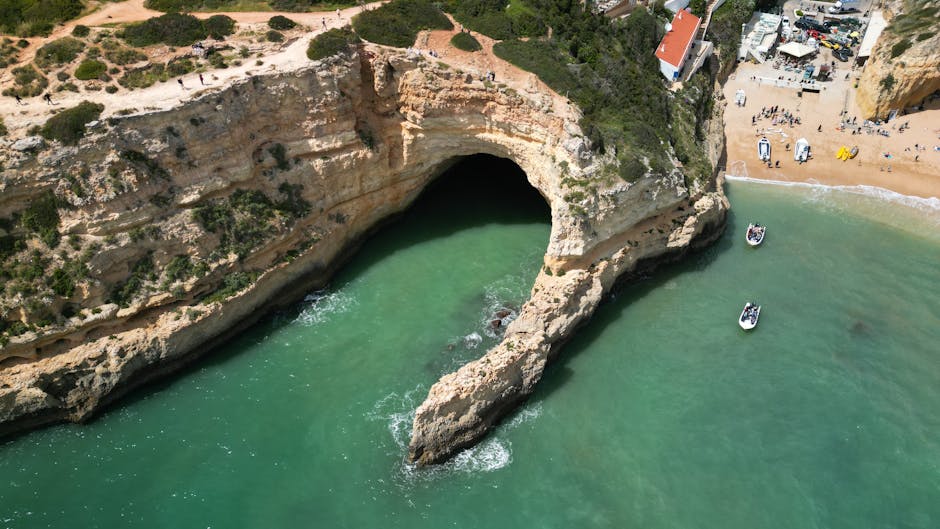
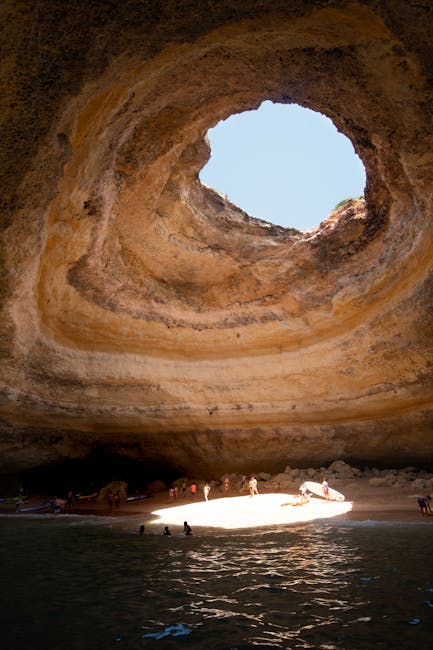
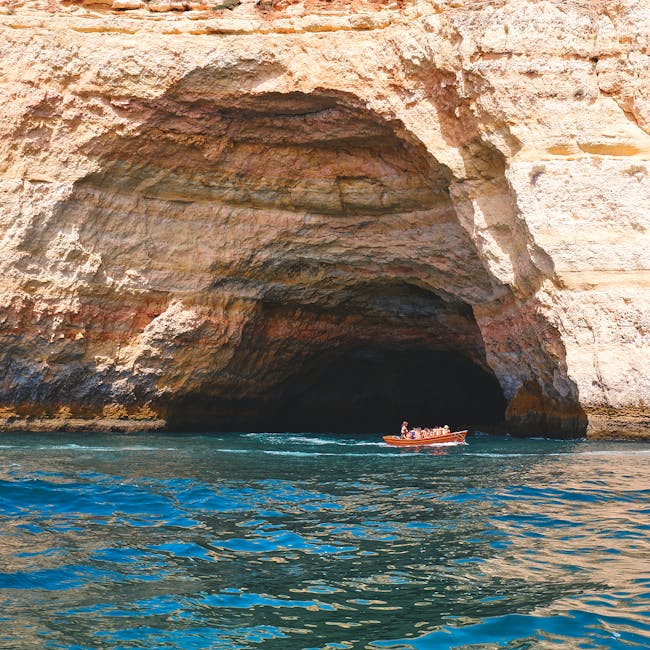
The Algarve coastline in southern Portugal is one of Europe’s most dramatic stretches of shore — golden limestone cliffs riddled with sea caves, natural arches, and hidden beaches accessible only by water. At the centre of it all sits the Benagil Cave, a cathedral-sized sea cave with a dome opening that lets sunlight pour onto the sandy floor below. It’s been called one of the world’s most beautiful caves, and unlike many travel superlatives, this one is earned.
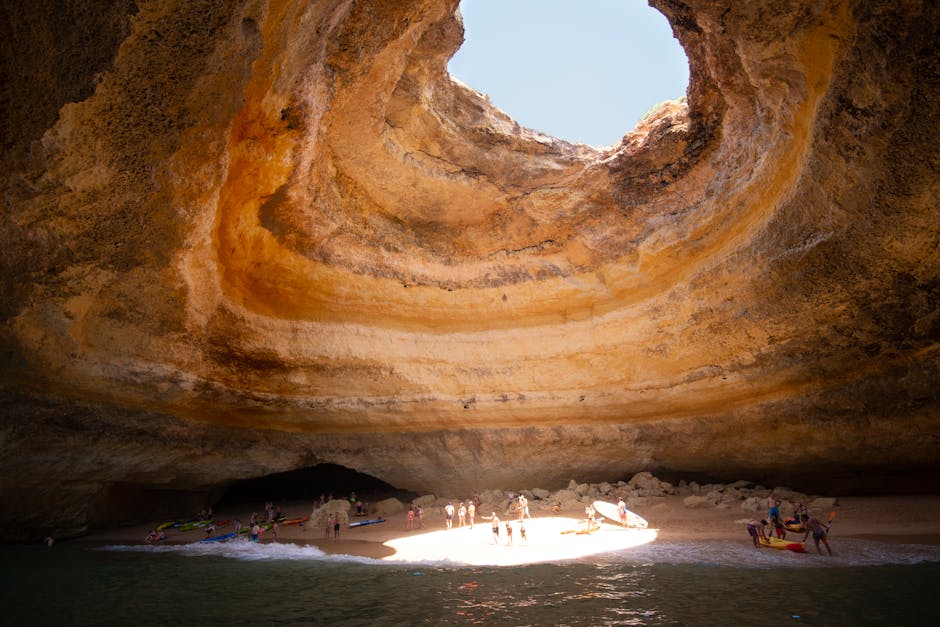
The catch? You can’t walk to the Benagil Cave. The only way in is by water — boat, kayak, or SUP board — which means you need a tour or serious confidence in your paddling abilities. Having compared every option along the coast, from speedboat trips out of Portimao to kayak adventures from Lagos, here’s what actually delivers the experience you’re imagining when you look at those photos.
The Benagil Caves Speed Boat Tour from Portimao is the top pick with over 11,600 reviews. It’s fast, covers multiple caves along the coastline, and gets you inside Benagil Cave itself. If you want a more active experience, the Kayaking Tour to Benagil Cave is the way to go — you’ll paddle into the cave and hop out onto the beach.
- Boat vs Kayak: Which Way to See the Caves?
- Recommended Boat Tours
- 1. Benagil Caves Speed Boat Tour from Portimao — The Crowd Favourite
- 2. Benagil Caves Full Circuit Afternoon Happy Hour — The Extended Coast
- 3. From Lagos: Benagil Caves Speedboat Adventure — Best from the West
- 4. From Faro: The Original Benagil Cave, Marinha & More Tour — Best from Faro
- Recommended Kayak Tours
- 4. Kayaking Tour to Benagil Cave — The Insider Experience
- 5. From Lagos: Ponta da Piedade Sea Caves by Kayak — The Lagos Alternative
- 7. Albufeira: Hidden Beaches & Cliffs Guided Kayak Cave Tour — Off the Tourist Trail
- Practical Information
- Where to Base Yourself
- Sea Conditions and Cancellations
- Morning vs Afternoon Tours
- Can You Swim to Benagil Cave?
- What to Bring
- Photography from Boats
- The Algarve Coast: 150 Million Years in the Making
- How the Caves Formed
- The Moors and the Algarve’s Name
- Praia da Marinha: The Postcard Beach
- More Portugal Guides
Boat vs Kayak: Which Way to See the Caves?
This is the first decision you need to make, and it genuinely matters. Speedboat tours cover more ground — you’ll see a dozen or more caves and rock formations in 90 minutes, with the boat pulling right into Benagil Cave for photos. The downside is you can’t get off the boat inside the cave (the landing area is reserved for kayakers and swimmers), so you’re viewing it from the water. That said, seeing the cave from sea level, with the light pouring through the dome above, is still extraordinary.
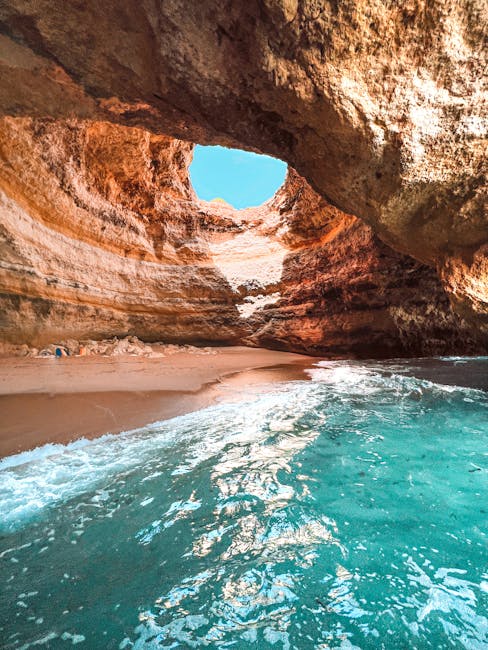
Kayak tours are more intimate and physical. You paddle along the cliffs at your own pace (with a guide), duck into smaller caves that boats can’t enter, and — the big advantage — you can actually land on the beach inside Benagil Cave, walk around, and take photos from the inside looking up through the dome. The trade-off is that you see fewer caves overall, the trip depends more heavily on sea conditions, and you need a basic level of fitness.
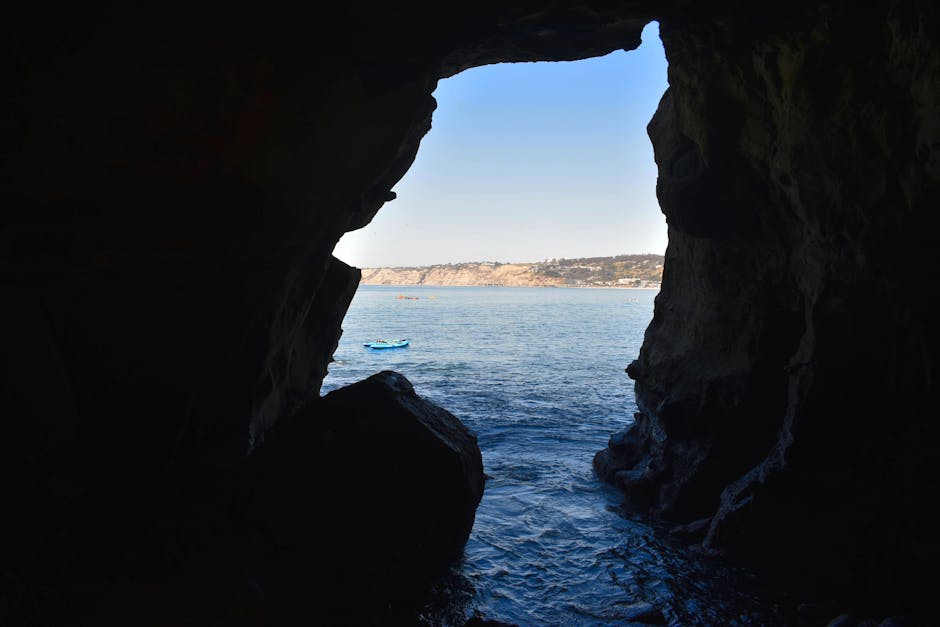
Both options are excellent. If you want to maximise what you see, take the speedboat. If you want the most memorable, hands-on experience, choose the kayak. If you have two days in the Algarve, do both — they complement each other perfectly.
There’s also a third option that some travellers don’t consider: the guided coastline hike. Several operators run walking tours along the clifftop trail between Benagil and Praia da Marinha, which gives you views down into the Benagil dome from above. You won’t get inside the cave this way, but the bird’s-eye view through the opening is unique and genuinely dramatic. It’s a good complement to a boat or kayak trip, especially if you want to see the cave from every possible angle.
Recommended Boat Tours
1. Benagil Caves Speed Boat Tour from Portimao — The Crowd Favourite
With 11,663 reviews, this is the single most popular Algarve tour for a reason. The speedboat departs from Portimao Marina and heads east along the coast, stopping at cave after cave — Benagil is the headline, but you’ll also see the “Captain’s Cave,” the “Kitchen Cave,” and a series of natural arches and rock formations that are equally impressive. The whole trip takes about 90 minutes, with a sunset option available for those who want the golden-hour treatment.
The reviews are overwhelmingly positive and consistently mention the crew by name. Cherryl wrote: “Sergio and his team were amazing. Keeping us entertained.” The combination of speed (you cover a lot of coastline), expertise (the captains know exactly where to position the boat for the best views), and energy (the crew keeps the atmosphere fun) makes this the easiest recommendation on the list. The sunset option adds roughly 30 minutes to the trip and positions you on the water as the cliffs turn from golden to deep amber — worth the upgrade if your schedule allows it.
Read reviews and check prices for this tour
2. Benagil Caves Full Circuit Afternoon Happy Hour — The Extended Coast
If 90 minutes doesn’t feel like enough, this tour gives you a longer route along the coast with a drinks package included. The “happy hour” element means cold beverages are served on board as you cruise past the caves in the afternoon sun — it’s a genuinely fun atmosphere. With 2,107 reviews, it’s well-established and consistently delivers.
Jim’s review is honest about one reality: “Not able to get into the Benagil Cave, but more than made up for it by getting into and visiting other caves and cliff side views.” Sea conditions occasionally prevent boats from entering Benagil Cave — the entrance is narrow and wave-dependent. But the circuit includes so many other spectacular formations that most people don’t feel short-changed.
Read reviews and check prices for this tour
3. From Lagos: Benagil Caves Speedboat Adventure — Best from the West
If you’re based in Lagos rather than Portimao or Albufeira, this tour saves you the drive east. It departs from Lagos Marina and heads along the coast past Ponta da Piedade’s famous sea stacks before continuing to the Benagil caves. You get two spectacular coastal sections in one trip — the Lagos grottos and the Benagil area — which makes it arguably better value than tours that only cover one stretch.
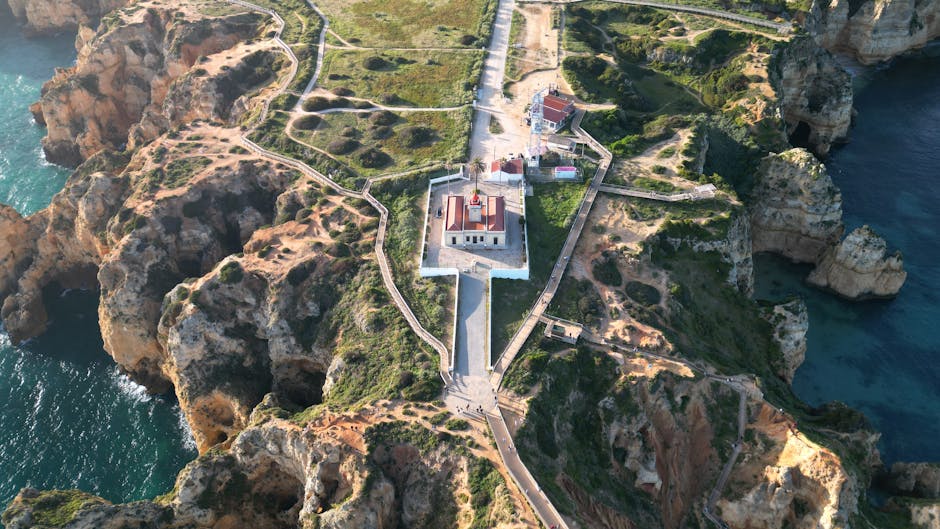
Isabelle’s review captures the magic: “It was a lot of fun! The caves were stunning and we even saw a dolphin swimming right next to us weeeeee.” Dolphin sightings aren’t guaranteed, but they’re surprisingly common along this stretch of coast, especially in the morning.
Read reviews and check prices for this tour
4. From Faro: The Original Benagil Cave, Marinha & More Tour — Best from Faro
Faro is the Algarve’s capital and where most international flights land. If you’ve just arrived and want to hit the caves immediately, this tour departs from Faro and combines a coastal drive, the Benagil cave visit, and a cliff walk to Praia da Marinha. It’s a different format from the boat-only tours — you get a more rounded experience that includes hiking, swimming, and sightseeing.
With 2,655 reviews, it’s the most popular departure from Faro. Winnie’s review highlights the appeal: “We were so lucky with the weather, it was sunny in early February. The car trip was very pretty and the leisurely hike from the Benagil caves to the Marinha beach was gorgeous. Highly recommend.” The hiking element makes this a good option for visitors who want activity without the physical demands of kayaking.
Read reviews and check prices for this tour
Recommended Kayak Tours
4. Kayaking Tour to Benagil Cave — The Insider Experience
This is the tour for people who want to stand on the sand inside Benagil Cave, look up through the dome, and feel the scale of the place. You launch from Benagil Beach, paddle about 200 metres along the cliff face, and enter the cave through its sea-level opening. The guide takes you through several smaller caves along the way, and you get roughly 20 minutes inside Benagil itself to explore, take photos, and absorb the atmosphere.
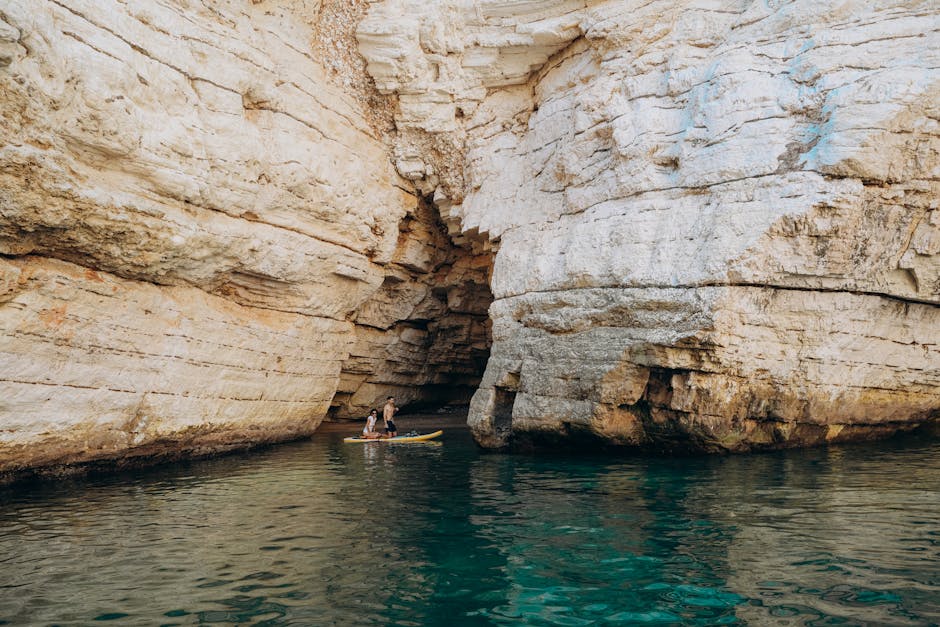
With 3,629 reviews, it’s the most popular kayak option. Zhanna wrote: “Our guide, Lucao, was very professional and patient. He taught us the basic kayaking techniques and made sure everyone felt comfortable. The tour took us through several secret and beautiful caves — absolutely stunning!” No prior kayaking experience is required, though basic swimming ability is expected. The guides provide a brief lesson on the beach before setting out, covering basic paddling technique and safety rules. Most people get comfortable within the first five minutes on the water.
Read reviews and check prices for this tour
5. From Lagos: Ponta da Piedade Sea Caves by Kayak — The Lagos Alternative
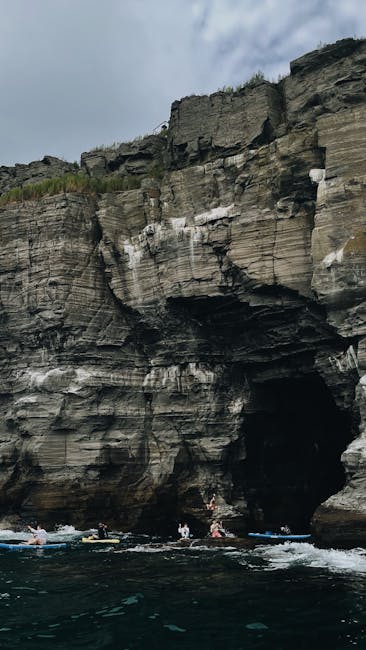
Ponta da Piedade is Lagos’s answer to Benagil — a maze of sea caves, grottos, and towering rock pillars that rival anything further east. This kayak tour takes you through the formations at water level, ducking through arches and weaving between sea stacks that rise 20 metres above you. It’s a different kind of spectacular to Benagil’s single cathedral cave, but many visitors rate it even higher.
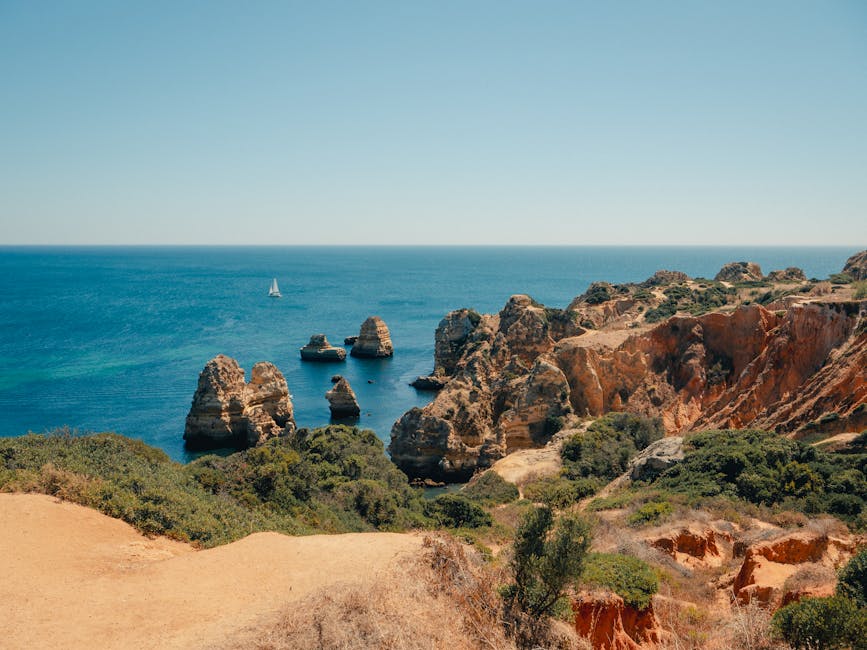
With 2,158 reviews, it’s well-proven. Jennifer’s experience highlights the personal touches: “Had the best day with our guides! They were so kind and welcoming. The kayaks were great and the boat ride was nice! We got to jump off the roof of the boat after and go for a swim.” The swimming element — jumping from the support boat into crystal-clear water — is a feature unique to this operator and makes it one of the more fun and adventurous options available. The water temperature in this area is surprisingly pleasant from June through October, hovering around 20-22°C, though it can be bracing earlier in the season.
Read reviews and check prices for this tour
7. Albufeira: Hidden Beaches & Cliffs Guided Kayak Cave Tour — Off the Tourist Trail
Albufeira’s stretch of coastline doesn’t get the same attention as Benagil or Lagos, but it has its own collection of sea caves, hidden beaches, and cliff formations that are equally worth exploring. This tour is particularly good for travellers staying in the Albufeira area who don’t want to spend an hour in a car before even getting on the water. With 1,268 reviews, it’s smaller than the others but with consistently enthusiastic feedback.
Eloise’s detailed review gives a sense of the experience: “Antonio was an absolutely fantastic instructor and made our kayak tour truly unforgettable. His instructions were clear and easy to follow, and he struck the perfect balance between being professional and fun.” Hannah’s review adds that she ended up with a private tour: “It ended up just being myself and my tour guide Mateo, so I had the luxury of a private tour. He took me through caves and tunnels and I even took myself into a little opening where people would jump down into the water.”
Read reviews and check prices for this tour
Practical Information
Where to Base Yourself
The three main bases for Algarve cave tours are Portimao, Lagos, and Albufeira. Portimao is closest to Benagil and has the most tour departures — it’s also the most practical base if cave tours are your main priority. Lagos is further west but gives you access to Ponta da Piedade, which is equally stunning, and the town itself has a more charming, walkable old centre than Portimao. Albufeira is the biggest resort town with the most accommodation options but is the furthest from the main caves. All three are connected by the A22 motorway, so it’s easy to reach any departure point regardless of where you’re staying.
If you’re coming from Lisbon as a day trip, it’s a roughly 2.5-hour drive to Portimao — doable but long for a day return. You’re better off spending at least one night in the Algarve. Faro is the main airport, and car rental is cheap and widely available. The Algarve’s roads are generally excellent, and free parking is available near most tour departure points, though it fills up quickly in summer.
Sea Conditions and Cancellations
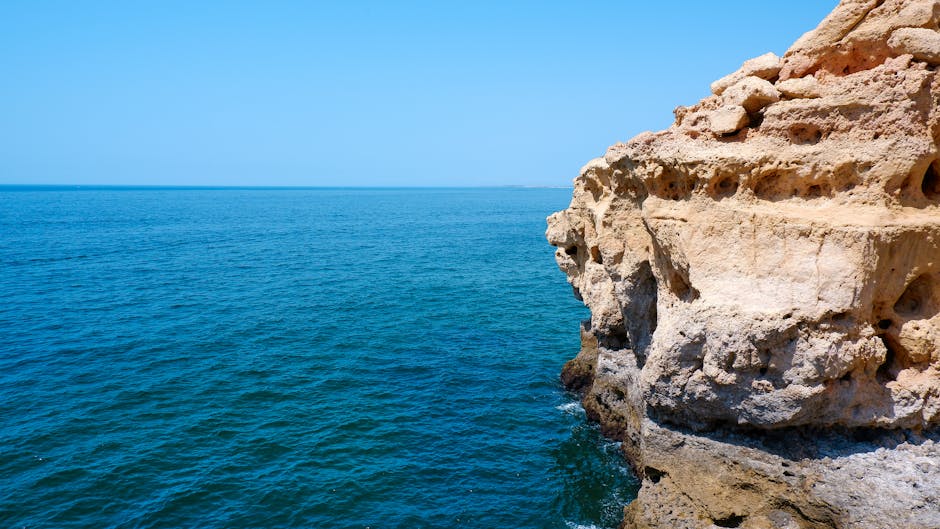
This is crucial: Algarve cave tours are weather-dependent, especially kayak tours. High swells, strong winds, or choppy seas can cause cancellations — and the cave entrances themselves can be impassable when waves are rough. Most operators offer full refunds or rebooking for weather cancellations, but it’s worth having a backup plan. Book for the beginning of your Algarve stay so you have time to rebook if conditions don’t cooperate.
The calmest seas are typically between June and September, with mornings generally smoother than afternoons. If you’re visiting in shoulder season (April-May or October), check the forecast and be flexible with your dates. Worth noting: even when it’s too rough for kayaks, speedboats can often still run — they handle choppier conditions better and the captains are experienced at reading the sea state.
Morning vs Afternoon Tours
Morning tours have calmer water and better light for photography — the sun illuminates the cave interiors most dramatically between 10 AM and noon when it’s high enough to pour straight through Benagil’s dome. Afternoon tours are typically less crowded (most people book the morning slot) and the sunset option adds a golden-hour dimension that photographs beautifully. If you’re specifically going for the classic Benagil interior shot with the sun streaming in, book a mid-morning departure.
Can You Swim to Benagil Cave?
Technically yes, but it’s not recommended for most visitors. The swim from Benagil Beach to the cave entrance is about 200 metres through open Atlantic water. Currents can be unpredictable, the water is cold even in summer (typically 18-20°C), and there’s no lifeguard. Strong swimmers do it regularly, but every summer the Portuguese maritime authorities rescue people who overestimated their abilities. A kayak or boat tour is safer, more comfortable, and lets you see far more of the coast.
What to Bring
Sunscreen, a hat, and sunglasses are non-negotiable — the reflection off the water amplifies the UV intensity. For kayak tours, bring a waterproof phone case or leave your phone in the dry bag the guide provides. Wear a swimsuit under your clothes, and bring a towel and change of clothes if you’re doing a kayak tour (you will get wet). For boat tours, the spray is minimal but a light jacket is useful on windy days.
If you’re prone to seasickness, the speedboat tours are actually easier to handle than you’d expect — the boats are fast and the ride is relatively smooth in calm conditions. The rocking motion of a slower catamaran or traditional boat is actually worse for most people than the speed of a RIB. Still, if you’re concerned, take medication 30 minutes before departure and sit toward the middle of the boat where the motion is least pronounced.
Photography from Boats
Photographing sea caves from a moving boat takes some preparation. Phone cameras struggle with the extreme contrast between dark cave interiors and bright sky through the openings. If you have a proper camera, shoot in RAW and slightly underexpose — you can recover shadow detail in editing but you can’t recover blown-out highlights. For phones, tap and hold on the brightest part of the image to lock exposure, which will keep the cave walls from turning into black silhouettes. The best shots inside Benagil come when the boat pauses briefly at the cave entrance — be ready and don’t fumble with settings.
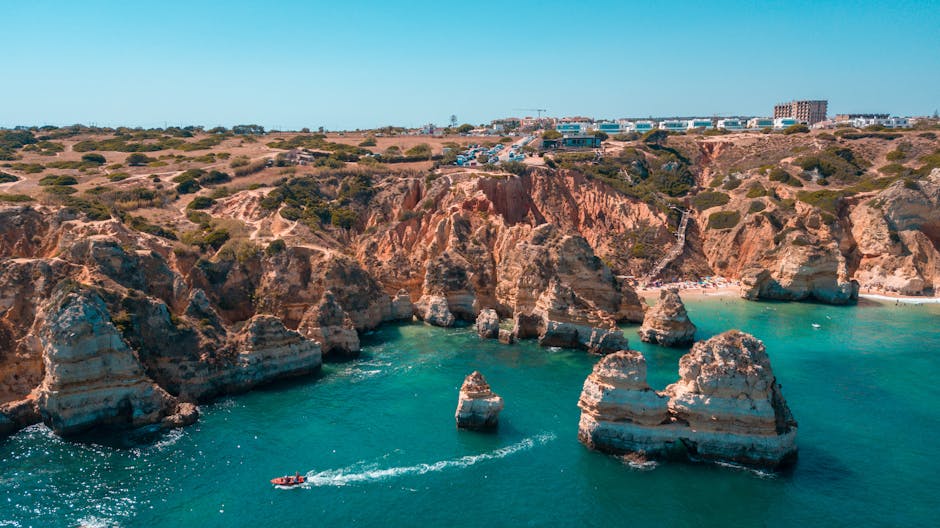
The Algarve Coast: 150 Million Years in the Making
The caves and cliffs you see from the boat aren’t just pretty geology — they’re the result of 150 million years of tectonic activity, erosion, and sea-level changes that created one of the most complex coastlines in Europe.
How the Caves Formed
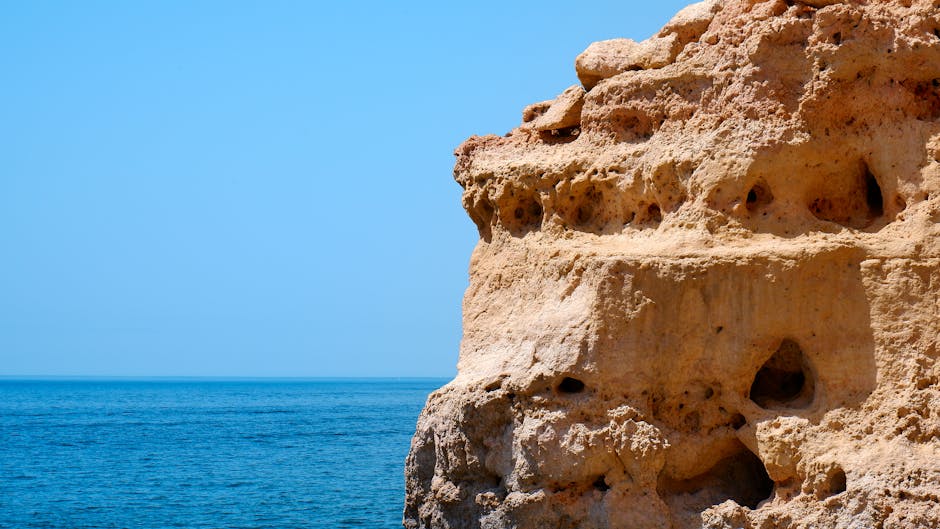
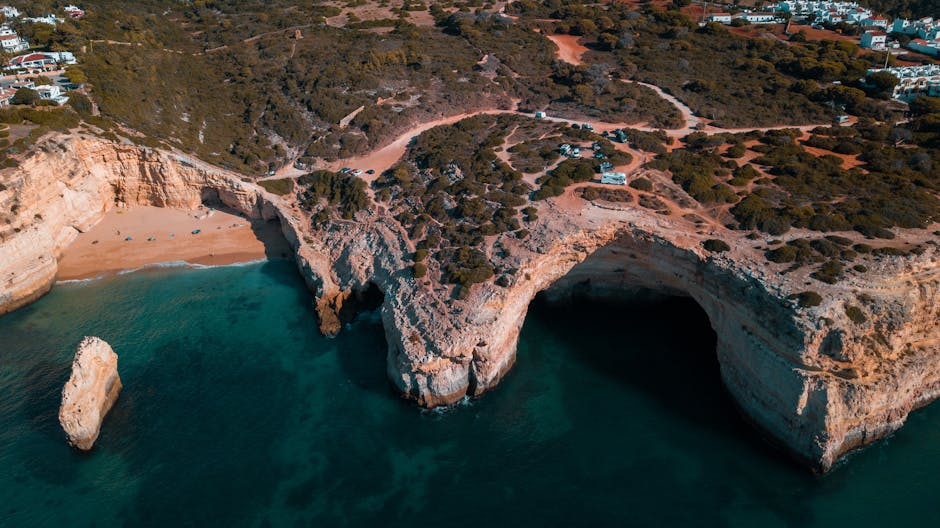
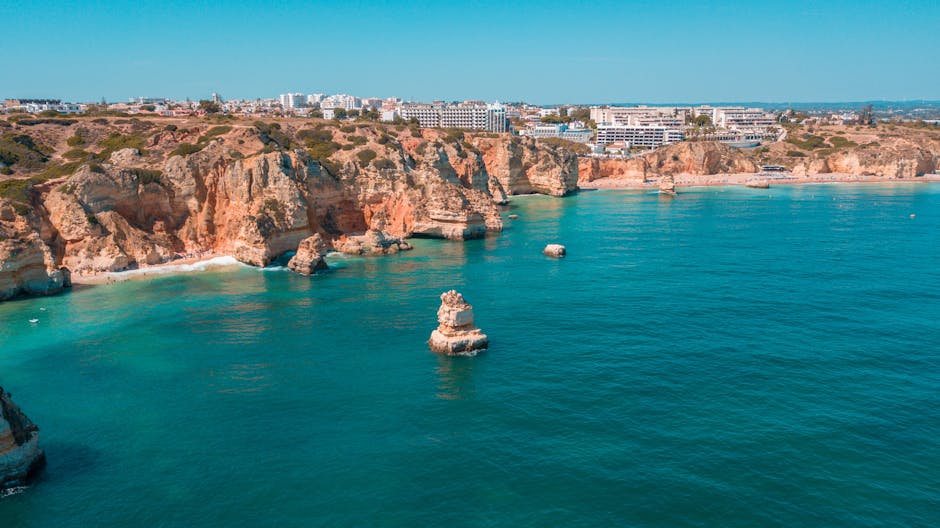
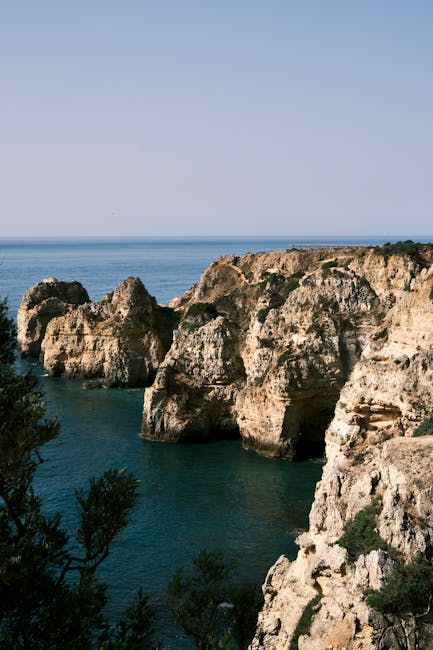
The Algarve’s golden limestone was laid down during the Jurassic and Cretaceous periods, when this region lay beneath a warm, shallow sea. The rock is relatively soft compared to granite or basalt, which is why the Atlantic has been able to carve such elaborate formations. The process works like this: waves find a weakness in the cliff face — a fault line, a softer layer of rock, a crack from an ancient earthquake — and gradually widen it into a cave. Over thousands of years, the cave deepens, the roof thins, and eventually it collapses in places, creating the dome openings you see at Benagil and elsewhere.
The sea stacks at Ponta da Piedade are former parts of the cliff that have been isolated by erosion — they’re the pillars left standing after the surrounding rock collapsed. In another few thousand years, many of the arches and caves you see today will have collapsed entirely, creating new formations. The coastline you’re visiting is literally a snapshot of a process that never stops.
The Moors and the Algarve’s Name
The word “Algarve” comes from the Arabic “al-Gharb,” meaning “the west” — a reminder that this region was under Moorish rule for over 500 years. The Moors arrived in 711 AD and transformed the Algarve into a prosperous agricultural region, introducing irrigation systems, almond orchards, and fig trees that still define the landscape. The reconquest didn’t reach the Algarve until 1249, making it the last part of Portugal to be reclaimed from Islamic rule. You can still see Moorish influence in the region’s architecture, particularly the distinctive chimneys that decorate traditional Algarve houses — each one unique, like the minarets of the mosques they replaced. The almond blossom that covers the Algarve hills in January and February is another Moorish legacy — according to legend, a Moorish king planted thousands of almond trees so his homesick Scandinavian bride would see “snow” from the palace windows.
Praia da Marinha: The Postcard Beach
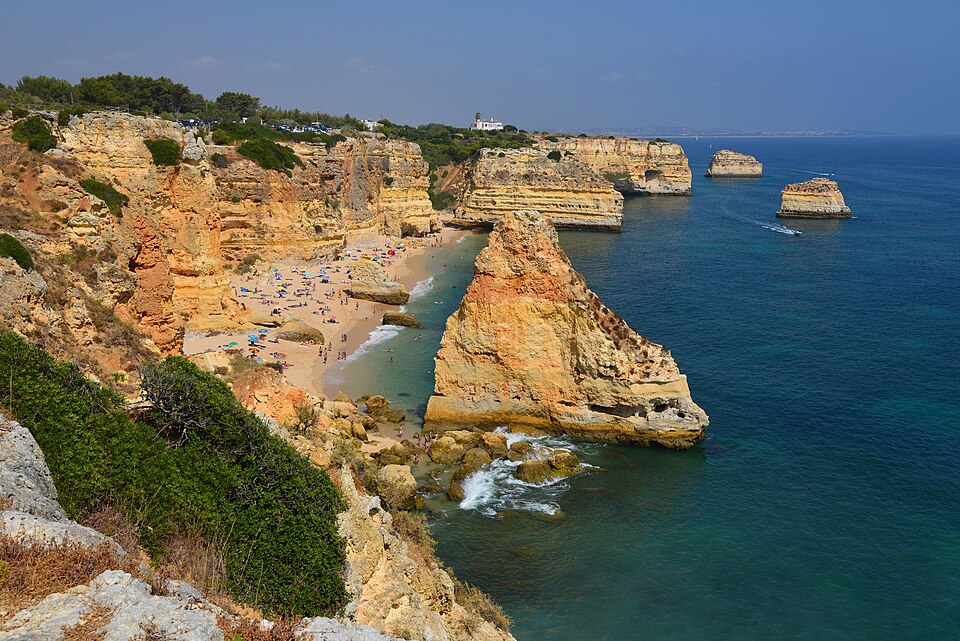
Just east of Benagil, Praia da Marinha is regularly voted one of the most beautiful beaches in Europe — and in the world. The beach sits at the base of towering golden cliffs, with twin sea stacks framing the turquoise water like natural gateway pillars. You can reach it by a steep staircase from the clifftop car park, but it’s also visible from many boat tours. The Michelin Guide called it the most beautiful beach in Portugal, and Condé Nast Traveller has placed it among the top ten in Europe multiple times.
The cliff walk between Benagil and Marinha is one of the best short hikes in the Algarve — about 30 minutes each way, with breathtaking views the entire route. The trail is well-marked and mostly flat, following the cliff edge past several viewpoints where you can look down into sea caves and watch boats entering the formations below. In spring, the clifftop path is lined with wildflowers — bright pink hottentot fig and yellow rock roses — that add colour to an already spectacular walk. Bring water and wear sun protection; there’s no shade on the clifftop.
More Portugal Guides
The Algarve is just one corner of Portugal’s extraordinary variety. Up in Lisbon, a day trip to Sintra trades sea caves for fairytale palaces — Pena Palace’s colourful towers and Quinta da Regaleira’s mysterious tunnels are just 30 minutes from the capital. Wine lovers should make the journey to the Douro Valley from Porto, where UNESCO-listed terraced vineyards produce some of Europe’s finest wines, with river cruises and winery lunches included on most tours.
For music and culture, Lisbon’s fado shows offer an evening of Portugal’s soul-stirring traditional music, while Porto’s fado and port wine evenings combine two cultural pillars in one atmospheric setting. If you want to explore Porto on foot, the city’s walking tours cover everything from medieval back streets to the famous blue-tiled São Bento station, and there’s a good chance you’ll end up in a port wine cellar before the day is done. And for a different way to experience Lisbon’s waterfront, sunset boat tours on the Tagus sail past Belém Tower and the 25 de Abril Bridge with wine and charcuterie included.