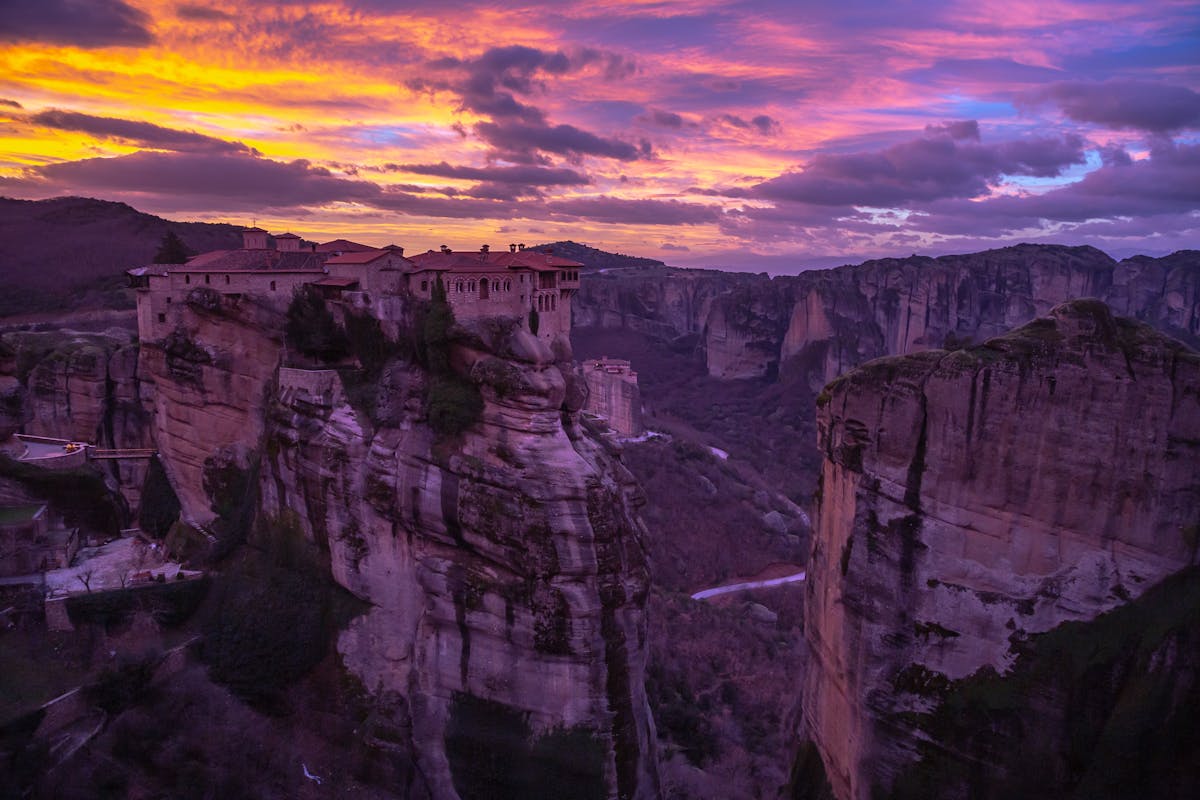
Meteora is one of those places that breaks your brain a little bit. You’re driving through the flat Thessaly plain in central Greece, the landscape as unremarkable as any countryside, and then suddenly the earth erupts into massive sandstone pillars — some over 400 metres tall — with medieval monasteries perched impossibly on their summits. No photos prepare you for it. The scale is wrong in a way that your eyes keep trying to correct. How did anyone build up there? Why did anyone build up there? And how are those buildings still standing after 600 years? The answers involve hermit monks, rope ladders, and a commitment to isolation that makes modern digital detoxes look laughably casual. From Athens, it’s a long day trip — about 4-5 hours each way by road — but it’s one of those experiences that justifies its own trip to Greece.
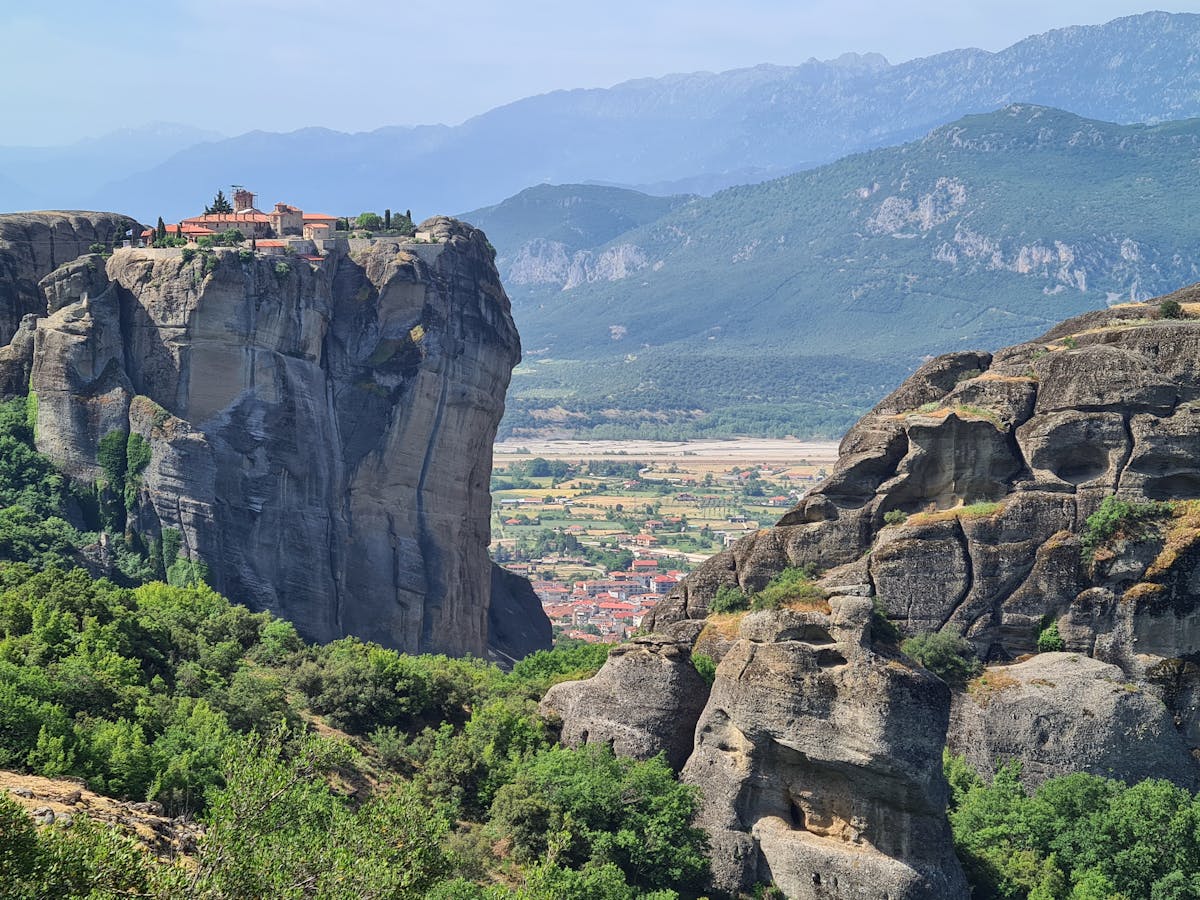
The organised day trips from Athens handle the logistics that would otherwise make this a planning nightmare: the drive through central Greece, the winding mountain roads up to the monasteries, the entrance tickets, and — crucially — a local guide who can explain the history, the architecture, and the religious significance of what you’re seeing. Without a guide, Meteora is visually stunning but contextually hollow. With a good one, it becomes one of the most memorable cultural experiences in Greece.
The Meteora Monasteries Day Trip with Caves and Lunch is the standout with 4,670 reviews and guides like Clement and Maria who are consistently praised for bringing the history alive. It includes 2-3 monastery visits, hermit caves, and lunch in Kalabaka. For something different, the Meteora Sunset Tour stays overnight and times the visit for golden hour when the rocks glow amber.
- Best Meteora Day Trips from Athens
- 1. Meteora Monasteries Day Trip with Caves and Lunch
- 2. Meteora: Monasteries, Caves & Seaside Stopovers
- 3. Meteora Tour with Local Guide and Lunch
- 4. Meteora Sunset Tour with Monastery & Hermit Caves
- 5. Meteora Day Trip from Athens by Train
- What You’ll See at Meteora
- The Monasteries
- The Hermit Caves
- The History Behind the Rocks
- 60 Million Years of Geology
- The Monks Who Climbed
- Meteora Today
- Practical Tips for the Day Trip
- The Drive
- What to Wear
- When to Visit
- More Greece Guides
Best Meteora Day Trips from Athens
1. Meteora Monasteries Day Trip with Caves and Lunch
This is the most popular Meteora tour from Athens by a significant margin, with 4,670 reviews and a format that’s been refined over thousands of departures. The full-day trip departs Athens early morning, drives north through the Thessaly plain with a rest stop along the way, arrives in the Meteora region around midday, and visits 2-3 monasteries plus the hermit caves carved into the cliff faces. Lunch in the town of Kalabaka — at the foot of the pillars — is included, and the return to Athens is typically by early evening.
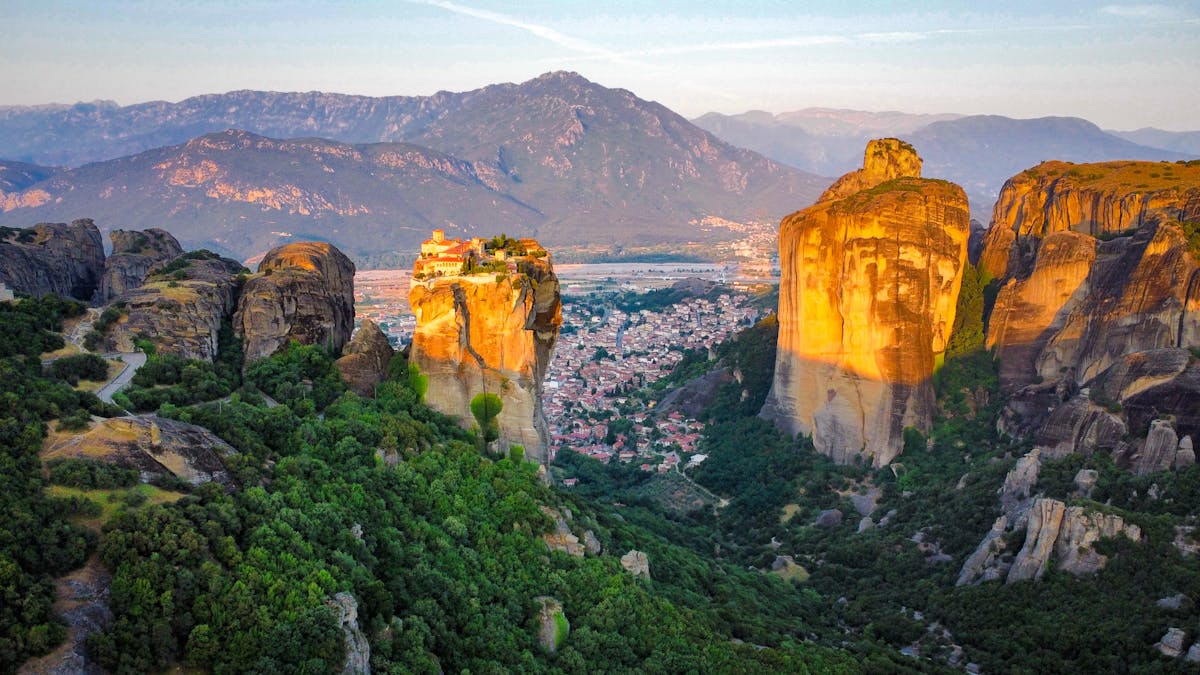
Paolo captured why the long drive is worth it: “The long journey to get to Meteora was eclipsed and soon forgotten as the Monastery complex is breathtaking. Our guide Clement made our visit super special, gave us lots of good info and had a genuine willingness to make the day memorable.” Tessa agreed: “This was an amazing trip — if you like rocks and landscapes this is for you! Our guide was amazing, she grew up in one of the monasteries and was extremely knowledgeable.” Angela offered the balanced view: “Meteora was spectacular, truly a place that everyone should experience. Our guide Clement was very knowledgeable and informative about the history of the area. It’s a very long day but definitely worth it.”
The guide quality on this tour is consistently high — Clement and Maria are mentioned repeatedly across hundreds of reviews, which suggests a stable team rather than rotating freelancers. Liao’s review was succinct: “Our tour guide Maria is the best. She knows everything.”
Read reviews and check prices for this tour
2. Meteora: Monasteries, Caves & Seaside Stopovers
This 2,958-review alternative adds coastal stops to the standard Meteora itinerary, breaking up the long drive with visits to scenic seaside locations on the return journey. It’s the same core experience — monasteries, hermit caves, local guide — but the route back to Athens detours through Thermopylae (the famous pass where 300 Spartans held off the Persian army) and other points of interest. The result is a more varied day that doesn’t feel like it’s just about the destination and the drive.
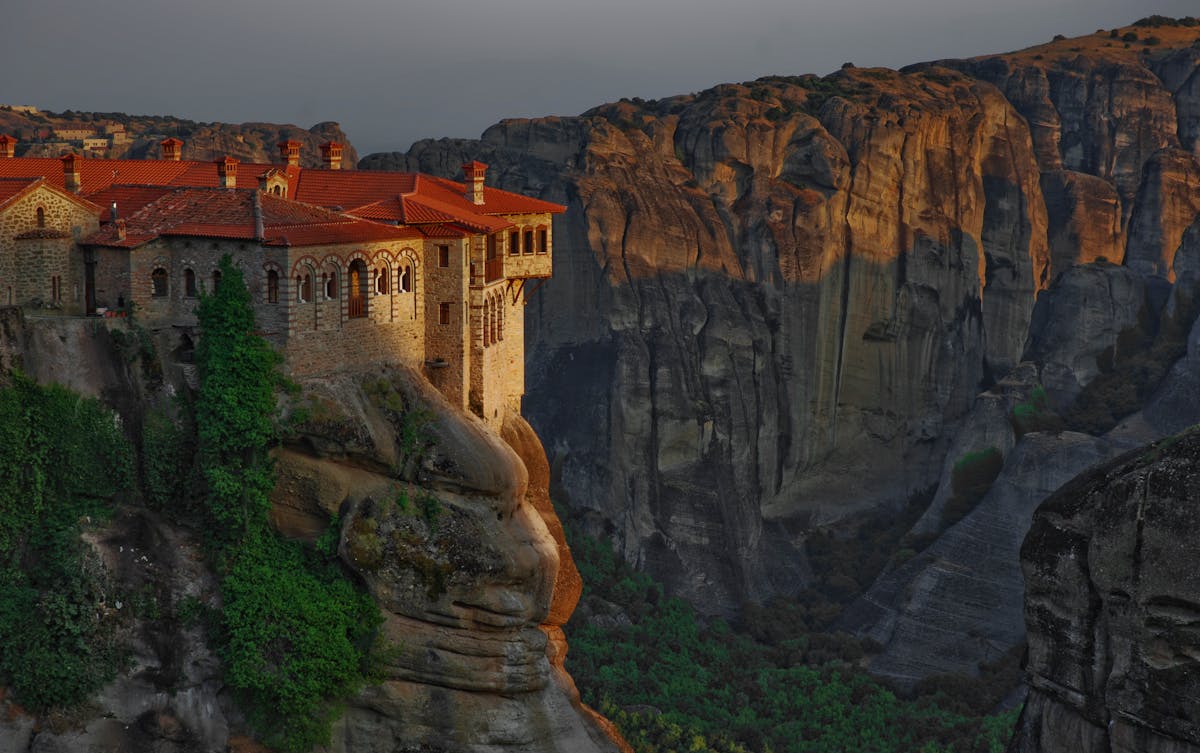
Ines valued the full package: “It was a fun day — it met my expectations. We had a funny, nice guide, that shared a lot of interesting information about the monasteries and the surrounding area. Beautiful views. I fully recommend this excursion.” Omar appreciated the flexibility: “The day was amazing! Because of the road blocks we could visit 2 out of 3 monasteries but they adapt the visit so we could see everything.” Frank singled out his guide: “Tolis was really great. Knew what he was talking about and was very passionate and knowledgeable about the whole tour. Very personable and entertaining.”
The Thermopylae stop is a nice bonus if you have any interest in ancient Greek history — there’s a monument to Leonidas and his 300 Spartans, and the guide explains the geography of the battle in a way that makes you understand why this narrow pass was so strategically critical. It’s one of those moments where standing on the actual ground brings a story you’ve heard a hundred times suddenly alive. The seaside stops on the return journey also provide a natural break point that makes the 4-5 hour drive back to Athens feel considerably shorter — instead of a highway slog, you get scenic detours through coastal villages that remind you Greece has more to offer than just ancient ruins and island sunsets.
3. Meteora Tour with Local Guide and Lunch
This 1,634-review tour differentiates itself by emphasising the local guide element — the guides are from the Meteora region itself, which means they bring personal stories and family connections to the monasteries rather than just textbook knowledge. The format is similar (Athens departure, 2-3 monasteries, lunch in Kalabaka) but the commentary has a more intimate, personal quality that reviewers consistently highlight.
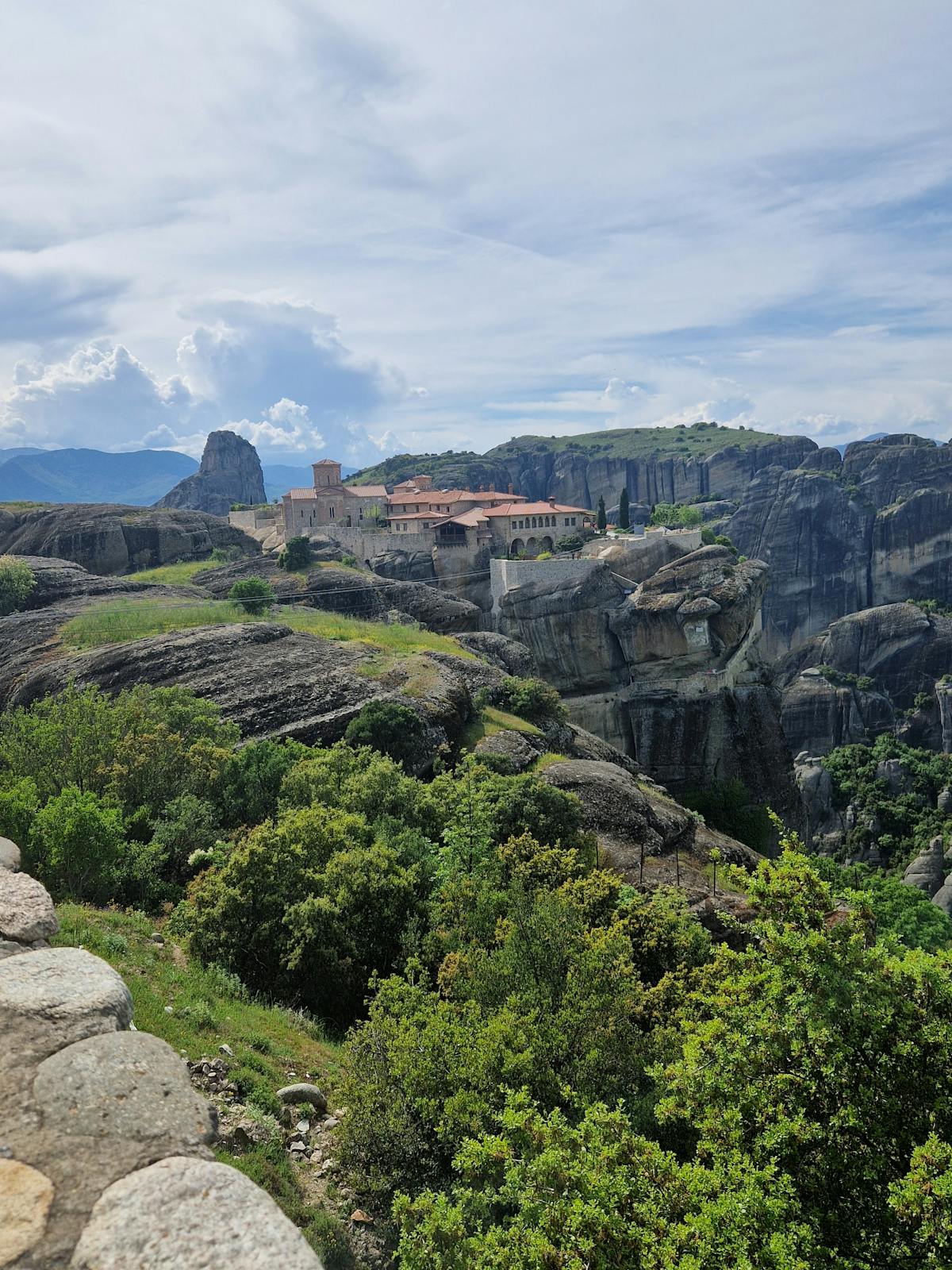
Ken described the experience: “Amazing day trip out to Meteora to see the monasteries. Stopped for a break after a couple of hours, then proceeded for another two to the city of Kalabaka. There we had lunch then went into the monasteries.” Uliana went poetic: “Unforgettable memories in the breathtaking Holy Meteora. The view of the mountains was absolutely speechless — truly awe-inspiring. Walking among the ancient monasteries perched high on the cliffs was an unbelievable experience.”
Rae addressed the elephant in the room — the long drive: “What an incredible trip! The vistas and monasteries were great. Learning how and why they built them was super interesting. I thought the 4-5 hours travelling each way was going to be a drag” — but clearly didn’t find it to be one. Dina captured the spiritual dimension: “OMG! What an amazing experience. George the bus driver was exceptional — he made the long ride entertaining.” A good driver matters when you’re on the road for 8-10 hours, and the local guides on this tour add personal stories that the larger operators can’t match — family connections to the monasteries, childhood memories of the area, and restaurant recommendations in Kalabaka that only a local would know.
Read reviews and book this tour
4. Meteora Sunset Tour with Monastery & Hermit Caves
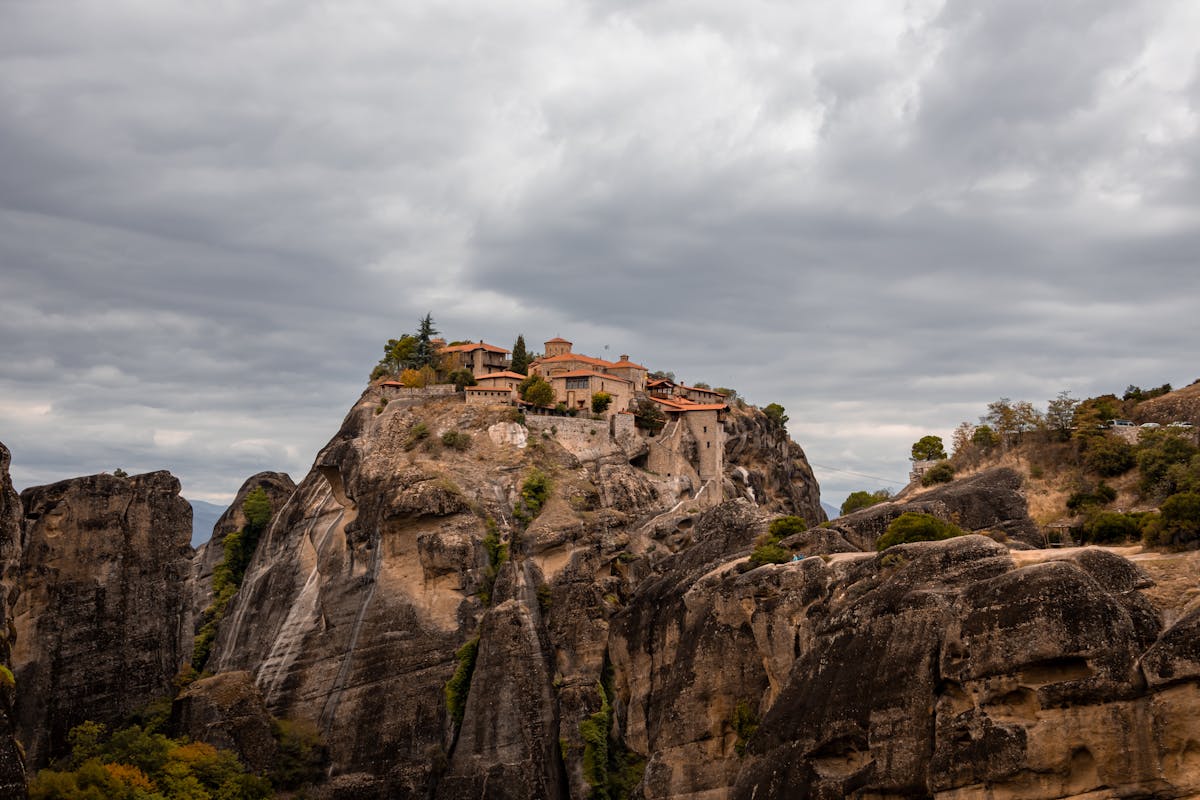
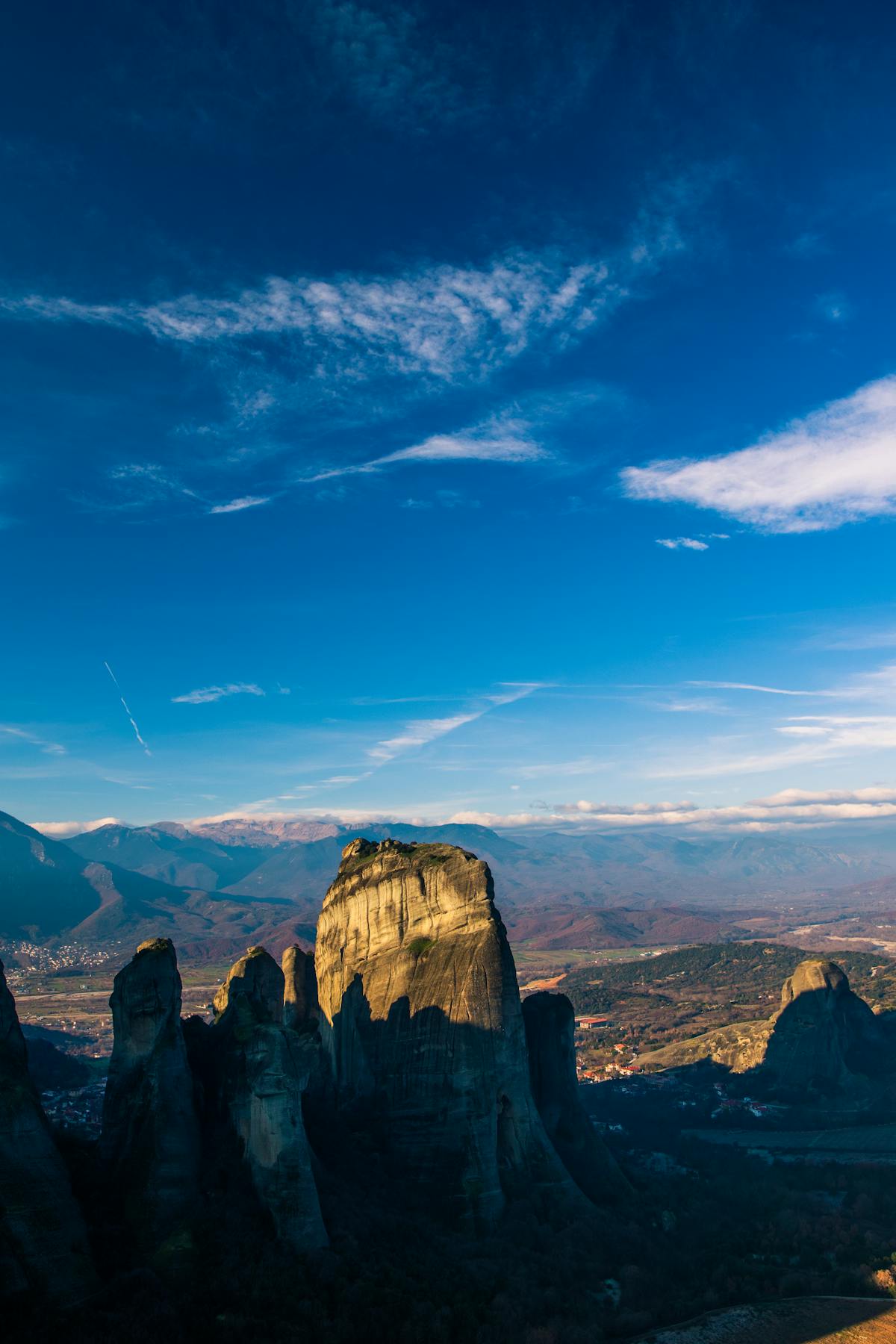
This 706-review tour takes a completely different approach — instead of a long day trip from Athens, it’s designed for travellers who are already in the Meteora area (either staying overnight in Kalabaka or arriving independently). The small-group format visits monasteries and hermit caves, but times the itinerary so that the final viewpoint catches the sunset, when the sandstone pillars turn from grey-beige to deep amber and the shadows of the monasteries stretch across the valley. It’s a photographer’s dream.
David_T raved about the format: “The sunset tour was superb! Our guide, Lina, and driver, Sotos, were very friendly and knowledgeable. We toured and learned a lot about the hermit caves, forest and monasteries of Meteora.” Maria_K was equally enthusiastic: “Excellent experience and tour! Thoroughly enjoyed all the selected stops, commentary and professionalism of our guide Dimitri and driver Theodore.” John_P went further: “Fabulous tour! The venues were spectacular and our tour guide Dimitri really went above and beyond to make our tour extra special — the best guide we’ve ever had on many Viator trips.”
This tour makes the most sense if you’re willing to spend a night in Kalabaka (which is worth doing anyway — the town has excellent tavernas and the morning light on the rocks is spectacular). Combine the sunset tour with a morning at the Great Meteoron monastery and you’ll experience Meteora in a depth that day-trippers from Athens simply can’t match.
5. Meteora Day Trip from Athens by Train
For travellers who prefer rail to road, this 468-review option uses the Athens-Kalabaka train line, which cuts the travel time and adds the scenic pleasure of watching the Greek countryside roll past from a comfortable seat. The train takes about 4 hours each way, and you’re met at Kalabaka station by a local guide who handles the monastery visits before seeing you back to the train for the return journey. It’s more independent than the bus tours — you’re responsible for your own train tickets and getting to the station — but the payoff is a more relaxed pace and the novelty of arriving by rail.
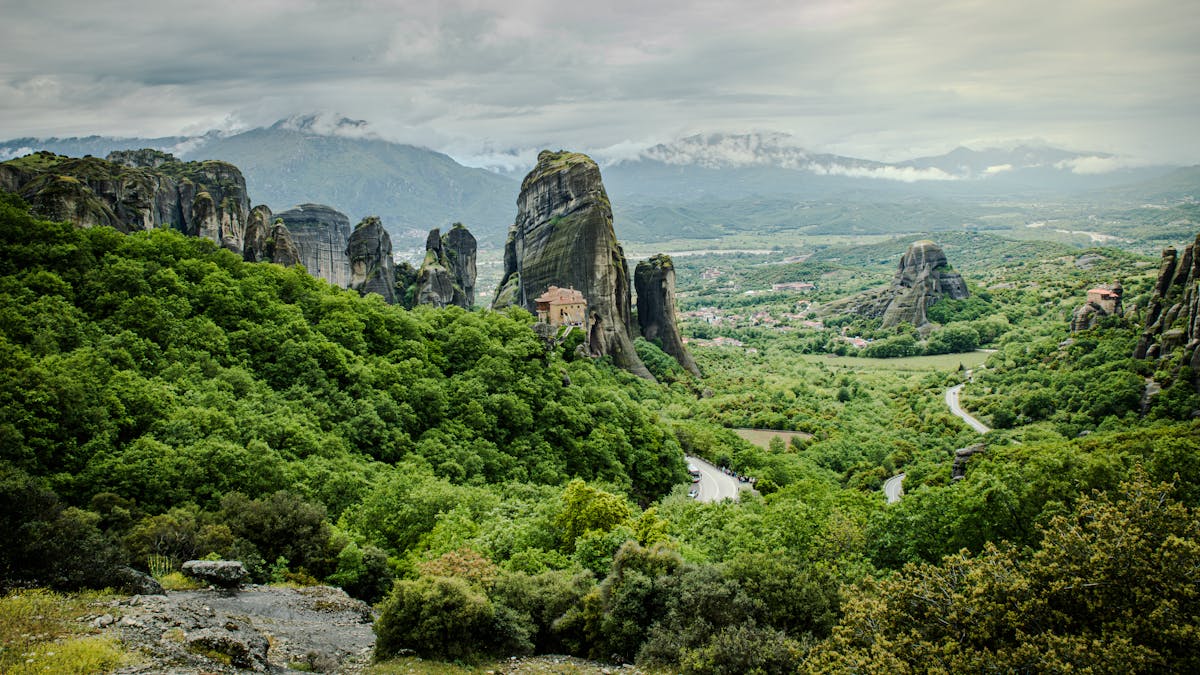
Kent gave the practical verdict: “It is a long way to travel in a day. 5 hours up and 5 hours back to Athens — but so worth it. Our guide was fun, informative, and great.” Wendy agreed emphatically: “A must do in Greece! Well worth the long 14-hour day from Athens. Our guide was informative, entertaining and lots of fun. Great to experience Meteora after a few weeks island hopping.” The train option is particularly good for solo travellers who enjoy the independence of rail travel and don’t mind a slightly longer day. The Kalabaka train station itself is worth a moment — it’s a small, old-fashioned Greek railway stop with the Meteora rocks towering directly behind it, creating one of the more surreal arrivals in European rail travel. The train also allows you to add flexibility: if you fall in love with Meteora (which is entirely likely), you can potentially rebook a later train and spend extra hours exploring rather than being tied to a bus departure schedule.
Read reviews and book this tour
What You’ll See at Meteora
The Monasteries
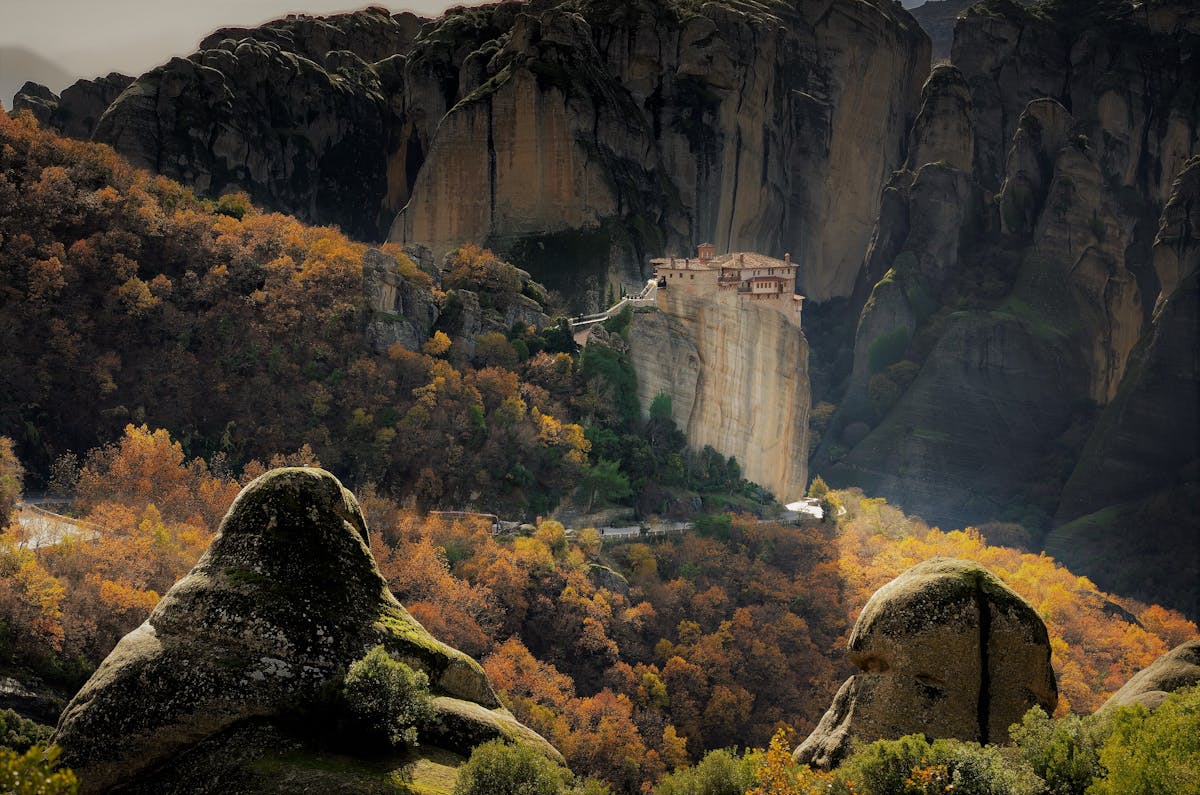
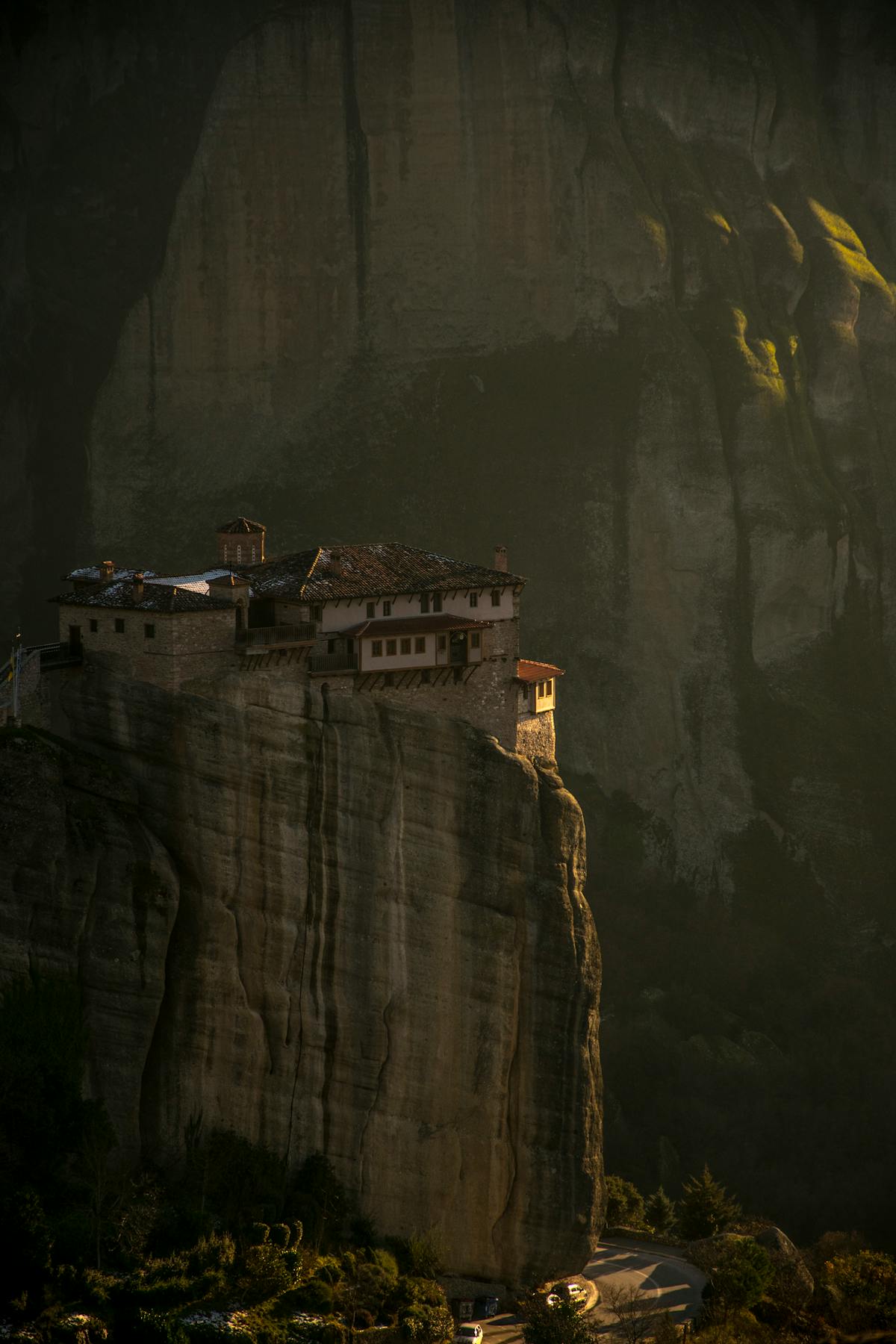
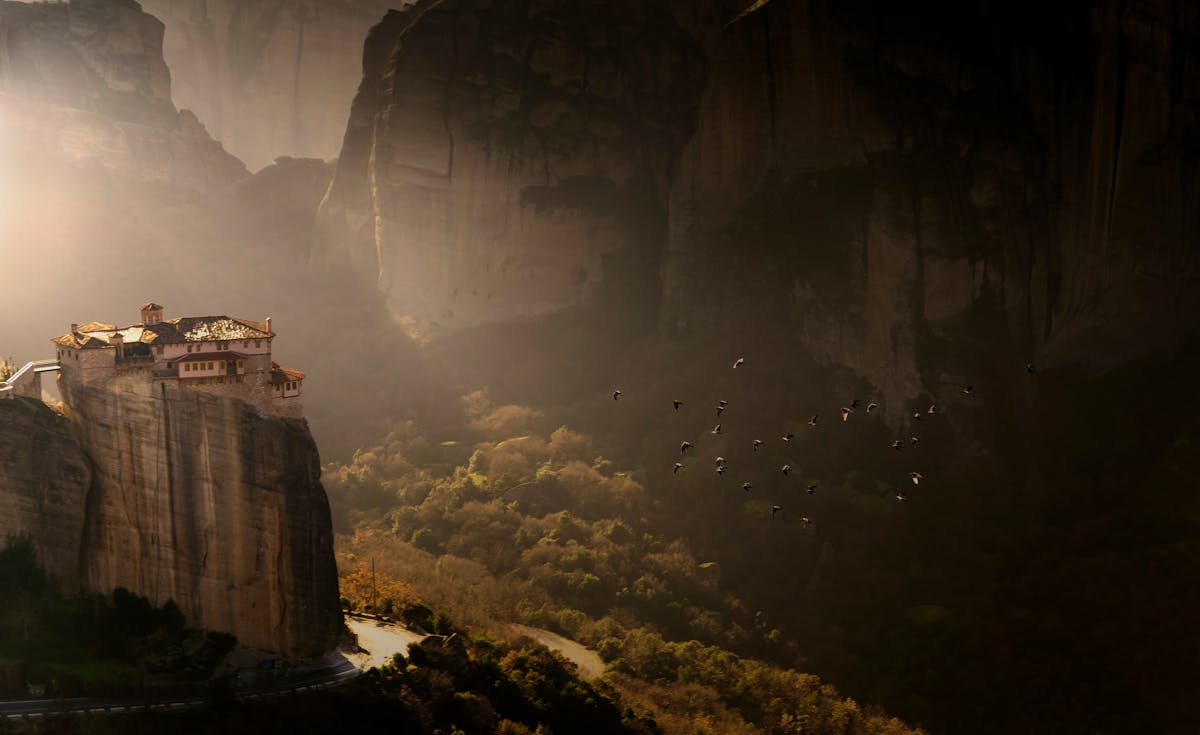
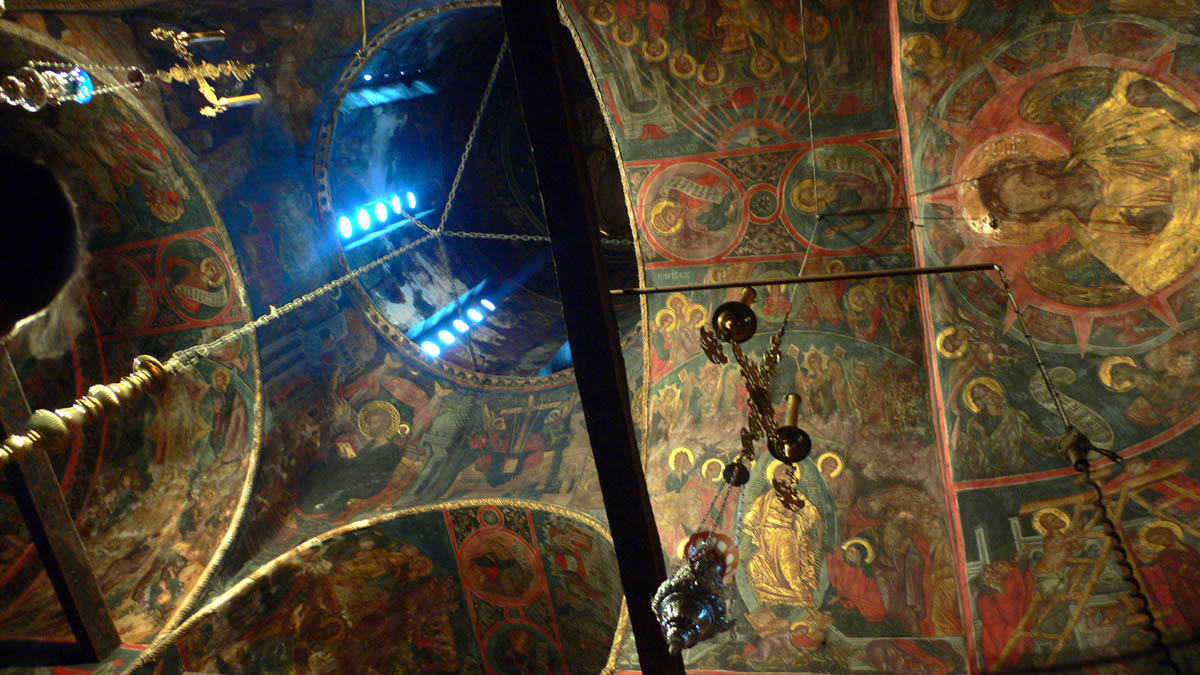
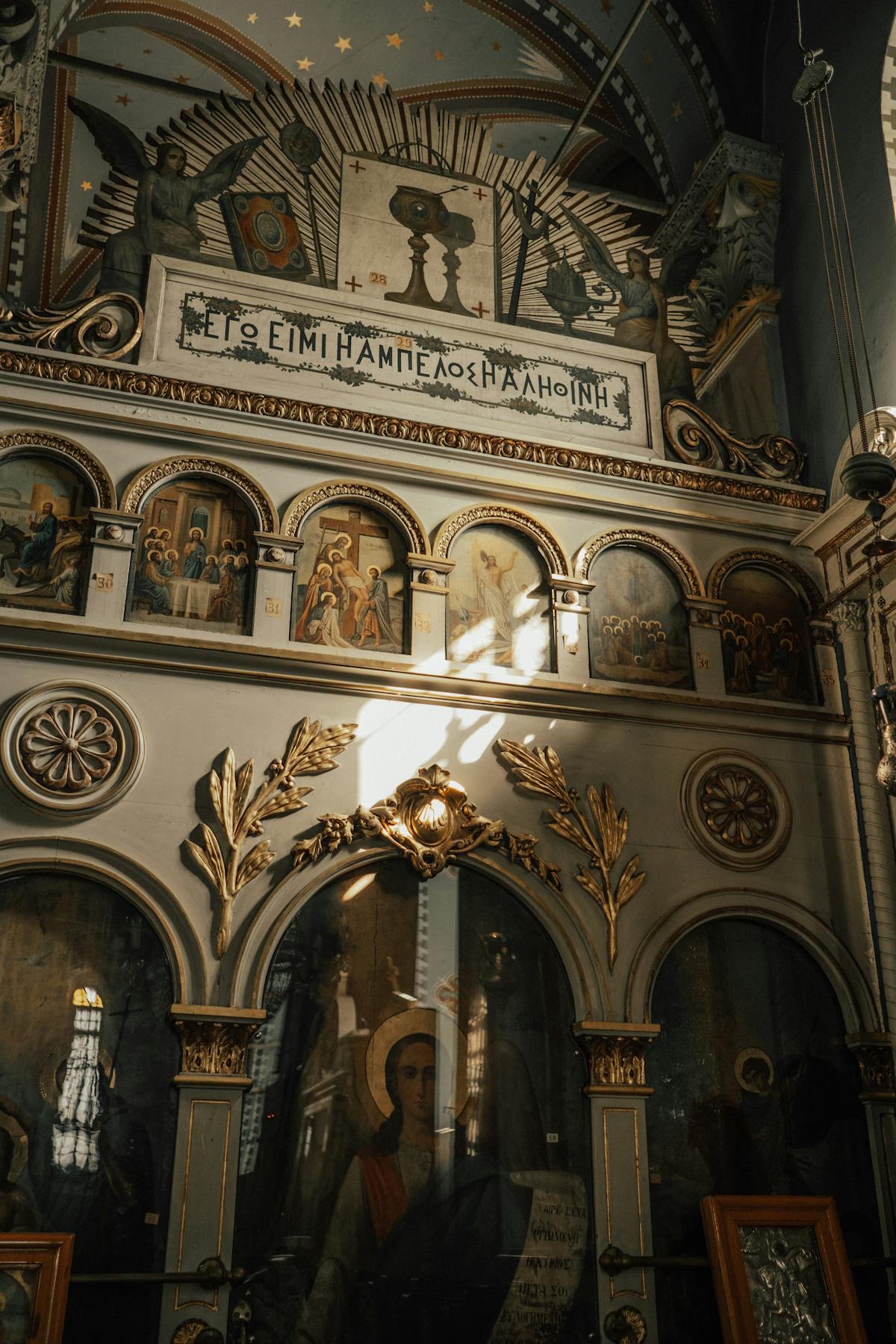
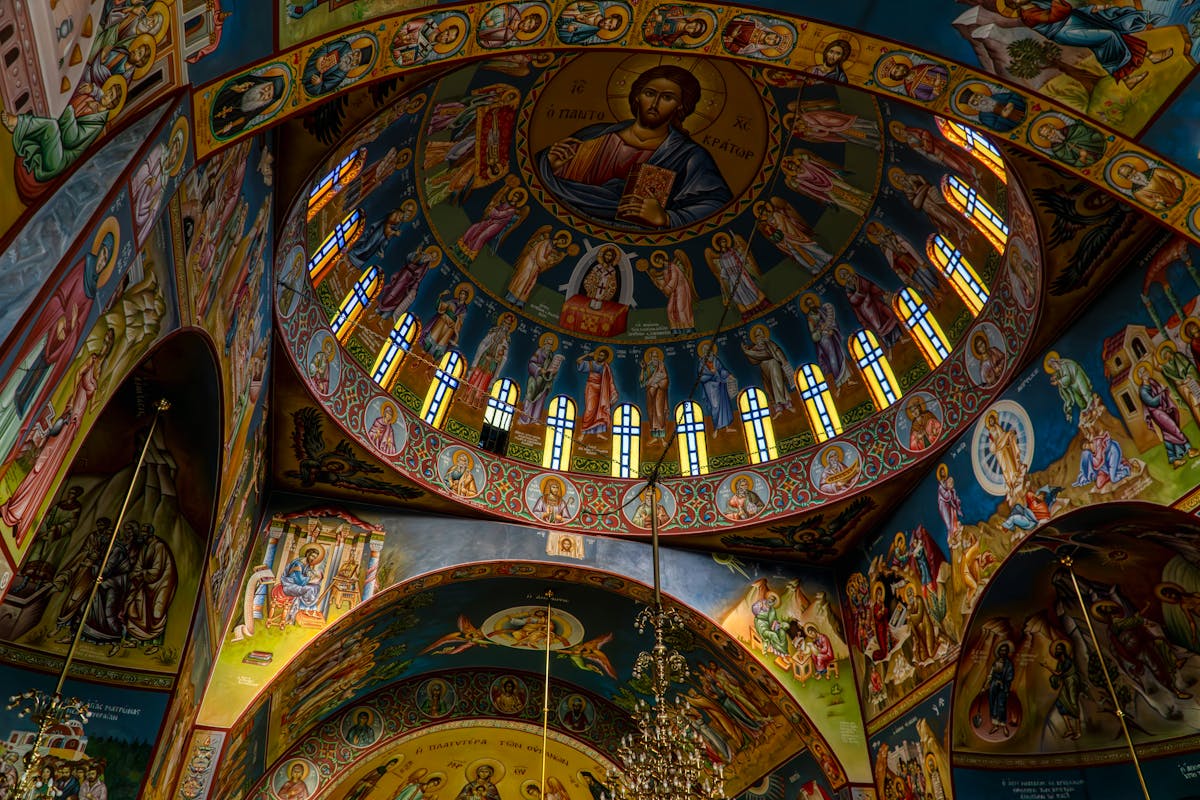
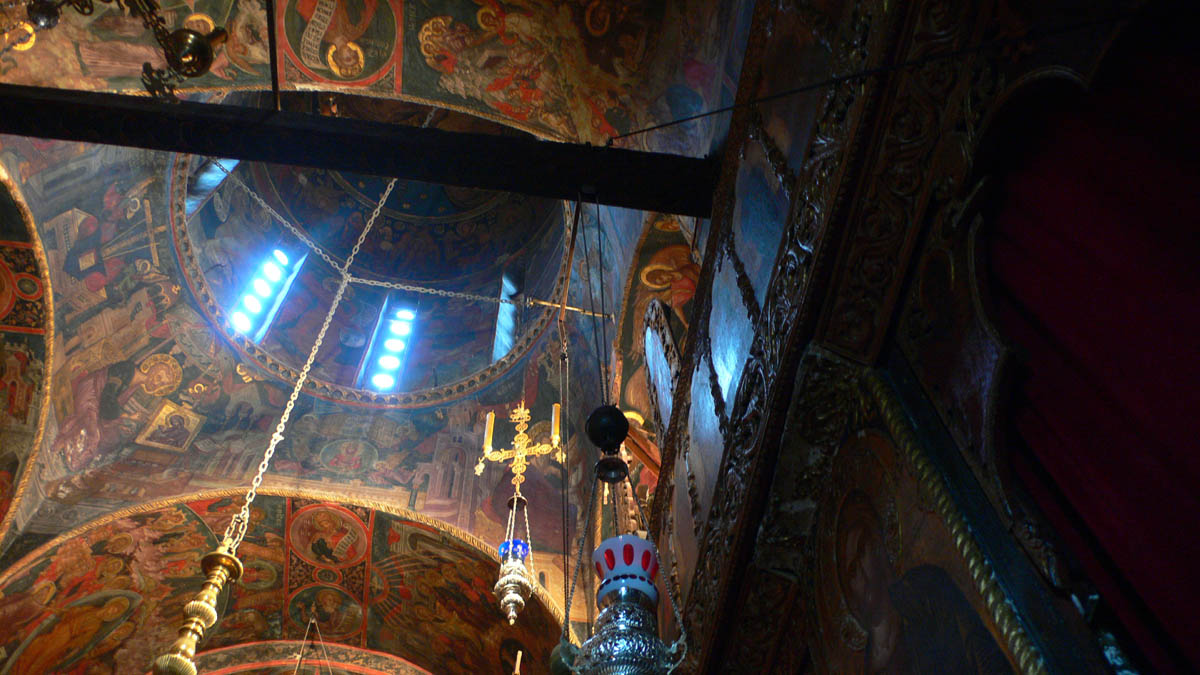
Six monasteries remain active out of the original 24 that were built between the 14th and 16th centuries. Most tours visit 2-3 of them (time constraints and opening schedules make it impossible to see all six in one visit). The Great Meteoron is the largest and oldest, founded around 1340 and perched on the highest rock at 613 metres. The Holy Trinity Monastery is the most photographed (you’ll recognise it from the James Bond film For Your Eyes Only). Rousanou is perhaps the most dramatic — a convent built on a narrow rock pillar that looks like it could topple at any moment. Each monastery has a small church with Byzantine frescoes (some dating back to the 14th century and still vivid in their blues, golds, and reds), a museum with religious artefacts including ancient manuscripts, vestments, and carved wooden iconostases, and viewpoints that make your knees weak. The Varlaam Monastery, the second largest, is particularly worth the steep staircase — its church contains some of the finest frescoes in all of Greece, and the courtyard offers views across the entire valley that are genuinely difficult to photograph because the scale defeats any camera lens. The nuns at Rousanou are known for their hospitality, and the small balcony overlooking the valley below creates a moment of contemplative silence that even the chattiest tour groups respect.
The Hermit Caves
Before the monasteries were built, individual hermit monks lived in natural caves and crevices in the rock faces — some accessible only by rope or ladder, many hundreds of metres above the ground with nothing between them and the valley floor except faith and good balance. Several tours include visits to these caves, which are scattered across the lower cliff faces and provide a visceral understanding of just how committed these monks were to isolation. The caves vary from simple overhangs with carved niches for sleeping and prayer to more elaborate multi-room complexes with stone shelves, water collection systems, and small chapels painted with devotional frescoes. Standing in a cave that someone called home for decades, with nothing but rock walls and a view of the valley stretching to the horizon, puts modern complaints about Wi-Fi signal in sharp perspective. The guides explain how the hermits survived — growing small gardens on cliff ledges, collecting rainwater, and hauling supplies up by rope from the villages below — in conditions that would challenge the most dedicated survivalist.
The History Behind the Rocks
Meteora’s story spans geology, religion, and human stubbornness in roughly equal measure, and understanding even the basics transforms the visit from scenic tourism into something genuinely profound.
60 Million Years of Geology
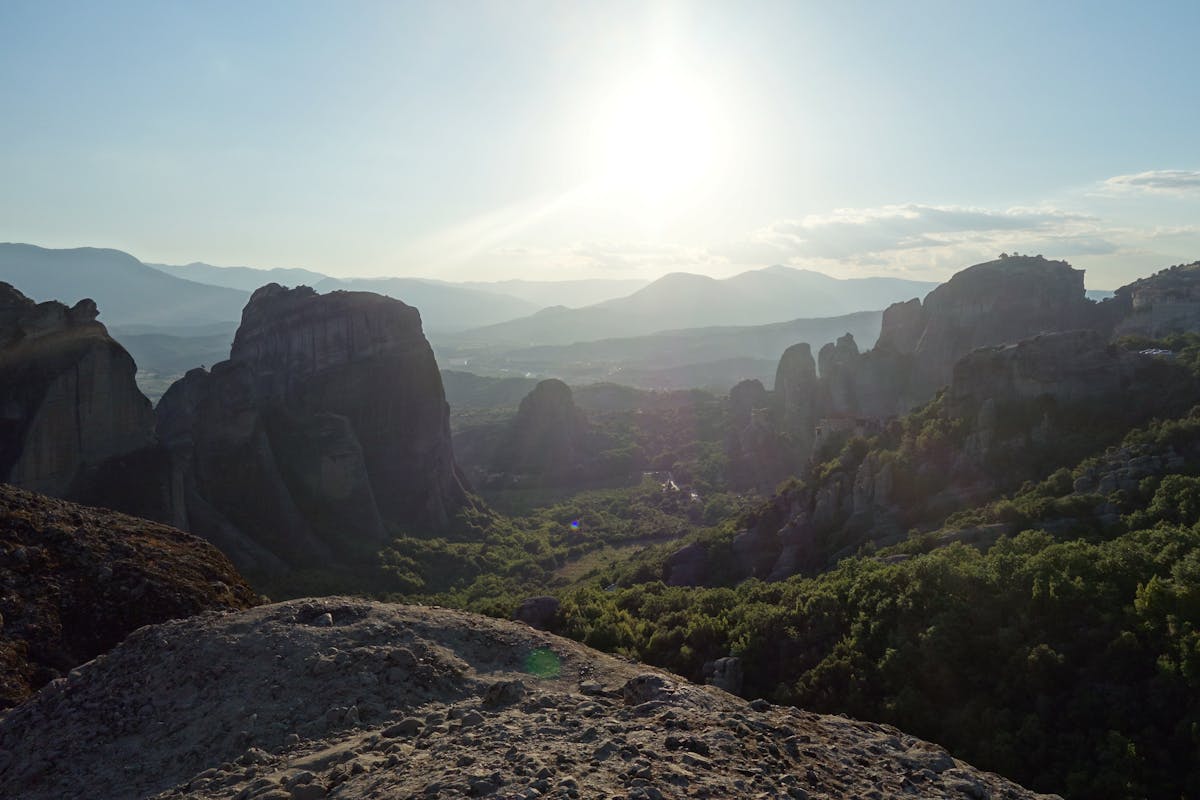
The sandstone pillars of Meteora were formed around 60 million years ago when the Thessaly plain was covered by a prehistoric sea. Rivers deposited sediment into the sea floor, which compressed over millennia into sandstone and conglomerate rock. When the sea retreated and tectonic activity lifted the region, erosion went to work — water, wind, and temperature extremes carved the soft stone into the bizarre vertical columns that stand today. The result is a landscape that looks like it was designed by a sculptor with a taste for the dramatic, which is precisely why the monks chose it. Geologists still study Meteora today — it’s one of the most unusual rock formations in Europe, and the combination of height, density, and vertical structure has no real equivalent anywhere else on the continent.
The Monks Who Climbed
Hermit monks began living in Meteora’s caves as early as the 9th century, drawn by the isolation that the inaccessible rocks provided. By the 14th century, as Ottoman expansion threatened the region, monks began building permanent monasteries on the pillar summits — accessible only by removable ladders and rope-hauled baskets. The logistics were almost comically difficult: every stone, every plank of wood, every bag of mortar, and every person had to be lifted hundreds of metres by rope. The monks considered the hardship itself a form of devotion — if it was easy to reach God, everyone would do it. At its peak, 24 monasteries stood on the pillars, housing hundreds of monks and some of the finest collections of Byzantine manuscripts and religious art in Greece.
Meteora Today
Only six monasteries remain active, maintained by small communities of monks and nuns who continue the contemplative traditions that have persisted here for over a thousand years. The monasteries were designated a UNESCO World Heritage Site in 1988, recognising both their cultural significance and the extraordinary natural landscape. Modern access is via carved stone steps and bridges rather than rope baskets (much to the relief of visiting travelers), but the sense of isolation remains. Standing on a monastery balcony with a 300-metre drop below you and nothing but rock pillars and sky in every direction, you understand why the monks chose this place — and why, centuries later, it still has the power to make you feel very small in the best possible way.
Practical Tips for the Day Trip
The Drive
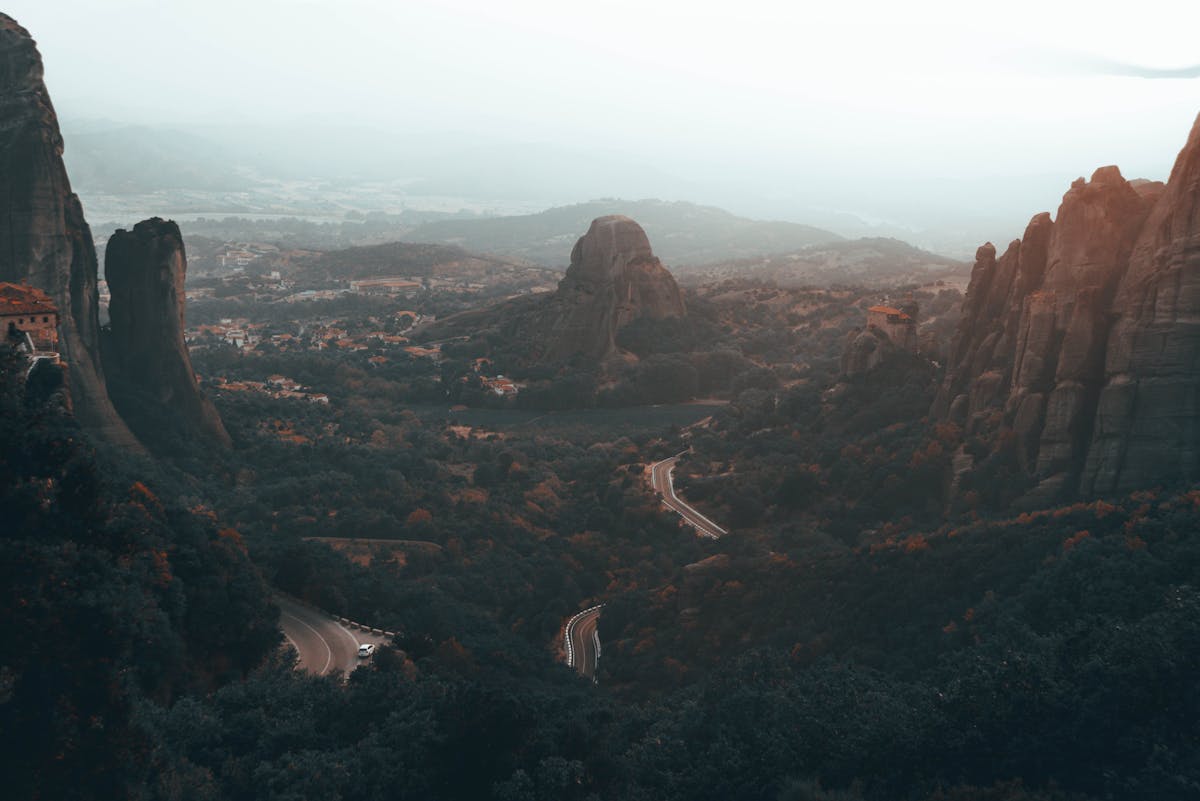
The 350-kilometre drive from Athens to Meteora takes about 4-5 hours each way, mostly on the E75 motorway through the Thessaly plain. It’s not a difficult drive, but it is long, and the early departure (usually around 7-8 AM) means you’ll want coffee before boarding the bus. Most tours include a rest stop about halfway. The road approaching Meteora itself is winding and scenic, climbing through the town of Kalabaka before reaching the monastery viewpoints. If you’re prone to car sickness, take medication before this section.
What to Wear
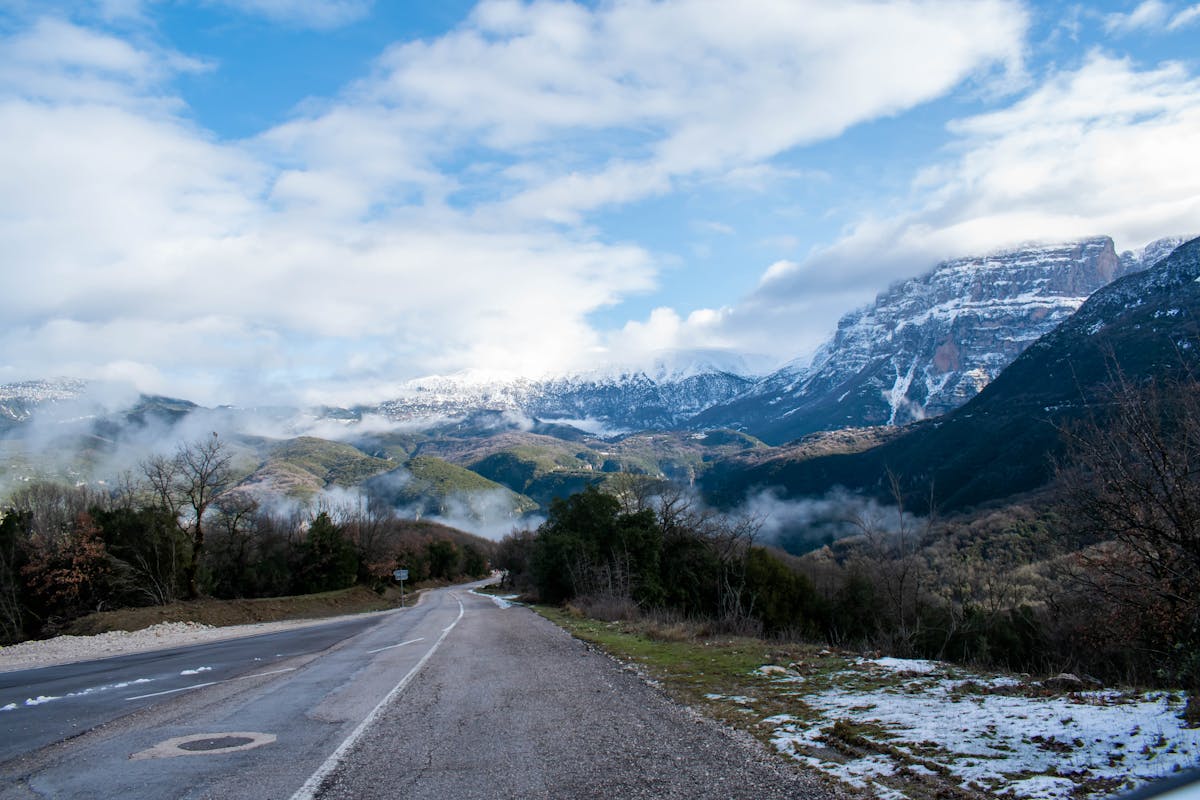
The monasteries enforce a strict dress code: covered shoulders and knees for both men and women, and long skirts (not trousers) for women entering the churches. Most monasteries provide wrap-around skirts at the entrance for women wearing shorts or trousers, but bringing your own long skirt or wide-legged trousers avoids the awkwardness. Comfortable walking shoes with good grip are essential — the stone steps between monasteries are steep, sometimes numbering over 200, and can be slippery when wet. Flip-flops and sandals are a genuine hazard here, not just uncomfortable. Summer temperatures at Meteora are extreme (often 35°C+ with no shade on the exposed rock), so bring plenty of water, a hat, and high-factor sunscreen. The altitude means UV exposure is stronger than you might expect, and the rock reflects heat like a natural oven.
When to Visit
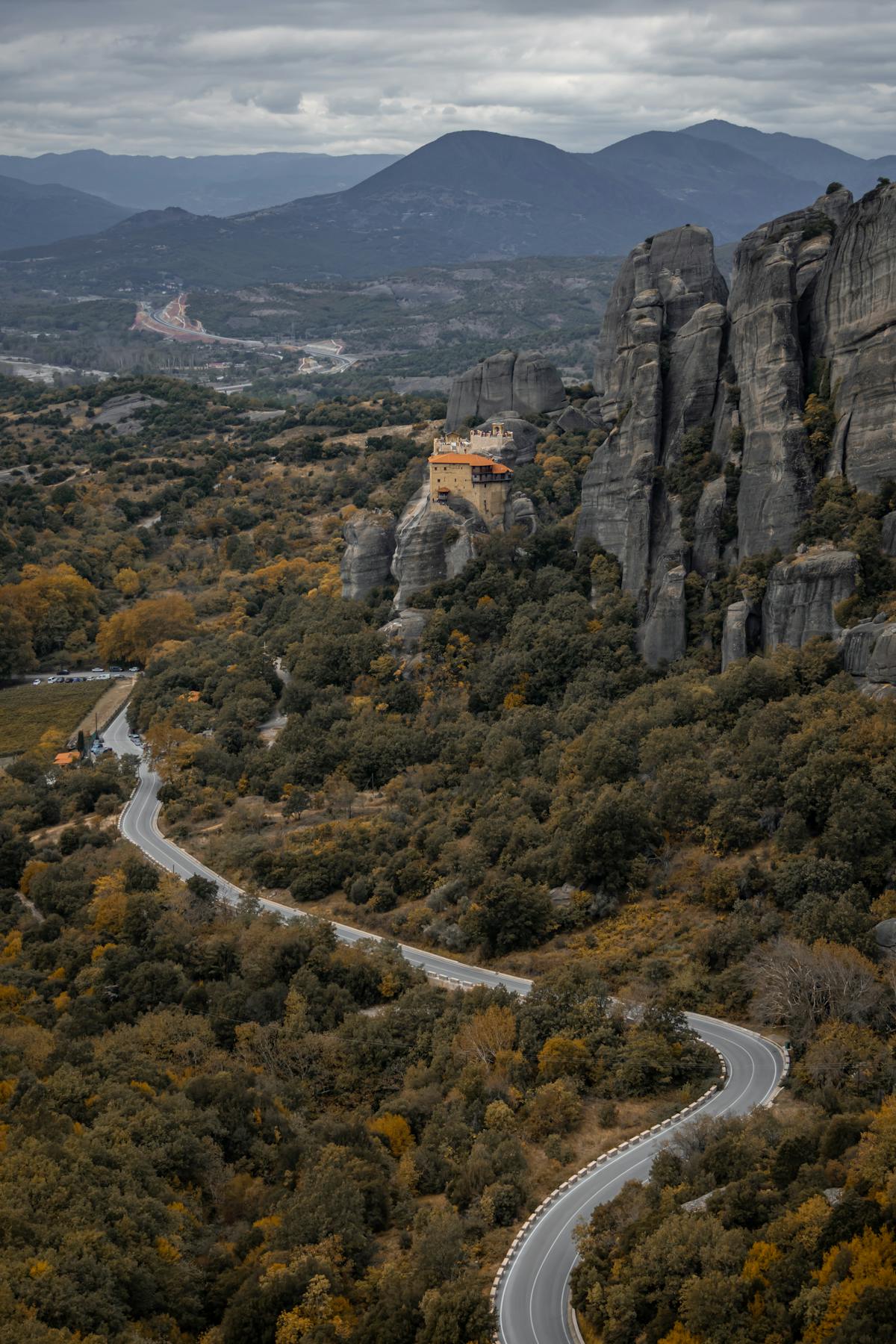
Spring (April-May) and autumn (September-October) are the best seasons — comfortable temperatures, fewer crowds, and the landscape is at its most photogenic. Summer is scorching, with temperatures regularly exceeding 35°C and the rock pillars radiating heat. Winter can be magical — snow-dusted monasteries against grey skies create scenes that look like paintings from a medieval manuscript — but some monasteries close or reduce hours, and road conditions on the mountain approaches can be challenging. Each monastery has its own closing day (they rotate throughout the week, so there’s always at least one open on any given day), and the tour operator manages this for you, ensuring the ones you visit are actually open. One more thing: photography is allowed in the courtyards and outdoor areas of all monasteries, but is generally prohibited inside the churches. The frescoes are light-sensitive and irreplaceable, so this rule is strictly enforced �� your guide will remind you, and the monks take it seriously.
More Greece Guides
Meteora is just one jaw-dropping day trip from Athens in a country that seems to specialise in them. The Acropolis guided tours deliver 2,500 years of Western civilisation in a single morning — the Parthenon, the Erechtheion, and the theatre of Dionysus with licensed archaeologists explaining every stone. For a completely different sensory experience, the Athens food tours take you through the Central Market, hidden tavernas, and baklava shops that make you question every Greek meal you’ve ever eaten outside Greece.
On the islands, Santorini’s catamaran cruises sail through a flooded volcanic caldera with BBQ lunch and sunset views, while the Corfu boat tours to Paxos and Antipaxos offer turquoise lagoons that rival the Caribbean. For more mainland history, Delphi — where the ancient world’s most powerful oracle held court — sits in a mountain amphitheatre that justifies the drive on its own, and the Mycenae and Epidaurus day trip visits the Bronze Age fortress of Agamemnon and a 2,300-year-old theatre with acoustics that still work perfectly.