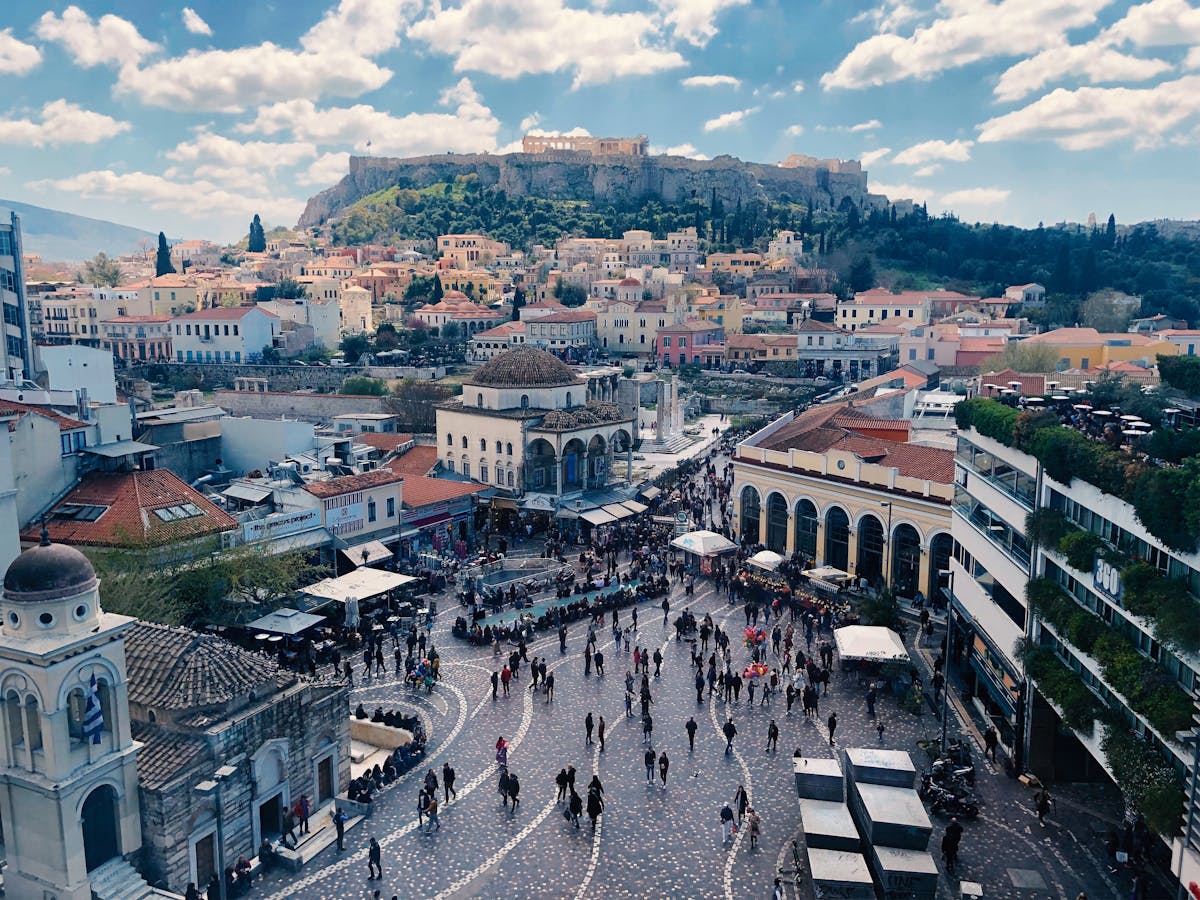
Greek food is the reason half the people who visit Athens come back. Not the Parthenon, not the mythology, not the Aegean sunsets — the food. A cuisine built on olive oil, feta, fresh vegetables, grilled meats, and honey-soaked pastries doesn’t sound revolutionary on paper, but when you taste it made properly, with ingredients that have been grown in the same volcanic soil for millennia, you understand why Greeks consider their food a matter of national identity rather than just sustenance. The problem for visitors is knowing where to find it. Athens has thousands of restaurants, and the ones clustered around tourist hotspots are — with rare exceptions — serving reheated versions of dishes that deserve much better. A food tour with a local guide solves this problem completely.
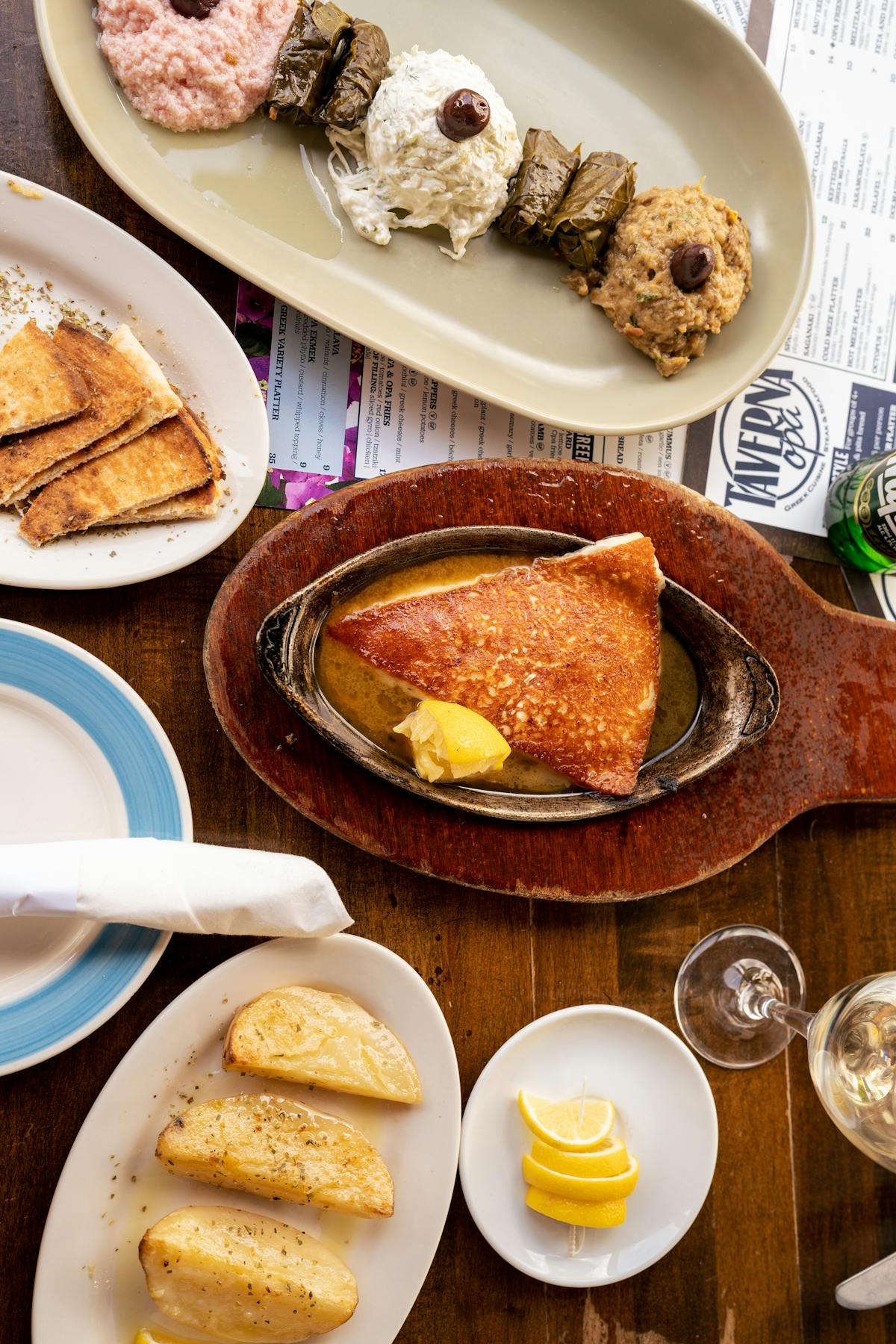
Athens’ food tour scene has matured into something genuinely excellent. The best tours don’t just take you to eat — they walk you through the Central Market (Varvakios Agora), explain the regional variations of feta and olive oil, teach you why Greek honey tastes different from anything you’ve had before, and introduce you to family-run establishments where the owner comes out to explain what you’re eating. By the end, you’ll have a list of places to return to for the rest of your trip, an understanding of what makes Greek cuisine distinct, and a stomach that won’t need dinner.
The Greek Food Walking Tour is the top choice with 4,740 reviews, a perfect 5.0 rating, and guides like Adele and Ana who are consistently praised for their knowledge and warmth. Come hungry — reviewers universally warn that the portions are enormous. For an evening alternative, the Athens Evening Food Tour hits the same quality with a different atmosphere.
- Recommended Food Tours
- 1. Greek Food Walking Tour — Athens’ Most Popular
- 2. Greek Foodie Tour with Tastings — The Premium Alternative
- 3. Athens Cooking Class with Market Visit
- 4. Athens Evening Food Tour — After-Dark Flavours
- What You’ll Eat on an Athens Food Tour
- The Central Market (Varvakios Agora)
- Feta, Olive Oil, and Honey
- Souvlaki and Gyros
- Desserts and Coffee
- Athens Food Culture: A Brief History
- The First Cookbook Was Greek
- The Ottoman Influence
- The Mediterranean Diet
- Practical Tips for Eating in Athens
- Where to Eat (and Where to Avoid)
- Meal Timing
- Wine, Ouzo, and Drinking Culture
- Tipping and Ordering
- More Greece Guides
Recommended Food Tours
1. Greek Food Walking Tour — Athens’ Most Popular
With 4,740 reviews and a perfect 5.0 rating, this tour has earned its reputation as the definitive Athens food experience. The format is a 3.5-4 hour walking tour through the neighbourhoods around the Plaka, Central Market, and surrounding streets, stopping at 6-8 hand-selected establishments for tastings that collectively amount to a massive meal. The guide provides context at every stop — not just what you’re eating, but why it matters, where the ingredients come from, and how the dish fits into Greek culture.
Matthew captured the experience perfectly: “They are not joking when they say come hungry. The food and sights were great. But what made this tour amazing was our guide, Adele.” He praised her for showing them “not only a great time with good food but several insights into Greek culture and history.” Anna said the tour “is NOT to be missed” — guide Ana “went above and beyond to educate us on basically the entirety of the Plaka and surrounding neighbourhoods” and “took us to hand-selected out-of-the-way eateries and an exceptional coffee experience.”
Susan offered essential practical advice: “We would suggest taking this tour at the beginning of your stay as she offers many recommendations of where to eat the best food.” This is a consistently repeated tip — doing the food tour on day one gives you a curated restaurant list for the rest of your trip, which is worth the tour price alone. Lee’s summary is spot-on: “Arrive hungry, leave happy.”
Read reviews and check prices for this tour
2. Greek Foodie Tour with Tastings — The Premium Alternative
This 2,859-review tour (4.9 rating) offers a similar format but with a slightly more curated, premium feel. The stops tend to be slightly more upmarket, and the guide commentary is particularly strong on regional Greek food traditions — explaining which islands produce the best feta, why Cretan olive oil tastes different from Peloponnese varieties, and how climate affects the flavour of Greek honey.
Sara’s review captures why solo travellers especially benefit: “Anna and the other people on the tour made me feel so welcome — if you’re considering doing this on your own, don’t hesitate.” She added the practical tip to “do this at the start of your trip as you’ll discover some hidden gems that you’d be unlikely to come across on your own.” Luca noted the tour covers “breakfast, lunch and dinner, so it’s worth the price” — and warned to “not eat too much before.” James was so impressed he called guide Adele “brilliant — so knowledgeable and passionate about Athens and the culture.”
3. Athens Cooking Class with Market Visit
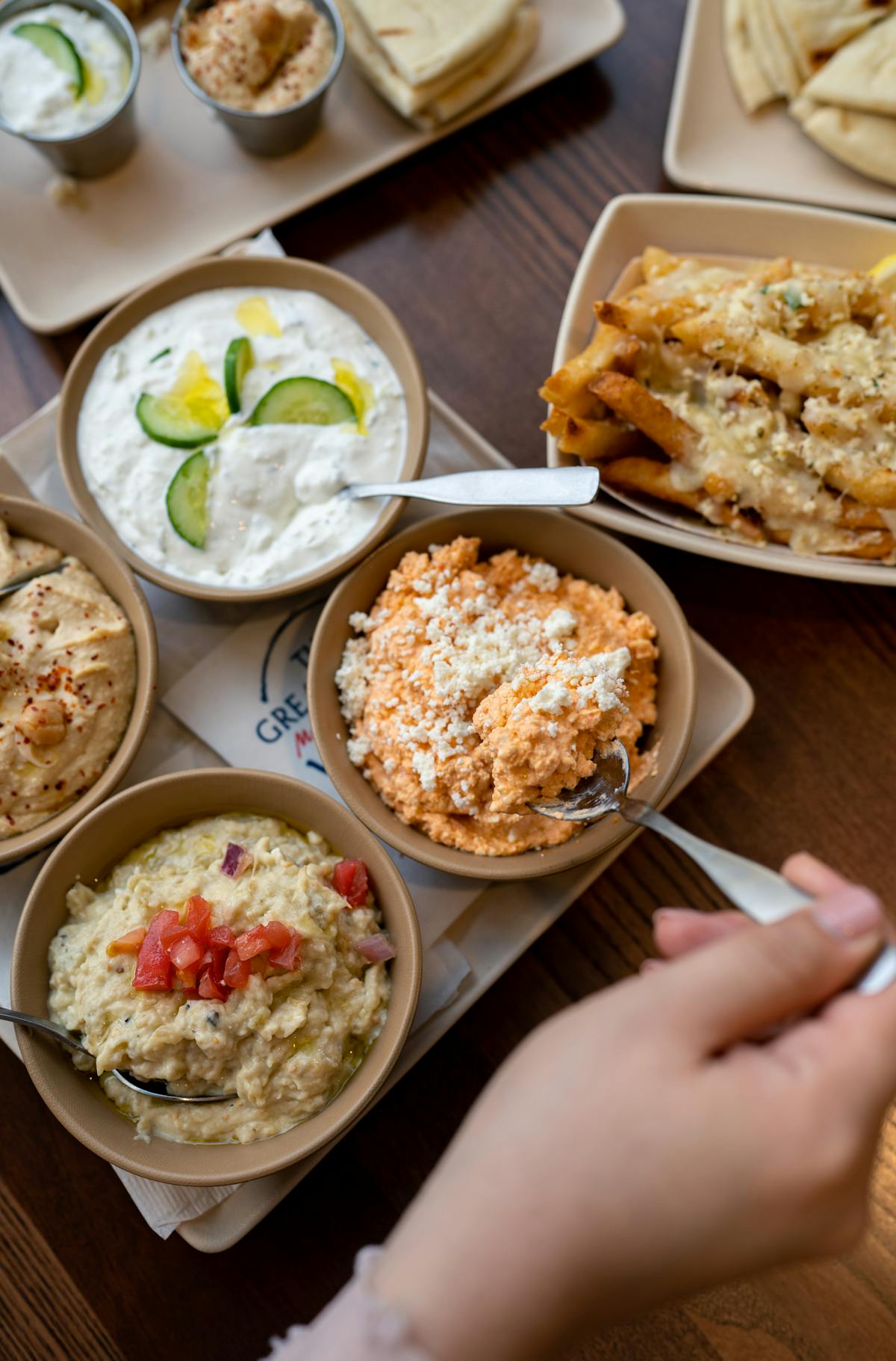
If you want to take Greek food knowledge home with you, this 4-hour cooking class (1,101 reviews, 5.0 rating) starts with a guided tour of the Central Market — walking through the meat, fish, and produce halls with your instructor explaining what to look for — and then returns to the kitchen to cook a full Greek meal from scratch. Dishes typically include dolmades (stuffed vine leaves), spanakopita (spinach pie), tzatziki, stuffed aubergine, and orange pie for dessert.
Katrina’s detailed review highlights the star instructor: “Vasia was amazing. Super friendly, knowledgeable, and funny.” She praised the “relaxed and fun atmosphere” and the vegetarian-friendly options. Brandon called it “the highlight of our stay in Athens” with instructor Thanassius who was “fun, lively, and energetic.” Julie loved the market visit specifically — “not something we would have gone to had she not taken us there” — and the communal cooking experience: “it was a great experience. Well worth the money spent!”
The class accommodates vegetarians and offers a genuinely hands-on experience — you’re actually cooking, not watching a demonstration. Leftovers are yours to take, which Jenna noted was “enough to have dinner twice!” The class size is deliberately kept small (usually 10-14 people), which means you get genuine one-on-one instruction rather than watching from the back of a crowded kitchen. Several reviewers mentioned that the recipes came with printed cards to take home, and that the techniques — particularly the filo pastry handling — were straightforward enough to replicate in a normal home kitchen. If you’ve ever wanted to make spanakopita that actually tastes like it does in Athens, this is where you learn.
Read reviews and book this class
4. Athens Evening Food Tour — After-Dark Flavours
This 766-review tour (5.0 rating) takes the food tour concept and shifts it to the evening, which changes the atmosphere entirely. Athens after dark is a different city — the heat drops, the tavernas fill up, fairy lights come on, and the food takes on a more social, celebratory character with live bouzouki music drifting from open doorways. The evening tour visits 5 stops across a few neighbourhood blocks, including wine, souvlaki, charcuterie, and dessert, all while the guide weaves in Greek history and local culture.

The evening format works particularly well in summer, when daytime Athens can hit 38°C and the idea of walking for four hours in the sun feels more like endurance training than a culinary experience. After dark, the temperature drops to something pleasant, the Plaka’s narrow streets take on an almost cinematic quality, and the food itself shifts toward the heavier, more satisfying end of Greek cuisine — think slow-braised lamb, wine from small-batch producers, and loukoumades served warm with honey drizzling down the sides. Several reviewers specifically mentioned that the evening timing made it easy to combine with an afternoon at the Acropolis Museum, creating a full culture-and-food day without any scheduling stress.
Nicole called it “a fun and delicious way to start our trip” and praised the guide as “amazing — friendly, knowledgeable, and passionate about Greek food.” Matthew highlighted that the tour guide “placed history of Greece within the tour which added to the experience” and had “a great sense of humour.” Lea appreciated that the stops were “within a few blocks radius, ending up in an area where you could continue to celebrate the evening away” — making it a perfect launchpad for a night out.
What You’ll Eat on an Athens Food Tour
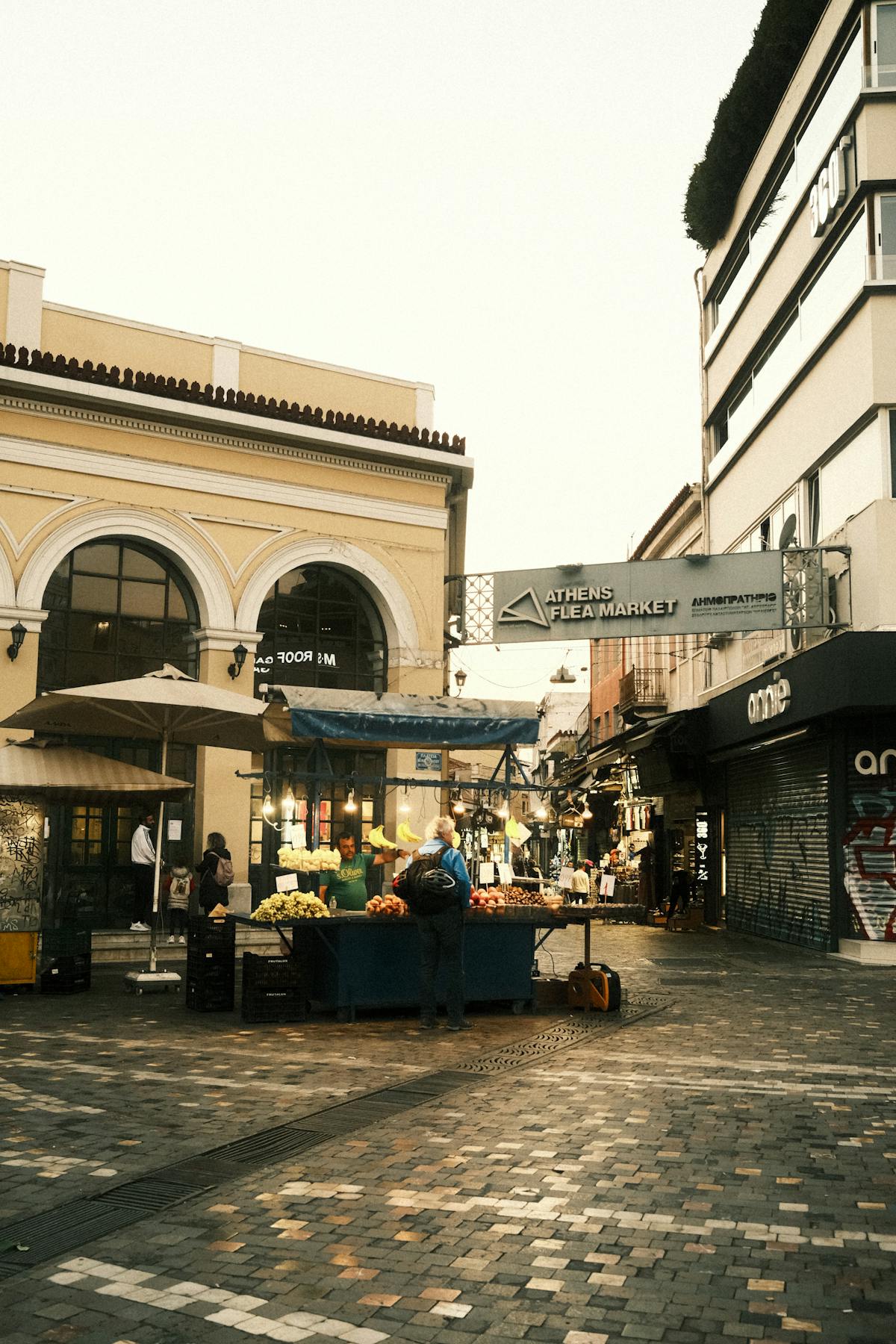
The Central Market (Varvakios Agora)
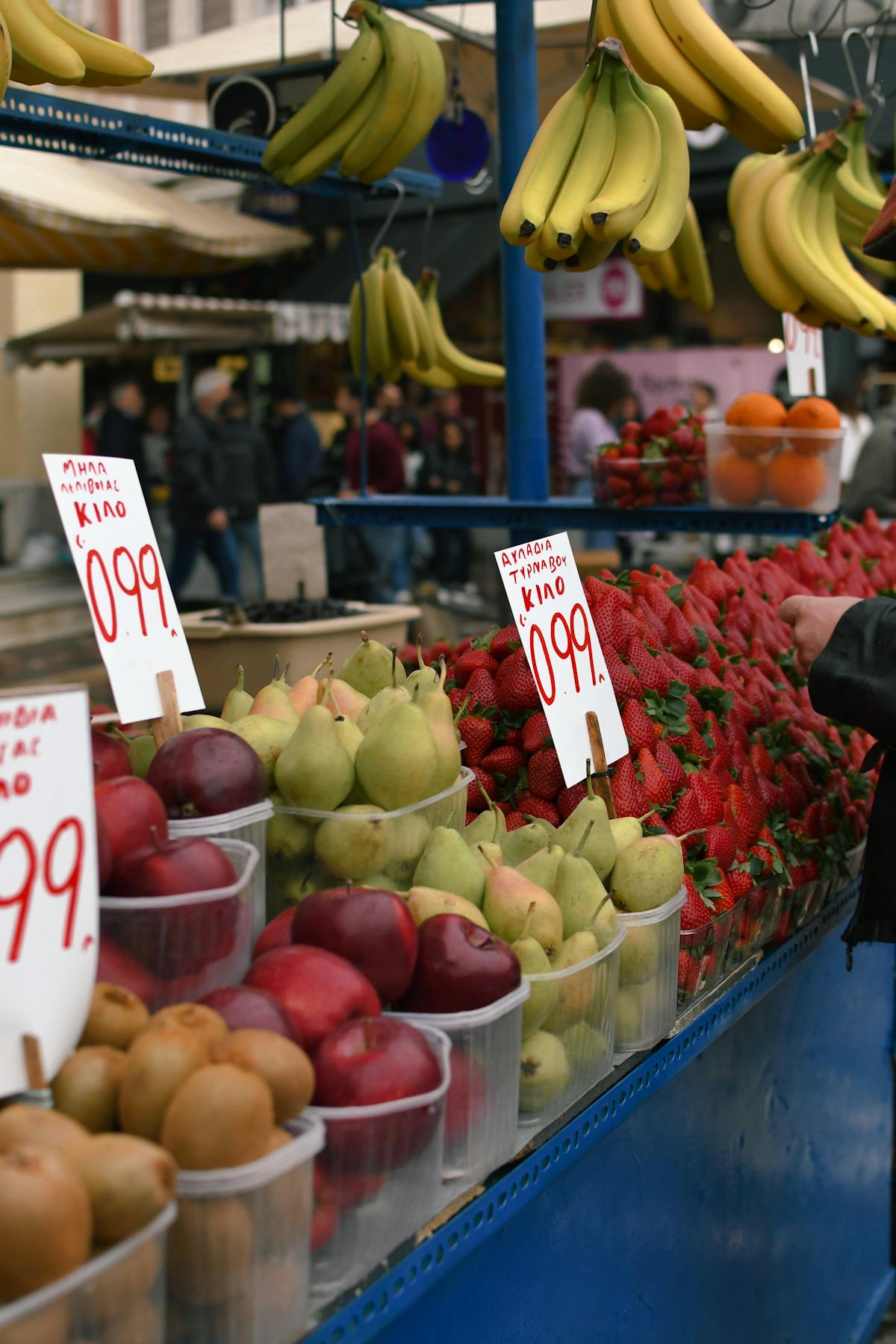
Most daytime food tours start at or pass through Athens’ Central Market, and it’s a sensory assault in the best possible way. The fish hall gleams with Mediterranean catches arranged on ice — octopus, sea bream, red mullet, sardines — while the meat hall next door has whole lamb carcasses hanging from hooks and butchers calling out to customers. The vegetable and spice stalls surrounding the main halls sell everything from Kalamata olives to dried mountain herbs to saffron from Kozani. Guides explain what to buy, what’s in season, and what’s worth taking home.
Feta, Olive Oil, and Honey
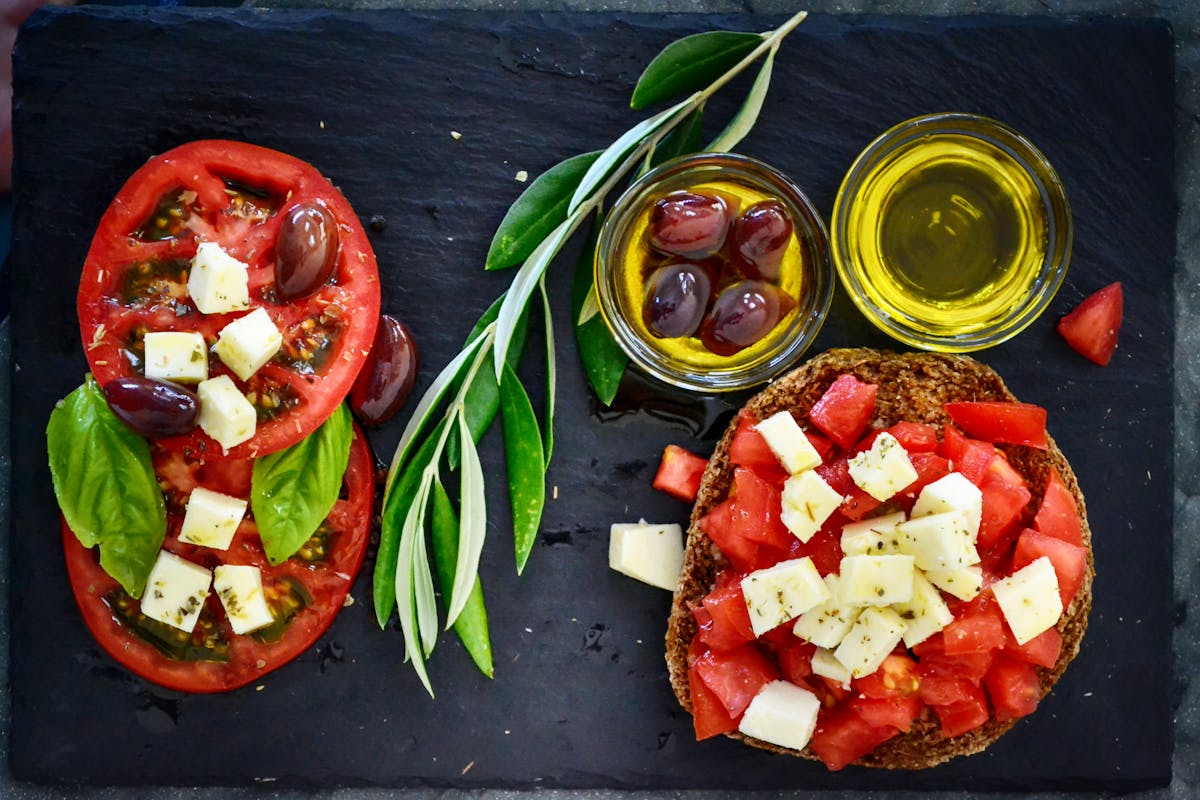
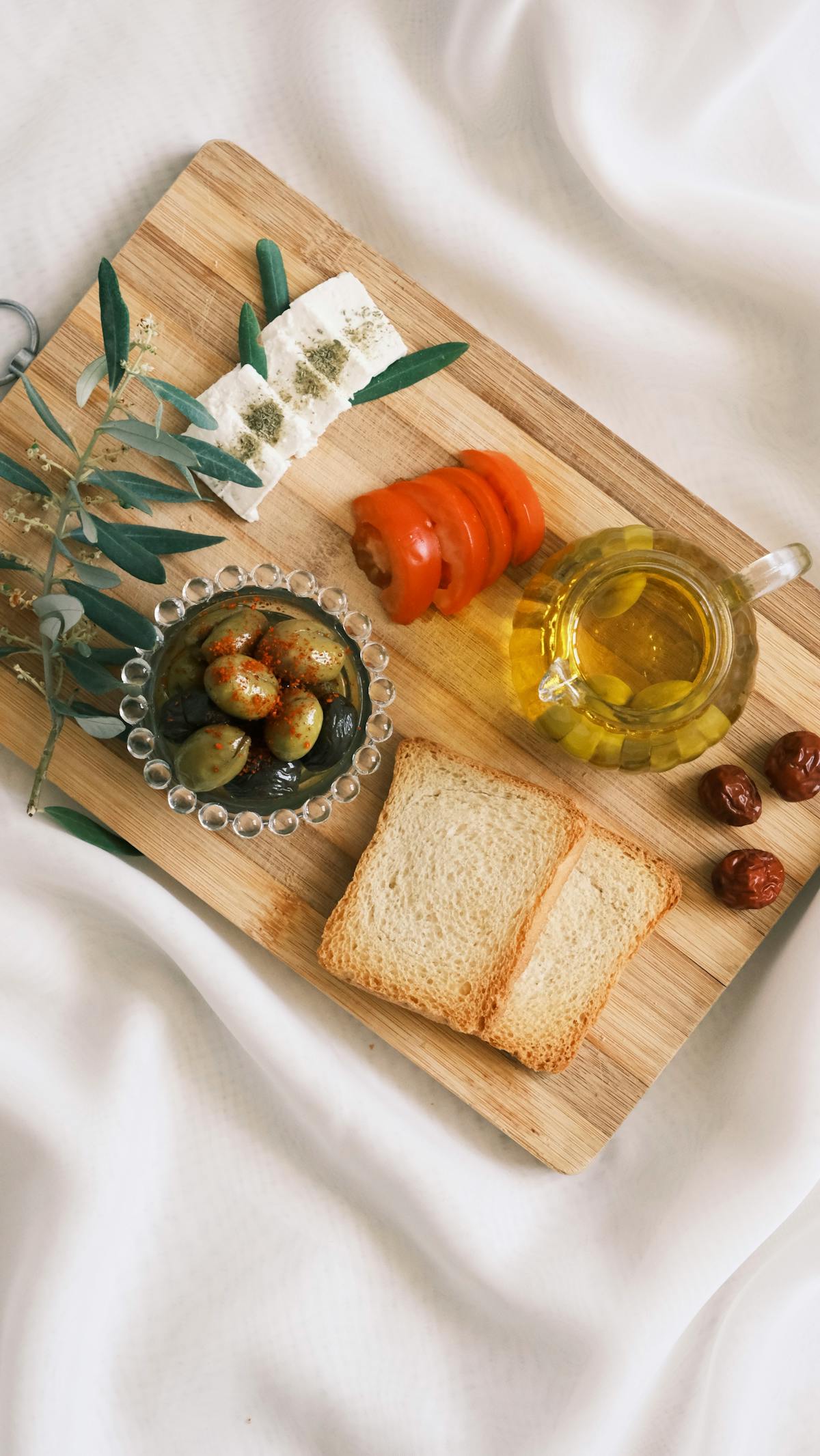
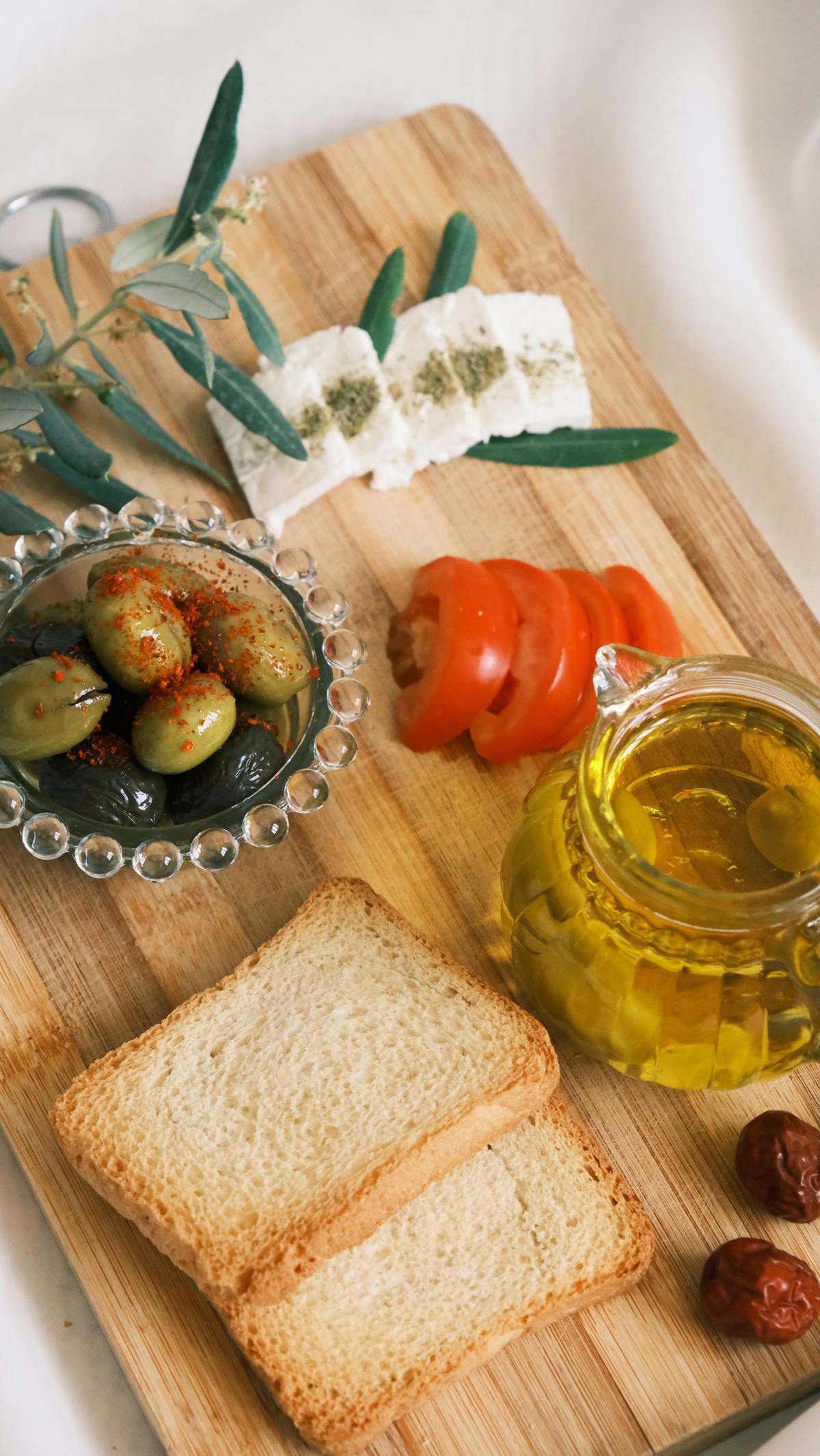
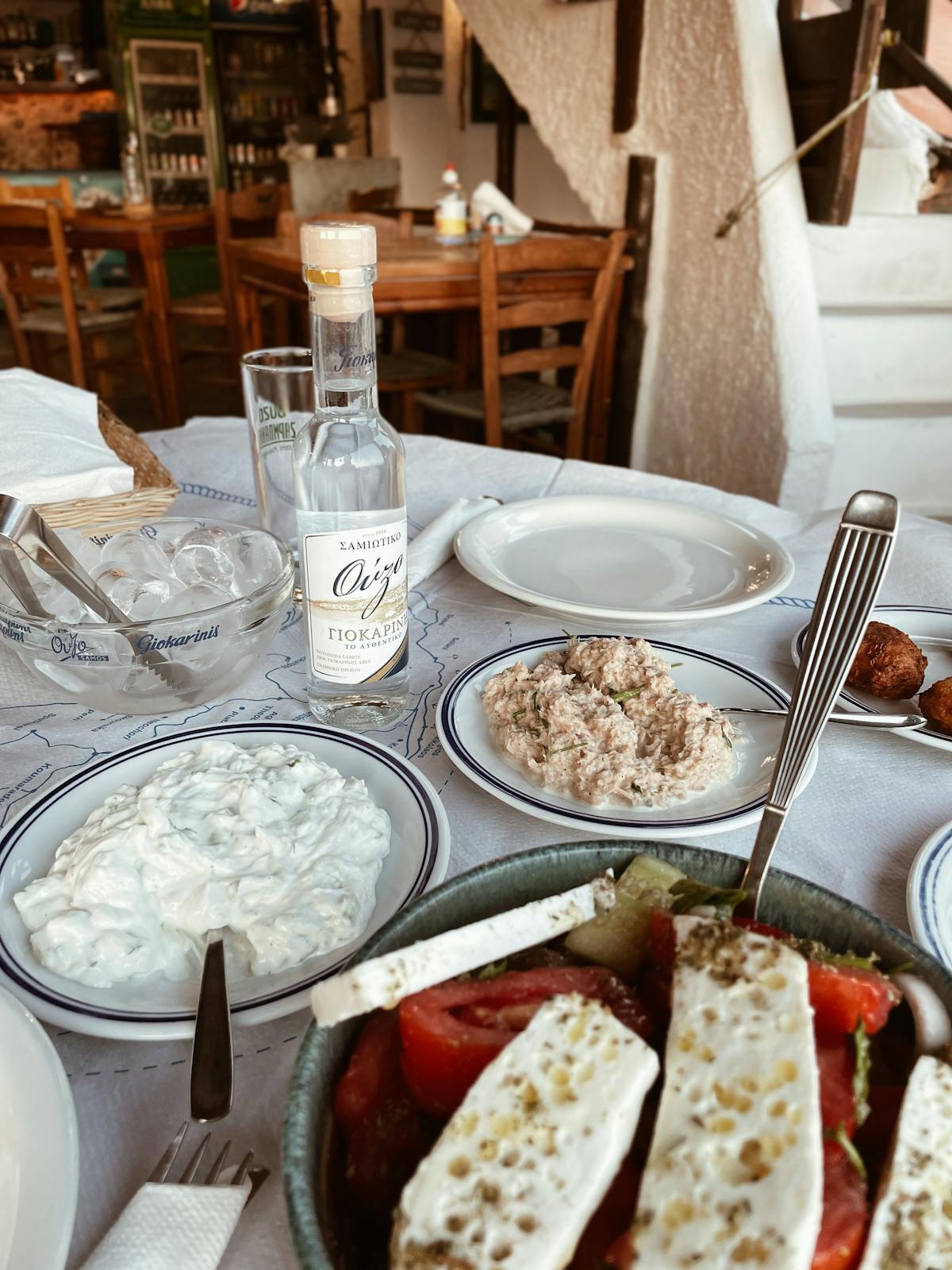
These three ingredients are the pillars of Greek cuisine, and a food tour teaches you why the Greek versions are in a different league. Greek feta is PDO-protected (Protected Designation of Origin) and must be made from at least 70% sheep’s milk — the salty, crumbly, tangy result bears no resemblance to the bland blocks sold in most supermarkets abroad. Greek olive oil, particularly from the Peloponnese and Crete, has a peppery, grassy intensity that transforms even simple bread into a memorable bite. And Greek honey — especially thyme honey from the islands — has a complexity and floral depth that makes the generic commercial stuff taste like sugar water.
Souvlaki and Gyros
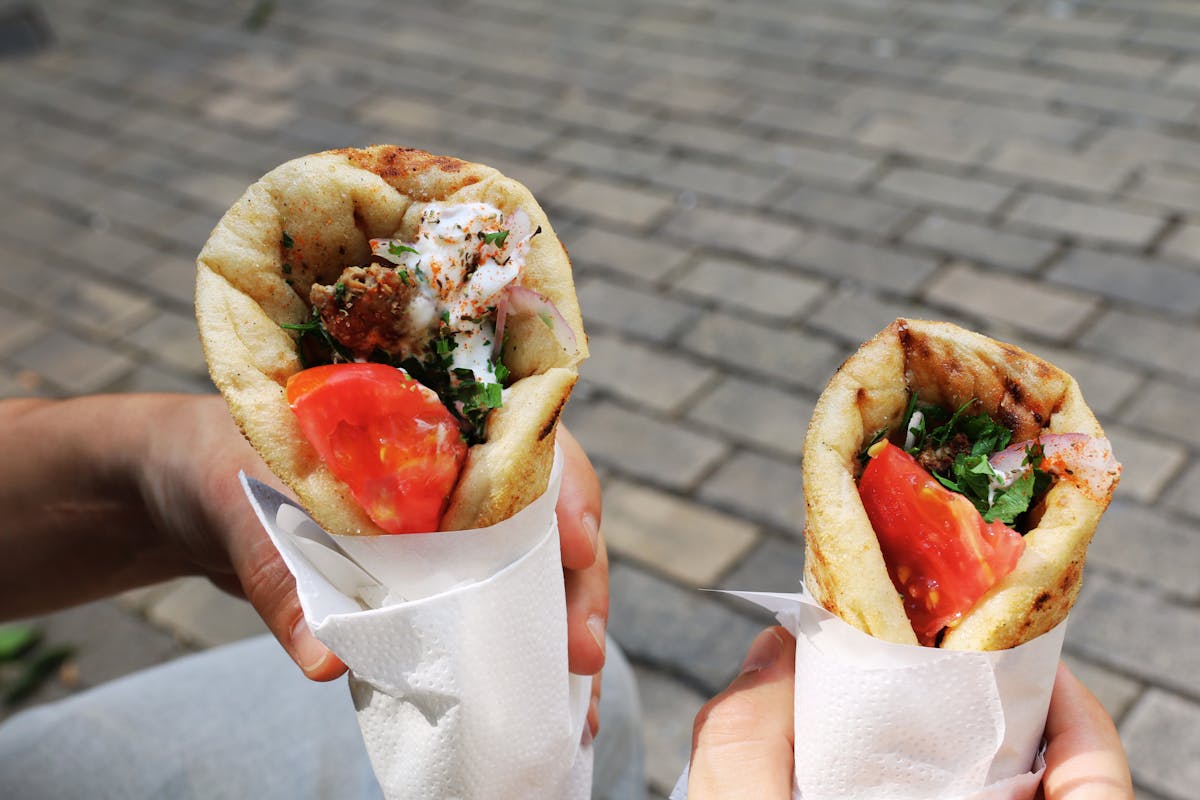
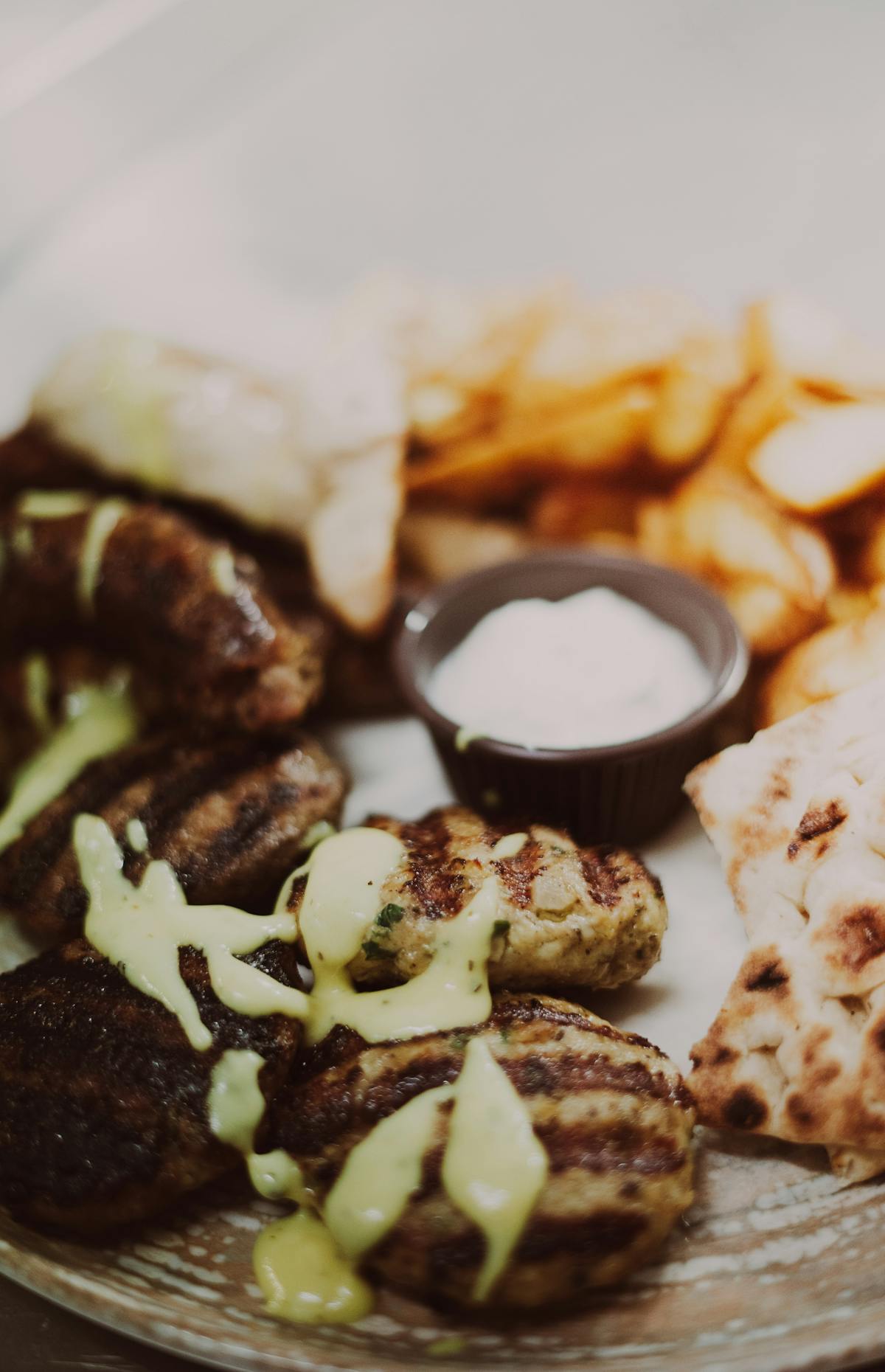
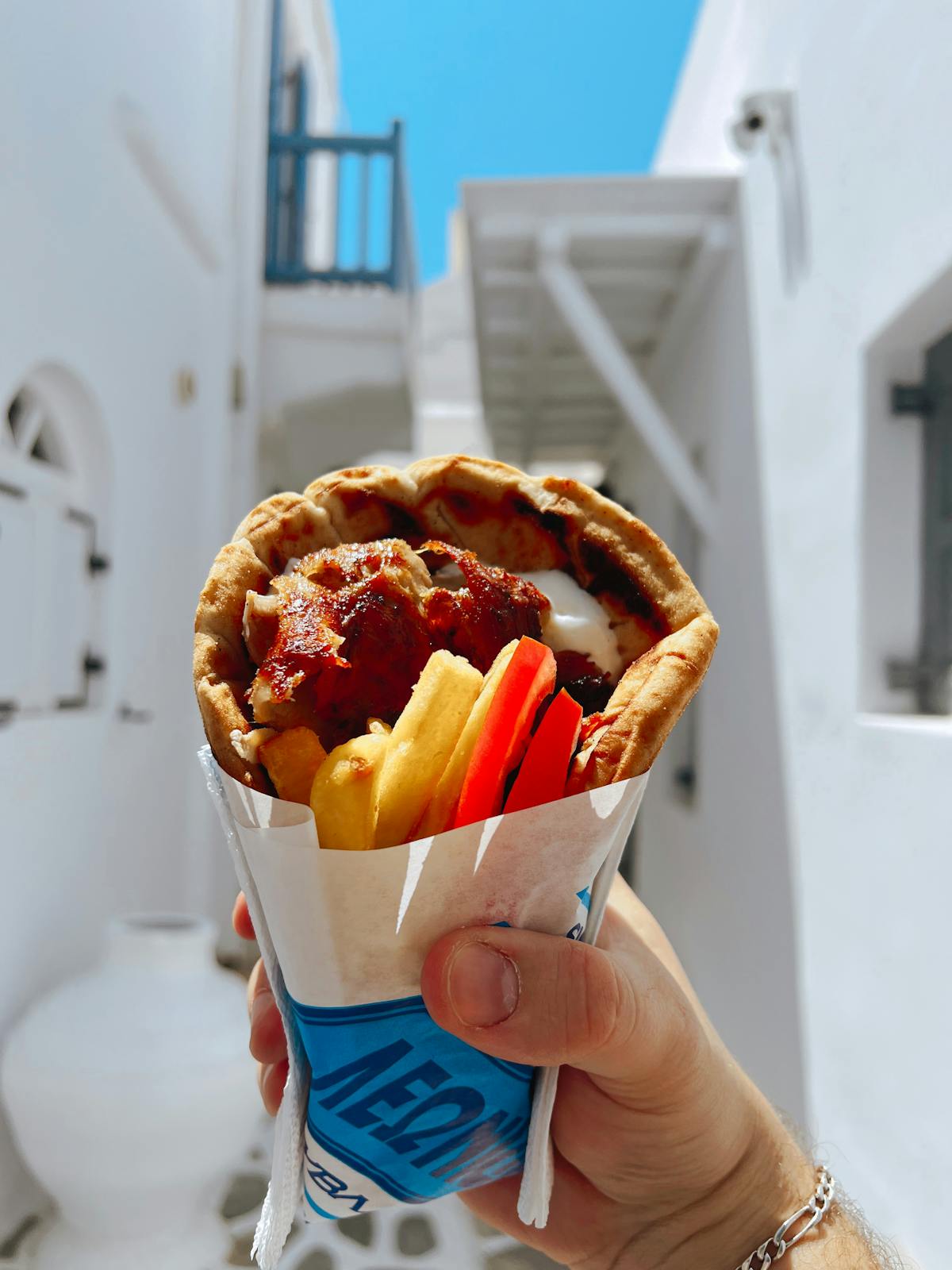
The great Athens street food debate: souvlaki (grilled meat skewers) versus gyros (meat carved from a vertical rotisserie, wrapped in pita with tzatziki, tomato, and onion). Food tours typically visit the city’s best examples of both, and the quality gap between a good gyros and a tourist-trap version is enormous. Look for places where the pita is grilled to order on a flat top (it should be slightly charred and puffed, not cold and floppy), the tzatziki is freshly made with thick strained yoghurt (not from a bucket), and the meat has actual flavour rather than just salt. The guides know exactly which places meet this standard.
A few things worth knowing: “souvlaki” in Athens usually means a pork skewer, while in Thessaloniki it means the whole wrapped package that Athenians call “pita gyros” — ordering wrong in either city will get you a gentle lecture from your waiter. The best souvlaki joints in Athens are standing-room-only affairs with a counter and a few stools, where the guy grilling has been doing it for thirty years and considers each skewer a matter of personal honour. The food tour guides will take you to these places rather than the sit-down restaurants, and the difference in quality is immediately obvious. Budget around €3-4 for a souvlaki wrap — if you’re paying more than €6, you’re in the wrong place.
Desserts and Coffee
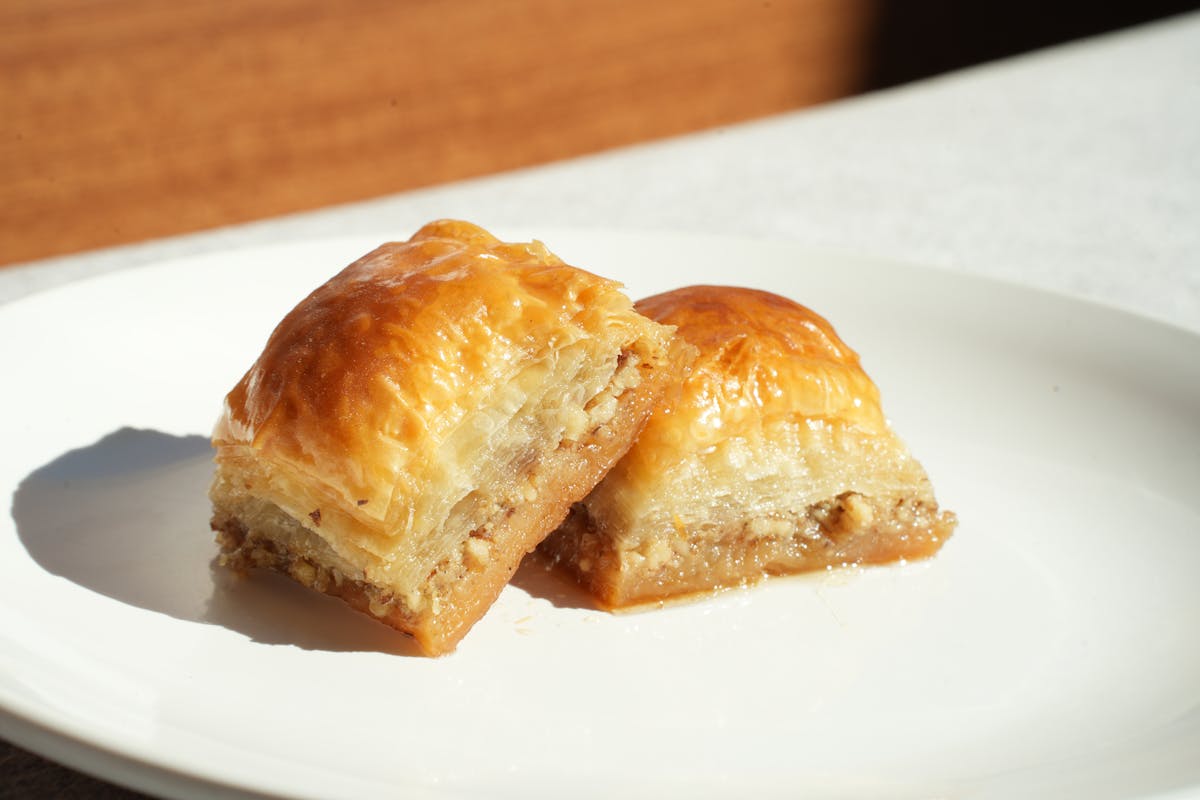
Greek desserts lean heavily on honey, nuts, and filo pastry — baklava is the most famous, but loukoumades (honey-soaked doughnut puffs), galaktoboureko (custard in filo), and kataifi (shredded pastry with nuts) are all worth trying. The loukoumades in particular are worth seeking out — served fresh from the fryer, drizzled with thyme honey and sprinkled with cinnamon and crushed walnuts, they’re the kind of dessert that makes you understand why Greeks end every meal with something sweet. You’ll find dedicated loukoumades shops scattered around the Plaka and Monastiraki, and the food tours almost always stop at one.
Greek coffee, served thick and unfiltered in a small cup with the grounds settled at the bottom, is an acquired taste but an essential cultural experience. The preparation method hasn’t changed in centuries — finely ground coffee brewed slowly in a small brass pot called a briki, producing a rich, concentrated cup with a layer of foam on top called kaimaki. Most food tours end with a coffee stop, and guides will teach you how to order it correctly — sketos (no sugar), metrios (medium), or glykos (sweet). If you prefer something cold, the freddo espresso and freddo cappuccino are Greece’s modern coffee inventions and genuinely superior to anything Starbucks has ever attempted.
Athens Food Culture: A Brief History
Greek cuisine isn’t just old — it’s the foundation of all Western food culture, and understanding its history makes every dish you taste more meaningful. The food tour guides touch on these stories, but knowing the full context adds a layer of appreciation that transforms a pleasant meal into a cultural experience.
The First Cookbook Was Greek
The earliest known cookbook in Western history, Deipnosophistae (“The Dinner-Table Philosophers”), was written by the Greek author Athenaeus around 200 AD and describes banquets, recipes, and food customs from centuries earlier. But Greek food writing goes back even further — Archestratus of Gela wrote a gastronomic poem in the 4th century BC that essentially functioned as a restaurant guide to the Mediterranean. The Greeks didn’t just eat well — they wrote about eating well, debated the philosophy of flavour, and considered cooking a legitimate intellectual pursuit. Plato discussed the ethics of diet. Hippocrates declared “let food be thy medicine.” The connection between food, health, and philosophy that we now call “food culture” started here.
The Ottoman Influence
Nearly 400 years of Ottoman rule (1453-1821) left a deep imprint on Greek cuisine — baklava, dolmades (stuffed vine leaves), moussaka (which has Turkish origins), and the tradition of mezze (multiple small dishes shared communally) all have Ottoman connections. This isn’t a one-way street — the Ottomans adopted Greek ingredients and techniques too — but the fusion created a cuisine that’s distinctly Greek while sharing DNA with Turkish, Lebanese, and Middle Eastern food traditions. The rivalry between Greek and Turkish claims to certain dishes (who invented baklava? who makes better yoghurt?) is real, passionate, and delightfully petty.
The Mediterranean Diet
In the 1950s, American researcher Ancel Keys studied the diet and health of people in seven countries and found that Greeks — particularly on Crete — had remarkably low rates of heart disease despite a high-fat diet. The difference was the type of fat: olive oil rather than butter, combined with abundant vegetables, legumes, fish, and moderate wine consumption. This research became the foundation of the “Mediterranean diet” concept, which is now recognised by UNESCO as an Intangible Cultural Heritage. When you eat in Athens, you’re not just having a nice meal — you’re experiencing one of the healthiest and most studied dietary patterns in the world.
Practical Tips for Eating in Athens
Where to Eat (and Where to Avoid)
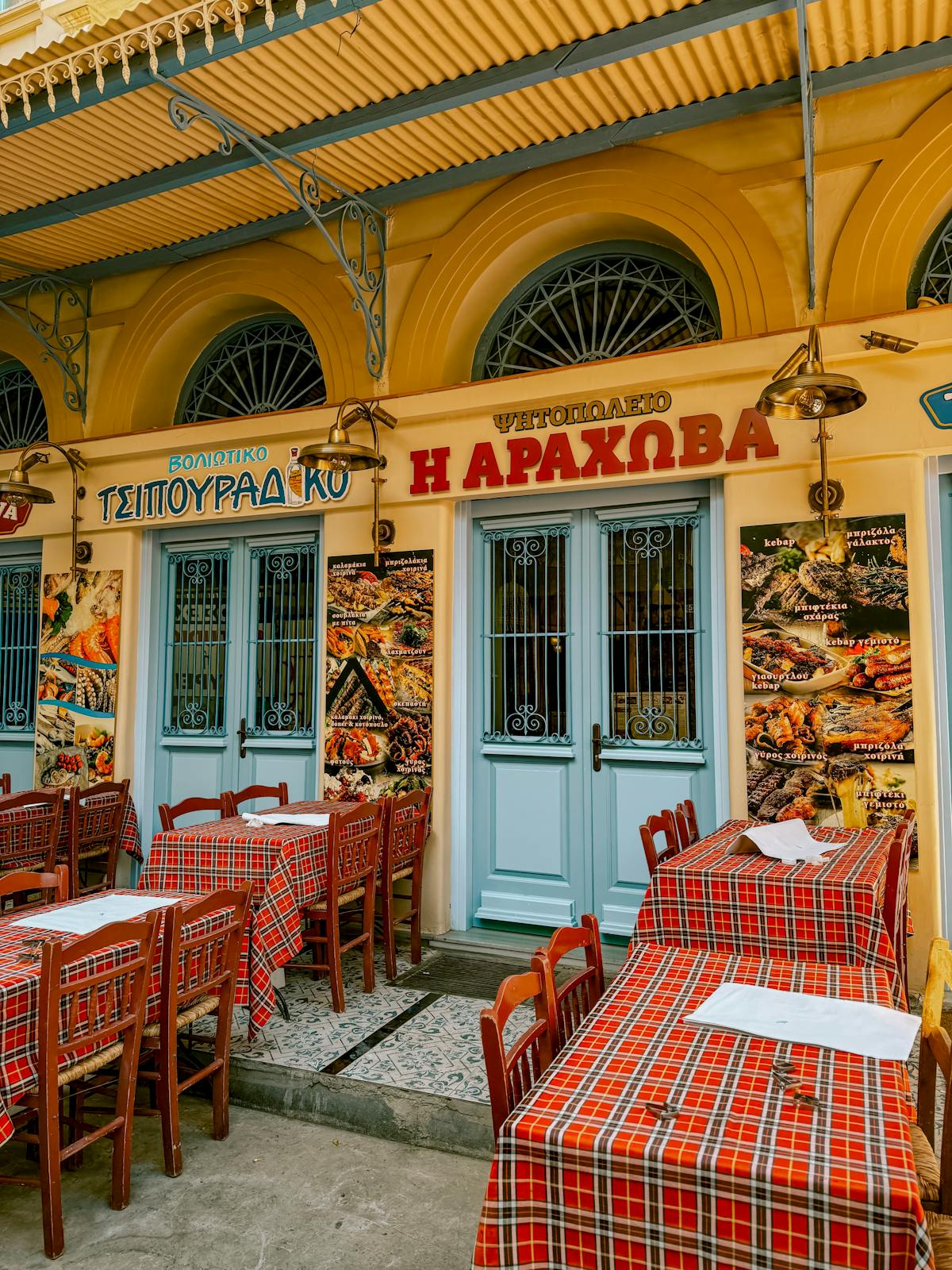
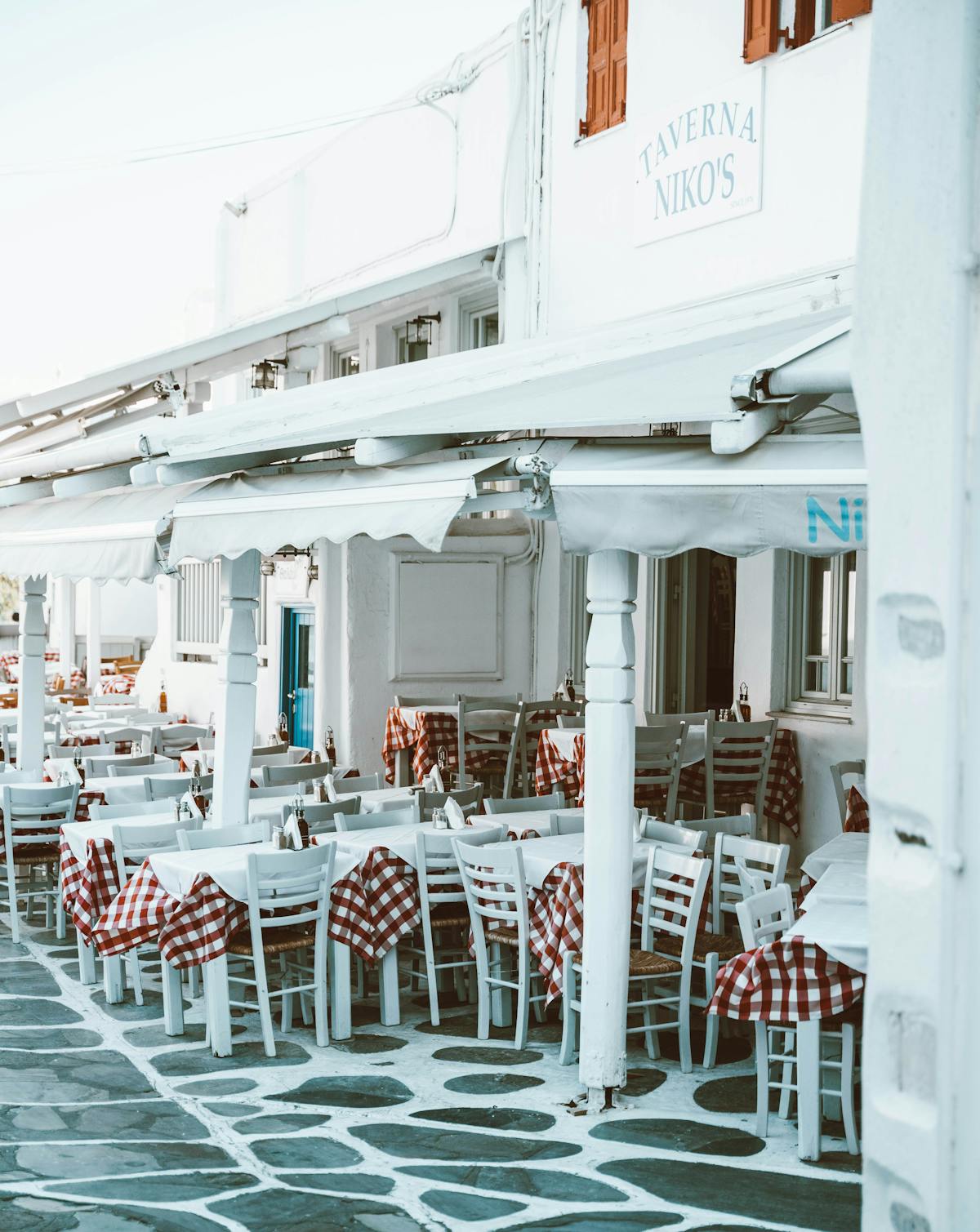
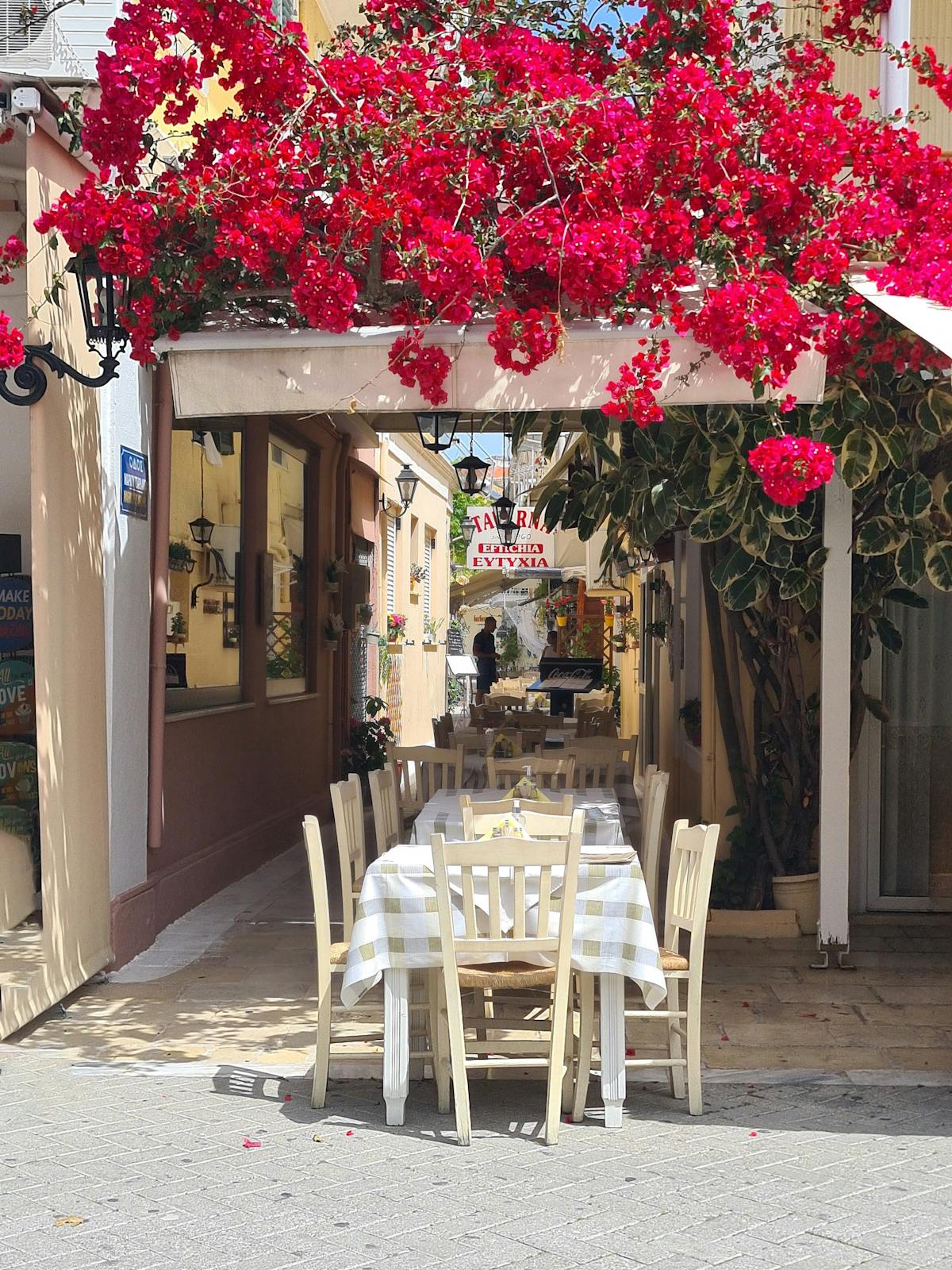
The general rule: avoid restaurants on the main tourist strips that have photos on the menu, staff standing outside trying to lure you in, and “Greek salad” for €15. Walk one or two streets back from any major attraction and the quality improves dramatically while prices drop. The Plaka neighbourhood is the worst offender — the main pedestrianised streets are lined with near-identical restaurants serving overpriced, microwaved moussaka to travelers who don’t know any better. But duck into the side streets of Psyrri, Monastiraki, or Koukaki and you’ll find tavernas where the menu is in Greek first (English second, if at all), the wine comes from the owner’s cousin’s vineyard, and a full meal for two costs what you’d pay for one starter in the tourist zone.
A few specific indicators that you’ve found a good place: the kitchen is visible and active, not hidden behind a wall; there’s a daily specials board in Greek; locals are eating there (not just travelers); and the menu is short and changes seasonally rather than offering fifty dishes year-round. The food tours teach you this instinctively — once you’ve seen what good tavernas look like, you’ll spot them on your own for the rest of your trip.
Meal Timing
Greeks eat late. Lunch is 2-3 PM and dinner rarely starts before 9 PM — some of the best tavernas don’t even open for dinner until 8 PM. If you arrive at a restaurant at 6 PM, you’ll be eating alone (or at a tourist place). This confuses visitors from northern Europe and North America who are used to eating dinner at 6:30 sharp, but adapting to Greek meal timing is part of the experience and actually makes the day flow better. Have a late breakfast (Greek yoghurt with honey and walnuts, or a koulouri — the sesame bread ring sold at every street corner), eat a big lunch around 2 PM, grab a freddo espresso and some street food in the late afternoon, and don’t think about dinner until the sun goes down. By the time you’re sitting at a taverna at 9:30 PM with a carafe of wine and a table full of mezze, you’ll wonder why anyone eats dinner at 6 PM.
Wine, Ouzo, and Drinking Culture
Greek wine deserves far more international recognition than it gets. Assyrtiko from Santorini, Xinomavro from Naoussa, and Moschofilero from the Peloponnese are world-class varieties grown nowhere else, and Athens’ tavernas often serve them by the carafe at prices that would make a Parisian wine bar weep. The food tours usually include at least one wine tasting, and it’s worth paying attention — discovering a grape variety you’ve never heard of and can’t get at home is one of the genuine pleasures of eating in Greece. Ouzo, meanwhile, is an acquired taste but an essential cultural experience. It turns milky white when mixed with water or ice, tastes of anise, and is traditionally served alongside mezze rather than as a standalone drink. The Greek approach to ouzo is measured and social — small sips between bites, over a long meal with friends. Drinking it like a shot is considered barbaric.
Tipping and Ordering
Tipping in Athens restaurants is typically 5-10% — leaving a few euros on the table is standard. For food tours, a tip of €5-€10 per person for the guide is appreciated but not mandatory. When ordering in tavernas, the waiter may bring bread and water automatically — these aren’t free, so send them back if you don’t want them (though the bread is usually excellent and the charge minimal). One more thing worth knowing: when a Greek taverna owner brings you a complimentary dessert or a shot of raki at the end of the meal, it’s a genuine gesture of hospitality, not a ploy for a bigger tip. Accept it, enjoy it, and remember that this tradition predates the concept of restaurants by about two thousand years.
More Greece Guides
Food is just one thread in Athens’ extraordinarily rich cultural tapestry. The Acropolis guided tours take you through 2,500 years of Western civilisation with licensed archaeologists and historians — pair a morning Acropolis tour with an afternoon food tour for the perfect Athens day. For day trips, Meteora’s cliff-top monasteries are genuinely jaw-dropping, while Delphi — the ancient world’s most important oracle — sits in a mountain setting that rivals the ruins themselves.
Beyond the mainland, Santorini’s catamaran cruises pair volcanic landscapes with sunset sailing and fresh seafood. The Corfu boat tours to Paxos and Antipaxos offer turquoise lagoons and the dramatic Blue Caves, while the Mycenae and Epidaurus day trip from Athens covers the ancient world’s most impressive fortress and its most acoustically perfect theatre.