
I almost skipped Gozo. We had three days in Malta and the Blue Lagoon was already eating one of them, so giving up another full day for what I assumed was “smaller, quieter Malta” seemed like a waste. I was completely wrong. Gozo turned out to be the highlight of the trip — 5,500-year-old temples that predate the pyramids, salt pans that look like abstract art, and a hilltop citadel with views that made me put my phone down and just stare.
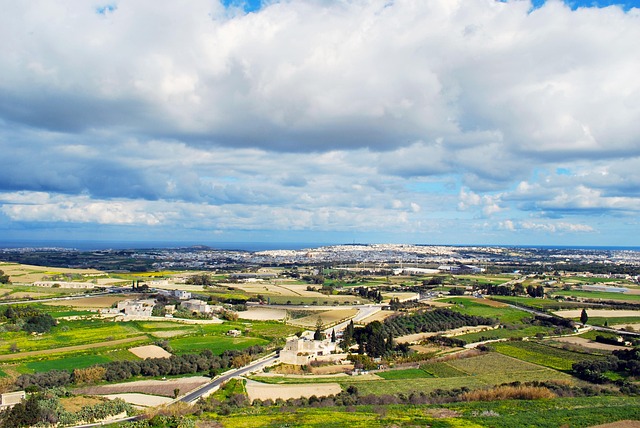
The island is only 14 kilometres long and 7 wide, but it packs in an absurd amount of things to see. The Ggantija Temples are older than Stonehenge by a thousand years. The Citadel in Victoria has been continuously occupied since the Bronze Age. The salt pans at Marsalforn have been harvesting sea salt since the Roman era. And the coastline — dramatic limestone cliffs dropping into water so blue it looks edited — rivals anything on the main island.
Most visitors do Gozo as a day trip from Malta, which works but means choosing what to prioritise. Here is how to make the most of it — whether you book a guided tour, rent a quad bike, or piece it together yourself.
Best overall: Gozo Day Trip Including Ggantija Temples — $92. Full 9-hour guided tour covering the major sites with transport included. The easiest way to see Gozo in one day.
Best adventure: Gozo Full-Day Jeep Tour — $92. Off-road exploration with a private boat transfer. The most fun way to cover the island.
Best budget: Gozo Full-Day Tour with Guide and Train — $82. Covers all the highlights including the Ggantija Temples and a tourist train ride through Victoria.
- How to Get to Gozo from Malta
- Guided Tour vs DIY: How to Decide
- The Best Gozo Day Trips to Book
- 1. From Malta: Gozo Day Trip Including Ggantija Temples —
- 2. Gozo Full-Day Jeep Tour With Private Boat to Gozo —
- 3. From Malta: Gozo Full-Day Tour With Guide, Temples, and Train —
- 4. Gozo Full-Day Quad Tour With Private Boat — 3
- What to See on Gozo
- When to Visit Gozo
- Tips for Your Gozo Day Trip
- More Malta Guides
How to Get to Gozo from Malta
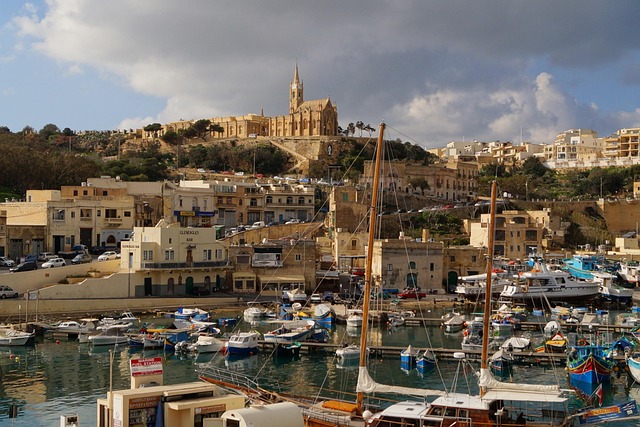
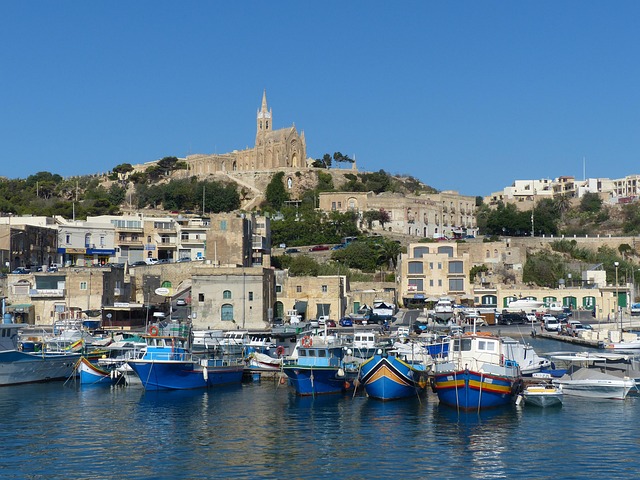
There are two main ferry routes and both are straightforward.
The Gozo Channel Ferry from Cirkewwa is the standard route. The crossing takes about 25 minutes and runs frequently throughout the day. You pay on the return trip only — the outbound journey from Malta to Gozo is free. A return ticket costs around EUR 5 for foot passengers. If you are driving, the car fee is higher but still reasonable. The ferry terminal at Cirkewwa is at the northern tip of Malta, reachable by bus routes 41, 42, or X1 from Valletta.
The Valletta Fast Ferry runs from Grand Harbour directly to Mgarr on Gozo. It takes about 45 minutes and is foot passengers only. This is the better option if you are staying in Valletta and do not want to trek to Cirkewwa — but be warned, the fast ferry can be rough in choppy seas. If you get seasick easily, take the Cirkewwa route.
Tour boats handle the crossing for you. Most guided day trips include hotel pickup, ferry or private boat transfer to Gozo, and return transport. This is the easiest option if you do not want to figure out bus routes and ferry schedules.
Guided Tour vs DIY: How to Decide
Book a guided tour if: you want to see the maximum number of sites in one day without planning, you do not want to rent a car or deal with Gozo’s bus system, or you want someone to explain the 5,500 years of history you are looking at. The guides on the top-rated tours are genuinely knowledgeable — this is not a read-from-the-script situation.
Go DIY if: you prefer setting your own pace, want to linger at the salt pans or the Citadel instead of being herded to the next stop, or are staying overnight on Gozo (which I highly recommend if you have the time). The island is small enough that a rental car covers everything in a day.
Book a jeep or quad tour if: you want to get off-road and see parts of the island that the bus tours skip. The jeep tours take you along the coast, through farmland, and to viewpoints that are not accessible by regular vehicles. These are more about the experience than the history.
The Best Gozo Day Trips to Book
1. From Malta: Gozo Day Trip Including Ggantija Temples — $92
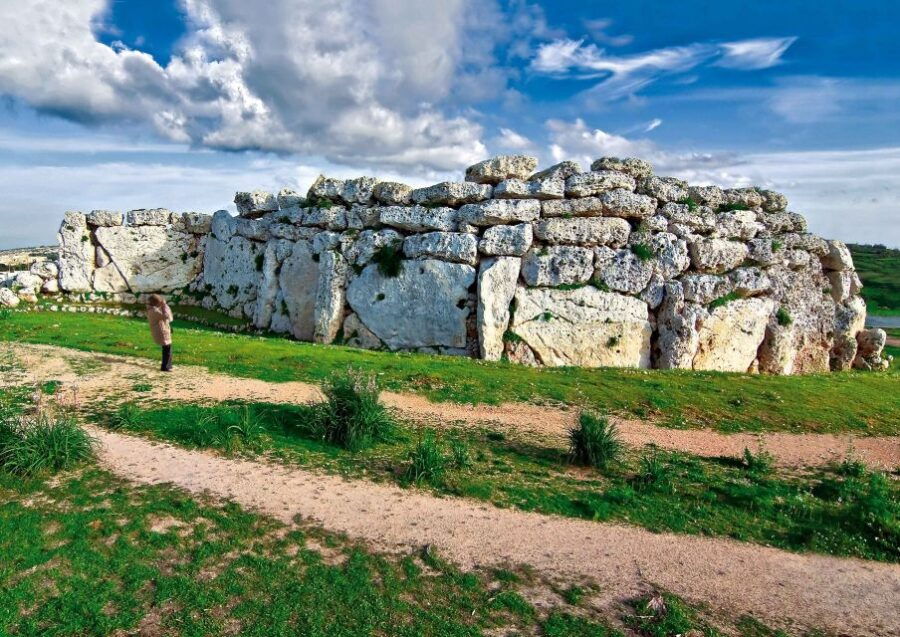
This is the most booked Gozo day trip for a reason. At $92 for a full 9-hour day, it includes ferry transfers, an air-conditioned coach, a professional guide, and stops at the Ggantija Temples, the Citadel in Victoria, Dwejra (where the Azure Window used to stand), and several other sites. The Ggantija Temples alone are worth the trip — standing inside structures built 1,000 years before the pyramids does something to your sense of scale.
With 2,400 reviews and a 4.2-star average, the feedback is overwhelmingly positive about the guides (several reviewers name specific guides who made the trip exceptional). The slightly lower-than-perfect rating comes from the pace — 9 hours sounds like a lot but with ferry crossings and multiple stops, some visitors wish for more time at each site. My advice: this tour gives you the best overview, and if you fall in love with a particular spot, you can always come back independently.
2. Gozo Full-Day Jeep Tour With Private Boat to Gozo — $92
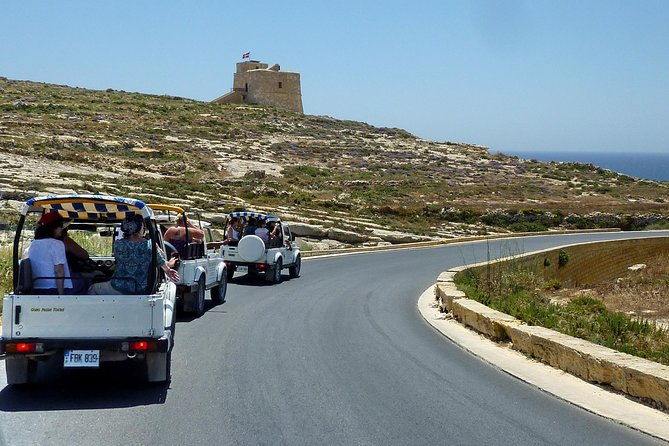
Same price as the guided coach tour but a completely different experience. Instead of a bus with 40 other people, you are in a 4×4 jeep bouncing along dirt tracks, coastal paths, and farm roads that the coach tours cannot reach. The private boat transfer to Gozo is a highlight in itself — you approach the island from the sea, which gives you a perspective the ferry passengers miss entirely.
With 1,000+ reviews and a 4.5-star rating, this is the highest-rated Gozo day trip on the list. The guides double as drivers and take you to viewpoints, hidden bays, and rural spots that feel like a different century. At $92, the value is excellent — comparable to the coach tour in price but with a far more intimate, adventurous feel. This is the one I would pick if I were doing it again.
3. From Malta: Gozo Full-Day Tour With Guide, Temples, and Train — $82
The budget option at $82 covers all the same essential sites — Ggantija Temples, the Citadel, Dwejra — plus a tourist train ride through Victoria that is either charming or tacky depending on your perspective. The 8-hour itinerary is slightly shorter than the #1 option, which means a tighter schedule at each stop.
With 567 reviews and a 4.1-star average, the feedback splits between people who loved the comprehensive coverage and those who felt rushed. The train ride divides opinion too — some find it a fun way to see Victoria’s narrow streets, others would have preferred more time at the temples. At $10 less than the alternatives, it is the right choice if you want the guided experience without the premium price.
4. Gozo Full-Day Quad Tour With Private Boat — $113
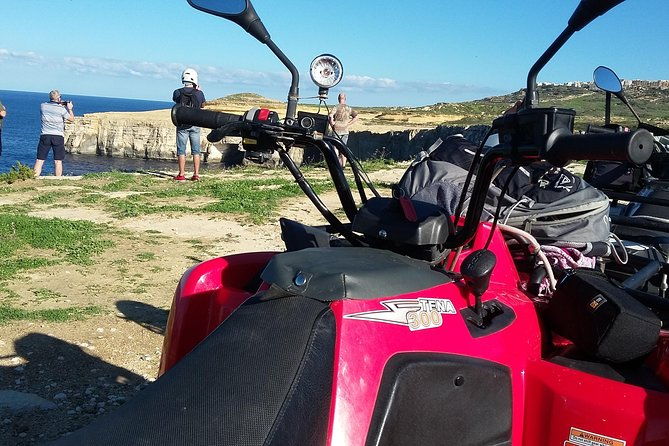
If the jeep tour sounds good but you want to actually drive, this is it. You get your own quad bike and follow the guide through Gozo’s back roads, coastal tracks, and countryside. The private boat transfer adds to the adventure feel, and the whole day has an energy that is completely different from sitting in a tour bus.
At $113 it is the most expensive option on this list, but you are paying for the freedom of having your own vehicle and the private boat. With 627 reviews and a 4.5-star rating, riders consistently mention it as the best day of their Malta trip. The guides adjust the pace to the group and stop at viewpoints that are inaccessible by car. No motorcycle license is required for the quad bikes, but you do need a valid driving licence.
What to See on Gozo
The Ggantija Temples are the main attraction and they deserve the hype. These megalithic structures were built around 3600 BC — that is 1,000 years before the Great Pyramid of Giza and 500 years before Stonehenge. The visitor centre does an excellent job of contextualising what you are looking at, and standing inside the temple complex you get a genuine sense of the scale of human achievement involved. UNESCO-listed, obviously.
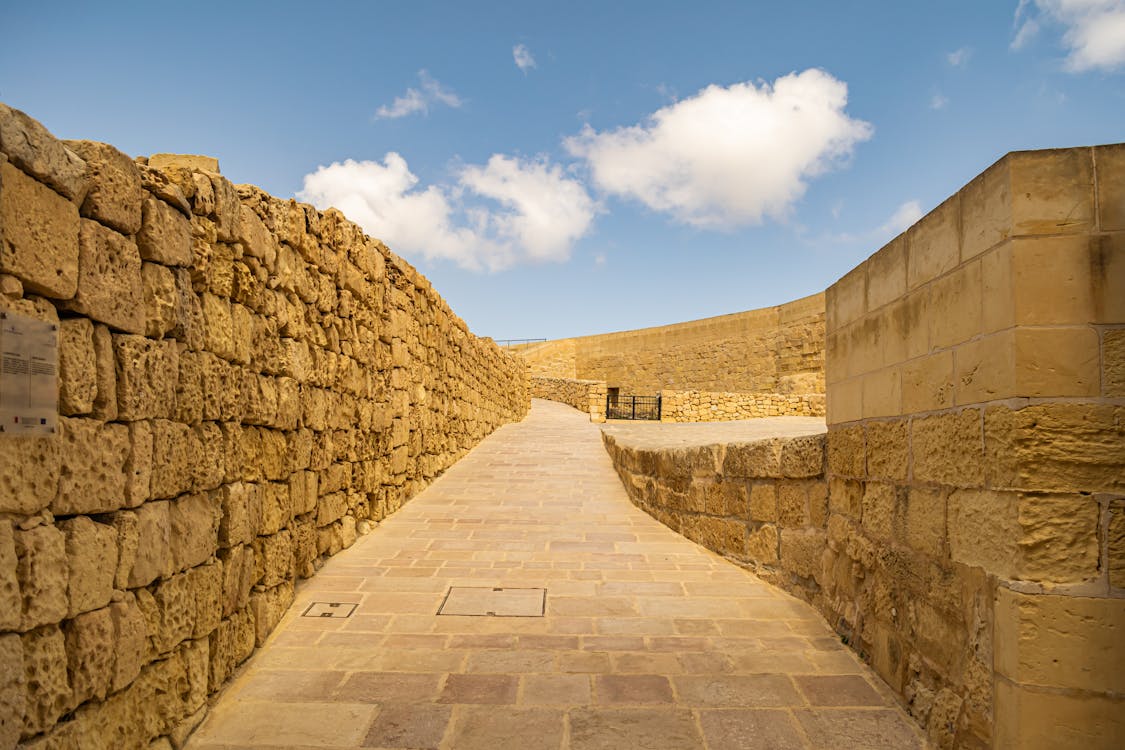
The Citadel in Victoria is Gozo’s fortified hilltop capital. People have lived up here since the Bronze Age, and every civilisation that has controlled Malta — Phoenicians, Romans, Arabs, Knights of St John, British — left their mark on the walls. The views from the top are the best on the island. The cathedral inside is worth entering even if you are not religious — the ceiling is a painted trompe l’oeil that creates the illusion of a dome where there is none.
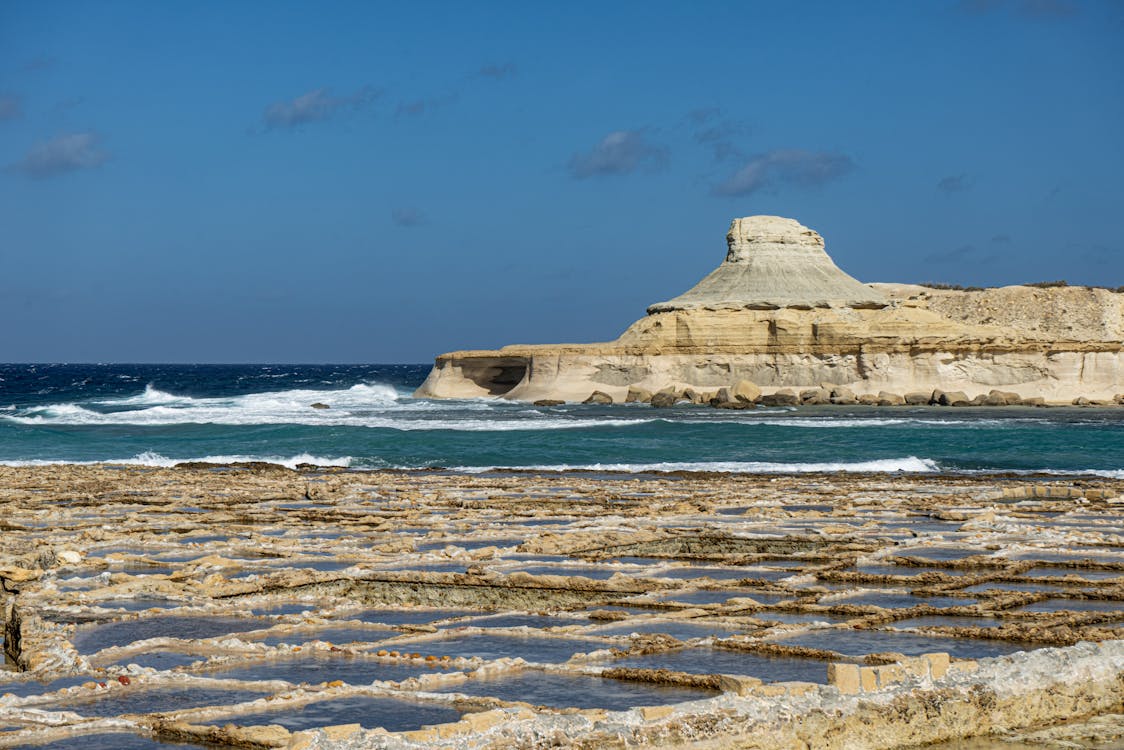
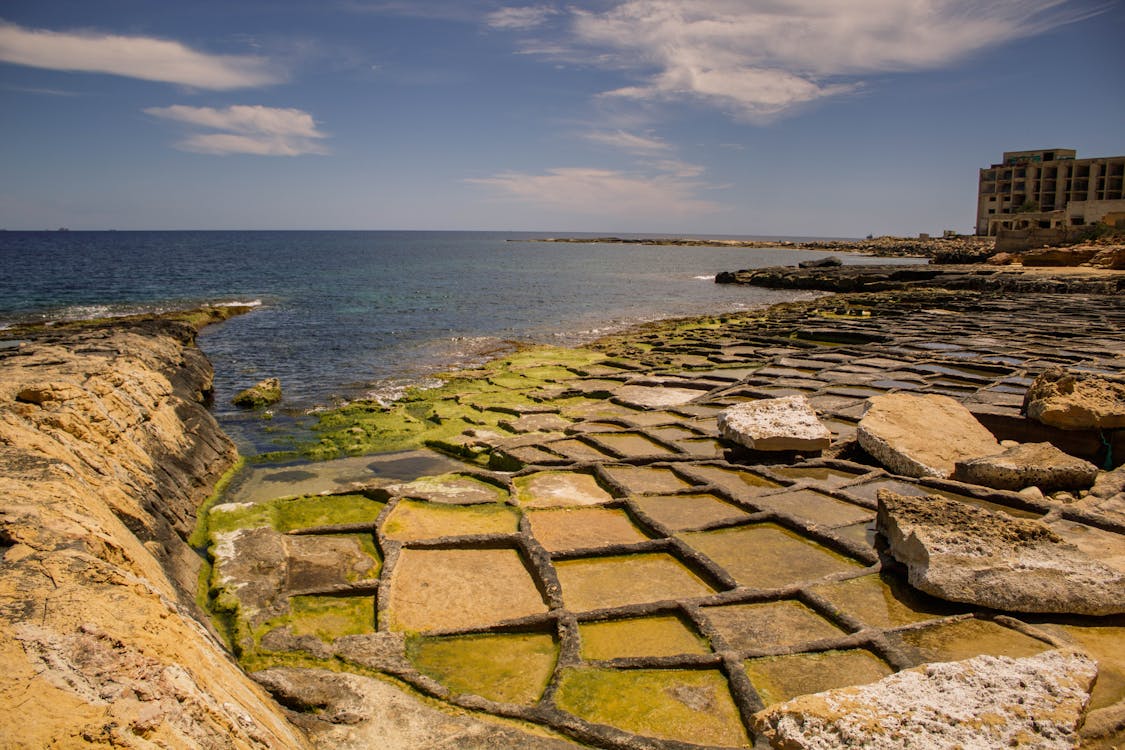
The salt pans at Marsalforn are one of the most photogenic spots on either island. Hundreds of rectangular basins cut into the flat coastal rock create a geometric pattern that looks stunning from any angle. The salt is still harvested by hand between June and September — you can buy bags of it from vendors along the coast for a few euros.
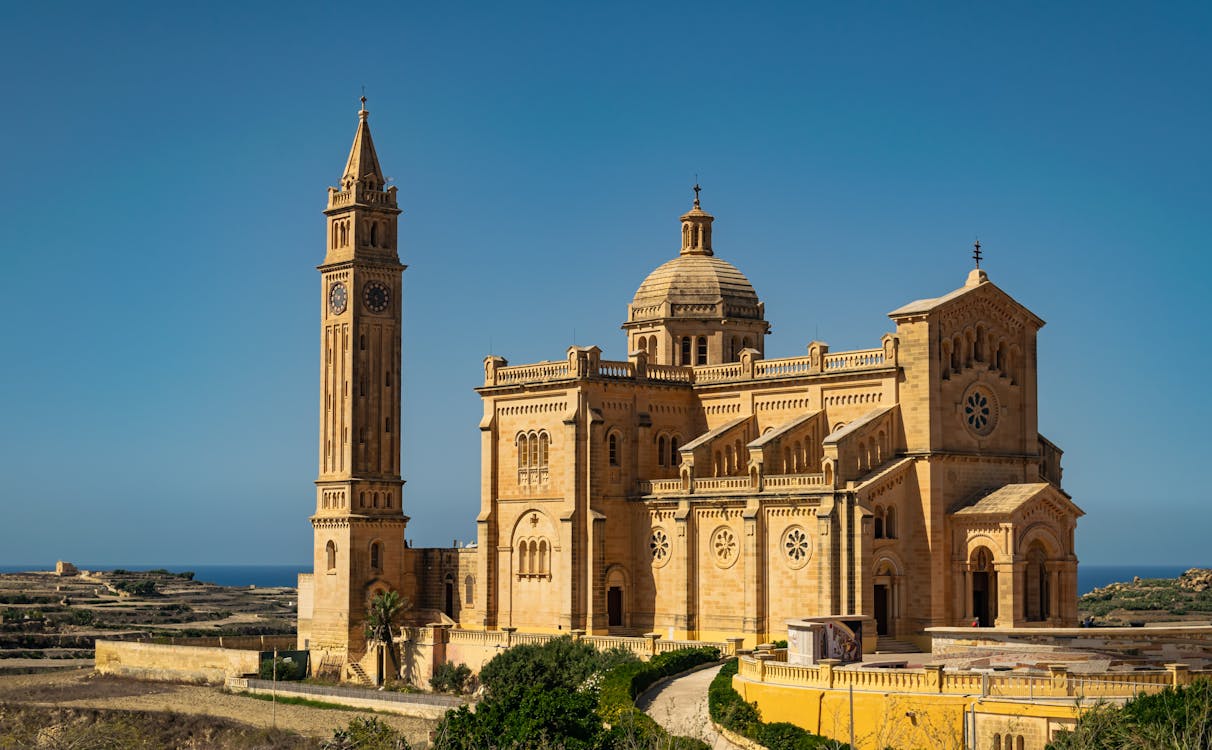
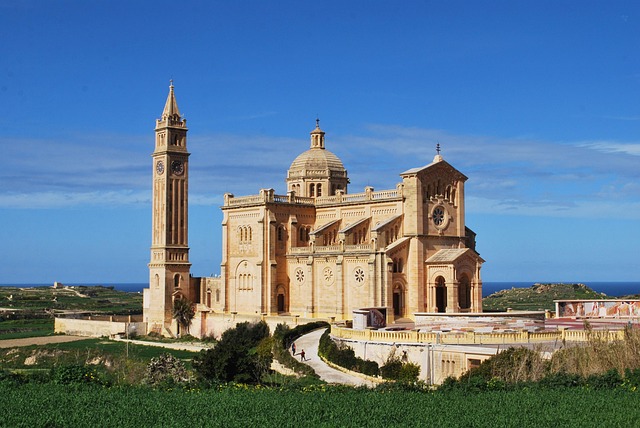
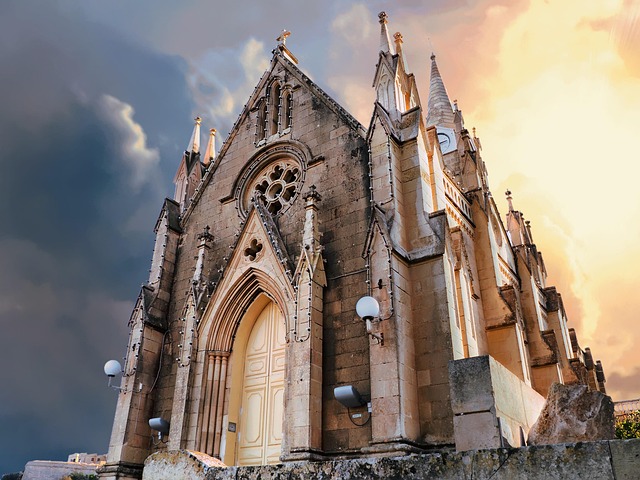
Ta’ Pinu Basilica is a pilgrimage church set alone in the Gozo countryside near Gharb. The story goes that a local woman heard the Virgin Mary speaking from the original chapel in 1883, and the current basilica was built around the site. Whether you are religious or not, the building is impressive and the surrounding countryside is some of the quietest on the island.
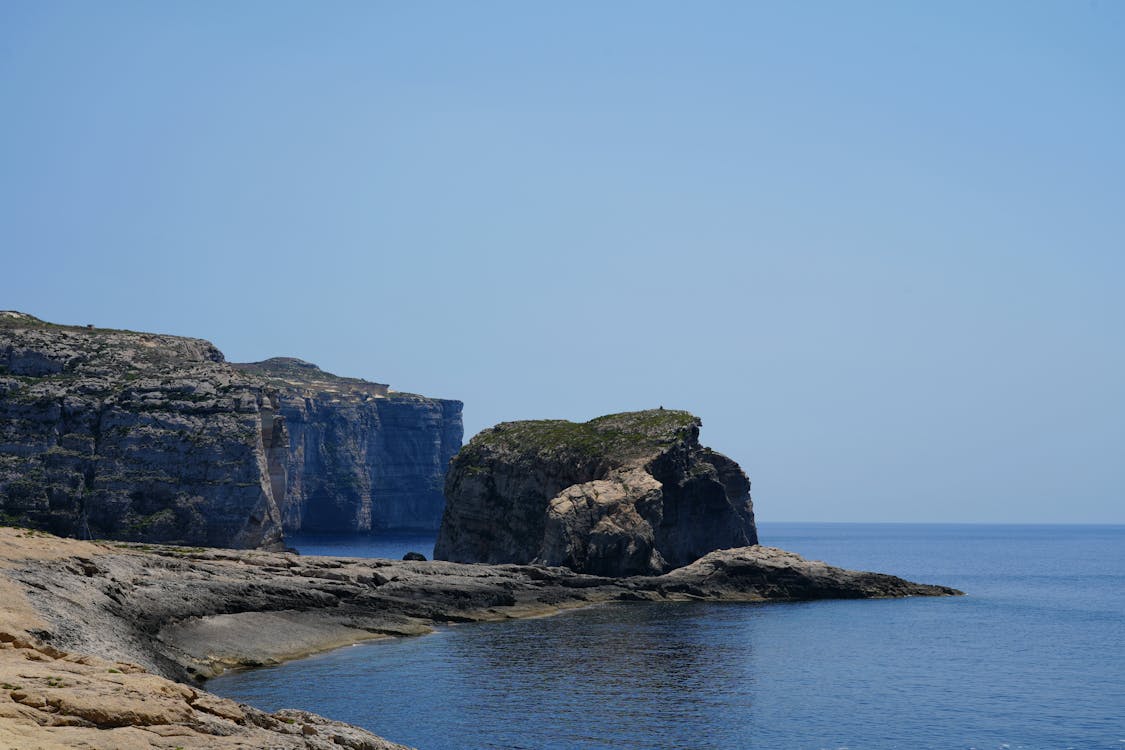
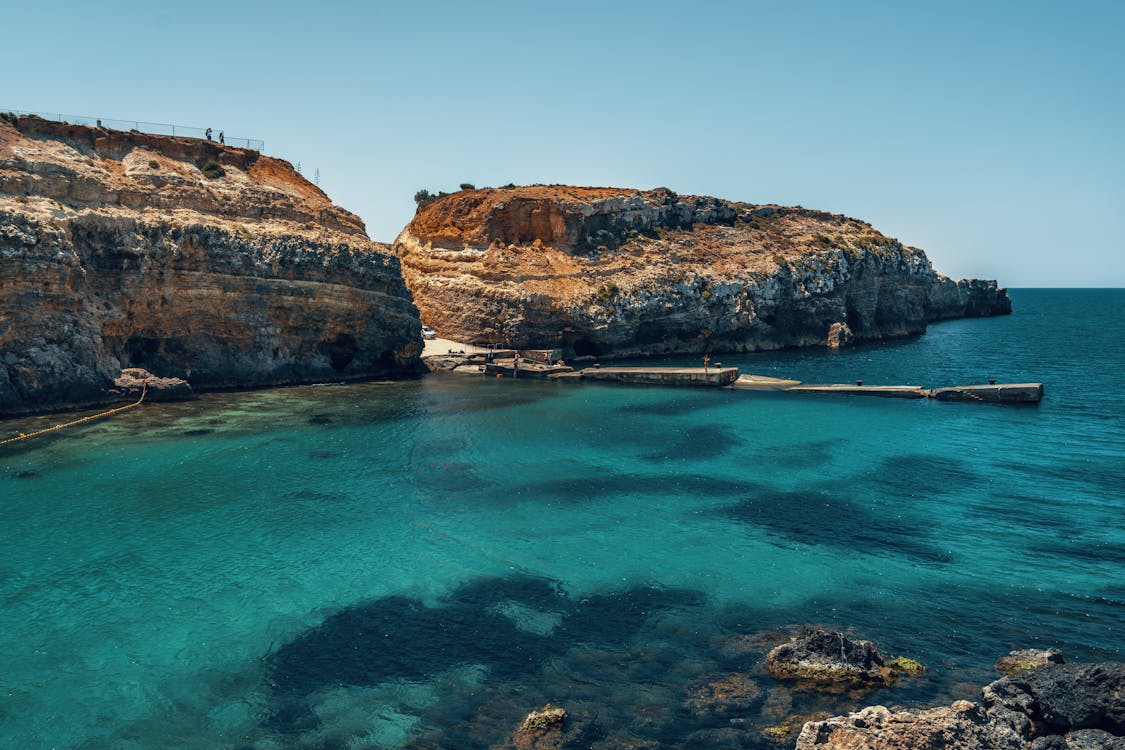
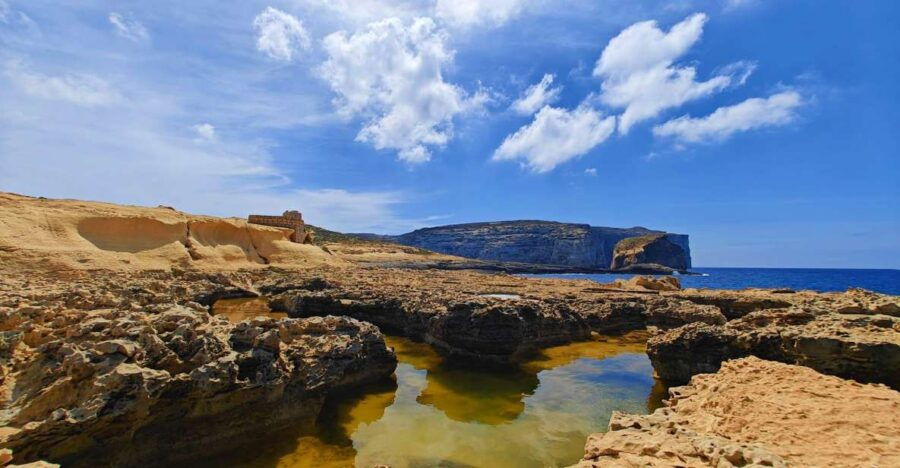
Dwejra is where the Azure Window used to stand before it collapsed into the sea in 2017. The site is still dramatic — the Inland Sea (a lagoon connected to the Mediterranean through a natural tunnel), the Fungus Rock offshore, and the diving sites in the area are all worth seeing. The Azure Window may be gone but Dwejra is still one of Gozo’s most spectacular coastal landscapes.
When to Visit Gozo
Best months: April, May, September, and October. The weather is warm, the crowds are manageable, and the landscape is at its greenest (especially spring, when wildflowers cover the hillsides). These months also have the most comfortable temperatures for walking around outdoor sites like the temples and salt pans.
Summer (June-August): Hot and busy. Temperatures regularly hit 35 degrees and walking around the Ggantija Temples in the midday sun is genuinely unpleasant. If summer is your only option, book a morning tour and bring serious sun protection.
Winter (November-March): Quiet and mild by northern European standards (15-18 degrees). The island is almost empty of travelers, which makes the Citadel and temples feel even more atmospheric. Some restaurants and tour operators reduce their schedules but the main sites stay open.
Tips for Your Gozo Day Trip
Start early. The first ferries leave Cirkewwa around 5:45am and the crossing is only 25 minutes. Getting to Gozo before the tour buses arrive means you can have the Ggantija Temples almost to yourself for the first hour.
Wear proper shoes. The temple sites, the Citadel, and the salt pans all involve uneven ground. Sandals will work but decent walking shoes make everything more comfortable, especially if you are doing a full day.
Eat in Victoria. The restaurants around It-Tokk (the main square) are the best value on the island. Try ftira — Gozo’s answer to pizza, topped with tomatoes, capers, olives, and local cheese. It is better than it sounds.
Consider staying overnight. A day trip covers the highlights but Gozo reveals itself at a different pace if you stay. The evening light on the Citadel, dinner in a village square with no other travelers, sunrise at the salt pans — these are the moments that make Gozo feel less like a day trip and more like a discovery.
Buy Gozo salt at the source. The salt from the Marsalforn pans is some of the best sea salt in the Mediterranean. It is cheaper at the pans than in Valletta souvenir shops, and you are buying directly from the families who still harvest it by hand.
More Malta Guides
Gozo is just one piece of the Malta puzzle. If you have not already done the Blue Lagoon boat trip, that is the other must-do day out — the turquoise water between Comino and Cominotto is the most photographed spot in Malta for a reason, and several boat tours actually pass Gozo on the way. Back on the main island, the Valletta walking tours cover the fortified capital that the Knights built after leaving Gozo, and a Valletta food tour is the best way to discover pastizzi, rabbit stew, and Maltese wine without doing any research.
If the Citadel on Gozo sparked an interest in Maltese fortifications, the Three Cities across the harbour from Valletta take that further — Birgu, Senglea, and Cospicua were the Knights first base before they built Valletta, and the Inquisitors Palace alone is worth the ferry ride. Mdina, Malta original capital, is a walled medieval city with no cars and almost no noise — the nickname the Silent City is not an exaggeration. And if the Ggantija temples were the highlight of your Gozo trip, Malta main island has even more prehistoric temples to explore — Hagar Qim, Mnajdra, and the underground Hypogeum are all older and just as mysterious.