Istanbul clicks faster with a real guide. This private, licensed walkthrough helps you connect monuments to the stories and street-level life around them, with a route that can be as short as one big day or stretched to three. I love that your guide meets you at your central hotel, and I also love the pacing of a mostly on-foot start that helps you get your bearings fast in Sultanahmet.
One thing to plan for: key sites have extra entry and ride costs, and a couple of them involve waiting or security lines since there’s no skip-the-line promise for every stop. If you’re hoping for a fully ticket-covered day, you may feel the add-ons as you go—so budgeting (and bringing some cash as a backup) helps.
- Key highlights I’d plan around
- Price and logistics: what you’re really paying for
- The one-day route: Sultanahmet like a local, not a checklist
- Sultanahmet District and the Hippodrome area
- Hagia Sophia Grand Mosque: go early or expect lines
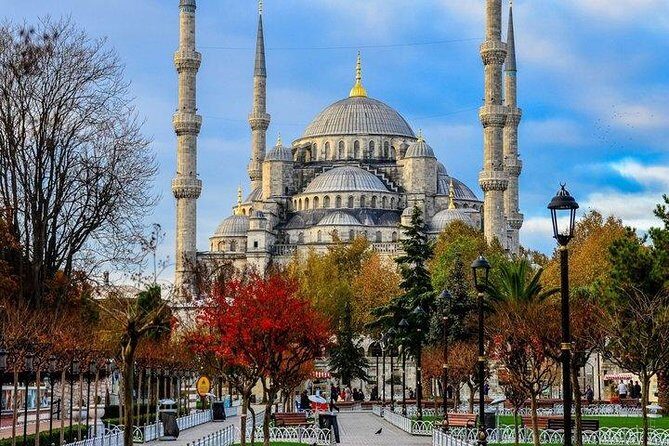
- Blue Mosque: Ottoman design you can actually see up close
- Grand Bazaar: where the city slows down for shopping
- Extending to two days: Bosphorus ferry + Dolmabahce without wasting daylight
- Bosphorus Strait: the ferry cruise that frames the city
- Dolmabahce Palace: luxury on the shore
- Three days: Taksim, Ottoman religious landmarks, and Pierre Loti views
- Taksim Square and Istiklal Street: Istanbul’s present tense
- Galata Tower: an outside look because of lines
- Spice Market and the aromas of Eminönü
- Suleymaniye Mosque: a bigger feel than the Blue Mosque
- Fener and Balat: laundry lines, steep streets, and old faiths
- Bulgarian St. Stephen Church: the Iron Church
- Pierre Loti Hill: finish with a cable car view
- Chora Museum and the Golden Horn add-on: mosaics if you want more than the basics
- Where the itinerary can shift (and why that’s good)
- Guides make or break this kind of tour
- What you’ll be doing all day: walking, timing, and comfort
- Who this tour suits best
- Should you book Best of Istanbul (1, 2, or 3-Day Private Guided Tour)?
- FAQ
- FAQ
- How long is the tour?
- Is this a private tour or shared group?
- Where does the guide meet you?
- What’s included in the price?
- What’s not included?
- Are tickets and skip-the-line access included for places like Hagia Sophia?
- What happens if a site is closed?
- The Best Of Istanbul!
- More Guided Tours in Istanbul
- More Tours in Istanbul
- More Tour Reviews in Istanbul
- Not for you? Here's more nearby things to do in Istanbul we have reviewed
Key highlights I’d plan around
- A true private guide so you can shape the day to your interests, not just follow a script
- Hotel pickup meeting at the center of things, with an on-foot handoff if your hotel is close
- Sultanahmet on foot: Hagia Sophia, Blue Mosque, plus the surrounding squares and landmarks that set the scene
- Bosphorus views using public ferry (or private cruise if you choose), so you see both shores
- Modern Istanbul contrast on Taksim and Istiklal after the old-city focus
- Optional museum add-ons like Chora if you want mosaics beyond the headlines

👉 See our pick of the We Rank The 4 Best Photography Experiences In Istanbul
Price and logistics: what you’re really paying for
At $100 per person, this isn’t a bargain if you compare it to buying a few museum tickets and wandering. But it’s priced more like a time-saver and translator: you’re paying for a private guide who can manage the flow, explain what you’re seeing, and help you avoid the common Istanbul trap of spending hours in transit or in the wrong lines.
Here’s what’s included: a professional licensed guide and a meeting at your centrally located Istanbul hotel. It’s also private, meaning only your group participates, not a mixed group tour that splits your attention. You may see group discounts offered, plus mobile tickets for the experience.
What’s not included is the part that often surprises people: transportation between sights unless you book a van option, and tickets for museums, ferries, and cable cars. Lunch is also not included, and gratuity is suggested. So the best value depends on your style. If you want to see a lot with less friction, the guide pays off. If you prefer to figure everything out yourself, you may feel the cost more.
Logistically, you have an important choice: van service or no van service. If you don’t book the van, the guide picks you up only at centrally located hotels or on foot from Galataport, and the meeting point can default to the German Fountain area if your hotel is not centrally located and not easy by public transportation. The tour can still work well using tram, funicular, and ferries—so you’re not locked into a bus day—but you should expect walking.
You can also read our reviews of more guided tours in Istanbul


The one-day route: Sultanahmet like a local, not a checklist
Most people start with the classic Old City cluster, because it’s walkable and because it tells you how Istanbul layered itself over centuries. The best way to understand this part of town is to treat the route like a story: squares and landmarks first, then the heavy hitters.
Sultanahmet District and the Hippodrome area
You begin in the Sultanahmet District, where the old imperial footprint is tight together. From there you move to the Hippodrome Square (Atmeydanı), originally tied to Roman-era chariot races, then layered again during Byzantine and Ottoman rule. Even if you don’t read every plaque, the square helps you picture how power played out in public space.
You’ll also see the German Fountain (Alman Çeşmesi). It’s quick, but it’s a good stop for snapping together the timeline: Byzantine fragments, Ottoman additions, and then the modern era’s imprint—all in one compact area.
Hagia Sophia Grand Mosque: go early or expect lines
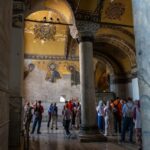
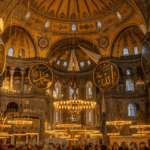
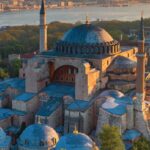
Then comes the big one: Hagia Sophia Grand Mosque (Ayasofya). It’s famous for a reason. Built in the 6th century by Emperor Justinian, it mattered across both Christian and Islamic worlds. After the Ottoman conquest, religious elements changed, mosaics were plastered over and later revealed again as the building’s role shifted over time. Today, it’s a mosque again.
Here’s the practical note that matters: since it’s not a museum anymore, tour guides don’t get skip-the-line priority. You may wait in security. The tour suggests departing around 8:30am or 9:00am to reduce queue time. If you like a calm start (and I do), pick an early departure.
Blue Mosque: Ottoman design you can actually see up close
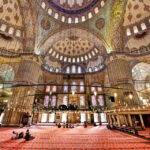
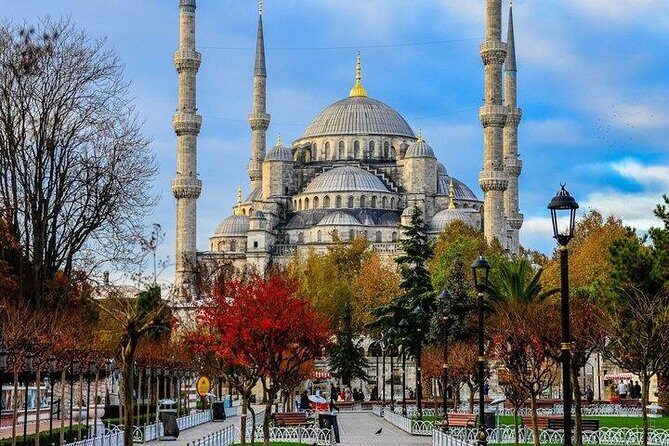
Next is the Blue Mosque (Sultanahmet Camii), built in the early 1600s for Sultan Ahmed I. You’ll spend about an hour here. The key is context: once you know why the mosque was built and what Ottoman architecture was aiming for at the time, the building stops being a postcard and becomes a message.
Blue Mosque entry is free, which helps if you’re managing costs for the day.
You can also read our reviews of more private tours in Istanbul


Grand Bazaar: where the city slows down for shopping
Finally, you’ll reach the Grand Bazaar, a massive covered market with thousands of shops. You’ll see ceramics, leather goods, rugs and carpets, handicrafts, and jewelry. It’s easy to get overwhelmed if you’re rushing, so I like that the day includes a guided route instead of dumping you into the chaos.
One operational detail: the Grand Bazaar is closed on Sundays, and the tour swaps in the Spice Market instead. During Eid, both Grand Bazaar and Spice Market are closed too, so your guide will adjust.
Extending to two days: Bosphorus ferry + Dolmabahce without wasting daylight
A two-day plan is where the tour starts to feel like Istanbul, not only a museum run. Day two adds the water and the modern city mix, plus a palace that’s pure showmanship.
Bosphorus Strait: the ferry cruise that frames the city
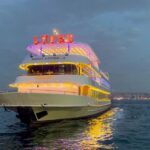
You’ll take a Bosphorus cruise by public ferry (or a private cruise if that option is chosen). This is one of those “I can’t believe I didn’t do this earlier” moments. From the water you see the European and Asian sides together, along with Galata Tower (from the cruise view), Dolmabahce Palace, Beylerbeyi Palace, Rumeli Fortress, Ottoman-era villas, bridges, and mosques.
Why public ferry is a smart choice: it’s usually more practical and local than hiring a private boat. Either way, you’re buying the same view—just with different vibes.
Tickets for the ferry aren’t included, so budget for it.
Dolmabahce Palace: luxury on the shore
After the cruise, you’ll visit Dolmabahce Palace, right on the Bosphorus. This place is all about lavish decoration—chandeliers, crystals, rugs, porcelain, and other ornate details. Plan for about an hour.
Important timing note: Dolmabahce Palace is closed on Mondays. There’s also a regulation detail: live guide service is not available inside Dolmabahce, so your guide can still orient you, but the on-site narration may be limited.
Three days: Taksim, Ottoman religious landmarks, and Pierre Loti views
If you can spare three days, the tour adds neighborhoods that many first-time visitors skip—plus the modern Turkey contrast.
Taksim Square and Istiklal Street: Istanbul’s present tense
You head to Taksim Square, a hub for modern Turkey with a history of major public moments. It’s the gateway to Istiklal Street, known for churches, modern art galleries, embassies, cafes, pubs, and stores.
Your guide also includes Cicek Passage, a short corridor lined with small shops and food spots. It’s a nice place to take the edge off after a day of major monuments.
Galata Tower: an outside look because of lines
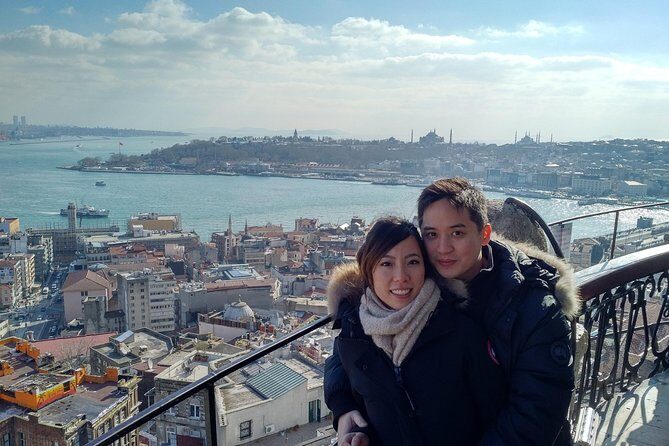
You’ll see Galata Tower from the outside. The reason is straightforward: tour guides don’t have skip-the-line priority there, so queue time can eat the day. You still get an explanation, which is the smart trade—unless you specifically want to go up and you’re willing to risk the wait.
Spice Market and the aromas of Eminönü
Then it’s into the Spice Market (Mısır Çarşısı), an indoor bazaar focused on spices, flavored teas, Turkish delight, nuts, ceramics, and small souvenirs. It’s located in Eminönü Square, a key connection point between the Bosphorus and the Golden Horn.
This stop often functions as a reset button: you’ve done huge architectural highlights, and now you get sensory variety without standing in monumental lines.
Suleymaniye Mosque: a bigger feel than the Blue Mosque
Next is the Suleymaniye Mosque, described as the largest mosque in Istanbul. It’s impressive outside and equally striking inside, with a terrace nearby that offers views over the Golden Horn and Bosphorus. You’ll spend about an hour.
Fener and Balat: laundry lines, steep streets, and old faiths
Day three also takes you into Fener and Balat, two neighborhoods with steep lanes and Ottoman-era houses. This section is more walking and less “single building landmark,” which is exactly why it works.
You’ll pass through a backstreet walk and stop at the Church of St. George, tied to the Ecumenical Patriarchate of Constantinople. You’ll also visit Fener Rum Patrikhanesi (Orthodox Patriarch) for about 45 minutes.
This is where the “Istanbul isn’t just monuments” feeling becomes real. The streets help you understand why the city evolved the way it did.
Bulgarian St. Stephen Church: the Iron Church
On the Golden Horn shore, you’ll reach St. Stephen Church, also known as the Iron Church because it was made with prefabricated cast iron in the 19th century. It’s about a 45-minute stop.
Pierre Loti Hill: finish with a cable car view
To cap the day, you’ll take the cable car up to Pierre Loti Hill for views and a simple end-of-tour moment. The cable car ticket itself isn’t included. You’ll spend about 30 minutes here, which is long enough to enjoy the viewpoint without turning it into another hour of waiting.
Chora Museum and the Golden Horn add-on: mosaics if you want more than the basics
The tour also includes optional add-ons depending on your chosen day length and what’s open. If you want something artistic and different from the headline churches and mosques, Chora Museum (Kariye Mosque) is the one to watch.
Chora is known for preserved mosaics and frescoes, with examples of East Roman painting in the last period. Expect about 1.5 hours.
The Golden Horn area is also part of this arc, with time around Halic (about 30 minutes) and then the Bulgarian St. Stephen Church.
Where the itinerary can shift (and why that’s good)
Istanbul has a habit of changing your plan for you, mostly through closing days and regulations. The tour is designed to adapt.
Here are the big swap rules you should actually remember:
- Topkapi Palace is closed on Tuesdays. Your guide replaces it with alternatives like the Turkish and Islamic Arts Museum or the Archaeological Museum, or possibly Basilica Cistern.
- Grand Bazaar is closed on Sundays, so Spice Market is substituted.
- If a mosque or museum isn’t visited, the tour may include Basilica Cistern as a replacement.
- Blue Mosque on Fridays is handled in the afternoon.
- Dolmabahce Palace is closed on Mondays, and live guide service inside is not available due to regulations.
- If you start later than 11am, the tour may skip one or a couple of sites because many places close by 7pm. Your guide will adjust based on your priorities.
This flexibility is a big value point. It means you’re not stuck with a rigid day that leaves you frustrated when a closure hits.
Guides make or break this kind of tour
This is the part you can’t see from the schedule, but you can feel it when the day runs. The tour’s reviews repeatedly point to guides who manage pacing and context well, and several names show up often.
I like the pattern: guides such as Mustafa, Ozan Ercan, Burak, Merve, and Kemal are praised for keeping things organized and not rushing. Other guides—like Numan Taşdoğ—are highlighted for customizing in a personal way: steering you toward food that feels local, supporting shopping choices that match what you actually want, and even helping book experiences like a hammam or dervish dance performance.
For families and first-timers, Hilal Aslan and Ceren are mentioned for making explanations easy to follow without treating children as an afterthought. And solo travelers note the benefit of having someone answer questions you didn’t realize you’d have until you were standing in front of a monument.
That said, there’s one cautionary note from a lower score: tickets weren’t always felt as clearly communicated in advance, and one person ended up needing about €100+ per person in cash for ticket expenses. So even if the tour is well run, do yourself a favor: plan a realistic budget for tickets and rides before you go.
What you’ll be doing all day: walking, timing, and comfort
Even though this is a private tour, it’s not a sit-and-glide experience. The first day is designed as a walking tour through historic areas, and even with van service you’ll still spend time on foot around major sights and crowded streets.
So pack for the city you’re actually visiting:
- Comfortable shoes for cobblestones and stairs
- A plan for shade and quick breaks
- A short list of what matters most if you’re on a 1-day schedule
If you’re easily fatigued, consider a two-day option rather than cramming everything into one day.
Who this tour suits best
This is a strong fit if:
- It’s your first time in Istanbul and you want a guided orientation fast
- You like history with explanations you can ask questions about
- You want to see both the old city and modern areas (especially on 2-3 days)
- You’d rather pay for less stress than spend your vacation wrestling with logistics
It may be less ideal if:
- You hate walking
- You want zero extra costs beyond the base price
- You’d rather control every decision and timing beat-by-beat
Should you book Best of Istanbul (1, 2, or 3-Day Private Guided Tour)?
Book it if you want your first Istanbul trip to feel structured but still flexible. The combination of hotel pickup, a guide who can tailor the day, and a route that covers Sultanahmet plus optional Bosphorus and Ottoman neighborhoods is exactly the kind of “save your time and energy” choice that makes sense in a city this spread out.
Skip or think twice if you’re hoping the tour is fully ticket-inclusive or if you’re traveling with limited mobility and want minimal walking. Also, budget for ticket and ride costs, and don’t count on skip-the-line access at every stop.
If you do book: choose an earlier start when possible (especially for Hagia Sophia), pick the duration that matches your energy level, and tell your guide what you care about most. That’s where the private part pays off.
FAQ
FAQ
How long is the tour?
The tour runs for about 7 to 21 hours depending on whether you choose a 1, 2, or 3-day option.
Is this a private tour or shared group?
It’s a private tour. Only your group participates.
Where does the guide meet you?
The guide meets you at a central Istanbul hotel. If van service is not booked, the pickup is only at centrally located hotels (or on foot from Galataport). If your hotel is not centrally located and not accessible by public transportation, the meeting point is the German Fountain.
What’s included in the price?
Included: private tour, a professional licensed guide, and meeting your guide at your hotel. A mobile ticket is provided.
What’s not included?
Not included: transportation (unless van service is booked), museum/ferry/cable car tickets, lunch, and gratuity.
Are tickets and skip-the-line access included for places like Hagia Sophia?
Tickets are not included. For Hagia Sophia specifically, tour guides do not have skip-the-line priority, so you may need to wait in security. The tour suggests departing at about 8:30am or 9:00am to reduce queue time.
What happens if a site is closed?
The itinerary adjusts. Examples: Topkapi Palace is closed on Tuesdays (a replacement may be used), Grand Bazaar is closed on Sundays (Spice Market may replace it), and Dolmabahce Palace is closed on Mondays. Your guide will adjust the plan to fit what’s open.