
The Peloponnese doesn’t do subtle. Within ninety minutes of leaving Athens, you’re standing at the Lion Gate of Mycenae — a 3,200-year-old entrance that once welcomed the most powerful civilization in Bronze Age Europe. Add the acoustically perfect theater at Epidaurus and a waterfront lunch in Nafplio, and you’ve got what might be the single best day trip from the Greek capital. These are the tours worth booking, what to expect at each stop, and the history that makes the whole thing click.
- Quick Pick: Best Mycenae & Epidaurus Day Trips
- What These Day Trips Actually Include
- The 5 Best Mycenae & Epidaurus Tours Reviewed
- 1. Athens: Mycenae, Epidaurus & Nafplio Day Trip w/ Audio Guide
- 2. From Athens: Mycenae, Epidaurus & Nafplio Full-Day Tour
- 3. From Athens: Mycenae, Epidaurus & Nafplio Full Day Trip
- 4. Mycenae, Epidaurus and Nafplio Tour from Athens
- 5. Mycenae and Epidaurus Day Trip with Entrance Tickets
- Mycenae: What You’ll Actually See
- Epidaurus: The Theater That Defies Physics
- Nafplio: Why the Lunch Stop Is Actually Worth It
- The History Behind the Ruins
- Practical Tips That Actually Help
- More Greece Day Trips Worth Considering
Quick Pick: Best Mycenae & Epidaurus Day Trips
🎤 Best guided experience: Full-Day Tour with Live Guide — 2,530 reviews. Licensed guide at Mycenae and Epidaurus, deep historical context.
💰 Best for budget travelers: Full Day Trip with Lunch Option — 2,492 reviews. Lower price point, optional lunch add-on, solid all-rounder.
👨👩👧 Best for small groups: Nafplio Tour from Athens — 2,201 reviews. Smaller group sizes, personalized attention from guide.
🎟️ Best hassle-free option: Day Trip with Entrance Tickets — 501 reviews. All tickets pre-included, skip the queues entirely.
What These Day Trips Actually Include
Every Mycenae and Epidaurus day trip follows roughly the same route: depart Athens early morning (usually 7:30–8:30 AM), drive southwest across the Corinth Canal into the Peloponnese, visit the archaeological site of Mycenae, continue to Epidaurus for the ancient theater, stop in the seaside town of Nafplio for lunch and free time, then return to Athens by early evening. The whole circuit covers about 300 kilometers round-trip, and you’ll be back in the city by 6:00–7:00 PM.
The main difference between tours is whether you get a live guide or an audio guide at the archaeological sites. Live-guided tours mean a licensed archaeologist or historian walks you through Mycenae and Epidaurus, pointing out details you’d miss on your own — the drainage system beneath the Lion Gate, the acoustic sweet spot at center stage in Epidaurus. Audio guide tours give you more freedom to wander at your own pace, which some people genuinely prefer, especially photographers who want to linger at specific spots.
Most tours include the Corinth Canal as a quick photo stop, though you won’t actually stop for long — it’s usually a slow drive across the bridge or a five-minute pause at the overlook. Entrance fees to Mycenae and Epidaurus are sometimes included and sometimes not, so read the fine print. Tours that explicitly list “entrance tickets included” save you the hassle of queuing at ticket offices, which can get congested during peak season (June through September).
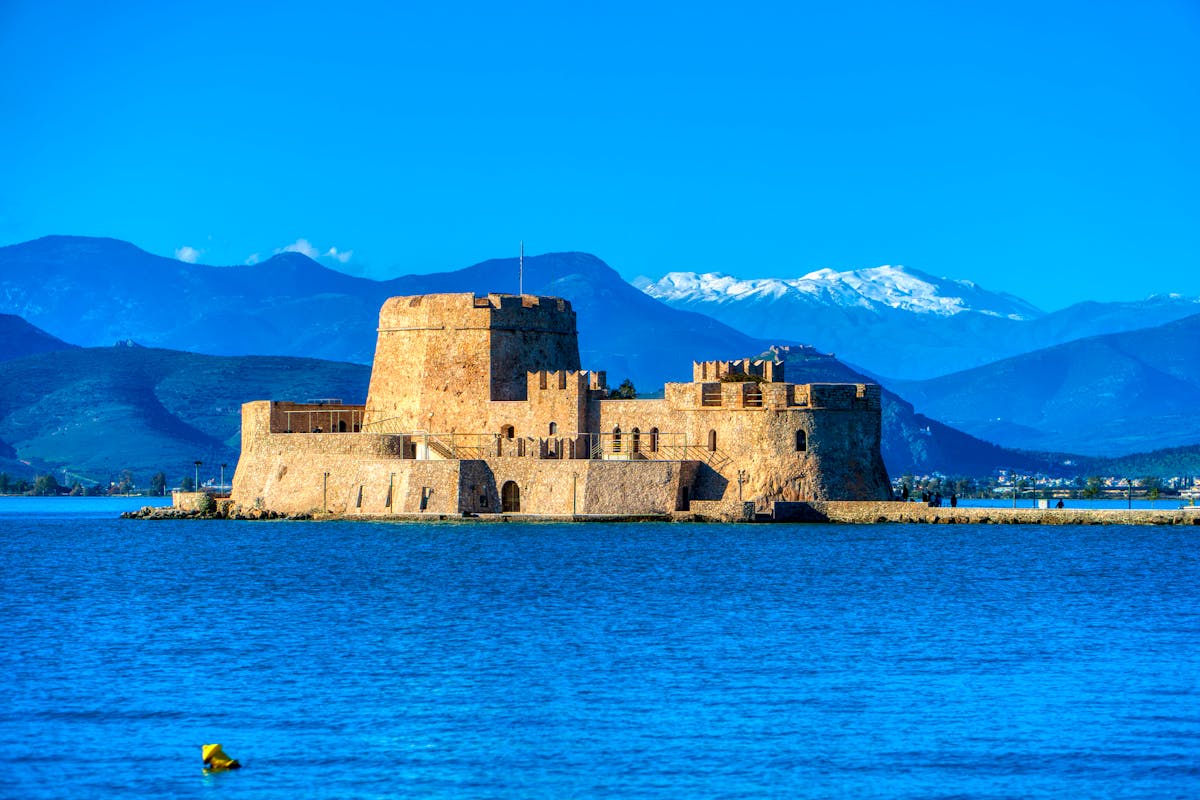
Lunch in Nafplio is typically on your own, which is actually ideal — the town has excellent waterfront tavernas where you can eat grilled octopus and drink cold Mythos beer while staring at the Bourtzi fortress floating in the harbor. Some tours offer an optional lunch package, but most travelers prefer to choose their own restaurant. Budget around €12–18 for a proper Greek lunch with a drink.
The 5 Best Mycenae & Epidaurus Tours Reviewed
1. Athens: Mycenae, Epidaurus & Nafplio Day Trip w/ Audio Guide
This is the most popular option for a reason. You get a comfortable coach ride from central Athens, an audio guide loaded onto your phone (or a provided device) at both Mycenae and Epidaurus, and enough free time at each stop to explore without feeling rushed. The Nafplio stop gives you about 90 minutes of free time for lunch and wandering.
The audio guide format works surprisingly well here — you can replay sections, skip what doesn’t interest you, and spend twenty minutes at the Lion Gate if that’s your thing. The trade-off is that you don’t get a human to ask questions to, which matters more at Mycenae (where the ruins need interpretation) than at Epidaurus (where the theater speaks for itself).
“Vasillis was an excellent guide on this tour. His knowledge and passion for history really came through. The audio guide at the sites was easy to use and very informative. Mycenae was absolutely breathtaking.”
2. From Athens: Mycenae, Epidaurus & Nafplio Full-Day Tour
If you want the stories behind the stones, this is the one. A licensed guide walks you through both sites, explaining how the Mycenaean shaft graves were discovered, why the Treasury of Atreus has a corbelled dome that engineers still marvel at, and how the Epidaurus theater’s acoustics actually work (spoiler: it’s partly the limestone seats filtering out low-frequency crowd noise). The guide makes connections between sites that you simply wouldn’t make on your own.
The group size is moderate — typically 30-45 people on a full coach — but the guides are skilled at keeping everyone’s attention. The Nafplio stop is slightly shorter on this tour (about 75 minutes) because the guided portions at the sites take longer.
“Orfeus was fantastic — so knowledgeable about the history and mythology. He made the ruins come alive. The drive through the Peloponnese countryside is beautiful, and Nafplio was a wonderful surprise. Highly recommend the guided version.”
3. From Athens: Mycenae, Epidaurus & Nafplio Full Day Trip
This one hits the sweet spot between price and quality. It covers the same three stops — Mycenae, Epidaurus, Nafplio — with a guide who provides commentary during the drive and at the sites. The optional lunch add-on is worth considering if you don’t want to spend your Nafplio free time hunting for a restaurant, though the town is small enough that finding a good taverna takes about three minutes of walking.
Multiple reviewers highlight the guides George and Katerina by name, which tells you the operator is consistently hiring strong personalities who know how to balance education with entertainment. The bus is air-conditioned (critical in summer — the Peloponnese hits 35°C regularly in July and August), and there are restroom breaks at sensible intervals.
“George was amazing! So funny and informative. He really brought the ancient history to life. Katerina on the return leg was equally wonderful. The optional lunch was decent and saved us time in Nafplio for exploring.”
4. Mycenae, Epidaurus and Nafplio Tour from Athens
This operator tends to run slightly smaller groups, which makes a real difference when you’re navigating the narrow passages at Mycenae or trying to hear your guide explain the acoustic principles at Epidaurus while another tour group is testing those acoustics by clapping and dropping coins. The guides Julia and Vivien get called out repeatedly in reviews for being both knowledgeable and genuinely enthusiastic.
The itinerary follows the standard route but with a few nice touches — the driver often takes a scenic route through the Argolid countryside, and the Nafplio stop sometimes includes a brief walking tour of the old town’s Venetian architecture. If you’re someone who finds large tour groups exhausting, this is worth the look.
“Julia was incredible — her passion for Greek history is infectious. She didn’t just tell us facts; she told us stories. Vivien on our bus was wonderful too. The smaller group meant we could actually ask questions and get real answers.”
5. Mycenae and Epidaurus Day Trip with Entrance Tickets
The selling point here is simplicity: entrance tickets for both Mycenae and Epidaurus are included in the price, so you don’t need to worry about carrying cash for ticket offices or standing in line during peak hours. The guide Thanos gets consistently excellent reviews for his storytelling ability — he’s one of those rare guides who can make a pile of 3,000-year-old stones feel like a thriller.
This tour skips the Nafplio lunch stop that the others include, focusing purely on the two archaeological sites. That’s either a pro or a con depending on your priorities — if you want maximum time at the ruins and minimum time in a tourist town, this is ideal. If you were looking forward to that waterfront lunch, pick one of the options above instead.
“Thanos was the best guide we had in Greece. His explanations were clear, passionate, and never boring. Having the entrance tickets already sorted meant we walked straight in while others queued. Nafplio wasn’t included but we didn’t miss it — the sites got our full attention.”
Mycenae: What You’ll Actually See
Mycenae was the power center of Bronze Age Greece — the seat of King Agamemnon (if you believe Homer, which the ancient Greeks absolutely did) and the capital of a civilization that dominated the eastern Mediterranean from roughly 1600 to 1100 BC. When Heinrich Schliemann excavated the site in 1876, he found gold death masks, jeweled swords, and enough treasure to make him believe he’d found Agamemnon’s tomb. He was probably wrong about whose face was behind the famous “Mask of Agamemnon,” but the wealth was real.
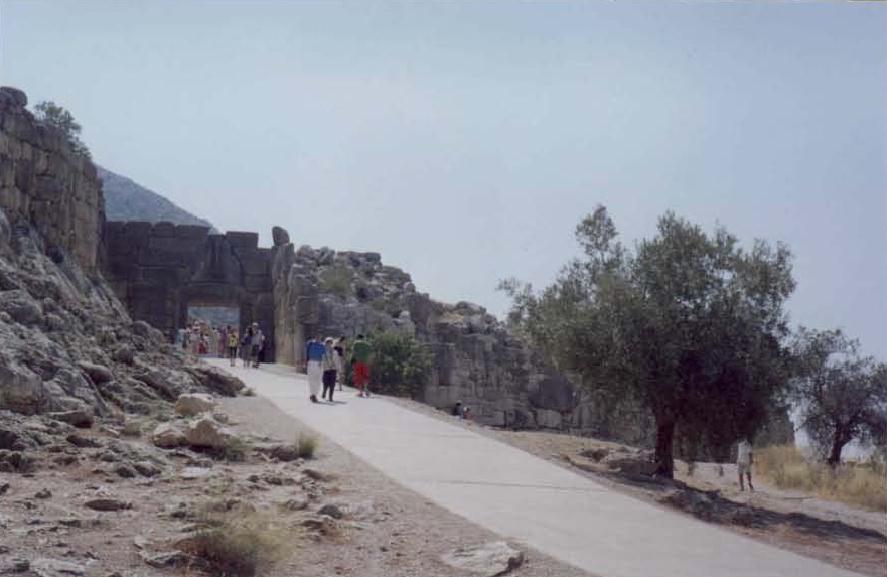
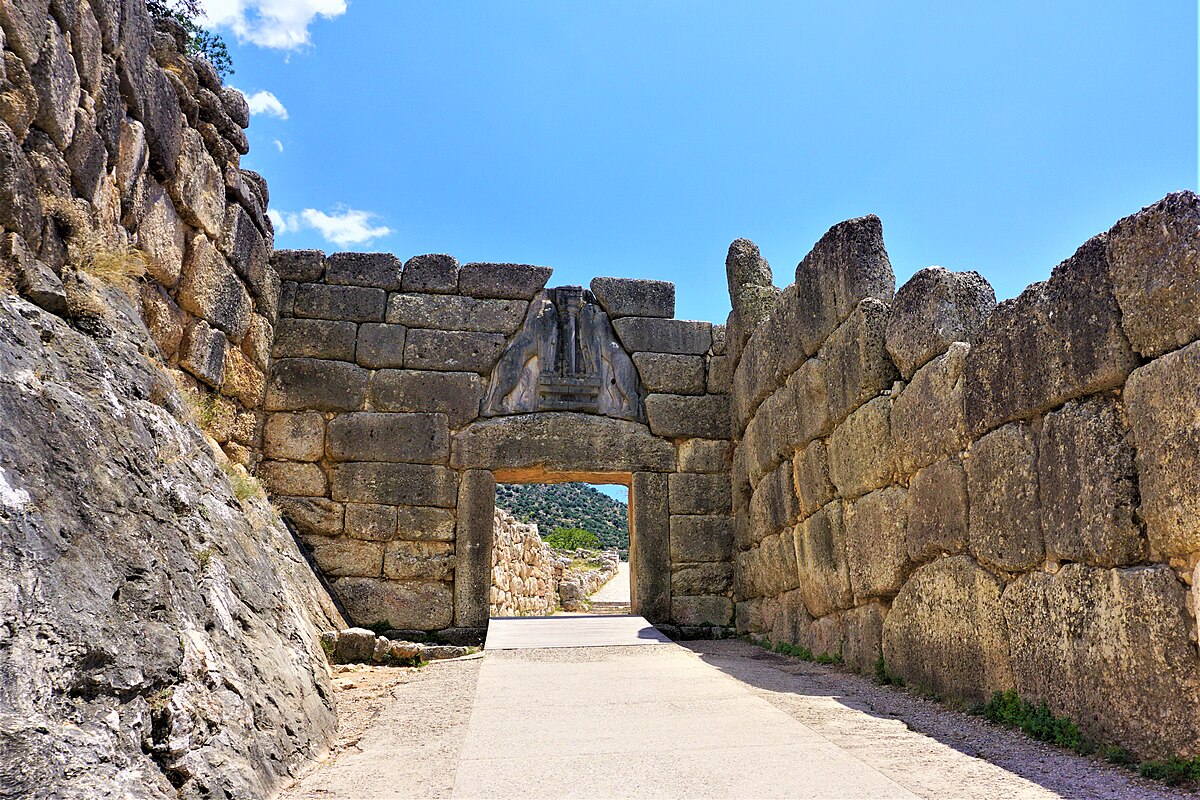
The site itself sits on a rocky hilltop overlooking the Argive plain, and the first thing you’ll encounter is the Lion Gate — the main entrance, topped with a carved relief of two lions (or lionesses, or possibly griffins — scholars still argue) flanking a central column. It’s the oldest piece of monumental sculpture in Europe, and standing beneath it, you can feel the weight of the massive stone lintel above your head. The Mycenaeans built this to impress, and 3,200 years later, it still works.
Inside the citadel walls, you’ll see Grave Circle A — the royal burial ground where Schliemann found the gold masks — and the remains of the palace complex at the summit. The views from the top are outstanding: rolling hills, olive groves, and the Argolid plain stretching toward the sea. Most tours give you 60–90 minutes at Mycenae, which is enough to see the main attractions but not enough to explore every corner of the lower town ruins.
Don’t skip the Treasury of Atreus (also called the Tomb of Agamemnon), a massive beehive-shaped tomb just outside the citadel walls. The entrance corridor alone is 36 meters long, and the domed chamber inside was the largest unsupported interior space in the world until the Pantheon was built in Rome — 1,400 years later. The Mycenaean engineers who built this in 1250 BC understood forces and materials at a level that shouldn’t have been possible for the Bronze Age. Walking inside feels genuinely eerie.
Epidaurus: The Theater That Defies Physics
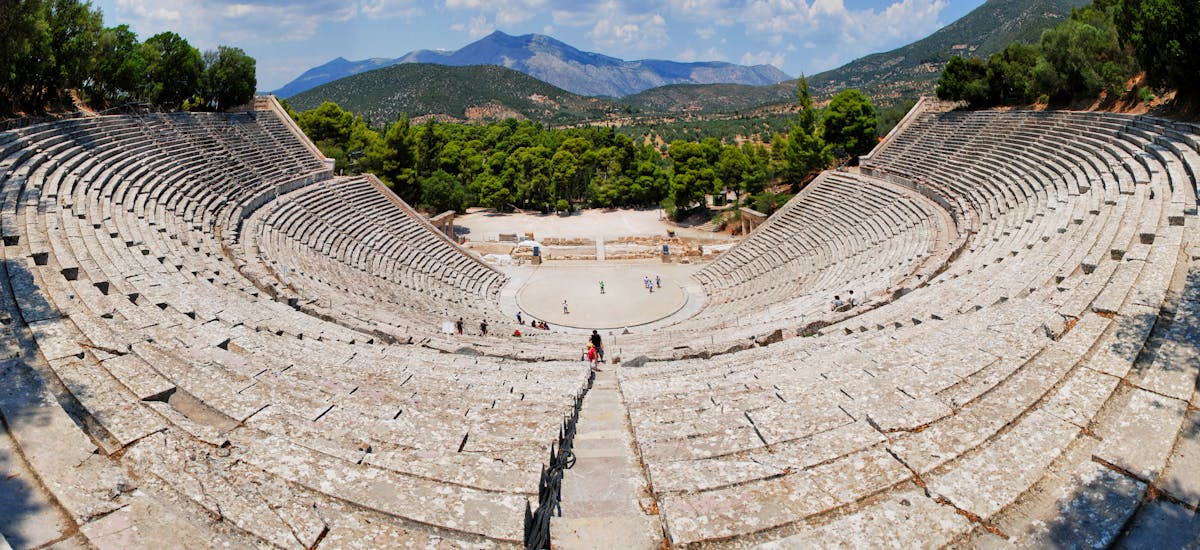
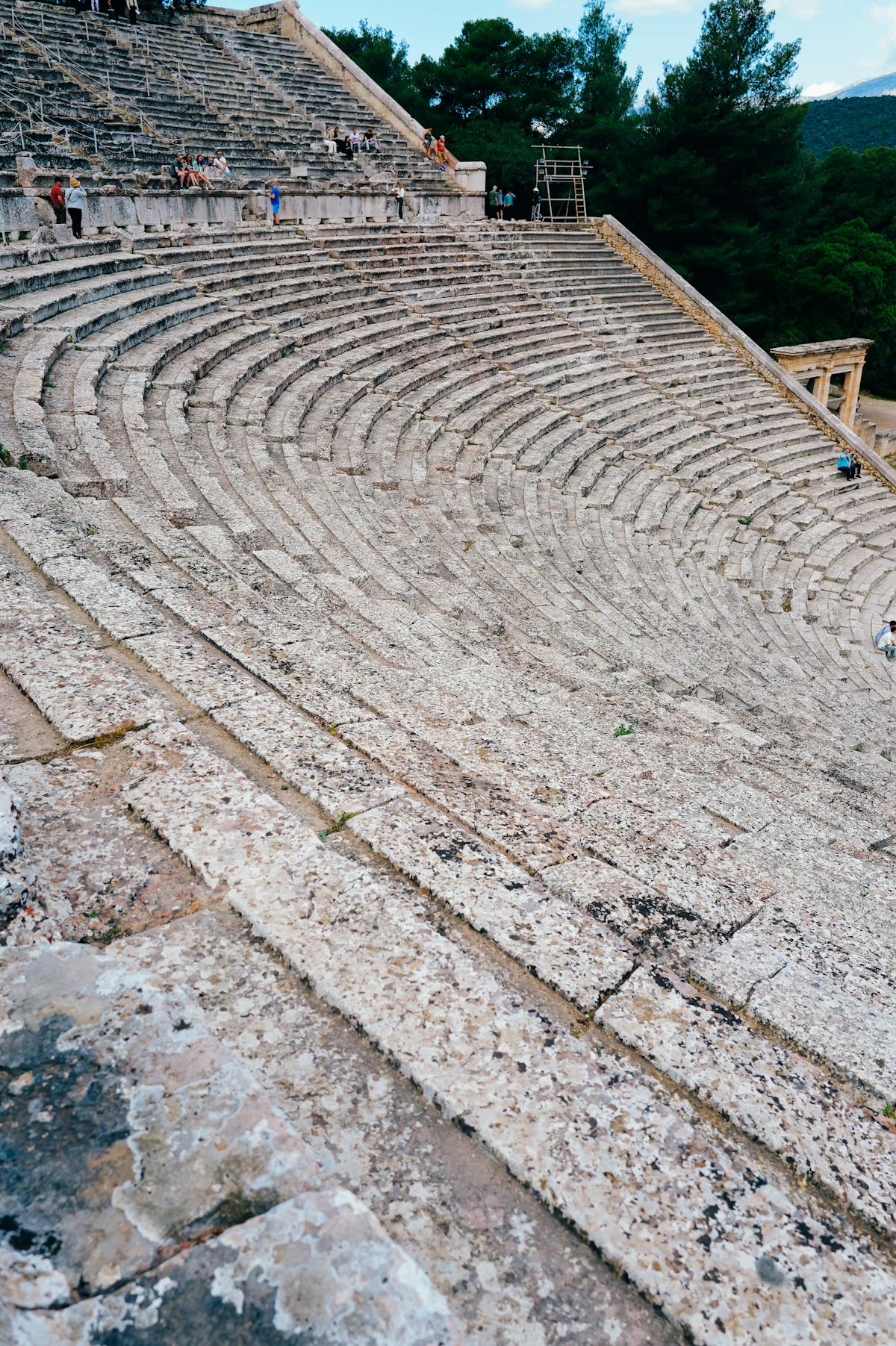
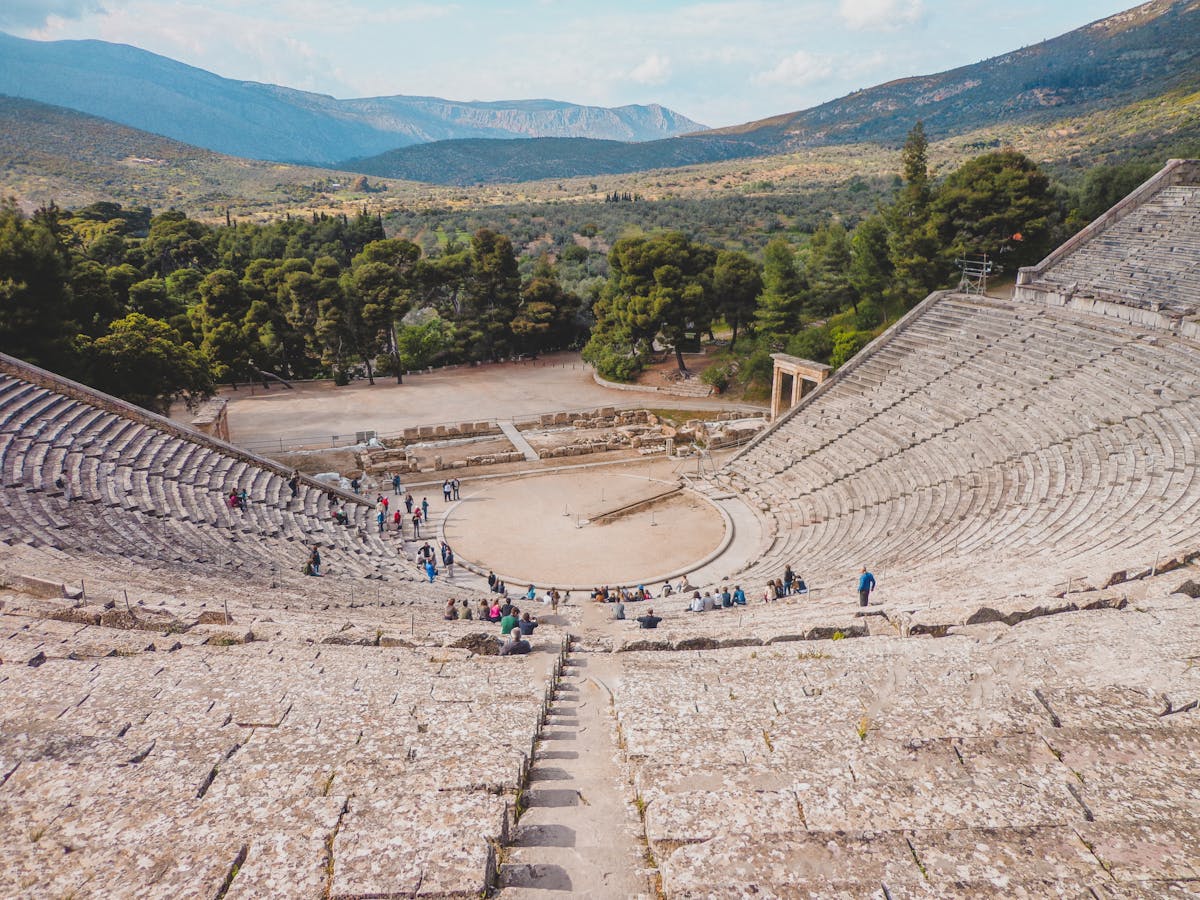
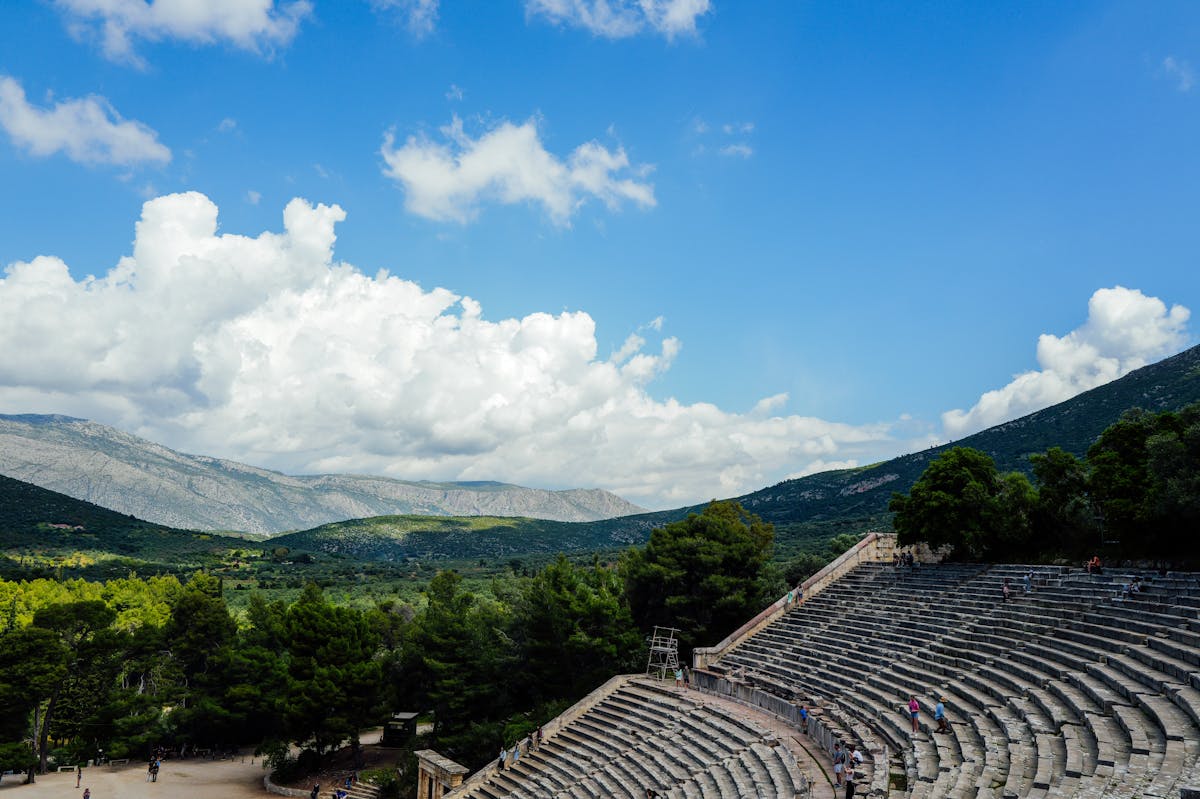
The ancient theater at Epidaurus is one of those places that actually lives up to the hype. Built around 340 BC — centuries after Mycenae fell — it seats 14,000 people in 55 rows of limestone seats that climb steeply up a hillside. The acoustics are so perfect that someone standing at center stage can strike a match, and the sound carries clearly to the last row, 60 meters away. Tour guides love to demonstrate this with coin drops, whispers, and the occasional dramatic reading of Sophocles, and the effect genuinely makes the hair on your arms stand up.
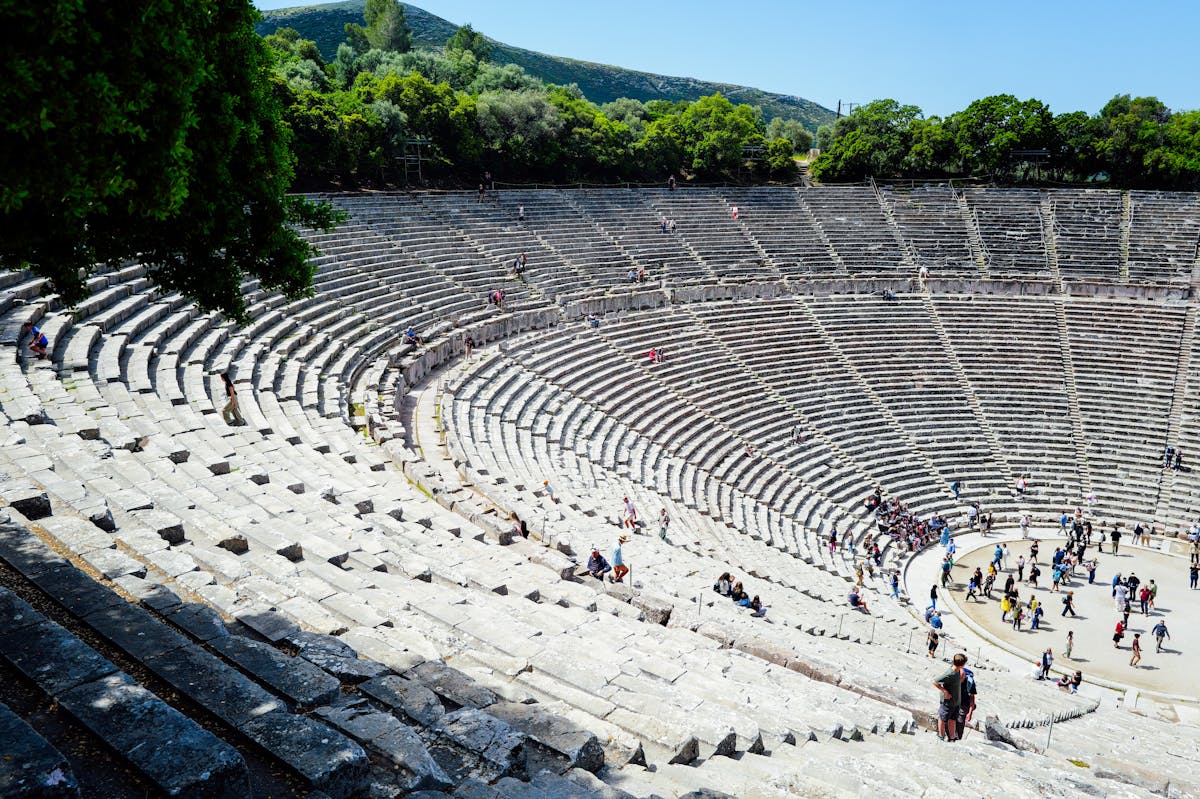
Scientists from the Georgia Institute of Technology figured out part of the mystery in 2007: the corrugated surface of the limestone seats acts as a natural acoustic filter, suppressing low-frequency background noise (crowd murmur, wind) while letting high-frequency sounds (voices, music) pass through cleanly. The ancient Greeks didn’t have the physics vocabulary to describe what they’d built, but they clearly understood it intuitively — the theater was designed, not accidental.
Epidaurus was actually a healing sanctuary dedicated to Asklepios, the god of medicine, and the theater was just one part of a massive complex that included temples, baths, a gymnasium, and a round building called the Tholos whose purpose scholars still debate. Sick people traveled from across the Greek world to sleep in the sanctuary and receive healing dreams — essentially the world’s first hospital, if you’re generous with the definition. The theater hosted performances as part of the healing process, because the Greeks believed that emotional catharsis was therapeutic. They weren’t wrong.
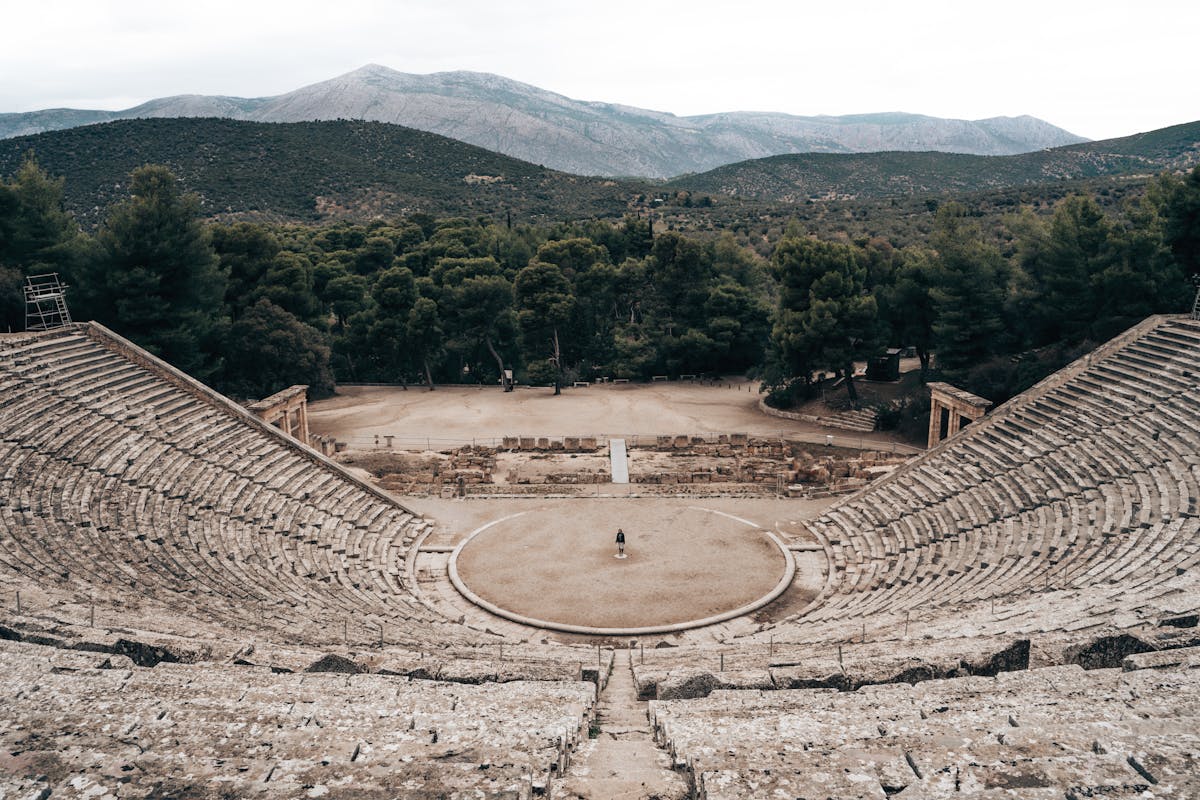
Most tours give you about 45–60 minutes at Epidaurus, which is enough to explore the theater, test the acoustics yourself, and walk through the small but excellent on-site museum. The museum houses some remarkable surgical instruments from the sanctuary — proof that the ancient Greek “healing dreams” were supplemented by practical medicine.
Nafplio: Why the Lunch Stop Is Actually Worth It
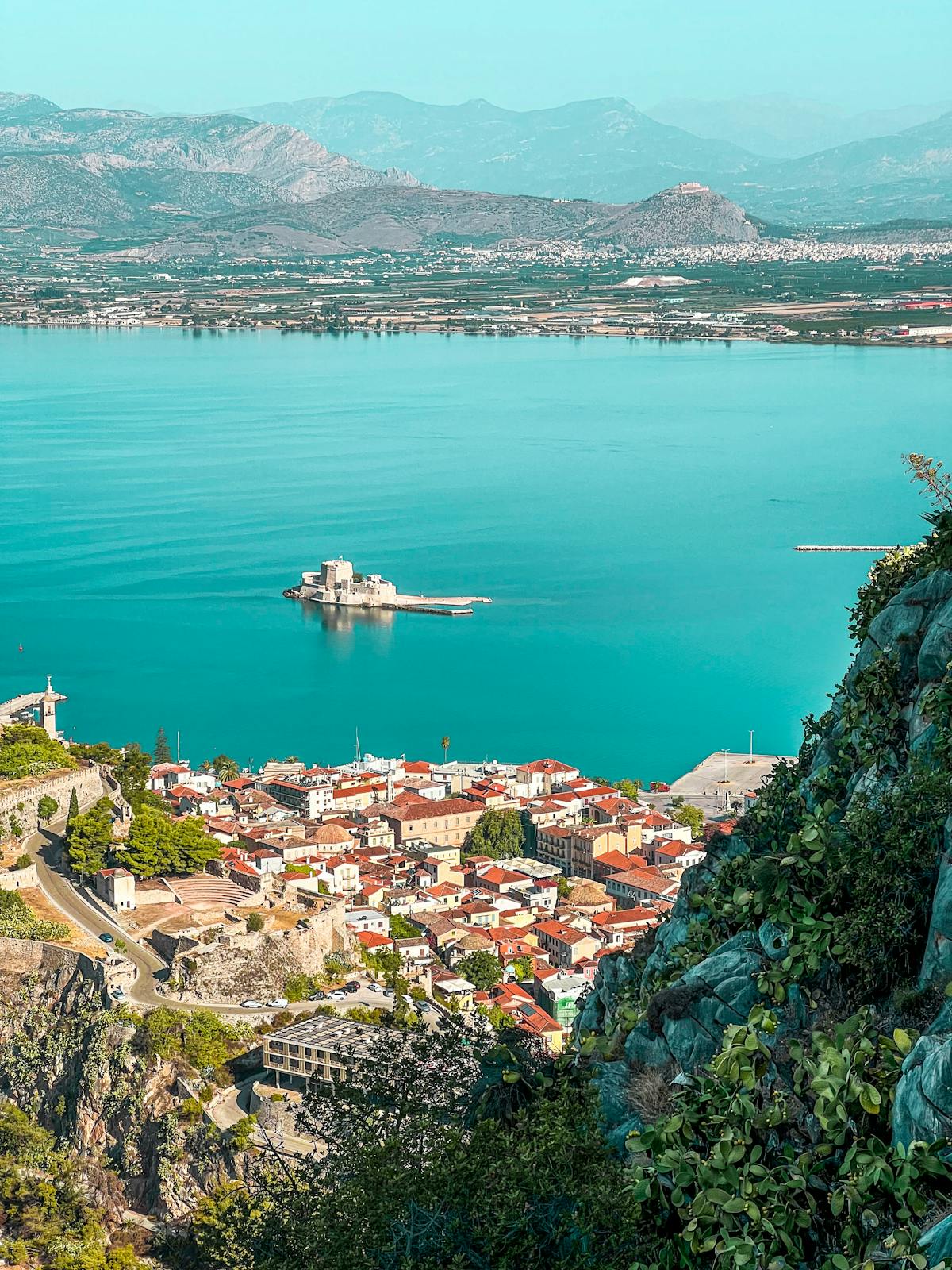
If your tour includes a Nafplio stop — and four out of five recommended tours above do — don’t treat it as dead time between archaeological sites. Nafplio is arguably the prettiest town in the Peloponnese: a compact old town of Venetian-era buildings, neoclassical mansions, and narrow streets that spill down to a harbor where the tiny Bourtzi fortress sits on its own island like something from a painting.
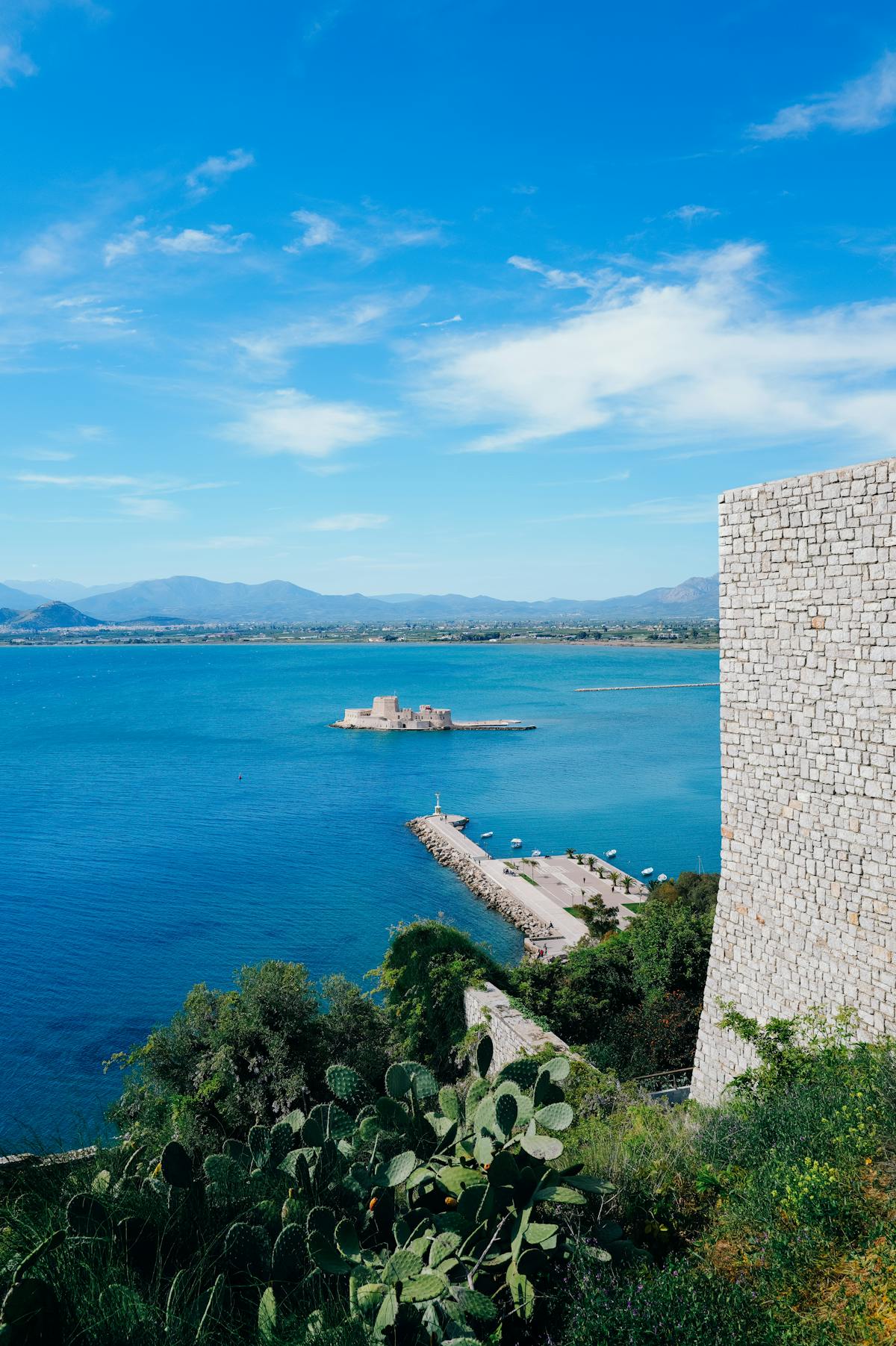
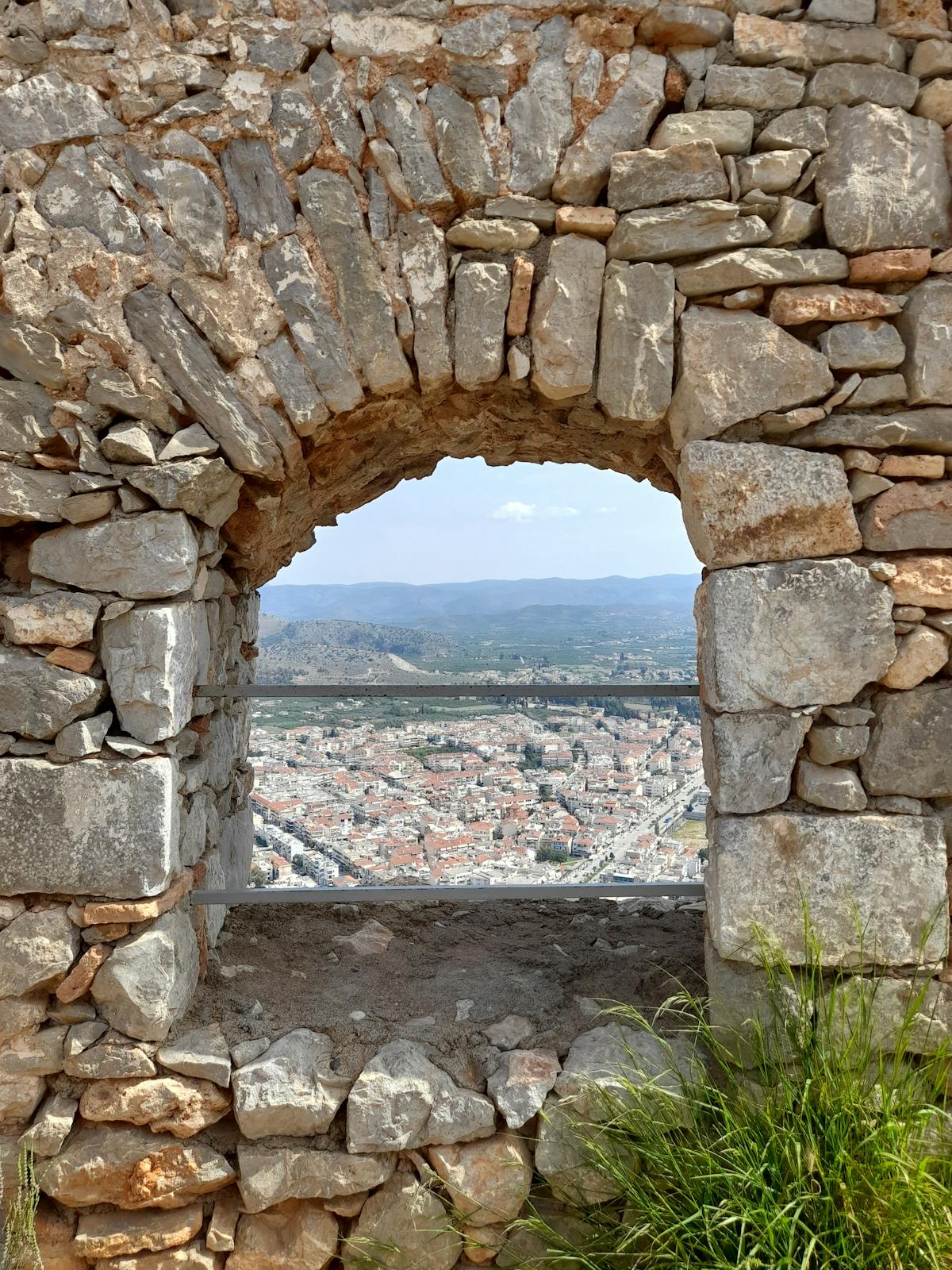
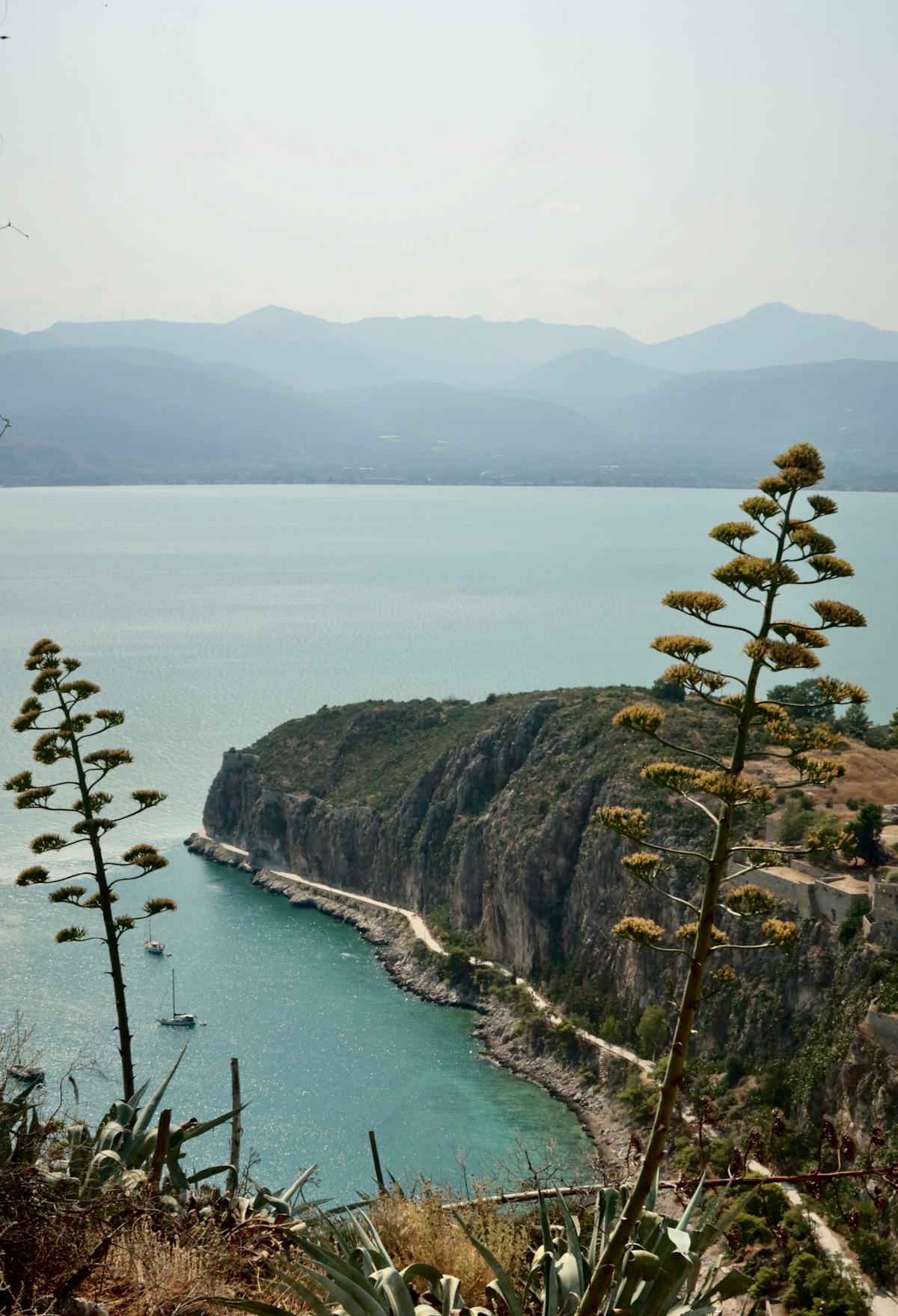
Nafplio was the first capital of modern Greece (1829–1834), before Athens took over, and the architecture reflects centuries of Venetian, Ottoman, and Greek influence layered on top of each other. The Palamidi fortress sits on the cliff above the town — 999 steps to the top, according to local legend, though the actual count is closer to 857. You won’t have time to climb it on a day trip, but it makes a spectacular backdrop for photos from the waterfront.
For lunch, walk past the tourist restaurants right on the main square and head one block back to Staikopoulou Street, where the tavernas serve better food at lower prices. Order whatever the waiter recommends — the local specialties are usually pork souvlaki, stuffed tomatoes, and fresh fish. Nafplio is also famous for its ice cream; several gelaterias on the main street make flavors with local ingredients like Argolid oranges and pistachios from Aegina.
The History Behind the Ruins
To understand why Mycenae matters, you need to understand the Mycenaean civilization — the first advanced civilization on mainland Europe, and the one that Homer was writing about (centuries later) in the Iliad and the Odyssey. Between roughly 1600 and 1100 BC, the Mycenaeans built fortified citadels across southern Greece, developed a writing system (Linear B, which turned out to be an early form of Greek), controlled trade routes from Egypt to Britain, and may have actually fought a war at Troy. When archaeologists deciphered Linear B tablets found at Mycenae and other sites, they discovered inventories of bronze armor, chariots, and military supplies — this was a warrior culture with sophisticated logistics.
The collapse around 1100 BC remains one of archaeology’s great mysteries. Within a single generation, every major Mycenaean center was destroyed or abandoned — Mycenae, Tiryns, Pylos, Thebes. Writing disappeared. Trade networks collapsed. Population dropped by an estimated 75%. The Greek Dark Ages that followed lasted over 300 years, and when Greece re-emerged into history, the Mycenaean palaces were already ruins that the later Greeks attributed to mythical heroes and gods. They called the massive walls “Cyclopean” because they believed only the one-eyed giants, the Cyclopes, could have moved stones that large.
What caused the collapse is still debated. Earthquakes, drought, invasion by the mysterious “Sea Peoples,” internal rebellion, systems collapse — every theory has evidence and every theory has holes. The most likely answer is “all of the above, at the worst possible time.” What’s clear is that the Mycenaean world was far more complex and interconnected than anyone suspected until Schliemann started digging in the 1870s, and the discoveries haven’t stopped since. Archaeologists are still excavating at Mycenae today, and new finds regularly rewrite what we thought we knew about Bronze Age Greece.
Practical Tips That Actually Help
Wear proper shoes. This sounds like generic travel advice, but Mycenae’s terrain is genuinely challenging — uneven rocky ground, steep inclines, and ancient stone paths polished smooth by millions of feet over thousands of years. Sandals and flip-flops are a bad idea. Sturdy sneakers are the minimum; light hiking shoes are better.
Bring water and sunscreen. The Mycenae site has almost no shade, and the Peloponnese sun is fierce from May through October. Some tours provide water on the bus, but not all, and there’s a small kiosk at Mycenae that charges tourist prices. Buying a large bottle at an Athens periptero (kiosk) before departure costs a fraction of the on-site price.
Timing matters. Spring (April–May) and fall (September–October) are ideal — warm enough for comfort, cool enough that standing in the sun at Mycenae isn’t punishing. Summer works but brings peak crowds and temperatures above 35°C. Winter tours run less frequently but offer the sites nearly empty, which has its own appeal. The Epidaurus theater hosts a summer festival (June–August) with actual performances of ancient Greek drama — if your trip coincides, it’s an extraordinary experience to see Sophocles performed in the same theater where his plays debuted 2,400 years ago.
For photography, morning light at Mycenae is better than afternoon — the Lion Gate faces east and gets harsh shadows after noon. Epidaurus photographs well at any time of day thanks to the surrounding greenery, but the best shots of the theater come from the highest rows looking down. Bring a wide-angle lens if you have one; the scale of both sites is hard to capture with a standard phone camera.
More Greece Day Trips Worth Considering
If the Mycenae and Epidaurus circuit has you hooked on day-tripping from Athens, the city is an absurdly good base for exploring ancient Greece. The most popular alternative is the Delphi day trip, which takes you northwest to the sanctuary where the Oracle delivered prophecies that shaped Greek politics for centuries — the mountain setting is completely different from the Peloponnese flatlands, and the Treasury of the Athenians and the theater perched above the Temple of Apollo are worth the drive alone. Some travelers try to choose between Delphi and Mycenae, but honestly, they’re so different that doing both on separate days is the right call if you have the time.
For something more dramatic, the Meteora day trip sends you north to the impossible monasteries perched on sandstone pillars that look like they were placed there by a giant with a sense of humor. It’s a longer drive (about four hours each way), but the landscape is unlike anything else in Greece — or Europe, for that matter. Meanwhile, if ancient Athens itself hasn’t had enough of your attention yet, the Acropolis tours page covers guided options that bring the Parthenon and surrounding monuments into sharp focus with expert commentary.
When you need a break from ruins entirely, the Greek islands are the obvious pivot. The Santorini catamaran cruises page covers the best sailing options around the caldera — white-washed villages viewed from the water, volcanic hot springs, sunset with a glass of Assyrtiko wine. And for island culture that’s more Venetian than classical Greek, the Corfu boat tours to Paxos and Antipaxos offer turquoise waters and sea caves that rival anything in the Caribbean, with taverna lunches that absolutely destroy anything in the Caribbean. If you haven’t explored the Athens food tours yet, those make for a perfect low-key day between more demanding excursions — nothing recharges the batteries like someone else leading you to the best souvlaki in Monastiraki.