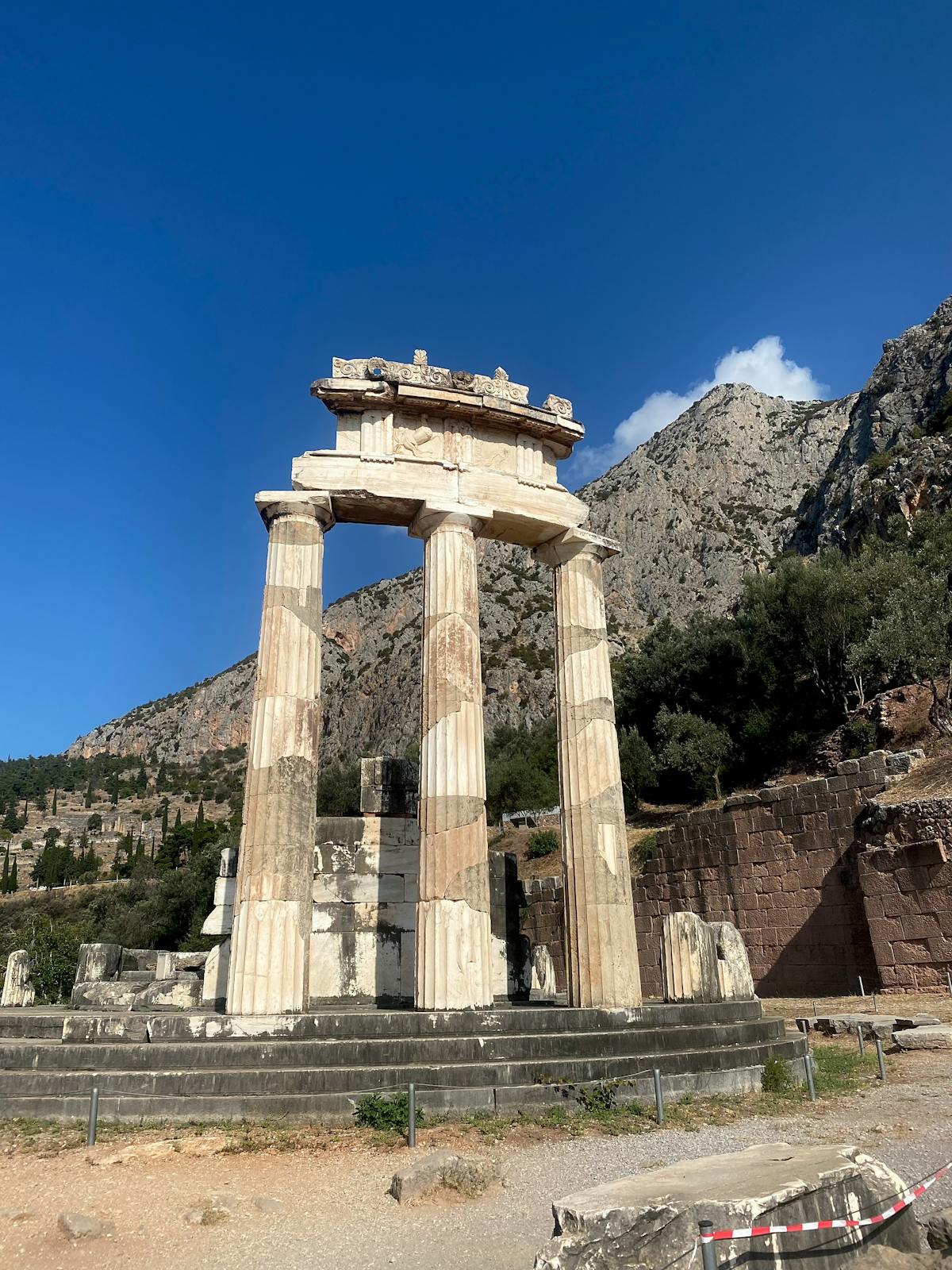
For a thousand years, Delphi was the most important place in the ancient world. Kings, generals, and entire city-states made the journey to this mountain sanctuary to consult the Oracle — a priestess called the Pythia who sat above a volcanic fissure, inhaled the gases rising from the earth, and delivered prophecies so cryptic they’ve fuelled academic debate for centuries. The Athenians asked whether to fight the Persians. Alexander the Great demanded to know his destiny. Roman emperors sought favour from the gods. And they all came here, to this impossibly dramatic mountainside above the Gulf of Corinth, because they believed that Delphi was literally the centre of the world — the omphalos, the navel of the earth, the spot where two eagles released by Zeus met in flight. Today, the ruins sit on a terraced hillside surrounded by olive groves, cypress trees, and mountains that turn violet at sunset, and visiting them with a knowledgeable guide transforms a pile of ancient stones into one of the most powerful cultural experiences in Greece.
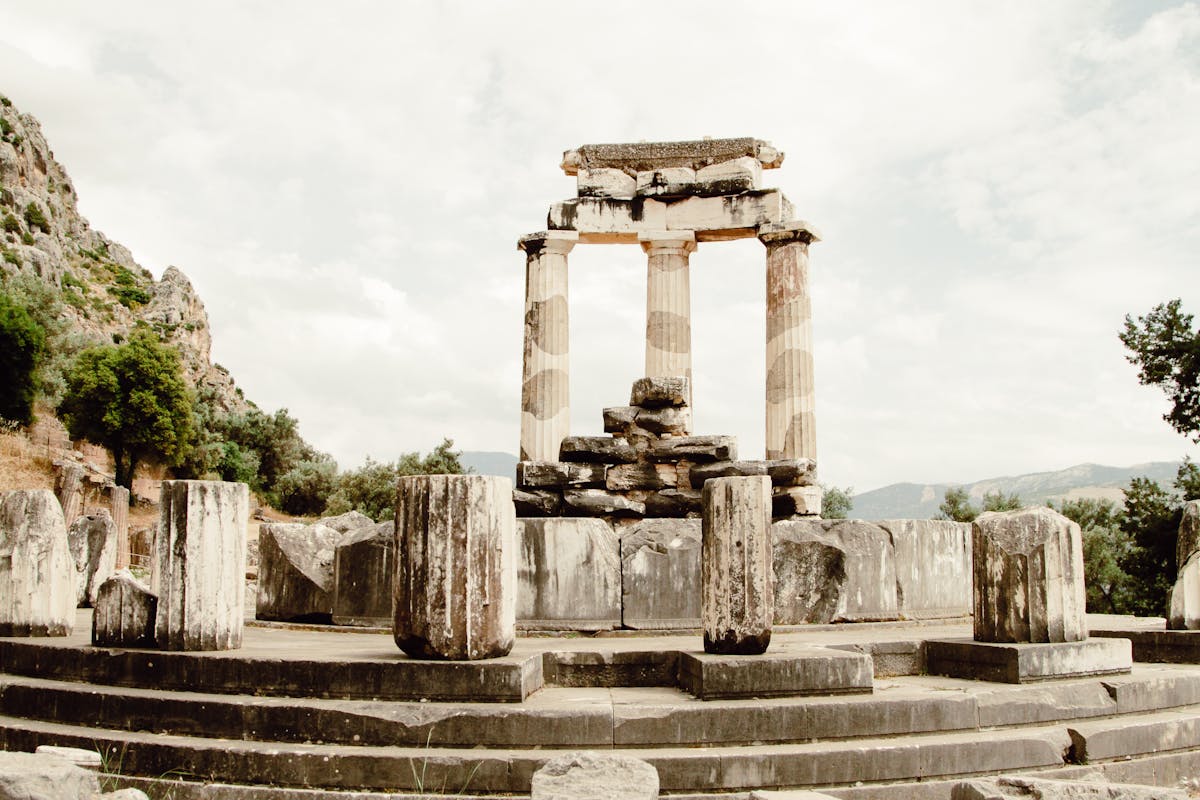
Delphi is about 180 kilometres northwest of Athens — roughly 2.5 hours by road through the mountains. Most tours add a stop in the village of Arachova (a picturesque mountain town famous for cheese, wine, and weaving) and include entrance to both the archaeological site and the Delphi Museum, which houses some of Greece’s most important ancient artefacts. The guides are the critical ingredient — Delphi without context is a hillside with scattered ruins, but with a good archaeologist or historian explaining what happened at each terrace, it becomes a time machine. It’s a roughly 2.5-hour drive from Athens — less than half the distance to Meteora — making it one of the most accessible and rewarding day trips from the capital.
The Mythology of Delphi Tour is the top choice with 5,102 reviews and guides like Marianna who make Greek mythology feel like breaking news. Includes the ruins, museum, and Arachova village. For a smaller group with a licensed archaeologist, the Delphi Oracle & Museum Tour (2,121 reviews) is exceptional — guide Vangelis is a consistent standout.
- Best Delphi Day Trips from Athens
- 1. Mythology of Delphi, Museum and Arachova Tour
- 2. Delphi Oracle & Museum Tour with Licensed Guide
- 3. Delphi Oracle & Arachova Full Day Trip
- 4. Delphi, Thermopylae & 300 Spartans Tour
- 5. Delphi Day Tour with Museum & Arachova Village
- What You’ll See at Delphi
- The Sacred Way and Temple of Apollo
- The Delphi Museum
- The Oracle of Delphi: A Brief History
- How the Oracle Worked
- Delphi’s Political Power
- The Decline
- Practical Tips
- The Journey
- What to Wear and Bring
- Arachova Village
- More Greece Guides
Best Delphi Day Trips from Athens
1. Mythology of Delphi, Museum and Arachova Tour
With 5,102 reviews, this is far and away the most popular Delphi tour from Athens, and the volume hasn’t diluted the quality. The full-day format departs Athens in the morning, stops in Arachova for coffee and photos, then spends the main part of the day at the Delphi archaeological site and museum with a licensed guide. The return journey includes a rest stop, and you’re typically back in Athens by early evening.
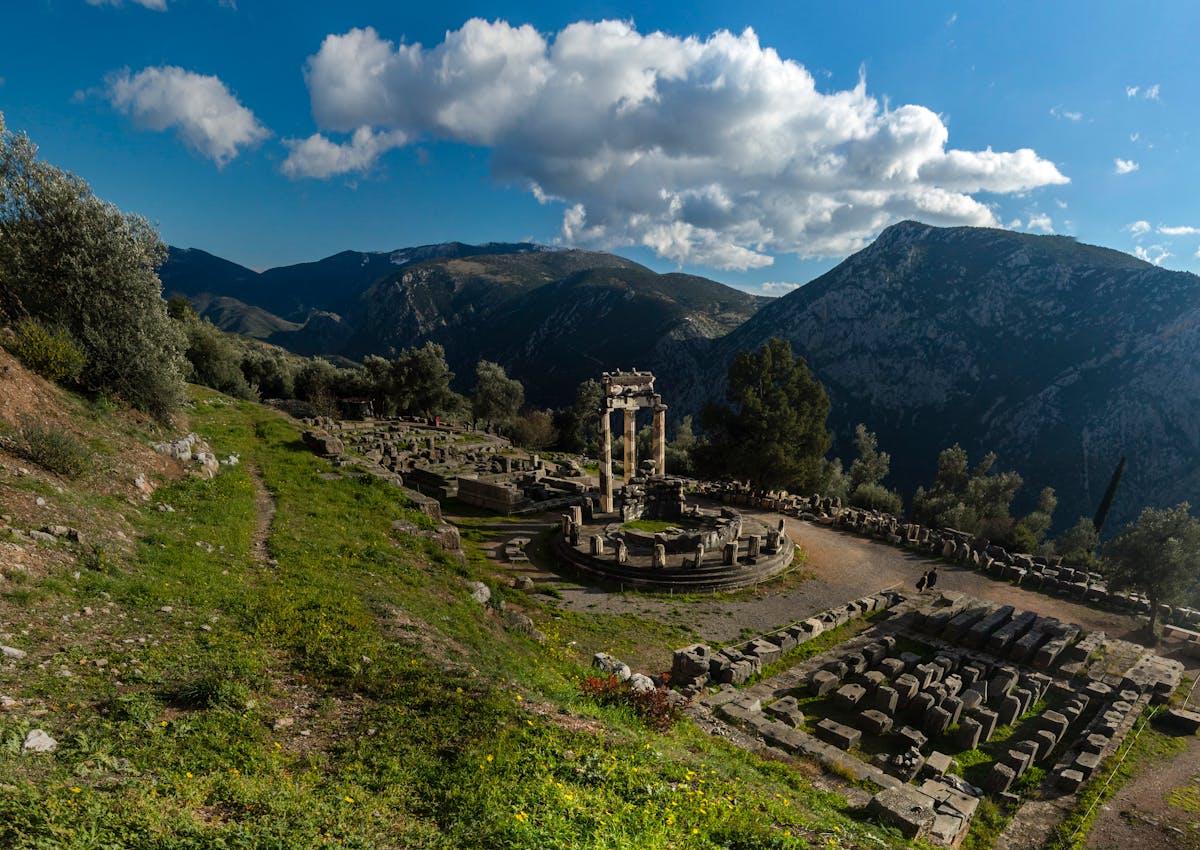
Sarah valued the balance: “Very balanced tour — visit the ruins, visit museum and stop over in a beautiful quaint town. Stops for coffee and bathroom on the way out and back. Very nice guide who explained very well.” Lorenzo was emphatic about the destination: “One of the best historical areas in Greece. The place is awesome, and our guide was excellent and very informative. This is something you must see.” Ieva credited the guide specifically: “Our guide, Marianna, with her knowledge about Greek culture and history made the trip twice as much more interesting.” Kate offered a practical warning: “It was a bit of a climb up the Delphi ruins but it was so worth it. The guide was very knowledgeable. Overall a brilliant tour.”
That climb is worth noting — the archaeological site is built on a steep hillside and involves walking uphill on uneven stone paths. It’s manageable for most fitness levels but challenging in summer heat. Bring water, wear proper walking shoes with grip, and pace yourself — there’s no rush, and the view improves with every terrace you climb. Some of the best photo opportunities are on the upper levels where the crowds thin out, and the stadium at the very top of the site is rarely crowded even in peak season.
Read reviews and check prices for this tour
2. Delphi Oracle & Museum Tour with Licensed Guide
This 2,121-review tour distinguishes itself by guaranteeing a licensed guide with academic credentials — not just a friendly person with a script, but someone with genuine expertise in ancient Greek history and archaeology. The format is similar (Athens departure, Delphi site and museum, optional Arachova stop) but the commentary goes deeper into the mythology, the political significance of the Oracle, and the archaeological techniques used to excavate and interpret the ruins.
Guide Vangelis dominates the reviews for this tour. Pascale wrote: “The guide, Vangelis, really made the experience one of a kind. Really loved his commentary and learned a lot about Greek history.” Merliyn went further: “Vangelis is so professional and knowledgeable about Greek history that we honestly thought he was a historian! At the Delphi Museum, his detailed storytelling made it feel like we were time travelling.” Astor agreed: “Vangelis was a very knowledgeable and passionate tour guide who made this day tour an exceptional one.”
If the guide is the most important factor for you — and at Delphi, it really should be — this tour consistently delivers the highest-quality commentary. The ruins are the same on every tour; the difference is in who explains them to you. A licensed guide with genuine expertise transforms the jumble of stone foundations and broken columns into a vivid picture of a functioning sanctuary — you’ll understand where the pilgrims waited, where the priests prepared the sacrifices, where the Oracle sat in her trance, and why the acoustics of the temple amplified her voice to the waiting crowds outside. Without that context, you’re looking at old rocks. With it, you’re witnessing the machinery of an ancient civilisation’s most powerful institution.
3. Delphi Oracle & Arachova Full Day Trip
This 1,626-review option puts equal emphasis on Delphi and Arachova, making the mountain village more than just a coffee stop. You get genuine free time to explore Arachova’s stone streets, browse the shops selling local cheese, honey, and woven textiles, and have lunch at a taverna of your choosing. The Delphi portion covers the full archaeological site and museum with a guide.
Sarah appreciated the completeness: “Exactly what my husband and I hoped for! The transportation was easy, our guide was excited, helpful, and informative. We also loved being able to stop in town for lunch and explore.” Sydney singled out the team: “Huge thanks to tour guide Ioanna and driver Christos for a lovely experience. Ioanna was very knowledgeable and entertaining.” Kaitlyn had the experience of a lifetime: “The tour of Delphi and the Delphi Museum was an unforgettable experience! John the archaeologist is truly one of a kind — an exceptional guide and an even more exceptional person.”
Read reviews and book this tour
4. Delphi, Thermopylae & 300 Spartans Tour
For travellers who want to combine Delphi with ancient Greek military history, this 492-review tour adds Thermopylae — the mountain pass where 300 Spartans and their allies held off the entire Persian army in 480 BC — to the standard Delphi itinerary. The tour visits the Leonidas monument, explains the battle tactics and geography, and includes the Corycian Cave (a massive cavern sacred to Pan and the nymphs in ancient times). It’s a longer day but packs in significantly more historical content.
Emi_G loved the intimate format: “There were only 5 of us on this small-size excursion and it was perfect that way. Pan was a great guide with lots of knowledge about the sights and the history and myths.” Jonathan_W explained why a guided tour beats self-driving: “Originally I’d been looking into getting to Delphi and Thermopylae myself, but upon seeing the travel options this tour made far more sense.” Kimberly_C praised the guide extensively: “Pan was an incredible guide. He was extremely knowledgeable, courteous, kind and patient. I would give him 10 stars if I could!”
This tour is ideal for history enthusiasts who want more than just the standard Delphi visit. The Thermopylae stop adds perhaps an hour to the day but provides context that connects Delphi’s Oracle to the actual military decisions it influenced — including the famous prophecy that told the Spartans they would either save their city or mourn a king.
5. Delphi Day Tour with Museum & Arachova Village
This 423-review tour is the straightforward, no-frills Delphi experience — Athens departure, coffee stop, Delphi archaeological site and museum with a guide, free time in Arachova, and return to Athens. It’s a clean format that focuses on delivering the core experience well without trying to cram in extra stops. For travellers who want Delphi and nothing else, this is the efficient choice.
Dena’s review captured the practical reality: “Great tour! It’s a long trip but rest breaks were added on the way there and back. Delphi is amazing to see and this tour was a great way to see everything. Enjoyed lunch in Arachova as well.” Francisco praised his guide: “Michael was exceptional. His great knowledge and stories made the tour unforgettable. His kindness and good humour were fantastic.” Debbie agreed: “An amazing day off largely thanks to our fantastic guide Ana. She is so knowledgeable but makes everything fun and engaging.”
What You’ll See at Delphi
The Sacred Way and Temple of Apollo
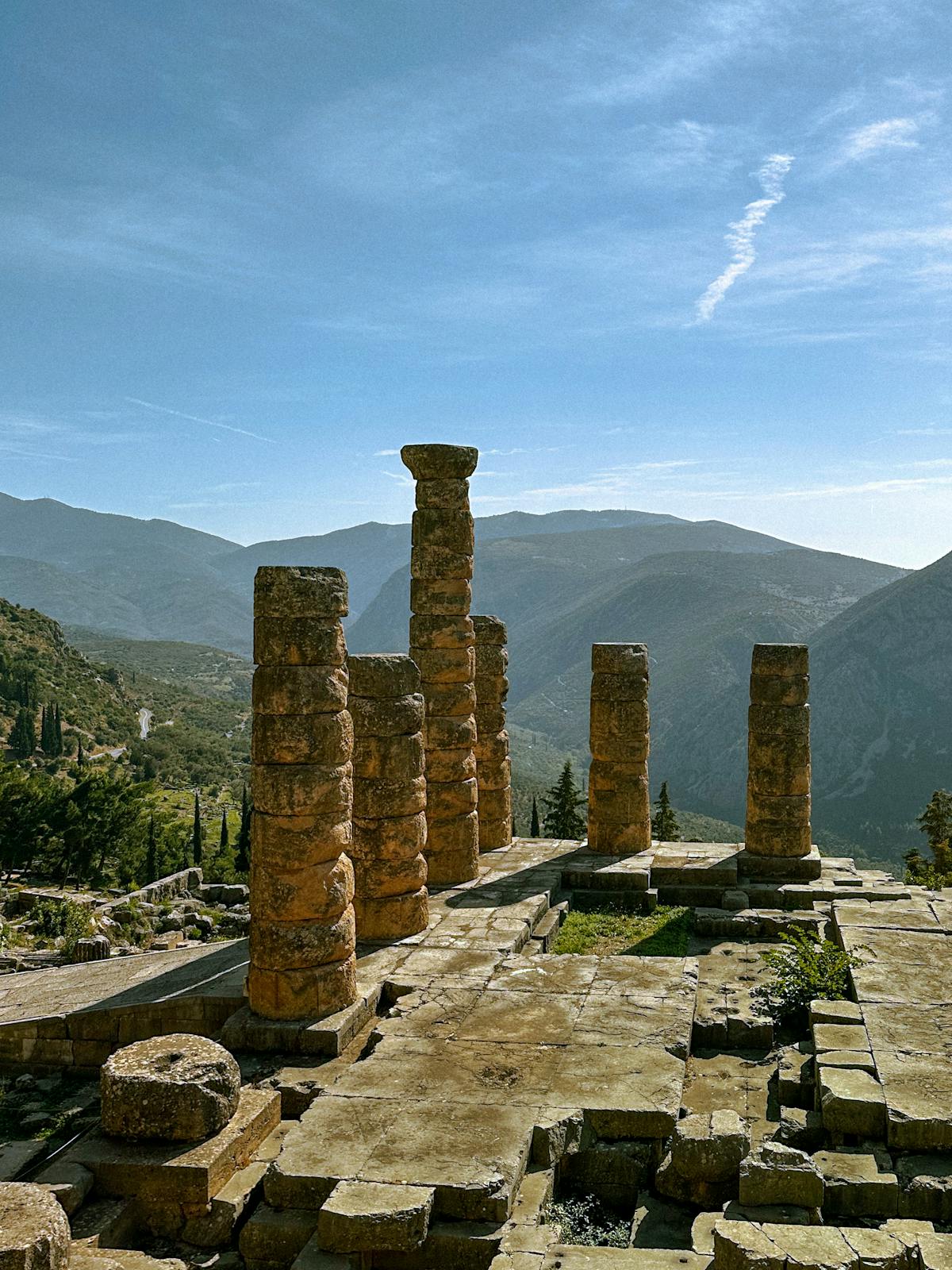
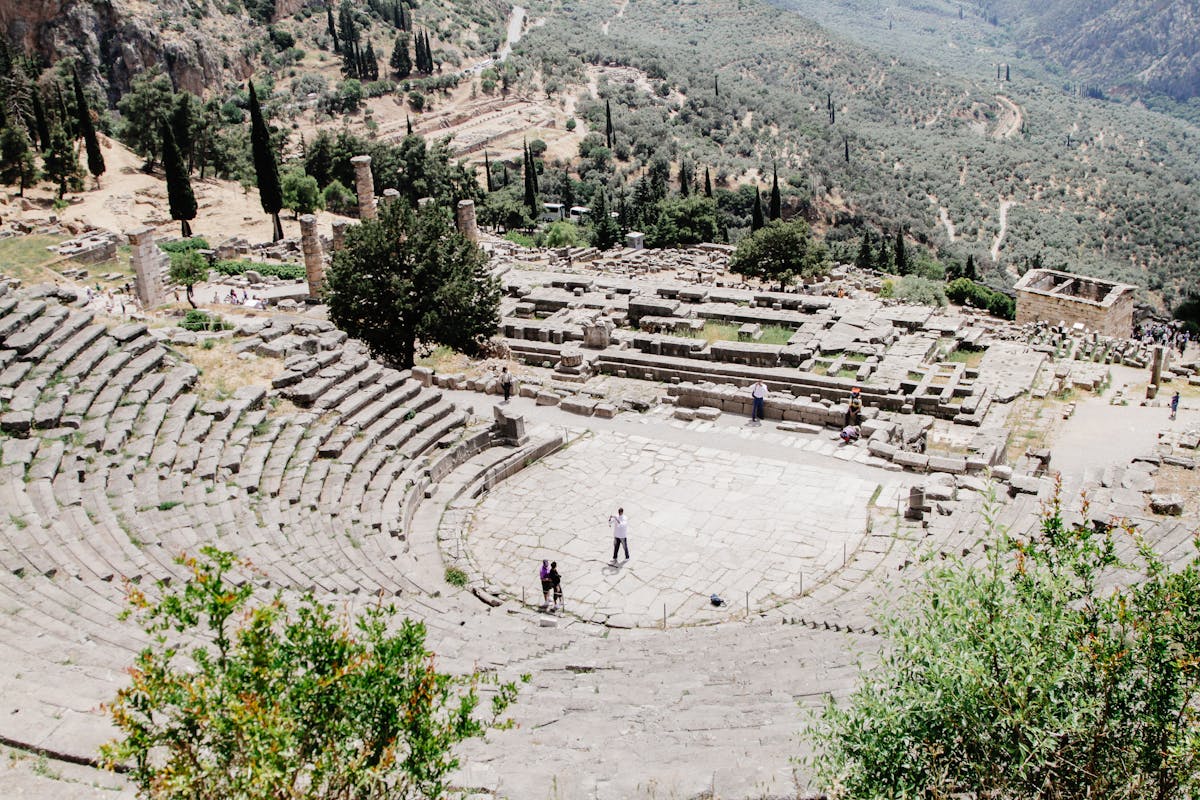
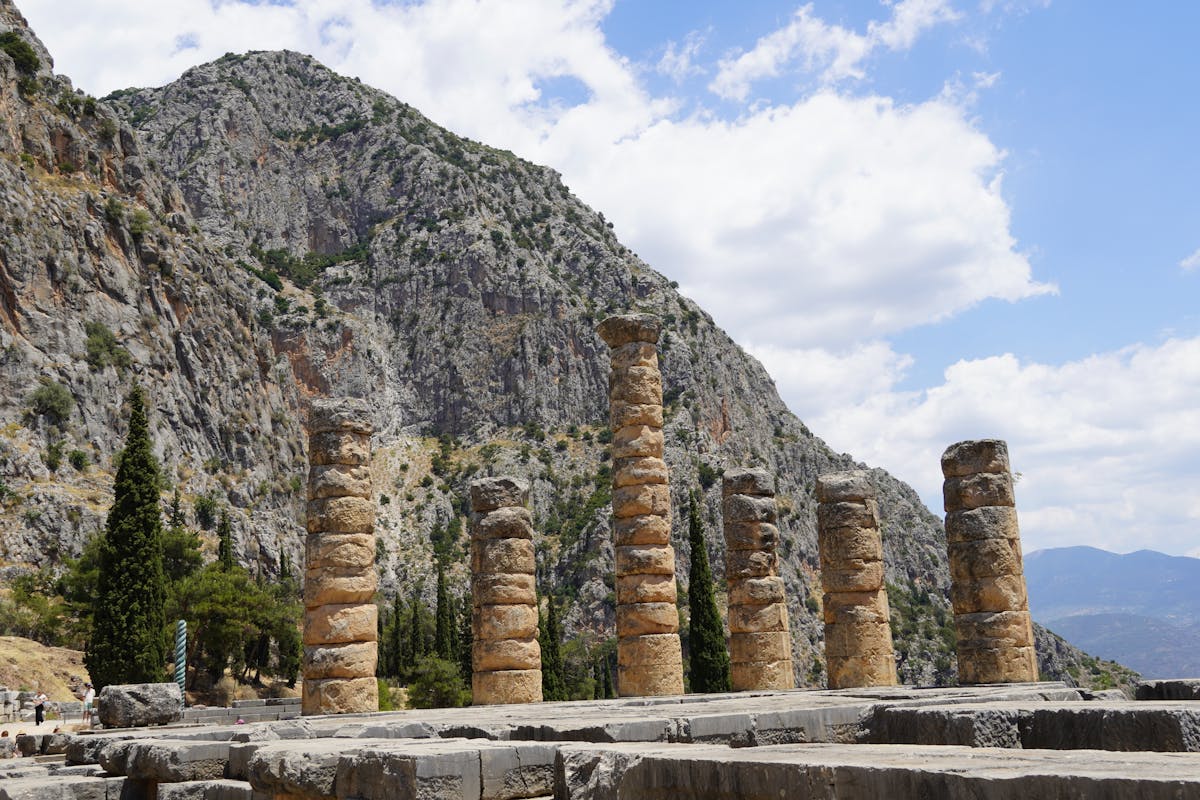
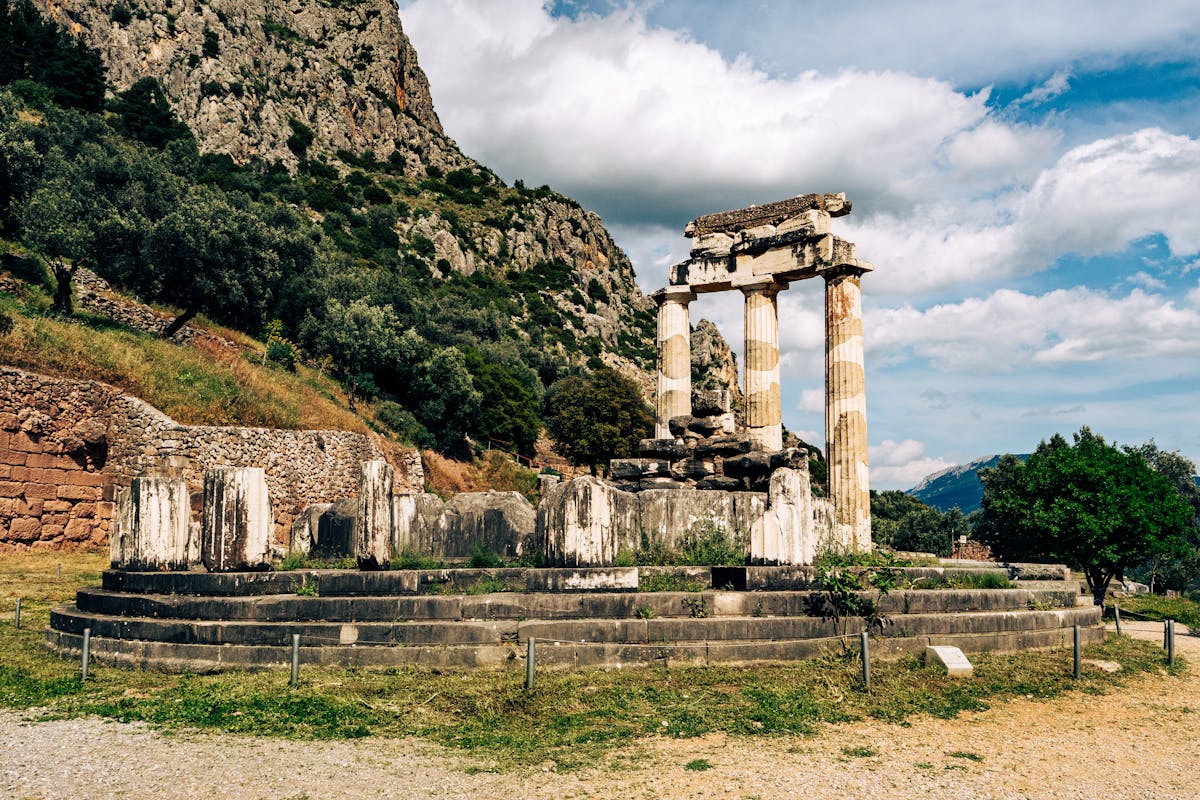
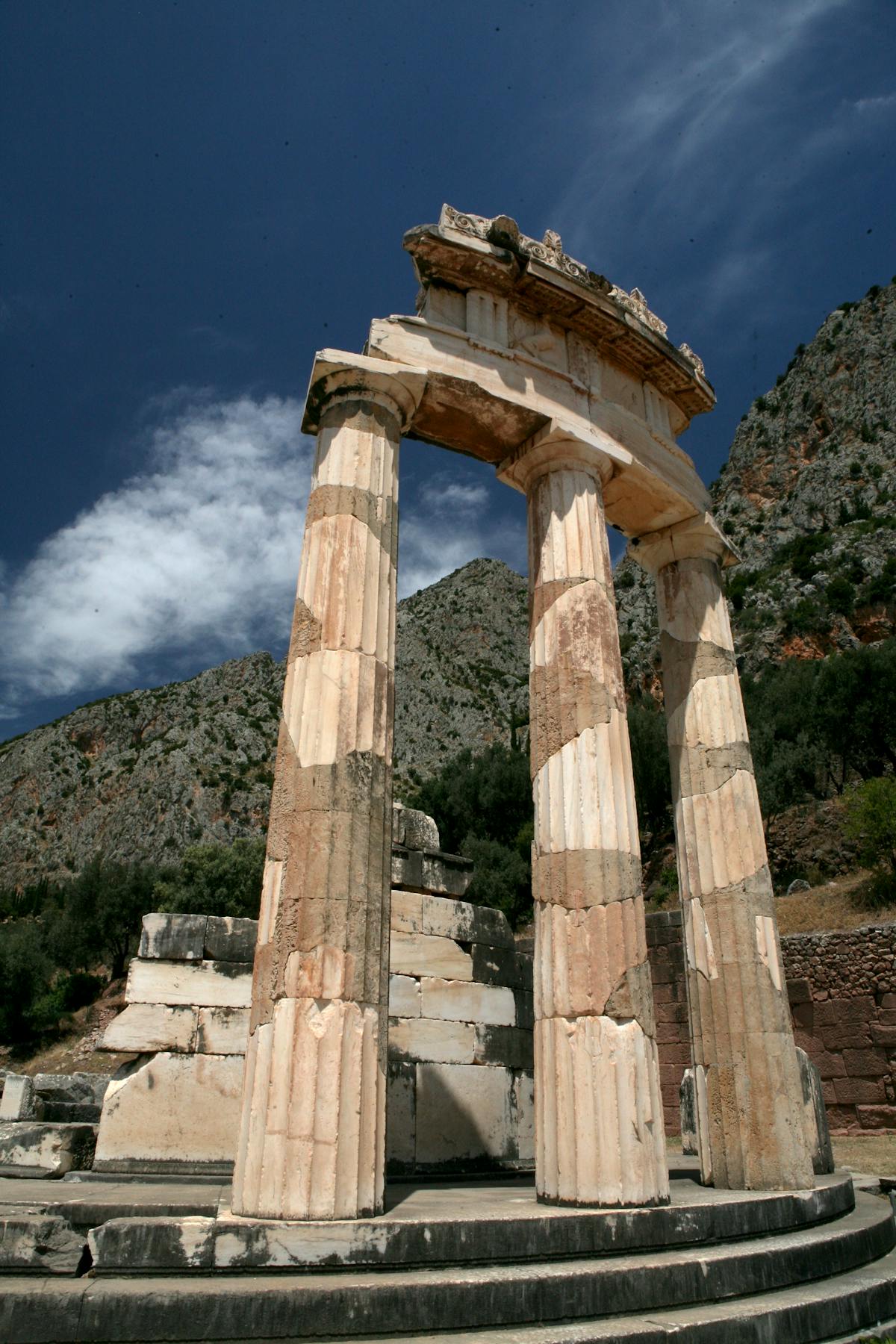
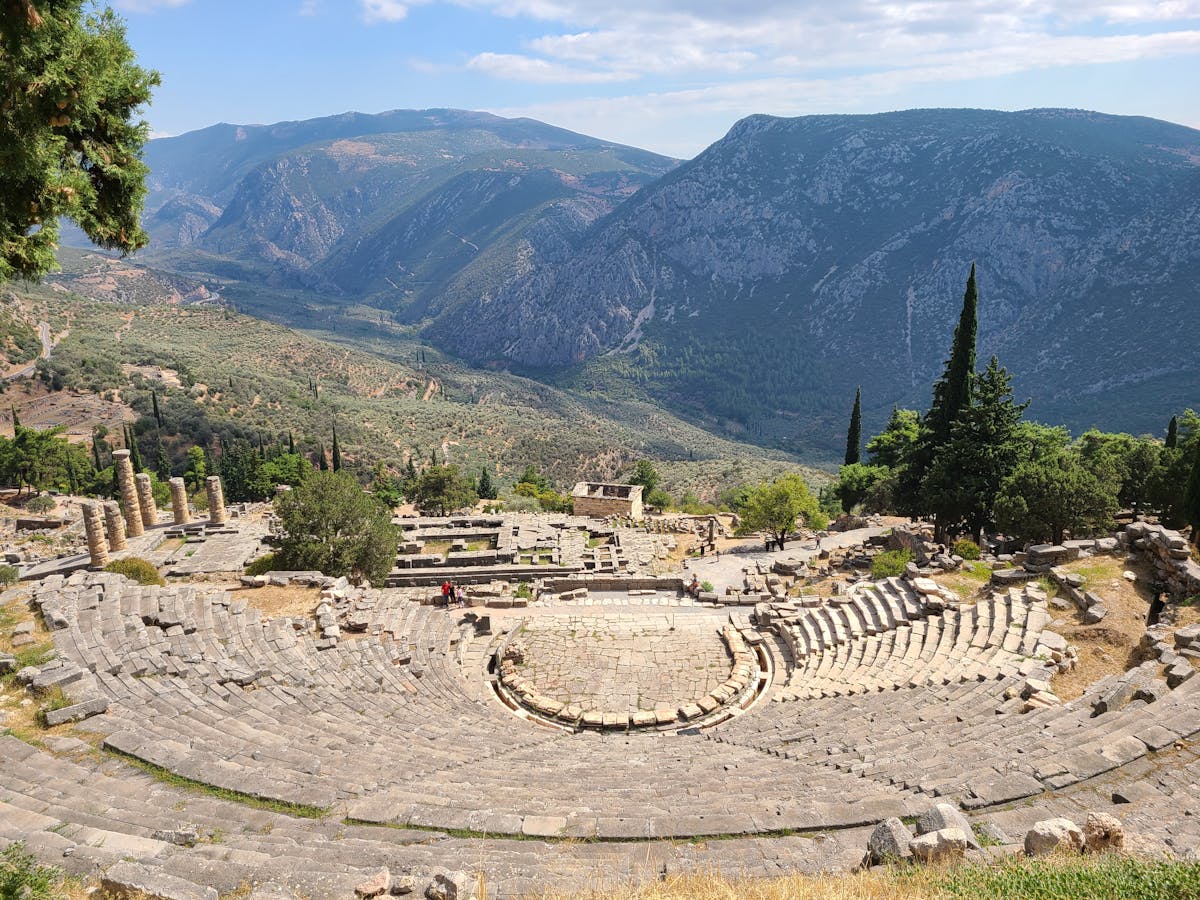
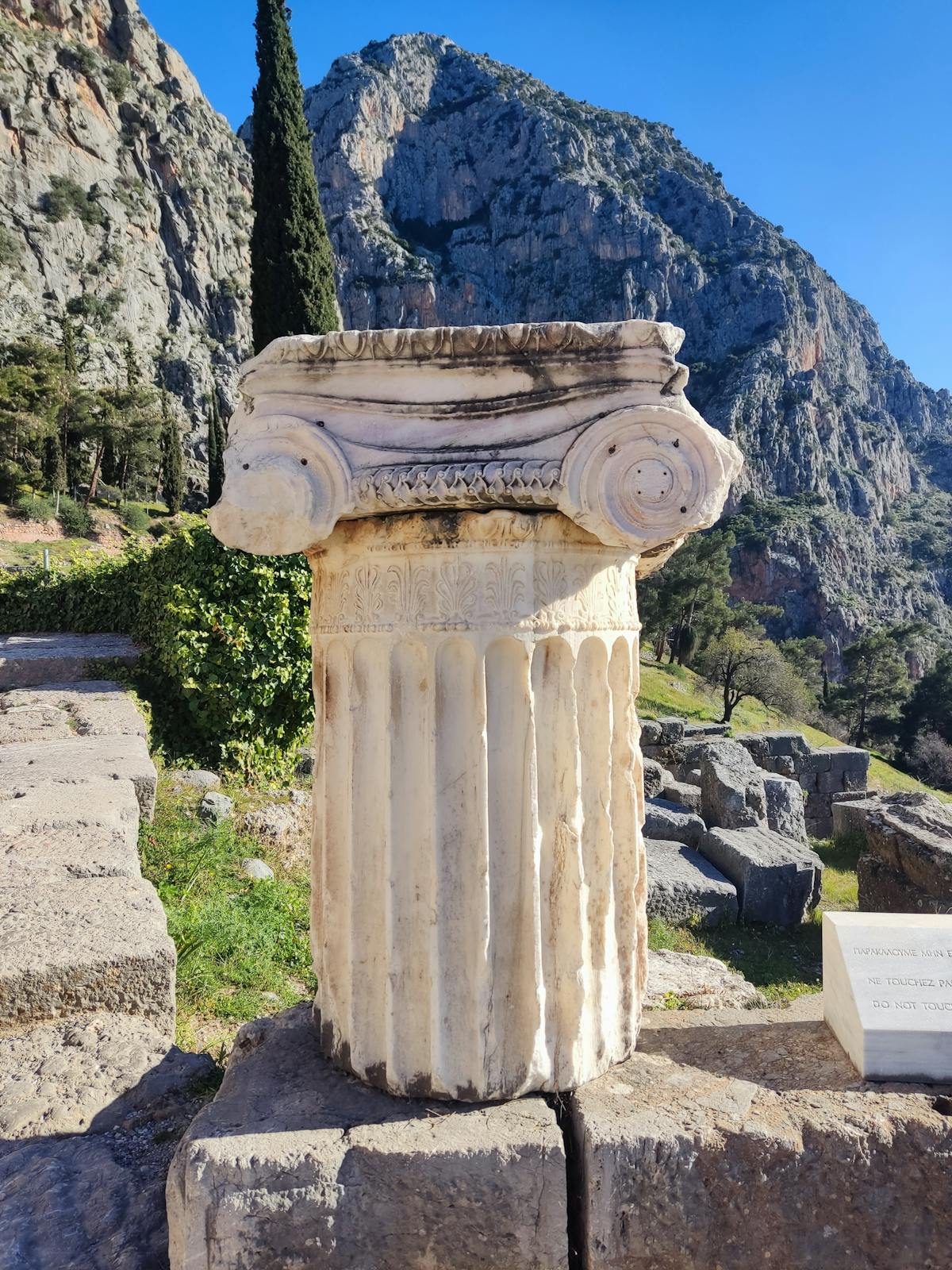
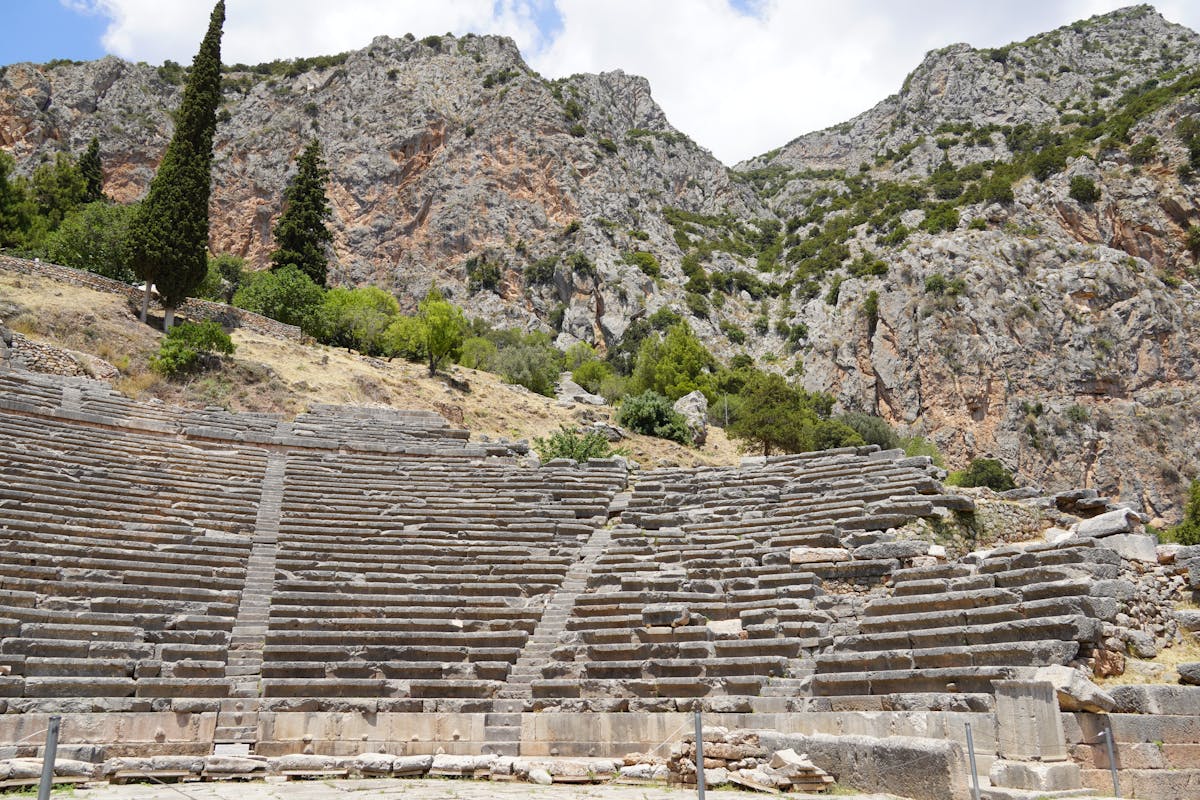
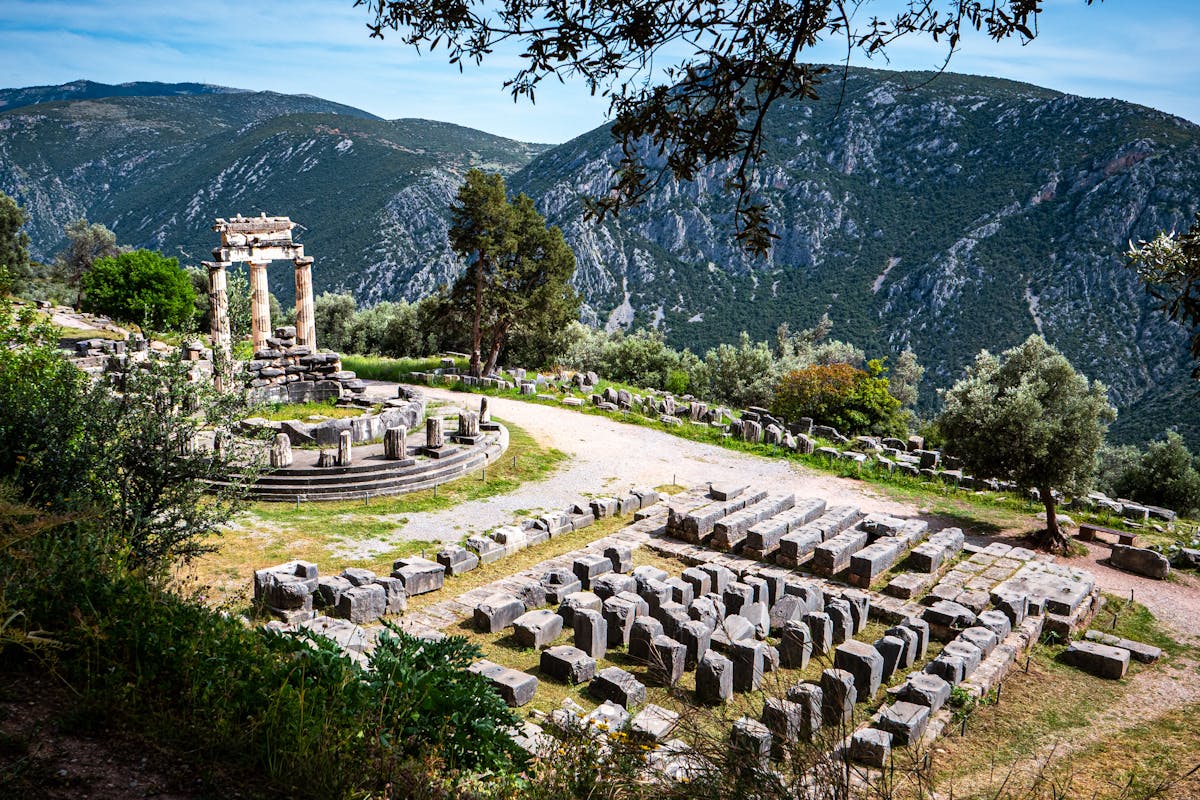
The main archaeological site is organised around the Sacred Way — a winding path that ancient pilgrims walked uphill to reach the Temple of Apollo, where the Oracle held court. Along the way, you pass the treasuries (small temple-like buildings erected by various Greek city-states to house their offerings), the Stoa of the Athenians, inscribed stones recording ancient decrees, and the foundations of dozens of buildings that made Delphi function as a major religious and political centre. At the top stands what remains of the Temple of Apollo — a few massive columns and a stone foundation platform that conveys the scale of the original building. Above the temple, the ancient theatre (5,000 seats, still largely intact) offers panoramic views across the valley of olive trees to the Gulf of Corinth — on a clear day, you can see the water glinting 15 kilometres away. Higher still, the ancient stadium where the Pythian Games were held (a precursor to the Olympics, held every four years in honour of Apollo) stretches along the ridge, its starting blocks still visible in the stone. The walk to the stadium is steep but rewards you with solitude — most tour groups don’t make it this far, so you often have Greece’s most atmospheric ancient athletics venue largely to yourself.
The Delphi Museum
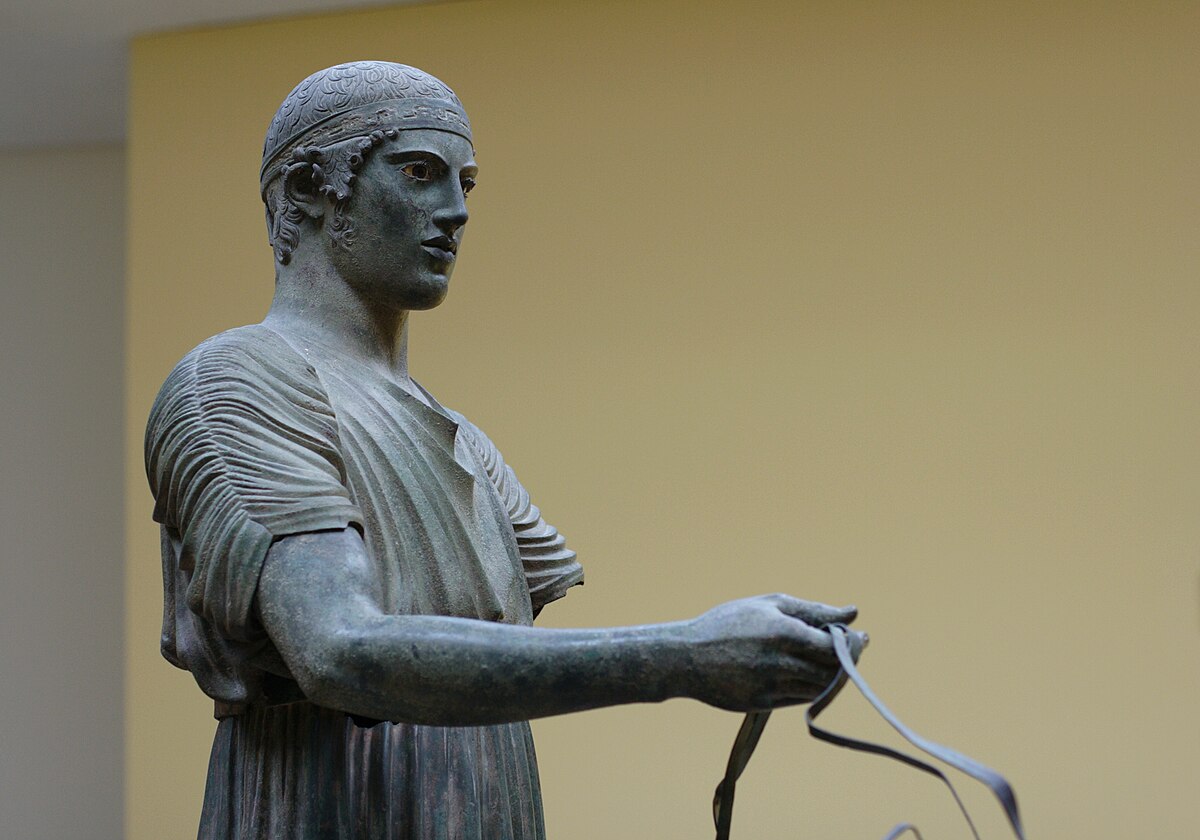
Don’t skip the museum. It houses artefacts that rival anything in the National Archaeological Museum in Athens, and seeing them in context — knowing they came from the site you just walked through — makes them infinitely more meaningful. The star exhibit is the Charioteer of Delphi, a 5th-century BC bronze statue of a racing chariot driver that is considered one of the finest surviving examples of ancient Greek sculpture. The detail is astonishing — the veins in his arms, the folds of his robe, the inlaid glass and onyx eyes that seem to follow you around the room. The museum also contains the Sphinx of Naxos, gold and ivory offerings, and fragments of the original temple sculptures.
The Oracle of Delphi: A Brief History
Understanding the Oracle’s story transforms Delphi from an impressive ruin into one of the most significant cultural sites in Western civilisation. The guides bring this alive on-site, but knowing the basics beforehand deepens the experience considerably.
How the Oracle Worked
The Oracle of Delphi — the Pythia — was a priestess selected from the women of Delphi who served as a conduit between the god Apollo and the mortal world. She sat on a tripod above a fissure in the earth from which gases rose (modern geological analysis has identified ethylene and methane in the rock), inhaled the vapours, and entered a trance-like state in which she delivered prophecies. Her utterances were famously ambiguous — when King Croesus of Lydia asked whether he should attack Persia, the Oracle replied that if he did, “a great empire will be destroyed.” Croesus, delighted, assembled his armies and marched east. He attacked. The empire destroyed was his own. It remains history’s most devastating case of misread fine print, and the guides at Delphi love telling this story. The Oracle’s brilliance — or, depending on your perspective, her survival strategy — lay in prophecies that could be interpreted multiple ways, ensuring she was never technically wrong. The consultation process itself was elaborate — petitioners paid a fee, sacrificed an animal, and waited in line (sometimes for days during busy periods) before being admitted to the inner sanctum of the temple. Only men were allowed to consult the Oracle directly; women had to send a male representative. The Pythia served for life, and during Delphi’s peak, three priestesses worked in rotation to handle the demand. It was, in every sense, a professional operation that ran for over a thousand years.
Delphi’s Political Power
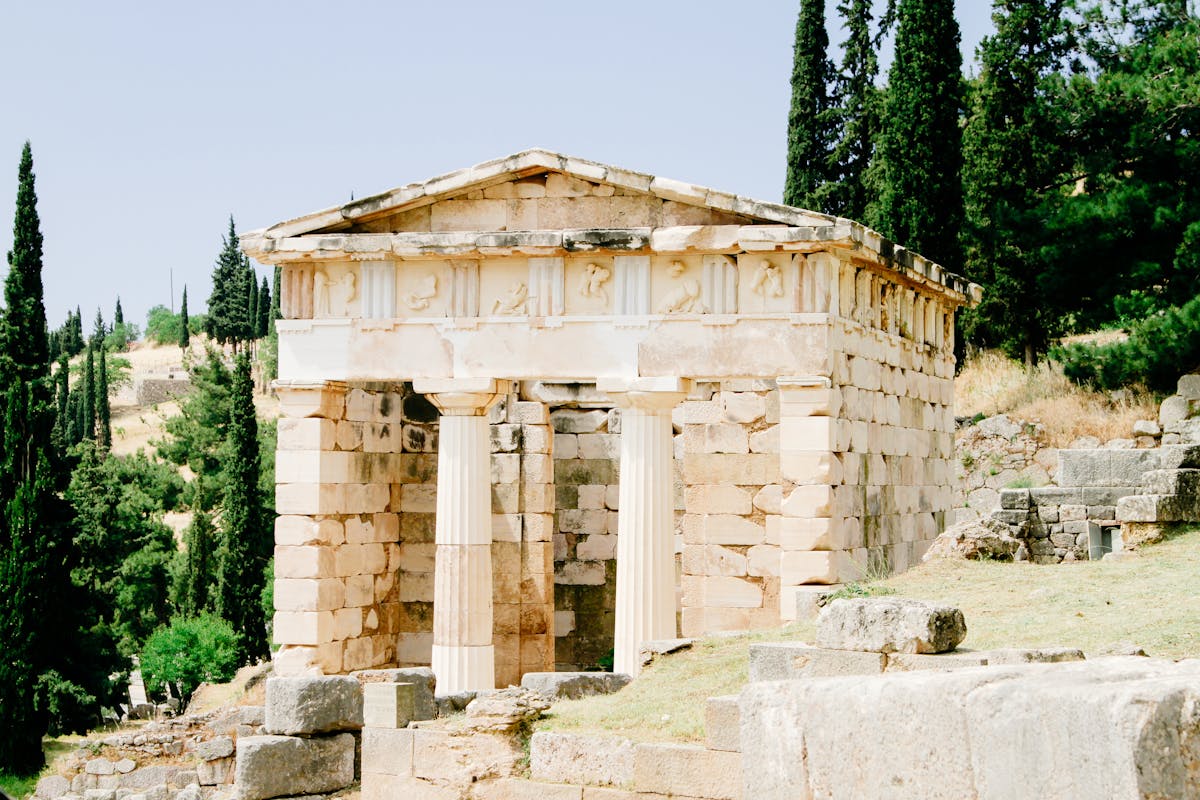
The Oracle wasn’t just a spiritual curiosity — she was arguably the most powerful political figure in the ancient Mediterranean. No major military campaign, colonial expedition, or constitutional change was undertaken without consulting Delphi first. The Greek colonies that spread across the Mediterranean from Spain to the Black Sea were founded on the Oracle’s advice. Wars were started, alliances formed, and laws enacted based on her pronouncements. The treasuries lining the Sacred Way were built by city-states competing to demonstrate their piety and wealth — Delphi was the ancient equivalent of the UN, the Vatican, and Wall Street combined, and the Oracle was its most important resident. The wealth that flowed into Delphi was staggering — the treasuries that line the Sacred Way held gold, silver, and precious objects donated by city-states seeking the Oracle’s favour. Athens, Sparta, Corinth, Syracuse, and dozens of other powers all maintained treasuries here, and the competition between them was fierce. The Treasury of the Athenians, which you can still see in remarkably good condition, was built to celebrate Athens’ victory at Marathon in 490 BC — a permanent billboard advertising Athenian military glory to every pilgrim who walked the Sacred Way.
The Decline
The Oracle’s influence waned as Roman power grew and Christianity spread through the Mediterranean. The last recorded consultation was in 393 AD, when the Roman Emperor Theodosius I banned pagan oracles as part of his Christianisation programme. According to a possibly apocryphal account, the Pythia’s final prophecy was: “Tell the king that the great hall has fallen to the ground. Phoebus Apollo no longer has his house, nor his mantic bay, nor his prophetic spring; the water has dried up.” After a thousand years of influence over the course of Western history, the Oracle fell silent, and Delphi gradually became the ruin you see today — though “ruin” hardly does justice to a place that shaped the political, religious, and intellectual course of Western civilisation for longer than Christianity has existed. The French Archaeological School began systematic excavations in 1892, and the work continues today, with new discoveries still emerging from the hillside. Every year, archaeologists find fragments that add pieces to the puzzle of how this remote mountain sanctuary became the centre of the ancient world.
Practical Tips
The Journey
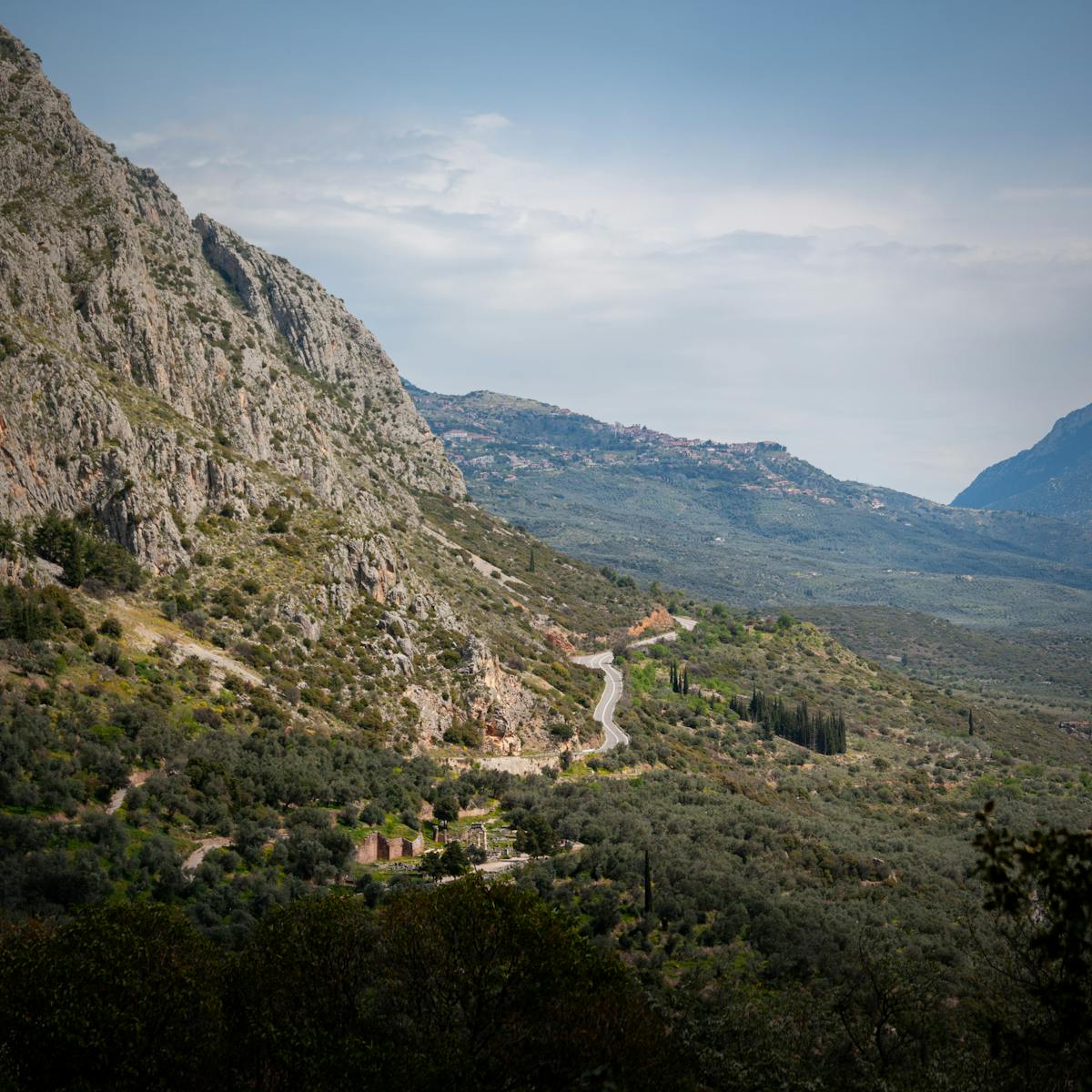
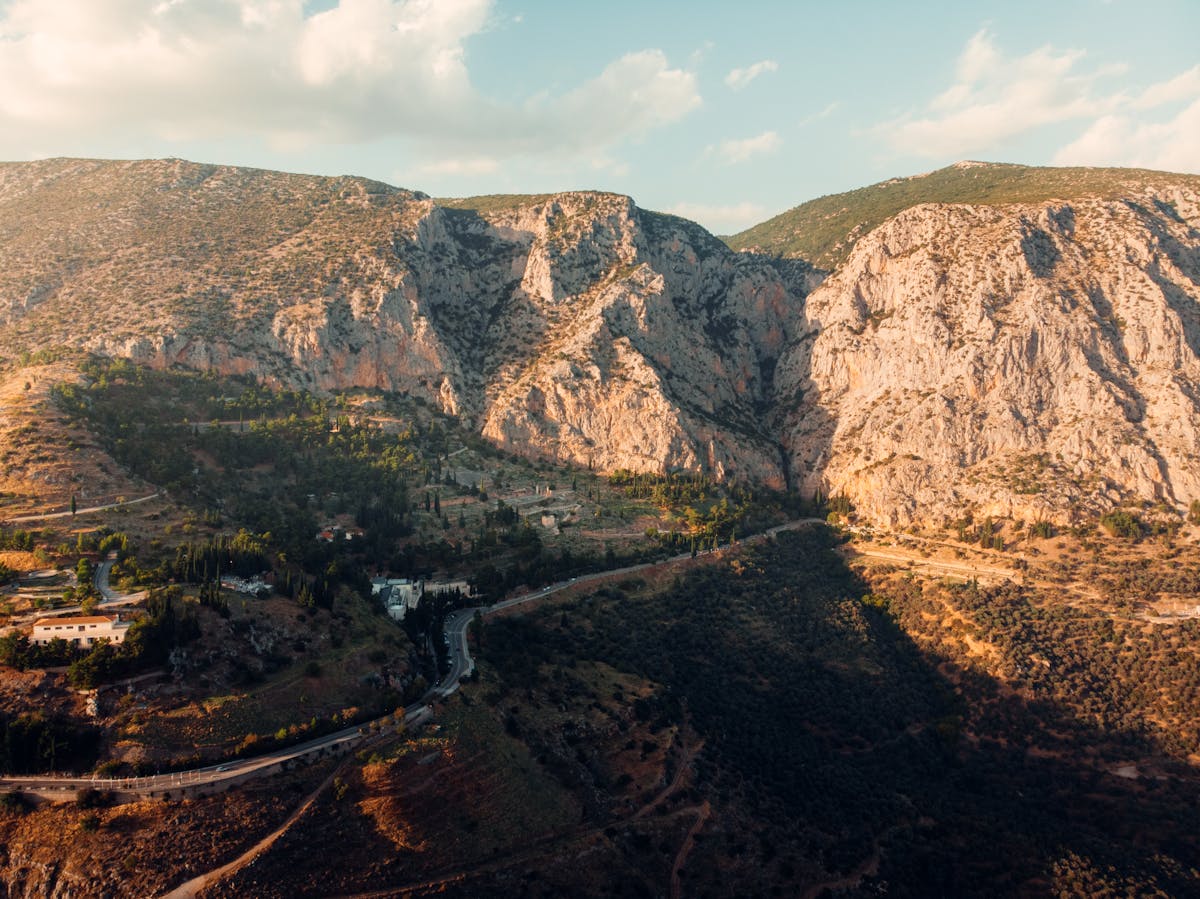
The drive from Athens to Delphi takes about 2.5 hours each way — significantly shorter than Meteora, which makes this a more manageable day trip. The route passes through Boeotia (the agricultural heartland of ancient Greece, and still visibly productive today) and climbs into the foothills of Mount Parnassos, with increasingly dramatic scenery as you approach. Most tours include a rest stop at a roadside café where you can grab a Greek coffee and stretch your legs. The final approach to Delphi is spectacular — the road winds through the largest olive grove in Greece (an estimated million trees stretching to the coast), and the ruins appear on the mountainside above like a natural amphitheatre carved into the rock. In spring, the hillside is carpeted with wildflowers; in autumn, the olive harvest fills the air with a distinctive earthy fragrance.
What to Wear and Bring
Comfortable walking shoes with good grip are essential — the site involves walking uphill on uneven stone paths and ancient staircases. In summer (June-September), bring water, a hat, and sunscreen — there’s limited shade on the archaeological site and temperatures regularly exceed 35°C. In winter, bring layers — Delphi is at altitude (about 570 metres above sea level) and can be significantly colder than Athens, sometimes by 10°C or more. Rain and cloud add a moody atmosphere that some visitors actually prefer to the summer glare, and the site is far less crowded between November and March. The Arachova stop is a good opportunity to buy a local wool scarf or blanket if you’ve underestimated the mountain chill — the village’s textile shops sell handmade woollen goods that are both practical and beautiful souvenirs.
Arachova Village
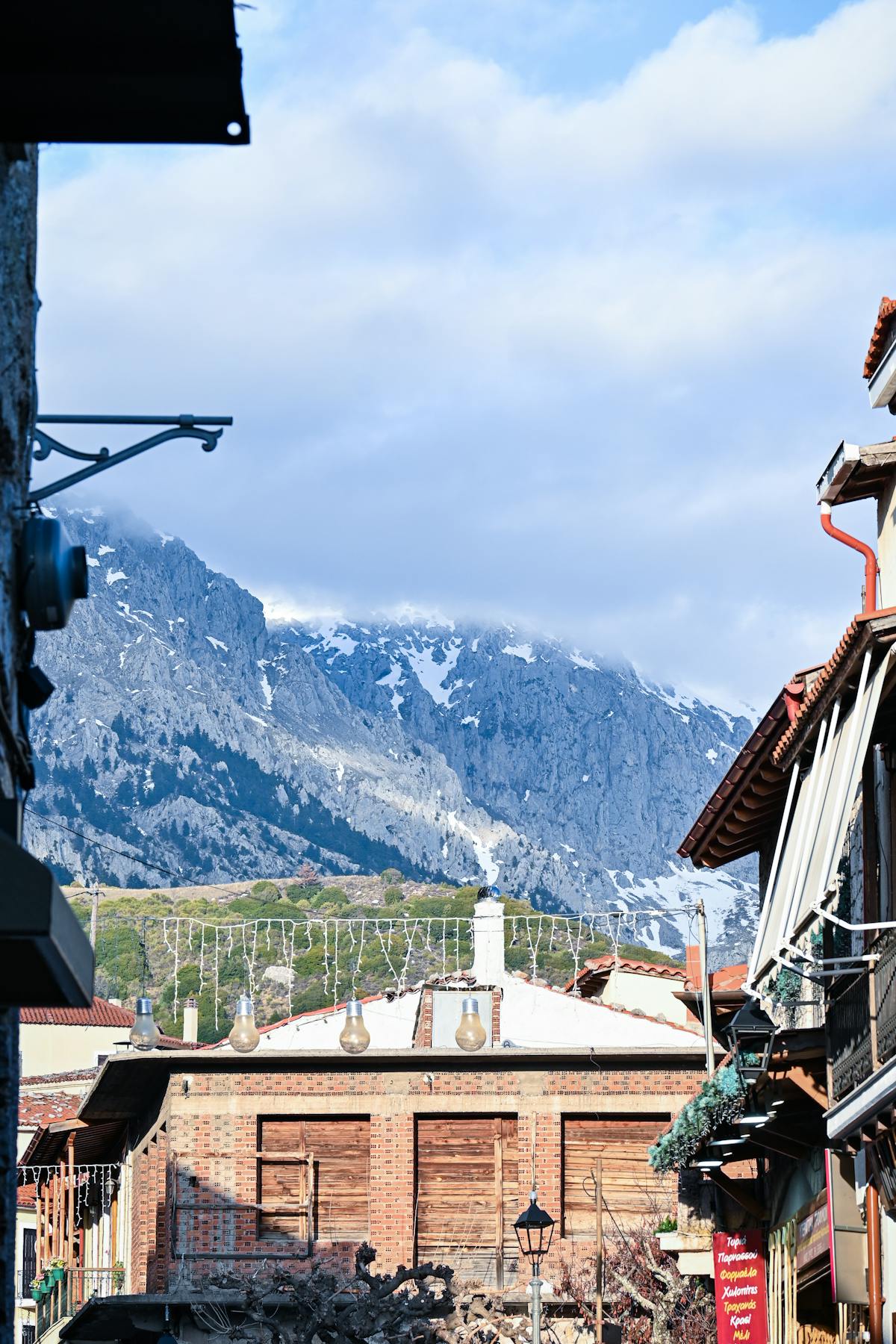
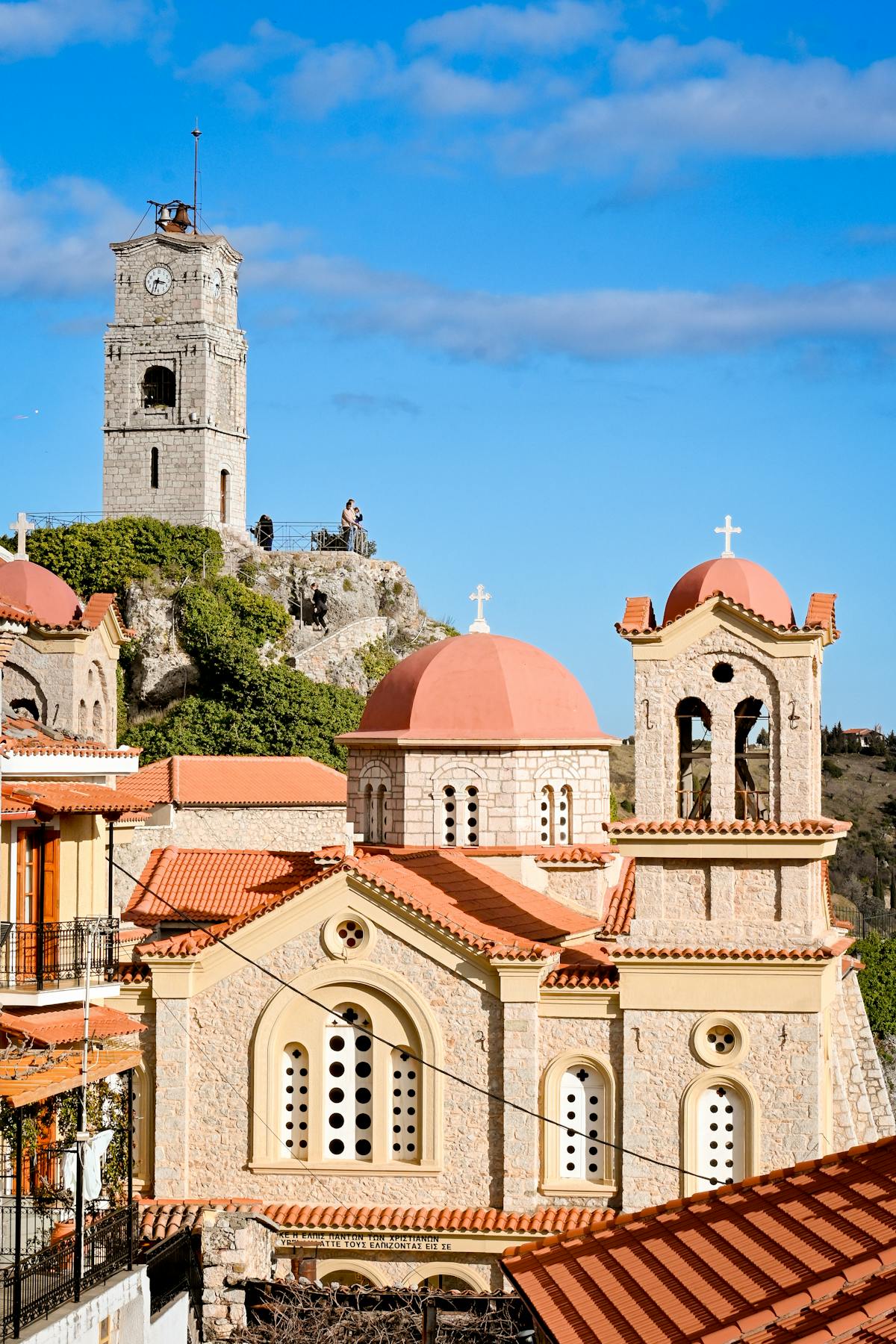
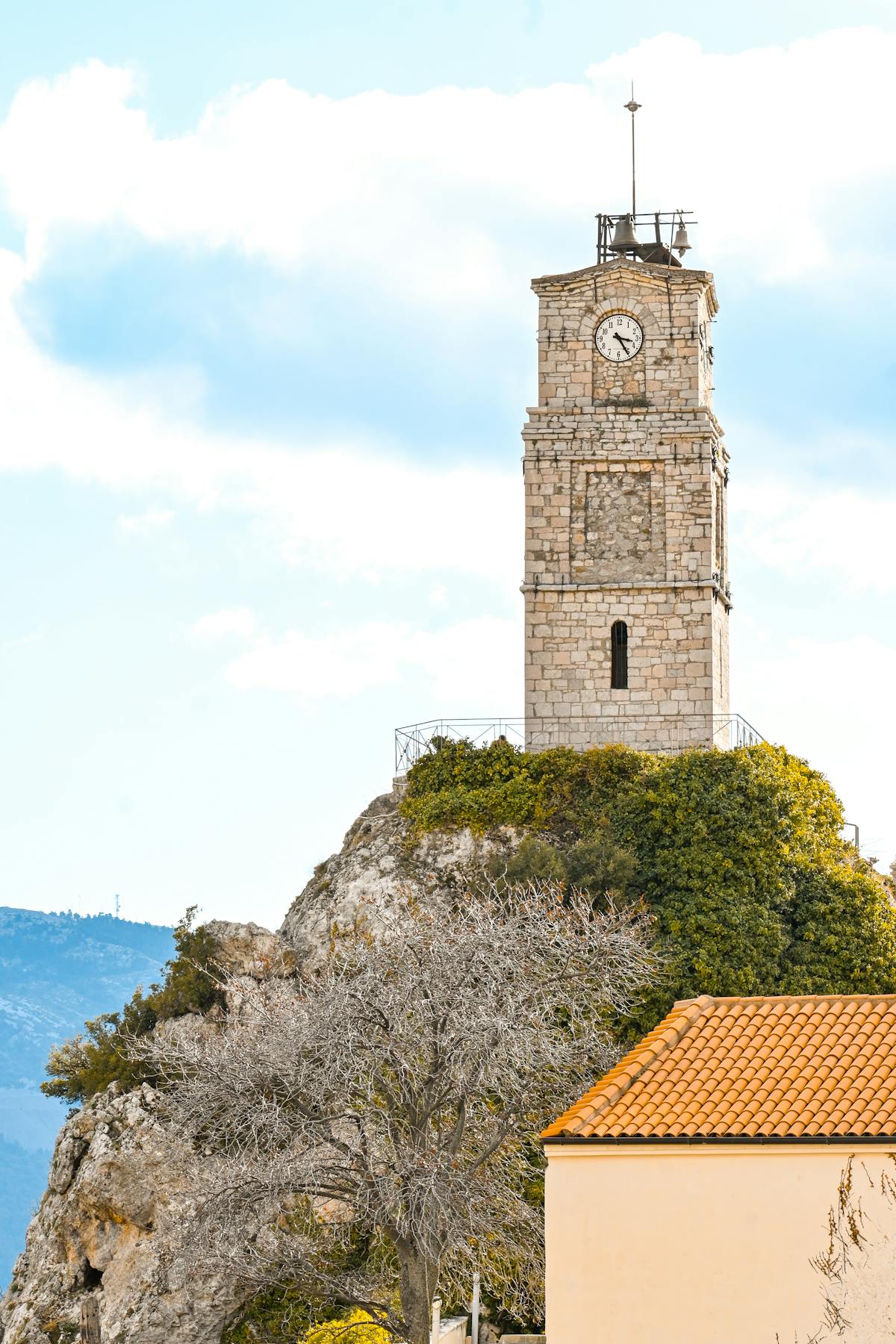
Don’t treat Arachova as just a bathroom break. This mountain village is one of Greece’s most charming, built on the slopes of Mount Parnassos at 950 metres altitude. It’s famous for formaella cheese (a semi-hard cheese unique to the region), trahanas (a traditional dried pasta), local honey, and hand-woven textiles. The stone streets, traditional architecture, and mountain views make it a destination in its own right — and the tavernas serve some of the best mountain Greek cuisine you’ll find anywhere. If your tour gives you free time here, use it. The clock tower at the centre of the village is a good orientation point, and the views of Mount Parnassos from the upper streets are worth the short climb. In winter, Arachova transforms into Greece’s most popular ski village — Parnassos ski centre is just up the mountain — which gives the village a year-round vitality that many tourist stops lack.
More Greece Guides
Delphi is one of several extraordinary day trips from Athens that justify the drive. For another jaw-dropping mainland experience, Meteora’s cliff-top monasteries are perched on sandstone pillars that look like something from a fantasy novel — it’s a longer day than Delphi but equally unforgettable. The Acropolis guided tours keep you in Athens for the morning and deliver the Parthenon, the Erechtheion, and 2,500 years of democracy with licensed archaeologists.
For a completely different pace, the Athens food tours explore Greek cuisine through the Central Market, hidden tavernas, and baklava shops. On the islands, Santorini’s catamaran cruises pair volcanic caldera scenery with BBQ and sunset sailing, the Corfu boat tours to Paxos and Antipaxos offer Caribbean-clear lagoons, and the Mycenae and Epidaurus day trip covers Bronze Age fortresses and a theatre with perfect acoustics.