
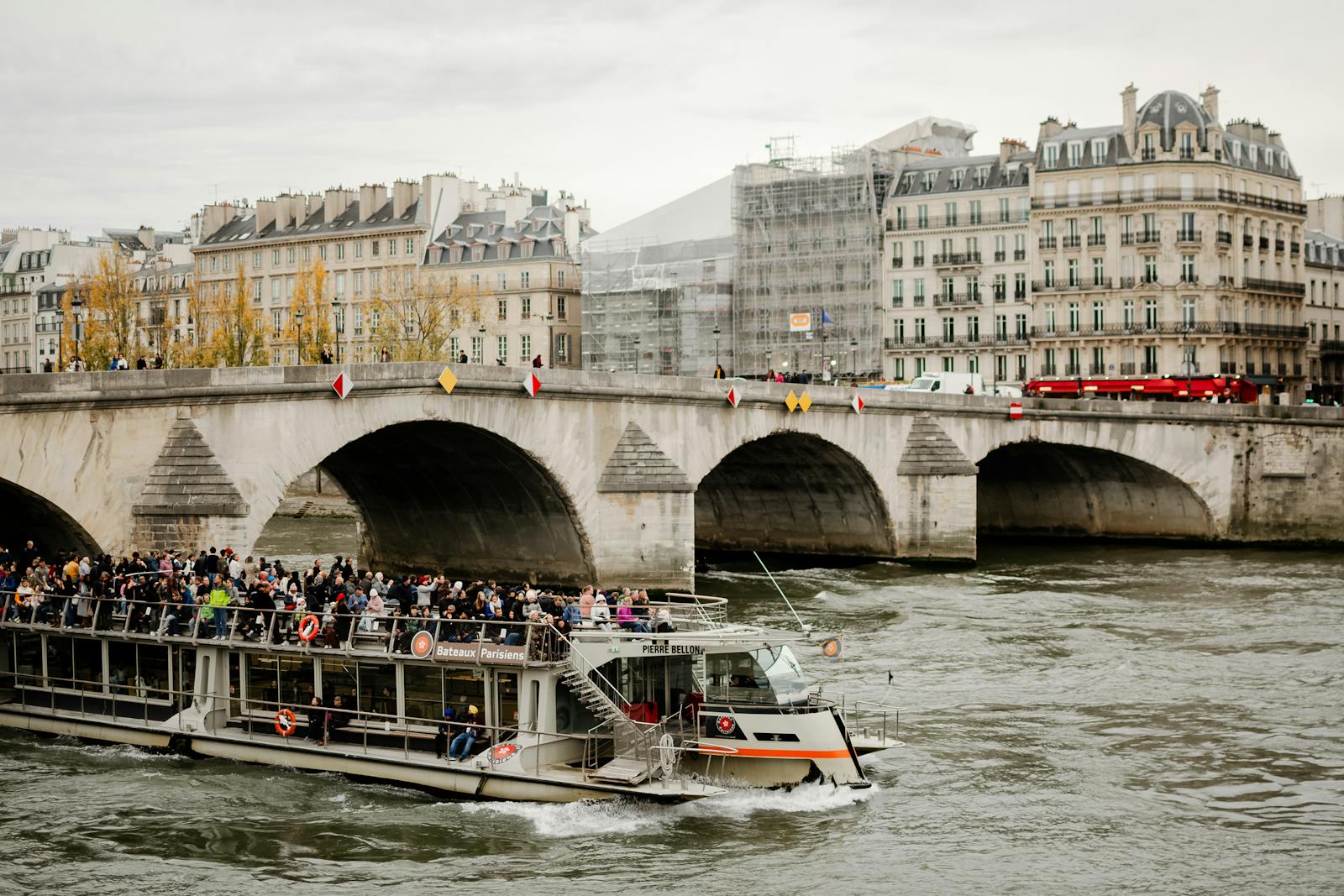
The Seine runs 777 kilometres from Burgundy to the English Channel. The part you actually want to see is about six.
Nearly every first-time visitor to Paris ends up on a boat at some point — and almost all of them wish they’d understood the differences before booking. The Bateaux Mouches, the Vedettes, the 1-hour Eiffel departures, the illuminations cruises, the crepe boats, the dinner boats — it looks like a dozen versions of the same thing, and it absolutely is not. The price range is $15 to $220, the operators swap departure points, and the experience at 11am in February is almost unrelated to the one at 10pm in July.
This is the guide I wish I’d read before my first Seine cruise. I’ll tell you which operator runs which dock, which tour is worth your €20 bill, when the Eiffel Tower sparkles (and how to line that up with your boat), and which “audio guide” is actually a damp headset that repeats the same sentence in Dutch three times. If you only want one answer: book the 1-hour cruise that leaves from the foot of the Eiffel Tower after sunset. That’s the short version. The long version is below.

Best overall: Paris 1-Hour Seine Cruise from the Eiffel Tower — $20. The most booked boat on the river for a reason. Leaves right under the tower, does the full postcard loop, and if you time it for the 9pm sparkle you get the single best 60 minutes in Paris.
Best for evening: Illuminations River Cruise with Audio Commentary — $20. Same price, slightly different boat, specifically marketed for after-dark sailings. The audio guide is in 14 languages and the captain deliberately brings the boat back to the Eiffel Tower at sparkle time.
Best for something different: Seine Cruise & Crepe Tasting — $23. Three extra dollars, one hot crepe in your hand, and a cruise that doesn’t feel like a conveyor belt. Good if you’re travelling with kids or anyone who gets bored on boats.
- How the Seine Cruise Market Actually Works
- Day Cruise vs Evening Cruise: The Only Question That Matters
- The Best Seine Cruises to Book in Paris
- 1. Paris 1-Hour Seine Cruise from the Eiffel Tower —
- 2. Paris Illuminations River Cruise with Audio Commentary —
- 3. Paris Seine Cruise & Crepe Tasting —
- 4. Paris Seine River Sightseeing Cruise by Bateaux Mouches —
- When to Go: Timing the Sparkle and the Light
- How to Get to the Departure Docks
- Tips That Will Save You Time (and Money)
- What You’ll Actually See Along the 6-Kilometre Loop
- More Paris Guides Worth Reading Before You Go
How the Seine Cruise Market Actually Works
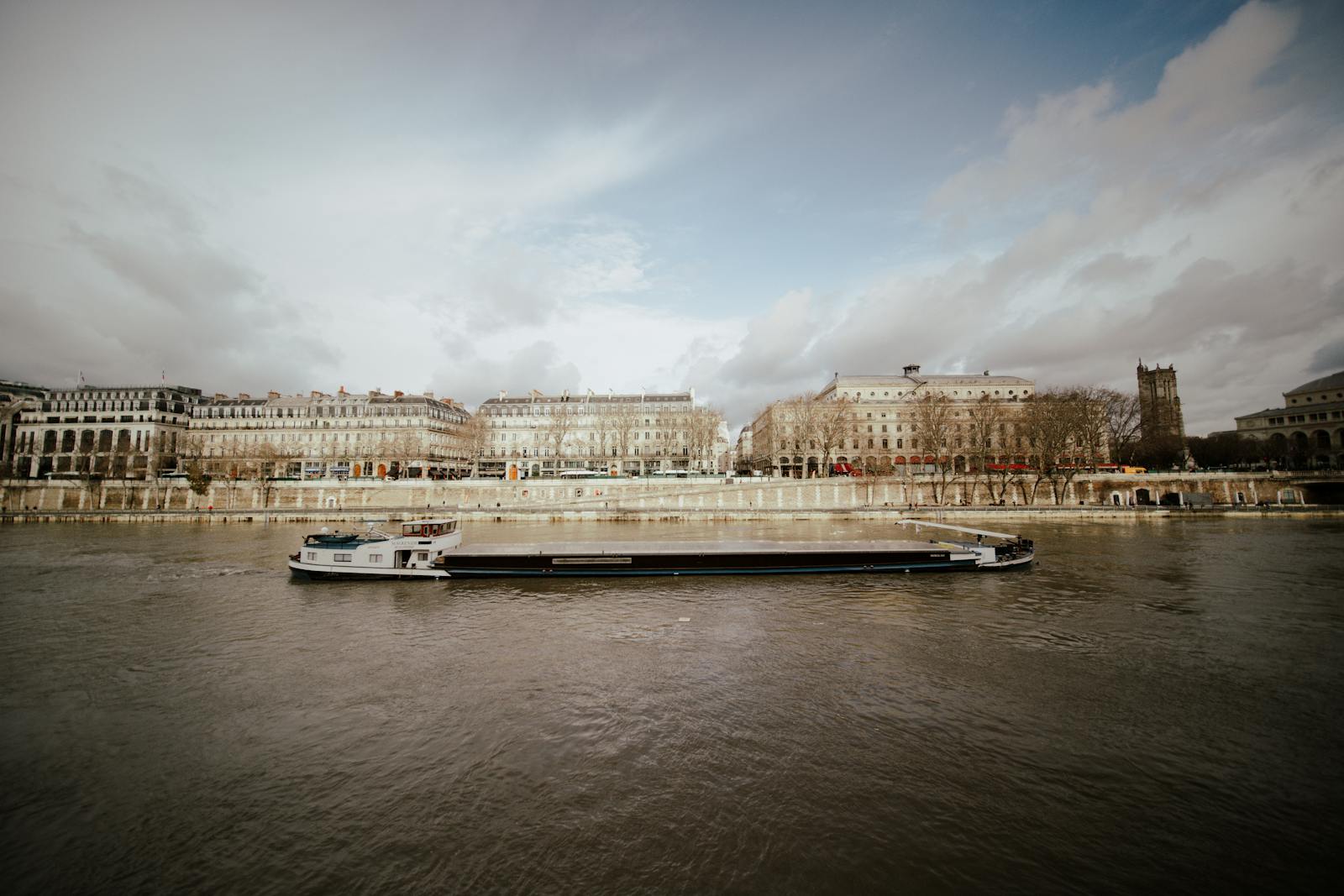
Four companies run almost every sightseeing cruise you’ll see advertised on the river: Bateaux Parisiens, Bateaux Mouches, Vedettes de Paris, and Vedettes du Pont-Neuf. They all do roughly the same 6-kilometre loop — from the Eiffel Tower, down past the Louvre and Notre-Dame, around the Île Saint-Louis, and back. The loop takes 55 to 70 minutes depending on current and how many boats are ahead of yours at Pont Neuf.
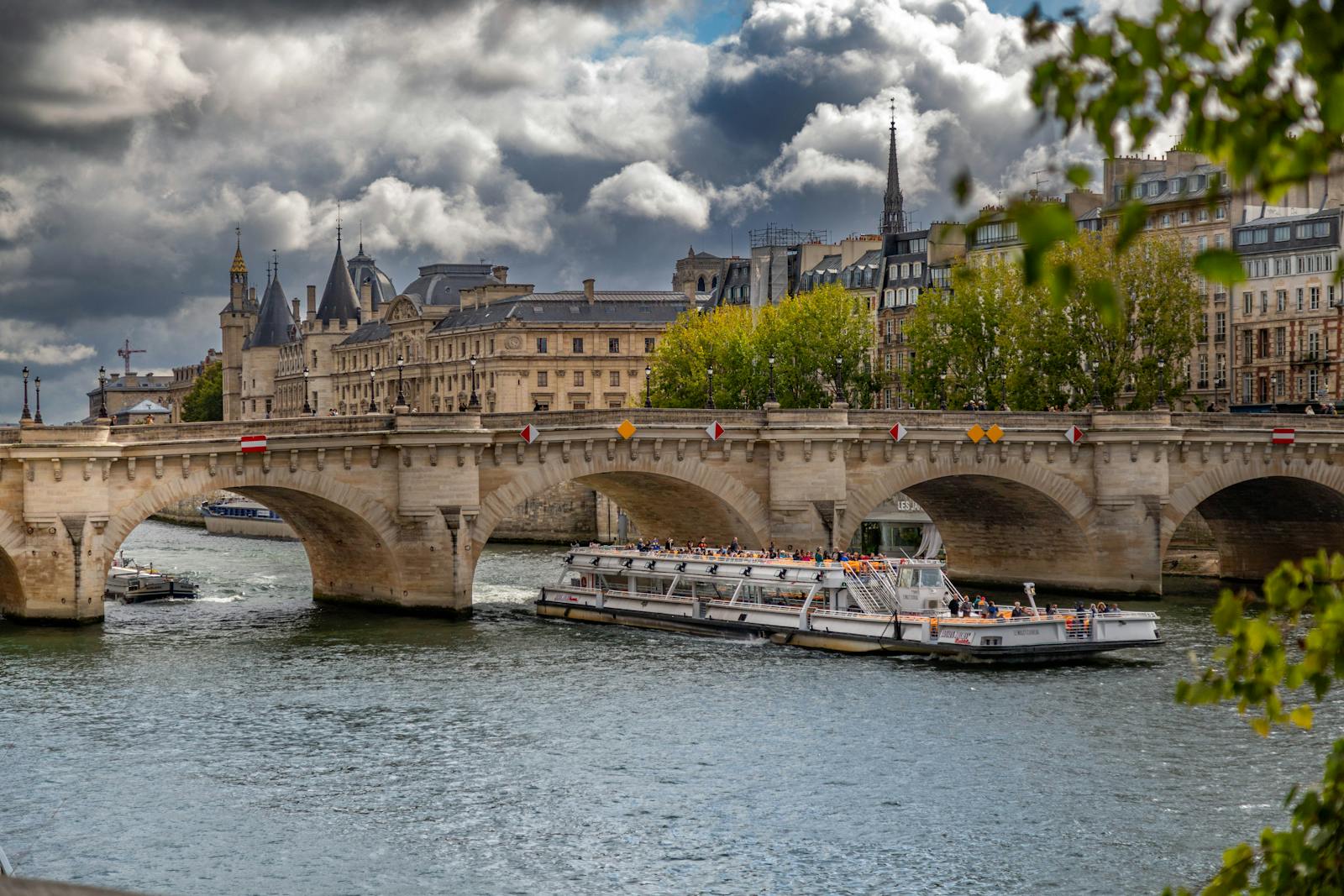
The key thing to understand: the operator matters less than the departure point and the time of day. The Bateaux Mouches boats are a bit larger and have longer queues. The Vedettes are slightly smaller and faster-loading. But in terms of what you actually see, it’s identical water and identical bridges. Where you board, however, changes your whole experience — because the boats that leave from the foot of the Eiffel Tower give you the best opening and closing shot of the trip. The ones that leave from Pont Neuf or Port de la Bourdonnais have to motor past the tower before the good stuff starts.
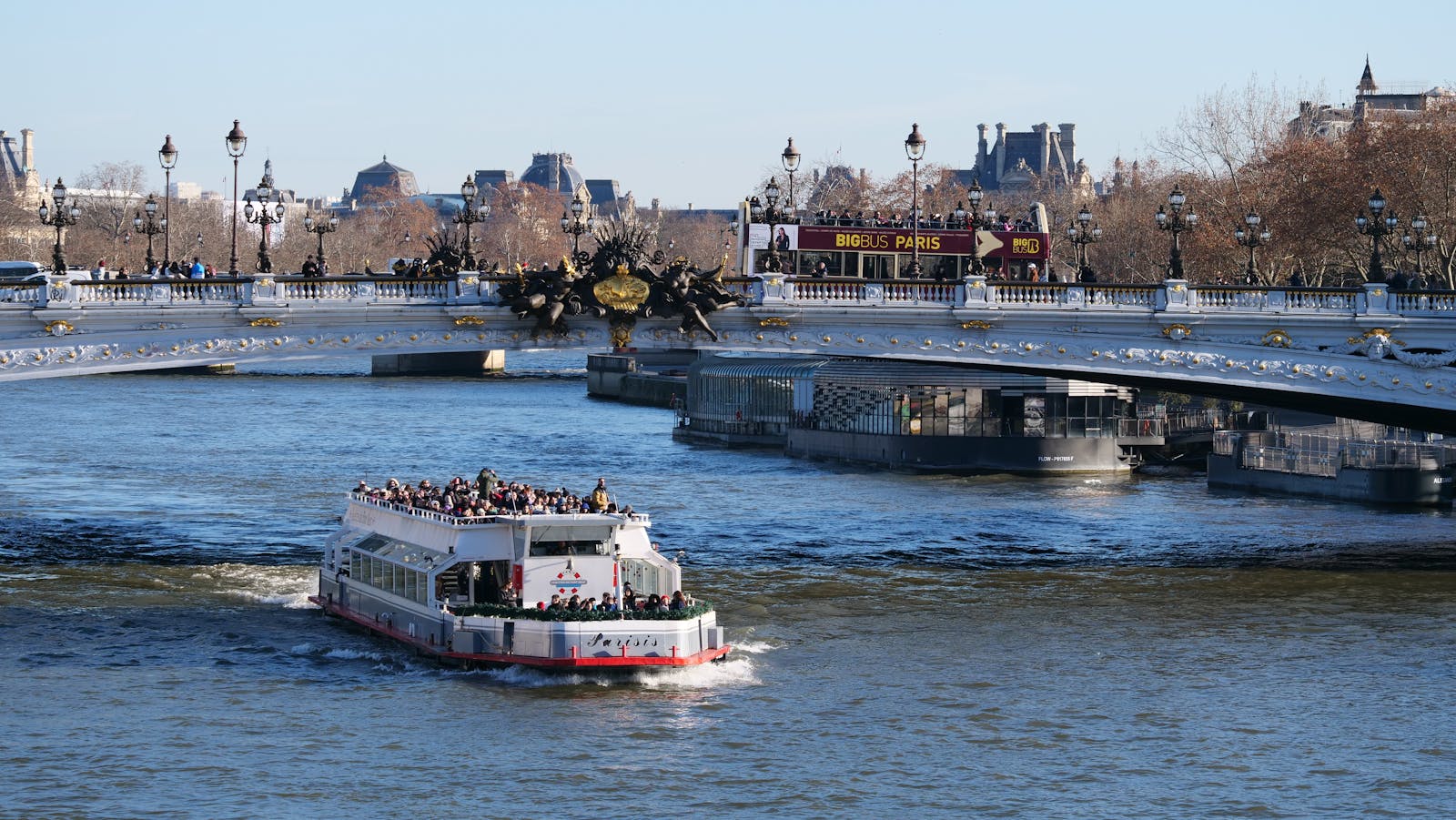
Tickets are sold three ways. You can walk up to the quay and buy from a booth — cheapest headline price, no queue skipping, and you’re at the mercy of whatever boat leaves next. You can book online through GetYourGuide or Viator — usually the same price or a dollar cheaper, and you get a flexible-date voucher you can use any day in the next 12 months. Or you can buy direct from the operator’s website — same price, less flexibility. Online is the right answer 95% of the time because the flexible voucher lets you pick your weather on the day, and nobody wants to commit to a boat ride 24 hours in advance when Paris is deciding whether to rain.
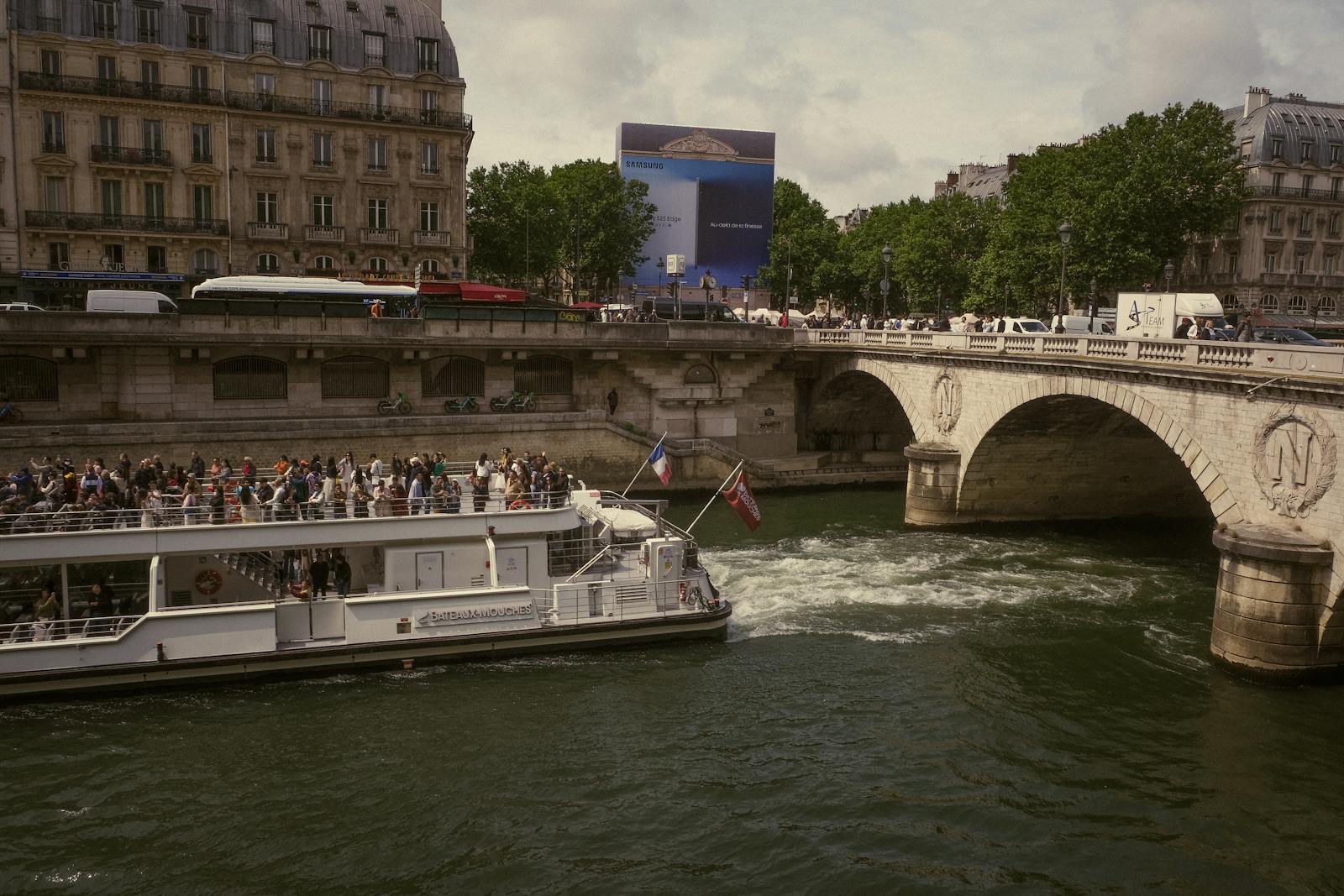
Day Cruise vs Evening Cruise: The Only Question That Matters
I’ll save you the suspense: book the evening cruise. Paris is a city that looks pretty in daylight and absolutely magical after dark, and a daytime Seine cruise is one of the few experiences where you can actually feel the difference in real time. The daytime loop shows you the buildings. The evening loop shows you the buildings, lit, reflected, with a working Eiffel Tower sparkle at the turnaround point if you’ve timed it right.
The one exception: if it’s your only day in Paris and you want to see the architecture in detail, book an early-afternoon departure. You’ll actually register the carvings on Pont Alexandre III, the gargoyles on Notre-Dame, and the gold leaf on the Assemblée Nationale. At night you’ll get the vibe but not the detail.
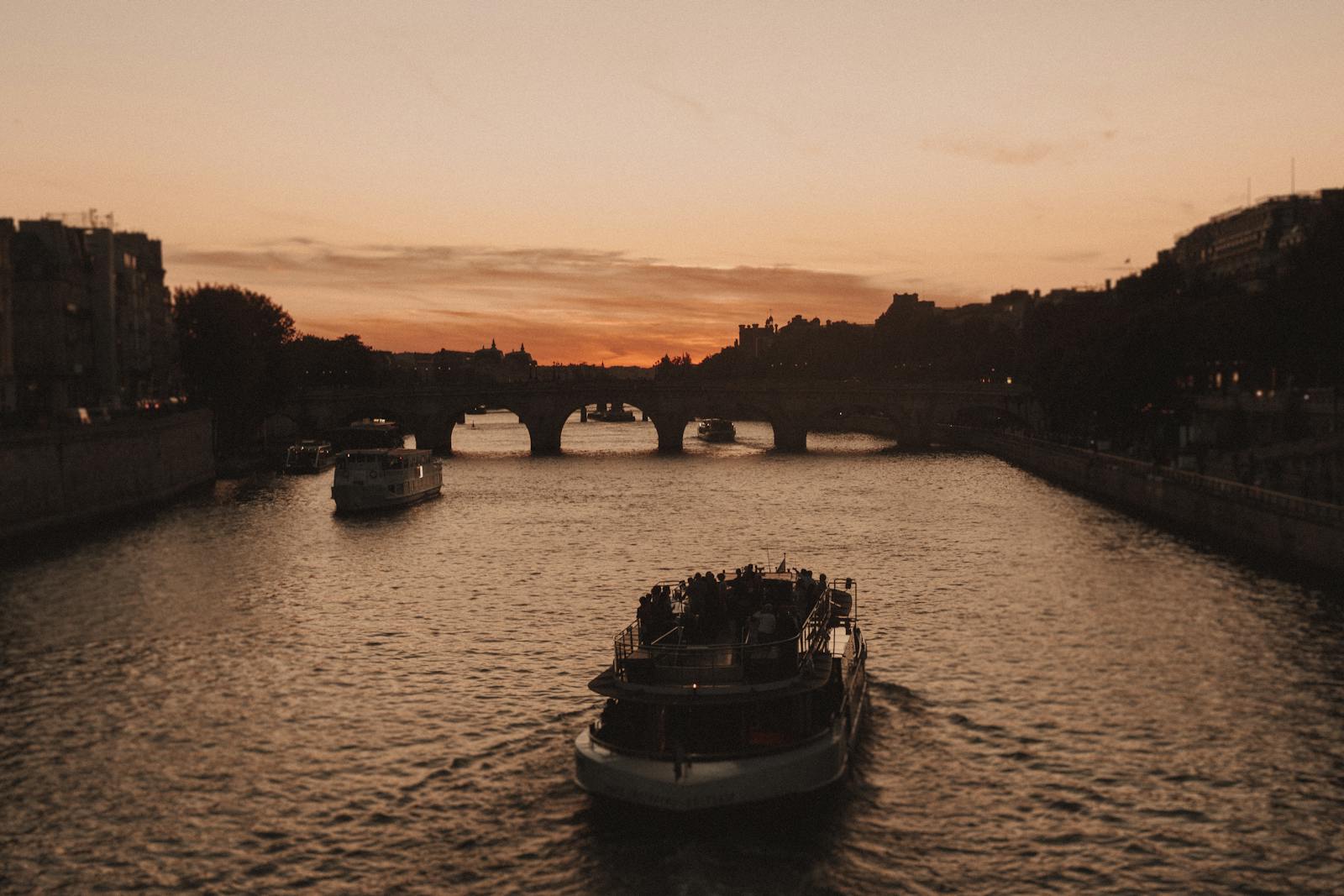
The sparkle timing is worth learning by heart: the Eiffel Tower sparkles for five minutes on the hour, every hour, from sunset to 1am. So the 8pm departure in July (sunset ~9:45pm) won’t catch a sparkle. The 9pm departure in July will catch the 10pm one if the boat is near the tower at the right time. The 8pm departure in November (sunset ~5pm) catches three of them. Captains on the illuminations cruises know this and actively try to stall the boat near Trocadéro at the hour mark — which is another reason to pick a dedicated illuminations cruise over a random daytime one.
The Best Seine Cruises to Book in Paris
Four boats, ranked the way I’d rank them for a friend. These are the ones that consistently deliver, based on pulling reviews from hundreds of sailings across our database and cross-checking against operator departure schedules.
1. Paris 1-Hour Seine Cruise from the Eiffel Tower — $20
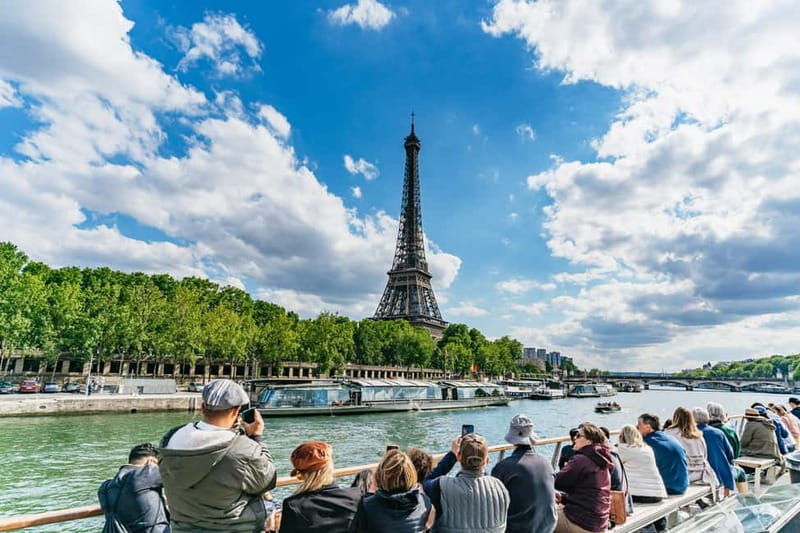
This is the one I’d book if I had to pick blind. It leaves from Port de la Bourdonnais at the foot of the Eiffel Tower, which means the single best view on the entire loop — the tower from water level — is both your opening and your closing shot. Most other operators force you to motor past the tower first before the “real” cruise starts, which is backwards.
The boats are large, double-decked, and warm on the lower deck when the wind picks up. Multilingual commentary runs in the background in English, French, Italian, Spanish, German and more — it’s not intrusive, and you can tune it out if you just want the view. The commentary actually earns its keep here because the landmarks come in bursts of three or four and it’s hard to keep track of what you’re looking at. The one thing that’ll catch you off guard is the queue at peak times. I’ve seen people wait 90 minutes at 8pm in August. Book online and show up for an early-evening slot (6pm or 7pm) and you’ll usually board within 15 minutes.
One insider tip: sit on the upper deck if the weather is warmer than about 12°C. Below that, the wind cuts straight through whatever jacket you brought. In winter, go downstairs and take the window seats on the right side as you board — that’s the Eiffel Tower side on both the outbound and return legs.
2. Paris Illuminations River Cruise with Audio Commentary — $20
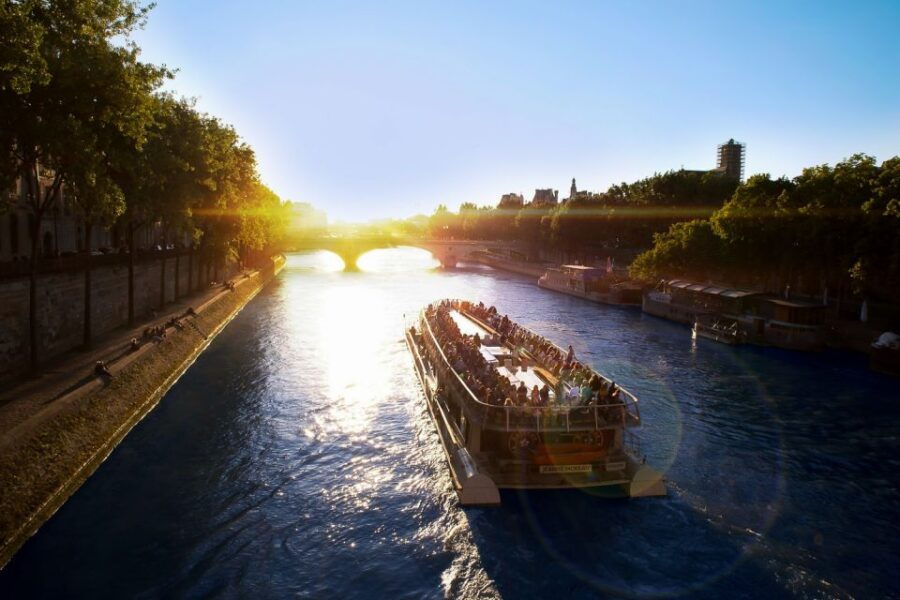
Same price as the #1 pick, different strategy: this cruise is designed for post-sunset departures, with audio commentary routed through individual handsets so you can listen to the history of each landmark as it drifts past. The 9pm sailing is the best one — the captains deliberately time the return leg to hit the tower sparkle at 10pm, and this isn’t an accident. The crew plans the loop so you catch the sparkle on the way back, which is genuinely worth the ticket on its own.
The boats hold about 600 passengers, which sounds absurd but they load quickly. I’d pick this over the #1 pick only if you specifically want an evening sailing with commentary, and I’d pick the #1 pick during the day. Worth noting: the drop-off point doesn’t match the “Eiffel Tower” address on the voucher — this is a known issue with the Bateaux Parisiens fleet. The actual departure is near Pont d’Iéna, not at the Eiffel Tower itself. Walk toward the river from the tower and you’ll see the signs.
One more tip for this specific boat: sit in the back row of the top deck closest to the tower side on the return leg. That’s where the sparkle shows up best — the back seats give you an unblocked view as the boat glides back toward Trocadéro, and the tower fills your whole peripheral vision when it kicks off. Worth the 20-minute early arrival to grab those seats.
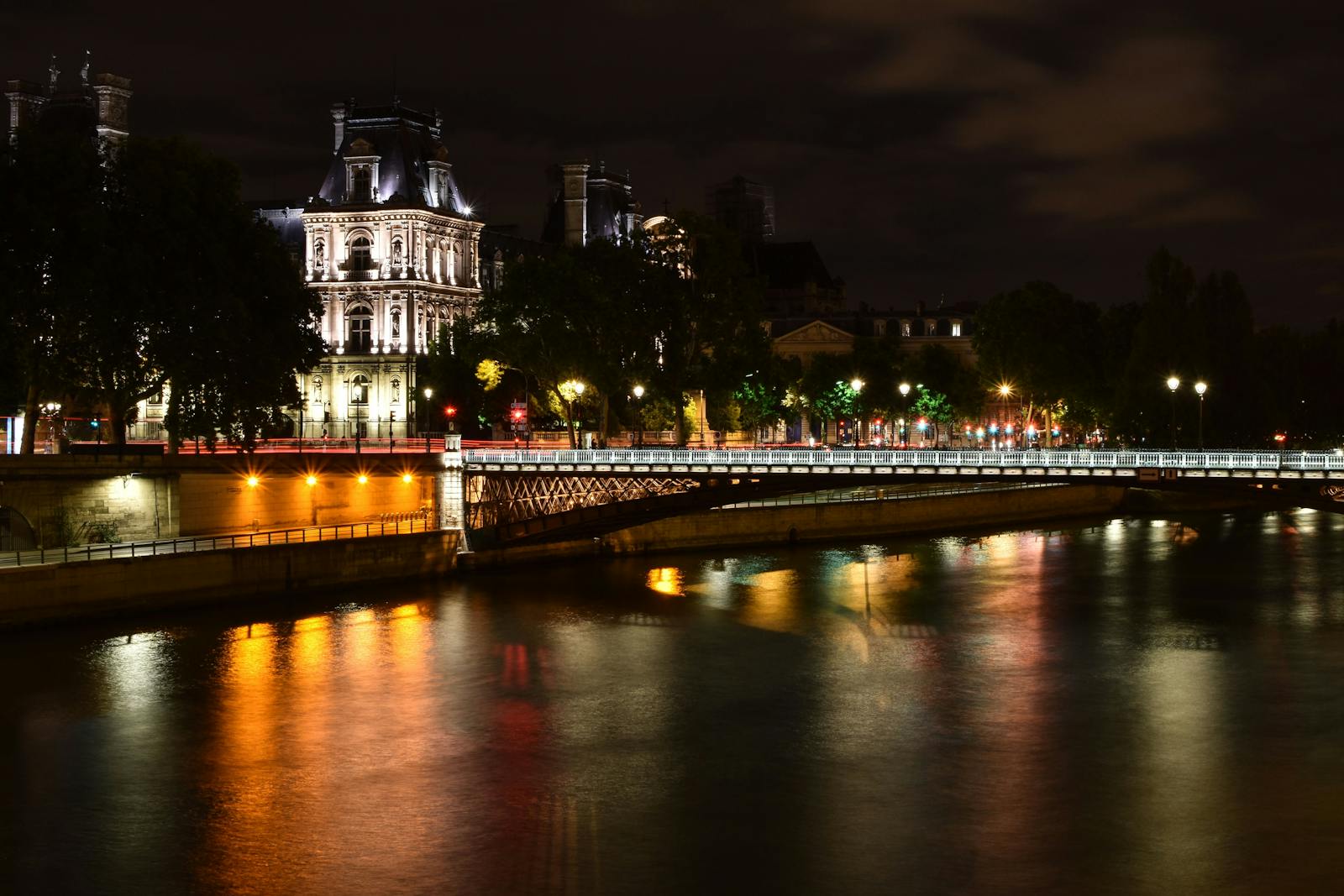
3. Paris Seine Cruise & Crepe Tasting — $23
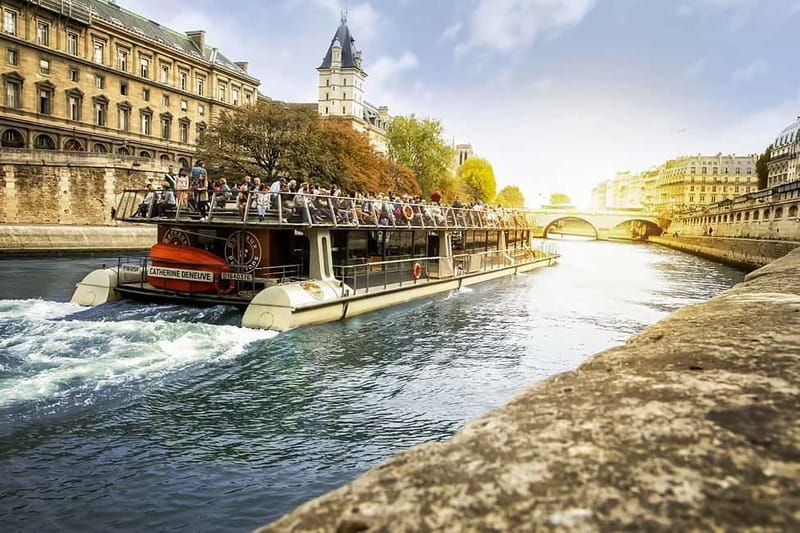
This is the sleeper pick. You pay $3 more than the basic cruise, you get the same 1-hour Seine loop, and you get a hot crepe pressed on a griddle at the stall on board. It sounds gimmicky until you realise that a decent crepe from a Paris street vendor costs €6-8, so the math is already in your favour. More importantly, it gives you something to do with your hands during the slower parts of the loop — which there are two of, between Pont Neuf and Île de la Cité.
The audio guide on this one is inconsistent — it cuts out in places and sometimes repeats chunks from earlier, which is annoying for history buffs but forgivable for everyone else. Honestly, if the audio works, it works, and if it doesn’t, you’ve still got a crepe and a sunset, so it’s hard to be too upset. Book the evening departure. The crepe tastes better after dark for reasons I can’t fully explain — maybe it’s the contrast with the cold river air, maybe it’s the tower sparkling behind you, but evening crepes on this boat are meaningfully better than afternoon ones.
One thing to know: the queue boarding can be surprisingly slow on this specific product. I’ve seen 7pm slots not actually depart until 8:30pm during peak August weekends — that’s a 90-minute wait. This happens because crepe boats load slower (the stall has to manage orders). Arrive 30 minutes early minimum and don’t book tight connections after the cruise.
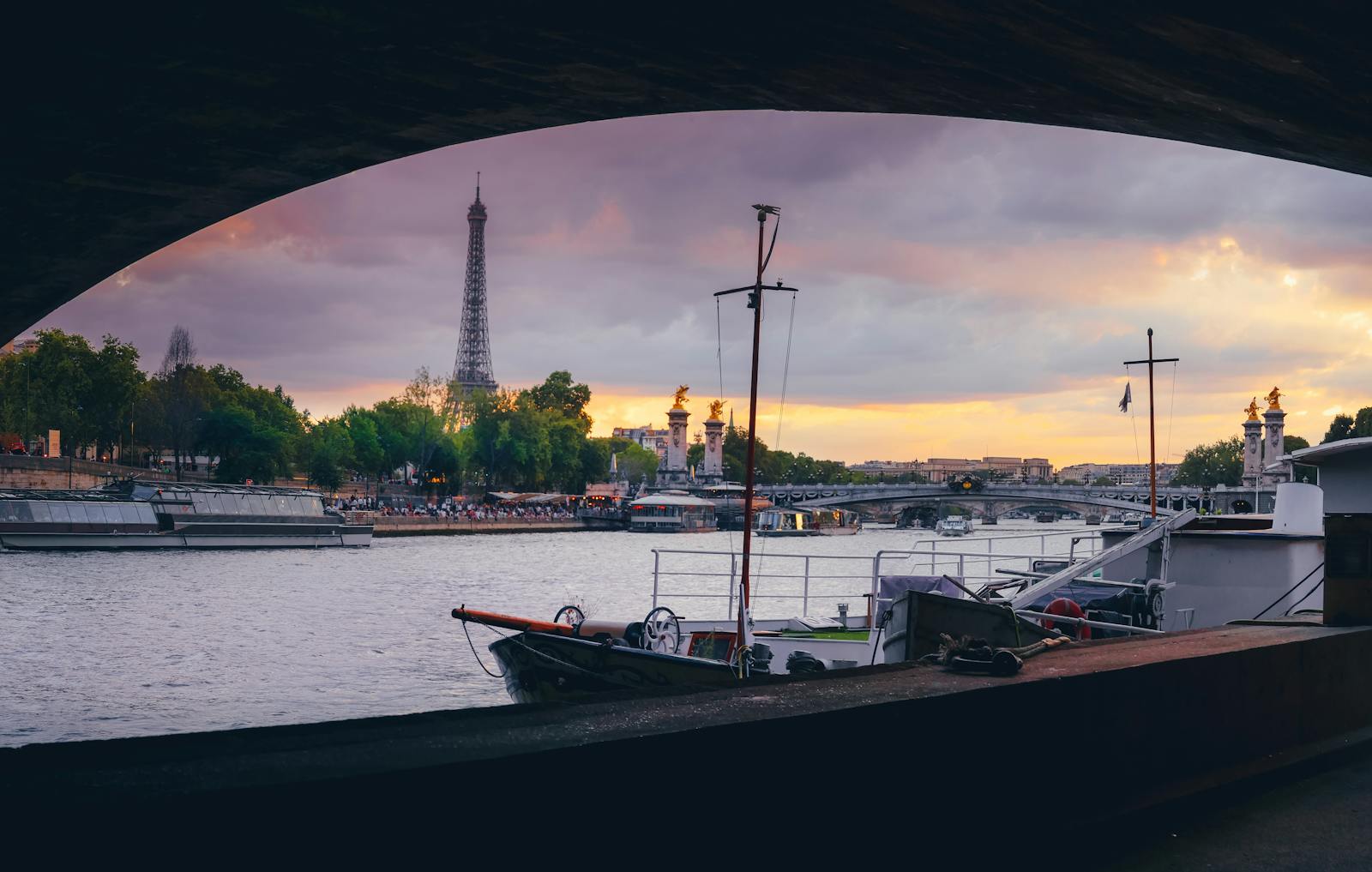
4. Paris Seine River Sightseeing Cruise by Bateaux Mouches — $20
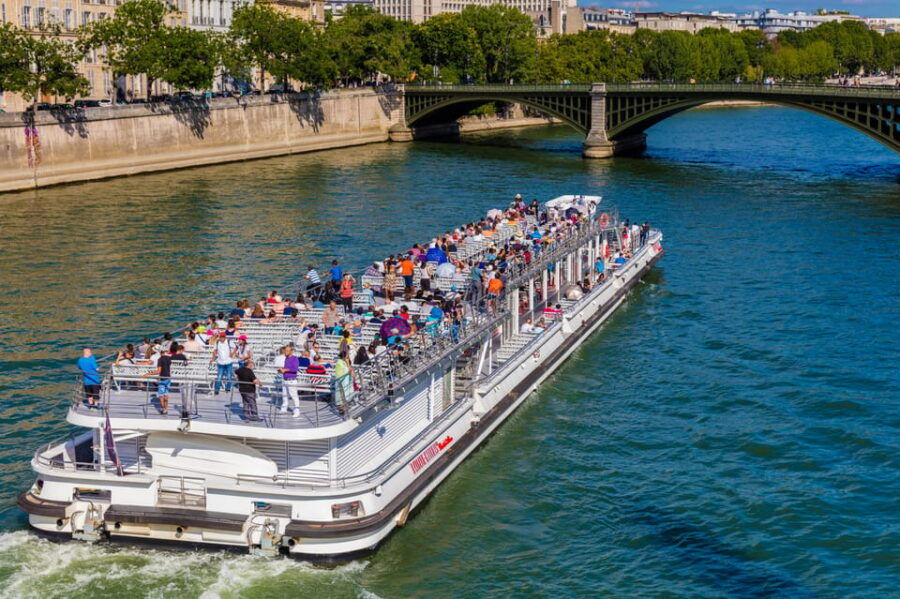
Bateaux Mouches is the historic brand — they’ve been running since 1949, and they still operate the largest boats on the river. The cruise itself is the same 1-hour loop as the other three, but the operator is known for bigger capacity and longer queues in peak season. Departure is from Port de la Conférence, near Pont de l’Alma, which is a 10-minute walk east of the Eiffel Tower along the right bank.
Why book this one? Two reasons. First, if the other three are sold out or queued out (which happens in August and at Christmas), Bateaux Mouches can almost always fit you on. Second, the upper deck is completely open — no roof, no glass — which is fantastic in June and terrible in February. Dusk departures here are the sweet spot: you push off in daylight, watch nightfall from the vantage point of the Seine, and dock in full darkness with the city lit up. If you’re travelling in the shoulder season (April-May, September-October) and you want maximum open-air, this is the pick.
The upper deck at night in good weather is genuinely one of the best hours you can spend in Paris. Sitting on the top deck as the Eiffel Tower starts to sparkle at 10pm, with no roof blocking your view, is the kind of thing that makes the entire €20 feel absurdly cheap. Just bring a light jacket even in summer — the river wind is colder than you expect at 10pm.
When to Go: Timing the Sparkle and the Light
Seine cruises run year-round, every 30 to 45 minutes, from about 10am to 10:30pm depending on the operator. So “when to go” is really two questions: which time of day, and which season.
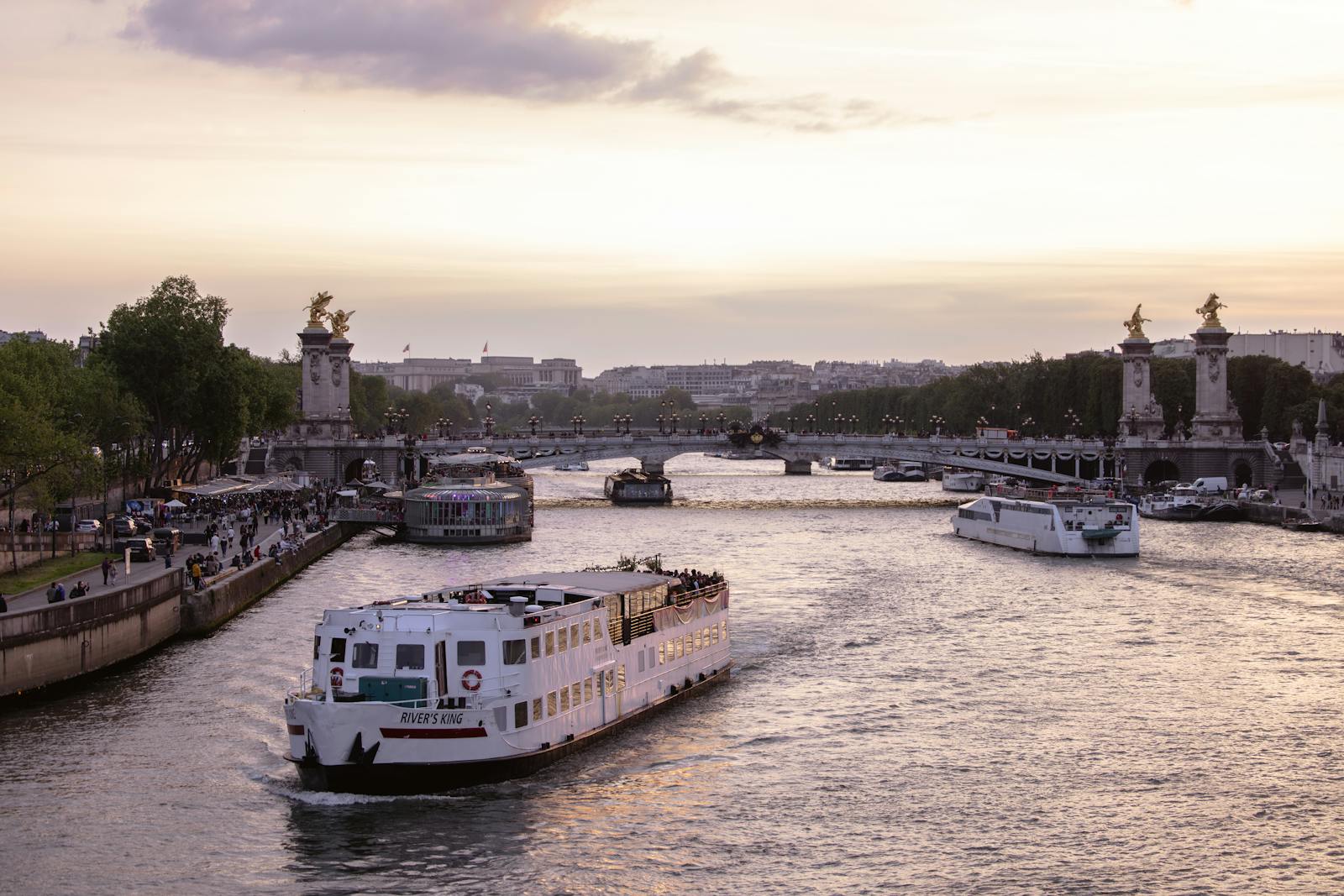
Time of day: the winning slot is one hour before sunset. Your boat pushes off in daylight, passes the first landmarks while the sky is blue, hits Pont Neuf during golden hour, and arrives back at the Eiffel Tower in blue-hour twilight with the city lights flickering on. If you can only book a single slot, that’s the one. Runner-up: the 9pm sailing in summer, which puts you back at the tower for the 10pm sparkle.
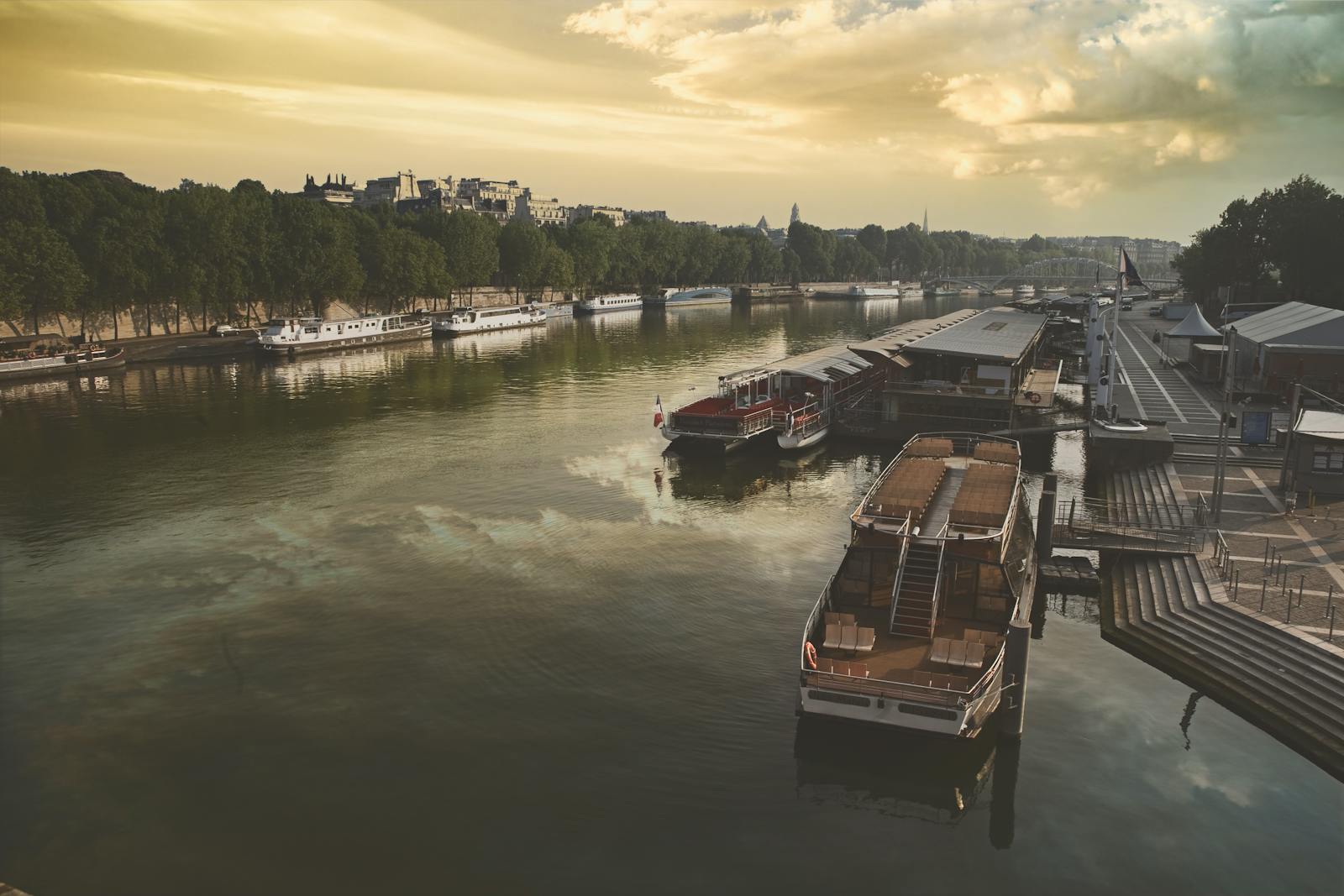
Season: April-May and September-October are the sweet spots. Summer is hotter, more crowded, and queues can run 60-90 minutes at prime evening slots. Winter is quieter and still atmospheric, but the upper decks are unusable and the golden hour is gone by 5pm. Avoid the first week of January (many boats dry-dock for maintenance) and the second week of August (everyone in France is on vacation and the queues are absurd).
One more detail worth knowing: the Seine occasionally floods in January-February. When it does, the lower quay departure points are submerged and boats shift to emergency embarkation points — usually Pont de l’Alma. Operators will email you if this happens. In January 2018 the river rose 5.8 metres and closed cruises for almost two weeks. Not common, but it’s happened twice in the last decade.
How to Get to the Departure Docks
There are four main departure points on the river, and they’re scattered across a 3-kilometre stretch between the Eiffel Tower and Pont Neuf. Getting to the wrong one is the single most common mistake I see first-time visitors make.
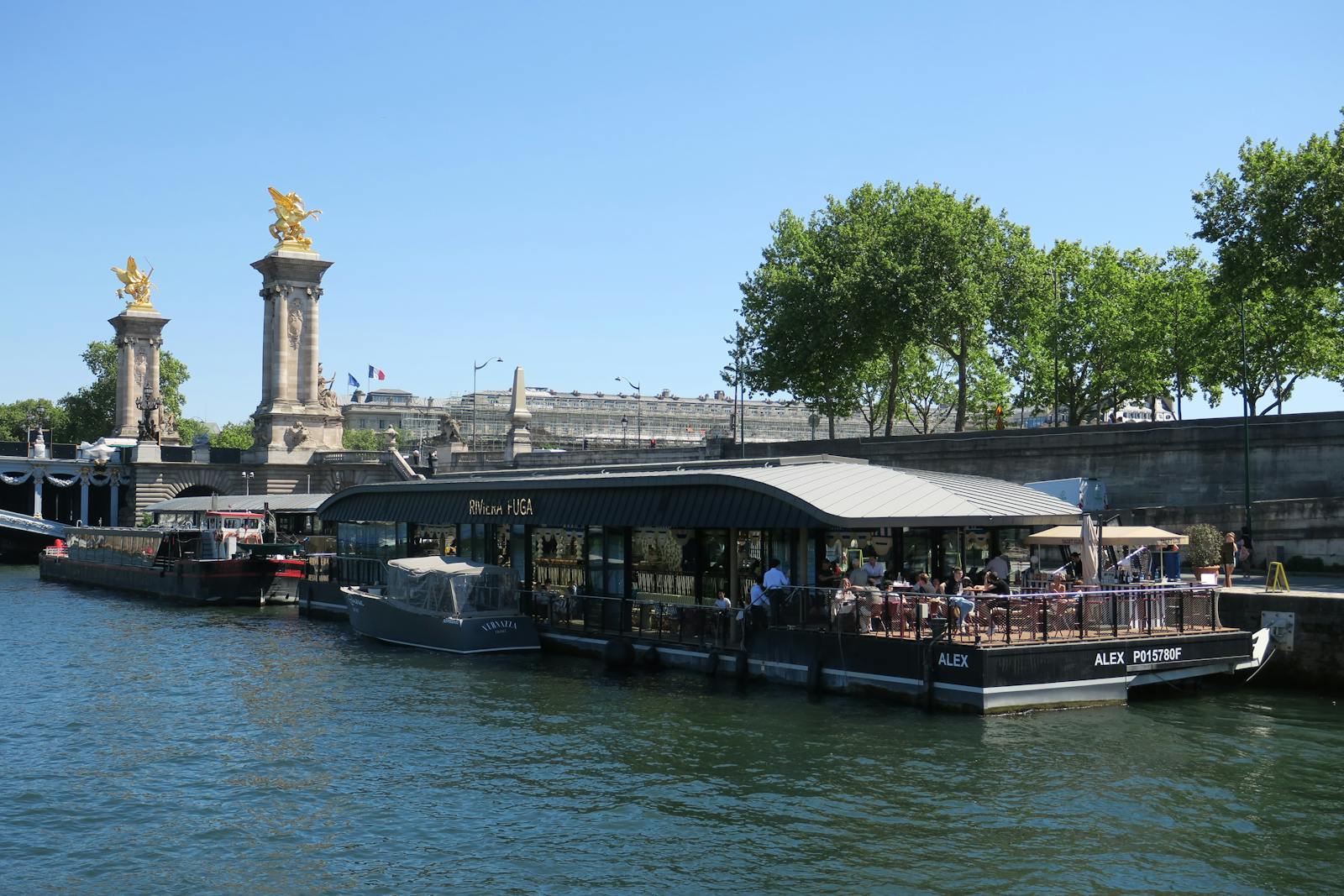
Port de la Bourdonnais (foot of Eiffel Tower, north side): Metro Bir-Hakeim line 6, or École Militaire line 8. Walk north toward the river. The dock is directly under the tower. This is where the 1-hour Seine Cruise from the Eiffel Tower departs.
Port de la Conférence (Pont de l’Alma, right bank): Metro Alma-Marceau line 9, or RER C to Pont de l’Alma. This is where Bateaux Mouches departs. Walk down to the river from the Place de l’Alma and you can’t miss the boats.
Port du Pont-Neuf / Square du Vert-Galant: Metro Pont Neuf line 7. Walk to the western tip of Île de la Cité. This is where Vedettes du Pont-Neuf departs — usually slightly cheaper than the others and with a different perspective (you head upriver toward Notre-Dame first).
Port de la Bourdonnais South / Pont d’Iéna: Metro Trocadéro line 6 or 9, then walk down the hill across the bridge. This is where the illuminations cruises and crepe-tasting boats depart. It’s about 200 metres from the main Port de la Bourdonnais — don’t assume they’re the same dock.
Tip: Whichever one you book, screenshot the exact departure address from the voucher before you leave your hotel. Paris is easy to navigate until you’re 10 minutes from boarding with a dying phone battery.
Tips That Will Save You Time (and Money)
Book a flexible-date voucher. Most operators on GetYourGuide and Viator let you redeem any day within 12 months of booking. This means you can buy the cheapest option when you see it, then show up on whichever day has the best weather. Don’t commit to a specific day/time more than 24 hours in advance if you can avoid it.
Don’t board at peak meal times unless you’re buying the meal. The 7:30pm and 8pm slots fill up with dinner-cruise passengers and the queues get chaotic because two boats boarding at once share the same dock. The 6:30pm and 9pm slots are almost always smoother.
Bring your own bottle of water. The onboard drinks are €5-7 for a small bottle. Security doesn’t check bags on sightseeing cruises, so this is an easy €5 saving.
Skip the “combo” cruises with dinner added. Dinner cruises are a separate product — we covered those in a dedicated guide — and the ones bundled with sightseeing tickets are usually overpriced add-ons. If you want dinner, book the dedicated Seine dinner cruise. If you want sightseeing, book sightseeing. Doing both in the same boat usually compromises both.
Sit on the correct side. For the outbound leg (downstream toward Île Saint-Louis): right side gives you Louvre, Hôtel de Ville, and Notre-Dame. For the return leg: it flips to left side for the same views plus the Orsay Museum and Assemblée Nationale. If you can’t move, the back of the upper deck gives you the best 360° view.
Check the river level before booking in winter. There’s a public gauge on Pont de l’Alma — a statue called Le Zouave. If the water is up to his waist, cruises are still running. If it’s at his chest, they’re suspended. Most operators post updates on their own social media within 2 hours of a suspension.
Download the audio commentary track in advance on Spotify or Apple Podcasts. Several operators publish their commentary as free podcasts. If the onboard audio is broken (which happens more often than it should), you can play it yourself on your phone with headphones.
What You’ll Actually See Along the 6-Kilometre Loop
The standard sightseeing loop covers about 6 kilometres of river and takes in around 20 major landmarks. Here’s what’s actually out there, roughly in the order you’ll see them from a Port de la Bourdonnais departure:
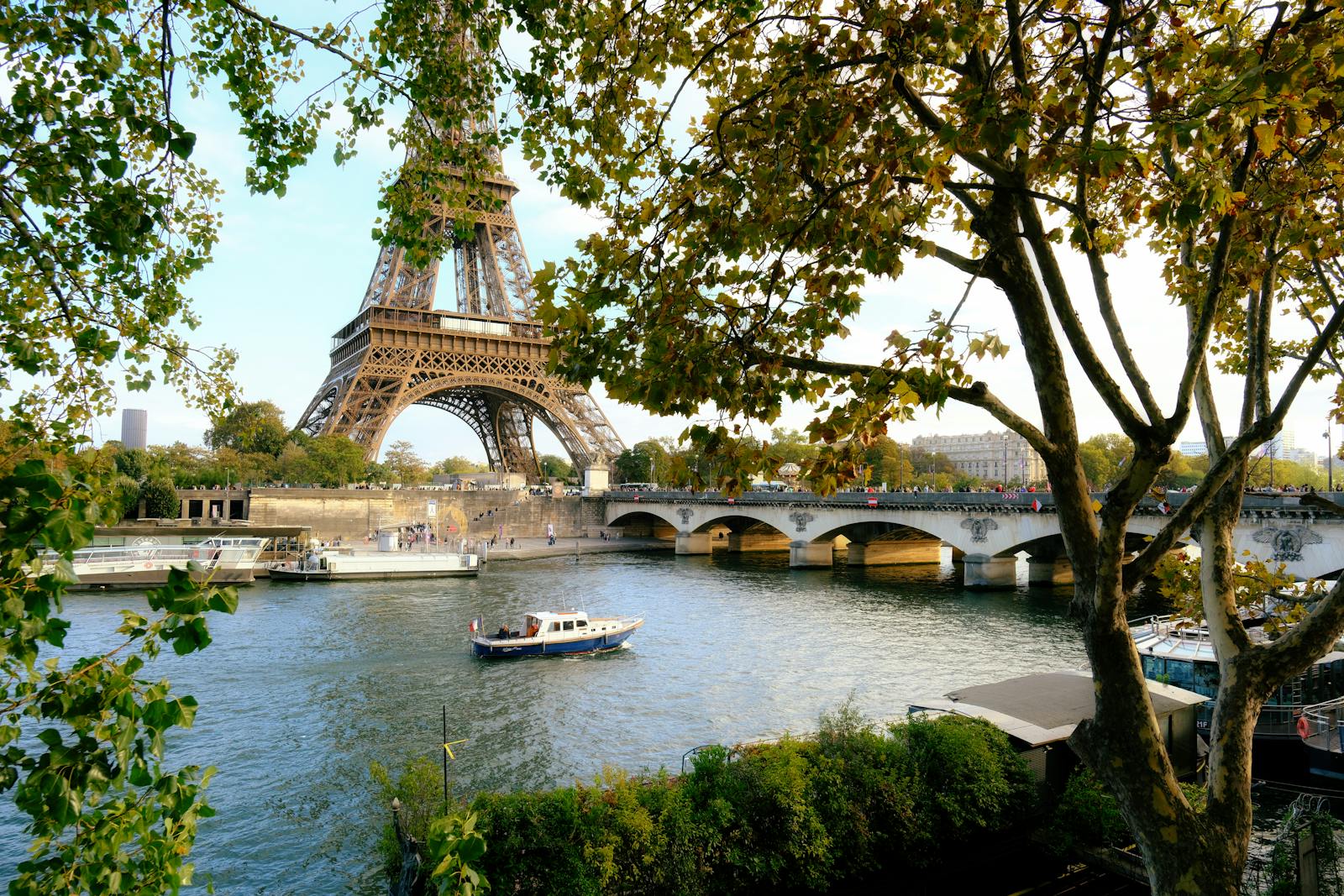
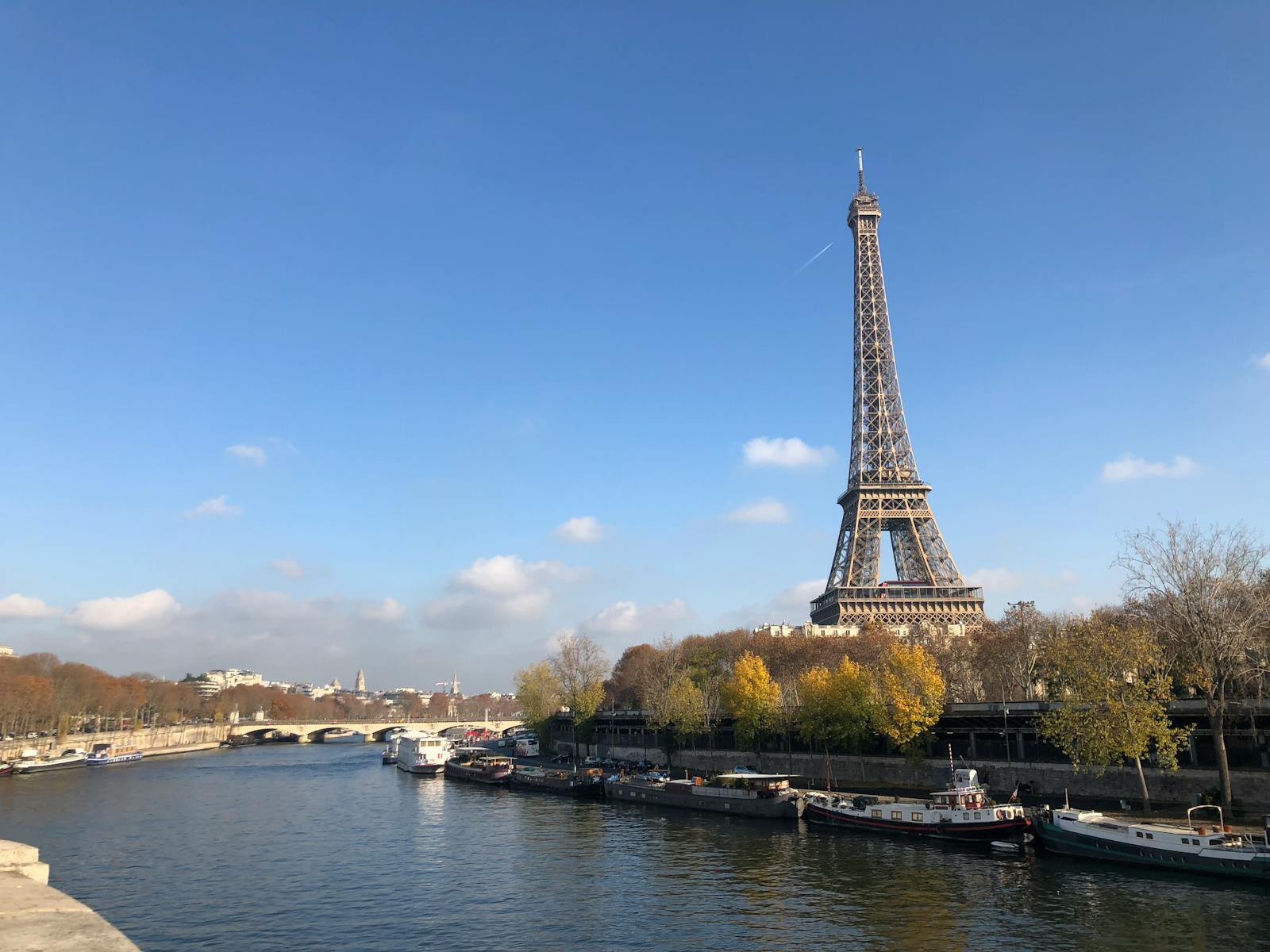
The Eiffel Tower (1889). You leave directly beneath it. 324 metres tall, originally built as a temporary exhibit for the World’s Fair and scheduled for demolition in 1909, saved only because the French Army decided to use the top for radio broadcasts. Painted every seven years by a team of 25 people using 60 tonnes of bronze-coloured paint. The sparkle lights were installed in 1985 and the five-minute sparkle-on-the-hour tradition started at the millennium.
Pont d’Iéna and the Trocadéro. The first bridge you pass. Built for Napoleon’s 1806 victory at Jena. The Palais de Chaillot across the river is where the UN signed the Universal Declaration of Human Rights in 1948.
Pont Alexandre III (1900). The most ornate bridge in Paris, and possibly in Europe. Named for Tsar Alexander III of Russia to celebrate the Franco-Russian alliance. Built entirely from a single steel arch so it wouldn’t obstruct the view between the Invalides and the Champs-Élysées. The four gilded statues on the corners represent the arts, sciences, commerce, and industry. It’s the bridge you’ll photograph most.
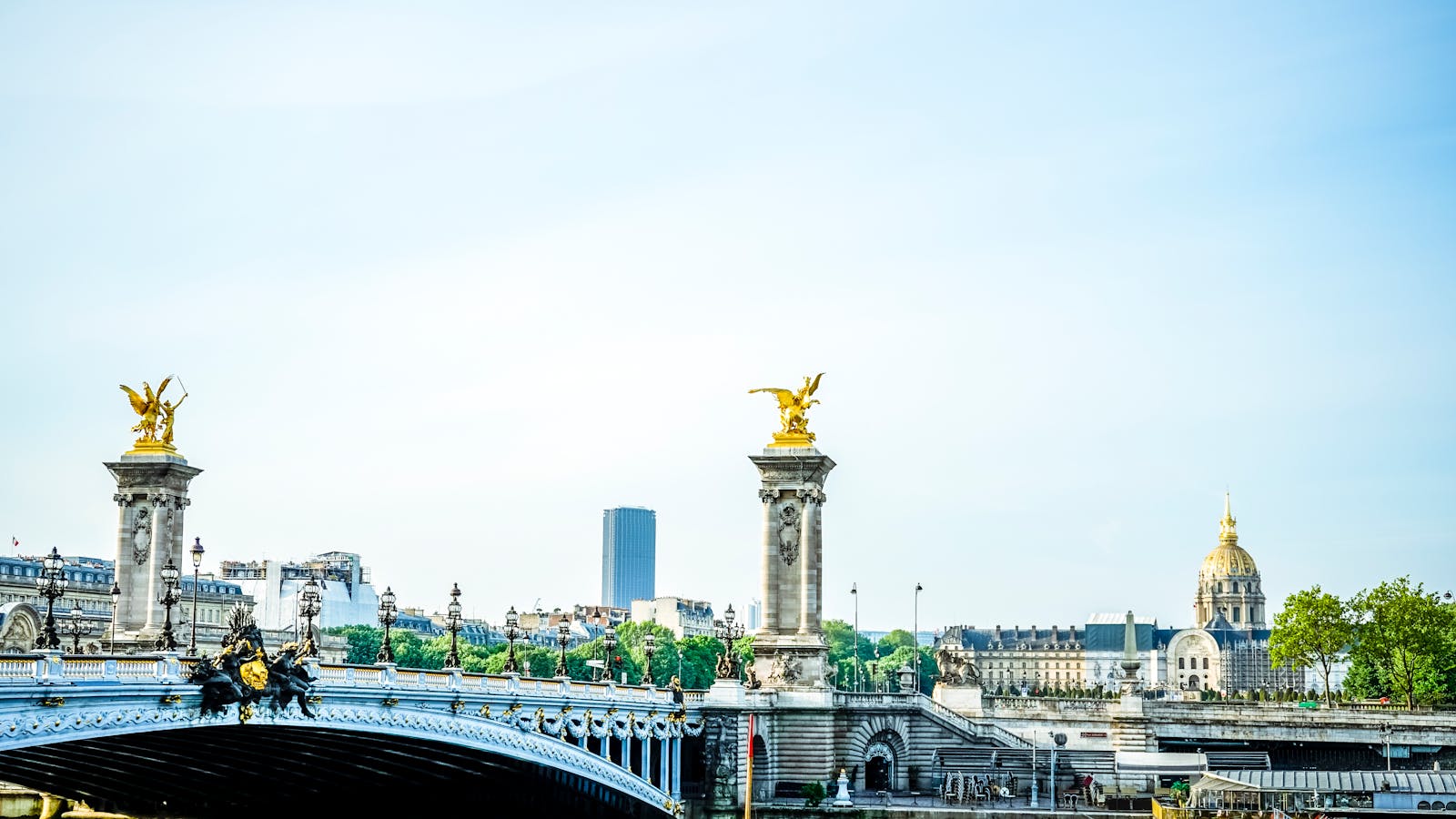
Les Invalides. The gold dome on the left bank. It’s both a church and a military hospital, and it holds Napoleon’s tomb — a giant red quartzite sarcophagus in a sunken crypt. The dome was regilded in 1989 using 12.6 kilograms of gold leaf, which is the third regilding in its history.
Musée d’Orsay. The former Gare d’Orsay railway station, converted into an Impressionist art museum in 1986. You can still see the giant clock face on the right side of the facade from the river. This is where all the Monets and Van Goghs live — and yes, it’s worth the €16 to actually go inside on a separate day.
The Louvre. You pass the riverside facade for almost 500 metres. The original fortress was built in 1190 by Philippe Auguste to defend Paris from Viking raids. It became a royal residence under Charles V and a museum in 1793 during the Revolution. Today it holds about 38,000 objects and 380,000 in storage — and the riverside facade you see from the boat is just one wing of a massive U-shape.
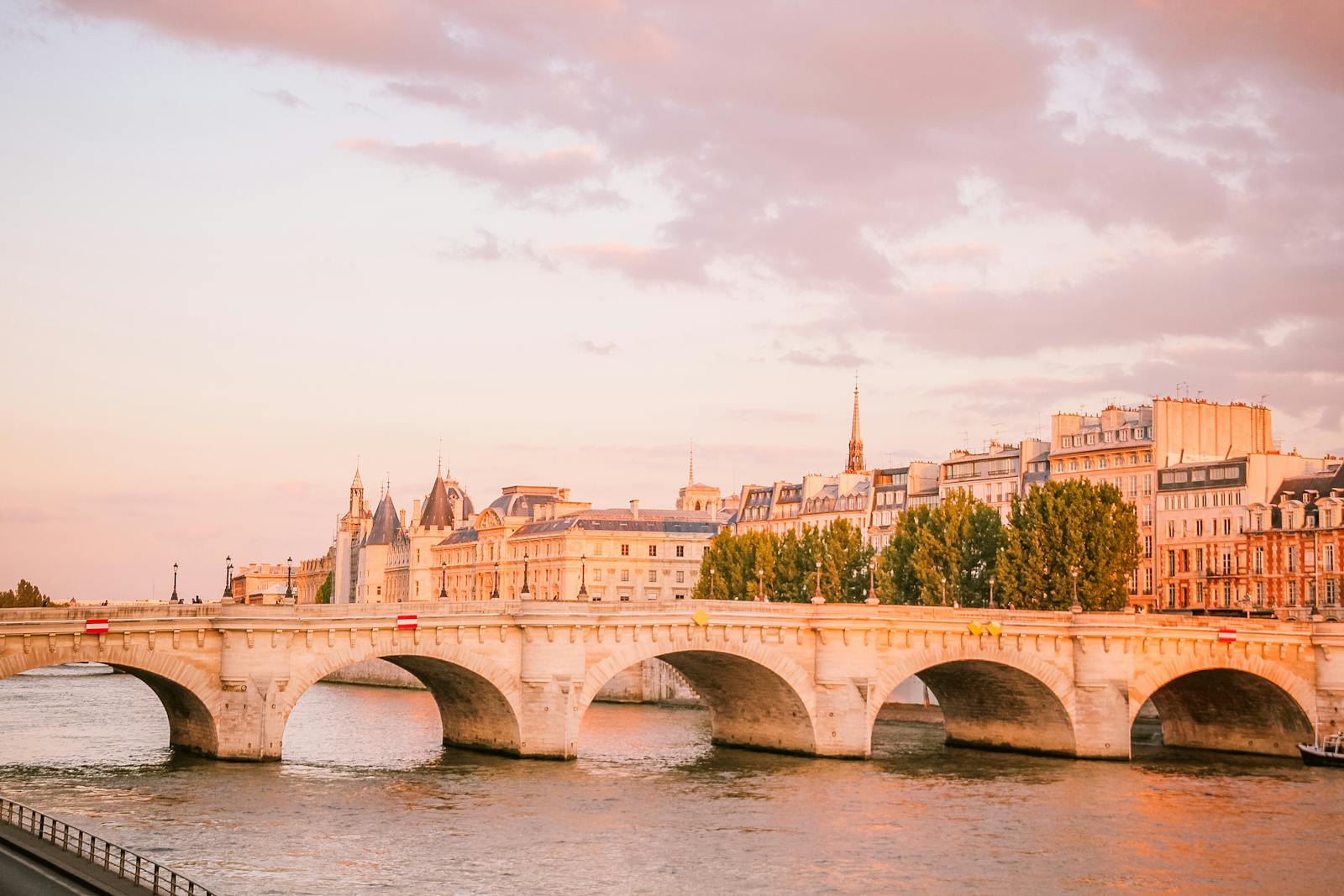
Pont Neuf. Despite the name meaning “new bridge,” this is the oldest surviving bridge in Paris — completed in 1607 under Henri IV. It was the first bridge in Paris built without houses on it, which was considered radical at the time. The 381 sculpted stone masks on the sides are known as mascarons and no two are identical.
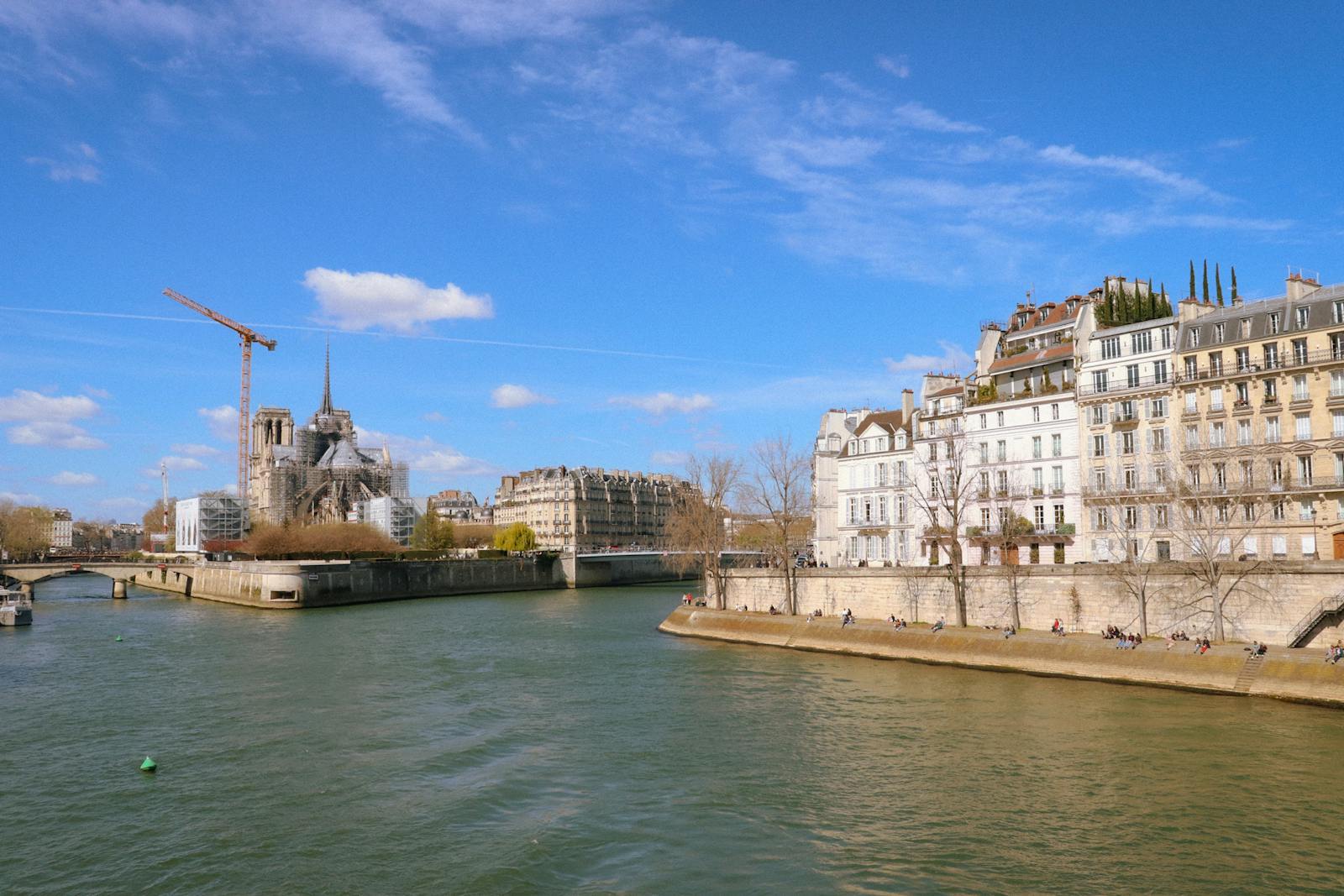
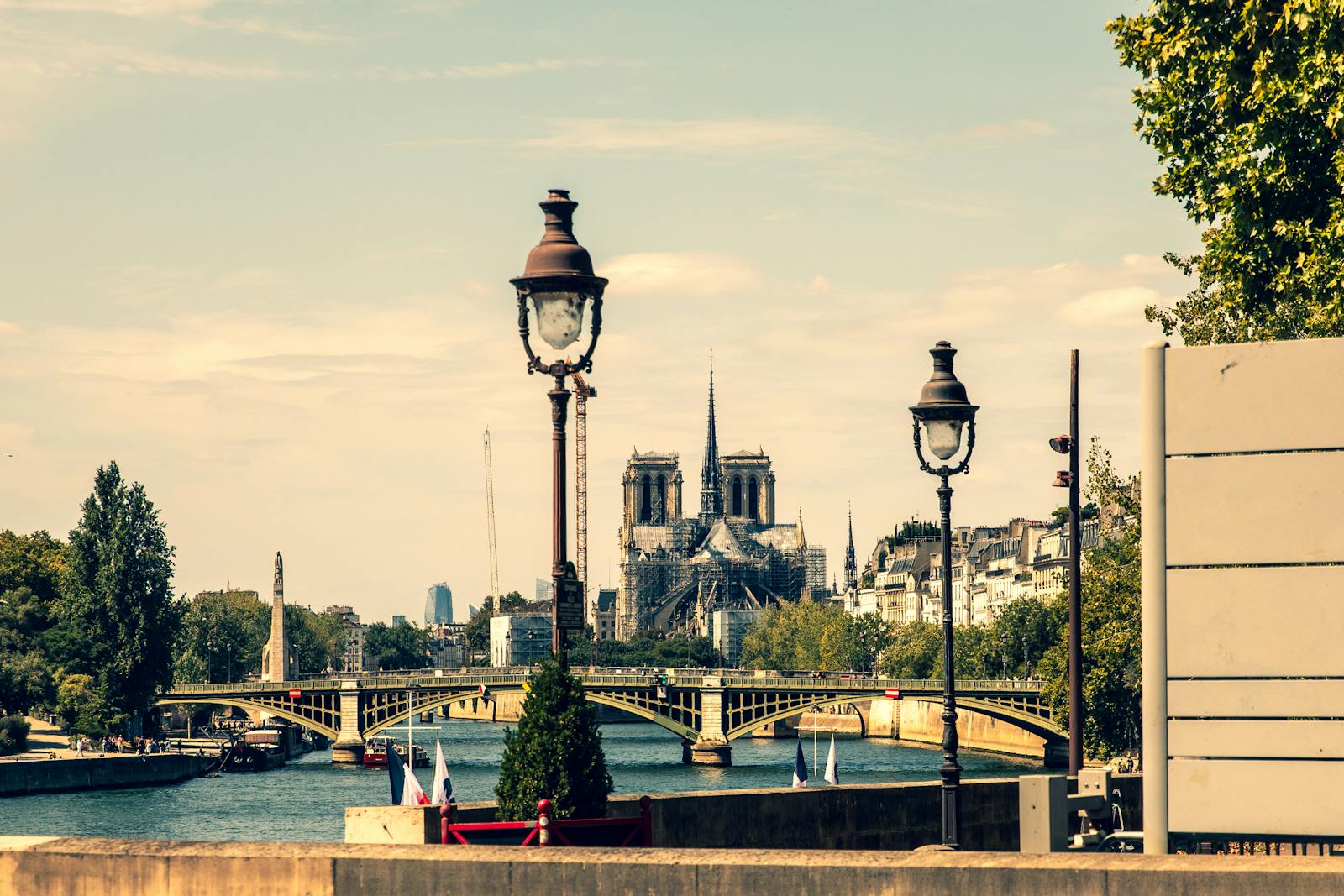
Île de la Cité and Notre-Dame. The boat rounds the Île de la Cité, and you pass directly beneath Notre-Dame. The cathedral was completed in 1345, survived the Revolution, the Communards’ fires, World War II bombing, and then nearly burned down in April 2019 when sparks from renovation work caught the oak beams in the roof. The spire collapsed live on television. Five years and €700 million later, it reopened in December 2024 — and the new spire is an exact replica of Viollet-le-Duc’s 19th-century original, made from the same oak and the same lead.
Île Saint-Louis. The smaller, quieter island next to Île de la Cité. Mostly residential, with some of the most expensive apartments in Paris. The ice cream shop Berthillon on Rue Saint-Louis-en-l’Île is worth a separate walking trip.
The turnaround at Pont de Sully. The boat turns and heads back the way it came. You’ll see all the same landmarks from the opposite side, which is genuinely a different perspective. The Louvre looks larger on the return. Notre-Dame looks smaller. The Eiffel Tower reappears on the horizon as you approach the final 15 minutes of the loop.
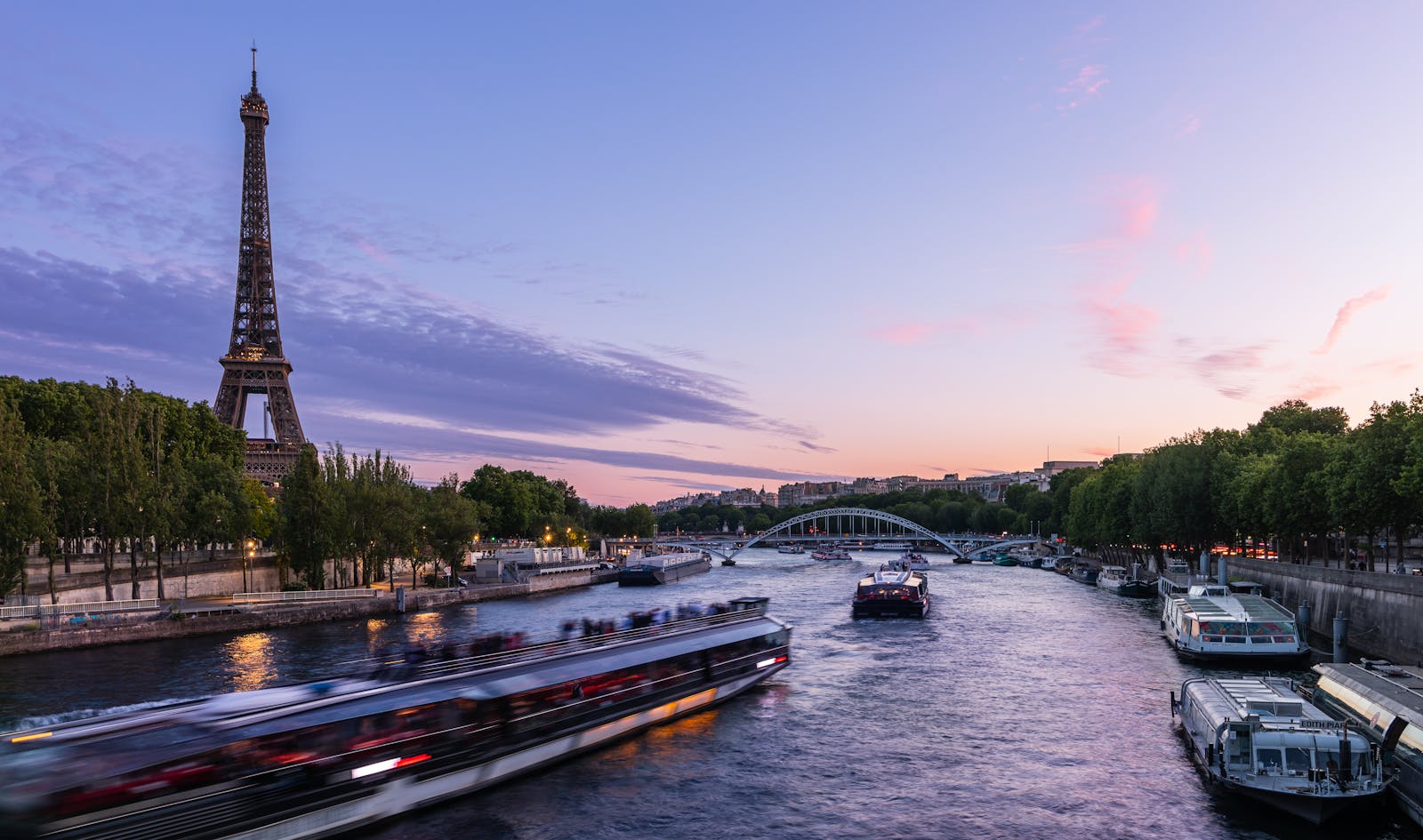
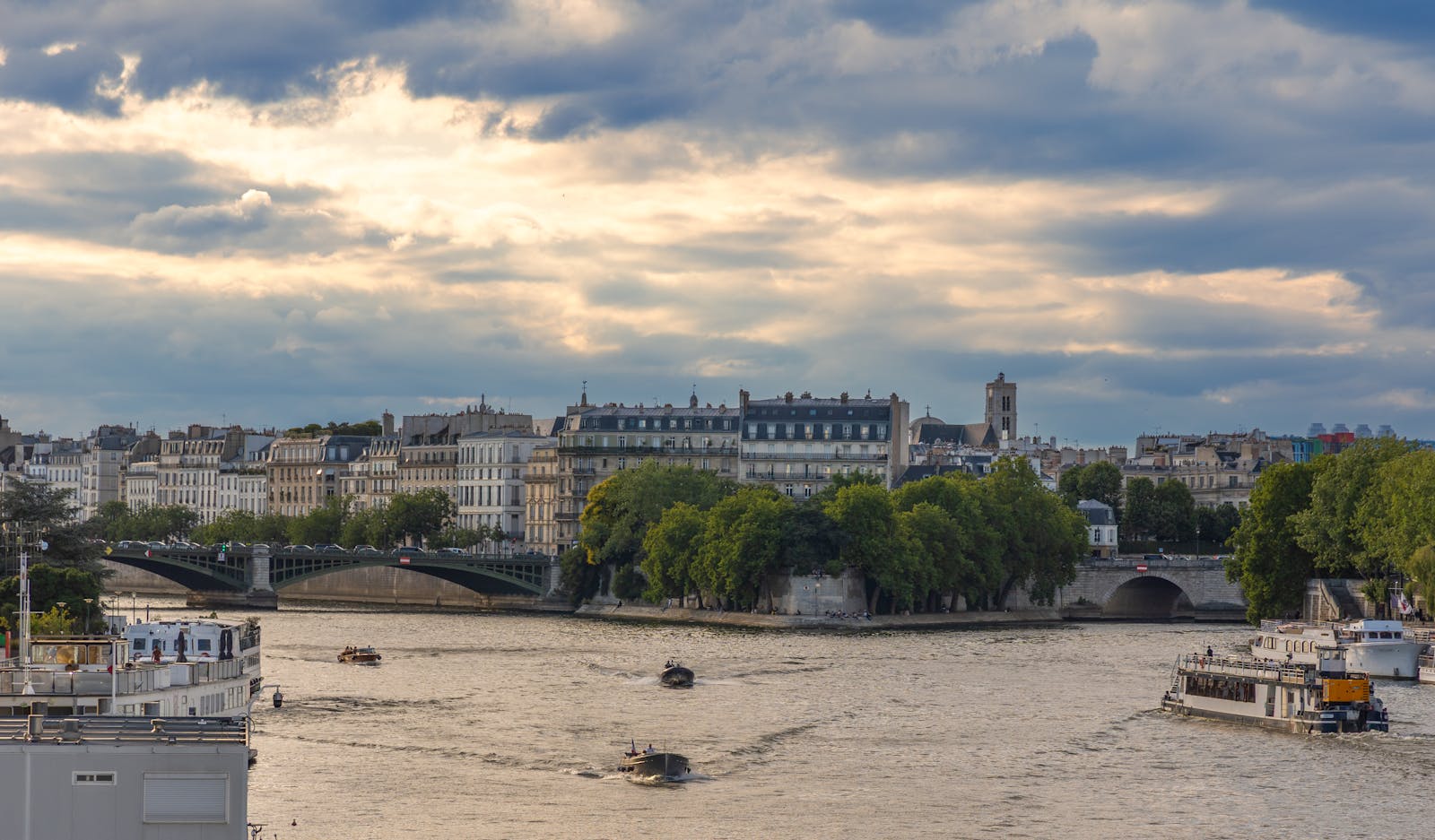
The whole loop takes 55 to 70 minutes. By the time you dock you’ve seen roughly 1,200 years of Parisian history compressed into an hour of drifting, and if you’ve picked the evening slot, you’ve seen the most famous tower in the world sparkle at you at close range. Twenty dollars is an absurd price for that.
More Paris Guides Worth Reading Before You Go
If the Seine cruise is on your list, a few other Paris booking guides pair naturally with it. The dedicated Seine dinner cruise guide covers the dinner-with-boat combinations I deliberately excluded from this article — they’re a different product category with different operators and very different prices. If you’re spending a full day on the left bank, the Eiffel Tower tickets guide is worth reading before you commit to summit access — it’s the single most common booking mistake I see. For the right bank, the Louvre Museum ticket guide covers the three entrance options (and which one actually skips the line). A rooftop Arc de Triomphe ticket is the under-rated second-best view of Paris and can be done in under an hour before or after a cruise. And if you’re staying more than three days, the Versailles day trip and the Paris food tour guides are the two pages I’d send to a friend first.