
Corfu is the Greek island that doesn’t quite feel like Greece. Wander through its Old Town and you’ll swear you’re in Venice — Venetian mansions with peeling pastel facades, narrow alleys that twist into hidden squares, and the faint sound of someone practising classical music drifting from an upstairs window. Then you step into a taverna, order a plate of pastitsada with a glass of local Kakotrygis wine, and you’re reminded that this is very much Greece, just a version of Greece that had 400 years of Italian influence layered on top. But the real reason thousands of visitors flock here every summer isn’t the architecture or the food. It’s what happens when you get on a boat and head south towards three of the Ionian Sea’s most spectacular destinations: Paxos, Antipaxos, and the Blue Caves. These day cruises are the single best thing you can do in Corfu, and anyone who tells you otherwise hasn’t been on one.
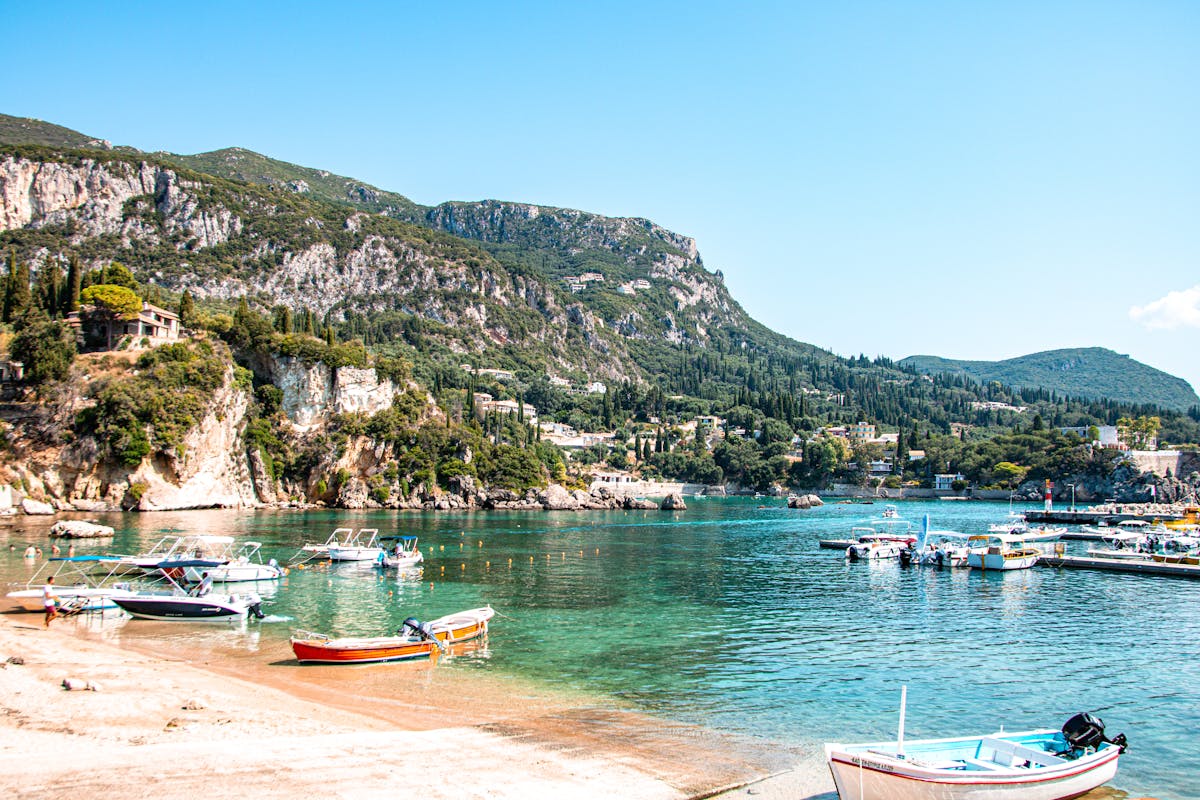
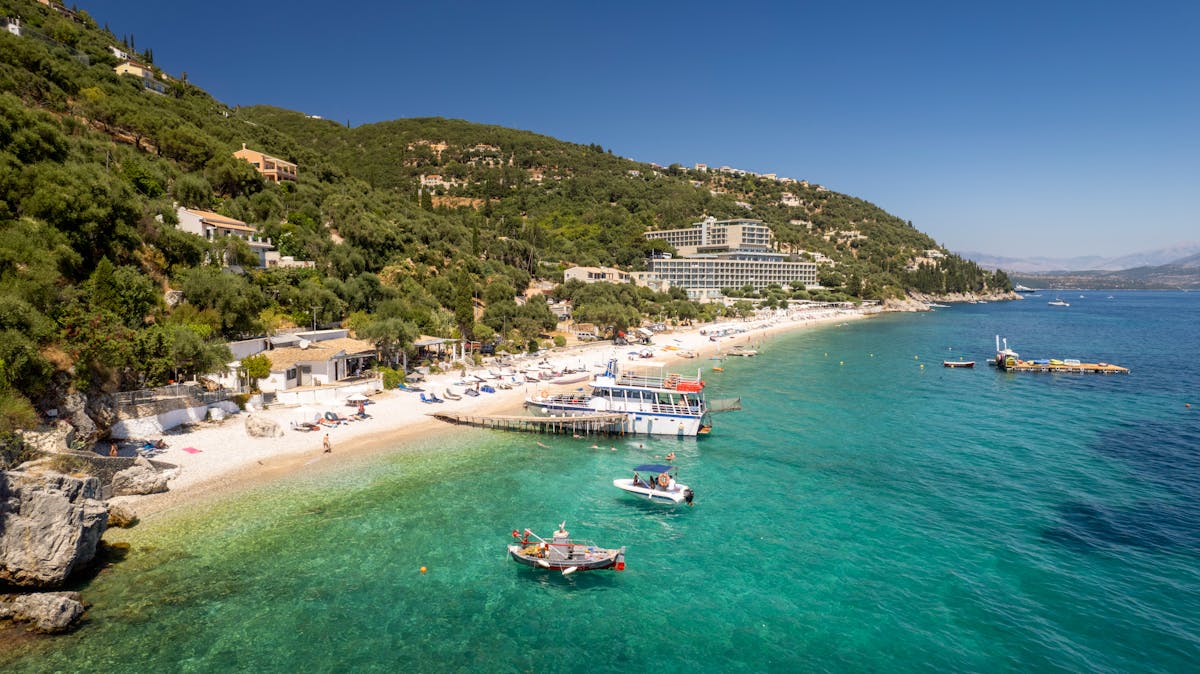
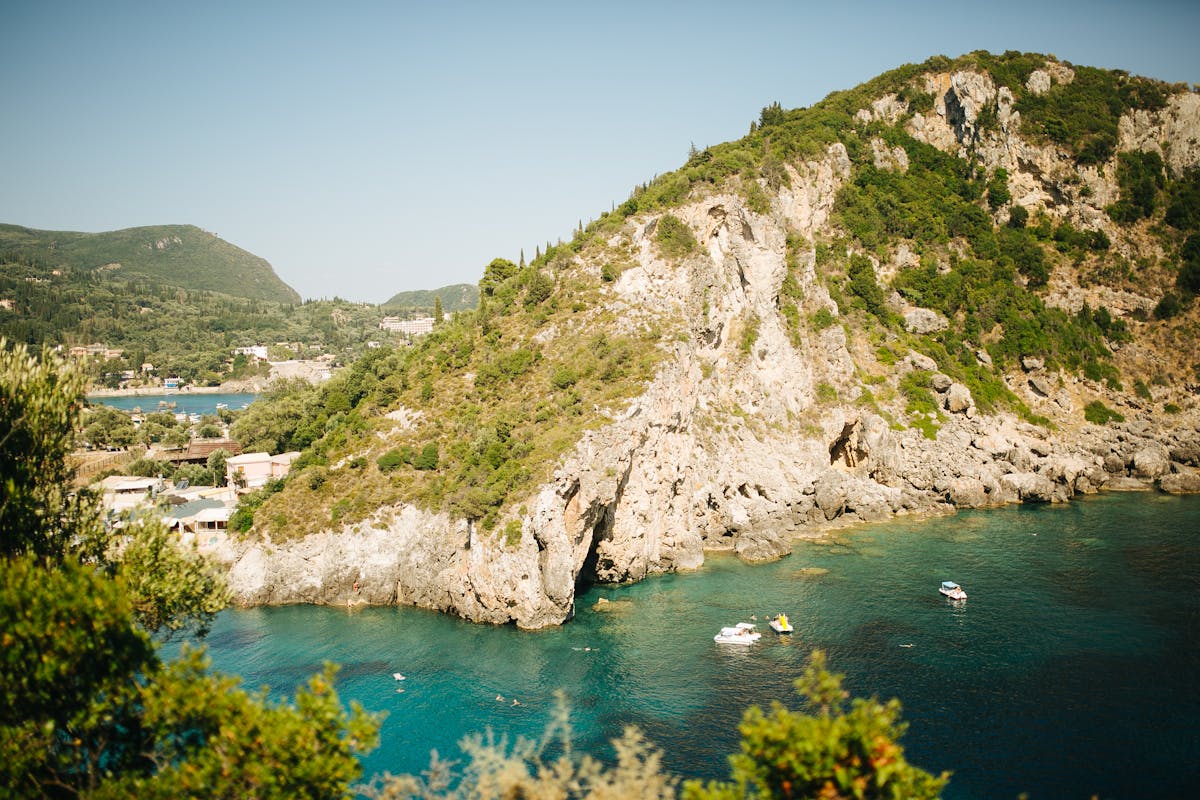
The route south from Corfu is one of the most scenic boat journeys in the Mediterranean. You cruise past Corfu’s green hillsides and sheltered bays, then out into open Ionian water towards Paxos — a small island of olive groves, tiny harbours, and sea cliffs that look like they were designed by a Hollywood set builder. From Paxos, boats continue to Antipaxos, which is barely more than a rock in the sea but has beaches with water so clear and turquoise that first-time visitors genuinely think the photos were edited. The Blue Caves, carved into Paxos’ western cliffs by millennia of wave action, complete the trilogy — sea caverns where the light refracts through the water and turns everything an electric, almost neon blue. It’s a full day on the water, and it earns its place as one of the top-rated experiences in all of Greece.
The boat tour market from Corfu is well-established and competitive, which means operators have to deliver genuinely good experiences to earn their reviews. The five tours below have been rated by thousands of real travellers, and their quotes tell you more about what to expect than any marketing copy ever could. Whether you want a large comfortable cruiser with organised swimming stops, a traditional wooden vessel with a BBQ on deck, or a departure from the mainland at Parga, there’s an option here that fits.
The Day Cruise to Paxos, Antipaxos & Blue Caves is the overwhelming favourite with 4,800 reviews, covering the full Paxos-Antipaxos-Blue Caves route with swimming stops and free time in Gaios village. If you want a more intimate, traditional experience, the Classic Wooden Vessel cruise with BBQ offers smaller groups, an onboard BBQ, and a distinctly Greek atmosphere that the bigger boats can’t match.
- Best Corfu Boat Tours to Paxos, Antipaxos & Blue Caves
- 1. From Corfu: Day Cruise to Paxos, Antipaxos & Blue Caves
- 2. Antipaxos & Paxos Blue Caves Boat Cruise
- 3. From Parga: Antipaxos, Paxos, Blue Caves & Gaios Cruise
- 4. Paxos Antipaxos Blue Caves Day Tour From Corfu
- 5. Full Day Cruise from Corfu in Classic Wooden Vessel, Swim & BBQ
- What to Expect on a Corfu Boat Tour
- The Route
- The Blue Caves
- Antipaxos Swimming
- Gaios, Paxos
- Corfu: An Island Shaped by Everyone Except the Ottomans
- Practical Tips for Corfu Boat Tours
- Seasickness Is Real
- Timing and Season
- What to Bring
- Booking Tips
- Choosing Your Tour
- Getting to the Port
- What Tours Don’t Include
- More Greece Guides
Best Corfu Boat Tours to Paxos, Antipaxos & Blue Caves
1. From Corfu: Day Cruise to Paxos, Antipaxos & Blue Caves
This is the tour that dominates the Corfu boat trip market, and with 4,800 reviews it’s not hard to see why. The route covers everything — the Blue Caves along Paxos’ western coast, a swimming stop at Antipaxos with its absurdly turquoise water, and free time in Gaios, the main village on Paxos where you can eat fresh seafood at harbourside tavernas while watching fishing boats bob in the port. The boat is modern, comfortable, and big enough that it handles the open Ionian crossing without turning into a rollercoaster, which matters more than you’d think on a journey that’s about three hours each way.
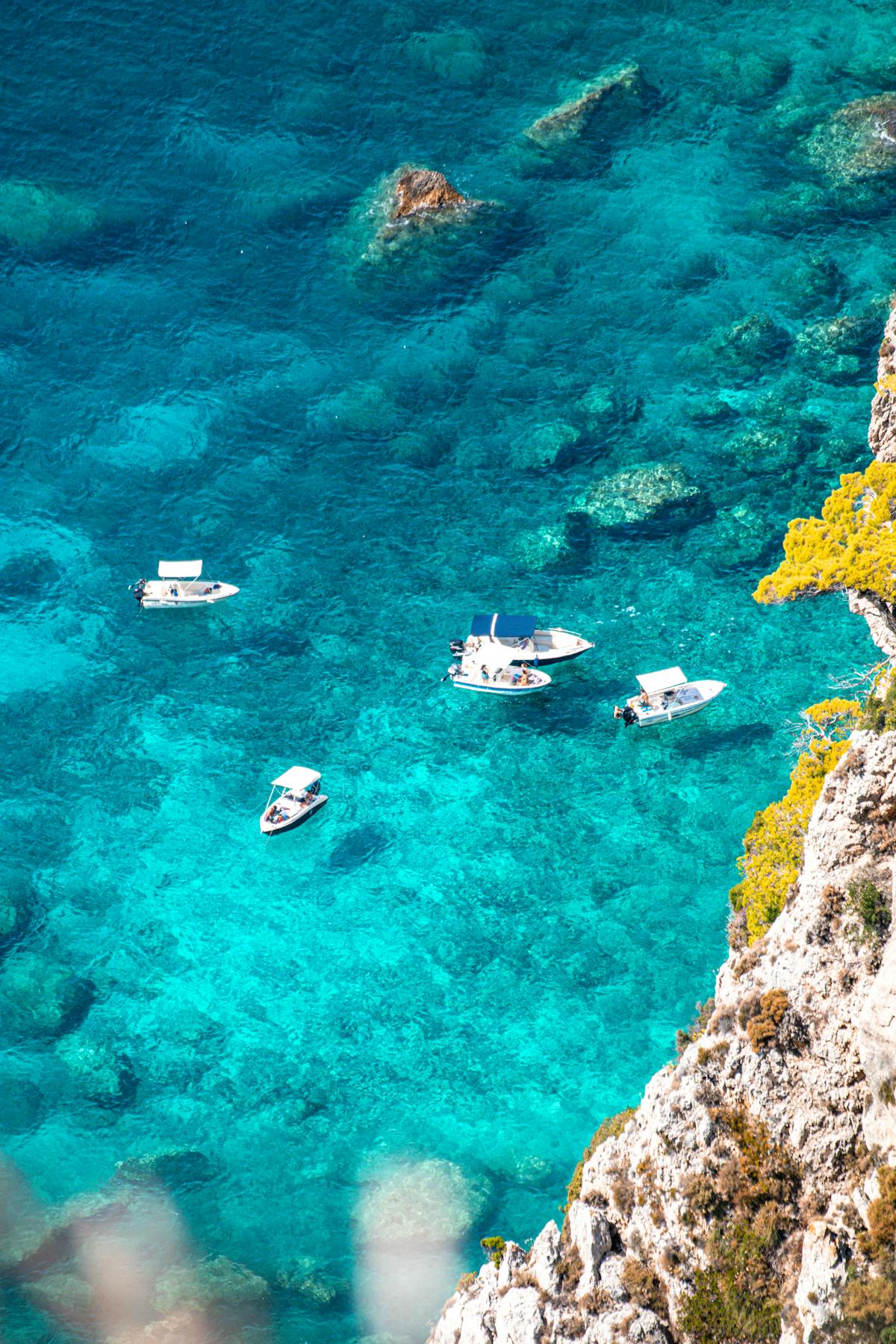
Hannah was straightforward about the experience: “Great experience seeing the caves, swimming at Antipaxos and visiting Paxos which is beautiful. The boat is modern and comfortable and the crew are friendly.” Hana added a practical warning that future visitors should take seriously: “Great experience. The staff were incredibly kind, fun and helpful. Just a heads up, it’s a long ride (about three hours one way) so if you get seasick definitely bring some motion sickness pills.” She’s right — the crossing from Corfu to Paxos is open water, and if the Ionian is having a choppy day, you’ll want something in your system before boarding. Diane highlighted the food opportunity on Paxos: “The swim was refreshing, the water was blue and crystal clear. We enjoyed a lunch of Sea Bass, Calamari, Tzatziki and Beetroot salad in the town of Gaios. Delicious!”
The free time in Gaios is well-judged — typically around two hours, which is enough to eat a proper lunch, explore the narrow streets, and soak up the atmosphere of a Greek village that hasn’t been overwhelmed by tourism. Gaios feels authentically lived-in, with elderly locals playing cards in the kafeneia and cats sleeping on warm stone walls. It’s a welcome contrast to Corfu’s more tourist-heavy areas.
The swimming stop at Antipaxos is the emotional highlight for most people. The water there is a shade of turquoise that looks artificially enhanced in photographs but is somehow even more vivid in person. If you’re used to Mediterranean beaches where the water is nice but not spectacular, Antipaxos will recalibrate your expectations entirely.
Read reviews and check prices for this tour
2. Antipaxos & Paxos Blue Caves Boat Cruise
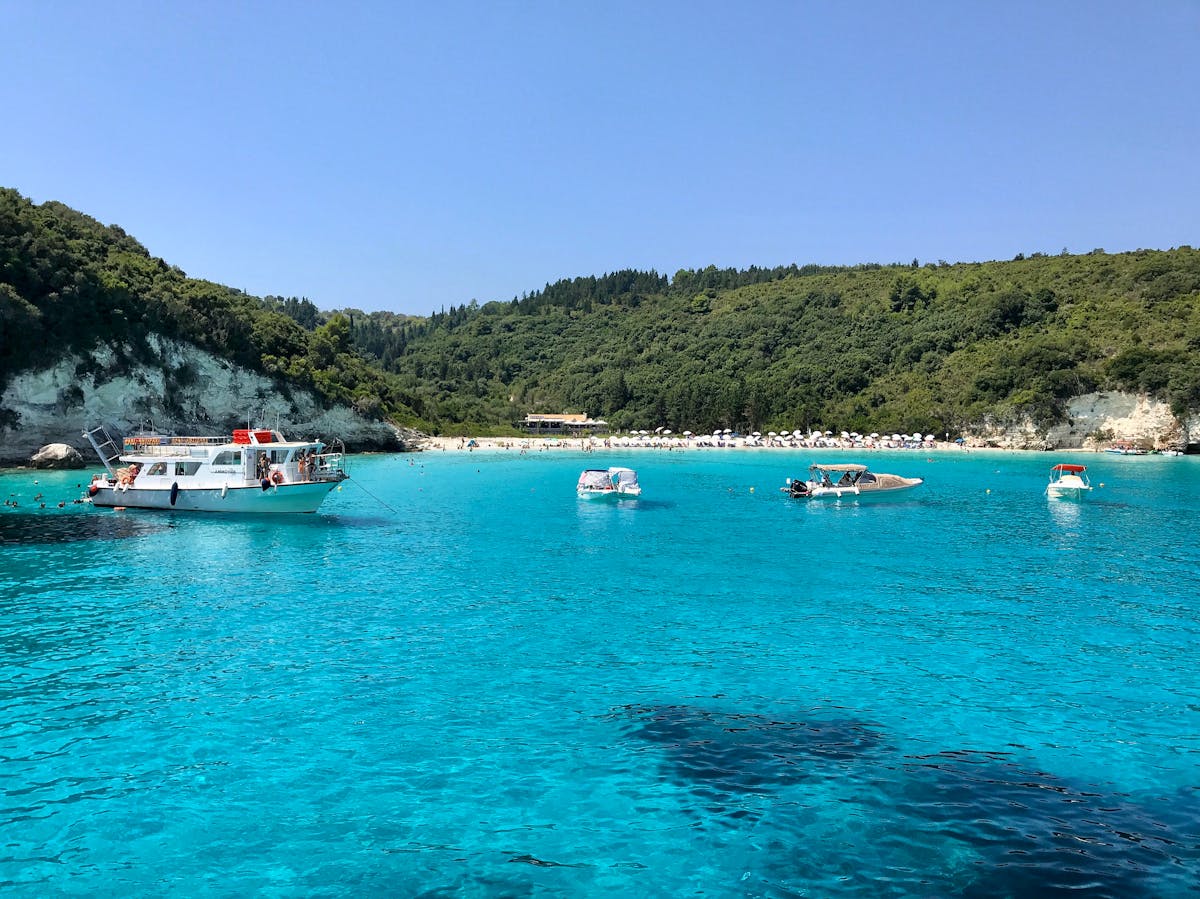
With 3,690 reviews, this is the second most popular option and runs a similar route but with slightly different timing and emphasis. The cruise includes a proper stop on Paxos with around two hours of free time, plus a separate swimming stop from the boat near Antipaxos — so you get both the island exploration and the open-water swimming that make these trips so memorable. The format is well-tested: Blue Caves cruise along the cliffs, Antipaxos swimming, Paxos free time, and the return journey with the afternoon sun behind you.
Natalia appreciated the structure: “The activities were great. The boat stopped on one of the islands where we had free time (about 2 hours). Then we swam to another island where we could swim in the sea from boat (about 1 hour).” Jovana singled out both the destinations and the crew: “Paxos is absolutely charming, and the beach stop on Antipaxos is simply breathtaking for swimming. The whole crew was very welcoming, especially Maria.”
The one-hour swimming stop from the boat is generous compared to some operators who give you 30-40 minutes and then rush everyone back on board. An hour in Antipaxos water is enough to properly swim, float, take photographs, and still have time to dry off on deck before moving on. The crew providing a welcoming atmosphere matters more than you’d expect on a full-day trip — when you’re spending 8-10 hours on a boat, the difference between friendly and indifferent staff is the difference between a good day and a great one.
Read reviews and check prices for this tour
3. From Parga: Antipaxos, Paxos, Blue Caves & Gaios Cruise
This one flips the departure point. Instead of leaving from Corfu, you board at Parga on the Greek mainland — which is a brilliant option if you’re travelling through Epirus or want to combine a Paxos trip with a stay in one of Greece’s most underrated coastal towns. Parga itself is gorgeous, a cluster of colourful houses stacked up a hillside around a Venetian castle, and the boat journey from there to Paxos gives you a different perspective of the Ionian than the Corfu departures. With 727 reviews, it’s well-established despite the smaller departure point.
Keren summed up the experience simply: “It was a wonderful day. The places we stopped at were absolutely amazing and worth the trip. The boat was very comfortable.” Bjorna’s review contains a detail that will make anyone envious: “I think everyone should go to Antipaxos and Paxos at least once in their life. I had a lot of fun and we were very lucky to see dolphins.” Dolphins in the Ionian aren’t uncommon — the strait between the mainland and Corfu is home to both common and bottlenose dolphins — but seeing them from a tour boat is still a matter of luck and timing. If it happens, it’ll be the moment everyone remembers.
The Parga departure is also worth considering if you get seasick. The crossing from Parga to Paxos is shorter than from Corfu, which means less time in open water. It’s not a dramatic difference, but if you’re borderline on motion sickness, every mile matters.
Read reviews and check prices for this tour
4. Paxos Antipaxos Blue Caves Day Tour From Corfu
With 318 reviews, this is a smaller operation that still covers the complete Paxos-Antipaxos-Blue Caves route but with a more personalised feel. Smaller tour groups mean the guide can actually explain what you’re looking at rather than shouting over a microphone to 150 people, and you don’t spend half the swimming stop waiting for other passengers to get in and out of the water. The trade-off is less anonymity — if you’re the type who likes to disappear into a crowd on a big boat, a smaller group tour means you’re more visible. Most people consider that a fair exchange.
Gabriela_P kept it enthusiastic: “Great experience! We had amazing time in Paxos and the bright blue water beach of Antipaxos.” Elvira_V hinted at the social atmosphere: “Lots of fun. Tour guide was very informative and on the way back the party really started.” That last detail is worth noting — the return journey from Paxos to Corfu takes about three hours, and on the best tours the crew turn it into a proper celebration with music, drinks, and a party atmosphere that makes the long ride fly by. On the worst tours, three hours of open water with nothing to do is just boring. This one clearly falls into the former category.
The informative guide element is genuinely valuable on this route. The Blue Caves, the geology of Paxos’ cliffs, the mythology of Poseidon creating the island — there’s a lot of story to tell, and a guide who can tell it well transforms the experience from “looking at rocks from a boat” to understanding why those rocks are remarkable.
Read reviews and check prices for this tour
5. Full Day Cruise from Corfu in Classic Wooden Vessel, Swim & BBQ
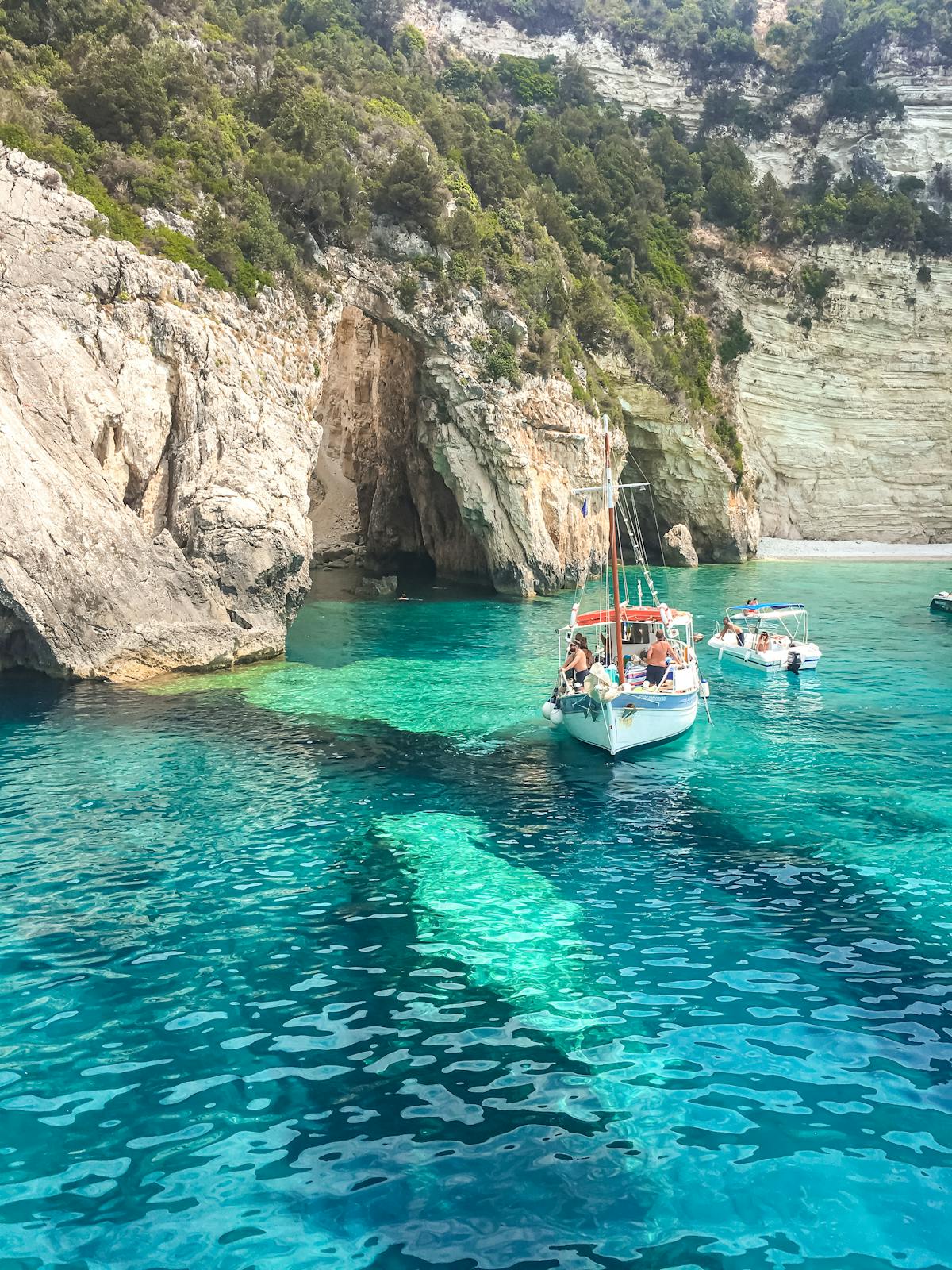
This is the outlier on the list, and it’s brilliant. Instead of a modern cruiser, you board a traditional Greek wooden vessel — the kind of boat that looks like it belongs in a postcard from the 1970s. The crew fire up a BBQ on deck, pour the wine, and take you along Corfu’s coastline with swimming stops in hidden bays that the big tour boats can’t access. With 281 reviews, it has the smallest review count here, but the reviews themselves are some of the most enthusiastic you’ll find for any tour in the Ionian. This is the tour for people who want an authentic Greek experience rather than a processed tourist product.
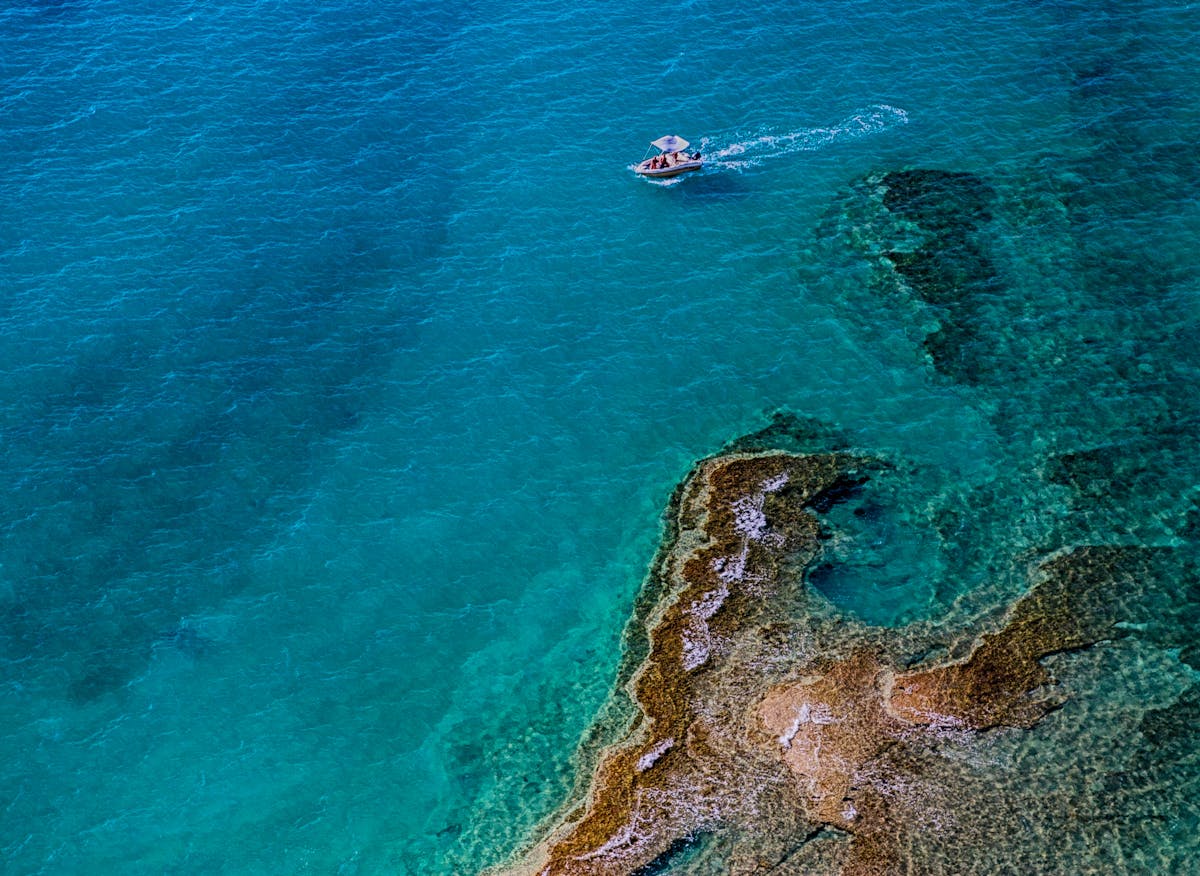
Montana_H captured the vibe perfectly: “Such a fun boat tour! We were able to stop and swim and take in the sights. We got an amazing lunch and wine.” Laura_R agreed: “This tour was amazing; we had a great time at the swim stops, and the food was fantastic.” Alexandra_T went further and named names: “We had the best day out on the boat with Spiros and his crew — highly recommend for an authentic experience!” The name Spiros appearing in reviews is a good sign — it suggests a consistent captain-owner operation rather than a faceless company rotating anonymous staff through boats.
The BBQ-on-deck element transforms this from a boat tour into something closer to being invited onto a friend’s boat for the day. You’re eating freshly grilled food, drinking Greek wine, swimming off the side of a wooden vessel in crystalline water, and watching the Corfu coastline slide past. It’s less structured than the Paxos trips — you might not visit all three headline destinations — but the experience is warmer, more personal, and more memorable. If you’ve already done the Paxos-Antipaxos route or simply prefer atmosphere over itinerary, this is your tour.
Read reviews and check prices for this tour
What to Expect on a Corfu Boat Tour
The Route
Most Corfu boat tours follow a well-established route south through the Ionian Sea. You depart from Corfu’s port (usually the New Port near Corfu Town) in the morning, cruise south along the island’s coast, and reach the Blue Caves on Paxos’ western cliffs within a couple of hours. The boat slows down and navigates close to the cliff face, allowing passengers to see into the caves where the water glows an otherworldly blue. From there, it’s a short hop to Antipaxos for the swimming stop, then around to Gaios on Paxos’ eastern side for free time on the island. The return journey follows the same route in reverse, arriving back in Corfu by late afternoon or early evening.
The total journey time is significant — expect to be on the water for 8-10 hours, with roughly six hours of actual travel time and the rest split between the swimming stop and the Gaios visit. The three-hour-each-way crossing is the part that catches people off guard. It’s a beautiful journey, but it’s long, and if the sea is rough, it can be uncomfortable. Morning departures are standard, usually between 8:00 and 9:00 AM.
The Blue Caves
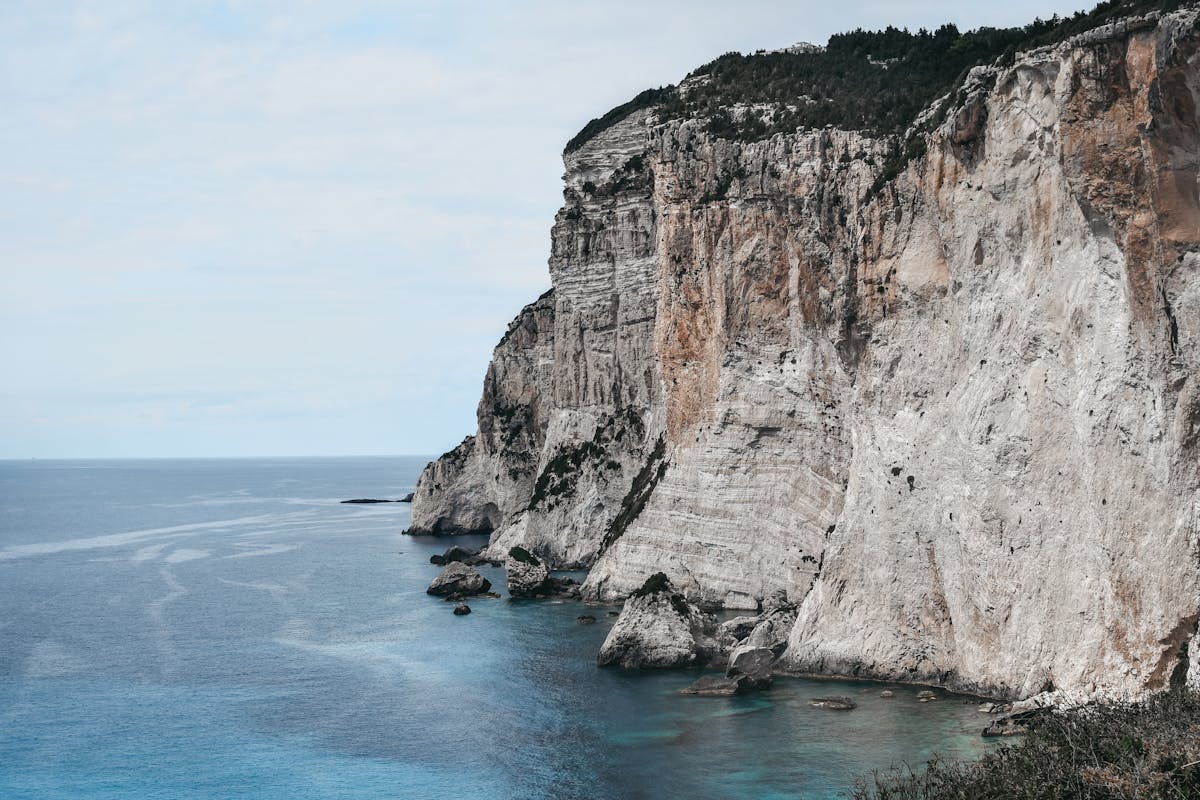
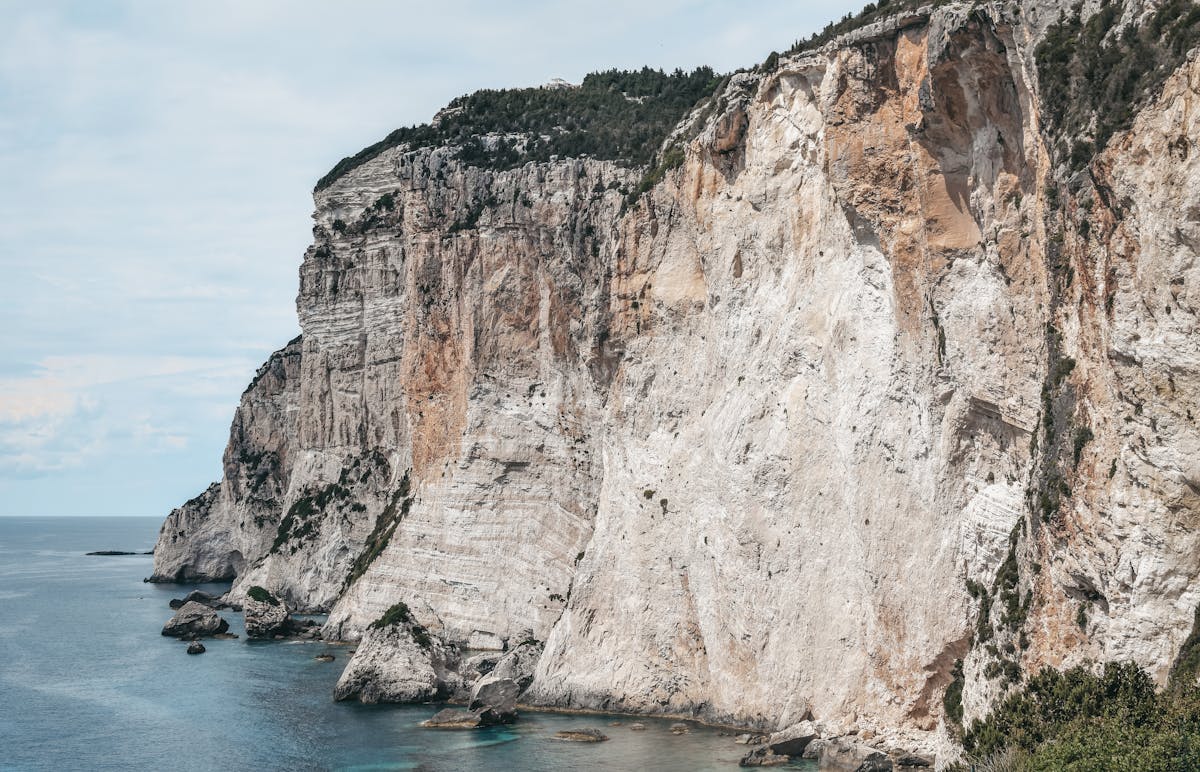
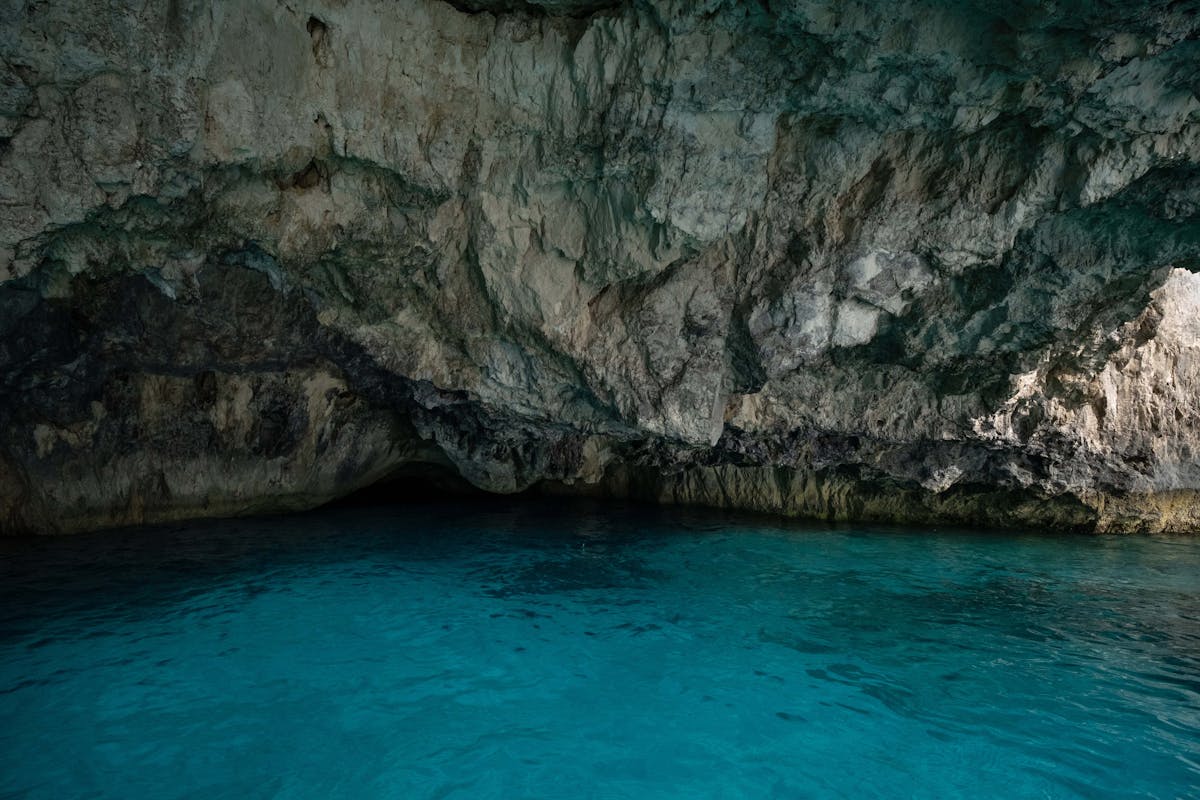
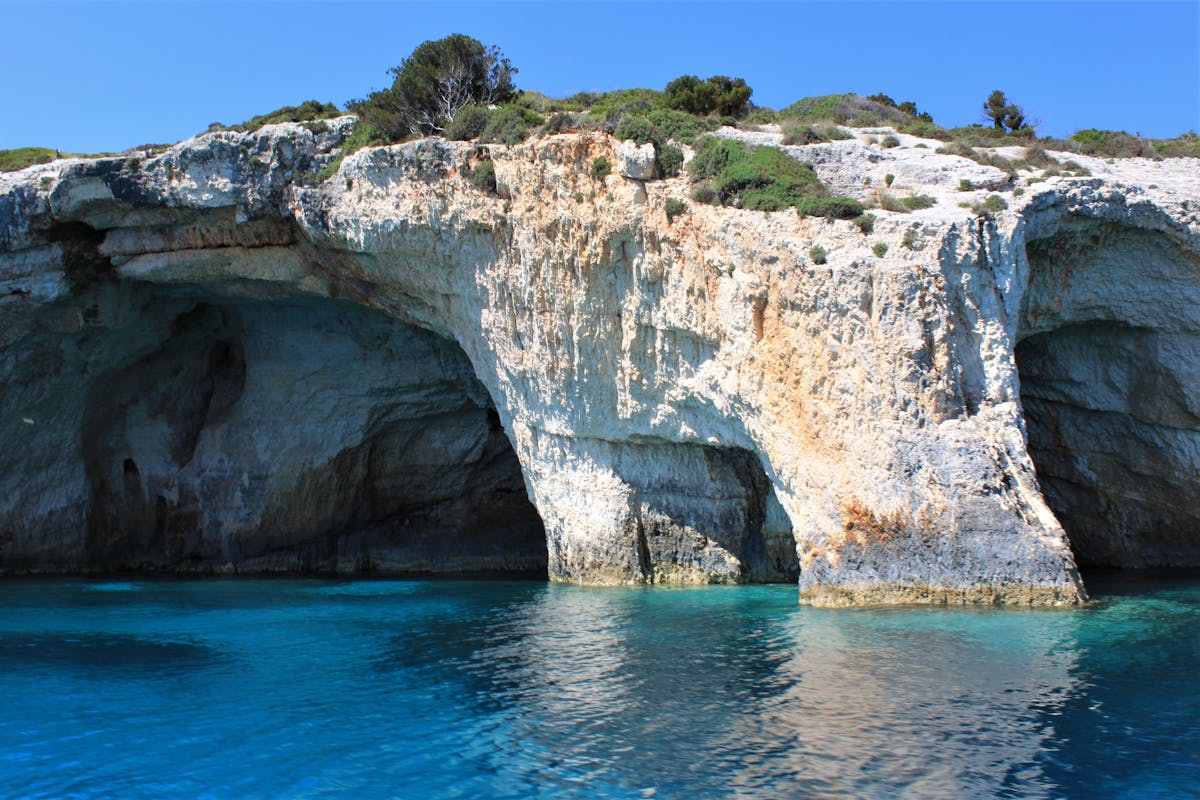
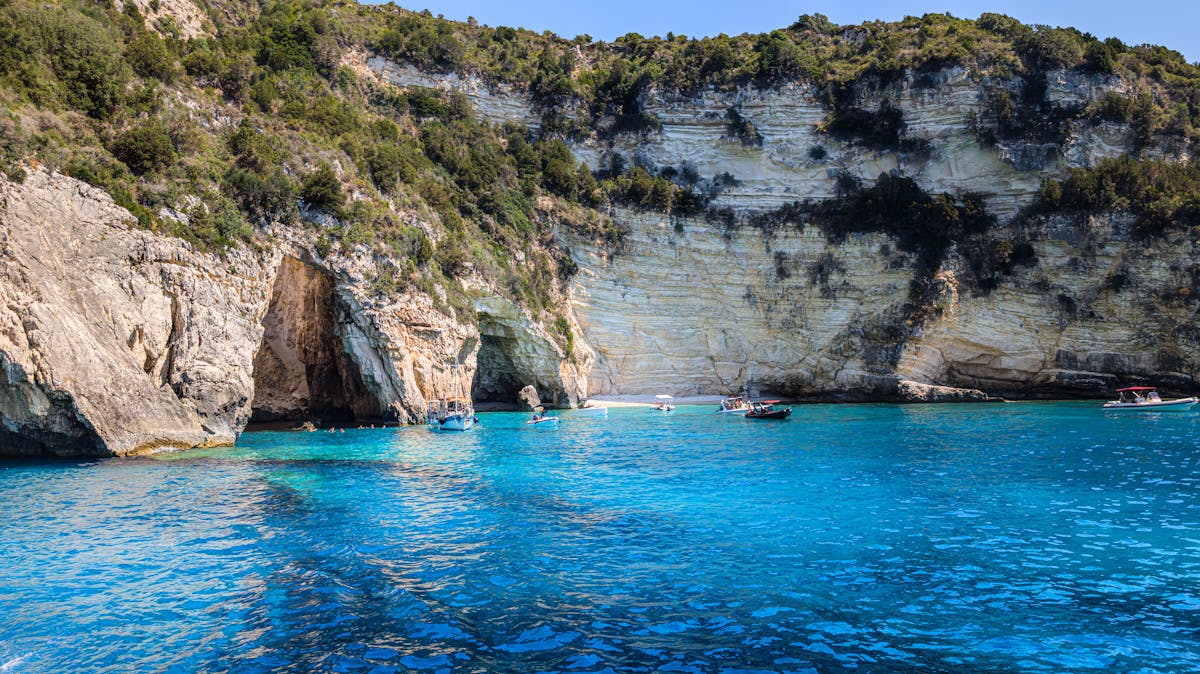
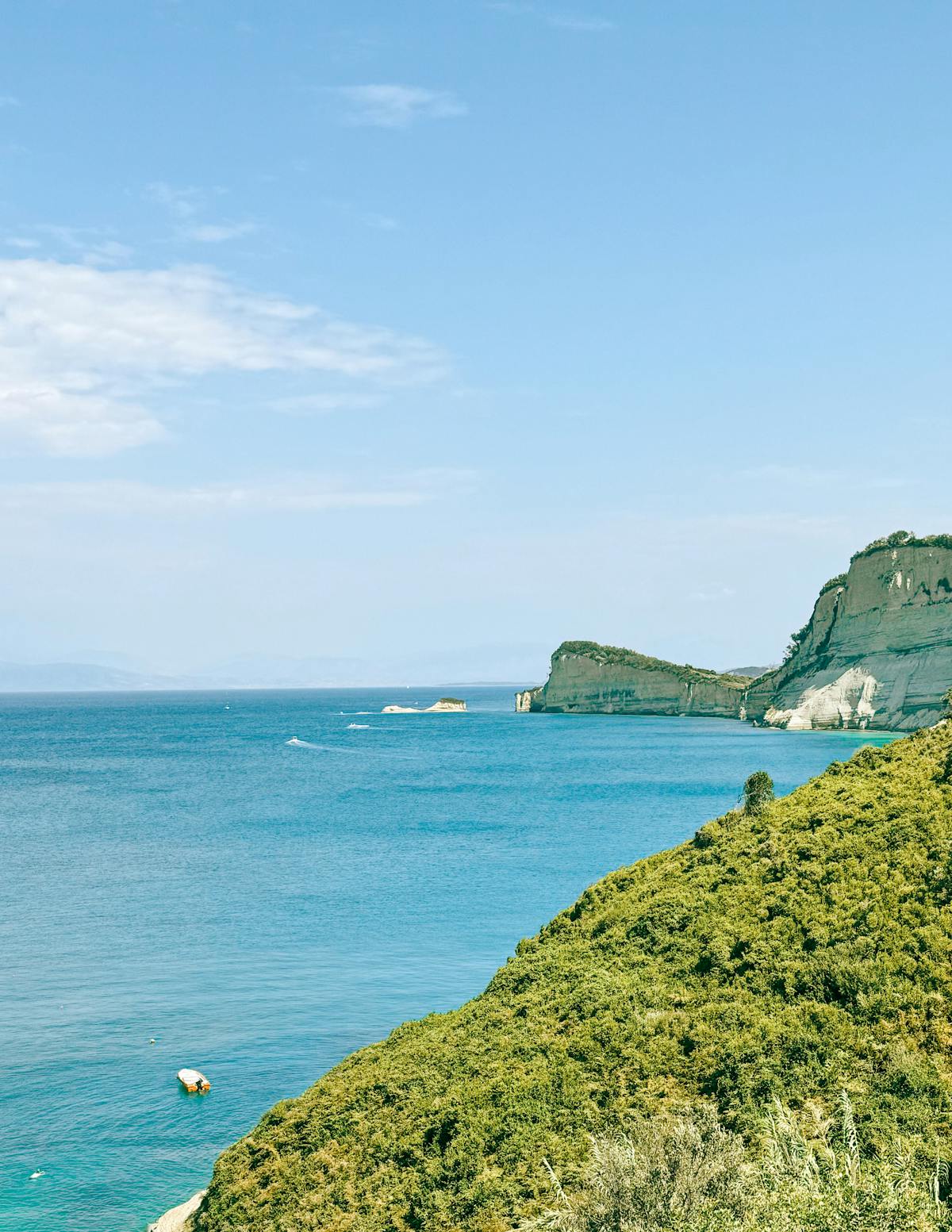
The Blue Caves are carved into the limestone cliffs on Paxos’ western coast, and they’re the geological highlight of the trip. The caves aren’t huge — some are barely large enough for a small boat to enter — but the way sunlight enters the openings and refracts through the clear water creates an intense blue glow on the cave walls and ceiling. The effect is strongest in the morning when the sun is at the right angle, which is one reason most tours visit the caves on the outward journey rather than the return.
Most tours don’t allow swimming inside the caves themselves (it’s a conservation and safety issue), but the boat cruises slowly enough for photographs and video. The crew on the better tours will point out specific caves and explain how they were formed. The visual effect is genuinely striking — this isn’t one of those experiences that looks better in photos than reality. If anything, photos undersell it because they can’t capture the way the blue light shifts and moves with the water.
Antipaxos Swimming
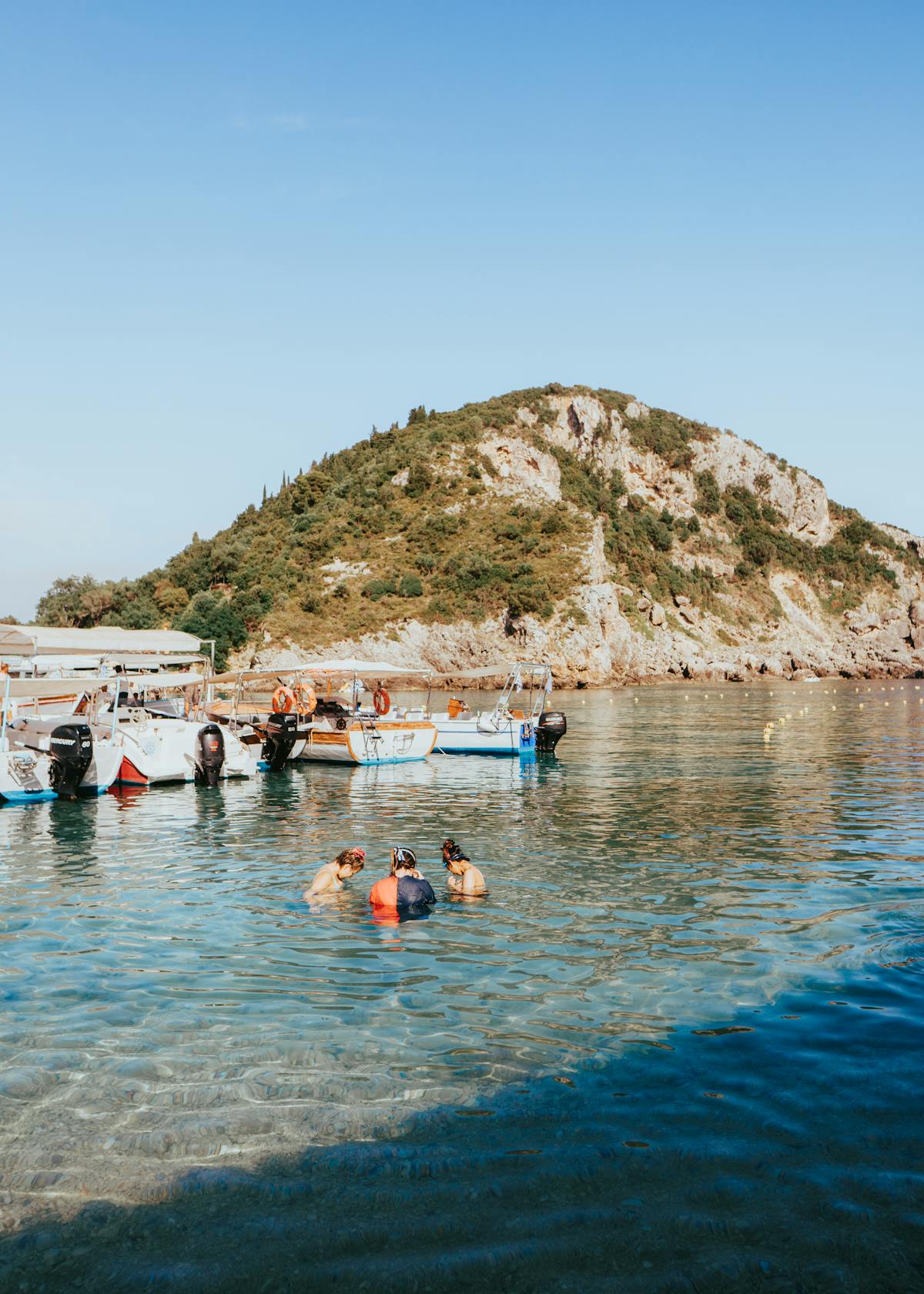
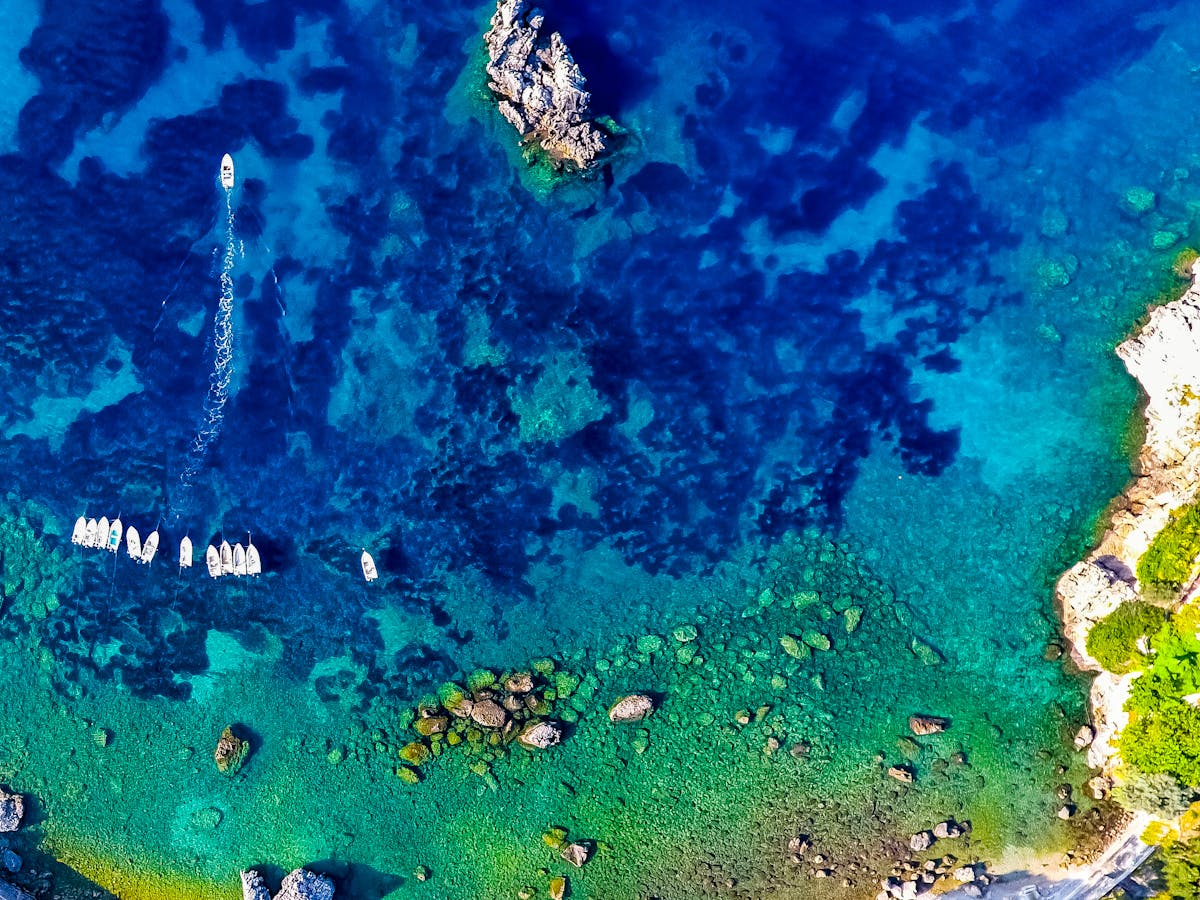
Antipaxos is the swimming stop that makes people reconsider their entire relationship with beaches. The island has a permanent population of fewer than 100 people, a handful of vineyards, and two beaches — Voutoumi and Vrika — that consistently rank among the best in the entire Mediterranean. The water is shallow, turquoise, and so clear that you can see the sandy bottom from the boat deck. Tour boats typically anchor offshore and let passengers swim to the shallows or provide a tender to ferry non-swimmers closer to shore.
The swimming time varies by operator but is usually 45 minutes to an hour. It sounds like enough until you’re actually in the water and realise you could happily spend the entire day there. Bring a waterproof phone case — the underwater visibility is exceptional, and you’ll want photos of what the sea floor looks like through this water.
Gaios, Paxos
Gaios is the main settlement on Paxos and has the effortless charm that only tiny Greek harbour villages can pull off. The waterfront is lined with tavernas, the streets are narrow and paved with smooth stone, and the pace of life is approximately one-third the speed of anywhere on Corfu. Most tours give you 1.5 to 2.5 hours here, which is enough to eat a proper Greek lunch (the seafood is excellent and reasonably priced), explore the village, and sit with a coffee watching the boats come and go.
The lunch stop in Gaios is not included in most tour prices, so budget for a meal. Expect to spend around 15-25 euros per person for a full lunch with a drink. The harbourside restaurants are slightly more expensive than those a street back, but the view is worth the premium. Sea bass, grilled octopus, and Greek salad are the safe bets — Paxos’ waters provide the ingredients, so freshness isn’t an issue.
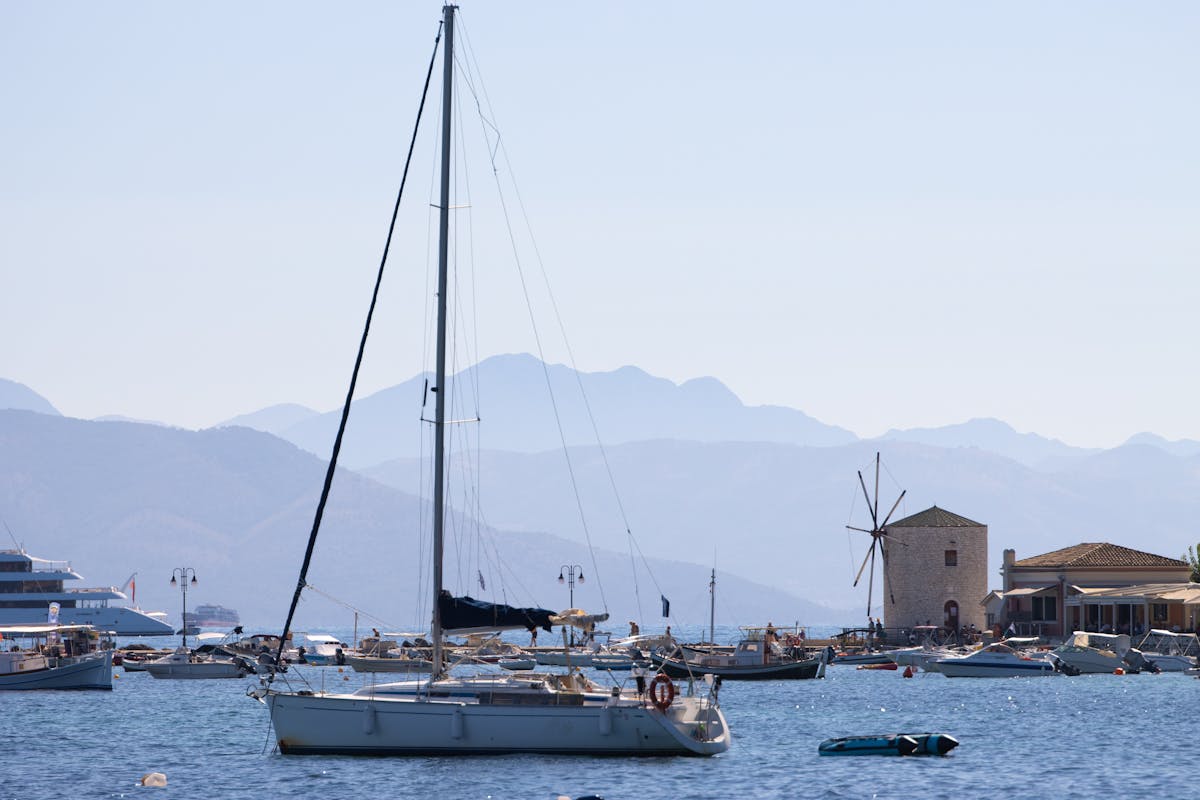
Corfu: An Island Shaped by Everyone Except the Ottomans
Corfu’s history reads like a greatest hits compilation of Mediterranean empires, with one notable absence. While nearly every other Greek island spent centuries under Ottoman rule — absorbing Turkish influences in food, architecture, language, and culture — Corfu never fell. The Ottomans tried, repeatedly and with considerable force, but Corfu’s geography (a narrow strait separating it from the mainland, backed by mountainous terrain) and its succession of Western European rulers made it the one Greek island that the Ottoman Empire couldn’t crack. The result is a place that feels fundamentally different from the Cyclades, the Dodecanese, or mainland Greece.
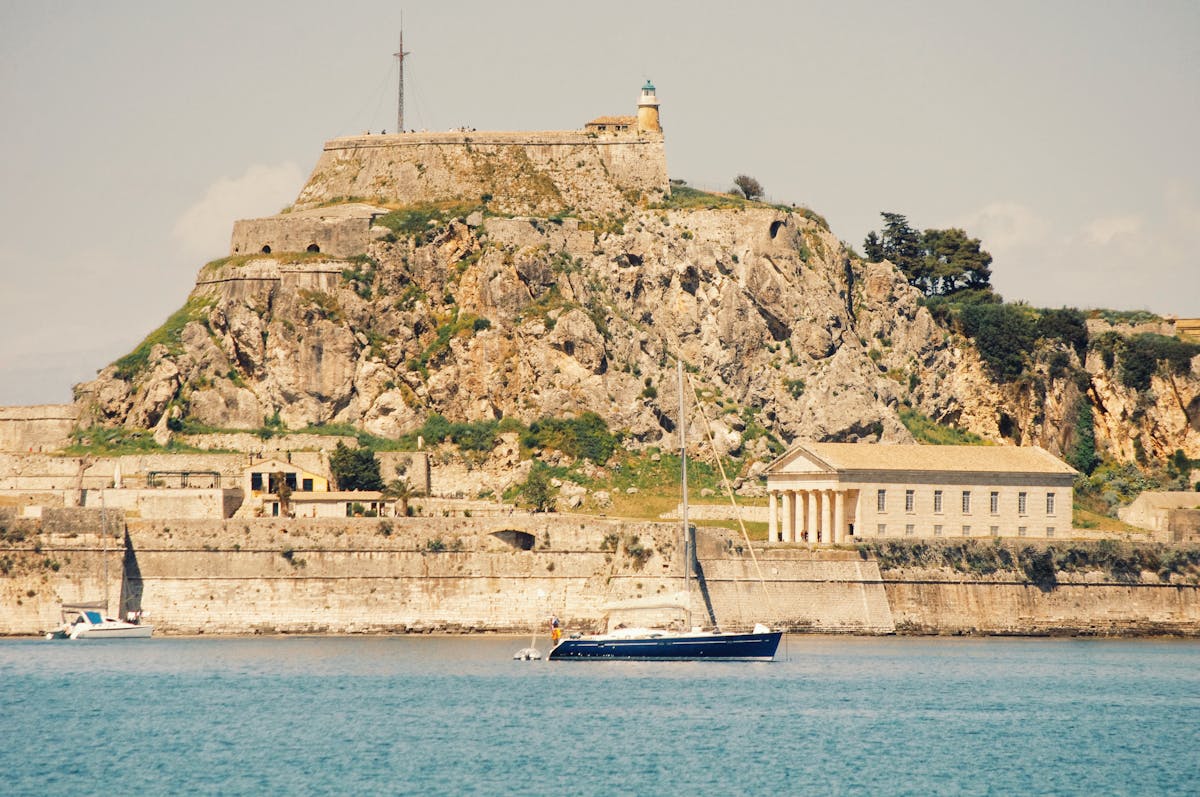
The Venetians held Corfu for over 400 years, from 1386 to 1797, and their influence is everywhere. The Old Town — now a UNESCO World Heritage Site — is built in the Venetian style, with multi-storey buildings featuring shuttered windows, wrought-iron balconies, and walls in shades of ochre, terracotta, and faded pink. The two fortresses that guard the town (the Old Fortress and the New Fortress, though both are centuries old) were Venetian constructions, designed to withstand exactly the kind of Ottoman sieges that repeatedly failed. Walking through Corfu Town’s narrow streets, you could momentarily convince yourself you’re in a backwater neighbourhood of Venice, except the signs are in Greek and the food is significantly better.
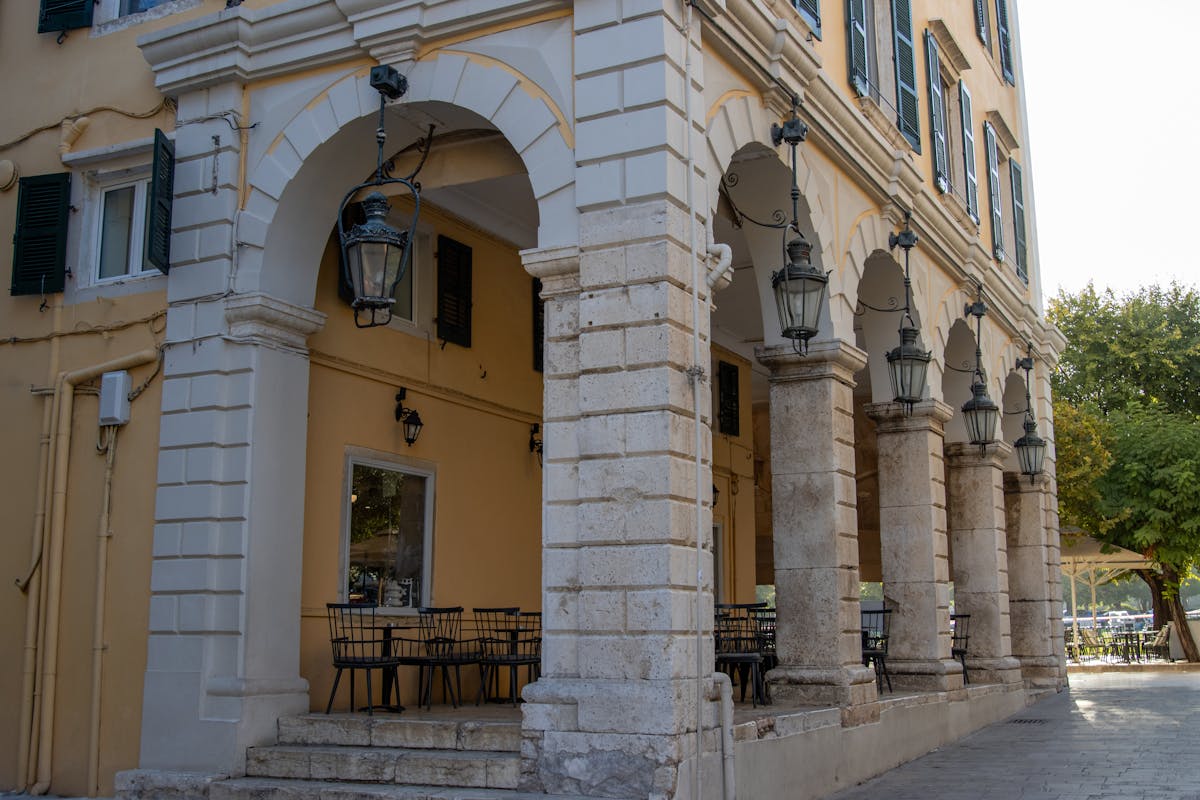
After Napoleon dissolved the Venetian Republic, Corfu bounced between French and Russian control before landing in British hands from 1815 to 1864. The British period was shorter but left its own eccentric imprint. They built a network of roads, introduced a water supply system, and established a university. They also introduced cricket, which Corfiots adopted with unexpected enthusiasm and still play on the Spianada — the enormous esplanade in the centre of Corfu Town that the British modelled on a Regency-era park. Watching a cricket match on the Spianada, surrounded by Venetian buildings with French-style arcades and Greek tavernas, is one of the most culturally disorienting experiences available on any Greek island. The British also brought ginger beer, which Corfu still produces locally under the name tsitsibira, and it’s genuinely good — a proper craft ginger beer that predates the trendy craft movement by about 150 years.

Corfu’s connection to ancient mythology runs even deeper. Many scholars believe that Corfu is Homer’s Phaeacia — the island where Odysseus was shipwrecked and welcomed by the kind Princess Nausicaa before finally returning home to Ithaca. The identification isn’t certain (scholars have been arguing about it for 2,500 years), but the geography fits remarkably well, and Corfiots have embraced the connection enthusiastically. Whether or not Odysseus actually washed up here, the story adds a mythological dimension to the island that elevates it beyond just another beautiful Greek beach destination.
Paxos has its own mythological origin story, and it’s one of the better ones. According to Greek mythology, Poseidon — god of the sea — fell in love with the sea nymph Amphitrite. Wanting a private retreat for the two of them, he struck the southern tip of Corfu with his trident and broke off a piece of the island, which became Paxos. As creation myths go, it’s hard to beat “a god smashed an island in half with a giant fork because he wanted a romantic getaway.” The fact that Paxos is geologically similar to southern Corfu adds just enough scientific plausibility to make the story even more entertaining.
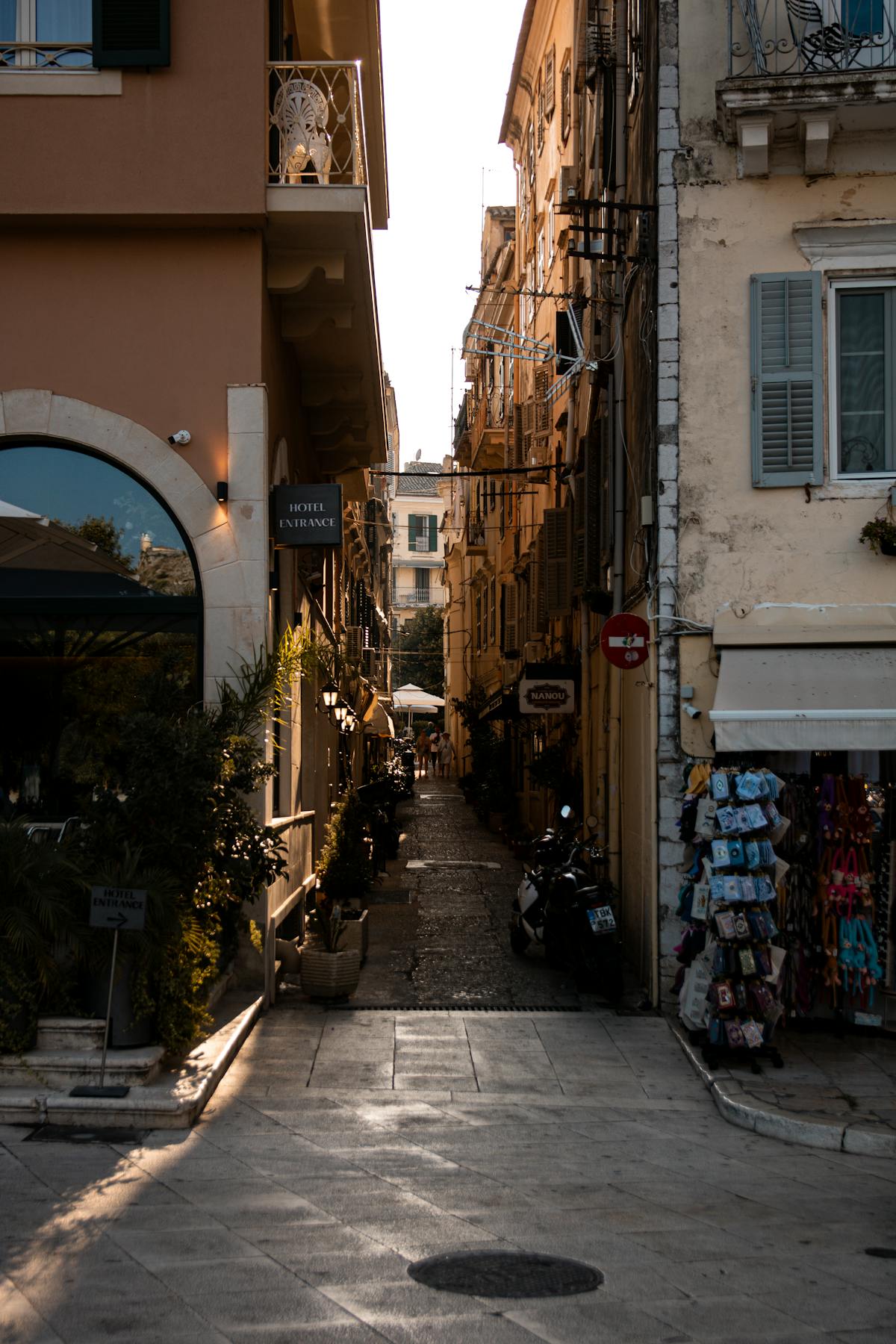
Practical Tips for Corfu Boat Tours
Seasickness Is Real
This cannot be overstated. The crossing from Corfu to Paxos involves open Ionian Sea, and when the wind picks up — which it frequently does in the afternoon — the water gets choppy. Multiple reviewers across all tours mention this, and the ones who prepared with motion sickness medication had a much better time than those who didn’t. Take medication at least 30 minutes before boarding, not once you already feel unwell. Wristbands, ginger tablets, and sitting in the middle of the boat (where motion is least) also help. If you know you’re severely prone to seasickness, honestly consider whether a three-hour open-water crossing each way is for you.
Timing and Season
The boat tour season runs from approximately late April through October, with peak season in July and August. The best months for these tours are June and September — the weather is reliably warm, the sea is calmer than in spring, and the crowds are noticeably thinner than in peak summer. July and August tours are hotter (temperatures regularly exceed 35 degrees Celsius), more crowded on the boats and at Gaios, and the sea can be rougher due to the Meltemi wind — though this affects the Ionian less severely than the Aegean.
Early morning departures are standard and non-negotiable. Tours leave between 8:00 and 9:00 AM because the Blue Caves look best in morning light, the sea is typically calmest before noon, and the day is long enough that you need every hour. Don’t be the person who arrives late at the port and misses the boat. Set an alarm, skip the leisurely breakfast, and be there 15 minutes early.
What to Bring
Pack for a full day on the water. Sunscreen is essential — you’re exposed for 8-10 hours, and the reflection off the water doubles your UV exposure. A hat and sunglasses are non-negotiable. Bring a towel for the swimming stop, a waterproof phone case if you want underwater photos at Antipaxos, and cash for lunch in Gaios (some tavernas don’t take cards, and even those that do sometimes have unreliable machines). Water is usually available on the boat, but bringing your own is wise. A light jacket or windbreaker for the return journey is smart — the sea breeze at speed can feel cool even on a hot day.
Booking Tips
Book at least a few days in advance during peak season — the most popular tours sell out, especially the top-rated one with 4,800 reviews. Booking online in advance also locks in your price and guarantees your spot, whereas buying at the port on the day of travel is a gamble on availability. Most tours offer free cancellation up to 24 hours before departure, so there’s no risk in booking early. If the weather turns bad and seas are rough, tours are typically cancelled and refunded — don’t try to be a hero and demand they sail anyway.
Choosing Your Tour
If you want the comprehensive Paxos-Antipaxos-Blue Caves experience with maximum reviews and proven reliability, the first two tours on this list are your best bet. If you’re staying on the mainland near Parga, the third option saves you a ferry trip to Corfu. If you want a smaller group with a more personal feel, tour four delivers that. And if you care more about the boat experience itself — the food, the crew, the atmosphere — than checking off specific islands, the wooden vessel BBQ cruise is hard to beat.
Getting to the Port
Most Corfu-departure tours leave from the New Port in Corfu Town (also known as the Neo Limani). If your hotel is in Corfu Town, it’s walkable. From resorts in Paleokastritsa, Sidari, or the north coast, you’ll need a taxi or rental car — the drive is 30-60 minutes depending on your location, and the narrow island roads mean leaving extra time is always a good idea. Some tour operators offer hotel pickup, but check this at booking rather than assuming. Parking at the port is available but limited in peak season; arriving early helps.
What Tours Don’t Include
Most tours do not include lunch — you’ll eat on your own in Gaios during the free time, so bring cash. Some tours include drinks and snacks on the boat; others sell them separately. The wooden vessel BBQ cruise is the exception, with food included. Entrance fees (if any apply at specific stops) are generally included in the tour price, but confirm at booking. Tips for the crew are not included but are appreciated — if the crew made your day memorable, a few euros per person is a nice gesture.
More Greece Guides
If Corfu has you thinking about what else Greece offers, a stop in Athens is practically mandatory, and the Acropolis guided tours are the best way to make sense of the ruins without a history degree. A good guide turns what could be a confusing pile of marble into one of the most powerful experiences in European travel, and the views from the top over modern Athens are worth the climb alone.
Athens also happens to be one of the most underrated food cities in Europe, and the best way to discover why is with a proper Athens food tour that takes you beyond the tourist traps of Plaka and into the neighbourhoods where Athenians actually eat. Think hole-in-the-wall souvlaki joints, traditional bakeries, and market stalls piled with olives that cost less per kilo than they do per olive at home.
From the Ionian Sea to the Aegean, Santorini catamaran cruises offer a completely different but equally spectacular experience on the water. Sailing inside a flooded volcanic caldera while eating BBQ and drinking wine is one of those experiences that sounds too good to be real but is somehow even better than it sounds.
Mainland Greece holds its own against the islands when it comes to jaw-dropping scenery, and the Meteora day trip from Athens proves it. Monasteries perched on top of impossible sandstone pillars, built by monks who apparently had no concept of vertigo — it’s one of the most photographed spots in Greece for a reason, and seeing it in person makes the photographs feel inadequate.
For ancient history that predates even the Acropolis, the Delphi day trip takes you to the sanctuary where the ancient Greeks believed the centre of the world was located. The ruins sit on a mountainside with views across olive groves to the Gulf of Corinth, and the setting alone would justify the visit even without 2,500 years of history attached to every stone.
Finally, the Mycenae and Epidaurus day trip combines two of the Peloponnese’s greatest archaeological sites in a single outing. Mycenae’s Lion Gate and Treasury of Atreus date to the Bronze Age civilisation that Homer wrote about, while the ancient theatre at Epidaurus has acoustics so perfect that you can hear a coin dropped on the stage from the back row — and that’s not an exaggeration, it’s a fact that modern architects still can’t fully explain.