
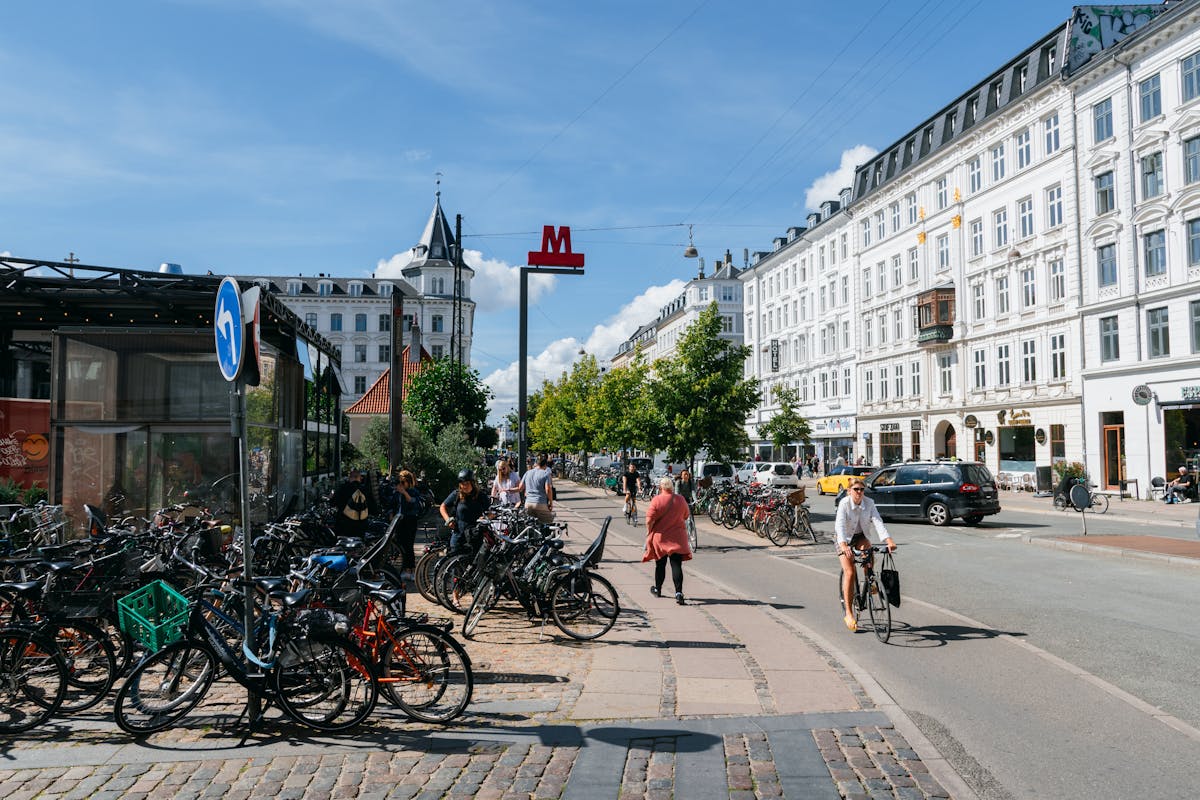
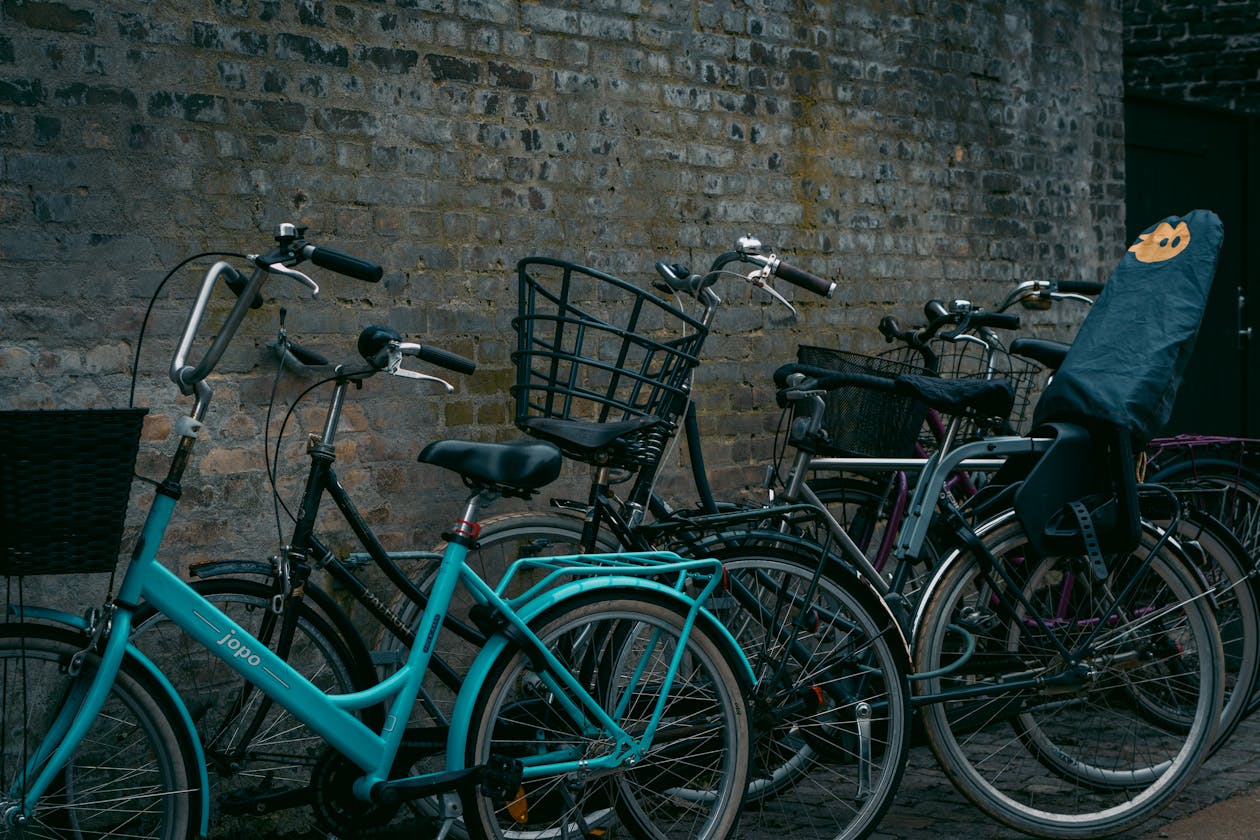
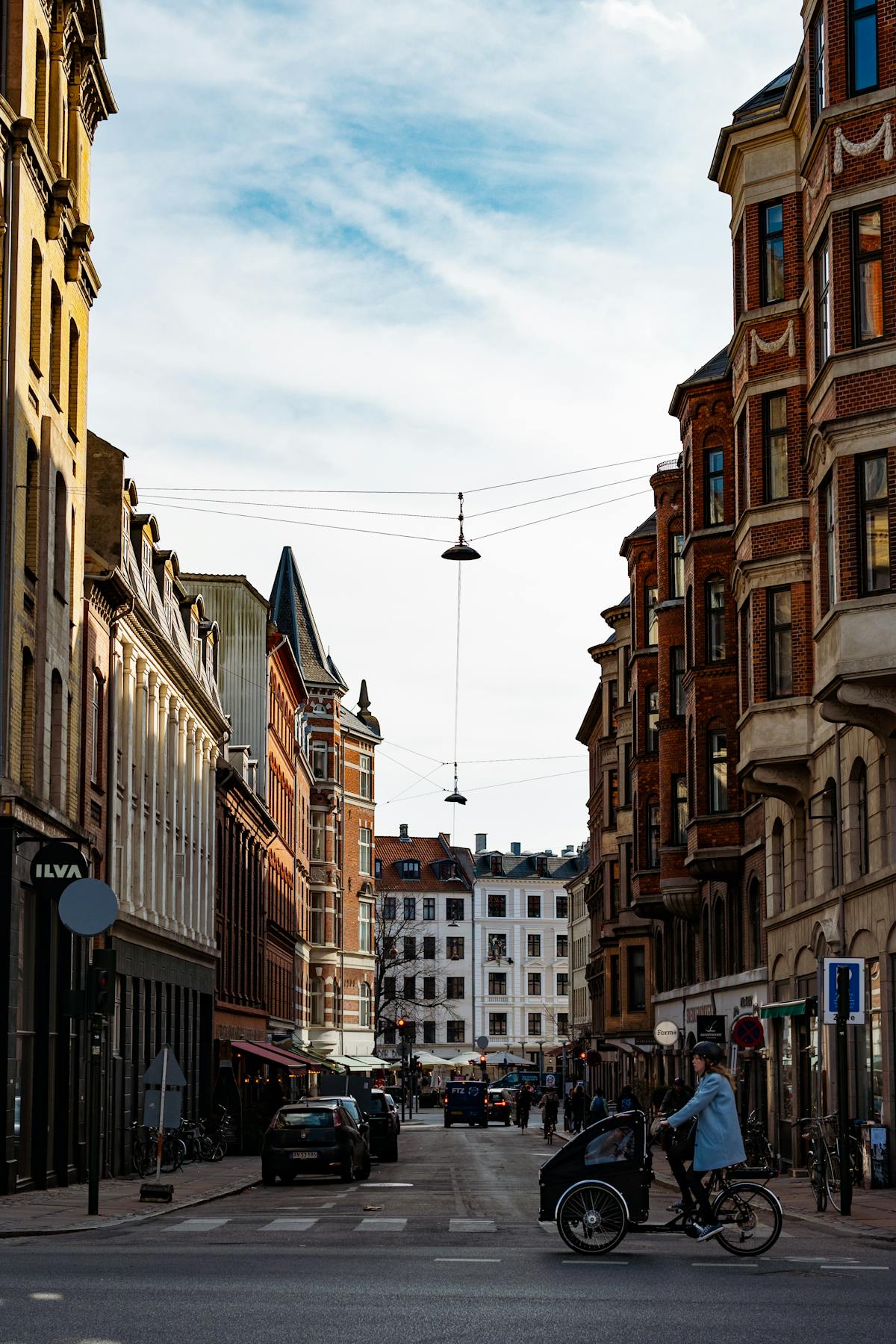
The first thing you notice about cycling in Copenhagen isn’t the bikes — it’s the absence of car horns. Dedicated bike lanes run along every major road, physically separated from traffic by a kerb, and at rush hour the bike lanes are busier than the car lanes beside them. More people here commute by bicycle than by car, bus, or metro combined. Even the Crown Princess drops her kids at school on a cargo bike. It’s not a novelty or a tourism gimmick; it’s just how Copenhagen works.
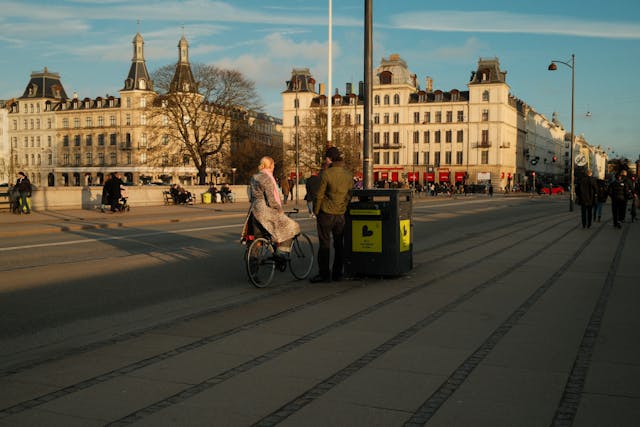
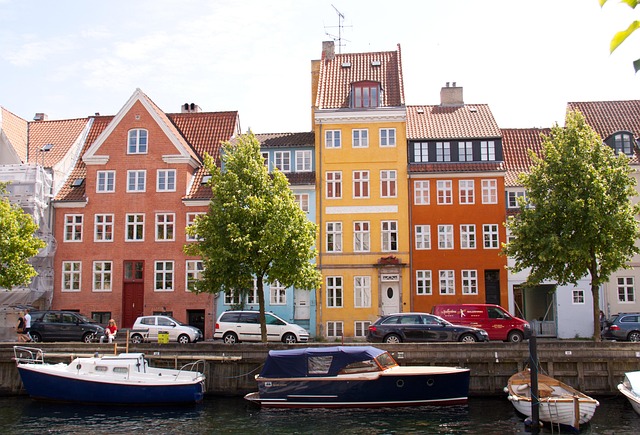
Which makes a bike tour here a fundamentally different experience from a bike tour in, say, Barcelona or Amsterdam. You’re not weaving through hostile traffic or rattling over cobblestones. You’re gliding along in a lane that was built for you, at a speed the traffic lights were literally synchronised to (Copenhagen’s “green wave” times signals for 20 km/h — cycle at that speed and you’ll hit greens the entire way). The guides know this, and they use it: where a walking tour covers 4–5 km in three hours, a bike tour covers 12–15 km, reaching neighbourhoods that walking travelers never see — the houseboats in Christianshavn, the graffiti-covered walls of Freetown Christiania, the leafy residential streets of Østerbro where the real Copenhagen lives.
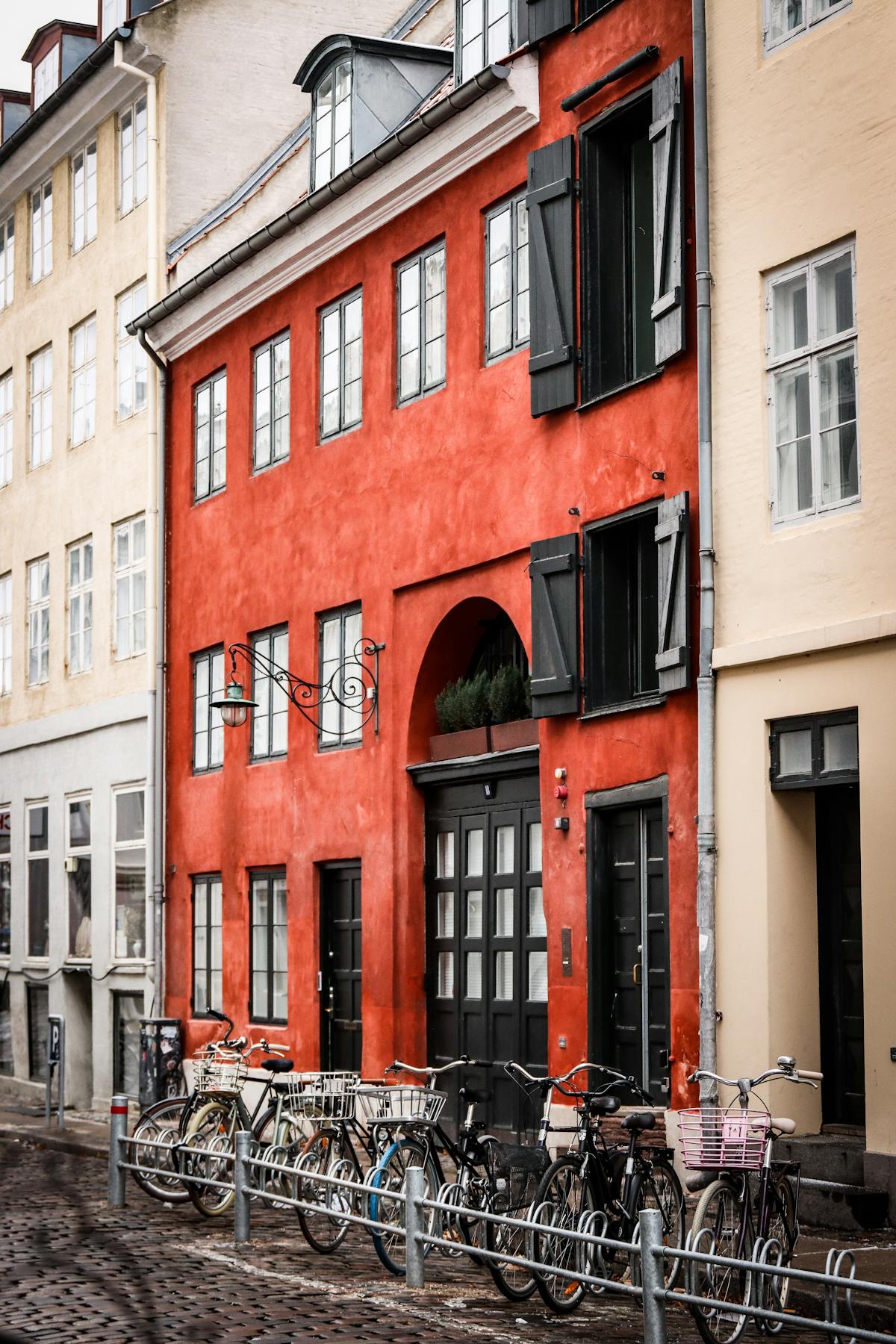
The bike tours themselves are overwhelmingly well-reviewed. The top four all sit at 4.5–5.0 stars, and the guides — Rene, Fien, Mood, Josephine, Sabina — come up by name in review after review. A reviewer named David wrote that his guide “talked us through the route first, using a map, and explained everything we needed to know about cycling in Denmark” before they’d even mounted up. Another, a solo traveller named Mirela, said the tour was “perfectly paced — we rode slowly, saw all the main sights, and even took a break for coffee to chat.” That coffee stop turns up in a lot of reviews, and it says something about the vibe: these tours aren’t boot camps on wheels. They’re three-hour explorations of a city that happens to be best understood at cycling speed.
Best overall: Copenhagen Highlights 3-Hour Bike Tour — $61. 5.0 stars across 1,125 reviews. The one with the coffee stop, the engaged local guides, and the route that hits everything without rushing.
Best budget: Guided Bike Tour in Wonderful Copenhagen — $53. 2.25 hours, 5.0 stars, 416 reviews. Earpieces so you can hear the guide without huddling, plus rain ponchos when the Danish weather does its thing.
Best e-bike: Copenhagen E-Bike Guided Tour — $90. 5.0 stars, 276 reviews. Electric assist means zero effort on the pedalling front. Guide Sabina gets name-checked in almost every review.
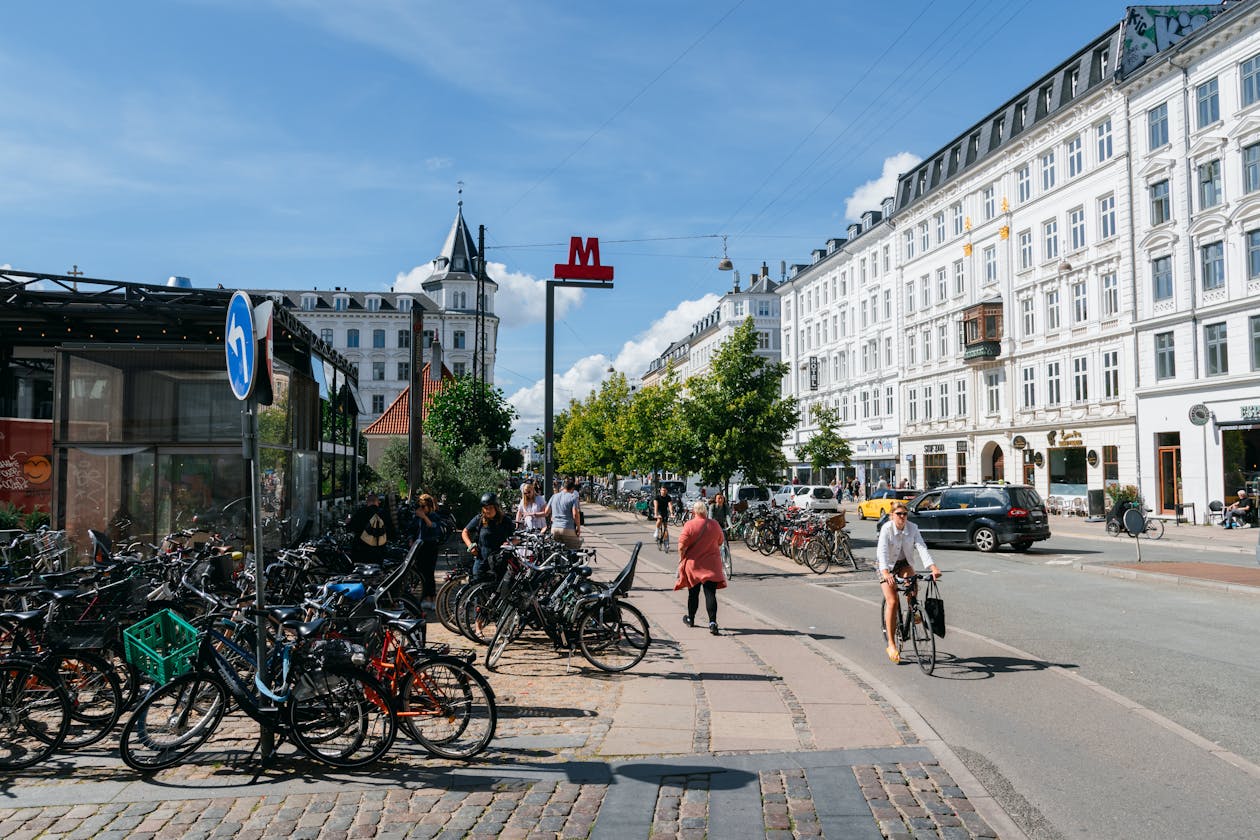
- What a Copenhagen Bike Tour Actually Covers
- The 4 Best Copenhagen Bike Tours
- 1. Copenhagen Highlights 3-Hour Bike Tour
- 2. Copenhagen 3-Hour City Highlights Bike Tour
- 3. Guided Bike Tour in Wonderful Copenhagen
- 4. Copenhagen E-Bike Guided Tour (2 Hours)
- Guided Tour vs. Renting a Bike Yourself
- Practical Tips for Cycling in Copenhagen
- When to Book a Copenhagen Bike Tour
- More Copenhagen Guides
What a Copenhagen Bike Tour Actually Covers
The standard route is roughly 12–15 km and threads through the highlights and hidden corners in a single loop. Here’s what you’ll ride through:
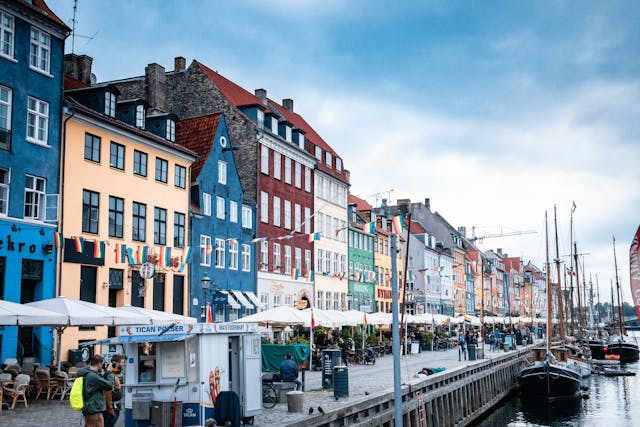
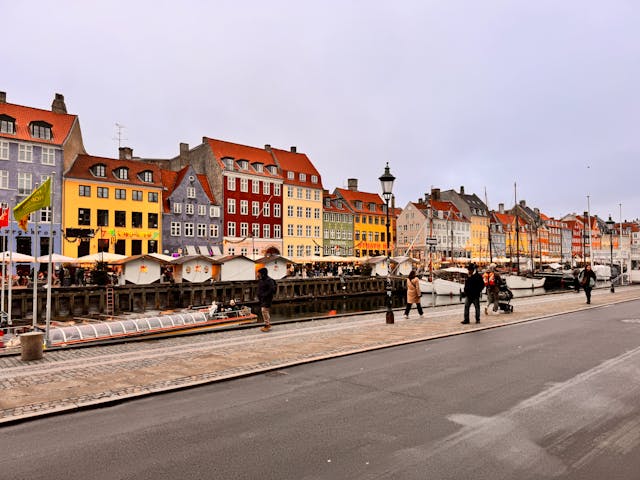
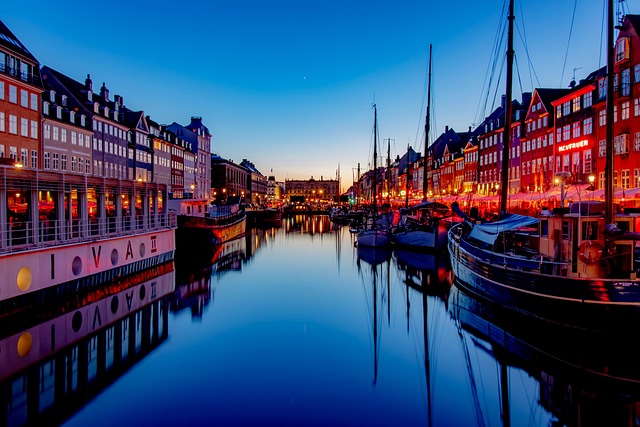
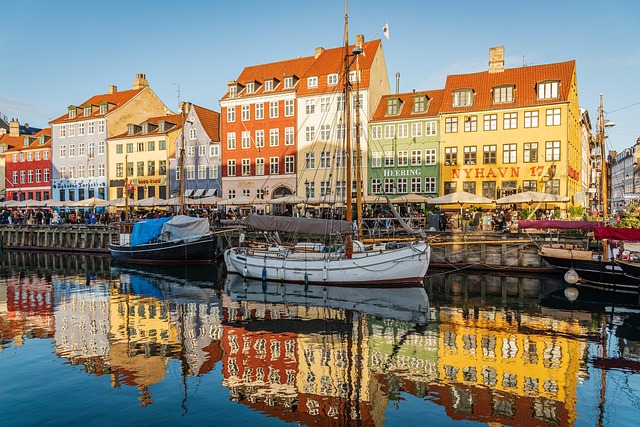
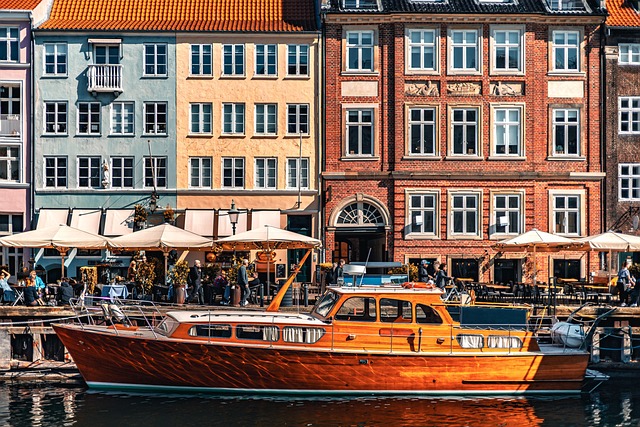
Nyhavn — Every tour starts or passes through the colourful harbour. Your guide will explain that Hans Christian Andersen lived in three different houses here (numbers 18, 20, and 67), that Nyhavn was once a red-light district full of sailors and tattoo parlours, and that the colour of each building is actually regulated by the city. From the bike you get the full panoramic view without the selfie-stick gauntlet at street level.
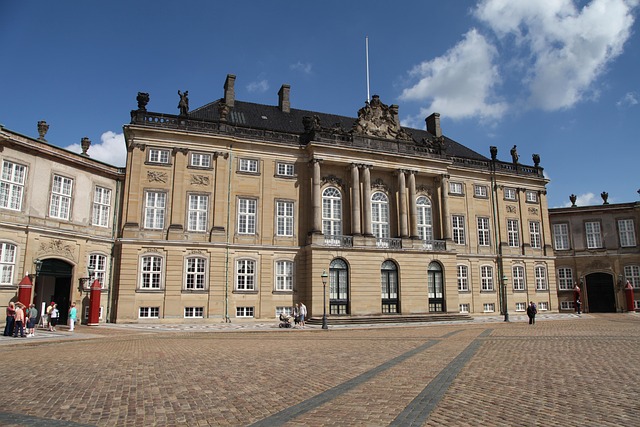
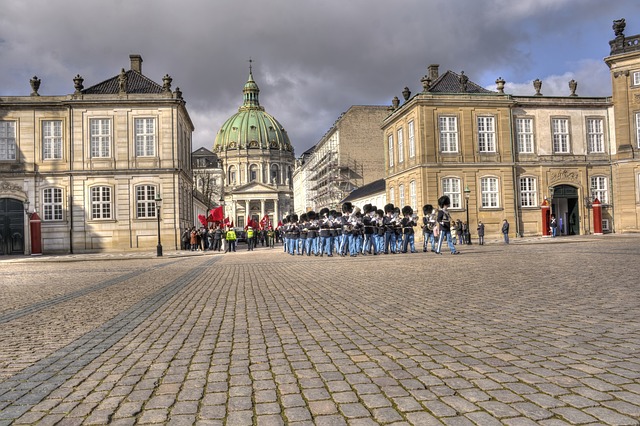
Amalienborg Palace — The Queen’s residence, four identical rococo palaces around an octagonal square. The bike tours ride right through the square, which feels slightly transgressive but is perfectly allowed. If you time it right, you’ll catch the tail end of the changing of the guard at noon — Danish Royal Life Guards in bearskin hats marching in formation. The guides know the timing and route accordingly.
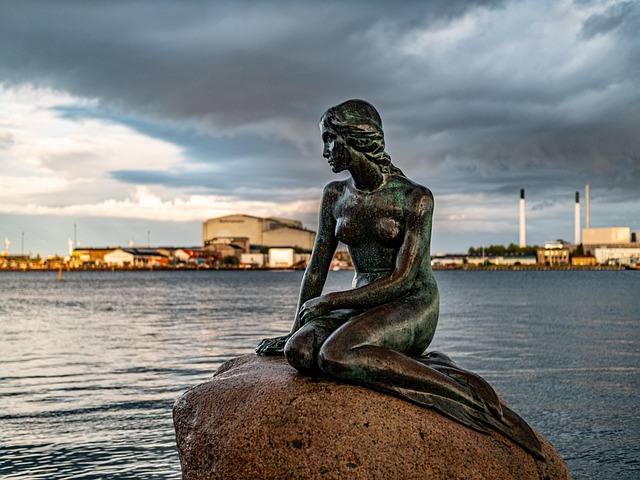
The Little Mermaid — This is where bike tours have a genuine advantage over walking tours. The statue sits on the Langelinie waterfront, about 2 km from the city centre — a pleasant 10-minute ride but a commitment on foot. Walking tours often skip her entirely or just mention her from a distance. On a bike, you ride out, take a photo, hear the story (sculptor Edvard Eriksen, his wife as the model, the multiple decapitations and politically motivated vandalism over the decades), and pedal on. She’s 1.25 metres tall and you will find her underwhelming, but the ride there along the harbour is gorgeous.
Freetown Christiania — This is the stop that makes the bike tour genuinely different from every other tour format. Christiania is a self-proclaimed autonomous neighbourhood inside Copenhagen that’s been operating since 1971, when squatters occupied an abandoned military barracks and never left. Today it’s home to about 850 residents and is car-free (and bike-free inside the gates — you park and walk). There are hand-built houses, organic cafés, craft shops, a beautiful lake, and an atmosphere unlike anywhere else in Denmark. The guides handle the Christiania stop with nuance — explaining both the idealism and the complications, the community’s tension with the Danish government, and the Pusher Street situation (you don’t photograph there; the guides explain why). It’s the most memorable part of most bike tours, and it’s something walking tours rarely include because of the distance from the centre.
Christiansborg Palace — The seat of the Danish Parliament, with the free-access tower that has the best views in the city. The guides point it out and recommend coming back independently to climb it.
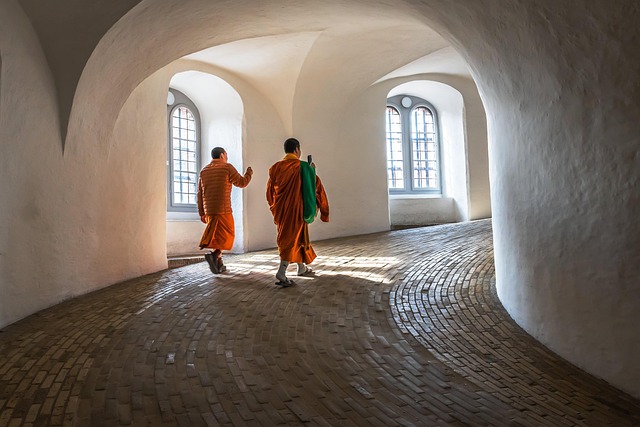
The Round Tower (Rundetaarn) — A 17th-century observatory with a spiral ramp (no stairs) that legend says Tsar Peter the Great rode a horse up. Another “come back on your own” recommendation from the guides — it’s a quick stop on the bike route.
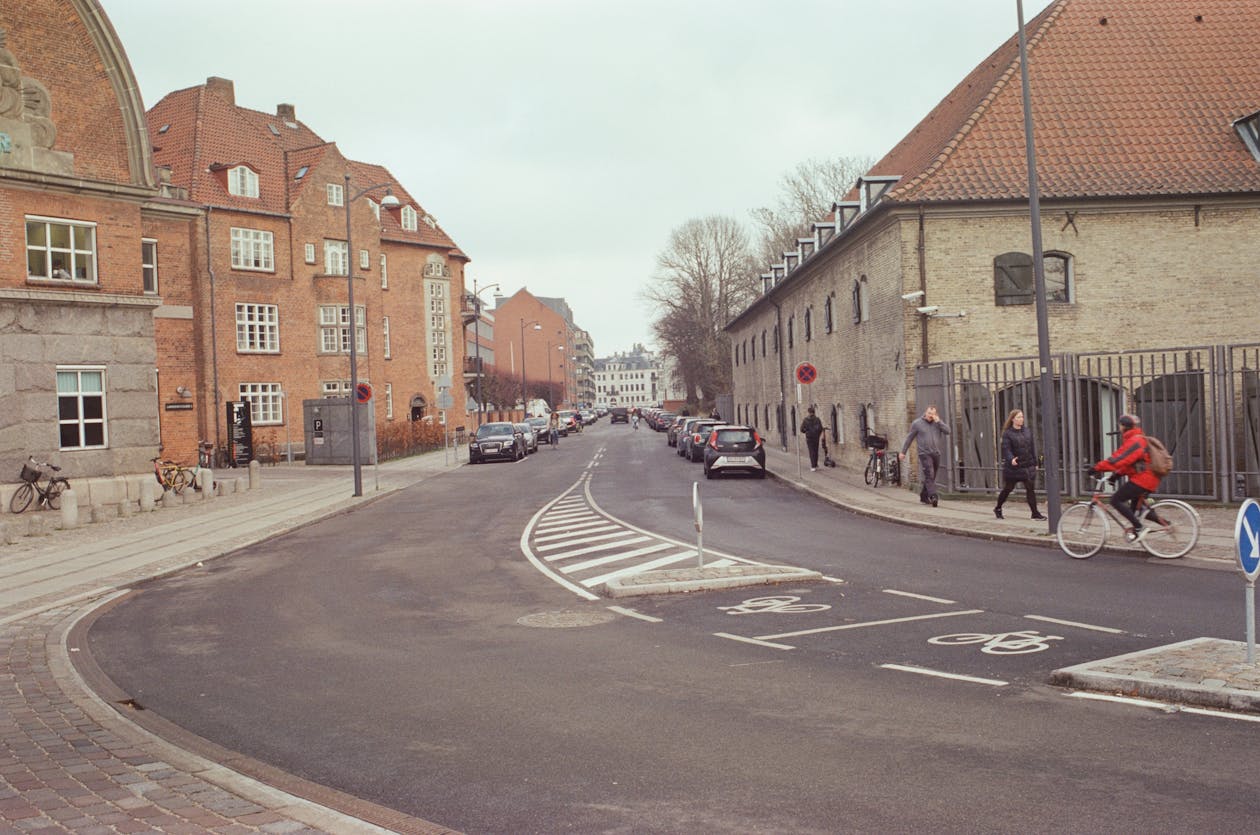
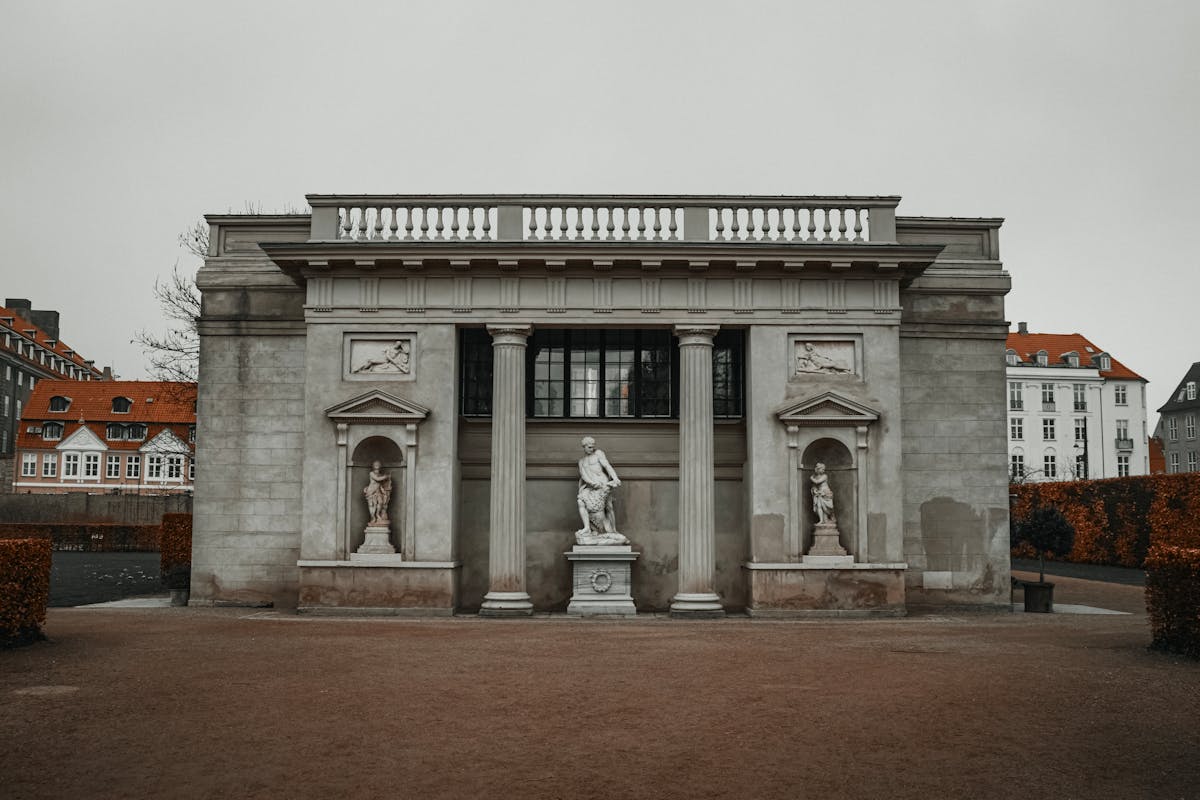
Rosenborg Castle and the King’s Garden — A Dutch Renaissance castle surrounded by Copenhagen’s oldest park. The Crown Jewels are inside (separate ticket). On a bike tour, you ride through the park — one of the loveliest stretches of the route.
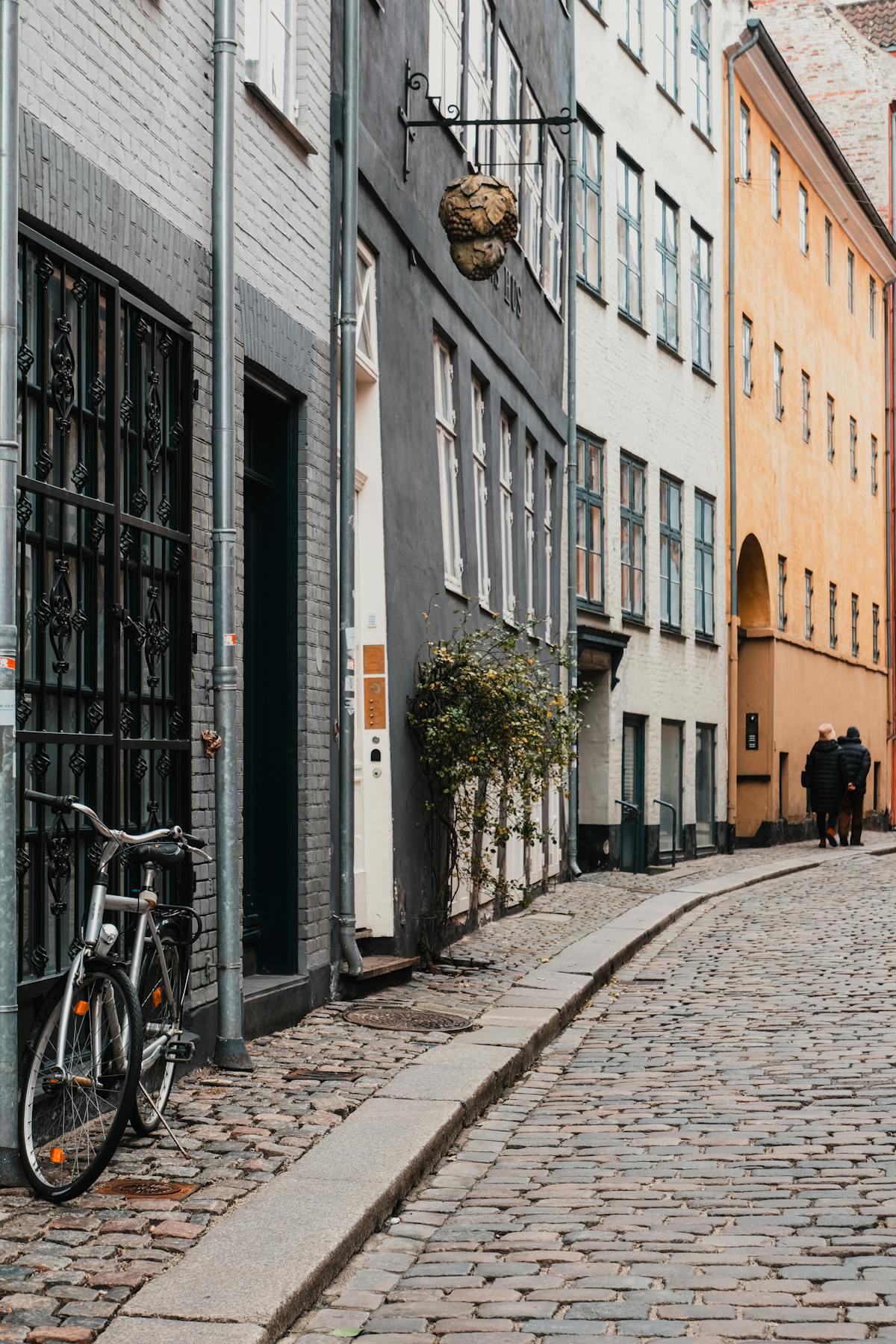
Østerbro and Nørrebro — The real-Copenhagen stops that set the bike tour apart. Østerbro is leafy and residential, with Fælledparken (the city’s biggest park) and streets lined with the kind of cafés where locals actually go. Nørrebro is funkier — vintage shops, street art, the Coffee Collective, and a food scene that’s more Malmö falafel than New Nordic. These neighbourhoods are a 20-minute ride from the tourist core but a world away in atmosphere.
The 4 Best Copenhagen Bike Tours
Ranked by review count. All provide bikes, helmets (optional — Danes don’t wear them), and a local guide.
1. Copenhagen Highlights 3-Hour Bike Tour
Price: $61.09 per person | Duration: 3 hours | Rating: 5.0★ (1,125 reviews)
The most popular bike tour in Copenhagen, and it earned that spot. Three hours, roughly 12 km, covering all the major landmarks plus Christiania and the residential neighbourhoods most travelers miss. The guides — Rene, Fien, David, and others whose names pepper the reviews — are local, opinionated, funny, and clearly love their city. Multiple reviewers mention a mid-tour coffee stop where the guide sits down and chats about life in Copenhagen, which is exactly the kind of detail that separates a great tour from a checkbox experience. A perfect 5.0 across 1,125 reviews. The bikes are properly sized for each rider, the pace is gentle, and the guide explains the cycling rules before you set off. This is the one to book if you’re doing one bike tour in Copenhagen.
2. Copenhagen 3-Hour City Highlights Bike Tour
Price: $54.42 per person | Duration: 3 hours | Rating: 5.0★ (757 reviews)
A different operator, similar route, slightly cheaper. The guide Mood (yes, that’s a name, and it comes up in nearly every review) gets particular praise for being “informative, interesting, and knowledgeable about the buildings, bridges, monuments as well as diving into cultural history.” Another reviewer called it “a brilliant tour from start to finish” — and at $54, it’s about $7 less than Tour #1. The route covers the same core highlights (Nyhavn, Amalienborg, Little Mermaid, Christiania) with the same leisurely pace and mid-tour stops. The only real difference is the operator and guide personality, and with 757 perfect reviews, the personality is clearly working. A great alternative if Tour #1 is sold out, or if $7 matters.
3. Guided Bike Tour in Wonderful Copenhagen
Price: $52.92 per person | Duration: 2 hours 15 minutes | Rating: 5.0★ (416 reviews)
The shorter option if three hours feels like a commitment. At 2.25 hours, it’s tighter but still covers the core route. What sets this one apart is the earpieces — the guide wears a mic and everyone gets a receiver, which means you can actually hear the commentary while riding instead of clustering at every stop. A reviewer named SiaLinda wrote that the guide Peter “gave such great details about Copenhagen’s history and also took nice photos of us as well as provided rain ponchos when it started to rain.” The rain ponchos are a small detail that says a lot about how well-run this tour is. At $53 and 5.0 stars, it’s the budget pick that doesn’t feel budget.
4. Copenhagen E-Bike Guided Tour (2 Hours)
Price: $89.55 per person | Duration: 2 hours | Rating: 5.0★ (276 reviews)
The e-bike option for anyone who wants to cover ground without breaking a sweat. The electric assist means you cruise at a comfortable speed with zero physical effort, which makes this particularly good for older visitors, anyone with mobility concerns, or people who just don’t want to arrive at each stop slightly out of breath. Guide Sabina is the standout — reviewer Trish wrote it was “the first time we had tried e-bikes and also travelling on the other side of the road. Sabina was an awesome guide who showed us some very different neighbourhoods.” At $90 it’s the priciest on the list, but the e-bike experience is genuinely different from a regular bicycle — you cover more ground, arrive fresher, and the technology makes it feel effortless. If you haven’t tried an e-bike before, this is a fun way to start.
Guided Tour vs. Renting a Bike Yourself
Copenhagen’s bike-share system (Donkey Republic is the most popular app) has about 700 bikes at docking stations across the city. You grab one via the app for about 100 DKK ($14) per day and ride wherever you want. The untoldmorsels.com blog has a good 10.5 km self-guided route that covers Nørreport to the Little Mermaid via Rosenborg Castle and back through Christiania — it’s flat, well-signed, and genuinely easy.
The case for a guided tour ($53–90): Context and stories. Without a guide, Christiania is a weird neighbourhood with graffiti. With a guide, it’s a 50-year experiment in autonomous governance that tells you more about Danish society than any museum. Without a guide, Amalienborg is four big buildings. With a guide, it’s the story of a fire, a forced relocation, and a queen who didn’t want to move. The guides also handle logistics — route planning, cycling rules, and the confidence to ride in Danish traffic for the first time.
The case for self-guided: Flexibility, pace, and the freedom to stop at every café that catches your eye. If you’ve already done a guided tour on day one (recommended), self-guided cycling for the rest of your trip is the way to go. Hit the neighbourhoods the tours don’t reach — Nørrebro for vintage shops and the best falafel in Scandinavia, Østerbro for Fælledparken’s playgrounds and picnic spots, Vesterbro for the Meatpacking District’s restaurants and bars.
The smart play: Guided tour on day one. Donkey Republic for the rest of the trip. The tour gives you the mental map and the confidence; the rental bike gives you the freedom.
Practical Tips for Cycling in Copenhagen
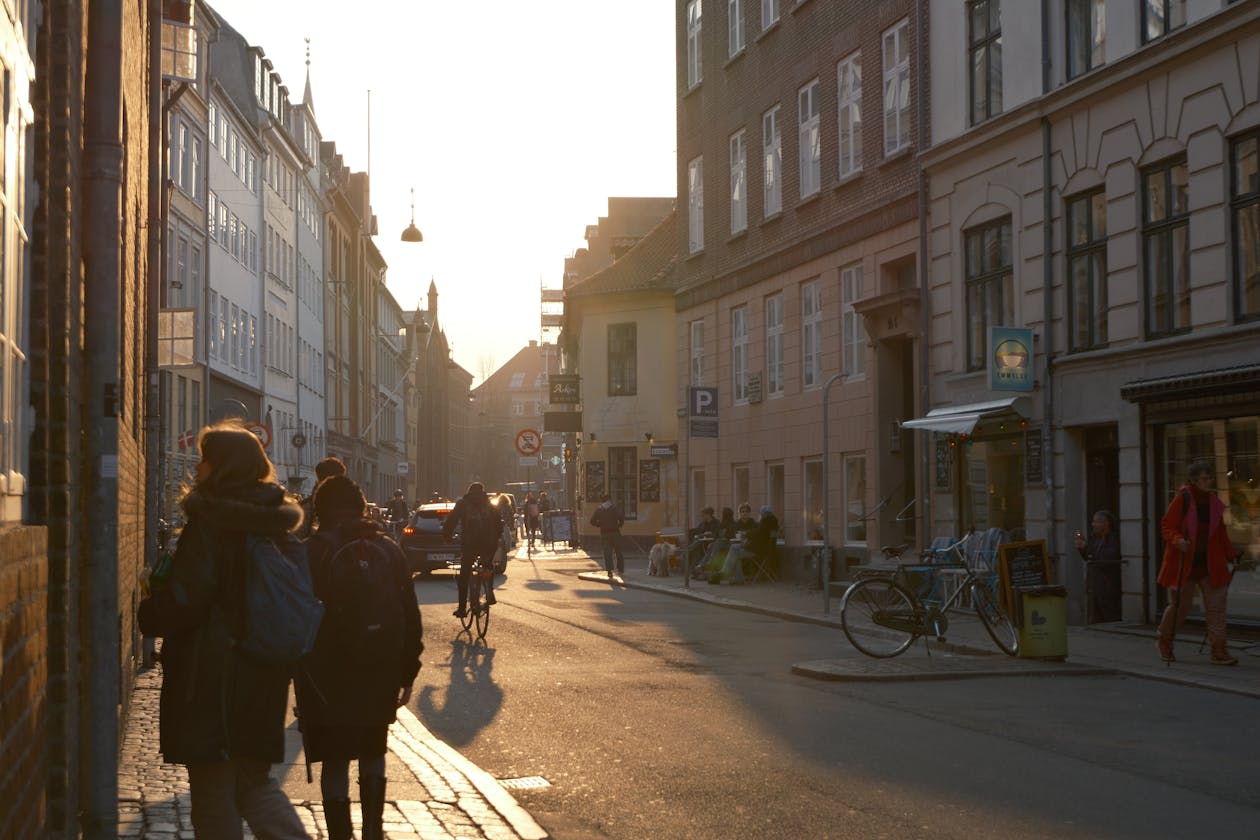
You ride on the right. Denmark drives (and cycles) on the right side of the road. The dedicated bike lanes are usually on the right edge of the road, separated by a kerb. Stay in them.
Signal before turning. Extend your arm in the direction you’re turning. Copenhagen cyclists signal religiously, and failing to signal will earn you the kind of look that Danes normally reserve for people who microwave fish.
Don’t stop in the bike lane. If you need to check your phone, take a photo, or consult a map, pull over completely. Stopping in the bike lane is the cycling equivalent of stopping in the fast lane of a motorway. You will get yelled at.
Look left before changing lanes. Faster cyclists overtake on the left constantly. A shoulder check before moving prevents the kind of collision that ruins both your day and theirs.
Helmets are optional. Danish law doesn’t require them, and most locals ride without one. The guided tours provide helmets if you want one. Use your own judgement.
Lock the bike every time you dismount. Copenhagen is safe, but bike theft is real. The tour bikes come with locks — use them at every stop, even for two minutes.
The “green wave” is real. On Nørrebrogade and other main cycle routes, the traffic lights are synchronised for 20 km/h. Maintain that speed and you’ll coast through green after green for kilometres. It’s the most satisfying piece of urban engineering you’ll ever experience as a cyclist.
When to Book a Copenhagen Bike Tour
Best months: April through October. Summer is ideal — daylight until 10pm, warm enough for comfortable riding, and the city is at its most photogenic. May, June, and September are the sweet spot: good weather, long days, and smaller tour groups than July and August.
Best time of day: Morning (10am starts) or late afternoon (3–4pm). Midday in summer can be warm, and the golden-hour light in the late afternoon is best for photos. Avoid rush hours (8–9am, 4:30–5:30pm) — the bike lanes are packed with commuters moving faster than a tour group.
Book 2–3 days ahead in summer. The top-rated tours sell out. In shoulder season you can usually book the day before, but in July and August, secure your spot early.
Rain cancellation: Light rain? Tour runs. Heavy rain or strong wind? Most operators reschedule. Copenhagen weather changes fast — a morning drizzle often clears by noon, so don’t cancel at the first drop.
More Copenhagen Guides
The bike tour shows you how Copenhagen moves; the other tours fill in the rest. From the saddle, you’ll pass landmarks that a canal tour shows you from the water — seeing Nyhavn and Christiansborg from both perspectives is the complete Copenhagen experience. After all that pedalling, reward yourself with a food tour — three hours of smørrebrød, Danish pastries, and craft beer is excellent post-exercise recovery. Tivoli Gardens is perfectly positioned for an evening visit after a morning bike tour, and the walking tours dig into the history at street level if the bike ride left you wanting more stories behind the buildings you whizzed past. For a day trip that swaps two wheels for two countries, the Malmö and Lund excursion crosses the Øresund Bridge to Sweden — two cities, one bridge, and you’re back for dinner. And if the family’s in tow, LEGOLAND Billund is a three-hour ride west into Jutland, where the original LEGOLAND sits in the town that invented the brick.