
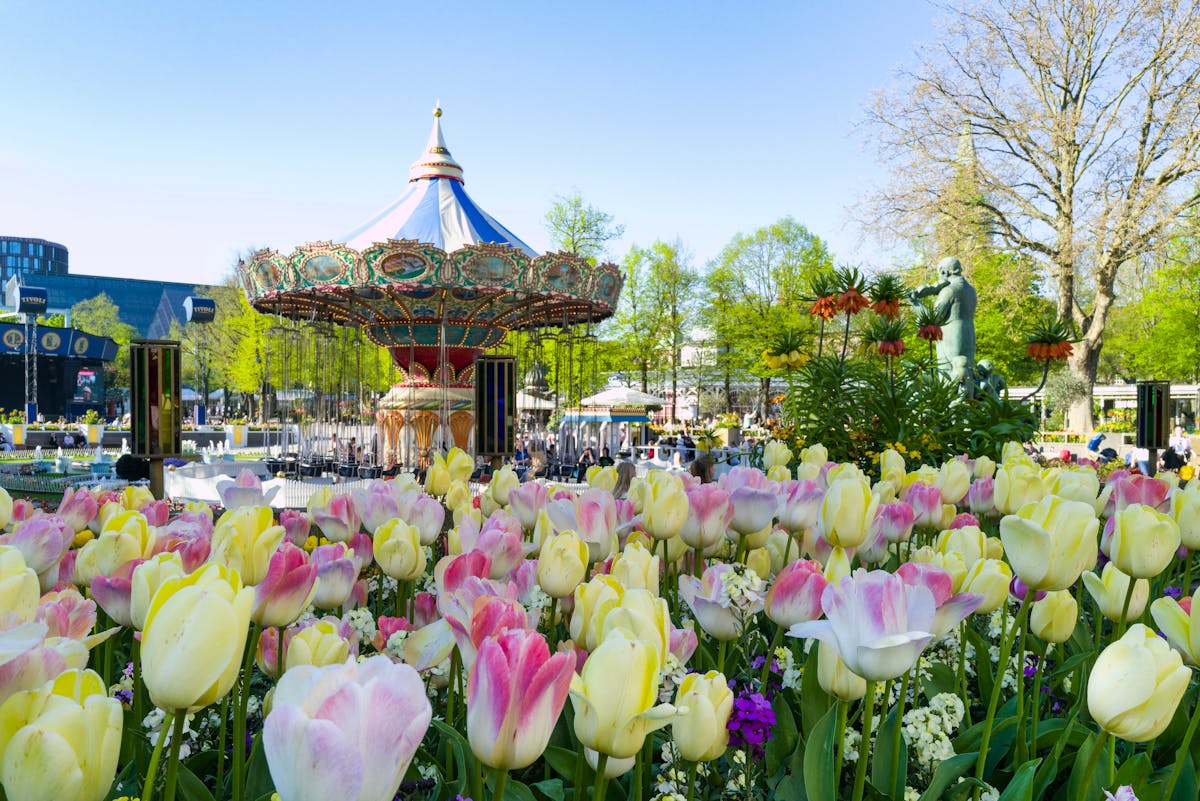
Tivoli Gardens opened in 1843, making it the second-oldest operating amusement park in the world — and somehow it doesn’t feel dated at all. Sitting right in the centre of Copenhagen, a five-minute walk from Central Station, it’s part theme park, part pleasure garden, part open-air concert venue, and part restaurant district. Walt Disney visited in 1951 and called it a direct inspiration for Disneyland, which tells you something about the ambition of the place. The original founder, Georg Carstensen, convinced King Christian VIII with an argument that’s still quoted: “When the people are amusing themselves, they do not think about politics.”
The practical question is what kind of ticket to buy. Entry alone costs $30 and gets you through the gates to enjoy the gardens, the architecture, the atmosphere, and any free concerts or shows. If you want to ride the roller coasters, the Ferris wheel, or the vintage carousel, you’ll need either an unlimited rides add-on ($30 extra) or individual ride tickets ($3–6 each). For most visitors, the entry-plus-unlimited-rides combo ($55–60 total) is the way to go — the rides are half the fun, and buying them individually adds up fast.
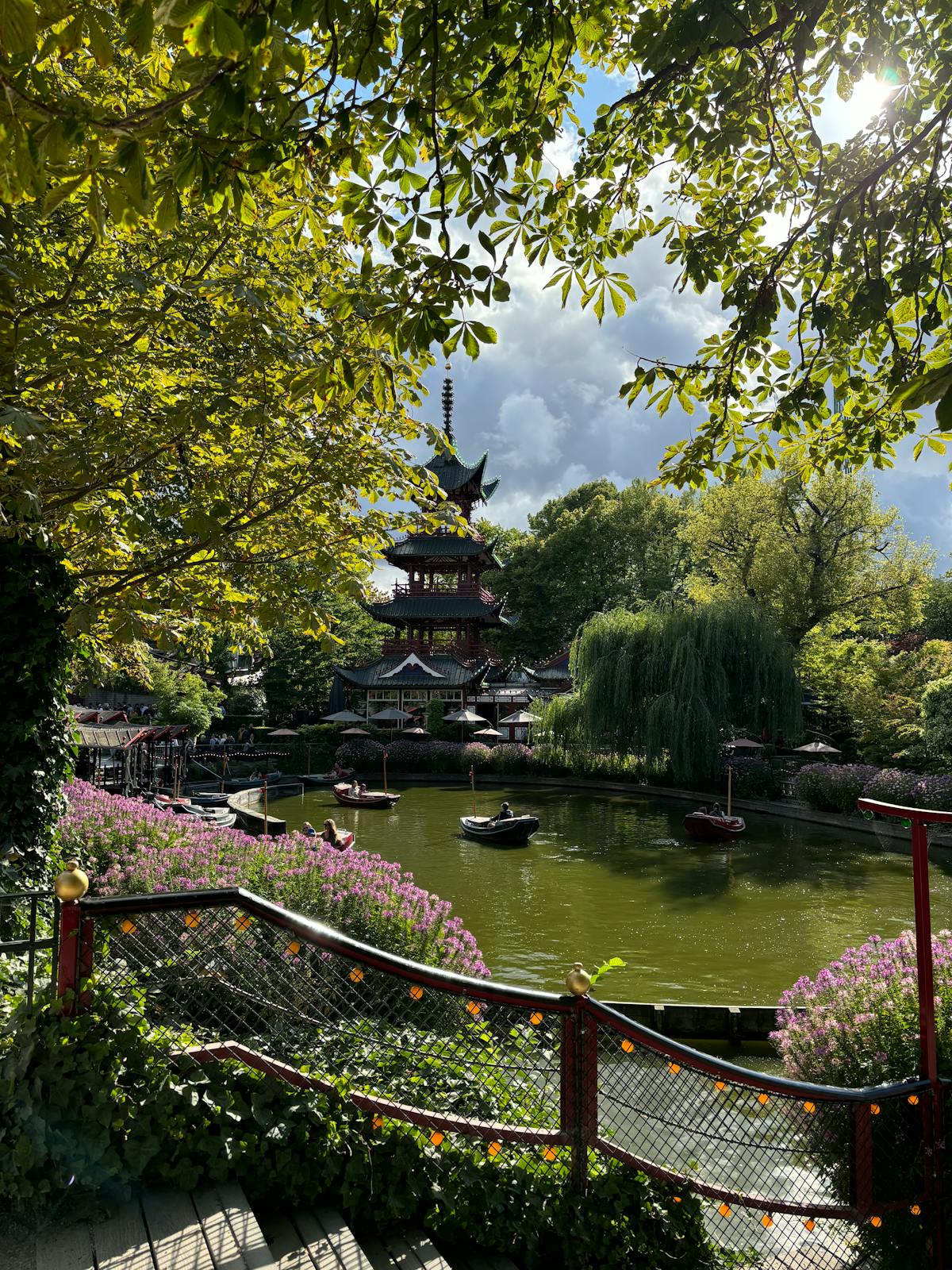
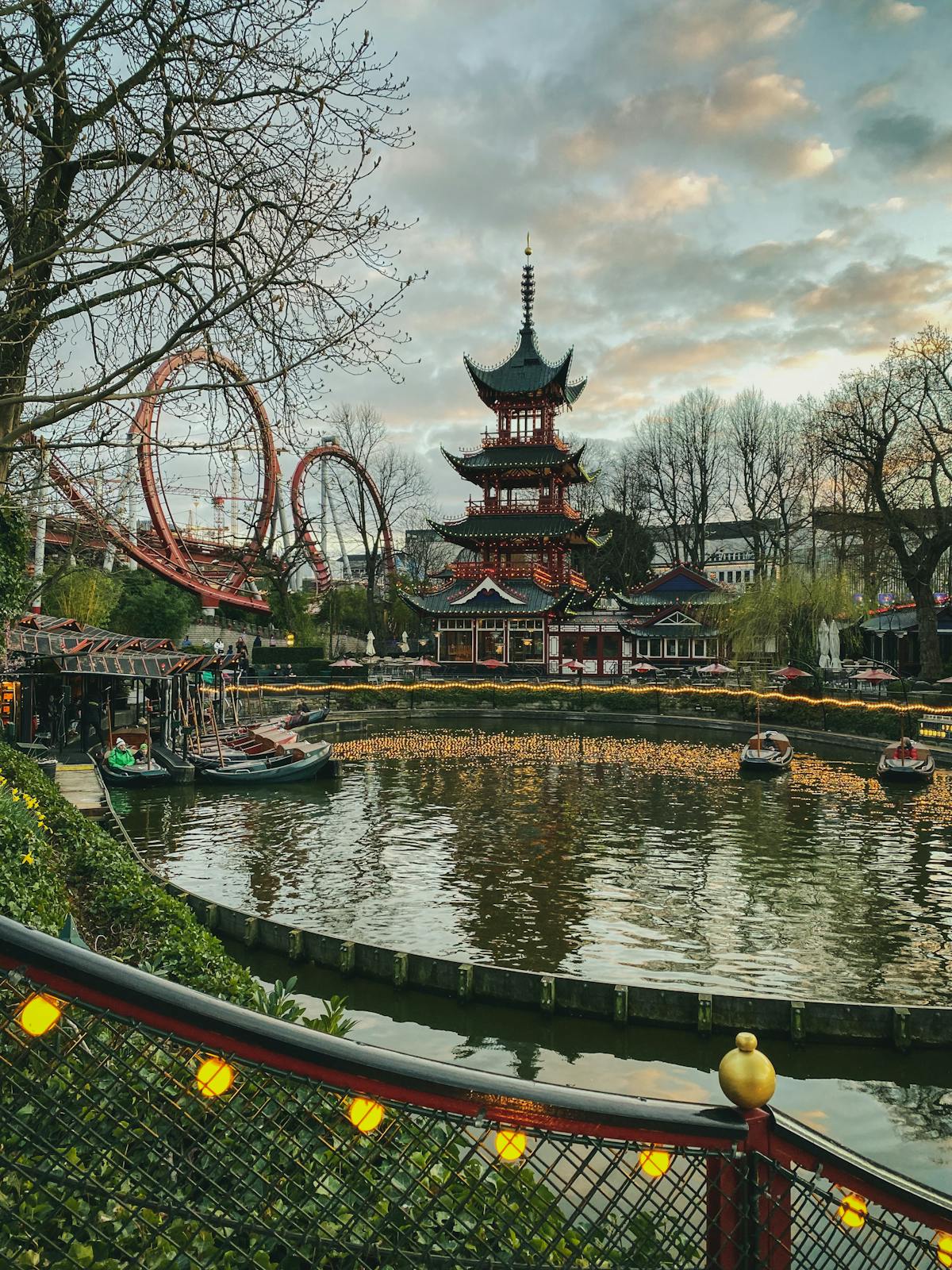
What makes Tivoli special isn’t any single ride — it’s the layering. You’re walking through 19th-century pleasure gardens with a pagoda, a Moorish palace, a pirate ship, and a 1914 wooden roller coaster, and then you turn a corner and there’s a triple-loop steel coaster, an 80-metre drop tower, and a VR ride. The juxtaposition of centuries-old charm and modern thrill rides is what Disney tried to replicate and, honestly, never quite matched. Tivoli has a soul that purpose-built theme parks struggle to manufacture.
Best for most visitors: Entry + Unlimited Rides — $55–60. Gate entry plus every ride in the park. Pays for itself after 4–5 rides and saves the hassle of buying individual tickets.
Best for atmosphere: Entry Only — $30. Gardens, concerts, restaurants, and 180 years of atmosphere. Perfect for an evening stroll or romantic night out.
Best for Copenhagen Card holders: Unlimited Rides Pass — $30. Just the ride wristband for people who already have gate entry. The Copenhagen Card covers Tivoli entry, so this completes the deal.
- Which Ticket Should You Buy?
- The 3 Best Tivoli Ticket Options
- 1. Tivoli Gardens Entry Ticket
- 2. Tivoli Gardens Entry + Unlimited Rides
- 3. Tivoli Gardens Unlimited Rides Pass
- The Rides Worth Your Time
- When to Visit Tivoli Gardens
- How to Get to Tivoli
- Eating at Tivoli
- Tips That Will Save You Time
- A Brief History of Tivoli
- Tivoli vs Other Copenhagen Attractions
- More Copenhagen Guides
Which Ticket Should You Buy?
There are three main ticket options, and the right one depends on whether you’re coming for the atmosphere or the adrenaline.
Entry only ($30) — Gets you into the park. You can wander the gardens, watch the free entertainment, eat at the restaurants, and soak up the atmosphere. No rides included. This is the right choice for couples who want a romantic evening stroll, parents with very young children (most rides have height requirements), or anyone visiting mainly for the Christmas or Halloween events. It’s also perfectly fine on its own — Tivoli is genuinely beautiful to walk through, and plenty of people spend three hours here without riding a single thing.
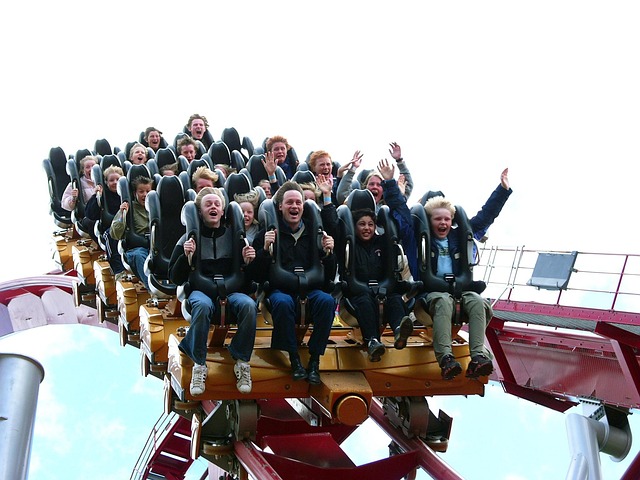
Entry + Unlimited Rides ($55–60) — The most popular option and the best value if you plan to ride anything. The unlimited wristband covers every ride in the park, including the big ones: The Demon (a looping roller coaster), the Star Flyer (80 metres high, terrifying views), the Rutschebanen (a wooden roller coaster from 1914 that still has a brakeman riding along), and the Golden Tower (a drop ride). At $55–60 combined, it pays for itself after about 4–5 rides. For families with older kids, this is a no-brainer.
Unlimited Rides only ($30) — For people who already have entry through a Copenhagen Card or season pass. Just the ride wristband, no gate entry included. The Copenhagen Card ($92 for 24 hours) includes Tivoli gate entry among 80+ other attractions, making this ride-only pass the logical add-on. Don’t accidentally buy this instead of the combo ticket — it won’t get you through the gates.
The 3 Best Tivoli Ticket Options
All three are available on GetYourGuide. Booking online in advance guarantees entry (Tivoli does occasionally hit capacity on summer weekends and during Halloween/Christmas events) and sometimes offers a small discount.
1. Tivoli Gardens Entry Ticket
Price: $30 per person | Rating: 4.5★ (7,093 reviews)
The standard gate entry. No rides, no add-ons — just entry to the park. At 7,093 reviews and a 4.5 rating, this is the most-purchased Tivoli ticket on any platform. The rating reflects that some visitors were surprised rides cost extra (it’s clearly stated, but people miss it — fair warning). The park itself is genuinely beautiful even without rides — the gardens, the lighting after dark, and the various shows and concerts make entry alone worthwhile. If you’re visiting in the evening for a dinner reservation at Nimb or Grøften, or to see a concert at the open-air stage, this is all you need.
2. Tivoli Gardens Entry + Unlimited Rides
Price: ~$55–60 per person | Rating: 4.7★ (2,630 reviews)
The combo ticket and the one we’d recommend for most visitors. Gate entry plus an unlimited ride wristband that covers every attraction in the park. The 4.7 rating is notably higher than the entry-only ticket, which makes sense — people who ride the rides tend to have more fun. The wristband saves you from queuing at ticket booths for individual rides, and at $55–60 total it’s a solid deal considering individual rides cost $3–6 each and there are over 25 to choose from. Kids under 8 get a significant discount. Arrives as a mobile voucher you scan at the gate — no printing needed.
3. Tivoli Gardens Unlimited Rides Pass
Price: $30 per person | Rating: 4.5★ (745 reviews)
Just the ride wristband, no gate entry included. Buy this if you already have entry through a Copenhagen Card, a season pass, or a separate gate ticket. At $30 for unlimited rides it’s the same price as entry alone, which puts the value of the combo ticket in perspective. Most useful for Copenhagen Card holders who want to add rides to their free entry, or for repeat visitors with annual passes. Don’t accidentally buy this thinking it includes entry — it doesn’t, and the gates won’t let you through with just this pass.
The Rides Worth Your Time
Tivoli has over 25 rides, ranging from gentle carousel spins for toddlers to a triple-loop coaster that’ll rearrange your internal organs. Here are the standouts:
The Rutschebanen — Built in 1914, this wooden roller coaster is the oldest in the world that still operates with a human brakeman. A staff member rides on the back of every train, physically pulling a brake lever to control speed through the turns. It’s not fast by modern standards, but the experience is utterly unique — the wooden track creaks, the brakeman leans into curves, and you can feel every year of its 110-year history rattling through the rails. An absolute must-ride even if you skip everything else.
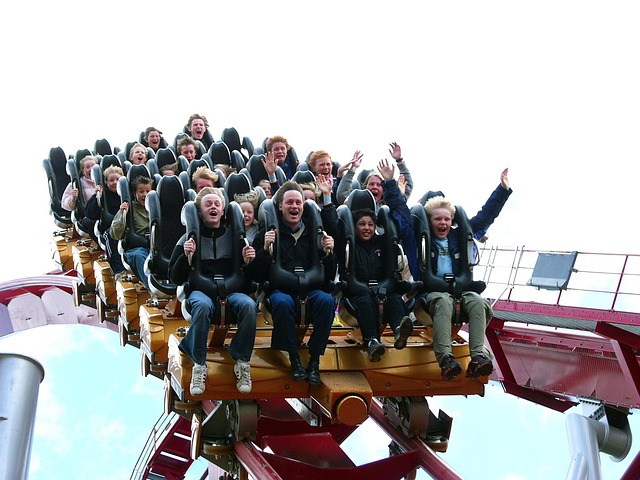
The Demon (Dæmonen) — Tivoli’s biggest thrill ride. Three inversions including a vertical loop and two corkscrews, reaching speeds of 73 km/h. For a compact park in the middle of a city, this packs a genuine punch. Height minimum: 125cm. Queue times in summer: 15–30 minutes (shorter in the evening).
Star Flyer (Himmelskibet) — The world’s tallest carousel at 80 metres. You’re suspended in a chair-swing that spins at height, giving you panoramic views of Copenhagen, the harbour, and on clear days, the Swedish coast across the Øresund. Simultaneously beautiful and terrifying.
The Golden Tower (Det Gyldne Tårn) — A 63-metre drop tower themed as a golden minaret. You ascend slowly, getting views of the park, then plummet. The drop isn’t the longest, but the setting makes it memorable — you’re falling past a pagoda and a Chinese-themed garden, which is not something you get at Six Flags.
Aquila — One of the newer additions, a wing coaster where your feet dangle free as you sweep through turns and inversions close to the ground. Smooth, modern, and a good counterpoint to the vintage charm of the Rutschebanen.
For younger kids: The Veteranbilerne (vintage cars), the classic carousel, and the Odin Express mini-coaster are all low-intensity rides designed for small children. Tivoli is unusually good at catering to all ages — the rides section isn’t split into “boring” and “intense” like most parks; everything’s mixed together.
When to Visit Tivoli Gardens
Tivoli isn’t open year-round. It operates in four seasons, each with a distinct character:
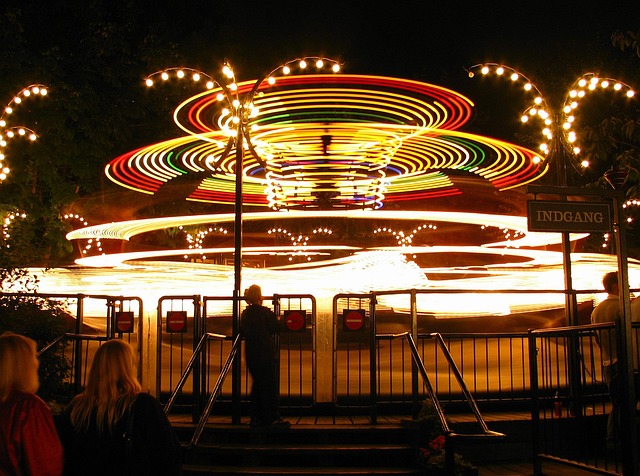
Summer (April–September) — The main season. All rides and restaurants are open, the gardens are in full bloom, and the park stays open late (until midnight on Fridays and Saturdays). This is peak Tivoli and peak crowds — weekday evenings are the sweet spot. The open-air concert stage runs shows every Friday and Saturday night, included in your entry ticket.
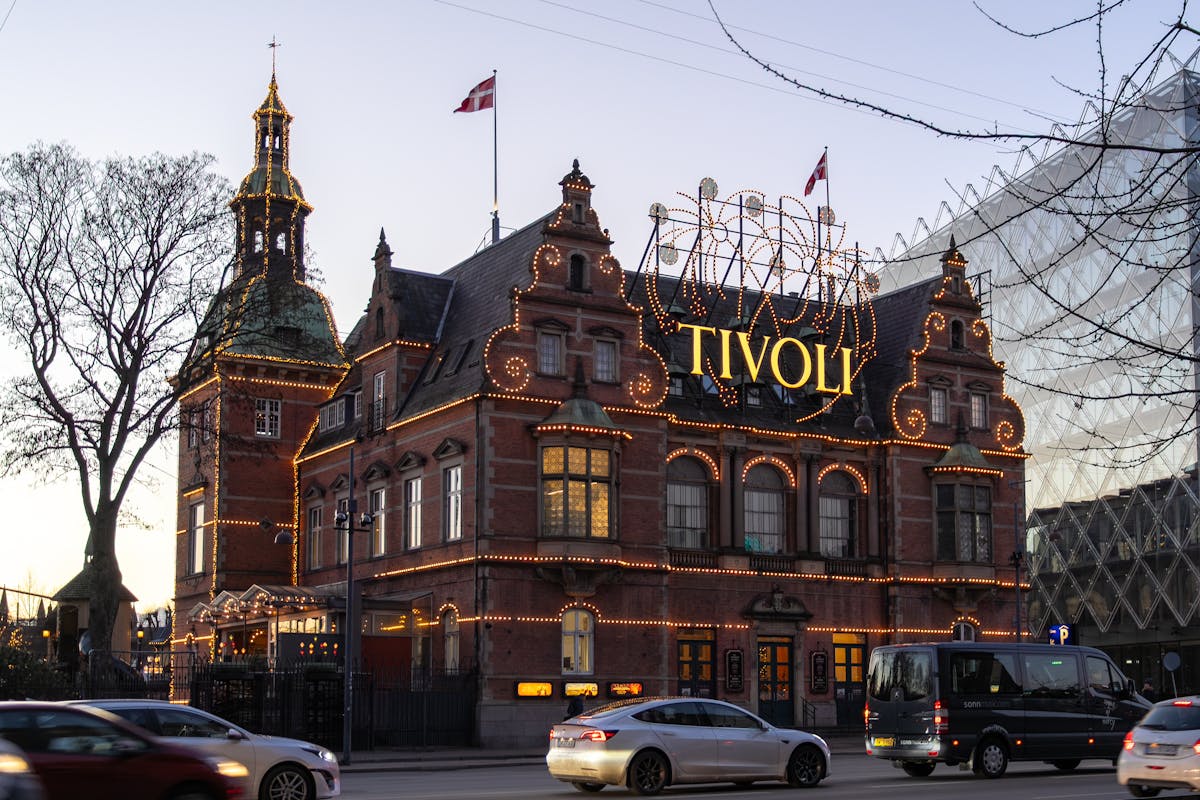
Halloween (October) — Tivoli goes full spooky: pumpkins everywhere, haunted houses, themed rides, and special food. Wildly popular with families and sells out on weekends. The park is decorated with over 40,000 pumpkins — some carved, some stacked into sculptures, some just piled in enormous drifts. It’s festive rather than frightening, so younger kids won’t have nightmares. Book tickets well in advance for weekends.
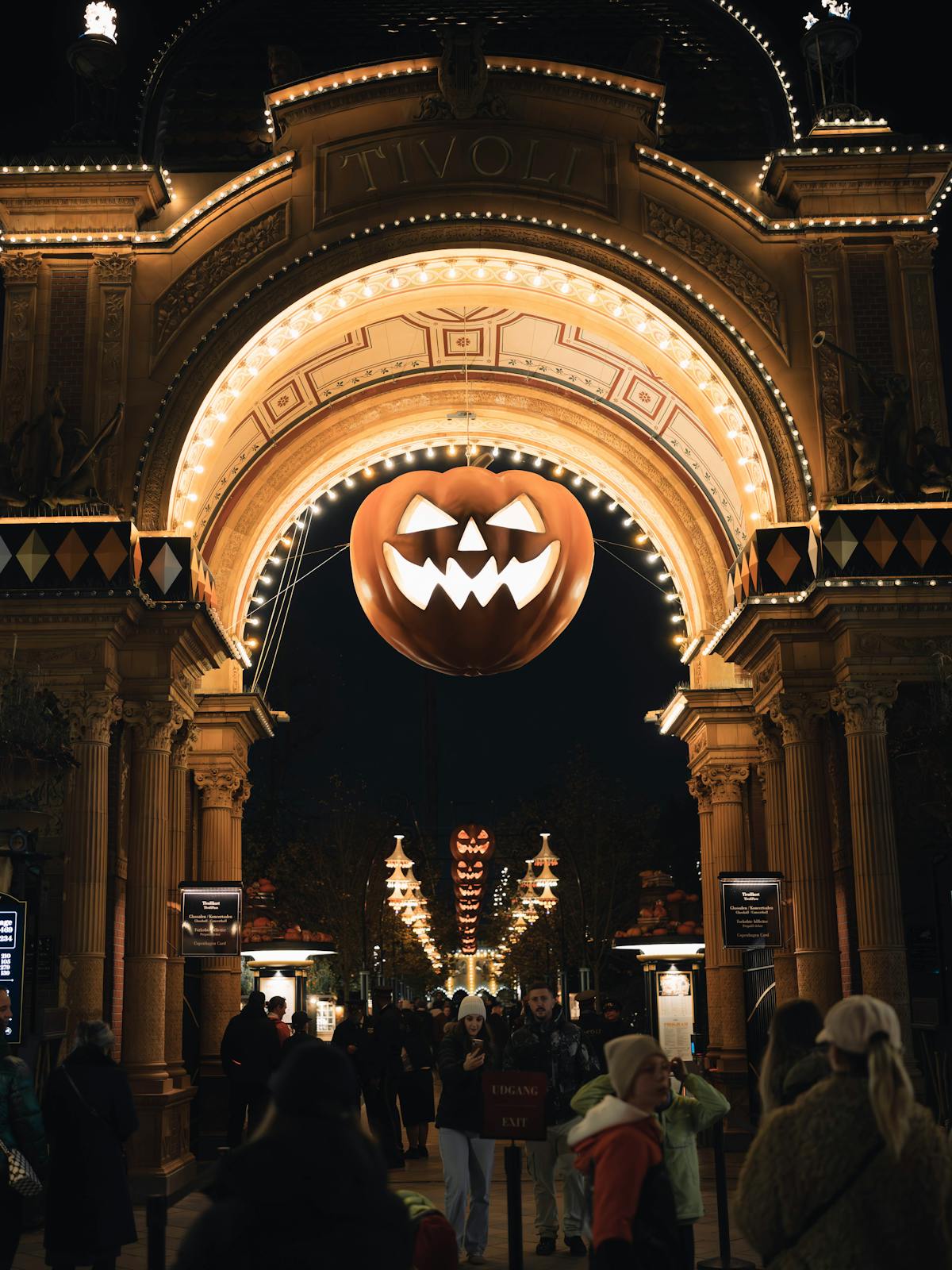
Christmas (November–December) — Possibly the best time to visit, and the locals’ favourite season. The park fills with Christmas markets selling handmade crafts, mulled wine (glögg), roasted almonds, and æbleskiver (Danish pancake balls). Thousands of lights — over a million, according to Tivoli — turn the gardens into a glowing wonderland. There’s an enormous Christmas tree, an ice skating rink, and Santa’s grotto for kids. The atmosphere is pure Danish hygge, and the rides run with a winter backdrop that makes every photo look like a Christmas card.

Winter (February) — A newer, shorter season focused on winter light and cosy atmosphere. Fewer rides, more about the aesthetic. Think ice skating, hot drinks, and wrapped-up strolls through illuminated gardens. Crowd levels are the lowest of any season.
How to Get to Tivoli
From Copenhagen Central Station: Walk out the main entrance, cross the road, and you’re at Tivoli’s main gate. It’s literally a two-minute walk. This is one of the most conveniently located theme parks in the world.
From the airport (Kastrup): Take the Metro or train to Copenhagen Central Station — 15 minutes direct. Then it’s the two-minute walk described above.
By Metro: The nearest station is Copenhagen Central (København H). Rådhuspladsen (City Hall Square) is also a 3-minute walk from the entrance.
By bike: There are bike-share racks right outside Tivoli. Lock up and walk in.
The Copenhagen Card covers public transport too — so if you have one, your entire Tivoli trip (transport + entry) is covered. Just add the ride wristband at the gate or buy it online.

Eating at Tivoli
Tivoli has over 30 restaurants and cafés, and the food is significantly better than typical theme park fare. You could genuinely plan an evening around dinner at Tivoli and make the rides secondary.
Nimb — The Nimb hotel has multiple restaurants including one with a Michelin star. Fine dining in a Moorish-inspired palace inside a theme park. The rooftop terrace overlooks the park and is one of the most romantic dinner spots in Copenhagen.
Grøften — Serving traditional Danish food since 1874. This is where you get proper smørrebrød, frikadeller (meatballs), and flæskesteg (roast pork) in a setting that hasn’t changed much in 150 years. The prices are reasonable for Copenhagen.
Wagamama, Sticks’n’Sushi, and other chains have outposts inside Tivoli. If the kids want noodles or sushi, it’s an option.
Street food and snacks — Hotdogs, ice cream, candy floss, and the Danish classic: æbleskiver with jam and powdered sugar. Available from kiosks throughout the park.
Tips That Will Save You Time
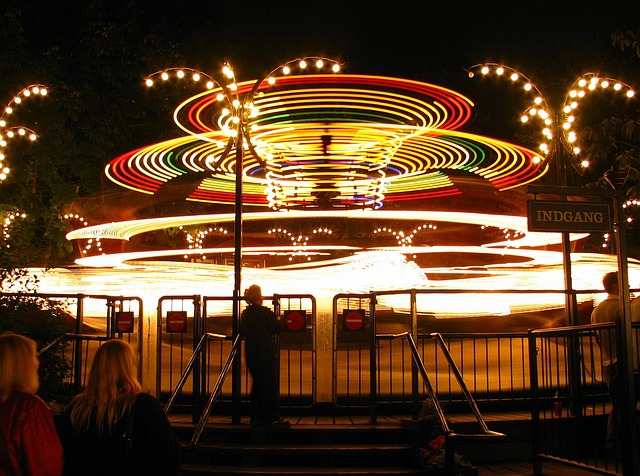
Go in the evening. Tivoli is nice during the day but spectacular after dark. The lighting — over 100,000 bulbs in summer, over a million at Christmas — transforms the park completely. Arrive around 5–6pm, ride the rides in daylight, then wander the gardens as the lights come on. This is the way Copenhagen locals do Tivoli.
The Copenhagen Card includes Tivoli entry. If you’re planning to visit multiple museums and use public transport, the Copenhagen Card ($92 for 24 hours) covers Tivoli entry plus 80+ other attractions. You’ll still need to buy the ride wristband separately ($30), but the combined value is excellent.
Hit the big rides early or late. Queue times for The Demon and Star Flyer peak between 1–4pm. Go first thing when the park opens or after 8pm when families with young kids have left. The last hour before closing is often the shortest wait for the popular rides.

The Rutschebanen is a must-ride. Built in 1914, it’s one of the oldest operating roller coasters in the world. It still has a brakeman who physically rides along and controls the speed with a hand brake. It’s not fast by modern standards, but the experience is genuinely unique — you won’t find anything like it anywhere else in the world.
Friday nights have live concerts. During summer, Tivoli hosts free concerts on the open-air stage every Friday night. Past acts have included international names and top Danish artists. Entry ticket is all you need. Arrive early to get a good spot.
Budget 3–4 hours minimum. You could rush through in two hours, but Tivoli rewards lingering. Ride the rides, eat something, sit by the lake, watch the sun set over the gardens, then do another lap when the lights come on. It’s a place designed for slow enjoyment, not efficiency. Four hours is comfortable; a full evening (5pm to close) is ideal.

Lockers are available near the entrance. If you’re coming with bags or shopping from Strøget, stash them in a locker and enjoy the park hands-free. Small lockers cost around 40 DKK ($6).


A Brief History of Tivoli
When Georg Carstensen opened Tivoli in 1843, Copenhagen was still a walled city. The park was built just outside the city gates, on the edge of the old fortifications, and Carstensen’s vision was ambitious: a pleasure garden that combined rides, restaurants, theatre, concerts, and fireworks in a single space. The idea was borrowed from the Vauxhall Gardens in London and the Prater in Vienna, but Carstensen added an element of exoticism — Chinese pagodas, Moorish architecture, Persian bazaars — that was radical for conservative 19th-century Copenhagen.
Tivoli survived two world wars (the Nazis occupied Copenhagen and tried to burn Tivoli down in 1944; it was rebuilt within months), numerous economic crises, and the rise of massive theme parks that should have made it obsolete. It didn’t become obsolete because it kept evolving — adding new rides, restaurants, and events while preserving the gardens and atmosphere that made it special. The park has been profitable every single year since the 1950s, which is almost unheard of in the amusement park industry.
Walt Disney visited in 1951 and spent the day taking notes. He later told his designers he wanted to create “something of that Tivoli atmosphere” at what became Disneyland. The irony is that Disneyland spawned a global industry of mega-parks with thrill rides and IP licensing, while Tivoli stayed relatively small, relatively tasteful, and consistently more charming than anything Disney ever built. There’s a lesson in that.
Tivoli vs Other Copenhagen Attractions
Tivoli vs Bakken: Bakken (Dyrehavsbakken) is the world’s oldest amusement park, predating Tivoli by about 160 years. It’s free to enter, the rides are slightly cheaper, and it has a more local, less touristy feel. But it’s located in the Dyrehaven deer park north of the city, about 30 minutes by train. Tivoli wins on location, atmosphere, and the quality of its gardens and restaurants. Bakken wins on price and the surrounding parkland.
Tivoli vs the Copenhagen Card: The Copenhagen Card ($92 for 24 hours) includes Tivoli entry and 80+ other attractions including Rosenborg Castle, the National Museum, boat tours, and all public transport. If you’re planning to hit three or more museums plus Tivoli in a single day, the card is excellent value. But if Tivoli is your only attraction for the day, buying a standalone ticket is cheaper.
Tivoli vs a canal tour: Both are “must-do Copenhagen” activities, and most visitors do both. The ideal day: canal tour in the late afternoon, dinner at Tivoli, rides and gardens as the lights come on. Together they’re the perfect Copenhagen double-header.


More Copenhagen Guides
Tivoli is right in the centre of Copenhagen, so it pairs naturally with almost anything else in the city. A canal tour in the morning gives you the waterfront perspective — Nyhavn, the Opera House, the Little Mermaid — then Tivoli fills the evening perfectly. If you’d rather explore at street level, the Copenhagen walking tours cover the history and hidden corners that even the canal boats miss. Copenhagen is one of the world’s great food cities, and a food tour is the fastest way to understand why — smørrebrød, Danish pastries from actual bakeries, and the New Nordic movement that started here. The bike tours cover twice the ground of walking and feel perfectly natural in a city where more people cycle than drive. For a day out of the city entirely, the day trip to Malmö and Lund takes you across the Øresund Bridge to Sweden and back — two countries in one afternoon. And if the kids (or the kid in you) want more theme park time, LEGOLAND Billund is three hours west — the original LEGOLAND, with 50+ rides and the Miniland displays that started it all.