Set out on a captivating journey through Berlin’s tumultuous Cold War past. Witness the remnants of the iconic Berlin Wall, learn about the shadowy world of espionage, and uncover the depths of surveillance tactics used by East Germany’s secret police. This private tour offers a unique opportunity to explore the city’s history, exploring significant sites that tell the stories of Soviet influence and the struggles of a divided nation.
- Key Points
- Berlin’s Division and the Emergence of the Wall
- Checkpoint Charlie – The Iconic Crossing Point
- The East Side Gallery – Remnants of the Berlin Wall
- The Stasi Headquarters – Secrets of East German Surveillance
- The Cold War’s Impact on Berlin’s Architecture
- Reflections on the Reunification of Germany
- Espionage and Covert Operations During the Cold War
- Lessons From Berlin’s Cold War History
- The Sum Up
- The Best Of Berlin!
- More Private Tours in Berlin
- More Tours in Berlin
- More Tour Reviews in Berlin
Key Points
 1 / 7
1 / 7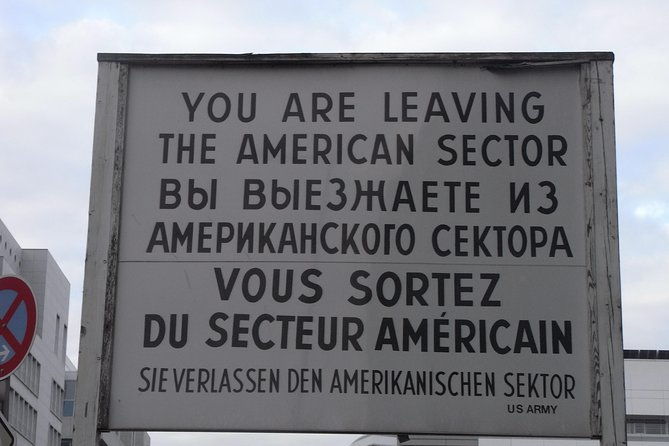 2 / 7
2 / 7 3 / 7
3 / 7 4 / 7
4 / 7 5 / 7
5 / 7 6 / 7
6 / 7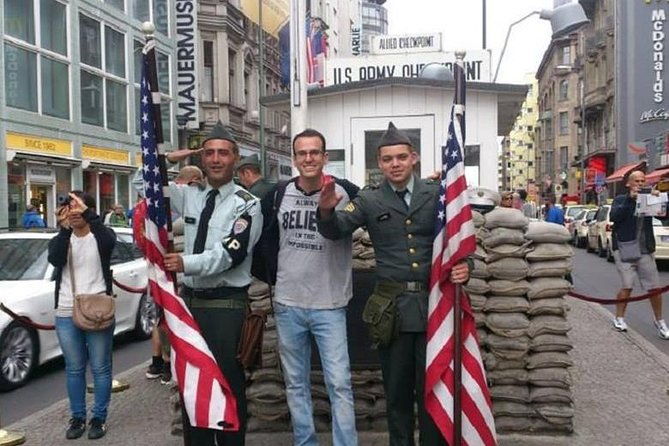 7 / 7
7 / 7- Explore Checkpoint Charlie, the iconic crossing point between East and West Berlin, and learn about dramatic escape attempts and Cold War confrontations.
- Discover the powerful symbolism of the East Side Gallery, where over 100 vibrant murals painted on remnants of the Berlin Wall reflect the divisions and reunification of Germany.
- Tour the former Stasi headquarters, the nerve center of East Germany’s secret police, and gain insights into their intrusive surveillance tactics and the abuse of power.
- Understand the lasting impact of the Berlin Wall’s construction and its eventual fall, which marked the end of the Cold War and the reunification of Germany.
- Appreciate the ongoing challenges of integrating differing economic and social systems, addressing regional disparities, and fostering a renewed national identity in post-reunification Germany.

👉 See our pick of the Berlin’s 4 Best Vegan & Vegetarian Tours (With Prices & Reviews)
Berlin’s Division and the Emergence of the Wall
After World War II, Berlin was divided into four sectors, with the Soviet Union controlling the eastern portion and the Western Allies controlling the western sectors. This division led to growing tensions between the East and West.
In 1949, the Federal Republic of Germany was established in the West, while the German Democratic Republic was formed in the East.
On August 13, 1961, the communist East German government built the Berlin Wall, sealing off East Berlin from the West. This barrier, heavily fortified with barbed wire and guard towers, would divide the city for nearly 30 years until its fall in 1989.
You can also read our reviews of more private tours in Berlin
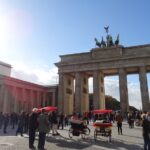
Checkpoint Charlie – The Iconic Crossing Point
Checkpoint Charlie stands as an iconic symbol of the Cold War’s division of Berlin. This famous crossing point was the only legal way for foreigners to move between East and West Berlin.
Soldiers from the United States, Soviet Union, United Kingdom, and France guarded the checkpoint, underscoring the high tensions. Visitors can still see the reconstructed guard houses and learn about the dramatic escapes and confrontations that occurred here.
The site now houses a small museum documenting the checkpoint’s history. Touring Checkpoint Charlie provides a tangible connection to the uncertainty and drama of the Berlin Wall era.
The East Side Gallery – Remnants of the Berlin Wall
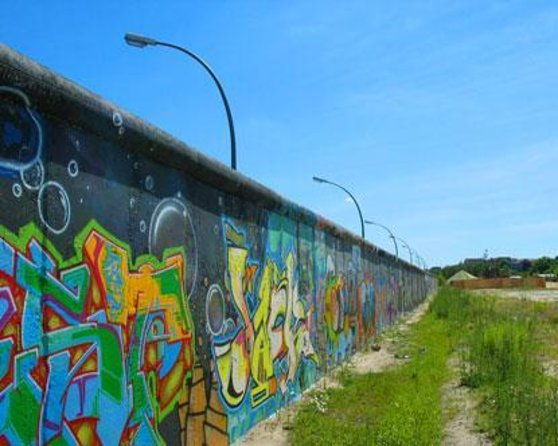
The East Side Gallery stands as a powerful remnant of the Berlin Wall, stretching over a kilometer along the Spree River.
This open-air museum features over 100 murals by artists from around the world, painted directly on the remaining segments of the wall.
Visitors can stroll along the gallery, marveling at the vibrant and thought-provoking artwork that reflects the divisions and reunification of Germany.
The East Side Gallery stands as a poignant symbol of the Cold War’s impact, inviting reflection on the past and hope for the future.
The Stasi Headquarters – Secrets of East German Surveillance
As visitors make their way through the historic city, the Stasi Headquarters stands as a chilling reminder of East Germany’s extensive surveillance state.
This former nerve center of the East German secret police is now a museum, offering a glimpse into the Stasi’s intrusive tactics. Guests can explore the labyrinth of offices, interrogation rooms, and wiretapping facilities that once enabled the regime’s pervasive monitoring of its citizens.
The tour provides a sobering account of the Stasi’s abuse of power and the lasting impact of their widespread, invasive surveillance on the lives of East Germans during the Cold War era.
The Cold War’s Impact on Berlin’s Architecture
Berlin’s architectural landscape bears the indelible marks of the Cold War’s divisive legacy. The Berlin Wall, which famously divided the city for decades, left a lasting impact on the city’s structures.
On the eastern side, stark, utilitarian buildings dominated the skyline, reflecting the Soviet-influenced architecture. In contrast, the western side embraced a more modern, expressive style.
Today, remnants of the wall and its guard towers serve as poignant reminders of the city’s tumultuous past. Visitors can explore the diverse architectural styles that emerged from this period of ideological conflict, providing a unique window into Berlin’s complex history.

Reflections on the Reunification of Germany
Though the reunification of Germany in 1990 marked a pivotal moment in the nation’s history, its legacy remains a complex tapestry of both progress and challenges.
While the collapse of the Berlin Wall symbolized the end of the Cold War, integrating the two vastly different economic and social systems has been an ongoing process.
Regional disparities, unemployment, and infrastructure issues have persisted, underscoring the difficulties of merging decades of division.
Yet, the reunification has also fostered a renewed national identity, democratic values, and economic growth.
As Germany continues to grapple with its past, it must chart a course towards a more unified and prosperous future.
Espionage and Covert Operations During the Cold War
The Cold War era was marked by a complex web of espionage and covert operations between the United States and the Soviet Union.
Both superpowers engaged in clandestine activities, including intelligence gathering, counterintelligence, and sabotage. Agents from each side infiltrated the other’s government, military, and industry, seeking to gain strategic advantages.
Superpowers engaged in espionage, counterintelligence, and sabotage, infiltrating each other’s government, military, and industry for strategic advantage.
This cloak-and-dagger struggle played out in Berlin, a city divided by the Iron Curtain.
The tour explores how the Cold War’s espionage and covert operations shaped the city and its people, providing a unique perspective on this turbulent period in history.
Lessons From Berlin’s Cold War History
As one explores the Cold War history of Berlin, several valuable lessons emerge that can inform our understanding of geopolitics, international relations, and the resilience of the human spirit.
The division of Berlin and the construction of the Wall underscore the fragility of peace and the consequences of ideological conflict.
The survival of communities on both sides showcases human adaptability and ingenuity.
On top of that, the eventual fall of the Wall demonstrates the power of grassroots movements and the possibility of reconciliation, even after decades of hostility.
These lessons remind us that even in the darkest of times, hope and progress remain possible.
The Sum Up
Berlin’s tumultuous Cold War history has left an indelible mark on the city. Exploring the remnants of the Berlin Wall, Checkpoint Charlie, and the Stasi Headquarters provides a sobering glimpse into the realities of Soviet influence, surveillance, and the struggle for freedom. Lessons from this era serve as a reminder of the fragility of peace and the importance of vigilance in safeguarding democratic values.