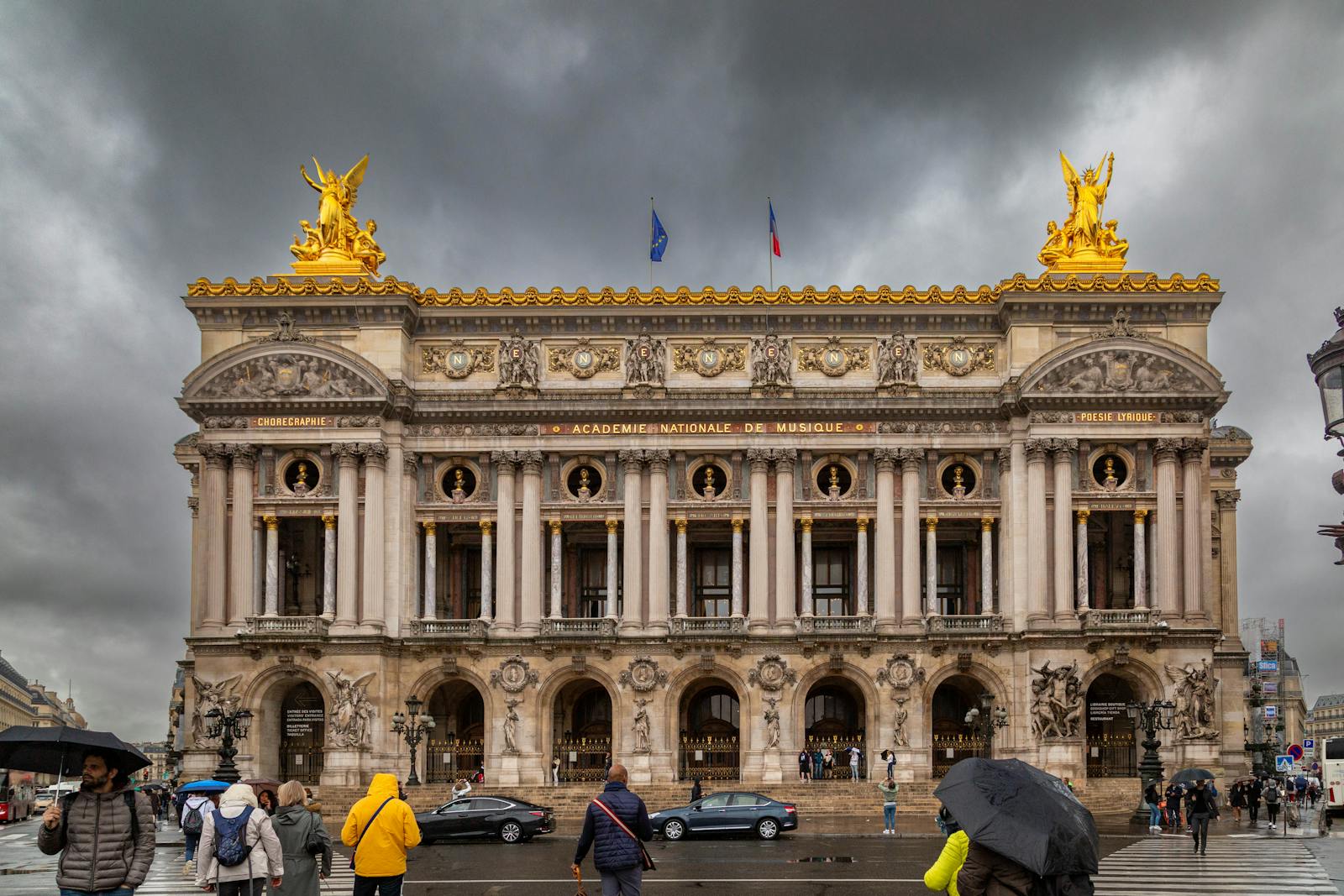
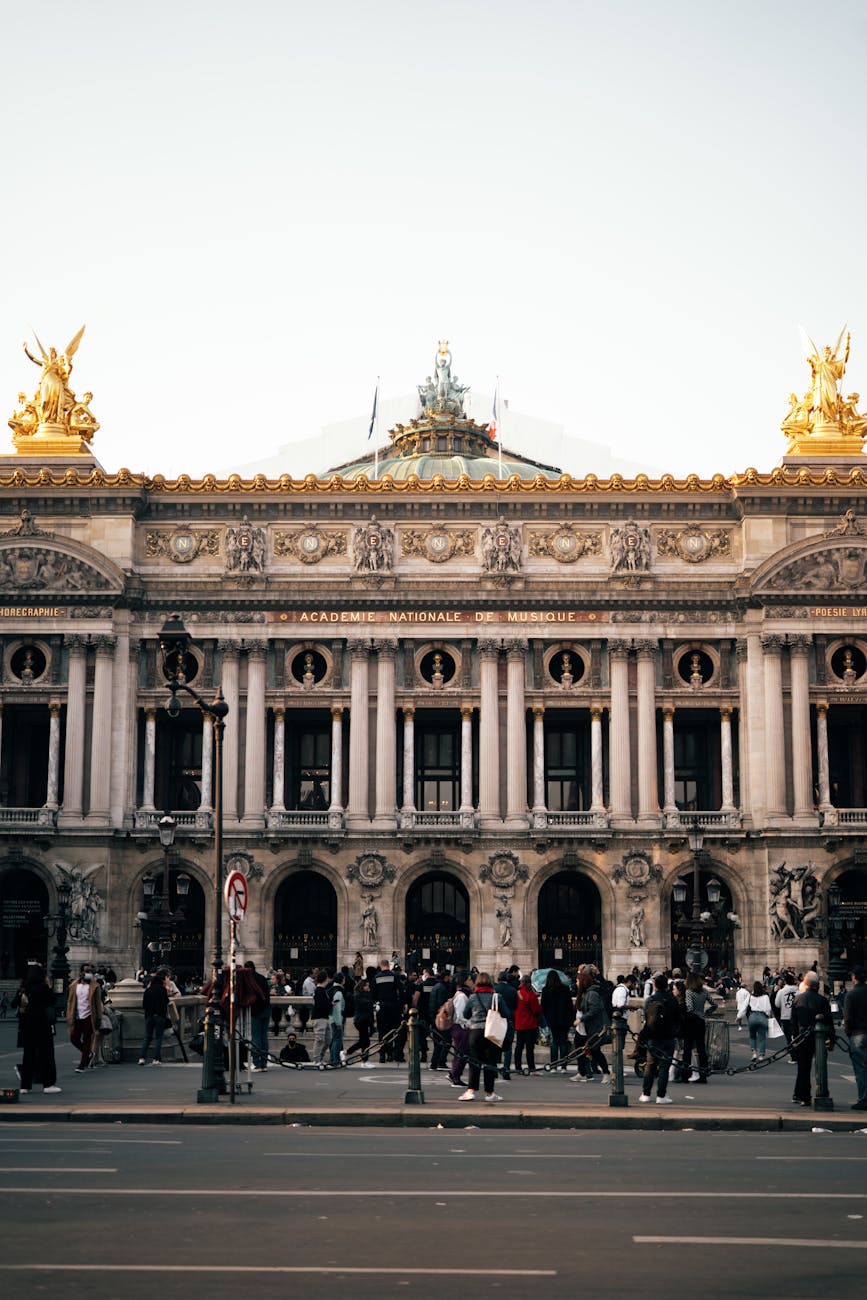
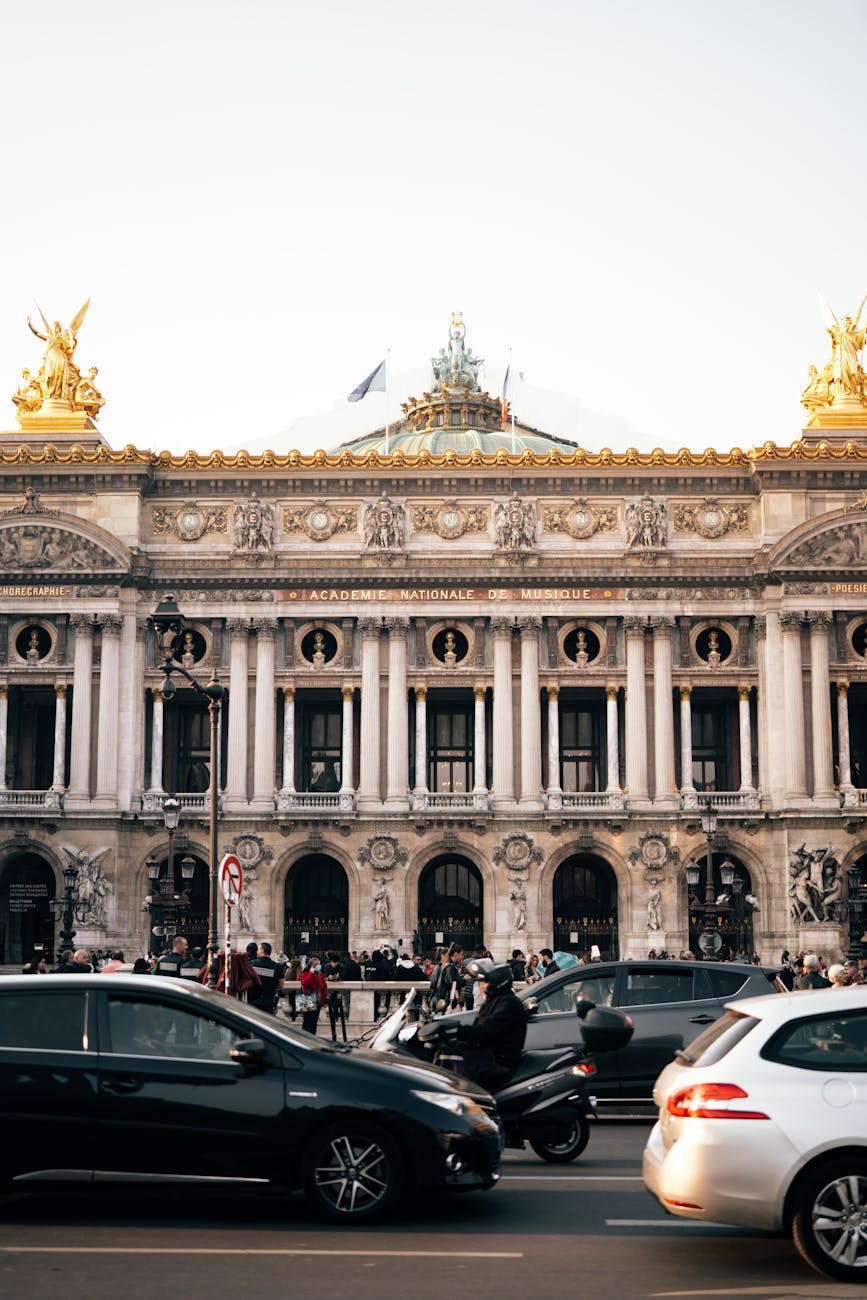
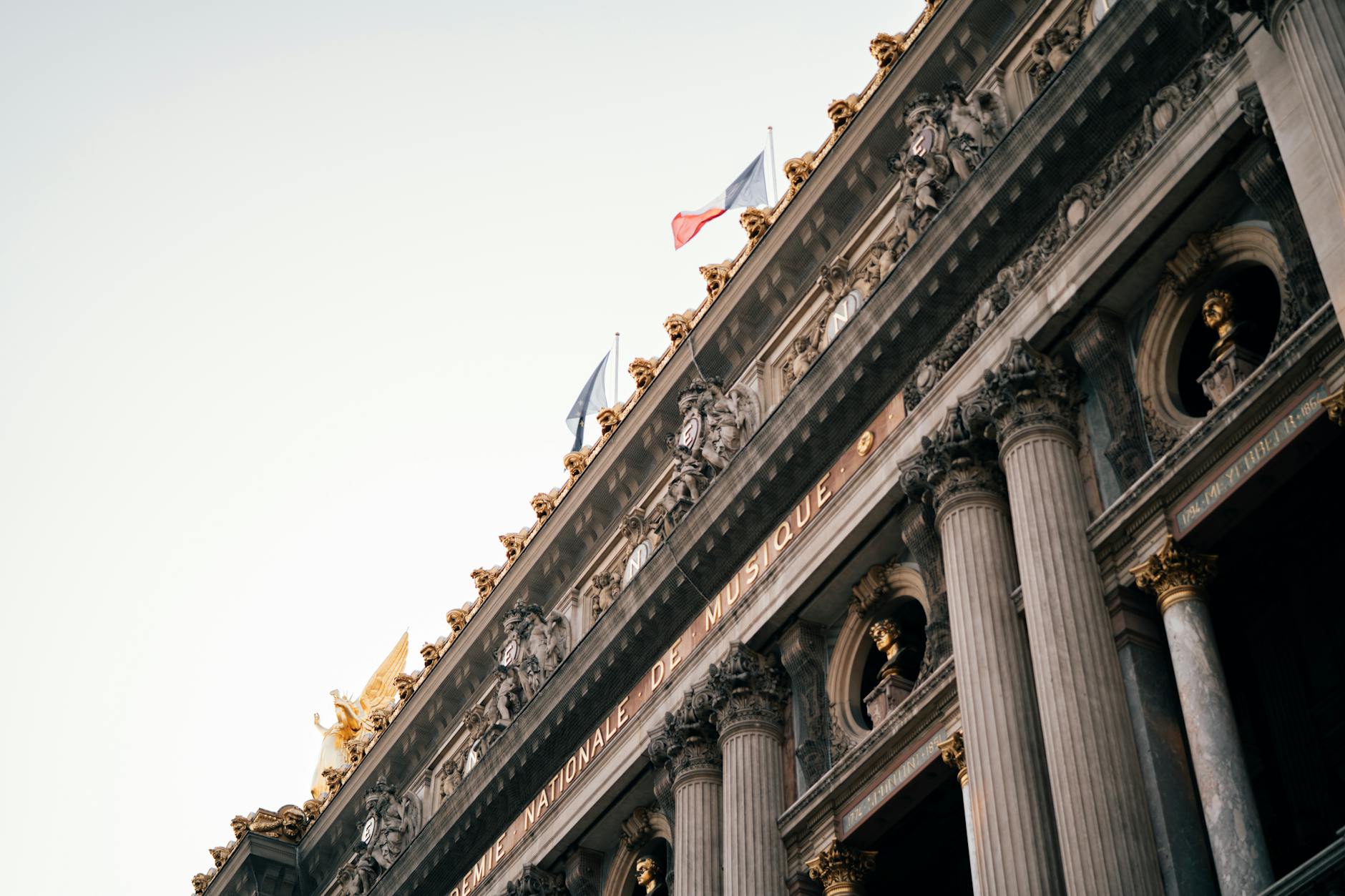
The Palais Garnier is the most beautiful building in Paris that most first-time visitors skip. It is right there in the 9th arrondissement, a 5-minute walk from Galeries Lafayette, and half the people who walk past its facade every day do not realise they can go inside. You can. For €14. And the inside is more spectacular than the outside.
This is the opera house that inspired The Phantom of the Opera. It is where the grand staircase scene from every Paris film you have ever seen was filmed. The ceiling was painted by Marc Chagall in 1964 and hangs above the auditorium like a dream. If you are the kind of traveller who appreciates architecture, theatre, or just gorgeous interiors, this is the single best €14 you will spend in Paris.
I have been inside the Palais Garnier six times across a decade of Paris trips, and I keep going back because the light is different every visit and because I always spot something new in the painted ceilings. This guide covers exactly how to book tickets, when to go, what to look for inside, and how to avoid the one mistake that ruins most visitors’ experience.
Quick Picks — Palais Garnier Tickets
Cheapest self-guided entry: Opéra Garnier entrance tickets on Viator — $24, skip-the-line, audioguide optional.
Best value combo: Opera Garnier + Seine River Cruise on GYG — $42, bundles the cruise and the opera in one afternoon.
Most fun for families: Palais Garnier Mystery Game with entry on GYG — $32, a treasure-hunt-style self-guided game inside the building.
Best time to visit: Tuesday-Friday, 10am arrival (doors open at 10, crowds build after 11:30).
How long you need: 75-90 minutes for a proper visit.
The one rule: Always check the rehearsal schedule before booking — the auditorium is closed to visitors during rehearsals and you will miss the Chagall ceiling.
- Quick Picks — Palais Garnier Tickets
- What the Palais Garnier Actually Is
- How Much Do Tickets Cost and What’s Included
- Tuesday vs Weekend — Why This Matters More Than Anything
- The Rehearsal Problem — Why You MUST Check Before Booking
- The Chagall Ceiling — Why It’s Controversial
- Which Ticket Should You Book? Three Real Options
- Palais Garnier Entrance Tickets
- Opera Garnier + Seine River Cruise Combo
- Palais Garnier Mystery Game with Entry Ticket
- How to Actually Get There
- What to See Inside — The 5 Must-Dos
- Best Time of Day to Visit
- What to Wear and Bring
- The Buttes Chaumont of Opera Houses — A Fair Warning
- How Long You Really Need Inside
- Combining Your Visit With Galeries Lafayette
- Common Mistakes to Avoid
- Seeing a Real Performance — The Ultimate Upgrade
- The Library-Museum Deserves More Attention
- More Paris Planning on The Abroad Guide
- Final Thoughts — Is It Worth It?
- FAQ — Short Answers to the Most Asked Questions
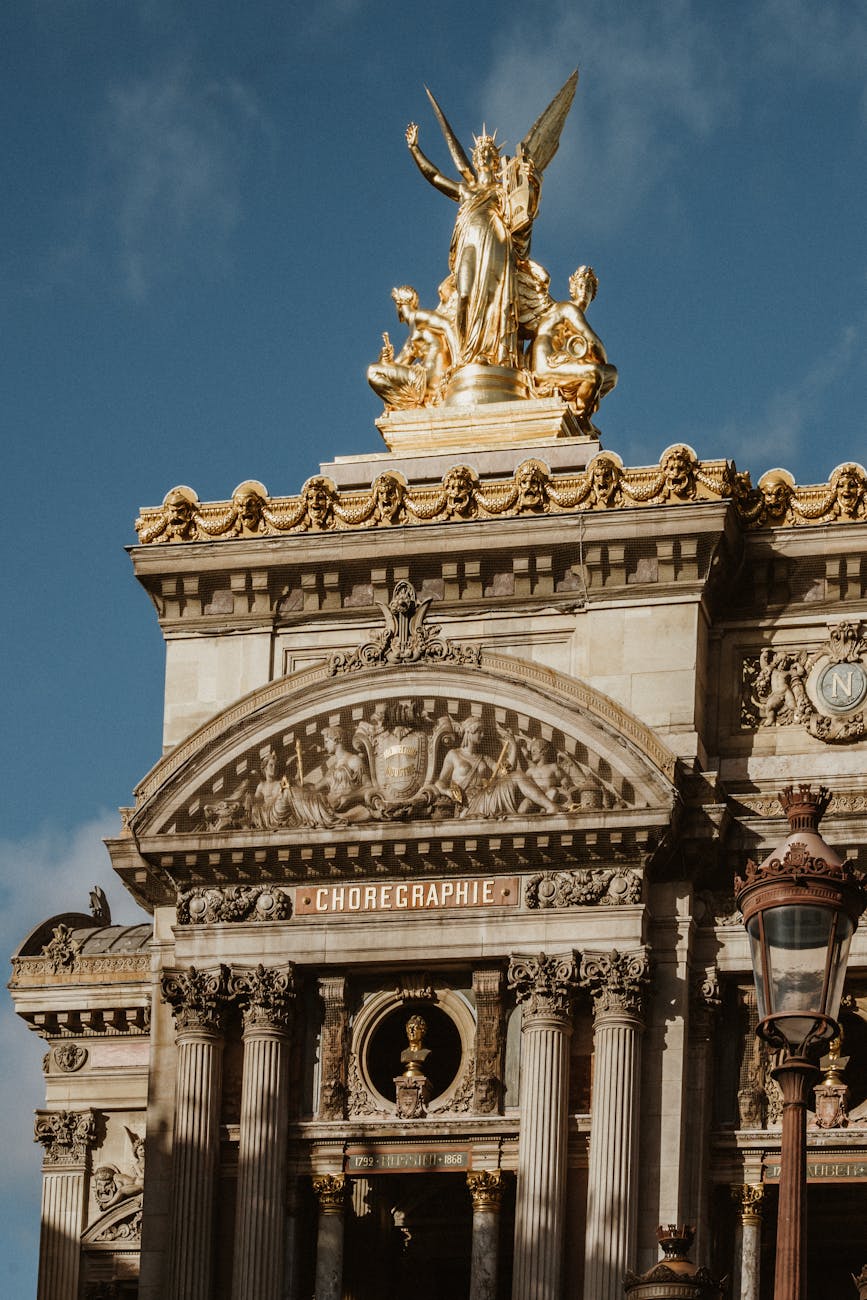
What the Palais Garnier Actually Is
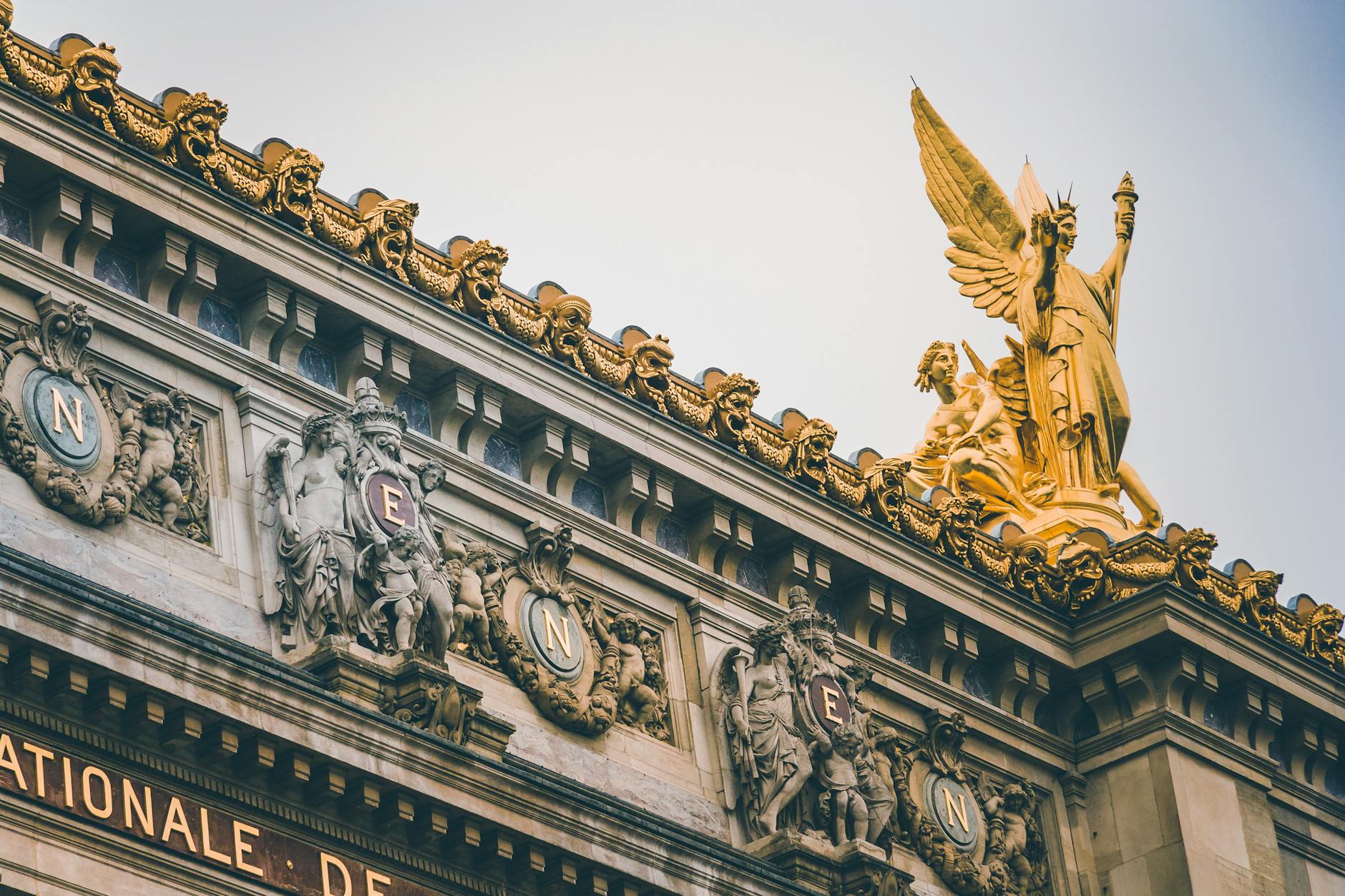
The Palais Garnier is the older of Paris’s two opera houses. It was commissioned by Napoleon III, designed by a then-unknown 35-year-old architect named Charles Garnier, and opened in 1875. For 114 years it was the main home of the Paris Opera and Ballet. In 1989 most productions moved to the newer, bigger Opéra Bastille, but the Palais Garnier still hosts around 20 ballet performances and 5 operas per season, plus daily visitor hours.
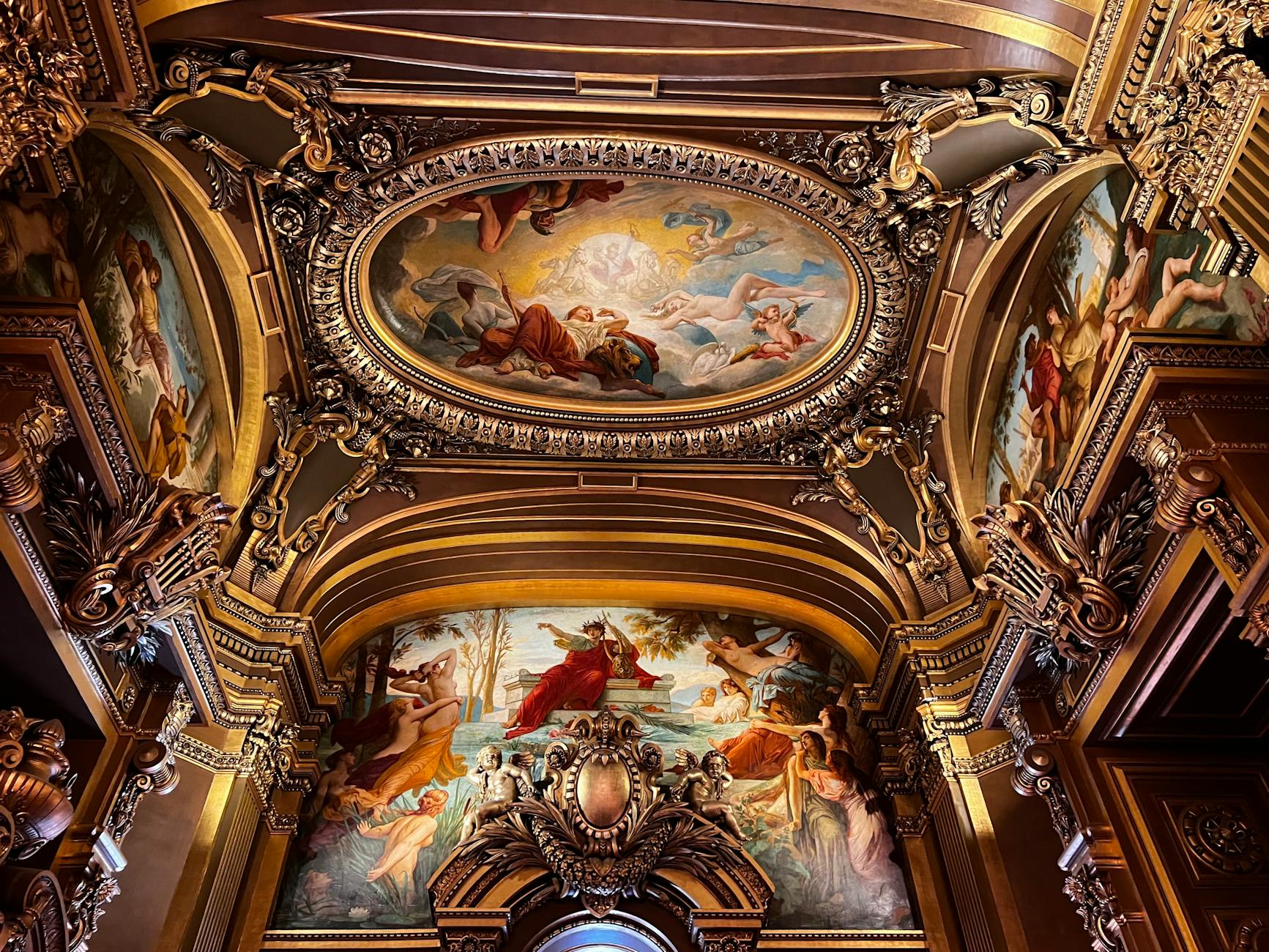
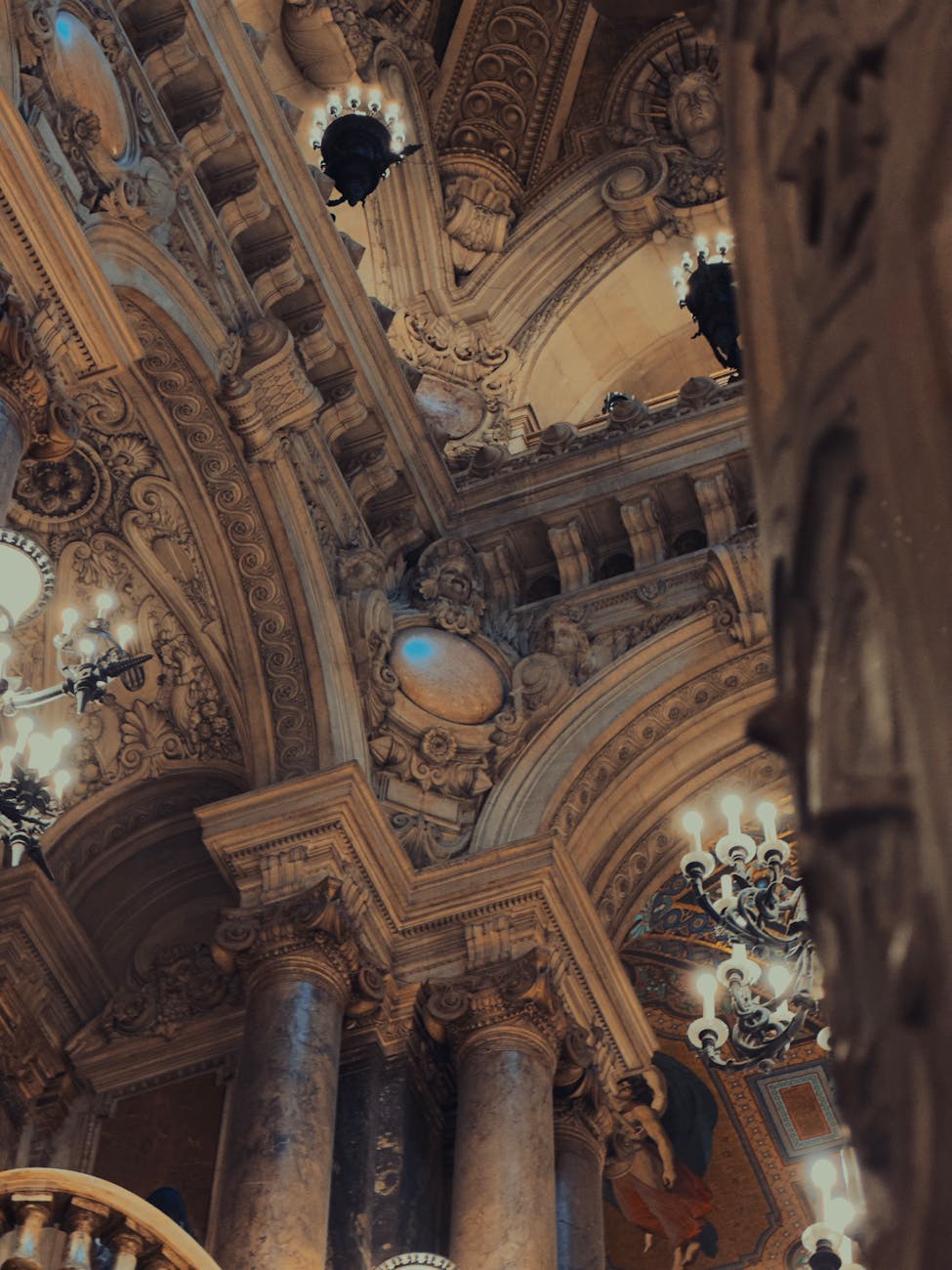
The building is Second Empire architecture at its most extreme — every surface is carved, painted, gilded, or inlaid with marble from 14 different countries. Garnier’s philosophy was “no empty surface.” He meant it.
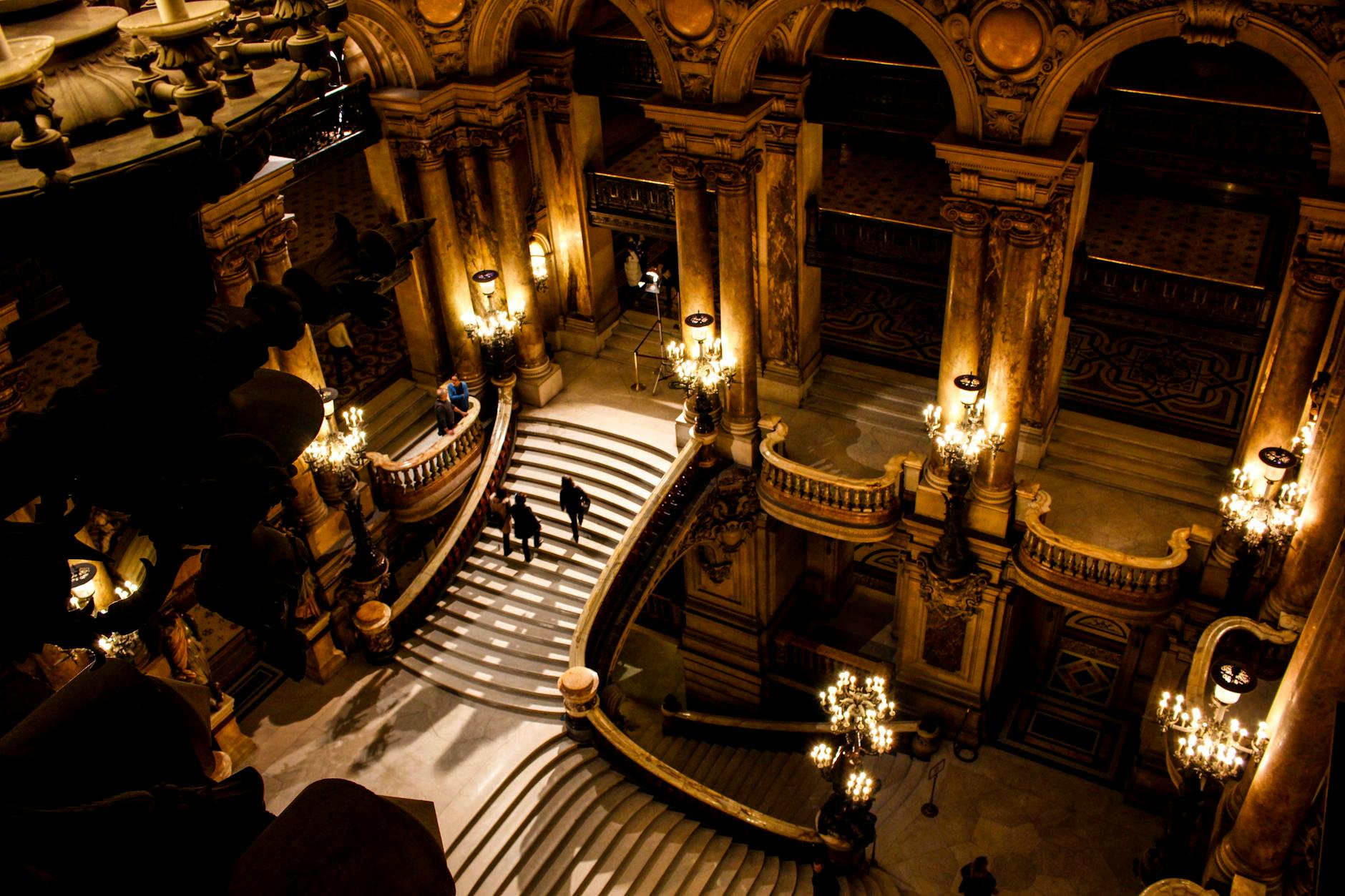
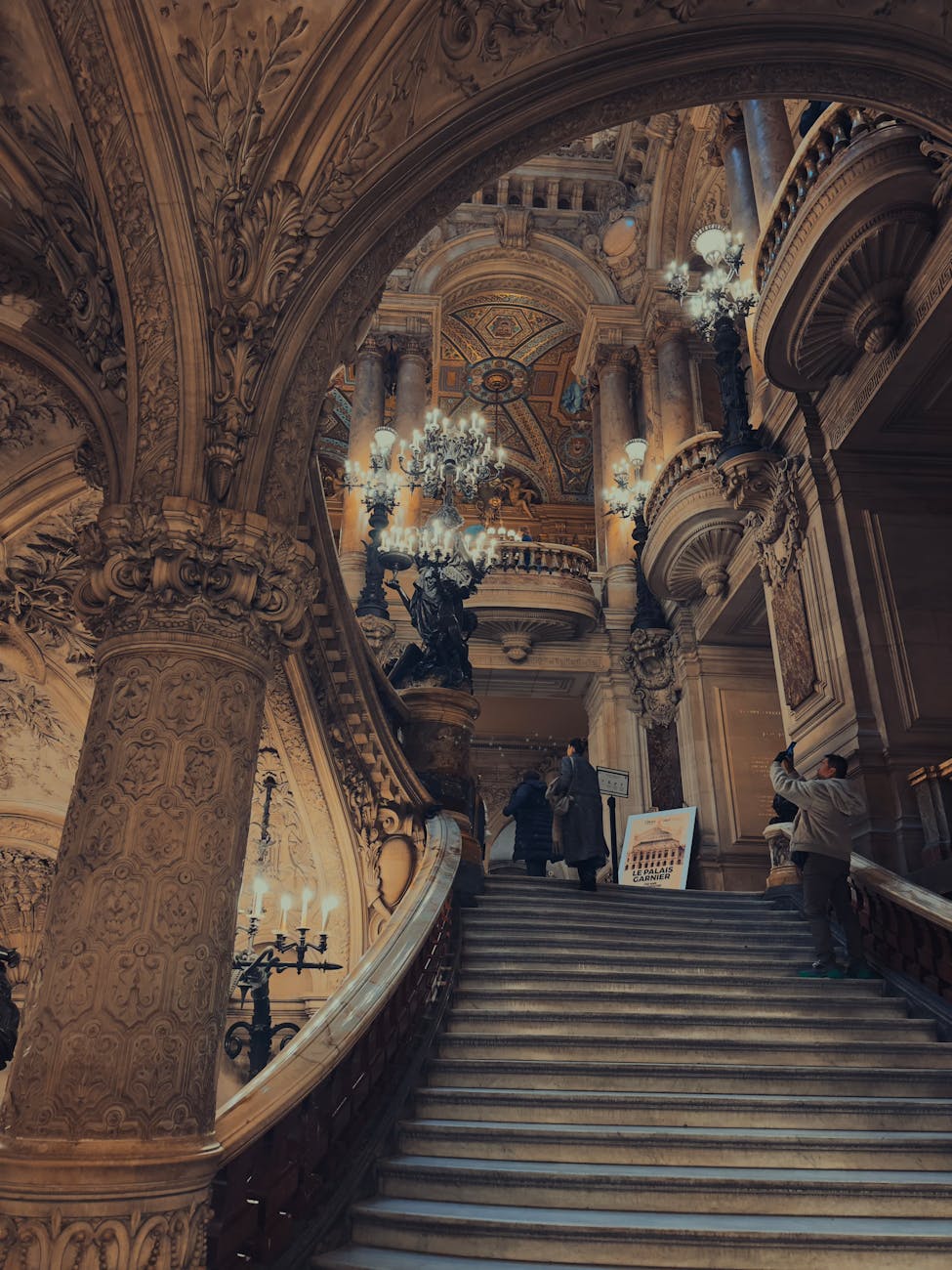
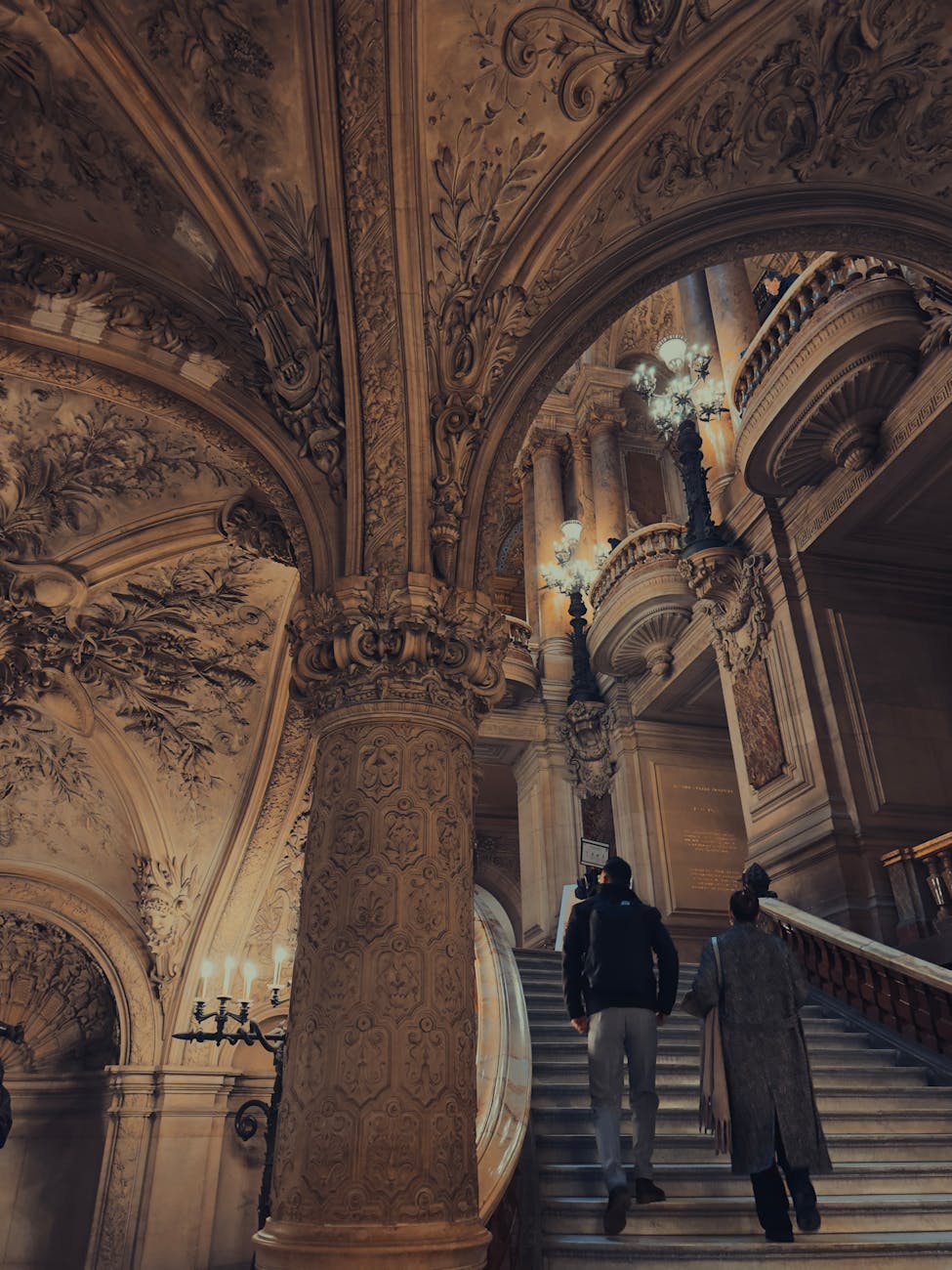
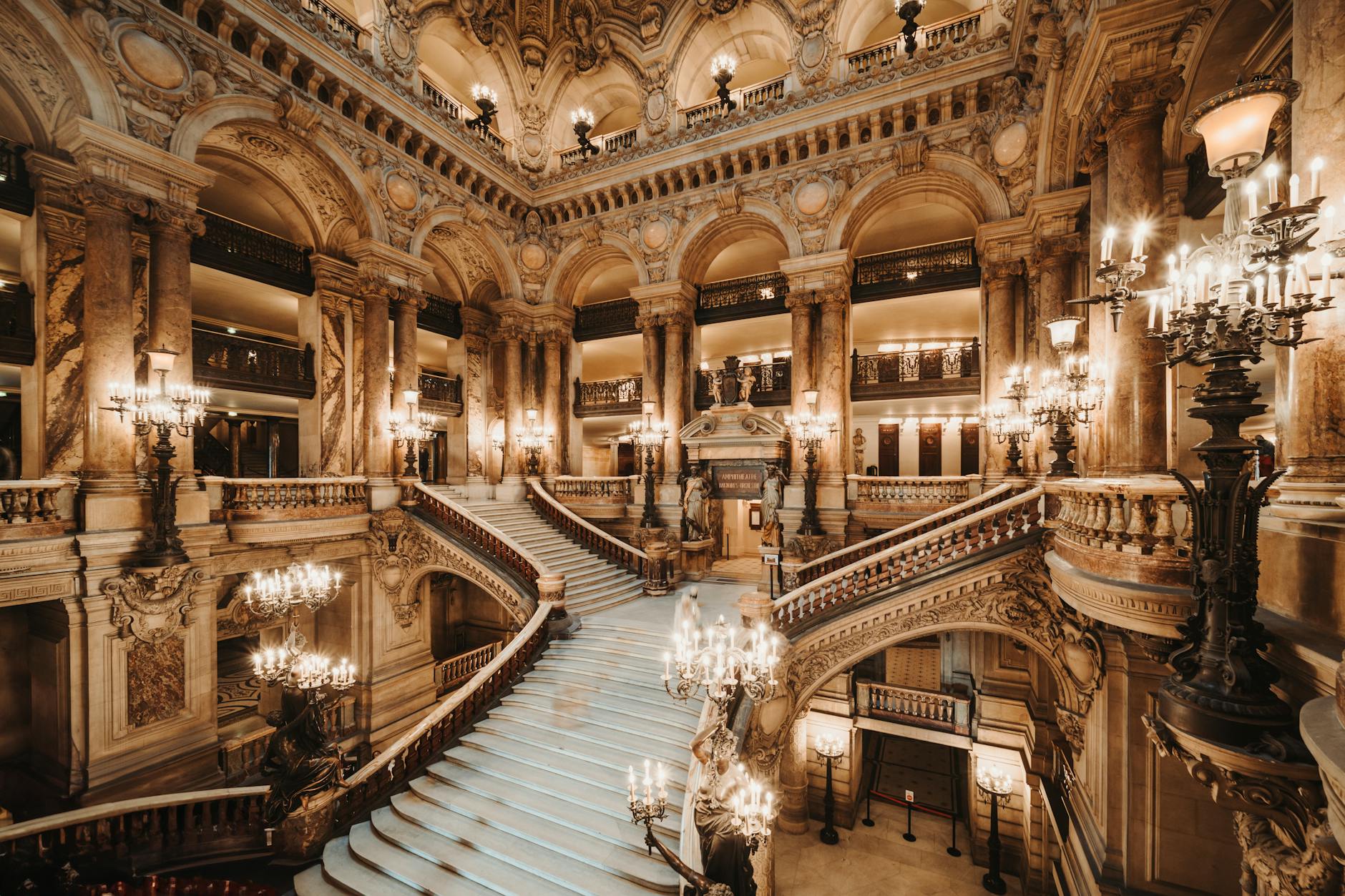
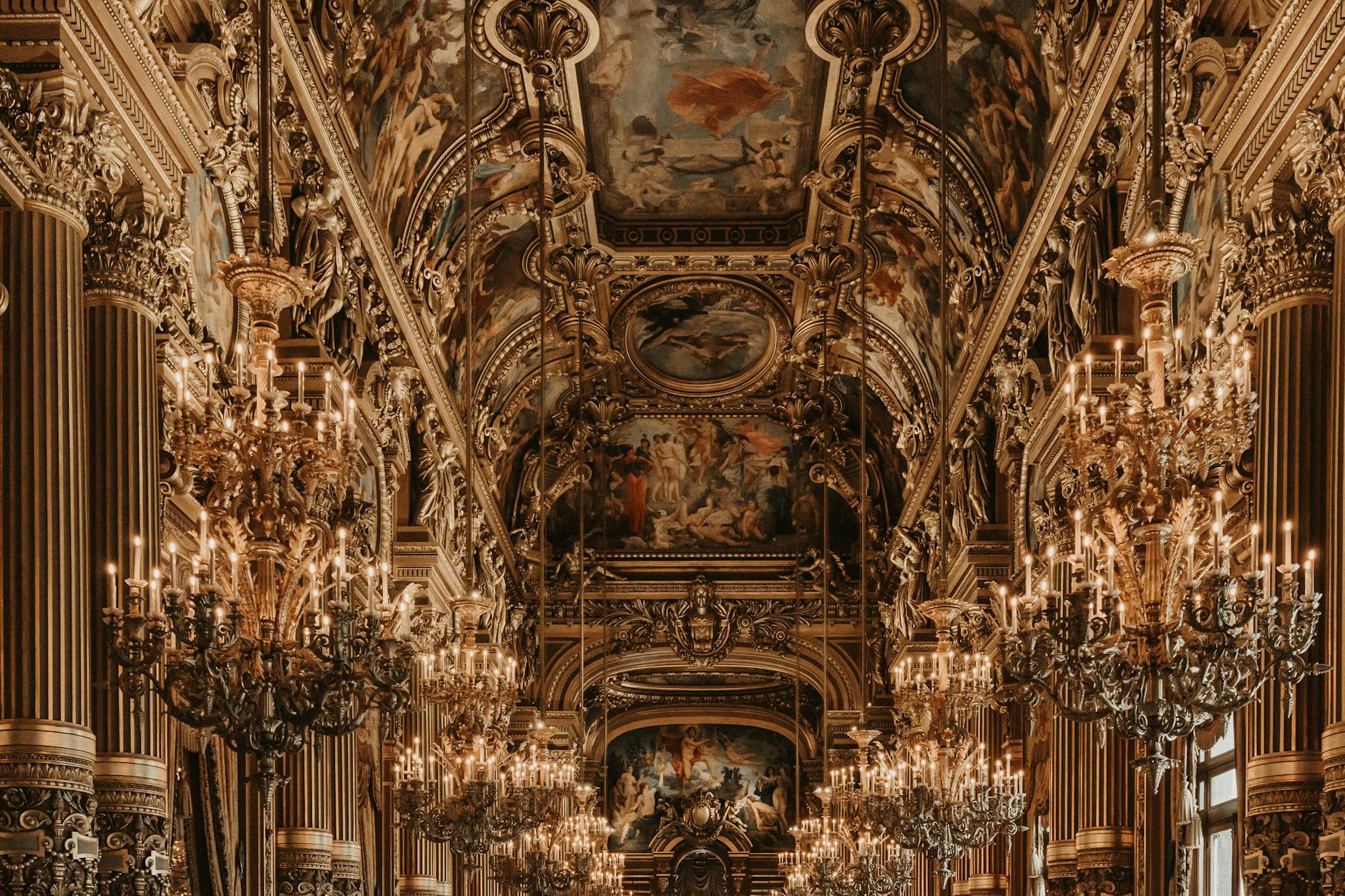
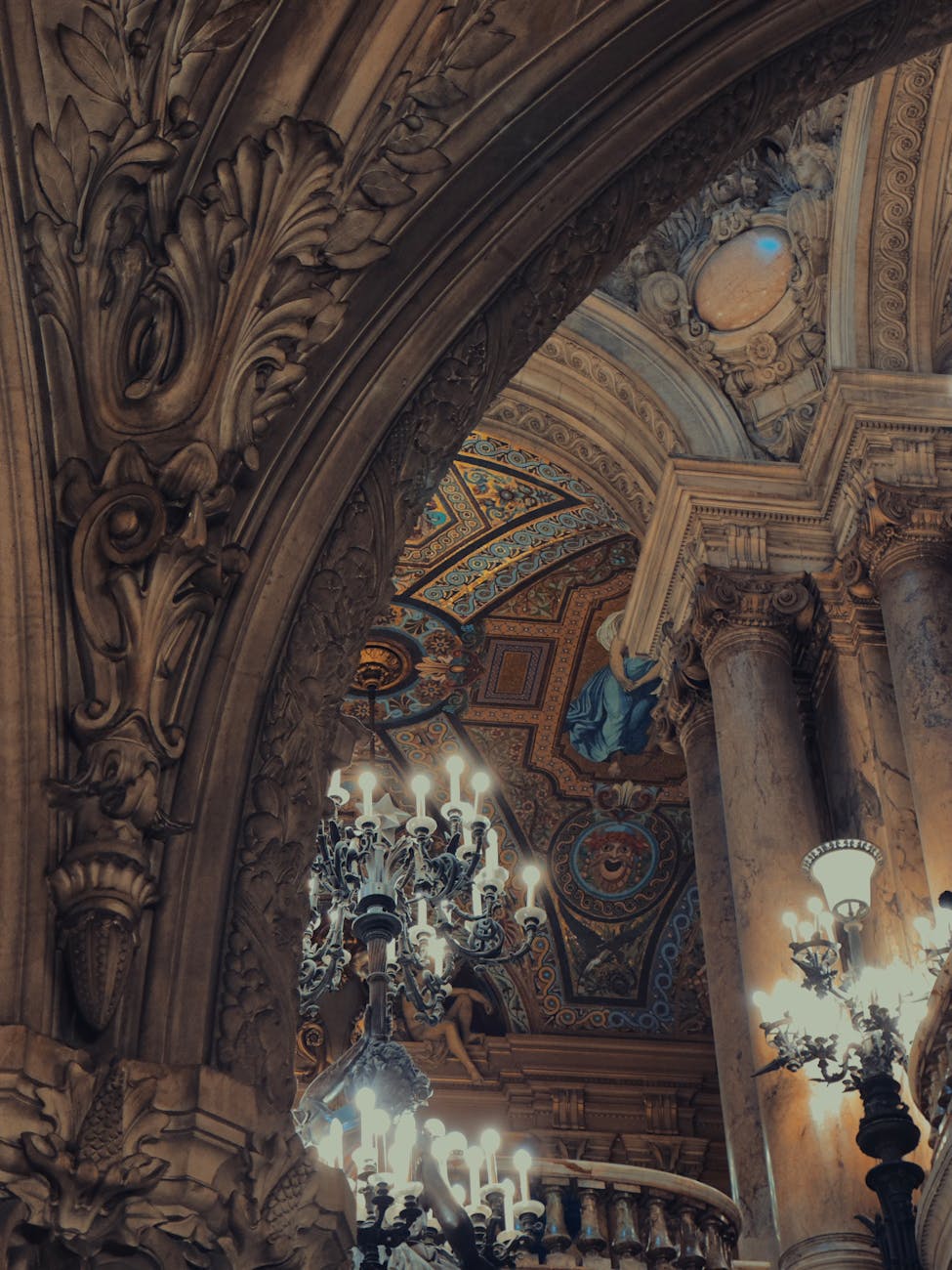
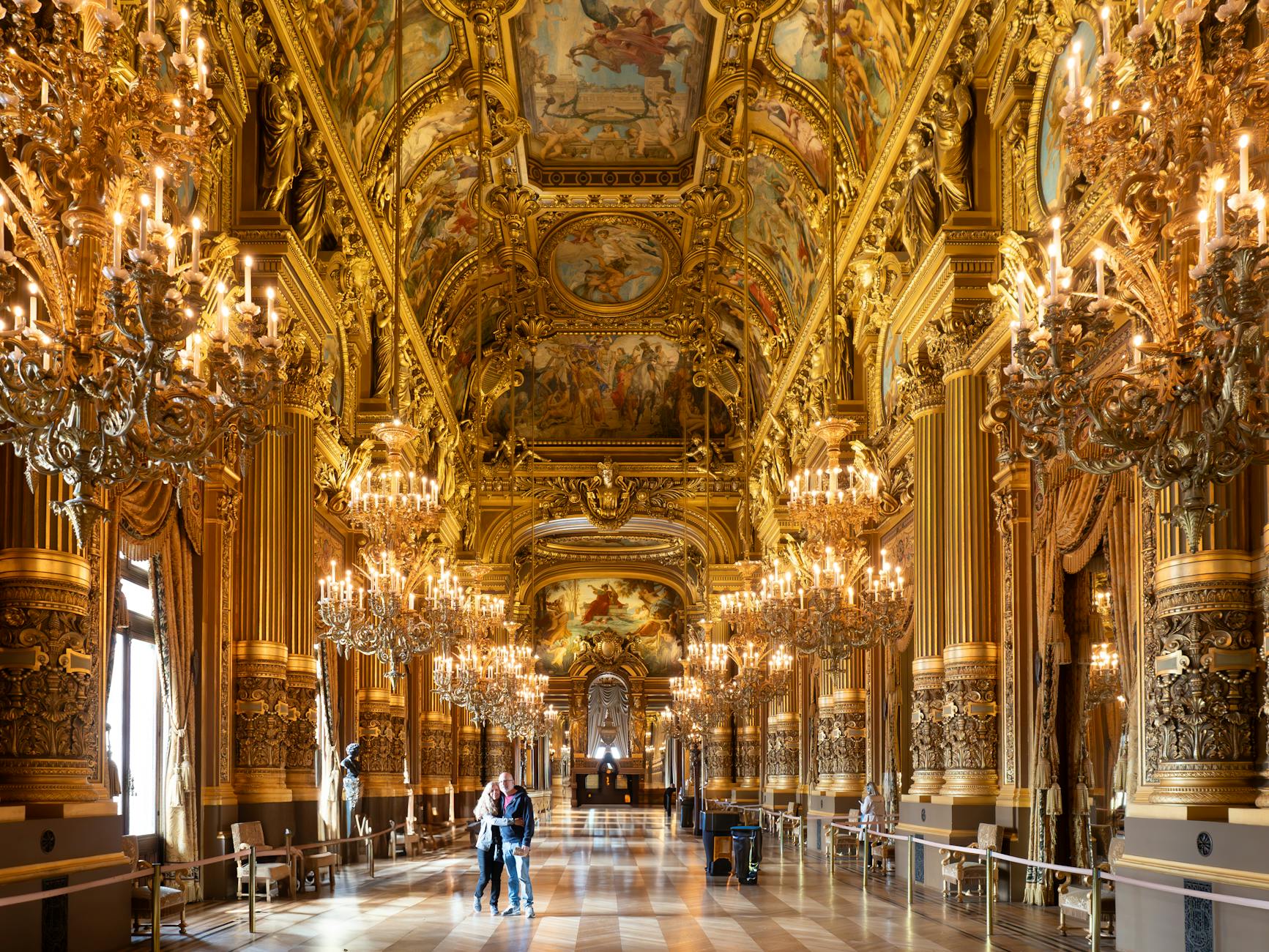
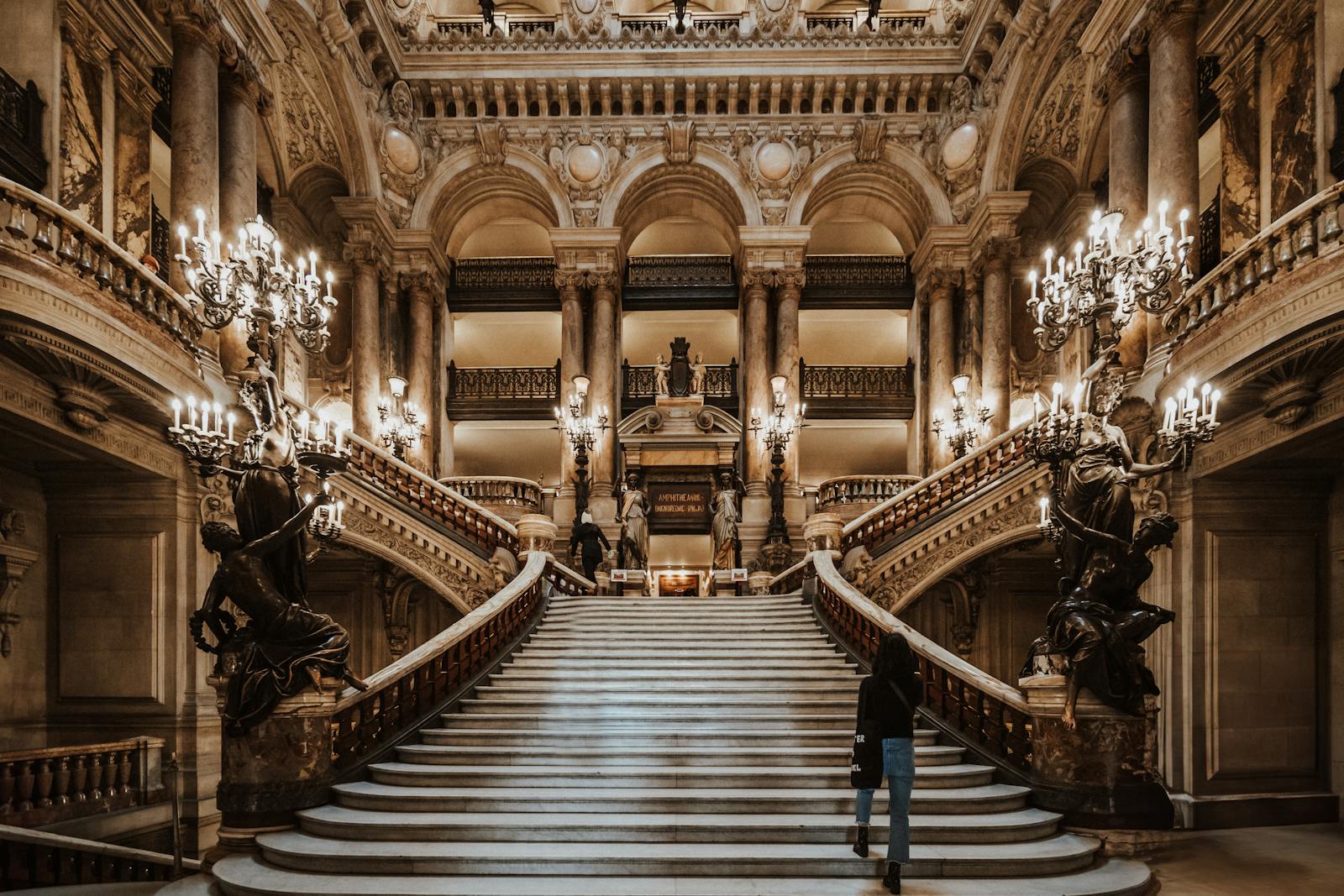
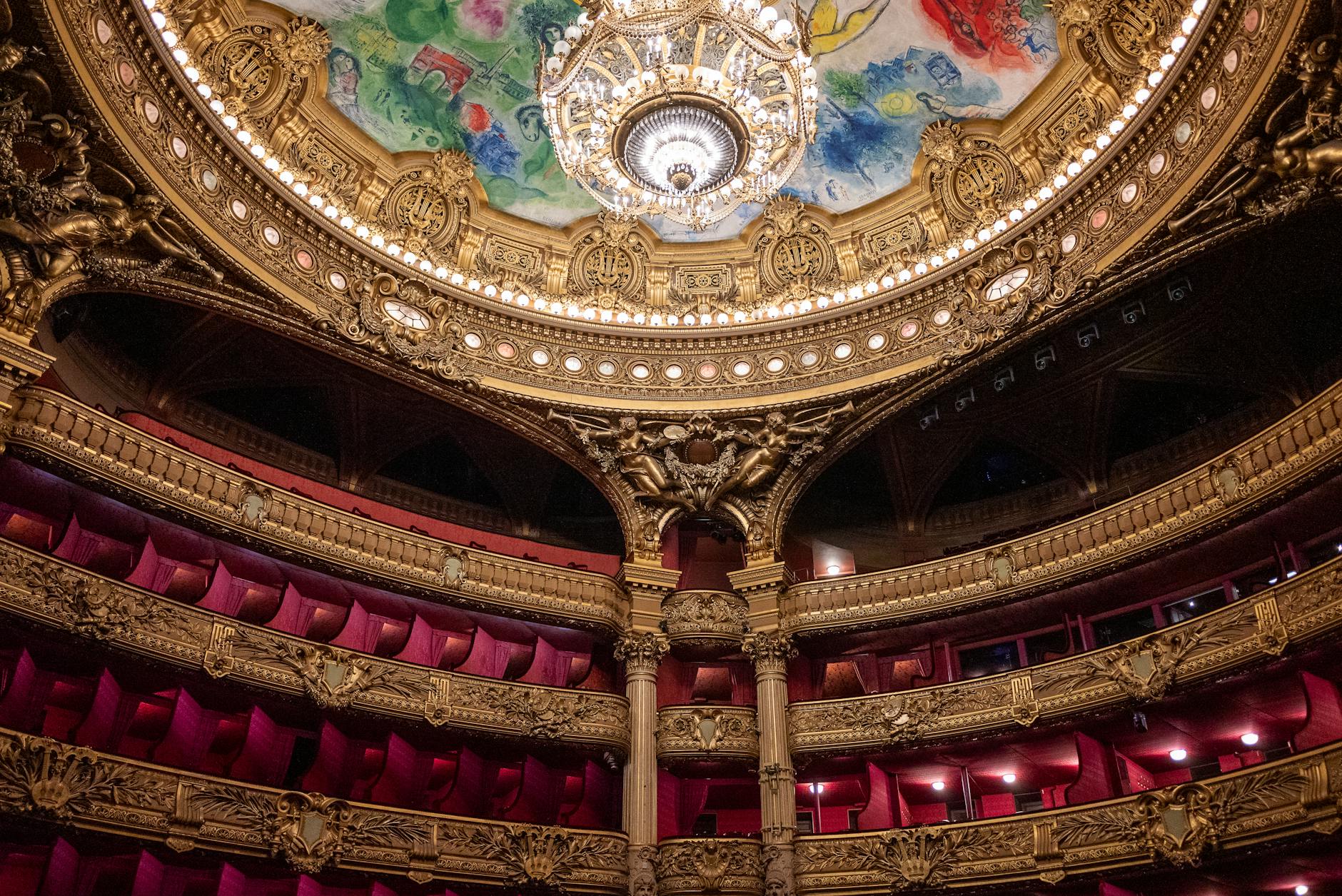
There are three things inside that are worth the ticket price all by themselves: the Grand Staircase (where you enter), the Grand Foyer (a corridor-length hall of chandeliers and ceiling frescoes that looks more like Versailles than a theatre lobby), and the Auditorium (featuring Marc Chagall’s 1964 ceiling, which is famously controversial because it is modern art inside a 19th-century space). Together they form the three-part structure of the self-guided visit.
How Much Do Tickets Cost and What’s Included
A standard self-guided entry ticket is €14 for adults and €10 for ages 12-25. Under 12 is free. The ticket includes access to the Grand Staircase, the Grand Foyer, the auditorium (when not in rehearsal), the library-museum of the opera, and all the corridors in between. You can stay as long as you like during opening hours (normally 10am-5pm, last admission 4:30pm).
An audioguide is €5 extra and worth it — the self-guided visit without one is pretty, but the audioguide explains what you are actually looking at and takes you through the building in a smart order. It is available in 11 languages including English.
A guided tour in English (roughly 90 minutes) is €20 and runs twice a day on most weekdays. I prefer the audioguide because you can linger longer in rooms you like, but the guided tour is great if you want the historical stories from a real person.
Combo tickets with other Paris attractions (Seine cruise, another museum) start at $42 and are worth it if you were going to do both things anyway — you save on transaction fees and sometimes get a small discount on the bundle.
Tuesday vs Weekend — Why This Matters More Than Anything
This is the single most important piece of advice in this guide: do not visit the Palais Garnier on a weekend unless you have no choice. On Saturdays and Sundays the visitor numbers easily double, the grand staircase turns into a photo queue, and the auditorium — if it’s even open — is standing-room at the back rail.
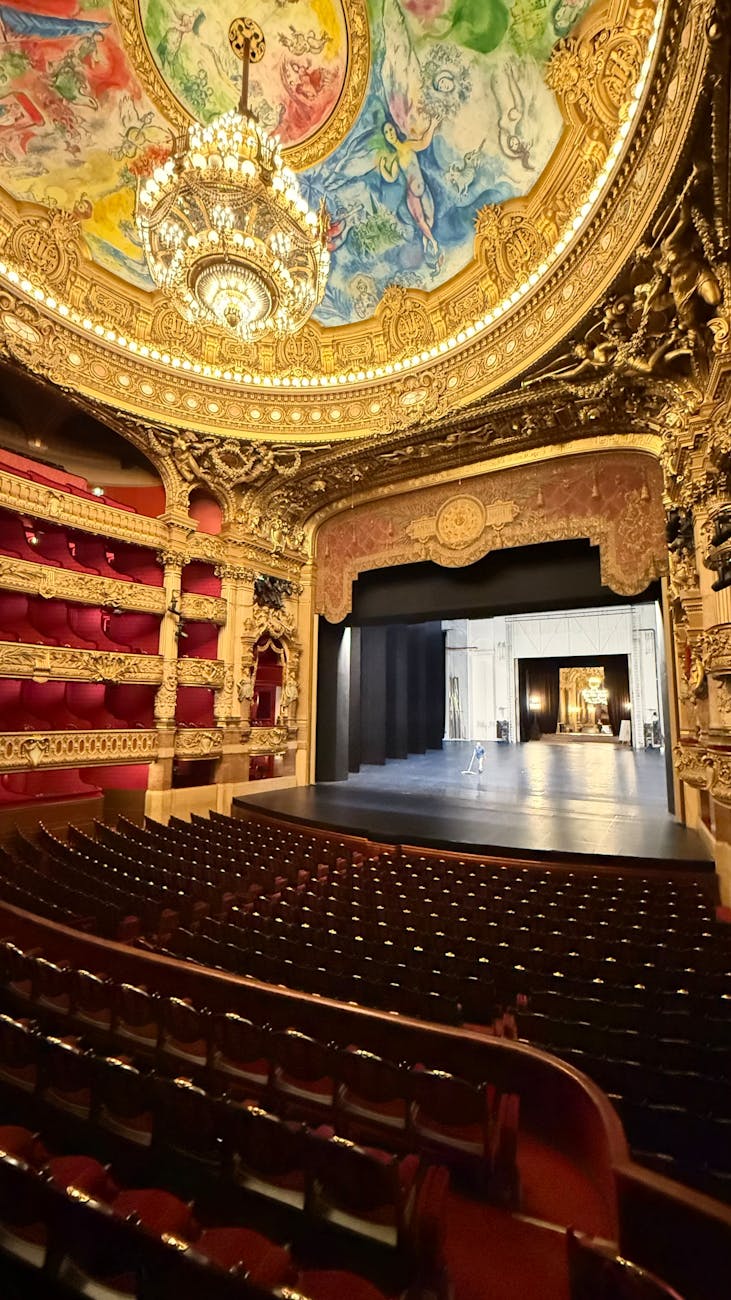
On a Tuesday at 10:15am, the same rooms can be half-empty. You can stand in the middle of the Grand Staircase and hear your footsteps echo. You can sit in the auditorium (they let you sit in the rear stalls when not rehearsing) and stare at the Chagall ceiling for as long as you like. The experience is completely different.
My ranking of best days: Tuesday > Wednesday > Thursday > Friday > Monday (closed for rehearsals some Mondays) > Saturday > Sunday. Summer months are worse than winter. Early morning is always better than afternoon. If you can only do a weekend, go at 10am exactly and head straight to the auditorium first before the crowd builds up.

The Rehearsal Problem — Why You MUST Check Before Booking
Here is the mistake that ruins most visits: you book your ticket, walk in excited to see the auditorium (and specifically the Chagall ceiling), and discover the auditorium is closed because a rehearsal is in progress. You still get in, you still see the staircase and the foyer, but you do not get the thing most people came for.
The solution: always check the rehearsal schedule on the operadeparis.fr website before you book. Go to “Visit the Palais Garnier” and look for “Auditorium closed” notices. These are published roughly a week in advance. If the auditorium is closed on the day you want to visit, either change the day or mentally prepare yourself for a 30% smaller experience.
The silver lining: closures are concentrated around production weeks, so you can often just shift to the next day. And sometimes a closure means you can still hear the rehearsal through the walls, which is oddly magical on its own. I once stood in the Grand Foyer during a closed-auditorium afternoon and heard the Paris Opera Ballet rehearsing Swan Lake through the wall. The music was muffled and the dancers’ feet thumped in time. It was better than the auditorium visit I missed.
The Chagall Ceiling — Why It’s Controversial
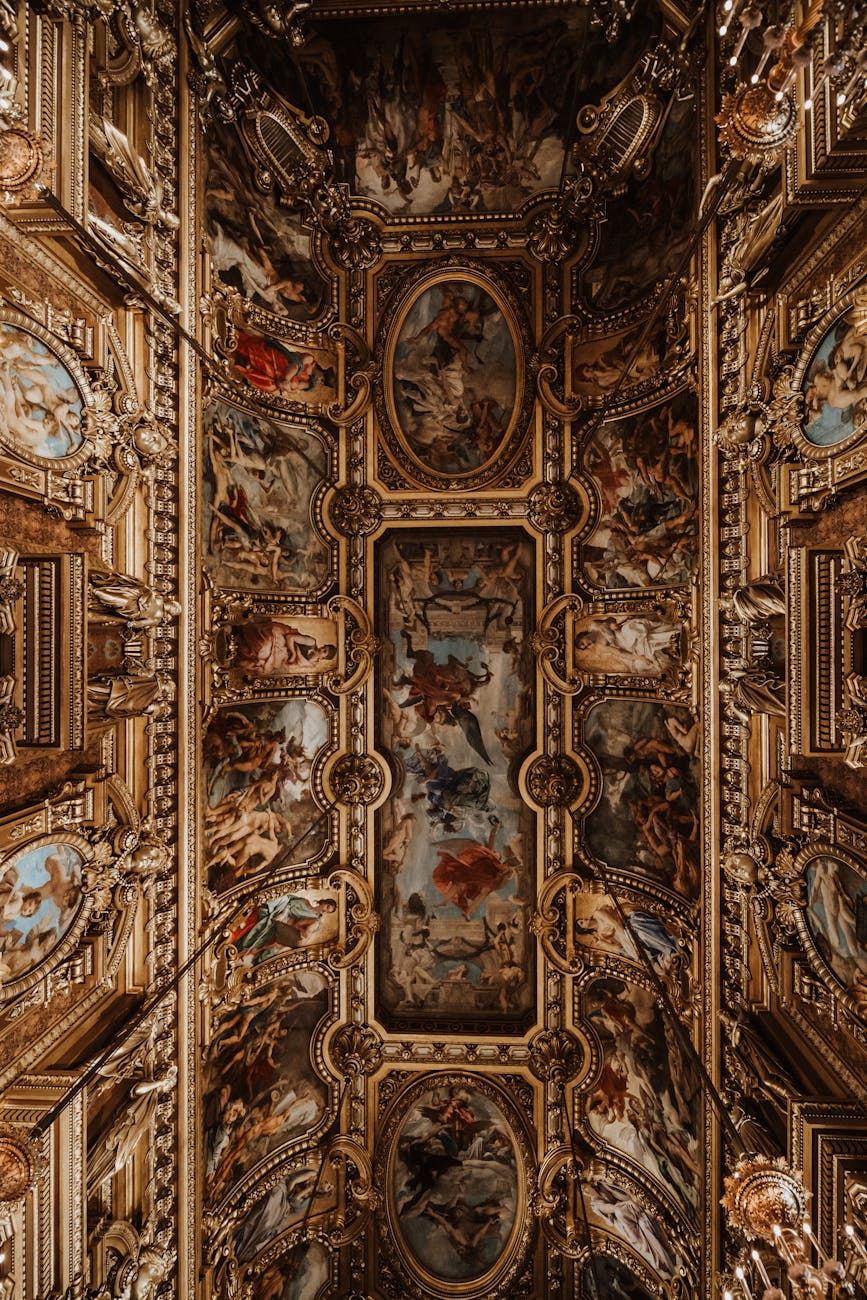
In 1960, the French culture minister André Malraux commissioned Marc Chagall — then 77 years old — to paint a new ceiling for the auditorium. The original ceiling was a 19th-century work by Jules Eugène Lenepveu and had become dark and damaged. Chagall was given one year and total artistic freedom.
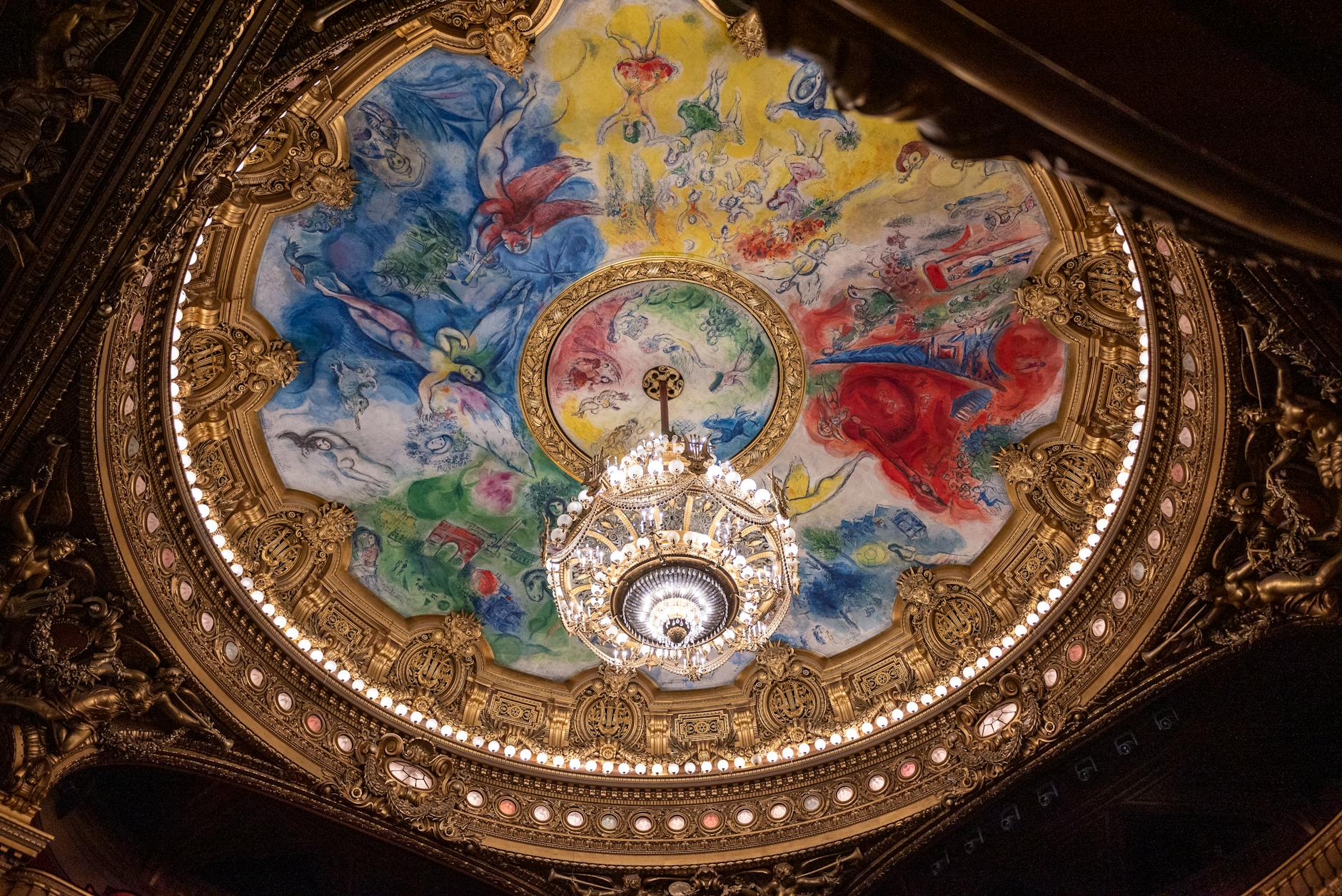
The result, unveiled in 1964, is a 240-square-metre oil painting in Chagall’s signature style: dreamy, colourful, fragmentary, with flying figures and scenes from 14 different operas arranged around a central circle. It is completely, radically different from the rest of the building — which is exactly why some people love it and others think it should never have been allowed inside Garnier’s 19th-century space.
My take: go in, look up, sit in one of the velvet seats for at least 5 minutes, and let your eyes wander. The ceiling rewards long viewing. After 5 minutes you start to see the 14 operas — Mozart’s Magic Flute, Tchaikovsky’s Swan Lake, Wagner’s Tristan and Isolde, Bizet’s Carmen — each with its own colour zone and its own flying figures. It is a love letter to the Paris Opera repertoire painted by a man who loved the music more than the building.
Which Ticket Should You Book? Three Real Options
There are three ticket formats that cover 95% of visitors. Here is what each actually gets you and who it is best for.
Palais Garnier Entrance Tickets
Price: $24 · Duration: Self-guided (75-90 min typical) · Provider: Viator
The straightforward self-guided ticket. Skip-the-line entry, audioguide available as add-on, valid any time during opening hours on the day you book. This is the one I book most often when I am on my own — maximum flexibility, minimum cost, and you can linger as long as you like in whichever room catches you.
Best for: Independent travellers, architecture nerds, anyone who wants to move at their own pace.
Opera Garnier + Seine River Cruise Combo
Price: $42 · Duration: 2-3 hours combined · Provider: GetYourGuide
My pick if you are doing Paris in 3 days or less. Bundles the Garnier entry with a 60-minute Seine River sightseeing cruise. Do the Garnier in the morning (10am opening), walk to the river, catch the cruise before lunch. It is one of the most efficient €40 half-days in Paris.
Best for: First-time visitors with tight schedules, couples who want the classic Paris sampler in one morning, anyone combining a few must-sees.
Palais Garnier Mystery Game with Entry Ticket
Price: $32 · Duration: 90-120 min · Provider: GetYourGuide
Self-guided treasure-hunt game played on your phone as you walk the building. You solve clues tied to actual architectural features — the gilded statue of Apollo, the secret passage to the rehearsal wing, the bee emblems on the carpet. It takes the standard visit and turns it into a detective game. Kids love it. Adults who think they are “too cool” for it will quietly admit afterward that they loved it too.
Best for: Families with kids 8-14, couples who want a more engaging visit than just walking around, travellers who have been to “too many” European palaces and need something different.
How to Actually Get There
The nearest metro station is Opéra (lines 3, 7, and 8) — the station exit comes out literally at the foot of the building’s front steps. You can also get there from Chaussée d’Antin – La Fayette (lines 7 and 9, for Galeries Lafayette) or Havre – Caumartin (lines 3 and 9, for Printemps). All three are less than a 5-minute walk.
By foot from the Louvre, it is 15 minutes straight up Avenue de l’Opéra — an architecturally lovely walk that was specifically designed in the 1850s to give the opera house a grand approach. Walk it if the weather is good.
By hop-on-hop-off bus, the “Opéra” stop on all the major lines drops you in front. Less efficient than the metro but useful if you are combining with other sightseeing.
There is no parking nearby — the whole area around Opéra is basically car-free during the day, and the few underground lots are expensive. If you drive into Paris (which you should not), park somewhere else and walk in.
What to See Inside — The 5 Must-Dos
The self-guided visit takes you through a lot of rooms, but five things are non-negotiable. Miss any of these and you have not really seen the Palais Garnier.
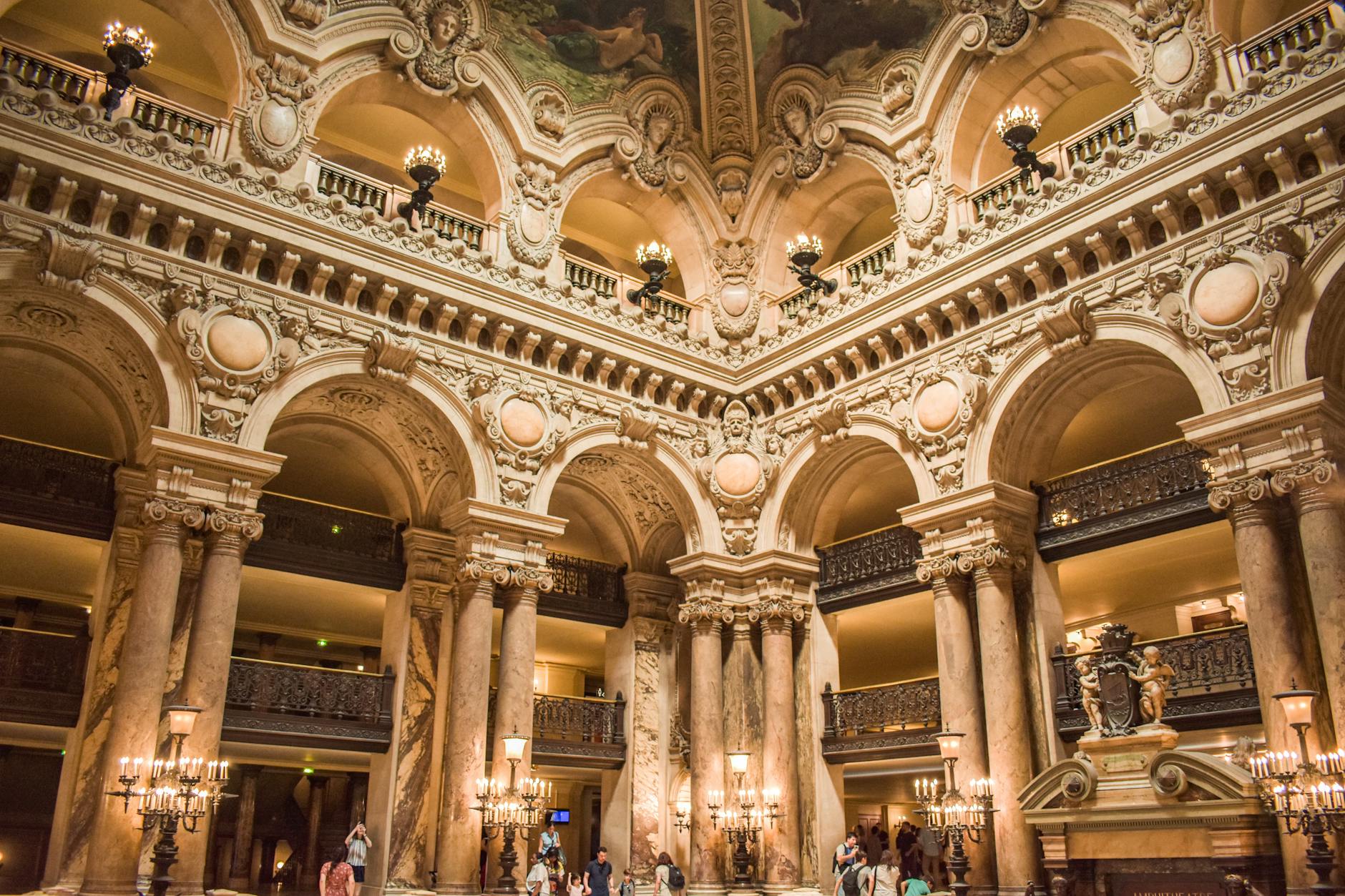
1. The Grand Staircase. You will not miss this — it is literally where you walk in. But do not just climb it on autopilot. Pause on the first landing, look up, look down, and notice the 33 colours of marble. Notice the twin ramps curving away on either side. This was designed as theatre in itself, decades before any actual opera was performed in the building.
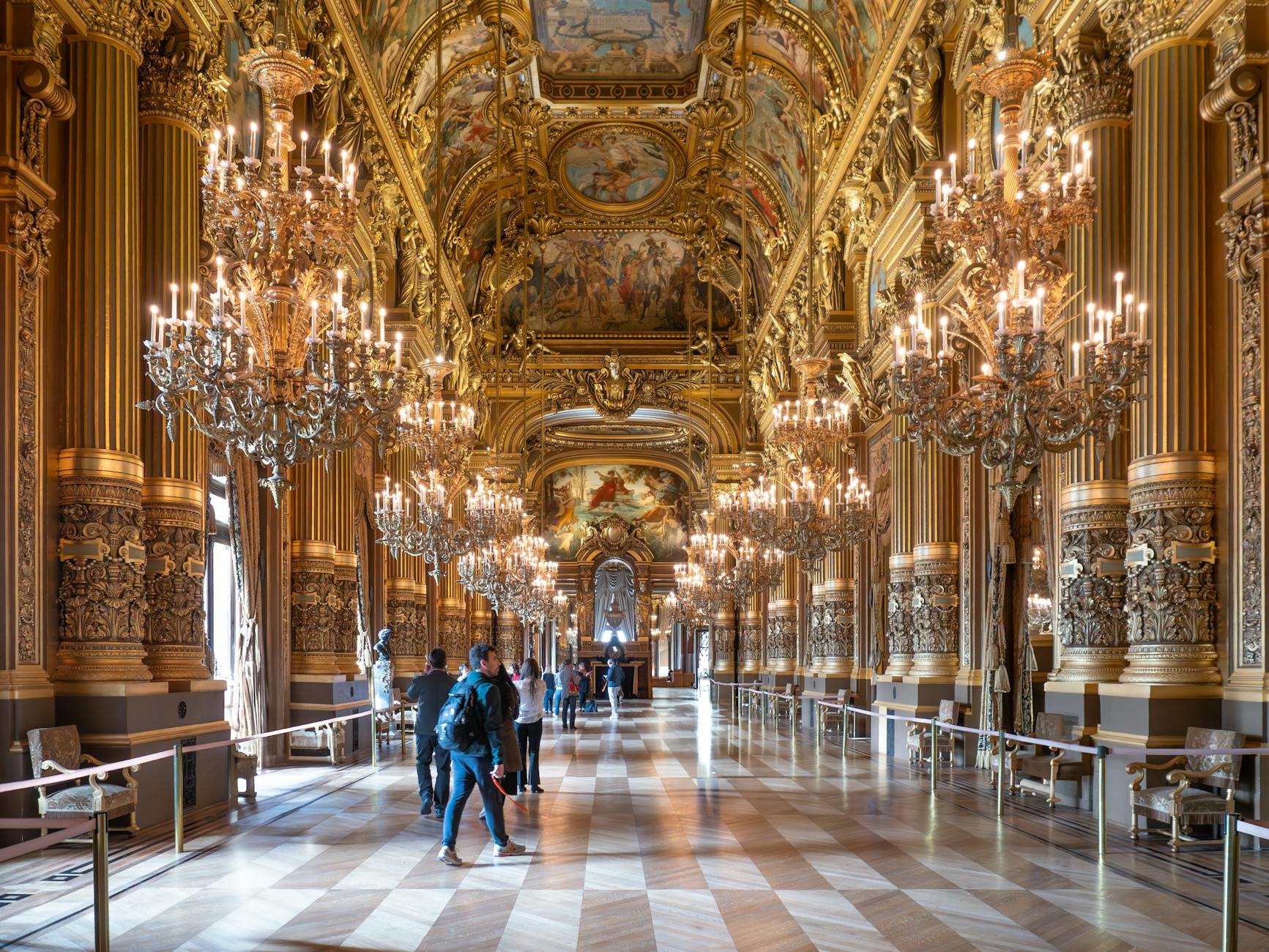
2. The Grand Foyer. From the top of the Grand Staircase, turn left or right and you enter a 54-metre-long hall of gold and chandeliers that looks like the Hall of Mirrors at Versailles but is arguably more dramatic. Walk its full length. Sit on the banquette halfway down. Look up at the Paul Baudry ceiling paintings. Pretend you are a 19th-century operagoer at intermission.
3. The Auditorium (for the Chagall). Check the rehearsal schedule first — if it is open, this is the centrepiece of the visit. Enter quietly, sit in one of the rear orchestra seats (they are unlocked for visitors), and look up at the Chagall ceiling for at least 5 minutes. If the auditorium is closed, skip to the next items and do not stress about it.
4. The Library-Museum of the Opera. Most visitors miss this because it is tucked away down a corridor at the end of the visit. Inside: original sketches for Swan Lake costumes, the original 1875 set models, rare opera manuscripts. If you love ballet or opera, spend 15 minutes here. If you do not, spend 3 minutes and walk through.
5. The Avant-Foyer and salons. The small rooms off the Grand Foyer that connect it to the auditorium. Sun Salon, Moon Salon, and the Glacier Salon (salon of ice cream, named for the mirrors reflecting light like ice) — each in a different colour and theme. These are the Palais Garnier’s “secret rooms” and most people walk past them without entering.
Best Time of Day to Visit
10:00 – 11:00am: The gold standard. The building has just opened, the morning light is coming through the huge front windows at an angle, and crowd density is at its lowest. You can genuinely hear your own footsteps in the Grand Foyer.
11:00am – 1:00pm: Still good but crowd density picks up. You will start to see tour groups coming through — they tend to move together, so if you time your movement to walk in the “gaps” between groups, you can still get good photos.
1:00 – 3:00pm: Peak crowd period. Tour groups are at maximum, the Grand Staircase has a permanent cluster of photographers, and the auditorium gets busy. Avoidable if possible.
3:00 – 4:30pm (last admission): Crowds start thinning as tour groups move on to their next stop. If you go in at 3:30 and close the place at 5pm, you can have a quiet final 30 minutes. The afternoon light through the west windows is also beautiful — warm and golden.
Evenings (during performances): Different situation entirely. You cannot do a normal visit in the evening, but you can buy a cheap standing-room ticket for an actual opera or ballet performance (sometimes as low as €15) and see the building while attending a show. This is the deepest cut Paris opera tip — ask at the box office for “places debout” and you may get in for less than a museum ticket.
What to Wear and Bring
The Palais Garnier is a museum, not a religious site, so there is no dress code for daytime visits. Jeans and a t-shirt are fine. That said, if you feel like dressing up a little, you will not feel out of place — the building makes you want to. Many visitors show up in slightly smart clothes just because the setting demands it.
Shoes matter. There is a lot of marble, a lot of stairs, and a lot of standing. Flat comfortable shoes (not flip-flops) are the right call. Heels look great on the Grand Staircase but your feet will regret them by the library-museum.
Bag policy: small bags (under 40cm × 30cm) are allowed inside without checking. Larger bags and backpacks must be checked at the cloakroom near the entrance — it is free but the queue can add 10 minutes at peak times. Carry small.
Photography is allowed everywhere except inside the auditorium when a rehearsal is taking place. Flash is allowed in most rooms but please switch it off in the Chagall auditorium — you are not going to get the ceiling in a phone flash photo anyway, and the light bounces back at other visitors.
The Buttes Chaumont of Opera Houses — A Fair Warning
One thing to mention honestly: the Palais Garnier is not for everyone. If you are not the kind of person who gets excited by interiors, architecture, or 19th-century decorative art, you may walk through in 30 minutes and wonder what the fuss was about. I have taken friends who said “yes it’s nice but 45 minutes was enough.” Do not feel bad if that is you.
Who loves it the most: architecture fans, theatre people, ballet people, opera fans, history nerds, anyone who has read the Phantom of the Opera novel (yes, the 1910 Gaston Leroux original is great), and travellers who specifically seek out “gorgeous interior” experiences. If you fall into one of these groups, plan for 90 minutes and bring the audioguide.
Who tends to feel lukewarm about it: people who are really here for food and street life, travellers on a 2-day Paris sprint who are already exhausted, visitors who have already seen Versailles and feel ornate-palace-saturated, and anyone who prefers modern art or outdoor experiences over indoor historical spaces. If this is you, maybe skip it — there is no shame in picking different attractions.
How Long You Really Need Inside
The honest answer: anywhere from 45 minutes to 3 hours depending on who you are and what you care about.
Speed-run (45 minutes): Grand Staircase, Grand Foyer, peek into the auditorium, walk out. Fine if you are on a tight schedule or are not especially interested in the history. You will still see the three main “wow” spaces.
Normal visit (75-90 minutes): All of the above plus the side salons, the library-museum, and 5-10 minutes sitting in the auditorium studying the Chagall. This is what 80% of visitors do and it is the right amount of time for most people.
Deep dive (2-3 hours): Audioguide on, every room, every interpretive panel, every corner of the library, and at least 20 minutes in the auditorium trying to identify all 14 operas in the Chagall ceiling. Plus a visit to the gift shop for the excellent architecture books. This is what I do when I go alone and have no schedule.
Combining Your Visit With Galeries Lafayette
Here is the perfect half-day itinerary and the one I recommend to every first-time visitor: Palais Garnier at 10am, lunch at Galeries Lafayette at 12:30, and the free rooftop at Galeries Lafayette at 1:30. The three places are within a 5-minute walk of each other and together form one of the most satisfying mornings in central Paris.
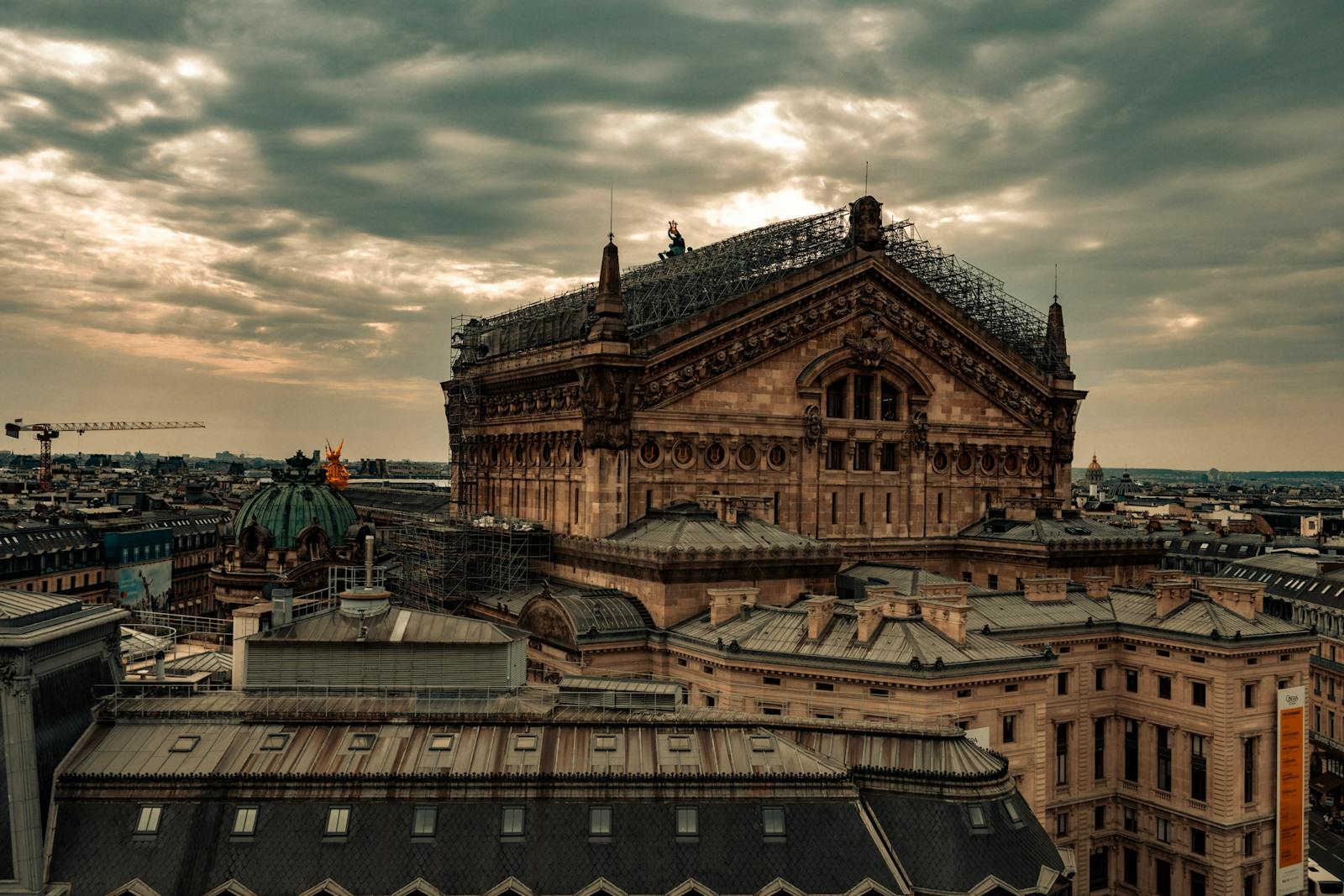
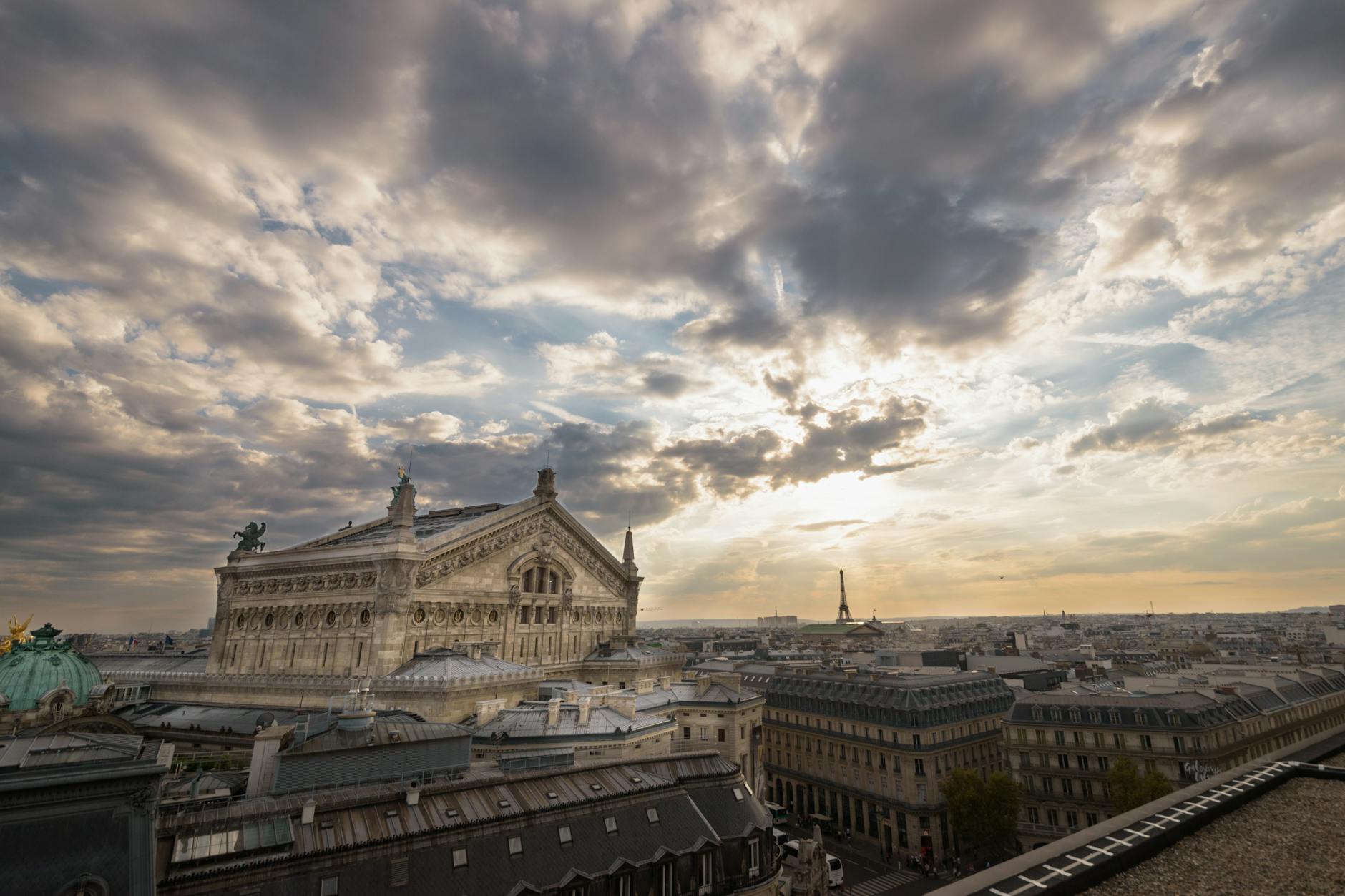
Galeries Lafayette (the department store two blocks from the opera) has an Art Nouveau glass dome that is nearly as beautiful as anything in the Palais Garnier, a free rooftop with panoramic views of Paris, and a food hall that is legitimately excellent for a quick lunch. The rooftop view includes the Palais Garnier from above — which is one of the few places you can see Garnier’s green copper roof in context with the rest of Paris.
My exact plan: enter the Palais Garnier at 10am, spend 90 minutes, walk to Galeries Lafayette, take the escalator to the gourmet floor, buy a sandwich and a glass of wine at one of the counter spots, then take the elevator to the free rooftop. You will be done by 1pm and you will have done two of the best free-or-cheap things in central Paris.
Common Mistakes to Avoid
Booking without checking the rehearsal schedule. Covered above. Non-negotiable.
Visiting on a Saturday afternoon. If you have to, go. But if you have any flexibility, shift it to a Tuesday or Wednesday morning. The difference in experience quality is enormous.
Skipping the audioguide. At €5 it is a ridiculous bargain and it unlocks 80% of what makes the building interesting. Without it, the rooms are beautiful but you have no context for what you are looking at.
Rushing through the Grand Foyer. First-time visitors spend 10 minutes on the Grand Staircase and 4 minutes in the Grand Foyer. Flip it. The staircase is stunning at first sight but revealed faster. The foyer has more details and rewards lingering.
Assuming the Phantom of the Opera stuff is real. The Palais Garnier does not have a “phantom’s lair” tour and there is no underground lake you can visit. (There IS an actual underground water reservoir beneath the building, which inspired the novel, but it is not accessible to visitors.) Some of the corridors have signs explaining the novel’s connection to the real architecture — enjoy those, but do not expect a Phantom ride.
Not sitting down in the auditorium. You are allowed to. The rear orchestra seats are open to visitors when the auditorium is not in rehearsal. Sit for at least 5 minutes. It is when the building actually works on you.
Seeing a Real Performance — The Ultimate Upgrade
If you happen to be in Paris during the opera or ballet season (roughly September to June), buying a ticket to an actual performance is the most magical way to see the Palais Garnier. The building was designed as a performance space, not a museum, and seeing a real audience filling those red velvet seats is a completely different experience from the daytime self-guided visit.
Tickets start at €15 for rear balcony seats (limited view) and go up to €200+ for prime orchestra. The sweet spot for visitors is the €40-60 range, which gets you a decent view without breaking the budget. Book through operadeparis.fr (the official site) as soon as the season schedule is released — popular ballets sell out weeks ahead.
Standing room (“places debout”) tickets are the ultimate hack: €15 for a rear-stalls standing position with a real view of the stage. You have to buy these in person at the box office about an hour before the show. I have done this twice and both times got into a full house ballet for less than dinner would have cost.
Dress code for performances is “smart casual minimum” — no jeans and t-shirts, but you do not need a tuxedo either. A button-down shirt and dress pants (or a dress for women) is perfect. Most Parisians show up well-dressed because they love the occasion.
The Library-Museum Deserves More Attention
Most visitors walk through the Bibliothèque-Musée de l’Opéra in about 4 minutes, and that is a mistake. The library contains around 600,000 historical documents — original scores in the handwriting of composers, costume sketches by Romantic-era designers, photographs of every production since the 1880s, and set models for famous operas.
The museum rooms display rotating highlights. When I last visited there was an original costume from a 1905 production of Aida alongside the set model for the 2018 production of the same opera — 113 years apart, same opera, completely different visual languages. That kind of direct comparison is only possible in a working opera house museum.
If you are short on time, at least walk through the main display room and read one or two of the interpretive panels. If you love opera or ballet, budget 20 minutes and take your time. The library is the Palais Garnier’s secret third act — most visitors miss it entirely.
More Paris Planning on The Abroad Guide
The Palais Garnier works beautifully as part of a broader Paris itinerary. If you are pairing it with other classic Paris attractions, our Louvre tickets guide covers the biggest museum on the planet (which happens to be a 15-minute walk from Garnier), and the Eiffel Tower tickets guide is essential reading for avoiding the 90-minute summit queue.
For half-day trips out of Paris that pair well with a morning Garnier visit, our Versailles from Paris guide is the obvious next step if you love ornate interiors. For something completely different, the French Riviera day trip from Nice post is the opposite end of the French spectrum — outdoor, coastal, and relaxed. And if you want to extend your Paris food appreciation after a Garnier-and-Galeries Lafayette morning, the Paris food tour guide covers the best three-hour neighbourhoods for cheese, wine, and pastries.
Final Thoughts — Is It Worth It?
Yes. For €14, and roughly 90 minutes of your time, the Palais Garnier gives you more aesthetic bang for your buck than almost anything else in Paris. It is not as famous as the Louvre or the Eiffel Tower, which is actually a plus — you can have rooms almost to yourself at certain times of day, and the absence of queues makes it a more restful experience than the Paris “big three.”
If you are going to Paris for the first time and you have to choose between this and, say, a second museum, I would pick the Palais Garnier. It is experiential rather than educational — you do not go to learn facts, you go to stand inside a building that takes your breath away. That is a rarer thing than it sounds.
Book a Tuesday morning ticket. Check the rehearsal schedule. Bring the audioguide. Sit in the auditorium for 5 quiet minutes and look up at the Chagall. Walk slowly through the Grand Foyer. And when you come out into the Place de l’Opéra at around 11:30, the day will be in front of you and you will feel about 10% more Parisian than you did when you walked in.
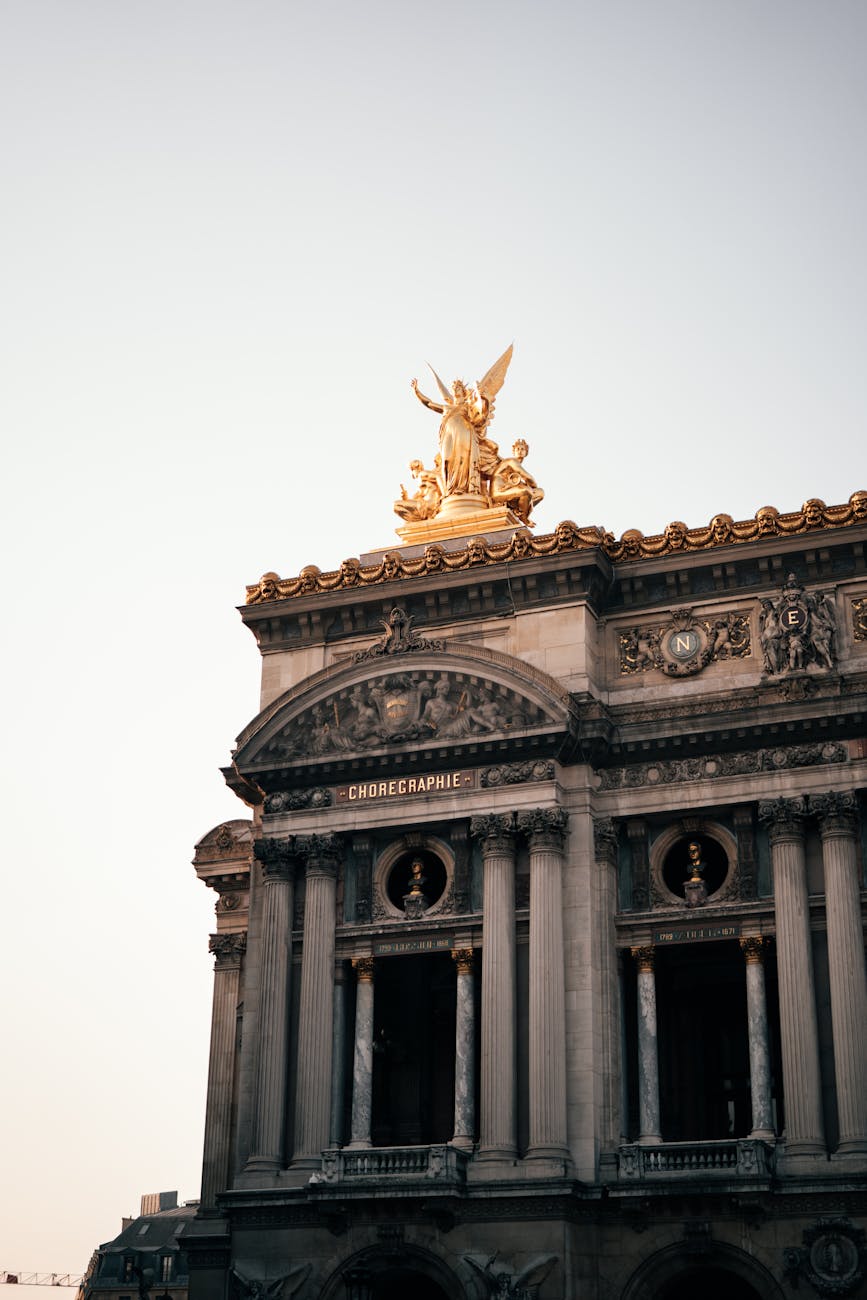
FAQ — Short Answers to the Most Asked Questions
How much is a Palais Garnier ticket? €14 for adults, €10 for ages 12-25, free under 12. Audioguide is €5 extra. Combo tickets with other Paris attractions start at $42.
Can I visit the Palais Garnier without seeing an opera? Yes. The building is open to self-guided visitors daily from 10am to 5pm, completely separate from the performance schedule. Most visitors go for the building, not a show.
What is the best time to visit? Tuesday or Wednesday at 10am. Weekends are significantly busier. Mornings beat afternoons. Winter beats summer.
How long does a visit take? 75-90 minutes is normal. Speed-runners can do it in 45. Architecture fans can stay for 2-3 hours.
Is the auditorium always open? No. It closes during rehearsals, which happen often. Check the operadeparis.fr website before booking.
Is there a dress code for the daytime visit? No. Jeans and t-shirts are fine. Dress codes only apply to evening performances.
Can I take photos inside? Yes, everywhere except in the auditorium during rehearsals. Flash is allowed but unnecessary.
How do I get there from the Louvre? Walk 15 minutes up Avenue de l’Opéra, or take metro line 1 to Palais Royal then line 7 to Opéra.
Is it wheelchair accessible? Mostly yes. There is elevator access to the Grand Foyer and auditorium level. The Library-Museum has some steps. Call ahead if you need detailed accessibility info.
Can I see the Phantom’s lair? No. The underground water reservoir that inspired the novel is not accessible. The signage near the auditorium does explain the Phantom connection.
Is the Chagall ceiling worth the hype? Yes, if you give it time. Sit in the auditorium for at least 5 minutes looking up. After 2 minutes it is confusing, after 5 minutes it starts to resolve into the 14 operas it depicts, and by minute 7 you will want to buy a book about it in the gift shop.