
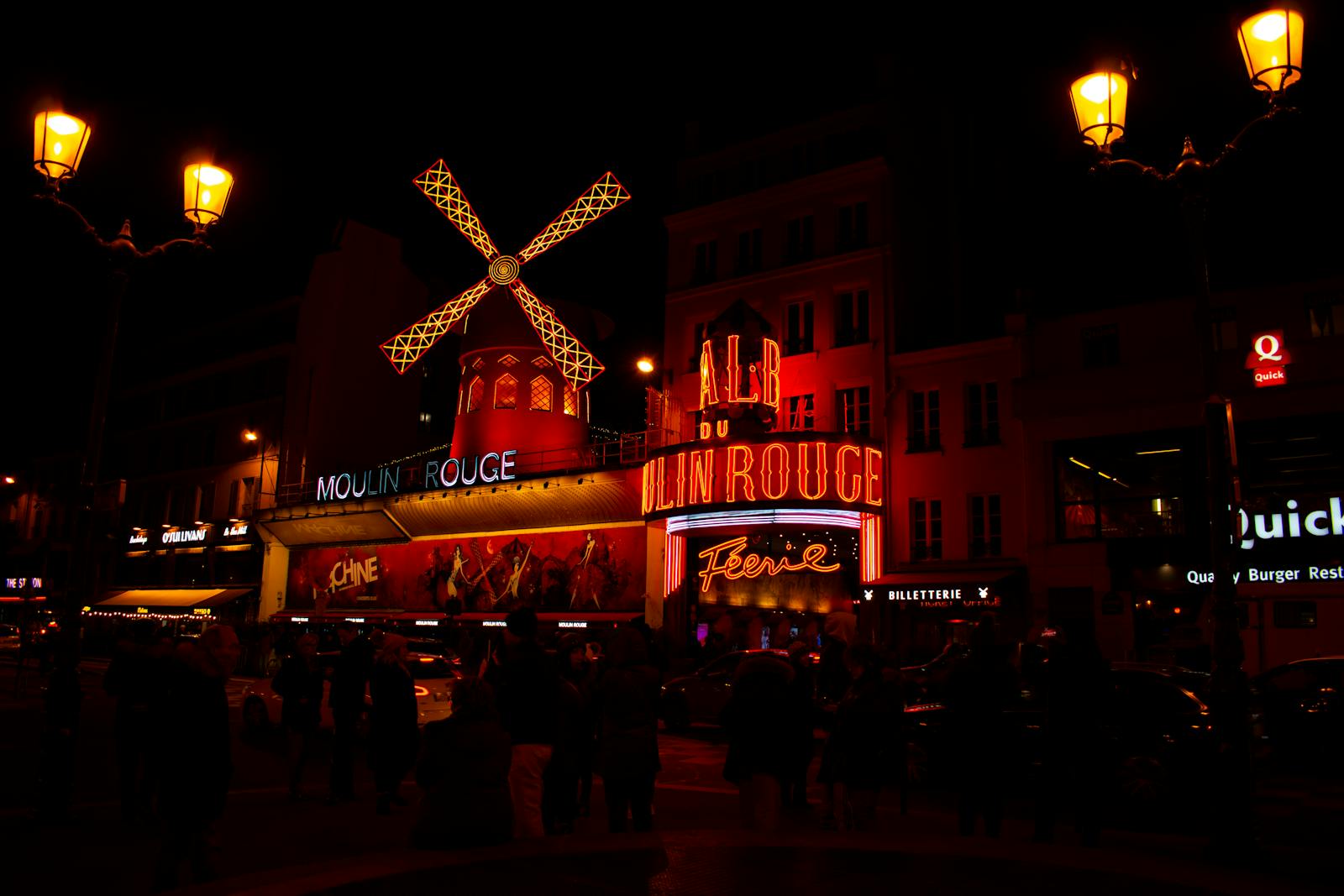
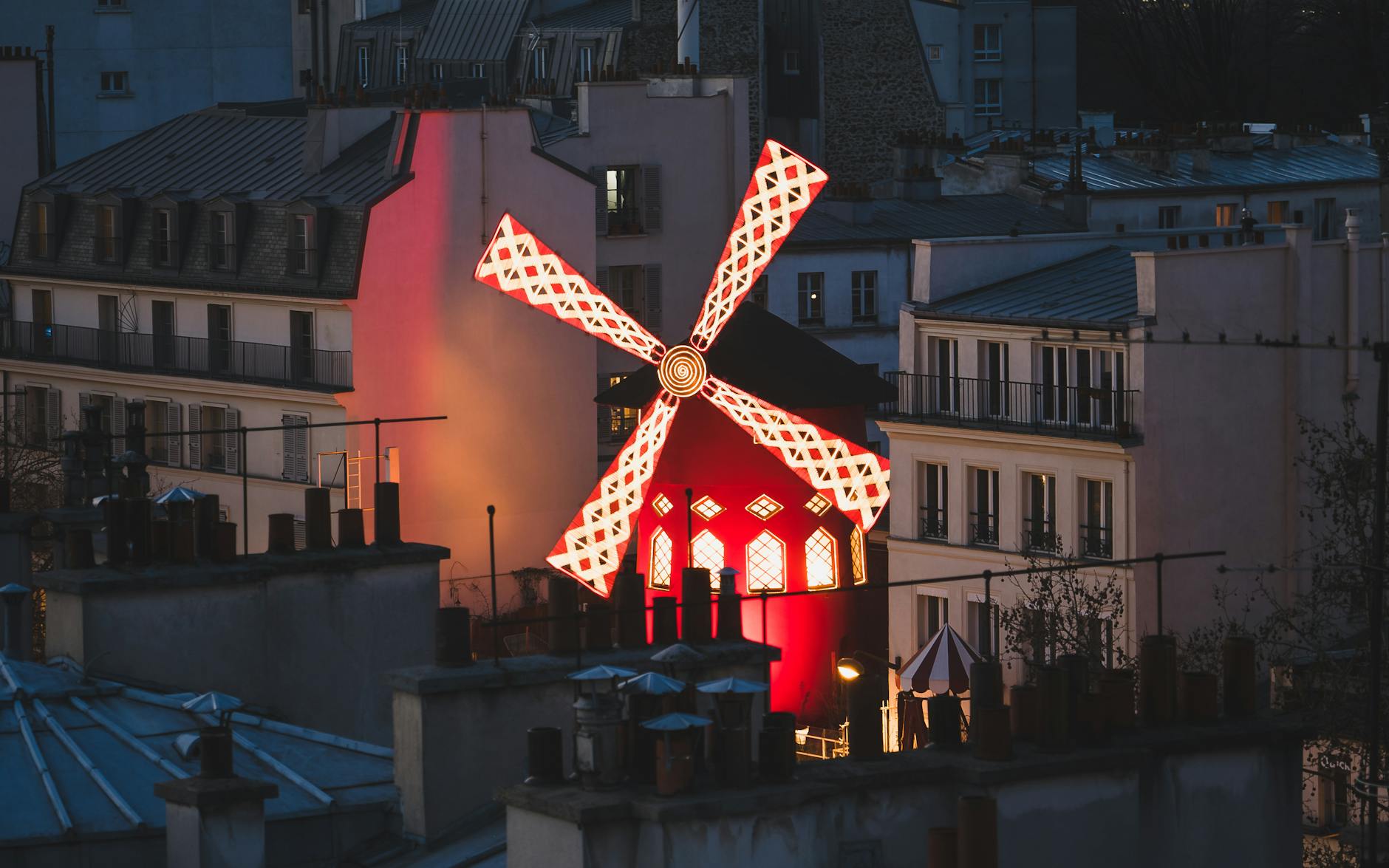
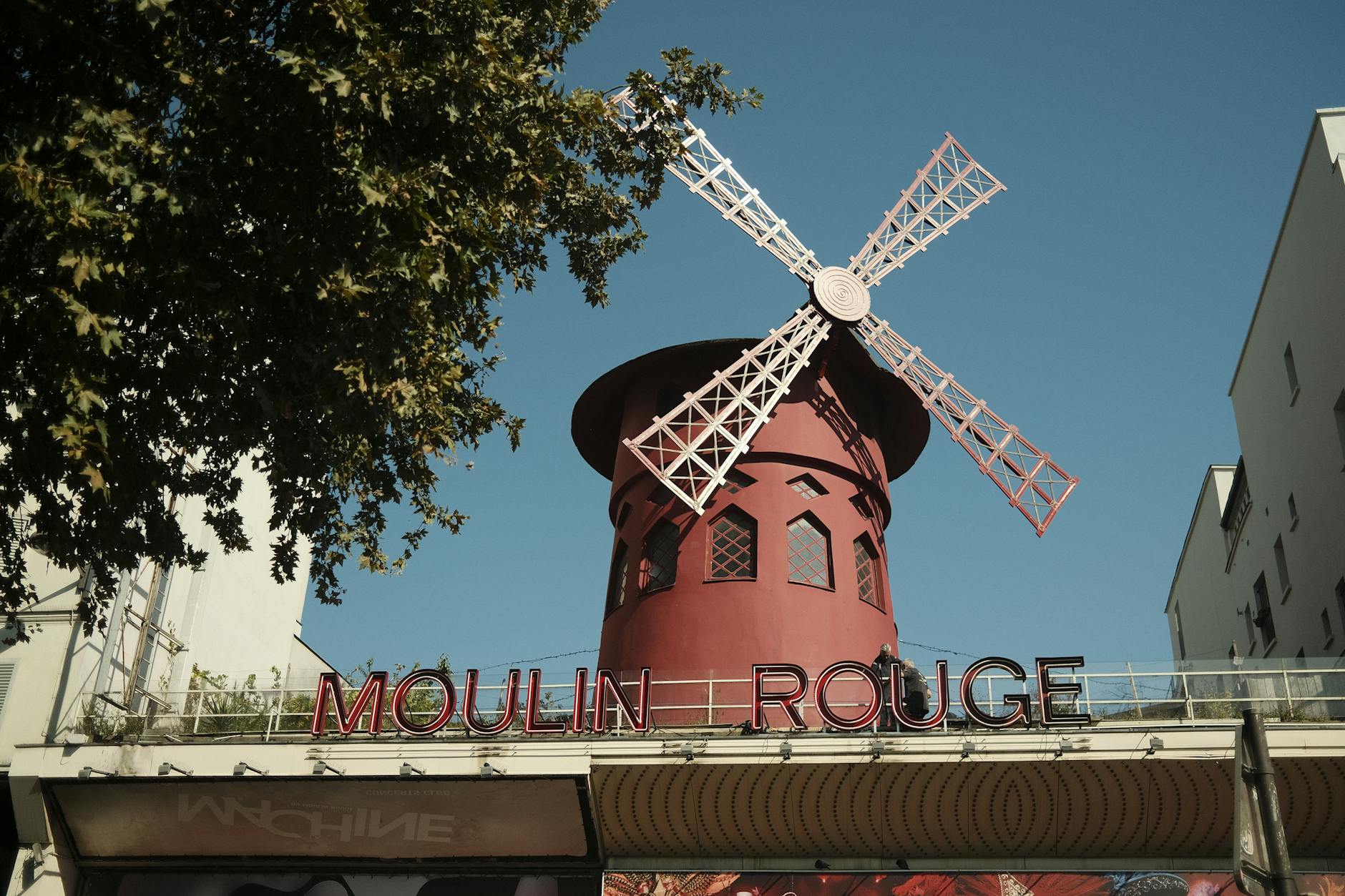
Moulin Rouge is the oldest working cabaret in Paris, it has been running since 1889, and it is still probably the single most touristy thing you can do in Paris after queueing up the Eiffel Tower. I am saying that as a compliment. Some tourist things are tourist things because they are bad. Moulin Rouge is tourist because it is genuinely fun and because nobody has managed to copy it successfully in 136 years of trying. The red windmill still spins, the cancan is still the cancan, and the champagne still arrives cold in the chilled bucket.
The real question is not whether to go. The real question is which ticket you buy. There are three main formats — the show with champagne, the full dinner show, and one of the combo tours that pair the show with a Seine cruise or a Paris sightseeing drive. They cost wildly different amounts. They deliver wildly different evenings. And most first-time visitors book the wrong one by accident because the website descriptions all sound similar.
This guide is the result of watching friends book Moulin Rouge wrong for a decade. It tells you what each format actually includes, when the cheap option is fine, when the dinner show is worth the extra €185, and the three things nobody tells you before you show up.
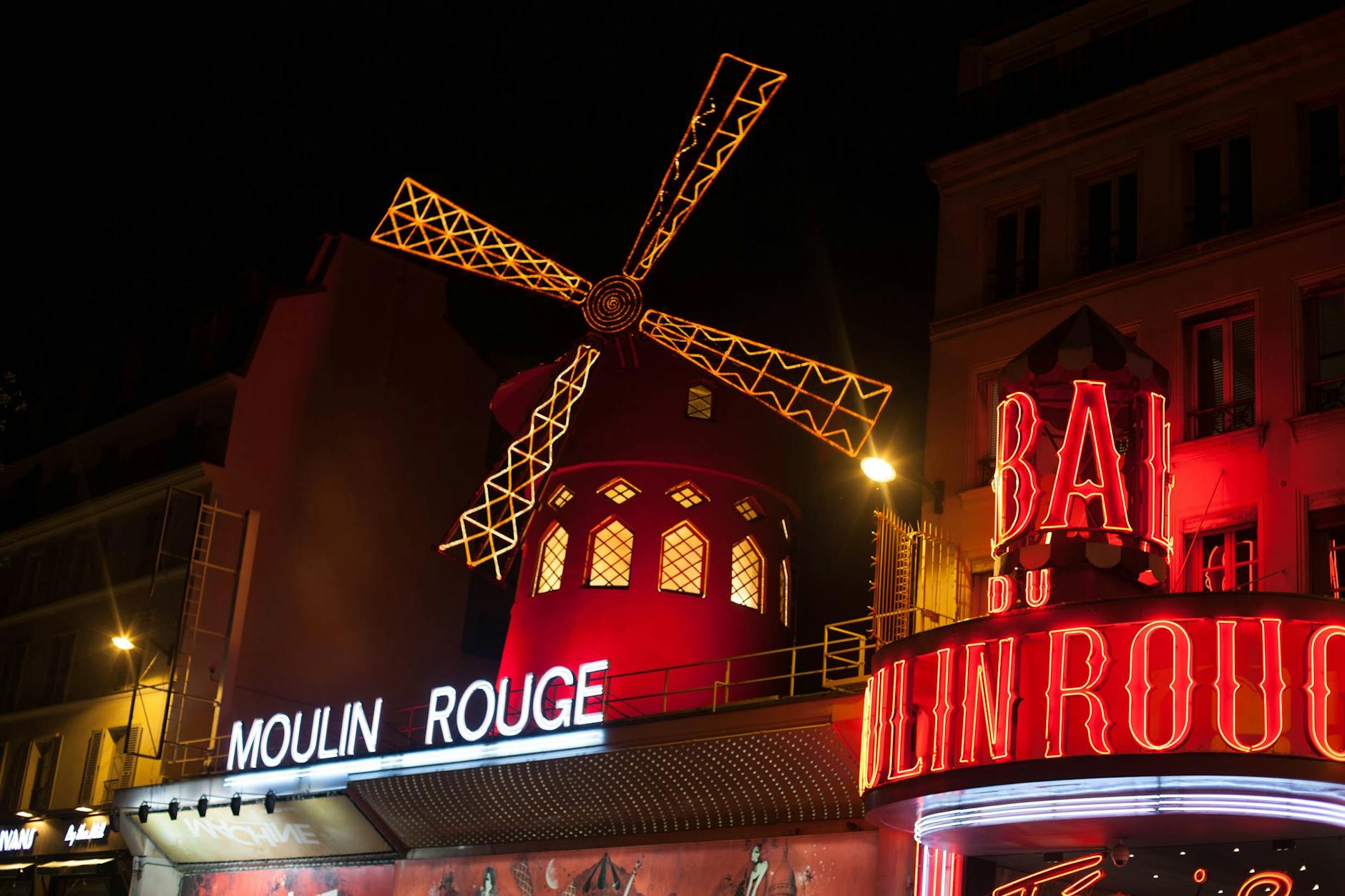
Quick Picks: Moulin Rouge Tickets
Just the show (budget pick): Moulin Rouge Cabaret Show with Champagne — half a bottle of Nicolas Feuillatte, 2-hour show, seated in the main hall. Starts at $115.
The full experience: Dinner Show at Moulin Rouge — 3-course French menu, wine pairing, premium seating, 4-hour evening. Starts around $300.
Combo evening: Evening Sightseeing Tour + Moulin Rouge Show — coach tour through illuminated Paris first, then the 9pm show, hotel drop-off. Starts around $200.
- Quick Picks: Moulin Rouge Tickets
- Is Moulin Rouge Worth It?
- The Three Ticket Types Explained
- When the Cheap Ticket Is Fine
- When the Dinner Upgrade Is Worth It
- The Combo Tour Question
- From Paris: Moulin Rouge Cabaret Show Ticket with Champagne
- From Paris: Dinner Show at the Moulin Rouge
- From Paris: Evening Sightseeing Tour and Moulin Rouge Show
- How to Get There
- What to Expect Inside
- What to Wear
- Common Mistakes
- Is Moulin Rouge Right For You?
- A Perfect Moulin Rouge Evening Plan
- What to Pair Your Moulin Rouge Evening With
- Final Thoughts
- FAQ
Is Moulin Rouge Worth It?
Short answer: yes, once. Long answer: yes once, if you go in understanding what you are buying. Moulin Rouge is not a night out. It is a theatrical spectacle with a specific format, and it is designed for people seeing it for the first time with no expectations of Parisian nightlife. It is not trying to be cool. It is trying to deliver the same show it has been delivering since 1889, and it does this with discipline.
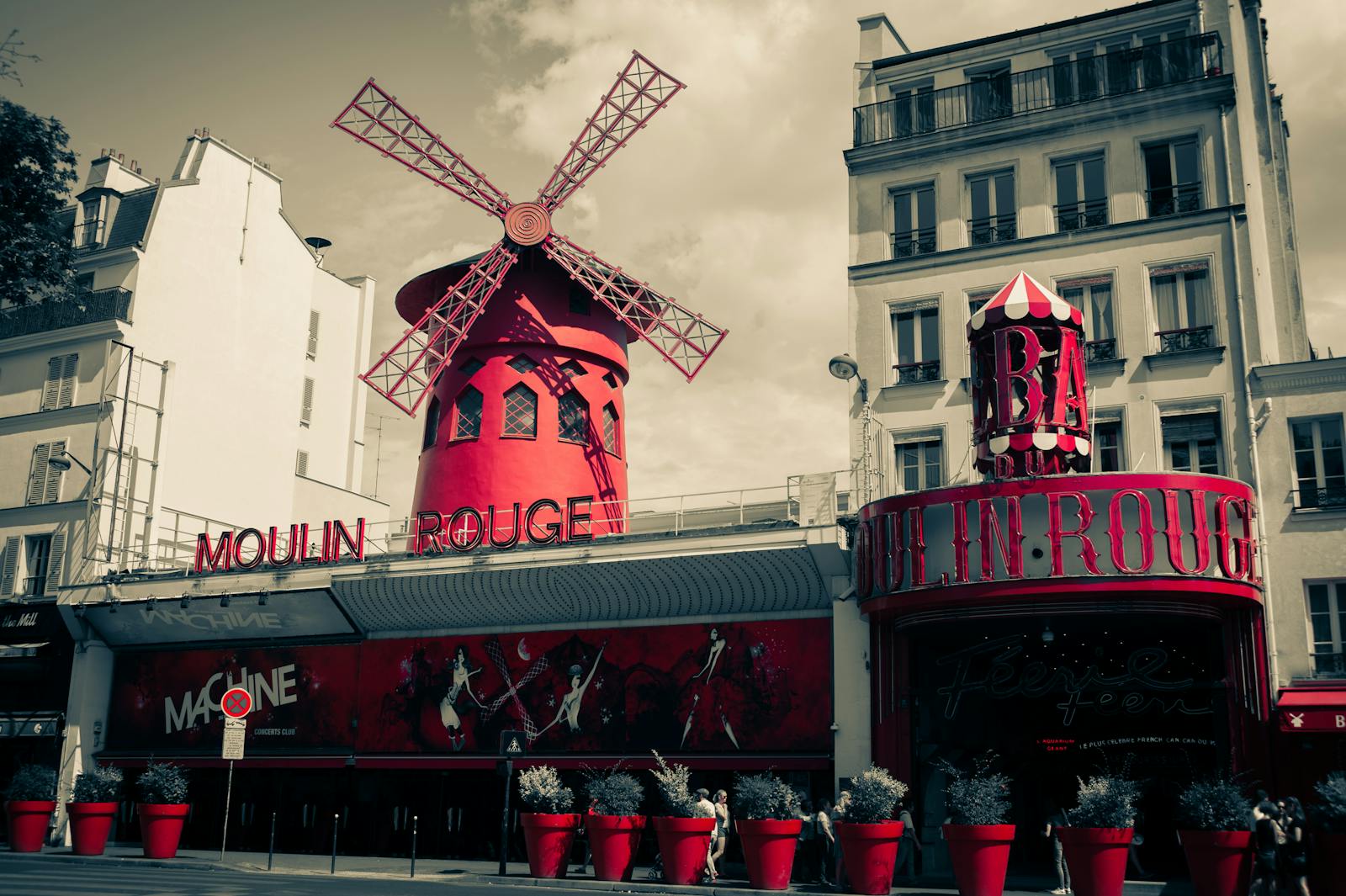
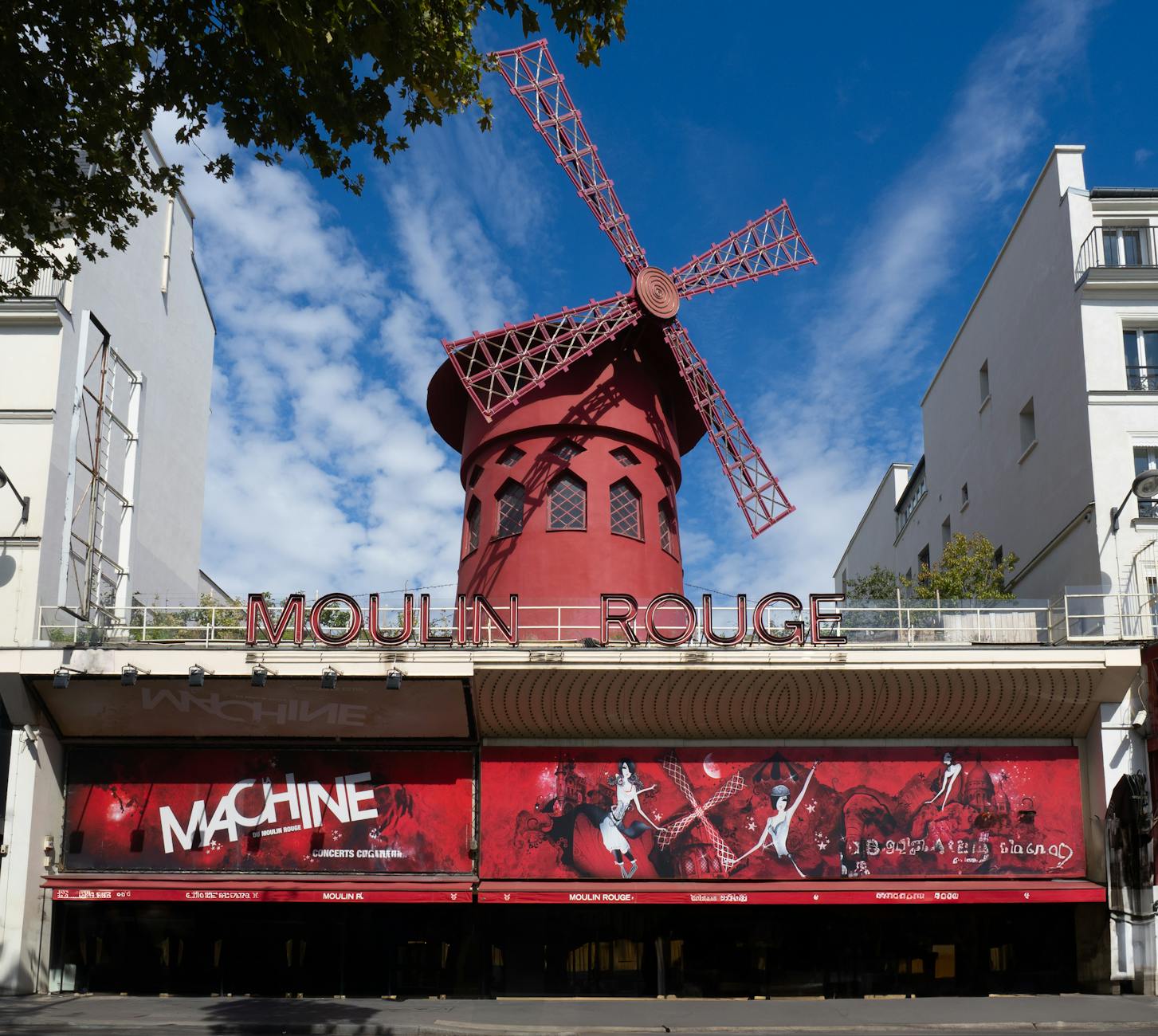
The show itself is a Las Vegas-scale revue called “Féerie” (which has been running since 1999), with about 60 performers, 1,000 costumes, and four elaborate set-piece dance numbers separated by variety acts like aerialists, ventriloquists, and the occasional live python. The cancan finale is the one everyone knows from the Baz Luhrmann film and yes, they still perform it the original way, with the high kicks and the splits and the 19th-century petticoats.
Things to know before you decide:
The show is not particularly French beyond the setting and the music. The dancers come from ballet and gymnastics schools all over the world. The menu during dinner is French. The champagne is French. Beyond that, it is essentially a variety show aimed at travelers of every nationality at once, which is why all the speaking parts are minimal and every big moment is visual.
The room is tight. Tables are small and close together. If you are tall, expect some knee-bumping. If you booked the cheapest seats you will share a table with strangers. This is not a romantic dinner-for-two setup unless you pay for one of the upgraded table categories.
Photography during the show is forbidden. They mean it. The dress code is “smart casual” — no flip-flops, no shorts, no athletic wear. Jeans with a decent top are fine. Most guys wear a collared shirt. Women tend to dress up a bit more than the men because it feels appropriate to the setting.
The Three Ticket Types Explained
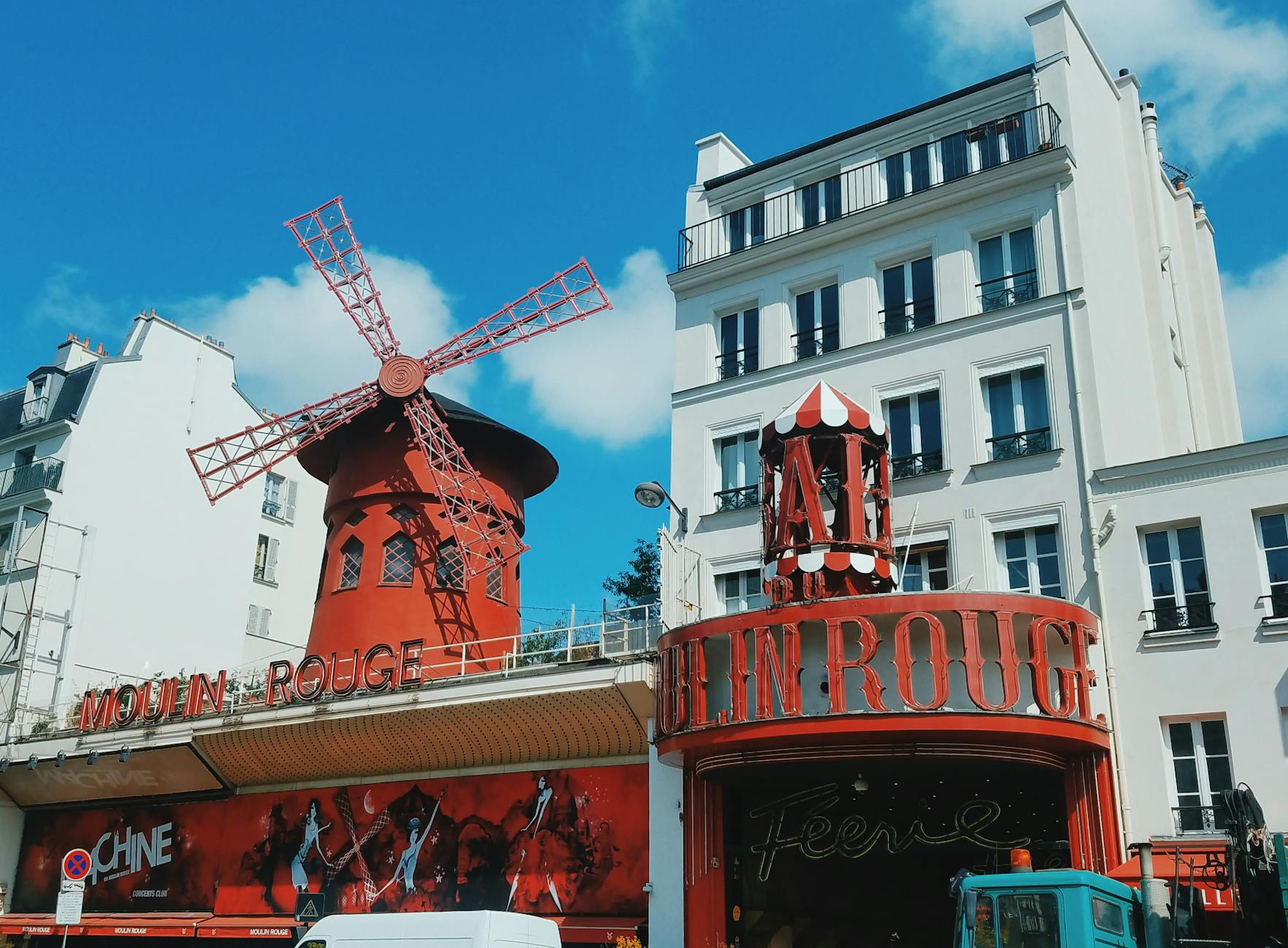
Here is the honest breakdown of what you are choosing between.
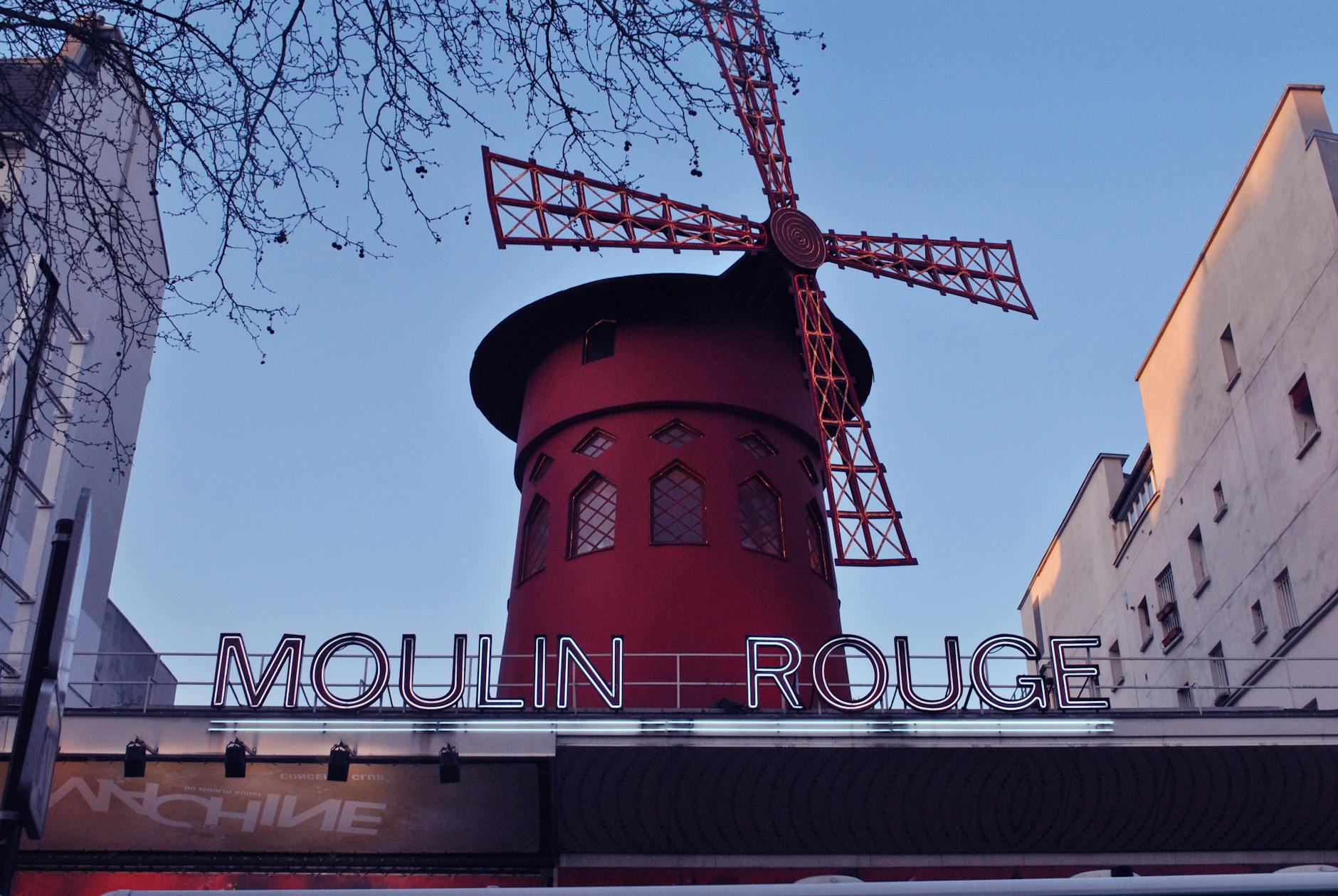
The Champagne Show ($115-ish): you arrive at 8:30pm, are seated in the main hall, are given half a bottle of champagne per person (it is Nicolas Feuillatte, a perfectly decent mid-range Grand Cru), and watch the 9pm show for two hours. Then you leave. This is what 80% of visitors book and for most people it is the correct choice. The show is the same show everyone else is watching — you are not missing the dinner portion, you are just skipping it.
The Dinner Show ($300+): you arrive at 7pm, are seated at a reserved table in the dining hall (better tables than the champagne-only seats, closer to the stage), eat a three-course French meal with wine, then watch the show in the same seats. The dinner runs from about 7pm to 8:45pm, then the show runs 9pm to 11pm. This is a four-hour commitment and it is priced to match. The food is fine — three courses of competent French cooking, not mind-blowing, not bad. You are paying for the seating, the timing, and the all-in experience.
The Combo Tours ($200-300): these bundle the Moulin Rouge show with either a Paris sightseeing drive (evening coach tour through the illuminated city, then the show) or a Seine river cruise (dinner cruise first, then the show). They are transport-inclusive, which is the real selling point — you get picked up from a central location and dropped back at your hotel. The transport value alone is worth €20-30 per person in Paris taxi terms.
When the Cheap Ticket Is Fine

The champagne-only ticket is the right call if any of these apply to you:

You are not especially hungry at 7pm, or you have already planned dinner somewhere else in Paris. The Moulin Rouge dinner is fine but it is not your once-in-a-lifetime Paris meal. If you are going to spend the €150+ premium for the dinner upgrade, ask yourself whether you would rather spend that on dinner at a proper Parisian restaurant first and just do the show after.
You are traveling on a budget and the €185 saving matters. There is zero difference in the show itself. You get the exact same cancan, the exact same sets, the exact same python. You are not a second-class citizen with the cheap ticket. The only difference is the table position and whether you get food.
You have an early morning the next day. The dinner show ends close to 11:30pm and you will not be at your hotel before midnight. The champagne-only show ends at 11pm and you can be in bed by 11:30. That is a meaningful difference if you have a train to Bordeaux the next morning.
You are traveling solo or as a group of three. The table sizes in the champagne hall work well for groups of 2 or 4, which are the table sizes they optimize for. If you are a 3, you will share with a stranger; if you are a 1, you will definitely share. The dinner hall has more flexible table sizing.
When the Dinner Upgrade Is Worth It
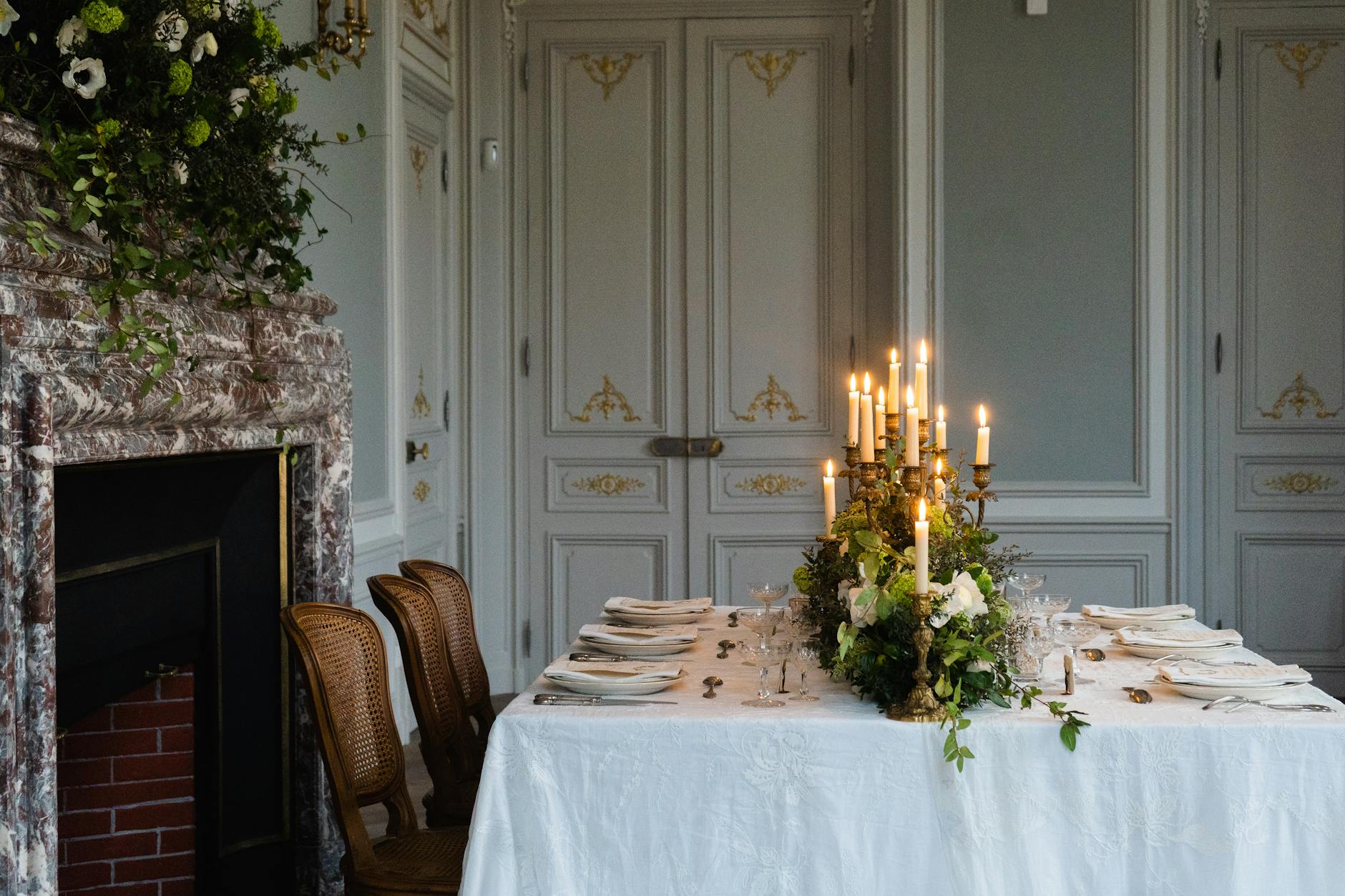
The dinner upgrade makes sense in specific scenarios:
Special occasion: anniversary, proposal, milestone birthday, honeymoon. The dinner show gives you table service for a full 4-hour evening in one of the most famous rooms in Paris, and the seating is noticeably better (closer to the stage, sometimes with a premium sight-line that matters for the more elaborate set pieces). For a once-in-a-decade celebration, it delivers on the expectation.
Convenience: you do not want to fuss with booking a separate dinner earlier in the evening. Paris restaurants on a Saturday night book up 2-3 weeks in advance and if you have not pre-planned a place, the dinner show solves the problem of what to eat and eliminates one logistical headache. You arrive at 7pm, you leave at 11pm, the whole evening is handled.
Premium seating is important to you: some people feel strongly about sitting front and center. The dinner show guarantees better average seating than the champagne option. If you booked a cheap ticket and were stuck behind a column you would feel cheated, then go straight to the dinner.
Champagne upgrades: the dinner show includes a full bottle per couple versus the half bottle on the cheap ticket, plus wine through dinner. If you care about the drinks specifically, the dinner option delivers more.
The Combo Tour Question
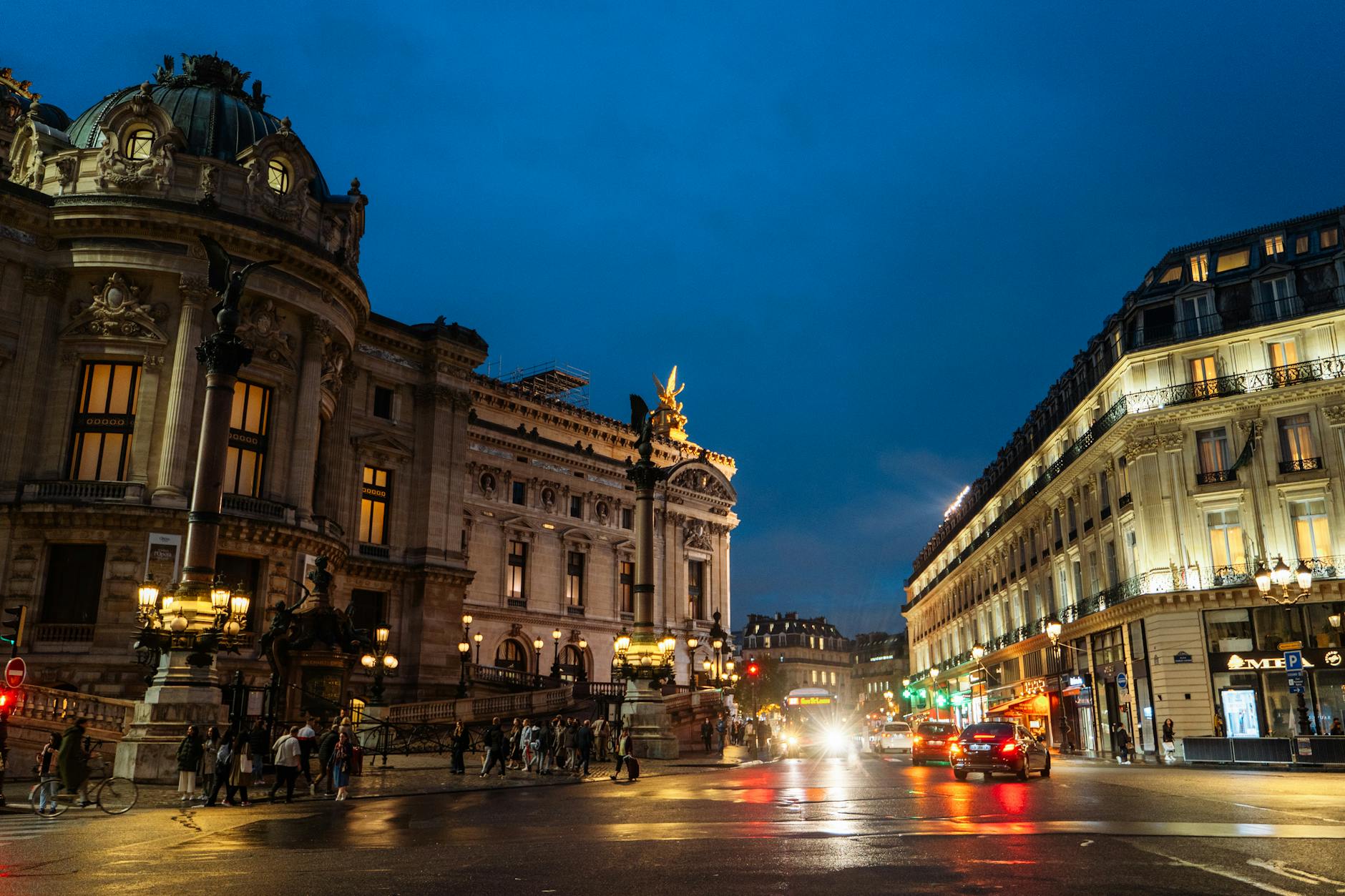
The combo tours bundle the show with either a coach tour of illuminated Paris or a Seine river cruise. They are not always great value — sometimes you can book the two things separately for less — but they have one real advantage: transport. You get picked up at a central meeting point, driven to the Moulin Rouge, and dropped at your hotel after the show. In Paris at 11:30pm that is a genuine convenience.
The illumination tour version (Evening Tour + Moulin Rouge, around $200) is the most common combo. You meet at 7pm, do a 90-minute coach tour of lit-up Paris with a multilingual guide, arrive at Moulin Rouge for the 9pm show, and get dropped home after. Good for first-time visitors who have not yet seen the landmarks at night.
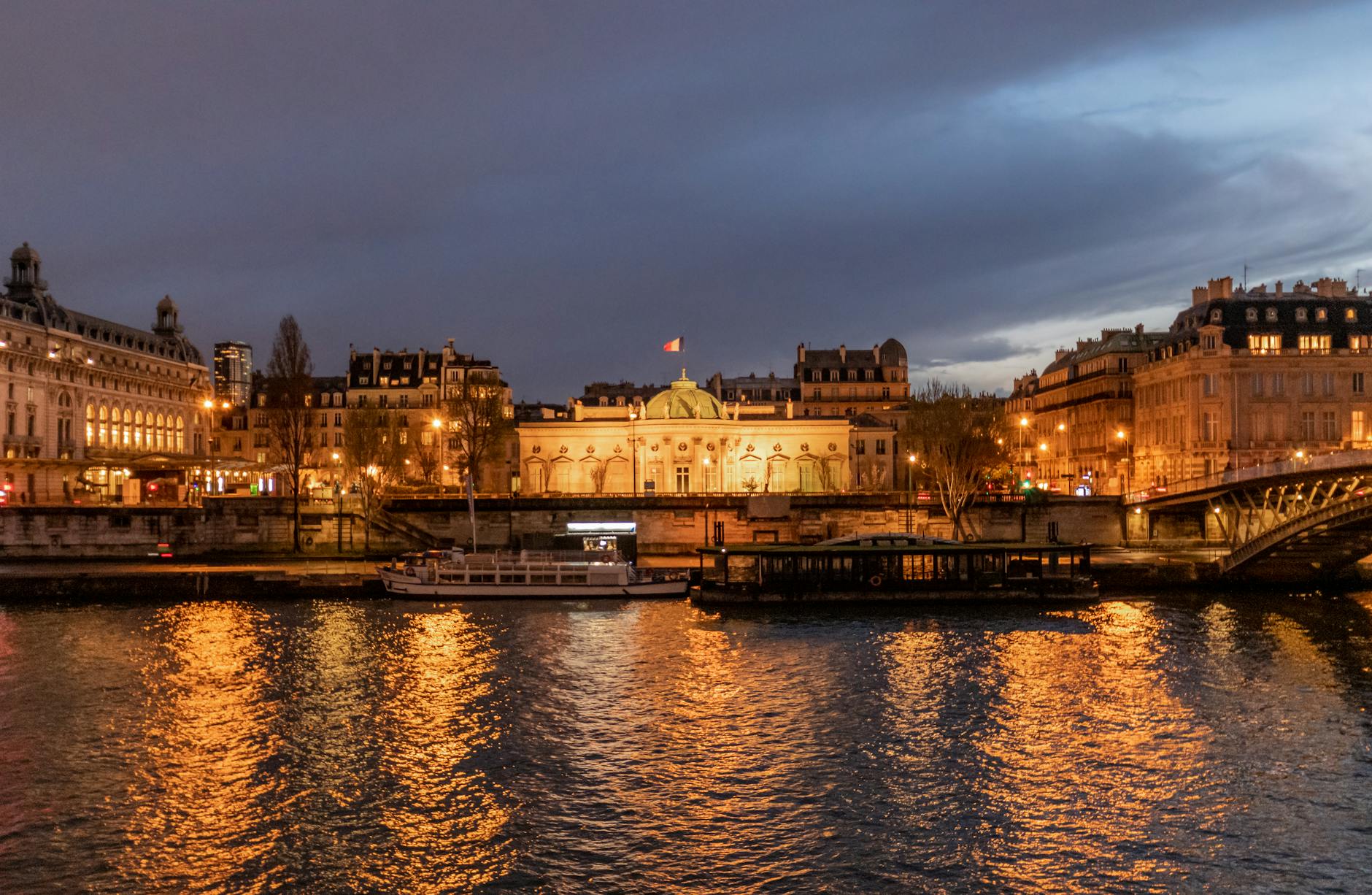
The Seine cruise version (Cruise + Moulin Rouge, around $296) adds a dinner cruise earlier in the evening. You eat on the boat while floating past the Eiffel Tower, then head to the show. Good for couples on a celebration trip, overkill for most travelers.
Avoid the combo tours if you are already doing a separate Seine cruise or evening tour earlier in your Paris trip. No reason to duplicate the experience.
From Paris: Moulin Rouge Cabaret Show Ticket with Champagne
The headline option — what most Moulin Rouge first-timers book and the ticket I would recommend unless you have a specific reason to upgrade. You get the 9pm show, half a bottle of Nicolas Feuillatte champagne per person, seating in the main hall, and the full 2-hour Féerie revue with the cancan finale. No dinner, no transport, no frills beyond the champagne. What you are paying for is the show itself, which is the thing everyone actually remembers. The booking gives you flexible date selection, e-ticket on mobile, and the option to add priority entry for a small extra fee (worth it if you are going on a weekend).
From Paris: Dinner Show at the Moulin Rouge
The full evening — arrival at 7pm, reserved table in the dinner hall, three-course French menu (typical options: starter of salmon or foie gras, main of duck breast or sea bass, chocolate-forward dessert), wine pairing through the meal, then the 9pm show from the same seat. You get a full bottle of champagne shared between two people on top of the wine, which is a genuine upgrade over the cheaper option. Tables are bigger and more comfortable, the seating position is better, and the whole evening has the “proper night out” feel that the champagne-only version does not. Worth booking for a honeymoon, anniversary, or significant birthday. Possibly overkill for a first-time Paris visitor on a budget.
From Paris: Evening Sightseeing Tour and Moulin Rouge Show
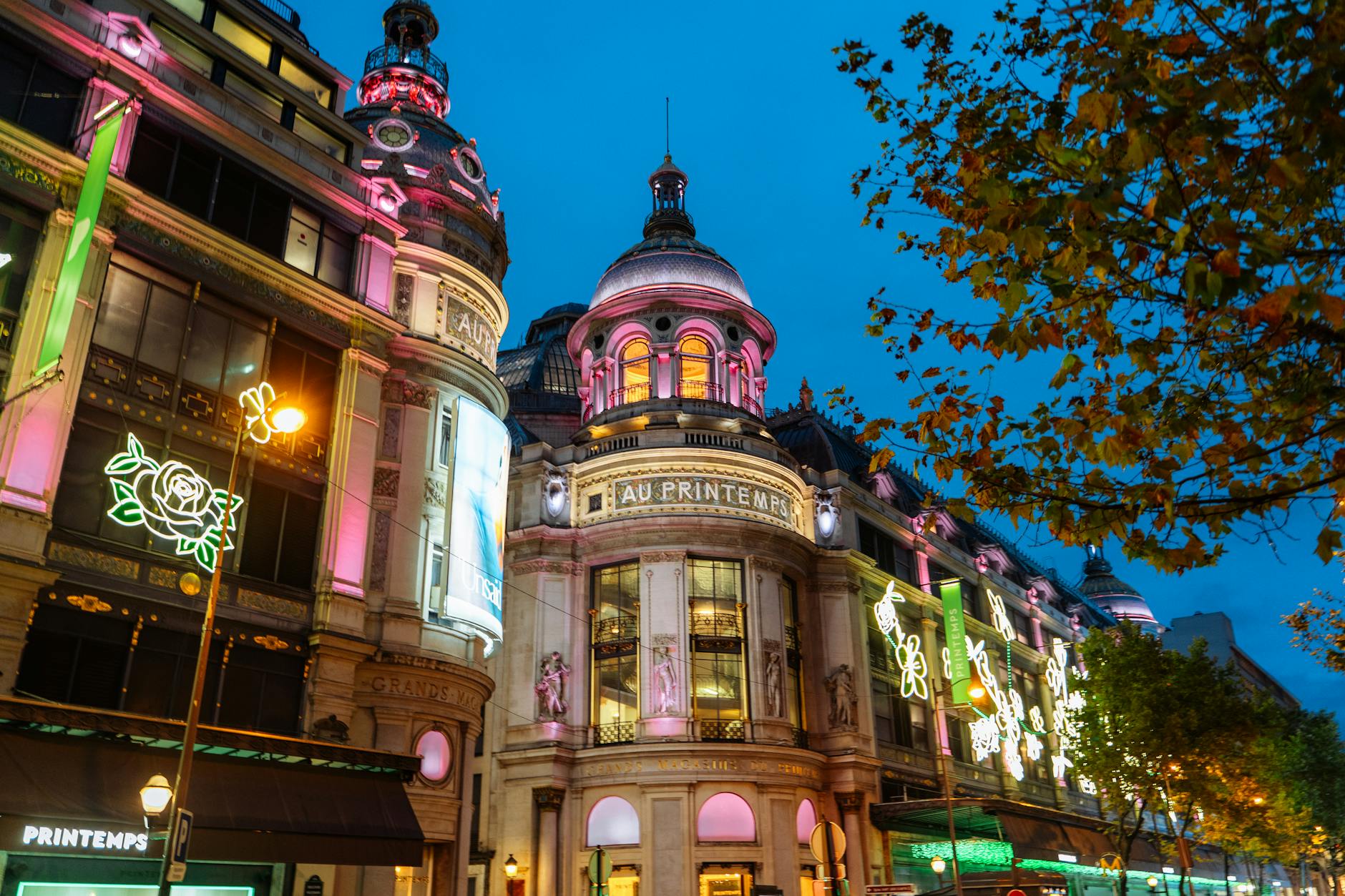
The combo for first-time visitors who still have landmarks to tick off. You meet at a central pickup point around 7pm, do a 90-minute coach tour of illuminated Paris (Opera, Concorde, the Eiffel Tower sparkle, Seine bridges) with a multilingual commentary, then arrive at the Moulin Rouge in time for the 9pm show. After the show the coach takes you back to a central drop-off. You get the champagne version of the Moulin Rouge ticket (not the dinner version) with half a bottle per person. The coach transport is genuinely useful at 11pm — the queue for a taxi outside Moulin Rouge after the show can take 30+ minutes on a busy night. Skip this option if you have already seen Paris at night on a separate tour.
How to Get There
The theater is at 82 Boulevard de Clichy, in the 18th arrondissement. Your options:
Metro: Blanche station on Line 2 is directly in front of the theater. Coming from most central Paris hotels this is 10-20 minutes door-to-door. The metro is safe in the evening and crowded in a reassuring way. Wear nothing flashy in the station area — Pigalle is not dangerous but it is a busy tourist district and opportunistic pickpocketing happens around Blanche and Pigalle stations after dark.
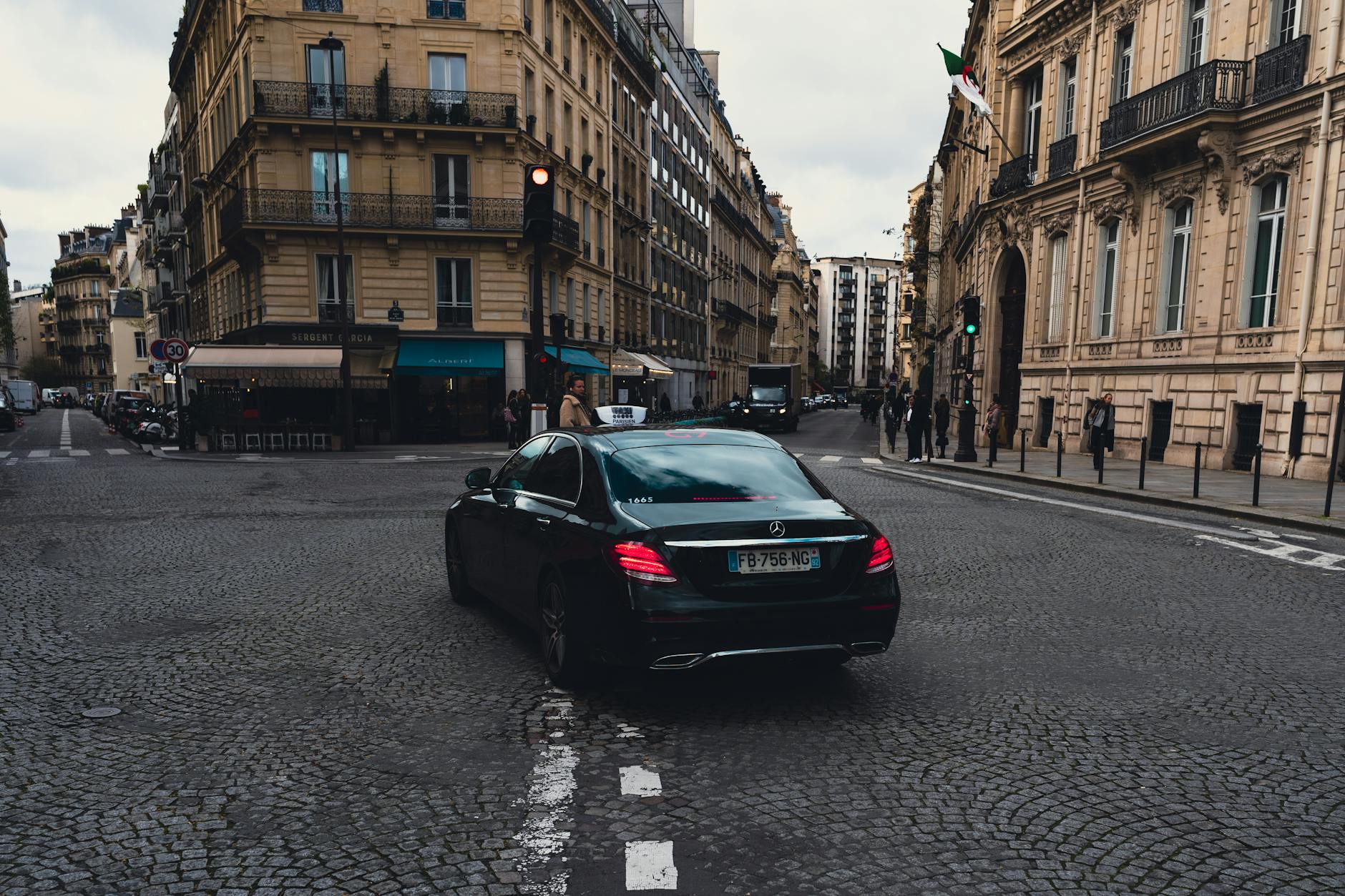
Taxi or Uber: 15-25 minutes from Le Marais, 20-30 from the Left Bank. Faster at 7pm than at 8:30pm because the last 500 meters of Boulevard de Clichy clog up close to showtime. Tell the driver to drop you at “Moulin Rouge, Place Blanche” and they will know exactly where to go.
Walking from Sacre-Coeur: if you are already in Montmartre for dinner, the walk down to Moulin Rouge takes 15-20 minutes through the lower Montmartre streets. It is a pretty descent and it bypasses the transport hassle entirely. Just wear comfortable shoes because the streets are cobbled.
Combo tour pickup: if you booked one of the combo tickets that includes transport, you meet at a central Paris location (usually near Place de l’Opera or Palais Royal), get on the coach, and are delivered directly to the venue. No metro, no taxis, no logistics.
What to Expect Inside
The hall itself seats about 850 people and the floor plan is smaller than you expect. The stage is close to every seat, which is the point — there is no “bad” seat in the Moulin Rouge in the sense of being far away from the action. There are obstructed seats behind the columns or by the service stations, which is where the upgrade pricing earns its value.
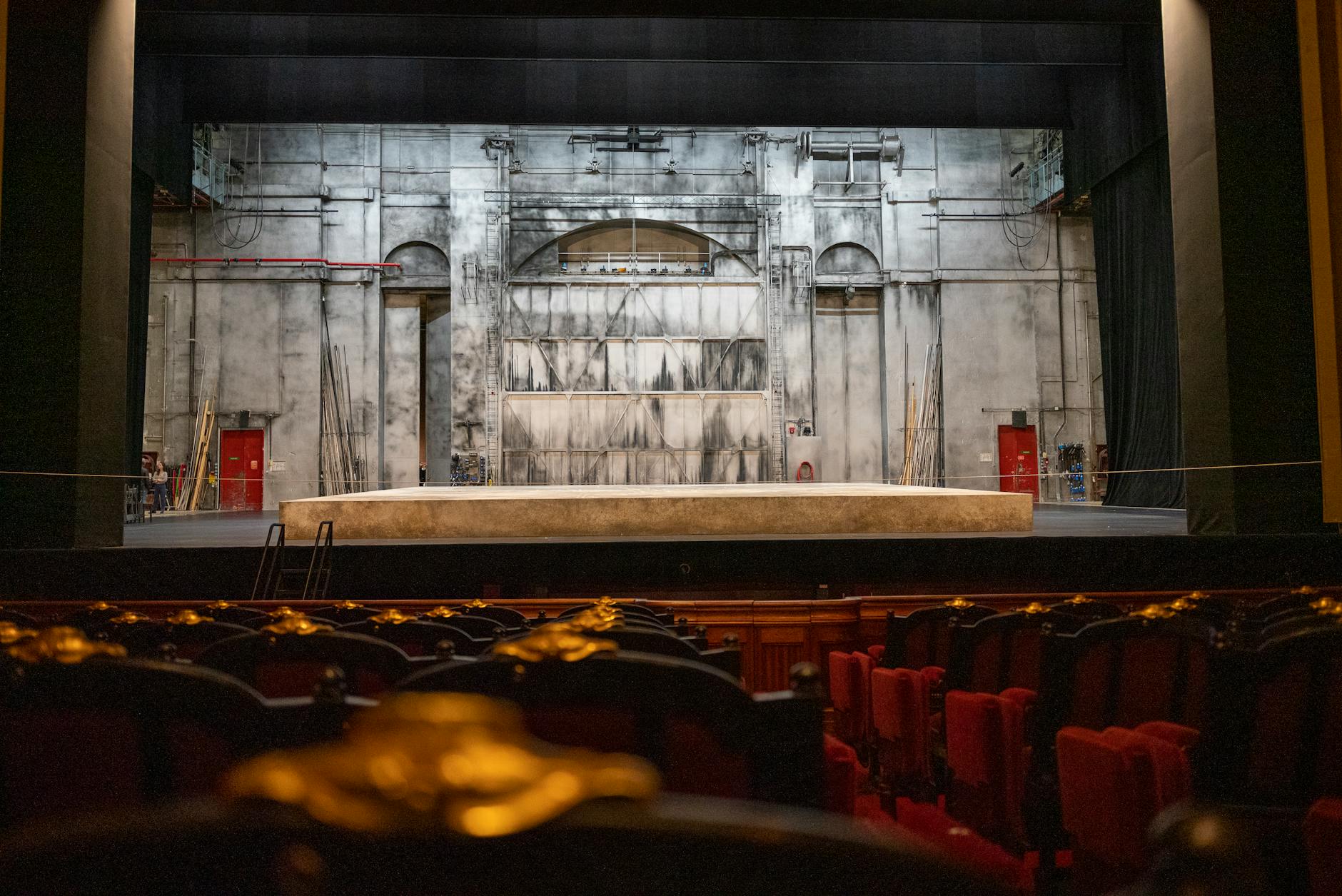
The show runs 120 minutes without an interval. You will not leave your seat for 2 hours. Go to the bathroom before the show starts (the queues get long right before 9pm and there is essentially no opportunity to leave mid-performance without climbing over strangers).
The atmosphere is loud and celebratory. People clap, cheer, respond to the performers. It is not a polite opera audience. If you hate audience participation-style shows, be warned, although Moulin Rouge does not actually pull you onto the stage — the interaction is all passive.
The python appears about 40 minutes in. I am not joking. There is a variety act with a live python. If you are deeply snake-phobic, this is the moment to look at your champagne for 90 seconds.
What to Wear
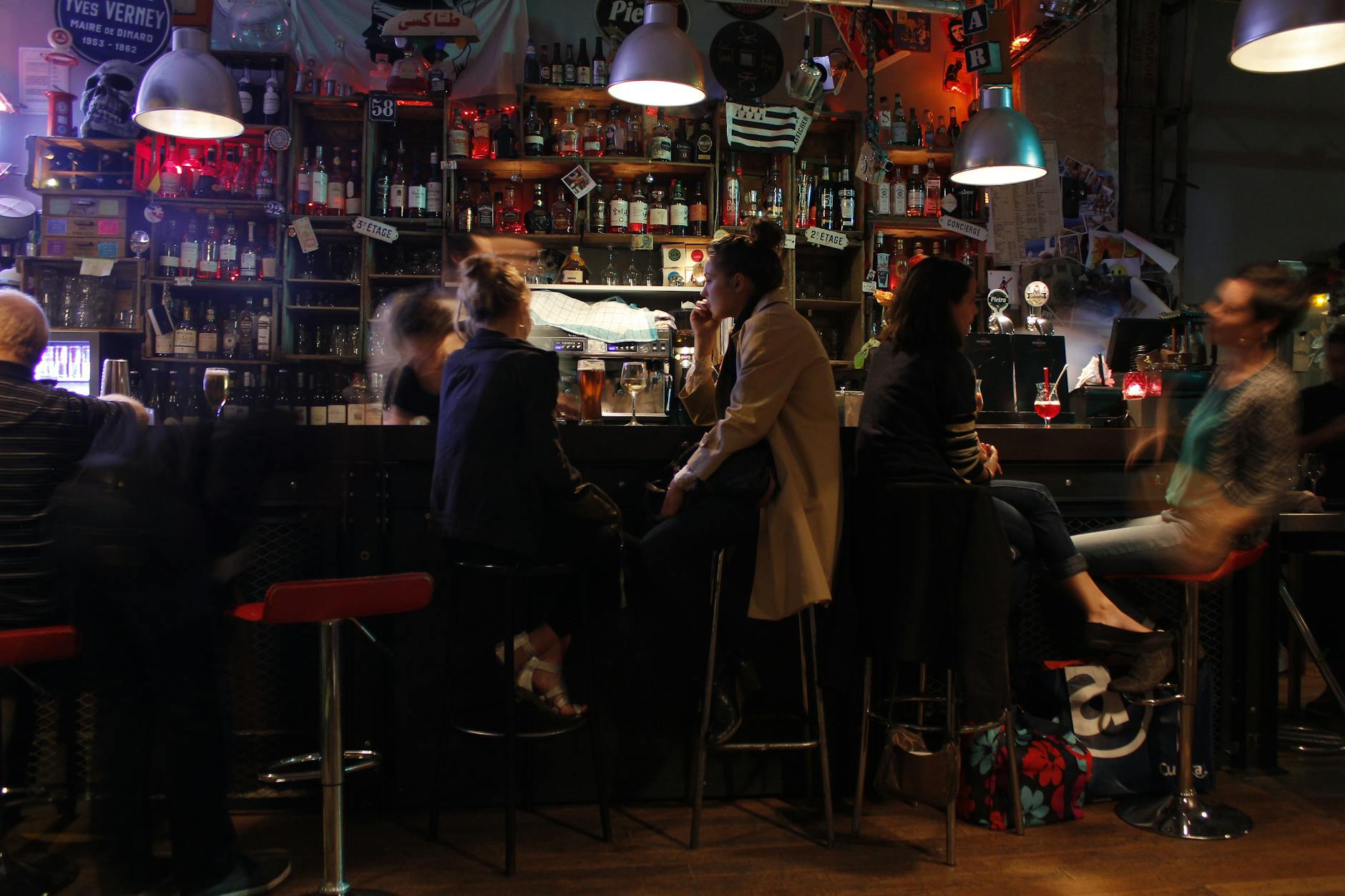
The dress code is “smart casual” and they do enforce it at the door, though the enforcement is lenient. What is definitely not allowed: shorts, flip-flops, athletic wear, beachwear. What is fine: dark jeans with a nicer top, chinos and a collared shirt, dresses, skirts, smart trousers.
Paris in the evening is always colder than the forecast suggests, and the walk from the metro or taxi drop-off to the theater door will feel exposed if you came out in a thin top. Bring a light jacket or cardigan even in August. The hall itself is well heated.
Do not overthink it. The audience is a mix of first-time travelers in their “holiday nice clothes” and locals in smart casual. Nobody is in tuxedos. Nobody is in sneakers and shorts either. Aim for the middle.
Common Mistakes
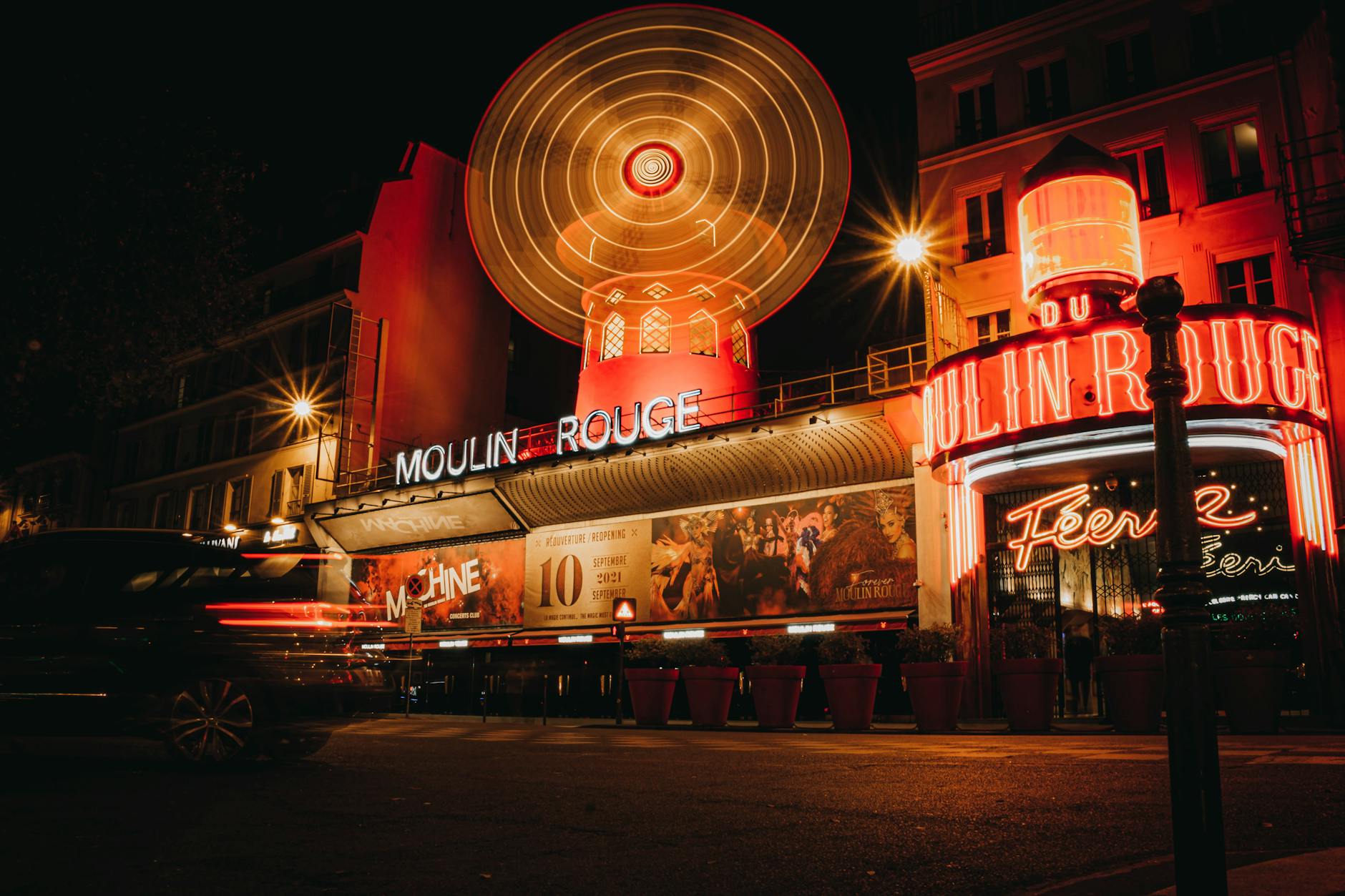
Mistake 1: booking the Saturday 11pm show. The second show of the night on a Saturday is always the most packed, the tables are the tightest, and the room is at maximum volume. First-timers should go on a weeknight (Tuesday through Thursday) at the 9pm slot. You will have a better seat, quieter neighbors, and the performers are noticeably more energetic in the first show of the night.
Mistake 2: not arriving early enough. Doors open 30 minutes before the show. If you arrive 5 minutes before curtain you will be shuffled into whatever seats are left, which for the general-admission champagne ticket means the back corner behind a column. Arrive at 8:30 for the 9pm show and you will get noticeably better seats on the same ticket.
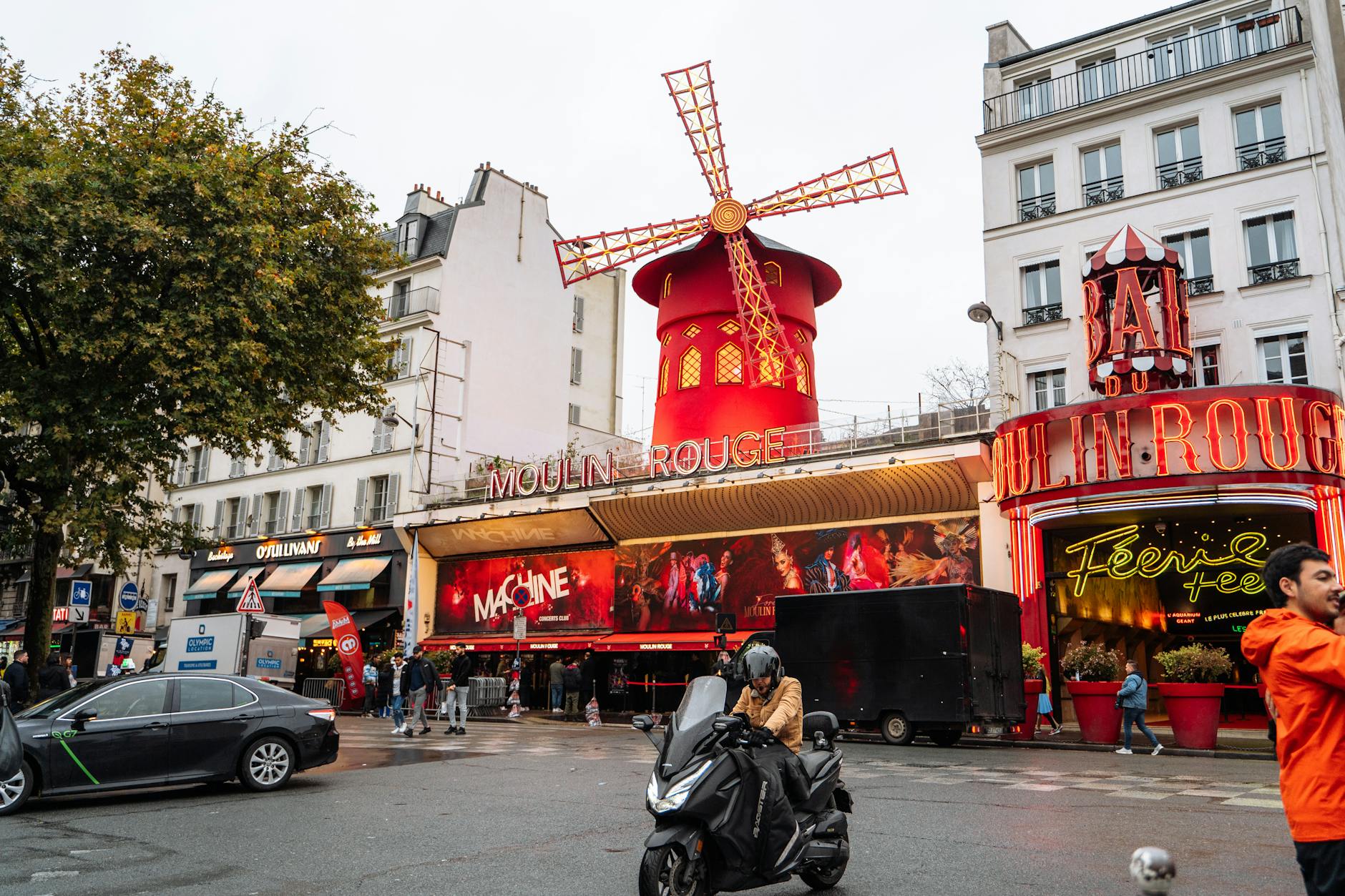
Mistake 3: wearing running shoes or shorts. The dress code is not rigid but it is enforced. If you show up in athletic gear they will politely tell you to come back in better clothes, and there is nothing you can do about it at 8:55pm on a Saturday. Read the rules before you leave the hotel.
Mistake 4: photographing the show. Phones must be away the moment the lights come down. If they see a flash, a staff member will come to your table and ask you to put it away. If they see you again, you can be asked to leave. The rule exists because the performers’ copyright is their livelihood and the theater takes it seriously.
Mistake 5: underestimating the champagne. Half a bottle per person on an empty stomach before 9pm is a lot of champagne. If you are planning dinner elsewhere before the show, keep the champagne serving in proportion or you will not remember the second act. If you are on the dinner show, the wine pairing adds to the total and you should be proportionally cautious.
Is Moulin Rouge Right For You?
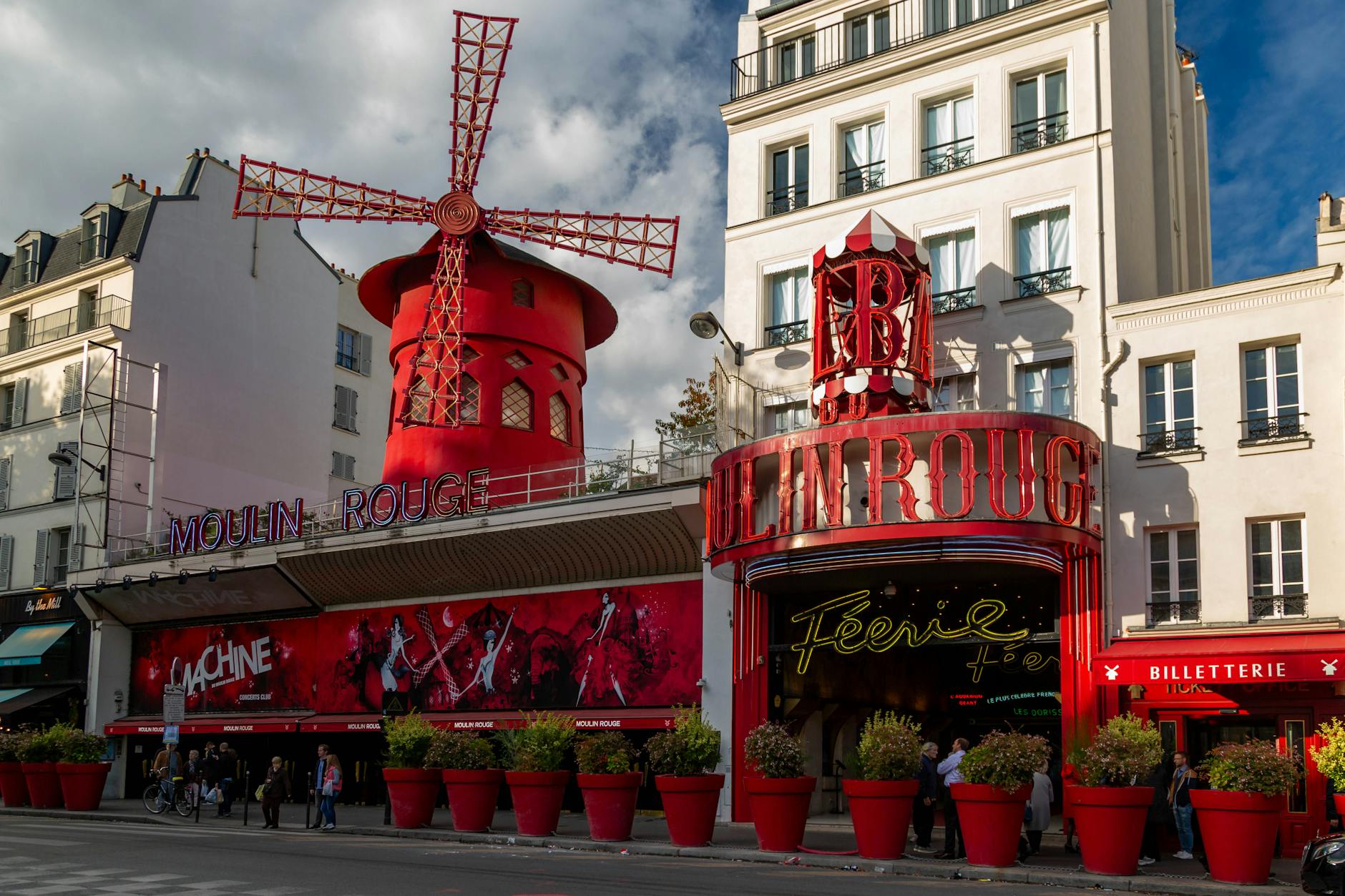
Perfect for: first-time Paris visitors who want to tick off a bucket-list experience, couples celebrating an anniversary or honeymoon, groups of friends on a girls’ trip or birthday weekend, anyone who grew up on the Baz Luhrmann film and wants to see the cancan in its original home.
Possibly not for you: seasoned Paris visitors who have done Moulin Rouge once already (it is not a repeat visit — the show is the same show), independent nightlife travelers who prefer local jazz bars, anyone who cannot sit still for 2 hours, travelers with strict dinner-at-6pm routines (the show times do not accommodate that).
Skip entirely if: you are looking for edgy, modern, boundary-pushing cabaret. Moulin Rouge is a heritage institution performing the same Féerie revue since 1999. It is brilliant at what it does but it is not reinventing the form. If you want experimental burlesque, go to Crazy Horse instead (different venue, different philosophy, more bohemian vibe).
A Perfect Moulin Rouge Evening Plan

Here is how to build a full evening around the 9pm show without getting the combo ticket.
5:30pm: head to Montmartre. Take the metro to Abbesses or Anvers and spend 45 minutes wandering the upper streets. Skip the main tourist drag on Rue Norvins and take the smaller streets around Rue des Abbesses instead.
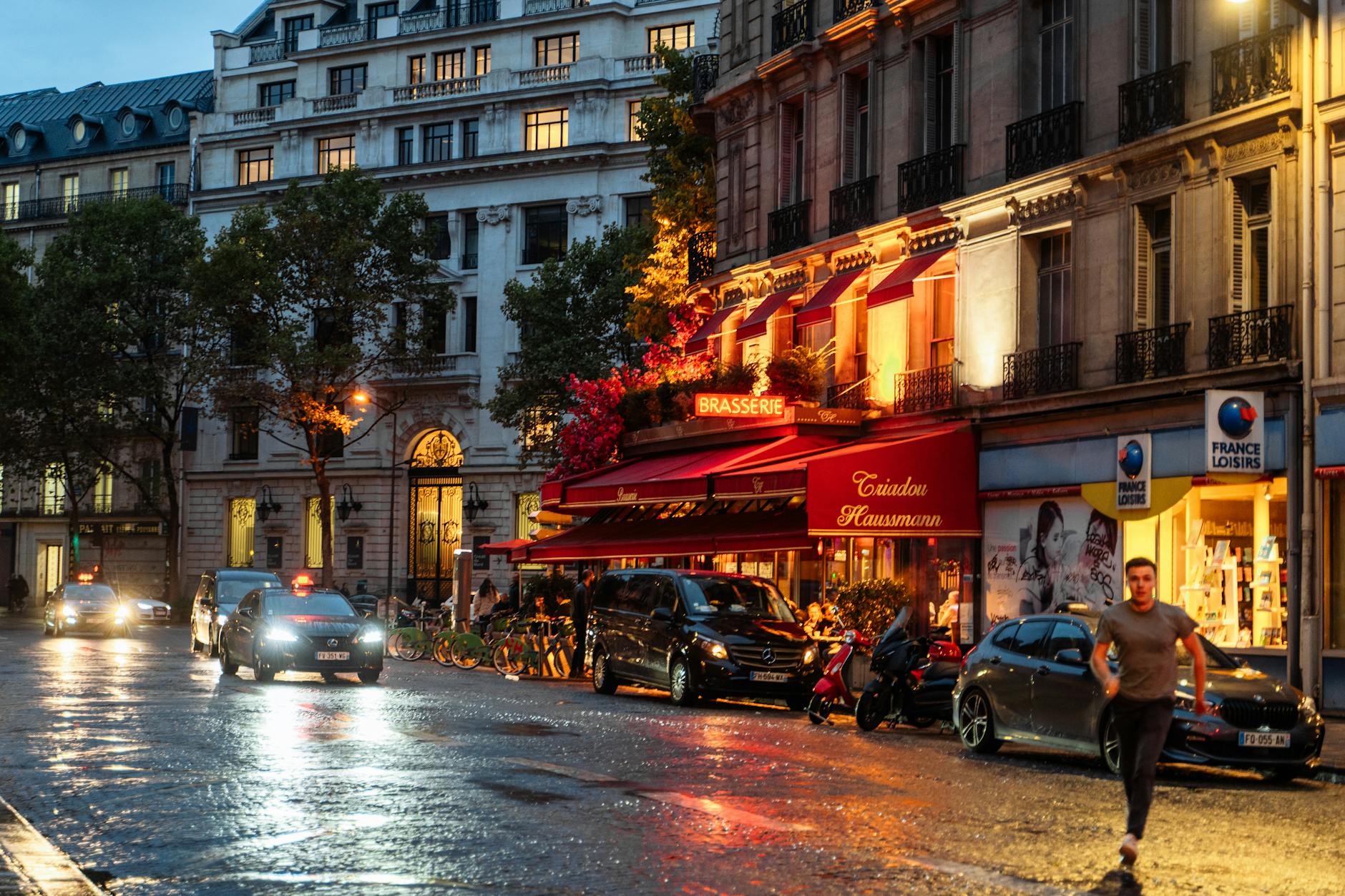
6:30pm: dinner at a bistro in Montmartre. Good options within a 10-minute walk of Sacre-Coeur include La Maison Rose (touristy but charming), Le Coq Rico (upscale poultry), or Le Relais Gascon (budget, solid). Book ahead for any of these on a Saturday.
8:00pm: walk down the hill toward Boulevard de Clichy. The descent via Rue Lepic passes Van Gogh’s old apartment and gives you a view of the lit-up windmill as you approach. Allow 20 minutes.
8:30pm: arrive at the theater, join the queue, get shown to your seat. Order your champagne immediately (if you have the champagne ticket it is already paid for but you may need to flag a server to get it uncorked).
9:00pm: show starts. You are there for 2 hours.
11:00pm: show ends, crowd spills onto Boulevard de Clichy, taxi queue builds. Walk 5 minutes to Blanche metro station and take Line 2 back to your hotel, or book an Uber from inside the theater lobby 15 minutes before the end of the show to skip the street queue.
What to Pair Your Moulin Rouge Evening With
Moulin Rouge is a whole evening on its own, so the pairing you want is what fits around it during the rest of your Paris trip. A few natural combinations that work.
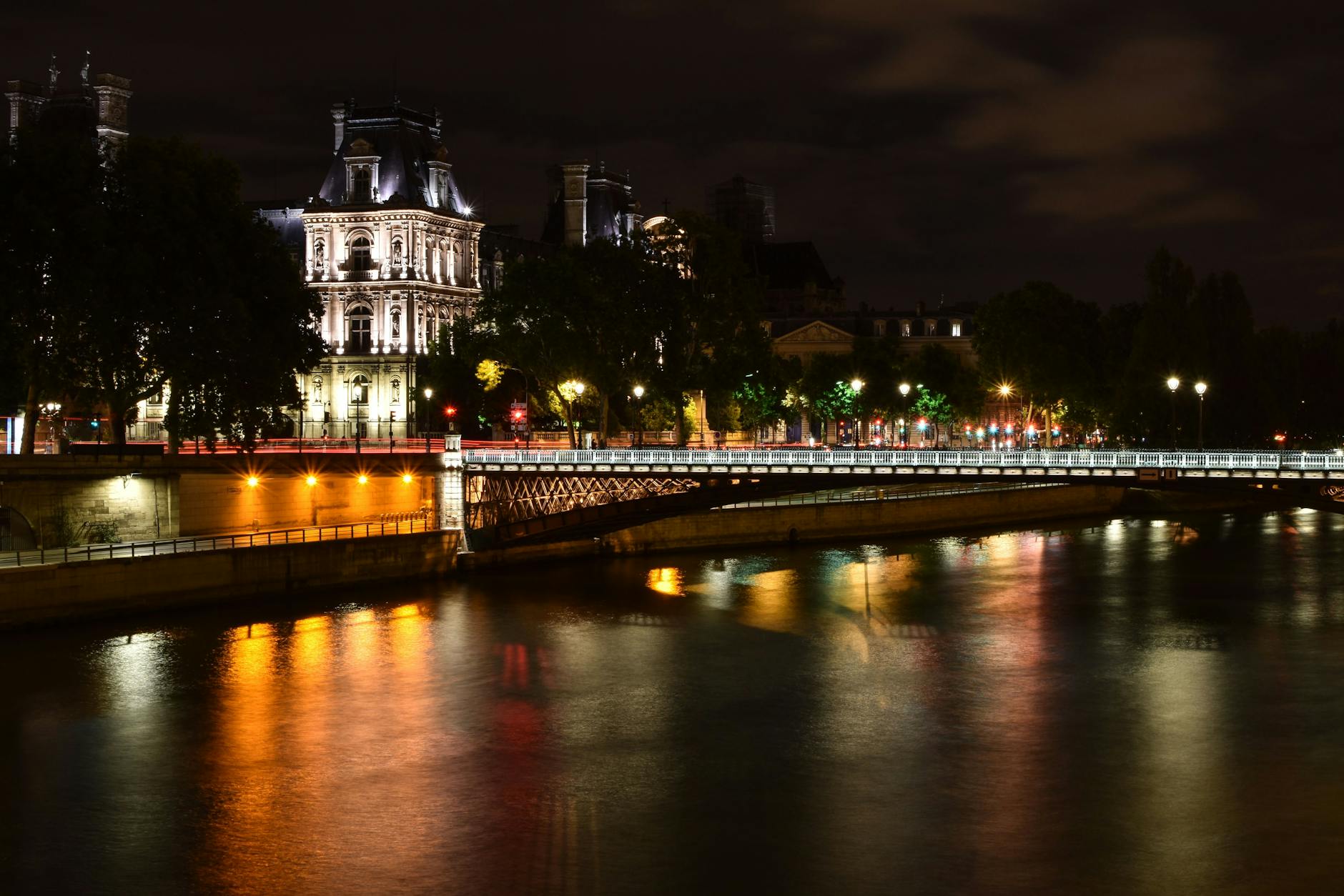
If you are doing the illuminations combo tour, you already have the lit-up Paris experience bundled in and you can save the dedicated Seine river cruise for a different afternoon. The illumination tour covers the Eiffel Tower sparkle window and the major landmarks at night, so no need to duplicate that on a separate evening. Use your other Paris nights for something completely different — a jazz bar in Saint-Germain, a wine bar in Le Marais, or an early dinner somewhere you actually want to eat at.
If you are doing the plain champagne ticket, build your pre-show evening around Montmartre itself. Pair the cabaret with an afternoon at the Montmartre walking tour earlier the same day or the day before, so you have the whole geography of the neighbourhood in your head when you walk down from Sacre-Coeur to Boulevard de Clichy. The descent is more rewarding if you know which streets Van Gogh lived on and which cafe is in the Amelie film.
Skip the Moulin Rouge dinner show if you already have a table booked at a serious Parisian restaurant on the same trip. Pair the cheaper show with your Paris food tour experience on a different day — that way you get one food-focused day and one spectacle-focused evening, and neither feels compromised. Food tours in Paris tend to happen in the late morning or mid-afternoon, so they dovetail naturally with an evening show schedule.
Moulin Rouge also works as the “last night in Paris” event at the end of a longer trip. If you have spent three days seeing the Palace of Versailles, the Louvre, and the Eiffel Tower, the cabaret is a natural celebratory end-cap that leaves you with a high-energy memory of the city rather than just another museum on the last day. Save it for night 4 or 5 of your trip and it lands better than using it as an arrival-day experience.
Final Thoughts
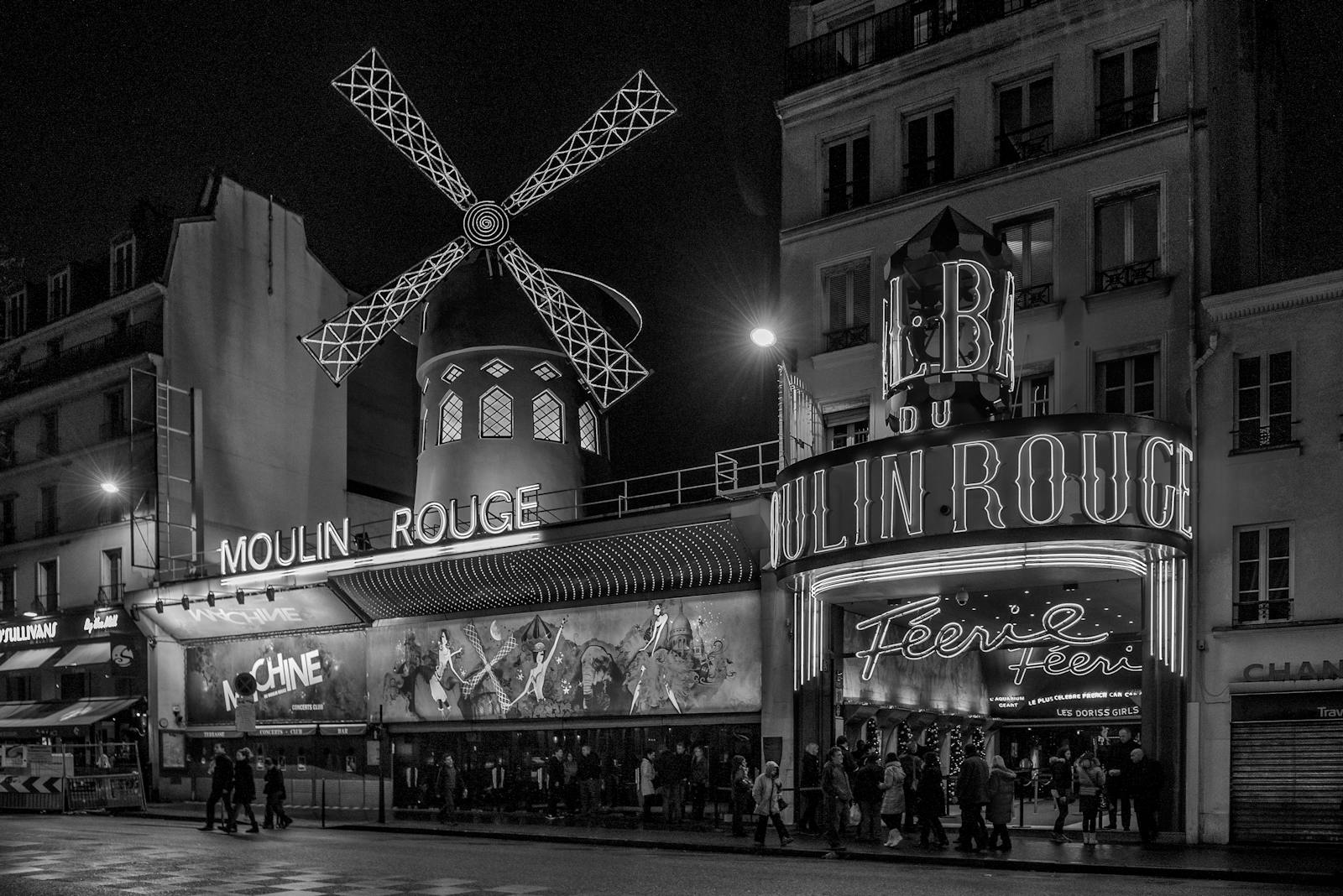
Moulin Rouge is the most touristy thing in Paris and it is also one of the most consistently good touristy things in Paris. The show is the show. It delivers what it promises. The room is beautiful. The windmill still spins. If you book the right ticket for your situation and you arrive early enough to get a good seat, the 2 hours pass quickly and you will leave genuinely glad you went.
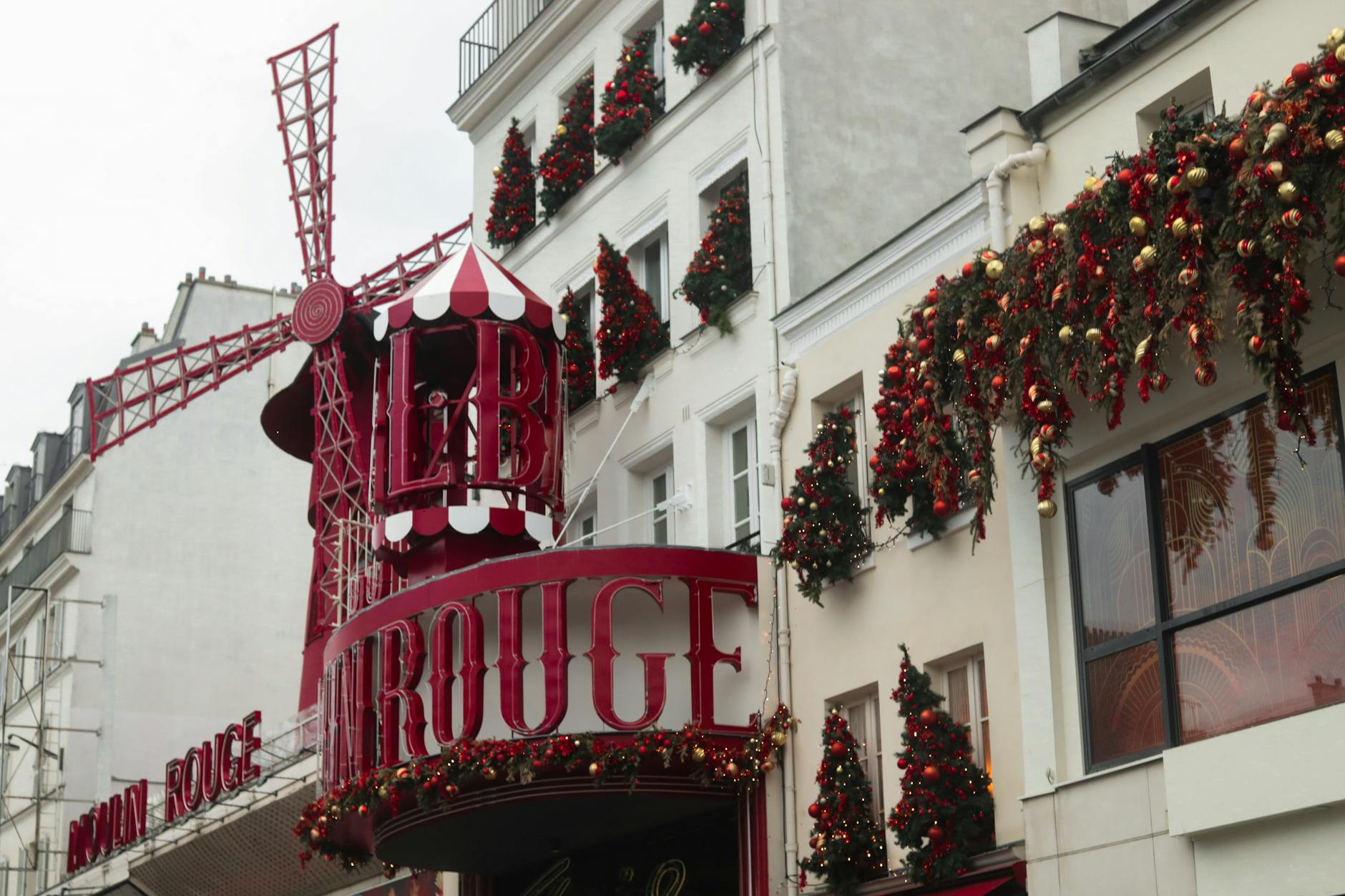
The champagne ticket is the correct choice for most first-time visitors. The dinner upgrade is for celebrations. The combo tours are for people who need the transport and have not yet seen Paris at night. Book a weeknight at 9pm if you can. Dress smart casual. Leave the camera in your pocket. Enjoy the python.
FAQ
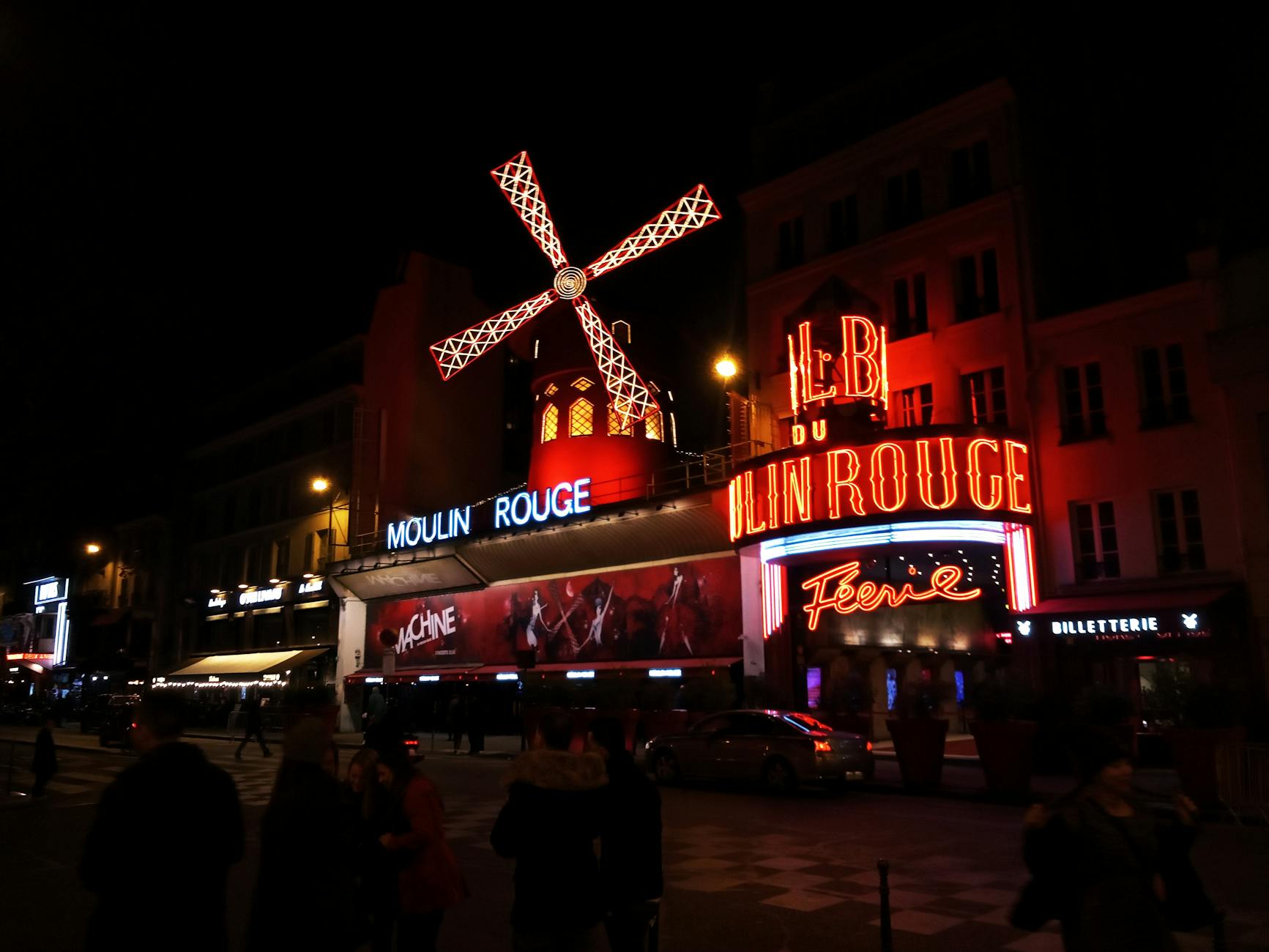
How far in advance should I book? For a Saturday in summer, 4-6 weeks. For a weeknight in winter, a few days is often fine. Same-week bookings are possible outside peak holidays but you lose flexibility on seating and sometimes on show time.
Can I get in without a reservation? In theory, yes. In practice, no. They sell out nearly every night in summer and most weekends year-round. Do not turn up hoping for walk-in availability.
Is there an age limit? Officially 6+, though the show is aimed at adults and the content is mildly risque (semi-topless numbers, burlesque-style choreography). Most parents I have talked to say it is fine for teens and older children but not for young kids. There is nothing scandalous by modern standards.
Can I take photos? Outside the theater, yes. Before the show while you are seated, yes. During the show, absolutely not.
Is Moulin Rouge accessible for wheelchairs? Partially. Contact the venue directly for accessible seating arrangements at least a week in advance. Not all seat areas are reachable without stairs.
What if the show is sold out on my travel dates? Crazy Horse and Lido were the two main alternatives but Lido closed in 2022. Crazy Horse is still going and has a smaller, more intimate format. Paradis Latin is the other classic cabaret option and is often the easier booking when Moulin Rouge is full.
Is the cancan still the original choreography? Essentially yes — the steps are based directly on the 19th-century original, the dress style is period-accurate, and the high kick count is the same (the record is held by Moulin Rouge dancers). The set pieces around it have evolved but the cancan itself is the same routine travelers came to see in 1890.
How much should I tip? Service is included at the dinner show. For the champagne ticket, no tipping is expected. If a server goes above and beyond, a few euros is a nice gesture but not required.