- First impressions and the one thing you’ll notice fast
- What makes this feel well run
- Quick highlights I’d circle on your plan
- Cusco to the trailhead: why the 4:20 a.m. start isn’t just pain
- Day 1: Llactapata and getting your trail legs under you
- Day 2: Dead Woman’s Pass (Warmi Wañusqa) and the day that tests confidence
- Day 3: Phuyupatamarka and Intipata, then Wiñay Wayna to save energy for Machu Picchu
- Day 4: Sun Gate (Intipunku), guided Machu Picchu, and the Huayna Picchu choice
- Food at camp: why it changes how you experience the trek
- Crew and guidance: the quiet advantage of doing this with an organized team
- What you get included (and what you still need to bring or rent)
- Price and value: 5 looks steep until you add up the heavy logistics
- Who should book this trek (and who should think twice)
- Should you book Alpaca Expeditions Classic Inca Trail 4D/3N?
- FAQ
- How long is the Classic Inca Trail 4D/3N trek?
- What time do you get picked up in Cusco?
- How big is the group?
- Are meals included?
- Is Machu Picchu entrance included?
- Can I change or get a refund if I cancel?
- More Hiking & Trekking Tours in Cusco
- More Tour Reviews in Cusco
- Not for you? Here's more nearby things to do in Cusco we have reviewed
First impressions and the one thing you’ll notice fast




Sunrise starts even earlier than you think. From Cusco pickup at 4:20 a.m. to a guided walk through Machu Picchu via Sun Gate, this trek is interesting because it connects the effort of hiking with the payoff of seeing the sites in the “right” order, not just dropping you at the big photo stop. I especially like how Alpaca Expeditions builds in support with a safety-first guide approach and how the camp meals feel like a real part of the trip, not a boxed-in afterthought. The main drawback? You should plan on a serious hike on Day 2 (Dead Woman’s Pass) and show up ready for early starts and big altitude effort.
What makes this feel well run
What stands out is the mix of logistics and culture. You’re not just moving along a trail; you’re traveling with local, Indigenous guides who bring Inca history to life, plus a crew that includes porters, a trekking chef, and medical-ready gear like a first-aid kit, oxygen tank, and satellite phone support. I also like that you’ll get follow-up value after the hike: the company’s lecture materials are sent to your email so your Machu Picchu experience sticks. The consideration here is simple: you’ll need a moderate fitness level, and you’ll want to pace yourself instead of trying to “win” the mountain.
You can also read our reviews of more hiking tours in Cusco


Quick highlights I’d circle on your plan
- Small group size (max 14) for a more personal feel on the trail
- At least one guide behind the group so no one gets stranded or falls too far back
- Camp gourmet meals and hot food at the campsite, cooked on-site
- Real Machu Picchu entry via Sun Gate with about a 2-hour guided tour
- Safety and communications gear: first-aid training, oxygen tank, satellite phone
- Personal porter up to 7k per person to take some load off your hike
Cusco to the trailhead: why the 4:20 a.m. start isn’t just pain
You start the day at 4:20 a.m. in Cusco, then you ride to Ollantaytambo for breakfast at the Porters’ House. After that, you drive about an hour to the trailhead near Piscacucho (Km 82). Yes, it’s early. But it also solves a huge problem on the Inca Trail: timing. When you begin well before the day heats up, you hike with better energy, clearer footing, and less stress in the big pass sections later.
This tour also helps you get your head in the right place early. When you arrive at Km 82 you have time to organize, then you’re off along the ancient path of the Incas. That early setup matters because the days are structured around climbs, passes, and archaeological stops, and the route is not forgiving if you’re rushing.
One more thing I like for first-timers: you’re not left alone to figure out the transition from city life to mountain trail life. The pickup, breakfast, and trailhead drive create a smooth on-ramp—so you can focus on hiking, not logistics.
Day 1: Llactapata and getting your trail legs under you
Day 1 starts with a first real walk into Inca territory: you hike to Llactapata, your first Inca site stop. You also get a chance to settle into the rhythm of the trek before you hit the major climbs later. The day includes a hike to a lunch spot where your crew has already planned the next step: porters and trekking chef set things up, and you get a hot lunch at the campsite area.
What I like about Day 1 is that it’s both scenic and practical. You’re hiking through the trail corridor while the crew handles camp readiness, which keeps the day from feeling like endless walking with no breaks. And because you’re given breakfast in Ollantaytambo and hot food prepared around the trail, you’re less likely to run into the classic backpacking problem: you under-eat early, then pay for it on a steep day.
Also, Day 1 sets expectations. You’re looking at Inca sites soon, so you start understanding that this is not only a fitness challenge. It’s also a guided archaeology route, with meaningful pauses that help your body recover and help your brain absorb what you’re seeing.
Day 2: Dead Woman’s Pass (Warmi Wañusqa) and the day that tests confidence
Day 2 is the hardest day, and it earns that title honestly. After breakfast, you start a 4-hour ascent toward Dead Woman’s Pass (Warmi Wañusqa), 4215 meters / 13,829 feet. That’s a long climb, but it’s also structured: you go up, you admire the whole trail from the highest point, then you descend toward the Pacaymayu River.
Then comes the second challenge: after rest and lunch, you climb toward Runccuracay Pass. At the pass, you also get an archaeological stop and views of two waterfalls, which is a nice payoff when your legs are begging for mercy. The descent is described as shorter and easier, and then you reach Chaquicocha (Dry Lake) for the campsite.
Two details matter here for your comfort. First, there’s support built into the guiding style: the company’s safety guarantee includes having at least one guide behind the group, so pacing mistakes are less likely to become a scary situation. Second, your crew doesn’t just feed you—they also run a happy hour at the campsite before dinner. That sounds small until you’re the one who’s tired and needs a moment to reset mentally. It helps you end the toughest day with dignity instead of collapse.
If you’re planning your mindset: treat Day 2 like a marathon phase of the trek. Don’t sprint on the ascent. You’ll feel better when you remember you’re also going to hike the next two days plus Machu Picchu at the end.
Day 3: Phuyupatamarka and Intipata, then Wiñay Wayna to save energy for Machu Picchu
Day 3 is your “last hiking day,” and it’s a clever balance between effort and sightseeing. You start with views that help you catch your breath, including Salkantay (snowy peak) and Vilcabamba in the distance. Then you begin an ascent toward Phuyupatamarka (3600 meters), a spot that gives you a sense of scale—Urubamba River below, and Machu Picchu appearing from afar like a promise you can’t fully reach yet.
You then walk down for about 3 hours to the last campsite. On the way, you visit Phuyupatamarka (Town in the Clouds) and Intipata (Terraces of the Sun). This is one of the days where the pacing makes a big difference. Because you’re not trying to “race” to the hardest pass, you can slow down, take more photos, and actually look at the details in the terraces and stonework.
Your lunch is served at the last campsite, then you continue to Wiñay Wayna (Forever Young), which is often described as the easiest day. The reason this matters for you: the itinerary deliberately saves energy so you’re ready for Day 4’s Machu Picchu entrance.
The smart way to treat Day 3 is to think like a builder, not a runner. You’re doing steady work that sets you up for a smooth arrival at the end—where you don’t want to spend your best energy fighting exhaustion.
Day 4: Sun Gate (Intipunku), guided Machu Picchu, and the Huayna Picchu choice
After an early breakfast, you say goodbye to the team and head out for Machu Picchu. You hike about 2 hours to Sungate (Intipunku), and this is a huge part of why the trek is worth doing. You get a different view from Sungate than you get inside the complex. It’s also one of the best ways to arrive mentally prepared, because you’re earning the moment step by step.
Once you reach Machu Picchu, your guide provides a full guided tour for about 2 hours. That matters because Machu Picchu can look like a pile of impressive stone if you don’t have context. A good guide helps you see connections—how terraces, pathways, water, and building layout work together as a functioning site.
If you want extra hiking, you can add Huayna Picchu. Tickets are $75 each and need to be booked in advance. The important detail is that this tour does the standard Machu Picchu visit first, and then Huayna Picchu becomes an add-on after the guided tour.
After the Machu Picchu visit, your guide waits for you at Aguas Calientes. Then you take the return train on the last day (tourist class is included). Translation: you don’t have to stress about your onward transport after the big moment. You get a clean handoff from hiking to the next phase of the trip.
Food at camp: why it changes how you experience the trek
You’ll be walking a lot on the Inca Trail, and “walking a lot” can either feel like constant misery or like a manageable grind. Food is one of the biggest switches.
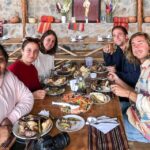
This trip includes multiple meals cooked by your trekking chef: breakfasts (4), lunches (3), and dinners (3). The highlight is that food is cooked at the campsite, and you get drinkable water along the trek. That combination—hot meals plus hydration support—helps you maintain energy across long climbing sections.
There’s also a Food Guarantee built into the service plan. Alpaca Expeditions follows five essential safety rules (cleanliness, separating raw and cooked foods, thorough cooking, safe temperature control, and safe water/raw materials). If food-related issues happen due to a mistake, affected guests are compensated. You hope you’ll never need that guarantee, but I like that it’s explicit. It’s a sign they take food seriously, which is exactly what you want when you’re high on effort and low on patience.
Crew and guidance: the quiet advantage of doing this with an organized team
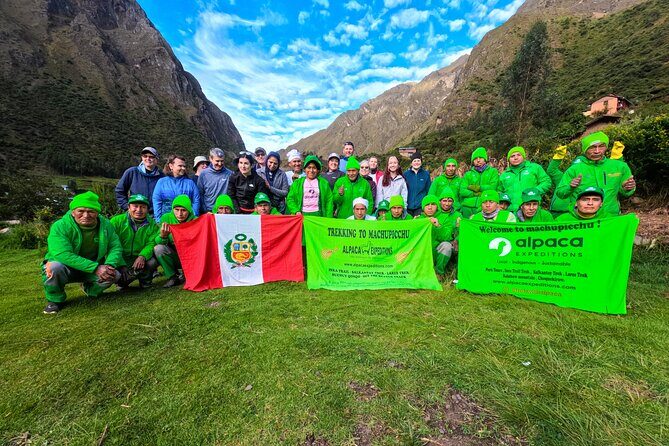
The Alpaca Expeditions model is very crew-centered: local Indigenous guides for interpretation, porters for carried loads, a trekking chef for meals, and safety gear that includes first-aid training plus an oxygen tank and satellite phone.
A key practical point: you also get a personal porter up to 7k per person. That can be the difference between feeling “strong and steady” and feeling like you’re dragging your whole day on your back. It also makes it easier to pack only what you truly need for sleeping and layers rather than hauling a mountain home with you.
You’ll also get a briefing the night before at 6:00 p.m. in the company office. That’s the kind of small step that pays off later. It helps you understand how the day will feel and what to expect when you’re tired and altitude is in play.
And yes, the guides can seriously shape your experience. In the feedback I’ve seen from different departures, guides such as Rodrigo and Soledad come up as knowledgeable and caring, while Jaime and Jan Carlo are praised for enthusiasm and full explanations. You’ll also notice names like Jose and Nancy, and even guide nicknames that pop up in group stories. The point isn’t celebrity—it’s that the company repeatedly puts energy into people who know how to guide, not just people who can walk fast.
What you get included (and what you still need to bring or rent)
Here’s the value of the package in human terms: you’re paying for the parts of the trek that are hard to DIY. Entrance fees are included, along with the camp setup and the train to return on the last day.
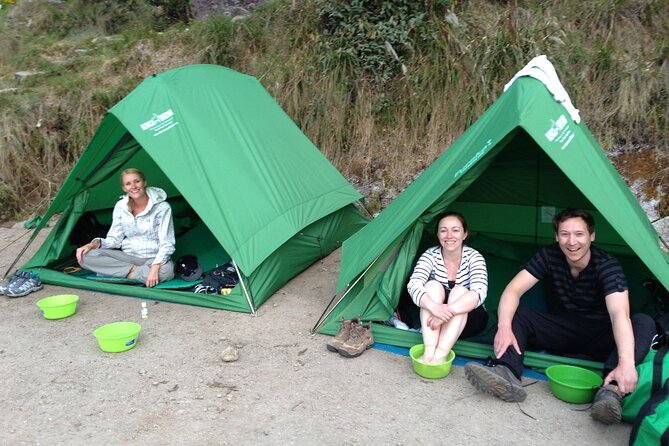
On the ground, camping is in 4-man Eureka tents used for 2 people. You should assume it’s not a hotel room, but it’s also not “rough it” chaos. Portable chemical toilets are provided for the group, and there’s first-aid kit, oxygen tank, and satellite phone support.
What’s not included: you’ll need a sleeping bag, and trekking poles and air mats are available for rent if you want them. If you’re asking yourself whether you can travel light, the answer is yes—partly because of the porter support—but your personal comfort items still matter. A sleeping bag you actually find comfortable is not a luxury; it’s what lets you wake up ready instead of stiff and cranky.
Price and value: $795 looks steep until you add up the heavy logistics
At $795 per person, this isn’t a budget impulse buy. It’s a mid-range cost for a trip where a lot has to be coordinated: porters and crew, camp gear, meals, entry permissions, and a train ride back.
What makes it feel like value is the bundle:
- you’re not only hiking; you’re getting organized camping and gourmet-style meals
- you get Machu Picchu guided time after the trek
- you’re covered with safety gear and trained medical support
- you don’t need to manage the permits and entrance pieces yourself
Also, the small group cap (max 14) changes the math. You’re paying for a service that can keep communication tight and support practical instead of turning into a crowded procession.
If you compare to doing everything on your own, the missing pieces tend to be exactly what makes you comfortable: someone carrying your load, someone cooking hot food at altitude, and someone keeping the schedule moving toward Machu Picchu. That’s what you’re paying for here.
Who should book this trek (and who should think twice)
This tour fits best if:
- you have moderate physical fitness and you’re ready for steep climbs
- you want local Indigenous guides and structured interpretation
- you like the idea of camp comfort and hot meals more than minimalist trekking
- you prefer a small-group pace and support rather than pure self-navigation
You might think twice if:
- you know you struggle with altitude and long ascents, especially Day 2
- you dislike early starts (4:20 a.m. pickup is not negotiable)
- you want fully independent travel with no guiding structure
Should you book Alpaca Expeditions Classic Inca Trail 4D/3N?
Yes—if your goal is the full Inca Trail experience, not just a Machu Picchu day. I’d book this because it protects you from the common first-timer problems: the early mornings are managed, the food is planned, and the guidance includes real support like a guide behind the group plus communication and medical-ready gear. The trek is tough, but the structure helps you finish feeling proud instead of wrecked.
Book with a practical mindset: bring (or rent) what you need for sleep, pace yourself on Day 2, and treat Day 4 as the reward you’ve earned. If you want Inca culture told by people who live it—and you want the logistics handled so you can focus on the hike—this one makes a strong case.
FAQ
How long is the Classic Inca Trail 4D/3N trek?
It’s listed as a 4-day trip with 3 nights camping.
What time do you get picked up in Cusco?
Pickup in Cusco is scheduled for 4:20 a.m.
How big is the group?
The maximum group size is 14 travelers.
Are meals included?
Yes. The package includes breakfasts, lunches, and dinners, and drinkable water along the trek.
Is Machu Picchu entrance included?
Yes. Admission tickets are included, and Machu Picchu is handled with a guided tour. Huayna Picchu is not included and requires separate advance tickets.
Can I change or get a refund if I cancel?
This experience is non-refundable and cannot be changed for any reason. If canceled due to poor weather, you’ll be offered a different date or a full refund. If the minimum number of travelers isn’t met, you’ll be offered a different date/experience or a full refund.