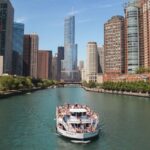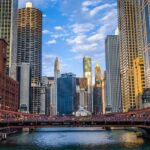
A skyline you can almost read like a comic strip. This Chicago River cruise is an easy, scenic way to see why the city became a modern architecture giant. You glide past landmark towers and bridges while an onboard guide explains the buildings and the big stories behind them, including Chicago’s comeback after the Great Fire of 1871.
Two things I really like: the live, on-boat commentary makes the skyline make sense fast, and the time payoff is huge. In about an hour (or 60 minutes in winter months), you cover multiple parts of the Chicago River without walking all over town.
One drawback to plan around: it can be chilly, and the type of boat you get can vary. Some vessels are single-deck and the speaker sound can get messy if you’re seated where other people are talking or watching their phones.
- Key things to know before you go
- Picking your boarding point: Navy Pier or Michigan Avenue
- What you’ll see on the Chicago River: big names, quick connections
- How the architecture commentary turns views into meaning
- The feel of the ride: timing, sound, and comfort on board
- Itinerary pacing: how the stops work as a “visual lesson”
- Price and value: why can be a smart “first-day” move
- Weather and season reality: plan for wind off the water
- Who this cruise is best for (and who might want a different plan)
- Should you book the Chicago Architecture River Cruise?
- FAQ
- Where does the cruise depart from?
- How long is the Chicago River architecture cruise?
- Is this tour pet-friendly?
- Is there a restroom and a bar on board?
- Is WiFi available on the boat?
- What’s included in the ticket price?
- How many people can be on the tour?
- What happens if the tour is canceled due to weather?
- The Best Of Chicago!
- More Boat Tours & Cruises in Chicago
- More Tour Reviews in Chicago
- Not for you? Here's more nearby things to do in Chicago we have reviewed
Key things to know before you go
 1 / 8
1 / 8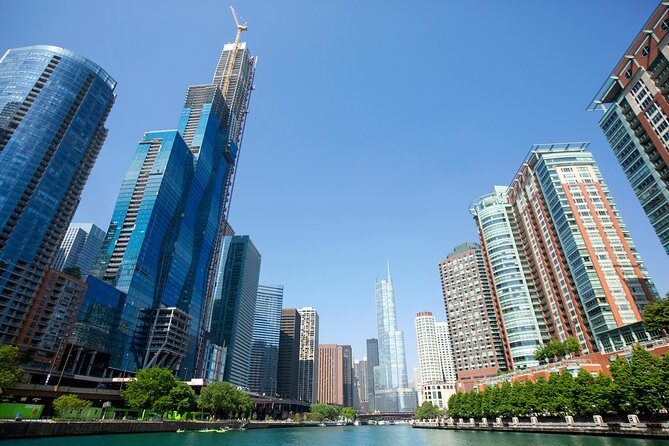 2 / 8
2 / 8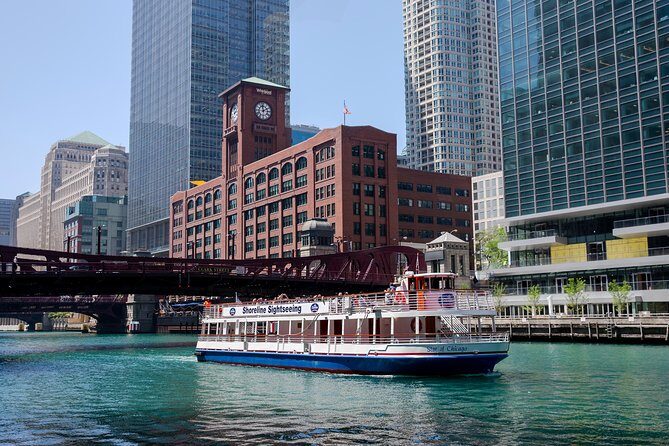 3 / 8
3 / 8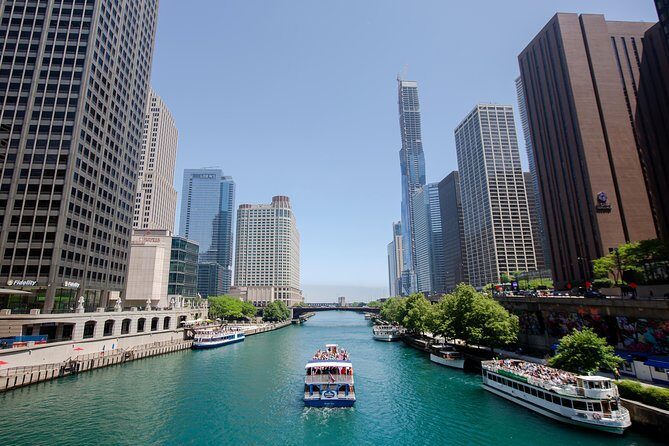 4 / 8
4 / 8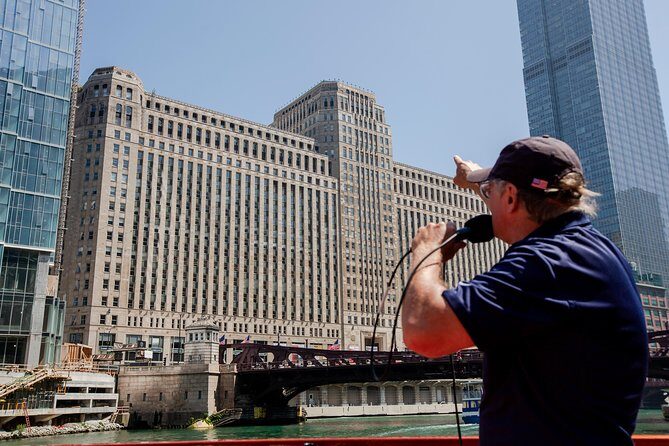 5 / 8
5 / 8 6 / 8
6 / 8 7 / 8
7 / 8 8 / 8
8 / 8- Multiple tour times daily lets you pick a slot that fits your day
- Pet-friendly cruise so dogs can join the fun
- Navy Pier or Michigan Avenue departures give you options based on where you’re staying
- Landmark buildings in one ride: Wrigley Building, John Hancock Center, Willis Tower, and more
- Expert guide storytelling ties architecture to real events like 1871
- Restroom on board plus a full bar (drinks purchased separately)

👉 See our pick of the 2 Best 1 Hour Tours In Chicago (With Prices)
Picking your boarding point: Navy Pier or Michigan Avenue
Before you even think about skyline photos, lock in where you’ll meet the boat. The cruise departs from Navy Pier or Michigan Avenue, depending on the option you choose. That choice matters because it changes how close you’ll be to other sights before and after the cruise.
If you’re already near downtown hotels and offices, Michigan Avenue is usually the easiest start. If you’re doing a broader lakefront day, Navy Pier can be the smoother match, especially since you’ll pass by that stretch of parks and promenades during the ride. Either way, the goal is the same: you get on a boat, sit down, and let Chicago come to you.
This is also one of those tours that works well when you don’t have a full day. You’re not trying to “win” at sightseeing. You’re choosing a fast, relaxing highlight loop.
You can also read our reviews of more boat tours in Chicago

What you’ll see on the Chicago River: big names, quick connections
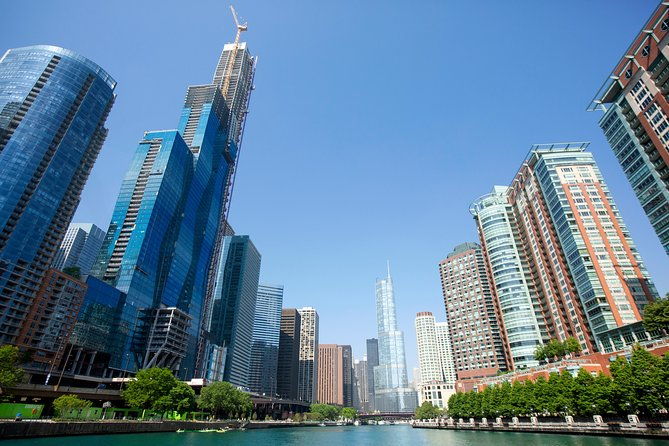
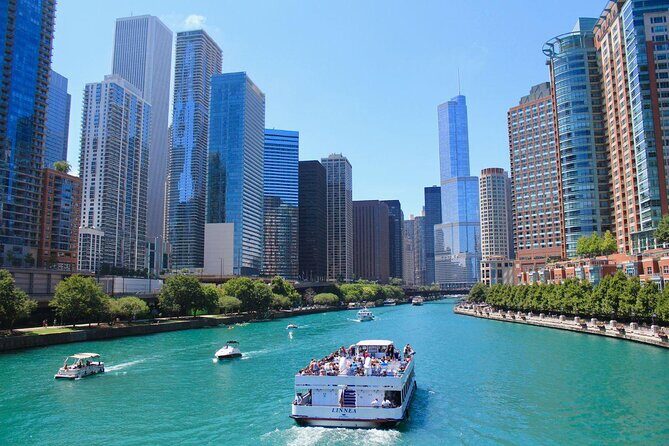
From the water, the Chicago skyline feels less like a distance and more like a lineup you can actually study. The cruise covers multiple branches of the Chicago River, so you see different angles and different kinds of architecture without moving your feet.
Here are some of the landmarks you’ll spot along the route:
- Wrigley Building: a classic Chicago icon that looks especially sharp when you’re moving past it.
- John Hancock Center: a major supertall presence—big, bold, and very “Chicago.”
- Willis Tower (formerly Sears Tower): it’s historically famous for being the tallest building in the world at one point, and from the river it reads like a piece of the city’s identity, not just a building.
- Tribune Tower area (the neo-gothic tower with stones from other famous edifices): you’ll notice the outside details and the idea of borrowing stone prestige from landmarks around the world.
- Marina City’s twin corncob towers: an instantly recognizable pair, and the waterfront views make them feel even more sculptural.
- Plus, you’ll also glide past stretches tied to parks and public space—around 50 acres of promenades and shops near Navy Pier, including a 15-story Ferris wheel.
A simple way to think about this: the river tour is your shortcut to understanding how Chicago built upward and out. Street-level walking is great, but you can lose the overall picture. From the water, the city’s layout shows itself.
How the architecture commentary turns views into meaning
The best part of an architecture cruise isn’t the skyline by itself. It’s what the guide connects to it.
This tour includes live onboard commentary in English from an architecture-expert guide. The big idea is that you’re not just passing buildings—you’re learning how Chicago became a testing ground for modern construction. You’ll hear stories tied to major turning points, including:
- Balloon-frame construction and how it changed how homes could be built.
- The Great Fire of 1871, and how rebuilding shaped the city’s confidence and architectural direction.
That’s the kind of context that makes the skyline stick in your head. For example, once you understand why a city rebuilt the way Chicago did, you can start noticing patterns in height, materials, and density as the boat moves along.
You’ll also hear about the designers and architects behind standout buildings—names like Mies van der Rohe and Helmut Jahn come up in the tour description. Even if you don’t memorize every name, you start seeing styles and design choices as intentional decisions, not random skyline clutter.
And based on guide styles mentioned in past experiences, you’re likely to get both facts and personality. Guides such as Jim and Sam are described as funny and energetic, the kind of hosts who can keep an hour from feeling like an hour.
The feel of the ride: timing, sound, and comfort on board
This cruise is designed to be an easy hour. Typical duration is about 1 hour to 1 hour 30 minutes, and for a specific season—from November 14, 2025 through April 2026—the tour length becomes 60 minutes.
That shorter winter schedule matters. If you’re visiting in cold months, you’ll want to treat this as a “get the highlights, then get warm” activity. The good news: the boat has a restroom on board, and it also offers a full bar. Drinks are available for purchase, so you can plan a hot drink if it’s chilly (spending a little extra here can be worth it for comfort).
Comfort also depends on where you sit and the boat type. The operator notes that some boats are single deck vessels, and the exact vessel cannot be guaranteed. If you end up on a single-deck option, dress for cold wind off the water even if the sky looks calm on land.
One more practical point: hearing the guide can be tougher if your spot is noisy. If you want the full experience, I’d aim for a seat where you can see the guide and avoid being behind a wall of phone screens or loud conversations. This is the kind of tour where attention is the difference between hearing stories and just watching buildings.
The staff isn’t just there to operate. Past experiences also highlight that the vibe is friendly and the ride stays smooth, even when the weather is not ideal.
Itinerary pacing: how the stops work as a “visual lesson”
You don’t get out of the boat at stops. Instead, the “stops” act like guided markers as you move along the Chicago River. That makes it feel like a moving classroom, but without the stress of walking between locations.
Here’s how the route is set up to help you follow along:
- You start on the Chicago River, with the guide orienting you to the landmarks as they come into view.
- You pass the Navy Pier area and the big waterfront public space—useful because it gives you context for how entertainment and skyline sit side by side.
- You’ll see the neo-gothic tower with the distinctive design concept of stone collections from famous world landmarks—a fun detail because it’s both architectural and symbolic.
- Then comes major supertall territory, including the John Hancock Center.
- The skyline shifts again for the twin corncob towers at Marina City, a reminder that Chicago likes bold shapes, not just tall ones.
- After that, you see the kind of towers that define eras—like Willis Tower, famous for once being the tallest building in the world.
- You’ll also pick up a modern design moment described by those wave-like balconies, another signal that Chicago keeps changing its visual language rather than repeating the same formula.
The payoff of this pacing is that you can watch architectural styles “cycle” across a single continuous ride. You’re not asking your brain to store ten street-level maps. You’re learning in a smooth line.


Price and value: why $39 can be a smart “first-day” move
At $39 per person, this cruise sits in the sweet spot for value because it combines three things most sightseeing days force you to choose separately:
- Time savings: you get river views and skyline angles without doing a long walking route.
- Interpretation: the guide helps you understand what you’re looking at, including how Chicago’s construction and rebuilding history ties to what you see.
- Comfort with perks: restroom on board and a full bar for purchased drinks.
If you’re new to Chicago—or you’re only in town for a tight schedule—this is a smart first-day anchor. It helps you get oriented quickly. After that, your walking day (if you have one) feels easier because the skyline already has context.
And if you’re juggling family schedules, the boat format is usually a win. You sit, you listen, you look. Everyone knows what to do next without arguing about directions.
Weather and season reality: plan for wind off the water
This tour requires good weather. If it’s canceled due to poor weather, you’ll be offered a different date or a full refund. That’s exactly how it should work for a cruise, since wind and rain turn sightseeing into misery fast.
For planning, also remember:
- November through April has the 60-minute schedule.
- It can feel colder than you expect on the water.
- Seat comfort and sound quality depend on your position.
My practical advice is simple: dress like it’s windy even if it isn’t. Bring layers you can handle quickly. If you do winter, treat it as a short highlight sprint, not a long outdoor hang.
Who this cruise is best for (and who might want a different plan)
This is one of those tours that fits a lot of travelers.
You’ll love it if:
- You want the Chicago skyline fast, without hopping between multiple stops.
- You like architecture facts tied to real events like the Great Fire of 1871.
- You’re traveling with a mix of ages and want a shared activity.
- You’re bringing a dog and want a pet-friendly option.
You might want to rethink if:
- You hate cold weather or get uncomfortable outside easily.
- You’re extremely picky about hearing every word; the audio can be affected by noise from other riders.
- You want deep architectural analysis that lasts for hours. This is an hour-style highlights tour—great for orientation and first impressions.
Should you book the Chicago Architecture River Cruise?
Yes, you should book it if you want a high-impact Chicago experience that doesn’t eat your whole day. For the money, $39 buys you a guided skyline loop, major landmarks like the John Hancock Center and Willis Tower, and the kind of history connections that make the city feel more understandable.
Just go in with the right expectations: it’s a short, scenic ride with live commentary, not a museum lecture. If you dress for the weather, pick a seat where you can hear, and treat it like your skyline starter course, you’ll come off the boat with a much sharper picture of what makes Chicago tick.
If your priority is a relaxing, iconic Chicago view—this is a solid choice.
FAQ
Where does the cruise depart from?
The cruise departs from either Navy Pier or Michigan Avenue, depending on the option you choose.
How long is the Chicago River architecture cruise?
It typically runs about 1 hour to 1 hour 30 minutes. Beginning November 14, 2025 through April 2026, tours are 60 minutes.
Is this tour pet-friendly?
Yes. The cruise is pet-friendly and described as dog-friendly.
Is there a restroom and a bar on board?
Yes. There is a restroom on board, and the boat has a full bar. Drinks are available for purchase.
Is WiFi available on the boat?
No. WiFi is not available on board.
What’s included in the ticket price?
Included are a guided architecture cruise of the historic Chicago River, live expert commentary on board, a restroom on board, and pet-friendly access.
How many people can be on the tour?
This experience has a maximum of 250 travelers.
What happens if the tour is canceled due to weather?
If it’s canceled due to poor weather, you’ll be offered a different date or a full refund.