
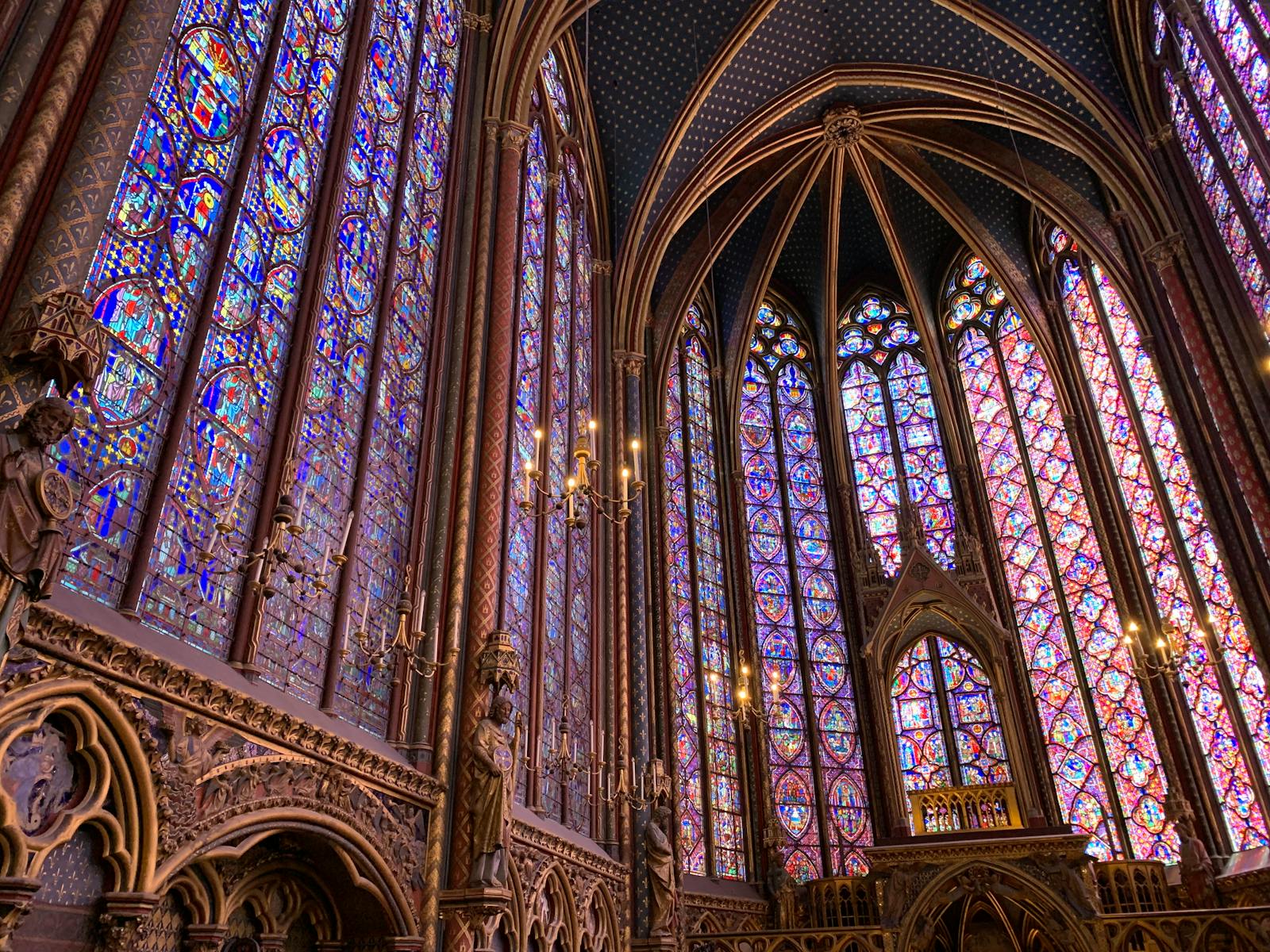
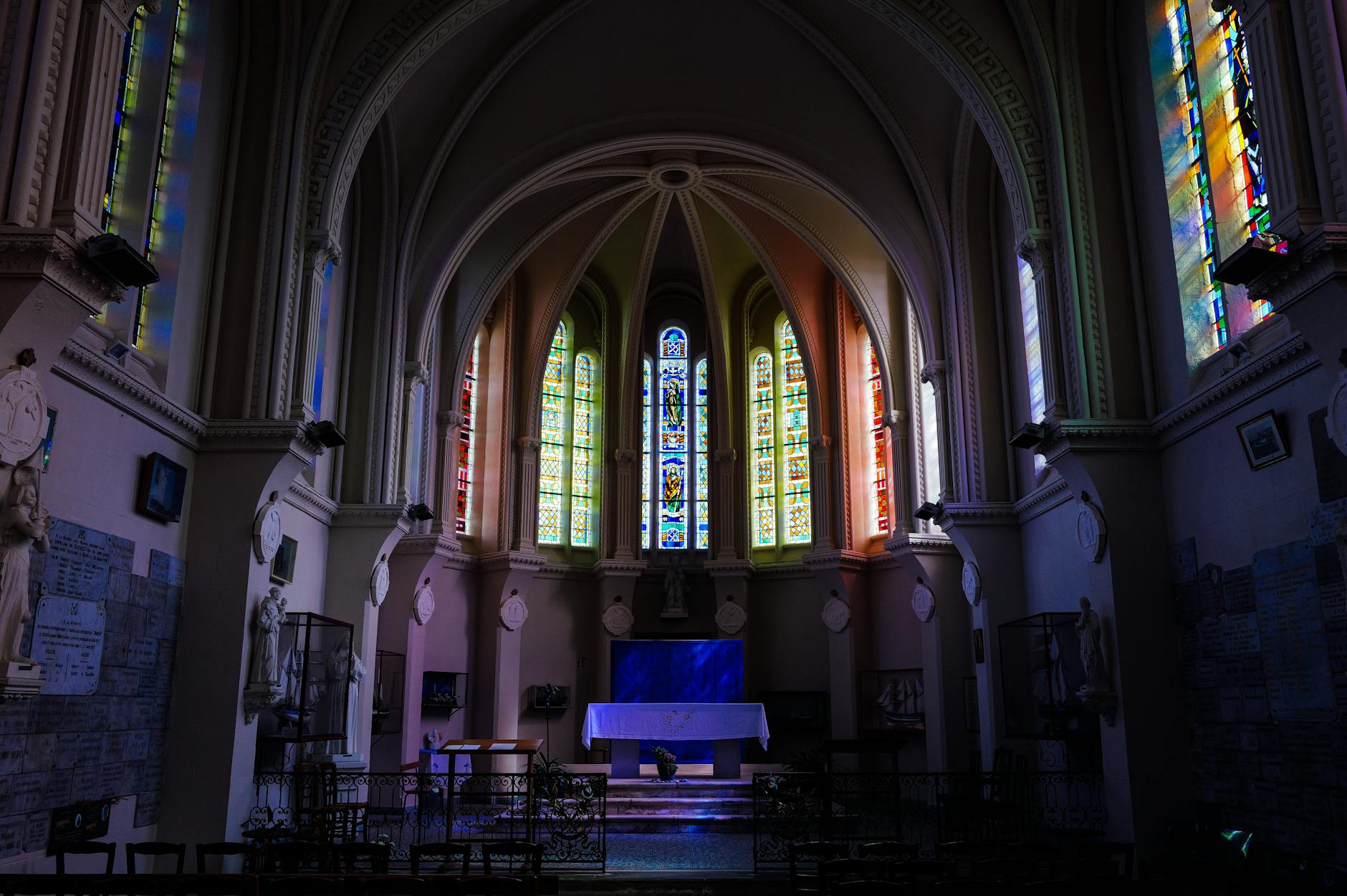
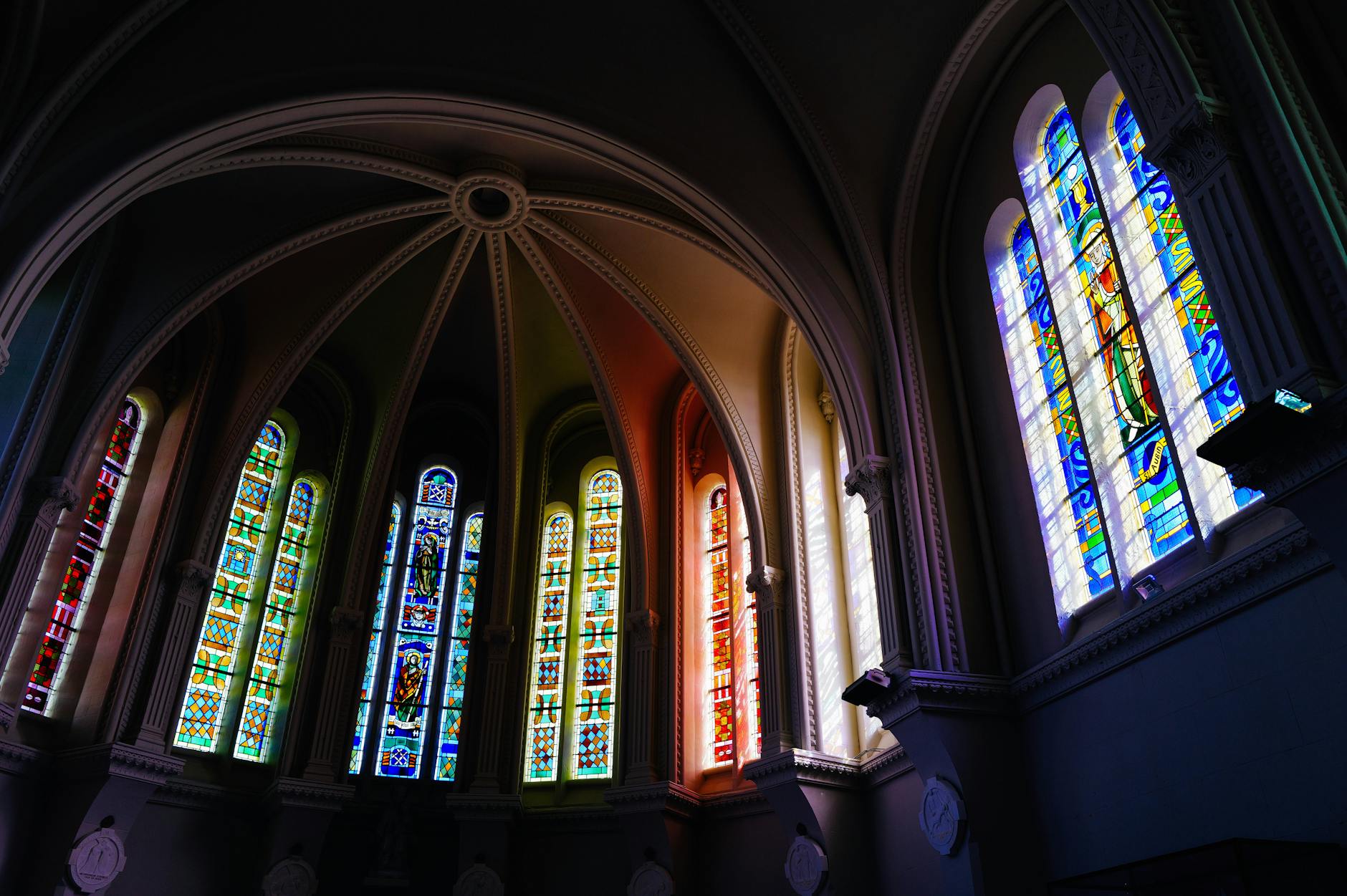
Sainte-Chapelle is the single most underrated building in Paris. People queue two hours for the Louvre, another hour for Notre-Dame’s exterior scaffolding, then walk right past a side street on Île de la Cité that leads to a 13th-century chapel with 600 square metres of original stained glass. I have been inside at least fifteen times.
It still stops me at the top of the spiral stairs every single visit.
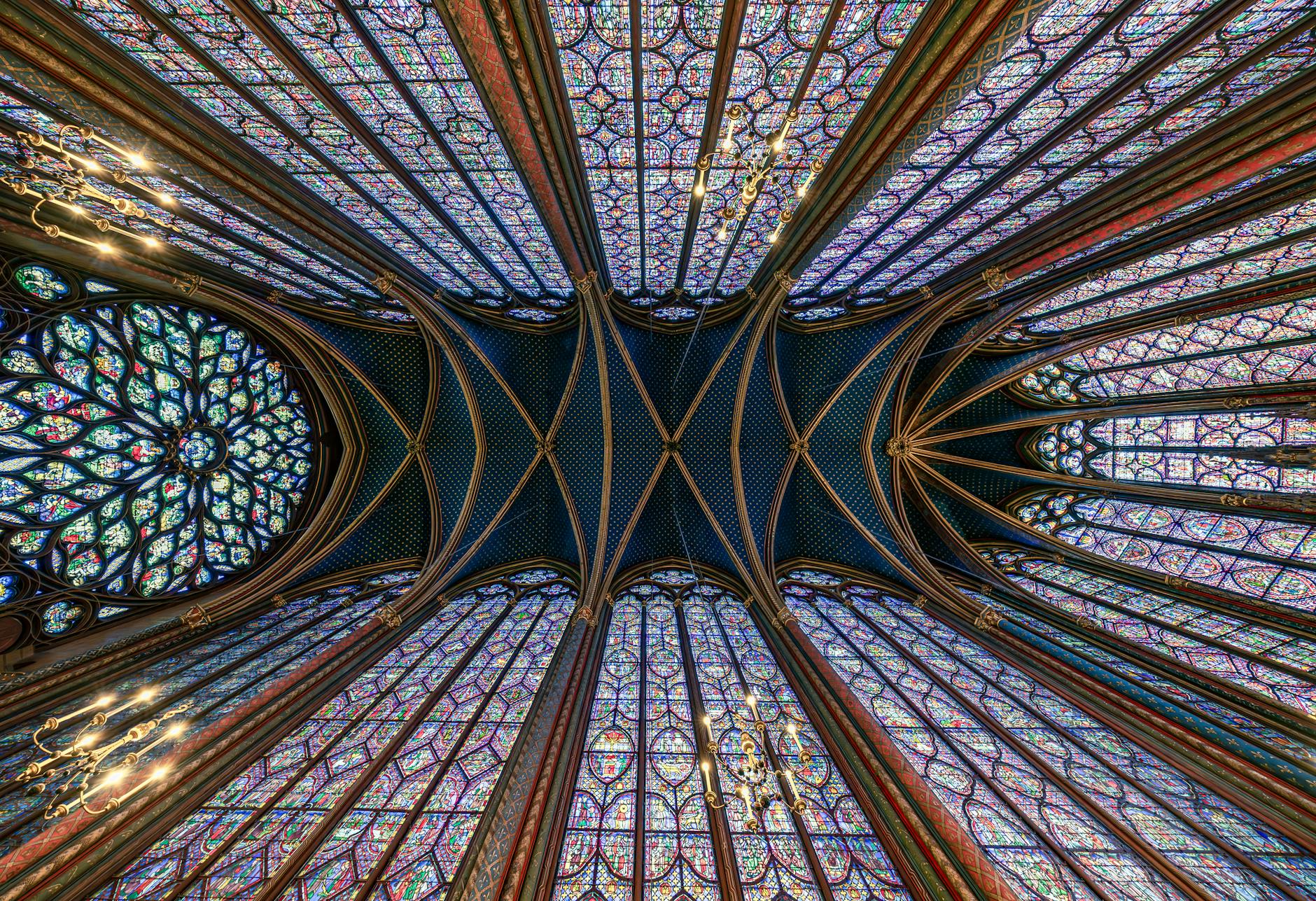
This guide is how I book it, when I go, and what I wish somebody had told me the first time. The ticketing system changed in late 2024, the queues are now permanently long (because everyone finally figured out how good it is), and the light hits different at 11am on a sunny day in a way that nobody in the guidebooks seems to mention. All of that below.
Short version: book online, go at 11am on a sunny weekday, skip the lower chapel photos and save your camera for the top. Full version keeps going for another 20 sections because I have opinions.
Quick Picks: Sainte-Chapelle Tickets
Cheapest entry: GetYourGuide self-guided entry ticket — $16, mobile voucher, walk straight past the queue at Security 1.
Best value: Sainte-Chapelle + Conciergerie combined ticket — $27, two monuments for the price of one-and-a-bit, and the Conciergerie is 80 metres away on the same courtyard.
If you want context: Sainte-Chapelle + Conciergerie + Notre-Dame guided walking tour — $88, 2.5 hours with a proper historian who will tell you about the relic trade in 1240s Paris. Actually worth it.
Go when: 11am on a sunny weekday (light peaks through the south windows). Avoid Sunday mornings (mass in the lower chapel sometimes blocks access).
Time needed: 60-75 minutes including security. Do not rush — the upper chapel rewards sitting down and just looking up.
- Quick Picks: Sainte-Chapelle Tickets
- What Sainte-Chapelle Actually Is (Short Version)
- Why You Have to Book Online in Advance
- Ticket Prices: Official vs Resellers vs Combo
- The Light Trick: When to Go
- Sainte-Chapelle Tour Options (Ranked)
- Sainte-Chapelle Entry Ticket (Self-Guided)
- Sainte-Chapelle + Conciergerie Combined Ticket
- Sainte-Chapelle + Conciergerie + Notre-Dame Guided Tour
- How to Get There
- What to Expect at Security
- The Lower Chapel vs the Upper Chapel
- What the Windows Actually Show
- The Conciergerie Next Door
- How Much Time You Need
- Common Mistakes
- Is Sainte-Chapelle Right For You?
- A Full Île de la Cité Day Itinerary
- What to Pair Sainte-Chapelle With
- Other Practical Tips
- Evening Concerts at Sainte-Chapelle
- Final Thoughts
- FAQ
- More Ile de la Cite
What Sainte-Chapelle Actually Is (Short Version)
Sainte-Chapelle was built between 1241 and 1248 by King Louis IX (later canonised as Saint Louis, hence the “sainte”) to house the Crown of Thorns. He bought the Crown from the Latin emperor of Constantinople in 1238 for 135,000 livres — more than twice what building Sainte-Chapelle itself cost. This was the most expensive relic purchase in medieval European history, and the chapel was essentially a giant reliquary built to the measurements of the Crown’s silver-gilt display case.
Louis wanted something unprecedented. Most 13th-century chapels were dark, heavy, Romanesque. He asked his architects (we think possibly Pierre de Montreuil, but nobody is sure) to build a room that felt like standing inside a jewelry box made of light.
They used a new technique: iron chains embedded in the stonework acted as tension cables, which meant the walls did not need to carry their own structural weight. That meant the walls could be almost entirely glass.
Nobody had done that before at this scale. Nobody has really done it since.
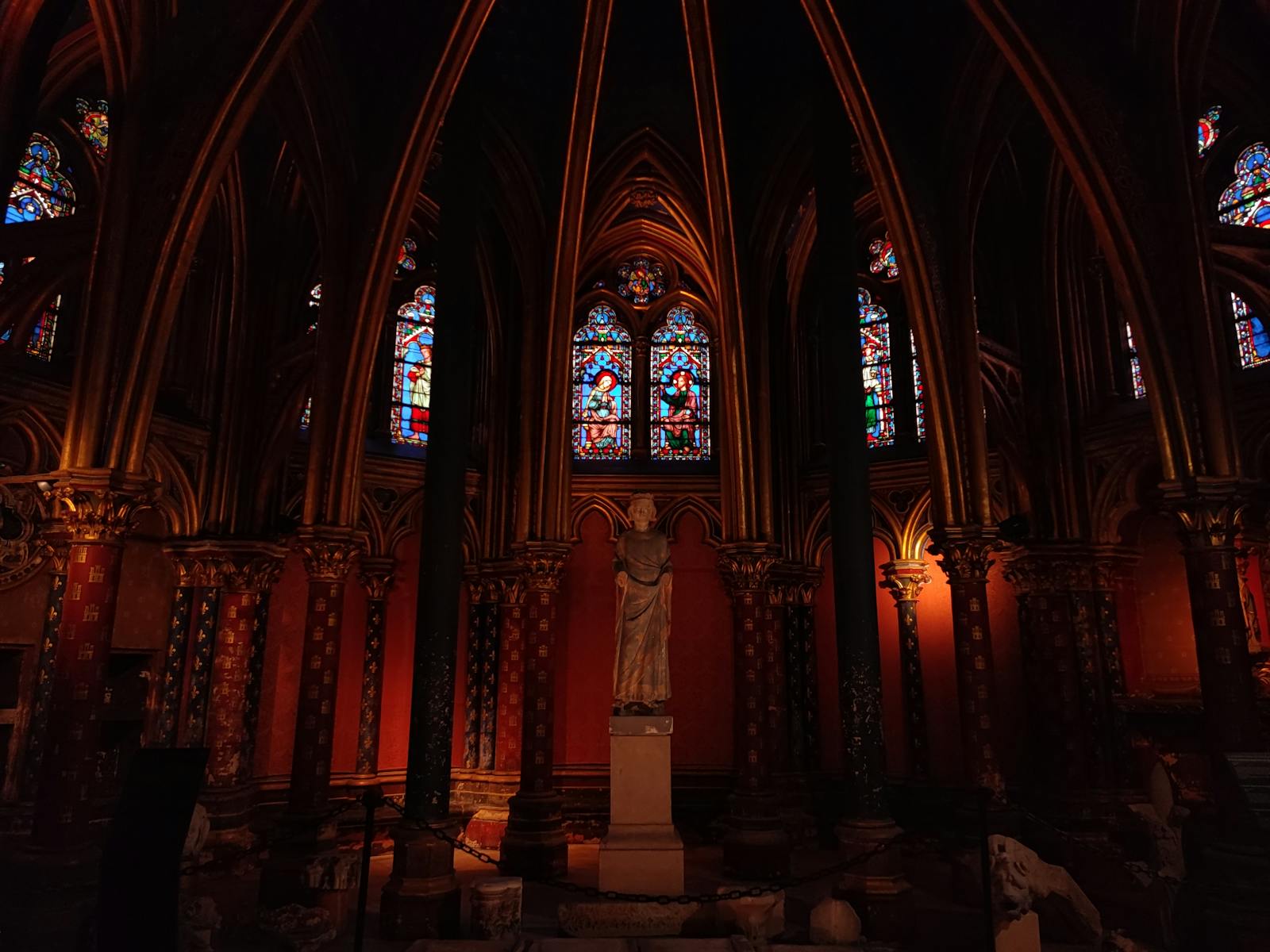
The chapel is actually two chapels stacked on top of each other. The lower chapel was for palace staff, commoners, and servants. The upper chapel was for the king, his family, and high-ranking nobles — it connected directly to the royal apartments via a small passage so Louis could walk from his bedroom to the chapel in his slippers.
You enter through the lower chapel today (where the crowds bottleneck) and then climb a tight spiral staircase to the upper chapel, where the real show is.
About two-thirds of the glass is original 13th-century work. The rest is 19th-century restoration by Félix Duban and Jean-Baptiste-Antoine Lassus, who rebuilt the chapel after a fire in 1630 and centuries of neglect during the French Revolution (when it was used as a flour warehouse — the glass was temporarily removed for storage, which is probably why we still have most of it).
Why You Have to Book Online in Advance
Sainte-Chapelle is inside the Palais de Justice — an active courthouse complex. To get to the chapel you walk through a security checkpoint at the Boulevard du Palais entrance, exactly the same kind of metal-detector-and-bag-scan setup as an airport. There is a dedicated line for pre-booked ticket holders and a separate (much slower) line for walk-ups.
On any sunny day between April and October the walk-up line backs up to 90 minutes. I have seen it hit two hours.
The pre-booked line is not a full skip-the-line — you still do security and still wait 5-15 minutes — but it shaves 45-90 minutes off the walk-up line on busy days. And critically, you cannot buy the prebooked slot at the door. It has to be purchased online in advance with a specific entry time.
The official ticket on the government monument website (monuments-nationaux.fr) frequently sells out 2-3 days ahead for the popular morning slots in summer. GetYourGuide and Viator resell the same tickets with a very small markup and usually have availability when the official site does not. Both route you to the same pre-booked line at security.
My routine: book the $16 GYG entry ticket for the 11am slot three days before I go. Screenshot the mobile voucher. Walk to security at 10:40.
By 11:05 I am in the upper chapel.
Ticket Prices: Official vs Resellers vs Combo
The official entry ticket from the French state is €13 (roughly $14 depending on the day). Free for anyone under 18. Free for EU residents aged 18-25.
Free on the first Sunday of November, December, January, and February (off-season only — never summer).
Resellers charge a small markup. GetYourGuide is around $16 for the same entry ticket. Viator is similar.
The markup is basically the reseller’s commission — you are paying $2-3 for the convenience of not having to create a French government account and figure out their slightly awkward booking interface. For me it is worth it.
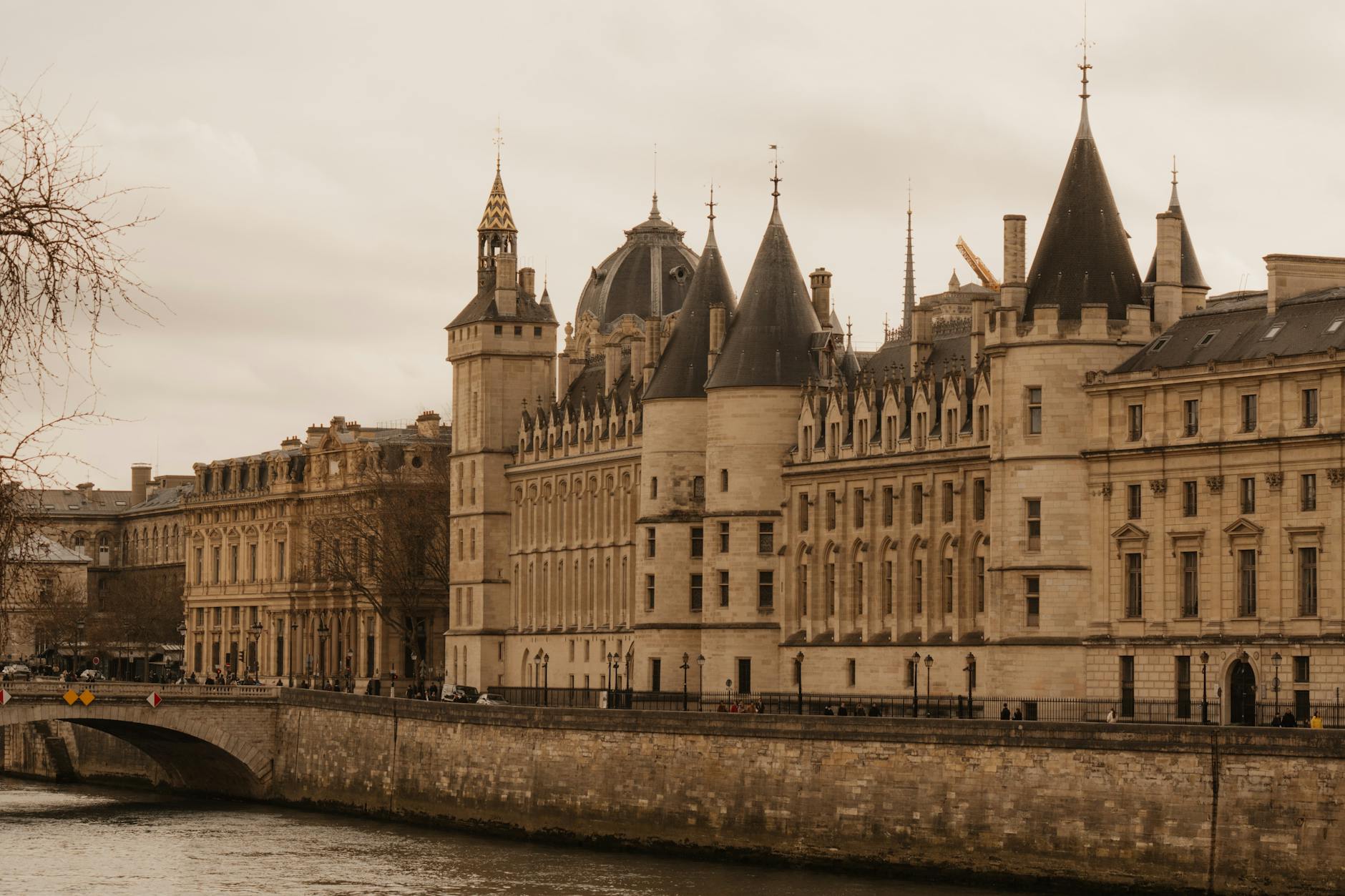
The best value by a long distance is the Sainte-Chapelle + Conciergerie combined ticket at $27. The Conciergerie is the medieval royal palace next door (literally the same building complex) where Marie-Antoinette was held before her execution. It is much less famous than Sainte-Chapelle but it is genuinely interesting if you care about French history, it has a gorgeous vaulted Gothic hall on the ground floor, and it is never crowded.
You are in the same courtyard. You already cleared security. There is no reason not to do both.
The guided Sainte-Chapelle + Conciergerie + Notre-Dame exterior tour at $88 is for people who want context. The guide (I have done this tour twice) walks you around Île de la Cité explaining the medieval political situation, the Crown of Thorns purchase, the Philip IV trial of the Knights Templar (which happened on this same island), and the evolution of Notre-Dame from medieval to modern. 2.5 hours. It is a lot of walking.
Worth it if you actually care about the history and not just the photos.
The Light Trick: When to Go
This is the thing I wish I had known on my first visit. Sainte-Chapelle is oriented roughly east-west. The apse (the rounded end with the most concentrated window work) faces east.
That means:
In the early morning (9am-10am), sun pours directly through the apse windows into the chapel. Dramatic, but the light is harsh and the windows facing east are blown out in photos.
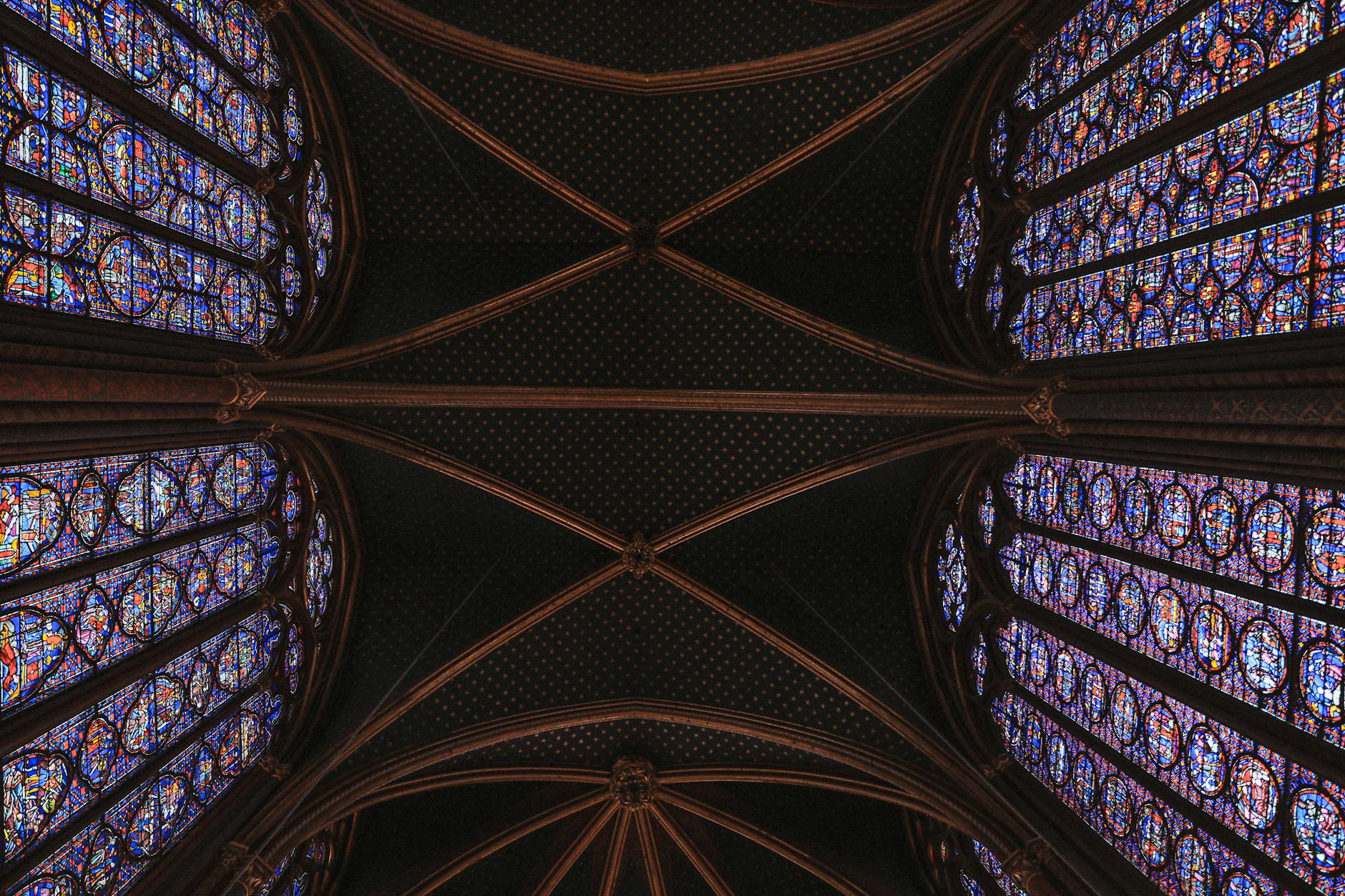
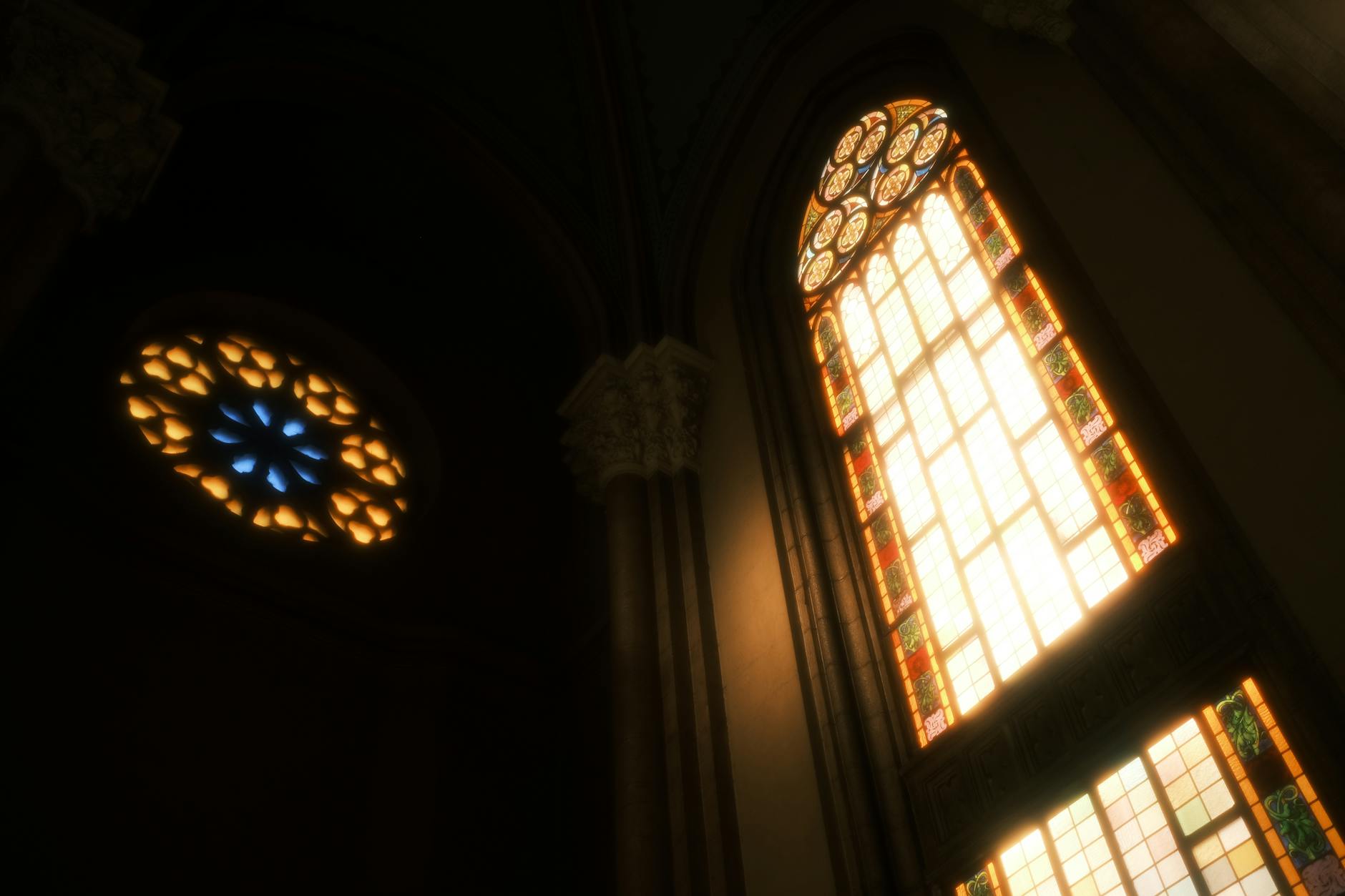
In the late morning (10:30-12:00), sun hits the south-facing windows at a high angle and pours coloured light across the interior in broad diagonal beams. The opposite (north) wall lights up like a projection screen. This is the shot you want.
This is when you go.
In the early afternoon (12:30-14:00), the sun is nearly overhead and all 15 windows glow evenly. Less dramatic but more uniformly beautiful. Also when the lunchtime crowd shows up.
Late afternoon (15:00-17:00), sun hits the western rose window (the huge circular window above the entrance) and throws red-gold light back across the room. A second beautiful moment — not quite as powerful as the 11am light but worth it if morning is full.
My preferred slot: 11:00 on a sunny Tuesday or Wednesday in April, May, September, or October. Tuesday and Wednesday are the least crowded weekdays. April/May and September/October give you the longest period of “the sun is high enough” without being peak tourist season.
Avoid the summer (July-August) unless you are already here — the queues are much worse and the light is actually too harsh.
Sainte-Chapelle Tour Options (Ranked)
Sainte-Chapelle Entry Ticket (Self-Guided)
Price: $16 · Duration: Flexible, usually 60-75 min · Provider: GetYourGuide
The basic entry ticket. Mobile voucher, choose your half-hour arrival window, walk past the walk-up queue at security. No guide, no audio guide included — you download the free GYG audio app if you want one.
This is what I buy 9 times out of 10. The chapel is small enough and the interior is compelling enough that you do not really need someone explaining what you are looking at. Save your guide budget for places where context actually adds a lot.
Best for: First-time visitors, photographers, anyone on a budget, people who hate guided tours.
Sainte-Chapelle + Conciergerie Combined Ticket
Price: $27 · Duration: 2-2.5 hours total · Provider: GetYourGuide
Two monuments on the same courtyard for effectively $11 extra over the single ticket. The Conciergerie is the old royal palace (the Capetian kings lived here from the 10th to the 14th century) and later the revolutionary prison where Marie-Antoinette was held in 1793. The ground floor has a vast Gothic hall with no crowds.
The upper level has the reconstructed cells and a good exhibit on the revolutionary tribunal. I recommend doing Sainte-Chapelle first (11am) then Conciergerie after (12:30) and eating on Place Dauphine in between. Best value ticket on this list.
Best for: History lovers, Marie-Antoinette fans, anyone doing a full morning on Île de la Cité, budget travelers who want maximum monument-per-euro.
Sainte-Chapelle + Conciergerie + Notre-Dame Guided Tour
Price: $88 · Duration: 2.5 hours · Provider: GetYourGuide
A proper guided walking tour of the three main Île de la Cité sights, run by historian guides (usually French or British, English delivery). You get context on the medieval royal palace, the Crown of Thorns, the Templar trials, the construction of Notre-Dame, the Revolution, and the 2019 fire. Notre-Dame is exterior-only since the interior is on separate reservations — the guide walks you around the outside and explains the restoration.
I did this the second time I came to Paris and it changed how I understand the whole island. Entrance tickets to both monuments are included.
Best for: History buffs, slow travelers, anyone who wants more than a surface tour, repeat Paris visitors who have already done the basic monuments.
How to Get There
Sainte-Chapelle is at 10 Boulevard du Palais, 75001 Paris — on Île de la Cité, the island in the middle of the Seine that also contains Notre-Dame and the Conciergerie. The entrance is the security checkpoint in the middle of the boulevard, not the main courthouse door at the corner.
By metro: Cité station (line 4) is literally 150 metres from the entrance. This is the closest option and the one I always use. Châtelet (lines 1, 4, 7, 11, 14) is about 400 metres on the right bank — good if you are coming from the Louvre or Hôtel de Ville. Saint-Michel (line 4 + RER B/C) is 500 metres on the left bank — good if you are coming from the Quartier Latin.
By RER: Saint-Michel – Notre-Dame station (RER B and C) is the most useful if you are coming from Charles de Gaulle airport. About 10 minutes walk from the station to the chapel.
Walking: Île de la Cité is walkable from almost anywhere in central Paris. From the Louvre: 15 minutes across Pont Neuf. From Notre-Dame: 4 minutes across the small bridge at the west end of the island. From the Latin Quarter (Sorbonne): 10 minutes.
Do not drive. There is no parking on the island. The closest parking is Parking Lutèce (Place Lutèce, Île de la Cité) which charges €5/hour and is usually full by 10am.
What to Expect at Security
Sainte-Chapelle is inside an active courthouse. Security is real security, not tourist-attraction security theatre. Bag scan, metal detector, the whole airport routine.
No large backpacks (over 55cm). No liquids over 100ml. No knives, obviously.
No food or drink (you will be asked to throw away any bottled water).
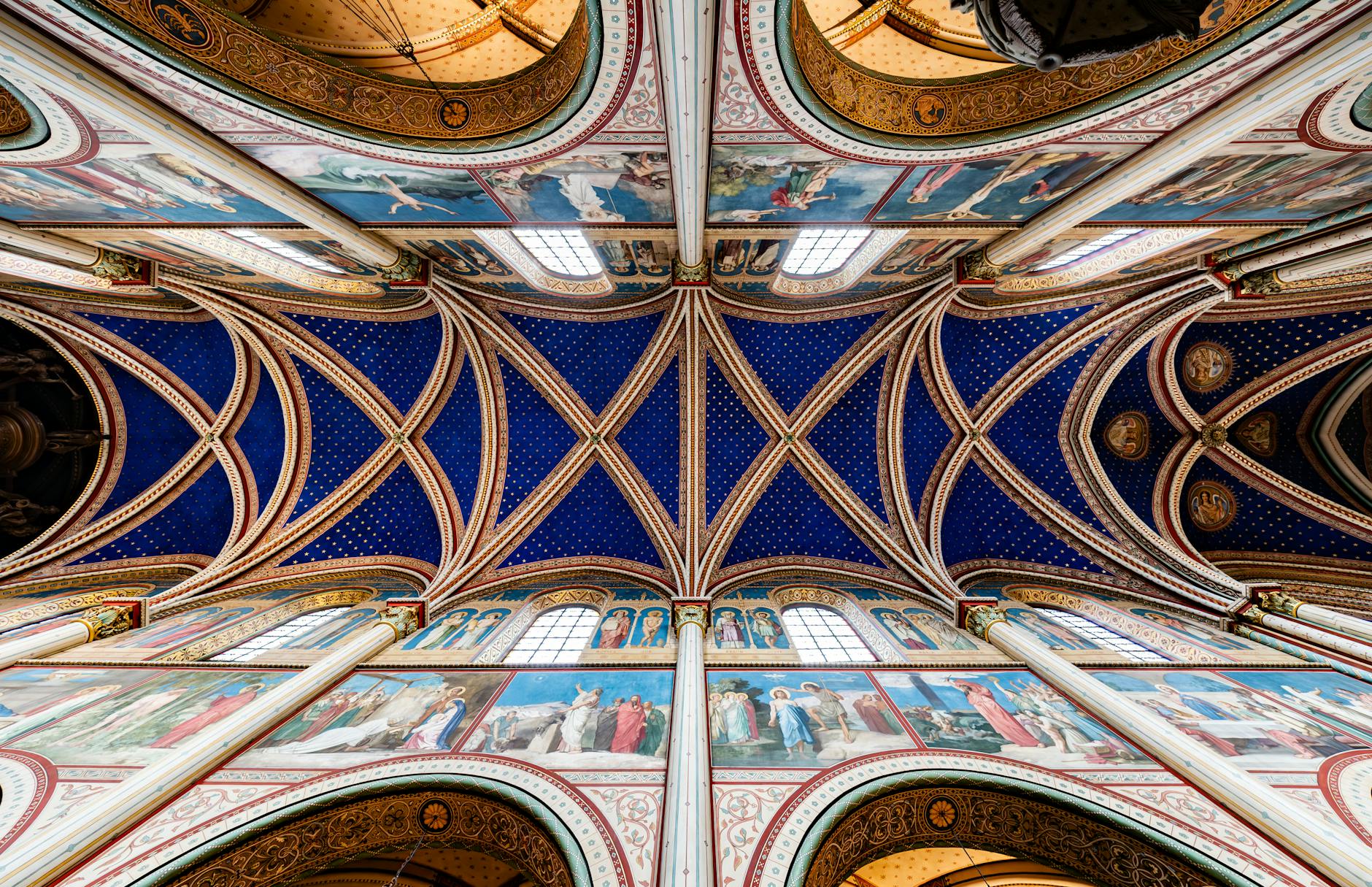
There are two lines at security: “billet prépayé” (pre-booked ticket) on the left, and “sans billet” (no ticket / buying at door) on the right. If you booked ahead, go left and show your mobile voucher. If you did not book ahead, you will wait much longer and you may be turned away entirely if the day’s quota is full (this happens in peak summer).
Security usually takes 5-15 minutes even in the pre-booked lane. On a busy sunny Saturday in July it can stretch to 30 minutes. The line is outdoors with minimal shade, so bring a hat and water in a small bottle (under 100ml, or finish it before you queue).
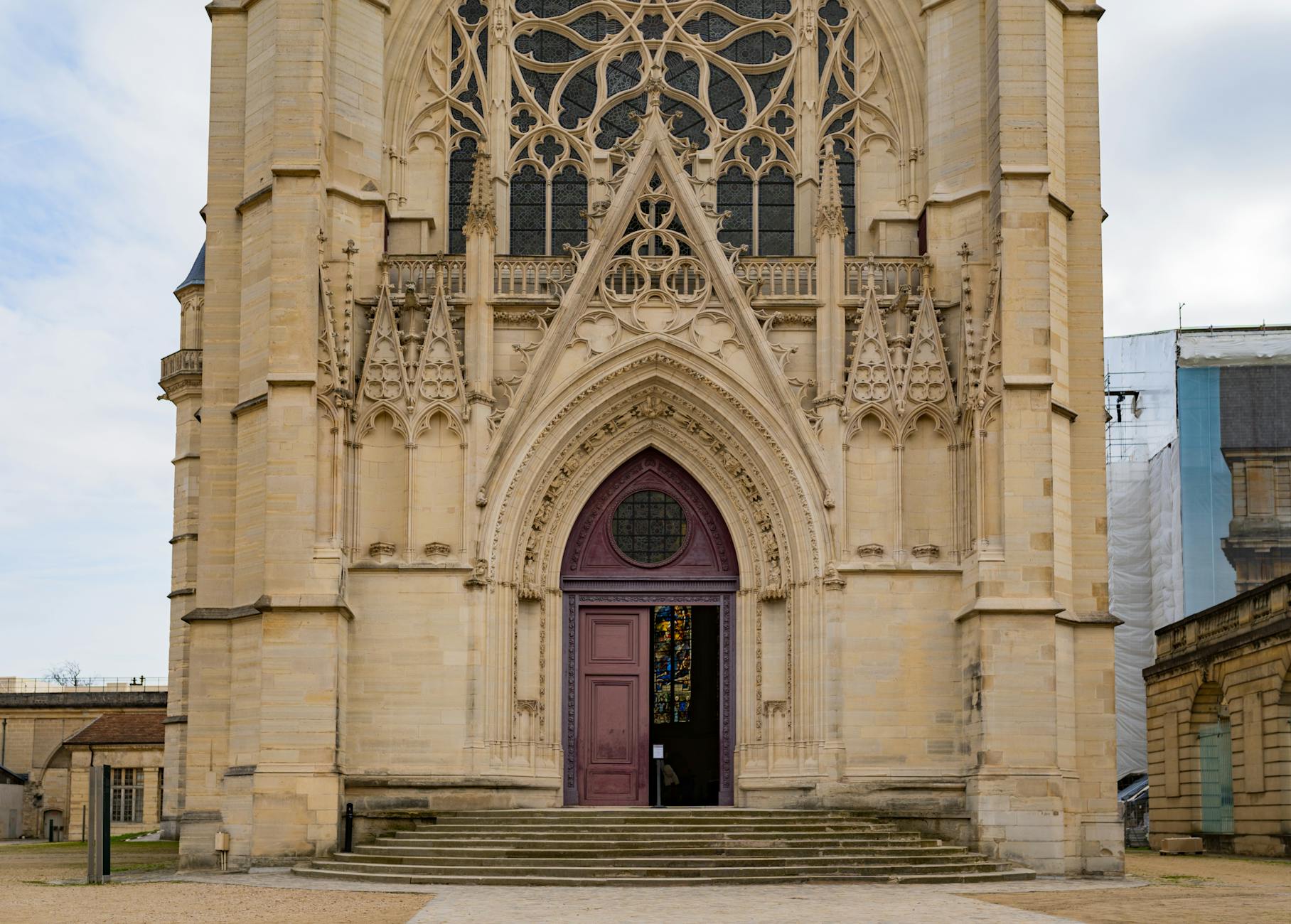
After security you follow a short path across the courtyard to the lower chapel entrance. This is where most people cluster taking photos of the exterior — push through, skip the lower chapel photos, head straight for the spiral stairs on the right and go upstairs. The upper chapel is why you are here.
The Lower Chapel vs the Upper Chapel
The lower chapel is the first room you enter and it is nice. Painted blue vaults with gold fleur-de-lys, some original 13th-century polychromy, a few stained glass windows along the sides. Worth about 5-10 minutes of your time.
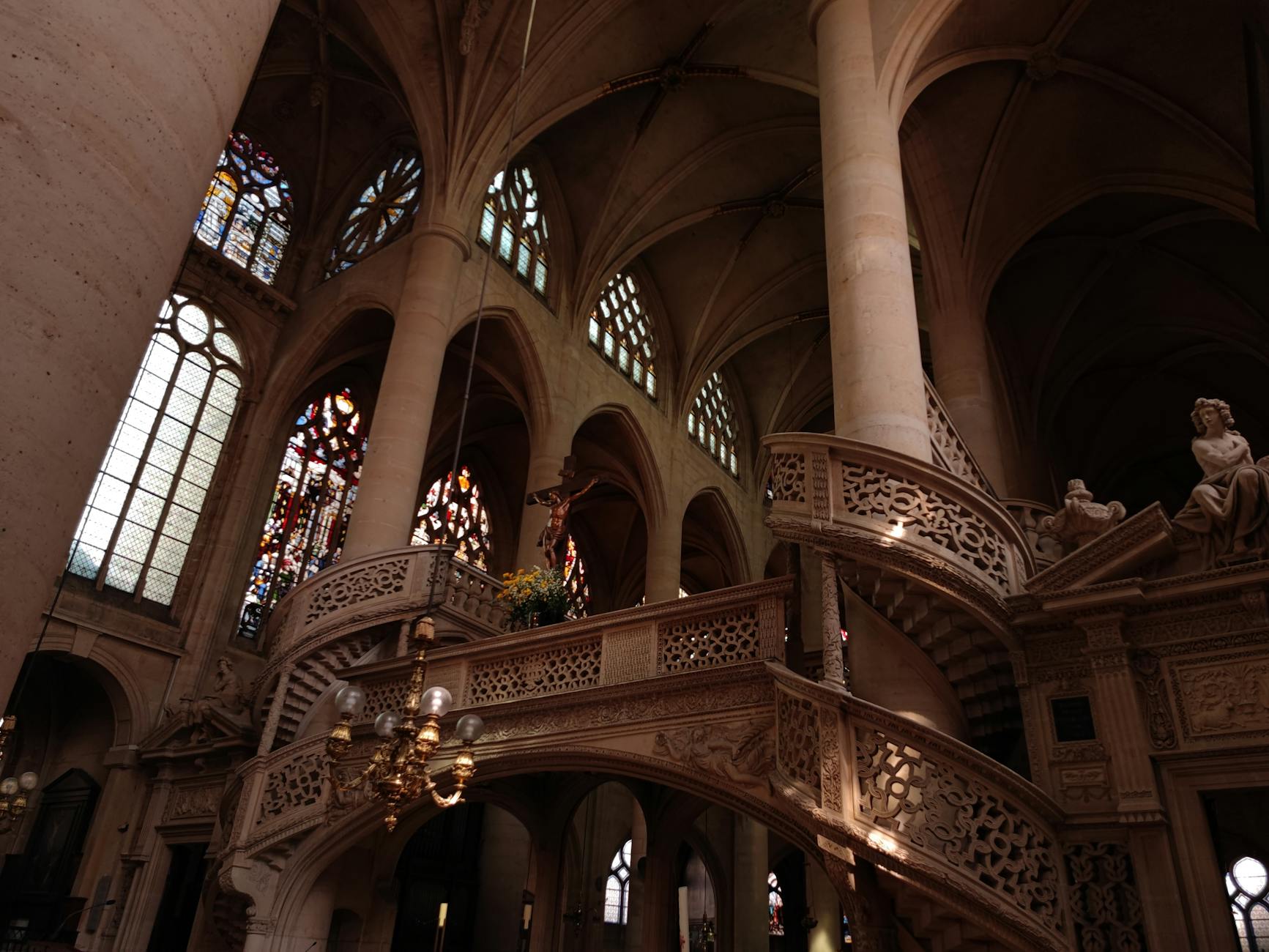
Then you climb the spiral stairs. They are narrow and steep and the step risers are uneven because they were built in the 13th century when nobody thought about accessibility. Mind your footing on the way down especially — the polished stone gets slick from 800 years of foot traffic.
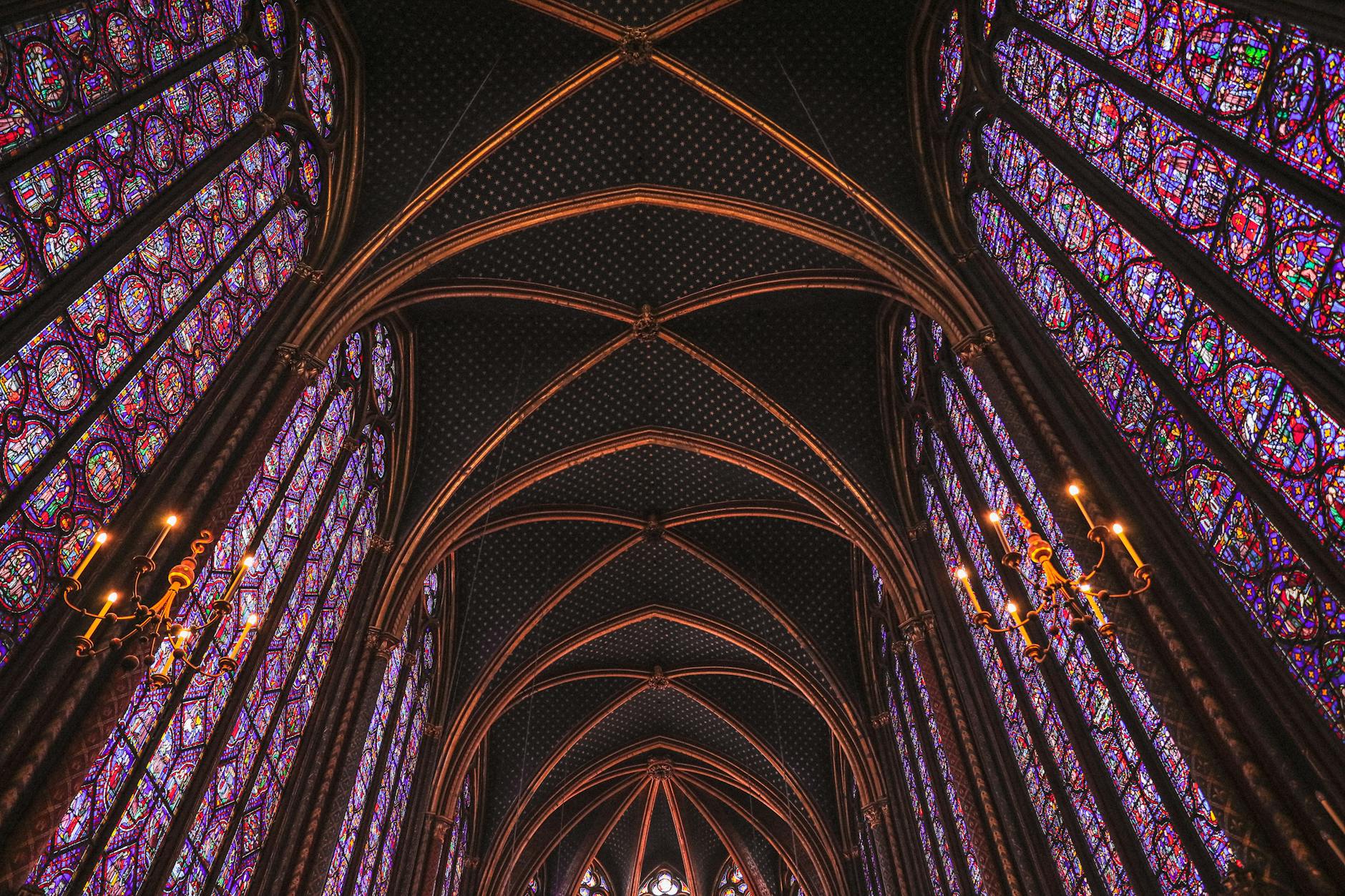
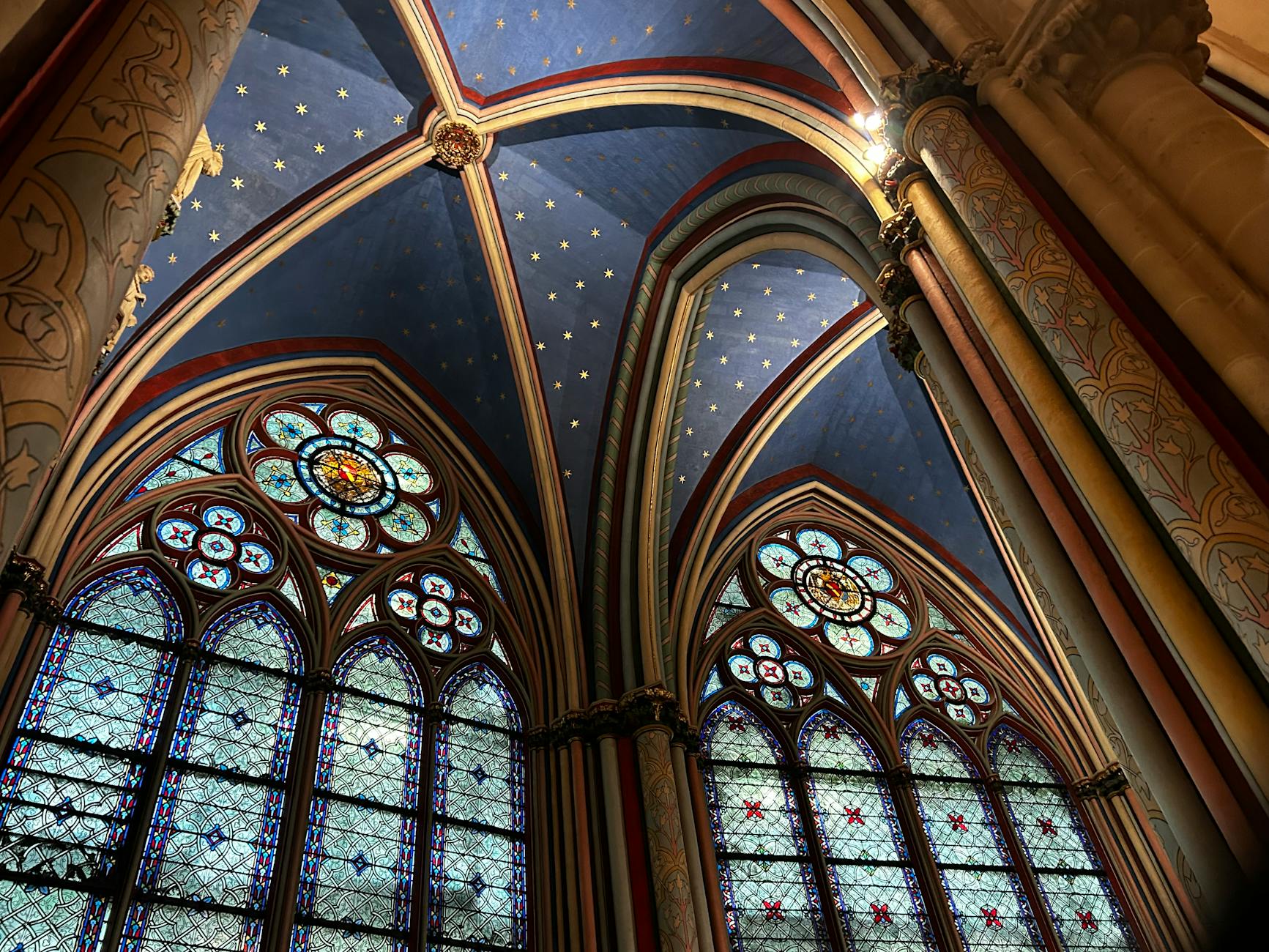
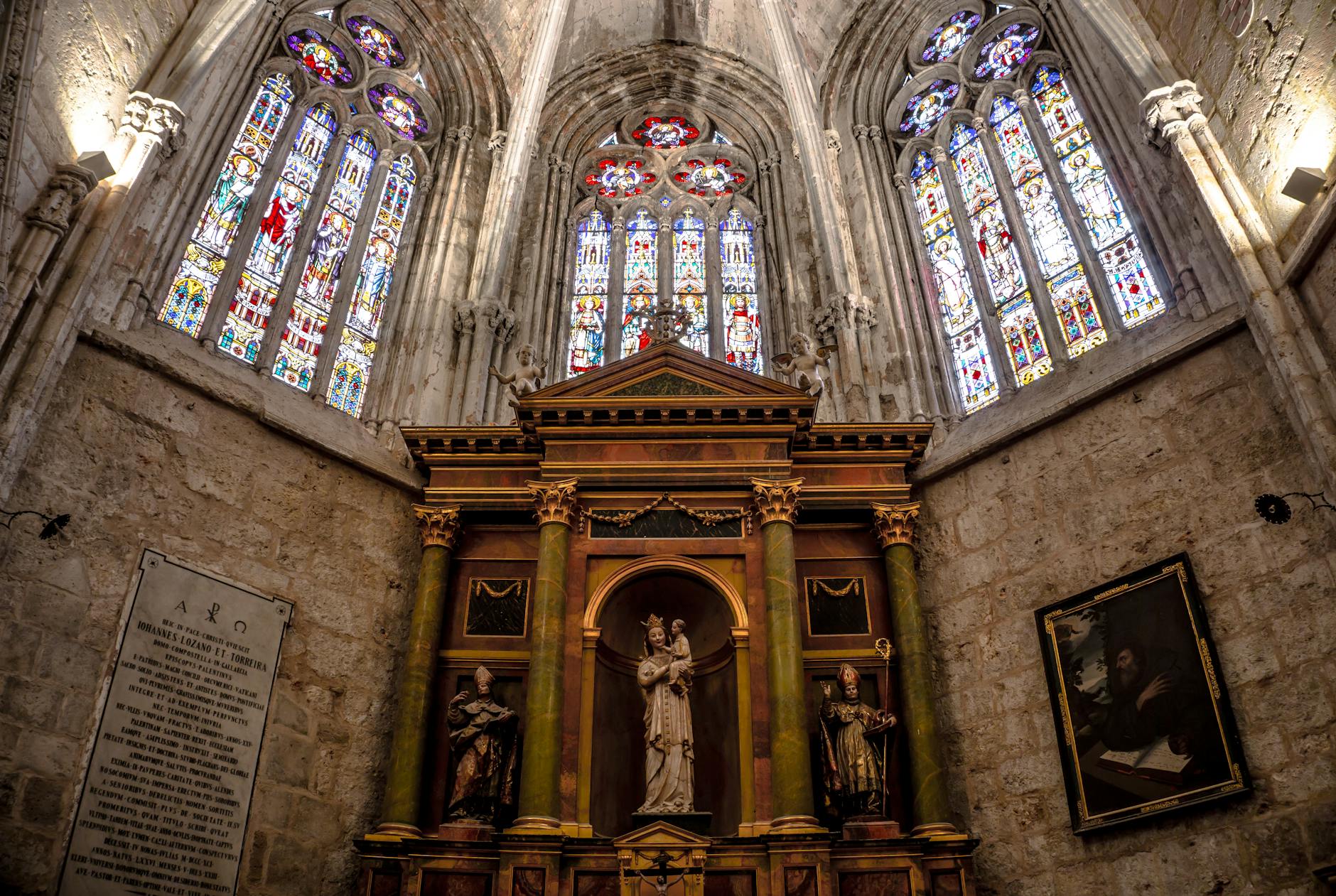
And then you emerge into the upper chapel. The first time I saw it I actually stopped walking and blocked the person behind me for about five seconds. The room is not large — maybe 33m long by 10m wide — but the walls are literally made of coloured glass and when the sun is on them it feels like you have walked inside a lantern.
This is the only Gothic building I know where the light is so concentrated that it changes the colour of your skin when you stand in certain spots.
The upper chapel has a small altar at the east end where the Crown of Thorns was originally displayed in its silver-gilt reliquary. The reliquary itself was destroyed during the Revolution (melted for the silver). The Crown itself survived, passed to Notre-Dame in 1801, and is now kept at the Louvre since the 2019 Notre-Dame fire.
So the reliquary and the relic have both left Sainte-Chapelle — what remains is the architecture built to hold them, which turns out to have been the real masterpiece all along.
What the Windows Actually Show
Each of the 15 main windows in the upper chapel tells a specific biblical story, reading clockwise from the north-west corner. Total of 1,113 individual narrative scenes across all the windows. This is one of the largest ensembles of 13th-century stained glass anywhere in Europe.
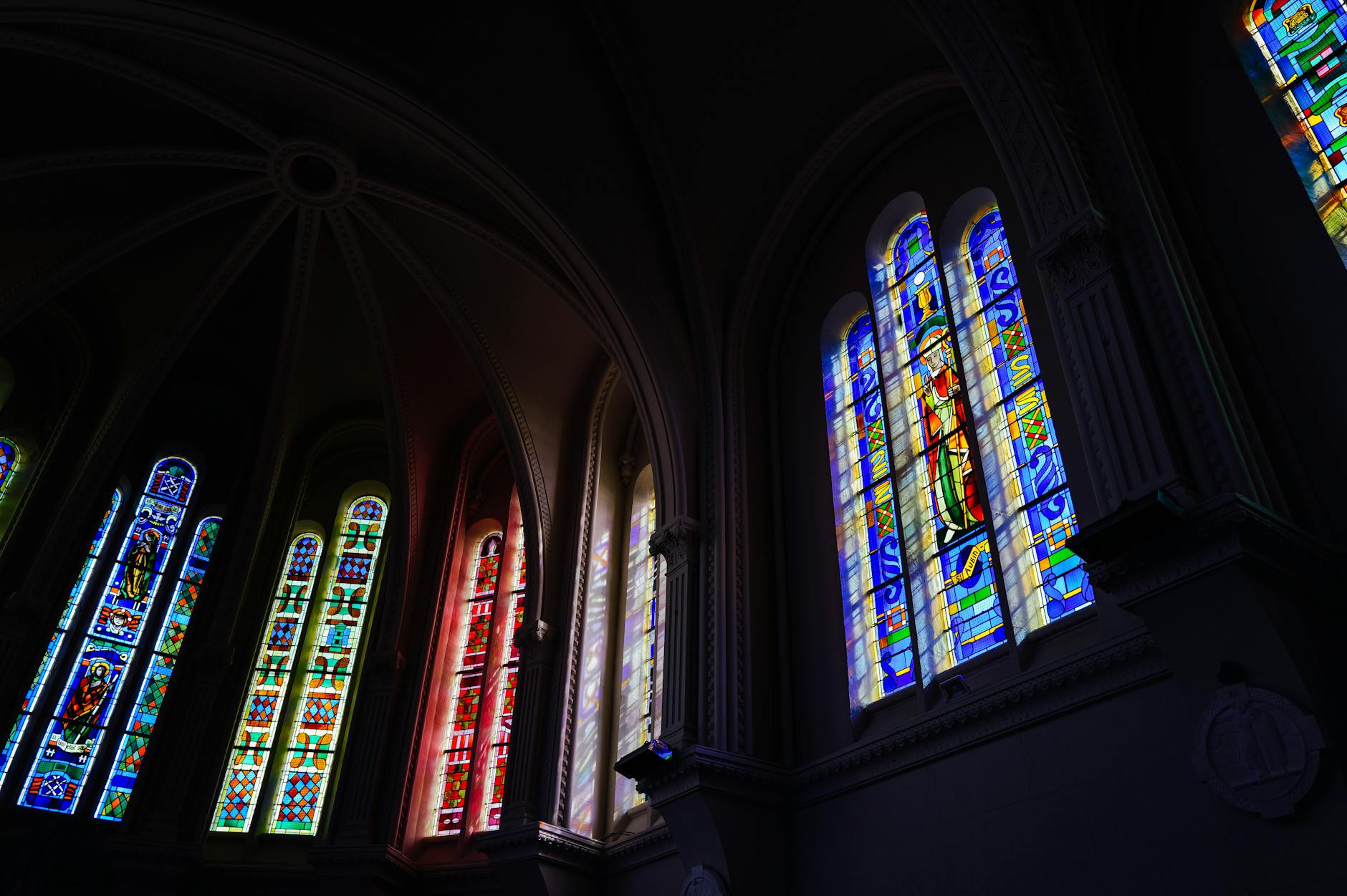
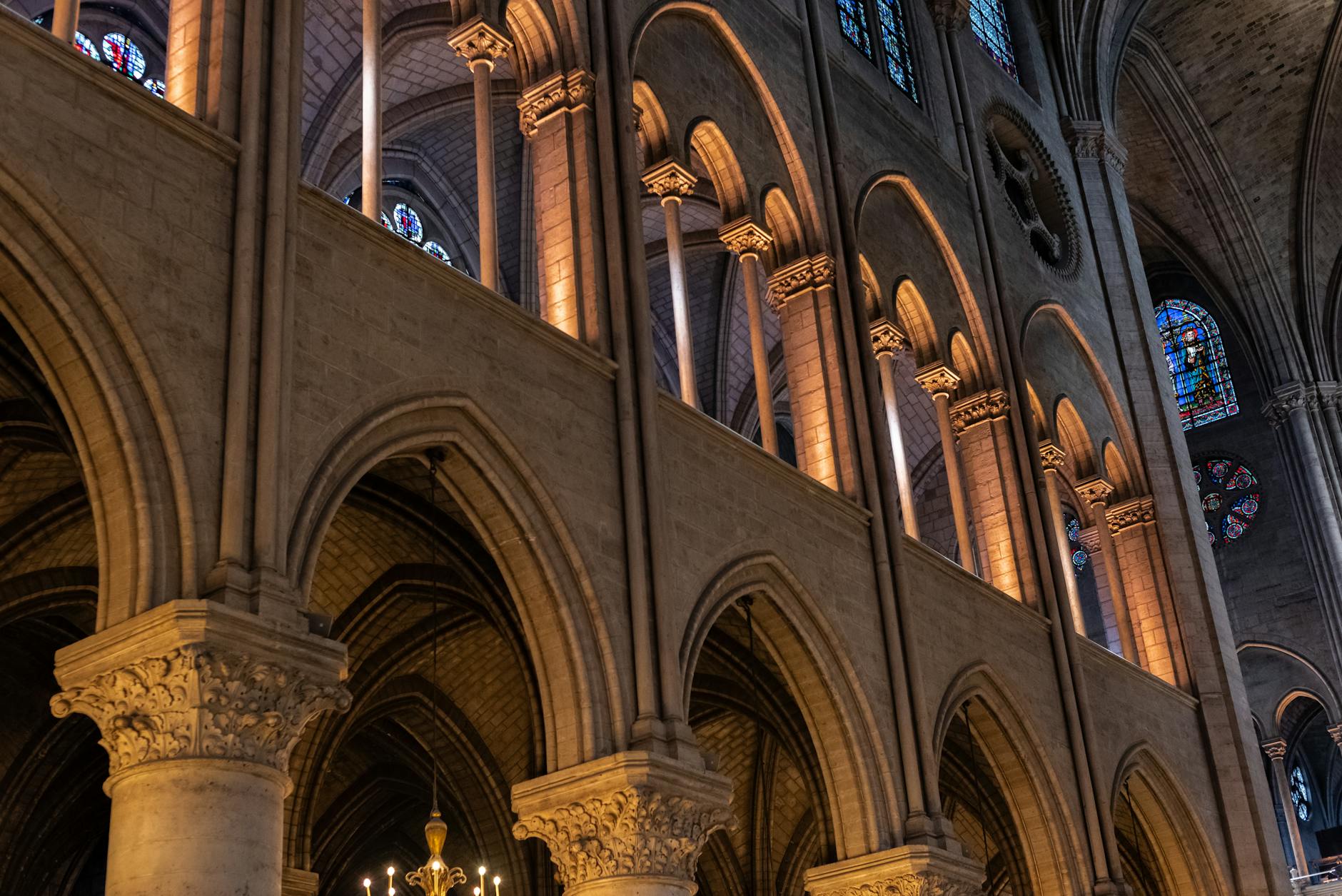
Window 1 (north side, first on your left as you face the apse): Genesis. Creation, Adam and Eve, Cain and Abel, Noah.
Window 2: Exodus. Moses, the plagues, the crossing of the Red Sea, the tablets.
Window 3: Numbers. Desert wanderings, the golden calf.
Windows 4-6: Joshua, Judges, Ruth.
Window 7 (centre apse, behind the altar): the Tree of Jesse — the genealogy of Christ, read bottom to top. Probably the most beautiful window in the building.
Windows 8-10 (moving south): Isaiah, Jeremiah, Ezekiel.
Windows 11-12: Kings of Israel, Book of Esther.
Window 13: Judith.
Window 14: John the Baptist and the life of Christ.
Window 15 (south-west corner): the relics — specifically, the purchase of the Crown of Thorns by Louis IX, the arrival of the Crown in France, and its installation at Sainte-Chapelle. This window is essentially a 13th-century commemorative plaque about how amazing Louis IX was for buying the relic.
The rose window at the west end (above the entrance, opposite the apse) shows the Apocalypse. It is a 15th-century addition — replaced the original window in 1485 — and it is in a different style from the rest of the glass. Slightly more “fireworks” and less “medieval manuscript.” Stand directly under it and look up, especially in the late afternoon when the sun is behind it.
The Conciergerie Next Door
If you bought the combined ticket, the Conciergerie is a 90-second walk away across the same courtyard. Same security line. Same entrance times.
I strongly recommend doing both in one visit.
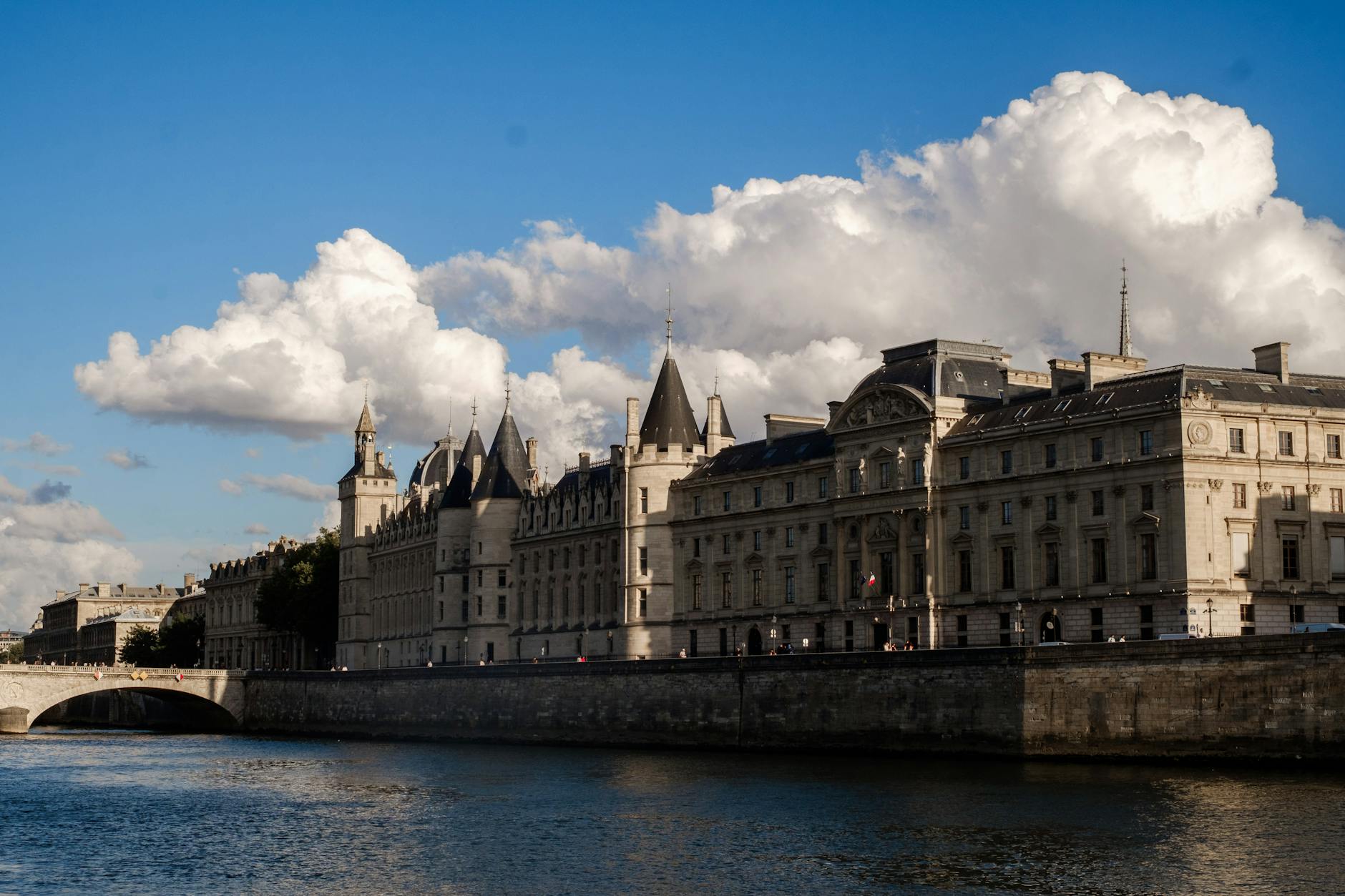
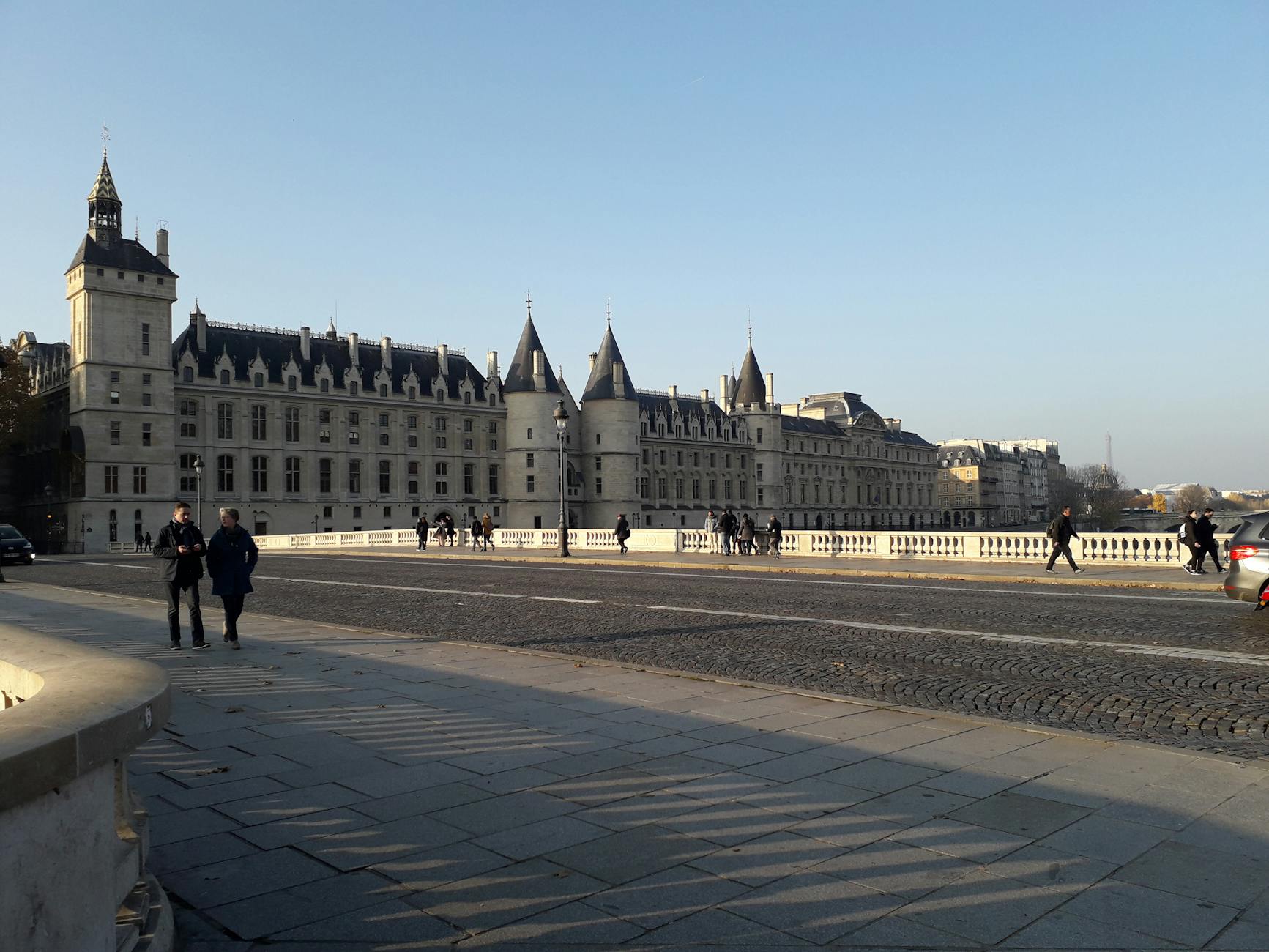
The highlight is the Salle des Gens d’Armes on the ground floor — a vast vaulted Gothic hall, 64m long, built around 1302. It was the dining hall for the king’s household staff (up to 2,000 people ate here). It is bigger and older than most of the cathedrals in France.
And because nobody thinks of the Conciergerie as a must-see, you will often have the entire hall to yourself. One of the most underrated rooms in Paris.
The upper level has the Marie-Antoinette chapel (built on the spot where her cell was) and a reconstructed version of her actual cell, plus exhibits about the revolutionary tribunal. Worth 20-30 minutes after the big hall.
How Much Time You Need
Sainte-Chapelle alone: 60-75 minutes total, including the security queue. I budget 15 minutes for security + 10 minutes for the lower chapel + 40-50 minutes for the upper chapel. You can do it in 45 minutes if you are rushing but I would not.
The upper chapel rewards sitting on the bench and just watching the light change.
Sainte-Chapelle + Conciergerie: 2 to 2.5 hours total. The Conciergerie takes about 60-75 minutes to cover properly. Add 15 minutes of walking between the two (even though it is 90 seconds, you will slow down in the courtyard taking photos).
Sainte-Chapelle + Conciergerie + Notre-Dame exterior: a full half-day. 3 to 4 hours. The guided tours scheduled around this route are typically 2.5 hours but add another 30-60 minutes for lunch and for lingering.
The full Île de la Cité morning I recommend: arrive at Cité metro at 10:30, do Sainte-Chapelle from 11:00-12:15, Conciergerie from 12:30-13:45, lunch at Place Dauphine (the small square at the west tip of the island, much quieter than Notre-Dame side), then Notre-Dame exterior and the Pont Neuf from 14:30-15:30. Back to your hotel by 16:00. That is one of my favourite days in Paris.
Common Mistakes
Showing up without a booking. You will either queue 90 minutes or be turned away. Book ahead.
Even $16. Even for just a 30-minute visit.
Going on a cloudy day. The chapel is still beautiful in flat grey light but it is genuinely not the same experience. The entire point of the room is the coloured light projection.
On a grey December afternoon the windows are dim and the room feels medieval-gloomy instead of magic-lantern. Check the forecast. If you have flexibility, move your booking to a sunny day.
Going on a Sunday morning. Mass is sometimes held in the lower chapel on Sunday mornings and can block access to the upstairs for 30-60 minutes. Not always, but common enough that I would just pick a weekday.
Rushing through the upper chapel. People walk in, take three photos, walk out. Do not do that.
Sit on the bench along the north wall (the one opposite the entrance) and just look up for 10 minutes. The light changes even in that short window and you will notice details you missed on the quick walk-through.
Bringing a big backpack. Security will either turn you away or make you check it, and the cloakroom is small and slow. Travel with a day-bag you can carry through a metal detector.
Under 55cm. No food.
Not going to the Conciergerie. You are literally next door. You already bought the combined ticket (or should have).
The Gothic hall alone is worth the extra 20 minutes.
Is Sainte-Chapelle Right For You?
Perfect for: Photographers (the light is genuinely unique), anyone who likes Gothic architecture, anyone who likes stained glass, people short on time who want one spectacular experience (Sainte-Chapelle + 45 minutes = the equivalent emotional impact of a full day at a larger museum), history buffs who care about medieval France, quiet travelers who want an alternative to the Louvre crowds.
Possibly not for you: Small children (the spiral stairs are hard for toddlers and they tend to get bored by the upper chapel, which is basically 40 minutes of looking at windows), anyone with serious mobility issues (the stairs to the upper chapel are the only way up — there is limited elevator access but it has to be arranged in advance), people who strongly prefer wide-open outdoor sites to dense interior spaces, anyone expecting a long museum visit (the chapel is small and you are done in an hour).
Skip entirely if: You hate Gothic architecture on principle (in which case Paris is going to be a struggle anyway), you are severely claustrophobic (the upper chapel gets packed and it can feel tight), you are on a rushed day-trip that already includes the Louvre and Versailles (add Sainte-Chapelle and you will hate your day — save it for a visit where you have unhurried time).
A Full Île de la Cité Day Itinerary
This is the day I recommend to anyone doing Sainte-Chapelle for the first time. It uses the whole island efficiently and the total walking is under 2km.
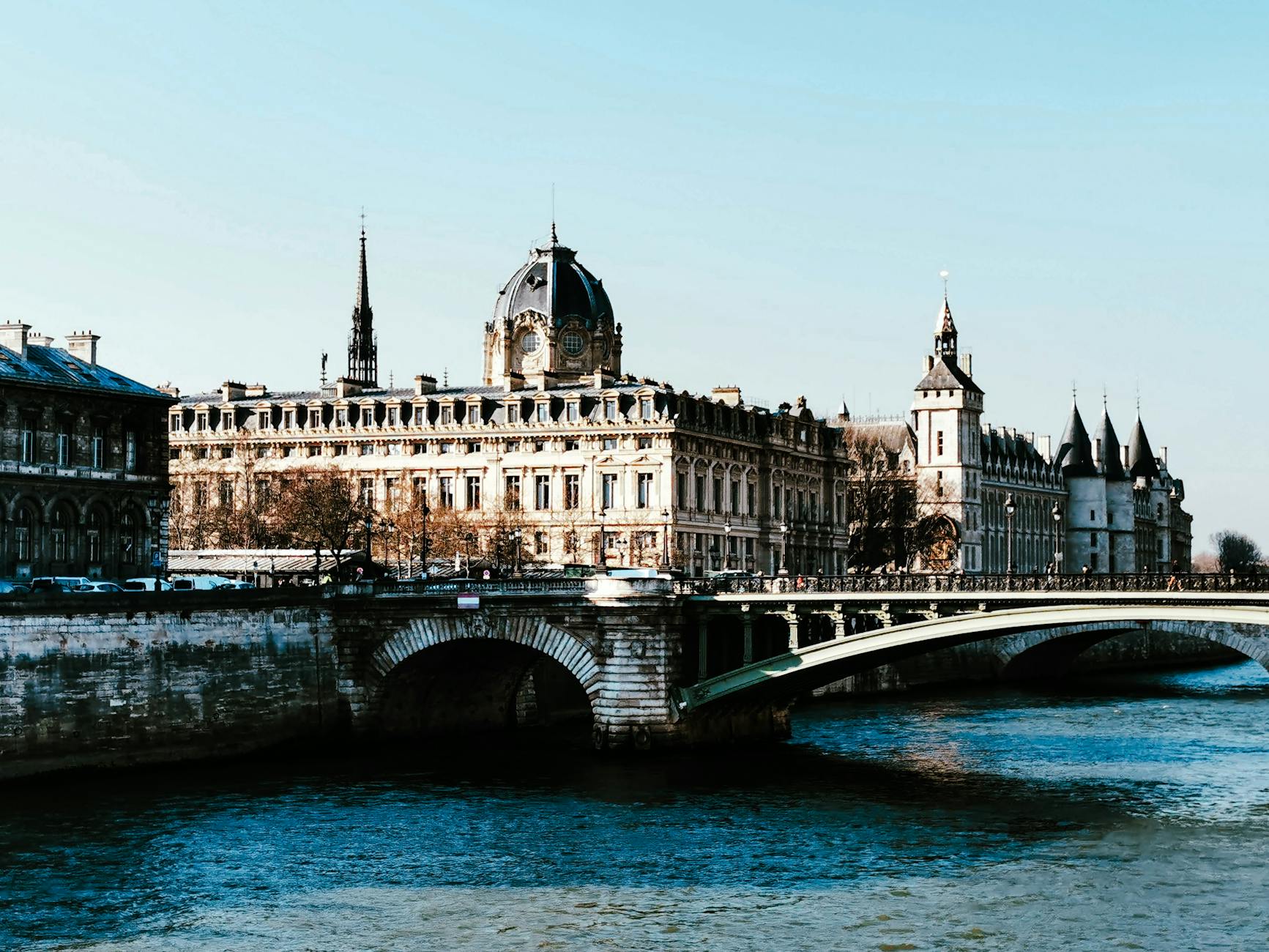
10:30 — Arrive at Cité metro station (line 4). Walk 150m to the Sainte-Chapelle security entrance at 10 Boulevard du Palais.
10:45 — Clear security (pre-booked lane). Quick walk through the lower chapel, then straight up the stairs.
11:00-12:15 — Upper chapel. Sit on the bench along the north wall for at least 15 minutes. Walk the perimeter once. Do the apse (Tree of Jesse) carefully. Do not rush out.
12:15 — Exit through the gift shop, cross the courtyard to the Conciergerie entrance.
12:20-13:30 — Conciergerie. Big Gothic hall first. Then upstairs for the Marie-Antoinette section. Exit to Quai de l’Horloge on the north side.
13:30 — Walk west along Quai de l’Horloge to Place Dauphine. About 5 minutes.
13:35-14:45 — Lunch at Place Dauphine. Try Paul (simple, affordable sandwich) or Le Caveau du Palais (full sit-down, excellent). This is the quietest square on the island.
14:45 — Walk across Pont Neuf to the right bank and back (the statue of Henri IV on the tip of the island is a good photo stop).
15:00-15:45 — Walk east along the island to Notre-Dame. Look at the exterior (the scaffolding has been slowly coming down since the 2024 re-opening). Walk the square in front. The interior requires a separate timed reservation that you need to book on the Notre-Dame site.
15:45 — Back to Cité metro or walk to Saint-Michel for the left bank.
What to Pair Sainte-Chapelle With
If you want a longer day that includes evening options:
After Sainte-Chapelle, head across the river to the Louvre for the afternoon — it is 10 minutes on foot across Pont Neuf. The Crown of Thorns that Sainte-Chapelle was built to house is now stored in the Louvre’s treasury (not always on display). Alternatively, walk south across Pont Saint-Michel into the Quartier Latin for lunch and wandering.
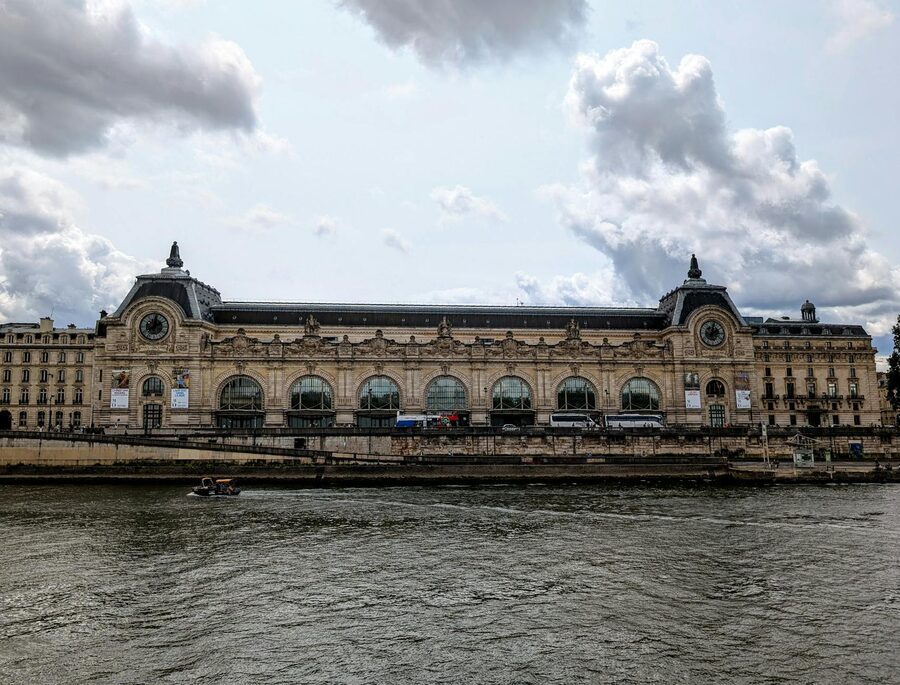
For an afternoon art follow-up, the Musée d’Orsay is 15 minutes on foot down the left bank. That gives you a 13th-century stained-glass morning and a 19th-century impressionist afternoon — a surprisingly good contrast.
For the evening, the Palais Garnier opera house is a 20-minute walk or one metro stop. Its architecture is the 19th-century opposite of Sainte-Chapelle’s: gold and marble and velvet instead of stone and glass. Seeing both in one day is a great architectural whiplash.
If you want something darker, the Paris Catacombs is a 20-minute metro ride south on line 4 (the same line that stops at Cité). That contrast — divine medieval light in the morning, subterranean bones in the afternoon — is genuinely one of the most memorable day pairings in Paris.
For food specifically, my Paris food tour guide covers the best cheese-and-wine walking tours, many of which start in the Marais (a 10-minute walk from Île de la Cité).
Other Practical Tips
Dress code: there is no formal dress code but you are in a functioning chapel and the French do not love it when travelers turn up in full beach outfits. Shorts and t-shirts are fine. Tank tops, visible swimwear, loud hats — use your judgment.
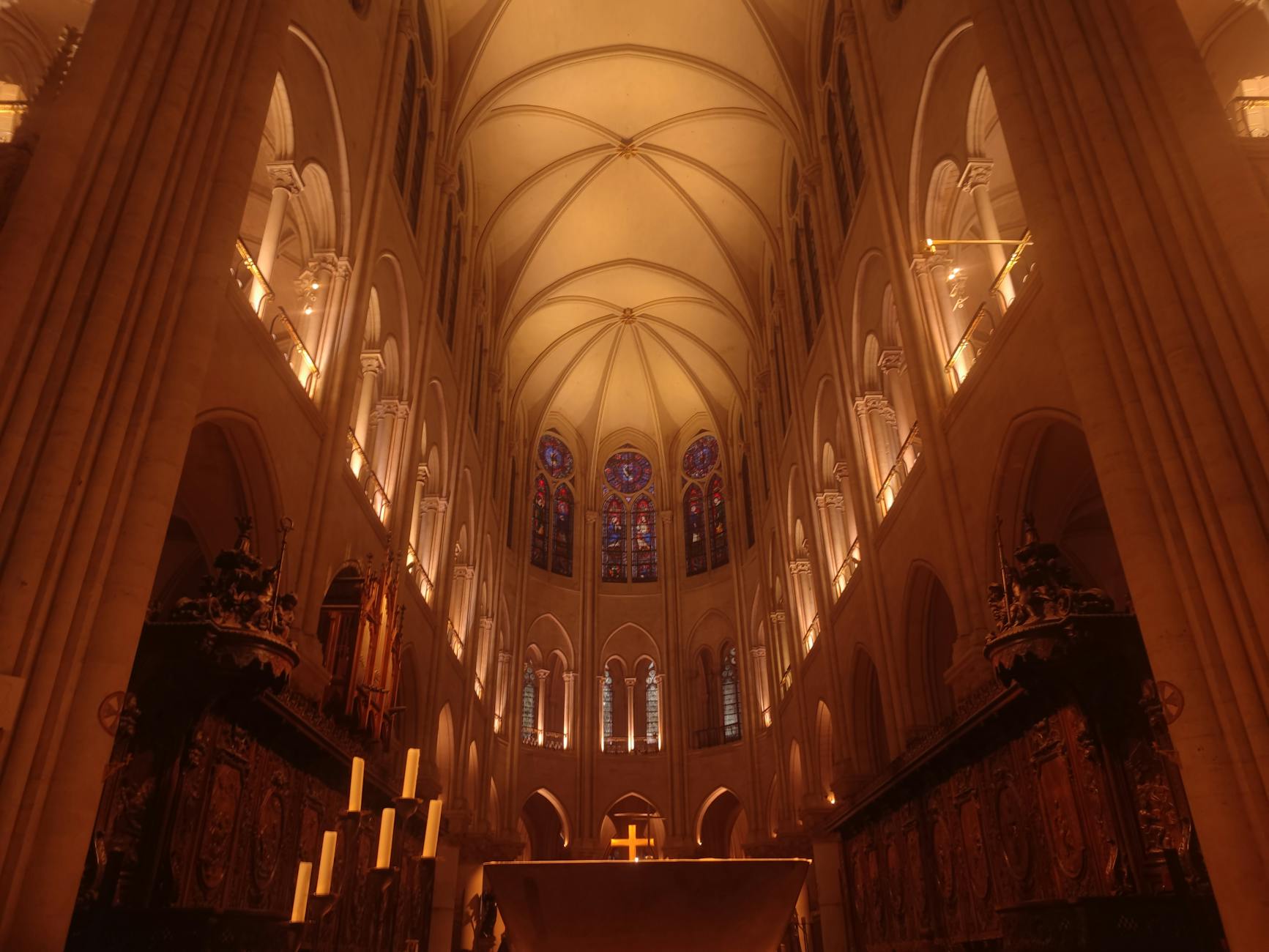
Photography: allowed without flash. No tripods. No selfie sticks.
Phone cameras work fine but honestly the shot that looks incredible in person looks underwhelming on your phone — your eyes process the light far better than any sensor. Consider putting the phone away for at least 20 of the 45 minutes.
Accessibility: the upper chapel is reachable only by the spiral staircase. There is no public elevator. Visitors with mobility needs should contact the monument in advance ([email protected]) — limited accessible access can be arranged but it is not guaranteed same-day.
Wheelchair access to the lower chapel is available.
Bags: no large bags allowed through security. There is a small cloakroom but it fills up in summer. Travel with a day-bag that fits on an airline.
Children: free under 18 (for both Sainte-Chapelle and Conciergerie). Bring a colouring book or something for them to do in the upper chapel — the adults will want 30+ minutes and the kids will want about 5.
Toilets: there are toilets at the end of the courtyard near the Conciergerie entrance (free, clean, often have a small queue).
Evening Concerts at Sainte-Chapelle
This is a trick that most travelers miss. Sainte-Chapelle hosts classical music concerts almost every evening from March to November, typically starting at 19:00 or 20:30. Mostly Vivaldi’s Four Seasons, Pachelbel’s Canon, Mozart, Bach — tourist classics.
The musicians play from the apse end of the upper chapel and you sit in folding chairs facing them.
Tickets are separate from the daytime entry ticket — booked through classictic.com or Fnac or the chapel’s own concert office. Around €30-45 depending on seat. There is no formal dress code but people tend to turn up nicer than for a daytime visit.
The experience is excellent: the chapel has surprisingly good acoustics (it was never designed for music and the ceilings cause some echo, but the clarity on strings is good), the lighting is dimmer and warmer, and you are sitting still in the most beautiful room in Paris for 75-90 minutes. Even if you are not a classical music person this is one of the best evening activities in the city.
Worth planning around: if you are in Paris for 3+ days, book a daytime visit (the light show) and a separate evening concert (the music + ambient setting). They are almost completely different experiences of the same room.
Final Thoughts
Sainte-Chapelle is in my top 3 buildings in Paris (alongside the Louvre’s Richelieu wing and Palais Garnier). It is also the most efficient: 60 minutes of your day, $16, and you walk out having seen something genuinely unique. There is no other room on earth that does what this room does with light.
Book the $16 entry ticket. Pick an 11am slot on a sunny Tuesday or Wednesday in April-May or September-October. Clear security with the mobile voucher.
Skip past the lower chapel. Climb the spiral stairs. Sit on the bench along the north wall of the upper chapel for at least 15 minutes and just look up.
Walk the perimeter slowly. Do the apse last. Do not take too many photos.
Then walk 90 metres across the courtyard to the Conciergerie, do the big Gothic hall, do the Marie-Antoinette section, and walk out onto Quai de l’Horloge for a proper lunch at Place Dauphine.
That is a perfect morning in Paris. And it costs a total of $27. I still cannot believe more travelers do not do this instead of queuing for the Louvre at 10am.
FAQ
Do I have to book online or can I just turn up?
You can turn up but you will wait 45-120 minutes at security and risk being turned away on peak days. The pre-booked lane cuts the wait to 5-15 minutes. For $16 it is not a decision.
How long should I budget?
60-75 minutes for Sainte-Chapelle alone. 2-2.5 hours for Sainte-Chapelle + Conciergerie. 3-4 hours for the guided tour option that adds Notre-Dame.
What is the best time of day to visit?
11:00 on a sunny weekday. The sun hits the south windows at a high angle and throws coloured light across the interior. 11am-12:30 is the sweet spot. Avoid early morning (harsh east light), mid-afternoon (flat overhead light), and cloudy days (dim all round).
Is it wheelchair accessible?
Partially. The lower chapel is accessible. The upper chapel is only reachable by a narrow medieval spiral staircase — there is limited accessible access but it has to be arranged in advance via email.
Most wheelchair users visit the lower chapel and the courtyard only.
Can I bring a backpack?
Only small day-bags under 55cm. Large backpacks will be refused at security. There is a small cloakroom for borderline sizes but it fills up quickly.
Is Sainte-Chapelle worth visiting if I have already seen Notre-Dame?
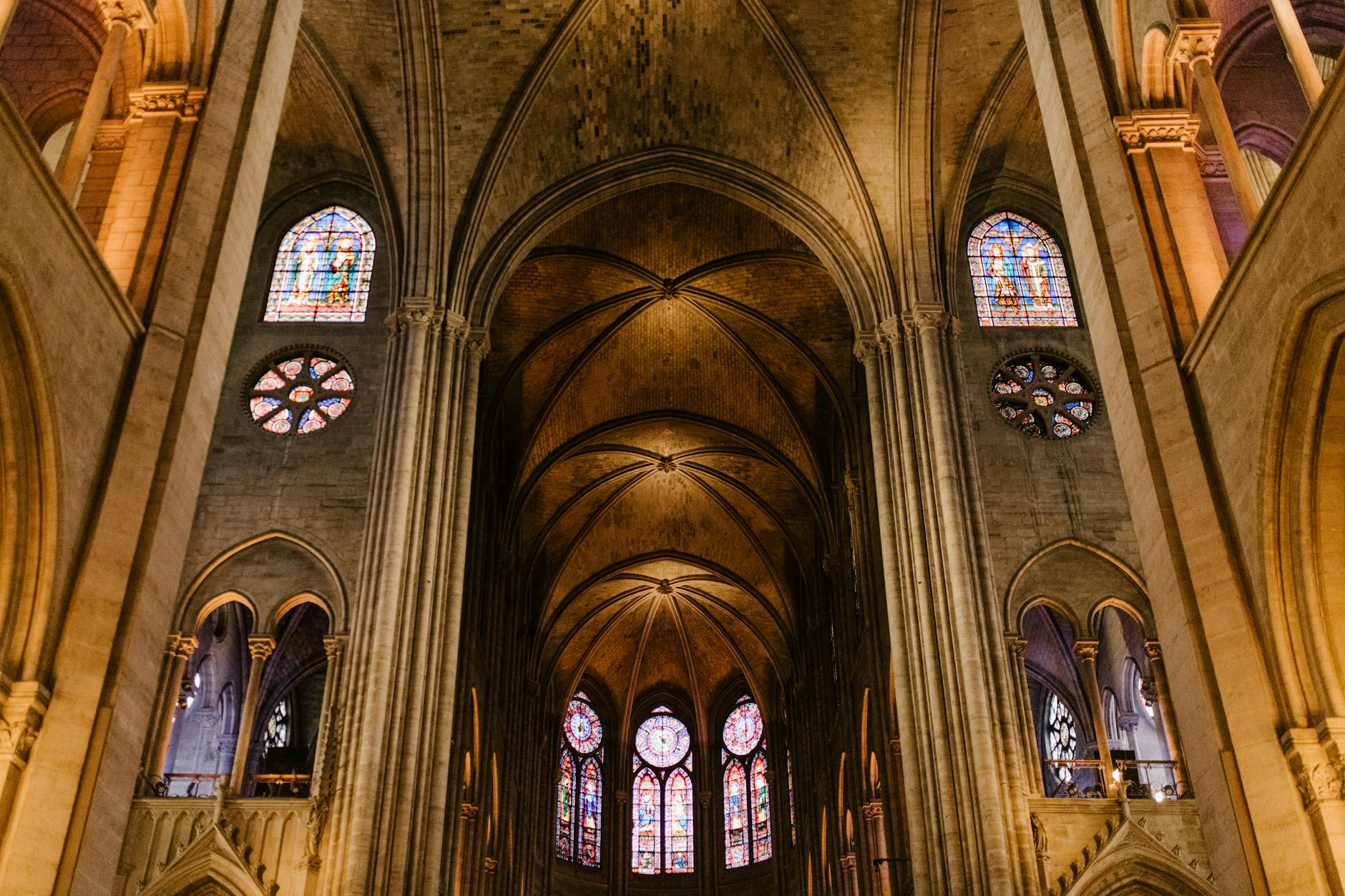
Yes, absolutely. They are completely different experiences. Notre-Dame is massive-scale Gothic — huge nave, soaring rose windows, theatrical hush.
Sainte-Chapelle is precision Gothic — small scale, saturated colour, feels like you have walked into a jewel. They pair well but they do not substitute for each other.
Are the evening concerts worth it?
Yes, if you are already a classical music person or if you want a calm ambient evening in a beautiful room. The programmes are mostly tourist-friendly (Vivaldi Four Seasons is the most common). Acoustics are decent.
Atmosphere is excellent. Book through classictic.com or directly at the chapel.
Can I visit the Conciergerie without Sainte-Chapelle?
Yes — the Conciergerie has its own entry ticket (around €13). But the combined ticket is only €22 so you are essentially paying €9 extra to add Sainte-Chapelle, which is absurd value.
What happened to the Crown of Thorns that Sainte-Chapelle was built to house?
It was moved to Notre-Dame in 1801 (after the Revolution). It was rescued from the 2019 Notre-Dame fire. It is now stored at the Louvre, not usually on public display.
Fragments have also been distributed to other churches over the centuries. None of the actual relic remains at Sainte-Chapelle today.
Is the chapel still a working church?
Occasional Catholic masses are held in the lower chapel, especially Sundays. The upper chapel is mostly museum-only. Concerts are the main non-tourist use of the space today.
How do I get there from Charles de Gaulle airport?
RER B to Saint-Michel – Notre-Dame (about 45 minutes), then 10 minutes walking across the island. Or metro line 4 from Châtelet to Cité. Do not take a taxi in peak hours — traffic on the island is brutal.
More Ile de la Cite
Sainte-Chapelle is the jewel of the island. The Conciergerie next door adds Revolutionary history with augmented reality. Together they make the most historically dense morning in Paris for under 30 euros.