
Here is the thing about the Paris Catacombs: 6 million dead Parisians are stored in an abandoned limestone quarry 20 metres below the streets of Montparnasse, and about 550,000 living people visit them every year. The tickets sell out. The queue wraps around the block.
The descent is into 131 steps of darkness and it smells like cold damp stone.
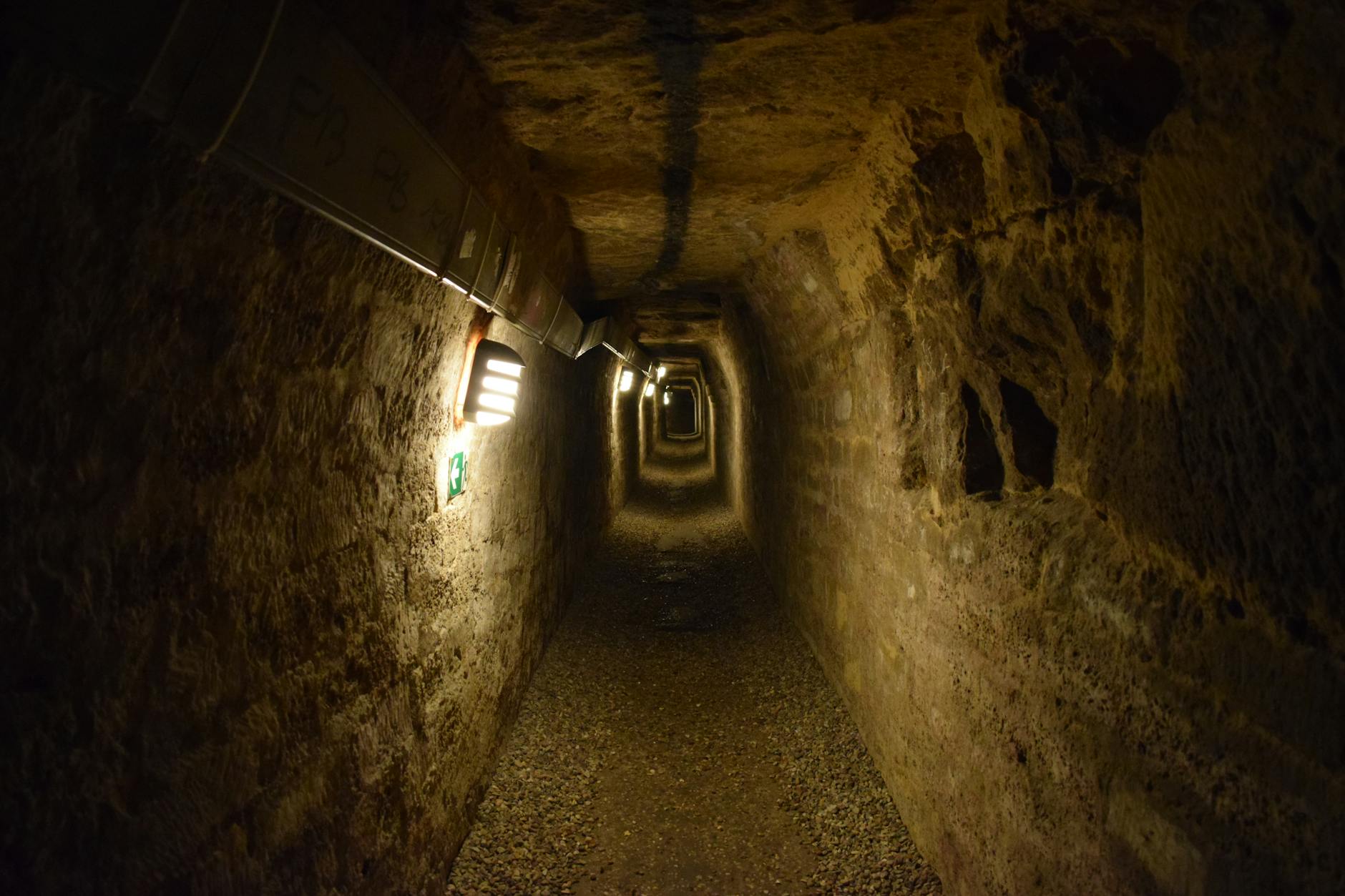
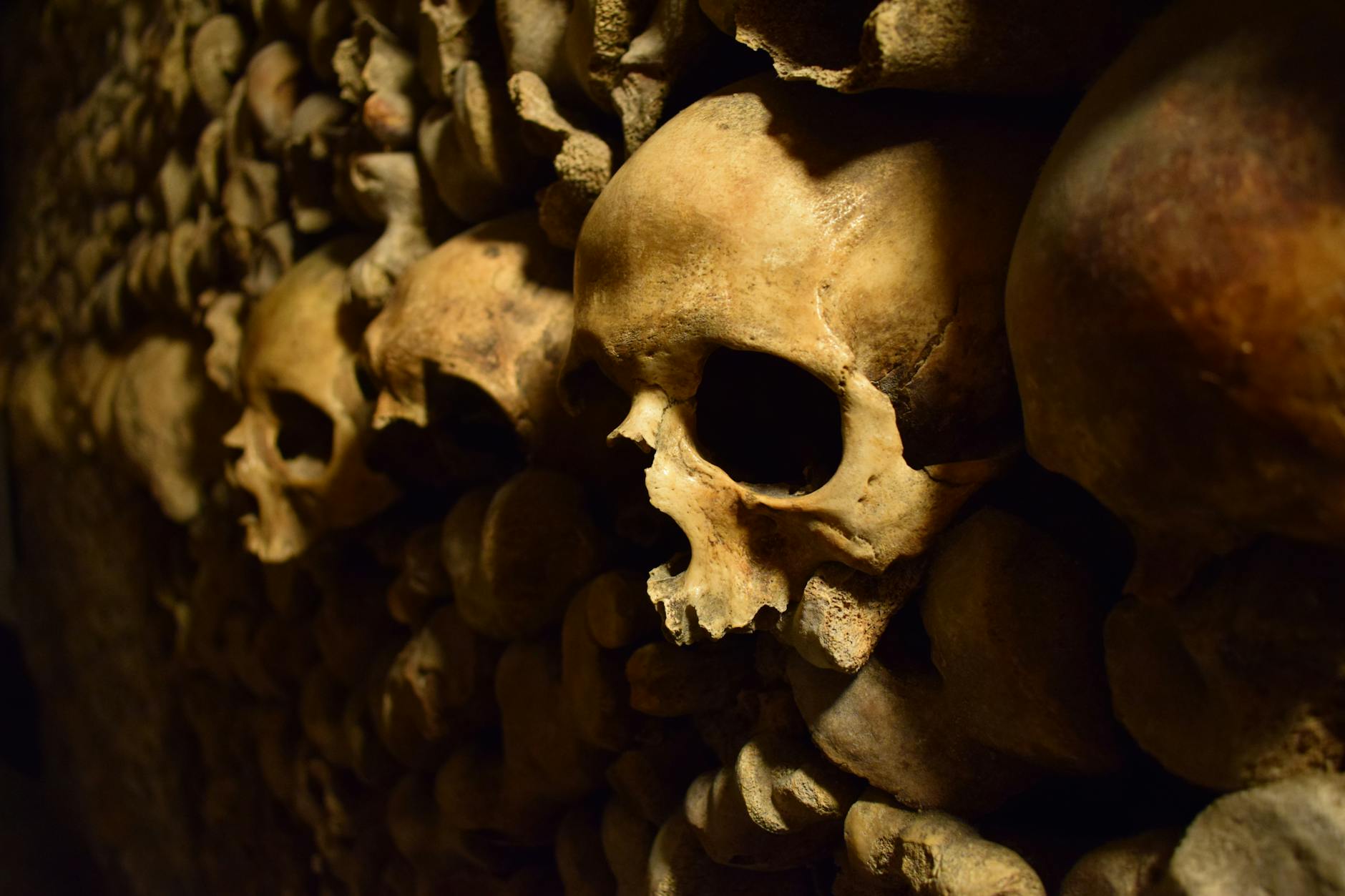
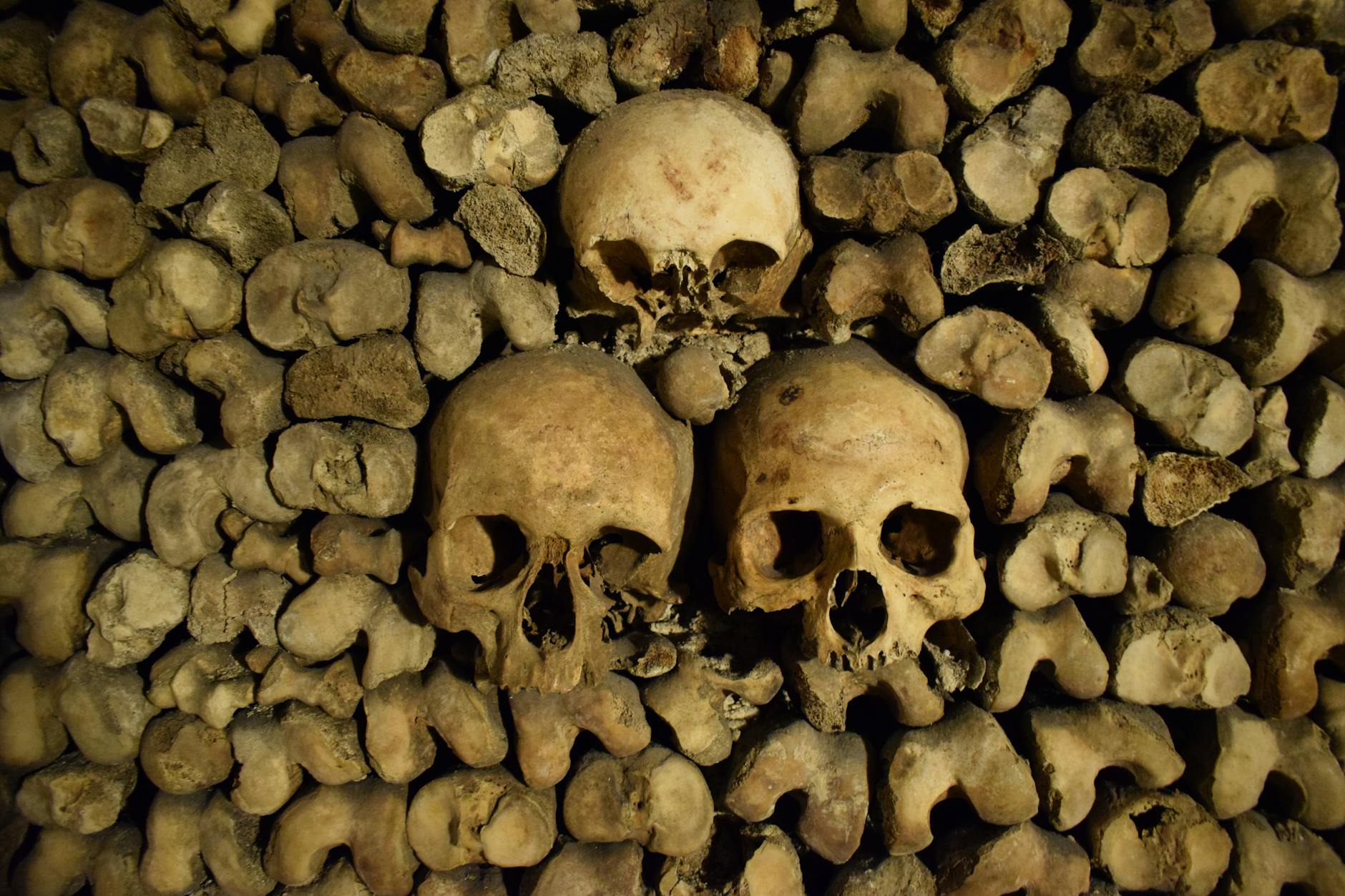
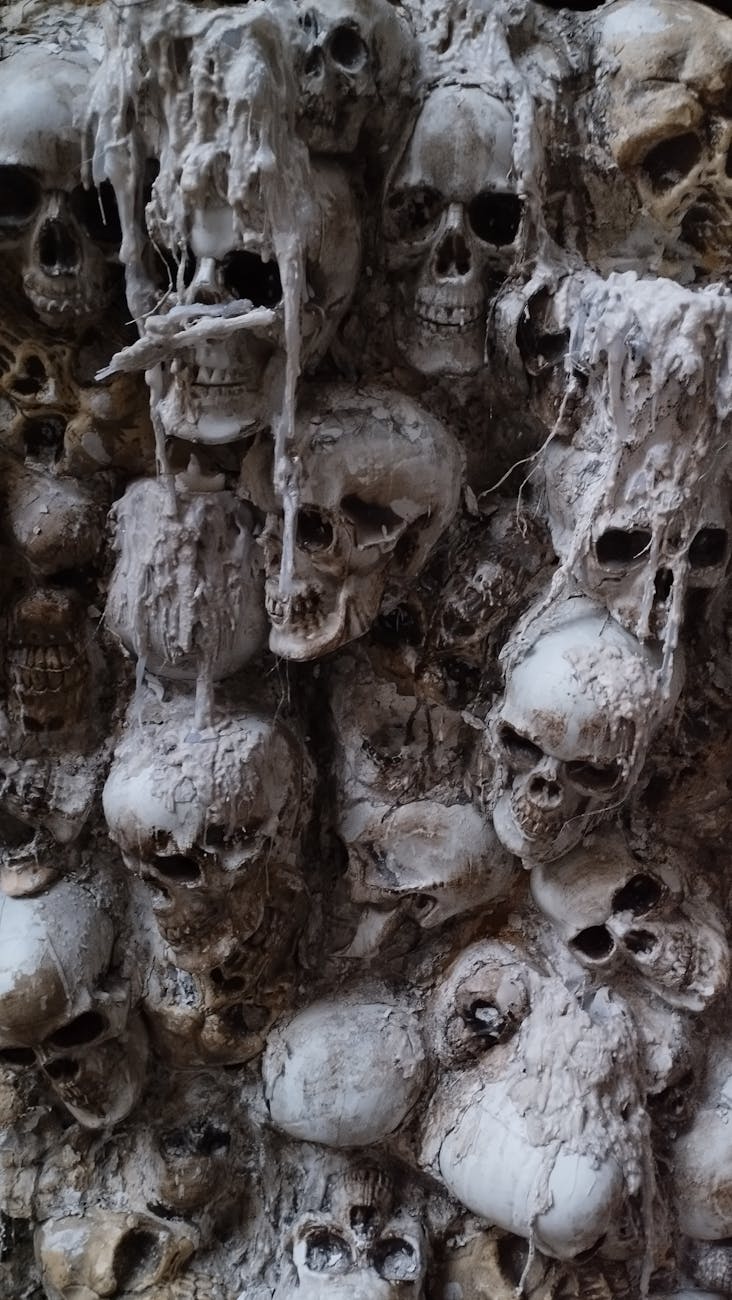
It is also one of the most unforgettable 45 minutes you will spend in Paris. The bones are arranged in decorative patterns along a 2-kilometre walking route — femurs stacked like firewood, skulls inlaid as borders, Latin inscriptions above the doorways reminding you that yes, this was once alive and soon you will not be. Most people walk out quieter than they walked in.
This guide is everything I have learned across three visits, one of which was with a skip-the-line ticket in July (the right way) and one of which was queueing on a Saturday without a ticket (the wrong way, do not do this). I will tell you exactly how to book, when to go, what to expect, what to wear, and which tour upgrades are actually worth the money.
Quick Picks — Paris Catacombs Tickets
Best value combo: Catacombs + Audio Guide + Seine Cruise on GYG — $94, skip-the-line entry, audio guide, plus a river cruise for the afternoon.
Best guided tour: Skip-the-Line Guided Catacombs Tour on Viator — $149, licensed guide, 90 minutes underground, VIP entry.
Best for the restricted areas: Catacombs Special Access Tour on GYG — $158, access to areas not included in standard tickets, 2 hours.
Best time to visit: Weekday morning, 10am arrival, reserved ticket in hand.
How long you need: 45-60 minutes inside for a self-guided visit, 90+ minutes for a guided tour.
The one rule: Book online in advance. ALWAYS. The on-day standby queue routinely runs 2+ hours in summer and sometimes fills up before anyone in line gets a ticket.
- Quick Picks — Paris Catacombs Tickets
- What the Paris Catacombs Actually Are
- Why You MUST Book Online in Advance
- How Much Tickets Cost and What’s Included
- The Descent — 131 Steps and Your Ears Popping
- Best Time of Day to Visit
- Which Tour Should You Book? Three Real Options
- Catacombs + Audio Guide + Seine River Cruise
- Skip-the-Line Guided Catacombs Tour
- Catacombs Special Access Tour (Restricted Areas)
- How to Get There
- What to Wear
- What You Actually See Inside
- The Museum Upstairs (Don’t Skip It)
- How Long You Need
- Common Mistakes to Avoid
- Is the Catacombs Right for You?
- The Best Order for a Full Catacombs Day
- More Paris Planning on The Abroad Guide
- Final Thoughts — What the Catacombs Give You
- FAQ — Short Answers to the Most Asked Questions
- More Dark Paris History
What the Paris Catacombs Actually Are
The Catacombs of Paris (Catacombes de Paris in French) are an underground ossuary in a network of limestone quarries that stretch beneath almost the entire southern half of Paris. The city’s stone — used to build Notre-Dame, the Louvre, and most of central Paris — was mined from here starting in Roman times and continuing through the medieval period.
By the late 1700s, Paris had a serious problem: the city’s traditional cemeteries, especially the massive Cemetery of the Innocents near Les Halles, had been in use for 1,000 years and were literally overflowing. Graves were being stacked on top of each other. Corpses were washing into neighbouring buildings’ cellars.
The smell was apparently legendary.
In 1786, the authorities decided to empty the cemeteries and move the bones into the abandoned quarry tunnels under Montparnasse. Over a period of about 30 years, the remains of roughly 6 million people were transported in covered carts at night — a process that involved a priest walking at the front, chanting prayers, and a convoy of wagons full of bones following behind. That is how the Paris Catacombs came to exist.
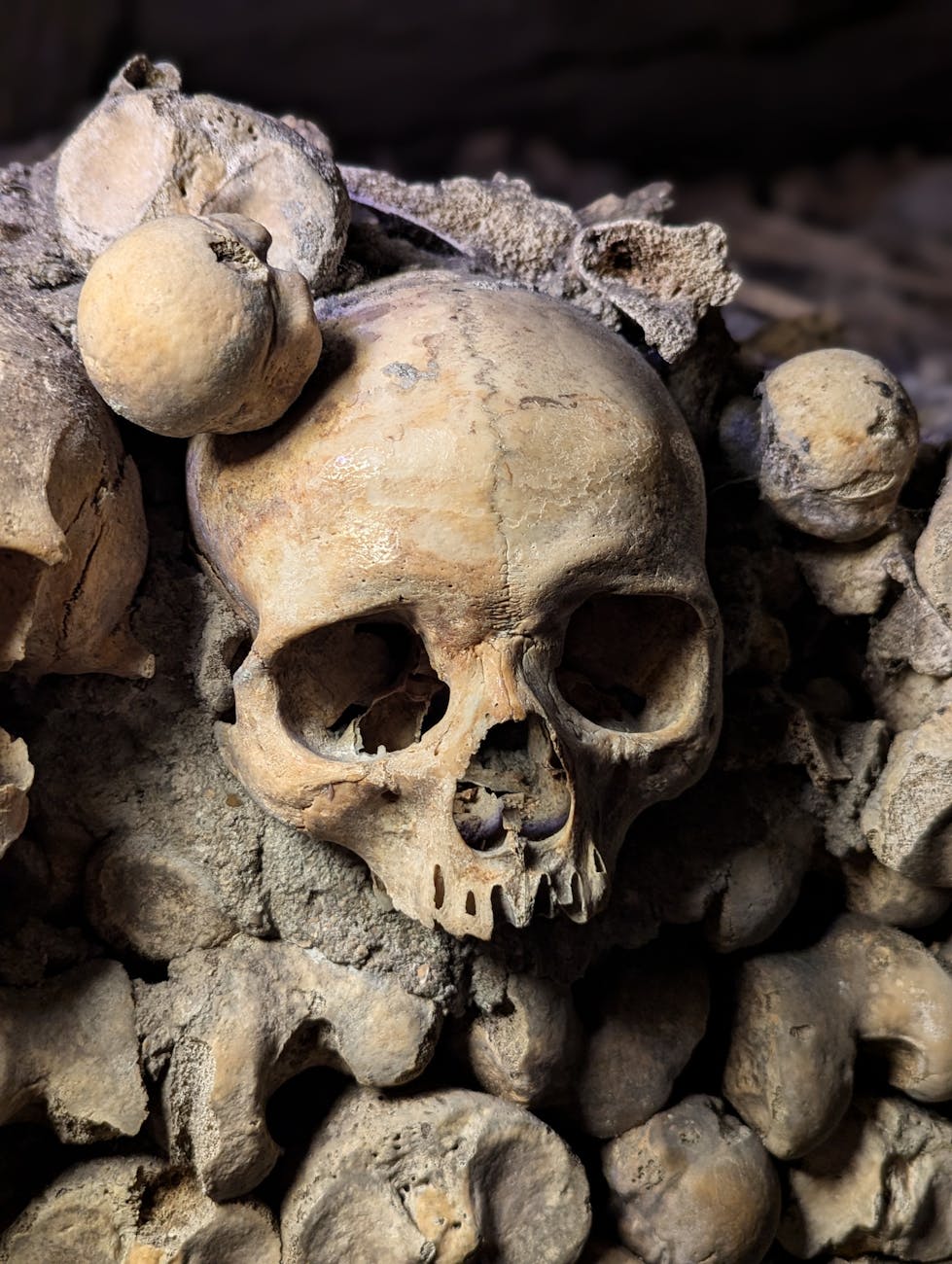
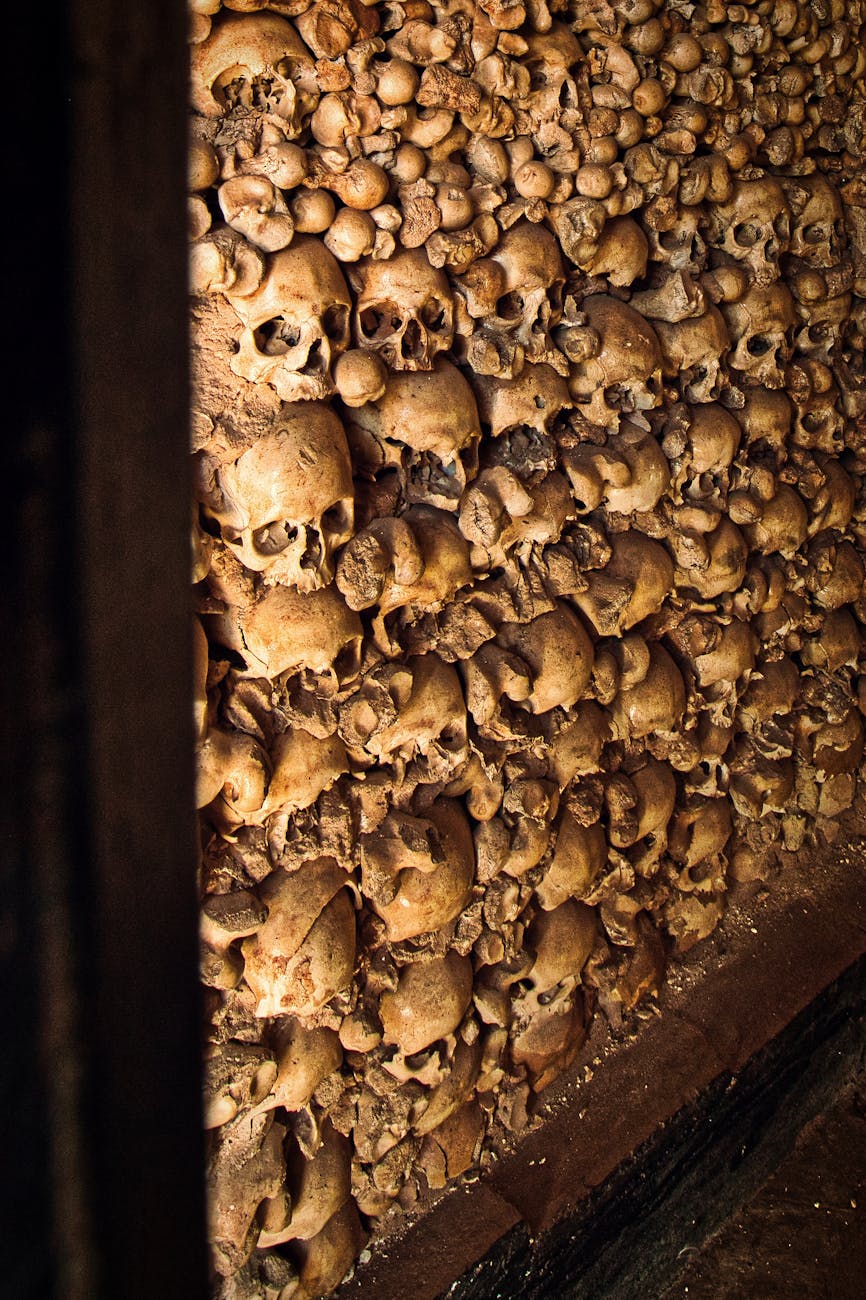
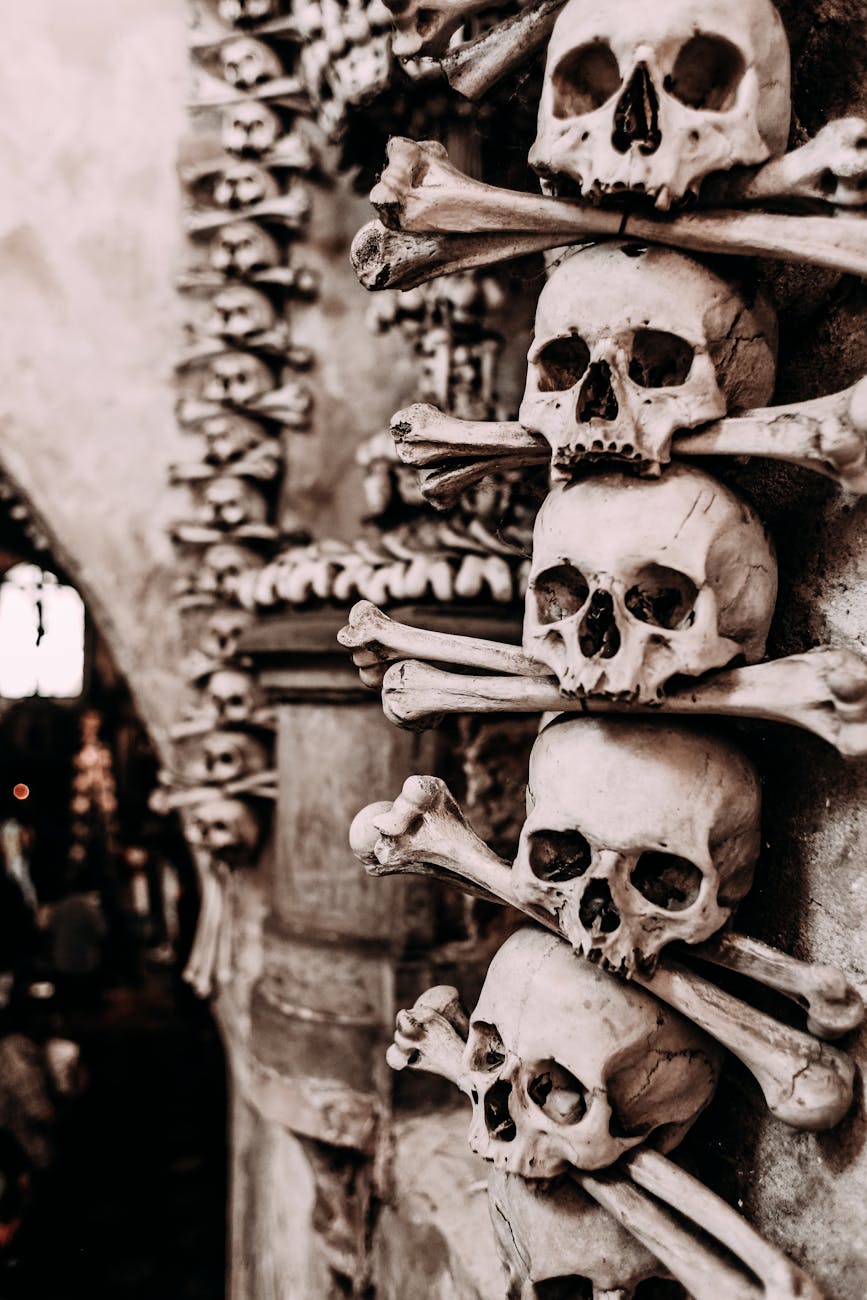
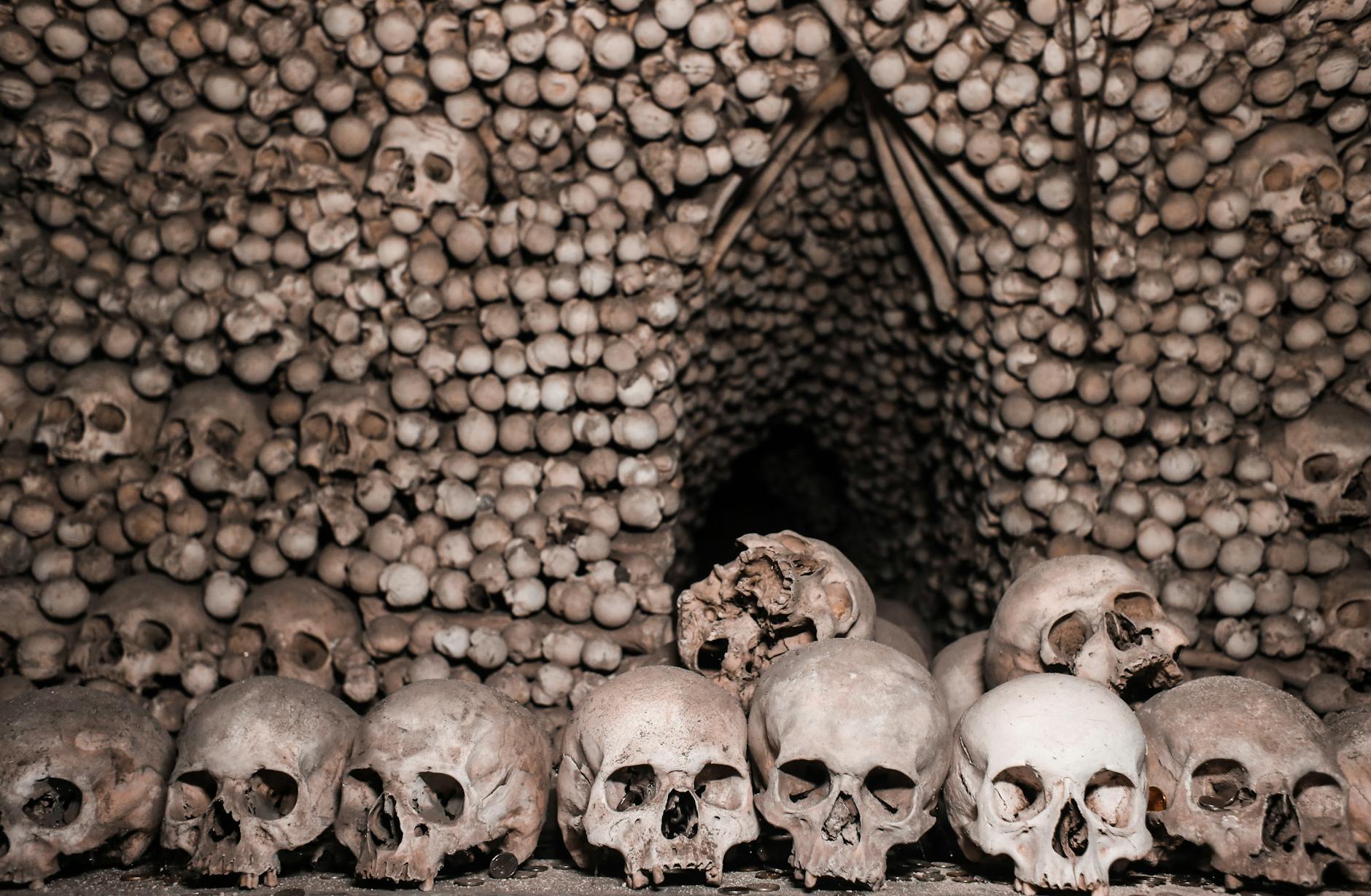
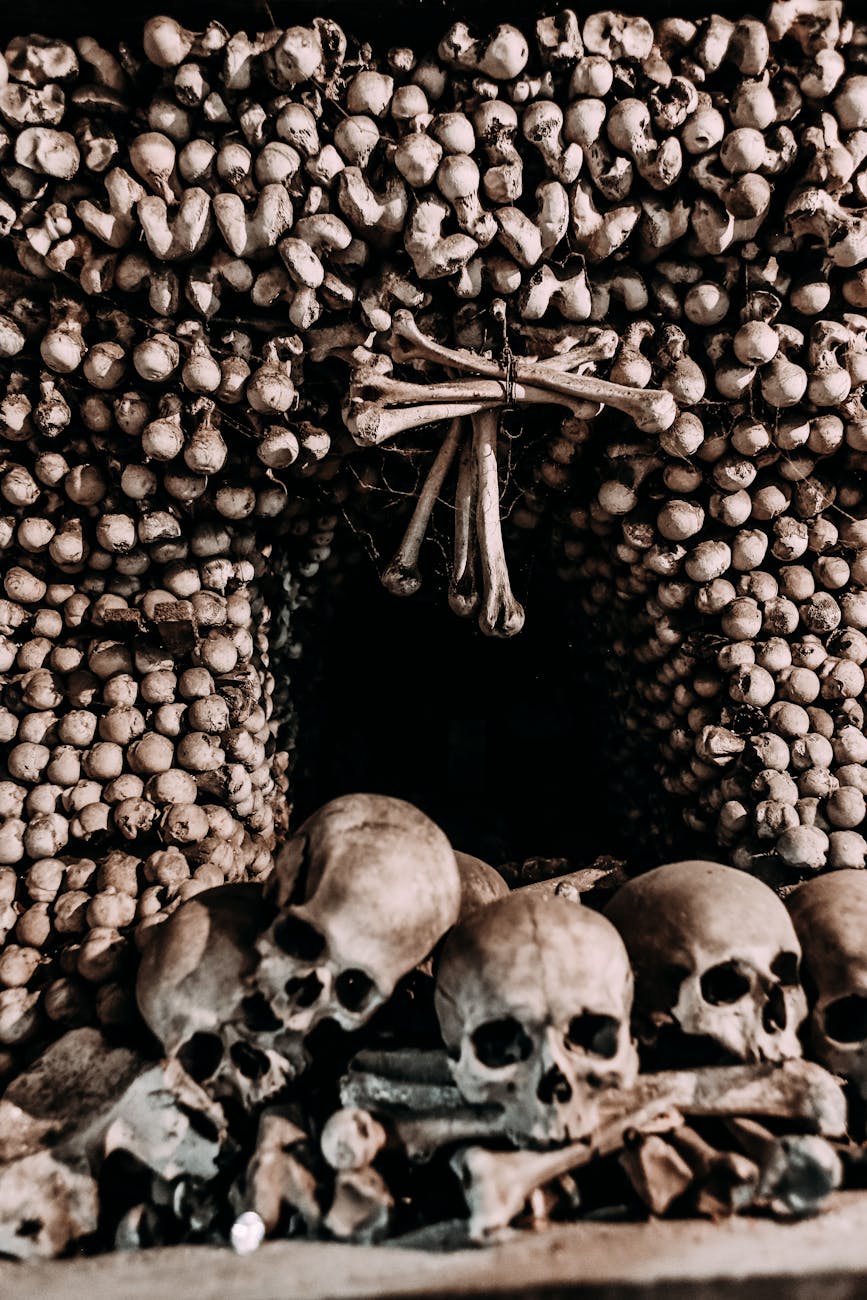
The bones were originally just dumped into the tunnels. In the early 1800s, a mining inspector named Louis-Étienne Héricart de Thury decided the whole thing should be arranged more artistically. He had the bones stacked into decorative walls, with skulls used as borders and femurs as infill.
He also added Latin inscriptions warning visitors about mortality, because he was a 19th-century romantic. The result is what you walk through today.
Why You MUST Book Online in Advance
This is the most important piece of advice in this guide: do not show up at the Catacombs expecting to walk in. The site has a strict capacity limit — only 200 people allowed inside at any time for safety reasons (the tunnels are narrow and there are no emergency exits). That means the daily throughput is capped, and the on-site queue to buy walk-up tickets is slow, long, and frequently unsuccessful.
In summer, the walk-up queue at the entrance routinely runs 2-3 hours, and sometimes by midday the remaining daily tickets have sold out and people who waited 3 hours get turned away at the front of the queue. That is a genuinely awful way to spend a Paris morning.
The solution: book your ticket online in advance, any of the three options above. Online tickets are for a specific 30-minute time slot, and you just show up at that time slot and skip the queue entirely. You walk past hundreds of miserable standby travelers and go straight to the entrance.
I cannot stress this enough. The Catacombs are one of the few Paris attractions where the advance ticket genuinely matters — skipping the Louvre queue is nice, but at the Catacombs it is the difference between seeing the site and spending your morning outside in the rain for nothing.
How Much Tickets Cost and What’s Included
A standard self-guided adult ticket is €29 (€5 less for ages 18-26, free under 18). This gets you a 45-60 minute self-guided walk through the main visitor route, with limited interpretive panels along the way.
An audio guide is €5 extra and is honestly essential — the interpretive panels inside are minimal and mostly in French. Without the audio guide you are just walking past bones without any context. The English audio guide is well-produced and adds about 20 minutes to the total visit time, but those 20 minutes are when you actually learn what you are looking at.
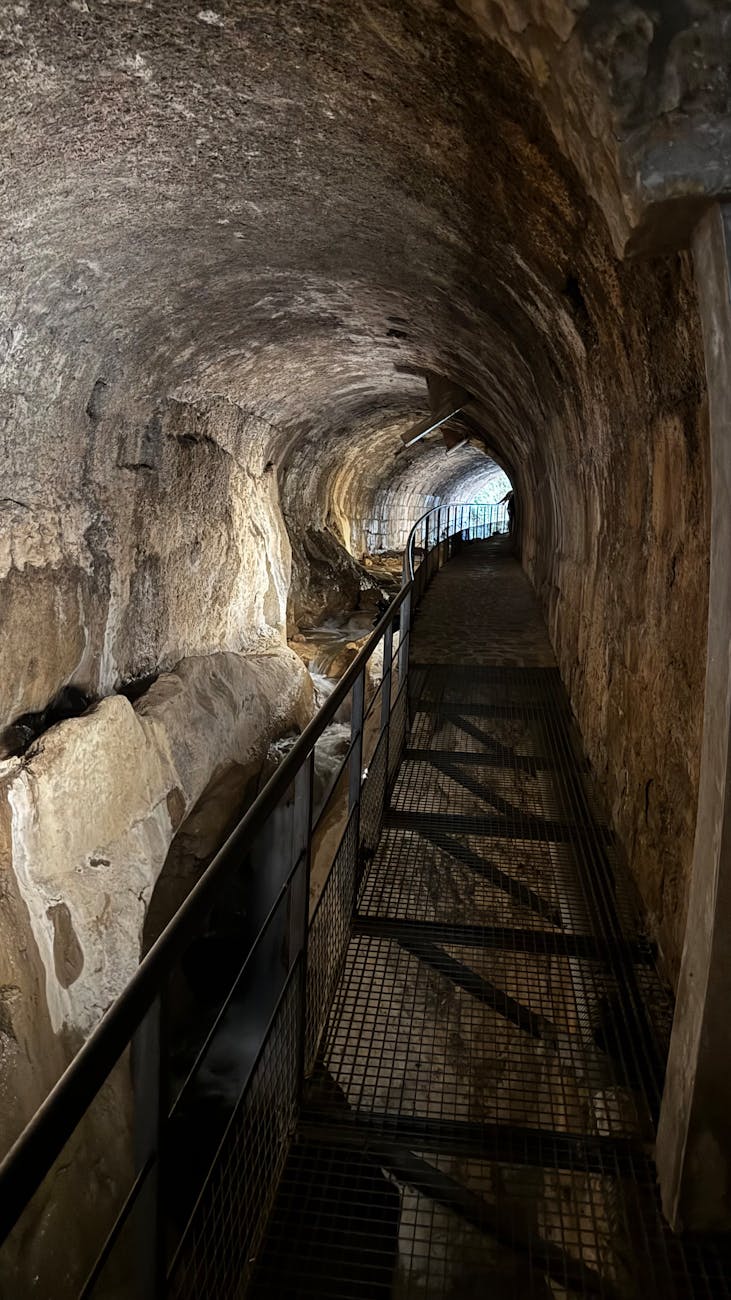
A licensed guided tour (90 minutes, small group, through a third-party operator) starts at around $149 and goes up to $227 for VIP restricted-access tours. The guided tours include sections of the Catacombs not open to self-guided visitors — smaller side chambers, a water reservoir, and specific inscribed rooms. Worth it if you are a history buff or have already done the main route before.
Combo tickets with Seine cruises start at $94 and bundle the Catacombs entry with a 60-minute afternoon river cruise. Best for visitors packing multiple attractions into a single day.
The Descent — 131 Steps and Your Ears Popping
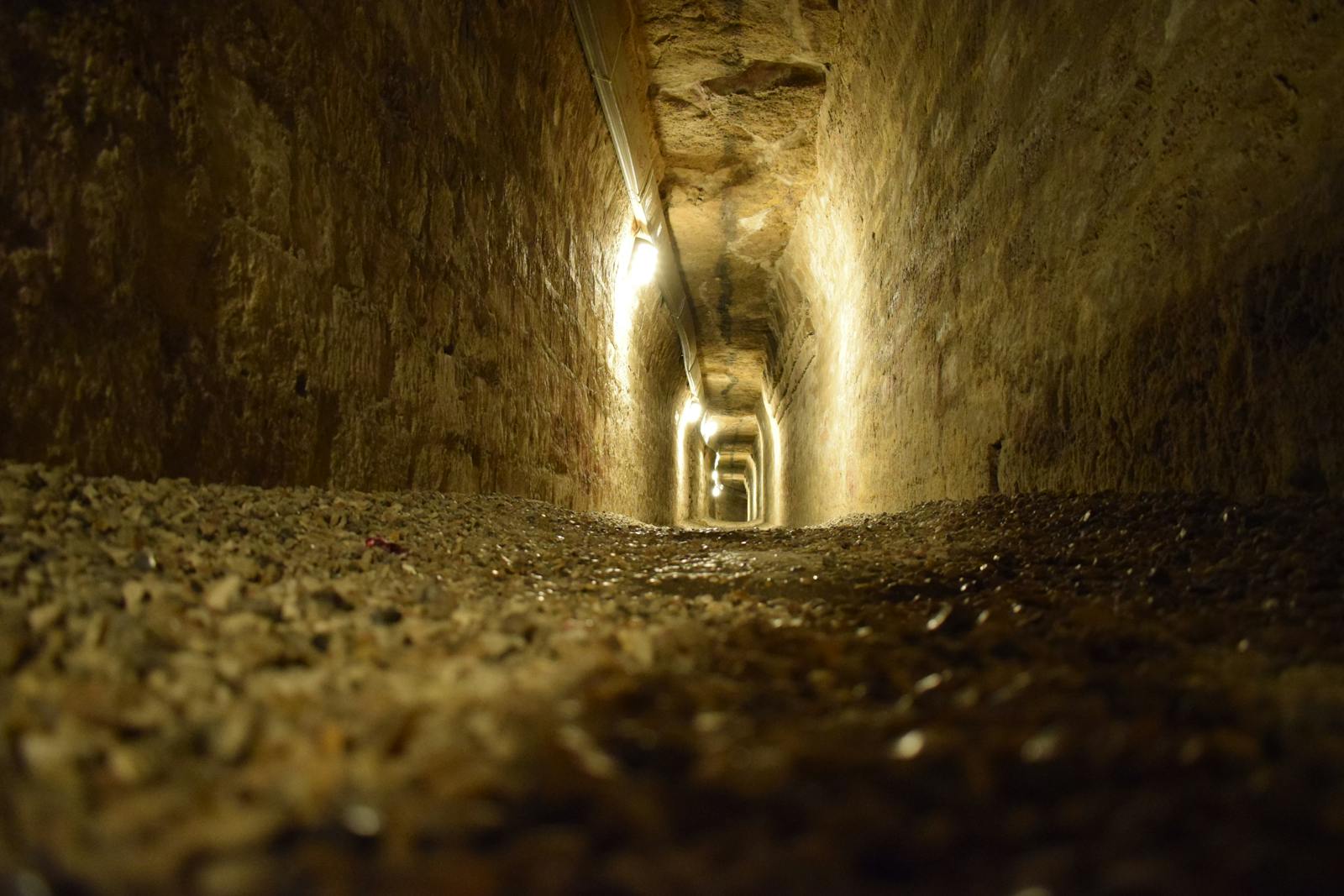
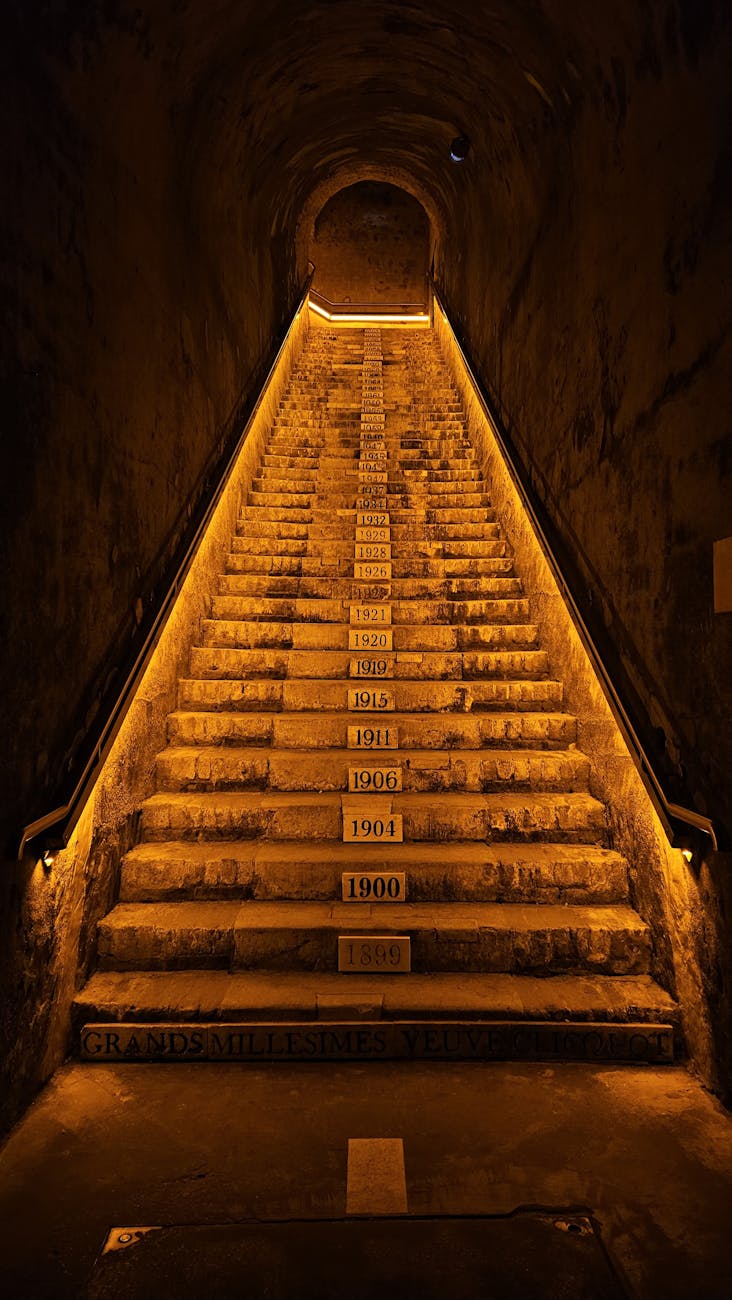
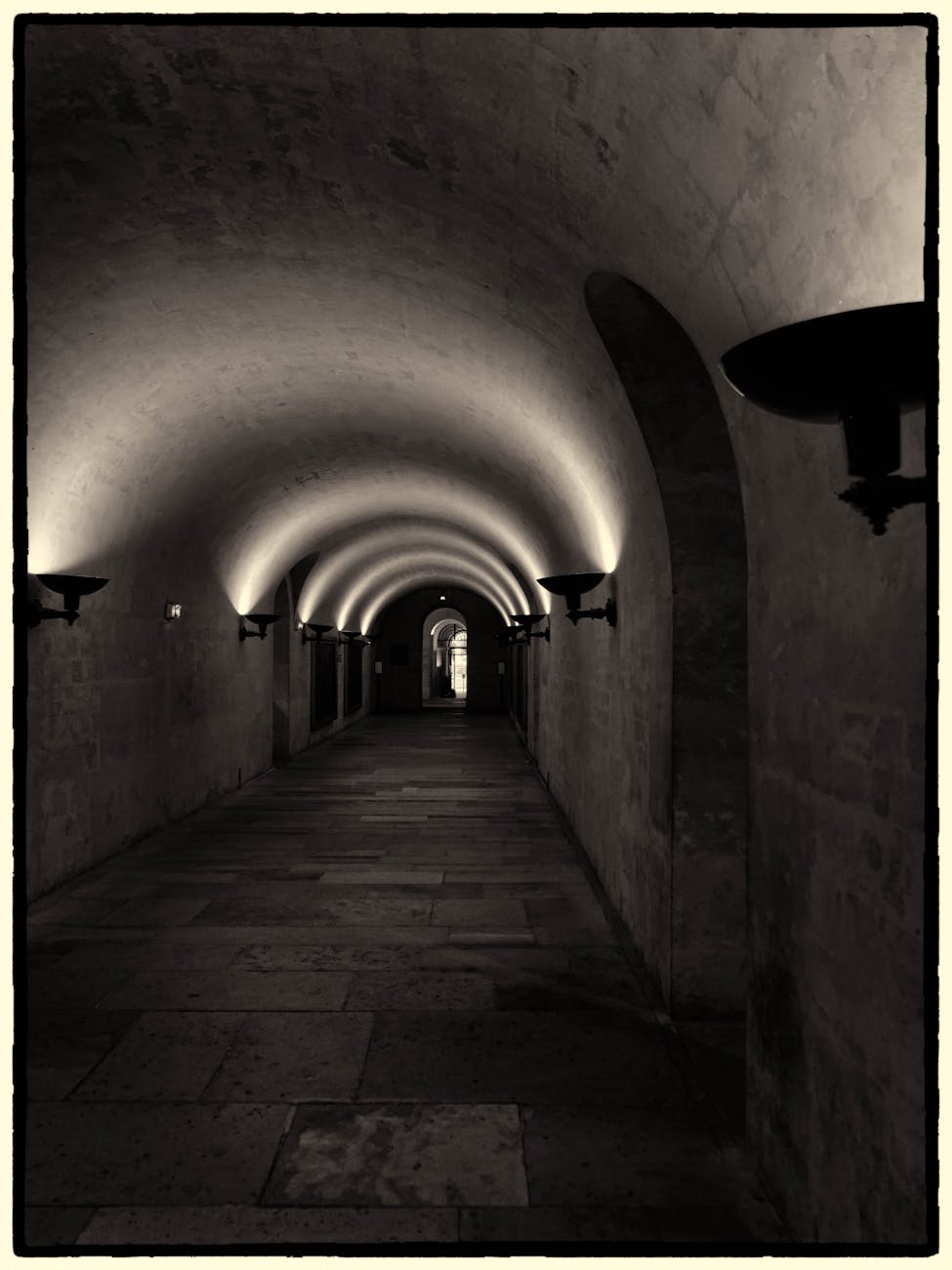
The visit starts with a spiral staircase descending 131 steps to the 20-metre-deep tunnel level. The stairs are narrow — not claustrophobic, but narrow enough that you are constantly aware of the stone on either side — and they curve tightly, so the light coming down from the entrance gradually vanishes as you descend. About halfway down, your ears will pop from the pressure change.
The temperature drops noticeably.
At the bottom you reach the “forecourt” — a short approach section of bare quarry tunnels with a few historical displays and a carved inscription that reads “Arrête! C’est ici l’empire de la mort” (“Stop! This is the empire of death”).
This marks the entrance to the ossuary proper. Everything past this point is bones.
From the inscription it takes about 30 minutes to walk the full visitor route at a moderate pace. You will see maybe a dozen sections of bone walls, each with a slightly different arrangement, each with its own Latin inscription chosen by the 19th-century romantics who organised the whole thing. Some of the inscriptions are genuinely beautiful.
Best Time of Day to Visit
10:00am (opening): My pick. The first time slot of the day, when the tunnels are coolest, the light is freshest, and the tour groups have not arrived yet. If you book the 10am slot online, you can genuinely have sections of bone walls to yourself for 20-30 seconds at a time. That silence is when the experience actually works on you.
11:00am – 1:00pm: Still manageable but starting to feel busy. School groups and organised tours arrive around 11:30 and the tunnels can feel crowded at choke points.
1:00 – 4:00pm: Peak crowds. The tunnels are narrow and once a tour group clumps up at a bone wall, you can be stuck behind them for 5-10 minutes. Avoidable if possible.
4:00 – 5:00pm (last admission): Crowds thin as the day winds down. The light outside is starting to fade, which adds a certain atmosphere when you emerge — stepping from the tunnels into Parisian golden-hour sunlight is a genuinely moving experience. Worth the slightly later entry if you can manage it.
Winter weekdays: The absolute gold standard. January-February Tuesdays and Wednesdays can see 30% fewer visitors than July, and the tunnels (always cool) feel appropriate to the season. If you are in Paris in February, this is the single best time to visit.
Which Tour Should You Book? Three Real Options
Here are the three best ticket formats and who each is for.
Catacombs + Audio Guide + Seine River Cruise
Price: $94 · Duration: Catacombs 60 min + Cruise 60 min · Provider: GetYourGuide
Best value combo ticket. Skip-the-line Catacombs entry with the excellent English audio guide, plus a 60-minute Seine River sightseeing cruise the same day. The combo is genuinely cheaper than buying both separately, and logistically the two activities pair well — do the Catacombs in the morning, cross town to the river for the afternoon cruise, have dinner afterwards.
Smart half-day for first-time visitors.
Best for: First-time Paris visitors, couples, anyone combining must-sees, people who want the audio guide context.
Skip-the-Line Guided Catacombs Tour
Price: $149 · Duration: 90 min · Provider: Viator
Small-group guided tour with a licensed English-speaking guide, skip-the-line entry, and 90 minutes underground. The guide tells you stories you will not get from an audio guide — personal anecdotes, corrections to the common myths, and historical context for each bone wall. Includes access to some small side chambers that self-guided visitors walk past.
If you like history told by a real person, this is the right upgrade.
Best for: History buffs, travellers who like human-led tours, anyone who hates audio guides, visitors with kids aged 10+ who want the stories.
Catacombs Special Access Tour (Restricted Areas)
Price: $158 · Duration: 2 hours · Provider: GetYourGuide
The deepest-cut tour — 2 hours including sections of the Catacombs that regular self-guided visitors cannot see. Includes the normally-closed water reservoir (used by 19th-century miners), additional inscribed rooms, and a small chamber with sculpture work carved into the limestone by a single bored quarryman in the 1790s. Small group (max 12), run by licensed speleologists.
This is the tour for people who have already been to the Catacombs once and want to go deeper.
Best for: Repeat visitors, speleology nerds, true history lovers, anyone who wants the full behind-the-ropes experience.
How to Get There
The Catacombs entrance is at 1 Avenue du Colonel Henri Rol-Tanguy, in the 14th arrondissement. It is a small unmarked green building on a traffic island, easy to walk past if you are not looking for it.
By metro: Denfert-Rochereau is the only realistic option — it is served by lines 4 and 6, plus the RER B (direct from Gare du Nord and Châtelet). The metro exit comes out literally across the street from the entrance. Total walk from platform to queue: under 2 minutes.
By RER: If you are coming from Charles de Gaulle airport, the RER B takes you directly to Denfert-Rochereau in about 45 minutes. This is actually one of the easier major Paris attractions to reach from the airport.
By hop-on-hop-off bus: Most routes have a “Catacombs / Denfert-Rochereau” stop. Slower than the metro but useful if you are combining with other sightseeing.
There is no parking. The neighbourhood is residential and parking is not practical. Take public transport.
What to Wear
Comfortable walking shoes. The 131 steps down and 112 back up plus 2 km of walking on uneven stone means flat comfortable shoes are essential. The stone floors are sometimes slick with condensation. Do not wear heels or flip-flops.
A light jacket or long sleeves. Non-negotiable. The tunnels are 14°C (57°F) year-round. On a 30°C summer day in Paris, walking into the Catacombs feels like walking into a fridge. Even in winter when you are already wearing a coat, expect it to feel a degree or two cooler inside than outside.
Layers for the climb out. The climb back up the 112-step exit staircase at the end of the visit will warm you up fast. You want layers you can remove as you go.
A small bag. Large bags and big backpacks are not allowed. There is no bag check at the entrance, so whatever you bring has to fit under the seat (metaphorically speaking). A small cross-body or day-pack is fine.
Camera or phone. Photography is allowed throughout, but flash and tripods are not. Phone photos work better than you might expect because modern phone cameras handle low light well. Bring a charger — the low-light conditions drain the battery faster than usual.
What You Actually See Inside
The walking route takes you through several different “rooms” (really just labelled sections of tunnel), each with its own theme or arrangement. Here are the highlights.
The Barrel. A section where the bones are stacked in a cylindrical column that reaches from floor to ceiling. It is about 3 metres tall and is thought to have been designed as both a structural support and a dramatic focal point. Visitors usually stop here for a while because it is the most visually striking arrangement.
The Crypt of the Sepulchral Lamp. A small section where a single oil lamp used to burn during the 19th century. The lamp is gone now but the niche remains, surrounded by an arrangement of skulls in a spiral pattern. The Latin inscription above reads “Lux in tenebris lucet” (the light shines in darkness).
The Crypt of the Passion. Bones arranged in a large cross shape. Most photographed section after the Barrel. Some of the skulls have visible trauma — cuts, healed fractures, signs of battlefield wounds. If you look carefully you can see the history.
The Sculpture Tunnel. One of the side passages contains a small limestone sculpture of a fortress, carved by a single quarry worker named Décure in the 1780s, supposedly from memory of a fortress he had been imprisoned in during the Seven Years’ War. He died when a tunnel collapsed on him while he was carving a staircase to access his sculpture.
The Inscribed Galleries. Several short sections where the tunnel walls are inscribed with Latin phrases, quotations, and short poems chosen by Héricart de Thury and his successors. Most are about death, mortality, or faith, but a few are almost funny — one reads “Where is death? Always in the future or always in the past. When it is here, we are no longer.”
The Museum Upstairs (Don’t Skip It)
Most visitors walk out of the Catacombs, take a photo of the exit, and go home. They miss the small museum at the exit that is actually part of the same ticket and takes about 15 minutes to visit.
The museum has displays on the history of the quarries, the 1786 transfer of bones from the Innocents cemetery, photographs of the site from the 1860s, and a collection of the original mining tools used to cut the tunnels. There is also a fascinating display about the “cataphiles” — modern-day Paris underground explorers who illegally enter the closed sections of the Catacombs through unofficial access points. Some of them throw parties down there.
One group hosted a film festival inside a closed chamber in 2004.
If you are even slightly interested in the history, the 15-minute museum detour is a great epilogue to the visit. It turns the experience from “cool bones” into “I actually understand what I just walked through.”
How Long You Need
Self-guided speed run (30 minutes): Physically possible but not recommended. You will walk past the bone walls, take a few photos, and leave without really processing anything. Skip this version.
Self-guided normal visit (60 minutes): The standard experience. Includes the descent, the full walking route with the audio guide, and the ascent. Add 15 minutes for the upstairs museum and you are at 75 minutes total. This is what most visitors do.
Guided tour (90 minutes): Longer because the guide takes you through sections slower, stops at each bone arrangement for 2-3 minutes of explanation, and answers questions. Add 10 minutes for the descent and ascent and you are at about 100 minutes total.
Special access tour (120 minutes): The full 2-hour deep dive into restricted areas. Plan for 2.5 hours total including transport in and out. This is a serious commitment for a single attraction and only makes sense if you really love the subject matter.
Common Mistakes to Avoid
Not booking in advance. Already covered above. The single biggest mistake. Your online ticket saves you 2+ hours of queueing in summer and is the difference between a relaxed morning and a frustrated one.
Wearing the wrong shoes. The stone floors are slick in places, and the 131+112 steps up and down will destroy flat inflexible shoes. Wear real sneakers or walking shoes. I have seen travelers in heels and I have seen travelers in heels crying.
Bringing large bags. Not allowed. You will be turned away at the entrance or forced to leave your bag in an unattended locker. Keep it small.
Taking flash photos. Forbidden and also useless — the phone camera’s HDR handles the low light far better than a flash would. Turn your flash off before you go in so you don’t accidentally set it off and annoy other visitors.
Talking loudly. The tunnels amplify sound in weird ways and loud conversation feels wildly out of place. Most visitors instinctively lower their voices to a near-whisper. The ones who don’t are immediately noticed and silently resented.
Trying to “find the secret chambers.” There really are 320 km of illegal tunnels beyond the visitor route, used by cataphiles. They are also illegal, dangerous, and patrolled by specialised police (the “cataflics”). Do not try to access the restricted areas. People have died down there.
Bringing claustrophobic family members. If anyone in your group has claustrophobia, do not take them to the Catacombs. There is no quick exit once you start the route. The tunnels stay narrow for the entire 2 km. It can trigger panic attacks. Consider leaving them at a café instead.
Is the Catacombs Right for You?
The Catacombs are not for everyone. Here is an honest breakdown.
You will probably love it if: You are interested in history (specifically dark/gothic history), you enjoy atmospheric spaces, you like photography, you have visited other ossuaries and want to compare, you are fine with tight enclosed spaces, you love Paris and want to see a side of it most travelers skip, or you are a goth at heart.
You will probably not love it if: You have claustrophobia, you have serious mobility issues (131 steps each way, no alternatives), you are squeamish about human remains, you are travelling with young children under 8 (not age-appropriate, can be genuinely upsetting), you already feel overwhelmed by Paris and need a calmer experience, or you are prone to motion sickness in tight spaces.
The ideal visitor is someone who is curious about mortality, respectful of the space, and reasonably fit. The ideal time to visit is a winter weekday morning with the audio guide. The ideal group size is one or two people — large groups bog down in the tunnels and ruin the contemplative vibe.
The Best Order for a Full Catacombs Day
If you are dedicating a half-day or more to this, here is my recommended sequence.
9:30am: Arrive at Denfert-Rochereau. Have a coffee and a croissant at the Café du Rendez-Vous across from the metro entrance. Do not eat a full breakfast — you do not want to be bloated for the descent.
10:00am: Enter the Catacombs (pre-booked 10am slot). Descend, walk the route with audio guide, emerge after about 75 minutes including the museum.
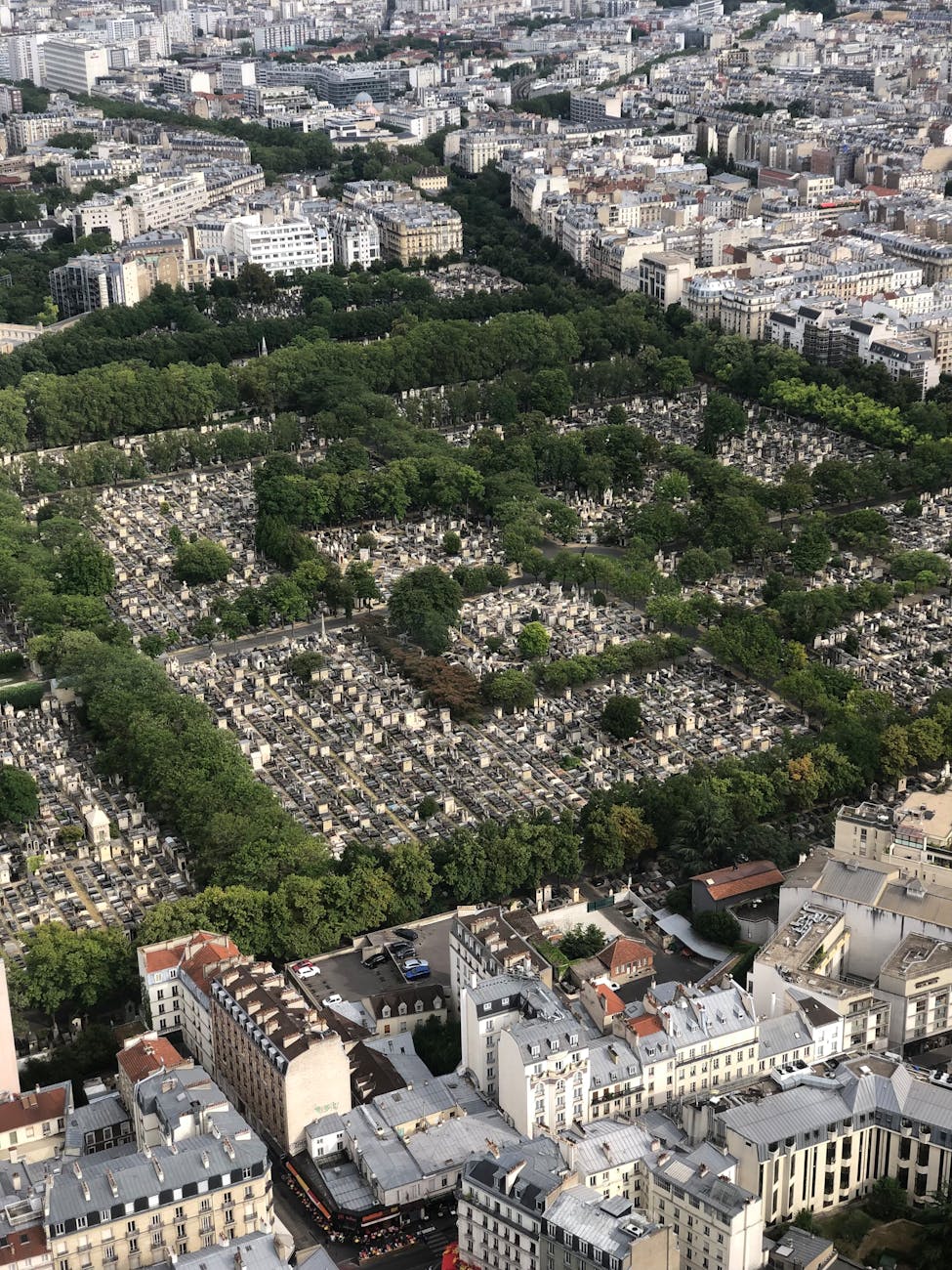
11:30am: Walk up to Montparnasse Cemetery (10 minutes on foot). Visit Sartre’s grave, wander for 30 minutes, think about mortality in a less confrontational setting.
12:30pm: Lunch at Le Dôme Café — the famous artist haunt from the 1920s, now a seafood bistro, within walking distance of both the Catacombs and the cemetery. The oysters are excellent.
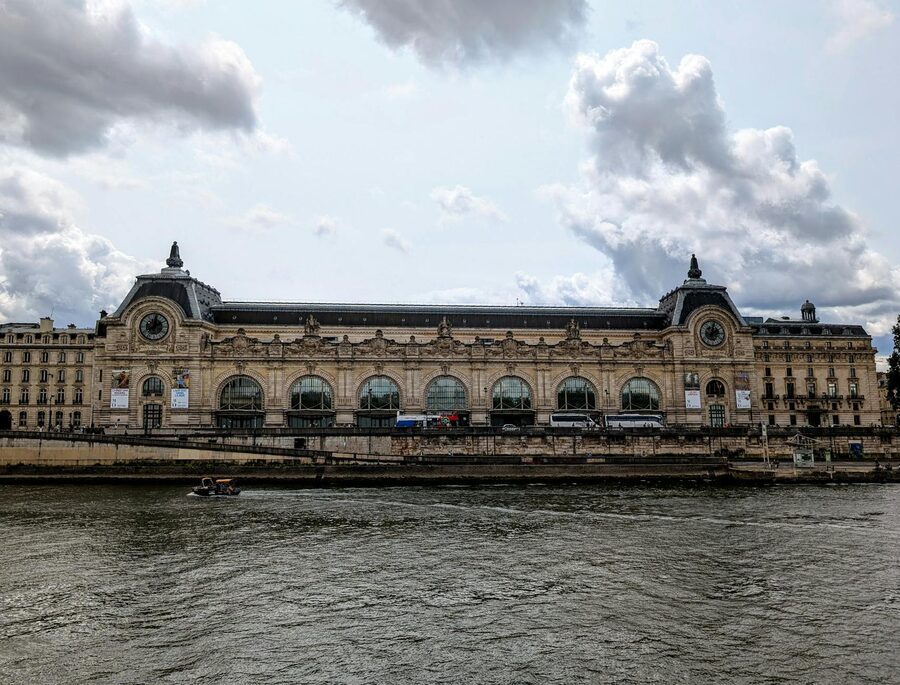
2:00pm: Walk to the nearby Fondation Cartier for contemporary art (the antidote to the morning’s heaviness) or take the metro to the Musée d’Orsay for a complete shift of mood. See our Musée d’Orsay tickets guide for timing tips.
4:30pm: Back to the hotel to rest. You have earned it. The morning was heavy.
More Paris Planning on The Abroad Guide
The Catacombs pair well with lighter Paris experiences that balance out the heavier mood. Our Musée d’Orsay tickets guide covers the best Impressionist museum in Paris — a good mood shift after the underground, and just a short metro ride away.
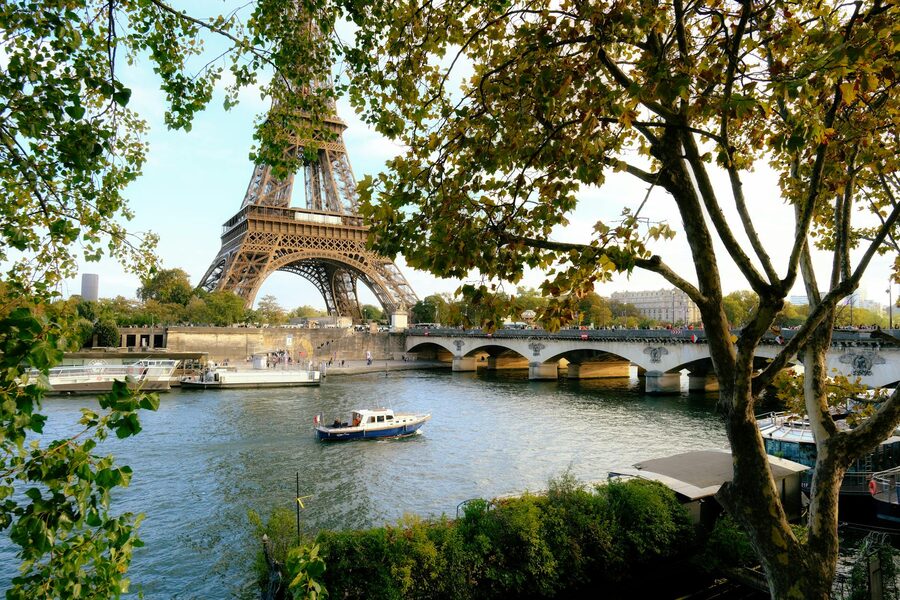
Our Eiffel Tower tickets guide covers how to avoid the summit queue. The Palais Garnier tickets guide is a beautiful aesthetic counterpoint to the underground — gilded ceilings and chandeliers after bone walls and dim tunnels.
For a lighter afternoon after the heavy morning, our Paris food tour guide covers the best food neighbourhoods for a proper meal. And for a completely different Paris day trip, the Mont Saint-Michel guide is the perfect reset.
Final Thoughts — What the Catacombs Give You
I have taken three separate trips to Paris where I visited the Catacombs, and I have come out a little different each time. The first time I was 23 and mostly took photos and felt vaguely spooked. The second time I was 32 and brought the audio guide and actually listened to the history and came out fascinated.
The third time I took the restricted-access tour and the combination of the underground maze, the 200-year-old quarryman’s sculpture, and the physical sensation of being 20 metres below Paris with 6 million dead people around me — that was the trip where I actually stopped at a bone wall and had a small philosophical moment.
The Catacombs are not a theme park and they are not a history lesson. They are a reminder. Of what, exactly, depends on who you are when you walk in.
Most visitors come out quieter than they went in, which is the most honest review I can give.
Book the ticket. Show up at 10am. Bring the audio guide.
Walk slowly. Do not take selfies with the skulls. Read one of the Latin inscriptions.
Come back up the 112 steps into Paris sunshine, order an espresso at the nearest café, and sit for 20 minutes before moving on. That is how you do the Catacombs.
FAQ — Short Answers to the Most Asked Questions
How much is a Catacombs ticket? €29 for adults, €5 less for ages 18-26, free under 18. Audio guide is €5 extra. Guided tours through third parties range from $94 to $227 depending on inclusions.
How deep are the Catacombs? 20 metres below street level. The descent is 131 spiral steps, the ascent back out is 112 steps.
How long does a visit take? 60-75 minutes for a self-guided visit with audio guide and the upstairs museum. 90-120 minutes for guided tours.
Is it really skippable without pre-booking? No — in peak season the walk-up queue can literally sell out before you reach the front. Always pre-book. Always.
Is it safe? Yes. The visitor route is structurally sound, monitored constantly, and has been open to the public since 1874. The only “unsafe” part is the 131-step descent if you have mobility issues.
Is photography allowed? Yes, no flash, no tripods. Phone photos work surprisingly well. Bring a charger — the low light drains batteries fast.
Is it appropriate for kids? Ages 8+ are fine if they can handle it intellectually. Under 8 is not recommended — the concept of the bones is hard to process and the claustrophobia can be frightening. Parental discretion is essential.
Is there a bathroom inside? No. Go before you descend — there is a public toilet near the entrance plaza. Once you are down in the tunnels, you are committed.
Do I need to speak French? No. The audio guide is available in English, German, Spanish, Italian, and Japanese. The signage is in French and English.
Can I visit with a wheelchair? No. There is no wheelchair access to the Catacombs — the 131-step descent has no elevator alternative. This is one of the only major Paris attractions that is genuinely not wheelchair accessible, and the site managers are upfront about it.
What happens if I start to panic underground? Staff are trained to escort you out via the shortest exit route, which in most sections is about 10-15 minutes of walking. Tell the nearest staff member immediately. They will not judge you. It happens every few days.
More Dark Paris History
The Catacombs show what happened to Paris is dead. The Pere Lachaise Cemetery shows where the famous ones ended up — Jim Morrison, Oscar Wilde, Edith Piaf, and 70,000 others in the world s most visited cemetery. The Conciergerie is where Marie Antoinette and 2,600 others spent their last days before the guillotine. And the night and ghost tours weave the darkest stories together into atmospheric evening walks through medieval Paris.