
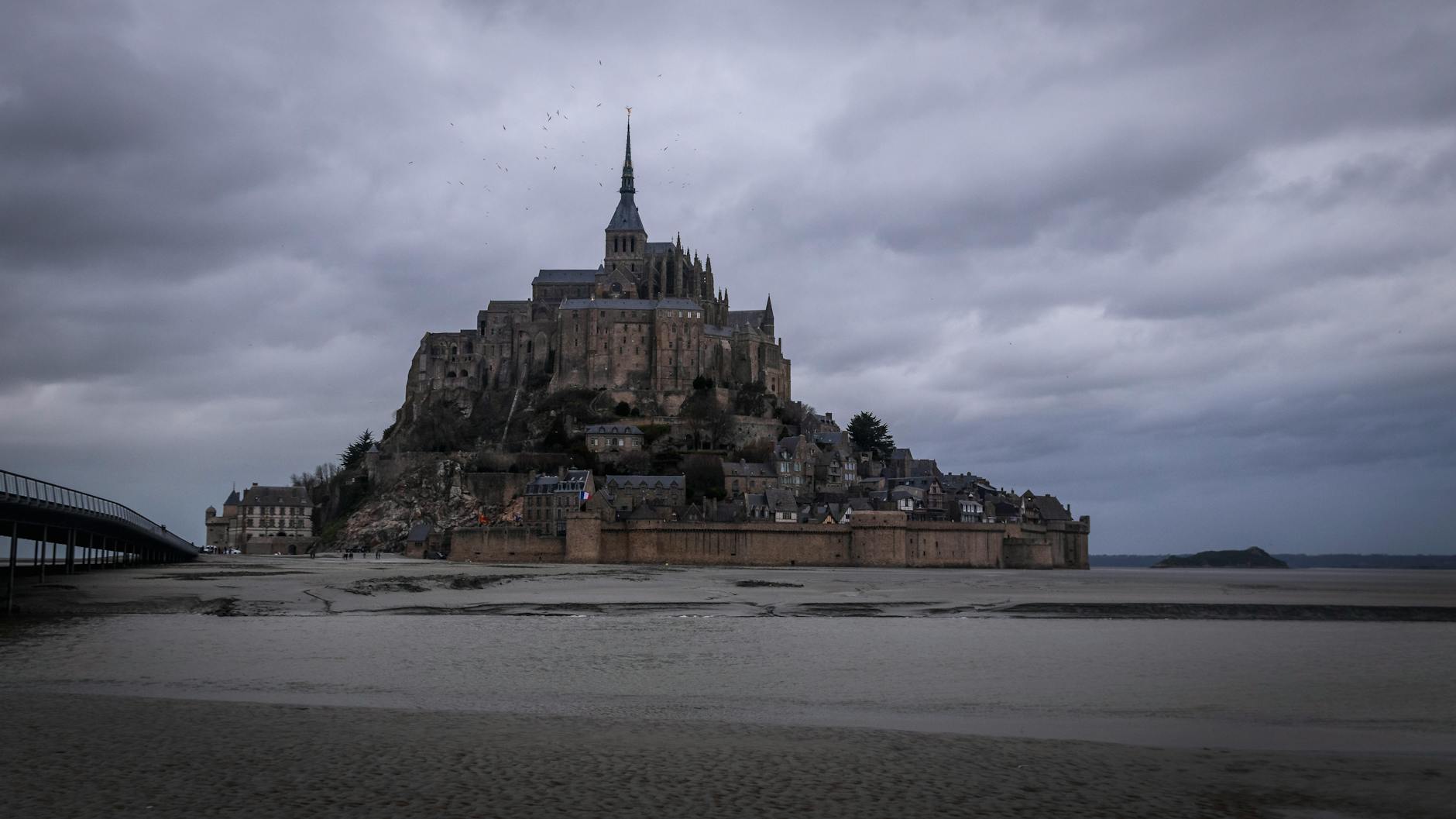
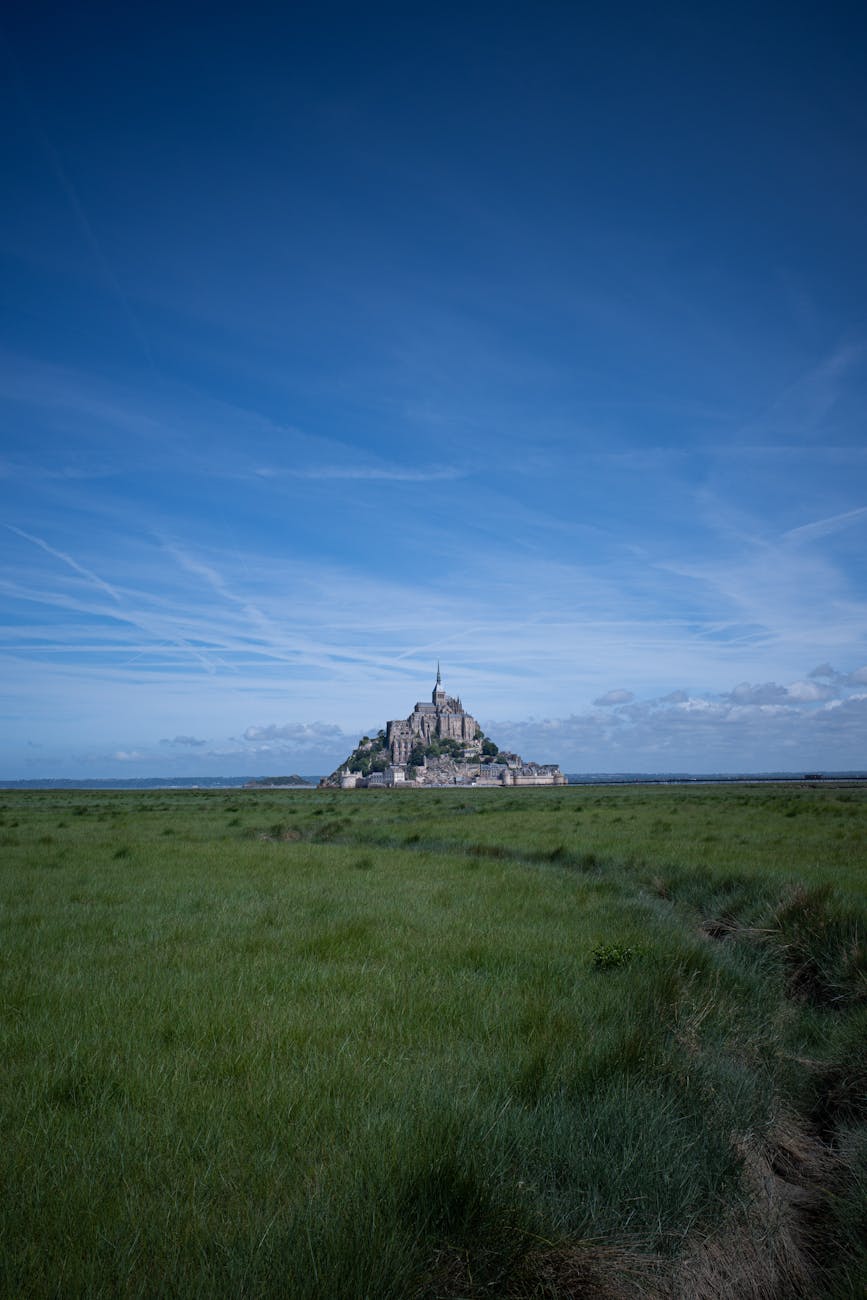
Mont Saint-Michel is the one French day trip that is absolutely worth the effort — a fortified abbey-island rising 80 metres out of a tidal bay, visible from 20 kilometres away, surrounded by quicksand and the second-highest tides in Europe. It looks like a computer-generated fantasy and feels like stepping onto a film set. And it is a legitimate pain to visit, which is why most people mess it up.
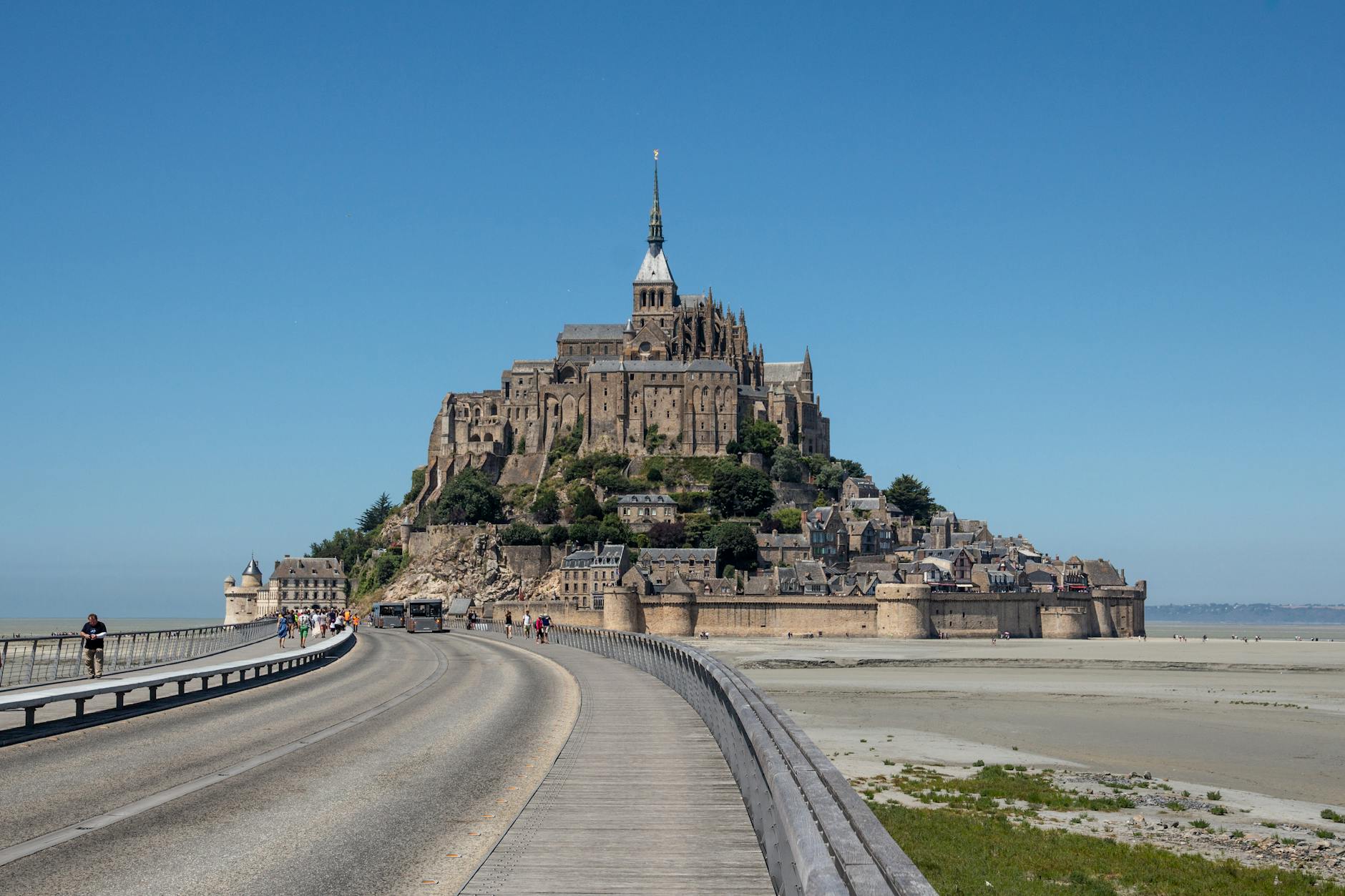
Here is the thing nobody tells you: Mont Saint-Michel is 360 kilometres from Paris. That is a 4-hour drive each way, and yes, people really do squeeze the whole thing into a single day trip. I have done it twice and I can tell you the day trip is exhausting but worth it if you plan it right.
Or you can stay overnight in nearby Pontorson or Avranches and do it properly for half the stress and double the wonder.
This guide covers exactly how to book the visit from Paris or Normandy, which tour format actually works, when to go, how to deal with the tide schedules, and the one big mistake that ruins 80% of visits (spoiler: people only see the outside of the abbey). I have been three times over 8 years. Here is everything I learned.
Quick Picks — Mont Saint-Michel Trips
Best Paris day trip (cheapest): From Paris: Mont Saint-Michel coach day trip on GYG — $153, 14 hours, includes transport only (you explore on your own).
Best Paris day trip (guided): From Paris: Guided Mont Saint-Michel day tour on GYG — $194, 14 hours, includes guided abbey visit.
Abbey entry ticket only (if driving yourself): Mont Saint-Michel Abbey entry on GYG — $15, skip-the-line abbey entry.
Best time to visit: October-April weekdays. Summer weekends are genuinely awful — avoid if possible.
How long you need: 4-5 hours on the island itself is the minimum for a proper visit.
The one rule: Always buy the abbey entry ticket in advance. The on-day queue for tickets at the abbey entrance routinely runs 45-60 minutes in summer.
- Quick Picks — Mont Saint-Michel Trips
- What Mont Saint-Michel Actually Is
- How to Get There — The Three Real Options
- Day Trip from Paris — What It’s Actually Like
- The Tide Problem — And Why It Matters
- Which Tour Should You Book? Three Real Options
- Mont Saint-Michel Coach Day Trip from Paris (Self-Paced)
- Mont Saint-Michel Guided Day Tour from Paris
- Mont Saint-Michel Abbey Entry Ticket (DIY)
- Inside the Abbey — What You’re Actually Seeing
- What to See on the Island Besides the Abbey
- The La Mère Poulard Omelette Question
- When to Go — The Month-by-Month Reality
- How to Get There from Bayeux, Rennes, or Saint-Malo
- Common Mistakes to Avoid
- Staying Overnight — Worth the Upgrade
- What to Pack
- Is Mont Saint-Michel Worth It?
- More France Planning on The Abroad Guide
- Final Thoughts — The Two-Minute Version
- FAQ — Short Answers to the Most Asked Questions
- More French Day Trips
What Mont Saint-Michel Actually Is
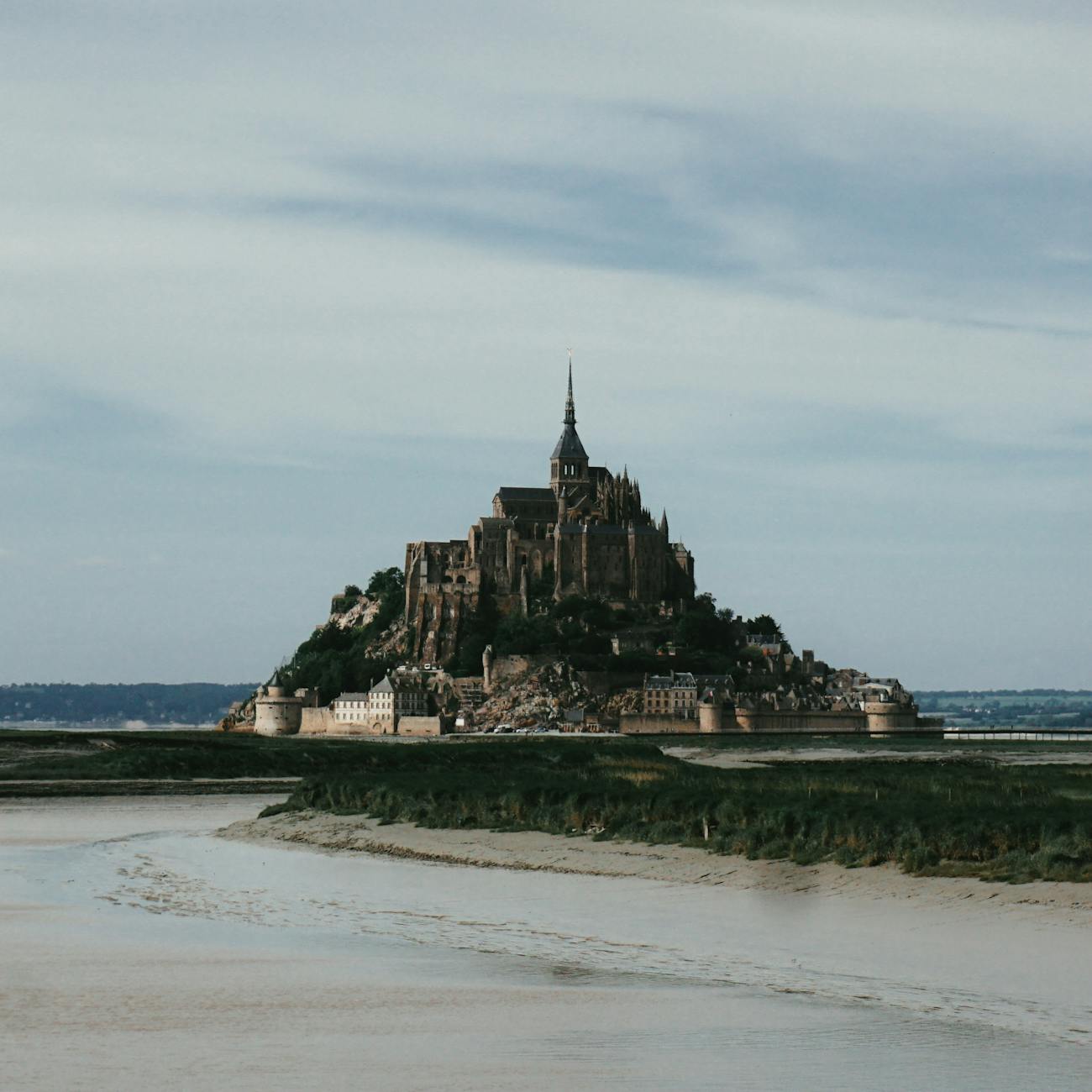
Mont Saint-Michel is a granite island in the bay between Normandy and Brittany, roughly 1 km offshore. On top of the rock is an abbey dedicated to the Archangel Michael, founded in the year 708 when a local bishop supposedly had a dream in which Michael told him to build a church on the rock. The oldest parts of what you see today date from the 11th century.
The most dramatic parts — the Gothic “Merveille” wing, with the monastery cloister — were finished in the 1220s.
Over a millennium the island has been a pilgrimage site, a fortress, a prison, and a tourist attraction. It became a UNESCO World Heritage Site in 1979. About 3 million people visit every year, which makes it France’s second-most-visited attraction after the Eiffel Tower and somewhere between 4-10 times more crowded than most people expect.
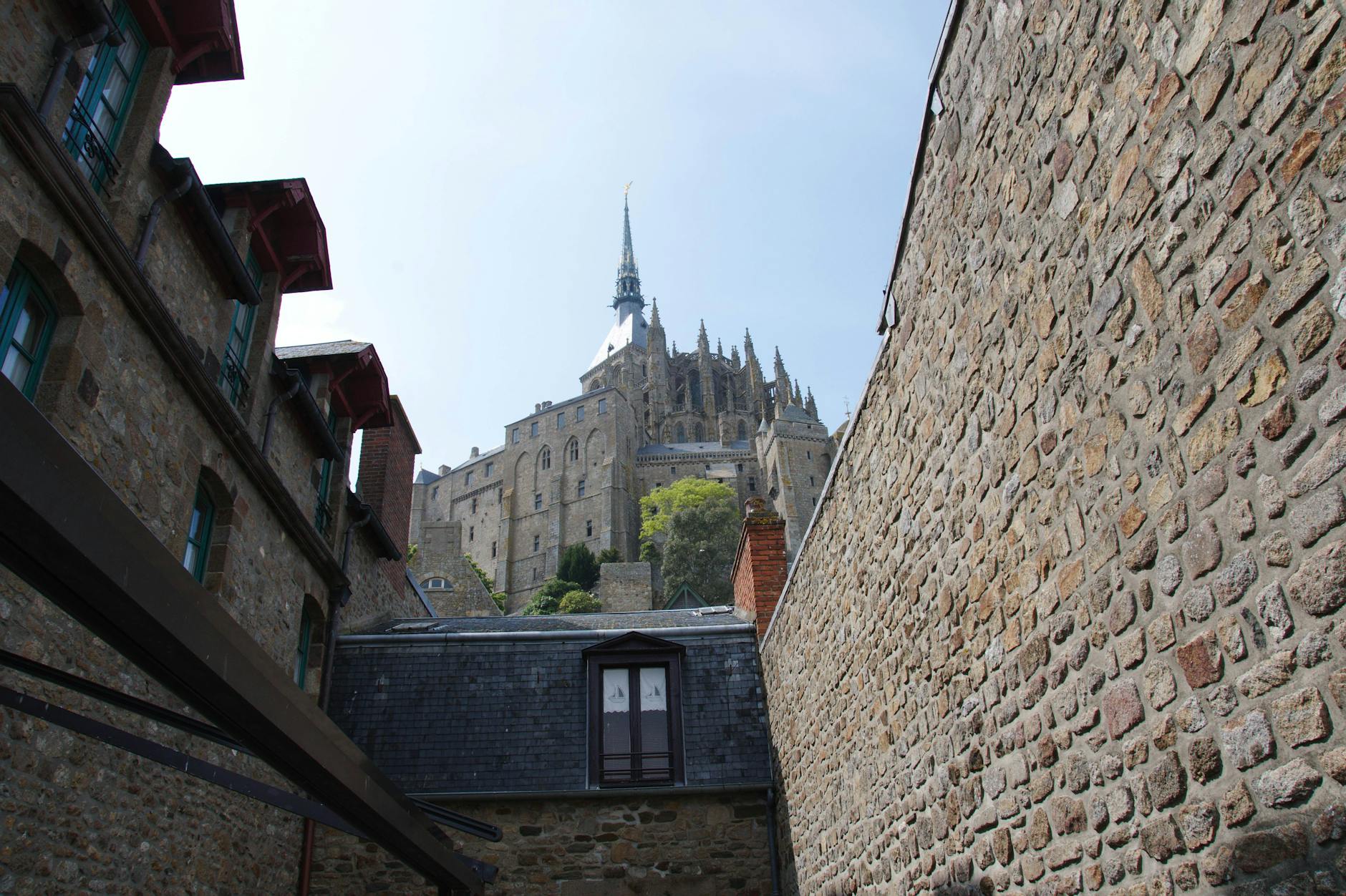
The island has one street (the Grande Rue), which spirals upward from the main gate to the abbey at the summit. Along the Grande Rue are about 40 shops, restaurants, hotels, and houses — all working businesses, about 30 people live on the island year-round. The abbey entrance is at the very top.
To get there you climb roughly 300 steps.
How to Get There — The Three Real Options
There is no train station on Mont Saint-Michel itself. The nearest is Pontorson, 9 km away. From Paris, your three real options are:
1. Book a day-trip tour from Paris. A bus picks you up in central Paris at around 7am, drives 4 hours, gives you 4-5 hours on the island, then drives 4 hours back to Paris. You are home by 9-10pm. This is the single most popular option and for good reason — zero logistics, air-con coach, tour guide explains the bay as you approach. The downside: long day, mostly in a bus seat, and you are locked into the group’s schedule for the return.
2. DIY by train + shuttle. Take a TGV from Gare Montparnasse to Rennes (1h30), then a dedicated coach (Keolis or SNCF Cars) from Rennes station directly to Mont Saint-Michel (1h15). The total journey is about 3 hours each way, the tickets cost €50-80 round trip, and you have total flexibility on timing. The downside: if a connection is missed, you are stuck.
3. Stay overnight in or near Mont Saint-Michel. The best option if you have even one night to spare. Stay in Pontorson (cheapest), Avranches (prettiest), or on the island itself (expensive but unforgettable). You get to see the island at dawn and dusk when the day-trippers have gone. The experience is completely different — quieter, more dramatic, more spiritual.
My ranking: option 3 (overnight) is best if you can swing it. Option 1 (day trip from Paris) is best if you can’t. Option 2 (DIY train) only if you are a confident independent traveller who hates group tours.
Day Trip from Paris — What It’s Actually Like
Let me walk you through what a Paris day trip actually looks like, because the marketing makes it sound easier than it is.
6:30 – 7:00am: Pickup at a central Paris location (usually near the Louvre or the Opera Garnier). Bus is air-conditioned, comfortable, with WiFi. Everyone is quiet and half-asleep.
7:00 – 8:30am: Drive out of Paris through suburbs. Tour guide introduces themselves, explains the day’s logistics, and offers some history. Most tours make a 30-minute coffee stop around 9:00 at a highway rest area.
9:00 – 11:00am: Driving through Normandy countryside. This is the stretch where some tours show a short documentary on the abbey’s history. Others let you nap. Look out the window — the countryside is beautiful and you will see actual Norman villages with half-timbered houses.
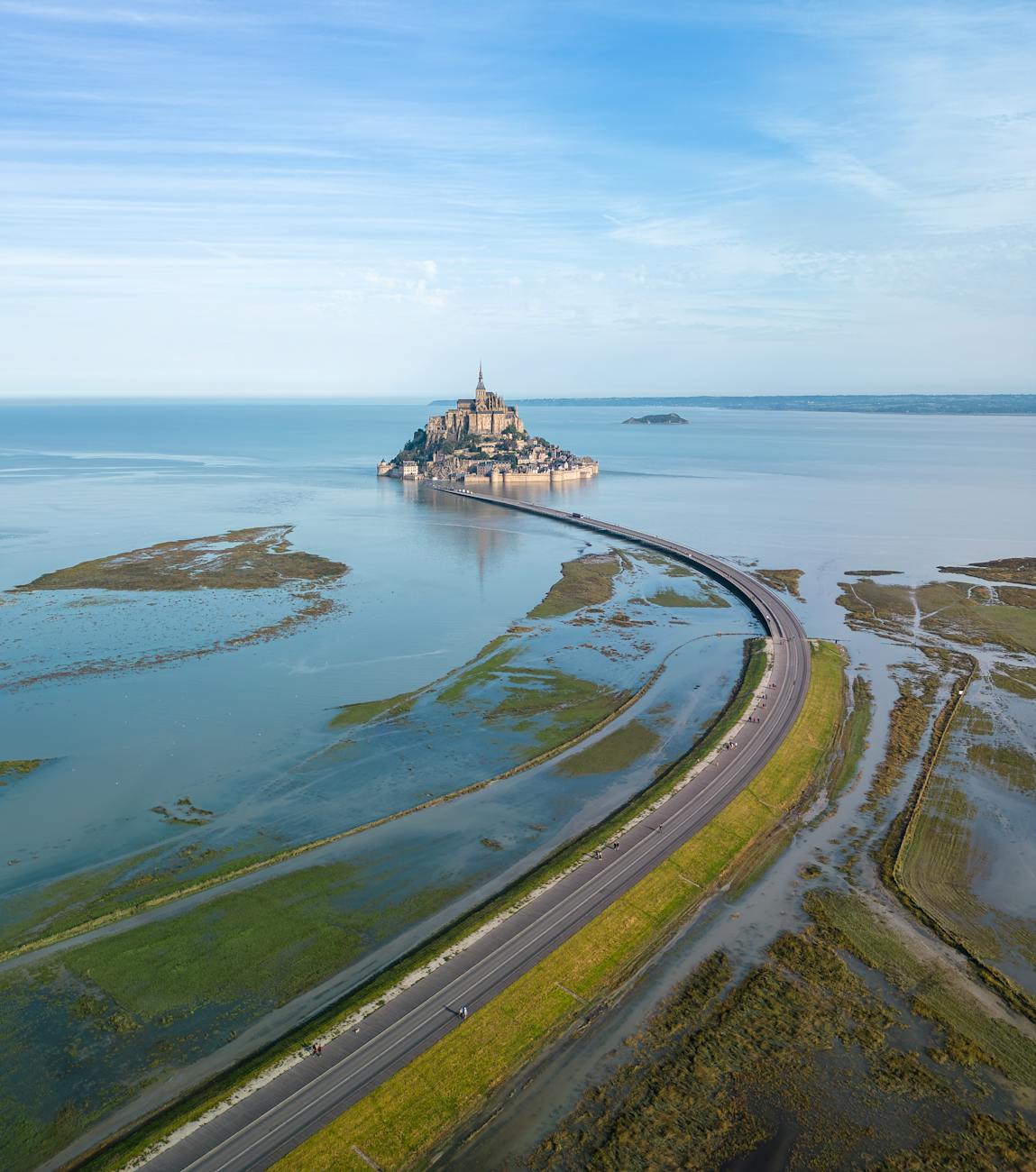
11:00 – 11:30am: Arrival at the parking lot on the mainland. You transfer to a free shuttle bus (or walk 35 minutes across the causeway) to the island. The first glimpse is the money shot.
11:30am – 4:30pm: Free time on the island. This is 4-5 hours and it is the entire reason you came. You explore the Grande Rue, climb to the abbey (most tours include abbey entry), eat lunch somewhere, look at the bay, buy something absurdly expensive from a souvenir shop. Most tours give you a specific meet-back time at the shuttle pickup.
4:30 – 5:00pm: Shuttle back to the parking lot, reboard the bus.
5:00 – 9:30pm: Drive back to Paris. Most tours make one rest stop around 7pm. You are tired, everyone is quiet, and someone on the bus is always snoring. Arrive at the drop-off point in central Paris.
Total time: 14.5 hours. That is long. Book a late-ish hotel dinner for 10pm and order a glass of wine before you walk in.
The Tide Problem — And Why It Matters
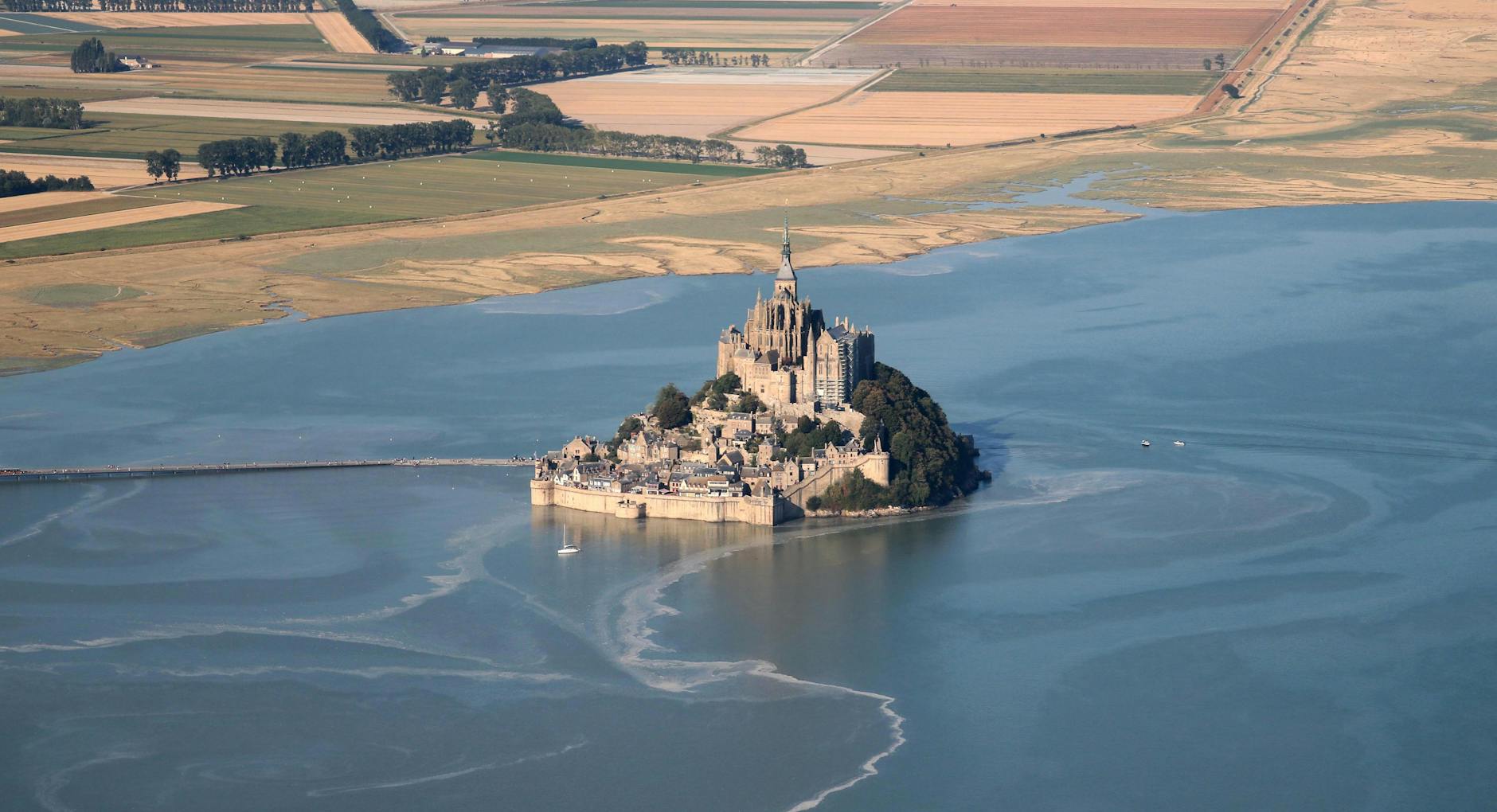
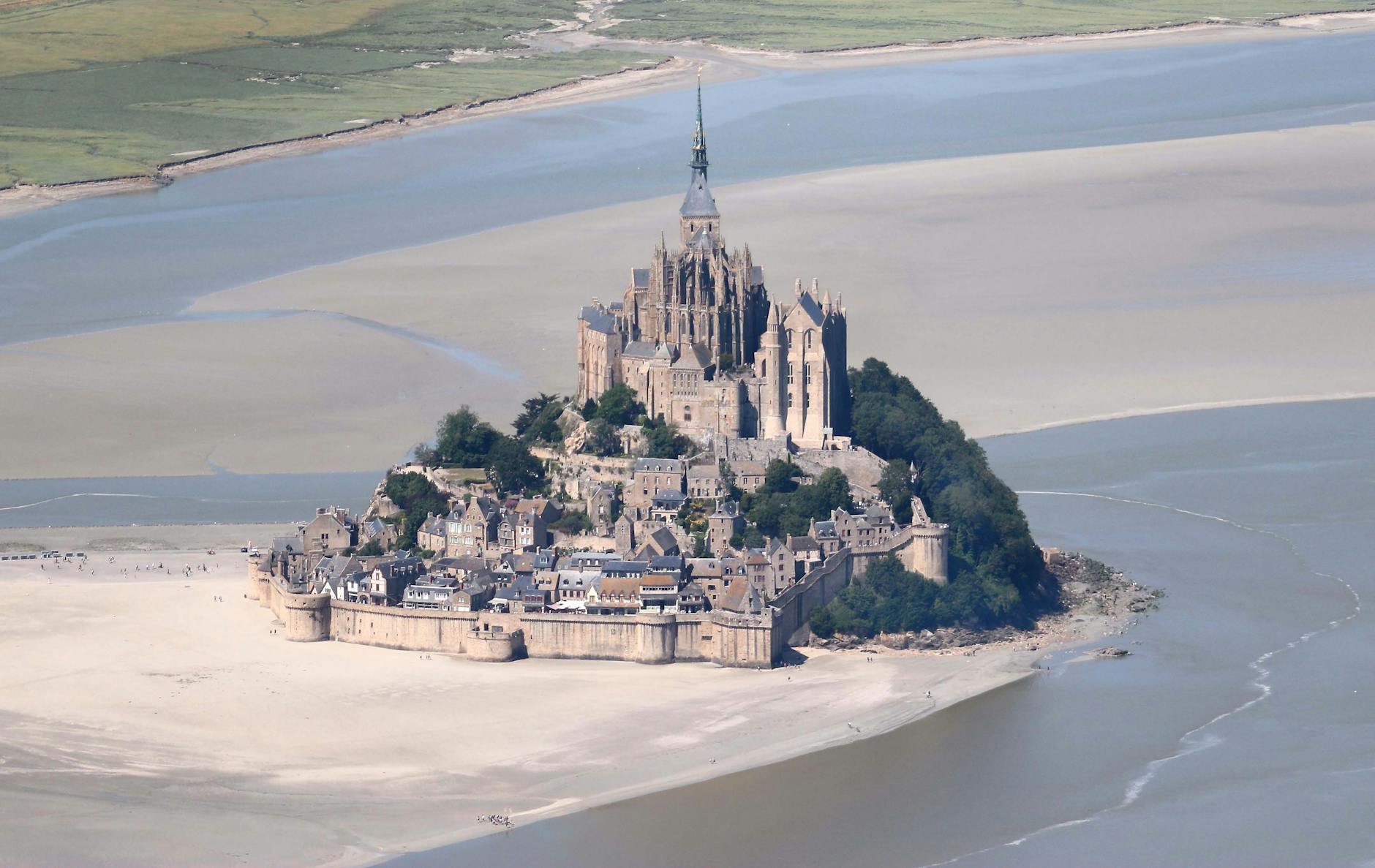
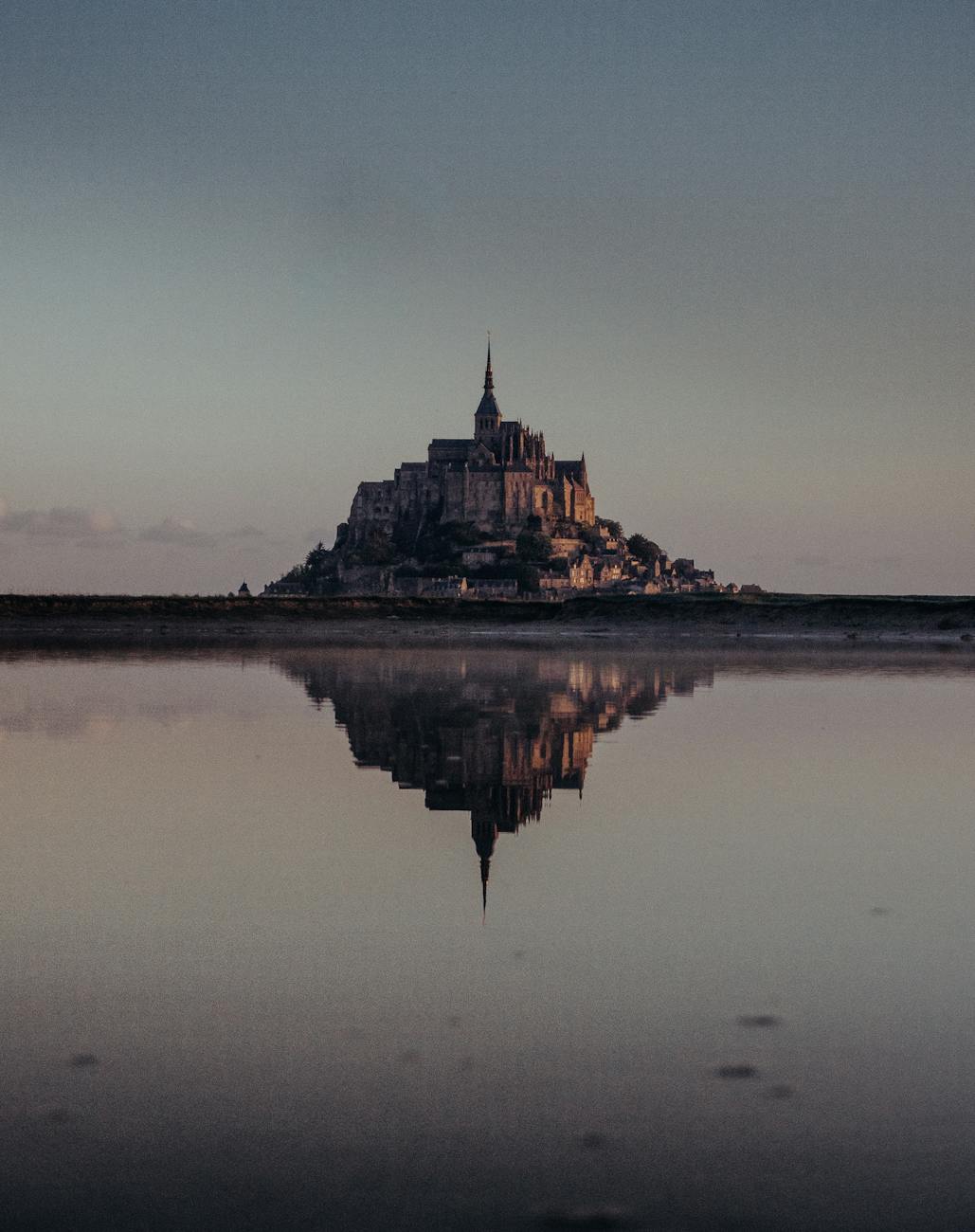
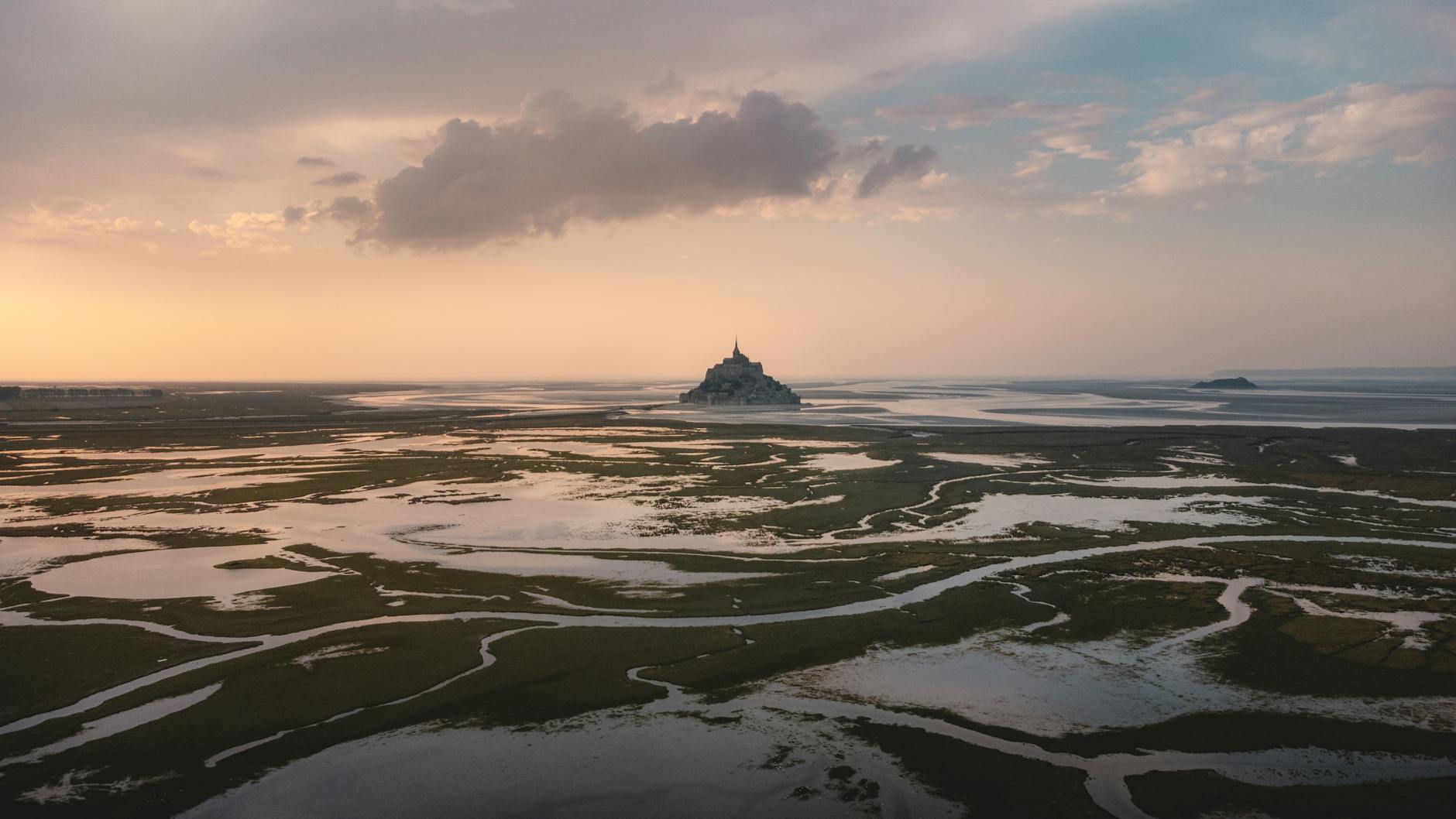
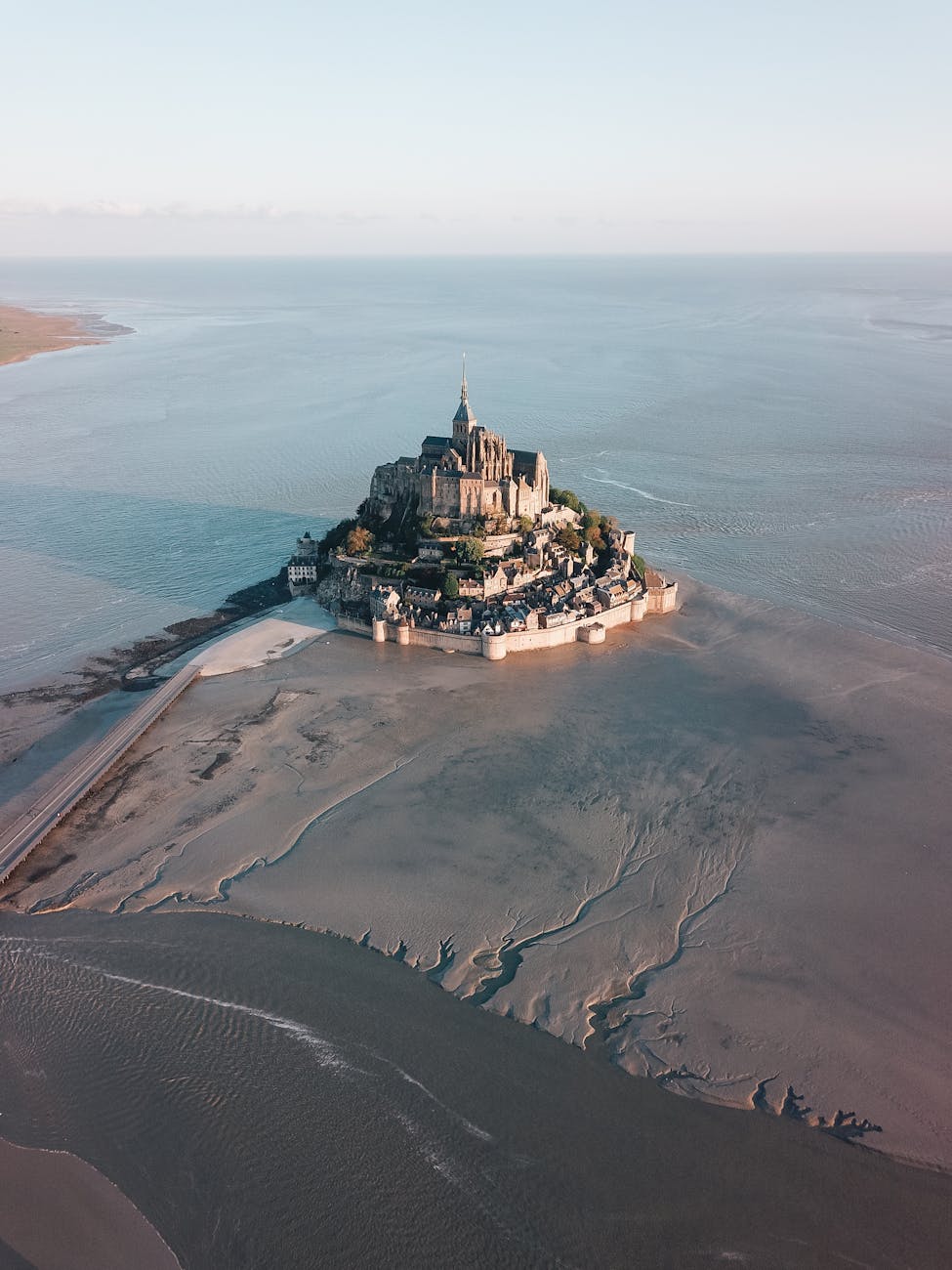
Mont Saint-Michel sits in one of the most dramatic tidal zones in Europe. The difference between high and low tide is up to 14 metres — roughly a 4-storey building of water, coming in at walking pace over several hours. The island is technically fully surrounded by water only during the highest “spring tides” (which happen around the full and new moons), but the bay landscape around you changes dramatically throughout each day.
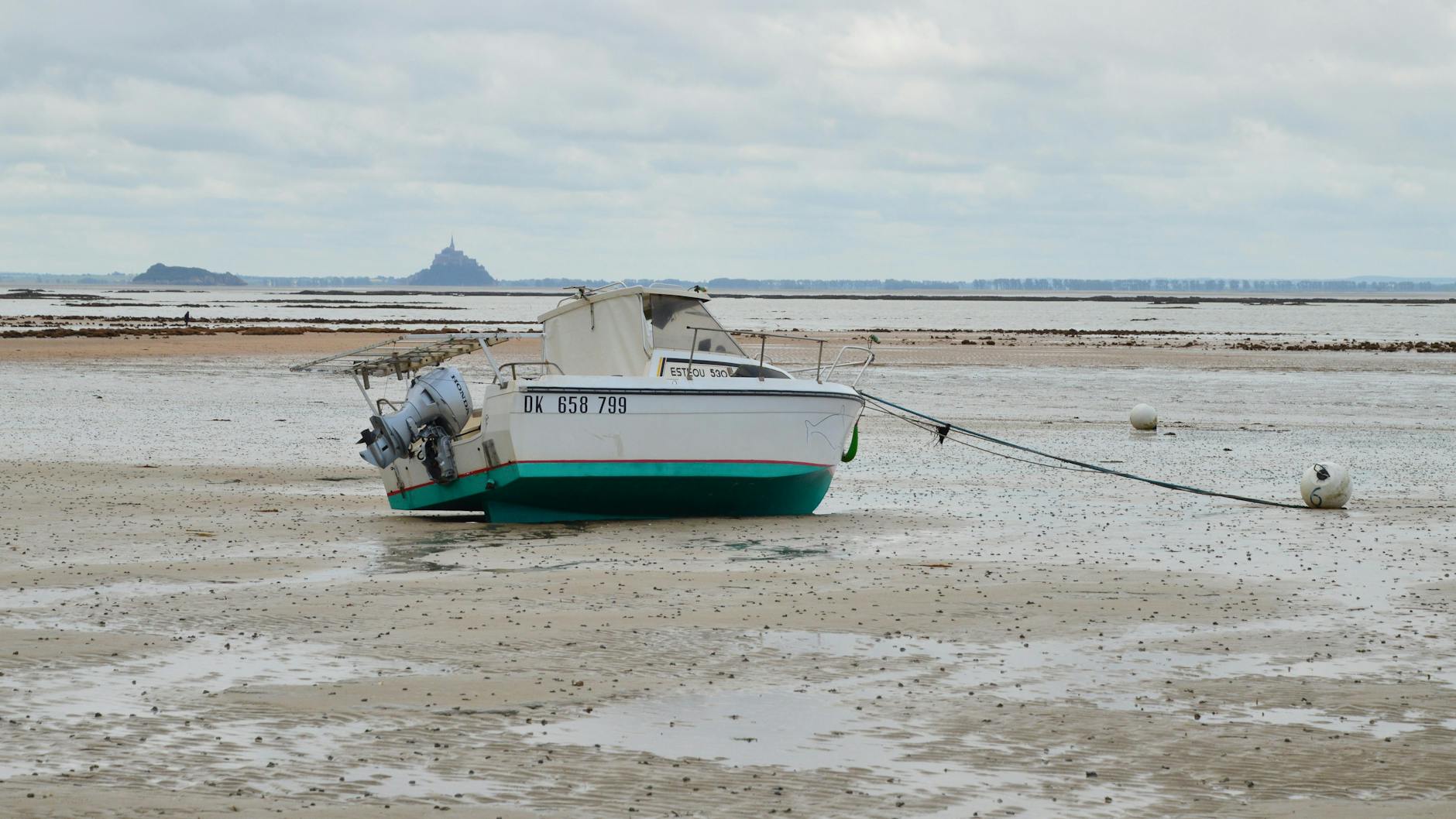
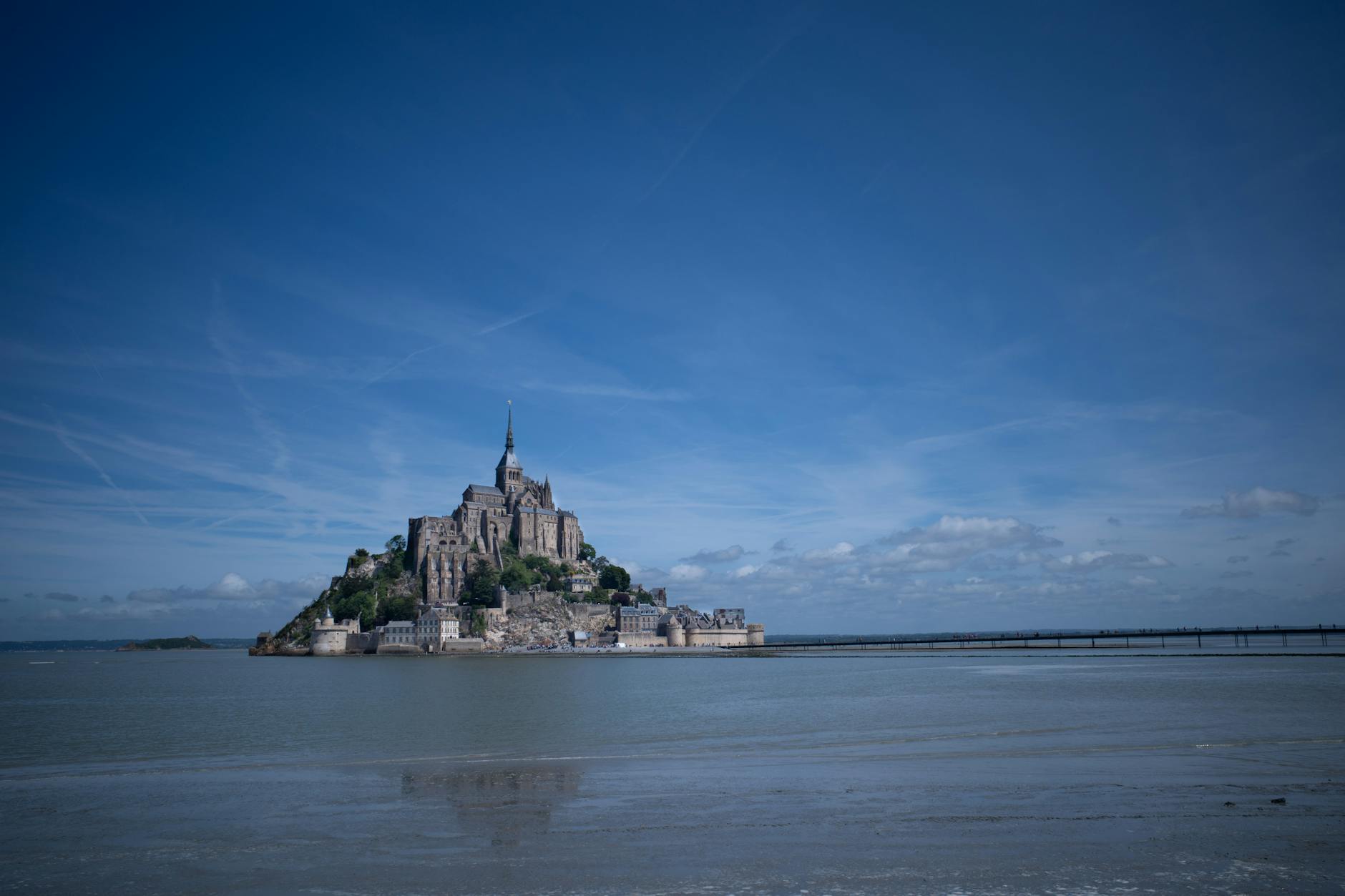
What this means for visitors: at low tide, you can see vast mudflats stretching to the horizon and the island looks like it is rising from desert. At high spring tide, the water fully circles the mount and the causeway is temporarily closed to foot traffic. Both views are magical.
If you want to see the island actually surrounded by water, you need to time your visit around the moon phases — check the tide schedule on ot-montsaintmichel.com and look for “grandes marées” days.
The most dramatic “grandes marées” happen in March, September, and October (around the equinoxes). If you can align a trip with these, you will see something almost no other tourist sees — the full sea surrounding the rock and then receding dramatically over 4 hours. It is unforgettable.
Which Tour Should You Book? Three Real Options
For most first-time visitors the choice comes down to three tour formats. Here is what each actually gets you and who it is best for.
Mont Saint-Michel Coach Day Trip from Paris (Self-Paced)
Price: $153 · Duration: 14 hours · Provider: GetYourGuide
Coach transport from Paris, free time on the island, no formal guided tour. You pay for the bus seat and the logistics. Once you arrive on the mainland, you get a fixed return time (usually 5 hours later) and you do whatever you want — climb to the abbey, eat lunch, shop, walk the bay.
The most flexibility of the three options and the cheapest. This is what I would book for a confident traveller who doesn’t want to follow a group.
Best for: Independent travellers, repeat Paris visitors, anyone who wants flexibility and hates being “herded.”
Mont Saint-Michel Guided Day Tour from Paris
Price: $194 · Duration: 14 hours · Provider: GetYourGuide
Same logistics as option 1 but with a licensed guide who leads you on a walking tour of the abbey complex. Includes skip-the-line abbey entry. You get about 2 hours of formal guided explanation and 2-3 hours of free time afterwards.
Worth the $40 extra if you want the history context — the abbey is structurally fascinating but almost incomprehensible without a guide to explain what you are looking at.
Best for: First-time visitors, history buffs, anyone who wants to actually understand what they are seeing instead of just taking photos.
Mont Saint-Michel Abbey Entry Ticket (DIY)
Price: $15 · Duration: Self-guided · Provider: GetYourGuide
Just the abbey entry ticket, not including transport. This is what you book if you are driving yourself, taking the train, or staying overnight nearby. Skip-the-line entry valid on any date.
The abbey ticket by itself is a massive time-saver on busy days — the standard on-site queue routinely runs 45-60 minutes in summer. Buy this in advance and walk straight past the queue to the turnstiles.
Best for: Independent travellers, overnight visitors, anyone not on a Paris day-tour coach.
Inside the Abbey — What You’re Actually Seeing
The abbey complex has roughly 20 rooms spread across three levels, connected by stone staircases. The visit takes you through them in a set order, though you can linger as long as you like in each room.
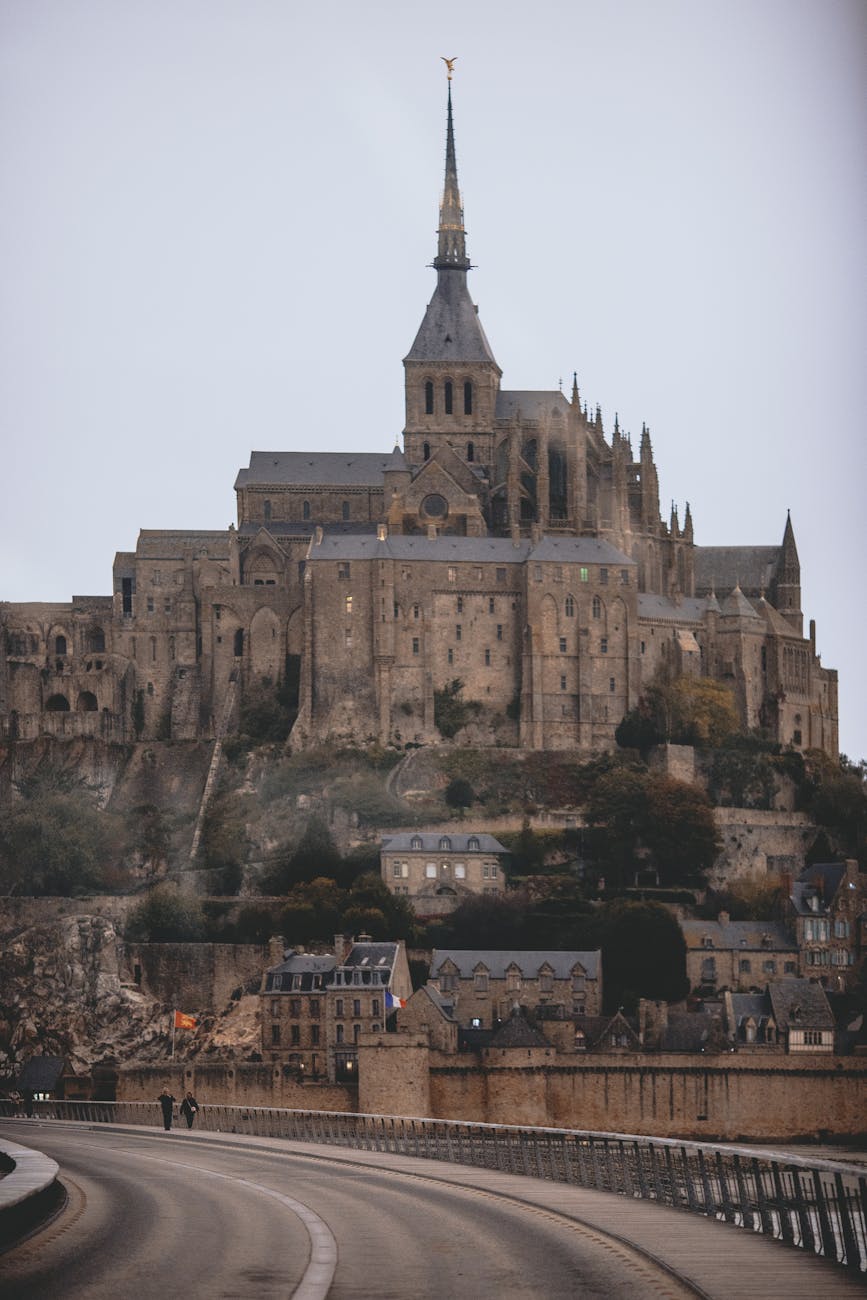
The Abbey Church (top level). This is the bit that crowns the whole rock — the Gothic church with the high nave and the Archangel Michael statue at the very top of the spire. The nave was partially rebuilt in the 15th century after a collapse, so it is a mix of Romanesque and Gothic styles. Stand in the centre of the nave and look up at the ceiling. The original monks would have heard Gregorian chant here for 600 years.
The Cloister. The single most famous room in the abbey — a square garden surrounded by 220 small granite columns supporting delicate Gothic arches. The cloister sits on top of the monks’ hall and is essentially hanging in the sky 80 metres above the bay. On clear days you can see Brittany from the cloister walkway. Most visitors’ favourite spot.
The Refectory. The monks’ dining hall, famous for its unusual hidden windows — from the centre of the room you see no windows at all, but as you walk the length of the hall, narrow light wells appear as you pass each one. This is a deliberate architectural trick to let in maximum light while preserving the contemplative feeling of the room.
The Knights’ Hall. A massive vaulted room where the monks used to work on manuscripts. Six Gothic columns hold up the ceiling. Look carefully at the walls for small carved initials — monastery visitors have been scratching their names here for 500 years.
The Crypt of the Great Pillars. The structural foundation of the whole abbey — 10 huge circular pillars, each 5 metres in diameter, supporting the weight of the church above. It is the closest thing Europe has to a medieval engineering textbook in physical form.
What to See on the Island Besides the Abbey
Most travelers head straight up the Grande Rue to the abbey and barely notice anything else. That is a shame because the island has several smaller things worth your time.
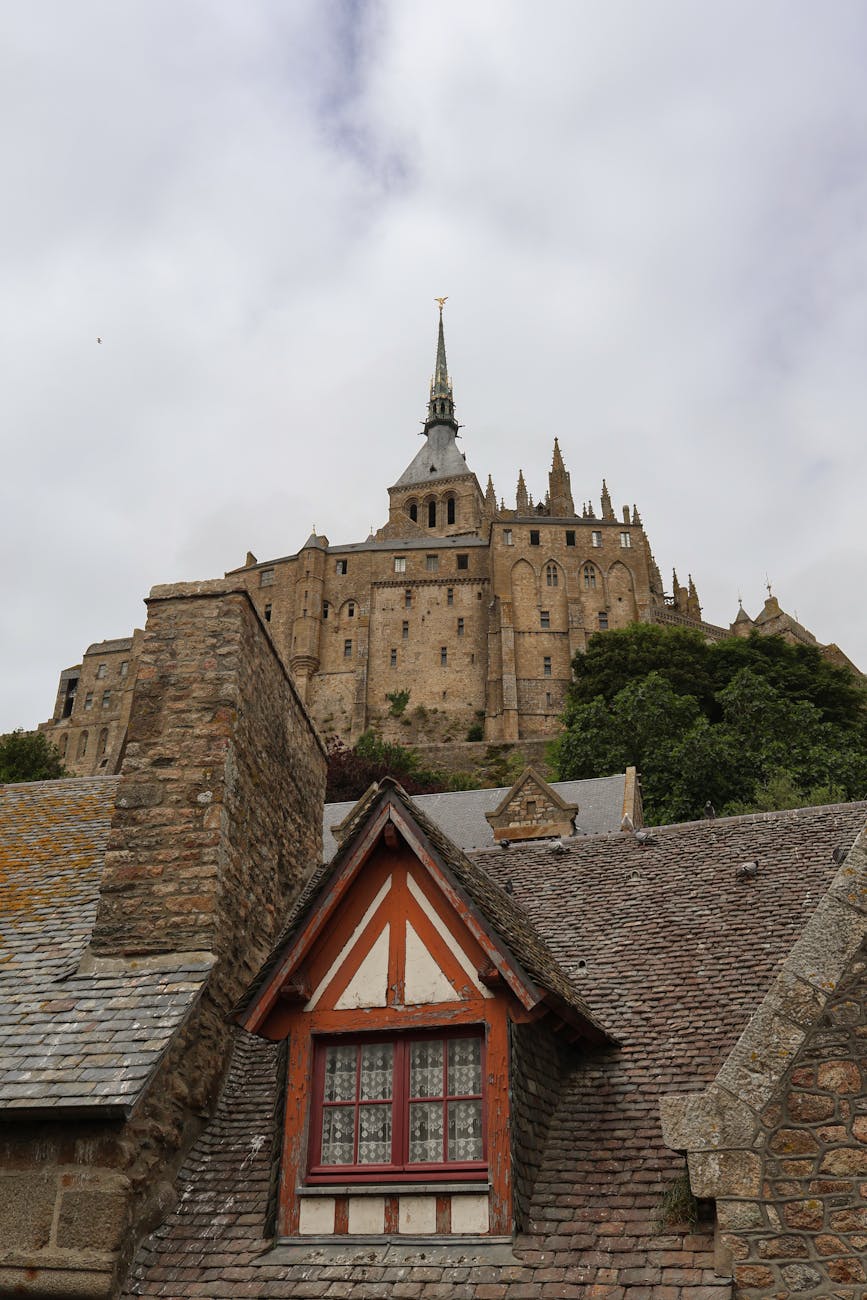
The Grande Rue itself. The one main street that spirals up the rock. It is lined with shops and restaurants in half-timbered buildings that are actually 500-year-old pilgrim houses. The shops sell mostly tourist tat now but the buildings are real history. Walk slowly and look up at the upper floors — some are still inhabited by the 30 full-time island residents.
The ramparts. You can walk the medieval defensive walls that encircle the lower town. Access is at several points along the Grande Rue. The view from the ramparts is the best view of the bay without going all the way up to the abbey. Completely free.
The Parish Church of Saint Pierre. Halfway up the Grande Rue, on the left. A small working church that most travelers walk past. It has a statue of Joan of Arc donated after WWI, and during quiet times (early morning before the crowds arrive) it is one of the most peaceful spots on the island.
The Logis Tiphaine Museum. The house where Bertrand du Guesclin, a 14th-century knight who fought in the Hundred Years’ War, supposedly lived. Small, cheap entry, mostly interesting if you are a French medieval history buff.
The cemetery. Tiny, tucked behind the parish church, with about 40 graves. The most poetic spot on the island — this is where the island’s permanent residents from the last 400 years are buried. Very quiet. Very beautiful.
The La Mère Poulard Omelette Question
Every guidebook to Mont Saint-Michel mentions La Mère Poulard — the restaurant famous for its giant fluffy omelettes, supposedly the world’s best. The omelettes are made in a hand-beaten copper bowl over an open fire, using a technique invented by Annette Poulard in 1888. They cost €40.
Yes, really.
My honest opinion after trying one: the omelette is good but not €40 good. It is fluffy and dramatic and served in the original 19th-century restaurant with the original open fireplace, so what you are really paying for is the history and the show. If you love food theatre and don’t mind the price, go for it.
If you want to eat well for less, walk past La Mère Poulard and eat at one of the smaller restaurants higher up the Grande Rue — they are cheaper, less busy, and some have legitimately excellent food.
My actual food recommendation: skip the sit-down restaurants entirely, buy a baguette sandwich from one of the small bakeries for €8, and eat it on the ramparts looking at the bay. That is the best meal on the island and the best view in France, combined. Total cost: €8.
When to Go — The Month-by-Month Reality
October-April (low season): Far fewer crowds, dramatic weather, cheap hotels. You may hit rain, wind, or cold. The island closes earlier in winter (abbey closes at 4pm November-January vs 7pm June-August). This is when the island feels most authentically medieval. Locals prefer these months.
May-June (shoulder season, best time): My personal pick. Warm-ish weather, long days, manageable crowds. The salt marshes around the bay are green. Occasional rain but usually broken up with sun. Book accommodation in advance if staying overnight.
July-August (peak season, to be avoided if possible): Maximum crowds, maximum heat, maximum queues. The island can see 15,000+ visitors in a single day. The Grande Rue becomes a shuffle. Hotels are booked months in advance. Expensive. If you are forced to go in summer, go on a Tuesday or Wednesday and arrive before 10am or after 4pm.
September (excellent): Weather often better than June, crowds dropping after August ends, and the equinox spring tides create the most dramatic water-around-the-island scenes. Almost my top pick.
How to Get There from Bayeux, Rennes, or Saint-Malo
If you are already in Normandy or Brittany, you have better options than the Paris day trip — and you should absolutely take them.
From Bayeux: 115 km (1h45 drive). Several tour operators run Bayeux day trips combining Mont Saint-Michel with the D-Day beaches. This is the trip to take if you are already in Normandy for WWII history — see our Normandy D-Day beaches guide for context on the D-Day side. A Bayeux day trip gives you 5+ hours on the island instead of the 4-5 a Paris day trip manages.
From Rennes: 65 km (1h drive). Easiest DIY option. Direct Keolis coaches run from Rennes station to Mont Saint-Michel about 6 times a day. €13 each way, 1h15 journey. Rennes has a TGV from Paris in 1h30, so Rennes-via-TGV is the fastest DIY route from Paris that isn’t a coach tour.
From Saint-Malo: 50 km (55 min drive). The nicest combination with beach time. Saint-Malo is a walled port city that is spectacular in its own right, and day-tripping from there to Mont Saint-Michel is a classic Brittany itinerary. Several small-group tours combine both.
Common Mistakes to Avoid
Only seeing the outside. Half of visitors — especially on rushed day tours — climb the Grande Rue, take photos at the bottom of the abbey, and never go inside. Do not do this. The abbey entry ticket is the whole point of the island. Inside is where the cloister and the refectory and the great pillars are. Outside is just a pretty walk and a lot of souvenir shops.
Walking on the mudflats without a guide. Do not walk out onto the bay on your own. There are zones of quicksand and the tide moves incredibly fast. People die here every few years. If you want to do a bay walk, book a proper guided tour with a licensed gentleman bay walker — they know exactly where is safe. Several tour operators run these. It is an amazing experience done correctly.
Going on a summer weekend. The single worst time to visit. 15,000+ visitors, 90-minute queues for everything, shuffle-pace on the Grande Rue. If you only have a summer weekend, at least start at 8am before the crowds arrive.
Not booking abbey tickets in advance. Covered above. In summer the on-site ticket queue at the abbey gate can run close to an hour. The skip-the-line advance ticket is $15 and the time-saver is massive.
Eating at the first restaurant you see. The restaurants near the bottom of the Grande Rue are the most expensive and busiest. The ones higher up, closer to the abbey, are cheaper and less crowded. Walk past the first five and go to the sixth.
Wearing the wrong shoes. There are stairs everywhere and they are worn granite slippery from 1,000 years of pilgrims. Good walking shoes are non-negotiable. Flip-flops will give you a sprained ankle.
Staying Overnight — Worth the Upgrade
The day trip from Paris is fine. Staying overnight is an entirely different experience. Here is why it’s worth considering.
You see the island without day-trippers. The last shuttle bus leaves around 6pm. After that, the only people on the island are the 30 residents and the handful of visitors staying in the 6 hotels up on the rock. The streets empty out completely. You can walk the Grande Rue at 8pm and hear only your own footsteps.
You see the island at dawn. Sunrise over Mont Saint-Michel is one of the best photographic experiences in France. If you stay on the mainland at a hotel in the nearby causeway villages, you can walk out with a camera at 6am and have the bay to yourself.
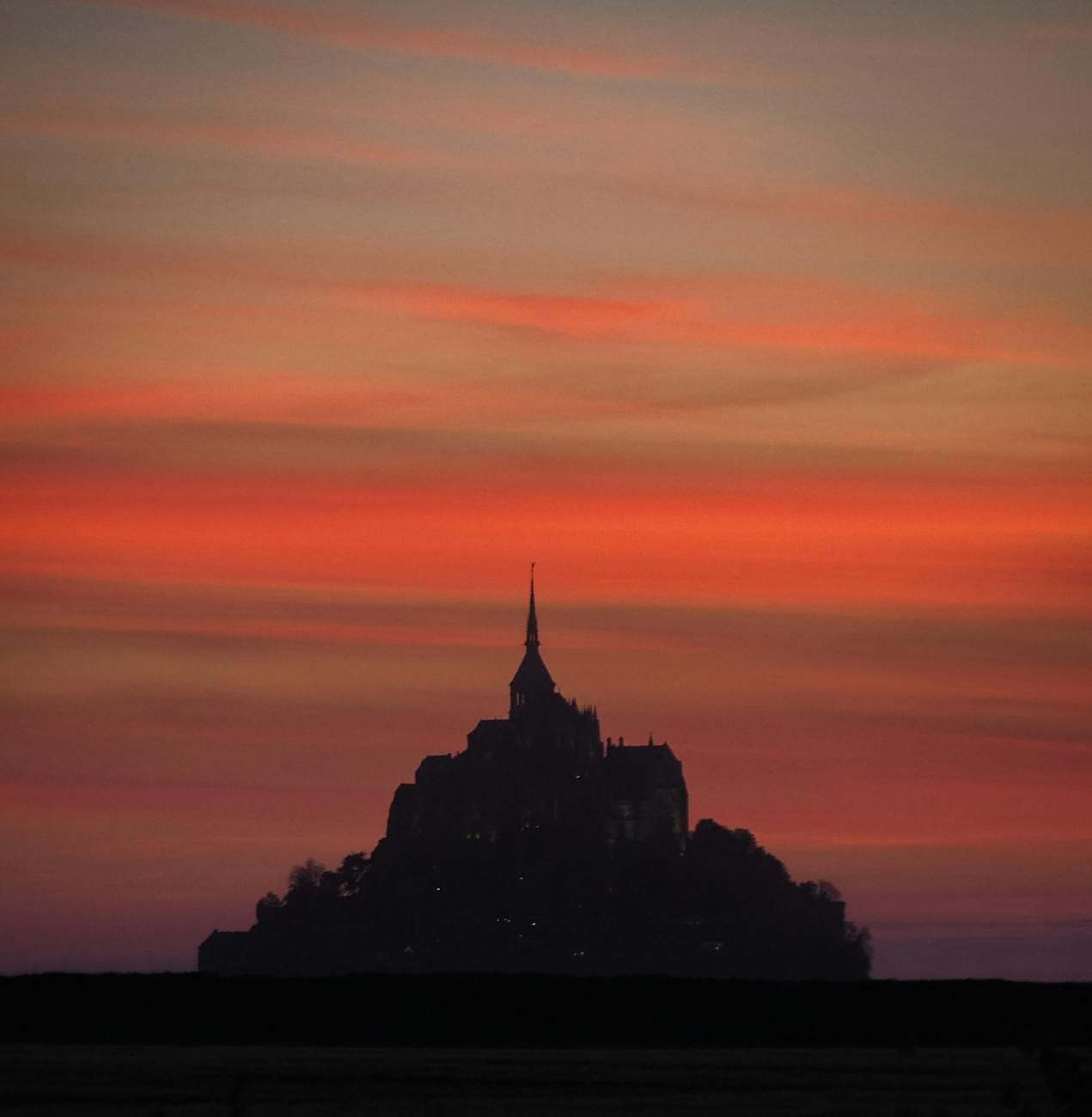
You see the abbey lit at night. After sunset, the abbey is dramatically lit with warm golden floodlights. From the mainland you can see it from 10+ km away, glowing like a beacon. Day trippers never see this.
Recommended stays. On the island itself: La Mère Poulard Hotel (yes, the omelette restaurant) or Auberge Saint Pierre, both €200-300/night but with terrace views. On the mainland: Le Relais Saint-Michel near the causeway, €180-250/night, Mont Saint-Michel visible from the window. Cheaper options in Pontorson 9 km away from €80/night.
What to Pack
Comfortable walking shoes. Non-negotiable. The 300-step climb to the abbey plus the cobblestone Grande Rue will destroy flat shoes and ballet flats. Wear real walking shoes.
A light rain jacket. Normandy is famous for changeable weather. Even in July, expect sudden showers. A lightweight waterproof jacket fits in any bag and you will probably use it.
Layers. The wind on the ramparts and the shade inside the abbey are much cooler than the sunny Grande Rue. Dress in layers that you can add or remove as you climb.
Cash for small purchases. Most restaurants and shops on the island accept cards, but the baguette sandwich stand and the public toilets (yes, 70 cents) are cash-only.
A water bottle. You can refill at the public fountain near the parking lot. There is no water on the island itself — not even a proper free drinking fountain. The bottled water sold in shops costs €4 per bottle. Bring your own.
A small bag, not a big backpack. Large bags are a nuisance on the narrow stairs and in the abbey rooms. Keep it small.

Is Mont Saint-Michel Worth It?
If you have ever watched The Lord of the Rings and thought “I wish somewhere like this existed in real life” — yes, absolutely yes, Mont Saint-Michel is worth every hour of the drive and every euro of the tour price. It is one of the few tourist sites on Earth that actually matches the fantasy version of itself in photos. The monasteries of Meteora in Greece come close, but Mont Saint-Michel is more dramatic because of the tides.
If you are someone who prefers food tours, museums, and coastal towns — you might find a 14-hour day trip for one island too much. Consider skipping it and doing a more relaxed Normandy trip from Bayeux or Caen that combines the D-Day beaches, Bayeux’s tapestry, and a shorter half-day MSM visit instead.
If you are travelling with kids aged 6-12: go. Kids love the medieval fortress vibe, the spiral streets, the suits of armour in the museum, and the idea of tides sweeping in and out. Kids aged 13+ may be bored by the abbey interior but will love the drama of the ramparts.
My honest personal recommendation: if you have 4+ days in Paris and a spare Saturday or Sunday, take the guided day tour from Paris. If you have more flexibility (7+ days in France), take the train to Rennes, overnight in Pontorson, and see the island at sunset and sunrise. The second option is roughly 10 times better.
More France Planning on The Abroad Guide
Mont Saint-Michel pairs beautifully with other Normandy experiences. Our Normandy D-Day beaches guide is the obvious next step — many visitors do MSM and the beaches on back-to-back days from a Bayeux base.
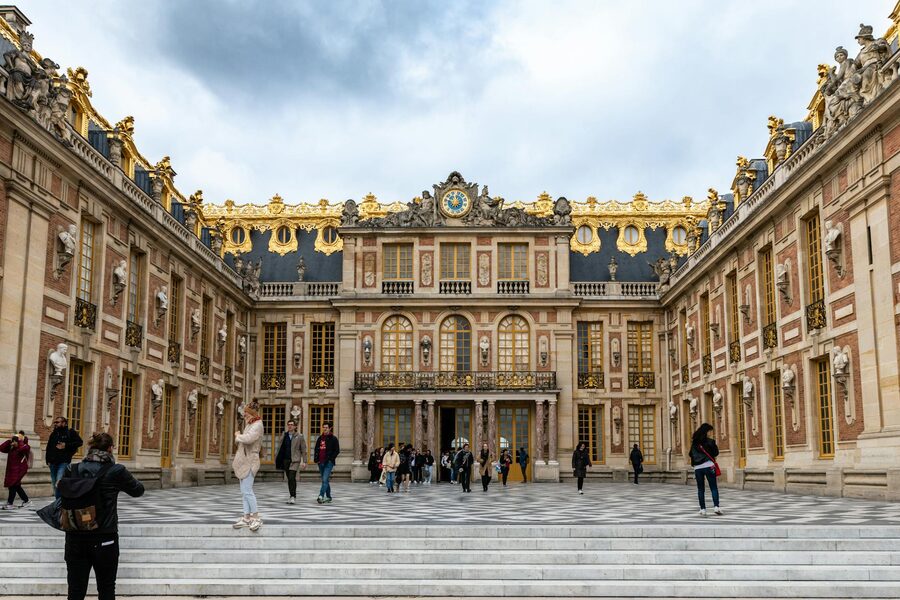
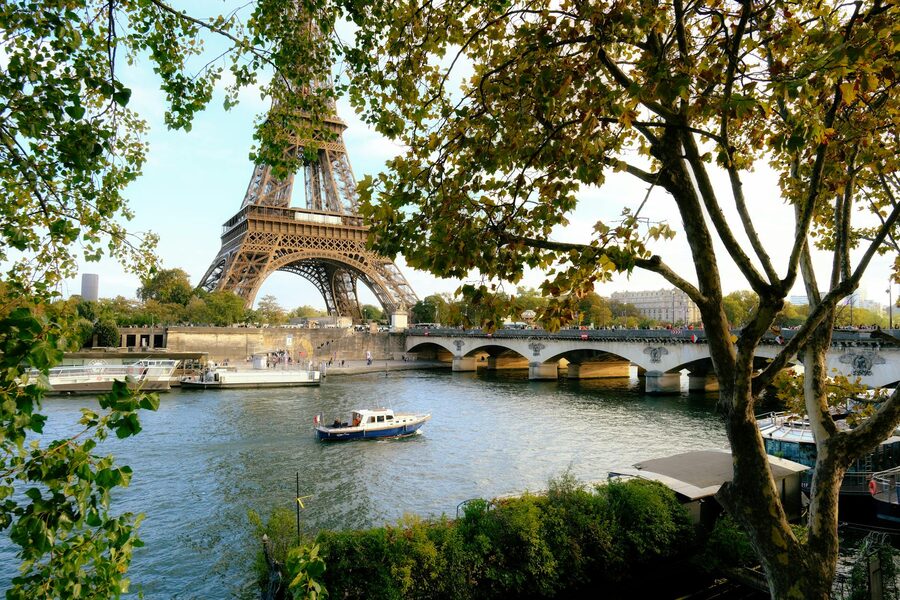
Our Versailles from Paris guide covers the faster day trip if you want to fit two excursions into your Paris week. For the city itself, our Eiffel Tower tickets guide covers avoiding the 90-minute summit queue, and the Louvre tickets guide handles the world’s biggest museum.
And if you arrive back from Mont Saint-Michel exhausted but still wanting dinner, our Paris food tour guide has some great neighbourhood restaurants that don’t require advance booking.
Final Thoughts — The Two-Minute Version
Book abbey tickets in advance. Take the guided day tour from Paris if you have limited time. Stay overnight in Pontorson if you can spare a night.
Visit outside July-August if possible. Wear good shoes. See the inside of the abbey, not just the outside.
Walk the ramparts. Look up at the cloister ceiling. Skip the La Mère Poulard omelette and eat a sandwich on the ramparts instead.
Check the tide schedule. Bring a light rain jacket. Do not walk on the mudflats alone.
That is everything I have learned across three visits. Mont Saint-Michel is one of the few places on Earth that is exactly as dramatic as its reputation promises. Go prepared, and it will be one of the best days of your entire France trip.
FAQ — Short Answers to the Most Asked Questions
How much time do I need on Mont Saint-Michel? 4-5 hours minimum for a proper visit with the abbey. Paris day trips give you roughly that. If you want to really see it, 1-2 overnight nights is better.
Is the abbey entry ticket included in Paris day tours? It depends on the tour. The guided tour from Paris ($194) usually includes it. The self-paced coach option ($153) usually does not — you buy abbey entry separately on arrival.
Can I visit without climbing all those stairs? You can visit the lower Grande Rue and the ramparts without climbing to the abbey, but you will miss the whole point. If mobility is an issue, the Grande Rue alone is still worth the trip. Just manage expectations.
Is there parking at Mont Saint-Michel? Yes — a large paid car park on the mainland, 2.5 km from the island. €15 for the day. A free shuttle bus runs from the car park to the island every few minutes, or you can walk the causeway in 35 minutes.
Can I stay overnight on the island itself? Yes. There are about 6 hotels on the island with total capacity of maybe 60 rooms. They are booked months in advance and expensive (€200-400 per night) but the experience of staying on the island after the day-trippers leave is unforgettable.
Is it crowded year-round? No. Summer weekends are crushed. Winter weekdays are often nearly empty. Spring and autumn weekdays are the sweet spot.
Are there restaurants on the island? Yes, about 15 of them, ranging from touristy and expensive (La Mère Poulard at €40+ per person) to casual baguette sandwich stands (€8). The further up the Grande Rue you go, the better the ratio of quality to price.
Can I bring my dog? Yes to the Grande Rue and ramparts. Not to the abbey interior — dogs are not allowed inside. There is a dog cloakroom at the abbey entrance where you can leave your dog during your visit.
Is Mont Saint-Michel in Normandy or Brittany? Normandy, but only just — the border with Brittany is literally at the bottom of the island. The Bretons have spent centuries complaining about this. You will see more Bretons visit it than Normans.
Are there toilets on the island? Yes, several public toilets, all paid (€0.70 in coins). Bring change. Or go before you get off the shuttle bus.
More French Day Trips
Mont Saint-Michel is the ultimate day trip. For others from Paris, the Bruges day trip crosses into Belgium for medieval canals. The Fontainebleau and Vaux-le-Vicomte covers two royal palaces. And the Somme battlefields offer a deeply moving history experience.