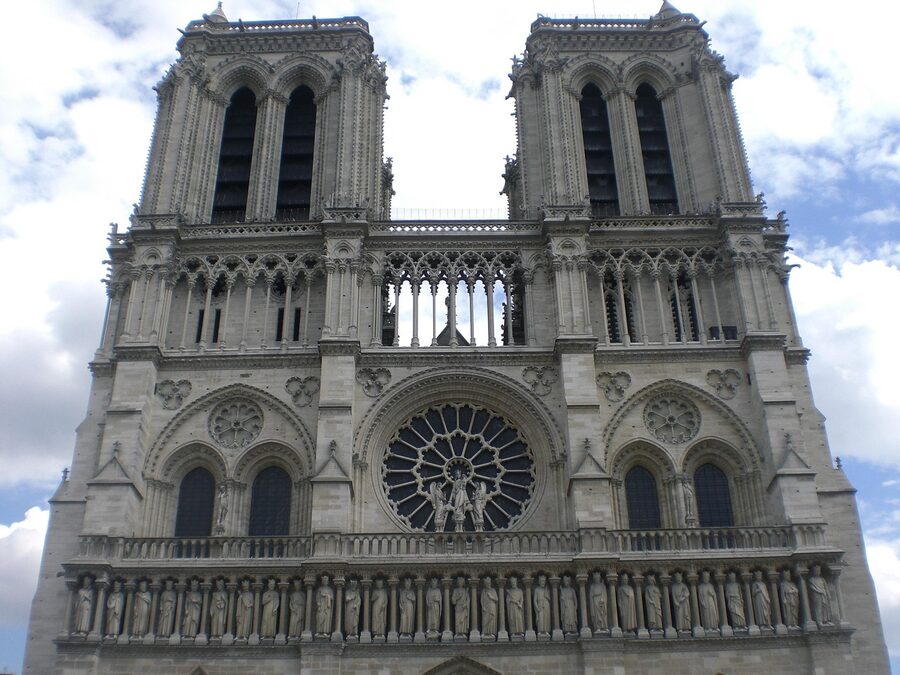
It took 182 years to build Notre Dame. It took 56 minutes for a fire to nearly destroy it. And it took five years and $900 million to put it back together.
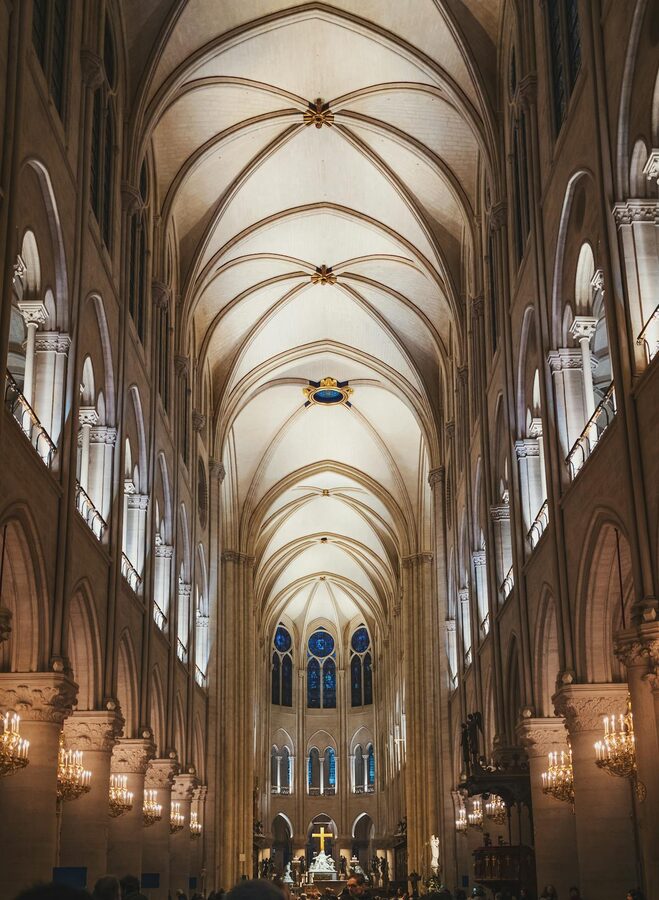
I walked inside for the first time since the reopening expecting scaffolding and dust. Instead I found something closer to what a 13th-century pilgrim might have seen — cleaned limestone so white it almost glows, stained glass so bright the colours hit the floor in ways they hadn’t for centuries. The restoration didn’t just fix Notre Dame. It made it better than most of us ever knew it.
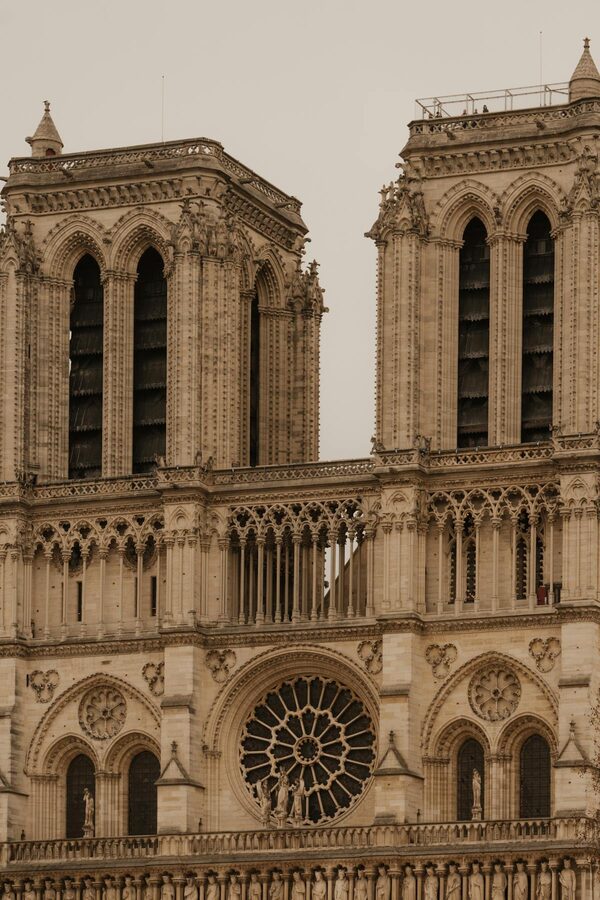
Here is what you need to know about visiting in 2026: getting inside is free but not simple, the towers are a separate ticket, and a guided tour is the difference between “nice church” and one of the most memorable hours you will spend in Paris.
- Quick Picks — Best Notre Dame Tours
- How to Get Inside Notre Dame (It’s Free, But Read This First)
- Option 1: Free Timed Reservation (Recommended)
- Option 2: Walk-In Entry (Free but Slow)
- Option 3: Book a Guided Tour (Skip the Stress)
- Important: Watch Out for Ticket Scams
- The Notre Dame Towers (Separate Ticket, Worth It)
- The Best Notre Dame Guided Tours
- 1. Ile de la Cite & Notre Dame Walking Tour with Crypt —
- 2. Notre Dame Interior & Exterior Guided Tour —
- 3. Notre Dame Exterior Tour with Free Entrance — Free Tour + Entry
- What to See Inside Notre Dame
- The Rose Windows
- The Crown of Thorns
- The Great Organ
- The Ile de la Cite: Notre Dame’s Island
- Sainte-Chapelle
- The Archaeological Crypt
- The Conciergerie
- When to Visit Notre Dame
- Best Time of Day
- Best Day of the Week
- Best Time of Year
- Practical Tips for Visiting
- How to Get to Notre Dame
- A Short History of Notre Dame
- Combine Notre Dame with These Nearby Stops
- If You Loved Notre Dame
Quick Picks — Best Notre Dame Tours
Best overall: Ile de la Cite & Notre Dame Walking Tour with Crypt — around $48, covers the full island plus the archaeological crypt underneath the square. Small groups of 15 max.
Best interior access: Notre Dame Interior & Exterior Guided Tour — around $15, tiny groups of just 7 people with a guide who takes you inside and explains the Gothic details most visitors walk right past.
Best budget option: Notre Dame Exterior Tour with Free Entrance — guided exterior walk followed by free self-guided entry. Good if you want context before going in alone.
How to Get Inside Notre Dame (It’s Free, But Read This First)
Notre Dame reopened to the public in December 2024 after the devastating fire of April 2019. Entry to the cathedral is completely free — it is a working church, not a museum, and the Archbishop of Paris has been firm about keeping it that way.
But free does not mean easy. The cathedral has a strict capacity limit, and in peak season (May through October) the queue for walk-in visitors can stretch past two hours. Here is how to beat it.
Option 1: Free Timed Reservation (Recommended)
The official Notre Dame website releases free timed-entry slots two days in advance at midnight Paris time. You pick a date and a 15-minute arrival window, show up with your QR code, and join the reserved-entry line. This line moves fast — usually under 15 minutes.
The catch? Slots fill up within hours, especially for weekend mornings. Set an alarm for midnight Paris time (6pm Eastern, 3pm Pacific) two days before your visit and be ready to book the second slots open. Midday slots on weekdays tend to last longer.
Option 2: Walk-In Entry (Free but Slow)
You can always just show up without a reservation. The walk-in line is separate from the reserved line and moves more slowly. In summer, expect 1.5 to 3 hours. In winter or on rainy weekday mornings, you might get in within 30 minutes.
Option 3: Book a Guided Tour (Skip the Stress)
This is what I actually recommend for most visitors. A guided tour handles the logistics for you — your guide knows exactly where to go, you skip the worst of the queuing, and you learn things you would never pick up walking around alone. The fact that the restoration revealed details hidden under centuries of grime makes a guide more valuable now than ever.
Important: Watch Out for Ticket Scams
This comes up constantly and I need to address it directly. Notre Dame is free to enter. No one — not a guide, not an agency, not a person with a lanyard — can sell you a “ticket” to enter the cathedral. If someone outside is offering “skip-the-line tickets to Notre Dame” for 30 or 40 euros, they are either selling you a guided tour (which is legitimate) or scamming you (which is common).
Legitimate guided tours exist and are worth paying for. But the entry itself is always free. The only paid element is the towers, which are managed separately by the French monument authority.
The Notre Dame Towers (Separate Ticket, Worth It)
The towers are managed by the Centre des Monuments Nationaux, not by the cathedral itself. This means they have their own ticketing system, their own hours, and their own entrance.
Tickets cost around 16 euros per adult and must be booked online in advance through the official towers website. Walk-up tickets exist but sell out fast. The experience involves climbing 424 steps with no lift — there is no elevator option, so this is not suitable for everyone.
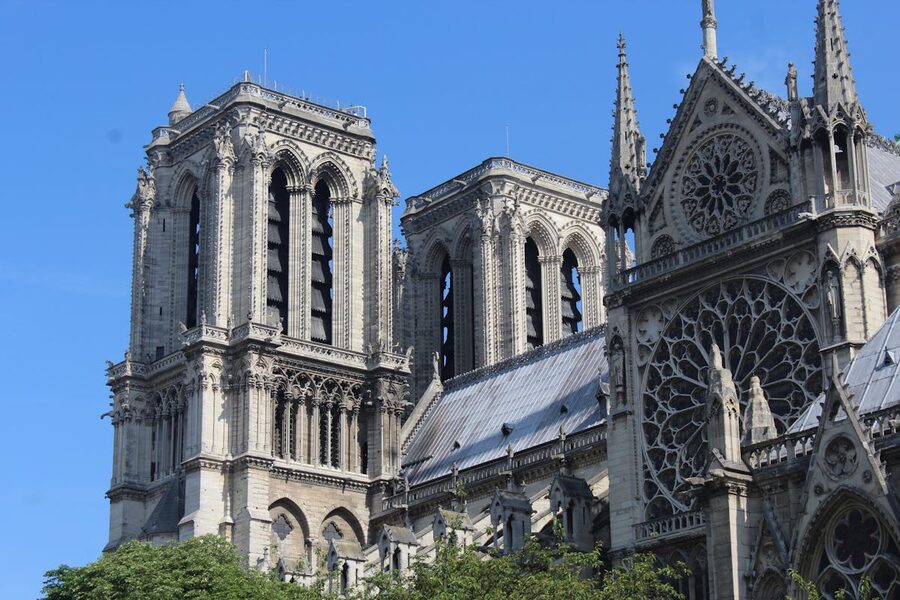
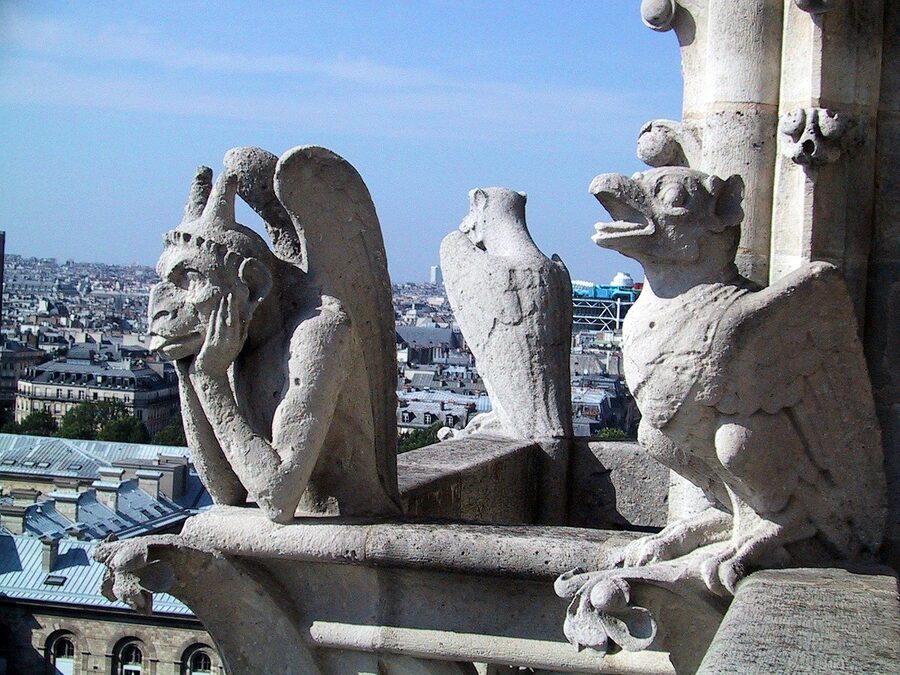
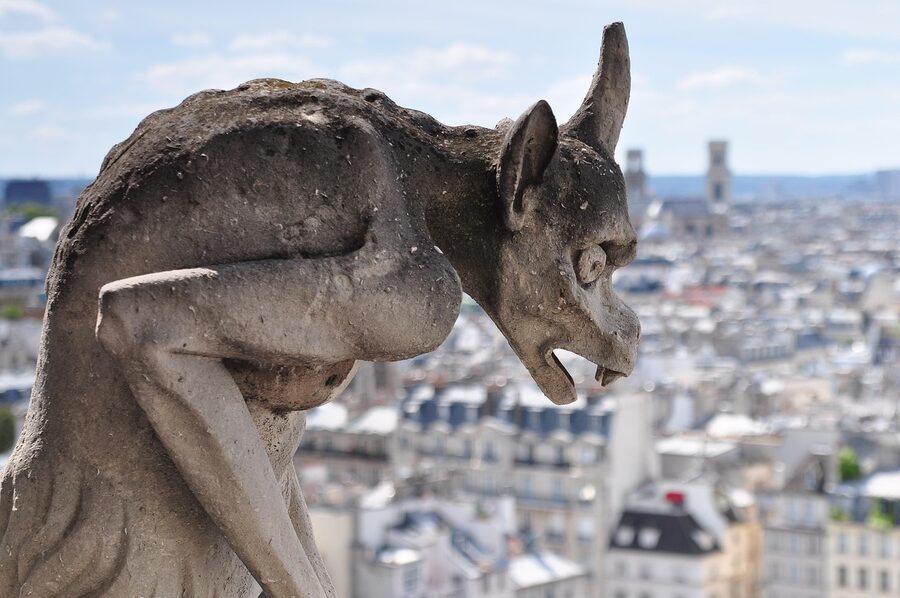
What you get at the top: close-up views of the gargoyles and chimeras, the big bell (Emmanuel, which weighs over 13 tonnes), and a panoramic view of Paris that rivals the Eiffel Tower. The difference is you are looking AT the Eiffel Tower instead of from it, and you are standing on an 850-year-old building while you do it.
The Best Notre Dame Guided Tours
I have gone through every Notre Dame tour in our database. Most of them cover similar ground — the facade, the flying buttresses, a walk around the island. The difference comes down to group size, whether they take you inside, and what extras they bundle in. Here are the three I would book.
1. Ile de la Cite & Notre Dame Walking Tour with Crypt — $48
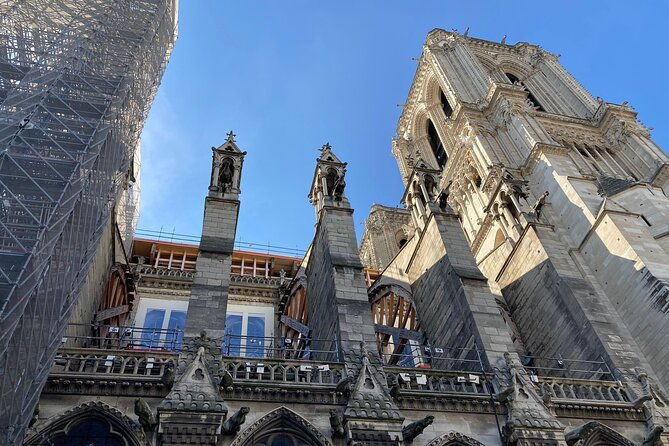
This is the tour I recommend to anyone who wants to understand Notre Dame in context — not just the building, but the island it sits on and the 2,000 years of history underneath. The guide starts at the Henri IV statue on Pont Neuf and walks you through the island’s layers before arriving at the cathedral. Groups are capped at 15 people, which is small enough that you can actually hear and ask questions.
The crypt access is the real differentiator here. The Archaeological Crypt of Paris sits directly under the cathedral square and contains ruins from the Roman city of Lutetia. Most visitors don’t even know it exists. The tour ends here, so you can take your time exploring after the guide leaves.
There are optional upgrades for a Seine cruise and Sainte-Chapelle entry, but the base tour alone is worth the price. This is the highest-rated Notre Dame tour on the market for a reason.
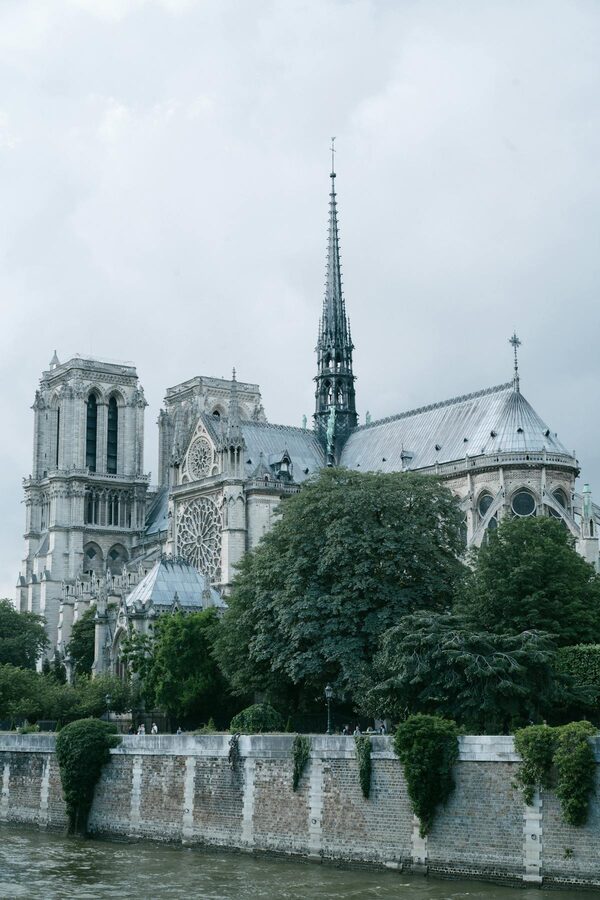
2. Notre Dame Interior & Exterior Guided Tour — $15
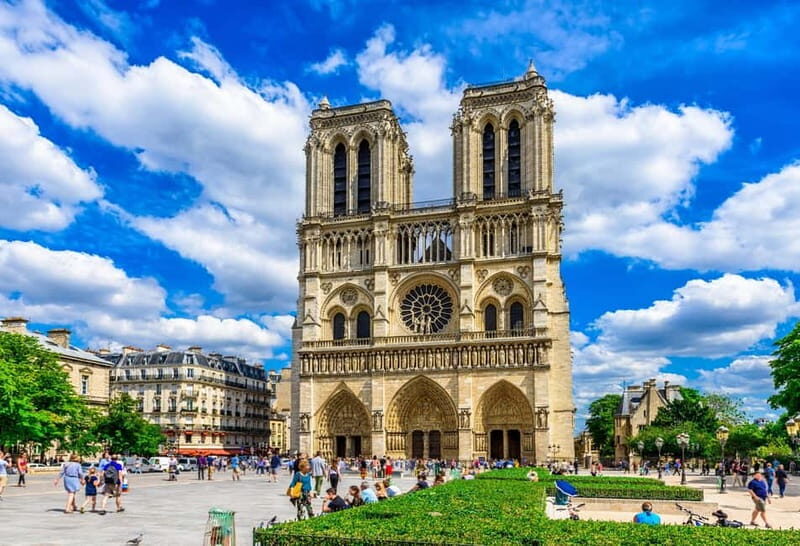
If your priority is getting inside the cathedral with someone who can explain what you are looking at, this is the tour. Groups are limited to just 7 people — the smallest I have seen for any Notre Dame tour — and the guide takes you through both the exterior details and the restored interior.
At $15 per person, the pricing is almost too good. You are essentially paying for an hour with a knowledgeable guide who handles the entry logistics and points out things like the Rose Window geometry, the hidden carvings on the portals, and the difference between the original stonework and the new restoration. One reviewer described their guide as knowing exactly where to go in the confusing queue system, which is genuinely useful since the entrance area can be chaotic.
The only limitation: this tour does not include the towers or the crypt. If you want those, pair this with a separate tower ticket or go with Tour 1 above for the crypt. But for a focused cathedral experience, this is hard to beat at this price.
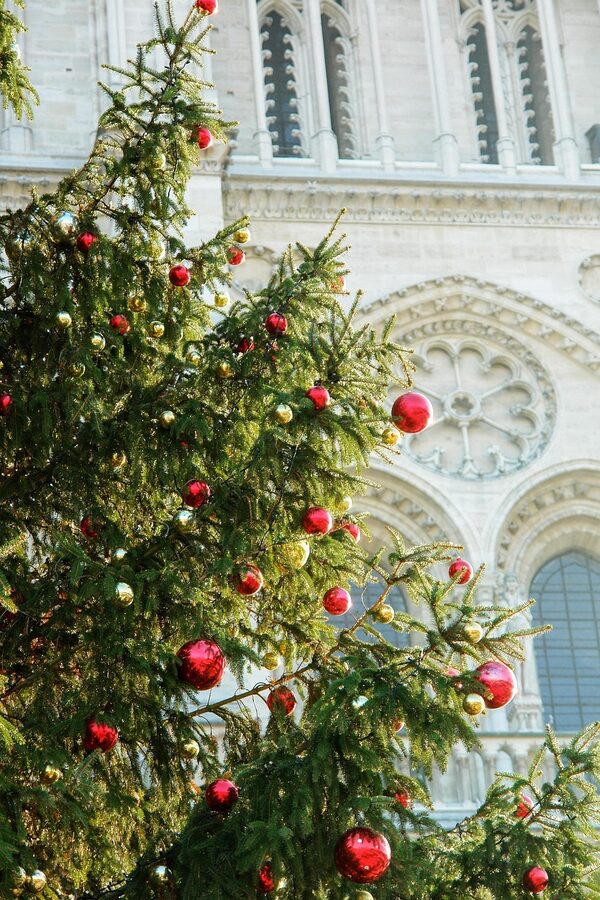
3. Notre Dame Exterior Tour with Free Entrance — Free Tour + Entry
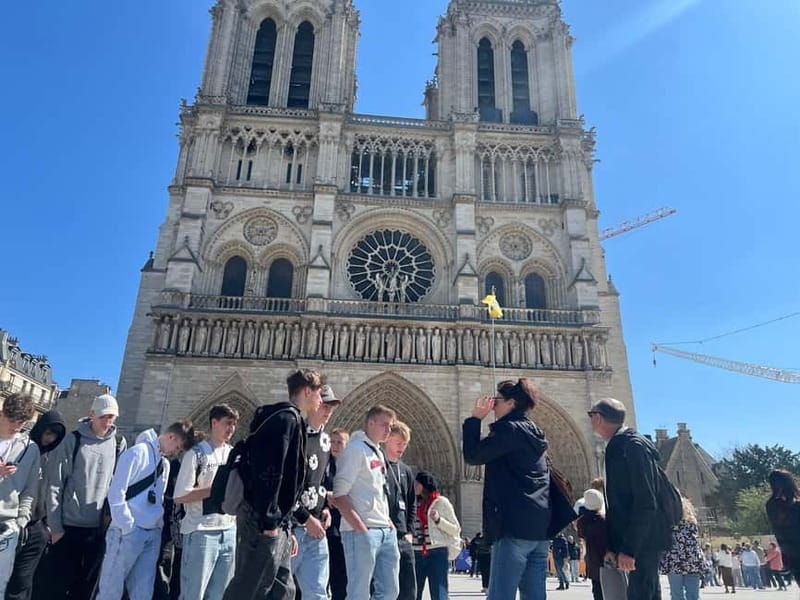
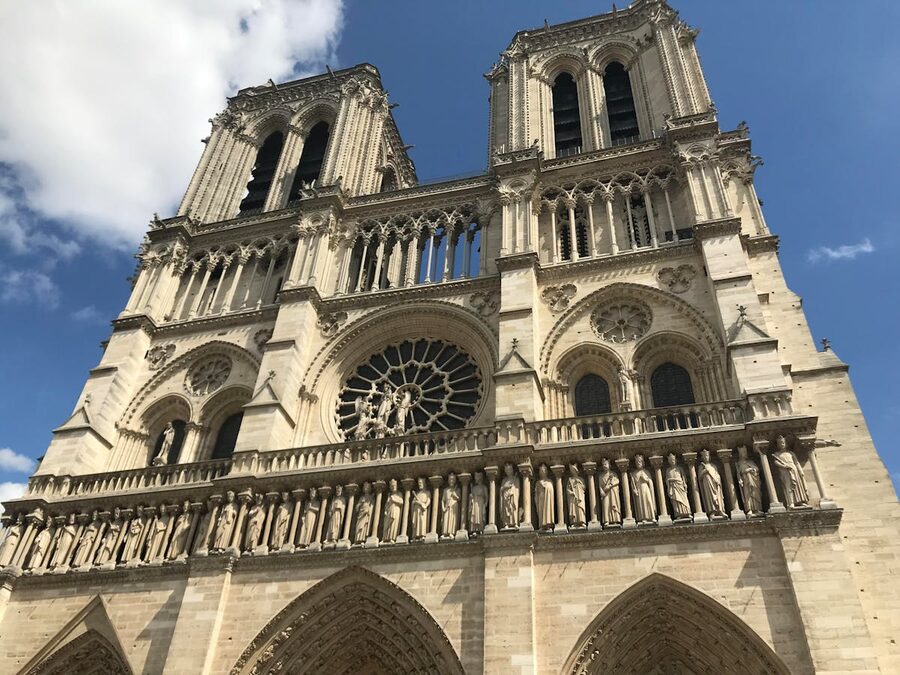
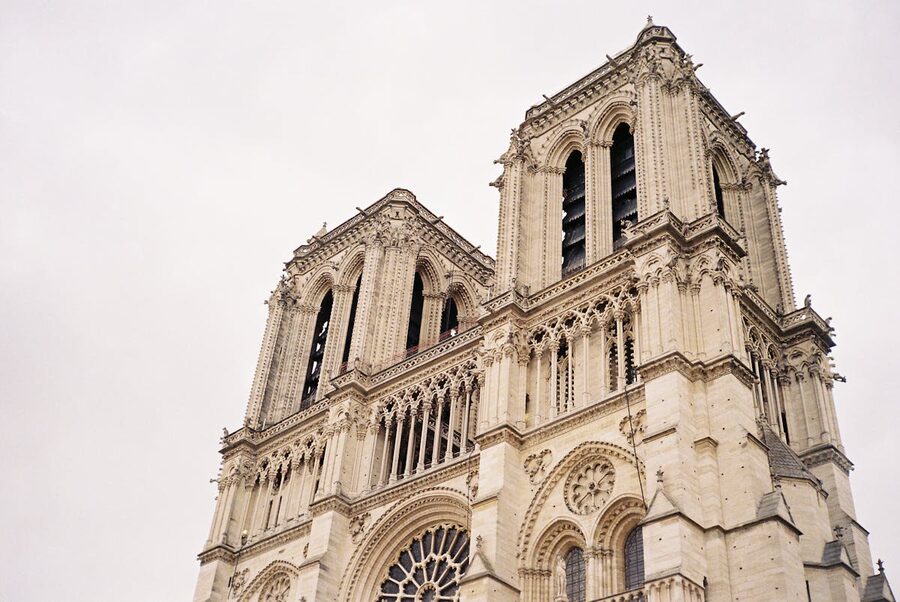
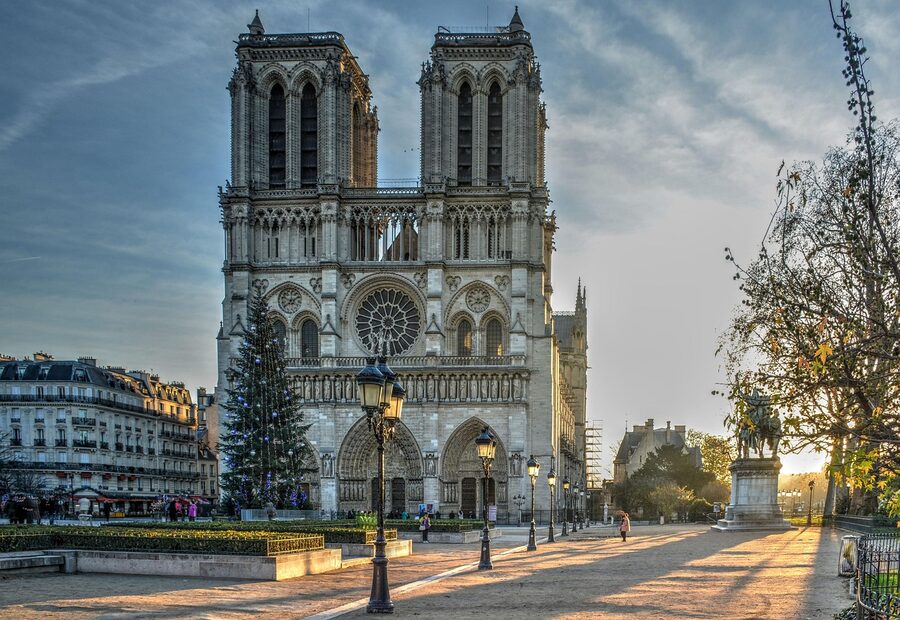
This is the budget-friendly option for people who want a guided experience but do not want to spend much. The tour focuses on the cathedral’s exterior — the three portals, the Gallery of Kings, the flying buttresses, the gargoyles visible from below — and then your guide sends you inside to explore on your own with free entry.
The trade-off is clear: you get expert context for the outside but navigate the interior alone. For some visitors that is fine — the interior is stunning and reasonably self-explanatory. For others, having a guide inside (like Tour 2 above) makes a meaningful difference, especially with all the post-restoration changes that are not signposted.
One thing I appreciate about this tour: the guides are consistently praised for being knowledgeable and friendly. Some of the less enthusiastic feedback comes from the chaotic queuing situation outside, which is not really the tour’s fault — it is just the reality of visiting the most popular free attraction in Paris right now.
What to See Inside Notre Dame
The interior is a single enormous space — the nave stretches 130 metres from the entrance to the apse, and the vaulted ceiling reaches 33 metres overhead. After the restoration, the cleaned limestone and new lighting have made the whole space feel dramatically brighter than it did before the fire.
The Rose Windows
There are three rose windows, and all three survived the fire. The north and south windows in the transept are the originals from the 13th century and contain some of the oldest stained glass in Paris. The west window above the entrance is a 19th-century replacement but still impressive for its sheer scale.
The north window is the one to prioritise if you can only focus on one. It depicts the Virgin Mary surrounded by figures from the Old Testament, and the blue glass is so deep it turns the whole area around it into something that feels underwater.
The Crown of Thorns
Notre Dame houses what is believed to be the Crown of Thorns, the relic that King Louis IX brought to Paris in 1239 — the reason Sainte-Chapelle was built just 400 metres away. During the 2019 fire, a human chain of firefighters and clergy rushed into the burning cathedral to save it. The relic is displayed in a new reliquary that was part of the restoration.
The Great Organ
The organ survived the fire but was caked in lead dust from the melting roof. It took years to clean and retune all 8,000 pipes. It is now playing again, and if you time your visit for a Sunday mass or a scheduled organ recital, the sound in that space is extraordinary. The acoustics of Notre Dame are considered some of the finest of any Gothic cathedral.
The Ile de la Cite: Notre Dame’s Island
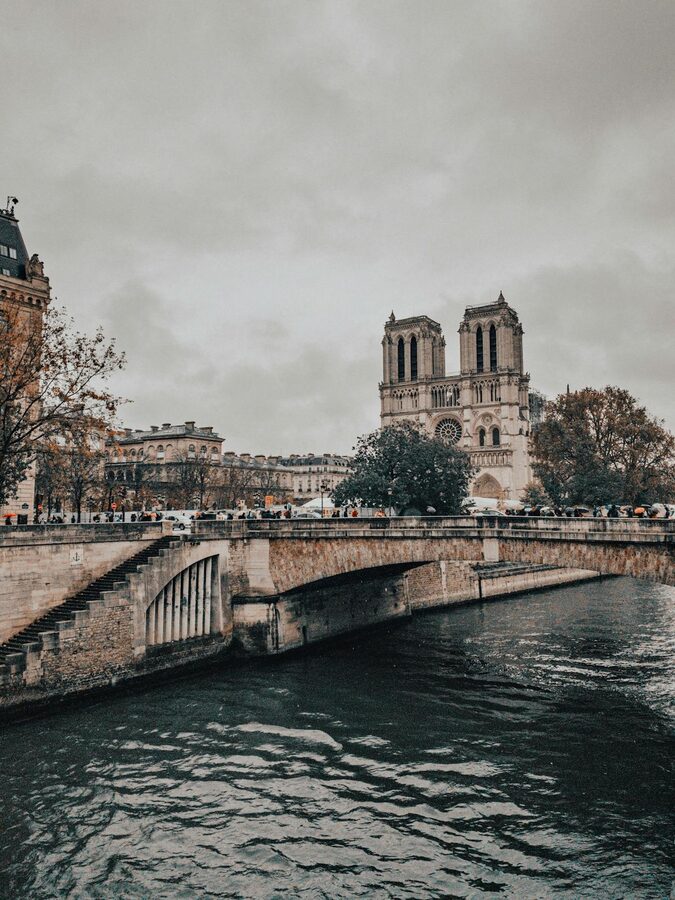
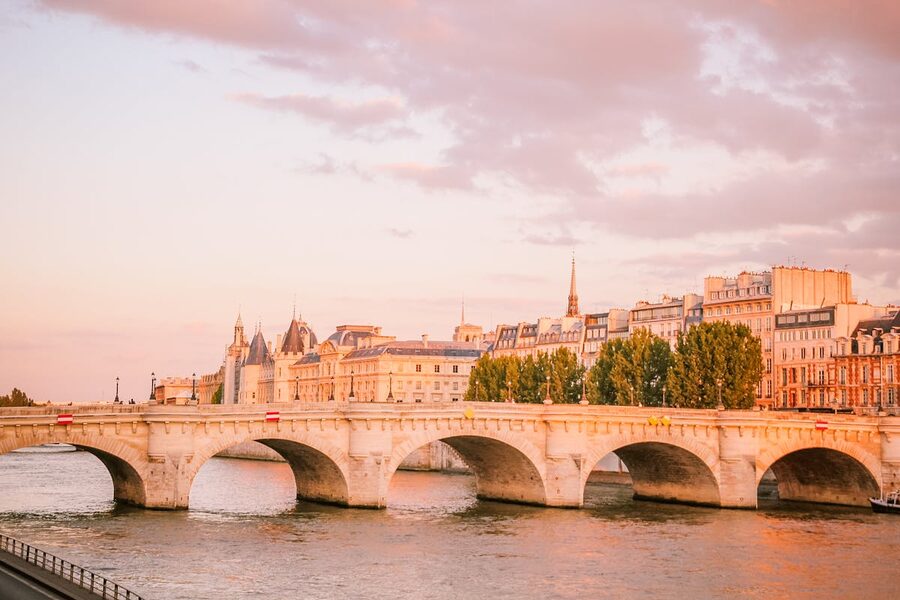
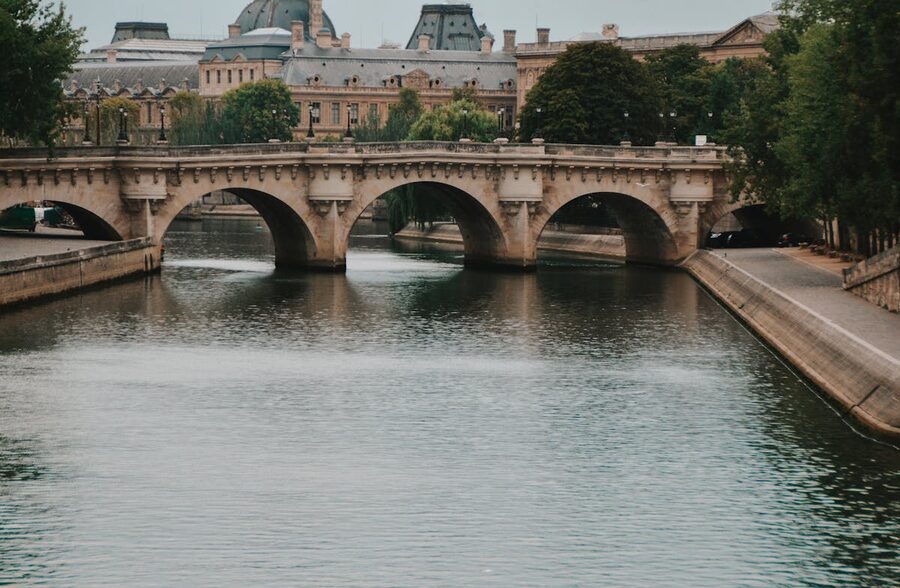
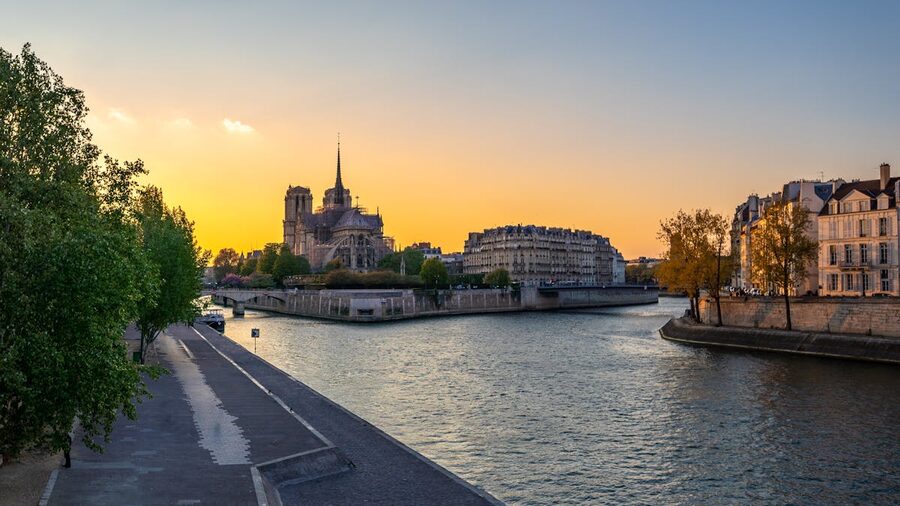
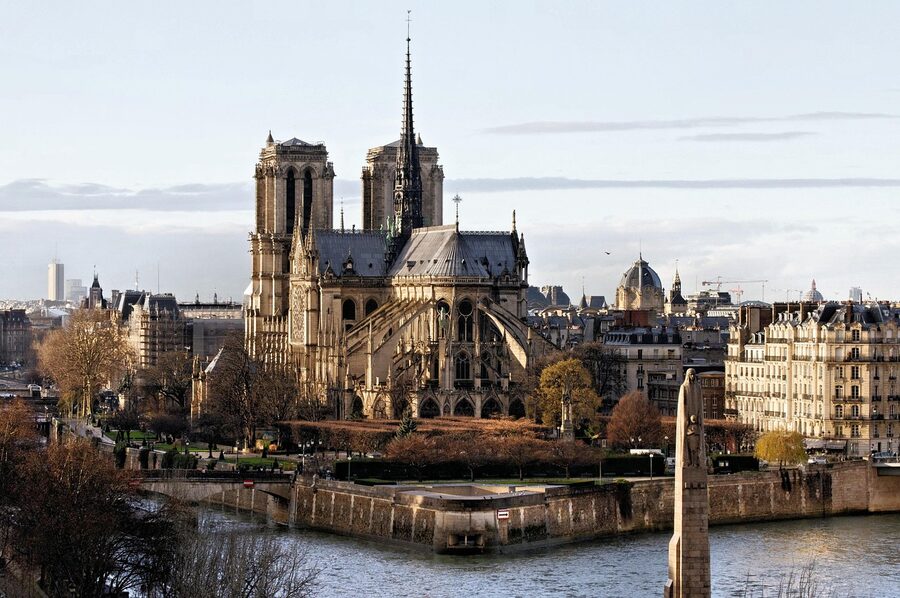
Notre Dame sits on the Ile de la Cite, a boat-shaped island in the middle of the Seine that is essentially the birthplace of Paris. The Romans settled here around 52 BC, calling it Lutetia. Every layer of the city’s history is stacked here — Roman ruins, medieval streets, Gothic churches, and the 19th-century Haussmann-era buildings that line the quays.
Most visitors only see the cathedral and leave. That is a mistake. The island is small enough to walk in 30 minutes and contains some of Paris’s most significant landmarks.
Sainte-Chapelle
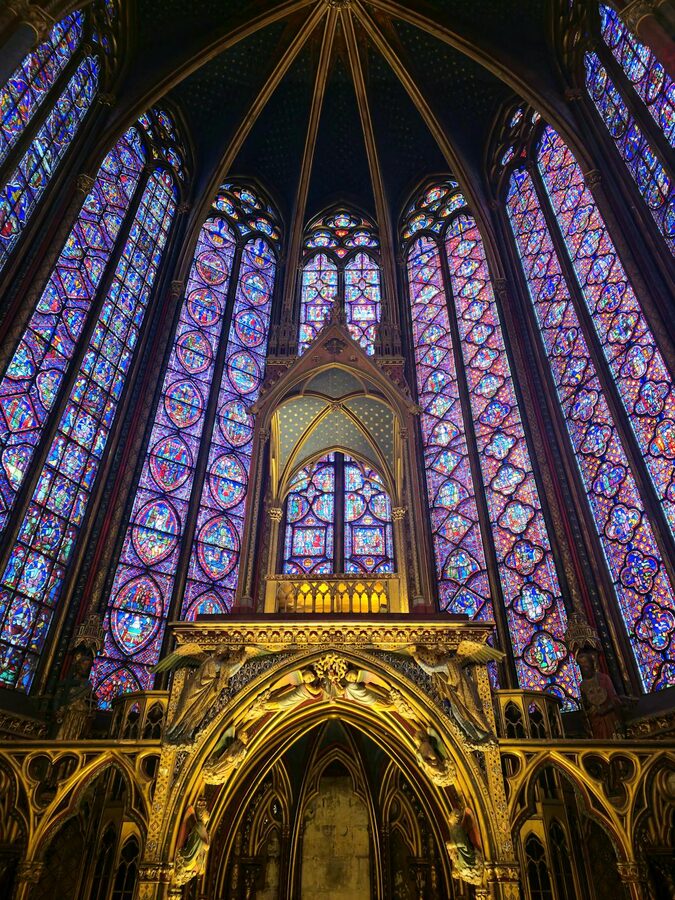
Just 400 metres from Notre Dame sits Sainte-Chapelle, the royal chapel that Louis IX built to house the Crown of Thorns. Its upper chapel has the most extraordinary stained glass I have seen anywhere — 1,113 panels telling the story of the Bible from Genesis to the Resurrection. We have a full guide to visiting Sainte-Chapelle if you want details, but the short version is: book a timed ticket, go on a sunny afternoon, and prepare for your jaw to drop.
The Archaeological Crypt
Directly underneath the square in front of Notre Dame (the Parvis) lies the Archaeological Crypt of Paris. It was discovered during construction work in the 1960s and contains the foundations of buildings dating back to Roman Lutetia — heated floors from a Roman bathhouse, medieval cellars, and the original quay wall along the ancient branch of the Seine.
Entry is around 9 euros for adults, and it rarely has a queue. If you book Tour 1 from my recommendations above, crypt access is included.
The Conciergerie
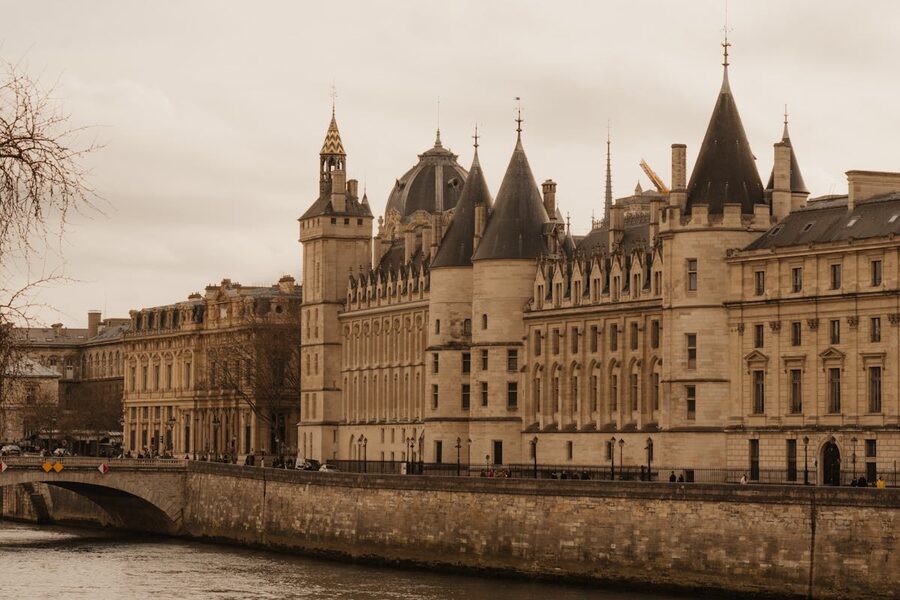
This medieval palace turned revolutionary prison is where Marie Antoinette, Robespierre, and thousands of others spent their final days before the guillotine. The Histopad tablet tour brings the medieval rooms to life with augmented reality reconstructions. It is a 5-minute walk from Notre Dame and is often empty while the cathedral queue stretches for blocks.
When to Visit Notre Dame
Best Time of Day
Early morning (right at opening) or late afternoon (after 4pm). The midday hours from 11am to 3pm are the worst for crowds. If you have a timed reservation for 8:30am, you will have a nearly empty cathedral and the morning light streaming through the east windows.
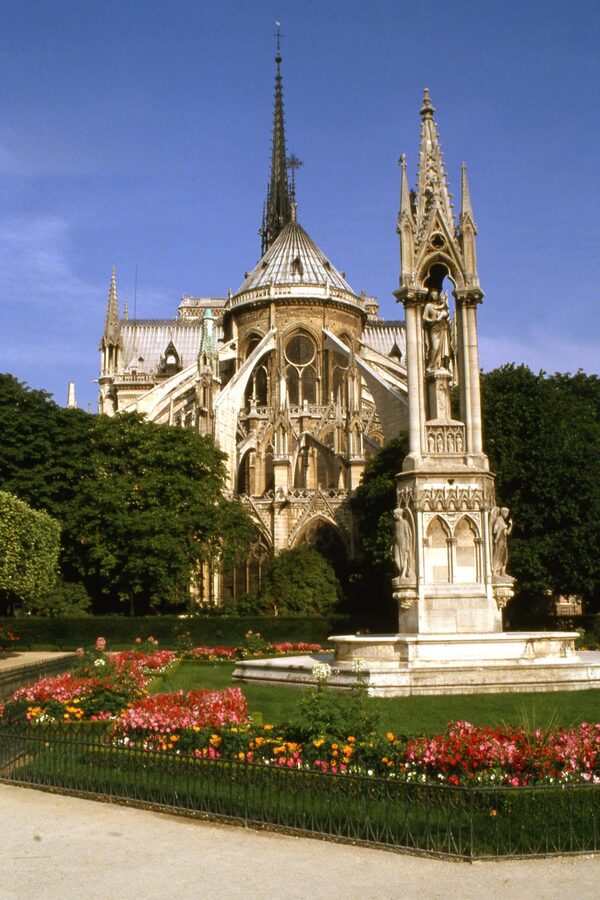
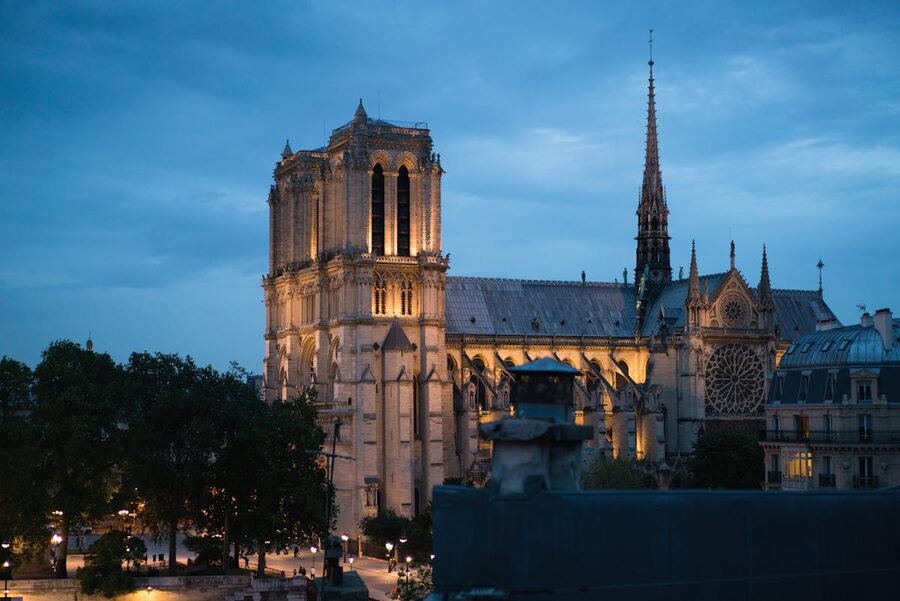
Late afternoon has a different advantage: the queue dies down, and the western sun lights up the facade in warm gold. Sunset from the garden behind the apse is one of the most photogenic moments in Paris.
Best Day of the Week
Tuesdays and Wednesdays are consistently the quietest. Mondays are surprisingly busy because many Paris museums are closed on Mondays, which pushes travelers toward free attractions like Notre Dame. Weekends are predictably crowded.
Best Time of Year
November through March (excluding the Christmas-New Year period) is when you will find the shortest queues. Summer is intense — July and August are the peak of the peak. The cathedral is stunning in every season, so do not feel you need to visit in spring for the “best” experience.
Practical Tips for Visiting
Dress code: Notre Dame is an active place of worship. Shoulders and knees must be covered. Hats should be removed inside. This is enforced and people are turned away.
Photography: Allowed everywhere inside, but no flash and no tripods. The restored interior is bright enough that a phone camera works fine. For the rose windows, switch to manual focus if your phone allows it — autofocus gets confused by the patterns.
Duration: Plan 30-45 minutes for a self-guided interior visit, 60-90 minutes if you take a guided tour, and another 45 minutes if you climb the towers. Add an hour if you want to see the crypt.
Accessibility: The cathedral interior is wheelchair accessible. The towers are not — 424 steps with no elevator.
Mass schedule: Sunday masses at 8:30am, 10am, 11:30am, 12:45pm, and 6:30pm. The cathedral stays open to all visitors during mass but the atmosphere changes. If you want to attend as a worshipper, arrive early for seats.
How to Get to Notre Dame
Metro: The closest station is Cite (Line 4), which drops you right on the island about 200 metres from the cathedral. Saint-Michel Notre-Dame (RER B and C) is also very close and useful if you are coming from the airport or Versailles.
Bus: Lines 21, 38, 47, 85, and 96 all stop near the cathedral.
On foot: Notre Dame is in the dead center of Paris. It is walkable from the Latin Quarter (5 minutes), the Marais (15 minutes), Saint-Germain-des-Pres (10 minutes), and the Louvre (20 minutes along the river).
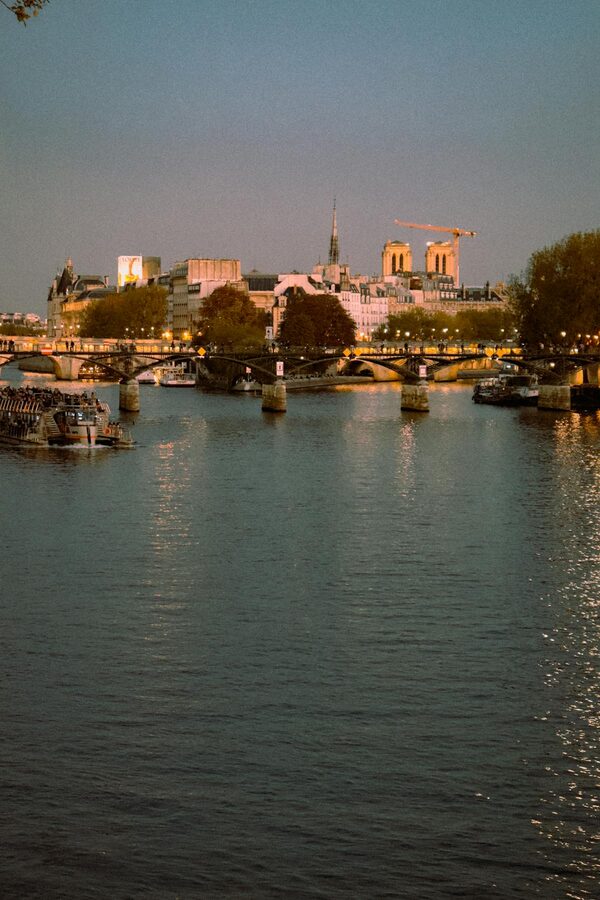
By boat: If you are coming from a Seine river cruise, most cruise routes pass directly in front of Notre Dame. Some hop-on hop-off boat services stop at the island.
A Short History of Notre Dame
Construction began in 1163 under Bishop Maurice de Sully, who convinced King Louis VII that Paris needed a cathedral worthy of its growing status. The work took 182 years — the first stone was laid when Thomas Becket was still alive, and the building was not finished until the same decade that Constantinople fell.
The cathedral survived the French Revolution (barely — the mob beheaded the 28 statues on the Gallery of Kings, thinking they were French monarchs, though they were actually Biblical kings). Napoleon crowned himself emperor here in 1804. Victor Hugo’s 1831 novel saved it from demolition by making the Parisians fall in love with it again.
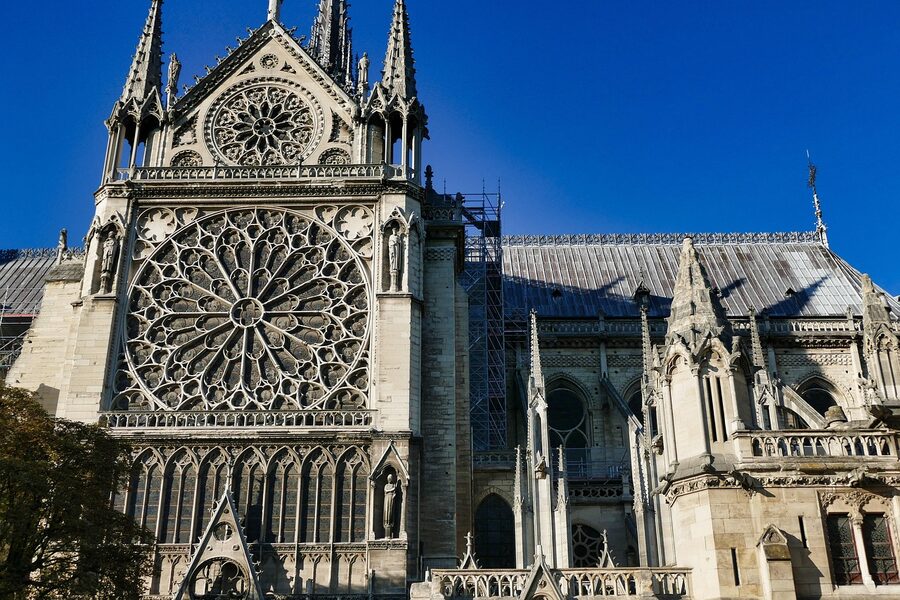
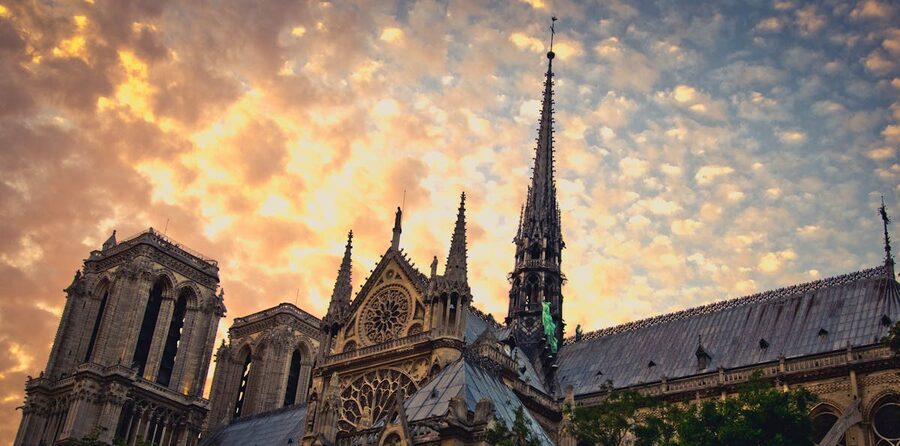
The architect Viollet-le-Duc led a major restoration from 1844 to 1864, adding the famous spire and many of the gargoyles and chimeras that people associate with the building. The spire that burned in 2019 was his design, and the new one is a faithful reproduction.
On April 15, 2019, a fire broke out in the attic during renovation work. The spire collapsed live on television. The roof was destroyed. But the stone vaulting held, the walls stood, and the rose windows survived. The firefighters’ decision to fight the fire from inside — risking the towers collapsing on them — is credited with saving the structure.
The restoration took five years and involved hundreds of artisans. The building reopened in December 2024 to global attention, and the cleaned, restored interior has been described by architectural critics as the most significant cathedral restoration in modern history.
Combine Notre Dame with These Nearby Stops
The Ile de la Cite is one of the densest concentrations of things to see in Paris. Here is what you can pair with a Notre Dame visit without walking more than 10 minutes.
Sainte-Chapelle is 400 metres away and is the other must-see Gothic masterpiece on the island. The stained glass there is even more spectacular than Notre Dame’s, if that is possible. Book a timed ticket to avoid the queue.
The Louvre is a 20-minute walk along the Seine — cross the Pont des Arts and you are there. If you are doing both in one day, I would do Notre Dame in the morning and the Louvre in the afternoon, when the cathedral queue has built up but the museum has thinned out.
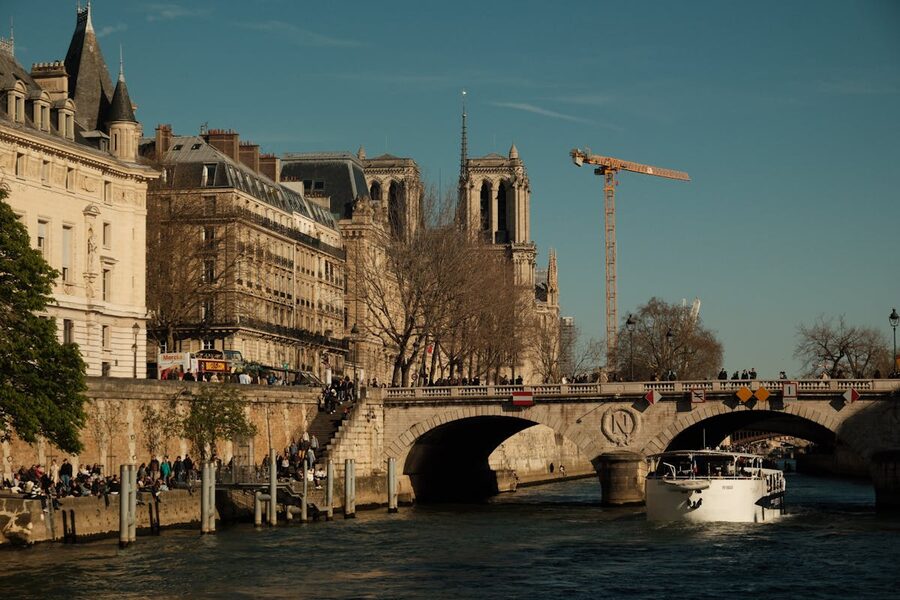
A Seine river cruise launches from multiple points near the island. The classic Bateaux Mouches and Vedettes du Pont Neuf departures are both within a 5-minute walk. Notre Dame from the river at sunset is an entirely different experience from seeing it on foot.
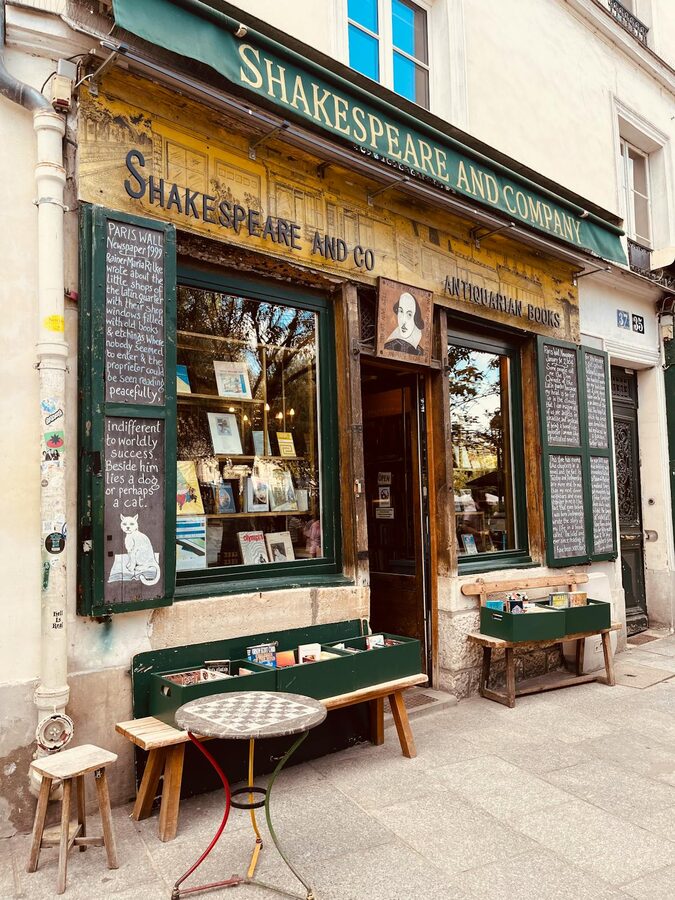
The Latin Quarter starts the moment you cross the bridge to the Left Bank. Shakespeare and Company, the legendary English bookshop, is literally across the street from Notre Dame’s south side. Grab a book, grab a crepe from a stall on Rue de la Huchette, and sit in the little park facing the cathedral’s apse.
If You Loved Notre Dame
If the Gothic architecture and the history left you wanting more, Paris has plenty to continue the thread. The Musee d’Orsay is a 15-minute walk and houses the Impressionists who painted this exact neighbourhood when it looked very different. Montmartre has Sacre-Coeur at its summit — a different architectural era but the same impulse to build something impossibly beautiful on a hilltop. And if you want to see another medieval island that shaped a nation, Mont Saint-Michel is a full-day trip from Paris that pairs perfectly with a Notre Dame visit — same Gothic ambition, completely different setting.
For an evening after your cathedral day, a Seine dinner cruise will take you past Notre Dame lit up at night, which is a memory that tends to stick.