
The British Museum offers a remarkable exploration of history, from the renowned Rosetta Stone to the opulent Anglo-Saxon treasures of Sutton Hoo. Visitors can explore the captivating world of ancient Egypt, uncover the mysteries of hieroglyphics, and marvel at the intricate craftsmanship that reveals the beliefs and rituals of bygone civilizations. With so much to discover, the museum promises an enriching and unforgettable experience for all who step through its doors.
- Key Points
- Tour Overview and Pricing
- Rosetta Stone: Deciphering Egyptian Hieroglyphics
- Parthenon Sculptures: Elgin Marbles Controversy
- Ancient Egyptian Galleries: Mummies and Burial Practices
- Sutton Hoo: Anglo-Saxon Burial Treasures
- Winged Bulls of Khorsabad: Guarding Assyrian Palaces
- Exploring the Great Court and Guided Insights
- Tour Logistics and Important Information
- Frequently Asked Questions
- Can I Bring My Own Food and Drinks on the Tour?
- Is There a Dress Code for the Tour?
- Do I Need to Bring Any Special Equipment?
- How Do I Get to the Meeting Point?
- Can I Take Photos During the Tour?
- The Sum Up
- More Museum Experiences in London
- More Tour Reviews in London
- Still browsing? Here are more London experiences we've covered recently
Key Points
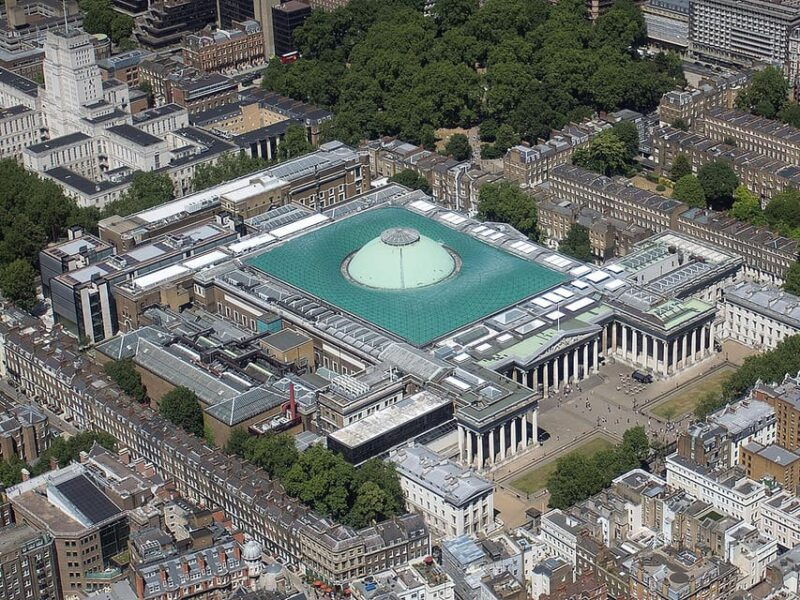
- The British Museum offers guided tours lasting 2 hours, costing between $68.94 and $78.34 per person, with up to 12% savings available.
- The Rosetta Stone is a crucial artifact for deciphering Egyptian hieroglyphics, inscribed with the same text in three scripts and dating back to 196 BC.
- The Parthenon Sculptures, also known as the Elgin Marbles, are at the center of an ongoing debate over their rightful ownership between Greece and Britain.
- The museum’s Ancient Egyptian galleries showcase remarkably preserved mummies and burial artifacts, including funerary masks, canopic jars, and symbolic objects.
- The Sutton Hoo collection features treasures from a 7th-century Anglo-Saxon ship burial site, offering insights into opulent rituals and elite culture.
Tour Overview and Pricing
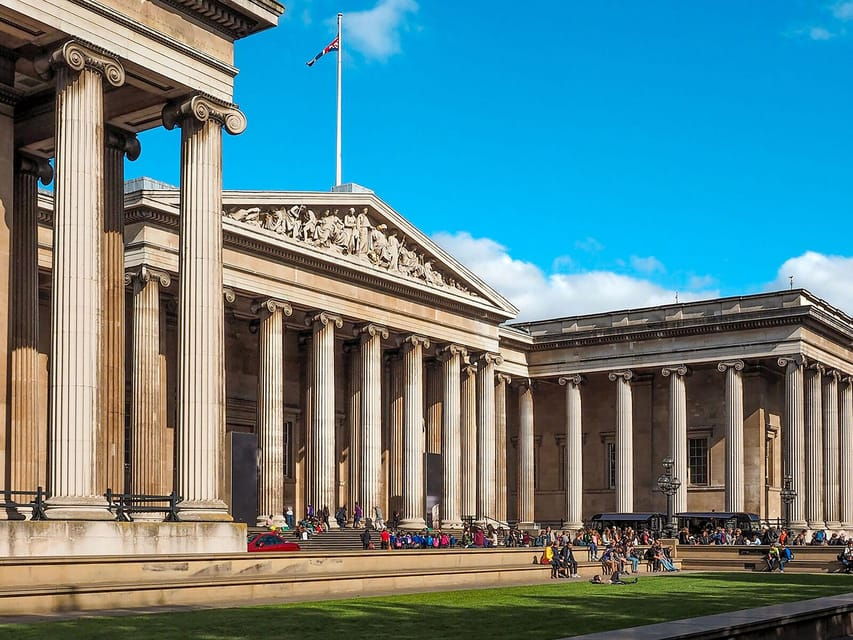
A guided tour of the British Museum lasts 2 hours and costs between $68.94 and $78.34 per person.
Customers can save up to 12% on the ticket price. The tour offers free cancellation up to 24 hours in advance for a full refund. Guests can also reserve their spot and pay later.
Up to 12% savings on tickets, free cancellation 24 hours in advance, reserve your spot and pay later.
The tour begins at the museum’s main entrance after security checks, and guests are advised to arrive 15 minutes early.
The tour isn’t suitable for wheelchair users, but online support is available if the selected time slot is unavailable.
Museum hopping your thing? Check out these other cultural spots we've reviewed in London
Rosetta Stone: Deciphering Egyptian Hieroglyphics
The Rosetta Stone is a crucial artifact for deciphering Egyptian hieroglyphics. This ancient stone slab, dating back to 196 BC, is inscribed with the same text in three different scripts: hieroglyphic, demotic, and Greek. This allowed scholars to finally crack the code of hieroglyphics, a writing system that had long eluded translation.
-
The Rosetta Stone was discovered in 1799 near the town of Rosetta in Egypt.
-
It provided the key to understanding Egyptian hieroglyphics, which had been a mystery for centuries.
-
The inscriptions on the stone describe a decree honoring the Egyptian pharaoh Ptolemy V.
-
Studying the Rosetta Stone allowed researchers to decipher the meaning of Egyptian hieroglyphic symbols.
-
This breakthrough unlocked a wealth of knowledge about ancient Egyptian culture, history, and language.
Parthenon Sculptures: Elgin Marbles Controversy
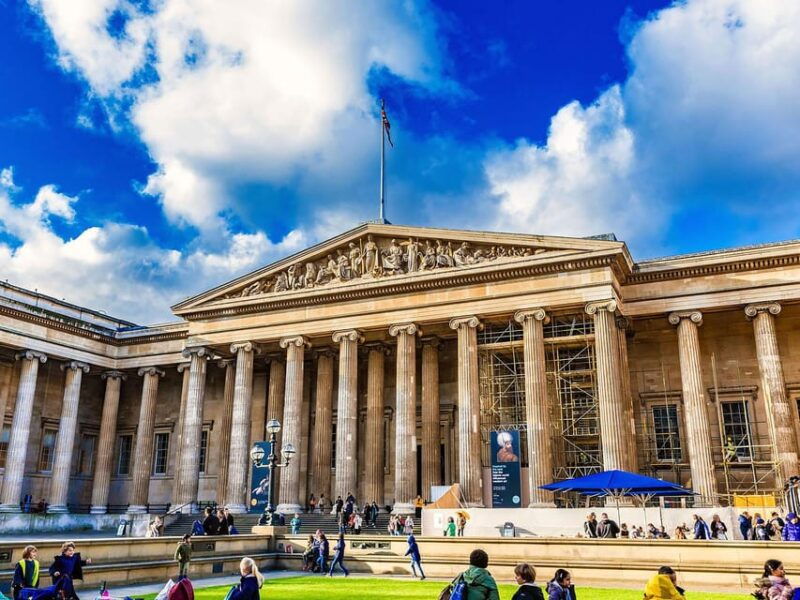
Alongside the Rosetta Stone, another iconic British Museum artifact that has sparked much debate and controversy is the Parthenon sculptures, also known as the Elgin Marbles. Removed from the Parthenon in Athens by Lord Elgin in the early 19th century, these ancient Greek marble sculptures are the subject of an ongoing dispute over their rightful ownership. The table below outlines key information about this contentious issue:
| Perspective | Argument |
| — | — |
| Greece | The sculptures should be returned as they are part of Greece’s cultural heritage. |
| Britain | The sculptures were legally acquired and the British Museum is the best place for their preservation and display. |
| Experts | There are merits to both sides, and a compromise solution should be explored.
Ancient Egyptian Galleries: Mummies and Burial Practices
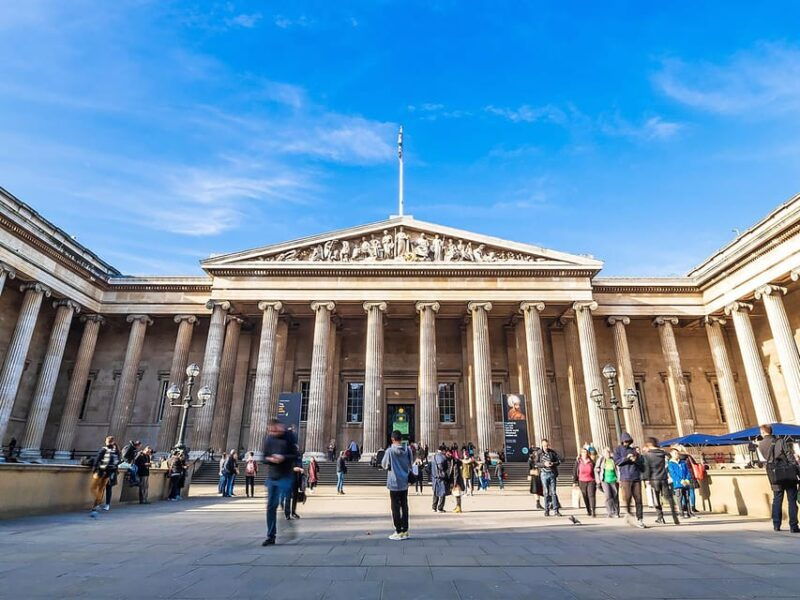
Although the British Museum boasts an impressive collection of ancient Egyptian artifacts, its mummy galleries undoubtedly captivate visitors.
The museum’s Egyptian galleries showcase:
Remarkably preserved mummies, intricate funerary masks, canopic jars, and symbolic objects that offer a window into ancient Egyptian burial practices and beliefs.
-
Remarkably preserved mummies, offering a window into ancient burial practices and beliefs.
-
Intricate funerary masks and coffins, adorned with hieroglyphics and depictions of deities.
-
Canopic jars that housed the deceased’s internal organs for the afterlife.
-
Amulets, scarabs, and other symbolic objects buried with the mummies.
-
Detailed information on the mummification process and its religious significance in ancient Egyptian culture.
These mummy exhibits provide a fascinating and immersive glimpse into the mysteries of the ancient Egyptian world.
More Great Tours NearbySutton Hoo: Anglo-Saxon Burial Treasures
One of the museum’s most captivating collections is the trove of Anglo-Saxon burial treasures from Sutton Hoo.
The 7th-century ship burial site revealed a wealth of ornate artifacts, including an intricate helmet, extravagant jewelry, and ceremonial regalia.
These finds provide a rare glimpse into the opulent rituals and elite culture of the Anglo-Saxons.
Visitors can admire the stunning craftsmanship and learn about the beliefs and traditions surrounding royal Anglo-Saxon burials.
The Sutton Hoo collection is a highlight of the museum’s extensive Anglo-Saxon gallery, offering a remarkable window into this pivotal era of British history.
Winged Bulls of Khorsabad: Guarding Assyrian Palaces
The Winged Bulls of Khorsabad, or lamassu, were majestic Assyrian sculptures that guarded the entrances to King Sargon II‘s palace in ancient Mesopotamia.
These colossal, human-headed mythical beasts were carved from stone and stood as sentinels, symbolizing power, protection, and divine authority.
-
Impressive in scale, the lamassu measured up to 4.5 meters tall.
-
Their bodies were that of a bull, with the head of a human.
-
Massive wings adorned their backs, conveying their supernatural strength.
-
Intricate details were carved into the sculptures, showcasing the skilled craftsmanship of Assyrian artisans.
Today, the Winged Bulls of Khorsabad are housed in various museums, offering visitors a glimpse into the grandeur of the ancient Assyrian empire.
Exploring the Great Court and Guided Insights
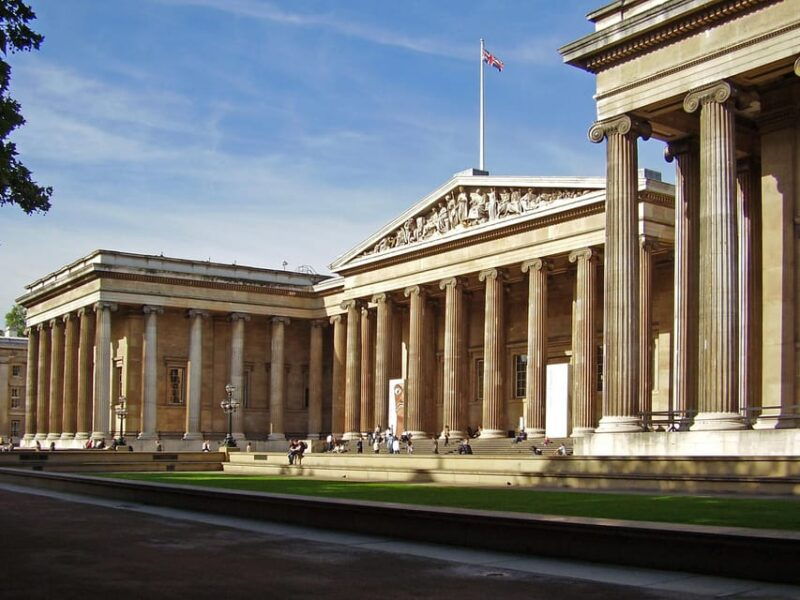
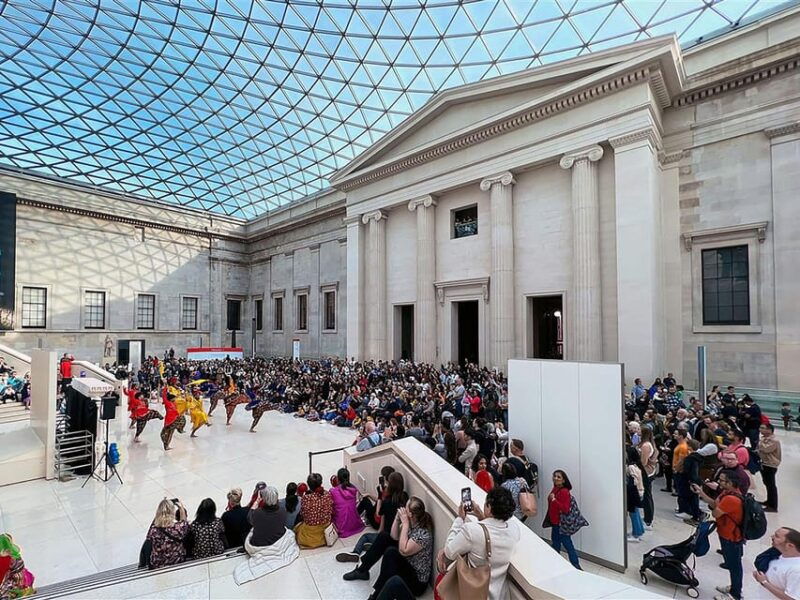
After passing through the security checks, visitors are greeted by the stunning Great Court – the largest covered public square in Europe.
Its soaring glass roof provides an awe-inspiring entrance to the museum. A licensed guide leads the tour, sharing insights into the museum’s vast collection.
The guide’s storytelling brings the artifacts to life, revealing their historical significance. Visitors explore the galleries, marveling at iconic pieces like the Rosetta Stone and Parthenon sculptures.
The guide’s captivating storytelling breathes life into the artifacts, unveiling their profound historical importance. Visitors marvel at legendary treasures like the Rosetta Stone and Parthenon sculptures.
The guide’s expertise ensures an immersive and informative experience, guiding participants through the museum’s treasures.
Tour Logistics and Important Information
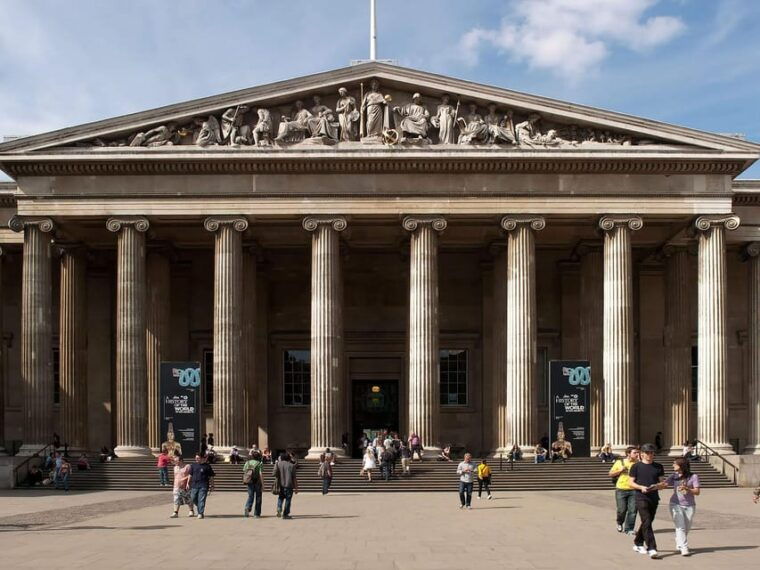
To start the tour, visitors need to meet at the main entrance stairs after passing through security checks, arriving 15 minutes early.
The tour is entirely on foot, so comfortable shoes are recommended. It’s important to note the tour isn’t suitable for wheelchair users.
If the selected time slot is unavailable, customers will be rescheduled to the next available slot on the same day.
Plus, online support is available at boarding, and there’s an optional Skip the Line option to enter through a fast, priority queue.
Lastly, customers should be aware that last-minute bookings may result in being placed on the following day if seats are unavailable.
Frequently Asked Questions
Can I Bring My Own Food and Drinks on the Tour?
No, outside food and drinks are not permitted on this tour. Guests are advised to consume refreshments before or after the tour, as the museum has cafes and restaurants available on-site.
Is There a Dress Code for the Tour?
There’s no strict dress code for the British Museum tour. Visitors should wear comfortable, weather-appropriate clothing and shoes. Casual attire is fine, but the tour involves a lot of walking, so dressing for comfort is recommended.
Do I Need to Bring Any Special Equipment?
You don’t need any special equipment for the tour. Just wear comfortable shoes, as you’ll be on your feet for the 2-hour guided exploration of the museum’s highlights. Bring your camera to capture the impressive artifacts.
How Do I Get to the Meeting Point?
The meeting point is at the main entrance stairs after security checks. Arrive 15 minutes early. The tour is on foot, so comfortable shoes are recommended. Getting to the meeting point is the responsibility of the customer.
Can I Take Photos During the Tour?
Yes, visitors can take photos during the guided tour of the British Museum, except in areas where photography is prohibited for preservation purposes. The tour guide will provide guidance on appropriate photo-taking opportunities throughout the experience.
The Sum Up
The British Museum offers an exceptional journey through history, showcasing the Rosetta Stone, Ancient Egyptian galleries, Sutton Hoo treasures, and more. These artifacts not only showcase intricate craftsmanship but also provide deep insights into the beliefs and rituals of ancient civilizations, making for an enriching and educational experience for visitors. The museum’s diverse collection and guided insights ensure an engaging and informative visit.
You can check availability for your dates here:More Museum Experiences in London
- Gallery Explorer: The National Gallery Children’s Art Tour
- London: Tickets for Moco Modern & Contemporary Art Museum
- London: Official Natural History Museum Tour – Architecture
- London: British Museum + Guided Tour + Priority Entry
- London: Natural History Museum + Guided Tour+ Priority Entry
- Natural History Museum e Kensington Garden
More Tour Reviews in London
- Heathrow Airport to and from Central London – Private Transfer
- London Ghost Walking Tour: Tales of Terror & Mystery
- London Instagram Photoshoot – 20 edited photos
- London: The Fun Tour with Live Theater and Comedy
- London: Asian Noodles Masterclass with Wine
- London: Cambridge Day Trip with Great St Mary’s Church Tower
Still browsing? Here are more London experiences we've covered recently
- Heathrow Airport to and from Central London – Private Transfer
- You’ll Love These 14 Wine Tours In London
- 14 Top-Rated London Walking Tours
- The 14 Top Food Tours In London: Which Is Best?
- London’s 14 Best Shopping & Market Tours
- 11 Top Tours & Experiences In London (With Reviews & Prices)
- Top 14 Workshops & Classes In London
- We Rank London’s 3 Top Vegan & Vegetarian Tours
- Which London Full-Day Tours To Choose? We Rank The 14 Best
- 14 Must-Try Historical Tours In London
- The 13 Most Popular Tours In London
- 6 Of The Best Lunch Experiences In London