
The Loire Valley has roughly 300 chateaux, and on a one-day trip from Paris you will see exactly two of them properly. Maybe three if your bus driver is feeling ambitious and you eat lunch in the coach. That is the honest trade-off of a day trip: the Loire is 200 km from Paris, a full day out and back is 9-10 hours door-to-door, and realistically you get 4-5 hours on the ground.
Pick your castles carefully.
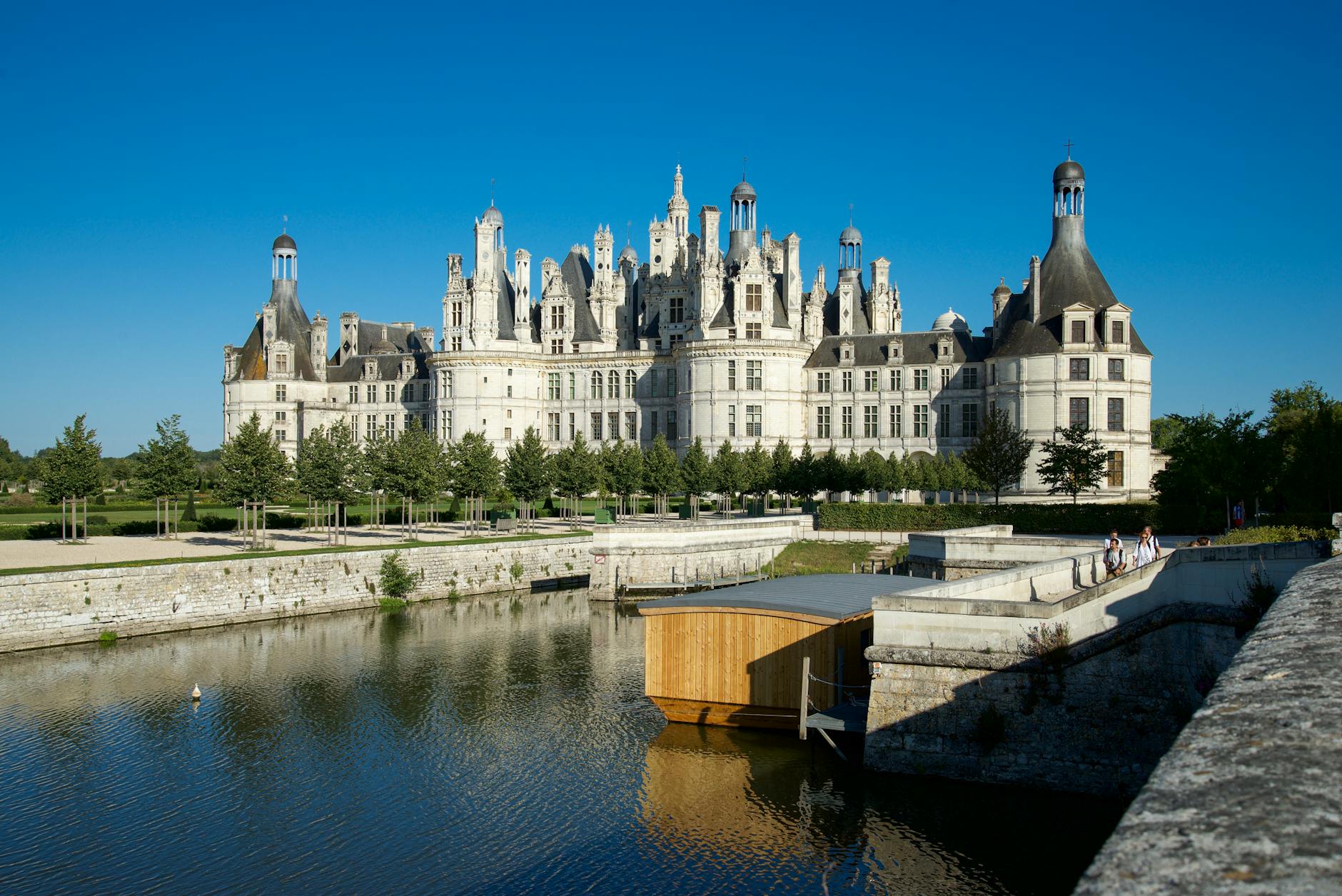
The good news is that the two you should pick are obvious: Chambord and Chenonceau. They are the two most famous, the two most architecturally distinctive, and by sheer coincidence they are also the two that every established Loire day trip builds around. You see Chambord (the big hunting lodge with the 440 rooms and the Leonardo staircase) in the morning, you have lunch somewhere in between, and you see Chenonceau (the one built across the river) in the afternoon.
That is the standard sequence and it works because the drive between them is about 45 minutes of pretty countryside.
The bad news is that the Loire is not a place you can properly understand in a day. A week in the Loire would still leave you feeling rushed. A day lets you see the greatest hits and say you have been there, which is sometimes all your trip has time for.
This guide tells you how to do the one-day version well, which tour is worth booking, and what you are giving up by not spending 3+ days.
Quick Picks: Loire Valley Day Trips from Paris
Best value bestseller: From Paris: Loire Valley Castles Day Trip with Wine Tasting ($104) — coach tour from Paris, covers Chambord and Chenonceau, lunch not included, optional wine tasting add-on, 1,700+ reviews. The default pick for most first-timers.
If you want lunch included: From Paris: Full-Day Loire Valley Chateaux Tour ($127) — same two castles plus a proper French meal in the middle, 1,200+ reviews. Worth the extra $23 for the food and the calmer pace.
Premium small-group option: From Paris: Small-Group Loire Valley Castles Full-Day Tour ($288) — capped at 8 people, minivan not coach, more flexibility, 240+ reviews. For anyone who hates bus tours on principle.
Time commitment: 11-13 hours door-to-door from central Paris. Leave at 07:00-07:30, back by 19:00-20:00.
Best time to go: May-October (most castles close or reduce hours in winter). September is the sweet spot — weather still warm, crowds thinning, Loire harvest just starting.
- Quick Picks: Loire Valley Day Trips from Paris
- Is a Loire Valley Day Trip Worth It?
- Chambord: The Big One
- Chenonceau: The Castle on the Bridge
- The Tour Options (Ranked)
- From Paris: Loire Valley Castles Day Trip with Wine Tasting
- From Paris: Full-Day Loire Valley Chateaux Tour
- From Paris: Small-Group Loire Valley Castles Full-Day Tour
- How to Get There Independently
- What You Will See (And Miss)
- The Best Time to Go
- Lunch on a Loire Day Trip
- What to Bring
- Common Mistakes
- Is a Loire Day Trip Right For You?
- A Perfect Day Trip Itinerary
- What to Pair the Loire With
- Final Thoughts
- FAQ
- More French Chateaux
Is a Loire Valley Day Trip Worth It?
Short answer: yes, if you cannot spare 2-3 days for a proper Loire trip and you still want to see a famous French castle in person. No, if you have the time to stay in the region overnight — the day trip version is genuinely compressed and you will spend more hours on the bus than in the castles.
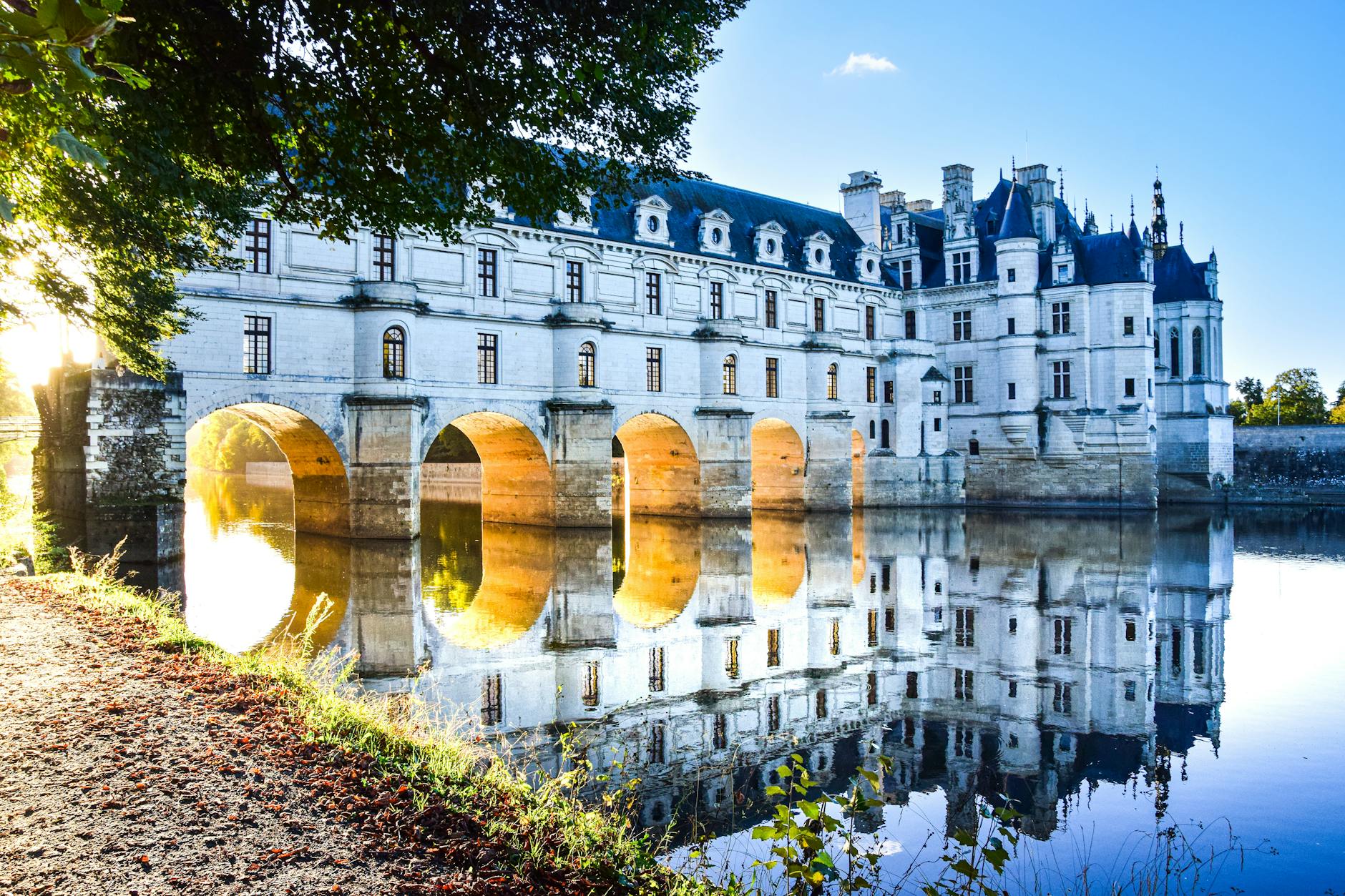
The honest case for the day trip: most people only get 4-7 days in Paris total, the Loire Valley requires committing a full day from that limited pool, and spending that day seeing Chambord and Chenonceau gives you a genuine piece of French history you cannot get anywhere else in the country. Both castles are architecturally unique (Chambord is the largest Renaissance castle in the Loire; Chenonceau is the only major castle built across a river), both are in decent condition, and both are organised for visitor flow in a way that lets a day-tripper actually see them properly.
The honest case against: you will see two castles and nothing else. No Loire Valley wine tasting beyond a sample, no village walks, no proper Amboise stop (most day tours drive past it), no exposure to the quieter castles that serious visitors come for (Villandry, Azay-le-Rideau, Cheverny, Chenonceau’s less famous cousin Beauregard). You will be on the bus for 4+ hours out of the ~11 hour day.
You will be rushed.
My take: do the day trip if you have less than 5 days in Paris. If you have more, rent a car and do a 2-3 day proper Loire trip using Tours or Amboise as a base. The difference in experience is huge.
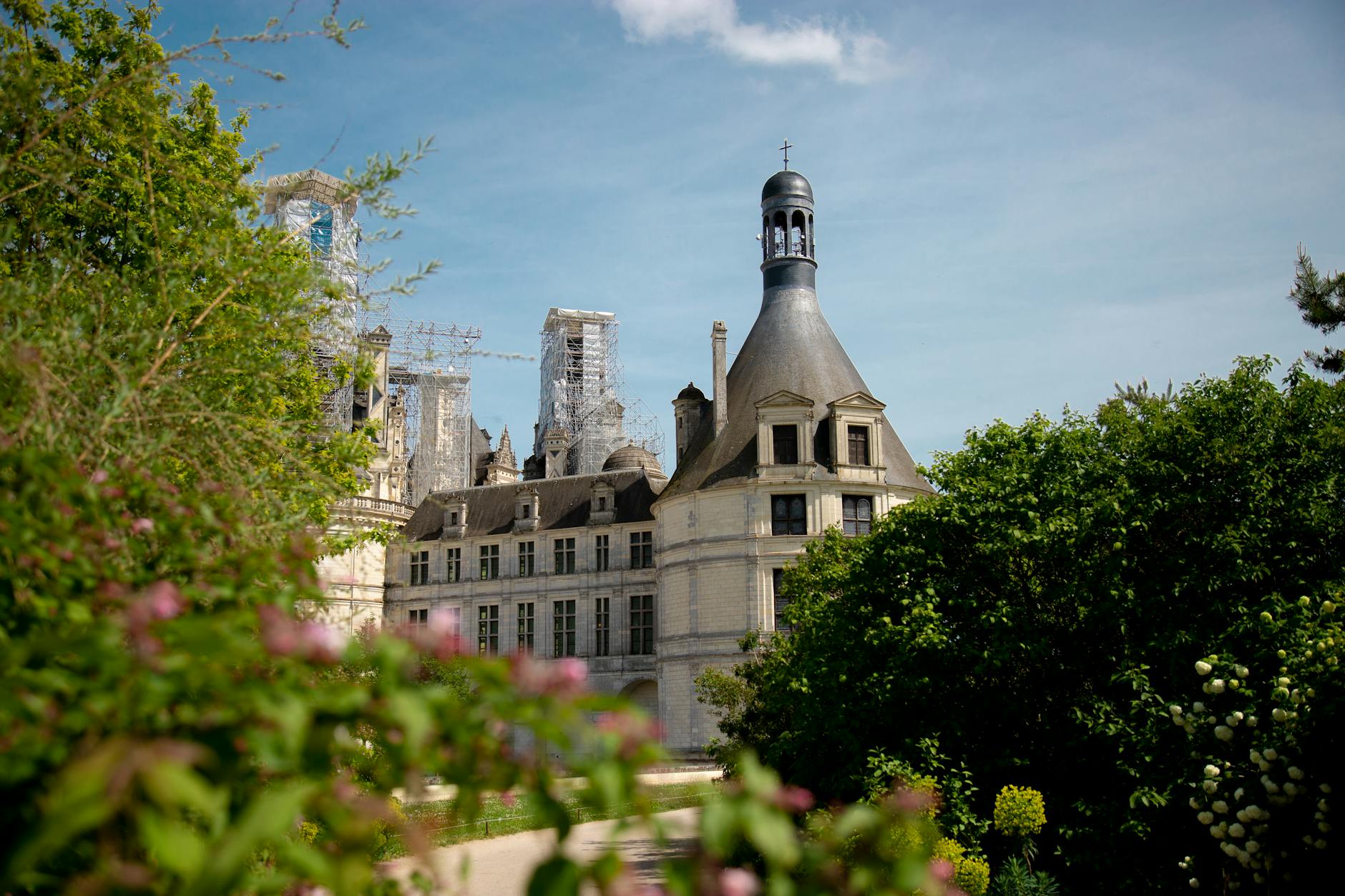
Chambord: The Big One
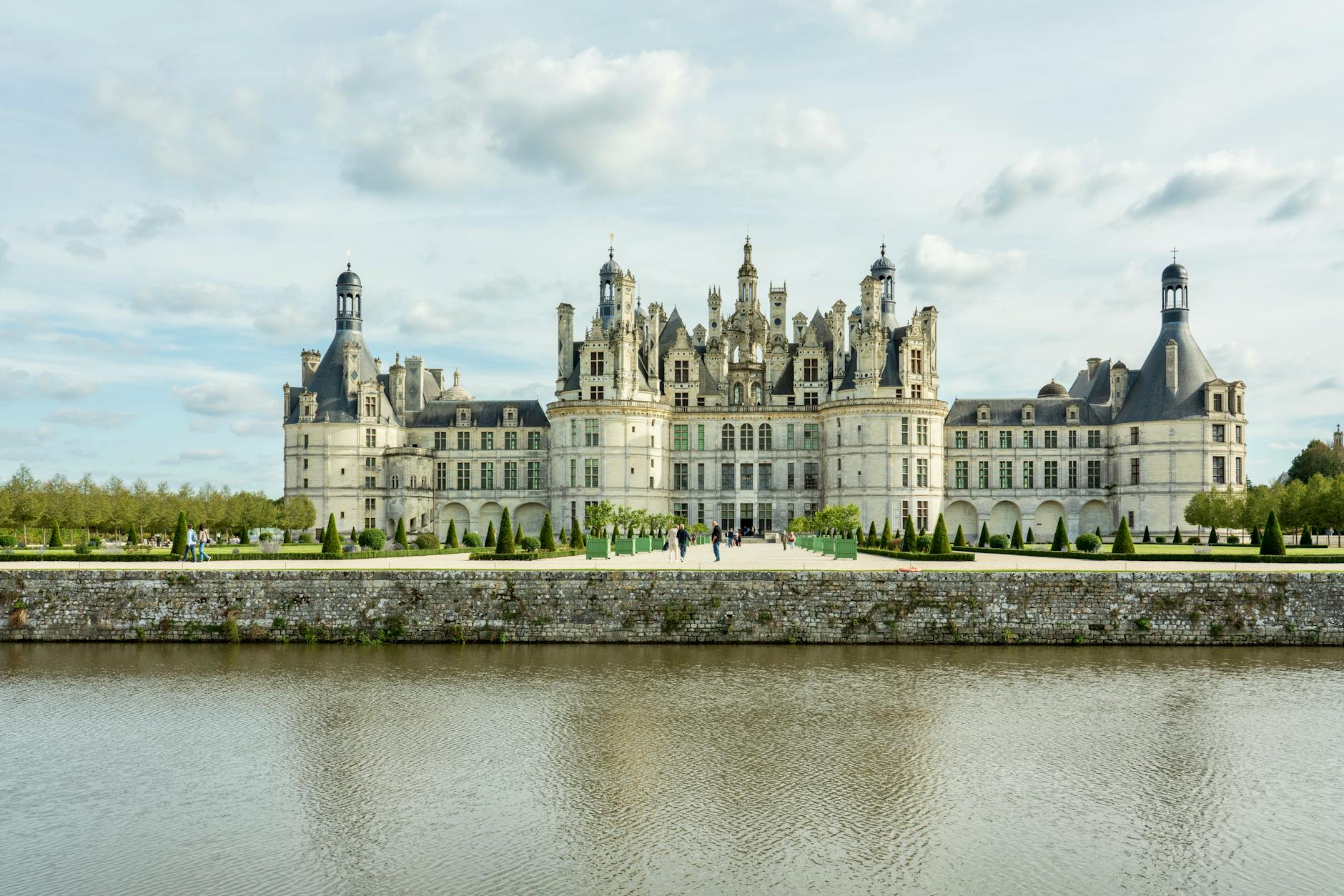
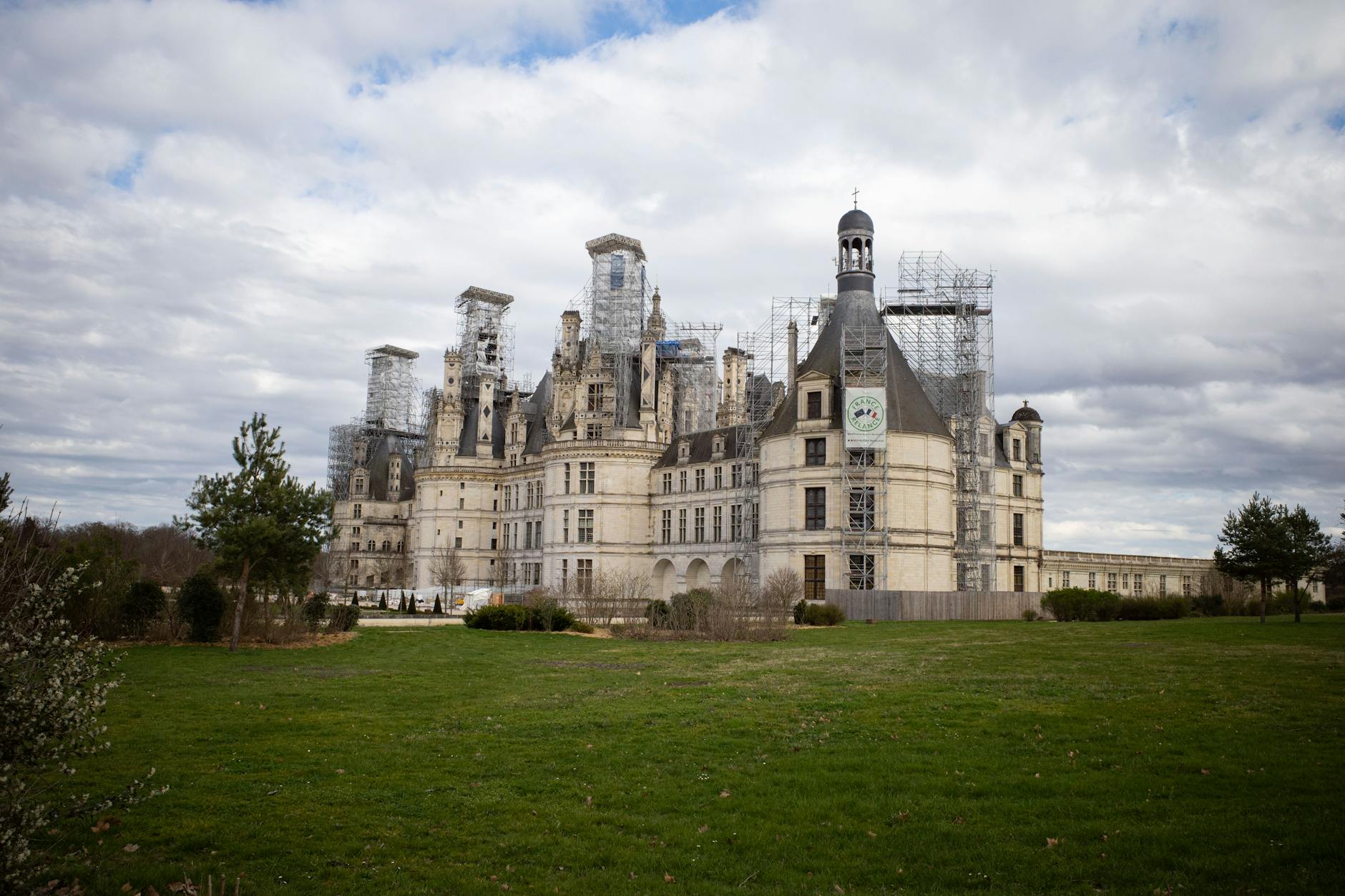
Chambord is the castle everyone comes to the Loire for. It is enormous (more than 440 rooms, 365 chimneys, 83 staircases), it was built by Francis I between 1519 and 1547 as a hunting lodge that was never really finished, and it houses one of only two known Leonardo da Vinci-designed architectural features in Europe: the famous double-helix central staircase where you can go up without meeting someone coming down.
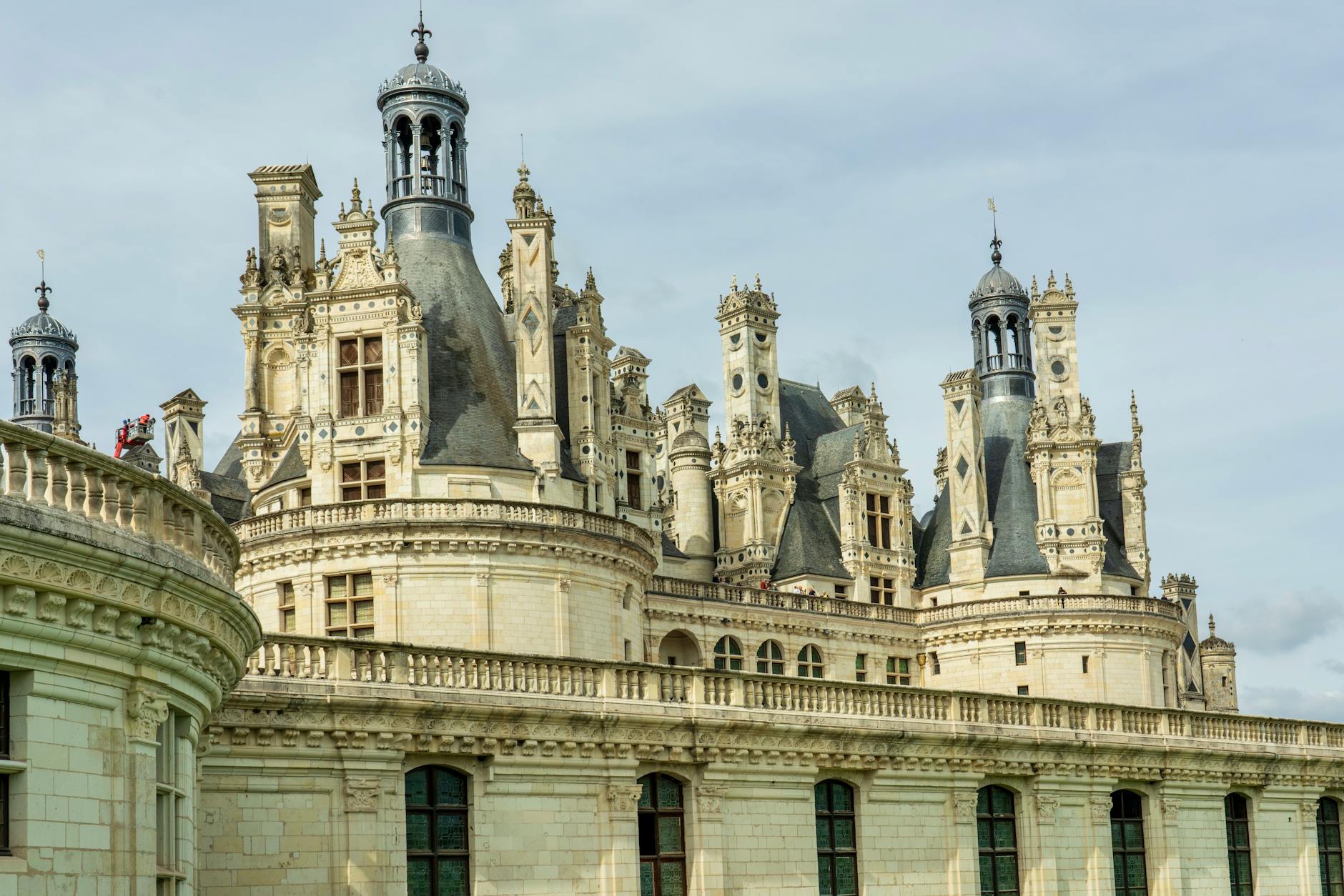
The rooftop terrace is the highlight and it is free with your ticket. You climb the double-helix staircase up through the center of the building (which Leonardo may or may not have actually designed — there is a debate, but he was at the French court when construction started and his notebooks contain similar concepts), and you emerge onto an open-air rooftop terrace surrounded by the chimneys and decorative towers. From the terrace you can see Francis I’s coat of arms carved into the stone of every corner and the massive hunting forest (the largest walled forest in Europe) stretching to the horizon.
Inside, roughly 60 rooms are open to visitors out of the 440-odd. The interior is mostly empty — Chambord was never fully furnished and after the Revolution most of the portable furniture was stripped out. What you do see: the royal apartments, a few ceremonial rooms with period tapestries and cabinet pieces, a kitchen, and the famous staircase central hall.
Most day-trippers spend about 90 minutes inside plus 30 minutes on the rooftop.
Entry ticket: €16 adults, free for under 18. Most day tours include this in the package price. If you go independently, book online at chambord.org to skip the ticket line.
The grounds: massive, free to walk, include a moat, formal French gardens on the east side that were restored in 2017, and hiking paths into the royal forest. Most day trips give you 2.5-3 hours at Chambord, which is enough for the interior + rooftop + a quick walk around the grounds. Not enough for the forest hike.
Chenonceau: The Castle on the Bridge
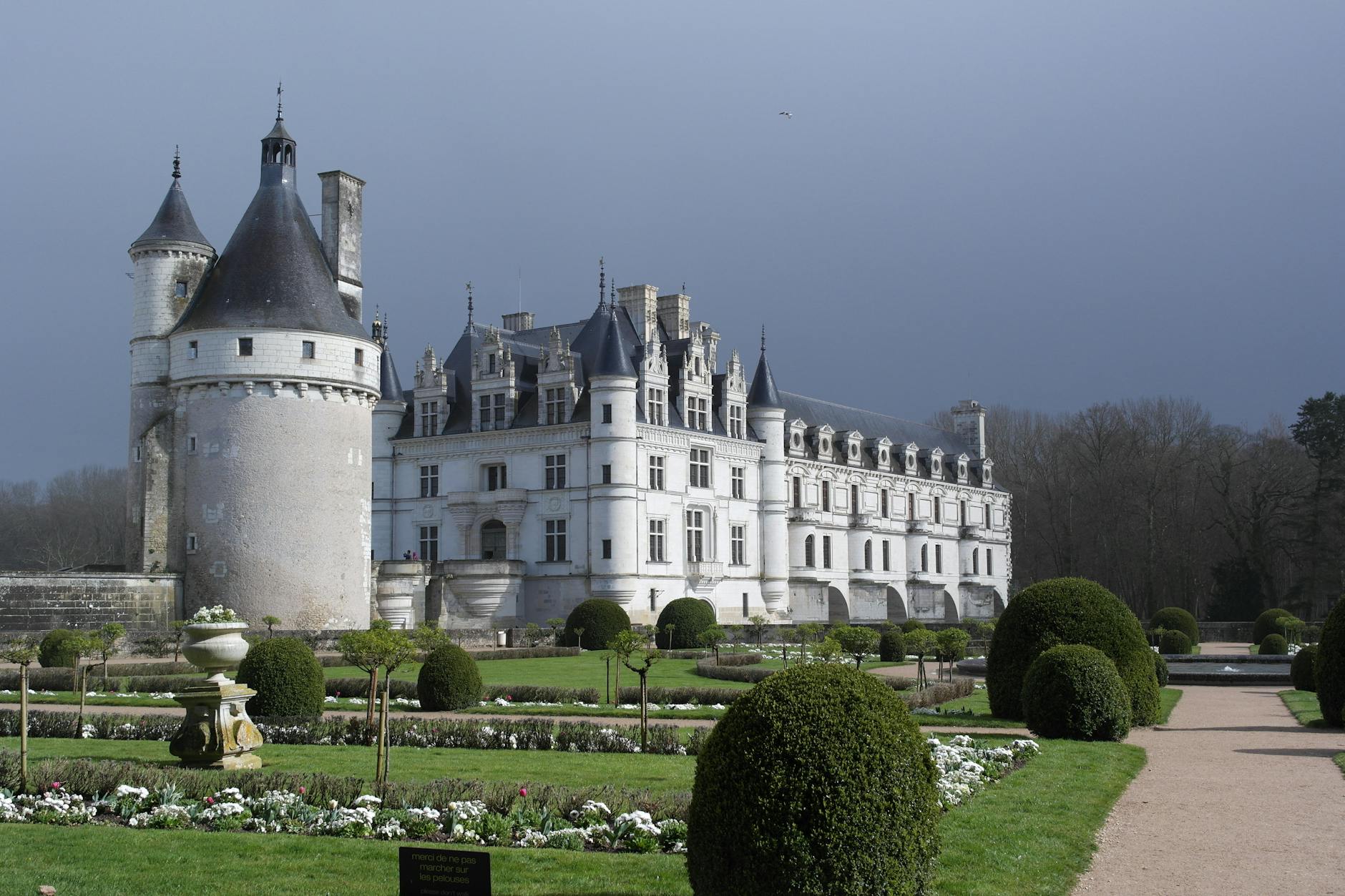
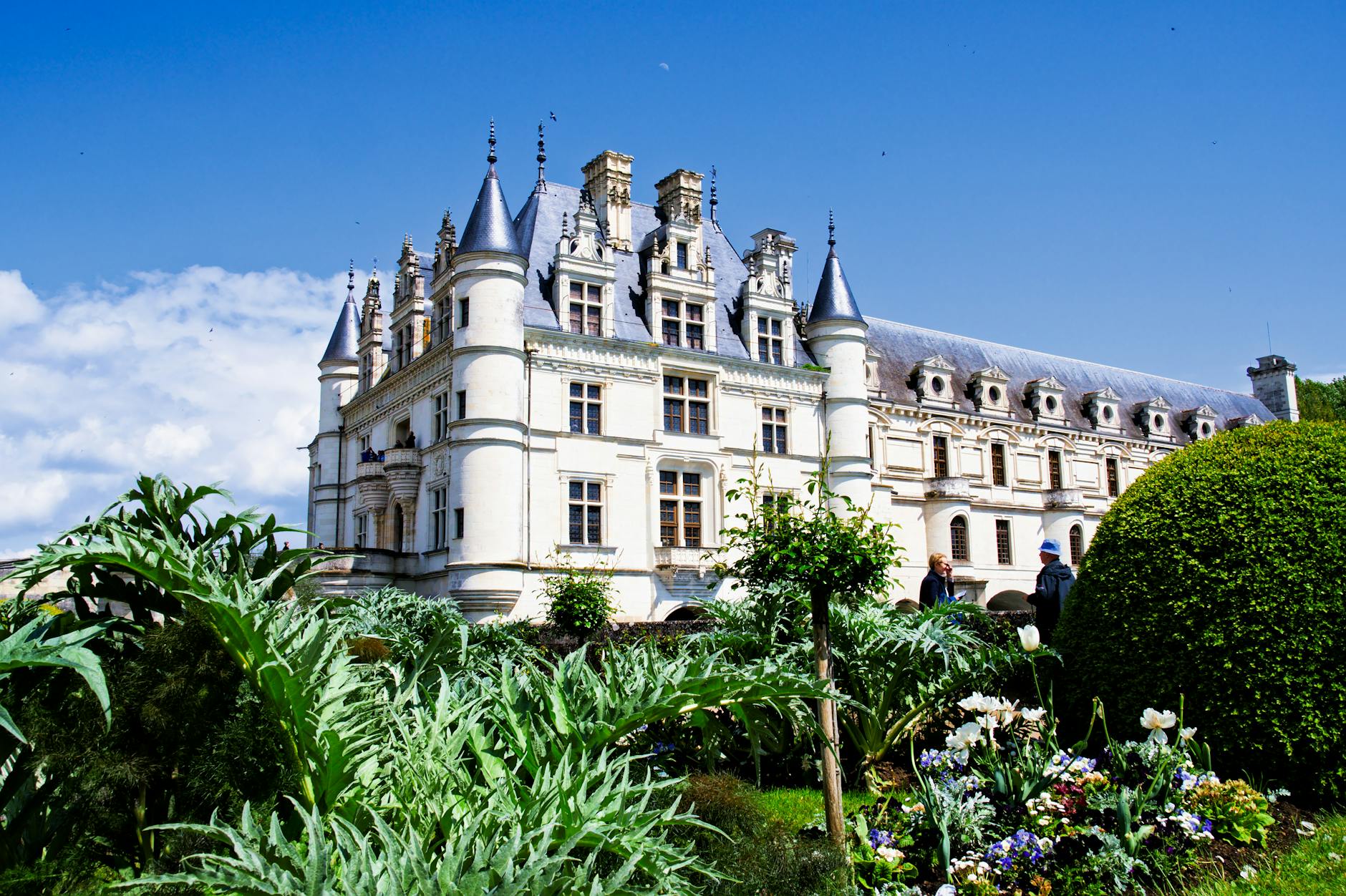
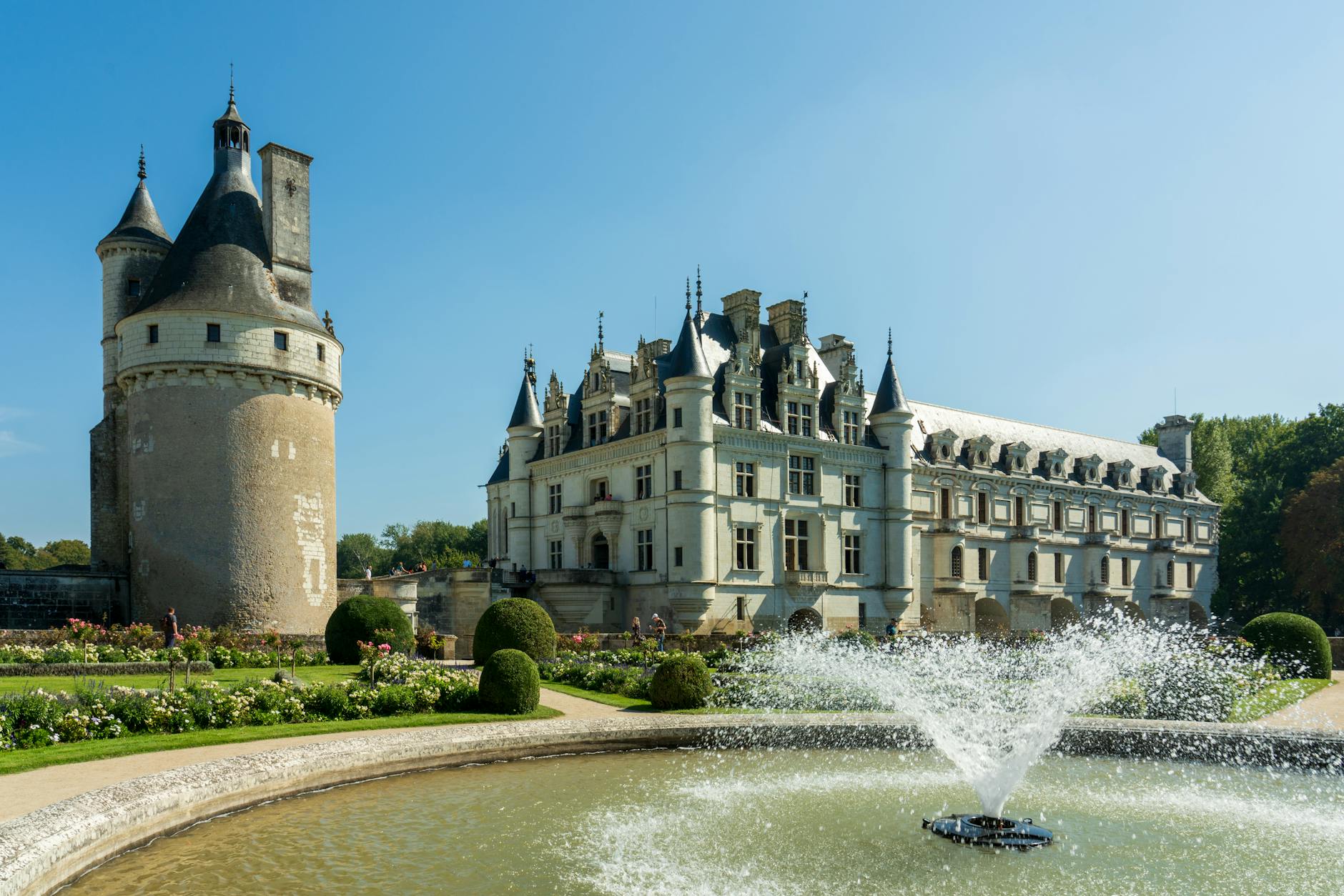
Chenonceau is the more intimate of the two main Loire castles — smaller than Chambord, more elaborately decorated inside, and built in a location that no other French castle can match: directly across the River Cher on a series of stone arches. You walk through the castle and physically cross the river without realising it until you reach the gallery windows on the far side and look down to see water below.
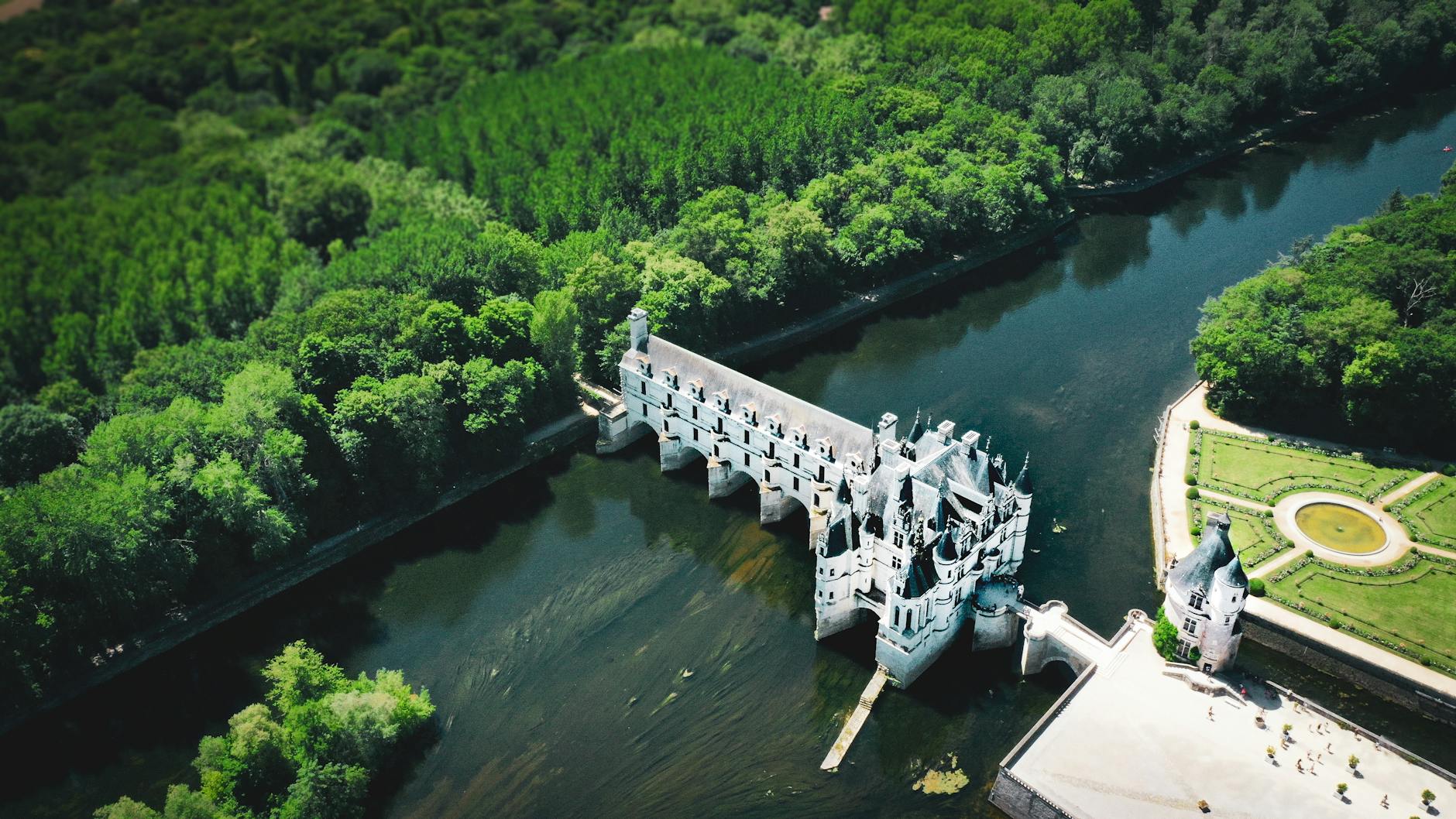
Chenonceau is known as the “castle of the six ladies” because six different powerful women shaped its history: Katherine Briconnet oversaw the 1514 construction while her husband was at war; Diane de Poitiers received it as a gift from Henri II in 1547 and built the original arched bridge across the river; Catherine de Medici seized it from Diane after Henri II’s death and added the gallery on top of the bridge; Louise of Lorraine mourned her murdered husband there in white robes for the rest of her life; Louise Dupin saved it from destruction during the Revolution; and Madame Pelouze restored it in the 1870s. The castle feels more lived-in than Chambord partly because of this continuous feminine history — there is art, furniture, and detail on almost every surface inside.
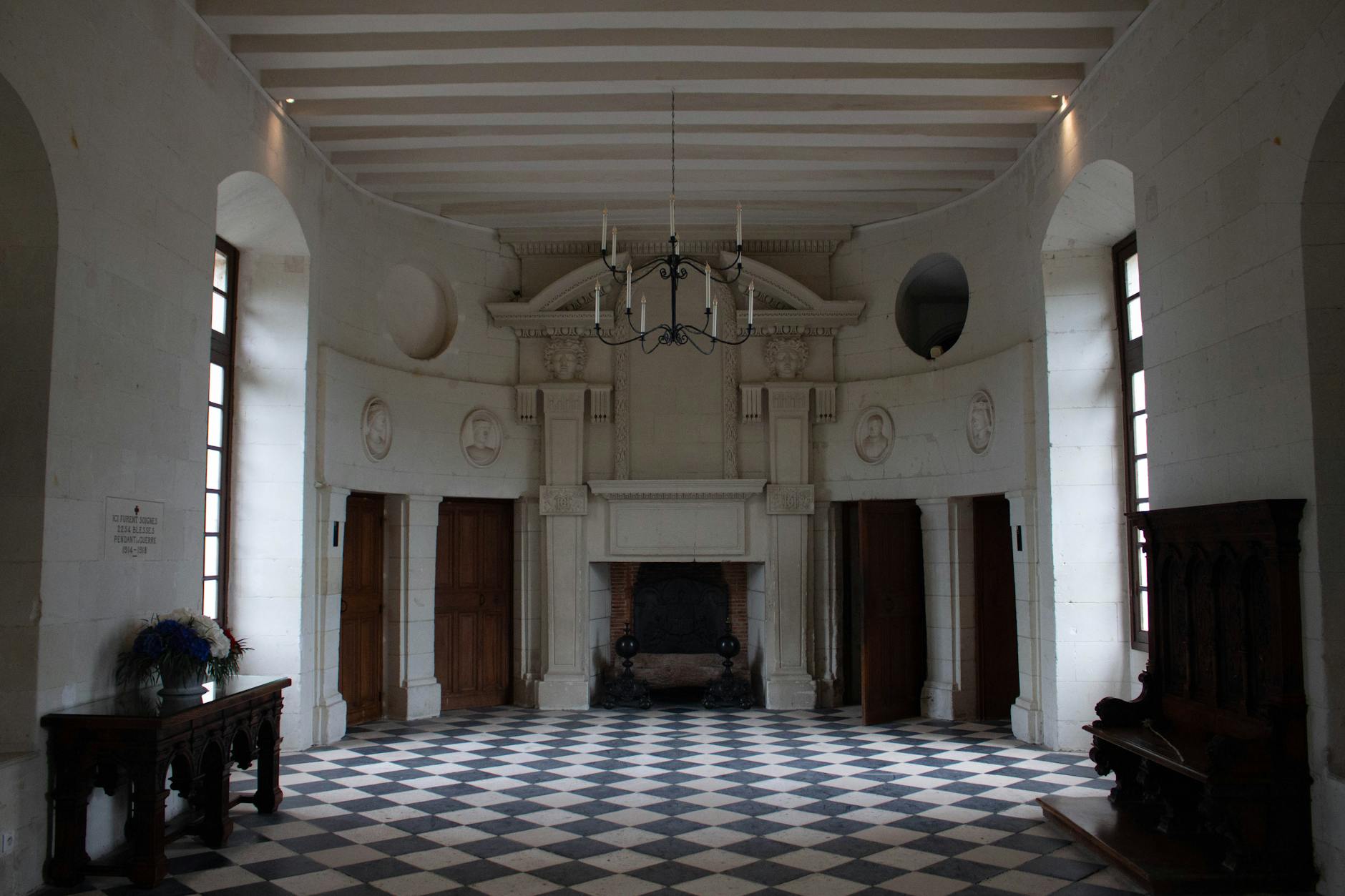
The highlight inside: the 60-metre-long gallery built across the bridge. Catherine de Medici added this in 1576 as a ballroom-slash-corridor, and it is still one of the most dramatic interior spaces in French Renaissance architecture — checkerboard stone floors, white stone walls, tall windows on both sides looking down at the river running underneath. During WWI it was converted into a military hospital and more than 2,000 wounded soldiers were treated there.
During WWII the gallery’s southern doors on the Vichy-France side were used to smuggle refugees from Nazi-occupied northern France — the river was literally the border.
Other standout rooms: the kitchens are built into the piers that hold up the bridge section, so they are literally underwater-level and have a hatch that opens onto the river (they used to receive fresh fish directly from the water). The Diane de Poitiers bedroom still has her original 16th-century canopy bed. The Catherine de Medici bedroom has her emerald-green wall hangings and portraits of her children.
Entry ticket: €17 adults, includes audio guide, €14 for students/under 27, free under 7. Tour packages include this.
Most day trips give you 2-2.5 hours at Chenonceau. That is enough for the interior, the gardens, and the wax museum (small but charming — it tells the story of the six ladies with period figures). It is not enough for a slow lunch in the castle restaurant or a walk to the nearby village of Chenonceaux (confusingly spelled with an -x at the end, unlike the castle).
The Tour Options (Ranked)
From Paris: Loire Valley Castles Day Trip with Wine Tasting
Price: $104 · Duration: 12 hours · Provider: GetYourGuide
The default option. Pickup at 07:15 from central Paris (usually Rue de Rivoli or near Opera), coach transfer to the Loire, morning at Chambord with skip-the-line entry, lunch break in a Loire village (not included in price — bring €15-20 for a casual meal), afternoon at Chenonceau, optional wine tasting stop at a Loire vineyard, return to Paris around 19:30. Entry tickets to both castles included.
Live English-speaking guide on the bus. 1,700+ reviews — the most popular Loire day trip SKU. Good value for first-timers.
Best for: First-time visitors, budget travellers, couples, anyone who wants the classic two-castle combo without overthinking it.
From Paris: Full-Day Loire Valley Chateaux Tour
Price: $127 · Duration: 12-13 hours · Provider: GetYourGuide
The comfortable upgrade. Same two castles (Chambord and Chenonceau) but with a proper 3-course French lunch included at a local restaurant in the Loire, plus a slower pace and smaller group than the budget version. Pickup around 07:00, return around 20:00.
Live guide, skip-the-line tickets, coach transport. 1,200+ reviews. Worth the extra $23 for the meal alone — you will spend nearly €20 on a quick village lunch otherwise and the restaurant stop is less rushed than the self-organised version.
Best for: Travellers who care about food, couples doing an anniversary or celebration day, anyone who prefers a slower pace.
From Paris: Small-Group Loire Valley Castles Full-Day Tour
Price: $288 · Duration: 12-13 hours · Provider: GetYourGuide
The premium pick. Maximum 8 passengers, minivan instead of coach, more flexibility on timing and lunch choice. Visits Chambord, Chenonceau, and either Amboise or Cheverny depending on the driver-guide’s plan for the day.
Lunch at a local restaurant included. More walking-around time at each castle because small groups move faster. 240+ reviews. Significantly more expensive but the difference in experience versus a 50-person coach is substantial.
Best for: Couples or small groups, repeat France visitors, anyone who dislikes bus-tour crowds, travellers on an elevated budget.
How to Get There Independently
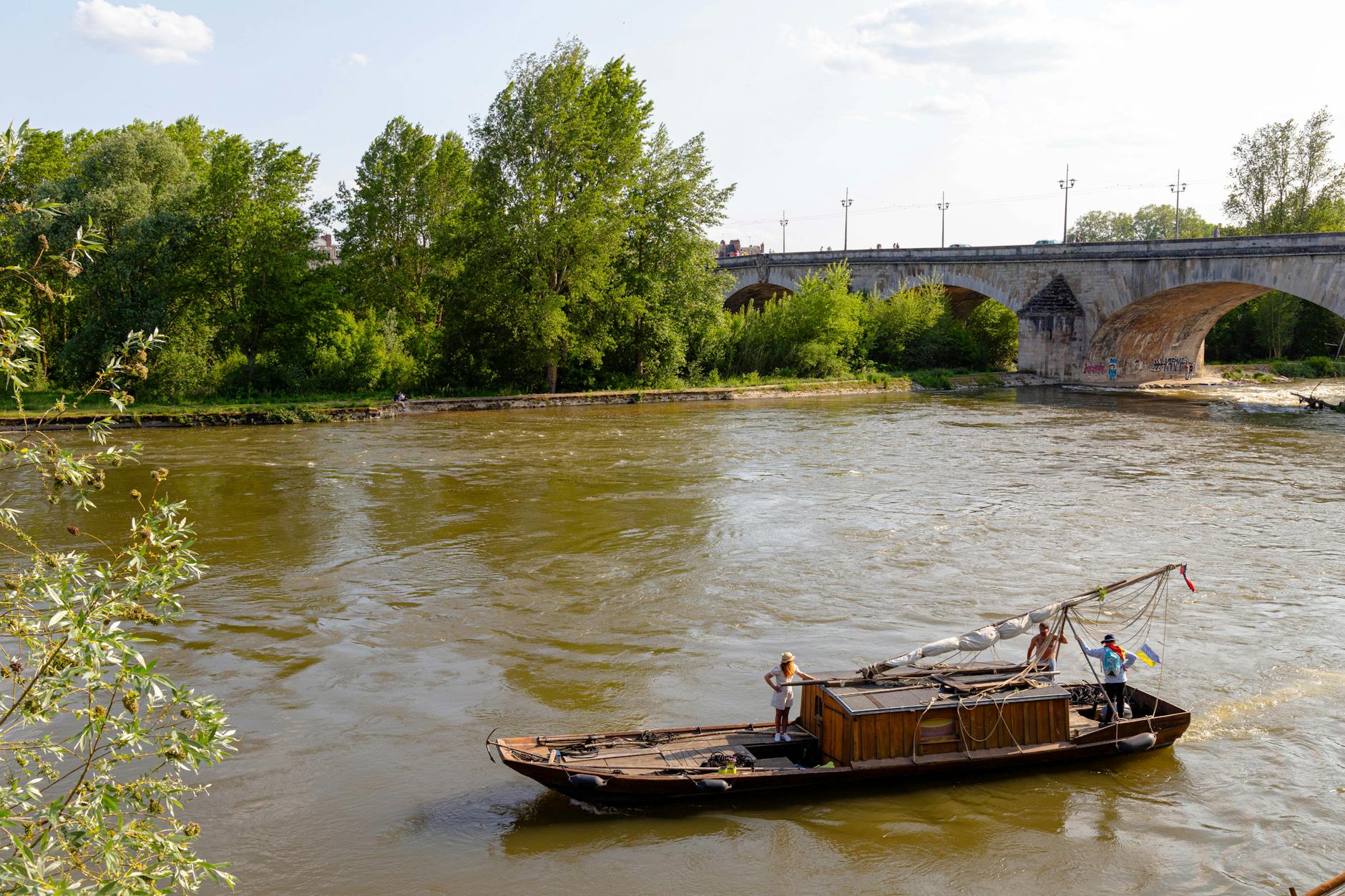
You can do the Loire independently, but it is more effort than most day-trippers want to invest. Here is how the options stack up.
Train + shuttle: TGV from Paris Gare Montparnasse to Saint-Pierre-des-Corps (near Tours), about 1 hour 15 minutes, €40-80 each way depending on how far ahead you book. From Saint-Pierre-des-Corps there is a local train to Chenonceaux station (25 minutes, €8) and a shuttle bus to Chambord (runs only in peak season, check connections). This works but logistics are fiddly and you will barely make it to both castles in one day without running.
Rental car: pickup in Paris, drive to Chambord (about 2 hours 15 minutes on the A10 motorway), then drive to Chenonceau (about 55 minutes of country road), then back to Paris. Total driving: 5+ hours. Adds tolls (€50 round trip) and parking fees. Fine if you are already renting for other parts of France but not worth renting specifically for a day trip.
Stay overnight in Tours or Amboise: the actually-good option if you have 2 days. Take the TGV from Paris Montparnasse to Tours (1 hour 10 minutes), base yourself there for one night, rent a car or use the local tour operators for two days of castle visits at your own pace. This is what I always recommend to friends who can spare the time. You see 4-6 castles instead of 2, eat real Loire food, and wake up in the region.
For a single-day visit from Paris, the coach tour is genuinely the best option. The logistics are too fiddly to solve yourself in one day and the cost difference versus train+shuttle is minimal once you factor in ticket prices and your time.
What You Will See (And Miss)
A typical Paris day trip covers Chambord and Chenonceau. That is roughly 60% of what most people come to the Loire for. The other 40% you miss:
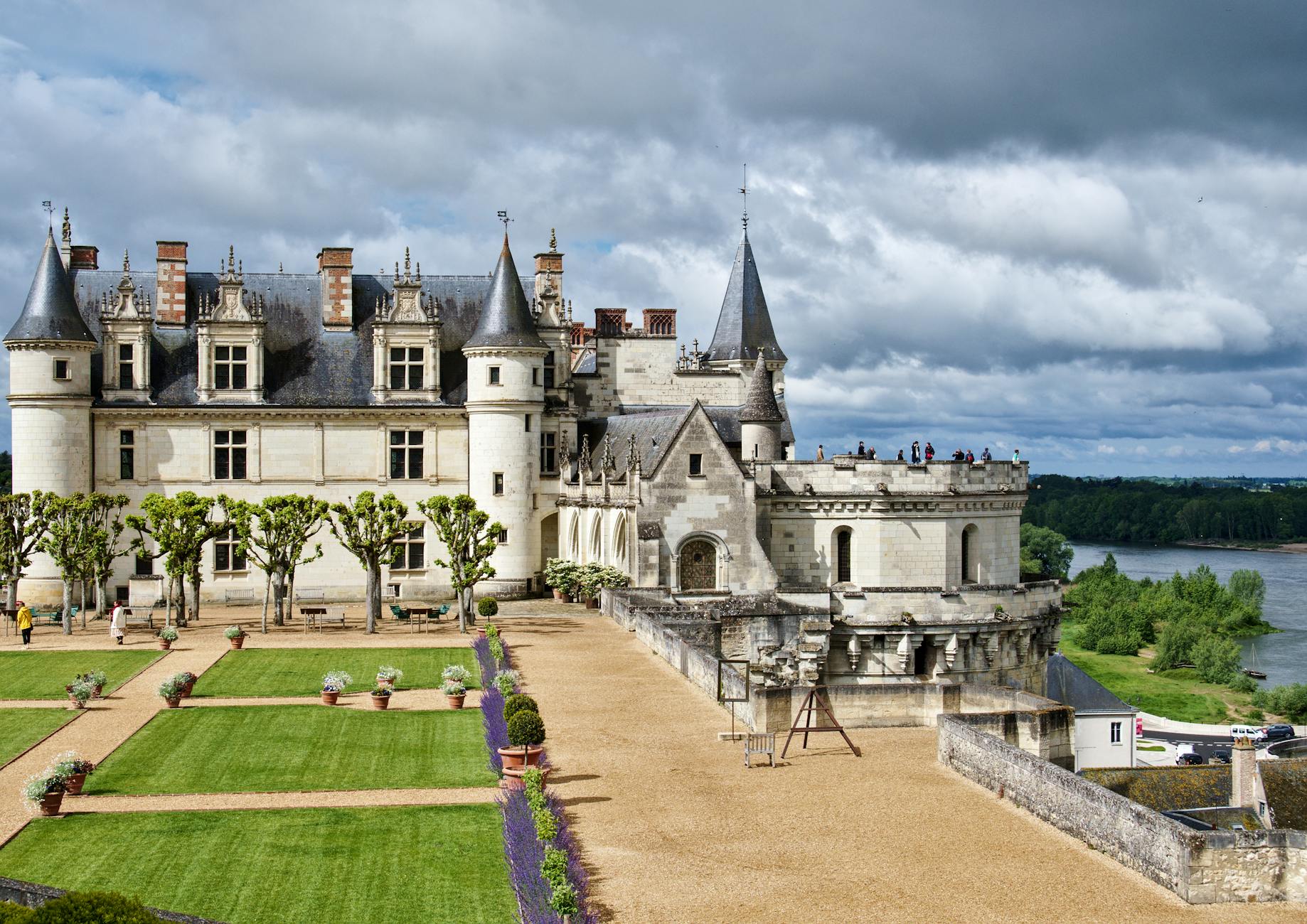
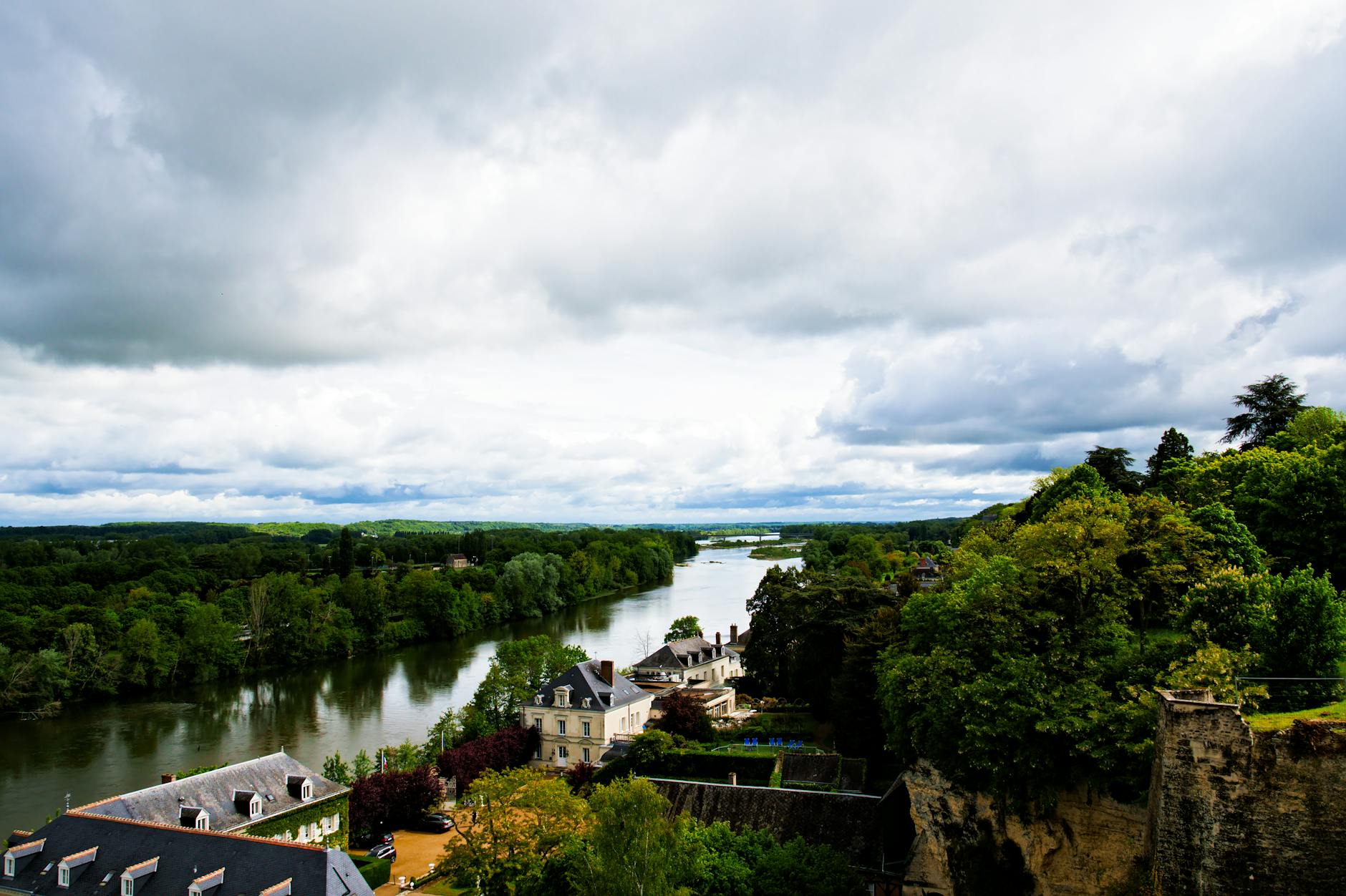
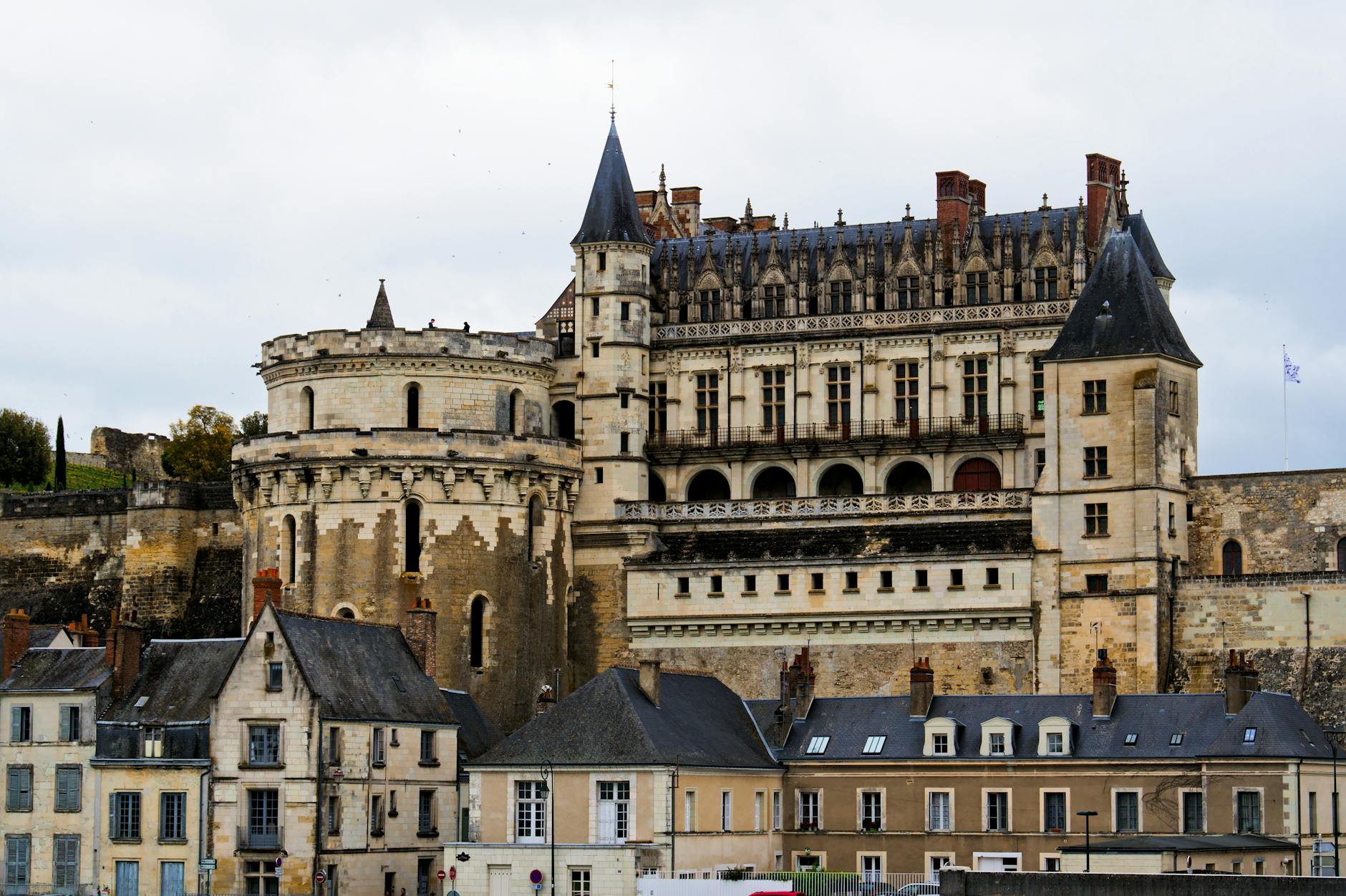
Amboise — home of Leonardo da Vinci’s final years, burial place at the castle chapel. Most day tours drive past without stopping. The Clos Lucé (Leonardo’s actual house, 2km up the road) is a brilliant small museum with working models of his inventions and almost nobody on a day trip gets to see it.
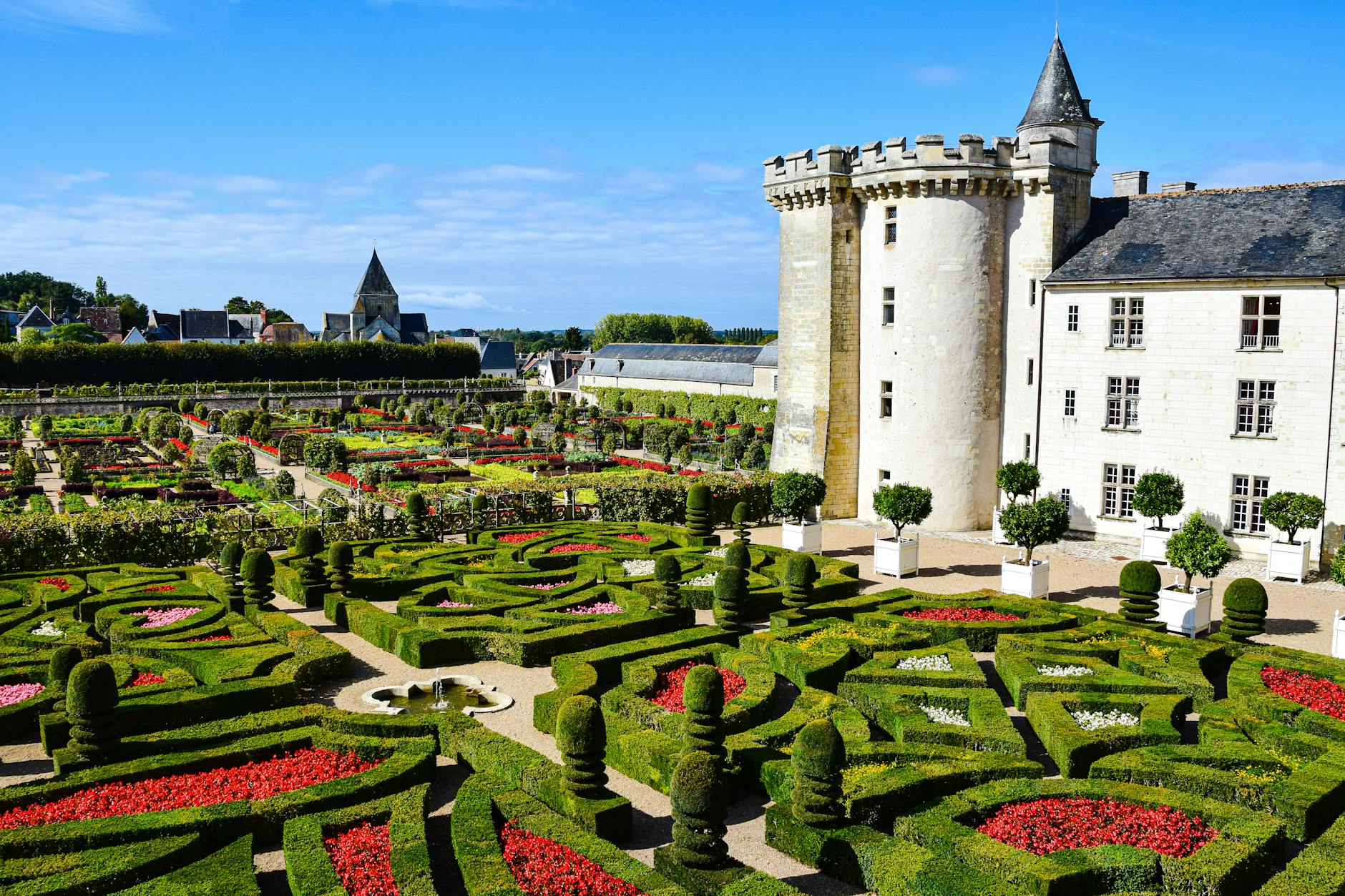
Villandry — the Loire castle famous for its ornamental vegetable gardens rather than the building itself. Extra 45 minutes of driving each way, which is why no day tour includes it.
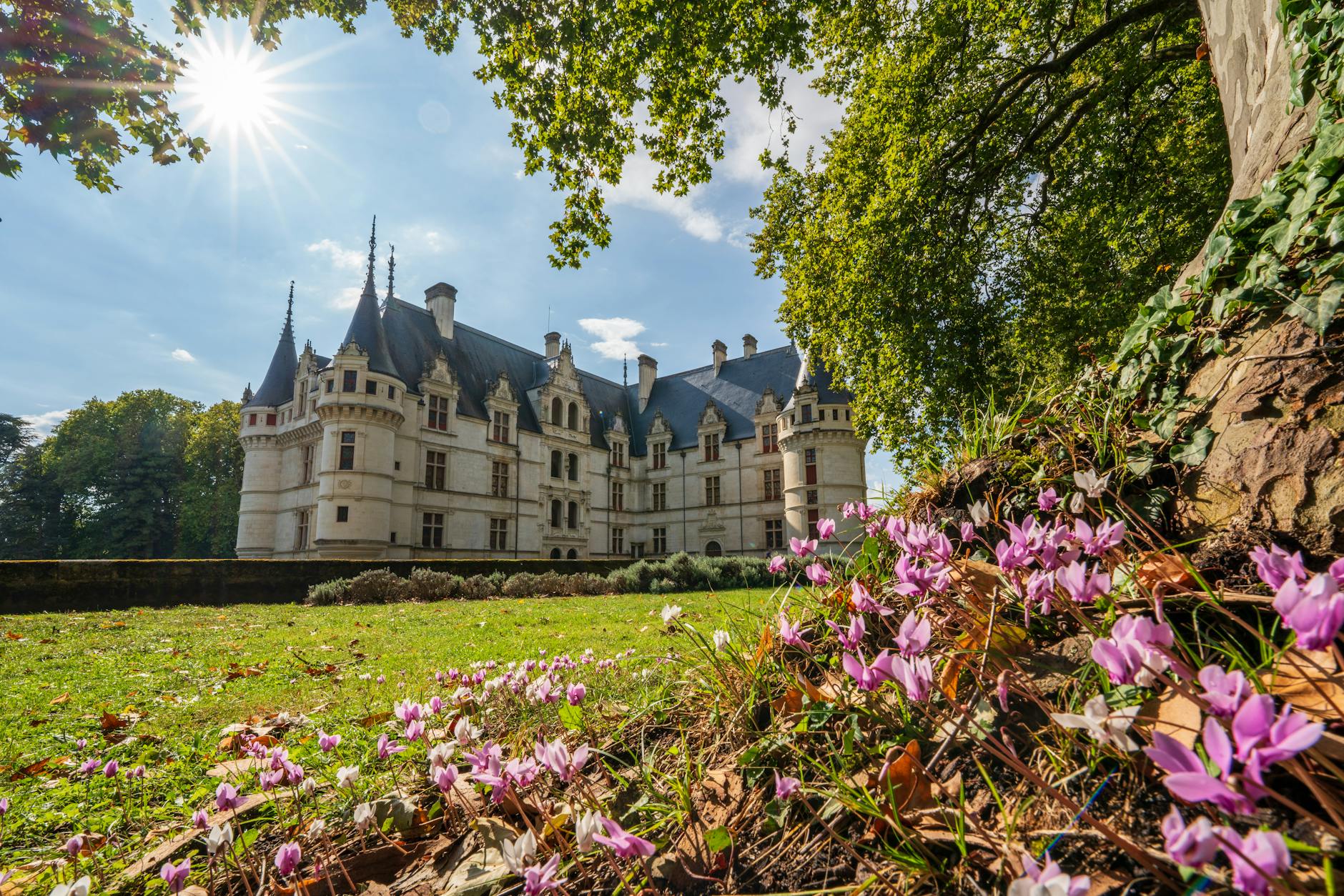
Azay-le-Rideau — the “water-lily” castle built on an island in the River Indre. Romantically smaller and prettier than the big names. Needs a 2-day trip to include.
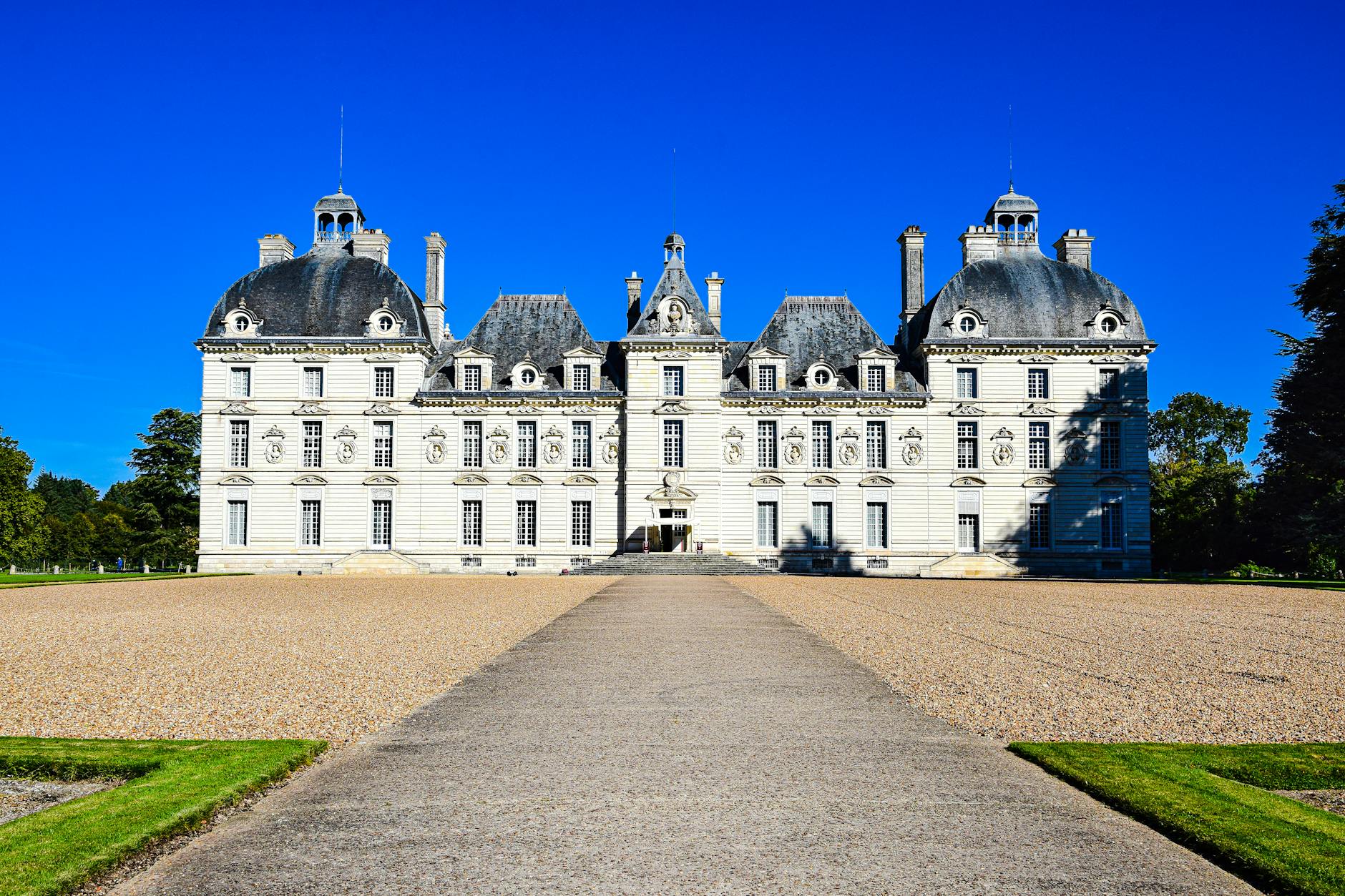
Cheverny — the Tintin castle. Classically French, still privately owned, more intimate than the big-name stops. Occasional day tours include it as a third stop but most do not.
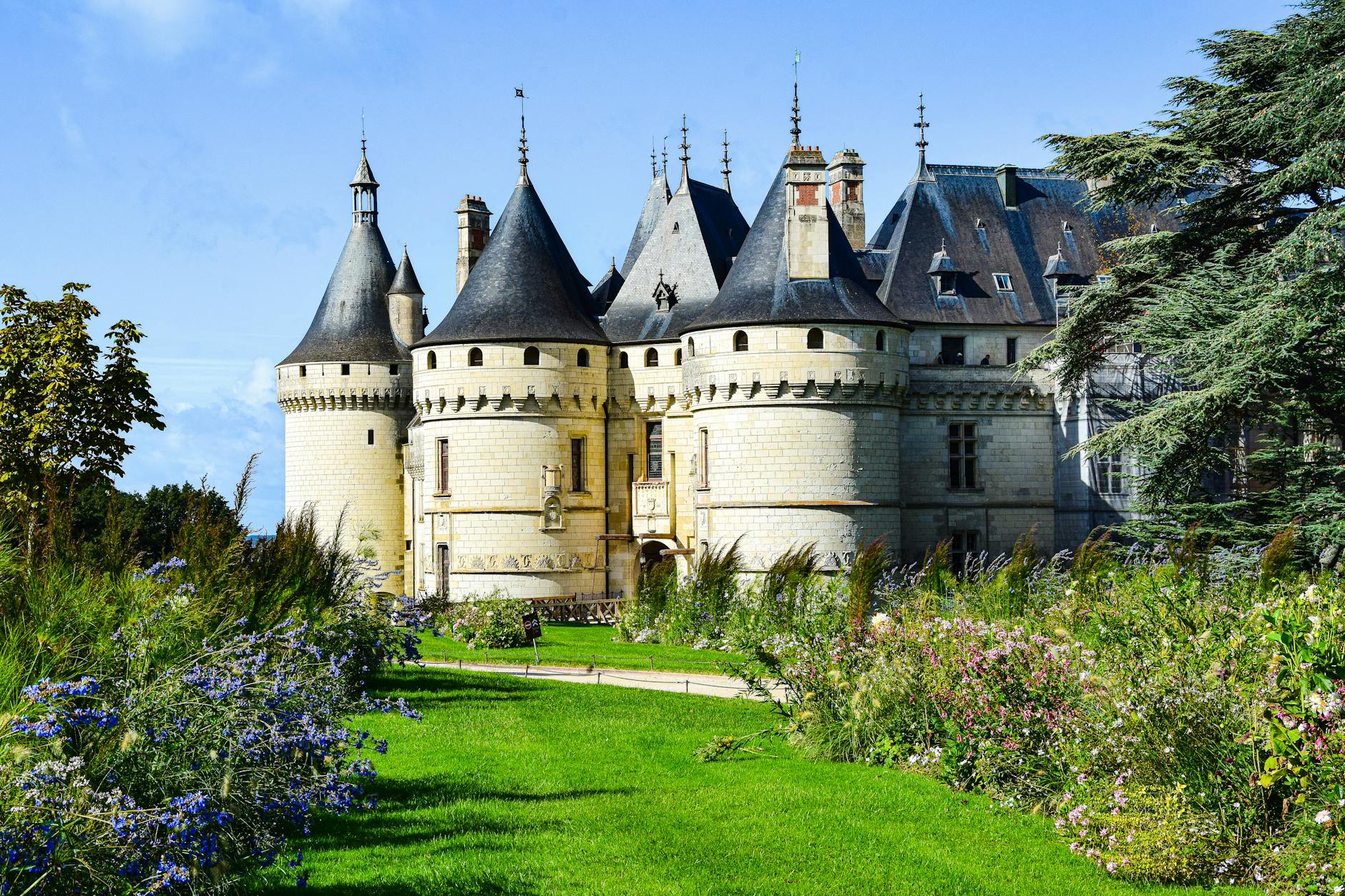
Chaumont-sur-Loire — hosts the annual International Garden Festival. Seasonal but extraordinary if you visit in summer.
The honest take: the day trip gives you the two most famous castles, which is 80% of the visual wow factor but maybe 40% of the actual Loire experience. If you want anything beyond Chambord and Chenonceau you need more time.
The Best Time to Go
May to early June: spring flowers everywhere, gardens just coming alive, crowds still manageable, weather mild and pleasant. One of the best windows. Chambord’s formal garden is in peak bloom from mid-May.
July to August: peak season. Warmer weather, open rooftops feel good, but crowds are at their worst and coaches are packed. Avoid weekends if possible.
September: my favourite Loire month. Summer warmth still holds, crowds drop by 40% compared to August, the grape harvest is starting in the vineyards, restaurants have Loire wines from the current year on their menus. If you can only pick one month, this is it.
October: autumn colours in the forests around the castles, especially pretty at Chambord where the royal forest changes colour first. Weather starts to turn cold by mid-October so dress warmer. Crowds are light.
November to March: low season. Most castles reduce their opening hours (some close completely from mid-November to early February). Day trips still run but coverage is limited, the gardens are bare, and the bus rides are cold. Only go in winter if you have a specific reason.
Lunch on a Loire Day Trip
Most coach day trips do NOT include lunch. You stop in a Loire village (usually Blois, Amboise, or a small town near Chambord) for 60-90 minutes and buy your own. Expect €15-25 for a casual two-course menu at a village bistro, €8-12 for a crepe-and-drink quick lunch, €25-35 for a proper sit-down meal with wine.
The tours that do include lunch (usually the $120+ tier) typically offer a fixed 3-course French menu at a pre-arranged restaurant, which saves you decision-making time and guarantees you eat. The food is decent but standardised — not memorable, just functional.
My advice: if you care about the food, pay the extra $20 for the lunch-included version. If you just want fuel, get the cheaper tour and pick up a sandwich and a drink in whichever village the coach stops at. Save the food budget for dinner in Paris.
Loire specialties worth trying if you see them on a menu: rillettes de Tours (a chunky pork pâté spread on bread, the local version of rillettes), goat cheese (the Loire is the goat cheese capital of France — Sainte-Maure-de-Touraine is the big name), asparagus in season (white and green, both good), freshwater fish (pike, zander, trout) from the rivers, and Tarte Tatin (invented in the Loire region, the upside-down apple tart).
What to Bring
Comfortable walking shoes — you cover 5-10 km on foot across the two castle grounds, over uneven cobblestones and gravel paths. Heels are a bad idea.
Layered clothing — Loire weather is variable. It can be 22°C in the sun and 12°C in the castle interiors (the stone walls stay cold). A light jacket plus a t-shirt layer works well.
Camera + spare battery or fully charged phone — both castles reward photography and you will take more shots than you expect, especially at Chambord’s rooftop and Chenonceau’s gardens.
Water bottle — most tours do not include water. Buy a 1.5L bottle before boarding or bring a refillable one (the castle cafés have refill stations).
Cash for lunch and souvenirs — many small Loire shops still have €15 minimum card spend thresholds, so carry €30-50 in cash for emergencies.
Rain layer for spring/autumn trips — the Loire gets a fair bit of drizzle and open rooftop access is weather-dependent.
Common Mistakes
Booking a day trip when you have time for a 2-day trip. The day trip is a compressed compromise. If you have 48 hours to spare, stay overnight in Amboise or Tours and see 4-6 castles at a proper pace.
You will enjoy it far more.
Not eating breakfast before the coach pickup. Most tours start at 07:00-07:30 and breakfast stops are rare. Eat something substantial before you leave Paris or you will be starving by 11:00.
Trying to squeeze Amboise or a third castle into the day. The tours that attempt this give you 30 minutes per stop, which is not enough to see anything properly. Stick with the classic Chambord + Chenonceau itinerary and spend the time you have well.
Forgetting the ticket logistics. Walk-up tickets at Chambord are fine but Chenonceau gets backed up 45+ minutes during peak season. The tour operators handle this via skip-the-line entry.
If you go independently, pre-book online.
Wearing bad shoes. Both castles have significant walking on uneven surfaces. Save the heels for Paris.
Overpaying for the wine tasting add-on. The Loire vineyard tastings offered as tour bolt-ons are typically €15-20 for 3-4 wines at a small winery chosen for bus convenience rather than quality. Fine if you have never tasted Loire wine, not worth it if you have.
Is a Loire Day Trip Right For You?
Perfect for: First-time France visitors on short Paris trips, history buffs who want to see Chambord and Chenonceau without the overnight logistics, couples doing a celebration day out, travellers with limited time and a high tolerance for long coach days.
Possibly not for you: Independent travellers who prefer setting their own pace, anyone with motion sickness (the Loire drive includes a lot of winding country road), families with young children (the day is too long for most under-8s), repeat France visitors who already have a mental map of the region.
Skip entirely if: You have 48+ hours to spare. Rent a car, stay in Amboise or Tours for one night, and do the Loire properly. The difference in experience is enormous.
A Perfect Day Trip Itinerary
This is how a good day trip unfolds.
06:30 — Wake up in Paris. Quick breakfast at your hotel or a café. Pack water, snacks, a jacket, and comfortable walking shoes.
07:15 — Arrive at the tour meeting point. Check in, find your coach, grab a seat with a window.
07:30-10:00 — Drive from Paris to Chambord. About 2.5 hours on the A10 motorway. Try to sleep. The English-speaking guide will start the briefing about 30 minutes before arrival.
10:00-12:30 — Chambord. Start with the double-helix staircase up to the rooftop (do this first while crowds are thinnest), then work your way down through the interior rooms, then exit via the formal gardens for photos. 2.5 hours is just enough.
12:30-14:00 — Drive to lunch stop. Usually a Loire village between Chambord and Chenonceau (around 45 minutes), with 45-60 minutes for food. Order something light — you have another castle after.
14:00-14:30 — Drive to Chenonceau. Quick 30 minutes through the Loire countryside.
14:30-17:00 — Chenonceau. Enter via the tree-lined avenue, spend 20 minutes in the gardens first, then tour the castle interior focusing on the gallery over the river and the Diane/Catherine bedrooms. Exit through the wax museum.
17:00-17:30 — Optional wine tasting stop. A small Loire vineyard, 20 minutes, 3-4 pours of local Vouvray or Sancerre.
17:30-20:00 — Drive back to Paris. Sleep or chat with your seatmates. Guide may offer restaurant recommendations for dinner.
20:00 — Dropped off in central Paris. Total day: 12.5 hours.
What to Pair the Loire With
The Loire Valley pairs best with Paris itself as the counterpoint — you spend the week in Paris among Haussmann apartments and modern boulevards, then one day in the 16th century among Renaissance castles. The contrast is the point.
For Monet and Impressionist-focused travellers, pair the Loire day trip with a visit to Monet’s garden at Giverny — both are day trips from Paris into the French countryside, both run on similar coach tour formats, and together they give you a strong “historic rural France” counter-layer to your Paris museum days.
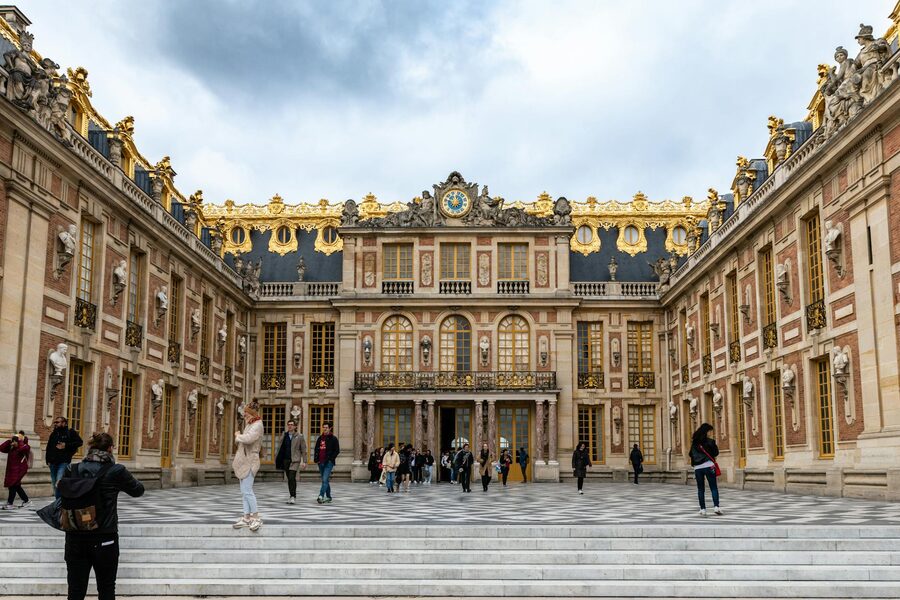
For architectural contrast, pair with Versailles. Both involve royal French architecture at enormous scale, but the styles are completely different: Loire castles are Renaissance hunting lodges, Versailles is Baroque court theatre. Doing both in the same Paris trip teaches you more about the arc of French royal architecture than any single visit.
For a food-focused follow-up in Paris, do a Paris food tour that specifically includes Loire wines and goat cheeses. The Loire tasting stop gives you the origin story; the Paris tour gives you the context of how these products made it into Parisian cuisine.
For a complete royal-France day-trip week, combine the Loire with the Mont Saint-Michel day trip — both are 11-13 hour coach days, both show you a different facet of historic France outside Paris, both hit UNESCO-listed sites. Doing both in the same week is ambitious but doable.
In Paris itself, the closest thematic follow-up to the Loire is the Musée d’Orsay — which includes a large collection of 19th-century paintings of the Loire chateaux by artists who were romanticising the Renaissance. See the castles in person, then see how 19th-century painters remembered them.
Final Thoughts
A Loire Valley day trip is a compromise. The compromise works: you see the two most iconic French castles in a single day, you get a feel for the countryside that inspired four centuries of French landscape painting, and you return to Paris with a genuine experience that people who only see the capital always envy. It is not the ideal way to see the Loire, but it is a very good way to see a slice of it.
My concrete recommendation: book the $127 lunch-included day trip if the budget allows it, the $104 basic version if not. Go in May, June, or September for the best weather-to-crowds ratio. Pack water and a jacket.
Do not try to add a third castle to the itinerary. Eat dinner in Paris, not on the bus.
If you have more time, skip the day trip entirely and do 2-3 nights based in Amboise or Tours. You will see Villandry, Azay-le-Rideau, Cheverny, Clos Lucé, and more, you will eat better food, and you will actually remember the region rather than just the highlights.
Either way, the Loire Valley is worth the trouble. French history lives here in a way it does not in Paris — the royalty, the architecture, the gardens, the wine, all together in a compressed green landscape two hours west of the capital. Go at least once.
FAQ
Is a Loire Valley day trip worth it?
Yes if you only have 1 day to spare and you want to see Chambord and Chenonceau. No if you can spend 2+ days in the region — the overnight version is dramatically better.
How long is the day trip?
11 to 13 hours door-to-door from central Paris. Pickup around 07:00-07:30, return around 19:00-20:00. About 4 hours of driving each way plus 4-5 hours on the ground at the castles.
Which castles do you see on a typical day trip?
Chambord in the morning and Chenonceau in the afternoon. Some tours add a quick Amboise photo stop, a few include Cheverny as a third visit, but the core two are always the same.
Is lunch included?
Depends on the tour. The $104 basic version has a 60-90 minute village stop where you buy your own food. The $127+ version includes a proper 3-course French lunch at a restaurant.
What is the best time of year to go?
May, June, or September. Peak summer (July-August) is hot and crowded. Winter (November-March) has reduced castle hours and bare gardens.
Can I do the Loire on my own without a tour?
Yes with effort. TGV to Tours then local trains/shuttles, or rental car from Paris. Both work but the logistics eat hours.
For a single day, the coach tour is simpler and typically cheaper.
Is the Leonardo da Vinci staircase at Chambord real?
The staircase is real and the double-helix design is unique in pre-modern architecture. Whether Leonardo himself designed it is disputed — he was at the French court during Chambord’s early construction but there is no documentary proof. What is certain: his notebooks contain similar concepts, and the attribution is at minimum plausible.
What should I bring?
Comfortable walking shoes, a light jacket, a water bottle, camera, cash for lunch and small purchases, and your booking voucher.
Are the castles wheelchair accessible?
Partially. Chambord has an elevator to the ground floor and some upper levels but the rooftop terrace is stairs-only. Chenonceau has gravel paths in the gardens and the gallery is flat but several of the upper bedroom levels require stairs.
Contact the tour operator in advance if accessibility is essential.
Are the castles open in winter?
Both Chambord and Chenonceau stay open year-round but with reduced hours (typically 09:30-17:00 in winter vs 09:00-18:00 in summer). Some of the outer rooms are closed. The gardens are bare.
Day trips still run but I do not recommend them November-February.
Is there a wine tasting on the tour?
Most tours include a brief 20-minute tasting stop at a small Loire winery (usually Vouvray or Sauvignon Blanc from Sancerre). It is a basic 3-4 pour tasting, not a proper wine education.
More French Chateaux
The Loire Valley is the chateau heartland. For palaces closer to Paris, the Fontainebleau and Vaux-le-Vicomte day trip covers two extraordinary buildings. The Chateau de Vincennes is a medieval fortress on the metro. And for the darkest chapter of chateau history, the Conciergerie is where the revolution turned palaces into prisons.