
The Slave Trade Money Trail Tour in the City of London offers a unique opportunity to explore the city’s deep historical connections to the transatlantic slave trade. Guided through key landmarks, visitors uncover how merchants and financiers profited from the exploitation of enslaved Africans. This thought-provoking tour not only sheds light on the entanglement of wealth and slavery but also encourages critical reflection on the legacies that continue to shape contemporary society. As the tour progresses, participants are invited to consider the ethical implications and ongoing debates surrounding this complex and challenging chapter of the city’s past.
- Key Points
- Exploring the City’s Slave Trade History
- The Royal Exchange and Its Slave Trade Connections
- Tracing the Money Trail: Key Landmarks
- Uncovering the Legacies of Slavery
- The Role of Banks and Financial Institutions
- Confronting the City’s Difficult Past
- Ethical Considerations and Contemporary Debates
- Takeaways and Reflections
- Frequently Asked Questions
- How Long Is the Walking Portion of the Tour?
- Can I Participate if I Have Limited Mobility?
- Do I Need to Bring My Own Lunch or Is It Provided?
- Are There Any Discounts Available for Students or Seniors?
- Can I Purchase the Tour Booklet Separately if I Cannot Attend the Tour?
- The Sum Up
- More Tour Reviews in London
- Still browsing? Here are more London experiences we've covered recently
Key Points
-
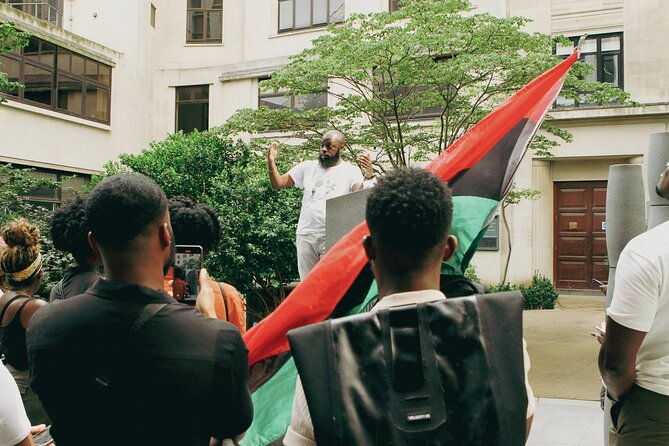
The Slave Trade Money Trail Tour explores the legacy of slavery in London’s financial district, revealing the entanglement of the city’s wealth and the transatlantic slave trade.
-
The Royal Exchange, a historic landmark in the City of London, was commissioned by Sir Thomas Gresham and served as a hub for merchants and financiers involved in the slave trade.
-
Key landmarks on the tour include Lloyd’s of London, Barclays Bank, the Bank of England, and the London Stock Exchange, all of which were connected to the slave trade.
-
The tour highlights how profits from slavery fueled the construction and growth of the financial district, with the vestiges of slavery continuing to shape the city’s landscape and economy.
-
The tour sparks ethical debates on the importance of balancing education with sensitivity and nuance when confronting the City of London’s difficult past and its implications for the present day.
Exploring the City’s Slave Trade History
What role did the City of London play in the transatlantic slave trade?
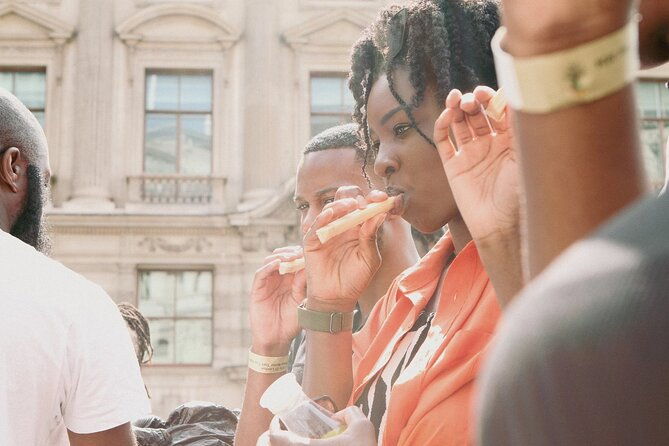
The City was a central hub for the lucrative trade in enslaved Africans. Merchants, bankers, and insurers facilitated the transportation of millions of people from Africa to the Americas.
Prosperity derived from these cruel practices left an indelible mark on the urban landscape, with buildings, monuments, and institutions reflecting this dark history.
The Slave Trade Money Trail Tour allows visitors to explore the lasting legacy of slavery in the heart of London’s financial district.
Through this guided experience, participants gain insights into the entanglement of the city’s wealth and the transatlantic slave trade.
Want to see more of London? Here are other city tours we've reviewed
The Royal Exchange and Its Slave Trade Connections
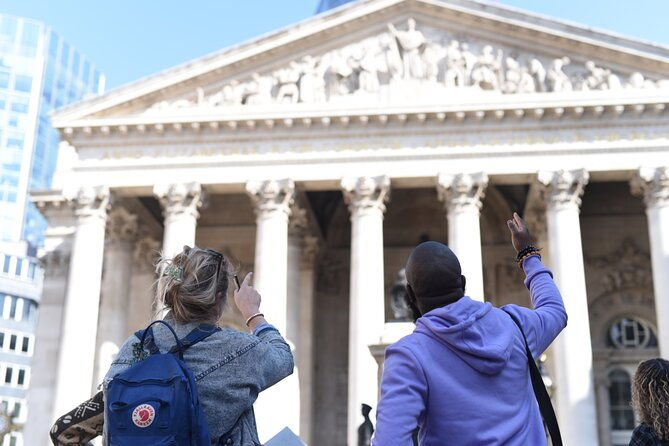
The tour begins at the iconic Royal Exchange, a building whose history is intricately tied to the transatlantic slave trade.
Commissioned in the 16th century by Sir Thomas Gresham, the Royal Exchange served as a hub for merchants and financiers who profited from the slave trade.
Many of the original subscribers were slave traders or had investments in the trade.
Today, the statue of the Duke of Wellington at the entrance serves as the meeting point, where the guide will provide insights into the building’s dark past and its connection to the City’s role in the slave economy.
Tracing the Money Trail: Key Landmarks
From the Royal Exchange, the tour continues along a carefully curated path, tracing the financial routes that fueled the transatlantic slave trade.
Key landmarks include:
-
Lloyd’s of London, the epicenter of maritime insurance that underwrote slave trading ventures
-
Barclays Bank, whose predecessor financed the procurement of enslaved Africans
-
The Bank of England, once a major shareholder in the Royal African Company
-
The London Stock Exchange, where shares in slave trading companies were bought and sold
-
Leadenhall Market, an ancient trading hub that connected London to the broader global economy.
Uncovering the Legacies of Slavery
How do the tour’s landmarks shine a light on the lasting legacies of slavery?
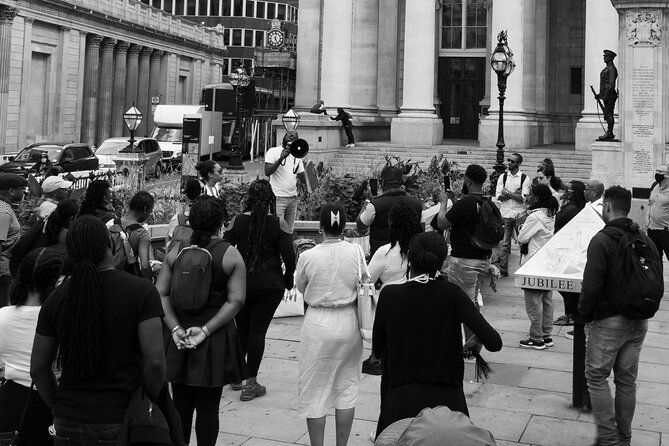
The tour explores the City of London, revealing the connections between prominent buildings and institutions to the transatlantic slave trade. Participants learn how the profits from this trade fueled the construction and growth of the financial district.
The tour also delves into the role of slavery in the rise of London’s commercial power, and how its vestiges continue to shape the city’s landscape and economy.
The Role of Banks and Financial Institutions
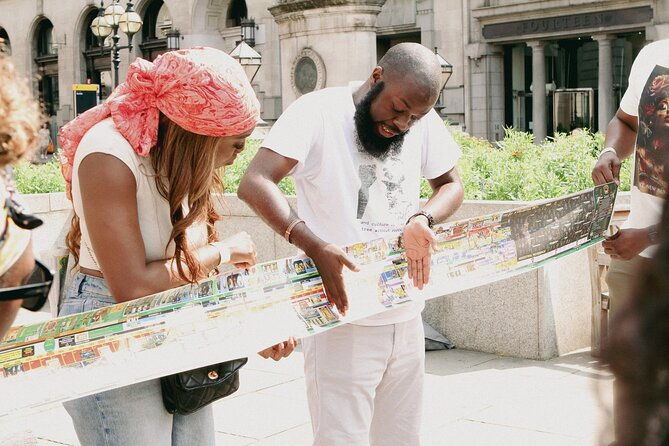
Banks and financial institutions played a central role in the transatlantic slave trade. They:
-
Provided loans and credit to finance the purchase of enslaved Africans.
-
Held deposits and investments derived from the profits of the slave trade.
-
Insured ships and cargo involved in the slave trade.
-
Managed the estates and assets of wealthy slave traders and plantation owners.
-
Bankrolled the expansion of colonial economies built on slave labor.
This pervasive financial entanglement enabled the slave trade to thrive, underscoring the industry’s deep roots in the City of London’s institutions and the broader global economy.
Confronting the City’s Difficult Past

While the City of London’s financial institutions reaped immense profits from the transatlantic slave trade, the legacy of this dark chapter has increasingly come under scrutiny. The Slave Trade Money Trail Tour aims to confront this difficult past by uncovering the links between the financial sector and slavery. Through guided visits to key sites, participants gain a deeper understanding of how the wealth of the City was built on the backs of enslaved Africans. By acknowledging this history, the tour encourages critical reflection and a commitment to address the ongoing impacts of systemic racism.
| Confronting the Past | Uncovering Connections | Fostering Reflection |
|---|---|---|
| Acknowledge difficult history | Trace financial links to slavery | Encourage critical thinking |
| Explore role of City institutions | Understand wealth built on enslavement | Commit to address systemic racism |
| Provide educational experiences | Promote transparency and accountability | Inspire actions for social change |
Ethical Considerations and Contemporary Debates
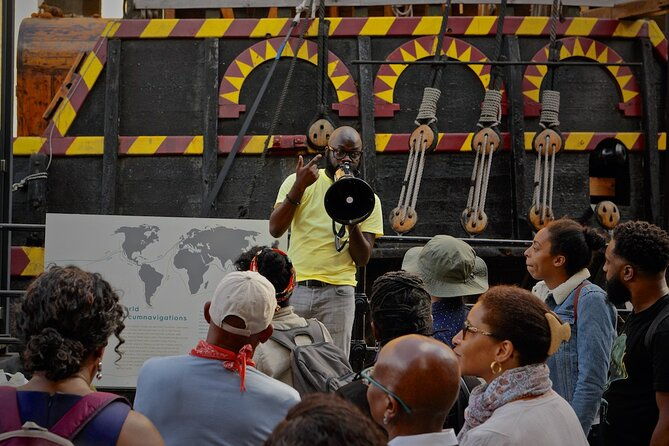
The Slave Trade Money Trail Tour’s exploration of the City of London’s financial ties to slavery has sparked important ethical debates and considerations.
Critiques highlight the tour’s potential to sensationalize or oversimplify a complex history. Others argue it is a necessary step towards accountability and healing.
Discussions center on:
- Balancing education and trauma
- Ensuring diverse perspectives are represented
- Determining appropriate ways to memorialize and commemorate
- Addressing present-day inequalities rooted in the slave trade
- Considering the tour’s impact on local communities and businesses
Navigating these complex issues is crucial as the tour aims to confront the City’s difficult past with sensitivity and nuance.
Takeaways and Reflections
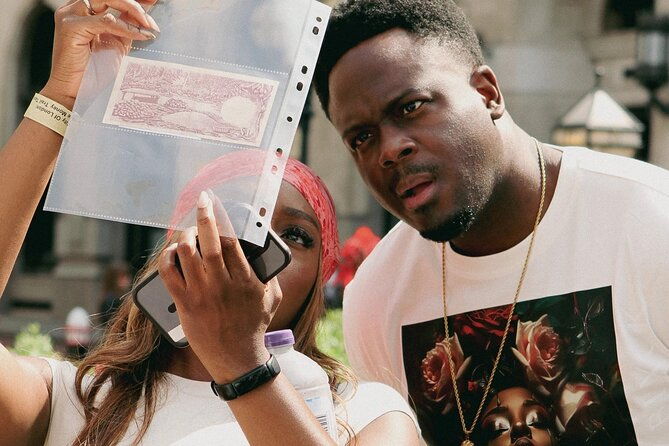
Though the Slave Trade Money Trail Tour confronts the City of London’s troubling history, it offers valuable takeaways for participants.
The tour provides a sobering yet essential exploration of the financial institutions and merchant houses that profited from the slave trade. Participants gain a deeper understanding of how this legacy continues to shape modern London.
The tour also encourages critical reflection on the systemic exploitation that enabled the wealth and power of the City.
Ultimately, the experience equips visitors with knowledge to challenge the persistent legacies of slavery and work towards a more just and equitable society.
Frequently Asked Questions
How Long Is the Walking Portion of the Tour?
The length of the walking portion of the tour is not specified in the information provided. The tour details indicate that the meeting and end points are located approximately 1 mile apart, suggesting a walking duration within that distance.
Can I Participate if I Have Limited Mobility?
Yes, individuals with limited mobility can participate in this tour. The tour is wheelchair accessible and accommodates strollers. Service animals are also allowed, and the surfaces are wheelchair-friendly. The tour has a maximum of 30 travelers.
Do I Need to Bring My Own Lunch or Is It Provided?
The tour includes a provided lunch, so participants do not need to bring their own. The tour details state that lunch is one of the inclusions provided as part of the tour experience.
Are There Any Discounts Available for Students or Seniors?
According to the tour details, lunch is included as part of the tour package. However, the website does not mention any discounts available for students or seniors. Booking information indicates the standard tour price is $38.41 per person.
Can I Purchase the Tour Booklet Separately if I Cannot Attend the Tour?
Unfortunately, the tour booklet is not available for separate purchase. The booklet is included as part of the Slave Trade Money Trail Tour experience and is not sold individually. Purchasing the full tour is required to obtain the booklet.
The Sum Up
The Slave Trade Money Trail Tour in London provides a poignant exploration of the city’s deep connections to the transatlantic slave trade. By guiding visitors through key landmarks, the tour sheds light on the historical entanglement of wealth and slavery, encouraging critical reflection on the legacies that continue to shape contemporary society. Through this impactful experience, participants gain a deeper understanding of the systemic exploitation that underpinned the growth of London’s financial power.
More Tour Reviews in London
- Heathrow Airport to and from Central London – Private Transfer
- London Ghost Walking Tour: Tales of Terror & Mystery
- London Instagram Photoshoot – 20 edited photos
- London: The Fun Tour with Live Theater and Comedy
- London: Asian Noodles Masterclass with Wine
- London: Cambridge Day Trip with Great St Mary’s Church Tower
Still browsing? Here are more London experiences we've covered recently
- Heathrow Airport to and from Central London – Private Transfer
- You’ll Love These 14 Wine Tours In London
- 14 Top-Rated London Walking Tours
- The 14 Top Food Tours In London: Which Is Best?
- London’s 14 Best Shopping & Market Tours
- 11 Top Tours & Experiences In London (With Reviews & Prices)
- Top 14 Workshops & Classes In London
- We Rank London’s 3 Top Vegan & Vegetarian Tours
- Which London Full-Day Tours To Choose? We Rank The 14 Best
- 14 Must-Try Historical Tours In London
- The 13 Most Popular Tours In London
- 6 Of The Best Lunch Experiences In London