
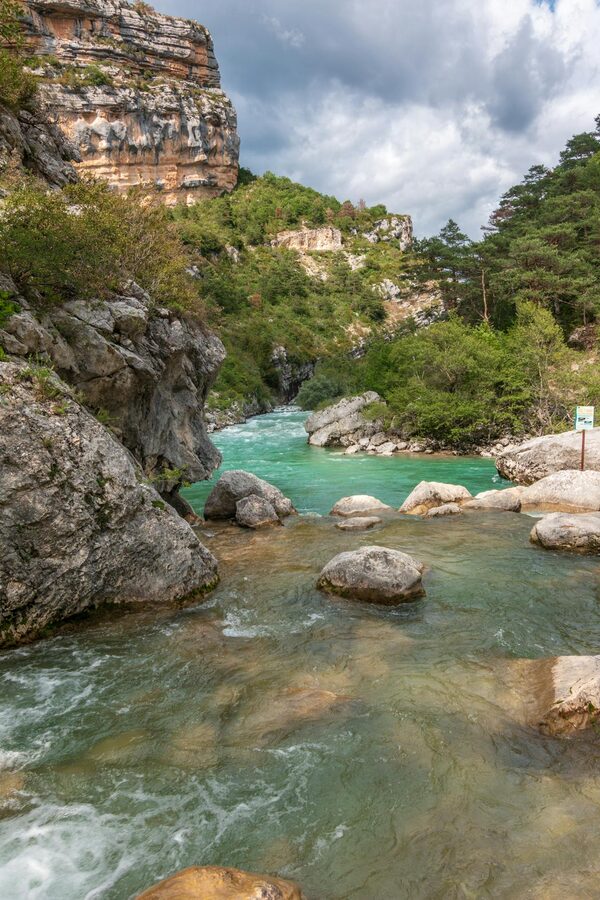
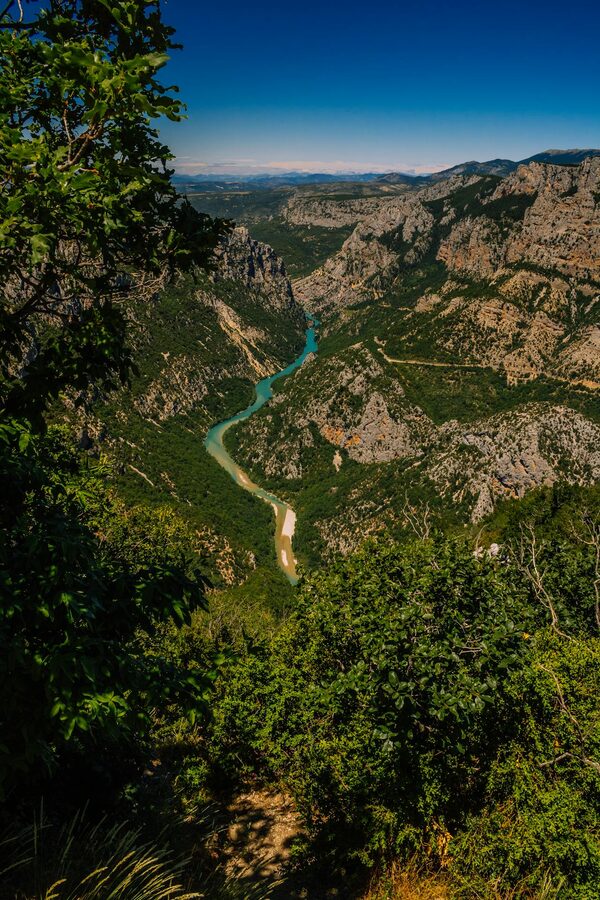
The colour stopped me mid-sentence. I was chatting with my seatmate on the minibus when we rounded a bend above the canyon and the water below was this impossible shade of blue-green — like someone had poured glacial melt into a slot canyon and forgotten about it. The Gorges du Verdon does that. It shuts you up.
Europe’s answer to the Grand Canyon cuts 700 metres deep through the limestone of Haute-Provence, and the river at the bottom is so clear you can see trout from the viewpoint bridges. Most visitors reach it as a day trip from Nice, about two hours east, and the drive alone through perched villages and lavender plateaus would be worth the petrol money even without the gorge itself.
Best budget pick: Verdon and Lavender Tour via Castellane — $144, 10 hours, includes a stop in Castellane and a slightly different route along the northern rim.
Best small-group option: Shared Tour from Nice — $151, max 8 people, more personalised with flexible photo stops.
- How Booking Works (And What to Expect)
- The Gorge Itself: What You’re Actually Looking At
- Moustiers-Sainte-Marie: The Village Stop Everyone Loves
- Lac de Sainte-Croix: The Other Highlight
- The Lavender Plateau: Timing Is Everything
- Best Tours to Book
- 1. Gorges of Verdon and Fields of Lavender Tour — 9
- 2. Verdon and Lavender Tour via Castellane — 4
- 3. Gorges du Verdon Shared Tour — 1
- Driving Yourself vs. Taking a Tour
- On the Water: Kayaking and Paddleboarding
- A Quick History of the Gorge
- Practical Tips
- Getting From Nice to the Gorge Independently
- Where the Gorge Fits in a Longer Trip
How Booking Works (And What to Expect)
Every Verdon day trip from Nice follows roughly the same structure. You get picked up from a central meeting point — usually near the Promenade des Anglais or Gare de Nice — around 8am. The drive northwest takes about two hours through the Var valley. You’ll stop at viewpoints along the Route des Crêtes (the ridge road), spend time in Moustiers-Sainte-Marie, and usually hit the Valensole lavender plateau on the way back.
Booking is straightforward — pick a date on GetYourGuide or Viator, pay online, and show up. Most tours run year-round but the experience changes dramatically by season. June through August gets you lavender in bloom. September and October mean fewer crowds and golden light but the lavender is gone. Winter runs are cheaper but some viewpoints and village restaurants close.
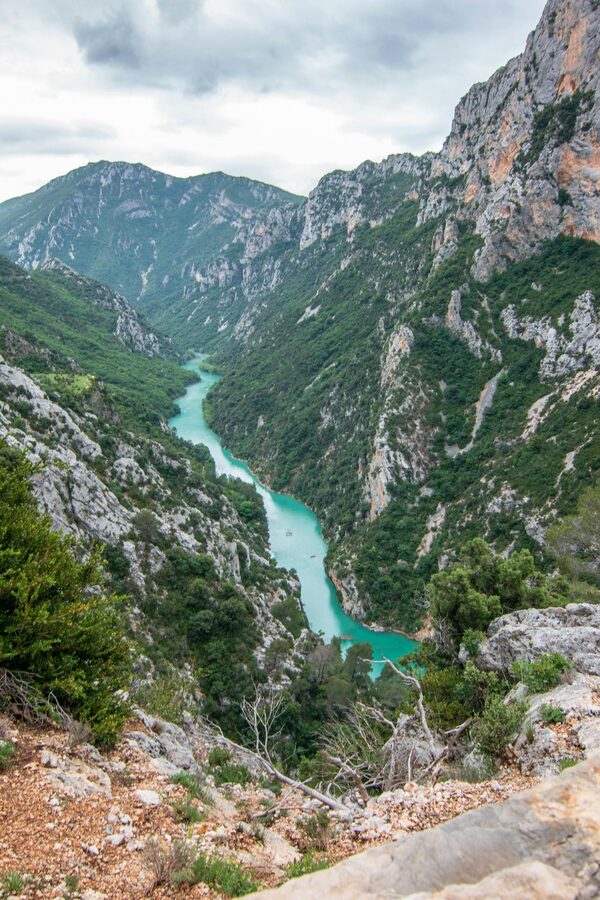
A few things that caught me off guard. The canyon viewpoints have no guardrails in places. The wind at the top is surprisingly strong. And the village stops are short — Moustiers gets maybe 45 minutes, which is barely enough to walk to the waterfall and back. If you want to linger, rent a car.
The Gorge Itself: What You’re Actually Looking At
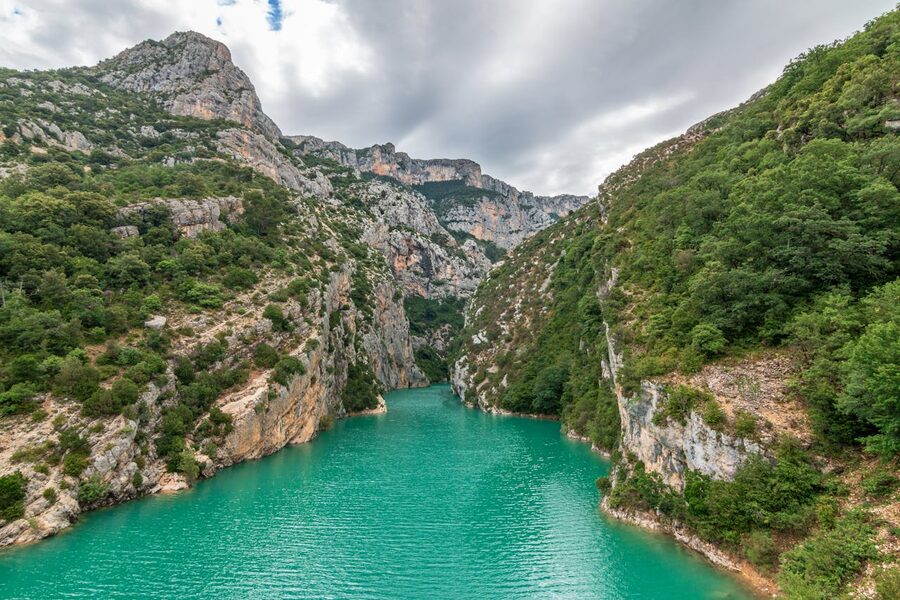
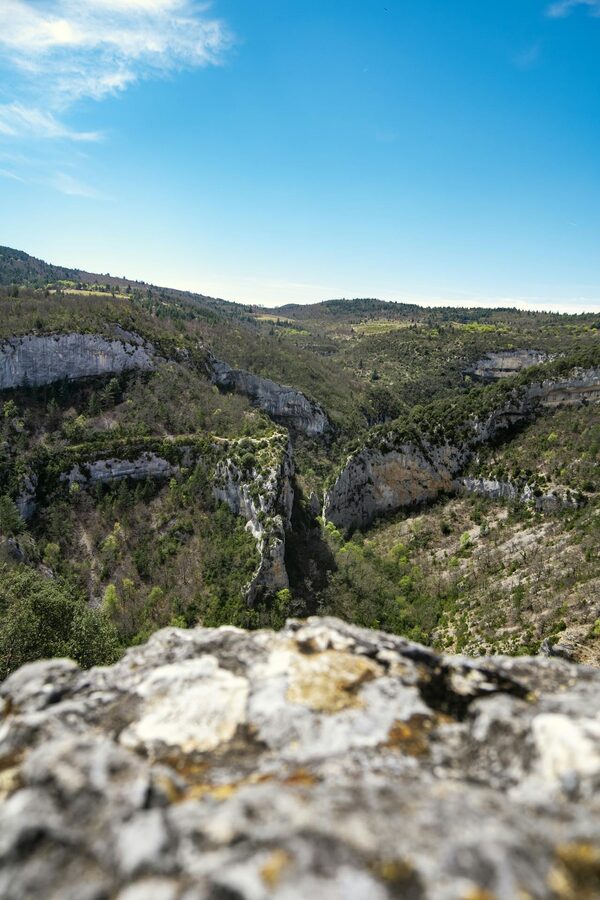
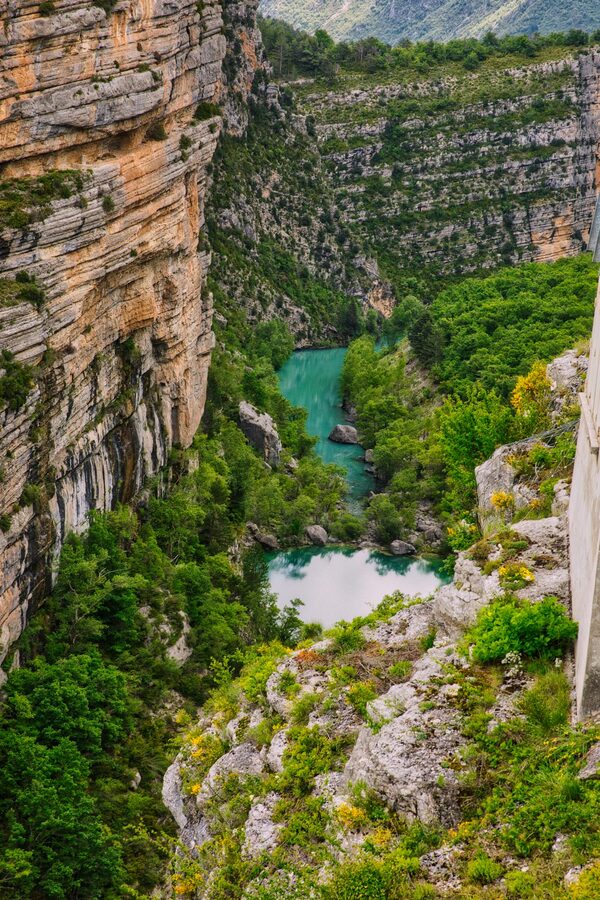
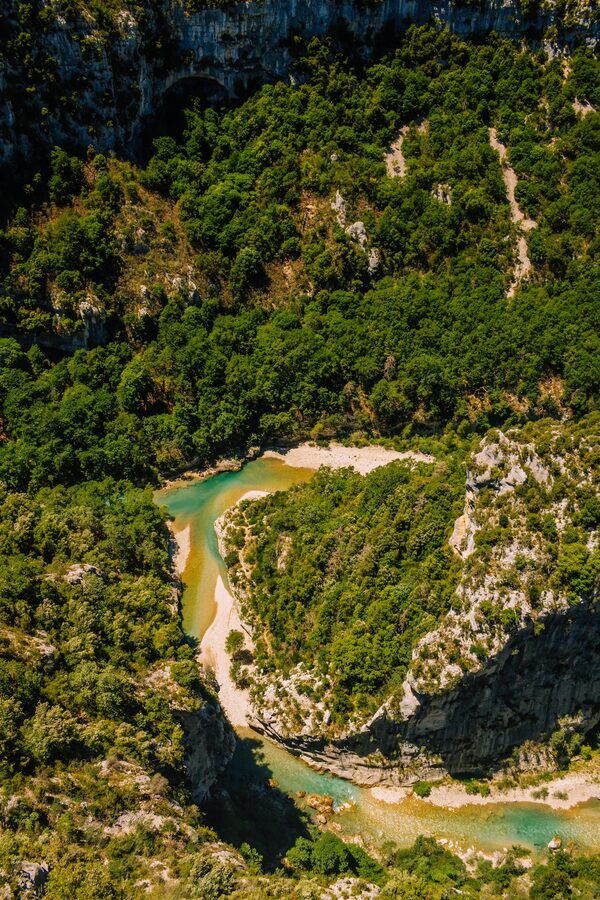
The Gorges du Verdon stretches about 25 kilometres from Castellane to the artificial Lac de Sainte-Croix. It’s the deepest canyon in France and one of the deepest in Europe. The water is that absurd colour because of the dissolved limestone — calcium carbonate particles scatter light the same way a glacier does.
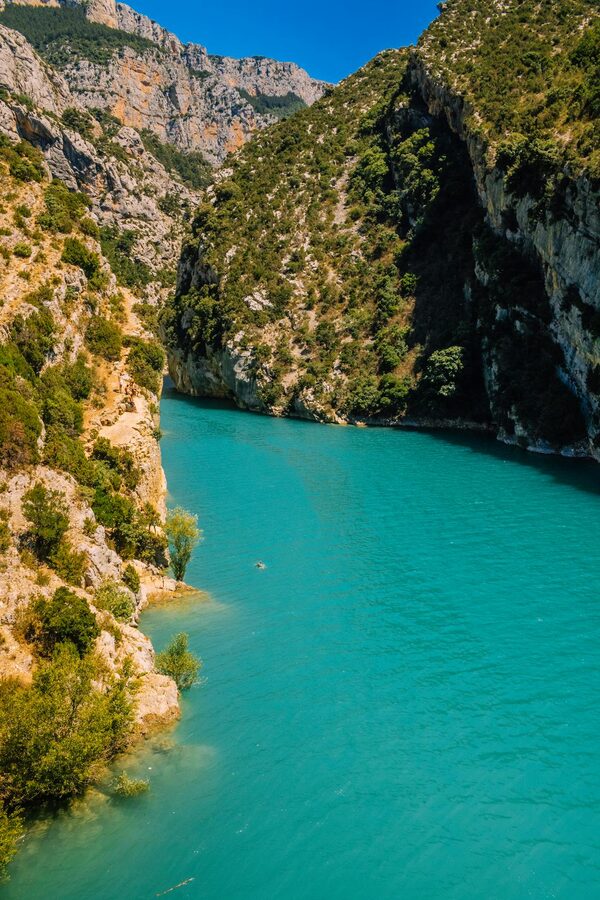
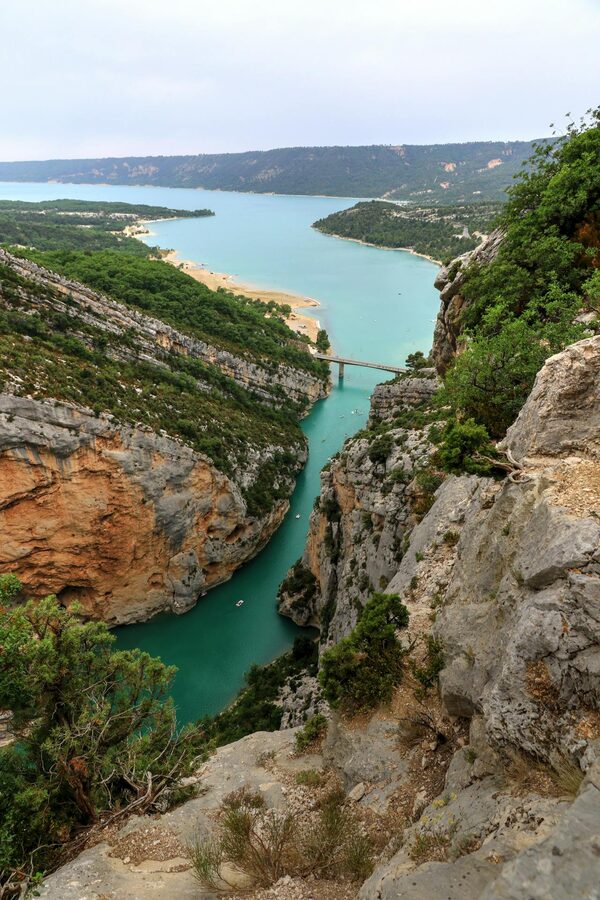
Two roads follow the canyon rims. The Route des Crêtes on the south side is the more dramatic one — sheer drops, single-lane tunnels, and viewpoints that make your palms sweat. The northern Corniche Sublime is gentler and has the famous Pont de l’Artuby, a bridge 182 metres above the river that’s used for bungee jumping.
Most guided tours take the south rim going west and the north rim coming back, or vice versa. Either direction works. The Point Sublime viewpoint on the north side gives you the classic postcard shot looking straight down the canyon.
Moustiers-Sainte-Marie: The Village Stop Everyone Loves
Every Verdon tour stops here, and for good reason. Moustiers is wedged into a gap between two cliffs with a gold star suspended on a chain between them — a votive offering from a returning Crusader knight, supposedly, though the current star is a 1957 replacement. The village is famous for its faïence pottery, and the shops along the main street have been selling hand-painted ceramics since the 1600s.
If your guide gives you 45 minutes, here’s what I’d do: skip the shops, walk straight up the stone steps past the church to the waterfall viewpoint, take photos, then grab a coffee at one of the terraces on the way down. You can buy pottery in any Provençal town. You can’t see that star-between-the-cliffs anywhere else.
Lac de Sainte-Croix: The Other Highlight
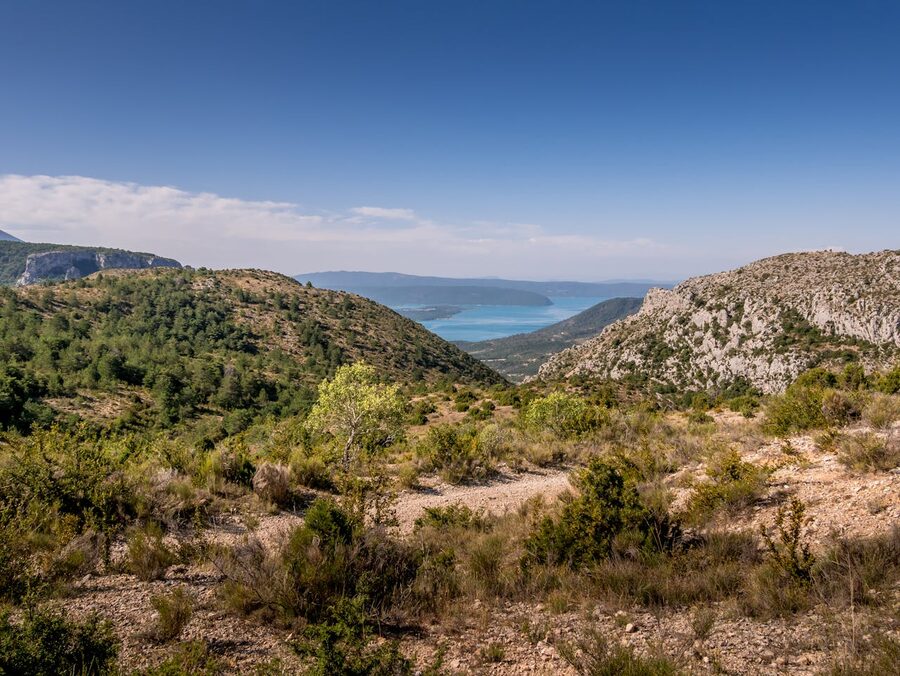
The gorge empties into this man-made lake, and its colour matches the river — turquoise fading to teal at the edges. Most tours stop at a viewpoint above the lake rather than going down to the shore. If you’re driving independently, the beach at Sainte-Croix-du-Verdon is one of the best freshwater swimming spots in France.
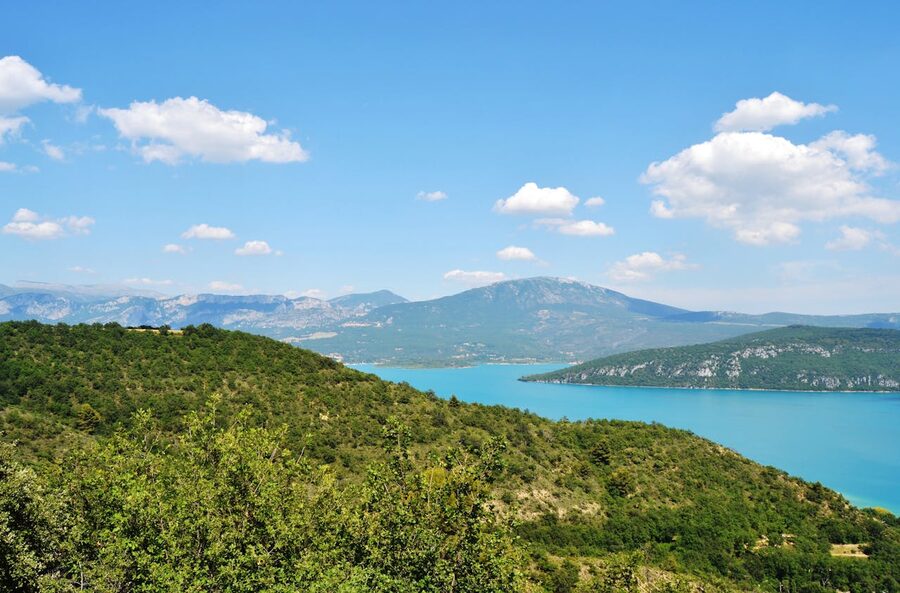
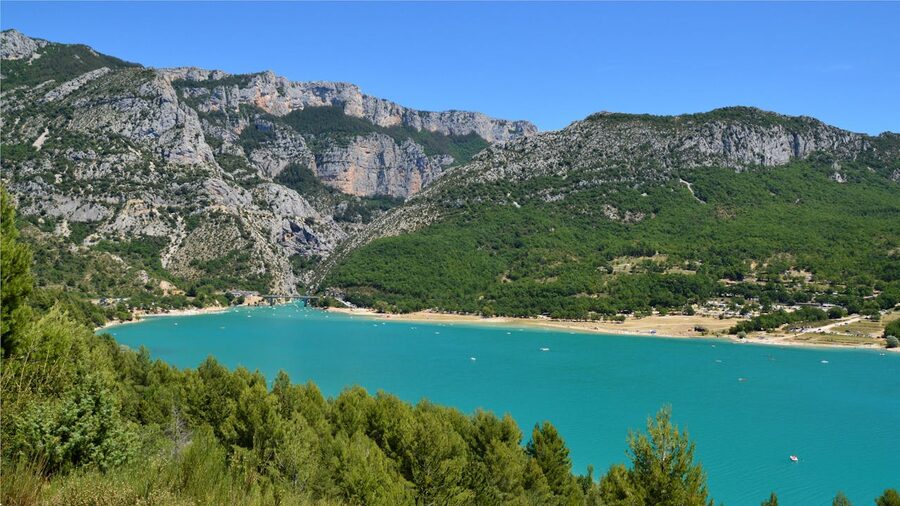
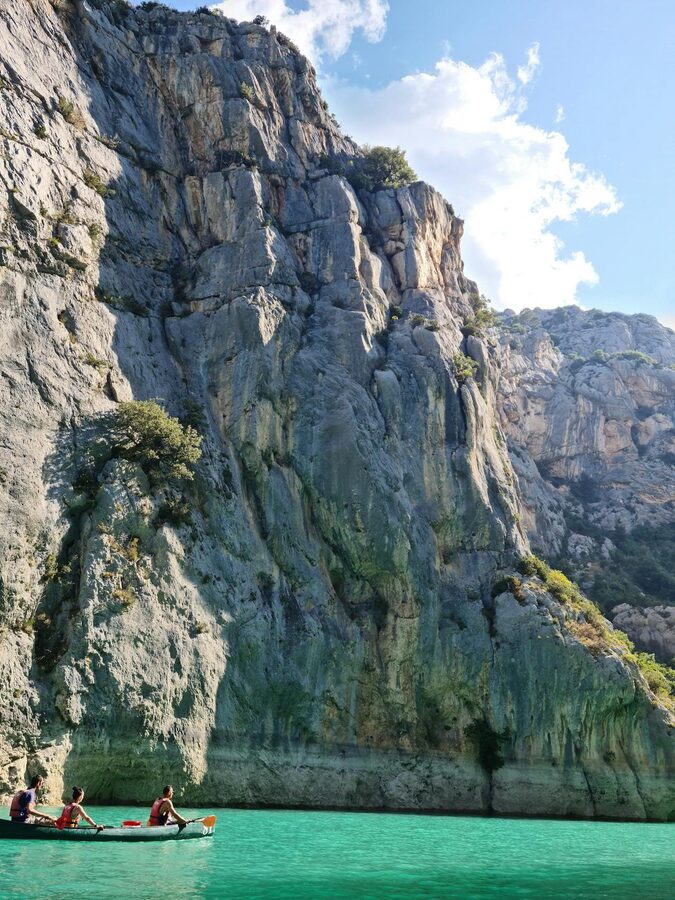
Renting a kayak or paddleboard at the lake mouth is one of the best things you can do in the region. You paddle into the lower gorge itself, between walls that tower hundreds of metres on either side. It’s about a 90-minute round trip to the first beach inside the canyon. Our review of the main Verdon tour covers this as an add-on option if your tour has free time built in.
The Lavender Plateau: Timing Is Everything
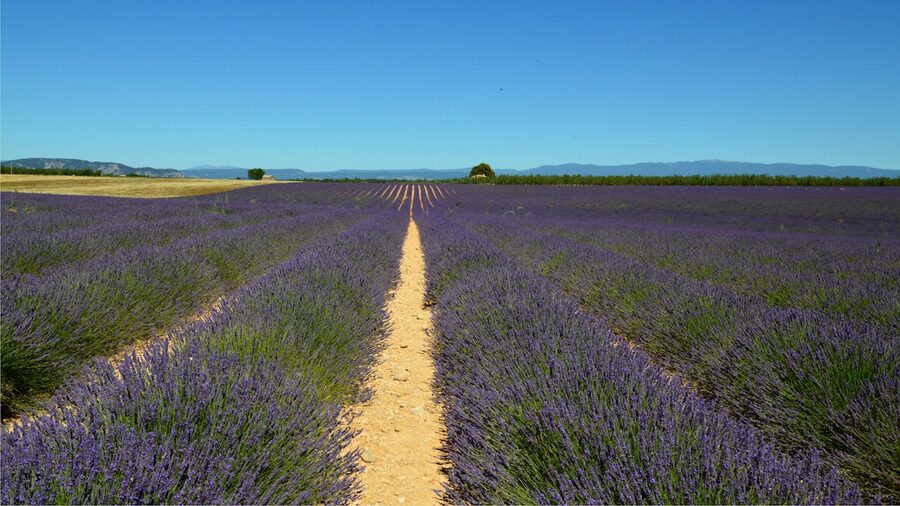
Most Verdon tours from Nice include a stop at the Valensole plateau on the return journey. From mid-June through late July, this flat farming region turns purple — rows and rows of lavender stretching to the horizon with the occasional stone farmhouse breaking the lines. It’s the Provence postcard everyone pictures.
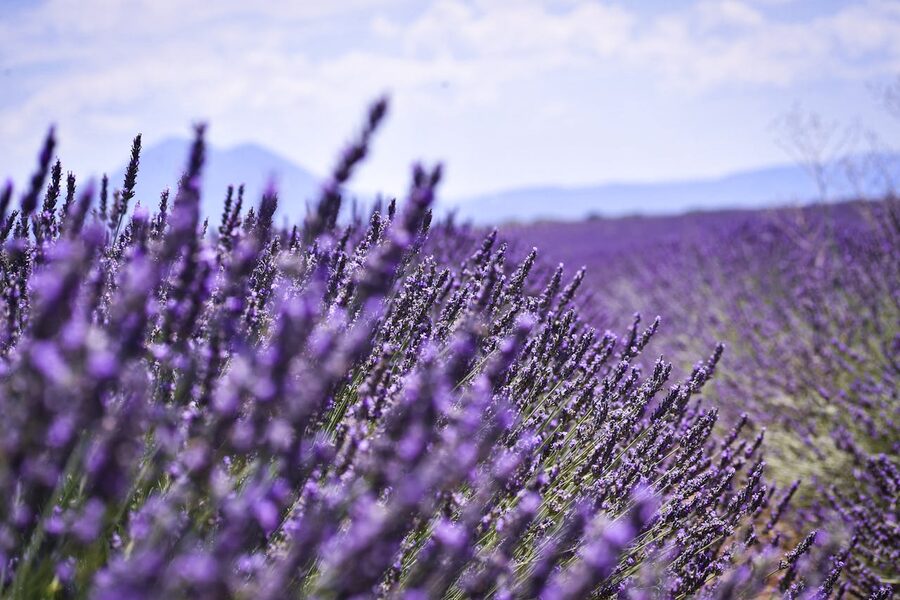
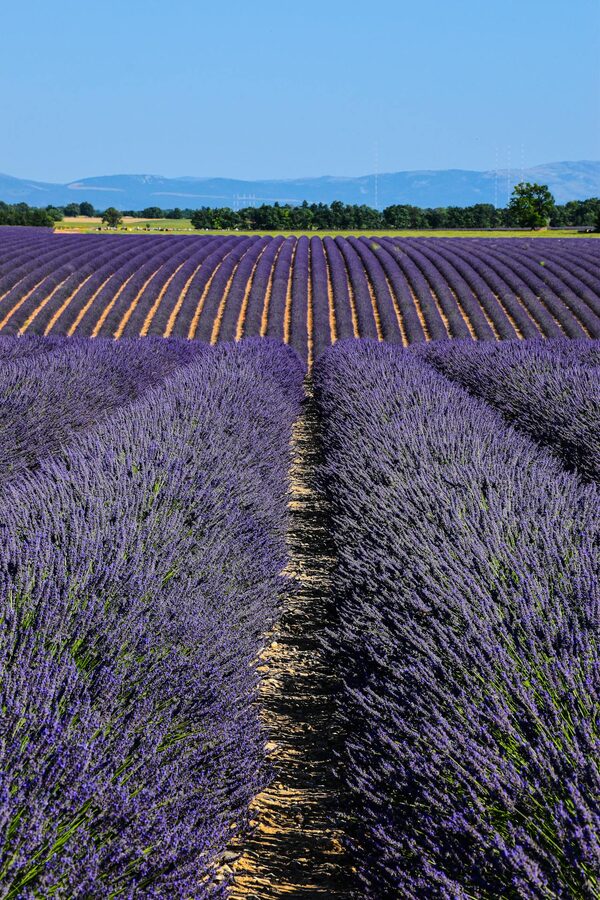
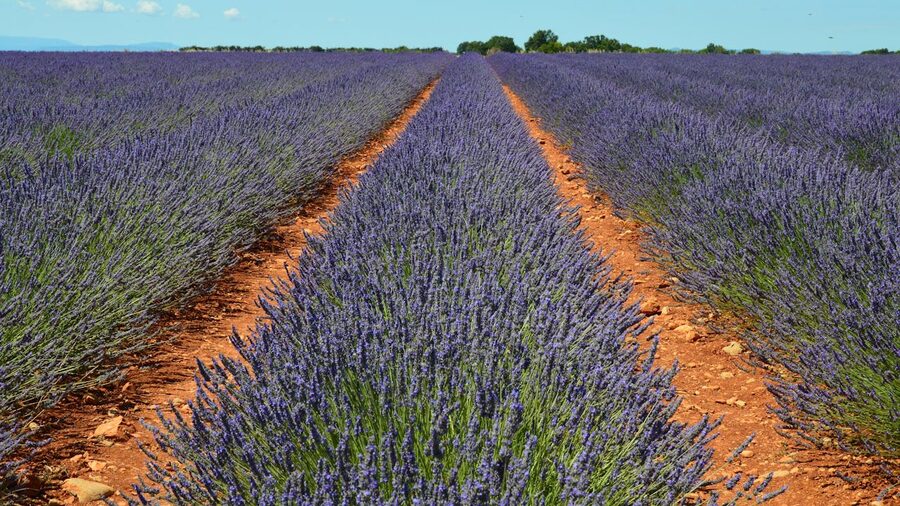
Outside of lavender season, the plateau is still pretty — golden wheat in September, bare earth with a dusting of snow in winter — but it’s not the same draw. Tours still run year-round. They just skip the lavender stop or replace it with a longer stay at the gorge.

Best Tours to Book
I’ve gone through the reviews and data for every Verdon day trip available from Nice. Here are the three worth your money, ranked by how many people have booked them and what they thought afterwards.
1. Gorges of Verdon and Fields of Lavender Tour — $129

This is the one to default to if you don’t want to overthink it. Nine hours, picks up from central Nice, and covers all three highlights — the gorge viewpoints, Moustiers-Sainte-Marie, and the lavender fields. The guides know the Route des Crêtes cold and stop at viewpoints that independent drivers often miss. Our detailed review breaks down exactly what the day looks like hour by hour, and the guide quality has been consistently praised across thousands of bookings.
2. Verdon and Lavender Tour via Castellane — $144

Slightly longer at 10 hours and a bit pricier, but the Castellane route gives you a different angle on the gorge. You approach from the east and drive the full length of the canyon, which means more windshield time but also more viewpoint stops. The trade-off is less time in Moustiers. If you’ve already done the standard route and want to see the other end, our review of this version explains how the itineraries differ.
3. Gorges du Verdon Shared Tour — $151

The small-group cap makes this one feel more like a private trip than a bus tour. Maximum 8 passengers means the guide can adjust stops based on what the group wants to see, and you’re not waiting for 40 people to take photos at every viewpoint. It costs a bit more than the standard option, but the flexibility is genuine. Our review notes that the intimate group size makes a real difference, especially for photography — you actually get time to compose shots without someone’s selfie stick in frame.
Driving Yourself vs. Taking a Tour
Renting a car from Nice is about €40–60 per day and gives you complete freedom. But the gorge roads are narrow, winding, and occasionally terrifying — single-lane tunnels carved into cliff faces, hairpin turns with no barriers, and French drivers who treat the Route des Crêtes like a time trial.
The case for a tour: someone else drives those roads while you look out the window, the guide knows which viewpoints are worth stopping at, and you don’t have to worry about parking in Moustiers (which is a nightmare in summer). The case against: you’re on someone else’s schedule, village stops feel rushed, and you can’t spontaneously detour to that beach on Lac de Sainte-Croix.
My take: if you’re a confident driver and have two days, rent a car and stay overnight in Moustiers or Castellane. If you have one day, take a tour. The logistics are genuinely tricky enough that a guide adds real value, and you’ll see more in 9 hours with someone who knows the roads than in 9 hours squinting at Google Maps on cliff-edge switchbacks.
On the Water: Kayaking and Paddleboarding
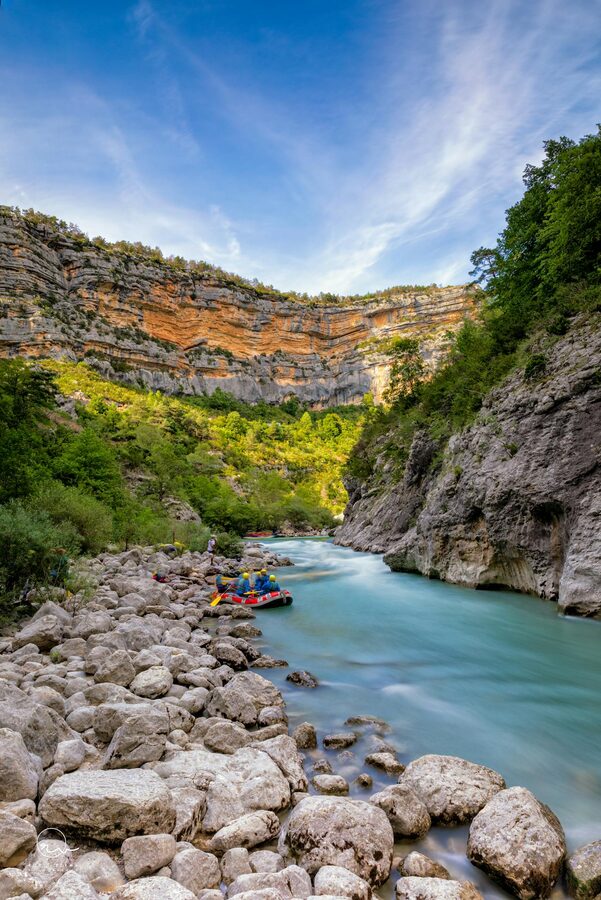
The gorge from below is a completely different experience than from the rim. Kayak and paddleboard rentals are available at the Lac de Sainte-Croix end, and you paddle straight into the mouth of the canyon. The walls close in, the sound changes, and suddenly you’re floating through a space that feels ancient and empty even when there are other boats around.
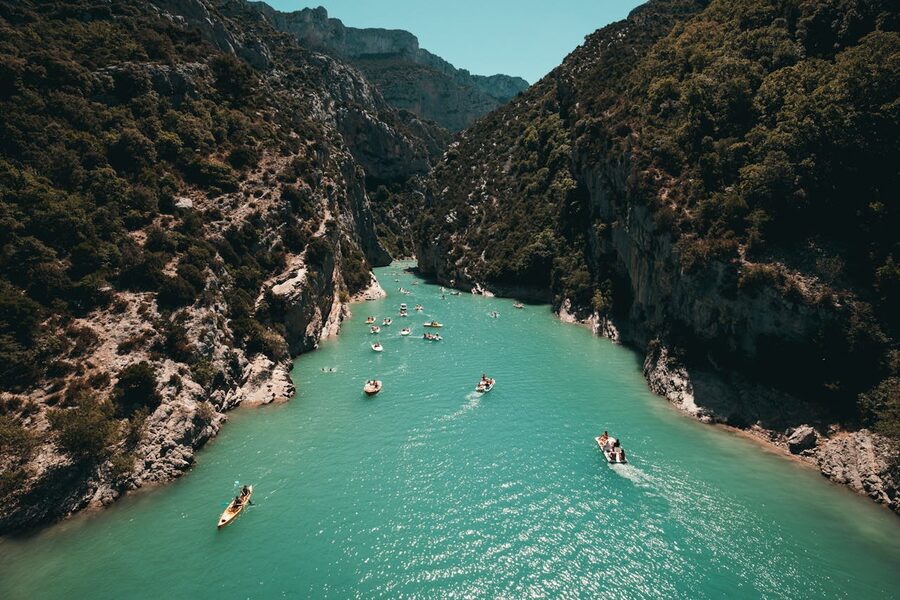
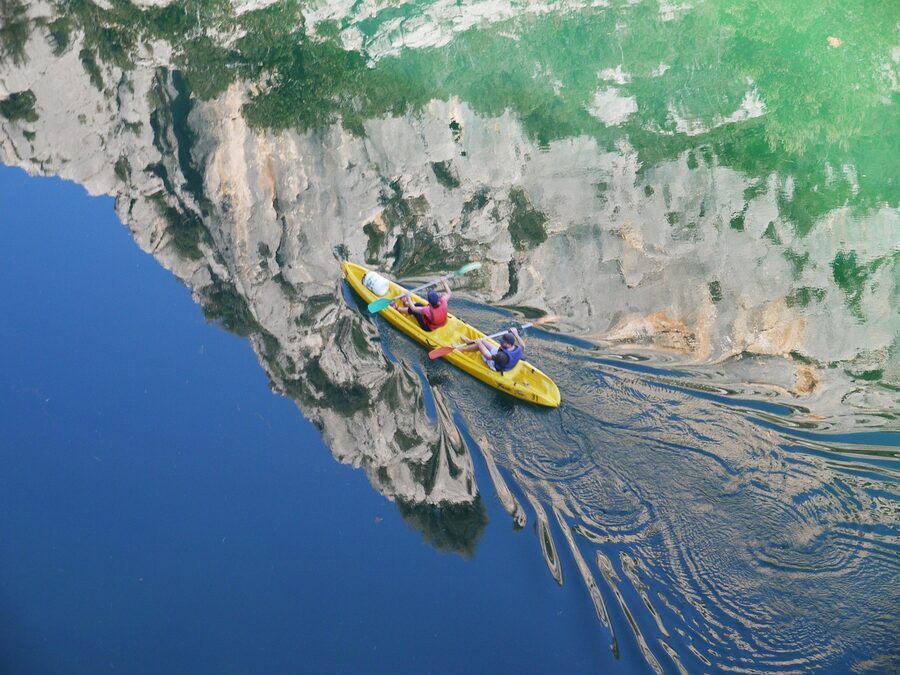
Rental prices run about €15–25 per person for a couple of hours. No booking usually needed outside of July and August — just show up at the lakeshore rental stands. In peak summer, arrive before 10am or you’ll queue. This pairs well with a self-drive trip but doesn’t fit into most guided tours unless they specifically include free time at the lake.
A Quick History of the Gorge
People have lived in the Verdon canyon since prehistoric times. Cave paintings from the Paleolithic era were discovered in the Grotte de la Baume Bonne, and Roman roads crossed the plateau above. But the gorge itself was considered impassable until 1905, when speleologist Édouard-Alfred Martel and cartographer Isidore Blanc made the first full descent of the canyon by following the river.
Tourism didn’t really arrive until the 1930s when the Route des Crêtes was built. Before that, the gorge was known mainly to shepherds and a few adventurous climbers. The dam at Sainte-Croix was completed in 1973, creating the lake and drowning the village of Les Salles-sur-Verdon — the residents were relocated to a new town built on higher ground, and most of them weren’t happy about it.
The area became a Regional Natural Park in 1997, which limits development but doesn’t prevent it. Tourism infrastructure has grown steadily, and in July and August the roads get genuinely crowded. But step twenty metres off the main viewpoint at any stop and you’ll likely have the canyon to yourself.
Practical Tips
When to go: Mid-June to mid-July for lavender plus gorge. September for fewer crowds and warm weather without the lavender. Avoid the last two weeks of July and the first two weeks of August if you can — that’s French school holidays and the roads become parking lots.
What to bring: Sunscreen is non-negotiable — the canyon reflects light and you’ll burn faster than you expect. A light jacket even in summer — the rim is windy and the gorge floor is cool. Water and snacks if you plan to hike or kayak. A swimsuit if you want to jump in at the lake.
Food situation: Moustiers has several good restaurants but tour stops are too short to sit down for a meal. Pack lunch if you’re driving. On tours, the guide usually stops at a place where you can buy sandwiches, but options are limited and overpriced. The lavender honey from roadside stalls on the plateau is worth buying — it tastes nothing like supermarket honey.
Photography: Morning light is best for the gorge (sun illuminates the canyon floor). Late afternoon is best for the lavender fields (golden backlight through the flowers). The classic viewpoint is Point Sublime on the north rim, but the Balcons de la Mescla on the south side gives you the river confluence where two shades of green meet.
Getting From Nice to the Gorge Independently
There’s no direct public transport. The options are:
Rent a car. Two hours from Nice via the A8 motorway then the D952. Park at Pont de Galetas near the lake for the kayaking access, or at any of the signposted viewpoints along the Route des Crêtes. Parking is free at most viewpoints but the lot at Pont de Galetas fills up by 10am in summer.
Take a bus to Castellane, then taxi. Ligne Express Régionale buses run from Nice to Castellane (about 2.5 hours, around €10). From Castellane, you’d need a taxi or local shuttle to reach the viewpoints. This is complicated enough that a tour makes more sense for most people.
Where the Gorge Fits in a Longer Trip
If you’re based in Nice for several days, the Gorges du Verdon pairs well with other day trips in the region. The French Riviera coastal route through Eze and Monaco is the obvious complement — glamour and coastline one day, raw canyon and lavender the next. Nice itself has enough food and walking tours to fill a full day between excursions.
Further afield, the Calanques near Marseille offer a different kind of dramatic limestone scenery — sea cliffs instead of river canyons — and the boat tours there are some of the best in the south. For something completely different, the Corsica boat tours from Ajaccio and Bonifacio are worth the ferry ride if you have time. And if wine is more your thing, the Lyon food and wine scene is a few hours north and a world away from the Provençal heat.