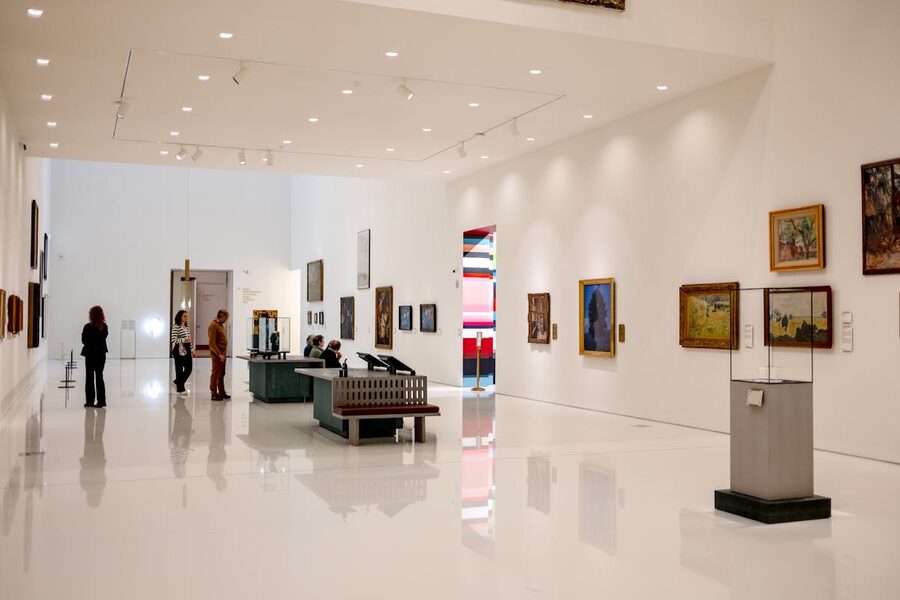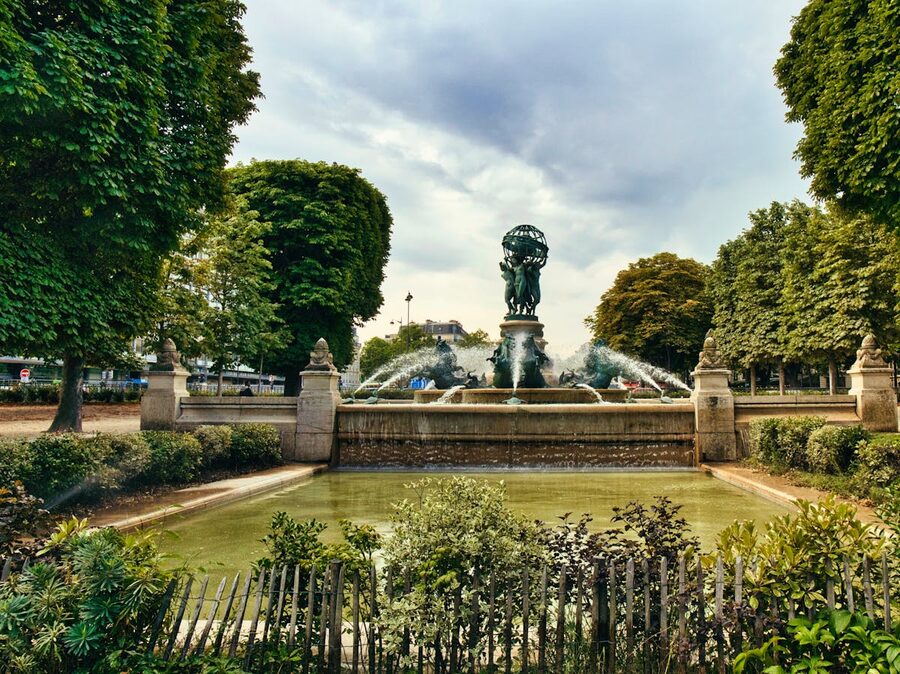
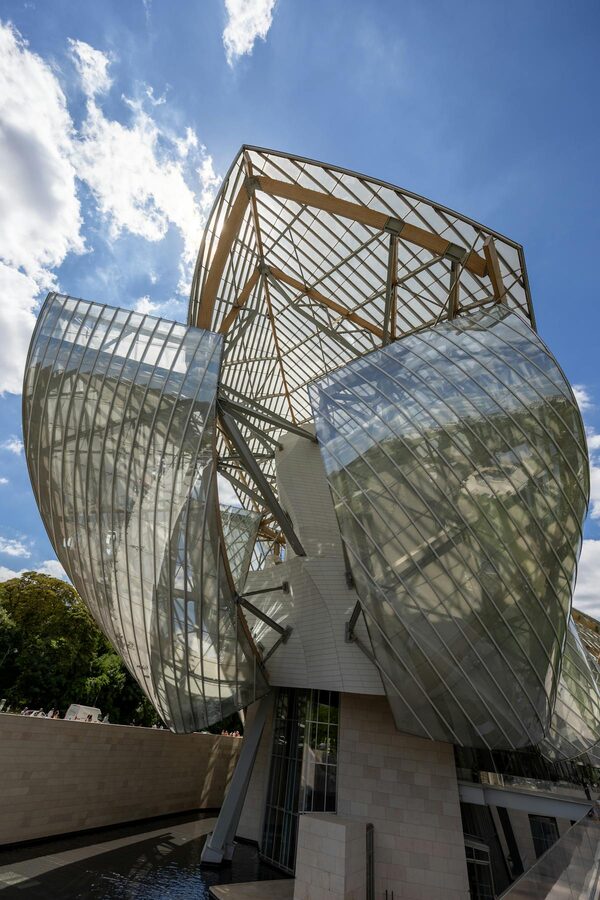
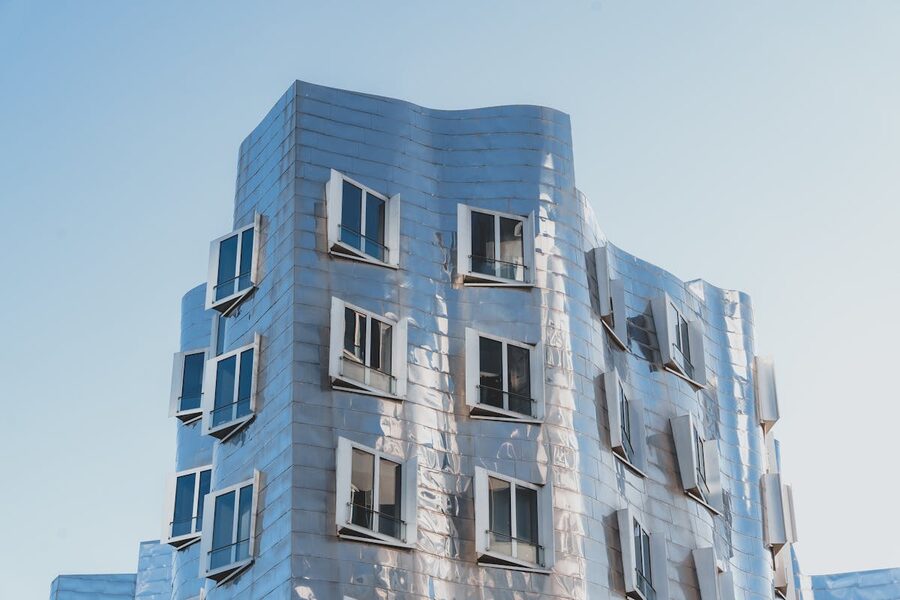
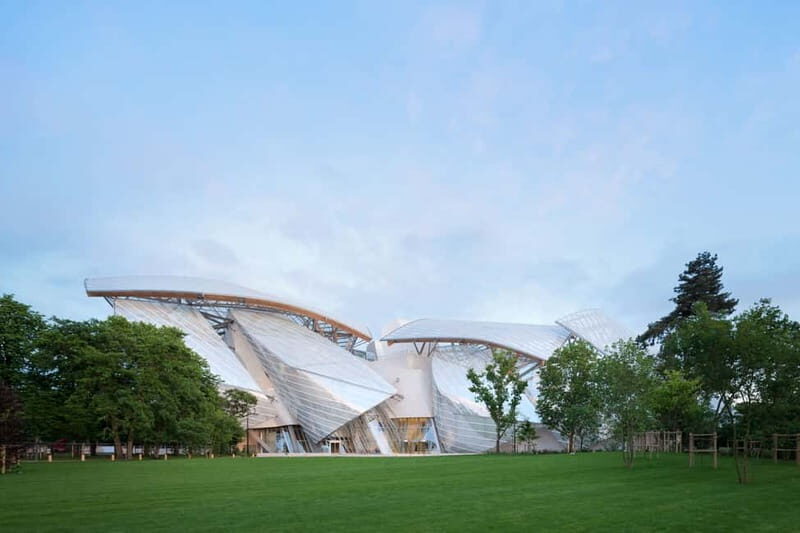
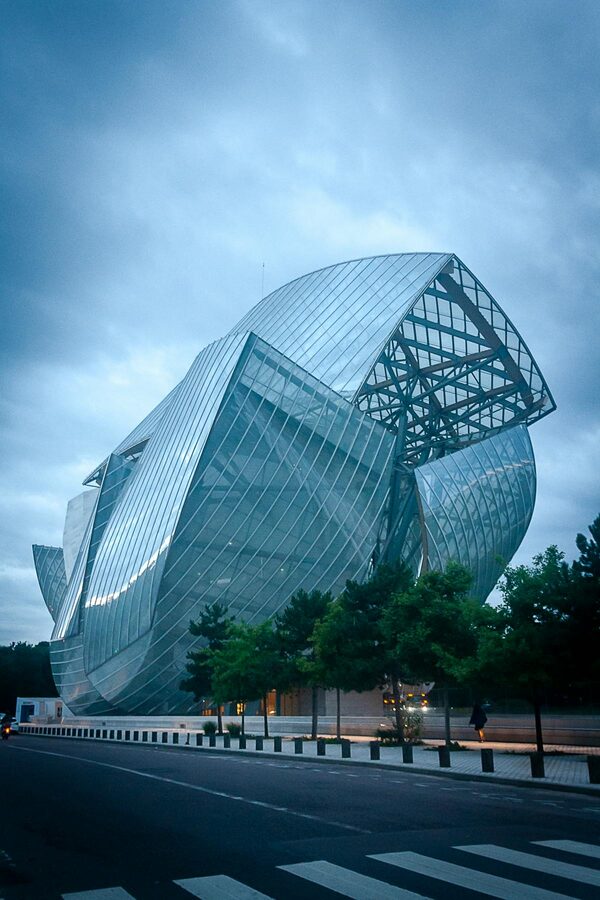
The building looks like it is trying to fly. Twelve glass sails — some curved, some angled, some doing things that glass should not be able to do — rise from the edge of the Bois de Boulogne like a ship that crashed into a park and decided to stay. Frank Gehry designed it. LVMH paid for it. And whatever you think about luxury fashion conglomerates funding contemporary art, the result is the most visually striking building constructed in Paris since the Pompidou Centre in 1977.
I went expecting to look at art. I spent the first 20 minutes looking at the building.
The Fondation Louis Vuitton is not just a museum — it is an architectural experience that happens to contain art. The permanent collection is strong (Giacometti, Richter, Klein, Boltanski), the temporary exhibitions are consistently world-class, and the rooftop terraces offer a view of western Paris that most visitors do not know exists.
At $25 for skip-the-line entry, it is one of the best-value museum tickets in the city.
- Quick Picks
- How to Get Tickets
- Why Book Through GetYourGuide
- Free Entry
- What You Will See Inside
- The Building Itself
- The Permanent Collection
- Temporary Exhibitions
- The Tour — What to Expect
- Fondation Louis Vuitton Premium Access Ticket —
- Getting to the Fondation
- When to Visit
- Best Time of Day
- Best Day of the Week
- How Long to Spend
- Practical Tips
- The Architecture: Why the Building Matters
- A Brief History
- Fondation LV vs. Other Paris Art Museums
- Combine the Fondation With These Experiences
Quick Picks
How to Get Tickets
The Fondation sells timed-entry tickets online. You pick a date, pick a time slot, and show up with your confirmation. The ticket costs around $25 (16 euros) through GetYourGuide, which matches the direct price but adds flexible cancellation.
Why Book Through GetYourGuide
The GYG ticket includes skip-the-line access and free cancellation up to 24 hours before your visit. The direct ticket from the Fondation website is the same price but typically has a stricter cancellation policy. If your Paris plans might change, GYG gives you more flexibility for the same cost.
Free Entry
Free for visitors under 18. Free for EU residents under 26. And free for everyone on the first Sunday of each month from September to February. The free Sundays are popular — arrive early or expect queues.
What You Will See Inside
The Building Itself
Before you even reach the art, the building demands attention. The ground floor atrium is a double-height space where the glass sails are visible from inside, creating a cathedral-like effect with natural light filtering through the curved panels. Escalators take you through the levels, each offering different views of the glass structure and the surrounding gardens.
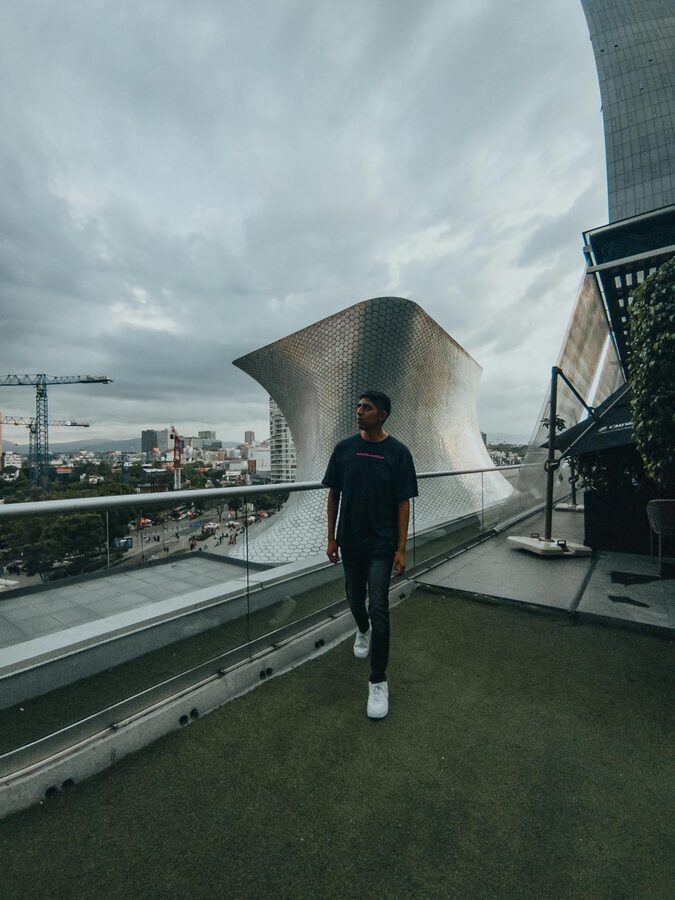
The rooftop terraces are the highlight for many visitors. Multiple outdoor platforms are connected by walkways between the glass sails, offering views over the Bois de Boulogne to the west and the Paris skyline (including a surprisingly good Eiffel Tower view) to the east.
The Permanent Collection
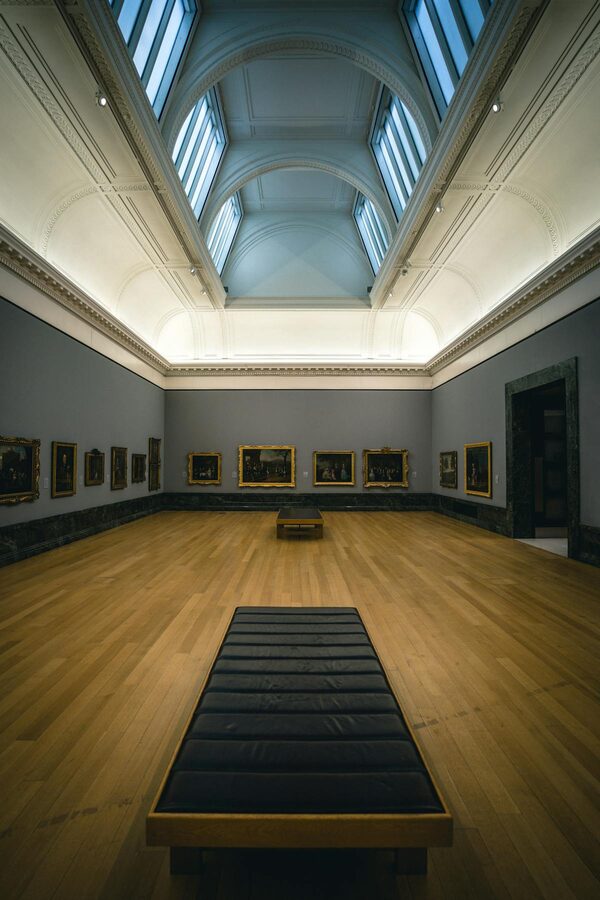
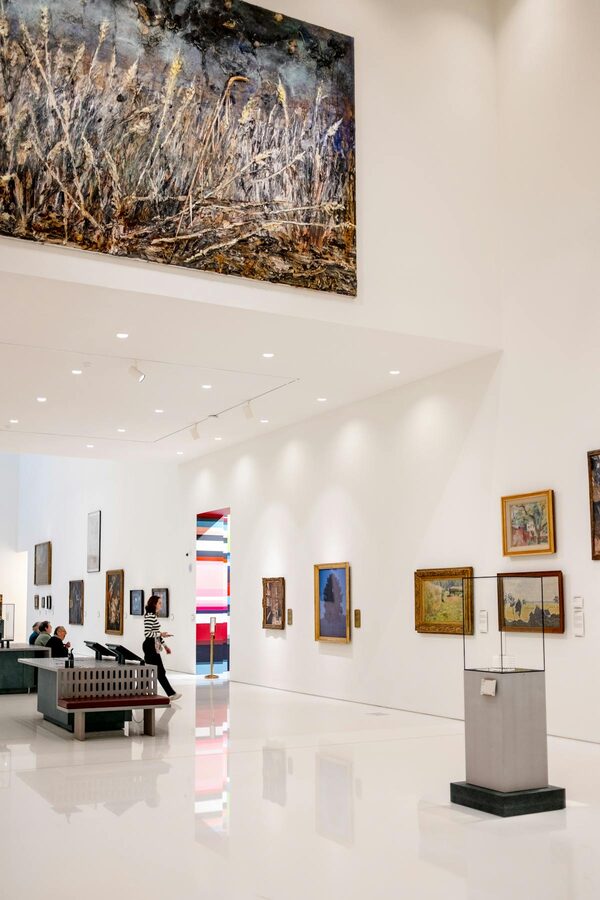
The Fondation’s permanent collection focuses on 20th and 21st-century art. Key works include pieces by Gerhard Richter, Ellsworth Kelly, Olafur Eliasson, Christian Boltanski, and Alberto Giacometti. The collection is not enormous — this is not the Louvre — but every piece was selected to interact with the building’s spaces, which gives the viewing experience an intentionality that larger museums cannot match.
Temporary Exhibitions
The temporary exhibitions are what bring most repeat visitors. The Fondation stages 2-3 major shows per year, often focusing on a single artist at monographic scale. Recent exhibitions have included Gerhard Richter, Basquiat, Mark Rothko, and a joint show of Monet and Joan Mitchell. The quality is consistently at the level of the Tate Modern or MoMA — this is A-list contemporary art curation.
Check the Fondation website before booking to see what is currently showing. The exhibition determines much of the visit experience.
The Tour — What to Expect
Fondation Louis Vuitton Premium Access Ticket — $25
This is a self-guided visit — there is no guided tour included. You explore at your own pace, which is the right approach for a building this visually rich. Most visitors spend 90 minutes to 2 hours, but you could easily spend 3 if the exhibition is strong and you linger on the rooftop terraces.
One reviewer highlighted the beautiful exposition by Gerhard Richter and mentioned the cafe closes at 5pm — a useful detail if you plan to end your visit with a drink overlooking the park. The cafe, called Le Frank, is run by chef Jean-Louis Nomicos and serves proper French food at museum-restaurant prices.
The audio guide is available as an app and is free with your ticket. It covers both the architecture and the current exhibition. Download it before arrival to avoid using museum WiFi.
Getting to the Fondation
The Fondation sits on the northern edge of the Bois de Boulogne, which is not centrally located. Getting there requires a little planning, but there are several options.
Free shuttle bus: A free shuttle runs from the Arc de Triomphe (Place Charles de Gaulle) to the Fondation every 10-15 minutes during opening hours. The ride takes about 12 minutes. This is the easiest option from central Paris.
Metro: Les Sablons (Line 1) is the closest station, about a 10-minute walk through the Jardin d’Acclimatation. The walk is pleasant — it goes through one of Paris’s most underrated parks.
By car/taxi: The Fondation has its own drop-off area. Uber and taxi from central Paris take 15-25 minutes depending on traffic.
When to Visit
Best Time of Day
Opening time is your best bet. The Fondation opens at 11am (noon on weekdays depending on the period) and the first hour is reliably the quietest. The rooftop terraces are best in the afternoon when the sun is on the western side and the glass sails glow. Late afternoon before closing is also quieter than midday.
Best Day of the Week
Weekdays are significantly less crowded than weekends. Saturday is the busiest day. If you can visit on a Wednesday or Thursday, you will have much more space in the galleries and shorter queues for the terraces.
How Long to Spend
90 minutes minimum. Two hours is comfortable. Three hours if you want to see everything, spend time on the terraces, and eat at Le Frank. The building rewards slow looking — the way the light changes through the glass panels is as much part of the experience as the art on the walls.
Practical Tips
Hours: Monday, Wednesday, Thursday: 11am-8pm. Friday: 11am-9pm (late night). Saturday-Sunday: 10am-8pm. Closed Tuesdays. Hours can vary — check the website before visiting.
Photography: Allowed in the building and on the terraces. Photography in the galleries depends on the exhibition — some artists allow it, others do not. Check at the entrance desk.
The cafe (Le Frank): Open during museum hours but closes 30-60 minutes before the museum. The terrace seating overlooking the Bois de Boulogne is the draw. Prices are in line with Paris museum cafes (15-25 euros for a main course). Worth it for the setting.
Accessibility: Fully wheelchair accessible with lifts to all levels including the rooftop.
The gift shop: LVMH runs the shop and it is exactly what you would expect — beautifully designed products at luxury prices. The architecture books about the building make excellent gifts and are reasonably priced.
The Architecture: Why the Building Matters
Frank Gehry is 97 years old and has been designing buildings that look impossible since the 1970s. The Fondation Louis Vuitton, completed in 2014, is widely considered his masterpiece — the building where every idea he had ever explored came together in a single structure.
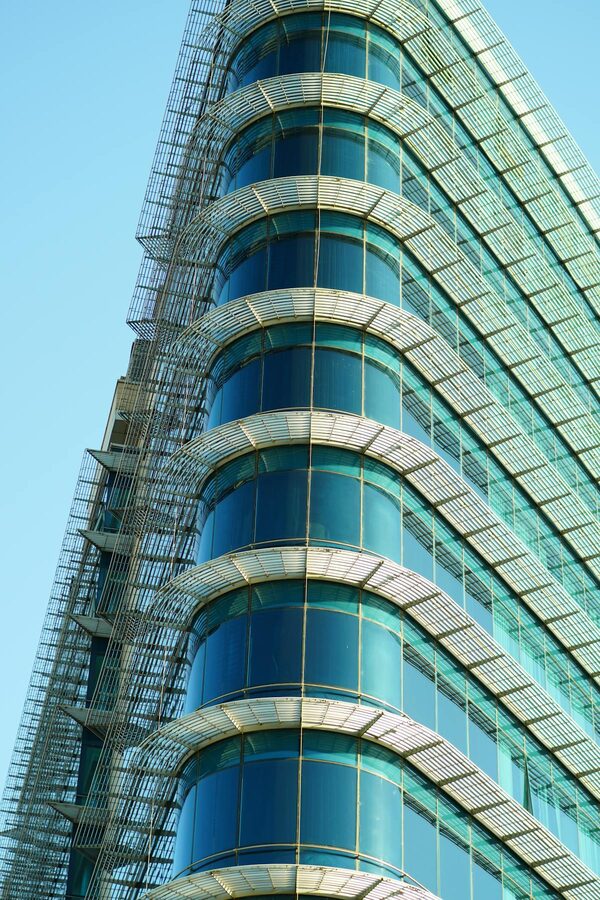
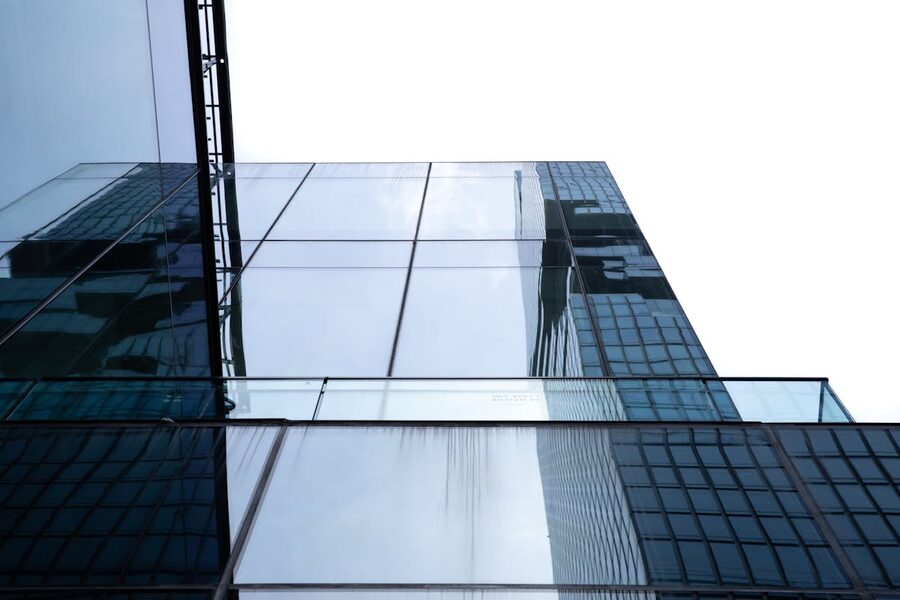
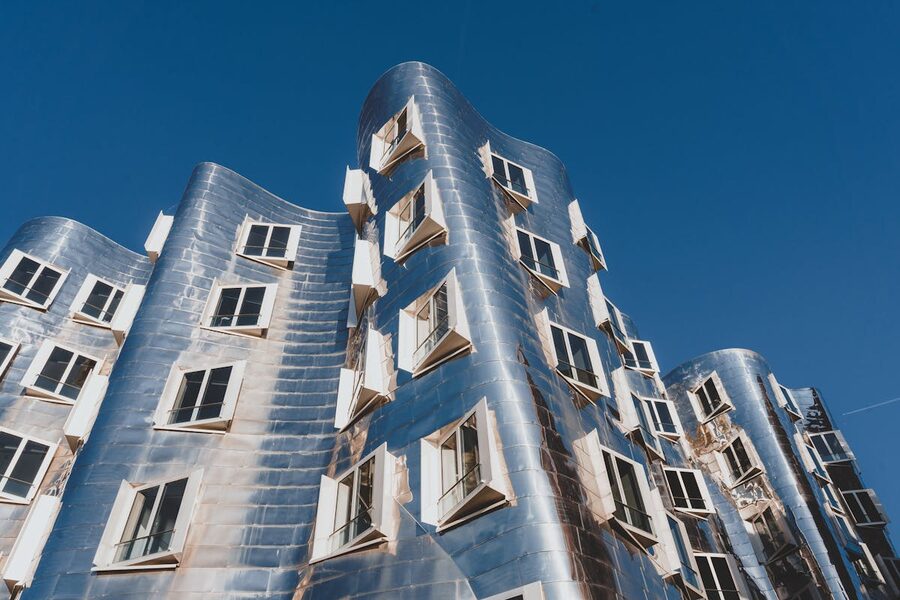
The design concept was a glass cloud floating above a concrete base. Twelve “sails” made of 3,600 custom-curved glass panels enclose and surround the gallery spaces without touching them. The sails are purely ornamental in the structural sense — they do not hold the building up. They exist to create an ever-changing play of light, reflection, and transparency that makes the building feel alive.
The engineering challenge was immense. Each glass panel is a unique shape, curved in three dimensions. The steel framework that holds them weighs 400 tonnes. The software used to design the building was adapted from aerospace engineering — the same programs used to design fighter jets. Construction took 8 years and required techniques that did not exist when the project started.
The result is a building that changes appearance depending on where you stand, what time of day it is, and what the weather is doing. On a sunny morning it glows gold. Under cloud cover it turns silver. In rain, the wet glass creates a mirror effect that blurs the boundary between building and sky. Critics have compared it to an iceberg, a ship, a butterfly, and a flower. Gehry prefers “cloud.”
A Brief History
Bernard Arnault, chairman of LVMH and one of the wealthiest people in the world, commissioned Gehry in 2006. The brief was simple: create a building that could house a world-class art collection and serve as a cultural landmark for Paris. The budget was initially 100 million euros. It finished at around 143 million.
The site — in the Jardin d’Acclimatation at the edge of the Bois de Boulogne — was controversial. Environmental groups argued against building in a public park. The project went through multiple legal challenges before construction began in 2008. The building finally opened in October 2014, eight years after the commission.
The agreement with the City of Paris stipulates that the Fondation will eventually revert to public ownership after 55 years. Until then, it operates as a private cultural institution funded by LVMH. The exhibitions are curated independently of the parent company’s commercial interests — a point that the Fondation emphasises and that the quality of the shows supports.
Fondation LV vs. Other Paris Art Museums
If you want Impressionism: Go to the Orangerie or the Orsay. The Fondation is contemporary, not classical.
If you want everything: Go to the Louvre. The Fondation is focused and curated; the Louvre is an ocean.
If you want modern + contemporary: The Fondation and the Pompidou Centre are the two poles of contemporary art in Paris. Pompidou has the permanent collection (Picasso, Kandinsky, Duchamp). The Fondation has the temporary exhibitions and the building. Ideally, see both.
If you love architecture: The Fondation is the only answer. No other museum in Paris — arguably in Europe — treats the building as equal to the art. If you visit one “non-traditional” museum in Paris, this should be it.
Combine the Fondation With These Experiences
The Fondation is in western Paris, away from the main tourist circuit. Combine it with the Arc de Triomphe — the free shuttle departs from there, so you can climb the Arc first and take the shuttle to the Fondation after. Or pair it with a Paris photo shoot at the Trocadero in the morning — the shuttle from the Arc is a 10-minute walk from Trocadero, making it a natural sequence.
For a full modern-art day in Paris, do the Fondation in the morning, take the shuttle back to the Arc, then metro to the Pompidou Centre for the afternoon. Two of the most important contemporary art spaces in Europe, back to back, for a combined cost of about $40.