
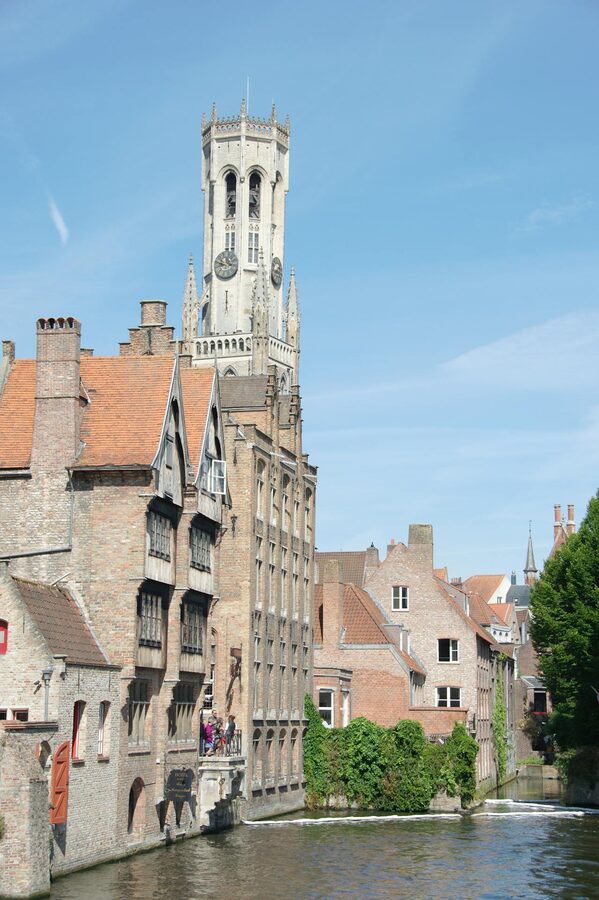
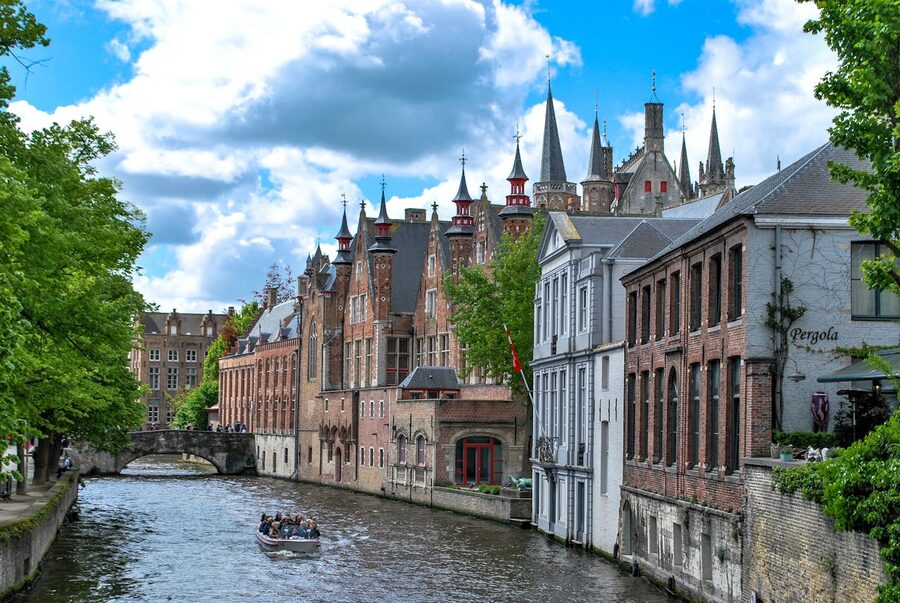
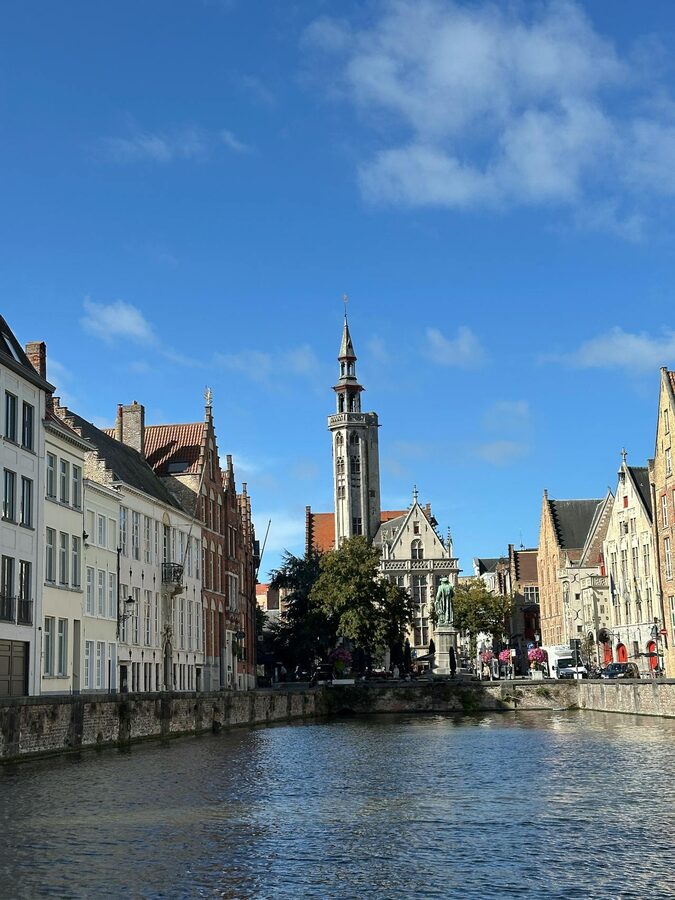
The canal boat was gliding past a row of medieval houses when the guide said something that stuck with me: “Bruges died in the 15th century, and that’s why it’s so beautiful.” He meant it as a compliment. When the harbour silted up and trade moved to Antwerp, the city froze in time. Nobody had money to tear down the old buildings and replace them with something modern. So they stayed. And now Bruges looks exactly like a medieval trading city should look — canals, gabled houses, cobblestone squares, and a belfry tower that hasn’t changed since the cloth merchants built it 700 years ago.
Bruges as a day trip from Paris is a long day — about 14 hours door to door — but it’s one of the most popular excursions from the French capital. The drive or TGV takes 2.5–3 hours each way, leaving you roughly 4–5 hours in the city. That’s enough to walk the centre, take a canal cruise, eat chocolate, drink Belgian beer, and understand why UNESCO gave the entire old town World Heritage status.
Best for Belgium fans: Brussels + Bruges from Paris — $265, covers both cities in one day with stops at key landmarks.
Best small group: Bruges by Minivan — $318, max 8 people, more personalised with flexible stops.
- How the Day Trip Works
- What to See in 4 Hours
- Chocolate and Beer: The Essentials
- Bruges vs. Going on Your Own
- What the Day Trip Doesn’t Cover
- A Brief History
- Best Tours to Book
- 1. Bruges Day Trip from Paris — 3
- 2. Brussels and Bruges from Paris — 5
- 3. Bruges by Minivan (Small Group) — 8
- Practical Tips
- Other Day Trips from Paris
How the Day Trip Works
Most Bruges day trips from Paris follow the same pattern. Early morning departure (6:30–7:30am) from central Paris by coach or minivan. The drive takes about 3 hours via the A1 motorway through northern France into Belgium. You arrive around 10:30am. A guided walking tour of 1.5–2 hours covers the main sights. Then you have 2–3 hours of free time for the canal cruise, lunch, shopping, chocolate, and beer. Departure around 4:30–5pm, back in Paris by 8pm.
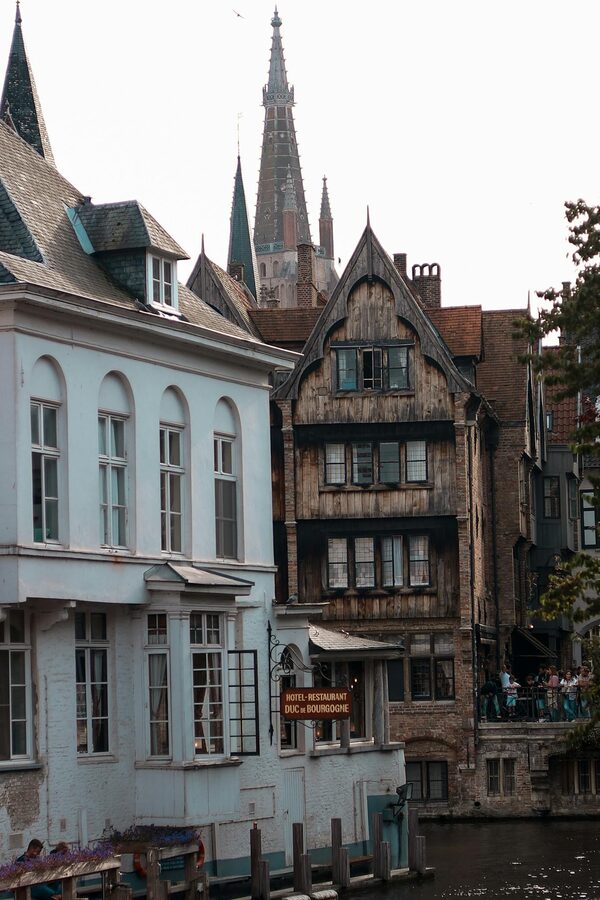
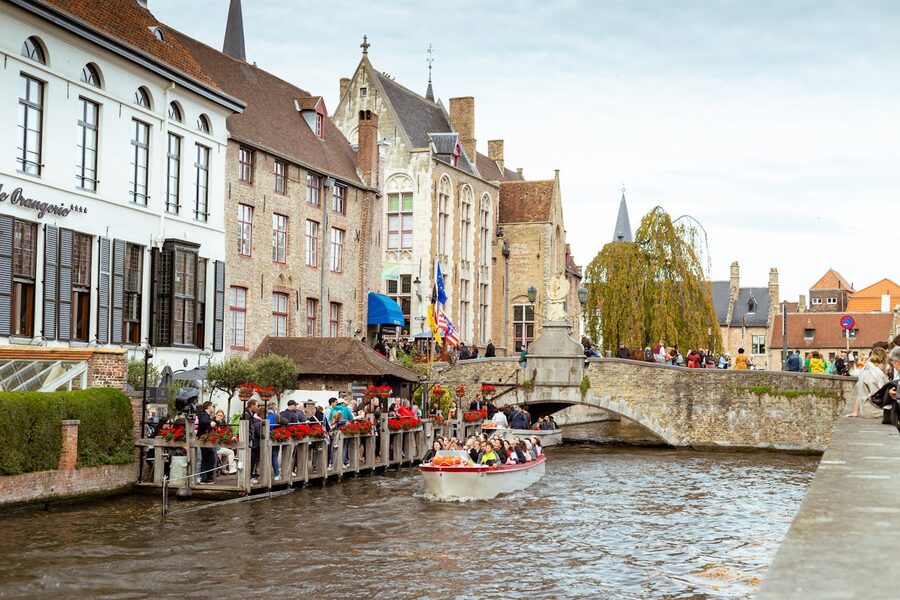
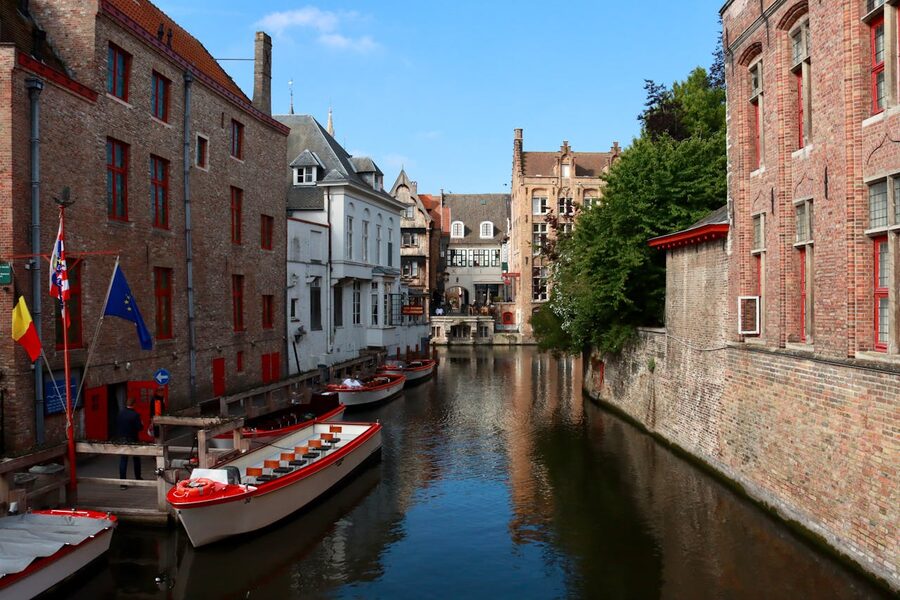
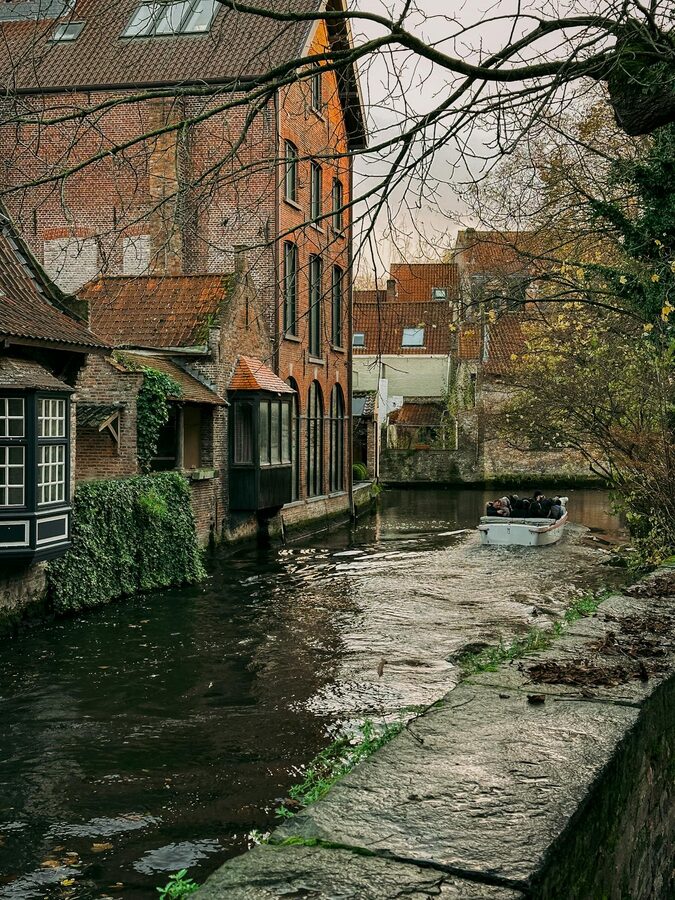
The canal cruise is usually optional and costs an extra €10–12 on top of the tour price. Take it. The 30-minute boat ride shows you angles of the city that you can’t see from street level, and the guides on the boats are often more entertaining than the walking tour guides — they’ve been doing the same route for years and the jokes are polished.
What to See in 4 Hours
Bruges is compact — the entire old town fits inside a medieval moat that you can walk around in about 45 minutes. Everything worth seeing is within a 10-minute walk of the Markt square. With 4 hours of free time, here’s a realistic itinerary:
Hour 1: The guided tour. Covers the Markt, the Belfry (from outside), the Burg square, the Basilica of the Holy Blood, and the canal bridges. Good orientation, sets the context.
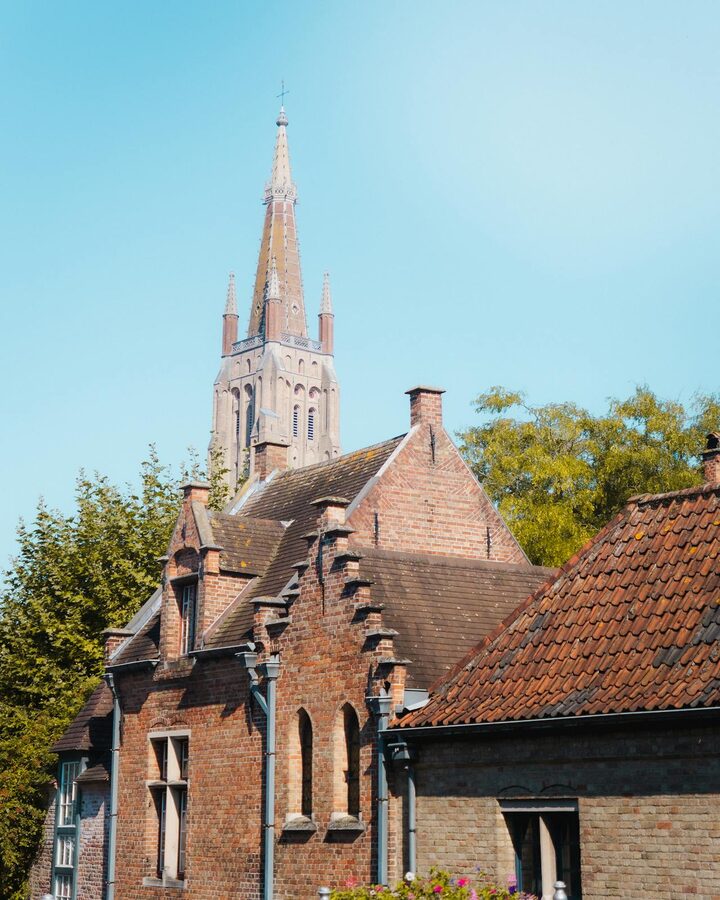
Hour 2: Canal cruise + Béguinage. Take the canal cruise (30 minutes), then walk to the Béguinage — a 13th-century complex of white-washed houses around a courtyard, originally home to a community of religious women. It’s one of the most peaceful spots in the city, and Benedictine nuns still live there. Free to walk through the courtyard.
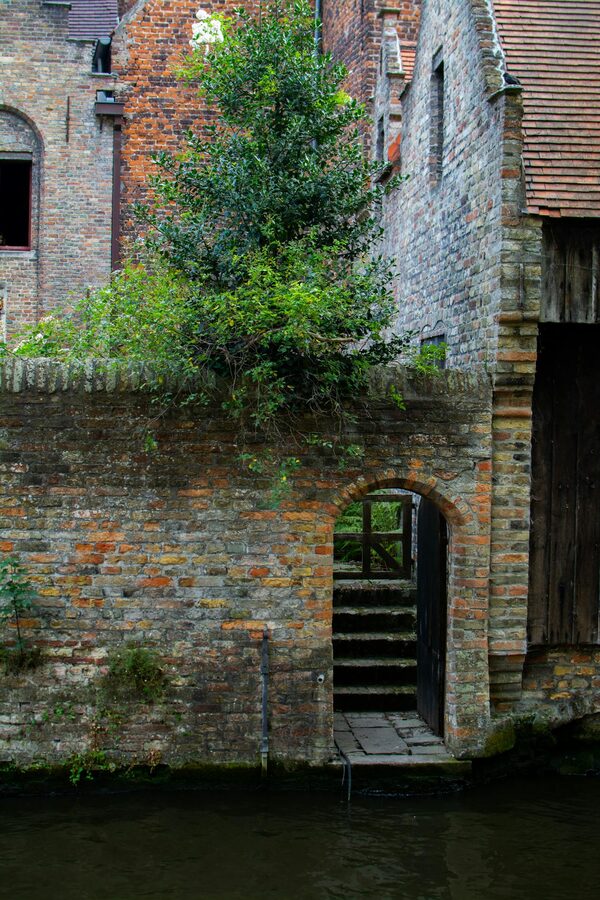
Hour 3: Lunch + chocolate + beer. Eat at one of the restaurants on the smaller squares (avoid the Markt — overpriced). Try the Flemish stew (stoofvlees) or moules-frites. Visit a chocolate shop — Bruges has over 50, and the good ones (Dumon, The Chocolate Line, Pralinette) make everything by hand. Then find a beer bar.
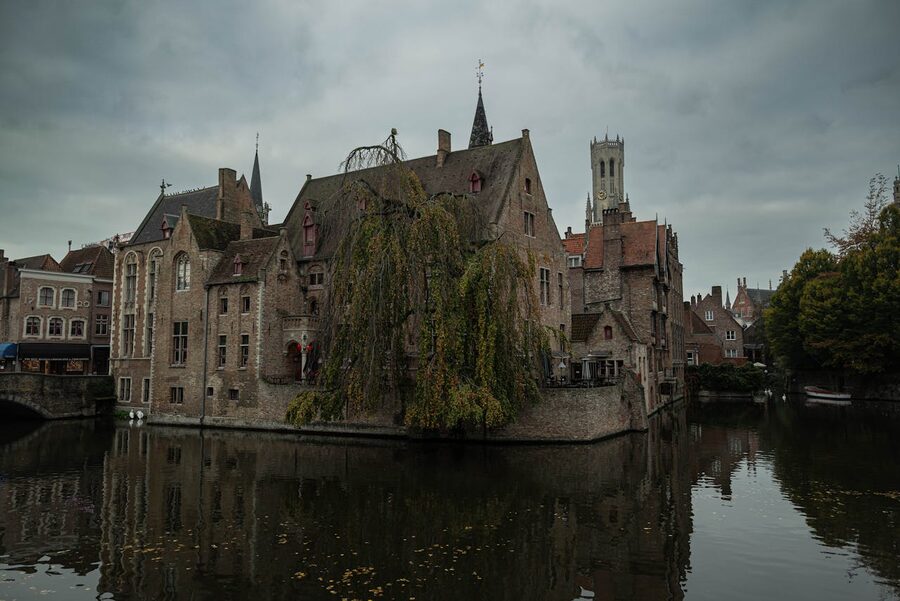
Hour 4: Wander. Get lost in the back streets. The tourist crowds thin out quickly once you leave the main squares. The Langerei canal, the Sint-Anna quarter, and the windmills along the outer canal are all within walking distance and feel like a different city — quieter, more residential, more real.
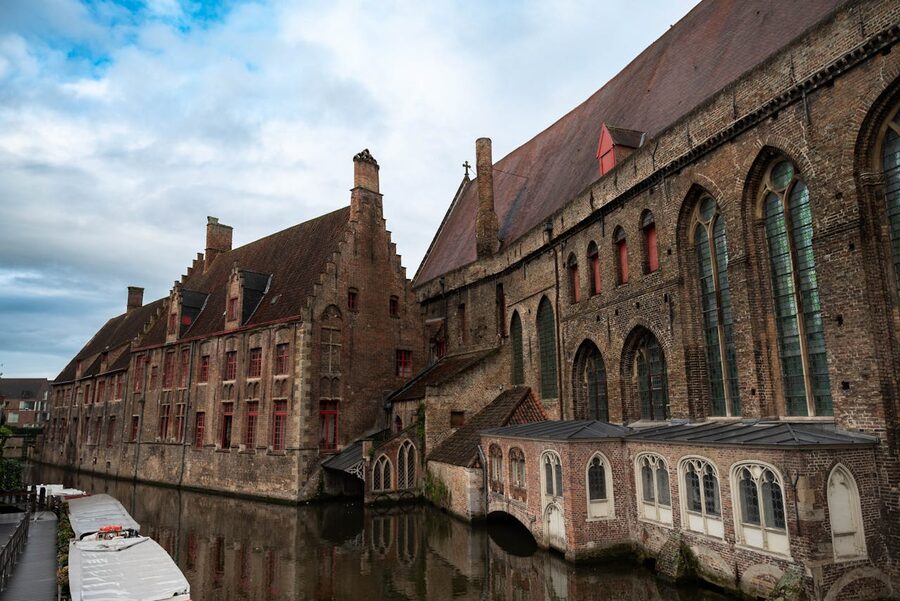
Chocolate and Beer: The Essentials
Belgian chocolate is the real reason many people take this trip, whether they admit it or not. The quality of handmade pralines in Bruges is genuinely different from what you can buy in Paris or London — fresher, less sweet, and more complex. The chocolate shops offer free tastings, which means you can eat your way down an entire street without buying anything. (You’ll buy something.)
Belgian beer is the other pillar. Bruges has several beer bars, but the must-visit is ‘t Brugs Beertje — 300+ beers on the menu in a tiny bar that seats about 40 people. If that’s too crowded, Café Rose Red on Cordoeaniersstraat has a similarly impressive list in a more relaxed setting. Order a Brugse Zot (the local Bruges beer) or a Westmalle Tripel if you want something stronger. Don’t drink more than two before you need to find the coach — Belgian beer is deceptively strong.
Bruges vs. Going on Your Own
You can absolutely do Bruges independently from Paris. The Thalys/Eurostar runs from Paris Gare du Nord to Brussels in 1h22, then a Belgian IC train takes another hour to Bruges. Total: about 2.5 hours, roughly €60-100 return depending on when you book. This gives you more time in Bruges (leave earlier, return later) and costs less than the guided tour.
The case for the tour: no logistics to manage, a guide who knows the city, hotel pickup, and the coach means you can sleep on the way back. The case against: you’re locked into the group’s schedule, the free time is limited, and the 14-hour day is long on a bus.
What the Day Trip Doesn’t Cover
Four hours in Bruges gives you the highlights but misses the depth. If you come back independently, here’s what’s worth a longer stay. The Groeningemuseum has one of the world’s best collections of Flemish Primitive paintings — Van Eyck, Memling, Bosch, and others. The Sint-Janshospitaal (St John’s Hospital) is a medieval hospital turned museum with a Memling chapel. The Choco-Story museum traces the history of chocolate from the Aztecs to the Belgian praline. And the De Halve Maan brewery tour (€18, includes a beer) takes you through the only remaining family brewery inside the old town walls.
My recommendation: if this is your only chance to see Bruges and you don’t want to deal with Belgian train schedules, take the tour. If you’re comfortable with independent travel and have flexibility in your Paris schedule, go by train — you’ll get 6-8 hours in the city instead of 4, and the TGV is more comfortable than a coach.
A Brief History
Bruges was one of the richest cities in Europe during the 13th and 14th centuries. Flemish cloth trade made it the commercial centre of northwest Europe — a medieval version of London or New York, where international merchants gathered and money flowed. The city had the first stock exchange (the Beurs, from which the word “bourse” derives) and was home to pioneering artists like Jan van Eyck and Hans Memling.
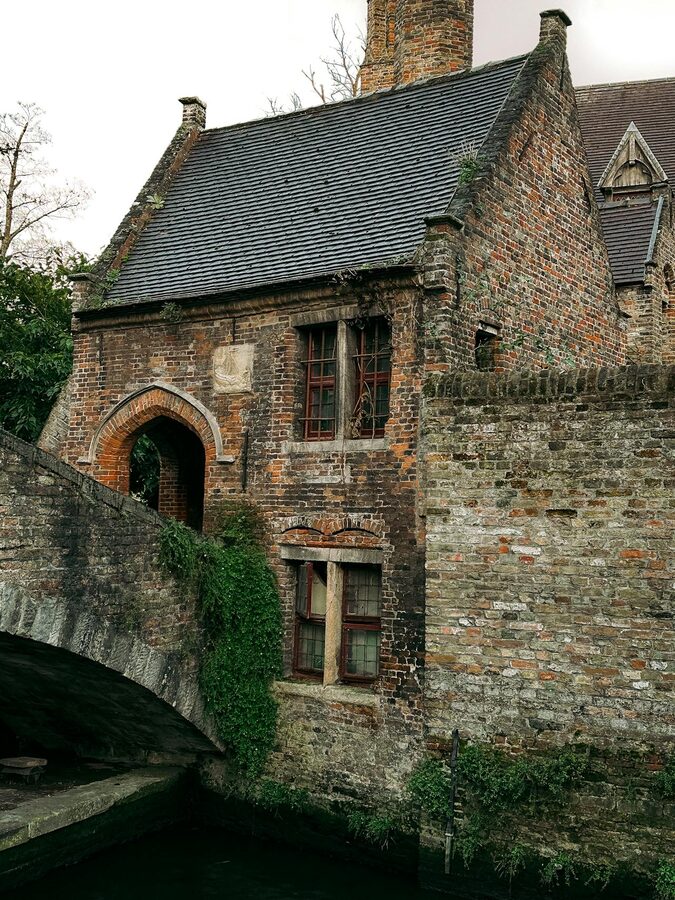
Then the Zwin channel to the sea silted up, trade shifted to Antwerp, and Bruges fell into a long economic sleep that lasted until the late 19th century. The poverty meant no one could afford to demolish the medieval buildings. When tourism arrived in the early 1900s, Bruges had accidentally preserved itself as the most complete medieval city in Europe. The entire centre was designated a UNESCO World Heritage Site in 2000.
Best Tours to Book
1. Bruges Day Trip from Paris — $193
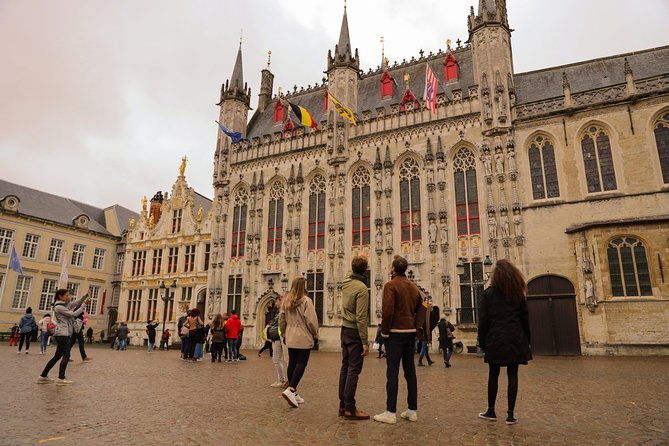
The standard option and the one with the most reviews. Coach from central Paris to Bruges with a guided walking tour and optional canal cruise. Fourteen hours is long, but the city at the other end justifies the journey. The audio-guided option is slightly cheaper; the live-guided version has a local guide who adds stories and context that audio can’t match. Our review covers both versions and explains which free-time activities to prioritise.
2. Brussels and Bruges from Paris — $265
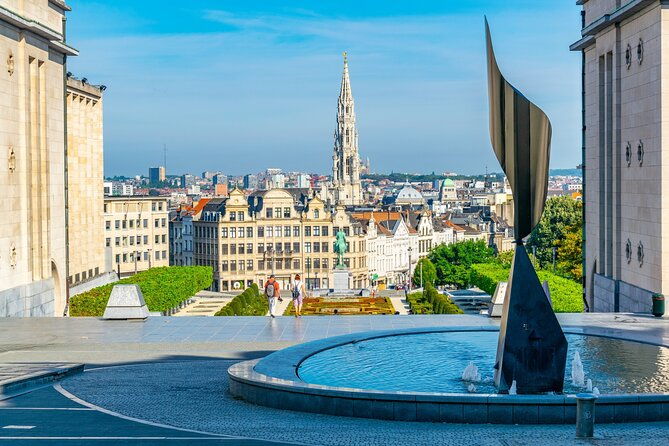
If you can’t choose between Brussels and Bruges, this covers both. The day starts in Brussels (Grand Place, Manneken Pis, the chocolate quarter), then moves to Bruges for the afternoon. You get less time in each city than the single-destination trips, but the variety makes up for it. The 4.5 rating across 219 reviews is strong for a two-city itinerary. Our review evaluates whether the split format gives enough time in each city to feel satisfying.
3. Bruges by Minivan (Small Group) — $318
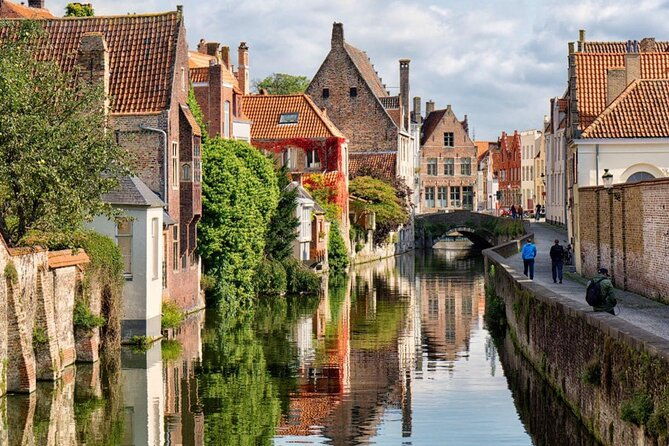
The luxury option. Maximum 8 passengers in a minivan, which means comfortable seats, conversation with the guide, and flexible stops. The higher price reflects the personalised experience — the driver-guide can adjust the itinerary based on the group’s interests and the small vehicle navigates Bruges’s narrow streets more easily than a coach. Our review explains why the 5.0 rating is justified and whether the premium over the standard tour is worth paying.
Practical Tips
When to go: April through October for the best weather and longest daylight. July and August are peak tourist season — Bruges is small and the main streets get crowded. May, June, and September are ideal. Winter (especially December with the Christmas market) has a different charm — fewer crowds, frost on the canals, and mulled wine at every corner.
What to eat: Moules-frites (mussels and fries) is the classic. Stoofvlees (Flemish beef stew cooked in beer) is the comfort food. Belgian waffles — the Liège style (dense, caramelised) from a street vendor, not the Brussels style (light, square) from a tourist trap. Frites from a frituur (chip stand) with andalouse or samurai sauce. And of course, chocolate. Budget €20-30 for a sit-down lunch, €5-10 for street food.
Currency: Belgium uses the euro, same as France. No currency exchange needed.
Language: Bruges is in the Flemish (Dutch-speaking) part of Belgium. English is widely spoken in tourist areas. French is understood but not always appreciated — the Flemish-French language tension is a Belgian thing. Stick to English and you’ll be fine.
Other Day Trips from Paris
If Bruges appeals but the 14-hour day trip feels too long, several closer destinations offer similar medieval charm without the Belgium border crossing. The Lille city tours cover a Flemish-influenced French city that’s only 1 hour from Paris by TGV — similar architecture, similar beer culture, and no passport needed. The Champagne day trip to Reims is 45 minutes from Paris and combines medieval cathedrals with underground champagne cellars. And for a completely different direction, the Provence day trips from Avignon trade medieval canals for lavender fields and Roman ruins. Bruges is unique — no French city looks quite like it — but if the logistics don’t work, France has plenty of alternatives that deliver beauty and history without the 6-hour round trip.