
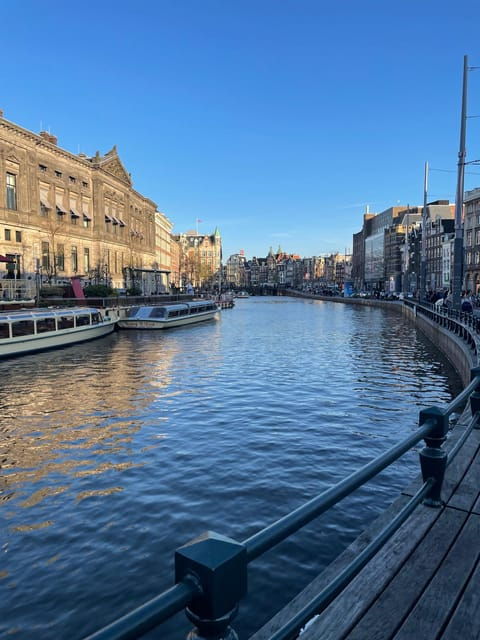
Amsterdam’s medieval city walls are a captivating relic of the past. Towering over the charming canals, these fortified structures symbolize the city’s transformation from a humble fishing village to a global trading powerhouse. As visitors stroll along the walls, they’ll uncover the strategic importance of these defenses and glimpse into the architectural marvels that defined Amsterdam’s Golden Age. What secrets do these time-honored walls hold? Explore further to discover the fascinating history that lies within.
- Key Points
- Origin of Amsterdam
- Defensive Towers and City Walls
- Expeditions and the Golden Age
- The Dutch East India Company
- The Dutch West India Company
- Rembrandt and 17th-Century Society
- Religious Influences Then and Now
- Unique Locations and the Walking Tour Experience
- Frequently Asked Questions
- What Is the Meeting Time for the Tour?
- Is There a Dress Code for the Walking Tour?
- Can I Take Photos During the Tour?
- Are There Restroom Facilities Along the Tour Route?
- Is the Tour Wheelchair Accessible?
- The Sum Up
- More 1-Day Tours in Amsterdam
- More Private Tours in Amsterdam
- More Tour Reviews in Amsterdam
- Still browsing? Here are more Amsterdam experiences we've covered recently
Key Points
-
The medieval city walls of Amsterdam were fortified with a series of defensive towers serving strategic purposes, such as guarding the city’s mint and protecting vital canals.
-
Remnants of these defensive towers, like the Munttoren and Regulierstoren, allow visitors to explore and gain insights into the city’s medieval architectural heritage.
-
The city walls and towers provided vital protection for Amsterdam during its transformation into a global trading powerhouse and the center of the Dutch maritime empire.
-
Exploring the city’s medieval defensive structures offers a glimpse into the challenges and strategies employed by Amsterdam to safeguard its growing economic and political influence.
-
The defensive towers and city walls represent the evolution of Amsterdam from a small fishing village to a prosperous trading hub, reflecting the city’s rich medieval history.
Origin of Amsterdam
Although Amsterdam began as a small fishing village in the 13th century, it soon grew into an important trading hub due to its strategic location on the Amstel River.
The village’s name derived from the dam constructed on the river. As trade and commerce flourished, Amsterdam expanded rapidly, attracting merchants, artisans, and immigrants.
The city’s growth was further accelerated by the rise of the Dutch Republic in the 16th century, which made Amsterdam the center of a vast maritime empire.
This period of prosperity and expansion is known as Amsterdam’s "Golden Age," transforming the once-modest fishing town into a bustling metropolis.
Want to see more of Amsterdam? Here are other city tours we've reviewed
Defensive Towers and City Walls
The medieval city walls of Amsterdam served as the primary defensive system for the growing metropolis. Towering over the city, these walls were fortified with a series of defensive towers, each serving a strategic purpose.
The Munttoren, or Mint Tower, guarded the city’s mint, while the Regulierstoren protected the Reguliersgracht canal. These towers, along with the walls, provided vital protection against invaders, allowing Amsterdam to thrive during its Golden Age.
Today, visitors can explore the remnants of this historic fortification, gaining insights into the city’s past and the ingenuity of its medieval architects.
Expeditions and the Golden Age
As Amsterdam’s medieval defenses stood tall, the city’s ambitions reached far beyond its walls.
Towering medieval walls could not contain Amsterdam’s far-reaching ambitions.
During the Dutch Golden Age, the city became a global trading powerhouse, fueled by ambitious expeditions:
-
Voyages to the East Indies, establishing the Dutch East India Company and securing lucrative spice trade routes
-
Expeditions to Africa, leading to the founding of the Dutch West India Company and the colonization of New Amsterdam (now New York)
-
Explorations of the Arctic, searching for a Northeast Passage to Asia
These ventures transformed Amsterdam into an economic and cultural epicenter, driving its 17th-century renaissance.
The Dutch East India Company
The Dutch East India Company, founded in 1602, played a pivotal role in Amsterdam’s transformation into a global trading powerhouse during the Golden Age.
As a pioneering multinational corporation, it monopolized the spice trade and established overseas colonies. The company’s ships, the largest and most advanced of their time, traveled to Asia, Africa, and the Americas.
This influx of exotic goods and commodities fueled Amsterdam’s economy, enabling the city to flourish culturally and architecturally.
The East India House, the company’s headquarters, became a symbol of Amsterdam’s newfound wealth and global influence during this prosperous era.
More Great Tours NearbyThe Dutch West India Company
Whereas the Dutch East India Company monopolized the spice trade, the Dutch West India Company, founded in 1621, focused on the Atlantic trade.
The West India Company held a monopoly on the slave trade, the fur trade, and the tobacco trade in the Americas and West Africa.
Key achievements included:
-
Establishing colonies in New Netherland (New York), Suriname, and Curaçao
-
Capturing Spanish and Portuguese possessions in the Americas
-
Transporting over 500,000 enslaved Africans to the Americas
-
Generating significant profits for the Dutch Republic during its golden age
Despite controversy over its slave trading practices, the West India Company played a pivotal role in Dutch maritime and colonial expansion.
- Amsterdam: Luxury Canal Cruise Unlimited Drinks & Snacks Option
- Amsterdam Classic Saloon Boat Cruise, Drinks and Cheese Option
- All-Inclusive Amsterdam Canal Cruise With Drinks and Dutch Bites!
- Anne Frank Guided Walking Tour Through Amsterdams Jewish Quarter
- 2 Hour Small Group Canal Cruise W/ Dutch Snacks & Onboard Bar
- Amsterdam Canal Cruise on a Small Open Boat (Max 12 Guests)
Rembrandt and 17th-Century Society
Rembrandt van Rijn, one of the most celebrated painters of the Dutch Golden Age, masterfully captured the essence of 17th-century Dutch society through his captivating works. His portraits and genre scenes provide invaluable insights into the social structure, religious practices, and daily life of the era. The table below highlights some key aspects of 17th-century Dutch society as depicted in Rembrandt’s art:
| Social Class | Religious Beliefs | Economic Activities | Cultural Norms |
| — | — | — | — |
| Nobility | Calvinism | Trade | Strict social hierarchies |
| Merchants | Tolerance | Shipping | Modesty and austerity |
| Common People | Coexistence of faiths | Textile manufacturing | Emphasis on family and community |
Rembrandt’s masterful works continue to captivate audiences, offering a window into the vibrant and complex society of 17th-century Netherlands.
Religious Influences Then and Now
Religion has long been a defining aspect of Dutch society, and its influence continues to shape the country’s cultural landscape. Visitors exploring Amsterdam’s medieval city walls will discover the interplay between past and present religious practices:
-
The grand Zuiderkerk, a 17th-century Protestant church, stands as a testament to the Reformation’s impact.
-
Older Catholic churches, now secularized, have been repurposed into cultural centers, reflecting the decline of traditional religious institutions.
-
Diverse places of worship, from historic synagogues to modern mosques, dot the cityscape, showcasing the nation’s religious pluralism.
-
Secularism has also gained prominence, with many residents embracing a more individualistic approach to spirituality.
-
The city’s architecture and urban planning still bear the imprint of its religious heritage, creating a unique blend of the sacred and the secular.
Unique Locations and the Walking Tour Experience
As visitors embark on the medieval city walls walking tour, they’ll be immersed in a captivating exploration of Amsterdam’s lesser-known historic gems.
The tour takes them off the beaten path, unveiling unique locations that offer a glimpse into the city’s rich past. From winding canals to hidden alleyways, the guide shares fascinating insights, bringing the medieval era to life.
Participants will appreciate the tour’s focus on interesting and often overlooked sites, providing an exciting alternative to the generic tourist spots.
This immersive experience allows travelers to truly connect with Amsterdam’s medieval heritage.
Frequently Asked Questions
What Is the Meeting Time for the Tour?
The meeting time for the tour is not specified in the overview. Participants are instructed to meet at the main entrance to Central Station, but the exact departure time is not provided.
Is There a Dress Code for the Walking Tour?
There is no specific dress code for the walking tour. Participants should wear comfortable walking shoes and dress for the weather, as the tour takes place outdoors. The focus is on exploring the city, not formal attire.
Can I Take Photos During the Tour?
Yes, visitors are encouraged to take photos during the tour. The tour guide will provide opportunities to capture the unique locations and architecture along the route. Just be mindful not to obstruct the group or disrupt the tour.
Are There Restroom Facilities Along the Tour Route?
Yes, there are public restrooms along the tour route. Participants can find restroom facilities at Central Station before the tour starts, as well as at Nieuwmarkt en Lastage and Zuiderkerk during the walking portions of the tour.
Is the Tour Wheelchair Accessible?
The tour is not specifically wheelchair accessible. The walking route includes cobblestone streets and uneven surfaces that may pose challenges for those with mobility constraints. Guests should contact the tour provider to discuss any accessibility needs.
The Sum Up
Along Amsterdam’s medieval city walls, visitors can step back in time and explore the strategic defenses that protected the city during its prosperous Golden Age. These iconic towers and fortifications offer a glimpse into the city’s evolution from a small fishing village to a global trading powerhouse, reflecting the profound religious, cultural, and economic influences that shaped its rich history.
You can check availability for your dates here:More 1-Day Tours in Amsterdam
- Cross Into Belgium from Amsterdam: Unique Border Day Trip!
- From Amsterdam: Private Day Trip to Bruges
- From Amsterdam: Day Trip to Formula 1 Belgium Grand Prix
- From Amsterdam: Private day trip to Rotterdam and back
- From Amsterdam: Zaanse Schans and Giethoorn Day Trip
- From Amsterdam: Giethoorn Guided Day Trip with Canal Cruise
More Private Tours in Amsterdam
More Tour Reviews in Amsterdam
Still browsing? Here are more Amsterdam experiences we've covered recently
- The 7 Most Popular Workshops & Classes In Amsterdam
- Amsterdam’s 3 Best Private Driver Services
- What Are The Best Food Tours In Amsterdam? Our Top 9 Picks
- 13 Best Tours In Amsterdam (With Prices)
- Which Amsterdam Wine Tours To Choose? We Rank The 10 Best
- Amsterdam’s 14 Best Walking Tours: Which To Choose?
- Amsterdam’s 11 Top Cruises And Boat Tours (With Prices)
- 11 Top Dinner Experiences In Amsterdam (With Reviews & Prices)
- Amsterdam’s 13 Top Historical Tours (With Prices)
- 10 Fantastic Photography Experiences In Amsterdam
- 8 Must-Try Shopping & Market Tours In Amsterdam
- Amsterdam’s 12 Best Dining Experiences