
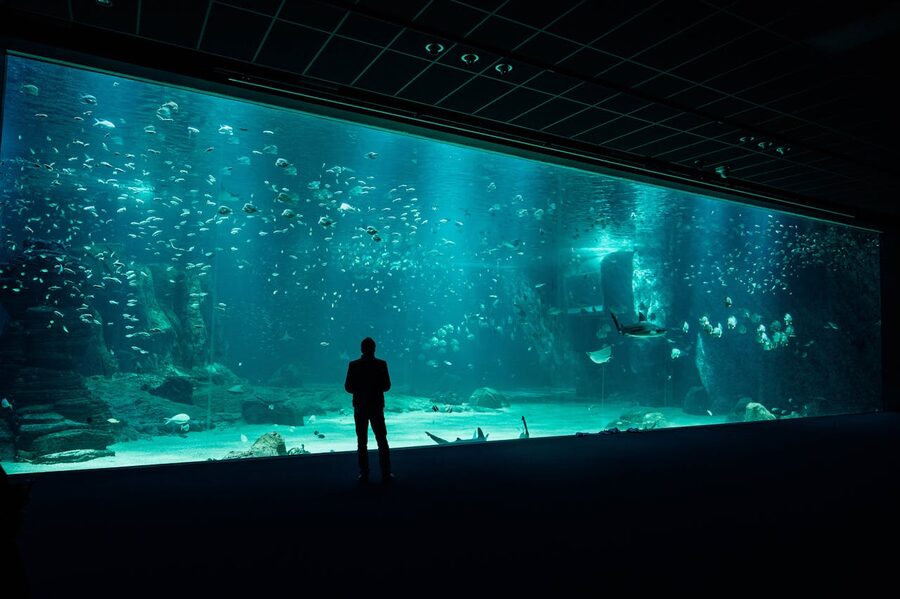
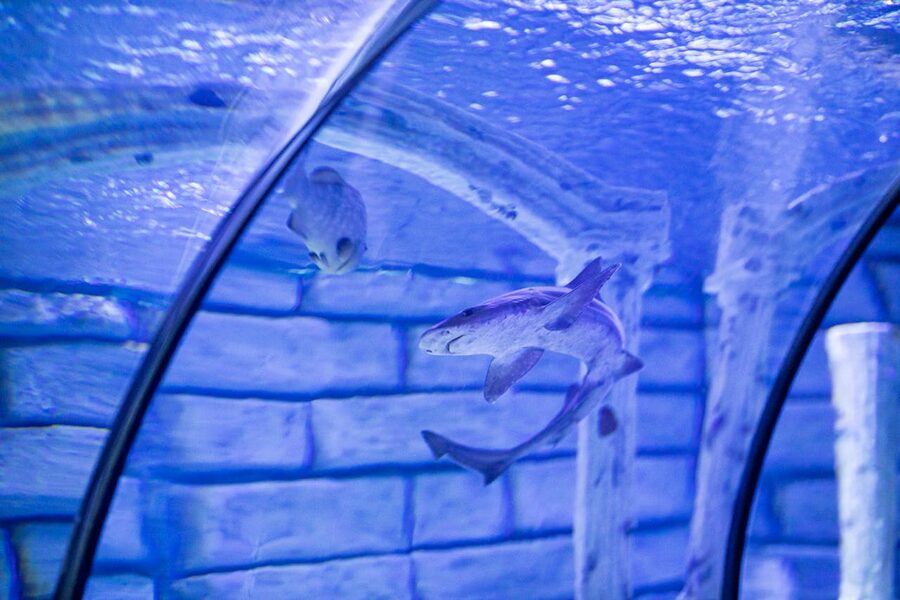
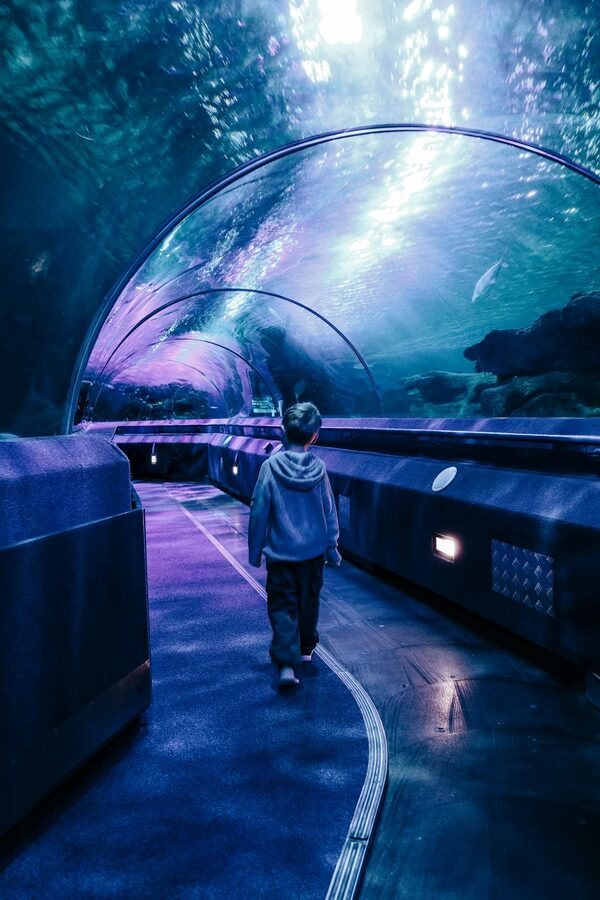
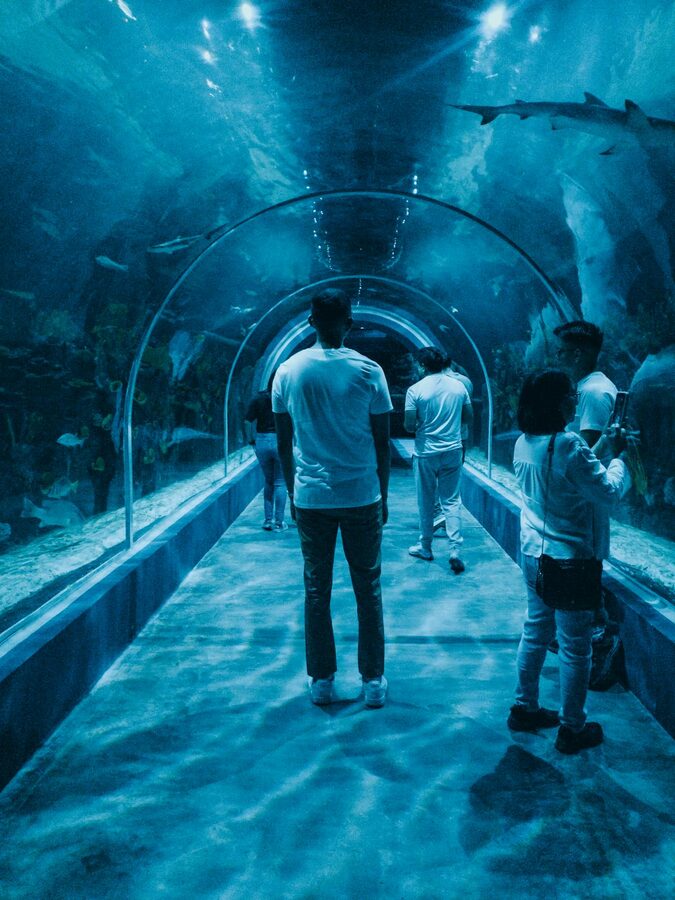
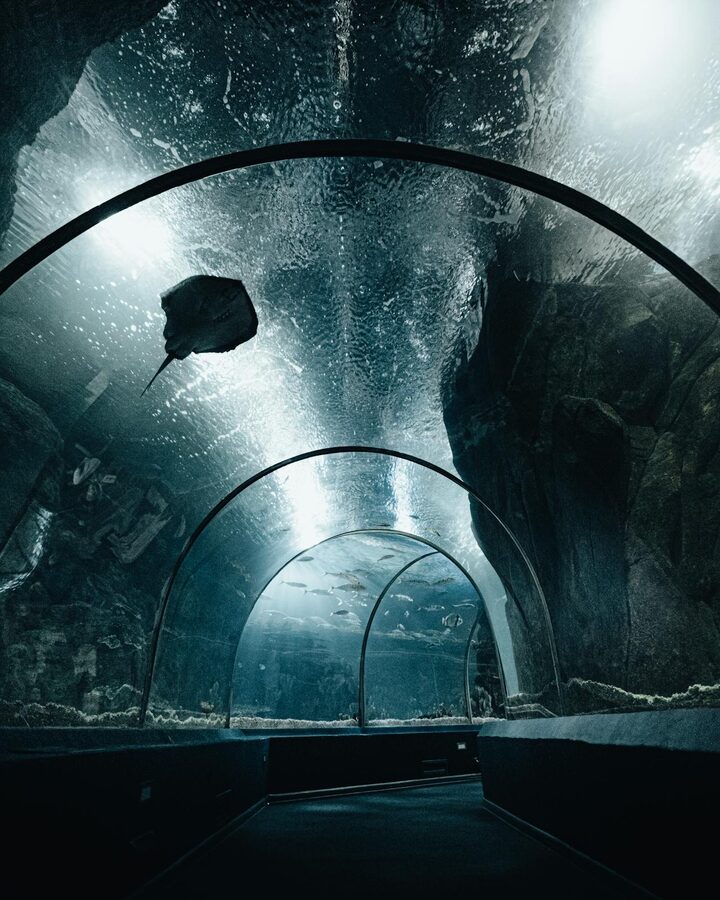
The hammerhead shark glided about two metres above my head and I forgot I was standing in a building. That’s the trick of Nausicaa — Europe’s largest aquarium manages to make you feel like you’re underwater even though you’re in a concrete box on the coast of northern France. The main tank holds 10,000 cubic metres of seawater and when you walk through the tunnel beneath it, with manta rays and sharks circling overhead, the illusion of being at the bottom of the ocean is complete. Your brain stops registering glass.
Nausicaa sits on the seafront in Boulogne-sur-Mer, a working fishing port on the English Channel that most British visitors know only as the town they drive through on the way to somewhere else. That’s a mistake. The aquarium alone is worth a detour of several hours, and Boulogne’s walled old town and fish market add up to a surprisingly good day out in a part of France that rarely makes the travel magazines.
Combine with: Boulogne Old Town Walking Tour — $8, guided walk through the medieval walled city above the port.
Nearby: Lille Museum of Illusions — $22, 1 hour, optical illusion museum in Lille (90 min from Boulogne).
- What You’ll See Inside
- How Long to Spend
- Booking Tickets
- The Aquarium’s Mission
- Boulogne-sur-Mer: The Town Around the Aquarium
- Best Tickets to Book
- 1. Nausicaa Entrance Ticket —
- 2. Boulogne Old Town Walking Tour —
- 3. Lille Museum of Illusions —
- Getting to Nausicaa
- Practical Tips
- The Opal Coast: Beyond the Aquarium
- More Northern France Experiences
What You’ll See Inside
Nausicaa is divided into two main sections. The original building (opened in 1991, expanded in 2018) covers marine ecosystems from around the world. The newer extension — “Voyage en Haute Mer” (Journey to the High Seas) — is the big-ticket addition with the 10,000-cubic-metre tank, the tunnel, and the manta ray experience.
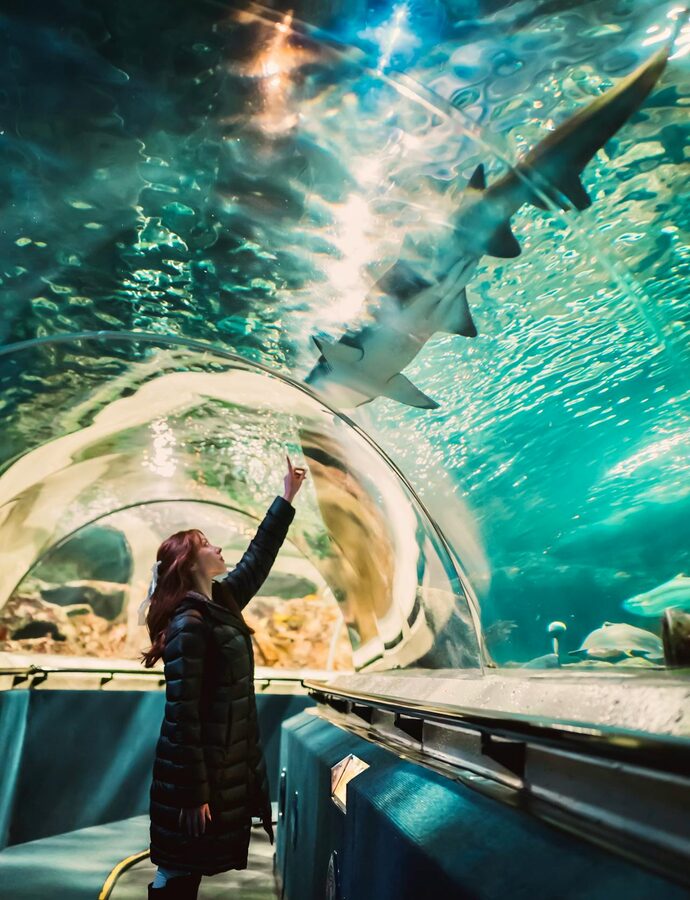
The High Seas hall is the centrepiece. The massive tank is home to hammerhead sharks, manta rays, giant groupers, and several species of ray. A circular walkway takes you around and above the tank, and the tunnel beneath gives you the immersive view. There’s also a touch pool where you can handle small rays and sea stars — the kids go mad for it.
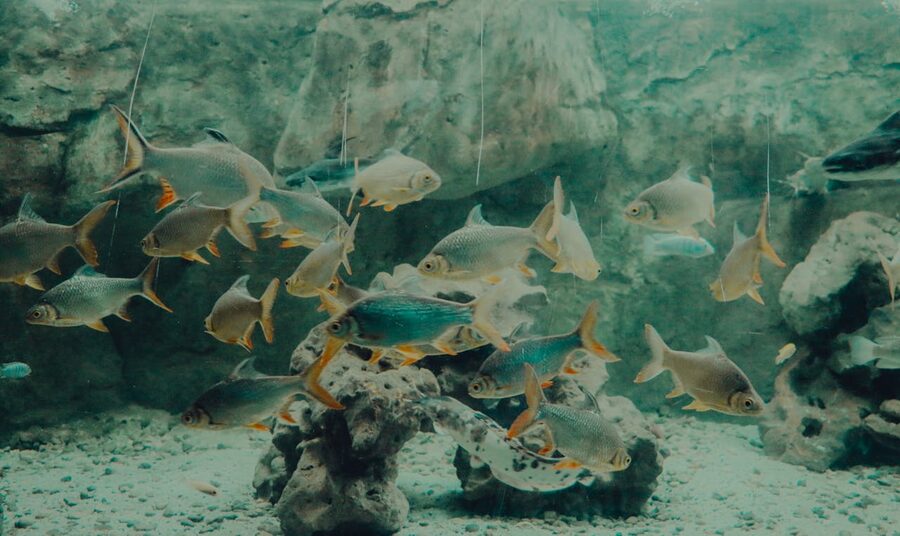
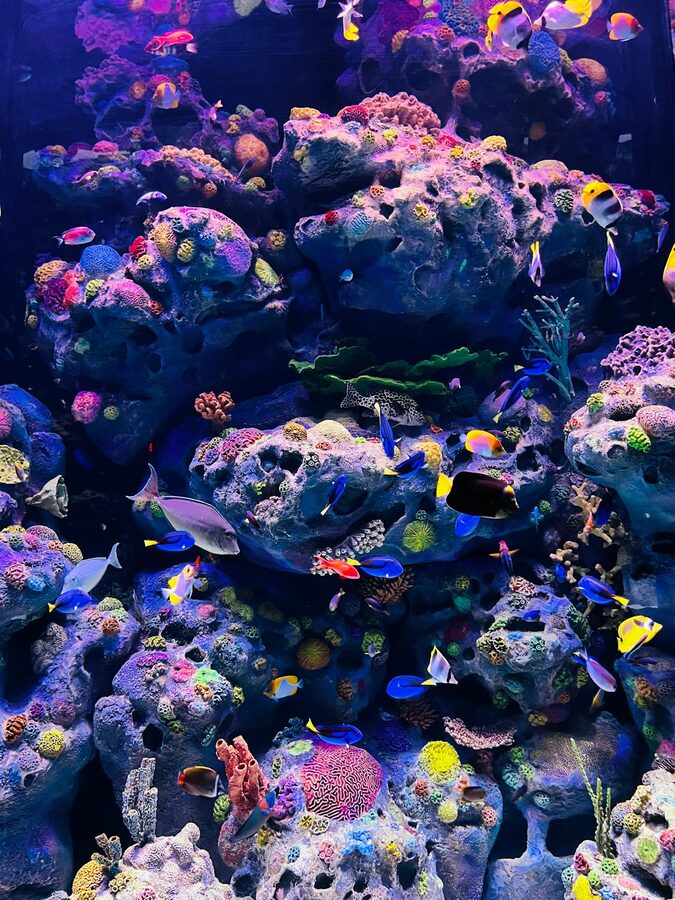
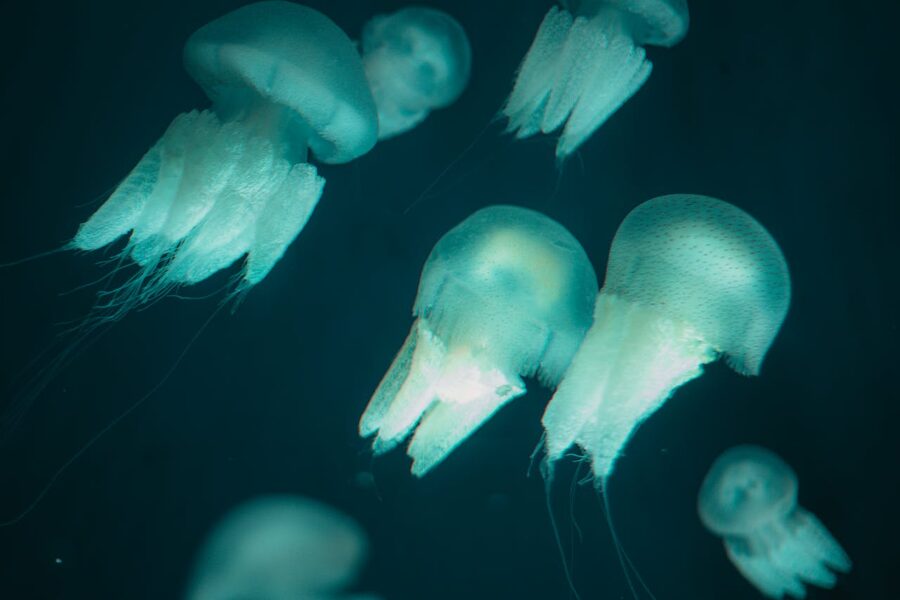
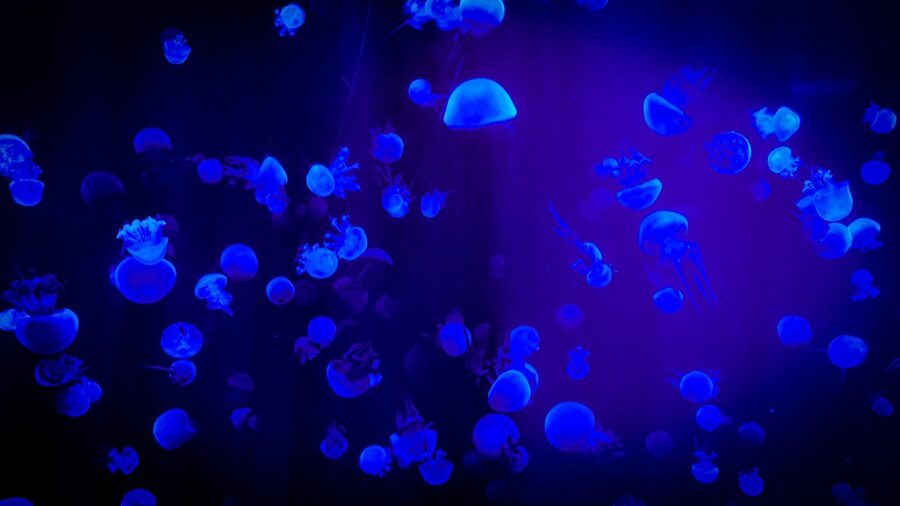
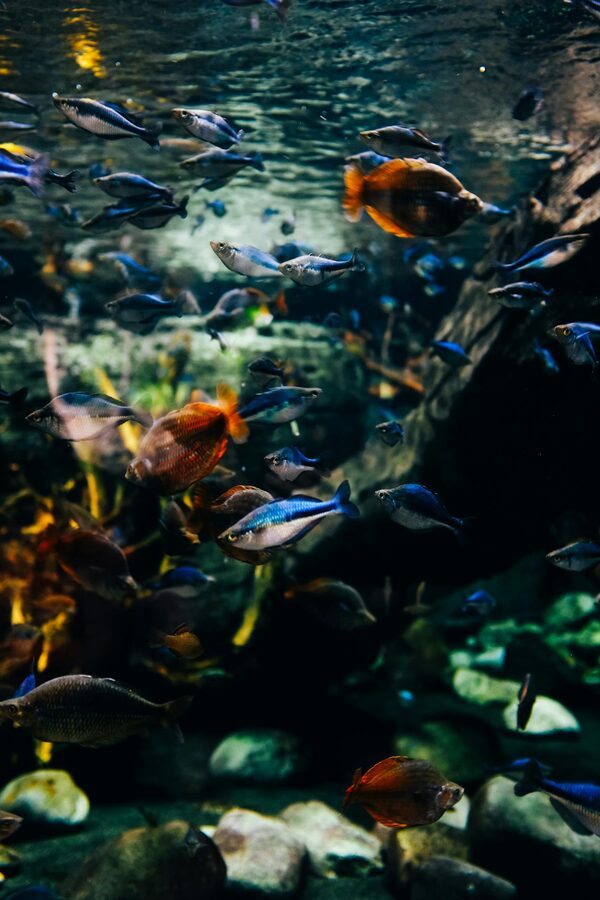
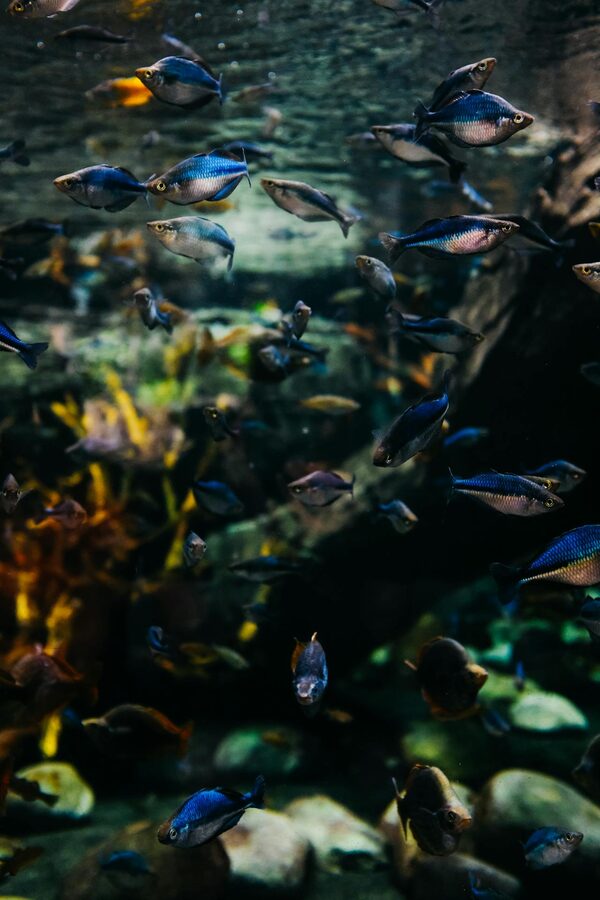
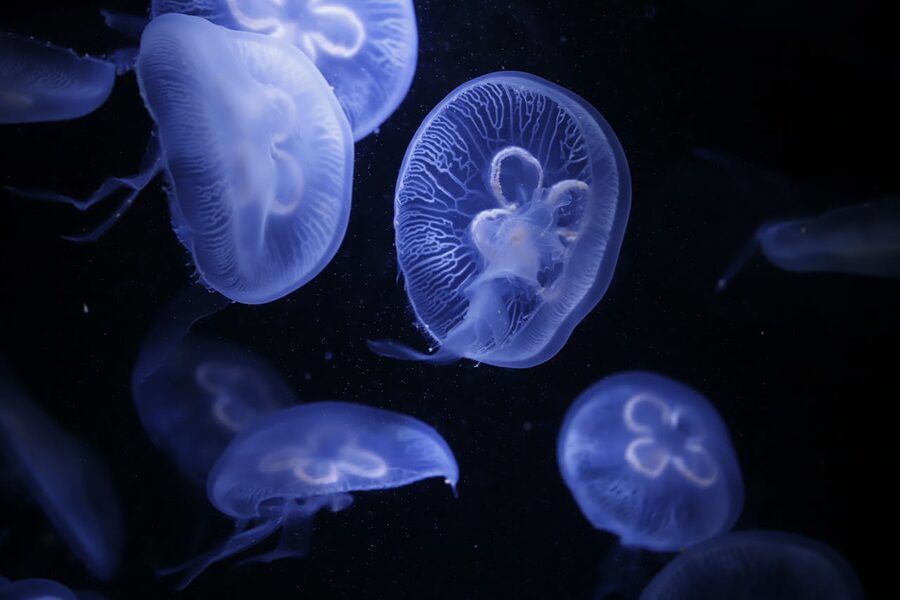
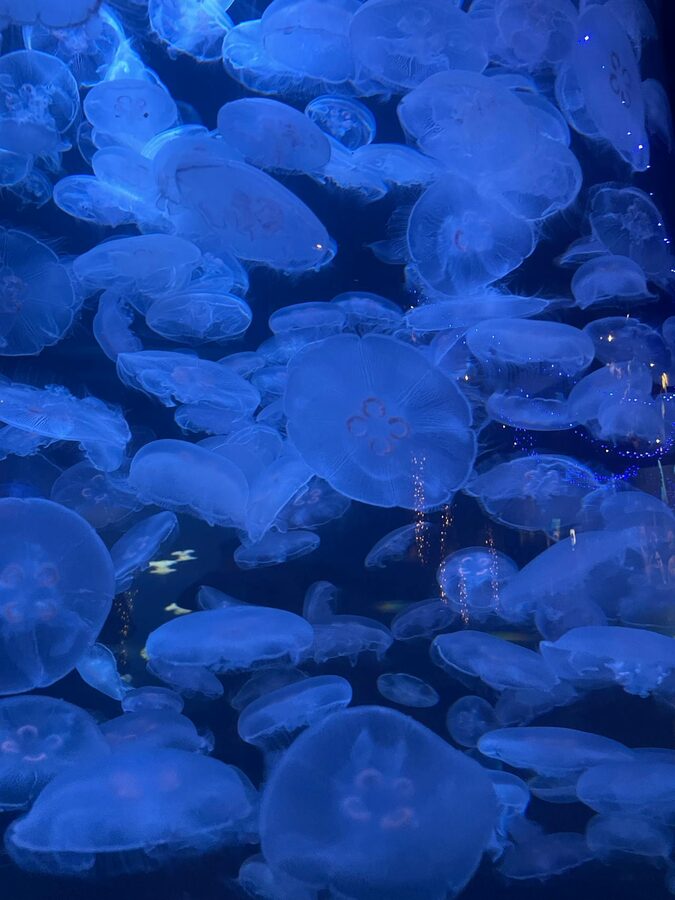
The original galleries cover specific ecosystems: Mediterranean, tropical reefs, mangroves, deep sea, and a dedicated California sea lion pool with daily feeding demonstrations. The jellyfish gallery is particularly good — darkened rooms with illuminated tanks that make the jellyfish look like alien life forms.
How Long to Spend
The official estimate is 4-6 hours, and that’s about right if you want to see everything without rushing. Families with young children should allow the full 6 hours — the touch pools, the sea lion feeding, and the interactive exhibits all take time when small hands are involved.
A focused adult visit — main tank, tunnel, jellyfish gallery, and a quick loop through the reef sections — takes about 2.5-3 hours. That leaves time for the Boulogne old town in the afternoon, or a seafood lunch on the harbour.
Booking Tickets
Nausicaa tickets can be bought online through Viator or directly from the aquarium’s website. The Viator ticket ($36) includes skip-the-line entry, which is worth it in school holidays and summer weekends when the queue at the ticket office can stretch for 30-45 minutes. Outside of peak times, buying at the door works fine — there’s rarely a significant wait on weekday mornings or after 3pm.
The 3.5-star rating on Viator is lower than you’d expect for Europe’s largest aquarium. Most of the negative reviews cite the booking process (the Viator voucher needs to be exchanged at the ticket window, which creates its own mini-queue) rather than the aquarium itself. The actual experience gets near-universal praise. If the voucher exchange bothers you, book directly through nausicaa.fr — you get a barcode that scans straight through the gate.
The Aquarium’s Mission
Nausicaa isn’t just an entertainment venue — it’s a national marine research centre. The name comes from Homer’s Odyssey (Nausicaa was the princess who saved Odysseus from the sea), and the centre’s mission is ocean education and conservation. It participates in breeding programmes for endangered species, runs marine research projects, and hosts conferences on ocean policy.
This gives the exhibits a different character from commercial aquariums. The information panels are scientifically accurate (written by marine biologists, not marketing teams), the animal welfare standards are high, and the newer exhibits focus on ocean threats — pollution, overfishing, climate change — without being depressing about it. You leave knowing more about the ocean than when you arrived, which is the point.
Boulogne-sur-Mer: The Town Around the Aquarium
Most visitors treat Boulogne as just the aquarium and leave. That’s a missed opportunity. The old town — the Ville Haute — sits on a hill above the modern port and is enclosed within 13th-century walls. You can walk the full circuit of the ramparts in about 30 minutes, and the views over the harbour and the Channel are excellent.
The Basilica of Notre-Dame has a crypt with Roman ruins underneath. The castle houses a small museum with an eclectic collection including an Egyptian mummy. And the fish market near the port is the largest in France — if you want to see where a third of the country’s seafood arrives, walk through on a weekday morning when the auction is running.
Food tip: Boulogne is France’s biggest fishing port, and the restaurants know it. Chez Jules on the harbour does superb fish and chips (yes, fish and chips — the English influence crosses the Channel both ways). For something fancier, Restaurant de la Plage near Nausicaa serves locally caught sole meunière that’s worth planning your lunch around.
Best Tickets to Book
1. Nausicaa Entrance Ticket — $36
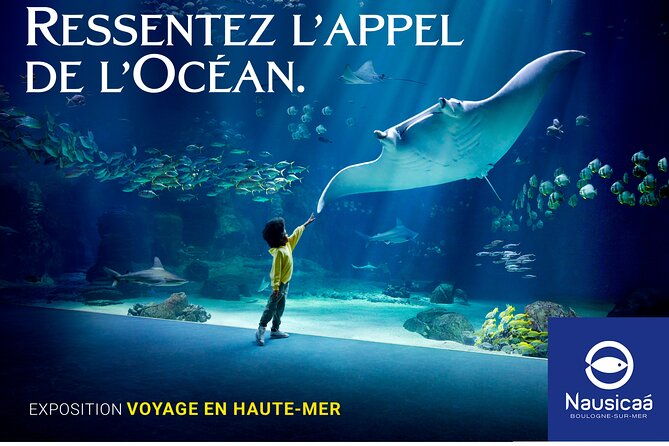
The main event. Europe’s largest aquarium with over 58,000 animals, the continent’s biggest single tank, an underwater tunnel, and a jellyfish gallery that alone is worth the drive from Paris. At $36 it’s not cheap for a French attraction, but the 4-6 hours of content makes it better value-per-hour than most Paris museums. Our review covers the full layout, the best order to visit the exhibits, and tips for avoiding the school-group rush.
2. Boulogne Old Town Walking Tour — $8
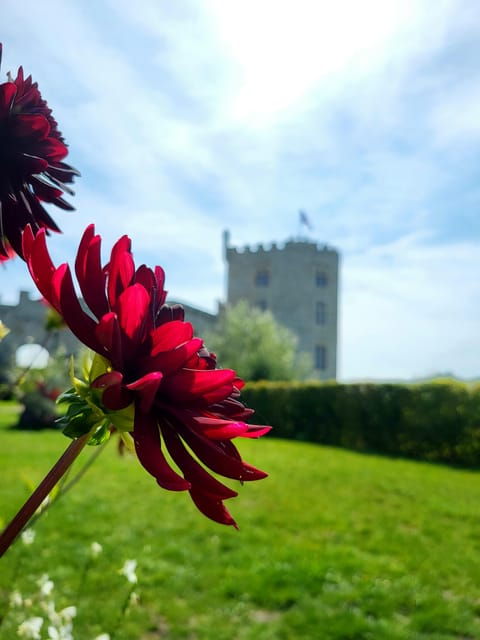
The perfect afternoon add-on to a Nausicaa morning. A guided walk through Boulogne’s medieval walled city, covering the ramparts, the basilica, and the historic streets. Only 14 reviews so far (it’s a newer listing), but the 4.9 rating and the $8 price make it an easy add. Our review explains what the walk covers and why Boulogne’s old town is one of northern France’s best-kept secrets.
3. Lille Museum of Illusions — $22

Not in Boulogne — this is in Lille, about 90 minutes south. But if you’re making Nausicaa a day trip from Paris or an overnight from London via Eurostar, Lille is on the route and the Museum of Illusions is a fun detour, especially with kids who might need a break from the car. Our review covers what to expect — interactive trick rooms, optical illusions, and plenty of photo opportunities.
Getting to Nausicaa
From Paris: About 3 hours by car via the A1/A26 motorways. No direct train — the closest station is Boulogne-Ville, served by TER trains from Lille (90 minutes) or a combination of TGV to Calais-Frethun then regional train. Driving is significantly easier.
From London: Eurotunnel from Folkestone to Calais takes 35 minutes, then Boulogne is 30 minutes south on the A16. Total: about 2 hours from central London to Nausicaa’s door. This makes it one of the closest major European attractions for UK visitors.
From Lille: 90 minutes by car on the A26. This is the best day-trip pairing — Nausicaa in the morning, Boulogne old town and lunch in the afternoon, back to Lille by evening. Public transport exists (TER trains) but adds significant time and the station is a 20-minute walk from the aquarium.
From Brussels: About 2.5 hours by car. Viable as a day trip, though Bruges or Ghent might be easier options for a marine-themed day from Belgium.
Practical Tips
Best time to visit: Weekday mornings outside of school holidays. French school holidays (February half-term, Easter, July-August) bring enormous queues. Wednesday afternoons are also busy — French schools have Wednesday afternoons off, so local families flock in. Tuesday and Thursday mornings in term-time are the quietest.
The Opal Coast: Beyond the Aquarium
Boulogne sits on the Côte d’Opale — the Opal Coast — which stretches from Calais to the Somme estuary. The name comes from the pearlescent quality of the light, which changes constantly with the North Sea weather. On a clear day, the white cliffs of England are visible from Cap Gris-Nez, about 30 minutes north of Boulogne.
The coast itself is dramatic — high chalk cliffs, wide sandy beaches, and Atlantic winds that make the Channel coast feel wilder than the Mediterranean ever could. Cap Blanc-Nez and Cap Gris-Nez are both worth a detour if you have a car, and the beaches at Wimereux (15 minutes north) and Le Touquet (30 minutes south) are some of the finest in northern France.
If you’re making a multi-day trip, the Somme Bay — about an hour south — is a major bird-watching site and the seal colony at Le Hourdel is one of the largest in France. The WWI battlefields of the Somme are also in this area, adding a completely different dimension to a northern France trip.
Food inside: There’s a restaurant and a café inside Nausicaa. The restaurant is fine — decent fish dishes, reasonable prices for a captive-audience venue. But you’re in France’s biggest fishing port. Eat outside. The harbour restaurants serve fish that was swimming that morning.
What to bring: Nothing special. The aquarium is indoors and climate-controlled. If you’re visiting in winter, Boulogne’s seafront is windy and cold — bring a coat for the walk between the aquarium and the old town.
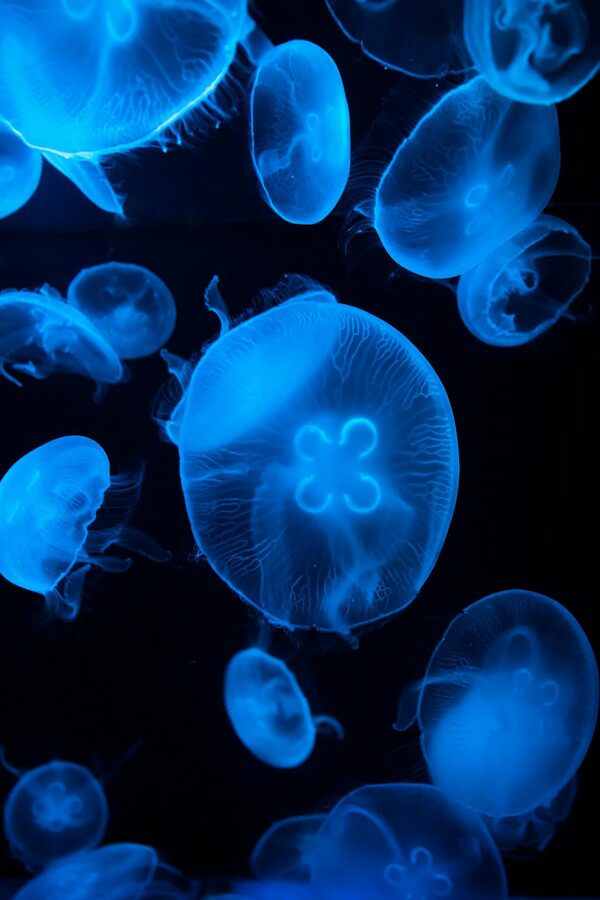
Photography: Flash is prohibited throughout (it stresses the animals). Most tanks are well-lit enough for phone cameras. The jellyfish gallery and the tunnel are the hardest to photograph — switch to night mode or manual mode with a slow shutter. A phone tripod helps enormously.
More Northern France Experiences
If Nausicaa brings you to northern France, the region has more to offer than most visitors realise. Lille is 90 minutes inland and has some of the best Flemish architecture, food, and beer in France. The Strasbourg and Alsace wine route is further east but follows the same Franco-Germanic cultural blend. And if you’re heading south toward Paris, the Champagne region around Reims is roughly on the way and makes a natural stopover. For visitors crossing from the UK specifically, Nausicaa paired with a night in Lille is one of the best short-break itineraries in northern Europe.