
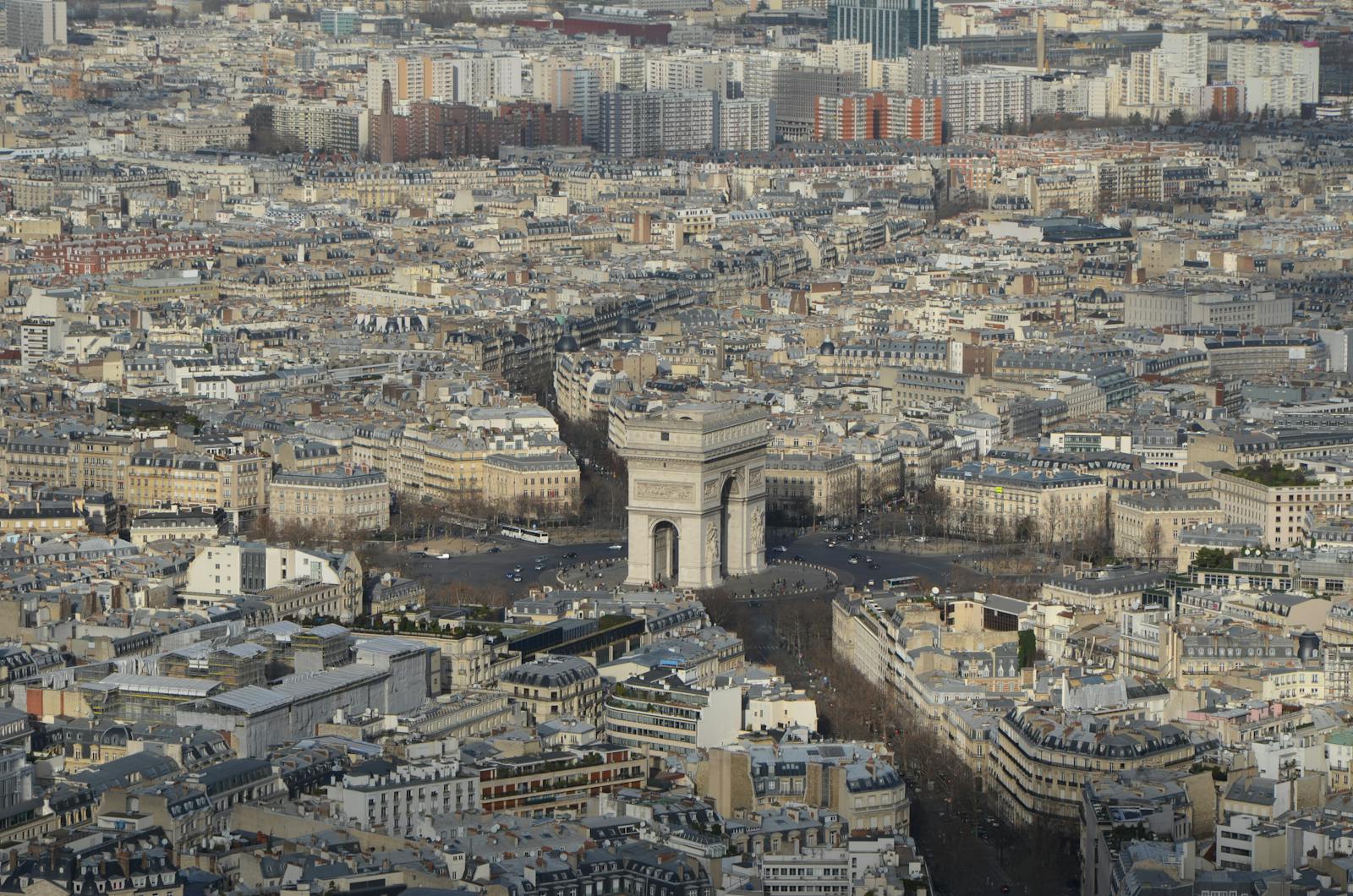
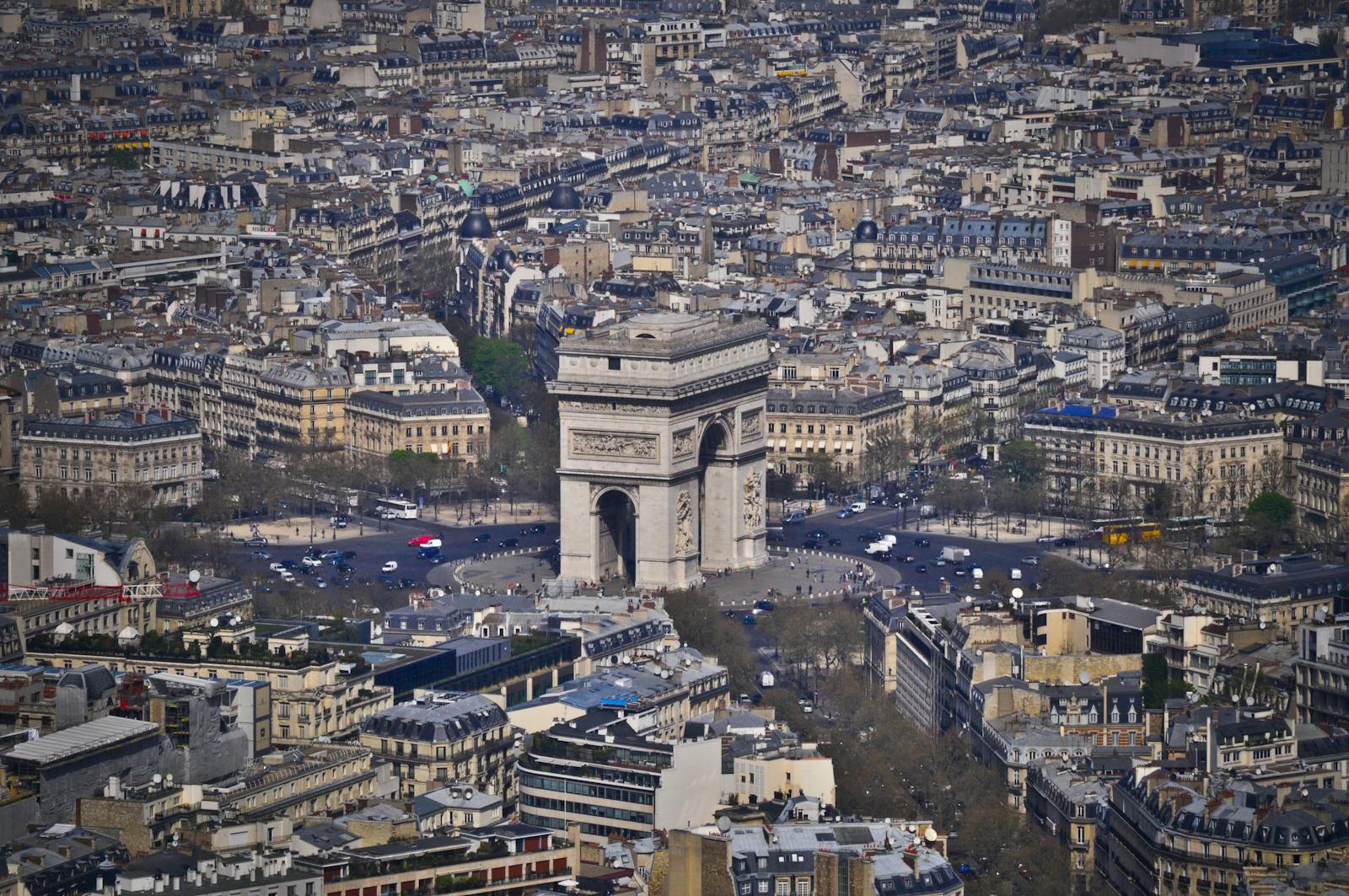
The Arc de Triomphe is the best rooftop view in Paris, and that statement might surprise you if you’re under the impression that the Eiffel Tower has the city sewn up. The Eiffel Tower is taller, more famous, and infinitely more photographed, but it has one fatal flaw as an observation platform: it can’t see itself. From the top of the Eiffel Tower, you get a beautiful view of every Parisian landmark except the Eiffel Tower. From the top of the Arc de Triomphe, you get the Eiffel Tower in your foreground, the Champs-Élysées stretching east to the Louvre, the Grand Axis line running west to La Défense, and twelve avenues radiating out below you like a perfect star. It’s the view that actually shows you what Paris looks like.
It also costs $18 instead of $34, has a fraction of the wait time, requires no advance booking gymnastics, and lets you climb the original 1836 monument that anchors the entire western half of central Paris. If you’re going to do exactly one rooftop in Paris, this is the one. If you’re going to do two, the Arc de Triomphe rooftop is the one to do at sunset.
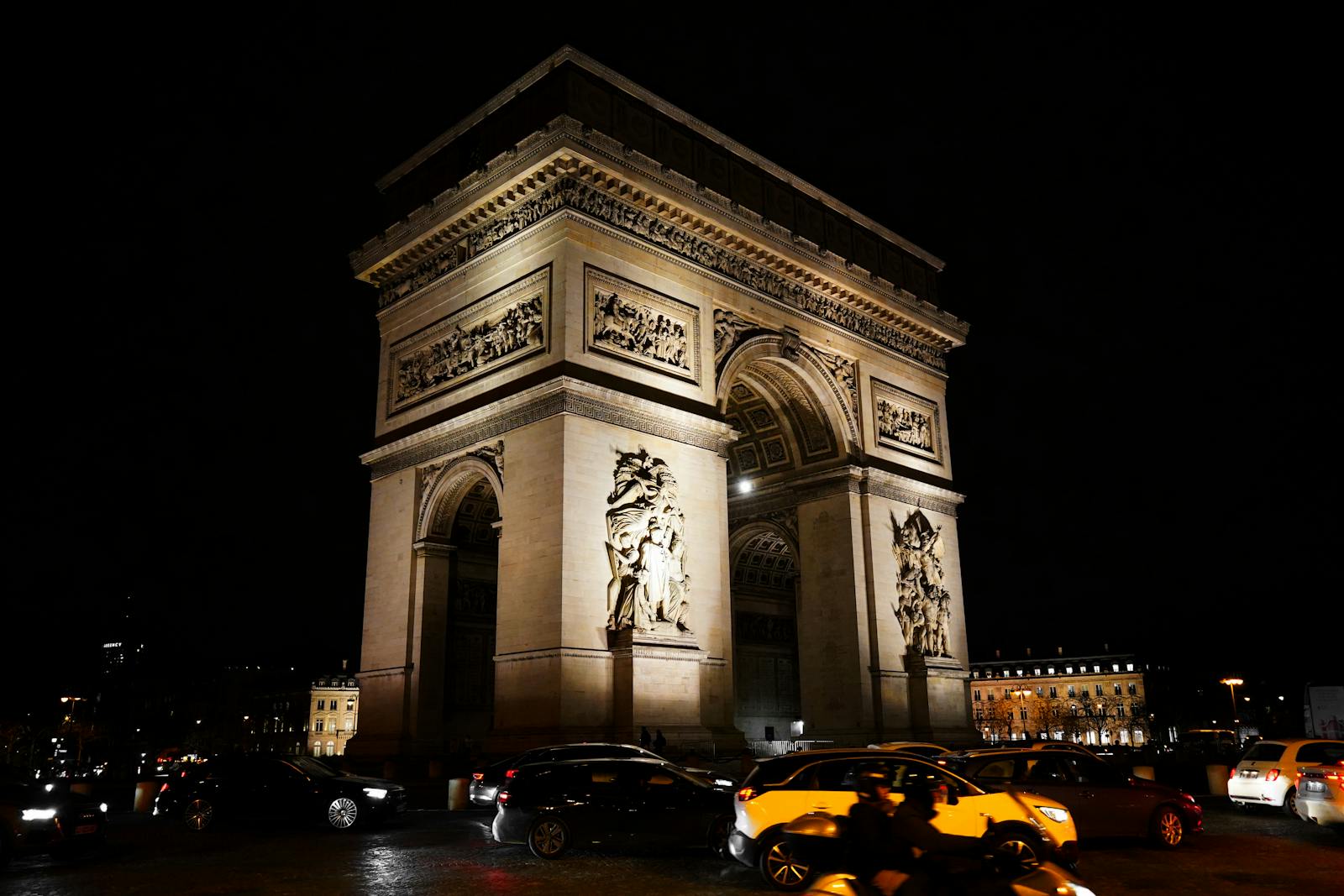
This guide covers the official Arc de Triomphe rooftop ticket — the most-reviewed Paris monument ticket on the market with over 34,000 reviews — plus the practical details that nobody tells you until you’re already at the bottom of the spiral staircase wondering if you should have brought better shoes. I’ll walk you through which entrance to use (this is critical and trips up most first-time visitors), the best time of day for the view, the climb itself, what you actually see from the top, and how the experience compares to the other rooftop options in Paris.
The Quick Picks
The pick for the best photo: Same ticket, booked for the time slot that ends about 30 minutes before sunset. Watching the sun set over La Défense and the city lights come on is the single best 30 minutes in Paris.
The pick for non-climbers: Same ticket, with the elevator. Most visitors don’t realize the elevator exists — it covers most of the climb but you still need to walk the last 46 steps. If you have mobility issues, ask staff for elevator access at the entrance.
Why the Arc Beats the Other Paris Rooftops
Paris has half a dozen viable rooftop viewpoints and I’ve done all of them more than once. Here’s the honest comparison.
The Eiffel Tower is the obvious comparison, and the Eiffel Tower wins on novelty (you’re up the Eiffel Tower, which is its own thing) and on height (300+ meters versus the Arc’s 50 meters). But it loses on every other dimension. The view from the Eiffel Tower is the wrong view of Paris because it doesn’t include the Eiffel Tower. The line is genuinely brutal — even with skip-the-line tickets you can spend an hour waiting between the various levels — and the experience of getting to the top has been industrialized to the point where it feels like a theme park rather than a monument. The summit costs $34 versus the Arc’s $18. The crowds at the top are oppressive, especially in the second-floor observation deck where most photo angles require waiting your turn.
Tour Montparnasse is the second contender. It’s a hideous black skyscraper from the 1970s that Parisians universally hate, but its observation deck (210 meters up) gives you the Eiffel Tower in your photos AND removes Tour Montparnasse from the skyline of every other photo you take in Paris (the joke that the best view in Paris is from Montparnasse “because it’s the only view that doesn’t include Montparnasse” is actually true). The deck costs €19, has rarely any line, and the elevator gets you up in 38 seconds. The downside is that Montparnasse is far from everything else worth seeing in central Paris and the view doesn’t have the historical resonance of climbing an actual monument.
The Galeries Lafayette rooftop is the budget option — it’s free, accessible during department store hours, and gives you a respectable view of the Opera Garnier district and the Eiffel Tower in the distance. It’s not as high as the Arc (around 40 meters from the top) and the view is partially blocked by surrounding buildings. The advantage is that you can combine it with a coffee or lunch on the rooftop café and shop for things you don’t need afterward. As a “free quick view to break up a shopping afternoon,” it’s perfect. As a destination viewpoint, it’s outclassed.
The Printemps rooftop, just down Boulevard Haussmann from Galeries Lafayette, is the same idea with slightly better seating and a marginally different angle. Both department store rooftops are free and worth ten minutes if you’re shopping in the area, but neither is a substitute for a proper observation deck.
The Centre Pompidou’s top floor has a great view of the Marais, the Right Bank, and Notre Dame in the distance, included with the museum ticket. It’s the cultural choice — you’re looking at modern art, then walking up to look at the city. The view itself is good but not extraordinary, and Centre Pompidou is closed for renovation through 2030 anyway, so this option is on hold.
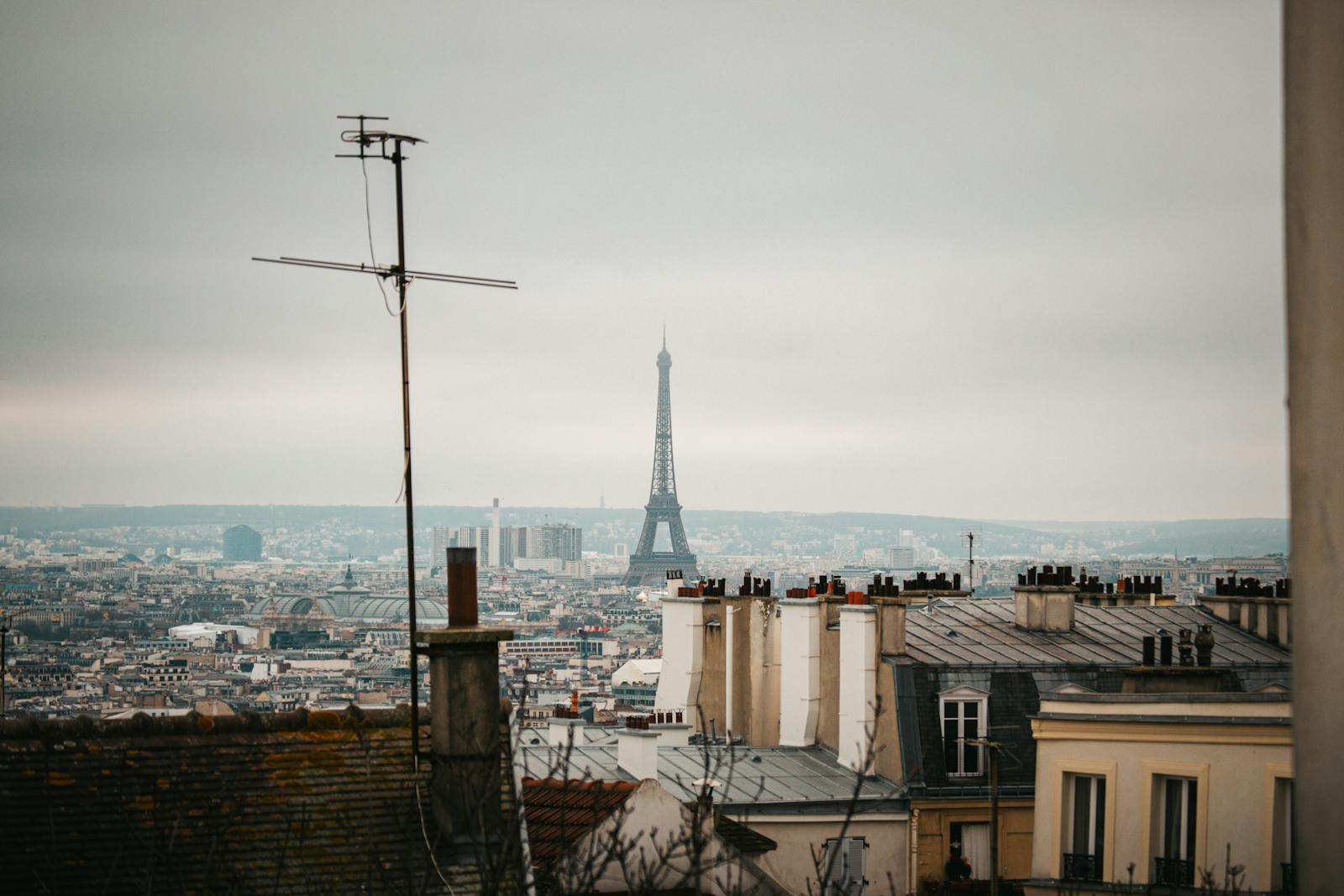
The Sacré-Cœur basilica dome is the romantic choice and one of my favorites. The dome itself is a steep 300-step climb (no elevator), the entrance is €8, and the view from the top is the best southern panorama of Paris because Montmartre sits 130 meters above the rest of the city. You see the entire Right Bank spread out below you, with the Eiffel Tower to the southwest and the Louvre directly south. The downside is that Sacré-Cœur is a 30-minute metro and walking commitment from the central monuments, so it’s a half-day decision rather than a quick stop.
The Arc de Triomphe wins because it does everything well at a low price point. You get the iconic view (Eiffel Tower in foreground, Champs-Élysées behind, twelve avenues radiating out), you climb a real historical monument instead of a 1970s eyesore, you skip the line with a $18 ticket booked online, and you can be done in 45 minutes. For sunset specifically, no other Paris viewpoint is in the same league.
The Tour Card
Paris: Arc de Triomphe Rooftop Tickets
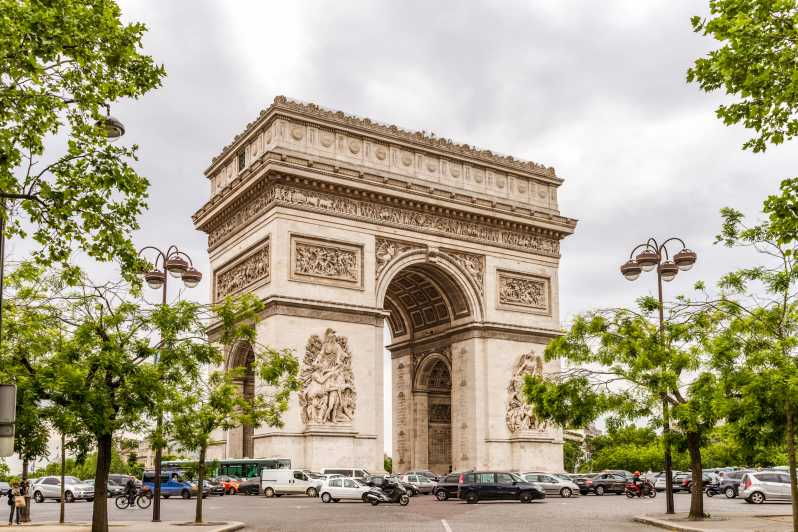
Price: From $18 per person • Duration: Valid all day • Rating: 4.6/5 (34,264+ reviews)
This is the official skip-the-line ticket and it is the only Arc de Triomphe ticket worth considering. The 34,000+ reviews on this single product is genuinely staggering — for context, that’s more reviews than almost any other paid attraction ticket in Europe — and the 4.6 rating is consistent with what I see on the ground every time I visit. The reviews praise three specific things: the speed of entry, the staff helpfulness, and the value (most travelers come away surprised that an $18 ticket delivers an experience at this level).
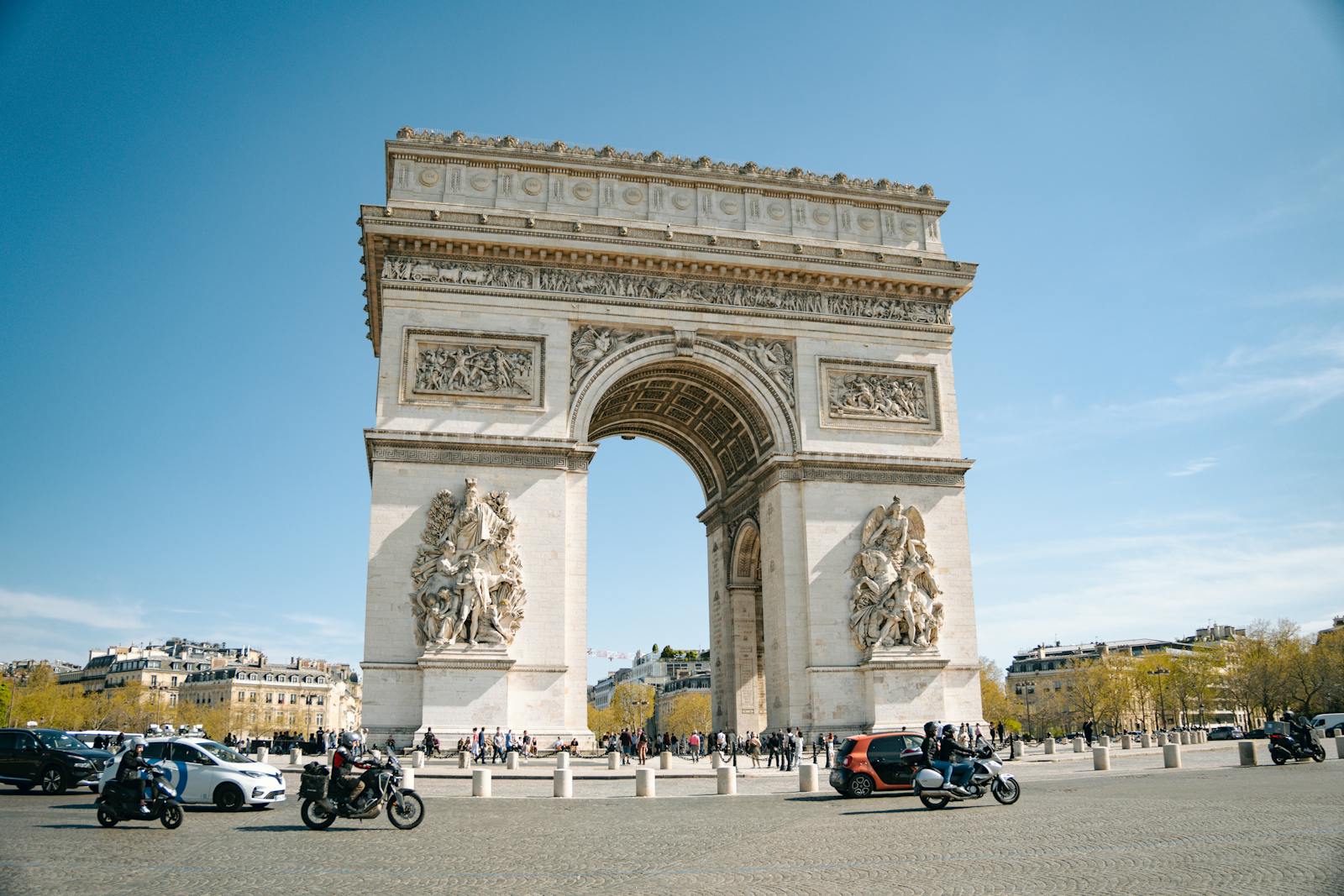
The ticket is open-dated for the day you book, which is the single most useful thing about it. You don’t pick a time slot. You don’t have to commit to being at the entrance at 2:15pm. You buy the ticket, you show up whenever during operating hours fits your schedule, and you go in. This is unusual for Paris monuments and it makes the Arc de Triomphe the most flexible major attraction in the city. If your morning runs long at the Louvre and you want to push your Arc visit to late afternoon, you can. If sunset turns out beautiful and you want to swap your planned dinner reservation for a rooftop visit, you can.
The skip-the-line aspect is real but with one caveat: there is no “line” at the Arc de Triomphe in the same sense as the Louvre or Eiffel Tower. The general admission entry usually has a 5-to-15 minute wait, even in peak summer. The skip-the-line ticket lets you walk straight in, but the absolute time savings are smaller than at other monuments. Where the ticket actually pays off is on the once-or-twice-a-year occasions when a special event creates a 45-minute line, and on the certainty of knowing you’re in regardless. The convenience is worth $18 by itself.
The reviews mention specific tips that match my experience exactly. “Sick view, recommend going late at night / sunset for the lights and sunset over the city” — this is correct, and the late-evening illumination is what separates the Arc from a daytime climb. “Should have contained a warning about having to climb so many narrow steps. We were not aware of an elevator” — this is the most common complaint and it’s partially the visitor’s fault for not asking. The elevator exists. It covers most of the climb. You still need to do the last 46 steps. If you can’t do those last 46, the rooftop is genuinely not accessible — there are no exceptions because the rooftop platform itself is reached by stairs from the elevator landing.
“Seeing the lighting of the fire at 6pm added to the experience” — this is something most visitors don’t know about. Every evening at 6:30pm, an honor ceremony at the Tomb of the Unknown Soldier (which sits directly under the Arc) involves rekindling the eternal flame that has been burning continuously since 1923. The ceremony is free to attend at ground level and it’s genuinely moving — French veterans in uniform, a brief ritual, the flame relit. If you can time your Arc visit to be at the rooftop around 6:15pm and then come down to attend the 6:30pm ceremony, you get the best of both experiences in 45 minutes.
The Climb Itself
Let me set realistic expectations because the climb is the main thing first-time visitors aren’t prepared for. The Arc de Triomphe is 50 meters tall. Reaching the top requires climbing 284 steps from ground level via a tight spiral staircase that gets narrower as you go up. The staircase is one-way going up, with descending visitors using a separate staircase, so you won’t have to fight oncoming traffic, but you also can’t easily turn around once you’ve started.
The spiral staircase is genuinely tight and the steps are uneven (this is a 1836 monument, not a modern building). The first 100 steps are easy. Steps 100 to 200 are the hardest because you’re already winded and the spiral keeps going. The last 84 steps to the small museum landing are the worst because you can see the end but it’s still a climb. People stop on the staircase to catch their breath and that creates micro-traffic-jams behind them. If you’re not used to climbing stairs, plan for 10 to 15 minutes total ascent time, including breaks.
The elevator changes the math considerably. The elevator only goes up to a level just below the museum landing (a mezzanine inside the monument with exhibitions about the Arc’s history). From there you still climb 46 steps to reach the rooftop terrace. Those 46 steps are also via a small spiral staircase but they’re shallow and most able-bodied visitors can handle them. The elevator is officially for visitors with mobility issues, parents with strollers, and pregnant visitors, but the staff are reasonably flexible if you ask politely. You won’t be fighting for space on the elevator the way you would at the Eiffel Tower — most travelers default to the stairs without realizing the elevator exists.
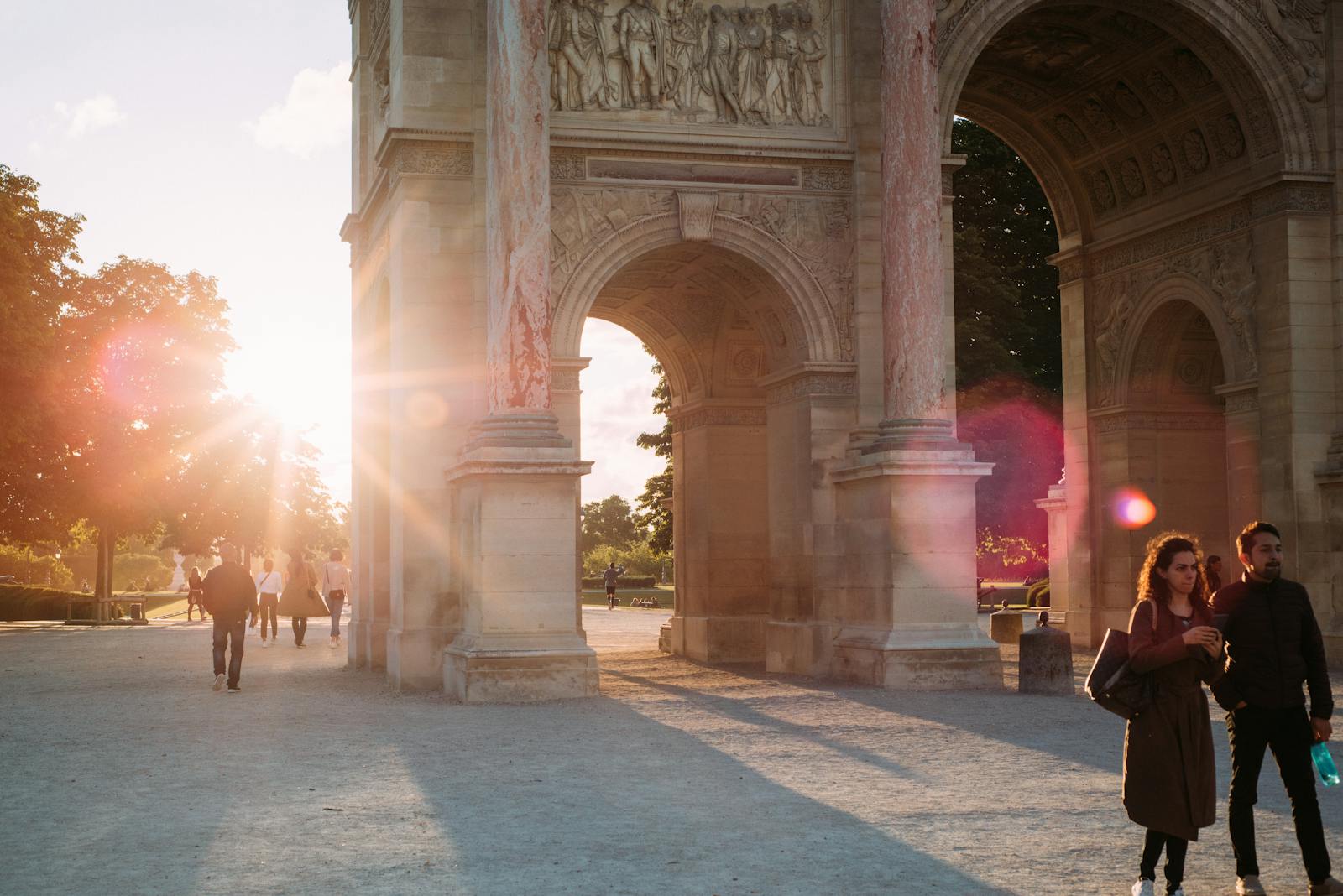
The museum landing is worth a 5-minute pause on your way up. There’s a small exhibition on the construction of the Arc, a model of the original 1836 design, and a display on the various ceremonies that have happened under the monument (Napoleon’s funeral procession, Charles de Gaulle’s liberation parade in 1944, every Armistice Day ceremony since World War I). It’s not extensive but it gives the climb some context, and it’s a genuine break for your legs.
From the museum landing, the final 46 steps lead you onto the rooftop terrace. The terrace is open-air, surrounded by a waist-high wall with a metal mesh fence above it for safety. The mesh is fine enough to take photos through without blocking the view. The terrace itself is about 50 by 50 meters, which feels generous after the tight stairwell, and even at peak times you’ll have space to walk around and find your own viewing angle.
The View From the Top
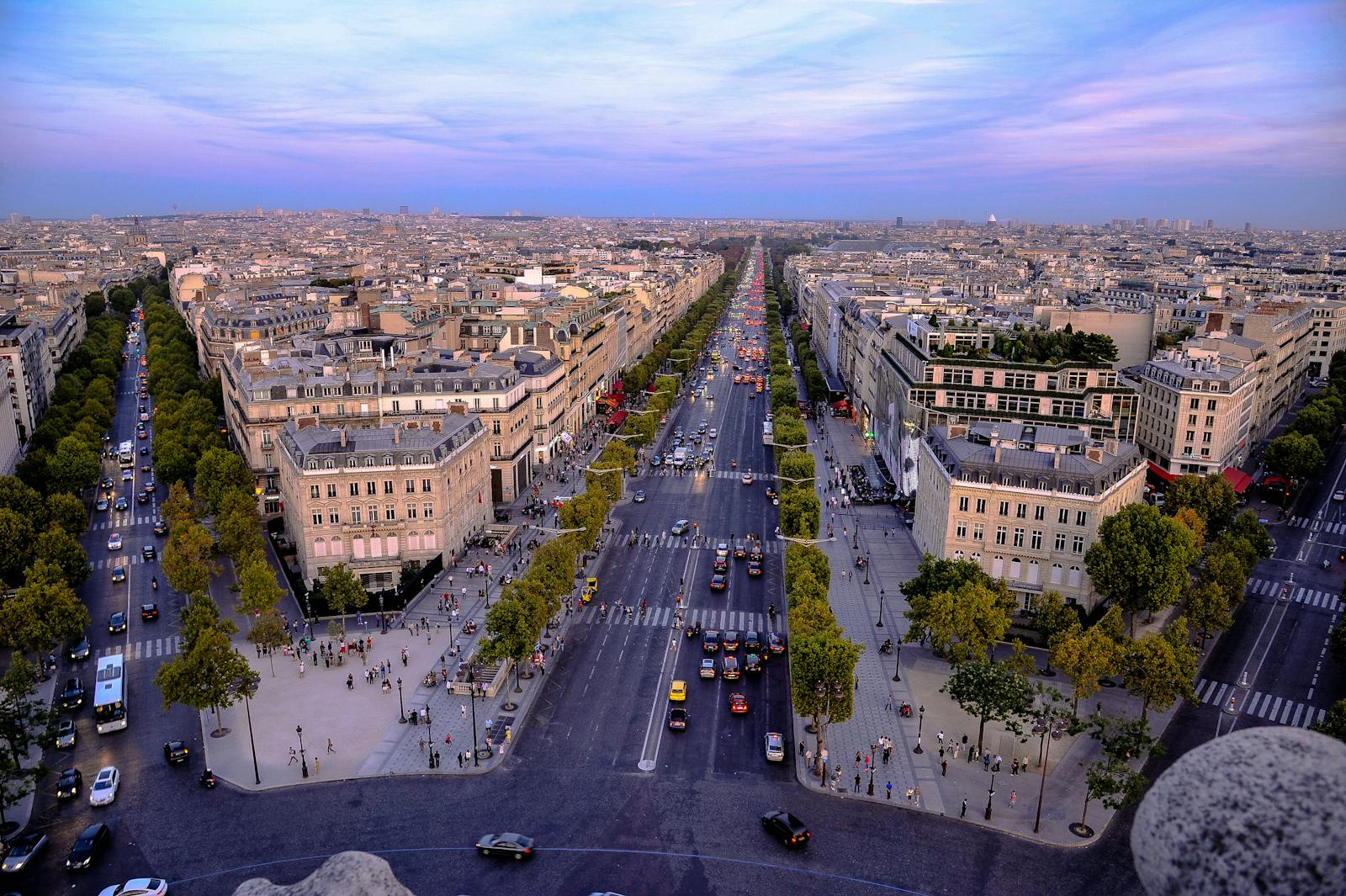
This is the part nobody undersells. The rooftop view is genuinely extraordinary, and the reason is the Arc’s specific geographic position. The monument sits at the western end of the Champs-Élysées and the eastern end of the Avenue de la Grande Armée, which means it’s at the dead center of the Grand Axis — a 9-kilometer straight line of historical buildings, parks, and obelisks that runs from the Louvre courtyard through the Place de la Concorde, up the Champs-Élysées, through the Arc, and out to the modern Grande Arche at La Défense. From the rooftop you can see every step of that axis in both directions.
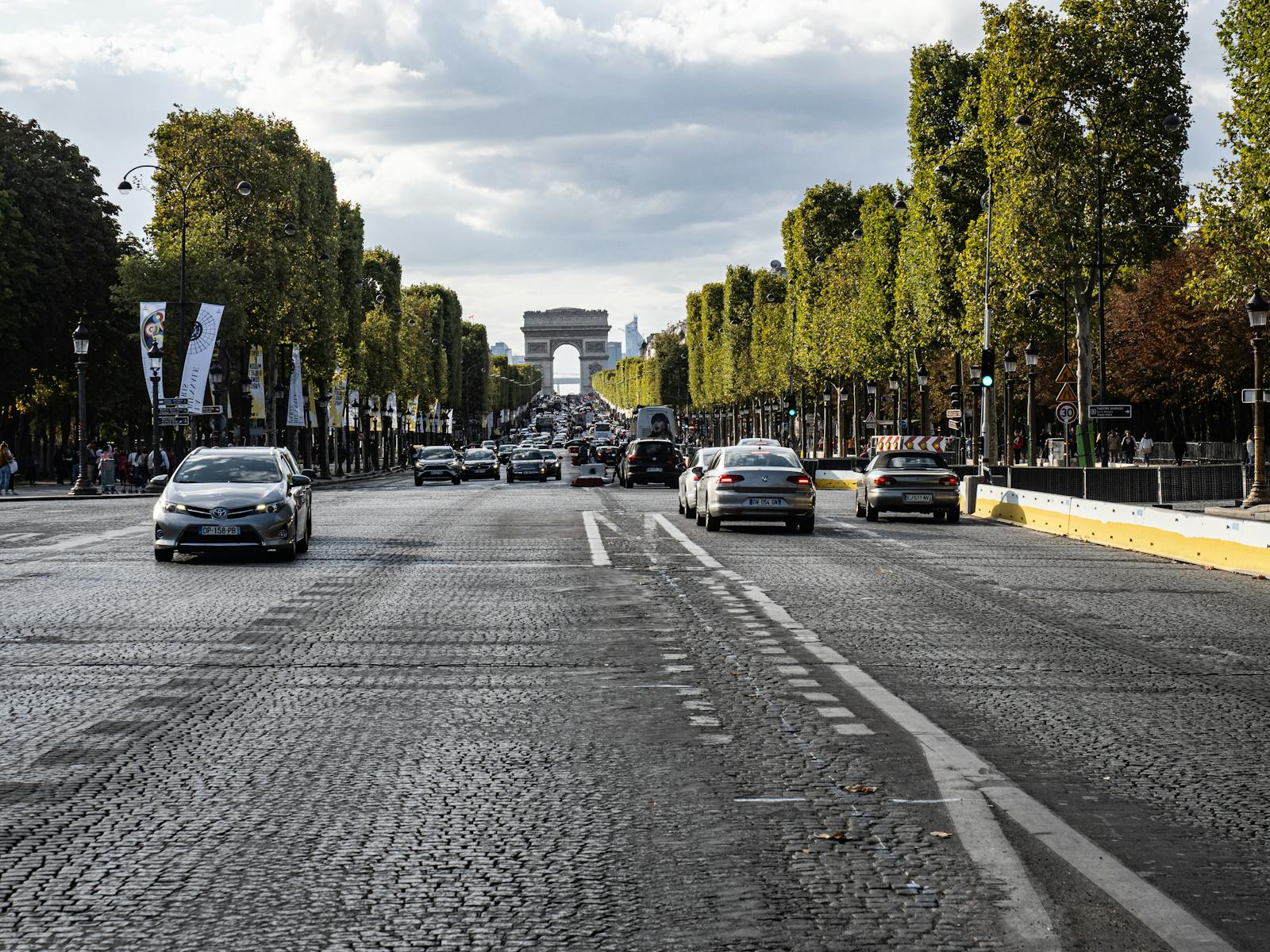
To the east, the Champs-Élysées descends straight down to the Place de la Concorde, with the Luxor Obelisk visible as a thin needle in the middle of the square. Behind it, the Tuileries Gardens stretch toward the Louvre, and on a clear day you can pick out the pyramid in the distance. To the west, Avenue de la Grande Armée runs out toward Neuilly and La Défense, where the Grande Arche frames the horizon — it’s a modern hollow cube exactly aligned with the historical axis, finished in 1989 as a deliberate visual rhyme with the 1836 Arc you’re standing on.
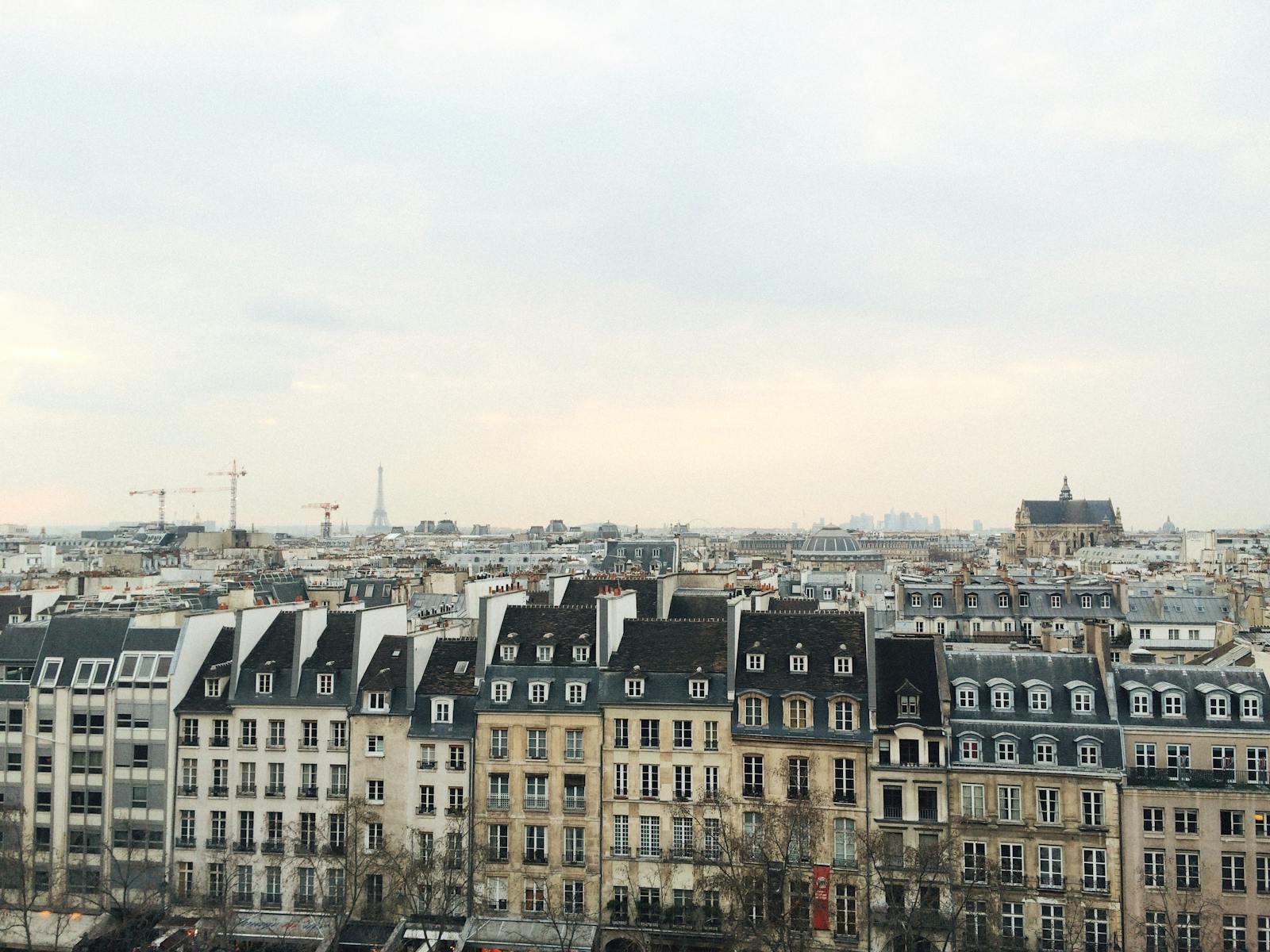
To the south, the Eiffel Tower rises directly into your photographs from the perfect distance — close enough to be the dominant feature of the frame, far enough to show its complete shape. This is the angle you see in every postcard of Paris that includes the Eiffel Tower, and it’s only available from this exact viewpoint. To the north, the Sacré-Cœur basilica sits white on its hill in Montmartre, and on clear days you can pick out the Pantheon dome in the south and the towers of Notre Dame in the east.
The twelve-avenue star pattern is the close-up view that surprises most visitors. From the rooftop you can look almost straight down at the Place Charles de Gaulle (formerly Place de l’Étoile) and see all twelve avenues radiating out from the roundabout in a perfect symmetric pattern — Champs-Élysées, Avenue de la Grande Armée, Avenue Foch, Avenue Hoche, and so on. The traffic flows around the Arc in a chaotic pattern (the rule is that cars entering the roundabout have right of way over cars already in it, which is the opposite of most European roundabouts and creates legendary chaos), and watching it from above is genuinely entertaining.
For sunset, the orientation is perfect. The sun sets behind La Défense, which means you’re watching the sun drop toward the Grande Arche from the historical Arc. The light hits the Champs-Élysées and the Eiffel Tower from the side, lighting them up in golden hour color, and as the sky darkens the city’s lights come on and the Eiffel Tower starts its hourly sparkle (every hour on the hour for 5 minutes after sunset). On a clear evening this is the best 30 minutes you can spend in Paris.
When to Go
Timing matters more than most visitors realize because the rooftop experience is dramatically different at different times of day.
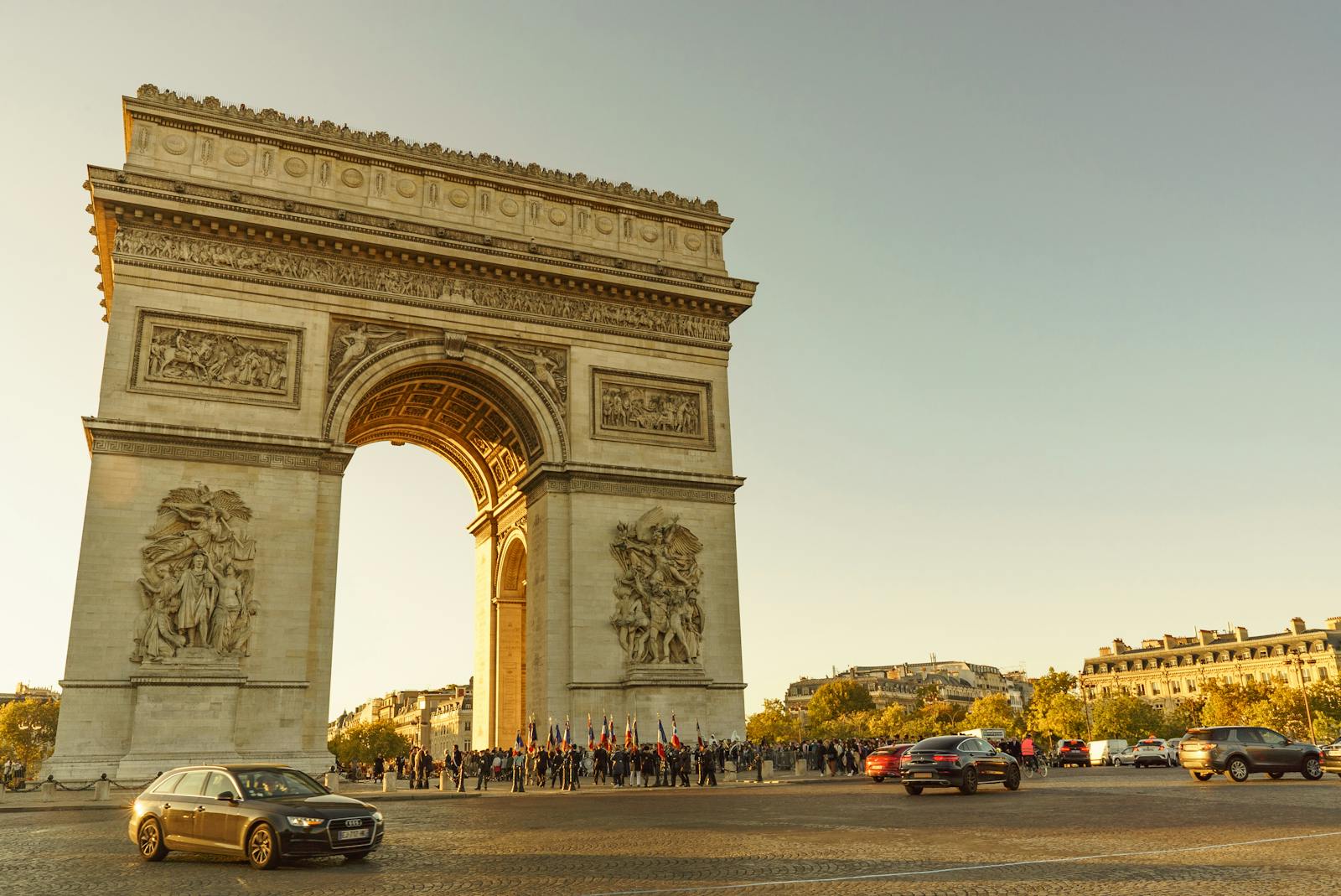
Sunset is the obvious answer. Time your visit to be on the rooftop about 30 minutes before official sunset and stay until 15 minutes after, which gives you the golden hour, the actual sunset, the immediate twilight when the colors shift, and the moment when the city lights flicker on. The Eiffel Tower light show (every hour for 5 minutes) is best appreciated from the Arc rather than from underneath the tower itself, so timing your visit to catch a sparkle is a bonus. Sunset times in Paris vary dramatically by season — around 5pm in December, 9:45pm in June — so check sunset for your dates and book accordingly.
Morning is the second-best option. The rooftop opens at 10am most of the year and the first 90 minutes are genuinely peaceful — small crowds, soft east-facing light, and air that’s still relatively cool in summer. The downside is that the Eiffel Tower is backlit (sun is in the southeast in the morning) so photos of the tower itself come out as silhouettes rather than detailed shots. If you’re photography-obsessed, morning is wrong. If you just want the view without crowds, morning is perfect.
Avoid midday in summer. Between 11am and 4pm in July and August, the rooftop is fully exposed to the sun (no shade at all), the temperature is uncomfortable, and the crowds are at peak. The view is still good but the experience is hot and harried.
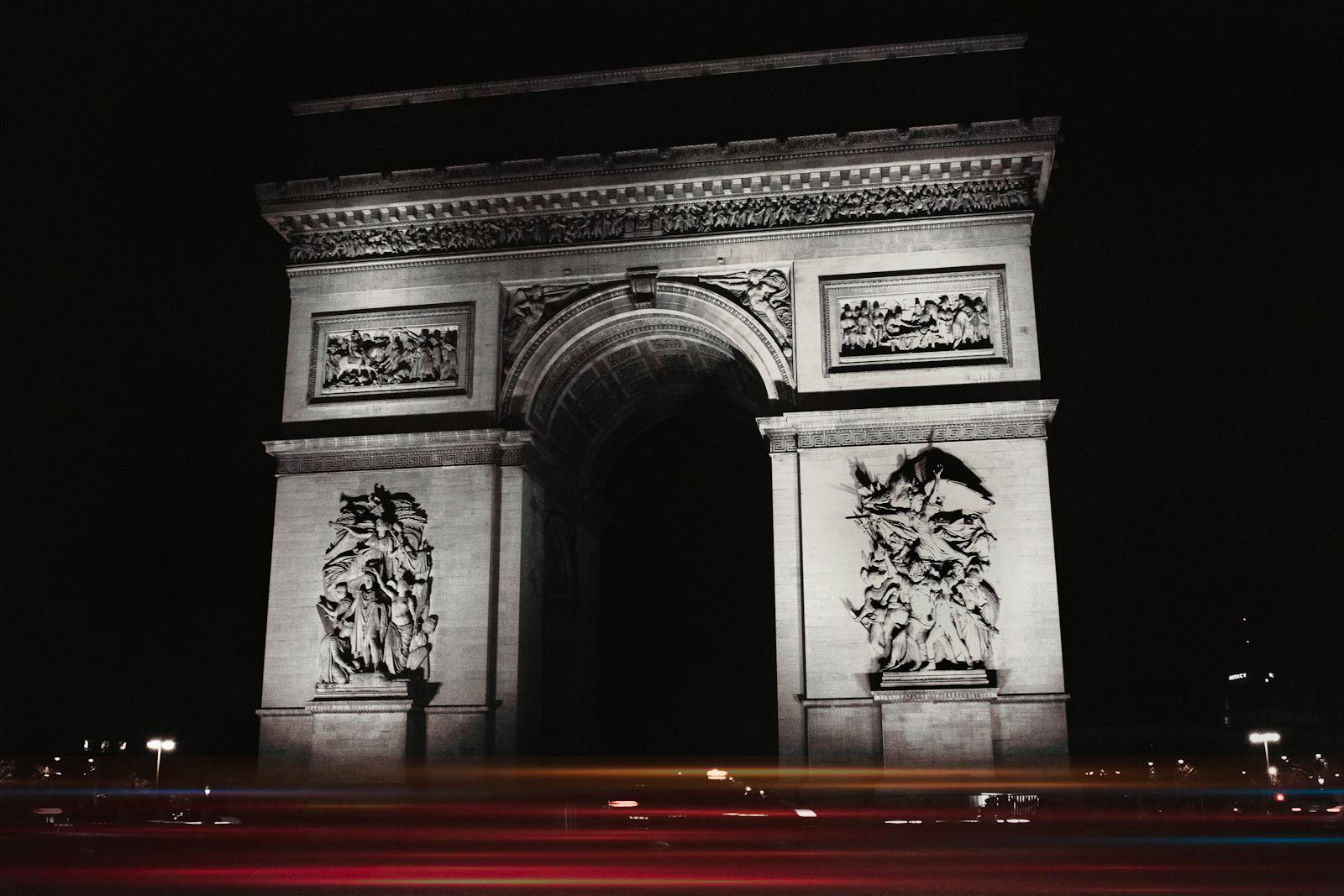
Late night is the underrated option. The Arc is open until 11pm in summer (10:30pm in winter), and the late-evening visit is the second-best timing after sunset. By 9:30pm the daytime crowds have left, the city lights are at full intensity, and the spiral staircase is much less congested. The downside is that you don’t get the golden hour transition — you’re looking at full night the whole time — but the Eiffel Tower light show is at its most dramatic in full darkness, and the post-9pm crowd is much smaller.
Day of week and season. The Arc is much less affected by day-of-week patterns than the Louvre or Eiffel Tower. Tuesday afternoon and Sunday morning are slightly slower than other times, but the difference is minor. The biggest seasonal variation is November to February, when the cold and short days dramatically reduce the crowds — you can often have the rooftop almost to yourself in January, with the trade-off being that the view is less photogenic in grey winter light.
Avoid: Bastille Day (July 14, the Arc is the focal point of the morning military parade and the rooftop is closed for ceremonies), Armistice Day (November 11, similar closures), and the few days each year when state visits or special ceremonies close the monument. Check the official Centre des Monuments Nationaux website (monuments-nationaux.fr) for exact closure dates if your visit is on a major French holiday.
How to Get There (and the Critical Entrance Tip)
Here’s the single most important practical tip in this entire guide: do not try to walk to the Arc de Triomphe across the traffic circle. Place Charles de Gaulle is one of the most dangerous traffic circles in the world. There is no pedestrian crossing. There is no traffic light. There is no “wait for a gap.” Cars come at you from twelve directions simultaneously and the right-of-way rules are so confusing that even Parisian drivers have accidents here every single day.
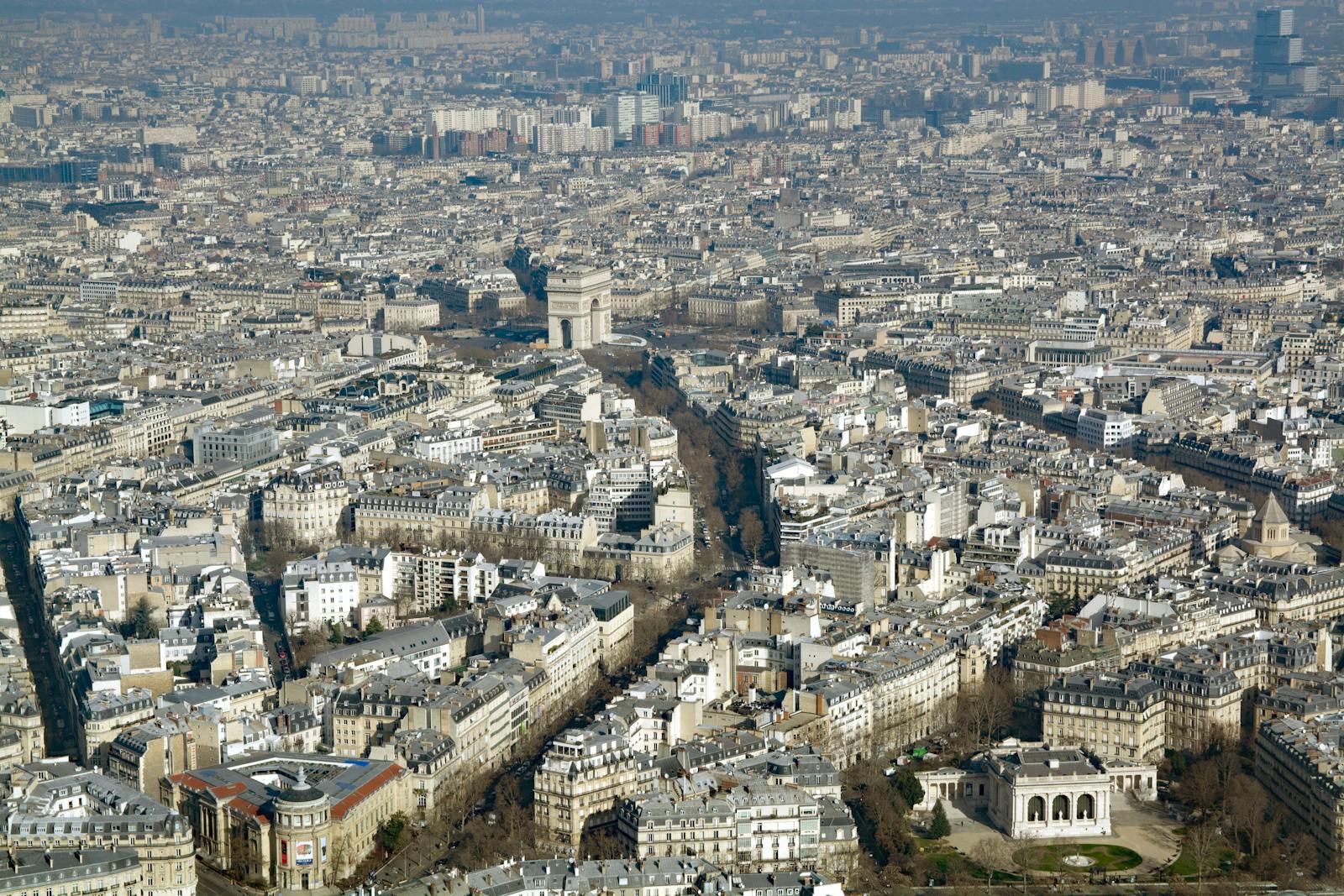
The actual entrance to the Arc de Triomphe is via a pedestrian tunnel that runs under the traffic circle. The tunnel entrance is on the Champs-Élysées side of the monument, on the right (south) side of the avenue if you’re walking up from Place de la Concorde. There’s a stairway down marked “Arc de Triomphe” with the official monument signage. You walk through the tunnel under the traffic, emerge directly at the base of the Arc, and that’s where the ticket entry and the staircase up are located. The whole tunnel walk takes about 90 seconds.
Coming by metro: the Charles de Gaulle – Étoile station serves three lines (1, 2, and 6) and the RER A. All four exits put you within easy walking distance of the tunnel entrance. The clearest exit to use is Exit “Arc de Triomphe / Champs-Élysées Pair” which puts you directly at the top of the Champs-Élysées side, ready to walk to the tunnel.
Coming on foot from the Champs-Élysées: just walk all the way up the avenue (it’s a 30-minute walk from Place de la Concorde) and the tunnel entrance is on your right at the very top, just before the monument itself. Walking up the Champs-Élysées is one of the better things to do in Paris on a nice day, especially if you stop for coffee or lunch along the way.
A Quick Historical Frame
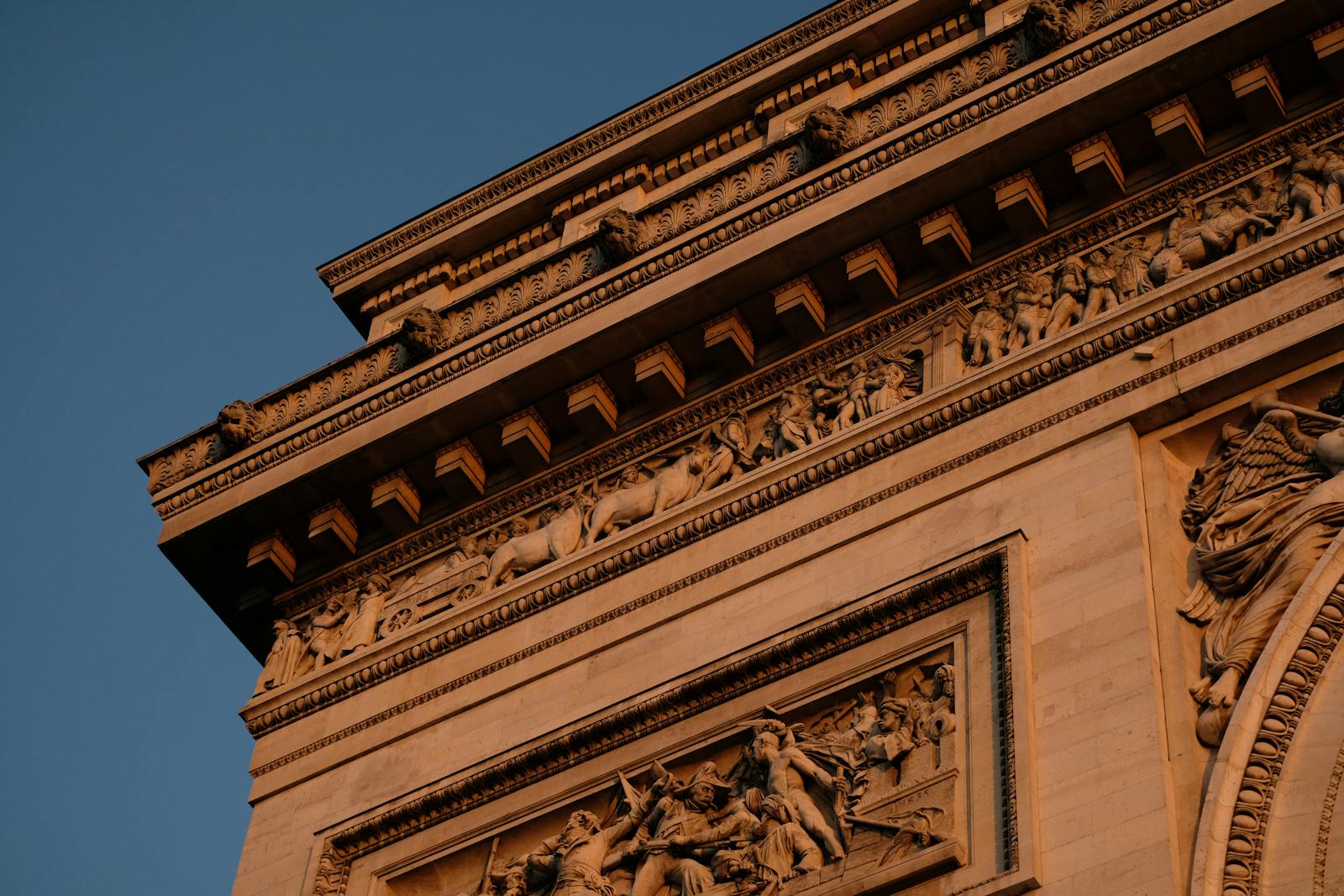
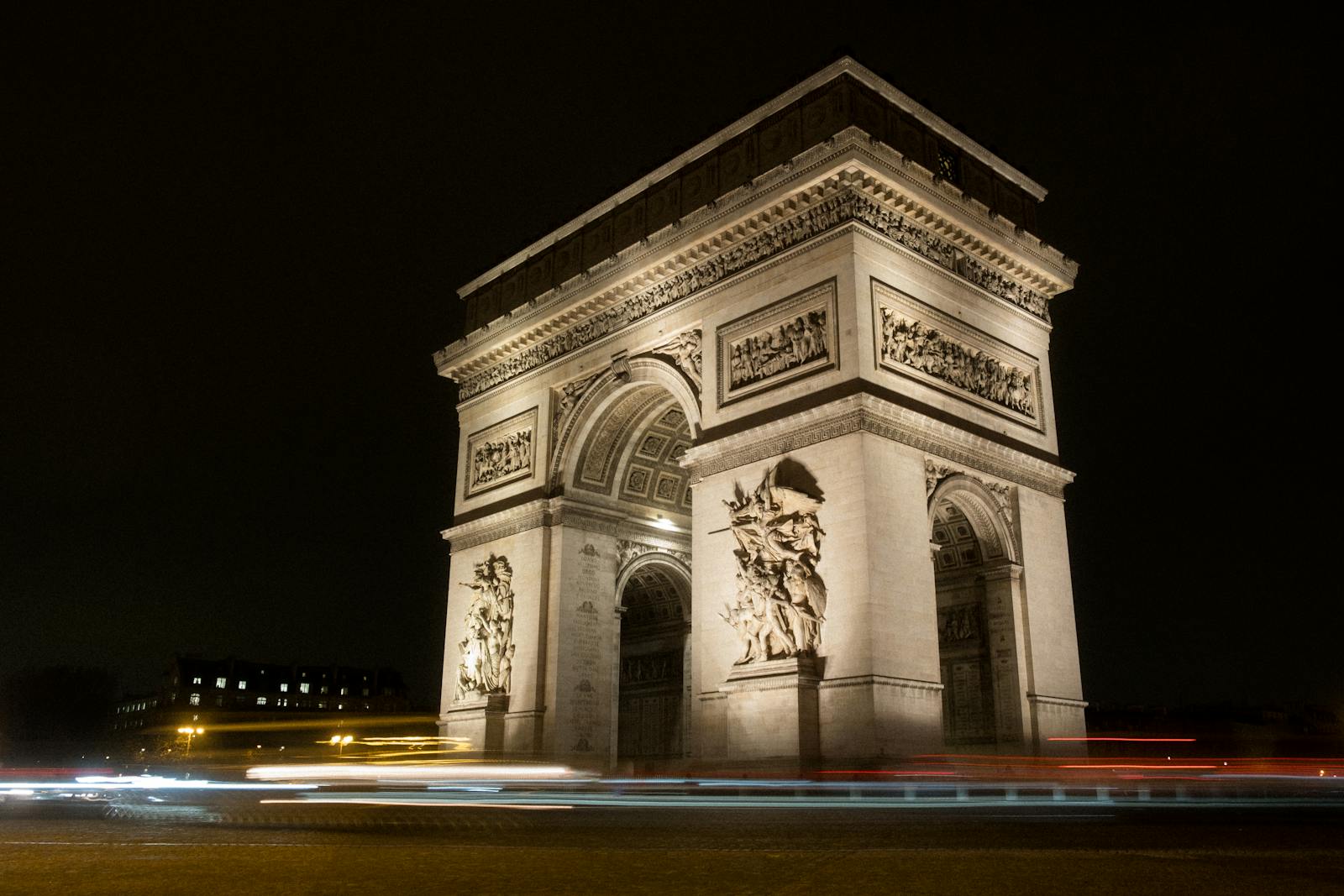
The Arc de Triomphe was commissioned by Napoleon in 1806, after his victory at Austerlitz, as a monument to the French armies of the Revolution and the Empire. Construction began that year and immediately ran into political and financial problems — Napoleon fell from power in 1814, the Bourbon monarchy that briefly replaced him had no interest in glorifying Napoleonic victories, and the project sat half-built for years. It was finally completed in 1836 under King Louis-Philippe, by which point Napoleon had been dead for 15 years and the political meaning of the monument had shifted from “glorifying the current regime” to “memorializing French military glory in general.”
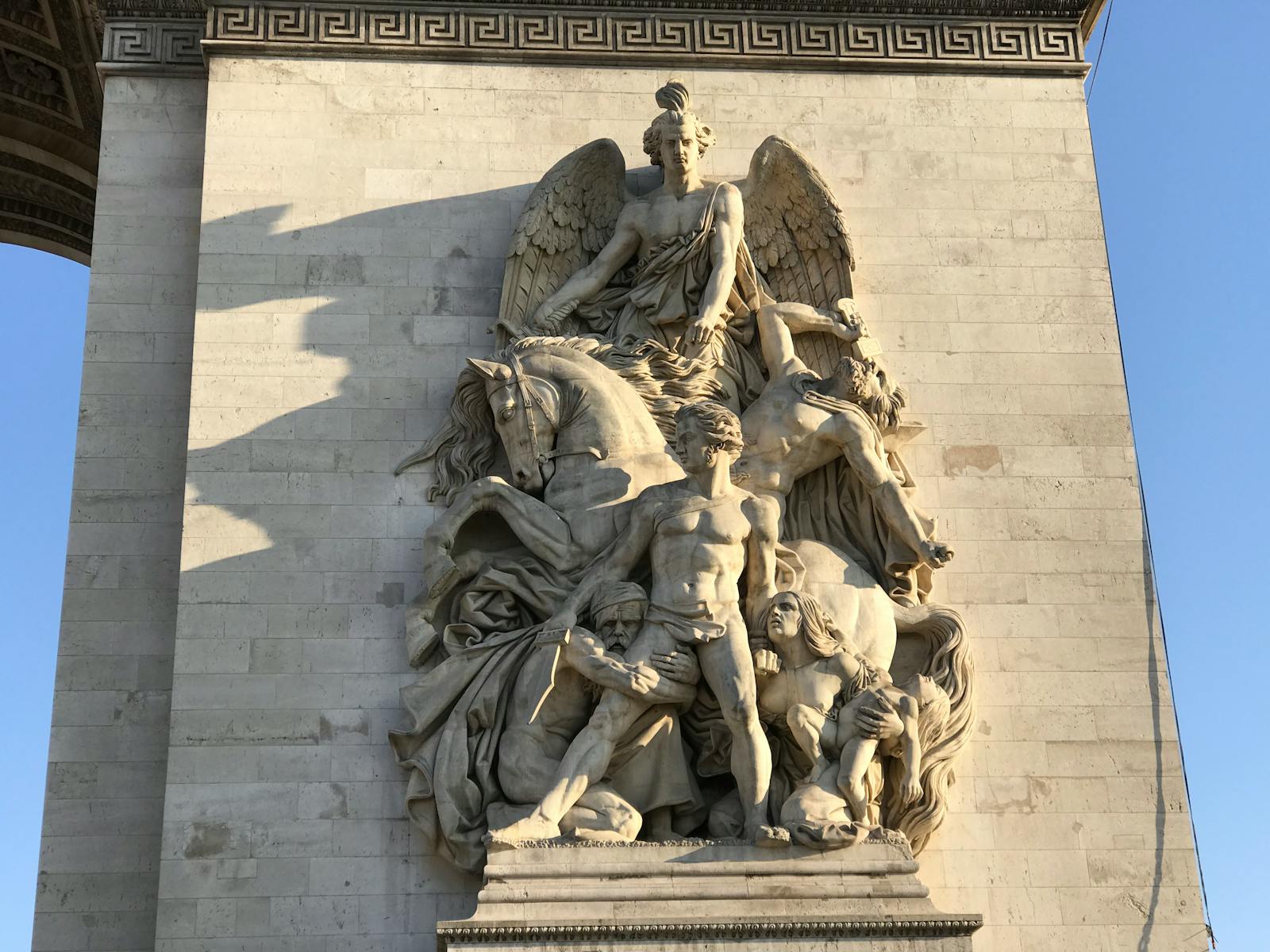
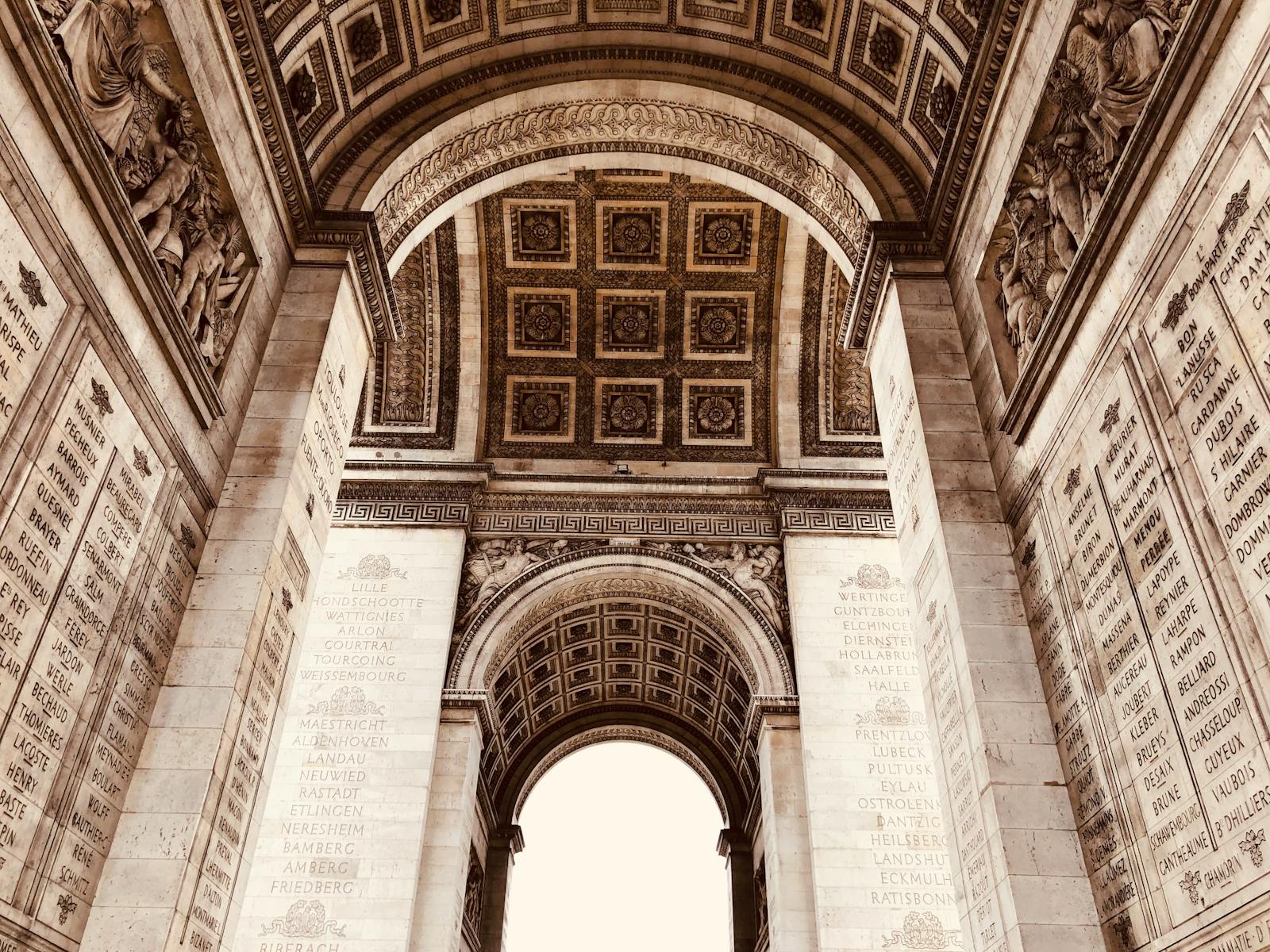
The four ground-level reliefs are the most important sculptural element of the monument. The most famous is “La Marseillaise” by François Rude, on the right side facing the Champs-Élysées — a dramatic depiction of the 1792 volunteers leaving for war that became the defining image of French revolutionary spirit. The other three reliefs depict the Treaty of 1810, the funeral of General Marceau, and the Battle of Aboukir. The names of 158 French battles and 660 French generals are carved on the inner walls of the monument — many of the generals’ names are underlined, which indicates that the general was killed in battle.
The Tomb of the Unknown Soldier was added under the Arc in 1920, as a memorial to the unidentified French dead of World War I. The eternal flame was lit in 1923 and has burned continuously since (with the exception of a few interruptions during World War II). The 6:30pm rekindling ceremony I mentioned earlier has happened every single day since 1923, including under German occupation. It is the longest continuously running ceremony of its kind in the world.
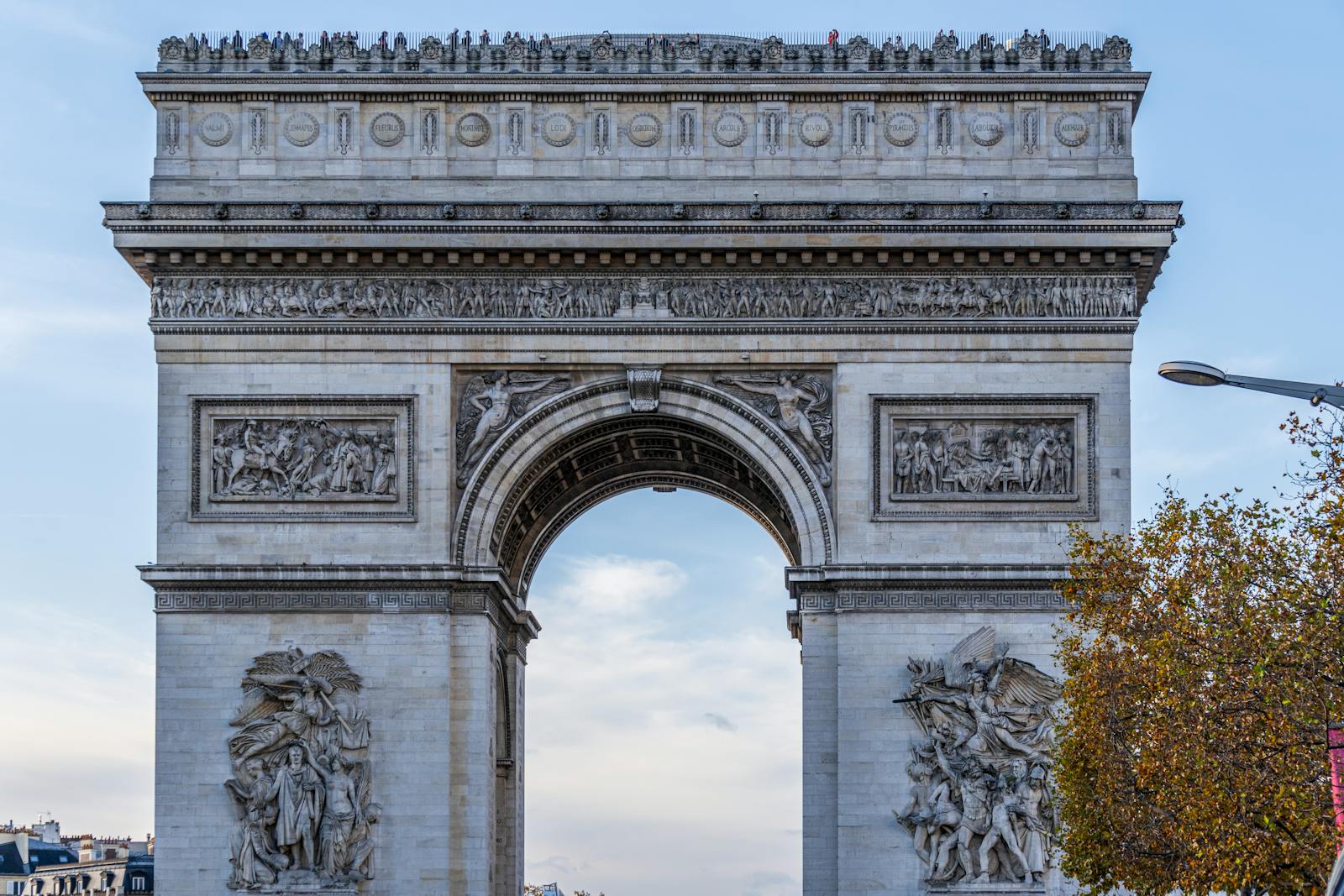
The Arc has been the site of three of the most photographed moments in modern French history: Napoleon’s funeral procession in 1840 (his body was returned from St. Helena and paraded through the Arc to the Invalides), the German occupation parade through the Arc on June 14, 1940 (the most painful moment in modern French memory), and the Liberation parade led by Charles de Gaulle on August 26, 1944 (which directly answered the 1940 humiliation). Standing on the rooftop and looking down at the Champs-Élysées, you’re standing where these three moments all happened in front of you.
Practical Tips Nobody Tells You
Book the ticket online even though there’s no time slot. The $18 skip-the-line ticket is genuinely worth it even on slower days because the convenience of walking past the queue is real, and the ticket is open-dated so you don’t lose flexibility. Buying at the door is always a few euros more and adds 10-15 minutes of fumbling through the on-site ticket machines.
Wear shoes that handle stairs. The 284 spiral steps are unforgiving on bad shoes. Sneakers, walking shoes, or flat boots are fine. Heels, flip-flops, and brand-new shoes you haven’t broken in are not. The descent on a different staircase is also stairs and your knees will notice if you’re carrying any weight.
Bring a layer if it’s not summer. The rooftop is open-air and exposed to wind. Even in May or September, the temperature on the rooftop can be 5°C cooler than at street level, and the wind makes it feel colder. A light jacket or sweater is genuinely useful, especially if you’re staying for sunset and the temperature drops.
The Tomb of the Unknown Soldier is at ground level, not on the rooftop. Visit it on your way in or out — the eternal flame and the granite slab marking the tomb are directly under the central arch at street level, and the area is open and free to visit even without a rooftop ticket. The 6:30pm rekindling ceremony is also at ground level. Many rooftop visitors miss this entirely.
Combine with Champs-Élysées walking. The Arc visit is short (45 minutes total including the climb and the rooftop time), so plan to combine it with a walk down the Champs-Élysées either before or after. The walk from the Arc to Place de la Concorde is about 30 minutes and gives you the chance to stop at Ladurée for macarons, browse the Louis Vuitton flagship if that’s your thing, or grab a proper café-bistro meal at one of the side streets off the main avenue.
Photography rules. Photography is allowed everywhere on the monument, including from the rooftop. There are no restrictions on tripods (small ones), no flash restrictions, and no commercial photography permits required for tourist-style photos. Drones are completely banned in central Paris airspace, including over and around the Arc — don’t even bring one out of your bag.
Avoid the food on Champs-Élysées near the Arc. Every restaurant within 500 meters of the Arc is a tourist trap with bad food at high prices. Walk two blocks off the avenue in any direction (Avenue Marceau, Rue de Tilsitt, or any of the side streets) for genuinely good Parisian bistro food at reasonable prices.
More Paris Guides
The Arc de Triomphe pairs naturally with the other essential Paris monuments and museums. If you’re stacking landmark visits, my Paris Louvre Museum tickets guide is the natural companion — the Louvre is the eastern anchor of the Grand Axis you can see from the Arc rooftop, and visiting both in the same day gives you a satisfying sense of how the city is laid out. The Eiffel Tower tickets guide is coming next and walks through whether to climb the tower itself versus just photographing it from the Arc (spoiler: I have opinions).
For travelers building a packed Paris itinerary, the most efficient day structure is to start with a morning at the Louvre, lunch in the Marais, an afternoon walking the Champs-Élysées, sunset at the Arc de Triomphe rooftop, and dinner somewhere off Avenue Marceau. If you want to add a Seine experience to that day, my Paris Seine river sightseeing cruise guide covers the daytime cruise options and the Seine dinner cruise guide covers the evening dining versions.
If you want to combine Paris with a day trip out of the city, my Versailles day trip guide covers the four best options for the palace day trip — and the satisfying part is that you can actually see Versailles from the Arc de Triomphe rooftop on a clear day if you know exactly where to look (it’s 18 kilometers southwest, in the same line as La Défense). The Musée d’Orsay tickets guide, the Mont Saint-Michel from Paris guide, and the Normandy D-Day beaches day trip guide are all coming next in this France series.
See Also — Latest Paris & France Guides: Musée d’Orsay tickets guide, Eiffel Tower tickets guide, Normandy D-Day beaches guide, French Riviera day tours guide, Paris food tours guide, Palais Garnier tickets guide, Mont Saint-Michel day trip guide, Paris Catacombs tickets guide, Sainte-Chapelle tickets guide, Montmartre walking tours guide, Giverny Monet day trip guide, Paris hop-on hop-off bus tours guide, Loire Valley castles day trip guide, Moulin Rouge cabaret shows guide, Saint-Emilion and Bordeaux wine tours guide, Disneyland Paris tickets guide, Paris bike tours guide.