
Montmartre is the Paris neighborhood that most first-time visitors get completely wrong. They show up at Place du Tertre, see the cartoonish portrait-sketchers and the tourist-trap restaurants, take a photo of Sacré-Cœur from the steps, and leave thinking they’ve seen it. The actual Montmartre — the one where Picasso painted Les Demoiselles d’Avignon, where Renoir set up his easel at the Moulin de la Galette, where Van Gogh lived with his brother Theo on Rue Lepic, where Toulouse-Lautrec turned the Moulin Rouge into the most famous nightclub of the 19th century — exists in the streets, courtyards, and hidden corners that surround the tourist core but aren’t obvious from the main plaza.
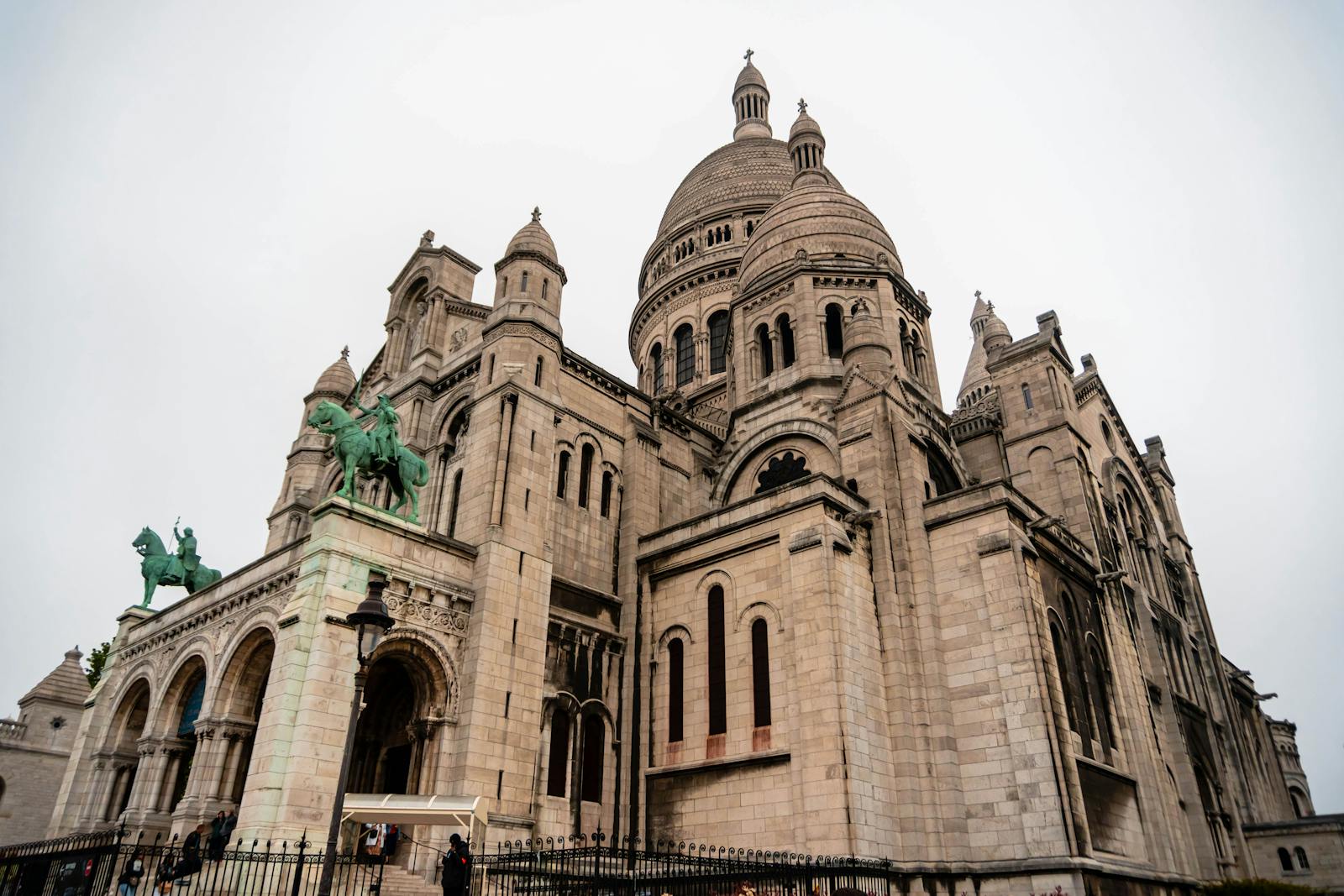
This is exactly the kind of neighborhood where a good walking tour pays off. The difference between wandering alone for 2 hours and walking the same route with a knowledgeable local guide is enormous — it’s the difference between seeing a picturesque hilltop and understanding a century of Parisian bohemian history that still shapes what the neighborhood looks like today. A guide will take you to the real Bateau-Lavoir (Picasso’s old studio), the tiny vineyard on the north slope of the hill (the last working vineyard inside Paris city limits), the cabarets that still function as they did in 1900, and the apartment buildings where specific paintings you’ve seen in the Orsay Museum were made.
This guide covers the four best Montmartre walking tour options, explains when to splurge on a premium guided experience versus a cheaper basic tour, and walks through the neighborhood logistics — how to handle the funicular, the best time of day to beat the Place du Tertre crowds, and which tour style suits which kind of traveler. Let’s walk.
- Quick Picks: Best Montmartre Walking Tours
- 1. Paris: Montmartre Highlights Walking Tour with a Local Guide — Best Value
- What Recent Visitors Are Saying
- 2. Paris Montmartre Walking Tour: Best Art, Culture and Food — Most Comprehensive
- What Recent Visitors Are Saying
- 3. Paris: Discover Hidden Montmartre on a Walking Tour — Best for Art Lovers
- What Recent Visitors Are Saying
- 4. Paris: Montmartre Must-See Walking Tour with a Local Guide — Strong Alternative
- What Recent Visitors Are Saying
- The Brief History You Need to Know Before You Walk
- When to Go: Timing Your Montmartre Visit
- Practical Logistics: Getting There and Back
- What You’ll Actually See on the Walking Tours
- More Paris and France Guides
- Which Montmartre Walking Tour Should You Actually Book?
- Final Word: Is a Montmartre Walking Tour Worth It?
Quick Picks: Best Montmartre Walking Tours
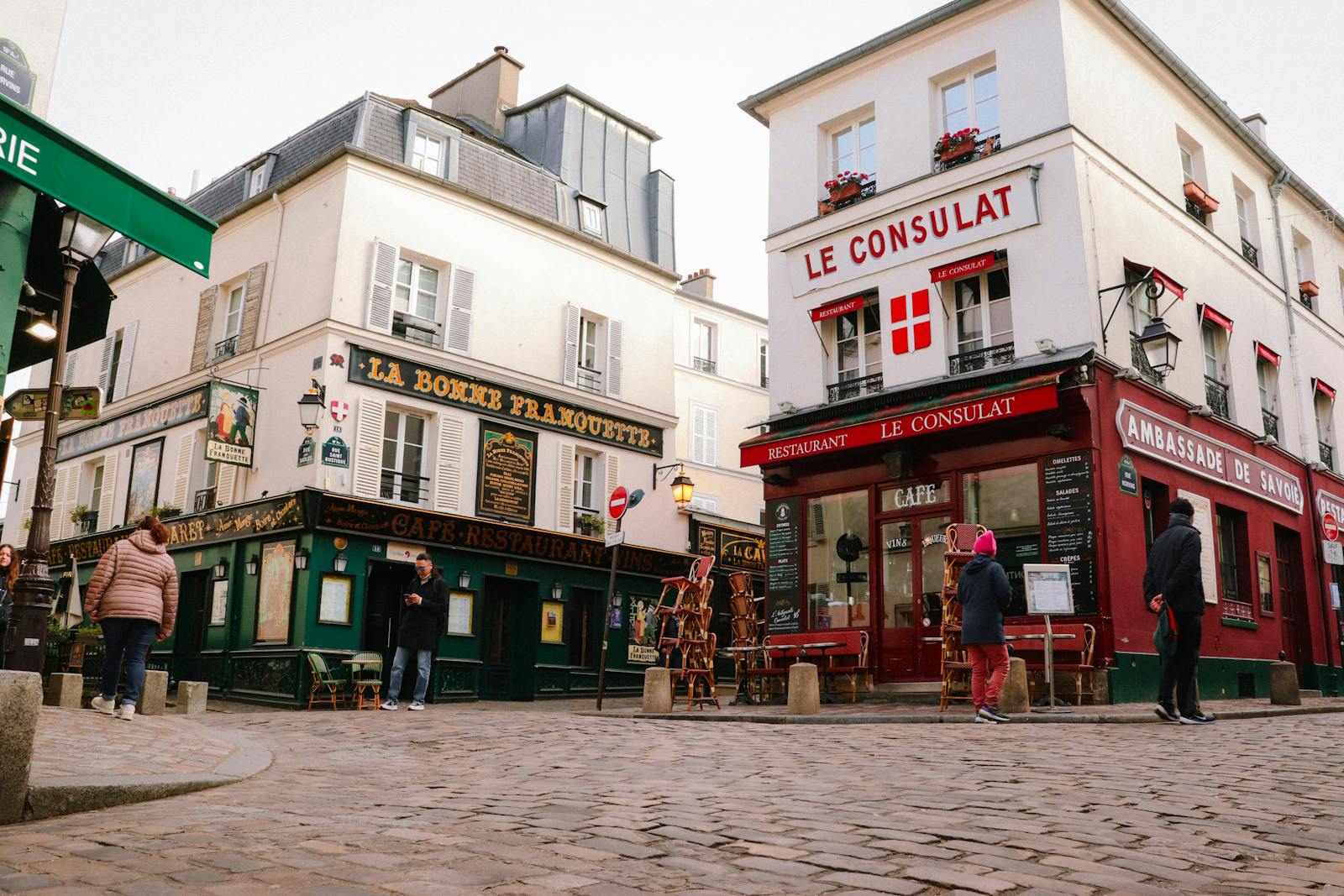
Best value (under $30): The Paris: Montmartre Highlights Walking Tour with a Local Guide is the most reviewed affordable option, running 2 hours 20 minutes at $23 per person with a 4.9 rating across 2,300+ reviews. The guide-forward format is excellent for first-time Montmartre visitors who want neighborhood context without committing a full morning.
Best comprehensive tour: The Paris Montmartre Walking Tour: Best Art, Culture and Food is a top-rated 90-minute Viator walking tour that covers the art history, neighborhood culture, and includes light food tastings along the way. Over 2,600 reviews and a full 5.0 rating.
Best for art lovers: The Paris: Discover Hidden Montmartre on a Walking Tour is a 2-hour small-group tour that focuses specifically on the hidden corners art-history travelers want to see — the lesser-known studios, the painter’s haunts, the specific street corners that appear in famous Impressionist paintings.
Best alternative: The Paris: Montmartre Must-See Walking Tour with a Local Guide is a 2.5-hour option at $29 per person with a 4.9 rating. Similar in scope to the highlights tour but with a slightly different route and smaller group sizes.
1. Paris: Montmartre Highlights Walking Tour with a Local Guide — Best Value
Price: $23 per person
Duration: 140 minutes (2 hours 20 minutes)
Reviews: 2,318 reviews, 4.9 stars
Operator: GetYourGuide
This is the default recommendation for most first-time Montmartre visitors. At $23, it’s priced for the backpacker and budget-traveler crowd but the quality is high — reviewers consistently single out the guides (Yazid is the most-mentioned name in recent reviews) for enthusiasm, depth of knowledge, and willingness to answer questions beyond the scripted tour content. The 2-hour-20-minute length is roughly perfect — long enough to actually cover the neighborhood, short enough that your legs aren’t exhausted by the end.
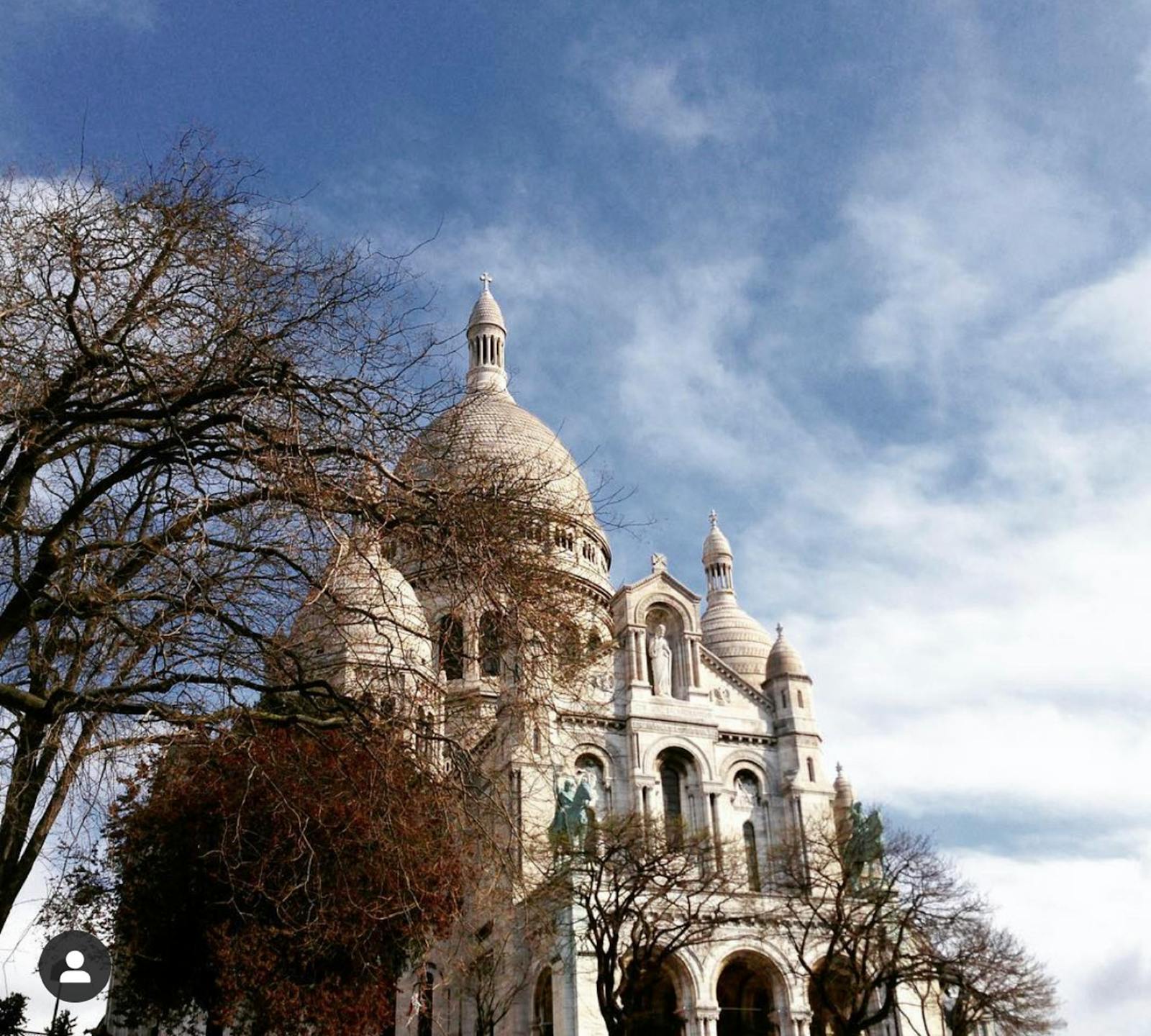
The tour typically starts at the base of the Montmartre hill (near Blanche or Abbesses metro) and winds upward through the backstreets, avoiding the tourist-heavy direct path through Place du Tertre. You’ll see Moulin Rouge from the outside, walk past the apartment where Vincent Van Gogh lived with his brother Theo on Rue Lepic, hit the Moulin de la Galette (the windmill-restaurant immortalized in Renoir’s painting, which now houses a restaurant you can actually eat at), cross through the tiny Montmartre Vineyard (500 vines producing a few hundred bottles a year — the last working vineyard in Paris), and eventually reach Sacré-Cœur via the quieter northern approach rather than the tourist-packed southern staircase.
Group sizes are typically 12-18 people, which is small enough that you can hear the guide clearly and ask questions, but large enough that the tour is genuinely affordable. The pace is moderate — you’re walking a good 3-4 kilometers total with elevation gain, so wear comfortable shoes.
The guide content is where this tour earns its stripes. Yazid and the other top-rated guides play music from Montmartre-connected artists on their phones as you walk, show historic photos of specific locations as they existed in 1900 versus today, and share personal stories about growing up in or around the neighborhood. Several recent reviews specifically mention the guide playing Jacques Brel or Édith Piaf recordings at the spots those artists performed or lived.
Book this tour if: You want solid Montmartre context without spending $90+, you’re a first-time Paris visitor, you prefer guided commentary to audio guides, or you’re traveling on a budget.
Skip this tour if: You want smaller group sizes (10 or fewer), food tastings included, or an art-history deep dive.
What Recent Visitors Are Saying
A February 2026 visitor rated this 5 stars: “Yazid was a wonderful guide! It was clear that he loved his job and was excited to share his knowledge of Montmartre and beyond with us. He showed photos of art and played music from the famous locals. His enthusiasm and sense of humor were top knotch.”
Khaled (Feb 2026) gave it 5 stars: “Yazid was a very genuinely passionate guide who cared about the stuff he was talking about. It was worth every cent. And Ill do this tour again.”
Paul (Feb 2026) rated it 5 stars: “Yazid was an incredible guide. Has so much knowledge of the local area and is incredibly passionate. Very good at getting to know the tour group before starting, and sharing his stories and personal experiences made the tour so much better. The tour itself takes you to places you never would have expected and we cannot recommend enough.”
Mark (Feb 2026) added 5 stars: “Yazid gave an excellent tour. The tour group was quite small and Yazid provided a lot of interesting background and history about Montmartre and its residents over a long period of history. The tour was well paced and not many steps to be climbed! It was a fun and engaging afternoon and certainly brought Montmartre to life.”
Asma (Feb 2026) closed with 5 stars: “It was great, Yazid really knew his stuff. I learnt a lot about the neighbourhood and enjoyed beautiful music and art. Highly recommended!”
2. Paris Montmartre Walking Tour: Best Art, Culture and Food — Most Comprehensive
Price: $38.70 per person
Duration: 1 hour 30 minutes
Reviews: 2,684 reviews, 5.0 stars
Operator: Viator
This is the tightest, best-rated option on the list. 1.5 hours, 5.0 stars across 2,684 reviews, and the most consistent quality of any Montmartre walking tour currently bookable. The shorter length is the key differentiator — if you’re short on Paris time and can only give Montmartre 90 minutes, this is the tour that maximizes the experience without the elevation-gain fatigue of the longer options.
The route condenses the key Montmartre stops — Moulin Rouge exterior, Rue Lepic (Van Gogh’s apartment, Amélie’s café), Moulin de la Galette, the Montmartre Vineyard, the Bateau-Lavoir, Place du Tertre (quickly, as a historical marker), Sacré-Cœur — into a brisk 90-minute loop. Because it’s shorter, the pace is faster and there’s less time for questions, but the guide commentary is dense and well-organized. Recent reviewers consistently praise guides “Laura” and “Sylvia” for keeping the information flowing without feeling rushed.
The “food” element in the tour name is modest — typically a light tasting stop (bread, cheese, or a sweet from one of the local bakeries) rather than a full meal. If you’re looking for a serious food experience, you want our Paris food tours guide instead, which covers the dedicated 3-hour walking food tours. This tour’s food element is a pleasant addition to a culture-focused walk, not the main event.
Group sizes vary by season — peak summer can hit 20+ people, shoulder season often runs 10-15. If you’re particular about small-group intimacy, consider the premium options below.
Book this tour if: You have limited Paris time, want high-quality guided commentary, and prefer a tighter 90-minute format to a 2+ hour walk.
Skip this tour if: You want more depth on specific topics, smaller group sizes, or a serious food tasting element.
What Recent Visitors Are Saying
Ron_F rated this 5 stars with “Laura was a great Tour guide for Monmarte. The secrets, the people, and how it turned from the cheapest place in Paris, to the most expensive, a great introduction to a tiny part of Paris.”
Michael_T gave it 5 stars titled “Worth the Walk”: “Well organized, scenic way to learn about Montmartre and its history. Exceptional views of Paris along the way. Easy walk. Sylvia was a great guide.”
Sean_C rated it 5 stars: “David is a knowledgeable tour guide who is passionate about his job and the arts. It made the experience so much better. We did the early tour which I would recommend since the area becomes quite busy quickly.”
Marinus_v added 5 stars: “This is a very nice tour. Laura, our tour guide was great. Funny and knowledgeable. The perfect way to climb Montmartre outside the mainstream tourist trail. Learn about the area and the history of Paris. Thanks to our tour guide we also found a very nice lunch place to finish our half day in montmartre.”
Octavia_T rounded out with 5 stars: “We had a fantastic walking tour, and the guide was incredibly knowledgeable, sharing insightful history and local details that made the experience truly enjoyable.”
3. Paris: Discover Hidden Montmartre on a Walking Tour — Best for Art Lovers
Price: $44.44 per person
Duration: 2 hours
Reviews: 809 reviews, 5.0 stars
Operator: Viator
If the first two tours are the crowd-pleasers, this is the art-focused deep cut. 2 hours, small group sizes (typically 10-15 people), and a deliberate “hidden” routing that avoids most of the standard tourist stops in favor of the specific locations where Picasso, Modigliani, Suzanne Valadon, and other artists actually lived and worked. Recent reviewers consistently mention guides “Cecilia” and “Max” for enthusiasm and art-history depth.
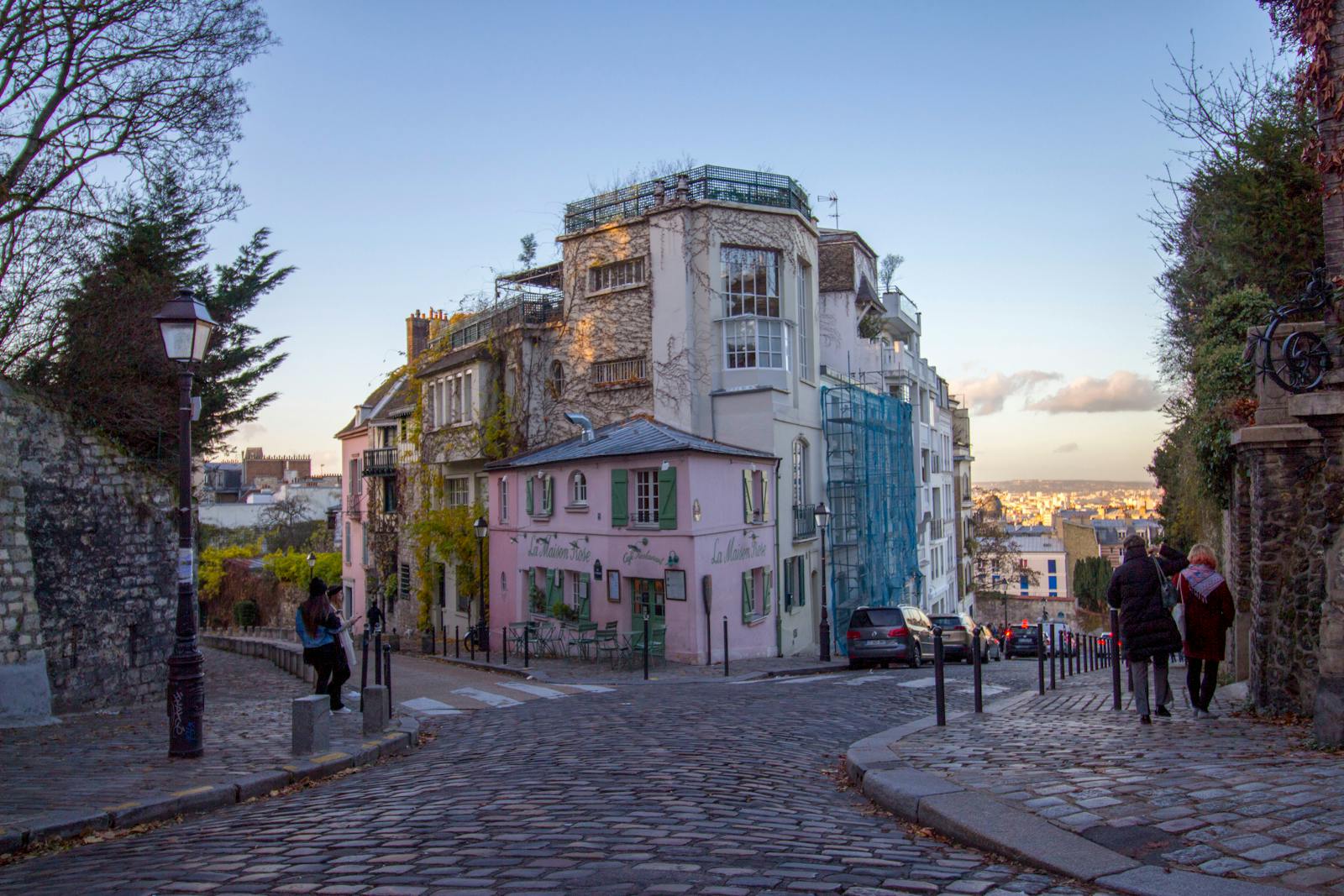
The route varies by guide but typically includes: the Bateau-Lavoir (Picasso’s studio between 1904-1912, where Les Demoiselles d’Avignon was painted — the original building burned down in 1970 but has been rebuilt to the same floor plan), Rue de l’Abreuvoir (one of the prettiest streets in Paris, frequently painted by Maurice Utrillo), La Maison Rose (the pink cafe in countless Impressionist paintings), the Cemetery of Saint-Vincent (where Utrillo is buried), Rue des Saules (home to Au Lapin Agile, the cabaret Picasso frequented), and the actual studio courtyards where specific paintings were executed. The guides carry small photo binders with reproductions of the paintings so you can compare the painted scene to the current view — that side-by-side is the tour’s signature move.
The Croissant stop. Most recent reviewers mention a stop at a specific patisserie along the route where the guide buys everyone a fresh croissant from a Paris-champion baker. It’s a small gesture, but the croissant is genuinely one of the best you’ll have in Paris, and the 5-minute break gives everyone a chance to catch their breath before the next climb.
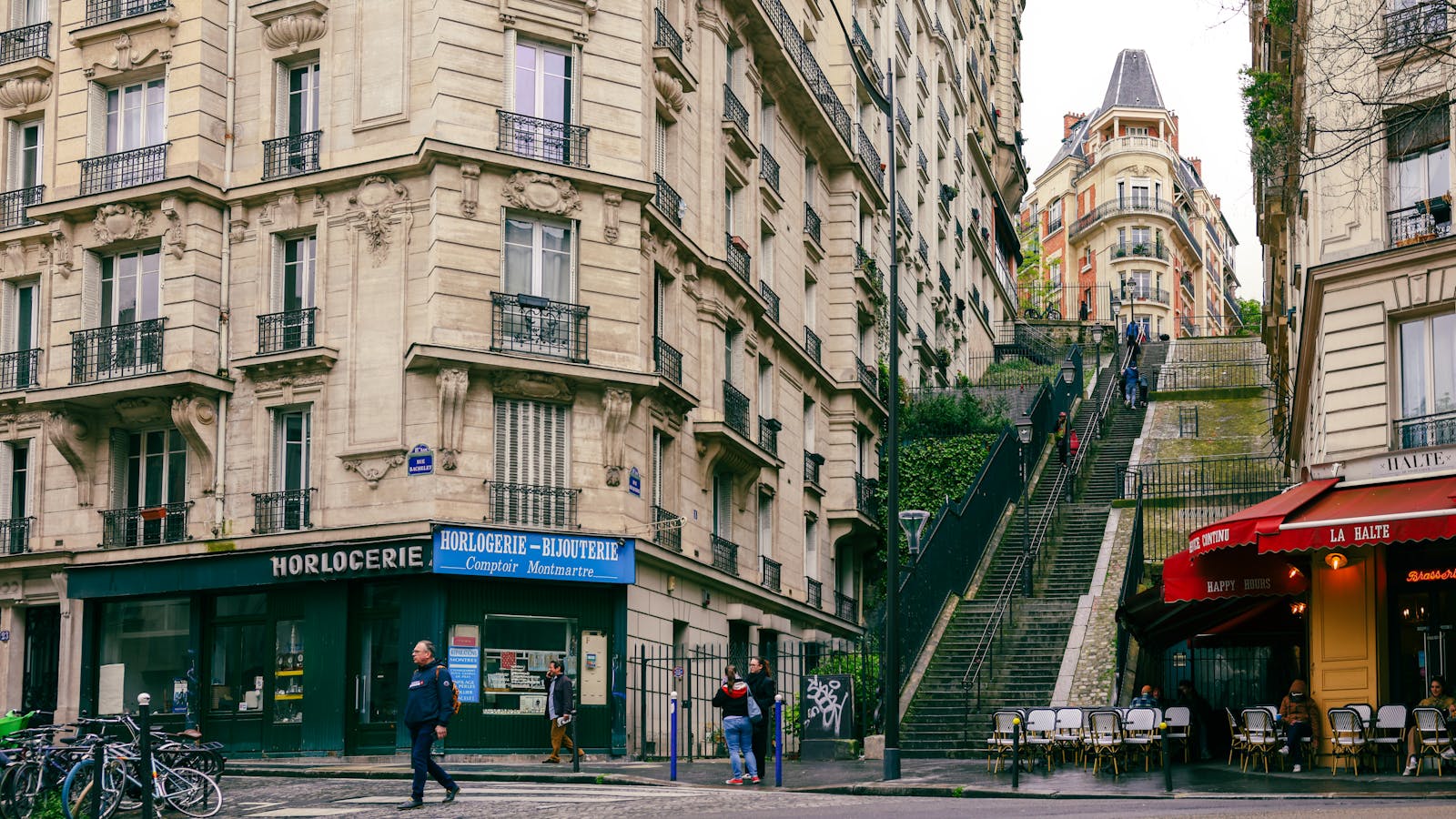
The downside is physical. This is the most elevation-heavy of the four tours — the “hidden” parts of Montmartre are mostly on the steeper back slopes, and the 2-hour route includes multiple staircases and inclines that can be punishing for anyone with knee or hip issues. If your mobility is limited, the shorter Viator tour above is a better fit.
Book this tour if: You’re an art-history buff, you’re interested in the specific geography of 1880s-1920s Paris painting, you want small group sizes, or you’ve already done a basic Montmartre tour and want the deep version.
Skip this tour if: You have mobility limitations, you’re short on Paris time, or you want the broader neighborhood overview rather than the art-specific route.
What Recent Visitors Are Saying
Catherine_G rated this 5 stars: “Cecilia is a delight! She happily shares her love for art and history. The stop for an award-winning croissant was fun too 🥐”
Arianna_P gave it 5 stars titled “Excellent tour”: “Max was enthusiastic, knowledgeable, and patient with people of all ages and abilities. He expmaibed things and eganged kids as well. I learned at leat 5 new things in this tour. Well run and worth it. We even stopped at a patisserie and he got us fresh croissants!”
Dean_B added 5 stars: “Max is the perfect guide. There is a lot of walking and some steep inclines, but it’s well worth it.”
Patricia_B rated it 5 stars with “The best tour ever”: “This was an amazing tour. Although we lived in Paris many years ago and visit often quite our guide led us through many parts of Montmartre we had never discovered before. We also loved hearing about the lives of the artists who lived and painted in the Montmartre. This tour is a must. It goes beyond the usual ‘tourist’ route and offers some of the best vistas in Paris.”
Annika_M closed with 5 stars: “The tour was super interesting and our guide Max did an amazing job. Strongly recommended for everyone who is interested in Paris besides Eiffel Tour and Louvre.”
4. Paris: Montmartre Must-See Walking Tour with a Local Guide — Strong Alternative
Price: $29 per person
Duration: 150 minutes (2 hours 30 minutes)
Reviews: 661 reviews, 4.9 stars
Operator: GetYourGuide
This is the quieter alternative to the #1 Highlights tour. Similar format (2.5 hours, local guide, standard Montmartre route), slightly different stops, slightly smaller group sizes, and about $6 more per person. The two tours are basically interchangeable — book whichever has better availability for your dates. Recent reviewers consistently mention guide “Jean-Baptiste” (JB) as particularly engaging, with reviewers noting fun stories, good pacing, and an “informed and witty” style.
The main differentiator is the group size policy. This tour caps at 15 people (versus the Highlights tour’s 18-20), which makes for a more intimate experience with more Q&A opportunity. One recent reviewer noted that when they were the only booking on their date, the guide still ran the tour as a private experience — not a guaranteed outcome but a good sign of the operator’s flexibility.
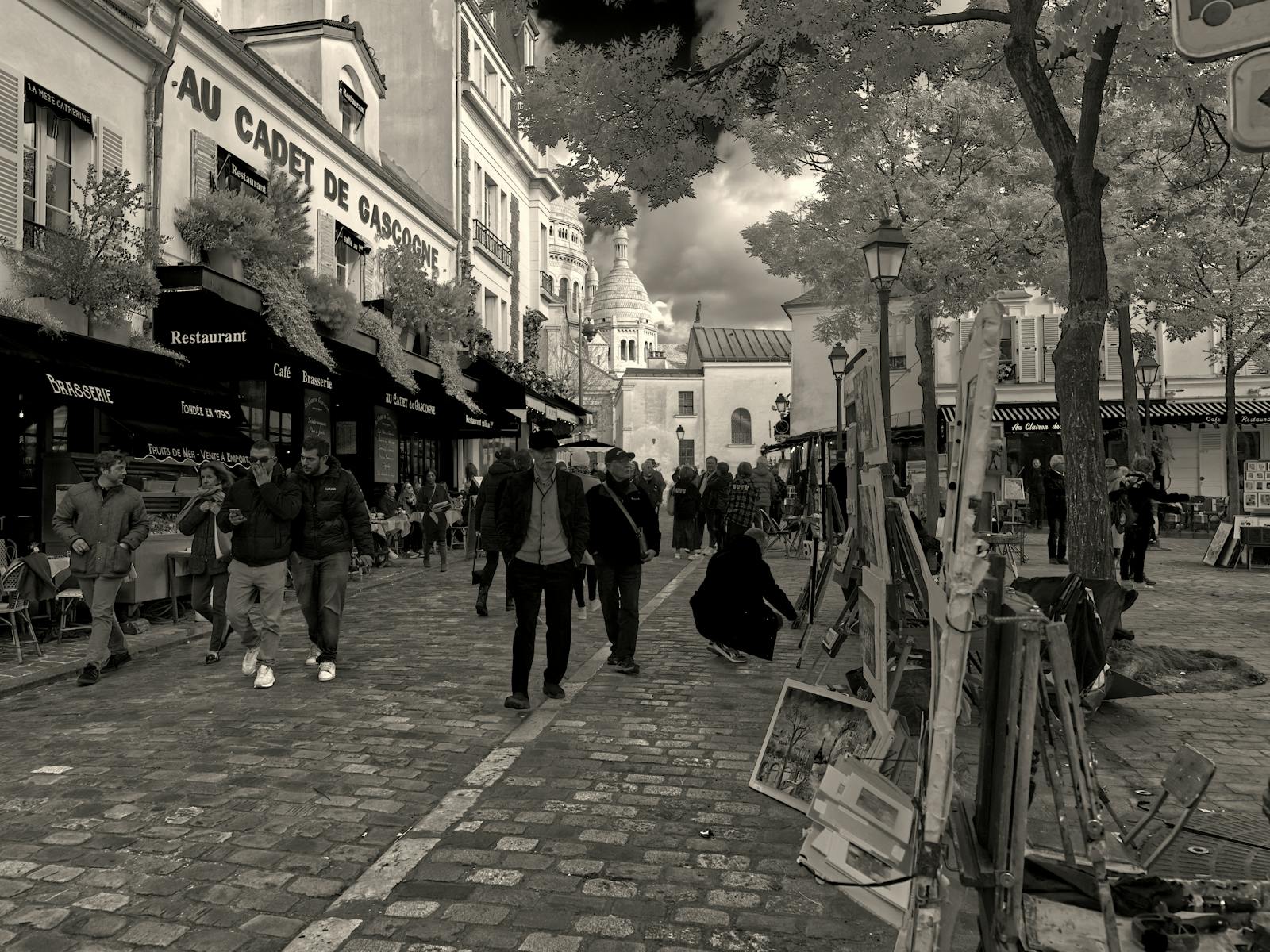
The route overlaps about 80% with the Highlights tour but includes a slightly different mix of smaller stops. Where the Highlights tour focuses on the music/culture angle, this one leans slightly more toward the “picturesque corners” angle — the specific viewpoints and street corners that make the best photos. For travelers who prioritize Instagram-worthy stops, this might be the better fit.
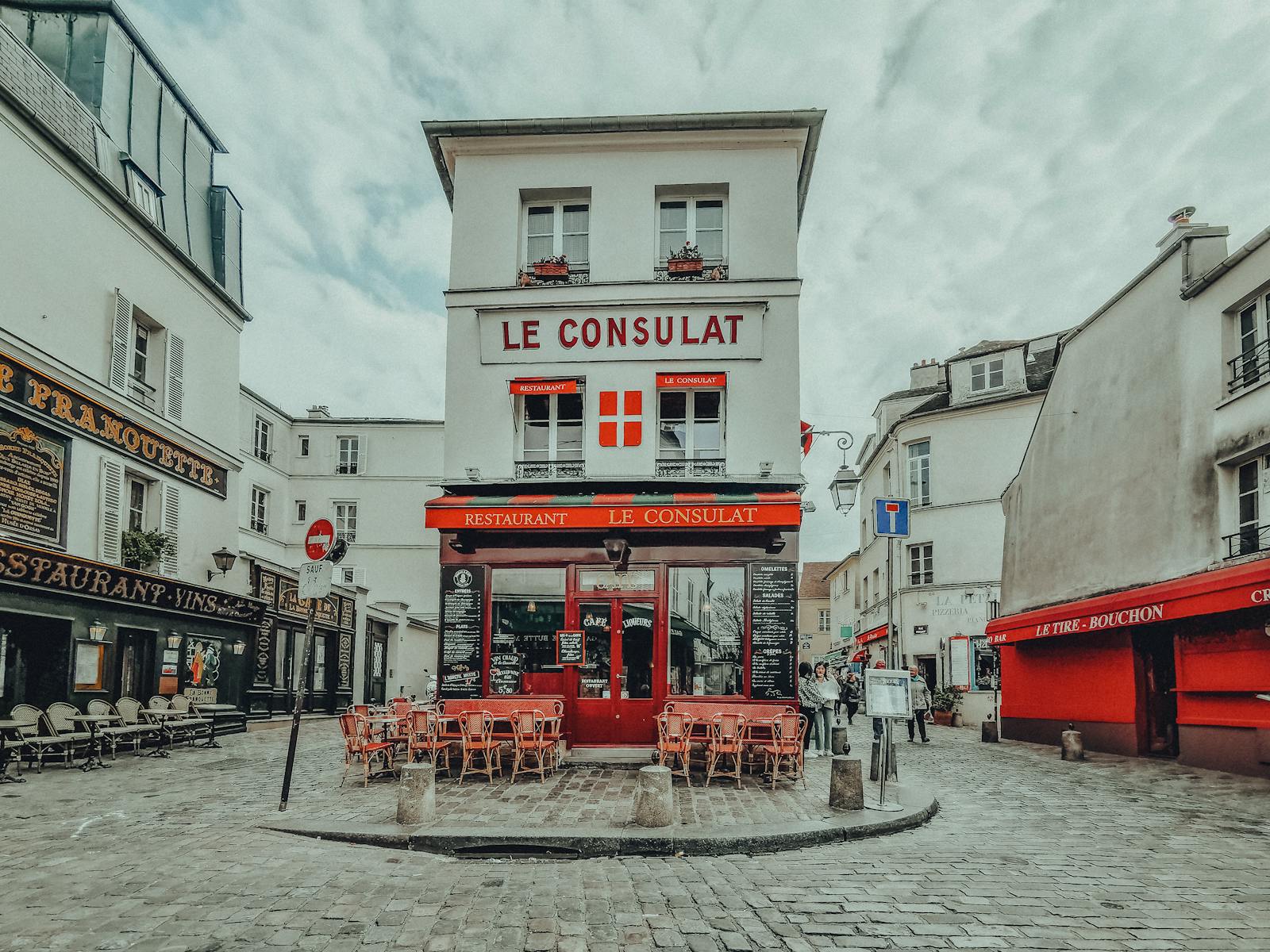
Pricing: $29 is still cheap for a 2.5-hour guided walking tour in central Paris, and the value is high for travelers who want the smaller-group experience without paying premium prices for a private tour.
Book this tour if: The #1 Highlights tour isn’t available on your dates, you want slightly smaller group sizes, or you prefer the more photo-focused routing.
Skip this tour if: The Highlights tour fits your schedule — it’s the same price range with more review volume.
What Recent Visitors Are Saying
Miljan (Feb 2026) rated this 5 stars: “Interesting tour with a great guide – fully recommended!”
Olga (Feb 2026) gave it 5 stars: “I ended up with a private tour because I was only person booked and JB still did the tour. He is fun and full of information. I would strongly recommend this tour.”
Amanda (Feb 2026) added 5 stars: “Jean-Baptiste was entertaining and attentive which made the tour very interesting and kept myself, my husband and both our teenagers engaged throughout.”
Stewart (Feb 2026) rated it 5 stars: “An excellent tour with an informed and witty guide.”
Nancy (Feb 2026) closed out with 5 stars: “Jean Baptiste was a delight! Fun stories, excellent information, and took the time to give us the best tour possible. Gave great recommendations as well!”
The Brief History You Need to Know Before You Walk

Montmartre is a hill — the only real hill in central Paris, rising 130 meters above the Seine — and for most of Parisian history, it wasn’t actually part of Paris. It was a village called La Butte that sat outside the city walls, populated by farmers, windmill operators (the hill had over 30 windmills at its peak, which is why the Moulin Rouge and Moulin de la Galette retain their “mill” names even though they’ve been restaurants for a century), and a handful of religious institutions. The hill became part of Paris administratively in 1860 when Baron Haussmann’s urban reorganization swallowed up the surrounding villages.
The transformation into an artist’s quarter began in the 1880s and peaked between roughly 1900 and 1914. What drew the artists was money — rent in Montmartre was cheap because the neighborhood was technically in Paris but still felt rural, full of vineyards and market gardens. Picasso arrived in 1900, took a studio at the Bateau-Lavoir in 1904, and spent the next 8 years painting the works that would define Cubism. Modigliani, Utrillo, Matisse, Van Gogh, Renoir, Toulouse-Lautrec, Degas, and dozens of other painters either lived in Montmartre or spent significant time there. The neighborhood’s combination of cheap rent, abundant cafés, and distinctive visual character made it the most important artistic center in the world for roughly 15 years.
World War I ended the first Montmartre era. Many of the key artists had moved to Montparnasse by 1914, drawn by even cheaper rent and the emerging literary scene. Montmartre’s tourist phase began almost immediately — visitors started coming specifically to see “the place where Picasso painted,” and Place du Tertre began filling with portrait-sketchers selling imitations of Impressionist and Post-Impressionist styles to visiting Americans and British.
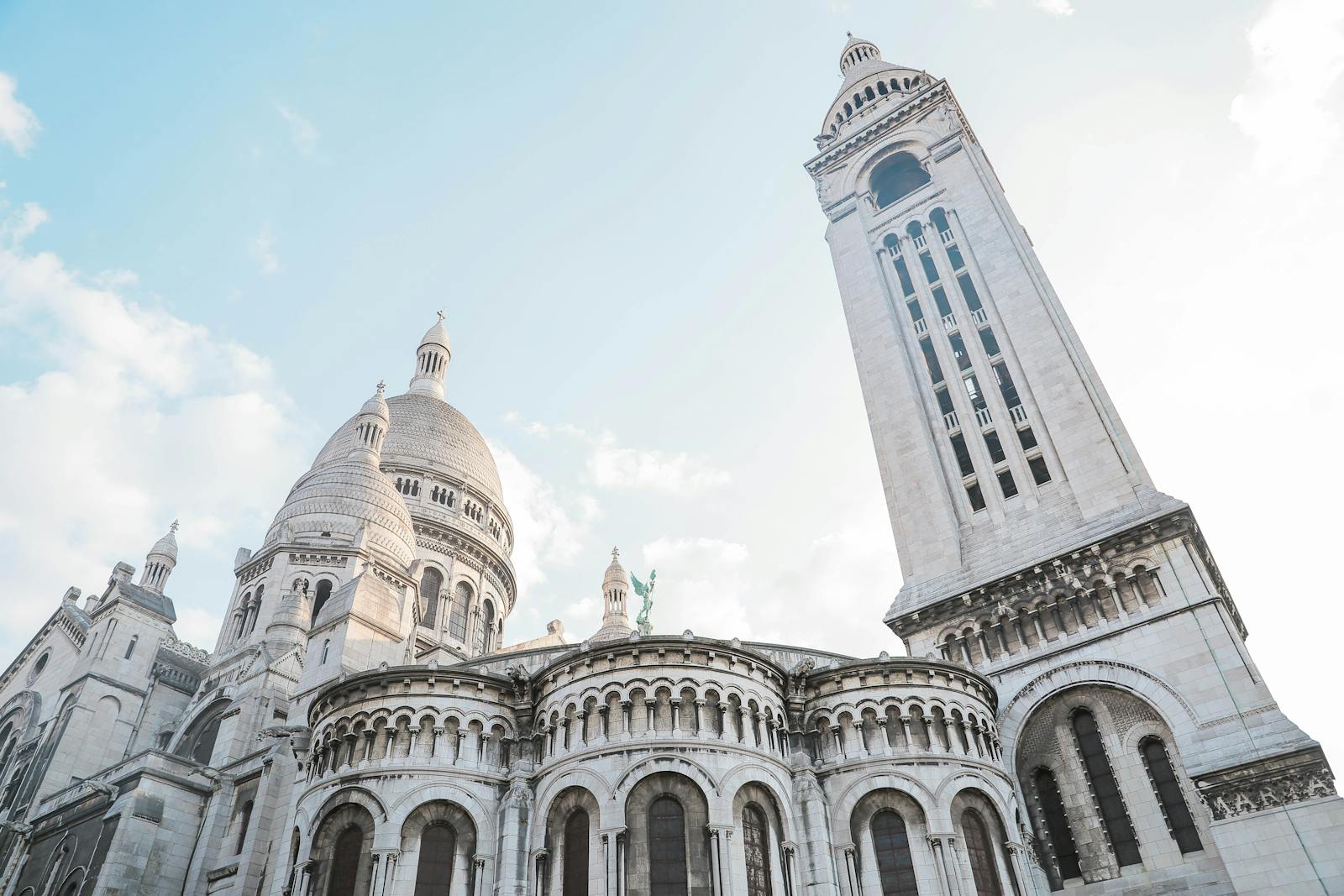
The basilica of Sacré-Cœur dates to a different and somewhat awkward story. It was commissioned by the French Third Republic in 1873 as an act of “national penance” after the defeats of the Franco-Prussian War and the Paris Commune uprising. Construction ran from 1875 to 1914 (consecrated 1919 after WWI delays), and the gleaming white travertine basilica on the hilltop was designed to be visible from everywhere in Paris — a politically charged statement of conservative religious power placed deliberately over the radical-workers Commune stronghold that had occupied the hill in 1871. Modern visitors mostly don’t know this history, but it’s why Sacré-Cœur feels stylistically out of place in Paris — it’s neither Gothic nor Haussmann, it’s Romanesque-Byzantine revival, deliberately designed to not look French.
When to Go: Timing Your Montmartre Visit

Montmartre’s crowd dynamics matter enormously. The hill gets packed during peak hours in summer, and a 9am walking tour feels like a completely different neighborhood from a 2pm walking tour.
Best: 9am-11am. The absolute best time to walk Montmartre. The streets are quiet, the light is soft and photograph-friendly, the cafés are opening for breakfast, and you can actually hear your guide without shouting over tourist crowds. Most tour operators offer a 9am start time. Take it.
Good: 4pm-6pm. Late afternoon is the second-best window. The midday peak has passed, the lighting is warm and golden for the final approach to Sacré-Cœur, and you’ll catch the sunset from the basilica’s plaza if you time it right. The only downside is that some cafés and shops begin closing after 6pm, so your post-tour lunch options shrink.
Avoid: 11am-3pm. Peak crowd time. Place du Tertre will be shoulder-to-shoulder, the funicular line will be 20+ minutes, and your guide will struggle to be heard. Skip this window if possible.
Sunday mornings. A special exception to the morning rule — Sunday mornings in summer can be as crowded as midday on weekdays because Parisians and travelers combine. If you must tour on a Sunday, aim for 8:30am before the crowds fully build.
Practical Logistics: Getting There and Back
Montmartre is in the 18th arrondissement, in the north of Paris. Most walking tours start at either Abbesses Metro station (the closest to the base of the hill) or Blanche Metro station (adjacent to the Moulin Rouge). Both are on Metro line 12.
The funicular. There’s a small funicular railway (Funiculaire de Montmartre) that runs up the south face of the hill, skipping the main staircase to Sacré-Cœur. It’s technically part of the Paris metro system, so your Navigo pass or standard metro ticket works on it. The uphill ride takes 90 seconds and saves you climbing roughly 200 steps. Most walking tours don’t use the funicular because the whole point of the tour is walking, but if you’re visiting independently and your legs are tired, it’s a worthwhile shortcut.
Walking back down. The most satisfying way to end a Montmartre tour is walking back down to the base via the Rue des Trois Frères or Rue Drevet route — it’s downhill (easy on the legs), goes through quieter residential streets, and ends near Pigalle or Abbesses where you can catch the metro home. Don’t just reverse your tour route; the “tourist corridor” you walked up on will be even more crowded by afternoon.
What to wear. Comfortable walking shoes with good grip — the cobblestones are slippery when wet, and the many staircases are worn smooth. Layers are smart because the hilltop is often 5°C cooler and windier than the Paris street level. In summer, bring water; many of the tour routes don’t pass a convenient water fountain.
Bathrooms. The public restrooms at the base of Sacré-Cœur and the ones at Place des Abbesses are the most reliable. Most cafés will let you use theirs if you buy an espresso first. Plan ahead — the hill has fewer public bathrooms than the main tourist areas of central Paris.
What You’ll Actually See on the Walking Tours
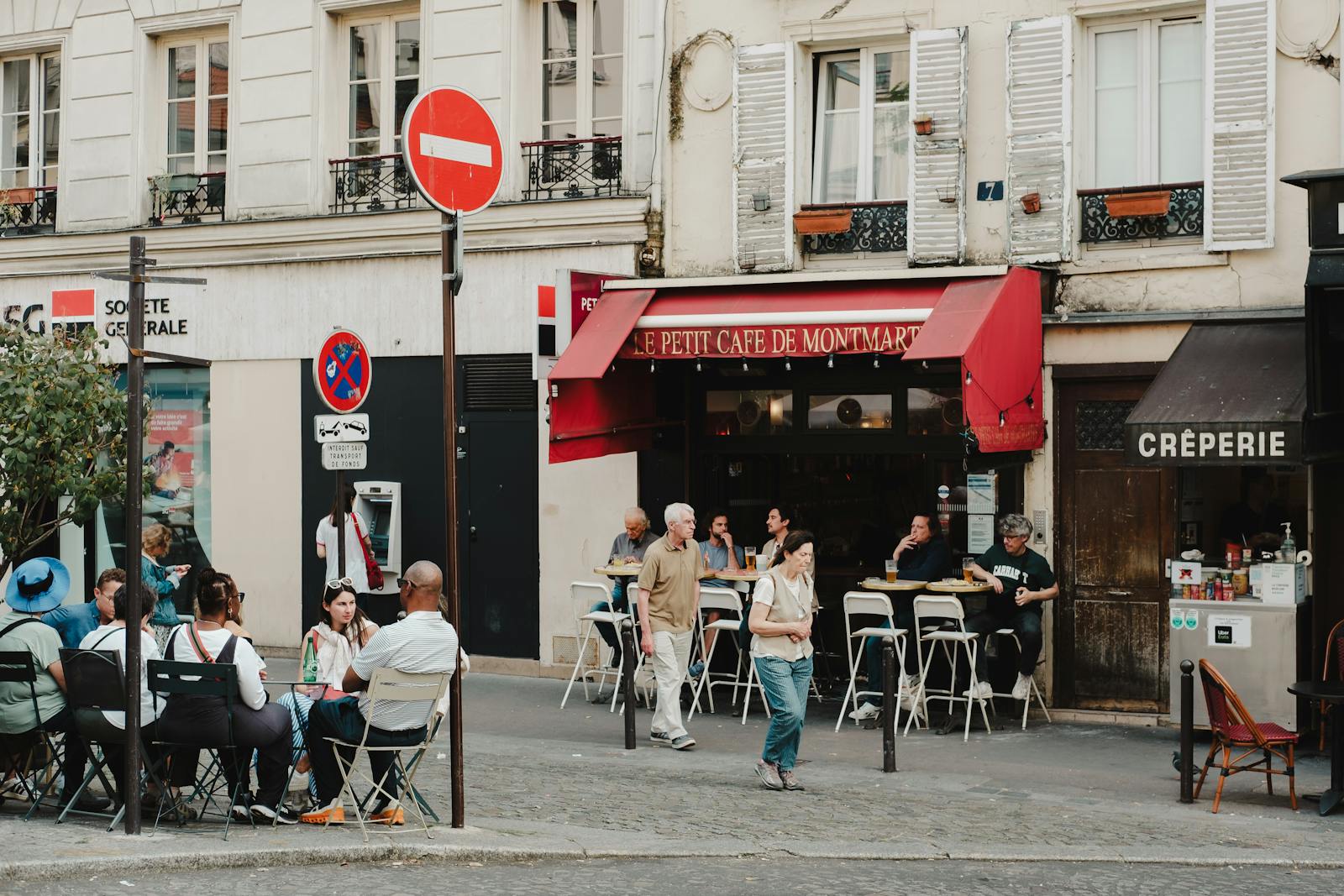
Every Montmartre walking tour hits roughly the same landmarks — the specific sequence and commentary vary, but the core stops are fairly standardized. Here’s what to expect.
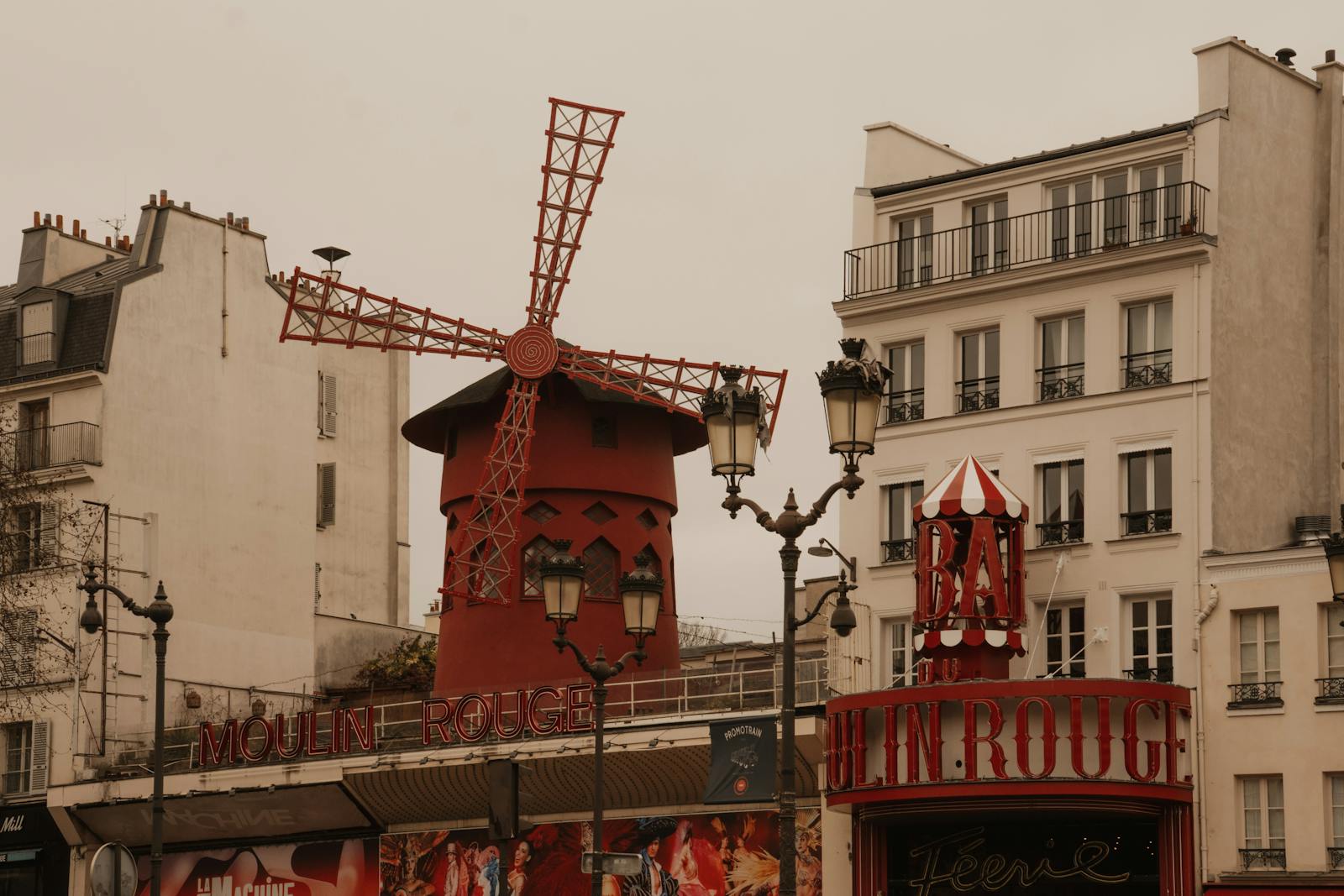
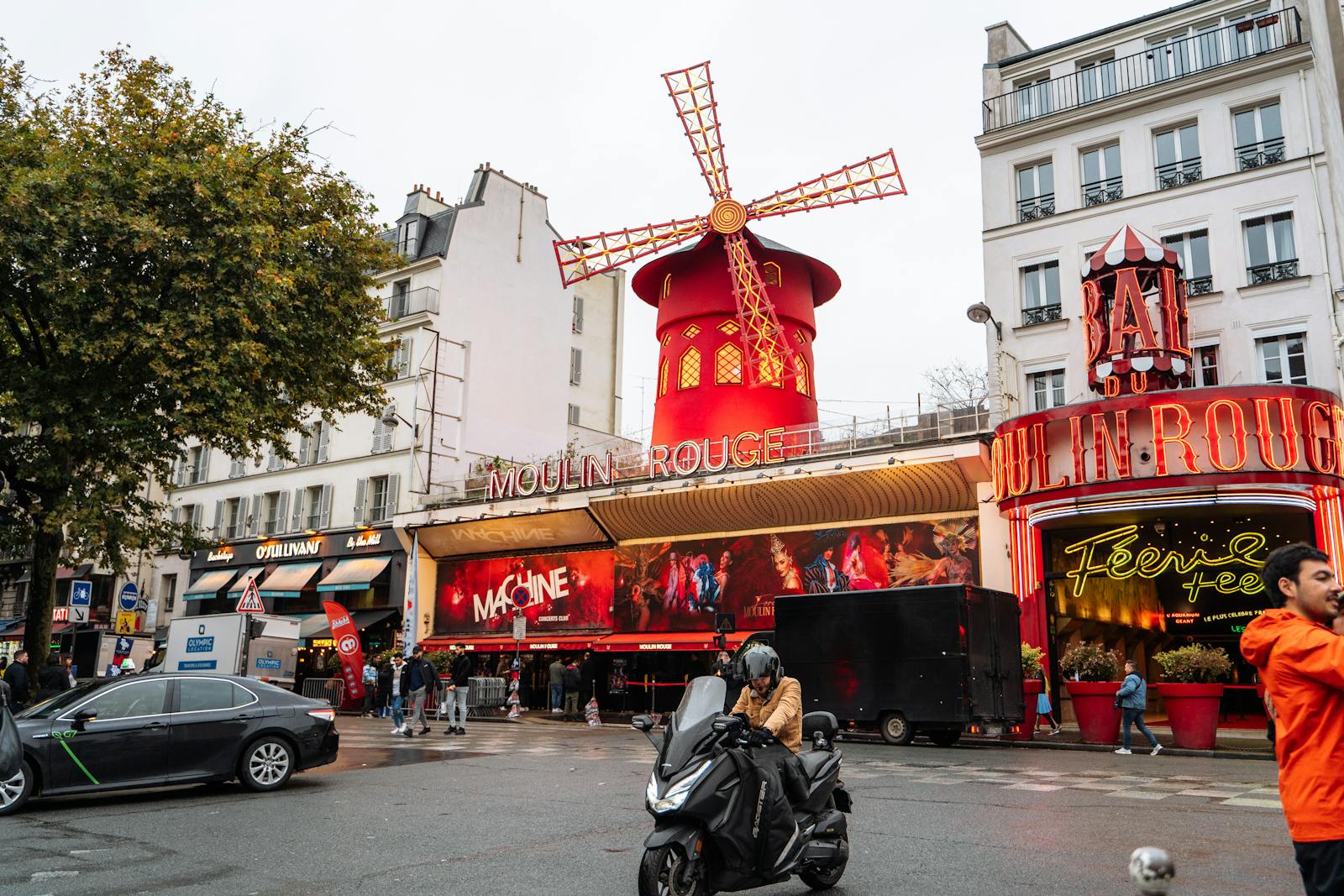
Moulin Rouge exterior. The original 1889 cabaret, famous from the Toulouse-Lautrec posters and the 2001 Baz Luhrmann film. You won’t go inside (that’s a separate evening experience) but you’ll see the red windmill facade and hear the history of the cabaret that launched the can-can as a mainstream entertainment. For the full Moulin Rouge experience, check our cabaret shows guide.
Rue Lepic and Van Gogh’s apartment. Vincent Van Gogh lived with his brother Theo at 54 Rue Lepic from 1886 to 1888, and painted his early French works from this apartment. The building is unmarked (no gift shop, no museum — just a plaque), and the understated nature of the site is part of its charm. Just up the street is the Café des Deux Moulins, which served as Amélie’s café in the 2001 Jean-Pierre Jeunet film.
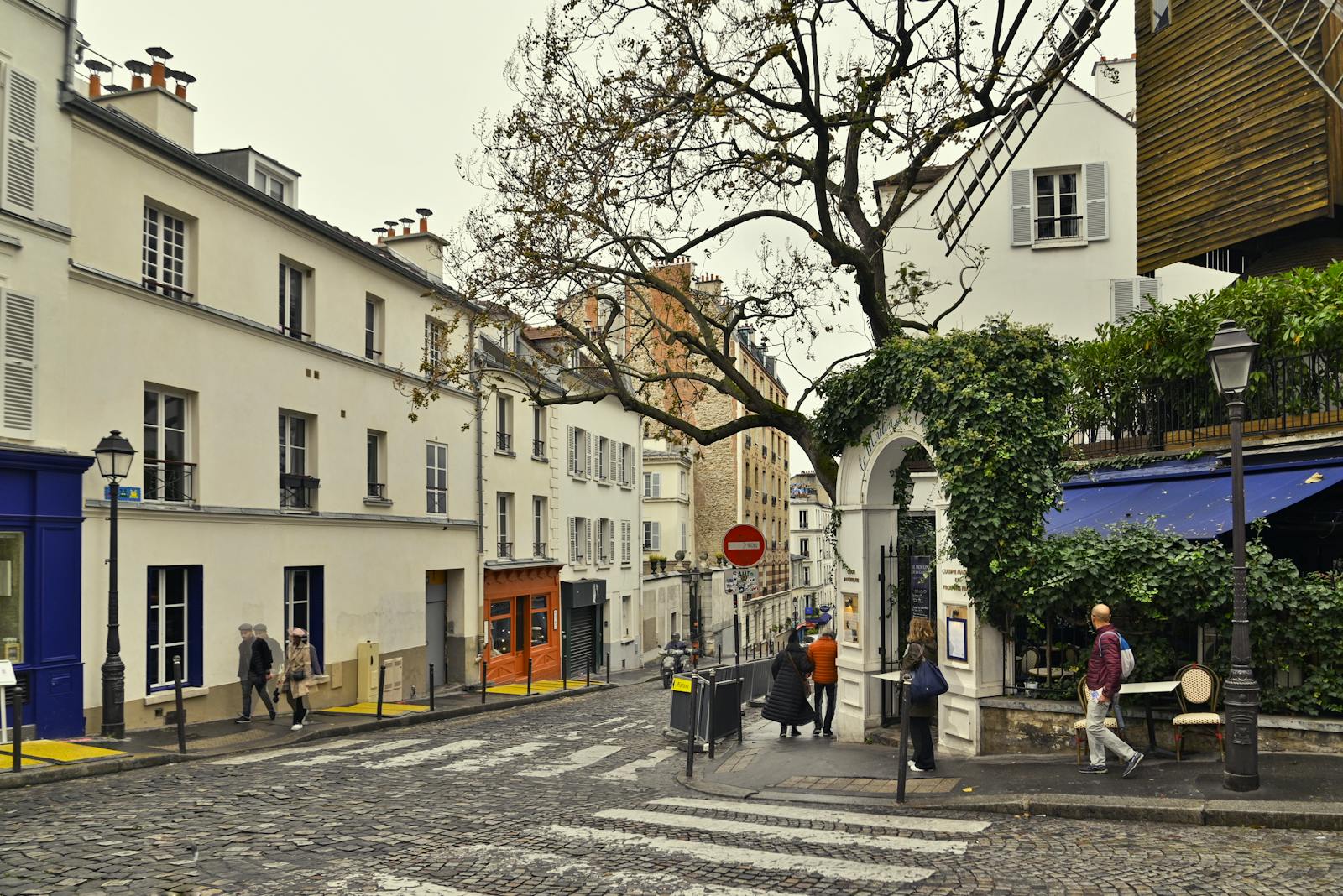
Moulin de la Galette. The last surviving windmill on the hill (other than Moulin Rouge, which is a restaurant mockup of a mill rather than a real historical windmill). This is where Renoir painted his famous 1876 Bal du Moulin de la Galette, now in the Orsay. You can actually eat at the restaurant here, though reservations are recommended.
The Montmartre Vineyard. The Clos Montmartre is the last working vineyard inside Paris city limits, producing about 500 bottles a year of Clos Montmartre wine that sells at an annual charity auction. The vineyard is fenced off and you can’t enter, but you can see it clearly from the Rue des Saules side. The best viewing spot is from the second-floor windows of Au Lapin Agile (the cabaret across the street).
The Bateau-Lavoir. Picasso’s famous studio, where Cubism was invented. The original building burned in a 1970 fire but has been rebuilt to the same plan. It’s not open to the public, but you can see the exterior and read the historical plaque listing the artists who worked there: Picasso, Modigliani, Matisse, Juan Gris, Max Jacob, Gertrude Stein visited, and dozens more.
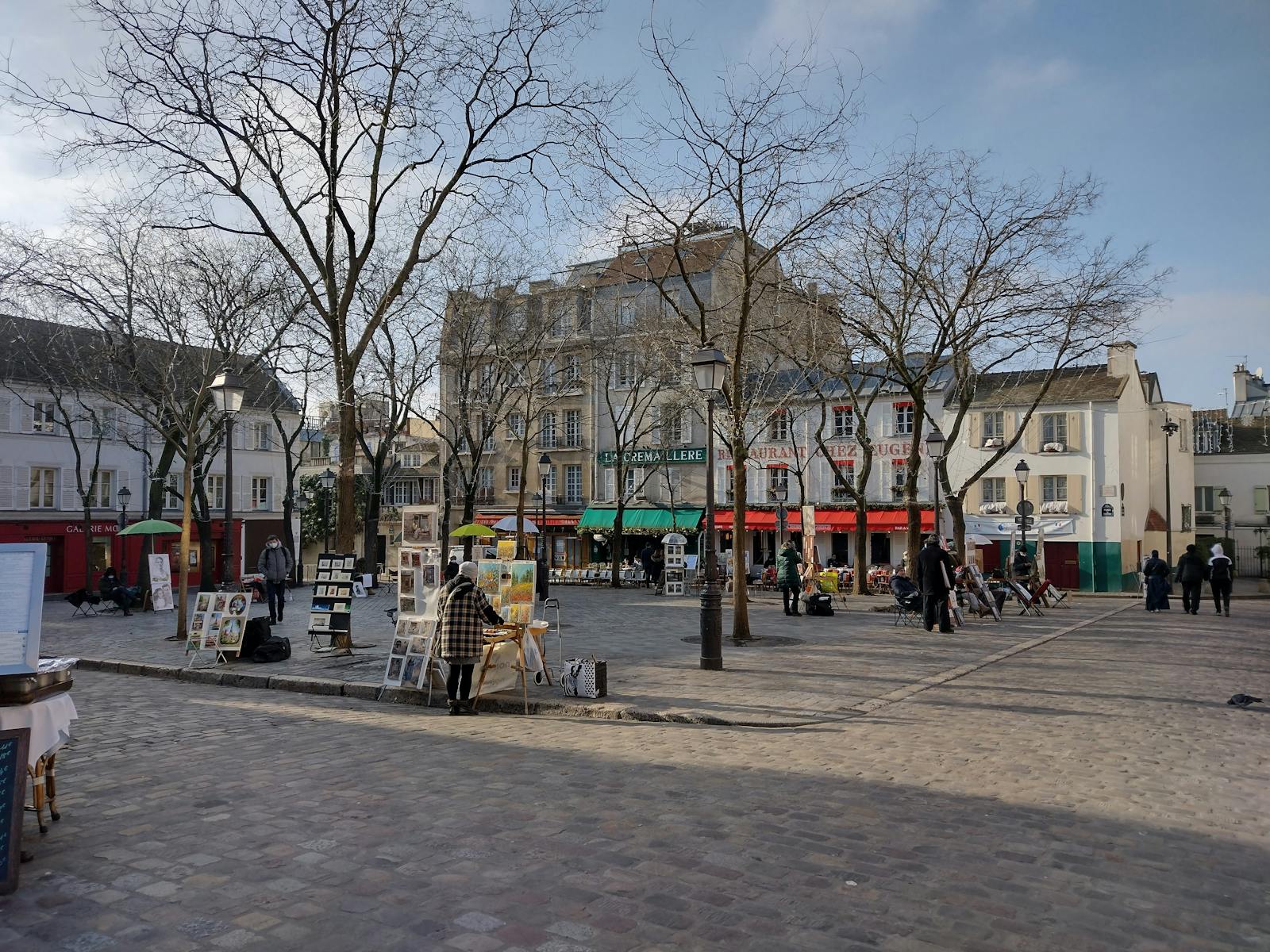
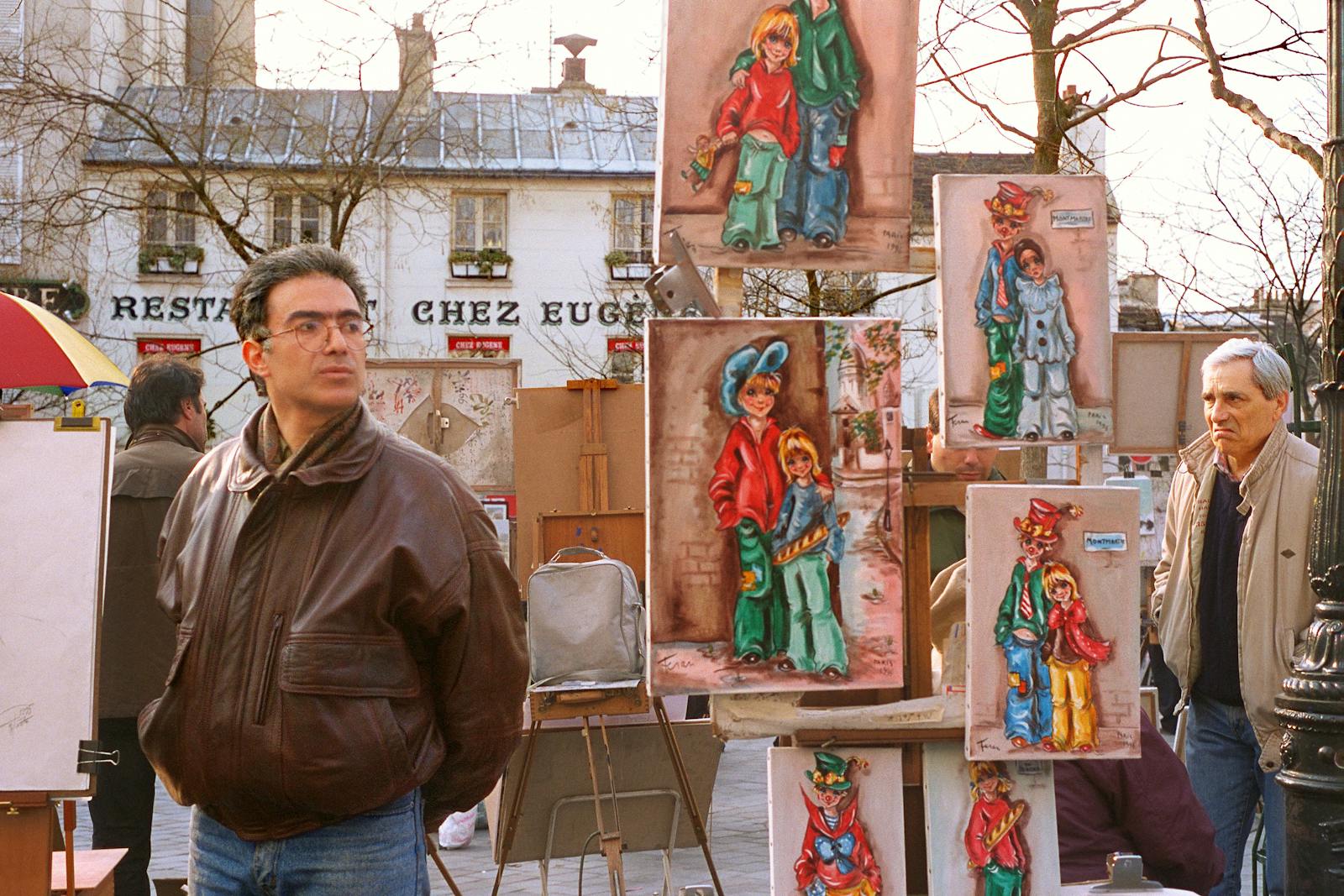
Place du Tertre. The most touristy spot in Montmartre. Most tours stop here briefly as a historical marker (Picasso drank at the cafés surrounding the square, and some of the portrait-sketchers’ traditions date to the early 20th century), but won’t linger. The square is worth 5 minutes of your time, not 50.
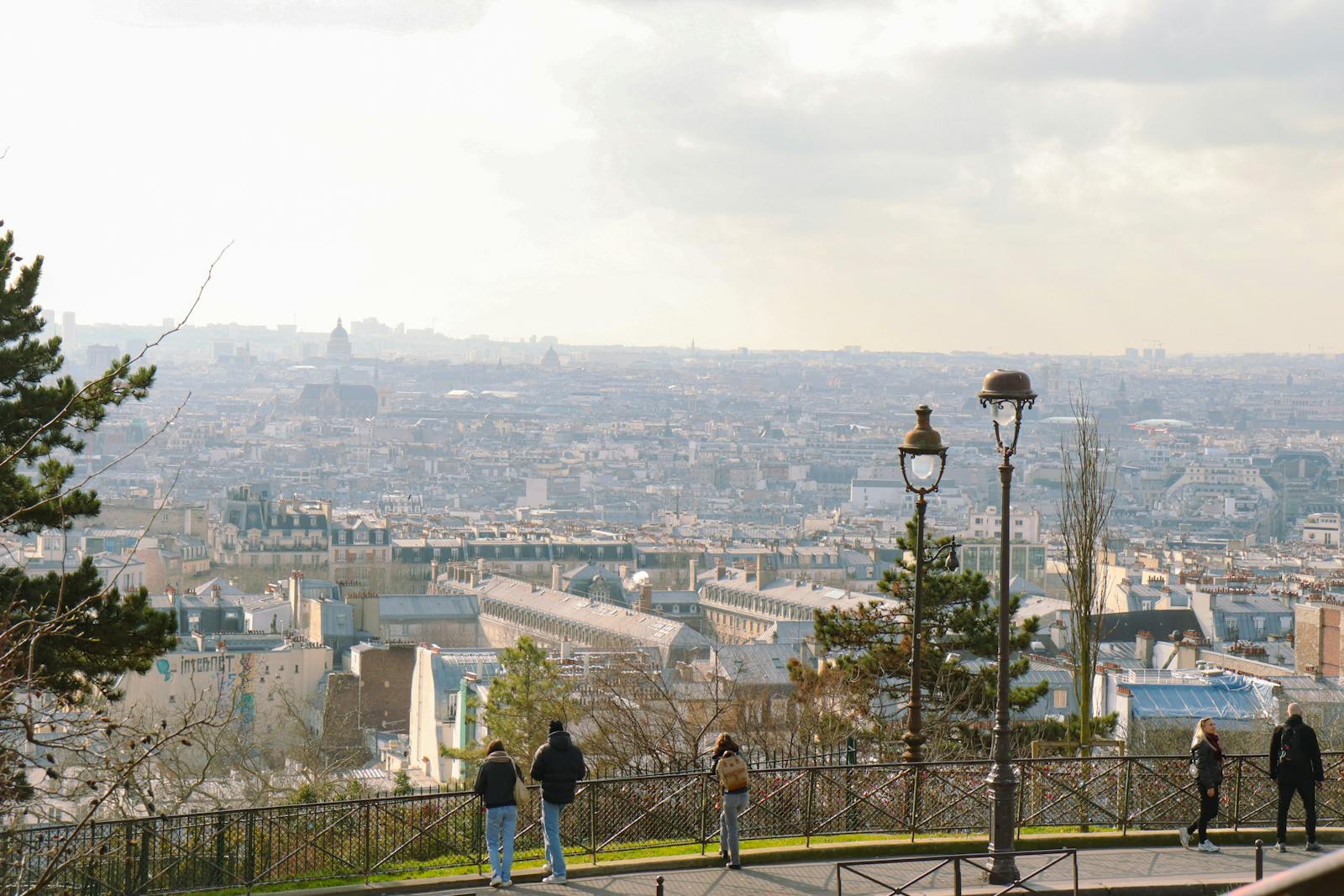
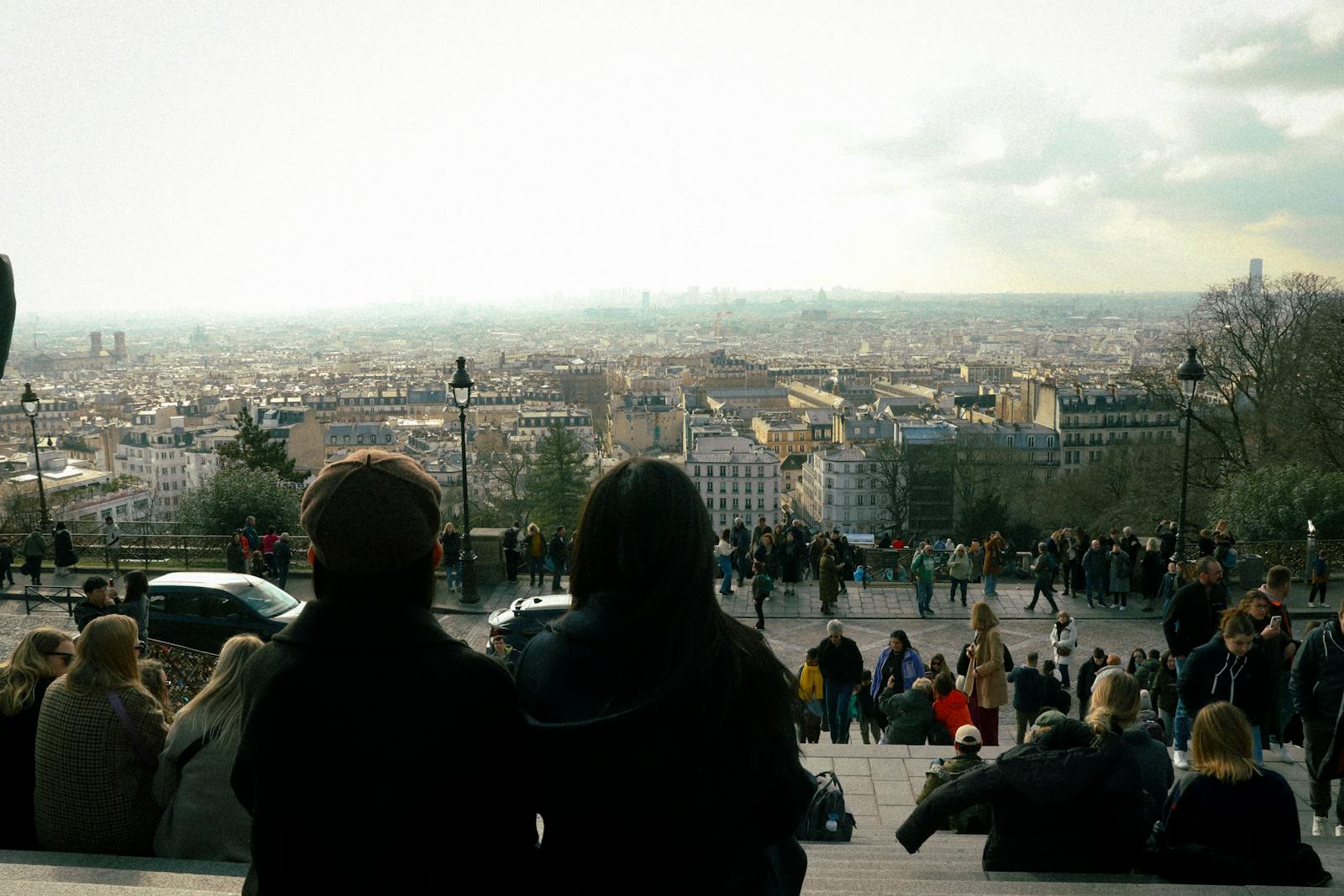
Sacré-Cœur Basilica. The grand finale. Most tours end at the basilica’s plaza, which offers the best panoramic view of Paris available for free — the city sprawls below you, with the Eiffel Tower, Louvre, and Notre-Dame all visible on a clear day. Entry to the basilica is free; the dome climb (300 steps) is a separate €6 ticket and adds about 20 meters of elevation for an even better view.
More Paris and France Guides
Montmartre pairs naturally with the rest of your Paris and France trip planning. For food-focused Montmartre exploration, the Paris food tours guide covers the dedicated walking food tastings across Paris (including several that focus on the Marais and central Paris, which complements the Montmartre art angle). For the classic monuments, the Eiffel Tower tickets guide, Louvre Museum tickets guide, and Orsay Museum tickets guide cover the essential must-visits.
For the best views of Paris that aren’t Sacré-Cœur, the Arc de Triomphe rooftop guide handles the other major rooftop viewpoint, and the Palais Garnier tickets guide covers the opulent opera house. For Paris’s more unusual historical sites, the Paris Catacombs tickets guide covers the underground ossuary and the Sainte-Chapelle tickets guide handles the stained-glass masterpiece.
For day trips beyond the city, the Versailles day trip guide, Mont Saint-Michel day trip guide, and Normandy D-Day beaches guide cover the three most popular full-day excursions from Paris. The French Riviera day tours from Nice guide covers the Mediterranean coast, and the Seine sightseeing cruises guide rounds out the river experience.
Which Montmartre Walking Tour Should You Actually Book?
Here’s the short decision tree. For most first-time visitors, book the Paris: Montmartre Highlights Walking Tour with a Local Guide ($23, 2 hours 20 minutes). It’s the best-rated affordable option, the guides are consistently excellent, and the length is right for the neighborhood.
If you have limited Paris time and want to condense the Montmartre experience into 90 minutes, book the Paris Montmartre Walking Tour: Best Art, Culture and Food ($38.70, 1.5 hours). It has the highest review volume on Viator and the tightest routing.
If you’re an art-history buff who wants the deep dive into painter’s haunts and Cubism geography, book the Paris: Discover Hidden Montmartre on a Walking Tour ($44.44, 2 hours). Smaller group sizes, more focused art content, and the croissant stop is a bonus.
If the Highlights tour isn’t available on your dates, the Paris: Montmartre Must-See Walking Tour with a Local Guide ($29, 2.5 hours) is the direct alternative — same format, different operator, smaller groups.
Final Word: Is a Montmartre Walking Tour Worth It?
Yes, emphatically. Montmartre is one of the few Paris neighborhoods where guided walking context genuinely changes the experience. Walking Montmartre alone is pleasant but shallow — you see the pretty streets and the basilica and maybe get a crêpe at Place du Tertre, and leave without understanding why any of it matters. Walking Montmartre with a guide who knows which apartment Van Gogh lived in and can play Édith Piaf recordings at the exact spot she sang is a completely different experience. You come away with a visceral sense of why this hill produced the paintings that ended up in the Orsay and the Louvre.
The practical advice: book the cheapest high-rated option ($23 Highlights tour), take the 9am slot if available, wear comfortable shoes, bring water in summer, and give yourself a lunch reservation at one of the non-tourist restaurants in the 18th arrondissement after the tour ends. Montmartre lunch spots are much better than the Place du Tertre trap would suggest, but you need to get a few blocks away from the obvious tourist core to find them.
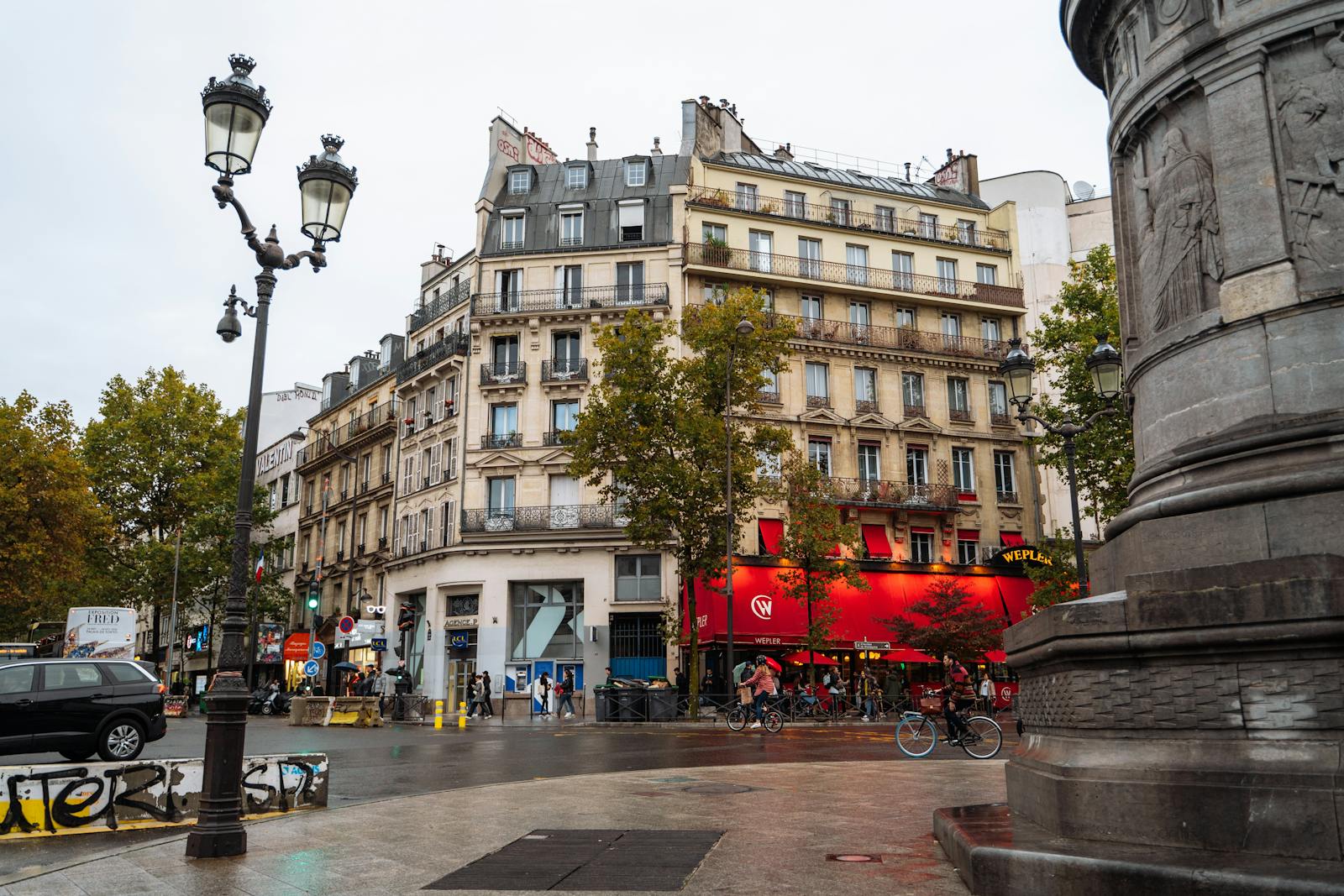
Most importantly: don’t skip Montmartre because you heard it’s touristy. It is touristy, but the touristy part is a small fraction of what the neighborhood actually offers. A good walking tour gets you past the tourist layer and into the Montmartre that still feels like the Paris of 1910 — which is, arguably, exactly what you came to Paris to experience.
See Also — Latest Paris & France Guides: Seine dinner cruises guide, Giverny Monet day trip guide, Paris hop-on hop-off bus tours guide, Loire Valley castles day trip guide, Moulin Rouge cabaret shows guide, Saint-Emilion and Bordeaux wine tours guide, Disneyland Paris tickets guide, Paris bike tours guide.