
The Pantheon in Rome is more than just an architectural marvel – it’s a window into the captivating world of ancient Roman mythology. Towering over the city streets, this iconic structure embodies the intriguing interplay between the divine and the mortal realms that defined the spiritual beliefs of the Romans. Explore the Pantheon’s fascinating history to uncover the intricate tapestry of gods, goddesses, and the mortals who revered them.
- Key Points
- The Pantheon’s Architectural Marvels
- From Temple to Church: The Pantheon’s Evolving History
- Exploring the Pantheon’s Artistic Treasures
- Raphael’s Final Resting Place
- Worshipping Roman Gods at the Pantheon
- Uncovering the Pantheon’s Ancient Mysteries
- Key Differences Between the Pantheon and Other Roman Temples
- Navigating the Pantheon With Tour Guides
- Ask Away
- Can I Take Photos Inside the Pantheon?
- Is the Tour Available in Multiple Languages?
- Are There Any Discounted Ticket Options for Students or Seniors?
- How Much Time Should I Allocate for the Entire Visit?
- Is There a Dress Code for Entering the Pantheon?
- Final Words
- More Guided Tours in Rome
- More Tours in Rome
- More Tour Reviews in Rome
- Still browsing? Here are more Rome experiences we've covered recently
Key Points
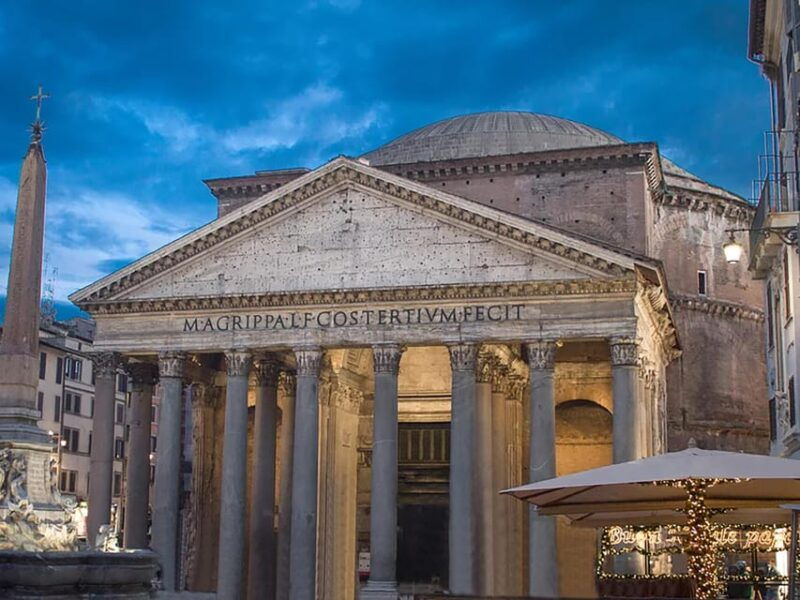
- The Pantheon, originally a temple for the worship of 12 principal Roman gods, became a testament to the diverse pantheon of ancient Roman deities.
- The architecture of the Pantheon, with its iconic dome and central oculus, created a sacred beam of light that awed ancient worshippers.
- Influential figures, from Roman emperors to Renaissance artists like Raphael, were connected to the legacy and significance of the Pantheon.
- The Pantheon’s adaptability, transitioning from a pagan temple to a Christian church, highlights its ability to preserve its structure while accommodating new religious purposes.
- The Pantheon’s architectural feats, such as its balanced dome without buttresses or external supports, demonstrate the Roman mastery of concrete, stone, and engineering principles.
The Pantheon’s Architectural Marvels
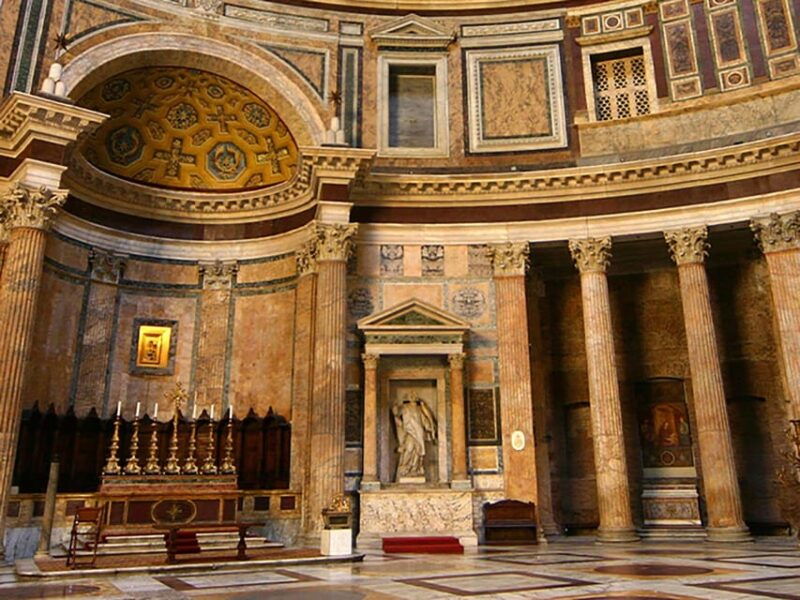
Although the Pantheon’s iconic dome may seem like a simple architectural feat, its construction was a remarkable accomplishment in ancient Roman engineering.
At 142 feet in diameter, the dome is an engineering marvel, perfectly balanced without the need for buttresses or external supports. The central oculus, a 27-foot wide opening at the dome’s apex, allows natural light to flood the interior, creating a mesmerizing effect.
This innovative design reflects the Romans’ mastery of concrete, stone, and engineering principles, making the Pantheon a timeless testament to their architectural prowess.
Looking for more options in Rome? We've reviewed plenty of other experiences.
From Temple to Church: The Pantheon’s Evolving History
The Pantheon’s origins trace back to the early 1st century AD, when it was commissioned as a temple dedicated to the gods of ancient Rome.
Over the centuries, the Pantheon’s purpose has evolved, transforming from a pagan temple to a Christian church. This transition reflects the shifting religious landscape of Rome.
Today, the Pantheon stands as a testament to its enduring architectural brilliance and the city’s rich history:
-
Honoring Roman Deities: Originally, the Pantheon was a sanctuary for the worship of the 12 principal gods of the Roman Empire.
-
Conversion to Christian Church: In the 7th century, the Pantheon was consecrated as a Christian church, preserving its structure while adapting to a new religious purpose.
-
Architectural Mastery: The Pantheon’s iconic dome, with its central oculus, remains an engineering marvel, showcasing the ingenuity of ancient Roman builders.
-
Tomb of Raphael: The Pantheon also houses the tomb of the renowned Renaissance artist Raphael, adding to its cultural significance.
Exploring the Pantheon’s Artistic Treasures
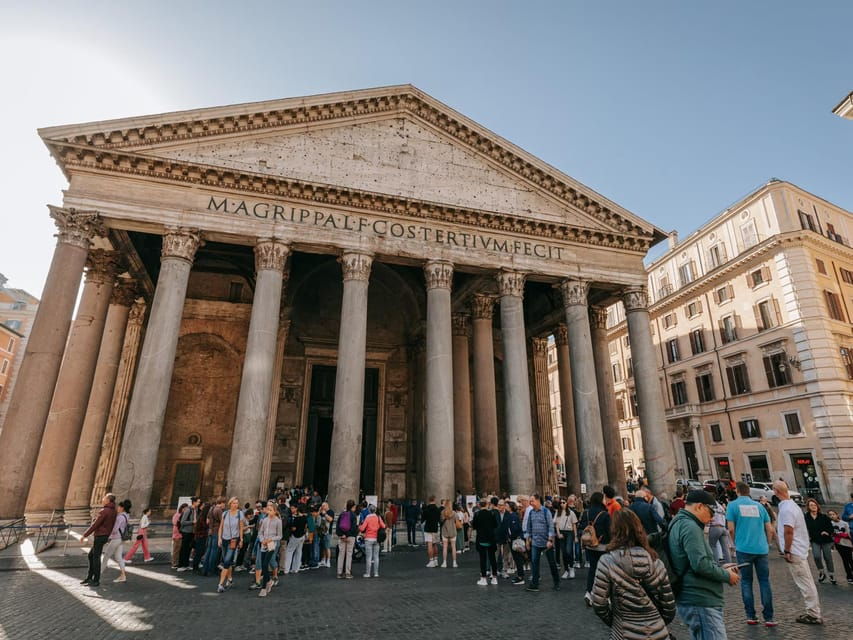
Beyond the Pantheon’s architectural marvels, the iconic structure also houses a wealth of artistic treasures that captivate visitors.
Ornate sculptures, intricate mosaics, and historical artifacts reflect the depth of ancient Roman culture and the lives of worshippers who visited this hallowed site.
One of the most notable works is the tomb of the renowned Renaissance artist Raphael, who was laid to rest here in 1520.
Visitors can learn about Raphael’s artistic contributions and hear the stories behind the Pantheon’s stunning visual displays that have endured for nearly two millennia.
Raphael’s Final Resting Place
Nestled within the Pantheon’s hallowed halls lies the final resting place of the renowned Renaissance artist, Raphael. Visitors can pay their respects to the legendary painter, whose contributions to art are celebrated worldwide.
As they approach his tomb, they’re transported back in time, captivated by the stories that echo through the ages:
-
Raphael’s artistic genius, which left an indelible mark on the Pantheon’s grandeur.
-
The reverence with which he was regarded by his contemporaries, now shared by generations of admirers.
-
The poignant legacy he left behind, inspiring countless artists to reach new creative heights.
-
The profound impact he’d on the cultural landscape of Rome and the world.
Worshipping Roman Gods at the Pantheon
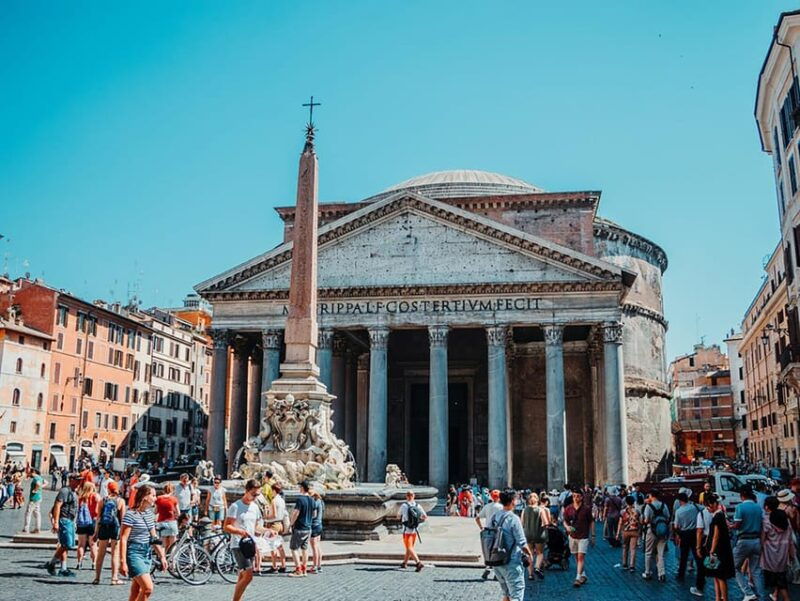
Although the Pantheon’s storied history has seen it transform from a temple to Roman gods into a Christian church, its original purpose as a place of worship remains a captivating aspect of its legacy. The grand structure once housed statues of deities from the Roman pantheon, each representing different aspects of life. Visitors can imagine the awe and reverence of ancient worshippers as they enter the Pantheon’s magnificent interior and gaze up at the central oculus, the sole source of natural light that illuminates the space.
| Deity | Symbolism |
| — | — |
| Jupiter | King of the gods, ruler of the sky |
| Venus | Goddess of love, beauty, and fertility |
| Mars | God of war |
| Minerva | Goddess of wisdom, strategy, and the arts |
| Mercury | Messenger of the gods |
- Pompeii Day Trip From Rome With Mount Vesuvius or Positano Option
- Skip-the-Line Group Tour of the Vatican, Sistine Chapel & St. Peters Basilica
- Pizza Cooking Class in Rome – Near Piazza Navona
- Cooking Class in the Heart of Rome: Pizza and Tiramisu Making
- Pasta Cooking Class in Rome – Fettuccine Class in Piazza Navona
- Entry Ticket to IKONO Roma: Immersive Experience
Uncovering the Pantheon’s Ancient Mysteries
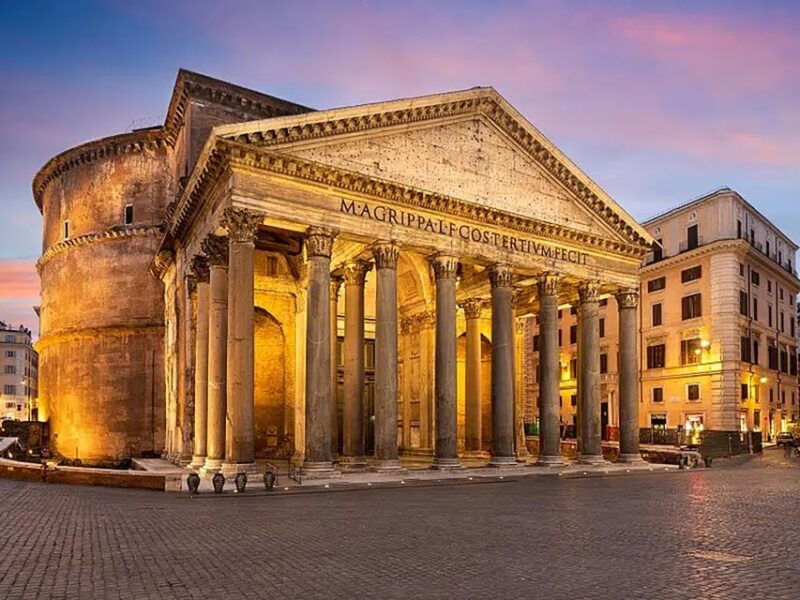
Stepping beyond the Pantheon’s role as a place of worship, the ancient monument holds a trove of captivating mysteries waiting to be uncovered.
From the secrets behind its architectural marvels to the legends that echo within its hallowed halls, the Pantheon invites visitors to embark on a journey of discovery.
-
Unravel the mystery of the Pantheon’s iconic dome and its central oculus that allows a sacred beam of light to pierce the interior.
-
Decipher the symbolic significance of the temple’s dedication to "all the gods," reflecting the diverse pantheon of Roman deities.
-
Uncover the stories of the influential figures, from emperors to artists, whose legacies are intertwined with the Pantheon’s timeless legacy.
-
Explore the architectural and engineering feats that have allowed the Pantheon to withstand the ravages of time and stand as a testament to ancient Roman ingenuity.
Key Differences Between the Pantheon and Other Roman Temples
Unlike other Roman temples that were typically dedicated to a single deity, the Pantheon’s unique design and purpose set it apart.
While most temples faced east, the Pantheon’s entrance faced west, and its grand interior featured a central oculus rather than a traditional raised altar. This allowed natural light to flood the space, creating an immersive, almost divine experience for worshippers.
Plus, the Pantheon welcomed all major Roman gods, rather than honoring just one. This inclusive architecture and theology reflected the Pantheon’s role as a place of universal worship, distinct from the more specialized temples of ancient Rome.
Navigating the Pantheon With Tour Guides
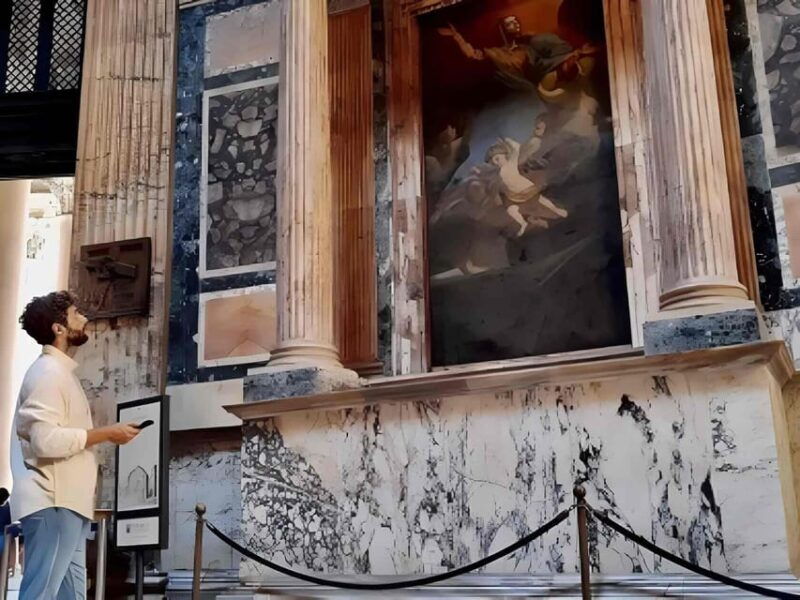
As visitors step into the grand Pantheon, a knowledgeable tour guide can unlock the secrets of this architectural marvel. The guide’s expertise brings the structure’s history to life, from its origins as a temple to its transformation into a Christian church.
Through captivating stories, the guide reveals:
-
The ingenious engineering behind the iconic dome and its central oculus.
-
The significance of the Pantheon’s art and artifacts, reflecting ancient Roman culture.
-
The legend of Raphael’s tomb and his enduring impact on Renaissance art.
-
The building’s resilience, having stood for nearly two millennia.
With the guide’s insights, visitors gain a deeper appreciation for this enduring icon of Rome.
Ask Away
Can I Take Photos Inside the Pantheon?
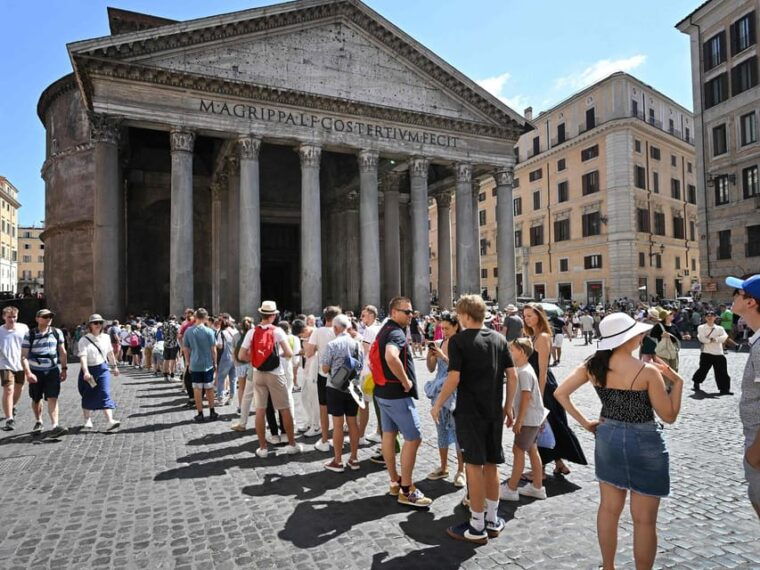
Yes, visitors can take photos inside the Pantheon. However, they should avoid using flash and respect any rules or guidelines set by the Pantheon authorities to preserve the historic structure and artwork.
Is the Tour Available in Multiple Languages?
The tour of the Pantheon is available in multiple languages, including English. Guests can choose their preferred language when booking the tour to ensure they have a guide who can provide commentary in their native tongue.
Are There Any Discounted Ticket Options for Students or Seniors?
Yes, the tour offers discounted tickets for students and seniors. They can save up to 12% on the regular price, bringing the cost down to $86.50 per person. The discounts are available at the time of booking.
How Much Time Should I Allocate for the Entire Visit?
The guided tour of the Pantheon lasts about 1 hour, but you’ll want to allocate around 1.5-2 hours to fully explore the site and take in all the highlights. This allows time to wander and take in the architecture and history at your own pace.
Is There a Dress Code for Entering the Pantheon?
There’s a modest dress code for the Pantheon – no shorts, short skirts, or sleeveless shirts are allowed. This ensures visitors respect the historical and religious significance of the site.
Final Words
The Pantheon stands as a testament to the enduring legacy of ancient Rome’s myths and beliefs. From its grand architecture to its evolving history, the Pantheon offers a window into the spiritual aspirations and cultural identity of the Roman civilization. Whether exploring its artistic treasures or uncovering its ancient mysteries, visitors can’t help but be captivated by the Pantheon’s timeless allure.
You can check availability for your dates here:More Guided Tours in Rome
- Rome: St. Peters Basilica Reserved Entrance + Audio Guide
- Rome: Sistine Chapel & Vatican Museums Entry w/ Audio guide
- St.Peter’s Basilica & Vatican Grottoes: Guided Tour in Rome
- Rome: Self guided tour with app Colosseum and Roman forum
- Rome: Papal Audience Guided Tour at St. Peters Square
- Rome: St. Peters Basilica & Holy Door Guided Jubilee Tour
More Tours in Rome
- Rome: Private Walking Tour with a Local
- Rome: Exclusive Private Tour of St. Peters Basilica
- Rome: Vespa tour When in Rome with Dessert and Photography
- Rome: Small Group Walking Tour in English or Spanish
- Rome: Capuchin Crypts & Ghostly Legends Small Group Tour
- St.Peter’s Basilica & Vatican Grottoes: Guided Tour in Rome
More Tour Reviews in Rome
Still browsing? Here are more Rome experiences we've covered recently
- What Are The Best Tours & Experiences In Rome? Our Top 3 Picks
- 13 Fantastic Wine Tours In Rome
- 14 Top Private Driver Services In Rome (With Reviews & Prices)
- Which Rome Shore Excursions To Choose? Our Best 6 Picks
- The 14 Most Popular City Tours In Rome
- Which Rome Tours & Experiences To Choose? We Rank The 14 Best
- 14 Must-Try Cruises And Boat Tours In Rome
- Discover 14 Great Tours In Rome
- 12 Best Walking Tours In Rome (With Reviews & Prices)
- 14 Of The Best Shopping & Market Tours In Rome
- The Top 13 Rome Workshops & Classes
- 14 Must-Try Lunch Experiences In Rome