

You'll save serious cash in Europe on essentials like prescriptions, mobile plans, and public transit – with metro tickets up to 85% cheaper than London prices. Higher education costs a fraction of US tuition, while childcare services are heavily subsidized. Don't forget the affordable wine, craft beer, and fresh market produce. From banking fees to internet services, Europe's cost-conscious culture means your wallet stays happier across the pond. Let's explore what else makes Europe a bargain hunter's paradise.
- Key Points
- Prescription Medications
- Public Transportation and Train Travel
- Mobile Phone Plans and Data Services
- Wine and Craft Beer
- Higher Education and University Costs
- Cultural Attractions and Museums
- Healthcare Services
- Fresh Produce and Local Markets
- Auto Insurance
- Restaurant Service Charges
- Internet Service Providers
- Childcare and Early Education
- Banking and Financial Services Fees
- The Last Word
Key Points
- Healthcare costs in Europe are roughly half of US prices, with Eastern European countries offering the most affordable medical services.
- Public transportation is significantly cheaper, with monthly passes in Eastern European cities costing under £25 compared to London's £233.
- Mobile data plans offer extensive coverage across 27 EU countries, with packages like 70GB costing only €10-15 monthly.
- Fresh produce prices are substantially lower, especially in Eastern Europe, with local markets offering vegetables and fruits at 25-30% below Western prices.
- Higher education is remarkably affordable, with some countries like Germany offering free tuition at public universities.
Prescription Medications

While Switzerland tops the charts with Europe's priciest prescriptions, you'll uncover significant savings in countries like Poland, Slovakia, and Sweden, where medications cost 10-20% below the European average.
Denmark's smart pricing system works in your favor – they update drug prices every two weeks and require pharmacies to offer the cheapest generic alternatives.
Danish pharmacies must offer affordable generic options, with pricing updated biweekly to ensure patients get the best deals.
You'll love that 94% of prescriptions there are generics, keeping costs down. Plus, there's no pharmacy markup on covered medications!
Want to save even more? Head to Poland, where you'll encounter the lowest prescription prices in Europe at just 82% of the continental average.
Thanks to EU regulations allowing parallel distribution, you can benefit from competitive pricing as medicines flow from lower-cost markets to higher-priced regions.
The WHO has established an Access to Novel Medicines Platform to help European countries find solutions for more affordable high-cost medications.
Public Transportation and Train Travel
Getting around Europe won't drain your wallet like those London Tube fares!
Before traveling, ensure you have proper documentation ready for smooth border crossings and transit between countries.
You'll discover public transport costs a fraction of UK prices, especially in Eastern European capitals. In Bucharest, you'll pay just £0.50 for a metro ticket – that's 85% cheaper than London! Vienna's daily pass at £1.64 and Warsaw's 10-ride card at £3.22 are absolute steals.
Monthly passes show even more dramatic savings. You'll fork out £233 in London, but only £20 in Budapest and £23 in Prague. Bucharest's yearly pass costs just £120 per year, making it cheaper than a single monthly ticket in London.
Even Western European cities like Berlin and Paris charge 40-50% less than UK rates. For intercity travel, hop on Euro Night trains between major cities for €30-50, compared to the UK's £80-200 routes.
You can even zip from Paris to Brussels on Thalys for just €29!
Mobile Phone Plans and Data Services
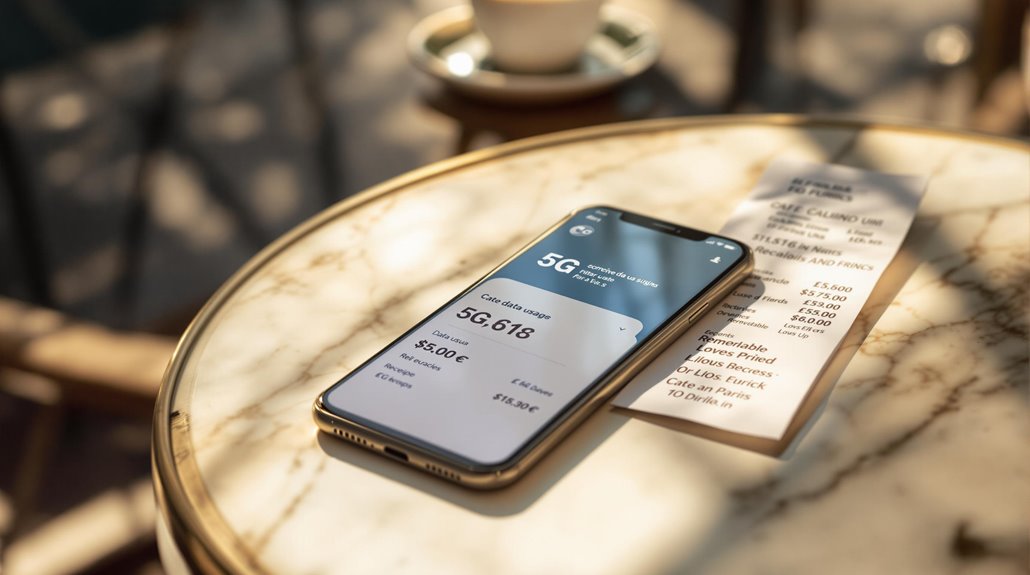
Want to dodge those eye-watering roaming charges? Europe's mobile plans will make your wallet smile.
You'll discover local pay-as-you-go options for just $15-35 monthly, crushing U.S. pricing. Better yet, EU-wide roaming policies mean your service works across 27 countries at no extra cost.
Say goodbye to expensive U.S. plans – European mobile options cost just $15-35 monthly and work seamlessly across the entire EU.
For maximum convenience, grab an eSIM from providers like Holafly or Orange. You'll get instant activation and can keep your home number while using a local plan. Contract plans require credit checks and long-term commitments, making them less ideal for international students.
Think 20GB of high-speed data for €20, or splurge on Lebara's 70GB plan for just €10-15. That's a fraction of what you'd pay back home.
Whether you choose Orange's tourist SIM, TIM's bundled plans, or Three UK's pay-as-you-go options, you're looking at serious savings over U.S. carriers.
Wine and Craft Beer
After saving on your phone bill, you'll discover extra euros to spend on Europe's incredibly affordable wine scene.
You'll find mid-range wines in Portugal and Hungary for just £3.91 per bottle – that's a steal compared to the UK's £9.36 or the US's steep £12.79.
Want to know why it's so cheap? Portugal produces a whopping 74L per capita and drinks 45L of it, keeping prices rock-bottom.
The EU's smart policies help too, with vineyard subsidies and tax breaks making sure small producers can keep their bottles affordable.
While you might shell out $20-50 for aged varietals in the US, you'll snag similar quality in France, Italy, or Spain for £10-12. This price gap exists because American wine prices are typically twice as expensive as their European counterparts.
Even with taxes, you'll discover budget-friendly options that would be impossible to match in America.
Higher Education and University Costs
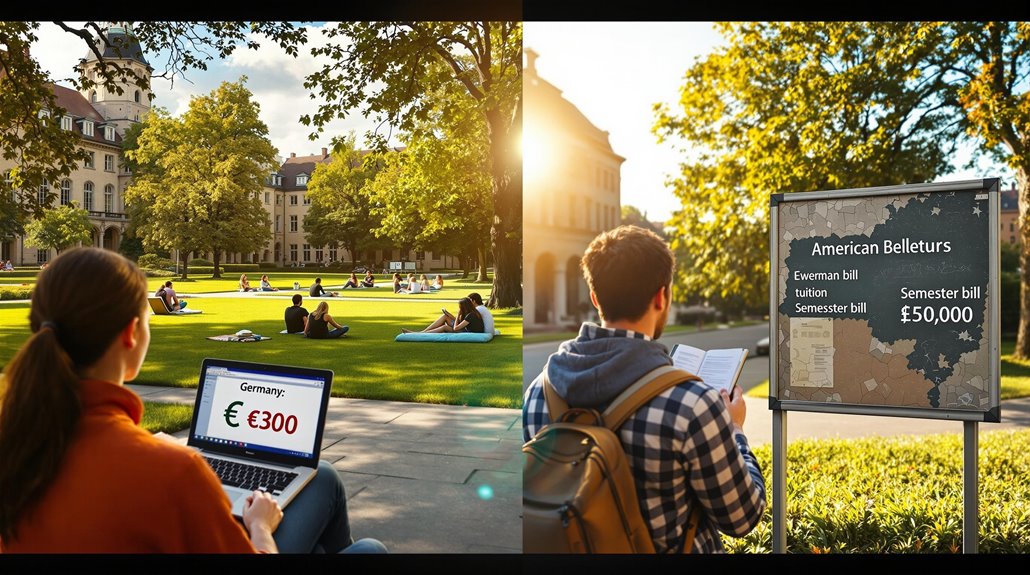
Education costs in Europe will make your American wallet breathe a sigh of relief.
While you're staring at $20,000+ annual tuition bills in the US, you'll discover public universities in Germany charging zero tuition – yes, you read that right!
Even in pricier countries like Spain or Italy, you'll only shell out about €1,200 yearly.
You're not just saving on tuition – living costs won't break the bank either.
Many Nordic countries like Norway and Sweden offer free education programs to international students.
From France's modest €150 monthly rent to Germany's reasonable €11,400 yearly expenses, you'll stretch your dollars further than back home.
Sure, the UK's fees are steeper, but they're still a bargain compared to US private schools.
Plus, with EU programs like Erasmus offering scholarships and post-study work permits, you're investing in your future without drowning in debt.
Students in Scotland can enjoy significantly lower fees with only £1,800 annually for Scottish residents.
Cultural Attractions and Museums
Your European cultural odyssey won't drain your bank account like those American museum admissions.
You'll uncover jaw-dropping landmarks at bargain prices, like Sofia's St. Alexander Nevsky Cathedral for under €10 or Athens' multi-site Acropolis Pass for just €20.
Dive into Istanbul's imperial splendor at the Hagia Sophia and Topkapi Palace, or explore Krakow's magnificent Wawel Cathedral – all for less than a typical Broadway show ticket. Experience Prague's historic charm with its famous Charles Bridge and Prague Castle offerings.
City passes offer incredible value, like Prague's 72-hour unlimited museum access for €90.
During winter months, many indoor cultural attractions offer seasonal discounts to attract visitors seeking shelter from the cold.
For the budget-conscious culture vulture, you'll encounter free treasures everywhere: Riga's Art Nouveau district, Sofia's Old Town, and Krakow's Market Square.
Even quirky spots like Zagreb's Museum of Broken Relationships won't break your budget at €10.
Healthcare Services

While Americans grapple with sky-high medical bills, Europe's healthcare scene tells a different story. You'll discover yourself paying considerably less for medical services across the Atlantic.
Take Germany, for example – their healthcare spending per person is a whopping 40% lower than in the U.S., at $7,383 compared to America's $12,318.
What's even more striking? Administrative costs in European healthcare systems are remarkably lean, typically running at just 1-3% of total spending.
Meanwhile, the U.S. system burns through 8% on paperwork alone. You're not just imagining it – healthcare in Europe is genuinely more affordable.
When you consider that other high-income nations spend roughly half of what Americans do per capita on healthcare, it's clear why medical tourism to Europe is becoming increasingly popular.
Eastern European nations offer even greater savings, with lowest healthcare costs among developed countries.
Fresh Produce and Local Markets
Shopping for fresh produce across Europe feels like opening a treasure chest of savings, especially when you venture beyond tourist hotspots.
You'll discover strawberries in Poland at €3.50/kg (that's 30% less than Germany's prices), and local apples cost a mere €0.90/kg.
Head to Spain, and you'll score broccoli at €1.50/kg – that's less than half what you'd pay in the US.
Eastern European countries are your best bet for bargains, with Romania's prices running 25% below the EU average.
The steadily rising food inflation in Poland has surprisingly not diminished its position as one of Europe's more affordable markets for groceries.
You'll save even more if you time your shopping right – Spanish spring harvests slash pepper prices by 40%, while Polish apple prices tumble 10-15% post-harvest.
Pro tip: Local markets in Eastern Europe often feature produce from household gardens, offering the freshest deals around.
Auto Insurance
Moving from market bargains to road costs, auto insurance in Europe offers another chance to keep your wallet happy.
You'll discover rates substantially lower than in the UK, with EU premiums rising just 19% compared to the UK's whopping 82% surge since 2021.
Head east for the best deals – Hungary and Poland are your budget-friendly havens, with monthly rates around €364 for petrol vehicles.
If you're eyeing diesel, Poland's your golden ticket at just €49 monthly. For the mechanically minded, repair costs vary significantly across the continent, from €85 monthly in Sweden to just €28 in Turkey.
However, watch out for Western Europe's steeper prices – Switzerland tops the charts at €117 monthly.
Smart tip: Nordic countries and the Netherlands have complex tax structures, so factor in road tax and VAT when calculating your total costs.
Restaurant Service Charges
Ever wondered why your European restaurant bill seems to sprout mysterious charges?
While dining in Europe can be cheaper overall, you'll need to navigate the maze of service charges smartly. In tourist hotspots, particularly Italy and France, you might encounter both "coperto" (cover charge) and "servizio" (service charge). VAT tax charges are always included in the listed menu prices. London's diverse dining scene offers a refreshing contrast with more straightforward pricing.
- Most legit restaurants clearly list their charges on the menu – if they don't, watch out!
- You'll typically pay €2-5 per person for coperto and 10-20% for service charges.
- Rome and Lazio have banned coperto, making them more wallet-friendly.
- You don't need to tip extra when service charges are included.
Don't let sneaky tourist traps fool you with double charges or hidden fees.
Check your bill carefully, and remember: in places like France, service is often already built into menu prices.
Internet Service Providers
While you might expect European internet prices to mirror their affordable dining scene, the reality is far more complex.
You'll discover jaw-dropping deals in Eastern Europe, where cities like Bucharest and Saint Petersburg offer lightning-fast connections for under €10 monthly. Talk about a steal!
But don't get too excited just yet. If you're heading to Western Europe, you'll need to dig deeper into your pockets. French providers have joined the competitive scene, offering broadband-only plans starting at €19.99.
Amsterdam will set you back €43 monthly, while Reykjavik tops the charts at a whopping €71.
The real winners? Denmark delivers the best bang for your buck with speeds of 124 Mbps for €32, while Italy and Spain keep things competitive with narrower price gaps between fiber and non-fiber options.
Pro tip: Portugal's mandatory bundling might actually save you money in the long run.
Childcare and Early Education
Parents, get ready for a pleasant surprise! When it comes to childcare costs, Europe's got your back. You'll notice yourself paying a fraction of what you'd shell out in other parts of the world, thanks to generous government subsidies and family-friendly policies.
- In Germany's Kitas, you'll pay just €70-150 monthly for quality childcare – that's a steal!
- Estonia's super-affordable kindergartens cost as little as $19 per week.
- Finland's taking it even further with completely free pre-primary education.
- Swedish parents spend only 1-2% of their income on childcare.
You will find that European countries prioritize making childcare accessible to everyone.
With employer taxes, government subsidies, and voucher systems, you can focus on enjoying parenthood instead of stressing about astronomical childcare costs.
This is a stark contrast to the United States, where couples spend about 32% of their income on childcare expenses.
Banking and Financial Services Fees
If you're tired of hefty banking fees draining your wallet, you'll uncover relief in Europe's more reasonable financial services landscape.
You'll encounter annual payment account costs as low as €41.17, with young professionals paying around €35-36 annually – considerably less than many international counterparts.
You'll love how European banks prioritize transparency, thanks to EU mandates on fee schedules and digital banking platforms that make costs crystal clear.
Mobile banking has revolutionized fee visibility, and you won't need to wade through complex fee structures anymore. Staying continuously informed and updated through mobile apps helps you track and compare banking fees effectively.
Plus, with banks like Deutsche Bank and UBS implementing cost-cutting measures of up to €2.5B, you can expect even more competitive rates.
Major European banks' massive cost reductions signal a future of more budget-friendly banking services for customers across the continent.
Whether you're using ATMs, making cross-border transactions, or managing investments, Europe's banking fees won't break your budget.
The Last Word
You've just discovered that Europe isn't just about fancy accents and medieval castles – it's a bargain hunter's paradise hiding in plain sight. While you're busy dropping hundreds on data plans and prescriptions back home, Europeans are living their best lives with affordable everything. So pack your bags and get ready to experience the sweet irony of crossing the Atlantic to save money. Who knew being cheap could be so sophisticated?