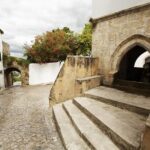
Nestled in the heart of Portugal’s picturesque countryside, the Alcobaça Monastery stands as a testament to the country’s rich cultural heritage. This UNESCO World Heritage Site invites visitors to uncover its captivating history, architectural wonders, and the poignant tale of ill-fated lovers. With a knowledgeable local guide leading the way, one can explore the Cistercian Order’s legacy, exploring the serene cloisters and the Royal Pantheon that holds the remains of Portuguese royalty. A journey through Alcobaça promises to unveil the monastery’s enduring significance and the stories that have shaped its enduring legacy.
- Key Points
- Monastery of Santa Maria De Alcobaça: a UNESCO Treasure
- History of the Cistercian Monastery
- Architectural Marvels of the Monastery
- The Royal Pantheon: Resting Place of Portuguese Royalty
- Exploring the Cloister of Silence and Monastic Life
- Gastronomic Innovation and Agricultural Advancements
- Tour Highlights: Captivating Storytelling and Insights
- Planning Your Visit: Important Visitor Information
- Frequently Asked Questions
- Can I Take Photographs Inside the Monastery?
- Is There a Dress Code for the Tour?
- Are Audio Guides Available for the Tour?
- How Accessible Is the Tour for Individuals With Disabilities?
- Can I Purchase Souvenirs or Gifts at the Monastery?
- The Sum Up
- More Guided Tours in Alcobaca
- More Tours in Alcobaca
- More Tour Reviews in Alcobaca
Key Points
- Explore the renowned Alcobaça Monastery, a UNESCO World Heritage Site known for its Portuguese Gothic architecture and Cistercian heritage.
- Set out on a guided tour led by local experts to uncover the monastery’s agricultural innovations, Royal Pantheon, and captivating love story.
- Witness the simplicity and devotion reflected in the monastery’s functional architecture, including the three-aisle church and Cloister of Silence.
- Gain insights into the austere Cistercian lifestyle and the monastery’s role as a burial site for Portuguese royalty.
- Plan your visit with practical information, such as dress code, accessibility, and highlights to ensure a memorable experience.
Monastery of Santa Maria De Alcobaça: a UNESCO Treasure
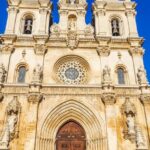
Although established in 1153 by King Afonso Henriques, the Monastery of Santa Maria de Alcobaça has since become a UNESCO World Heritage Site, recognized for its outstanding universal value as a prime example of Portuguese Gothic architecture and the Cistercian monastic lifestyle.
The monastery was donated to Bernard of Clairvaux, playing a significant role in the Cistercian Order.
It’s notable for its agricultural innovations and housing the Royal Pantheon, the resting place for Portuguese royalty.
Visitors can explore the unique three-aisle church, intricately carved tombs, and learn about the austere lives of the monks.
You can also read our reviews of more guided tours in Alcobaca
History of the Cistercian Monastery
The Monastery of Santa Maria de Alcobaça has a rich history that is intertwined with the Cistercian Order. Founded in 1153 by King Afonso Henriques, the monastery was donated to Bernard of Clairvaux, a prominent figure in the Cistercian movement. As a center of agricultural innovation, the monastery’s Cistercian monks managed a vast estate and adhered to an austere lifestyle. The monastery’s architectural features, including its three-aisle church and Gothic design, reflect the simplicity and devotion of the Cistercian tradition. It also houses the Royal Pantheon, the resting place for Portuguese royalty.
| Monastery’s Significance | Description |
| — | — |
| Cistercian Order | The monastery was central to the Cistercian movement, reflecting its values and lifestyle. |
| Agricultural Innovation | The monks managed a large estate, implementing innovative farming practices. |
| Royal Pantheon | The monastery’s church houses the tombs of Portuguese royalty. |
| Gothic Architecture | The monastery’s architecture typifies early Gothic design in Portugal. |
Architectural Marvels of the Monastery
The Monastery of Santa Maria de Alcobaça is renowned for its architectural marvels that embody the simplicity and devotion of the Cistercian tradition.
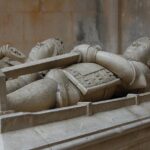
The church’s three-aisle design reflects the order’s focus on functionality over ornamentation. Visitors marvel at the intricately carved tombs of Pedro and Inês, a tragic love story frozen in stone.
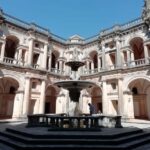
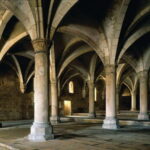
The Cloister of Silence, monks’ dormitory, kitchen, and library showcase the monastery’s austere yet efficient layout. This UNESCO World Heritage Site offers a glimpse into the Cistercians’ agricultural innovations and their management of a vast estate.
-
Three-aisle church design
-
Intricately carved tombs
-
Cloister of Silence and monastic buildings
-
Functional and efficient architecture
The Royal Pantheon: Resting Place of Portuguese Royalty
Within the hallowed walls of the Monastery of Alcobaça, the Royal Pantheon stands as a testament to Portugal’s rich history.
This sacred resting place holds the tombs of Portuguese royalty, including King Pedro I and his mistress, Inês de Castro. Visitors can admire the intricately carved sarcophagi, which face each other in a symbolic gesture of eternal love.
The tombs of King Pedro I and his mistress Inês de Castro face each other, a symbolic gesture of their eternal love.
The pantheon’s grandeur reflects the monastery’s pivotal role in the country’s past, as it served as the burial site for many sovereigns.
Exploring this hallowed space offers a profound connection to Portugal’s royal heritage.
More Great Tours NearbyExploring the Cloister of Silence and Monastic Life
As visitors step through the ornate entrance, they’re immediately struck by the serene beauty of the Cloister of Silence.
This tranquil quadrangle offers a glimpse into the austere lives of the monastery’s former Cistercian inhabitants. Guided tours explore:
-
The monks’ dormitory, where they slept on wooden planks with straw mattresses.
-
The expansive kitchen, where the community’s simple meals were prepared.
-
The library, housing the manuscripts and texts that fueled the monks’ scholarly pursuits.
-
The carefully curated gardens, cultivated to sustain the monastery’s self-sufficient lifestyle.
This immersive experience provides a window into the disciplined yet contemplative world of medieval monastic life.
Gastronomic Innovation and Agricultural Advancements
Alongside the monks’ contemplative lifestyle, the Monastery of Alcobaça was also renowned for its pioneering advancements in gastronomy and agriculture.
The Cistercian monks were skilled in managing their vast estate, cultivating crops and livestock to support the community. They introduced innovative farming techniques, such as crop rotation and drainage systems, which helped improve productivity.
The Cistercian monks’ skilled estate management and innovative farming techniques bolstered the monastery’s self-sufficiency and regional influence.
The monastery’s kitchens were equally innovative, experimenting with local ingredients and developing unique recipes.
This legacy of culinary and agricultural excellence contributed to the monastery’s self-sufficiency and influence within the region over the centuries.
Tour Highlights: Captivating Storytelling and Insights
Throughout the guided tour, visitors can expect captivating storytelling and insightful commentary from the knowledgeable guides.
The highlights include:
-
Exploring the intricately carved tombs of Pedro and Inês, which are linked to a tragic love story that has captivated audiences for centuries.
-
Visiting the Cloister of Silence, the monks’ dormitory, kitchen, and library, where visitors can learn about the austere lives of the Cistercian monks.
-
Discovering the monastery’s role as a center of agricultural innovation, as the guides share insights into the monks’ management of their vast estate.
-
Appreciating the unique three-aisle church and the earliest Gothic architecture in Portugal, which reflects the simplicity of the Cistercian lifestyle.
Planning Your Visit: Important Visitor Information
To make the most of your visit to the Monastery of Santa Maria de Alcobaça, there are a few important details to keep in mind.
The meeting point is at the entrance to the church. While the tour is suitable for most, it’s not recommended for children under 6 or those with mobility issues.
Modest attire is required as it’s a religious site, and food and drinks are prohibited inside the monastery.
With these simple considerations in mind, you’ll be well-prepared to explore the monastery’s captivating history and architecture, guided by a knowledgeable local who’ll bring the site to life.
Frequently Asked Questions
Can I Take Photographs Inside the Monastery?
Photography is allowed inside the Monastery of Santa Maria de Alcobaça, but visitors should be respectful and avoid using flash. Some areas may have restrictions, so it’s best to check with the guide or staff before taking photos.
Is There a Dress Code for the Tour?
The tour has a modest dress code, as the monastery is a religious site. Visitors must wear clothing that covers shoulders and knees to be allowed entry. Photography inside the monastery is generally permitted.
Are Audio Guides Available for the Tour?
Audio guides aren’t provided on the tour. Visitors must rely on the knowledgeable local guide to learn about the monastery’s history and highlights. Modest attire is required, as it’s a religious site.
How Accessible Is the Tour for Individuals With Disabilities?
The tour is not suitable for individuals with mobility impairments, as the monastery is not fully accessible. Visitors should note that the tour is not recommended for children under 6 years old due to accessibility concerns.
Can I Purchase Souvenirs or Gifts at the Monastery?
The tour does not permit visitors to purchase souvenirs or gifts inside the monastery. Food and drinks are also prohibited. However, there may be opportunities to shop at nearby stores or markets outside the monastery grounds.
The Sum Up
The Alcobaça Monastery is a captivating blend of architectural grandeur, historical significance, and monastic intrigue. Visitors can explore its rich Cistercian heritage, witness the poignant tombs of Portuguese royalty, and gain insights into the monastery’s pioneering agricultural practices. With a knowledgeable local guide, the experience becomes even more immersive, leaving a lasting impression on all who explore this UNESCO-listed treasure.