Life under communist rule was a complex and challenging experience for citizens. The regime exerted pervasive control, stifling free expression and imposing strict rationing. While the state propaganda painted a picture of prosperity, the reality was marked by economic hardships and the omnipresent threat of the secret police. Despite these oppressive conditions, some citizens found subtle ways to resist and maintain their desire for freedom. What drove them to challenge the system, and how did they navigate the dangers they faced?
- Key Points
- The Rise of Communism in Romania
- Everyday Life Under Communist Rule
- The Oppressive Regime and Its Impact
- Censorship and Propaganda Tactics
- Economic Challenges and Shortages
- The Role of the Secret Police (Securitate)
- Dissent and Resistance Against the System
- The Fall of Communism and Its Aftermath
- Ask Away
- How Did the Average Romanian Obtain Basic Necessities?
- What Forms of Entertainment Were Available to Citizens?
- How Did the Communist Regime Control and Monitor the Population?
- What Were the Main Reasons for the Eventual Collapse of Communism?
- What Was the Role of Religion and Religious Institutions Under Communism?
- Final Words
- The Best Of Bucharest!
- More Tour Reviews in Bucharest
Key Points




- Citizens faced severe shortages of basic goods and were subjected to long queues and rationing for essential products under communist rule.
- Pervasive surveillance and censorship created a climate of fear, limiting access to information and independent thought.
- Deprivation of personal freedoms, including arbitrary arrests and imprisonment by the secret police, was a hallmark of the oppressive regime.
- Propaganda campaigns glorified the regime and leaders, while mandatory political education indoctrinated the youth.
- Citizens employed creative resistance methods, such as listening to banned Western radio stations and organizing underground publications, despite the risks.

👉 See our pick of the Which Bucharest Workshops & Classes To Choose? We Rank The 3 Best
The Rise of Communism in Romania
Although Romania had a turbulent history leading up to the mid-20th century, the rise of communism in the country was a pivotal moment that shaped its trajectory for decades.
In 1947, the Romanian monarchy was abolished, and the Communist Party consolidated power. Under the rule of Nicolae Ceausescu, the Romanian communist regime exercised strict control over the population, suppressing dissent and imposing a centralized economic system.
This period was marked by repression, shortages, and a deterioration of living standards for many Romanians. The legacy of communism continues to influence Romanian society and politics even today.
You can also read our reviews of more tours and experiences in Bucharest.



Everyday Life Under Communist Rule
Life under communist rule in Romania was a stark contrast to the country’s previous monarchical system. Citizens faced daily struggles and restrictions, as the regime exerted total control over nearly every aspect of life.
Some key features of everyday life included:
-
Widespread shortages of basic goods, from food and clothing to household items and medicine.
-
Long queues and rationing for even the most essential products.
-
Pervasive surveillance and a climate of fear, with the secret police monitoring citizens’ activities and private lives.
-
Limited access to information and censorship of media and art.
The Oppressive Regime and Its Impact
The communist regime in Romania maintained an oppressive grip over the country, subjecting its citizens to a dearth of personal freedoms and a constant state of deprivation.
Basic necessities like food, electricity, and heating were rationed, leading to long lines and shortages.
Political dissent was swiftly crushed, with the secret police, the Securitate, monitoring the populace and punishing any semblance of resistance.
Citizens faced arbitrary arrests, imprisonment, and even execution for perceived infractions.
The regime’s propaganda machine distorted reality, indoctrinating the masses and suppressing independent thought.
This pervasive control over every aspect of life profoundly shaped the Romanian people’s experiences under communism.
Censorship and Propaganda Tactics
The communist regime in Romania utilized a sophisticated system of censorship and propaganda to maintain its grip on power and shape the narrative surrounding its rule.
Key tactics included:
-
Strict control over all media outlets, ensuring only state-approved information reached the public.
-
Censorship of any criticism or dissent, subjecting dissenters to harsh punishment.
-
Pervasive propaganda campaigns glorifying the regime and its leaders, portraying them as benevolent and omniscient.
-
Indoctrination of the populace, especially the youth, through mandatory political education and the suppression of alternative viewpoints.
This web of censorship and propaganda effectively stifled independent thought and kept the Romanian people under the communist party’s authoritarian control.
Economic Challenges and Shortages
Although the communist regime in Romania touted its economic successes, the reality was a persistent struggle with shortages and an increasingly strained standard of living for the populace.
Basic consumer goods, from food to clothing, were often scarce, forcing people to wait in long queues to obtain them.
The government’s centralized planning led to inefficiencies and misallocation of resources, leaving many Romanians without access to adequate housing, healthcare, and other essential services.
The shortages and economic hardships fueled growing discontent and resentment towards the communist system among the Romanian people.
The Role of the Secret Police (Securitate)
Integral to the communist regime‘s grip on power in Romania was the Securitate, the notorious secret police force that permeated all aspects of society.
The Securitate was tasked with monitoring and suppressing any dissent or opposition to the regime. They employed a range of tactics, including:
- Infiltrating workplaces, schools, and neighborhoods to gather intelligence.
- Conducting arbitrary arrests, interrogations, and imprisonment of suspected "enemies of the state."
- Subjecting citizens to constant surveillance, harassment, and psychological manipulation.
- Maintaining a vast network of informants to report on the activities and beliefs of fellow citizens.
Dissent and Resistance Against the System
Despite the Securitate’s pervasive control, Romanians found creative ways to resist the communist regime. Some defied the system by listening to banned Western radio stations or sharing censored information.
Others organized underground publications and protests, risking harsh punishment. Certain intellectuals and artists used their work to subtly criticize the regime.
Plus, many Romanians engaged in passive resistance, such as refusing to participate in mandatory communist activities.
Though the cost of dissent was often severe, these acts of defiance chipped away at the regime’s authority and helped preserve a sense of individuality and freedom.
The Fall of Communism and Its Aftermath
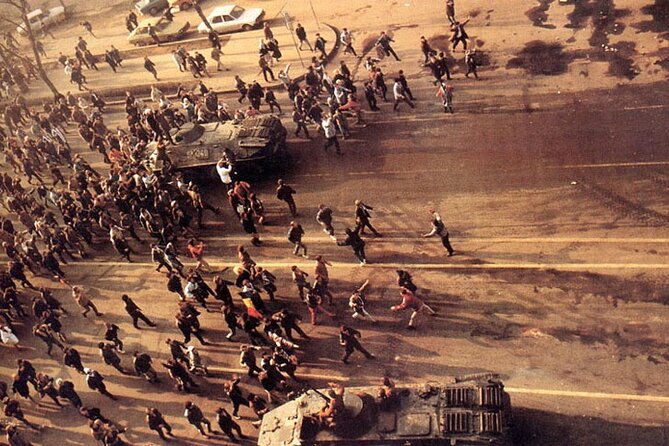
The collapse of the communist regime in Romania came to a dramatic head in the winter of 1989.
After decades of oppressive rule, the Romanian people rose up in a popular uprising that led to the overthrow and execution of Ceaușescu.
The aftermath brought significant changes:
- The hotel of a democratic government.
- The transition to a market economy.
- Increased personal freedoms and opportunities.
- Ongoing challenges in addressing the legacy of the communist era.
While the path forward wasn’t without difficulties, the fall of communism marked a pivotal moment in Romania’s history, opening the door to a new era of possibility and transformation.
Ask Away
How Did the Average Romanian Obtain Basic Necessities?
Romanians obtained basic necessities through a system of rationing and state distribution. They often waited in long queues to purchase limited supplies of food, clothing, and other goods from state-run stores during the communist era.
What Forms of Entertainment Were Available to Citizens?
Under communism, entertainment options for Romanians were limited. They could attend state-sponsored cultural events like theater, music, and dance performances, but personal leisure activities were restricted and closely monitored by the government.
How Did the Communist Regime Control and Monitor the Population?
The communist regime in Romania closely monitored its population through secret police, surveillance, and strict control over information and media. Citizens faced limited freedoms and were under constant threat of punishment for dissent or non-compliance.
What Were the Main Reasons for the Eventual Collapse of Communism?
The communist regimes eventually collapsed due to a combination of economic stagnation, political repression, lack of freedoms, and growing public discontent. This led to widespread protests and the eventual transition to democracy in many former communist countries.
What Was the Role of Religion and Religious Institutions Under Communism?
Under communism, the role of religion and religious institutions was heavily restricted. The state sought to suppress religious practices and authority, viewing them as a threat to its ideological control and the advancement of atheism.
Final Words
Life under communism in Romania was marked by severe oppression, economic hardship, and pervasive state control. Citizens faced constant shortages, strict censorship, and omnipresent surveillance by the secret police. Despite these challenges, many engaged in subtle acts of resistance, maintaining their desire for freedom and independent thought. The collapse of the communist regime offered the promise of a new era, though the transition would not be without its own difficulties.